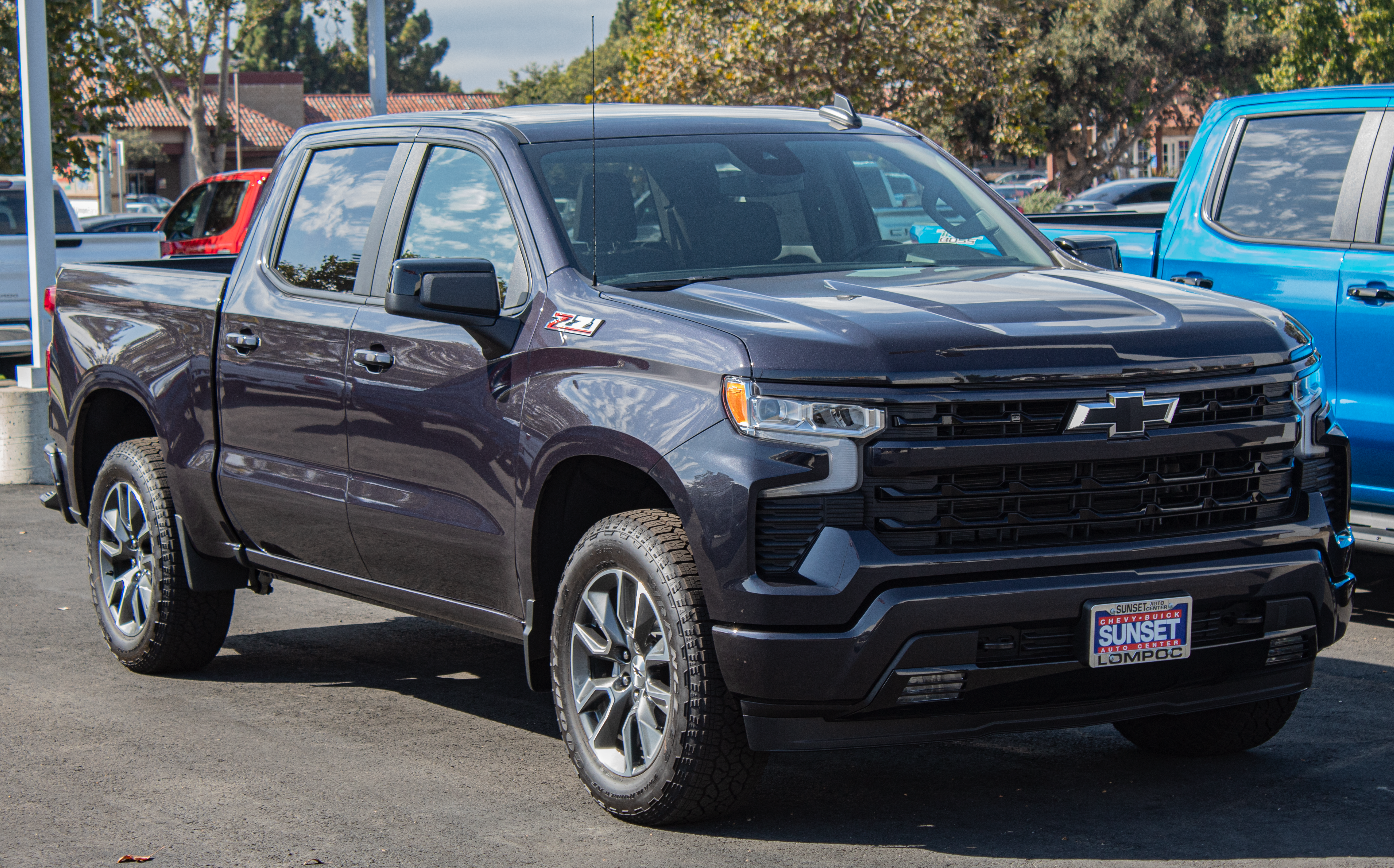
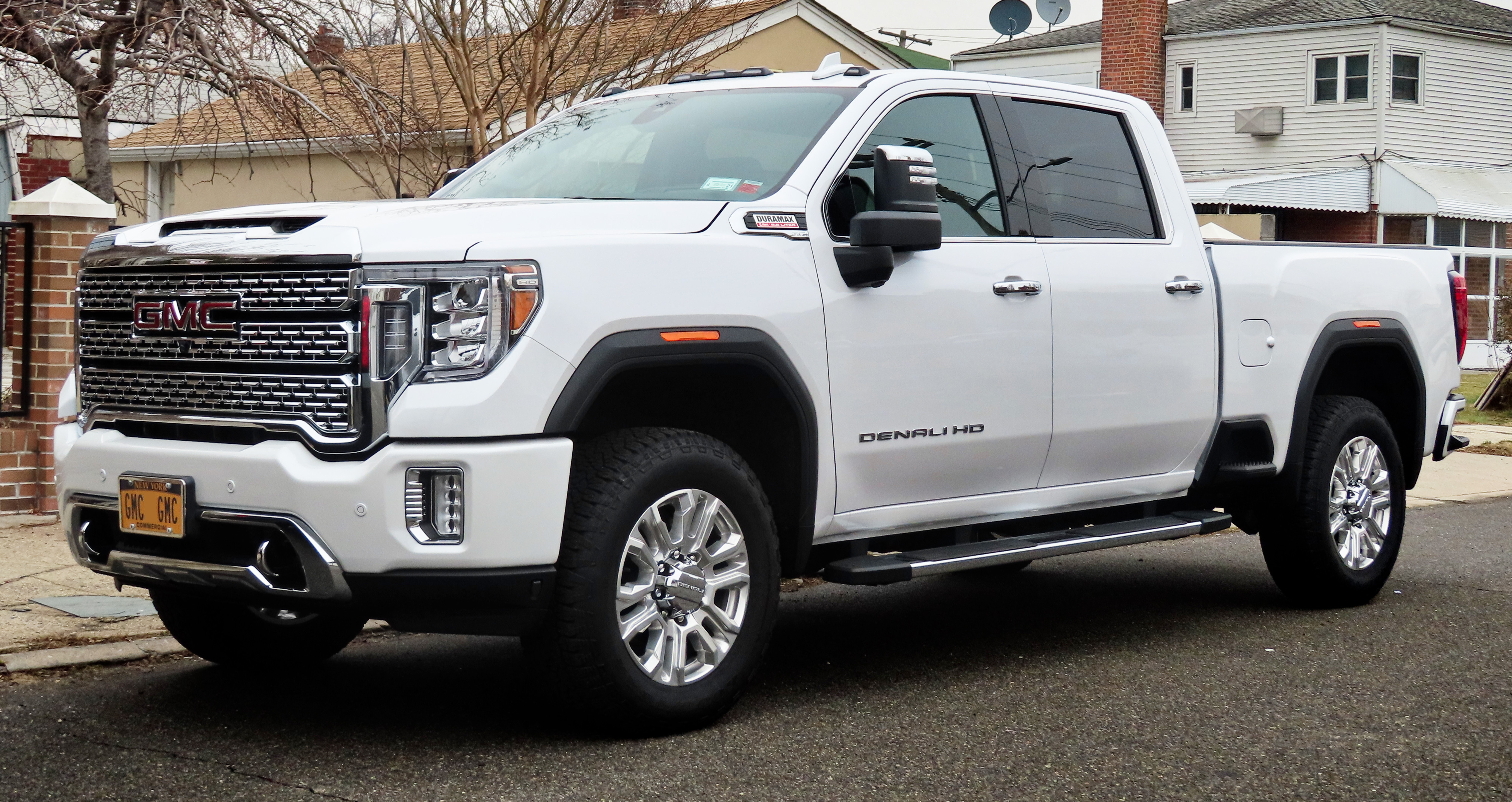
The GMC Yukon is a big SUV that can carry lots of people and stuff. Because it's so big, it can be harder to drive and park, especially if you're smaller or not used to big cars. People sometimes talk about it because it feels like driving a big truck.
When you want to buy a new car, you can give your old car to the dealer instead of selling it yourself. This is called a trade-in, and it helps lower the price of your new car.
LIVE
Hey, folks, Lenny Lawson, the car guru, and operating at about 50%, I do have a cold, a head
cold thing in us that has not moved down into my throat and chest, and I'm grateful for that
because that's a hard slog right there, isn't it?
Now, as long as it stays in my sinuses, I can put up with what I've got.
Today, I am going to probably aggravate some people out there.
If you happen to be listening and you happen to drive the type of vehicle that I'm talking
about, where I characterize you, make observations, as my wife sometimes disagrees with me, she
says, we're just being awful critical.
I said, no, I'm not being critical, I'm just making observations.
Oh, that's how you justify it.
Yes, that's how I do it.
So I just completed a survey.
It is the fastest driver survey, and it was completed by me.
No, not some government agency.
They tend to exaggerate and draw false conclusions.
This is accurate because I have experienced it.
This is my life experience speaking.
I'm going to tell you who the fastest drivers are, and they are often recklessly, recklessly
fastly.
Does that make sense?
Recklessly driving fast.
And who are they?
Well, I'm going to go from the least worst to the worst.
The first group are women, not all women.
Women under five feet, five inches tall, driving Taho's, Yukon's, and especially Escalade's.
These people, these women, tailgate, they also hog the road.
They don't make room for the actual width.
They can't really see over the hood, so they really don't know how much of the
road they're taking up.
And this is, again, this is not an informal survey.
This is formal.
This is my experience.
So if you're driving, if you're a woman under five-five driving a Taho, or a Yukon, or an
Escalade, slow down and get a seat cushion so you can see over the steering wheel.
Okay, number two, men under 55 driving Silverado or GMC 2500 HDs.
Lots of times these men are, and they have deep-tended windows.
Lots of times these men are pulling a trailer, and they have no clue how much of the road
the trailer is taking up.
They overdrive the conditions.
They think they're in a Porsche.
You're not in a Porsche.
You, like the women I was just talking about, need to slow down and get your mind on driving
and not on all the other issues that you're dealing with.
I think a lot of these people are in construction.
Not that I'm judging people in construction.
As long as you're not driving a Silverado 2500 HD, you're good.
Okay, the worst, the fastest drivers, the most reckless drivers.
I hope I don't get sued over this.
It's a large group if I do.
Men under 45 driving any RAM pickup truck.
Yes, you people are not only driving too fast, you're also the most competitive drivers.
You do not like being passed on the interstate.
And you never drive in the slow lane.
You're always in the fast lane.
If somebody comes up close behind you and you think you're going fast enough,
you will slam on your brakes to get them off your tail.
Now I don't like tailgaters either, but that's not a smart thing to do.
Wouldn't you agree?
So RAM truck drivers under 45, same advice.
Slow down.
It's also not a contest.
Driving on the interstate, it's not really a race.
You know, if somebody passes you, that's okay.
They don't even know you exist, really.
They can see your behaviors, and they're not often very good.
So that's not criticism.
Those are just observations.
I'll be back in just one minute.
I don't know, folks.
Maybe it's the achiness, the cold, you know, the difficulty in sleeping and breathing.
Maybe that's what's got me in kind of a curmudgeonly mood.
But yeah, it's easy to get that way.
The reason I made these observations was just driving last week, just the behaviors.
I mean, we all see it.
It's a big problem where I live.
People don't know how to use the median cut.
They don't know how to turn.
Like if there's a, if you need to get to the business on the other side of
the four lane, typically they'll have a median cut.
They'll have a deceleration lane, and you pull into that.
And then, you know, you're supposed to go to the far end of the median cut,
just like the median is just a little road.
Little short road, cute little road.
You're supposed to be on the right-hand side of the road,
not on the left-hand side of the road.
Left-hand side, fine in England, or the Grand Cayman Islands.
But not in America, get on the right-hand side.
So it's these things, driving to Knoxville on the interstate.
I had to go down, I had to go down to Knoxville and back.
So that's a 140 mile round trip for me, and then the next day,
140 miles down and back again.
Why? Well, for a good reason.
My grandson, Henry, had a baseball tournament down there.
He's seven.
And it was just a lot of driving on the interstate, and you just see it.
You know the best place to see it in the slow lane?
I think the best way to travel, and I've learned this from experience,
if the speed limit is 70, get in the slow lane and drive 65.
You will never have to worry about passing somebody.
Everybody will be passing you.
You can relax.
Nobody's going to mess with you.
Nobody's going to tailgate you in the slow lane.
Ram truck drivers, you'll never see one in the slow lane,
unless they're getting ready to turn right, get off the interstate.
Other than that, no.
No, they never leave the fast lane.
And same thing with HD Silverado drivers.
Same thing.
Women in escalades.
They're not, they don't even know that those other lanes exist.
I'll tell you another thing that's really strange.
And this happened to me one time as I was on the interstate,
and there was a sign that said, merge right in two miles.
And they were doing construction on I-40.
And so I said, okay, two miles.
I'll just keep going down the road.
Well, everybody was in the slow lane.
Everybody's moved over.
And I'm just cruising.
Now, this is a three lane on each side, okay?
I'm going, and there's two wide open lanes.
And I've got two miles before I have to get over.
Everybody's already gotten over.
Now, how do you feel about that?
Do I need to get over and just be a good citizen?
Well, I was cruising down through there.
I said, this is ridiculous.
It's in two miles.
Why are they getting over now?
It makes no sense.
So I just kept driving down.
All of a sudden this 18-wheeler decides he's not having that.
And so he starts coming over on me.
So I was in the middle lane and he comes over
and he blocks the middle lane.
And then I get over to the fast lane to go around him.
No, he's not having that either.
He pulls over and literally runs me off the road.
Now, my stubborn nature could have had something to do with this.
So there was plenty of grass and media, or not median,
but yeah, I guess median.
And so I just got in that and accelerated and went on around him.
And he was blasting me with his horn.
So he was determined that I was not going to be a rebel.
Is that being a rebel?
I mean, I can understand getting over when there's a thousand feet left.
Yeah, merge.
Everybody starts merging there.
It's fine.
But I was just cruising along down the interstate.
I'm looking for helicopters.
I said, what is going on here?
Am I missing something?
I mean, it's like two miles
before you have to get over and everybody's over.
Did I break some kind of an unwritten law?
I saw a Facebook post about this.
It's happening in our hometown right now.
They're redoing a bridge in Greenville.
And it says merge right 1500 feet.
And people start merging right there.
And there was a Facebook post about just ranting and raving
about people who won't get over
and tend to want to cut over in front of those people
once they run out of tarmac.
Now I can understand the people that speed by you.
It's probably going to be somebody in a ram truck.
But if it happens, just let them over.
It's not a competition, right?
Don't we have more things to worry about
as far as gas prices and wars?
You know, I wanted to look and see how common aggressive driving
and even road rage is.
96% of US drivers admit to engaging in aggressive driving behaviors
at least once a year.
That's from AAA.
This also from AAA.
About 92% of Americans say they witnessed road rage
within the past year.
Have you ever seen like two people kind of going at it,
going down the interstate?
You know, one passes one and then the other passes the other
and it's just an ongoing battle.
And they don't know each other.
Just one of them got angry.
One of them was driving a ram truck.
The other a Silverado HD possibly.
Roughly 80% of drivers report significant anger
or aggression behind the wheel at least once a month.
That's also from AAA.
You know, in AAA, their studies are accurate like mine are.
Common aggressive behaviors include tailgating,
excessive speeding, cutting off other vehicles.
You know, I refer to that as a NASCAR move.
And you know, also tailgating is beneficial to fuel economy
because basically you're drafting off the other car.
But you know, people really don't like it.
Especially at night, if they can't see your headlights,
you're too close.
They should be able to see your headlights
and some road in front of your headlights.
If they just see your headlights, you're still too close,
especially if you're going 70 miles an hour.
Angry honking.
People do not like being honked at.
If you honk at somebody, even if they know they're wrong,
you're going to get the middle finger, usually.
That's what I found because I've honked at a few.
And then unsafe lane changes, which to me is equivalent
to cutting off other vehicles.
As far as escalation to violence,
around 11% of drivers admit to violent road rage actions.
11% such as trying to block another vehicle
or confronting another driver.
You know, a car is a lethal weapon, isn't it?
I mean, you think about it.
I guess the average car weighs somewhere around 3,500 pounds.
But you look at an 18-wheeler and we've seen some movies,
you know, where the truck driver goes crazy
and pursues a family, you know, with his truck
and creating all kinds of havoc.
I guess over 200 murders and more than 12,000 injuries
are linked to road rage over a recent seven-year period.
Gun violence in road rage incidents has been increasing.
116 people were killed in such incidences in 2024 alone.
You know, a lot of people have guns in their cars.
And, you know, in today's time, I understand,
I think you're supposed to have a carry permit
or maybe it's not supposed to be loaded.
In some states, I mean, if you have it anywhere near your car,
you're going to jail.
Tennessee, a little bit different.
You need to know what the laws are in your state
with regards to carrying a gun.
Some people will ignore them anyway,
just like they do about a lot of things.
Aggressive driving plays a major role in traffic crashes.
It is associated with about 54 to 56% of fatal crashes
in some safety analyses.
Speeding contributes to about 29% of all U.S. traffic fatalities.
So who are these aggressive drivers?
Well, I've told you what they're driving.
Now when it comes to other demographics,
it's going to be younger drivers, especially ages 19 to 24.
According to this survey, I don't agree with that.
I don't think it's the young people.
The ones that I see aggressively driving are, like I said,
well, I won't repeat myself, but usually men.
And they've got facial hair.
I don't know what it is about beards and aggressive driving.
But I don't think it's young drivers.
It's adult males age 35 to 54.
Again, that's informal.
Drivers also in congested urban areas
tend to be a whole lot more aggressive.
I would agree with that.
I mean, the closer people are together,
the more competitive it's going to be.
Did he just pass you?
You're going to let him pass you like that?
And then he cut over quite confidently.
I think you ought to pass him back.
You know, is that the wife encouraging it?
I think not.
I think she's saying, what are you doing?
What are you doing?
Are you racing that fella?
Yep, that's what happens.
Also situations involving time pressure, heavy traffic,
or like I said, perceived disrespect.
These are the folks who are most likely to engage
in aggressive driving.
Little road rage triggers.
Being cut off or tailgated.
Lane blocking or slow driving.
Failure to use turn signals.
That one doesn't bother me that much.
You are supposed to do it though.
We learned that in Driver's Ed.
Traffic congestion.
You know, you're just getting frustrated.
You're late.
These people aren't moving fast enough.
Who's clogging up the fast lane?
You know what the fast lane is for, right?
It's not just for people going fast.
You know, if we just obey the rules,
the normal rules of driving,
like they do in Europe,
or on the Autobahn.
Because when they pass,
and it's clear they go over to the slow lane.
Now, Americans, Americans have to drive
in the fast lane all the time.
The fast lane is rapidly becoming the slow lane.
But it's actually called the passing lane.
So let's reserve it for that.
So traffic congestion is a problem.
And then again,
perceived disrespect from other drivers.
Simple behaviors like signaling,
allowing merges,
acknowledging other drivers
can reduce escalation.
You know, it's just like letting somebody over.
I mean it's a nice gesture.
And you'll feel better
about yourself.
If you just be nice.
You know, we do it
when we're not in a car.
You know, when we're waiting in line
for tickets
or at McDonald's.
You know, just something.
We do these little courtesies.
I mean, open doors for ladies.
That's just something my mom
just drove into my brain.
If you're walking into a store
and there's a lady
even 30 feet away,
you stop.
You open the door and wait.
And I always get it.
Well, thank you, sir.
You know, you always get appreciation.
Now, a person in a car
about the only thing they can do
is flash their lights, you know, with truckers.
If you let a trucker over,
you know, he's really wanting to get over.
They're struggling, you know,
to manage all the traffic situation.
You flash your lights at them.
Before you pass them, they'll come over
and flash their lights
saying, thank you.
That was nice.
And then they'll move over.
They might even lower the window
and wave at you or honk at your kids.
So basically, there are two people
at fault here
when it comes to the car, that is,
or the car and the truck
or the RAM truck and the Silverado HD.
It is the
aggressive driver
and then it's the person in the other car
who has to make a decision.
I'm going to react
or I'm not going to react.
And if you think about it,
it's not just your life
that you're endangering.
It's other people in cars
that aren't even involved.
You know, they're just cruising down the road.
They're going to church.
They're going to visit relatives in New York.
They're on their family vacation
and because somebody passed you
and cut you off, you're going to turn
into a
boxing ring.
Please resist that impulse.
Don't respond like that.
Because like I say,
you're not just risking your life.
You're risking other people's lives.
And that's just not fair.
I'll be back in just one minute.
So I probably should have started this episode
with a disclaimer.
Especially the first part of it.
That gosh, I've got every alarm
I've got going off.
That's the only thing about modern society now.
I mean, my phone's always going off.
Then my computer's going off.
All my Apple devices are connected.
So anyway, I'm just
complaining. This is a
complaining episode. The first part
for sure.
And it was very judgmental
on my part and tongue
in cheek.
I really don't feel bad about those people.
But it is, I have made these
observations and they may not
be universally correct.
But I think some of them
are spot on. You probably know somebody
driving one of those vehicles. You just say,
yep, that's him all right.
Or if you don't live in East Tennessee,
maybe you live in Scotland and listening
to my car guru, hey, that's my friend.
And he's rather
boorish on the road.
So if you want to give me a hard time
feel free, 423-552-2020.
That's my personal
cell phone number. Send me a text.
And
if you have automotive questions regarding
anything about your car.
If I don't know the answer, I know
where to get it. Like I've been pulling
a lot of vehicle histories for folks
the last couple of weeks.
I invited folks to send me VIN numbers
and condition and stuff like that
so that I could, and mileage of course
so that I could give them the market
value of the vehicle they're thinking
about trading. And I get those all over the
country and I appreciate, well,
I'm glad I'm able to help you
figure out what your trade-in is worth
because that's one of the four targets
when you're trying to
trade vehicles and
working with salespeople and car dealers.
One of the ways that
they really pick up a lot of
extra gross profit is by
something they call under
allowing for your trade-in.
Which means
paying you less for your trade-in
than it's worth.
That way when they
book your trade and put it out there a lot
and sell it, they have more margin
to work with.
So don't let them under allow
you for your trade-in.
Get what your trade-in
is worth.
It's one of the four targets
and it's one of the most important ones.
So if you have questions
423-552-2020
if you want a vehicle history report
or a trade evaluation, I'll provide it
for you. Plus you can ask for a copy
of the free My Car Guru
guidebook, 32 pages
of automotive brilliance which
allows you an inside look
of what they're trying to do
when you go into a car dealership to buy it
to get service, to deal with a body shop.
They're not all crooks
but a lot of them are. And this is
one way to defend yourself
against them.
So send me your email address
to my cell phone 423-552-2020
or to my email address
Lenny Lawson, 2020 at gmail.com
where you can call
Gateway Ford, My Car Dealership
at 423-639-5151
and just
tell the operator, hey
I need a copy of the My Car Guru
guidebook and here's my mailing address
and I'll print it out and send it to you. How's that?
Well thanks for listening to this edition
of My Car Guru and I'll see you next time.
About this episode
Lenny Lawson shares his personal observations on the most aggressive and reckless drivers, highlighting women under 5'5" in large SUVs, men under 55 in heavy-duty Silverados, and men under 45 driving RAM trucks as the top offenders. He discusses common aggressive behaviors like tailgating, unsafe lane changes, and road rage, supported by AAA statistics on the prevalence and dangers of such driving. Lenny also offers practical advice on avoiding conflict on the road, such as using the slow lane and staying calm during merges, while reflecting on his own recent driving experiences and frustrations.