The Weirdest Ram Failure We’ve Seen
About this episode
A shop and its guests trace how injector knowledge, fuel-system care, and careful tuning connect to real-world reliability—especially around 6.0 Power Stroke failures. The conversation moves from early wrenching and injector rebuilding to modern “sizing” (injector-to-turbo matching), oil-change intervals, and keeping EGTs in range. They also dig into why CP4 pump failures and fuel contamination kits drive preventative plans, plus what it takes to develop more reliable injectors through long R&D and testing.
injector building
"...it was a great opportunity to go from the injector building into the six liter and then all of the upgrading of the SCTs..."
Injector building means taking apart and rebuilding the fuel injectors so they spray fuel correctly. For diesel tuning, that matters because the engine needs the right amount of fuel to match the boost and air it’s getting.
“Injector building” is the process of disassembling, inspecting, and reassembling fuel injectors—often with upgraded internal parts—to make them deliver fuel more accurately. On diesel performance builds, injector setup is tightly linked to how much fuel the engine can safely and consistently burn under boost.
SCTs
"...all of the upgrading of the SCTs, the dummy plugs, the stamp pipes..."
“SCTs” are tuning tools that help change how the engine computer runs. They’re used to adjust settings so the truck’s fueling and boost work with the upgraded parts.
“SCTs” refers to SCT tuning hardware/software used to reprogram diesel engine parameters (commonly via a handheld programmer or ECU interface). In performance contexts, SCT tools are used to adjust fueling and boost-related settings so the engine calibration matches the upgraded injectors and turbo setup.
stamp pipes
"...the dummy plugs, the stamp pipes and, you know, all the upgrades that go together and we really got into starting to pairing our injectors..."
“Stamp pipes” likely refers to specific diesel fuel-system plumbing components used in injector/rail setups, where the internal flow characteristics and fitment affect fueling behavior. Because the transcript doesn’t provide additional detail, the exact part name and function can vary by shop and application, but it’s clearly treated as a hardware upgrade in the injector/turbo matching workflow.
turbos
"...we really got into starting to pairing our injectors with different turbo sizes..."
Turbos are devices that use exhaust energy to push more air into the engine. More air usually means you can burn more fuel, so the fuel system has to be tuned to work with the turbo.
Turbos (turbochargers) force more air into the engine by using exhaust gas to spin a turbine, which increases boost pressure. On diesel builds, turbo size and boost targets strongly affect how much fuel the engine can use—so injector flow and calibration have to be matched to the turbo.
pairing our injectors
"...we really got into starting to pairing our injectors with different turbo sizes and different, what happens if we do this with our injectors..."
“Pairing” injectors with a turbo means choosing injector capability that matches how much air the turbo will bring in. That helps the engine burn fuel correctly instead of being off-balance.
“Pairing” injectors with turbo size is the tuning practice of matching injector flow characteristics to the airflow and boost the turbo will produce. The goal is to keep the air-fuel mixture in a safe, efficient range so the engine can make power without running too lean (hot) or too rich (smoky/inefficient).
size this injector for this turbo
"...their questions tend to revolve around, okay, how do I size this injector for this turbo or this is my goal?"
This means choosing the right injector so it can supply the right amount of fuel for the turbo’s boost. If it’s not matched, the engine can run inefficiently or make less power.
Sizing an injector for a turbo means selecting injector flow capacity (and matching calibration) based on the turbo’s expected airflow/boost. This is a core diesel tuning question because injector capacity determines how much fuel can be delivered efficiently under load.
towing 50,000 pounds every day
"somebody wants to talk about injectors, you know, you will always get the guy who's like, Hey, I want 250, 100s and I tow 50,000 pounds every day"
They’re saying how you use the truck matters. Heavy daily towing puts the engine under much more stress, so injector problems show up differently.
The speaker is highlighting that diesel injector discussions depend heavily on real-world duty cycle—how the truck is used. Towing extremely heavy loads every day changes engine load and heat, which can expose injector issues differently than light driving.
APU
"because we used a lot of the same things. We were using the same words, the APU, the EPU."
APU stands for Auxiliary Power Unit. It’s basically a separate power source that can run things without using the main engine.
APU usually means Auxiliary Power Unit, a separate power source used to run electrical systems or provide power without starting the main engine. In military and some heavy-duty contexts, it’s part of the broader “language” of systems on the vehicle.
EPU
"We were using the same words, the APU, the EPU. And you know, it's like the ICP, the IPR, you kind of understand"
EPU is an acronym for an emergency power system. It’s meant to keep critical electrical functions running if something else fails.
EPU usually means Emergency Power Unit (or sometimes a related emergency electrical power system), intended to provide backup power if the primary system isn’t available. The speaker is using these acronyms to describe shared terminology from military/heavy equipment environments.
IPR
"it's like the ICP, the IPR, you kind of understand"
IPR is part of the system that controls fuel pressure. Keeping that pressure right helps the injectors spray fuel properly.
IPR commonly refers to the Injection Pressure Regulator (or regulator-related control) in diesel fuel systems. It helps manage the high-pressure fuel pressure that the injectors need for consistent combustion.
ICP
"it's like the ICP, the IPR, you kind of understand"
ICP is a sensor that helps the engine know how much pressure is in the fuel system. That information helps the engine inject fuel correctly.
ICP commonly refers to the Injection Control Pressure sensor in many diesel systems. It measures high-pressure fuel system pressure so the engine can control injection timing and fuel quantity accurately.
things move in cycles
"…is how things move in cycles. So like that episode way back in 2018."
The host is saying truck problems often come back in waves. As new owners get interested in older diesels, they run into the same issues again. The underlying causes don’t necessarily change—what changes is who’s dealing with them.
“Things move in cycles” is a framing concept: injector failure causes and the community’s attention to them tend to reappear as new owners buy older trucks or as maintenance practices change over time. In other words, the same underlying failure mechanisms can resurface with each new generation of owners.
maintenance
"It comes down to a lot of it has to do with maintenance on the truck …if you're not taking care of both, then you're going to have problems."
Here, “maintenance” means doing the scheduled service and keeping fluids fresh. On diesel trucks, the fuel system is picky, so bad or dirty oil/fuel can cause expensive problems. The hosts are saying it’s especially important on this engine.
In this context, “maintenance” means keeping the truck’s fluids and service intervals up to spec—especially oil and fuel quality. For diesel engines with sensitive injection systems, neglecting maintenance can accelerate injector and related system wear.
oil
"…you know, you know, oil and fuels the lifeblood of a Huey injector."
Oil is what lubricates the engine and helps keep it clean. If oil isn’t changed on time or gets contaminated, it can lead to wear and damage. The hosts are linking oil care to injector reliability.
Oil is critical on diesel engines because it lubricates internal components and helps keep contaminants suspended until the next service. The episode frames oil as part of what protects the injection system, implying that dirty or neglected oil can contribute to injector problems.
Huey injector
"…and fuels the lifeblood of a Huey injector. And if you're not taking care of both, then you're going to have problems."
“Huey injector” sounds like a nickname for the truck’s fuel injector system. The host is basically saying the injectors are the most important part of getting the engine the right fuel. If they’re not protected by good oil and fuel, problems follow.
“Huey injector” appears to be a specific nickname or reference to a particular injector type used on the diesel platform being discussed. The key takeaway for listeners is that the host is emphasizing injectors as the “lifeblood” of the system—meaning their condition is central to engine operation and failure modes.
fuels
"…oil and fuels the lifeblood of a Huey injector."
Fuel quality matters because dirty fuel can clog or mess up how injectors spray. If the fuel has water or debris, the injectors can wear out faster. That’s why the hosts say you have to take care of both oil and fuel.
Fuel quality matters because diesel fuel can carry water, sediment, and other contaminants that interfere with precise injector operation. The episode’s point is that both oil and fuel cleanliness affect injector durability.
full synthetic
"when you're making an oil change every 5,000 miles, it's going to give you a better product than if you're waiting the seven or 10,000 miles that a full synthetic says you can wait."
Full synthetic is a type of engine oil made to be more stable than older-style oils. Some people can run it longer, but it still depends on how you drive and how the oil ages.
Full synthetic is an engine-oil formulation made from synthetic base stocks rather than conventional crude-derived oils. It’s often marketed as allowing longer oil-change intervals, but real-world conditions and wear still determine whether the oil remains effective.
viscosity is breaking down
"If you think you're going to go past that 5,000, we know that viscosity is breaking down regardless. With going back for a second to that pairing your injectors with turbos,"
Viscosity is basically how “thick” the oil is. If it breaks down, the oil can get too thin to protect the engine the way it should.
Viscosity is a measure of how thick the oil is and how well it flows to lubricate moving parts. “Viscosity breaking down” means the oil thins or loses its intended thickness under heat and use, which can reduce lubrication and increase wear—especially if you stretch oil-change intervals.
VGT stage one turbo
"do what you need to do, you know, a stage one 15530 with a KC stage one or anything like that VGT stage one turbo is going to be a great setup for you."
A VGT turbo can adjust itself while you drive so you get stronger boost both at low and high speeds. “Stage one” usually means a mild upgrade meant to feel better without turning the truck into a full race build.
VGT stands for variable-geometry turbocharger, which can change the turbo’s internal vanes to improve boost response across different engine speeds. A “stage one” turbo setup usually means an early upgrade intended to add boost and drivability without going all the way to a full build.
EGTs
"with the trailer, you're going to be able to do towing without any problems and keeping those EGTs in a good range."
EGTs are how hot the exhaust gets. When you tow, EGTs can rise a lot, and keeping them under control helps prevent overheating and damage.
EGTs (exhaust gas temperatures) are how hot the engine’s exhaust gets, especially under heavy load like towing. Keeping EGTs in a “good range” helps reduce the risk of overheating components and can indicate whether the fueling/tuning is working efficiently.
VGT world
"It seems to be getting is the 20530, which is a great like injector to split the VGT world and the non VGT world."
They’re talking about two different turbo types: variable-geometry (VGT) versus non-VGT. Because the turbo behaves differently, the tuning and supporting parts have to be matched to that turbo type.
The “VGT world” refers to diesel setups that use a variable-geometry turbocharger, which changes how boost is controlled and how fueling and tuning strategies must be calibrated. Non-VGT (fixed-geometry) turbos behave differently, so the same injector or tuning approach often doesn’t translate directly.
tune it back
"it's not always a good idea to go a little bit bigger than what you want and then you can tune it back. So you have what you want."
They mean you can start with bigger parts, then adjust the computer settings so the truck runs the way you want. It’s basically dialing the power back to stay within safe limits.
“Tune it back” means adjusting the engine calibration after choosing larger hardware so the fueling/boost targets match what the setup can safely and effectively deliver. In diesel performance, this is often done to balance power with drivability and thermal limits (like EGTs).
fuel mods
"We don't always necessarily agree if they don't have the right fuel mods as far as warranty is concerned, but there's like I said, there's an opinion for everything."
“Fuel mods” are upgrades that help the engine deliver the right amount of fuel. If you add power through tuning but don’t upgrade the fuel system enough, the engine may not burn it cleanly.
“Fuel mods” refers to supporting changes to the fuel system (commonly injectors and related components) that allow the engine to burn more fuel safely and consistently. Without the right fuel mods, tuning larger injector targets can lead to poor combustion and higher stress on the engine.
warranty
"We don't always necessarily agree if they don't have the right fuel mods as far as warranty is concerned, but there's like I said, there's an opinion for everything."
They’re talking about whether performance changes could affect coverage if the truck needs repairs. If you modify things, the company may not want to pay for failures.
In this context, “warranty” is about whether modifications and tuning will be accepted or denied by the manufacturer or dealer if something breaks. Diesel owners often debate how far they can go with performance parts before warranty coverage becomes uncertain.
stage two turbo
"So, you know, the proper modifications and the tuning is going to make a huge difference, but a 205 with like a stage two turbo."
When people say “stage two,” they mean a bigger/more aggressive turbo setup than stock. More air needs matching fuel and tuning, or the engine won’t run right.
“Stage” in turbo talk usually refers to a turbo upgrade level or a matched performance setup. A “stage two turbo” implies more airflow than stock, which typically requires supporting fuel, fueling control, and tuning so the engine can use the extra air safely.
throttle lot lag
"So you have that less throttle lot lag than you do normally, but you can run a stage, the 20530 with a stage 32 and still going to be plenty of fun."
Throttle lag is the momentary delay between your foot going down and the truck actually feeling fast. Tunes and turbo setup can reduce that delay.
“Throttle lag” is the delay between when you press the accelerator and when the turbo/engine responds with meaningful boost and power. Reducing it often comes from turbo sizing, boost control strategy, and how the tune manages fueling and boost ramps.
lift pump
"So, you know, our recommendation is always once you move fast to a stage one to a 175 or a 190 or 175, you got to have at least a regulated return or a lift pump, like a fast or an air dog. One or the other, you don't have to have both."
A lift pump is an extra fuel pump that helps keep the engine supplied with enough diesel. On modified trucks, it can be necessary so the injectors always get fuel when you ask for power.
A lift pump is an auxiliary fuel pump used to maintain fuel pressure and flow to the injection system. On higher-power diesel setups, it helps prevent fuel starvation during hard acceleration, which can otherwise cause poor combustion or damage.
regulated return
"So, you know, our recommendation is always once you move fast to a stage one to a 175 or a 190 or 175, you got to have at least a regulated return or a lift pump, like a fast or an air dog."
A regulated return is a way to manage extra fuel so the engine still gets the right pressure. It helps keep fueling stable when you push the truck harder than stock.
A regulated return setup controls how excess fuel is routed back to the tank while maintaining stable pressure at the injection system. It’s often used to keep fuel pressure consistent when the engine is making more power than stock fueling hardware was designed for.
SCT fittings
"Then you start talking about how far into we really want to go into all the mods that you can do on a six. That whole market has gotten so, so incredible with the options that are there."
SCT fittings are parts that help connect the tuning equipment to the truck’s electronics. They’re used so the tuner can communicate with the engine control system.
“SCT fittings” refers to hardware used with SCT tuning systems—commonly related to connecting to the vehicle’s electronics for calibration and data access. In diesel tuning, these connections are part of getting the correct tune loaded and ensuring sensors/controls behave as expected.
dummy plugs
"like, you know, O dog in there takes and, you know, all the other small stuff that we know, SCT fittings, you know, stamp pipes, dummy plugs."
Dummy plugs are electrical connectors that stand in for something the ECU expects. People use them to avoid warning lights or sensor errors when modifying the truck.
Dummy plugs are electrical connectors used to bypass or simulate sensors/connectors during certain modifications. They’re often used to prevent fault codes or to allow specific tuning/parts changes without leaving the ECU confused.
holders diesel
"about how does, how does one start at holders diesel and then [1204.9s] go through the process to when it either shows up in a box at [1208.0s] a shop or at someone's house?"
The host mentions a specific diesel company by name. They’re talking about how that company makes and tests its fuel-injector products.
The speaker is referring to a specific diesel-focused company, “Holders Diesel,” and describing its injector development process. This is a brand/company identity moment tied to how their injectors are produced and tested.
performance side
"But we have some parts that we actually manufacture here in [1241.4s] Florida that we use in the injectors for the performance [1244.2s] side that kind of set us apart from our competition"
“Performance side” means the parts aimed at making more power than the factory setup. With injectors, that usually means they’re designed for more fuel delivery under load.
“Performance side” refers to the higher-output or enthusiast-oriented version of a product line, typically tuned for stronger power and responsiveness. In injector discussions, it usually means parts intended to support more aggressive fueling strategies than stock.
R&D
"So, you know, from beginning to end, it's just been 15 years of [1258.0s] R&D."
R&D means research and development—basically, a lot of testing and tweaking to make a product better. In this case, they’re improving diesel injectors over time.
R&D (research and development) is the iterative process of designing, testing, and improving a product. Here, it’s used to describe how injector hardware is refined over many years to improve performance and reliability.
dinos
"And that's always going to be important to us with people [1310.9s] constantly putting these things on the dinos and running the [1315.5s] numbers."
“Dinos” is short for a dyno, which is a machine that tests an engine under load. It helps you measure how much power and torque the engine makes. People use it to compare different parts and see which one performs better.
“Dinos” is slang for engine dynos—dynamometers used to measure engine output and behavior under controlled load. When they say people are “putting these things on the dinos and running the numbers,” they mean testing parts on a dyno to quantify results like power, torque, and drivability-related behavior. Dyno testing is a common way to compare injector/product changes objectively.
metallology
"We just want to make sure that whatever product we're putting [1317.1s] out, whether it's from testing the, how the, the metal content [1323.2s] to make sure that the metallology is better to actually duplicating"
Metallology is basically about how the metal is made and what properties it has. If the metal is better and more consistent, the part can last longer and handle heat and stress better. That’s especially important for precision diesel components.
Metallology (more commonly spelled metallurgy) refers to the study of metals and how their properties are affected by composition and processing. In this context, they’re talking about using material science to improve durability and consistency of the product by ensuring the metal’s characteristics are better. Better metallurgy can improve wear resistance and help parts survive high stress.
test bench
"to make sure that the metallology is better to actually duplicating [1327.5s] engine scenarios on our test bench. [1330.4s] We've built a custom test bench in house that we can duplicate"
A test bench is like a lab setup where they can run parts under controlled conditions. Instead of relying on a full truck to test everything, they can repeat the same conditions again and again. That makes it easier to see whether a change actually improves performance.
A test bench is a controlled setup where components or systems are run outside the vehicle to measure behavior under repeatable conditions. Here, they’re using it to duplicate engine scenarios so they can evaluate injector/product performance without the variability of real-world driving. This kind of bench testing helps correlate changes in materials or design to measurable outcomes.
full throttle
"driving scenarios where we can go, you know, at idle or full throttle, we can add heat to the block to see how the injector"
Full throttle just means the pedal is pressed all the way down. It tells the engine to make as much power as it can, so it’s a good way to stress-test it.
Full throttle means the driver is requesting the maximum possible engine air/fuel delivery through the throttle. In testing, it’s used to see how the engine and fuel system behave under the most demanding load conditions.
idle
"driving scenarios where we can go, you know, at idle or full throttle, we can add heat to the block to see how the injector"
Idle is when the engine is running but the truck isn’t moving. It’s a baseline test point—some problems only appear when you ask for more power.
Idle refers to engine operation at very low RPM while the vehicle is stationary. In diagnostics, comparing idle behavior to full-throttle behavior helps isolate issues that only show up under load.
non-stock turbo
"because you add a non-stock turbo and then all the different sizes that people have and then that individual"
A non-stock turbo means the truck has a different turbo than it came with from the factory. That can change how quickly it makes boost and how hard the engine is working under load.
A non-stock turbo is an aftermarket turbocharger that’s different from the factory unit. Changing turbo size and characteristics can dramatically alter boost levels, spool-up behavior, and how the engine manages heat and fueling.
transmission tunes
"so many has come along so long, you know, transmission tunes and stuff like that where these guys are, there's just"
Transmission tunes are changes to the computer settings that control shifting. They can make the truck shift differently and feel more responsive—or sometimes less smooth—depending on the tune.
Transmission tunes are software calibrations that change how the transmission shifts and manages torque. On performance diesels, tuning can affect shift timing, shift firmness, and how the truck responds to throttle inputs.
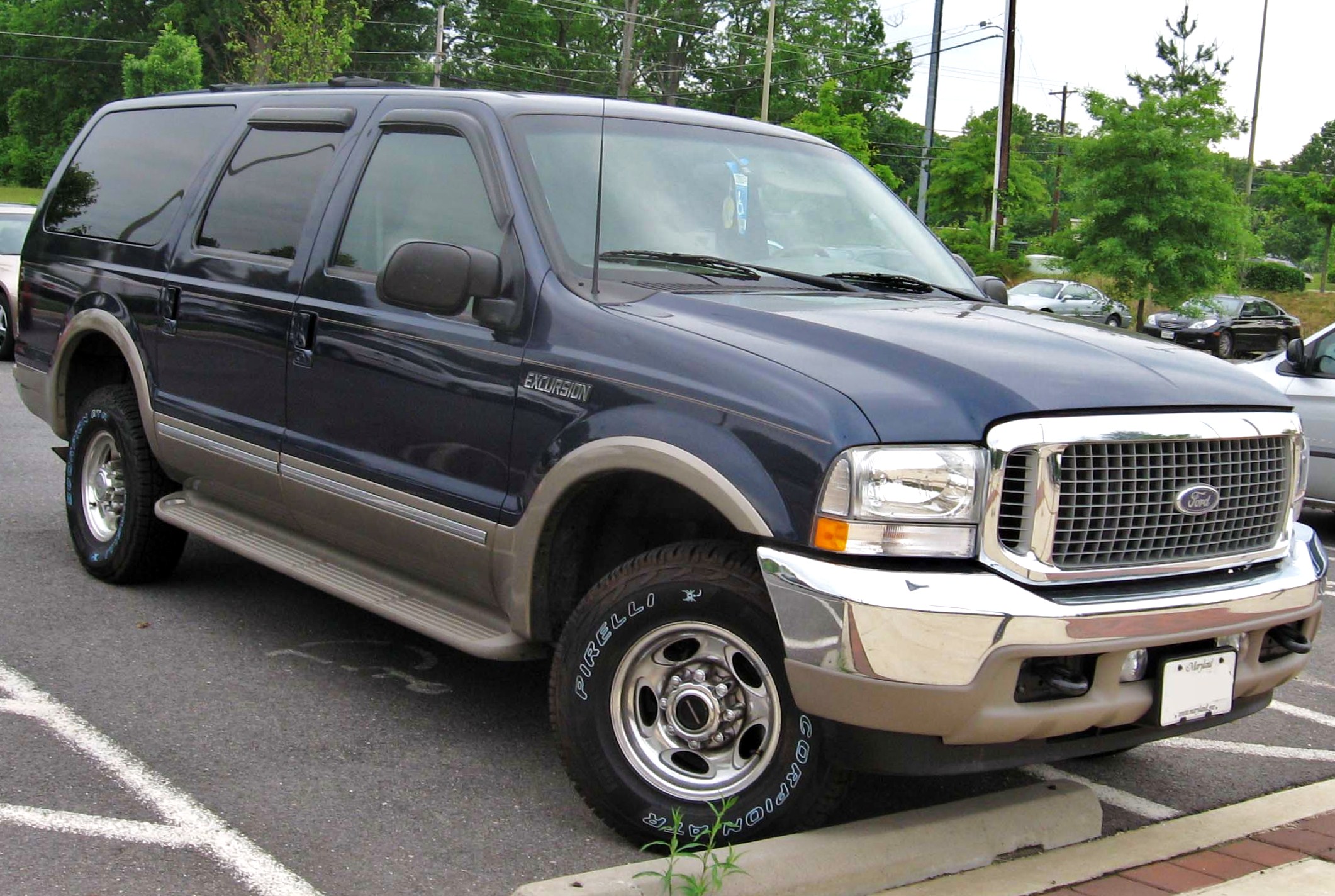
Ford Excursion
"Yeah, absolutely. So I have an old excursion I bought, which was always one of my dream vehicl..."
The Ford Excursion is a very large SUV made by Ford. It was offered with diesel engines that are built for strong pulling power, like towing. The episode mentions it because someone bought one and it was a long-time dream vehicle.
The Ford Excursion is a large, body-on-frame SUV that was produced in the early 2000s and is known for its big size and towing capability. It often comes up among diesel enthusiasts because many Excursions were equipped with diesel engines suited for heavy-duty use. In the podcast, it’s mentioned as a personal dream vehicle and an example of long-term ownership.

Ford F350
"Then we bought an old F 350 probably see it on our website doing donuts out front. We started that one just for testing."
The Ford F-350 is a big, heavy-duty pickup truck. Here, they’re using it as a test vehicle while they try different engine upgrades and turbo setups.
The Ford F-350 is a heavy-duty pickup known for its ability to handle big power and repeated testing. In this segment, it’s the truck they use as a platform for experimenting with engine parts and forced-induction setups.
pair it with a different turbo
"we're going to take every size injector we have and we're going to pair it with a different turbo and we're going to build a series of how our injectors paired with that turbo."
They’re basically doing a step-by-step experiment. They change the turbo and match it with the right fuel parts to learn what combination makes power safely.
This describes a controlled tuning approach: changing one major variable (turbo size/characteristics) while also changing the fuel system (injector size) to see how the engine responds. The goal is to map which injector-and-turbo combinations produce usable power without breaking the engine.
225 hybrid
"we started at stock and we went all the way up to like a, I think we are at a 225 hybrid with a 368 and then we blew the engine."
“225 hybrid” likely refers to a specific turbo configuration they’re using. A “hybrid” turbo is usually built to blend traits—like quicker spool-up and strong boost—depending on the parts used.
“225 hybrid” sounds like a specific turbocharger or turbo setup variant used in their testing program. In diesel performance circles, “hybrid” often refers to a turbo built from mixed components to target a particular boost/response range.
368
"we started at stock and we went all the way up to like a, I think we are at a 225 hybrid with a 368 and then we blew the engine."
“368” here probably refers to a specific turbo part or turbo model they chose for the experiment. They’re pairing it with their other turbo setup while testing how the engine responds.
“368” in this context is likely a turbo-related size or model number (for example, compressor/turbine housing or a turbo designation). It’s being used as the counterpart to the “225 hybrid” in their injector/turbo testing sequence.
blew the engine
"we started at stock and we went all the way up to like a, I think we are at a 225 hybrid with a 368 and then we blew the engine. And at that point it was like, all right, well, we knew that"
“Blew the engine” means the engine failed badly and likely needs major repairs or replacement. When you’re pushing power with turbos and injectors, it can happen if the setup goes beyond the engine’s limits.
“Blew the engine” is a colloquial way to say the engine suffered a catastrophic failure—often from oiling issues, overheating, detonation/overfueling, or mechanical stress under high boost. In a testing-and-tuning context, it usually indicates the combination exceeded what the engine could safely handle.

1968 F 100
"now we've actually are getting ready to throw that platform [1480.0s] on a 1968 F 100 and then we're just going to go make it rowdy [1483.7s] is all that all out."
The 1968 F-100 is an older Ford pickup truck that’s popular for engine swaps. They’re talking about putting a much stronger engine into it to make it faster and more exciting.
The 1968 F-100 is a classic Ford pickup platform, known for its simple, swap-friendly chassis and strong aftermarket support. In this segment, they’re planning to drop a very high-output engine into the F-100 to create a modern, rowdy build while keeping the truck’s classic look.
engine swap
"I love seeing like the coming [1507.9s] swaps are cool, you know, but like, I can't say that I'm a [1512.2s] Ford guy really, but it's like, I love seeing a Ford with an"
An engine swap means taking the original engine out and putting a different one in. People do it to get more power or a different kind of engine in an older car or truck.
An engine swap is replacing a vehicle’s original engine with a different one, usually from another model or even a different brand. It’s popular in classic trucks because the aftermarket makes it easier to adapt wiring, mounts, and drivetrain components.
Cummins
"like, look, everybody's putting Cummins in these things. [1534.0s] Like let's just go put a power stroke in it and that's what"
Cummins is a company that makes diesel engines. The hosts are saying a lot of people choose Cummins when they do engine swaps in older trucks.
Cummins is a diesel-engine brand best known for heavy-duty inline-six engines used in many commercial trucks. In the context of this segment, they’re noting that many people are swapping Cummins diesels into classic trucks.
power stroke
"everybody's putting Cummins in these things. [1534.0s] Like let's just go put a power stroke in it and that's what"
“Power Stroke” is Ford’s line of diesel engines. They’re basically saying, instead of using another brand’s diesel, they want to use Ford’s own diesel in the Ford truck.
“Power Stroke” refers to Ford’s diesel engine family (commonly associated with Ford Super Duty trucks). Here, they’re contrasting it with Cummins swaps—saying they’ll put a Ford diesel into the Ford truck to keep the build aligned with the brand.
lack of lubricity
"And the main reason that we have these issues is a lack of lubricity."
Lubricity is how “slippery” the diesel fuel is inside the engine’s fuel parts. If the fuel isn’t slippery enough, those parts wear out faster and repairs can get expensive.
Lubricity is how well diesel fuel can lubricate the fuel system components as it flows through them. When diesel has low lubricity, it can increase wear and contribute to costly fuel-system problems like injector damage.
Hot Shot Secrets
"Our friends over at Hot Shot Secrets have developed a formula that boosts performance and then addresses this issue."
Hot Shot Secrets makes diesel additives. Here, they’re being credited with a product meant to help diesel fuel protect the engine and keep injectors cleaner.
Hot Shot Secrets is an aftermarket brand known for diesel fuel additives and cleaning products. In this segment, they’re presented as the developer of a formula aimed at improving diesel fuel lubricity and injector cleanliness.
fuel up schedule
"So all you do is add it to your regular fuel up schedule and it's doing all the heavy lifting."
A fuel up schedule just means you add the additive regularly when you fill up. That way the treatment keeps working instead of wearing off after one tank.
A fuel up schedule is a routine plan for adding a fuel additive each time you refuel. The idea is to keep the additive’s effects consistent over time rather than using it only once.
CP4
"even then the, the CP4 in the power stroke is really good [1966.1s] marketing as well. [1967.1s] I mean, it's not a bad pump by any means."
CP4 is the name of a diesel fuel pump. If it breaks, it can contaminate the fuel system with debris, which can lead to big repair bills. Even if the failure rate is low, the fix can be very expensive.
CP4 refers to a specific high-pressure fuel pump used on some Ford Power Stroke diesel engines. When it fails, it can send metal debris through the fuel system, often causing expensive downstream damage. The hosts are discussing how common (or not) failures are and why the repair is still costly.
fail rate
"I think Bosch says it has less than a 10% fail rate. [1974.0s] It's just really good marketing out there by these companies"
Fail rate is how often something breaks, usually shown as a percentage. The host is saying Bosch claims the pump fails less than 10% of the time. But even if it’s uncommon, the repair can still be extremely costly.
Fail rate is the percentage of units that are expected to fail over a given period or under certain conditions. Here, the host references Bosch’s claim of “less than a 10% fail rate” to argue that the pump may not be as bad as the internet stories suggest. The discussion then highlights that even a low fail rate can still be financially painful if the failure is expensive.
Bosch
"I think Bosch says it has less than a 10% fail rate. [1974.0s] It's just really good marketing out there by these companies"
Bosch is a company that makes parts for cars, including diesel fuel pumps. Here they’re quoted as saying the pump failure rate is under 10%. The hosts are discussing whether that reassurance matches the real-world cost and consequences.
Bosch is a major supplier of automotive components, including diesel fuel system parts like high-pressure pumps. In this segment, Bosch is cited for a claimed “less than a 10% fail rate,” which the hosts then challenge by pointing out how expensive failures can be. It’s relevant because supplier claims shape how owners perceive risk.
injection pump swap
"we're going to get called on your fuel system need to replace [1991.7s] and then if so, like do you, do you want to save, keep that [1995.8s] money to the side as like an injection pump swap?"
An injection pump swap is when you replace the diesel pump that pressurizes fuel for the engine. It’s a big repair, so it can cost a lot. The host is basically asking whether you should prepare financially for that kind of job.
An injection pump swap means replacing the high-pressure diesel injection pump with another unit. Because the pump is a major, labor-intensive component, the cost of swapping it can be high even when the failure rate is low. The hosts are weighing whether to set money aside for a pump replacement if the fuel system starts showing issues.
fuel contamination kit
"once again, you're just talking about a fuel contamination kit [2015.7s] with the CP4 pump going, talking new injectors, lines, you [2019.4s] know, it's going to be a pump."
A fuel contamination kit is what mechanics use when dirty material gets into the diesel fuel system. It usually includes parts to clean out or replace the components that were exposed. The idea is to stop the contaminated fuel from continuing to damage the engine.
A “fuel contamination kit” is a bundled set of parts and procedures used after diesel fuel system contamination—often from a failing high-pressure pump. The goal is to remove debris from the fuel path and restore proper fuel delivery, typically by replacing or cleaning components like injectors and lines. It’s commonly discussed alongside CP4 pump failures because debris can travel downstream.
new injectors
"with the CP4 pump going, talking new injectors, lines, you [2019.4s] know, it's going to be a pump. [2022.4s] So, you know, we sell a lot of that stuff with the new DCRs"
Injectors are the parts that spray fuel into the engine. If the fuel system gets contaminated, those injectors can get damaged or blocked. That’s why repairs after pump failures often include replacing injectors.
“Injectors” are the nozzles that deliver pressurized diesel fuel into the engine’s cylinders. When debris from a failing high-pressure pump contaminates the system, injectors can be damaged or clogged, so “new injectors” are often part of the repair. This is why CP4-related failures frequently lead to injector replacement rather than a simple pump swap.
additives
"Or in your experience, you've seen like, do additives help? [2056.9s] Does, you know, are there, are there things you can do? [2059.8s] Or is that pump just, it's got a shelf life and the number is"
Additives are chemicals you mix into diesel. People use them to try to prevent fuel-related problems. In this conversation, they’re being discussed as a possible way to reduce the risk of a costly pump failure.
In diesel discussions, “additives” are chemical products mixed with fuel to influence combustion, lubricity, or contamination control. Here, the host is asking whether additives can prevent CP4 pump problems, which implies the additives might reduce risk by improving fuel properties. The key point is that additives are often debated because results depend on the underlying contamination and the additive’s formulation.
fuel filters
"Well, I think like we talk about, you know, the recurring [2072.7s] subject with the diesel maintenance is going to be a huge [2075.4s] part of it, you know, fuel filters, fuel treatments."
Fuel filters are serviceable components that trap contaminants before they reach the injection system. In diesel maintenance discussions, they’re emphasized because contaminated fuel can accelerate wear or contribute to pump/injector damage. Regular filter service is often part of the strategy to reduce the chance of expensive high-pressure fuel system failures.
fuel treatments
"subject with the diesel maintenance is going to be a huge [2072.7s] part of it, you know, fuel filters, fuel treatments. [2078.4s] I think you take like, I think it was diesel Dave or somebody"
Fuel treatments are additives you put into diesel to help the fuel stay cleaner or behave better. People use them hoping to prevent problems caused by dirty or contaminated fuel. Whether they help depends on the specific issue and the product.
“Fuel treatments” are additives or conditioning products intended to improve fuel quality or reduce issues like water contamination, microbial growth, or deposits. In the context of CP4 concerns, the discussion is whether additives can reduce the likelihood of pump failure by improving the fuel’s cleanliness and stability. Effectiveness varies by product and by the root cause of contamination.
DCR
"whether it's the contamination kid or doing a DCR or something like that."
DCR is a shorthand diesel people use for a protective fix or upgrade related to the CP4 pump. The goal is to lower the risk of the pump failing and damaging other fuel-system parts.
DCR is an acronym diesel owners use for a CP4-protection strategy or conversion/upgrade intended to reduce the chance of CP4 pump failure. The exact meaning can vary by shop or product, but it’s generally discussed as a preventative measure against fuel-system damage.
CPX
"We're, we're injector guys. We're gonna stay with injectors, but we buy, we definitely have it in our shop all the time to approach and, you know, we use the DCR, we use the CPX are great options."
CPX is a name for a specific option or kit they use when diagnosing or fixing injector problems. The important part is that it’s presented as a real alternative to other approaches.
CPX is another named option the hosts mention alongside DCR for injector work. Because the segment doesn’t spell out what CPX stands for, it’s best understood as a specific injector/fuel-system solution used to address the root cause of injector failures.
SNS gen two kit
"So there is some other things like that are cheaper to prevent it like the, the SNS gen two kit where you can put the filters on to hopefully capture all of that before it gets back into the fuel system."
This SNS gen two kit is basically an add-on filtration setup. It’s meant to catch dirty stuff in the fuel earlier, so it doesn’t end up damaging the injectors.
The SNS gen two kit is described as a cheaper alternative to larger “contaminant kits.” The idea is to add filters so contamination is captured before it can reach the rest of the fuel system and harm injectors.
upgrading a diesel truck
"challenges or other parts of the industry or like upgrading a diesel truck where now you're seeing people run these bigger turbos like this is, this is where it's headed."
Upgrading a diesel truck usually means adding performance parts. When you do that, the fuel system and injectors often need to be addressed so everything works together.
This refers to modifying a diesel truck beyond stock configuration—often to increase airflow and fueling capability. The segment suggests that injector-related solutions and fuel-system cleanliness strategies become more important as trucks are upgraded for higher output.
six liter injectors
"It's a combination of a few things that we're working on right now for our six liter injectors. We've actually are working with a partner that we are developing some new nozzles…"
Injectors are what spray fuel into the engine so it can burn. They’re working on injectors for a six-liter diesel to make the fuel spray finer, which helps it burn cleaner. That can reduce smoke and improve how the engine runs.
Fuel injectors are the components that spray diesel fuel into the engine’s combustion chamber. Here, the hosts are talking about injectors for a “six liter” engine, and they’re working on changes to improve how the fuel is atomized (broken into fine droplets). Better atomization helps the engine burn fuel more completely and cleanly.
new nozzles
"We've actually are working with a partner that we are developing some new nozzles that will helpfully create some better atomization to just a better clean burn."
Nozzles are the part of the injector that shapes the fuel spray. If the spray breaks into smaller droplets, it mixes with air better and burns more completely. That’s why changing nozzle design can reduce smoke and make the engine run smoother.
Injector nozzles are the tips of the fuel injectors that control the spray pattern and droplet size. The hosts say they’re developing new nozzles to improve atomization, which is crucial for achieving a cleaner, more complete diesel burn. In practice, nozzle design can affect smoke, drivability, and emissions.
atomization
"…some new nozzles that will helpfully create some better atomization to just a better clean burn."
Atomization just means “how well the fuel gets sprayed into a mist.” A finer mist mixes with air better, so it burns more completely. That can mean less smoke and cleaner running.
Atomization is how effectively the injector turns liquid fuel into a fine mist. In diesel engines, better atomization helps the fuel mix with air quickly, improving combustion efficiency and reducing soot. That’s why nozzle design and injector calibration often target atomization quality.
clean burn
"…create some better atomization to just a better clean burn. That's really important for us to… we don't like the smoke…"
“Clean burn” means the engine is burning fuel more completely. When diesel fuel doesn’t mix with air well, it can create more smoke. Better fuel spray and mixing help the engine burn cleaner.
A “clean burn” refers to combustion that produces fewer pollutants, especially soot/particulate matter and unburned hydrocarbons. Diesel engines can make smoke when fuel doesn’t mix with air well or burns incompletely. Improving injector spray (atomization) and timing helps move combustion toward a cleaner burn.
perfect fuel with perfect air
"…our goal is to have you running as good as you can, as clean as you can. So we want to have perfect fuel with perfect air…"
They mean getting the fuel and air mixed in the right way. If there’s too much fuel or not enough air, diesel can burn incompletely and smoke. The right balance helps it burn cleaner and feel better when you drive.
“Perfect fuel with perfect air” is a shorthand for achieving the right air-fuel mixture so combustion is efficient and complete. In diesel engines, the goal is not a gasoline-style stoichiometric mix, but rather the right balance of fuel quantity, spray quality, and available oxygen. Getting that balance right helps reduce smoke and improve drivability.

Lucid Air
"...can. So we want to have perfect fuel with perfect air and we want to get this truck out of the way quic..."
The Lucid Air is an electric car, meaning it runs on electricity instead of burning fuel. It’s designed to go a long distance on a charge, which is why it can be mentioned when people talk about getting the “right” inputs for power.
The Lucid Air is a modern electric sedan built by Lucid Motors, known for aiming at very efficient energy use and long driving range. It may come up in a diesel-focused conversation when the topic shifts to “perfect fuel and perfect air,” because EVs replace combustion with electricity and motor-driven power. That makes it relevant to discussions about how powertrains get energy from their inputs.
hybrid stuff
"We've also got some hybrid stuff for the racing side that we're working on. We're just working on getting it just right before we release it."
“Hybrid stuff” means they’re adding an electric system to work with the engine. In racing, that can help the car respond faster or use energy more effectively. The details depend on the hybrid design they’re testing.
“Hybrid stuff” refers to adding an electric component to assist or modify how power is delivered—often to improve response, efficiency, or racing performance. The hosts mention it specifically for the “racing side,” implying a motorsport-focused hybrid development. Hybrid systems can change how quickly torque is available and how the engine is operated.

Lancia Beta
"...ve really appreciate that because nobody wants to beta test, you know, their their truck. And sure, you ..."
The Lancia Beta is a car model made by Lancia. In this episode, the name is used as a joke or metaphor about “beta testing,” meaning being the one who tests something first. It’s mentioned more for the wordplay than for detailed car specs.
The Lancia Beta is a classic car model from Lancia that’s often discussed as part of the brand’s history and its engineering era. In the podcast context, it’s referenced with the idea of “beta testing,” using the name as a metaphor for something you wouldn’t want to be the test subject for. That makes it a quick, memorable reference rather than a technical deep dive.
pressure
"[2379.1s] think if something goes wrong with an injector, you have that [2383.4s] pressure that he's right there. [2386.0s] There's a piston right below it."
Here, “pressure” means the fuel is being pushed very hard to spray correctly. If that pressure or delivery is wrong, the engine can run hot and cause damage.
In this context, “pressure” refers to the high-pressure fuel system used to atomize diesel fuel for efficient combustion. Diesel injectors operate under significant pressure, so a fault can cause fuel delivery problems that translate into heat and mechanical stress nearby.
testing and validation
"[2403.4s] So I think they appreciate that, that testing and validation [2407.8s] before they can even buy it. [2410.1s] Yeah."
Testing and validation are checks done before a new part is sold. The goal is to make sure it works safely and reliably, especially for parts like injectors where mistakes can cause big engine damage.
Testing and validation are pre-production steps used to confirm a part will perform correctly under real operating conditions. The host argues that injector-related failures can be severe, so manufacturers should verify fit, materials, and behavior before selling to customers.

Dodge Journey
"on with that one? Like what about your personal journey with diesel? Well, like I said, you know, we boug..."
The Dodge Journey is a family-sized SUV/crossover. It was offered with different engines, and in some versions it could be a diesel. That’s why it might come up when someone shares what it was like to own a diesel vehicle for daily driving.
The Dodge Journey is a midsize crossover SUV that was sold with different powertrains depending on model year, including diesel options in some markets. It can appear in a diesel podcast when someone talks about their personal experience with diesel ownership, because the Journey is a practical family-oriented vehicle that some owners chose with a diesel engine. That makes it a good example of how diesel power shows up in everyday driving rather than just trucks.
Request an Explanation
Heard something you'd like explained? We'll add it to this episode.
Sign in to request explanations for terms you heard.
Want to learn more?
Browse our glossary for plain-English explanations of automotive terms, jargon, and concepts.
Help improve this episode
See something that's not quite right? Our annotations are AI-generated and can sometimes miss the mark. Click the flag icon on any annotation to suggest a correction.