
Annotations will appear as you listen
0:00
29:39
LIVE
It's noon here in Venter City, New Jersey, Annardations, Capital, Watt. Well, maybe not. That looks like the West Coast to me. And this is Car end's live for Monday, September 29th, with your host me, Ray in Venter City. And Zach, I believe he's in Washington, DC, but that sort of kind of looks like the left coast. Could that be the Pacific Ocean over your shoulder?
So, perhaps just decided I wanted to be there. Dad, today's show is brought to you by caredge.com. A friendly reminder folks were trying to end our September strong. So, we've got 20% off car edge insights, which are the tools we use, to negotiate the best possible deals on behalf of our customers. Well, you can get your hands on those for 20% off. And 20% off our car buying services. If you are not familiar with our car buying services,
day, works on behalf of customers to help them navigate the car buying process, get them
the best deal.
It makes it so you don't have to deal with the dealership and our team does it in instead
check it out back at caredge.com and do me a favor folks learn more about our promotion
going on right now.
You support our business.
We help you.
It is the elusive win, win, debt.
Yeah, we're going to be talking about automakers going out of business and we need to start
here.
The Aguara Land Rover seeks $2.7 billion lifeline after cyber attack on top of a $2 billion
loan guarantee from the UK government.
This is the first of a few automakers we're going to talk about this morning or this afternoon,
but J.O.R.
Dad in desperate trouble right now looking for a nearly $3 billion lifeline.
And if I'm not mistaken, 2025 was the year they were taking off, you know, not actually
producing vehicles, it's just a really bad situation here for J.O.R.
Land Rover.
They weren't producing jaguars this year, but they were producing the always popular
and overpriced land rovers of every variety that they could.
The fact that they need $4.7 billion lifeline between the $2 billion loan guarantee from the
United Kingdom government and $2.7 billion in credit available from some other lending
institutions.
My God, I could get by with a lot less.
You know, if somebody wants to just start handing out money, they could hand out $1 million
and a half would be fine for me.
You know, and you can save the other, the other billions.
It is a situation unfortunately for England's largest auto manufacturer where, you know,
timing is everything in life.
And while their timing has been suspected best recently and between the cyber attacks
and jaguar taking the year off, they are having a difficult, difficult time.
You would suspect from the $2 billion loan guarantee from the government that, well, at least
in Britain, they're too big to fail.
Seems that way.
No, Dad, it's worth mentioning that cyber attack has taken Jaguar and Land Rover production
offline for almost two months now.
And just a couple hours ago, the BBC was reporting that they were on the cusp of actually being
able to start production again.
So imagine that you're taking the year off over on the Jaguar side.
Land Rover for the most part are selling well with price premiums here in the United States
and internationally, but then production is down for almost two months as a result of a cyber
attack.
Yeah, they really, I mean, like the Nissan story because Nissan's another one of the
automakers we're going to talk about that has the potential to go out of business.
Like the Nissan story is a little more cut and dry.
They're just the cars aren't selling and they have to cut back on all of the capacity they
have to save money.
JLR, man, they just kind of have been taking their lumps this year is really what it looks
like.
You know, every now and then as CEOs make a bet and sometimes it's the wrong bet.
And it just appears to me with everything that is going on globally in regards to electric
vehicles, battery full battery electric vehicles, which was the Jaguar push.
You know, we're going to be, yeah, the reason we took the year off is because we're going
to come back as a full battery electric vehicle company in 2026.
You know, the timing appears to be off when it comes to that.
Every other manufacturer out there is looking or appears to be pivoting away from full battery
electric vehicles because the demand isn't quite what everybody had suspected or had hoped
it would be by now.
That is not to say that EVs are not selling to a certain extent they are.
EVs will probably have in the United States the best month that they've ever had this
month.
Yeah.
Might have something to do with the fact that the federal tax credits expire tomorrow at midnight.
So there is a market for EVs.
It just seems to me that Jaguar miscalculated when it comes to what the market is and how
strong the market is.
So Jaguar, they may be going out of business Land Rover, I don't see that one happening
as much but I mean a couple months of production offline and now dead again.
It's not like this loan is just for Jaguar.
The headline in automotive news is about Jaguar and Land Rover needing a $2.7 billion lifeline
there where it's not mine.
All right.
So there you go folks.
That's one and maybe two brands that could be singing the the Sionara song relatively
soon.
Nissan and Mitsubishi are two other brands I wanted to bring up today dead.
That could be on the cusp of going out of business.
We think with Nissan, however, they'll sustain themselves some way shape or form.
But even if you look at just the AI overview over here on Google Land, is Nissan going
to go out of business in 2025?
They say no, but how many years of the road can you be losing four to five billion dollars
while your sales are slumping internationally and most importantly in your, your most profitable
market, the United States or your largest market, excuse me, least profitable market in
the United States.
And they also recently dead to your point around EVs.
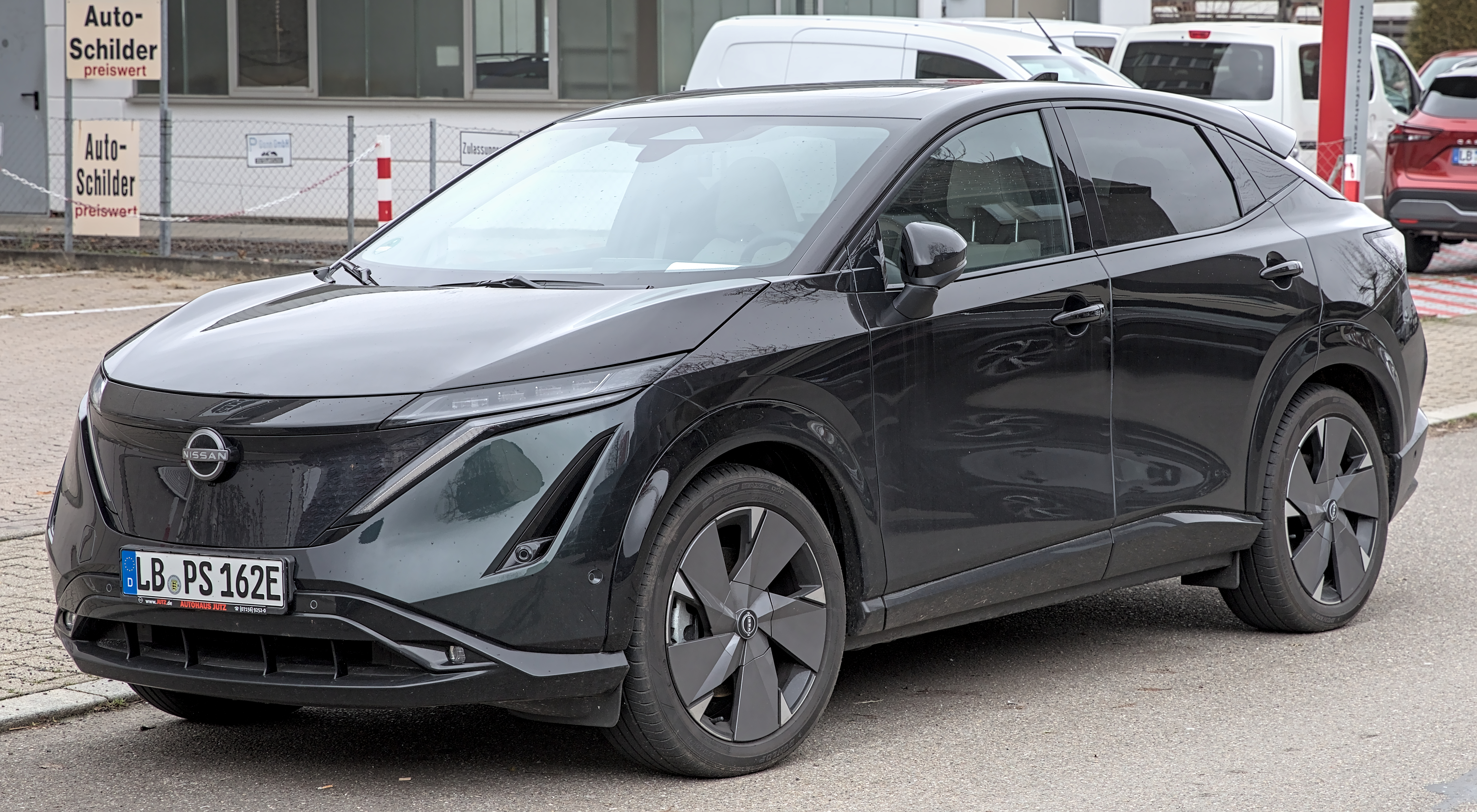
They stopped production of the Nissan Arias saying they're going to pause production of
that.
Mitsubishi, we know is struggling here in the United States as well.
And then there's a hand.
And then there are a handful of Stellantis brands like Alfa Romeo and Maserati that we
know are struggling desperately here in the US as well.
So there are a handful of automakers, obviously the headline today being the nearly $3 billion
lifeline that Jaguar Land Rover is looking for.
But there are many automakers that could be looking into the sunset relatively soon.
It is, it has become a struggle for many manufacturers.
Yeah.
And you can almost see the handwriting on the wall, you know, back four or five years
ago when it was like every day we were reading about another $30, $40, $50 billion commitment
towards battery electric vehicles from this manufacturer or that manufacturer.
And I remember the commitments when they were all at it together were approaching like
a half a trillion dollars that all these manufacturers were putting towards battery electric vehicles.
You know, obviously it didn't spend all the money on it, obviously some backtrack beforehand.
Others, you know, like Jaguars bet, others, it's just that timing is really miserable for
that.
Would I suspect that Jaguar Land Rover will go out of business?
I don't do I, do I think they'll struggle for years.
I think so, you know, how long and how many, and how many billions of dollars of guarantees
will the British government have to have to give them?
You know, it is a, it is a bad sign when your largest automobile manufacturer is on the
brink of, of going out of business so that I, I suspect the government will continue to do
whatever they can do to make sure that does not happen.
You know, you look at, you look at Nissan, will Nissan go out of business?
Somebody will take them over, somebody will, will make, you know, will they consolidate
with some other manufacturer?
Perhaps, you know, we, you know, there is some type of alternative fuel universe out there
that everybody's trying to get to and, and a lot of people think it's just battery electric.
I think it might be other things, but will the directions that were going indicate
that many of the legacy manufacturers are going to struggle for years to come?
And I think that very well may be the case.
Will there be some real severe consolidation?
I, I would think so.
Yeah.
Who, who Nissan consolidates with?
I don't, you know, it's, it's like when there are brands that go out of business in this
country.
Okay.
In the, in the storefronts go and they close and yet somebody buys the web address and
then, you know, sharp image was one and then, okay, they just become a website where you
can buy stuff.
Will that, you know, will Nissan become somebody just buys the web address?
I don't know.
You're losing me a little bit, pops.
Let me get this train back on the tracks of that.
But we do.
We do.
We do have some suppliers filing for chapter 11 bankruptcy protection.
And I think this is really interesting because we have now over the past couple of months
seen dealership groups, so the people that actually retail in cell cars, them go bankrupt
and now we're seeing more and more pressure on suppliers, frame and traco.
Now these brands that they try goes more on like the windshield wiper space and frame
if I'm not mistaken.
Let's like, where was it?
Oil filters and stuff.
Yeah.
Oil filters, break solutions, filtration products.
We're not talking about small businesses though, Dad.
$1.1 billion in debtor and possession of financing.
So I think these are massive.
First pants has $6 billion in debt on their balance sheet.
I mean, these are massive companies that are suppliers to the auto industry, whether
it be manufacturers or to the broader industry.
And they are going out of business and we have seen, Dad, many, many, many surveys that
talk about the financial distress of companies in the auto industry.
And so we can't have a conversation about automakers going out of business without acknowledging
the fact that there are suppliers every single day in financial ruin and ultimately leading
to bankruptcy protection.
So this is a broader conversation around, there's just an auto industry in flux and a lot
of consolidation.
I like that word about a consolidation that is likely to happen, whether it be horizontal
integration, vertical integration, like the auto industry is going to look different
in the 2030s as a result of all these decisions.
To your point, pushing strategies towards EVs, the chip shortage, car prices going crazy
affordability.
The auto industry is going to look different a decade from now because of it.
I would suspect so.
And you have to realize that a lot of these suppliers, these parts suppliers, they work
on very thin margins.
They can't afford, for instance, like when Jaguar Land Rover shuts down production
in the year, most two months, that becomes a massive struggle for these suppliers.
And then tariffs have not helped because in many cases, the suppliers have tried their
best to mitigate as much of the tariff problems as they can and it is cutting into their profit
margins.
And there's only so long that these either suppliers or manufacturers, the automobile manufacturers
can continue to do that before they just have to finally start raising prices.
So everything is kind of tied together.
We sort of kind of had a conversation you and I earlier today in regards, and we touched
on this last week that Ford has decided in an effort to sell more F-150s in the third
quarter, that they would ease lending guidelines for people with lower credit tiers, even
some subprime customers and still offer them specialized incentives and interest rates.
My rationale for it is that the pool of customers has shrunk so much that they need to expand
that pool and the way they're doing it is they're making at least attempting to make
something seem more affordable to those who don't handle their credit well.
And that to me is the broader topic that just really indicates that many of these manufacturers
Nissan is another are looking at it and going, we don't have enough qualified people to sell to.
And think about your earlier comment, suppliers are already on thin margins.
You increased their cost and for structured, they start to go out of business.
That's after 11 bankruptcy that we just had up on the screen.
They start to go out of business.
Maybe if you're a well capitalized automaker and you want to vertically integrate,
maybe you start to acquire those assets.
Maybe you start to own more of your manufacturing process, and then you can actually boost
your margins. But on the automaker size, I like they have booming businesses right now.
Maybe Toyota is the exception to that rule.
Like you're for dead, your business has actually been struggling for the past five years
because of exactly what you just described, the affordability crisis,
they need to incentivize and now how is that now manifesting itself.
But we're seeing them offer these kind of ridiculous, subvented interest rate programs,
the customers who quite frankly don't qualify for it or at least traditionally have it.
So it's like there's a whole web here of interconnectedness.
And it does a lot of it does tie back to affordability and profitability.
Well, and trying to make things affordable or
appear to be affordable to people by subventing the interest rate,
it is not the cap of lender that eats that, okay.
That is underwritten by the manufacturer.
So when Ford does these things and they offer the subvented interest rates,
subvented meaning the 0%, 0.9%, 1.9%.
The artificially low interest rates, they are basically agreeing to stroke a check to their
cap of lender for the cost of doing that. So if it's costing Ford thousands upon thousands of
dollars in specialized interest rates, that means that they don't have money elsewhere to do
other things. As their profit margins have shrunk and many of the manufacturers have admitted to
this, that the profit margins had been double digit, 10 to 12% and in many cases they've been cut
because of increased costs for any number of reasons, but one of the main reasons is the
increased tariff costs. That means if the profit margins lower, then ultimately there's less money
coming in that would allow them to do other things. So as much as some of these manufacturers might
like to buy a frame and others, they might not have the money at the moment to be able to do that.
Yeah, exactly. So it's really, it's kind of around a slippery slope here.
What's the, it's the Warren Buffett quoted. It's like when the tide goes out, you see who's wearing
their swim trunks or something like that? That's kind of what's happening right now. When the tide
goes out, you see who's swimming nude, yeah. Yeah, yeah. I know what's happening right now.
Tell us, come to the chat. Matthew, we really appreciate the kind contribution.
If you think your Land Rover was a citrus fruit, I think he's talking about a lemon before this,
just wait until you have the opportunity to buy a post shutdown car.
You're the lawyers. Yeah, Dad, would you be someone, would you be like recommending people,
hey, buy the first new post two months shutdown production Jaguar Land Rover?
Well, you know, I would have never advised anybody to buy either one of those products,
even if they didn't have these issues. You know, when, when I worked for the Penske
Organization in North Scottsdale and, you know, our campus, we had, we had Jaguar, we had Land Rover,
and we used to, you know, I used to be able to joke with the GM of the Land Rover story, you know,
he would tell me, he said, yeah, if, if our customers want to be able to drive a Land Rover
seven days a week, they need to own two or three of them because one or two of them is going to be in
the shop every week. So it's just, they've never been known for their quality. Yeah, they've been
known to be expensive and they've been known to be luxurious and they've been known to be a wealthier
person's niche type vehicle, but they've never been known for their quality. So, you know, reliability,
reliability, I think quality, it's the real, they rely both. Well, yeah, okay,
relies. So, so yeah, to Matthew's point, yeah, it'll be interesting to see just how bad these
things, the funniest thing to me was, was, you know, when our Land Rover store, they would,
they would put together caravans where they would actually go out in the desert, you know,
they would, you know, with their, with other Land Rover owners. And I was thinking to myself,
how many tow trucks they have to take with them in case some of these actually broke down when
they were out in the desert? So it's just, you know, do you really want to go off-roading and
something that, well, it might be the one and only time it ever goes off-road? That made a question
come in here from Luna, she was oh six. And regardless of the car buying service,
what I'd be able to lock in that price now, but use the service in November, absolutely. I
encourage folks to take advantage of this, go back to caredge.com. We're running a 20% off promotion
right now. Lock in, lock in the price, our team is not going anywhere. We'll be able to help you,
whether it be in end of end of September here, like you're trying to get that EV before end of
date tomorrow, all the way through something in October, November, December, we are here. Q4 is,
when we're going to be able to get folks the best possible deals, so absolutely take advantage
of this promotional offer back at caredge.com today, and you can use it, you know, between now and
the end of the year, that I also want to pull up here. This is from earlier in the show Egor. My
insider information from Land Rover Jaguar told me that it wasn't a fake or that it wasn't a fake
story of a cybertack. It was a lack of funding, right? Yes, who knows, who knows what's actually
going on over there? JLR, that's from Egor sharing his insider info. Shall we switch gears,
Pups? Yeah, do you know how to shift? I do know how to shift or shift in over here to
Cox Automotive. They do these weekly auto market summaries. Yes. And there was something in here,
Dad, that I think deserves some of our attention, which is the money continues to defy expectations
of slowing, but September sentiment suggests all is not well. So I'm going to come all the way
down here to consumer sentiment. And we're just going to read through some of these things,
because I think it speaks volumes to what you're talking about, which is affordability and things
like that. So consumer sentiment deteriorated in September. The sentiment index from the
University of Michigan decreased 5.3% September to 55.1, which was slightly lower than expected
and marked a decrease from the earlier reading at the beginning of the month. The index was down
21.4% year over year, the underlying views of current conditions and future expectations,
both declined with future expectations declining the most. Expectations for inflation in one year
decreased to 4.7% from 4.8%, but expectations for inflation in five years increased to 3.7%.
Consumers views of buying conditions for vehicles declined slightly to the lowest level in four months
as views of prices deteriorated. So you can see right there, Dad, the expectations or the sentiment
from consumers is also off. So we've got these automakers struggling. We've got the manufacturers
or the suppliers struggling. And then you've got consumer sentiment kind of in a really rocky
position right now. It's all interconnected, and I keep referring to it as a pool of customers,
and the pool of customers who can afford to buy things keeps actually shrinking. What isn't shrinking
is the availability of vehicles for that pool of customers to buy. You've got growing inventory.
Yes. So as inventory grows and the number of people who might be interested in buying
at shrinks, well, then it becomes less cost effective for each manufacturer because they have to
spend more to incentivize whatever customer comes in to look at their vehicle to actually buy it.
And the reality is we need that pool of customers to expand, but we don't need it to expand because
we are artificially lowering interest rates for poor credit or the people in order to buy
those items. We need to increase the pool by actually lowering prices of vehicles
and making more affordable vehicles available to a larger group of people.
Yeah. And so I think that's where the manufacturers are missing it. You can't, you know,
part of the conversation you and I had earlier today was you can't take some prime borrowers
and ask them to take on 50, 60, 70, 80,000 dollar loans, even that artificially
cheap interest rates and expect that they're actually going to make those payments.
The number of first payment defaults that we will see going forward with Ford for those F-150s,
for those poor quality credit customers will be significantly higher than what they've experienced
in the past. And the first payment default is someone that gets into the loan and doesn't even
make the first payment when it comes 45 days from now. Those numbers will be staggeringly high
when these people realize, hell, even at that cheap interest rate, I really can't afford this
$850 a month car payment. And well, since I can't afford it, I'm not going to make it. And I'll just
keep driving this damn truck till they come and pick it up. So it's just we're the manufacturers are
going about it in the wrong way to encourage more people to buy cars when they really can't afford
them. They need to make more affordable cars for those people to be able to buy in my opinion.
Just pulling back up, I mean, that what you've been referencing a couple of times in today's show,
you know, this was documented by the Wall Street Journal Ford Loers F-150 interest rates
for subprime buyers, borrowers, buyers, excuse me, to boost sales. So it's exactly what you just said
to summarize there in that headline. And then again, I think what exacerbates this dead is you
have literally the suppliers going out of business because they can't make enough money. I can try
and pull it up here. But automotive news to that recent like sentiment survey for suppliers and like
the financial health of suppliers is the worst it's been in a long time. So it's like, you can
scream from the pulpit, hey, we need more affordable vehicles. And to a degree, we're seeing the
automaker agree with that, right? Like they're trying to make the vehicles quote unquote more affordable
by giving you a lower monthly payment. But if you need more affordable vehicles, you probably need
cheaper inputs like cheaper parts, cheaper components. That's where this hits, which is well,
those are actually, you know, those manufacturers of those parts are actually going out of business.
And then you see more broadly and oversupply starting to happen again. This is why Nissan
shutting down plants nationwide globally. And we see, you know, Stellantis, for example,
last week announcing the shutdown of some of their plants in Europe. And we saw general
motors. They said it was supplier related parts related, but general motors has shut down production
of some of their plants here domestically in the United States. So again, it's that whole interconnected
web here. And yes, it all does come back to affordability. But you can start to see and paint the
picture for why it's not as easy as snapping your fingers and having cheaper cars to sell. This
should ultimately drive that towards lower content vehicles vehicles that do not have as many
components or gizmos or widgets or whatever gadgets. Because those actually will be cheaper to
produce and should be able to meet consumers where they are. One would hope, you know, it's that
Jaguars, why they took the year off. They're going to come back with less gizmos and was paying
things. I don't think so. Well, that wasn't their plan. Their plan was to be appealing to a more
affluent younger clientele, not sure who they are and and how many of those electric Jaguars
are going to go out there looking to buy. There's a difference between trying to make a car payment
more affordable by either artificially lowering the interest rate or continuing to increase the
loan term from 60 to 72 to 84 to 96 months. That's different than actually trying to make a vehicle
that is more affordable from the jump. Yeah. Yeah. So that's that's we are we are literally watching
manufacturers kind of juggle affordability just through the payments when they need to actually
make more affordable cars. That's just me. I could be wrong. Wouldn't be the first time if I am.
Well, folks, if you're in the market for an affordable car or any vehicle, we're here to help you
out. Please, folks, go check out car edge dot com whether it be shopping for a new car use car using
our car buying services leveraging car edge insights. Our whole research center being up on the
warranty front tracking vehicle value. We still have the AI negotiator. Don't even talk about that
as much as we probably should learn more about how we are helping out tens of thousands of people
every single month back at car edge dot com pretty wild that nearly a million people go to our
website every single month. We appreciate all of you that support us. Dad, we're actually doing
an interview here in just a couple minutes about 15 minutes with ABC in San Diego. Yeah, I keep
this week. We're going to have an interview that I did last week up in New York going out. And
then I think you're you're on ABC in Portland, Oregon, too. No, no, I was in I was on ABC in Portland,
Oregon last week or the week before Friday, I'll be on the affiliate in Columbus, Georgia.
So, you know, we are at the very least we are kind of like horse poop. We are everywhere.
We're trying our best folks. We appreciate all of you supporting us tuning into the channel here
subscribing to the car edge live channel. And really cool to see us getting more and more notoriety
and press this. Thank you to everyone who supports us. That's all I have for today,
Pops. We'll be back here with more car edge live tomorrow. We're looking forward to doing it again with
absolutely. I think it should be another fun day tomorrow. And I look forward to seeing you in
about 15 minutes on a on another live stream somewhere, ladies and gentlemen. Thanks. You have a
great rest of your day. I'll I'll see you soon.
About this episode
A deep dive into the struggles facing several automakers, particularly Jaguar Land Rover, which is seeking a $2.7 billion lifeline due to a cyber attack and production halts. The discussion also covers Nissan and Mitsubishi's declining sales and financial woes, alongside the broader implications for the automotive industry as suppliers face bankruptcy. The hosts emphasize the interconnectedness of affordability, consumer sentiment, and the need for manufacturers to pivot towards producing more affordable vehicles rather than relying on subprime lending strategies.
Original notes
Today on CarEdge Live, Ray and Zach discuss the latest news from Jaguar and Land Rover. Tune in to learn more! Hosted by Simplecast, an AdsWizz company. See https://pcm.adswizz.com
for information about our collection and use of personal data for
advertising.
CarEdge Live
Ray and Zach Shefska, Bleav
0:00
29:39