An ignition coil is a part of the car's engine that helps create the spark needed to start the engine. It takes a small amount of electricity from the battery and turns it into a much larger electric spark that ignites the fuel in the engine.
Injectors are parts of the engine that spray fuel into the engine's cylinders. They help mix the fuel with air so that it can burn properly and make the car run.
The Chevrolet Trailblazer is a type of SUV that can carry people and cargo. It's known for being able to drive on different types of roads, including rough ones.
The PCV system helps recycle gases from the engine to reduce pollution. If too much moisture gets in, it can cause parts like the throttle body to stick, making the car hard to start or run smoothly.
Hot soak happens when you turn off a hot engine and then try to start it again shortly after. The heat can cause problems with parts that need to cool down before working properly.
Dorman makes replacement car parts that are often better than the original ones. They focus on fixing common problems that cars have, especially from big brands like General Motors.
In a returnless fuel system, the fuel goes straight to the engine and doesn't go back to the tank. This makes the system simpler and can help save fuel.
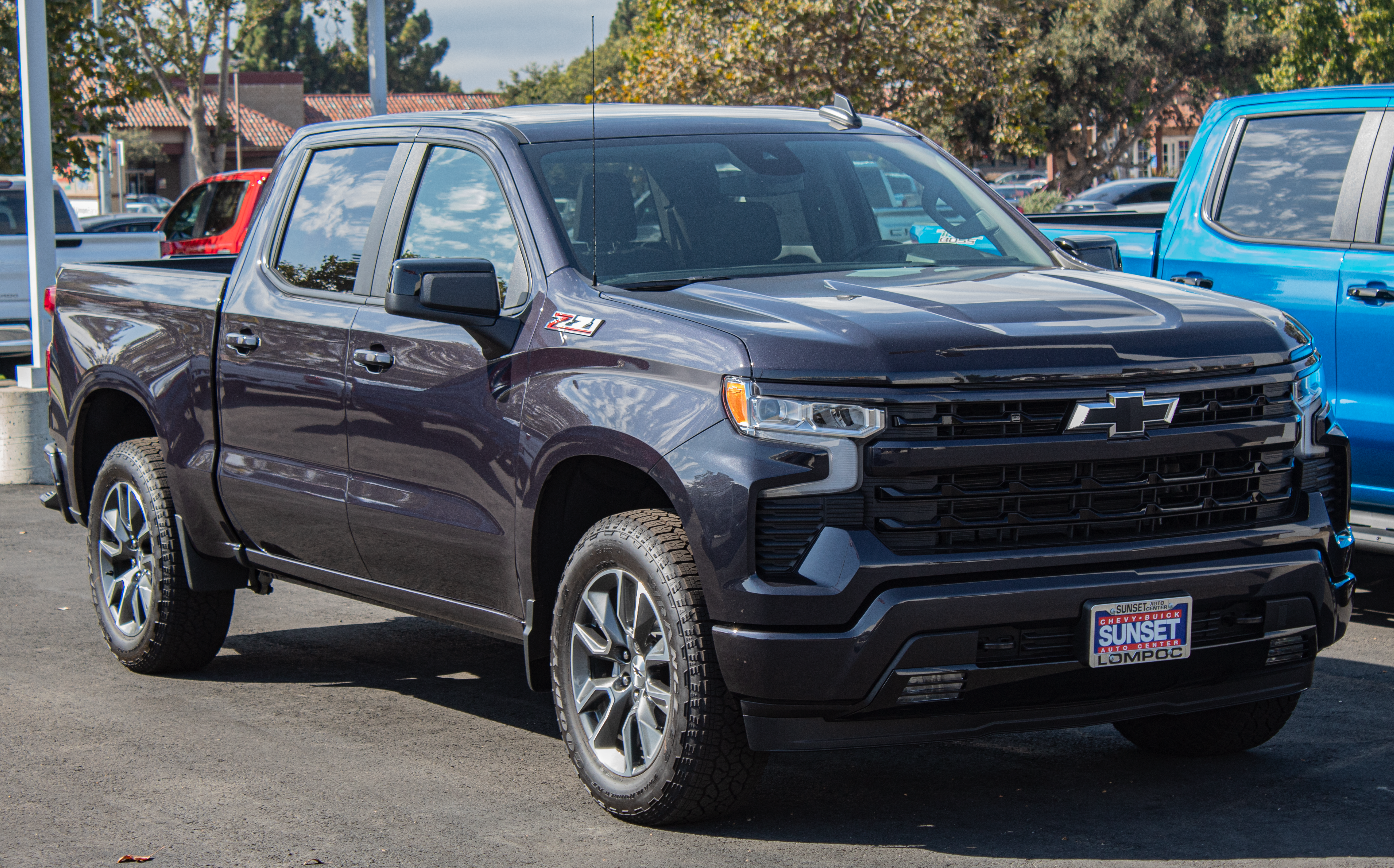
The Chevrolet Silverado is a big truck that people use for work or to haul things around. It's popular because it's tough and can handle a lot of different tasks.
The transmission is like the car's gearbox. It helps control how fast the car goes by changing gears, similar to how a bicycle works with different gears.
When you see a 'reduced engine power' message, it means your car is having a problem that could make it unsafe to drive. The car is trying to protect itself by using less power until the issue is fixed.
The body control module is like the brain for many electrical parts of a car. It helps control things like windows and lights, making sure they work properly every time you use them.
A load sharing program helps balance the power used by different parts of the car. If the battery is low, it makes sure important things like starting the engine still work, even if other features have to be turned off.
Berkeley Classics is a company that offers insurance specifically for unique and classic vehicles. They help protect cars, trucks, and even motorcycles, so you know what your vehicle is worth if something happens to it.
Road Ready Wheels is a business that sells replacement wheels for cars. They make wheels that fit like the original ones, so you can easily swap them out without needing new parts.
TPMS sensors are devices in your car that check the air pressure in your tires. If the pressure gets too low, they let you know so you can fix it before it becomes a problem.
Aluminum alloy wheels are a type of car wheel made from a mix of aluminum and other metals. They are lighter than regular steel wheels, which can help your car drive better and look nicer.
This part holds fuel vapors so they don't escape into the air. If it gets too full of liquid fuel, it can cause problems with how the engine runs.
LIVE
Hey, welcome to the end of the hood show podcast.
I am Russ Evans along with Shannon Nordstrom and Chris.
He's playing hooky for a good reason.
It's just me and just Shannon.
And we're going to talk cars like we always do.
And as usual, Under the Hood is brought to you
by Berkeley One Classics, your key to collector car insurance
celebrating 50 years in business.
And by car-part.com, over 200 million recycled originally
climate use parts ready to ship to you fast.
And by roadreadywheels.com, use the code hoodie to save even
more on your aftermarket OEM lookalike wheels.
Now, here's the podcast.
This is Under the Hood.
Hey, welcome to the Under the Hood show.
I am Russ Evans along with Shannon Nordstrom.
Welcome, hoodies.
Thanks for tuning in so we can help you tune up.
Just Shannon and I today, but that's OK,
because we'll we'll handle you, Carl.
We'll fix your car ills.
We'll do what we done.
This is this is nothing new anymore, is it?
Yeah, we're going to get Chris a personal masseuse.
Yeah.
And it's not going to be you or I.
No, maybe producer Doug.
No, no, he says no to.
He's giving the big no.
OK, all right.
Yeah, he needs it.
You know what it is?
It's this chair.
You saw me switching chairs.
I did see you switching.
He was just too proud to say, Russ, I can't stand that chair.
I can't sit in it.
But I've got an idea.
I'm going to switch some chairs out here.
Just leave mine alone.
Yours is fine.
People get sensitive about stuff like that.
Leave mine alone.
Mine is fine.
I'm sitting in it right now.
But I'm going to fix that other one
because it's either either we have the ugly chair,
which is fairly comfortable or we have the.
Well, we have that Chris chair, so not good.
So.
Well, either way, you know what?
Bob's been on the phone.
He called generously before the show
and we'll talk to Bob and Georgia with an 07 accord.
Hey, Bob, how you doing?
Doing good.
How are you doing?
Not bad at all.
What can we help you with on that 07 accord?
Well, I was going to check the smart plug.
Hold on.
But.
It has, of course, it has the call
or got a call on each part, but no problem.
But how do I remove the wire connector
to the call without the clips being broken or whatever?
Very carefully.
You want to you want to there were the ones with that.
There's two different styles.
There's one with a red lock and there's one without.
If it doesn't have a lock,
you just push the button down and disconnect it carefully.
If it's got a lock on it, you have to pull that lock back.
About an eighth inch or so.
And you need to do that with a small tool,
either a little flat blade screwdriver.
You can use the end of a ballpoint pen without it turned on.
You know, just the plastic part, something to not push that very hard.
Now, if you break that little red tab connector off of there,
that's the lock usually doesn't hurt anything.
You take it off and you just push the button down.
I mean, a lot of them come in.
I'd say more than half of them come in with that missing already
because somebody tried to disengage it and it went too far
and they threw it in the garbage.
I find them on the floor all the time.
It's the I haven't seen one fall off on its own without the lock
and the lock's purpose is to hold it on so it won't fall off.
But I've never seen one just fall off
unless the connector itself is broken as well.
But they're there for a purpose they wanted to hold on.
You know, it's not like we have cars come in.
Oh, look, the coil is not plugged in.
Let's connect it back.
I don't know if I've ever had one come in that the coil wasn't.
Now injectors, yes, but coils, no.
So yeah, you just be real careful with that.
If you can look on YouTube, it's amazing.
The the videos people put out just about connector removal
because connectors are one of the most difficult things
to find out how they come apart.
Well, Russ, you told me when you were getting trained from,
was it BMW or Ford BMW?
And I remember you saying that one of your operations was
is that you had to go in and they just had a big old container.
Explain how that went.
Because I always intrigued by that that whole situation.
They had a like a five gallon bucket size full of connectors
that were every connector that they had in current use
for the three model years that were in current use.
Was that Ford or BMW? That was BMW.
And they had to spend 12 hours on removing
and reconnecting connectors.
It was they were two together, so we would unplug them.
Snap them back together, unplug them, snap them back together.
And what we did is we we had all the connectors.
We'd unplug it and move it over to the side and lay it there.
And then when we were all done and we'd say we'd raise our hand,
the instructor would come over and we would he'd say, OK,
put them back together.
We'd snap them together, throw them in the bucket
and then we'd have to take them apart.
Putting them together was the easy part.
Taking them apart, that was the difficult part.
I know I'm challenged with that.
I've told many of people I've broke more connectors
just because I didn't know how they came apart.
So the Internet has been a wonderful, wonderful tool.
I saw in my Facebook and, you know, you always get the little tool gadgets.
If you've ever looked at one of them, you get 20 more on your feet.
And there was a gadget just the other day that that actually it slid in
and it said works on any clip and it slides in on the backside of the clip
to lift whatever dog it has and and take it off.
And it's just like a universal tool and works on every car like a lockpick.
They they do that on a lot of sometimes we have to do that
because there's dirt in there and then we blow it out
and and try to get it, try to get it clean, you know, and make it work.
So does that help you out, Bob?
Yes, I believe it does.
Hey, Bob, what part of Georgia are you from?
Where are you from?
I live in Athens, about 60 miles east of Atlanta.
I flew through Atlanta last night.
I was there. I was in Atlanta, Georgia last night at nine nine o'clock.
And we went through there and I sat next to a gentleman that was also from the area.
We had a wonderful conversation coming in to Atlanta.
And so I got we got some good friends down there.
The gentleman that helps with the show is out of Atlanta.
So we're glad to have the connections we do down there.
Keep telling your friends about the show.
Good. Thanks, Bob.
Need more people know about it.
We do. One question. Yeah.
Where can I find one of these unlocked tools?
Well, those show up on Facebook all the time on the feed.
But if you just Google or go to Amazon, type Amazon and type in
automotive connector tool, this is the least words as possible.
And it'll pop up with all sorts of different tools.
I think the one they were advertised in there, I may or may not have bought one.
It was like $19.
Then you get in there and they charge you a little freight.
It was like $24 or something like that.
But I'm really curious to see if it works.
So I may or may not have bought one.
It'll be worth it.
Thanks, Bob.
Thank you so much.
We're going to jump over and talk to Steve in Kansas with a.
Oh, six trailblazer.
How are you doing, Steve?
I was talking good. How are you?
Pretty good.
So for that trailblazer,
problem is in cold weather, I'm going to say 20 degrees or below.
It started when he started up.
This low power light comes on.
And I took it to a local mechanic who I trust is good.
And I got my notes here in 1121.
It did it.
And they cleaned the throttle body in January 24.
It did it again and they put a new throttle body on a BBT
cell annoyed in spark plugs and 125.
It did it again.
They installed a new throttle body under warning.
And then
and nine of 25, it did it again.
And they installed a throttle body
and a throttle actuator connector under warning.
And it's doing it again.
And I talked to them.
They say they can't hardly believe three bad throttle bodies.
Get it down here when it's throwing a fit.
Well, we've had such mild weather.
Sure.
I've learned how to get around it.
I got my procedure out of make and run.
But as we speak, we took it down to them,
left it to them last night because it's supposed to be fairly cold.
And I haven't talked to them to see what they found out.
But that's my problem.
Throttle bodies on those rarely fail when they do.
They don't fail three in a row unless they're using a brand
that had an issue, but I would expect to see this.
Let's say within a two month period, the same batch,
because that company couldn't stay in business
and sell that same broken throttle body for two years in a row.
Yeah, they'd get everyone back and say, we have a problem.
What are we going to do about this?
We're not going to.
If we sold engines here and the same engine failed three times
in a row for one customer, we'd say, all right,
something's not right here.
Right. The other ones are not having a problem.
What's going on?
But I would tell the place that's working on it,
what you are doing to work around it to make it work.
OK, because that that's important because by knowing that,
that might tell them, well, if you do that, well, that engages this.
Well, let's look at that other system.
It could be that it's freezing up in cold weather,
that you've got a high content of moisture in that system
coming through the PCV system, and it is getting in the throttle body
and causing it to stick when it's cold.
So it has to be warm before it allows it to move.
That is one possibility.
And it could be many things, but that's a possibility.
The way I get it to run, start it, let it get warm,
shut it off for 10 minutes and then start it again.
And usually it'll go like the heat.
Yep. Motor generates.
But I have told them that and sounds like it's freezing up.
I mean, that's called a hot soak.
You shut it off while the motor is hot.
You let it rest for a few minutes.
You start it up.
That's a good way to find injector problems and throttle body issues
and wiring things that are not quite right.
So it sounds like you're on the right track,
but hopefully they'll find it.
If they find it's another throttle body again and they need to change it,
I would ask them if you could switch to a different brand.
A lot of times I think, yeah, if they get one in for warranty,
or you know, here's the new one they're going to put on it.
Well, now they can return that as a good part and maybe swap it for something else.
Our partner at Dorman makes throttle bodies that have better seals in them
so they don't have problems with moisture getting into the motors
and causing this issue.
They've taken that OE problem that a lot of those
General Motors and some other brands and manufacturers have as well.
And they've upgraded it because they don't want this problem to happen.
Even though you might have another system causing this issue on your vehicle,
the upgraded throttle body may cure that
and just override that other issue and make it a non issue.
Before I took it back, I thought, well, I'm going to put a new fuel filter on it.
Well, I never could find one.
No, and is in tank.
Oh, six should be in tank.
I don't know, six trailblazers.
I remember it.
Yep. Oh, five was on the rail by the door.
And I know, six, seven and up, you know, they went to the tank, you know,
one in the tank on the filter, returnless fuel system.
OK, but when you say.
You think it's a moisture problem.
Is that something to do?
No, fuel filter wouldn't help that at all.
If it's moisture, it's in the PCV, you know, short trips are making
for excess moisture in the oil that would do that.
That's one thing that could definitely do it.
If you don't drive it for a long time and let it thoroughly warm up
every time you drive it, like a 30 mile drive every day or 30 minute drive,
it's not going to.
And I think that is one that's integrated into valve cover,
like a lot of other models that, you know, it's not just a piece you grab and replace.
And so no, it's something to consider.
And, you know, they're hopefully they single fail while they have it
so they can hook some stuff to it and and and see what temperature
sensors showing and just be able to look at everything when it's not working
so they can dial it in.
That's so frustrating if it's intermittent like that.
Yes, it is. Thanks for the call, Steve.
Thank you very much. Appreciate it.
Hey, this is the end of the hood show.
We're going to take a little short break and we'll be right back.
Welcome back to the end of the hood show.
I am Ross Evans along with Shannon Nordstrom taking your calls today.
866-594-4150.
Let's go right back to the phones and we'll do that.
We talked to Mason with a 15 Silverado.
How you doing, Mason?
I'm doing well. How about you, fellas?
Not bad at all.
What's up with that Silverado?
Oh, Doug, we lost him.
He just like evaporated.
We'll try him back.
Yeah, Mason, give us a call back or whatever happened there.
We'd like to get you back on the air.
Yeah, just looked over and I was just getting excited.
What's he going to?
What is it? A transmission? Is it a is it a?
What is it a trail break or a trailer break module?
It's a knocking engine needs a transmission.
Yeah, you think it's transmission?
I know it might.
I tell you what, the the transmissions in the in the 14 through 19 Silverado,
Yukon, Denali Escalades, we are putting so many of those in now.
We got one going in as we speak right now at our shop.
We just do tons of them.
But what gets me is we put these in the remands with a three or a hundred
thousand mile warranty and I know what the price is.
They're affordable as they go because I would say
half of the people have already got a price somewhere.
And they're like telling me, I mean, it's it's literally like three thousand
to four thousand more than what I'm charging for the same thing.
And I'm like, I don't get it.
I have just, I guess, overall, what I'm trying to say is I am seeing prices
of auto repair unordinarily high recently, like in the last six months.
I don't know what it is.
I don't know if people are using the tariff excuse, whatever it is.
I can tell you the tariffs.
We are not seeing it affect us.
It's it's done.
If it's there, it's I'm not noticing it.
And here we haven't seen like thousands of dollars in increases.
No, percentages like peace, a piece here and there.
Yeah, little percentages, but not like, oh, it's 40 percent higher.
But a lot of places I'm I'm almost embarrassed for some places
that that I know that are what they're charging.
I'm like, whoa, that's nuts.
But anyways, we do put a lot of those in.
So let's see, let's try Mason again and see Mason.
Is it a transmission?
No, sir, it's an electrical problem.
Okay, with my transmission.
What kind of problem you having with it?
So I ran her through the car wash yesterday and I got a reduced engine power message.
I've had that pop up twice before in the last month or so on a couple
kind of wet, misty days we had.
It came up on me driving all and then I also have a message opening up for me
that says open and close drivers window.
That one started maybe a month ago and it used to be sporadic.
And now it's consistent every time you start the truck.
All right, every time you start it, you have to open and close the window.
And then it's fine.
The rest of the time you're driving it or every time you start it, that restart it.
So when you when you restarted, it pops, it pops up the message to open and close.
Once, once you do that, it's done and it doesn't come back until the truck is
turned off and then started.
What that indicates is a loss of power and memory in the, in the body control module.
And that can come from a couple things.
You know, if you went through a car wash and you got some moisture into the hood,
you may have a ground that's corroded.
Battery terminal is corroded, not making as good a connection as it should.
From the body to the battery.
The other thing that could be failing on that is the body control module.
We've put in a lot of body control modules on these vehicles.
You know, I don't know, maybe 10 of them.
And I'd say that's a lot because we don't put body control modules in hardly ever
anymore or engine computers.
There are modules, period.
They just don't fail that often on newer vehicles, radios do, but, but not the module.
So I would say that, you know, you've got a, it's, it's likely that they're going
to come down to replacing the body control module.
You're going to find the things you can do at home is check for ground issues, things
like that around that battery.
Well, look where they, they go, they'll have the big, heavy one down to the engine
and there'll be a ground from the body to that battery as well.
That's the one you want to check to make sure that it's got a good connection.
Also just check to do a test of the battery, just a basic test of the battery to find
out if the battery is any good, because if the battery voltages drops below a certain
voltage, the vehicle may still crank and run, but it'll trigger that memory.
It drops off things that are, so it's, it's got a load sharing program.
It wants you to be able to start the car because that's the emergency thing.
You need to be able to fire it up and drive.
So it will lose things in order before it comes to the point because it's like, who
cares if you have windows, we want to make sure the ignition cranks the vehicle.
So it's going to drop off that function of the body module, the radio, all those things
in its, in its sleep state.
And then when you start it, you got to reset those memories.
So you might want to just check that battery.
If it's an original battery to a 15, and we're talking 11 years old, that's
pretty old, may or may not have an AGM battery in it already.
If it doesn't, we would suggest that that would be a good idea.
Another thing about this vehicle, if you go to auto batteries.com, it will show
you things to look for on, on these as far as batteries for charging, testing
batteries, jumpstarting, all that kind of stuff.
There's just a wealth of information at auto batteries.com for that kind of stuff.
But I, I'm thinking you might, the, the most likely thing you're probably going
to find a battery issue second would be the body control module.
More than likely.
All right.
I was going to look at the battery and grounds after work today.
So I'm on the right track there.
Well, and when you think about going through the car wash, you know, if they
got a little bit of an underbody spray, there's only so many things that are
exposed to that water.
And that particular area, just really study those areas, get underneath there
and put your safety glasses on, roll around on a creeper and, and just see
where the open spots are and, and what connectors are near there.
And, and maybe you'll just find something to the, to the visual inspection.
Like, oh, that doesn't look right.
Thanks for the call, Mason.
Alrighty.
Yeah, have a good one, guys.
This is the under the hood show.
We'll be back in just a few minutes.
The under the hood show podcast is brought to you by exclusive sponsors
like Berkeley one classics, celebrating 50 years, your key to collector car
insurance and by car dash part.com with over 200 million parts.
Find them online at car dash part.com and by road ready wheels.
OEM replica wheels at a huge savings road ready wheels.com.
Thanks for listening to the under the hood show podcast.
I'm Russ Evans with Shannon Nordstrom and Chris Carter.
When we needed protection for our own personal collectibles and performance
vehicles, we turned to Berkeley one classics and here's why.
Berkeley one classics has over 50 years experience and they're dedicated
to serving their customers.
They will work with you to help determine the amount of coverage a vehicle
like yours should have and that coverage is agreed valued coverage.
So there is no disagreement on what your vehicle is covered for.
They also have discounts for car club members.
Berkeley classics ensures a wide range of vehicles from sports cars
and rare exotic cars to antique vehicles, including cars, trucks, tractors,
military vehicles and antique motorcycles.
Over 50,000 of them a year.
Visit Berkeley classics.com today and get a free quote and find out first hand
what they can save you and how well they can cover your valuable investment.
It takes just a few minutes using their easy online quote tool on their website.
Visit Berkeley classics.com.
That's Berkeley classics.com or call 800-603-3330.
That's 800-603-3330.
If you need parts, whether it be for a brand new car or going back about 20
years, it doesn't matter.
Check out car-part.com.
It's fast and it's easy.
Over 200 million parts strong all across North America.
Over 4,000 recyclers to choose from, giving you the largest selection available.
Whether it's an engine, transmission, doors, seats or wheels, you can find them
on car-part.com.
We even let you know what parts from other models and years fit your car.
Many recyclers supply pictures of their parts too.
We even have a mobile app, search US and Canada or buy from your local
independent recycler, whichever you choose.
Buying recycled is good for the environment and good for your wallet.
If you're a repair shop, there is a professional version available for
you at no charge.
That's car-part.com, car-part.com.
Check it out today.
We want to tell you about our partner at Road Ready Wheels.
Road Ready Wheels has the very best aftermarket OEM replica wheels available
with a direct fit of the factory center caps and TPMS sensors, so you don't
need special caps and sensors.
Simply transfer yours over when you replace the wheel.
With near perfect ratings on Google, Amazon and eBay, consumers like you are
extremely satisfied when it comes to Road Ready Wheels.
Maybe your wheels leak air or maybe you want to upgrade from an old rusty steel
wheel, Road Ready Wheels has both aluminum alloy and new steel wheels to fit
many cars on the road today.
They stock thousands of wheels ready to ship and have free returns and shipping.
Plus save 10% more when you use the code HOODY at checkout.
Aftermarket wheels can be very expensive and it's so hard to choose what you want.
With Road Ready Wheels, you get an OEM looking wheel that fits like it should,
but costs much less.
Save money today and get yours at RoadReadyWheels.com.
Special discounts apply for large quantities and dealers and they have a
special electronic data feed and online portal waiting for you.
Find out more by going to RoadReadyWheels.com where you can use their
online vehicle selection tool to find your Road Ready Wheels today.
That's RoadReadyWheels.com.
Welcome back everybody.
It's time to get back under the hood with the motor medics.
Welcome back to the under the hood show.
I'm Russ Evans along with Shannon Nordstrom in the studio here, 866-594-4150.
You can give us a call too if you'd like.
We're going to talk to Dave in Connecticut with an 06 Volvo.
How are you doing, Dave?
Good, how are you doing?
Pretty good.
I think producer Doug might have an issue.
I might have to send him to the drug store when we're done, but I don't know
what he's saying to me there, but I know what he's saying.
We'll get to it in a minute.
Dave's more important right now.
I didn't catch whatever was going on there, but I didn't need to.
It was between you two.
You don't want to catch that.
Oh, I see.
How are you doing, Dave?
Yes, I got it.
I've had that.
I got it now.
All right, Dave, you're part of the show too.
Dave?
Dave's not here.
We lost Dave.
No.
No, we're here.
Hi, Dave.
Because right now my kids will be laughing their butts off because I'd be going, Dave,
Dave, Dave, are you there?
Dave, Dave, Dave, I can't hear you because we were going down the road one time.
I was trying to talk to somebody and they were around.
To this day, I get razzed about, I was trying to talk to our, at the time, our
lobbyist, Dave Nauman, and I kept losing him, driving on the interstate.
And yeah, it was funny.
Okay, you had to be there.
All right.
So, Dave, we are going to engage with you about your Volvo.
All right.
So, yeah, I have two quick questions.
One is, I can't find my fuel filter.
And the second is, every morning, my first start, when I turn on my car, it revs up
to just below 3,000 RPM.
And if I don't wait about 20 seconds for it to drop back down to about 1,000, and
I try to put it in gear, it'll stall.
But if I wait that 20 seconds until it comes back down, it drives fine.
And there's no issue.
I'm wondering if that's normal.
No, it, it should run pretty smooth.
I mean, those things for drivability were made, all cars are made to be able to
start them in any kind of weather and let them run a couple seconds and put them
in gear and go.
That vehicle has a, what they call an oil separator type PCV system built into
the top of that valve cover, and they have some issues with them.
They do make replacements.
Our partner at Standard makes a replacement oil separator for that.
The Volkswagen, the Audi's all have them.
It's a European thing.
They like to do them that way.
And when that diaphragm starts going bad, it will affect the idle.
It can affect, you know, the drivability, how it runs, stalling can affect oil usage.
If it's burning oil, when you don't think it should be, it just all of a sudden
started about the time that this happened.
That's a possibility.
So we would suggest looking at that.
I mean, that's a part you replace too, as it gets old and clogged up.
That could be what's causing that.
Okay.
Um, as for that fuel filter though, I can't remember.
It's been so long since we've worked on a Volvo like that.
Um, is this an XC 90 or 60 or what, what is it?
It's a V 70.
It's a 70.
Okay.
Um, I think that I could be completely wrong, but I think when they, so there
were two places that he's had it.
We'll meet by, okay.
If it's not there and it says where it's supposed to be, where it's supposed
to be is on the model that used to have it.
Oh, four, oh, five.
And the information carried over and purified for a new model, probably.
So if the vehicle's got it, that's where it goes.
If not, it's in the tank built into the fuel filter or fuel pump module assembly.
That cartridge assembly, it's all it's all one piece.
It's made to go a hundred thousand to 200,000 miles when, you know,
depending on how dirty a fuel you have, usually at least a hundred, 150 is what
we see on most of them before they, they start clogging up.
And I just don't see a lot of fuel pumps lately going out in vehicles.
Let's see if you, but yeah, that's where it is.
It'd be in the tank.
Uh, what we do on those before we want to take that with that, is that a much
bigger job to, yeah, you got to pull the tank on vehicle.
Some of them will even access door right above the tank in order to do it.
But the ones that don't, you've got to pull the tank in order to switch it.
But before we pull any fuel pump like that, we checked fuel pressure.
We drive it down the road with the fuel pressure gauge connected.
We watch the pressure and see if it drops off as we're under a heavy load.
If it doesn't drop off, there's nothing wrong with the pump or the filter.
If it does drop off and I'm like running along at 50 pounds and I'm accelerating
pretty hard up a hill at 55, 60 miles an hour in high gear.
And I look and I see, oh, we've dropped down to 20 pounds or 10 pounds or five.
And it's mis-firing something wrong.
I know I've got a fuel pump issue.
Whether that be the filter clogged or the pump, you can't replace them separately.
So I know that's what's going on, but I always like to check those first
because I don't want to throw a part in when it doesn't need it, especially
when it's several hundred dollars.
And those, and if it doesn't have an access door, it's a very big project for
most of the time. Some of the foreign cars, the tanks are buried under the rear
suspension. Most of those, they will have an access door under the back seat or
somewhere that you can get at the top of the tank to do that.
But that is definitely something you don't want to replace just for fun.
If it's an internal, just say, oh, I think my filter might be dirty.
That's not how that's intended to work.
It's supposed to be a low maintenance situation.
That's why they do it that way.
Okay. Now, can that be a source of what my car is doing when I first started?
Come in with my fuel.
Yeah, if you've got a fuel pump issue, whereas the pump check valve isn't working
and it's bleeding that fuel pressure off, you turn the key on, pressure comes up
to say 55, 60 pounds.
And then when the pump shuts off, after about two seconds, the pressure falls
right down to 10, 20 pounds.
So when you crank it, it's going to stall for a minute there until it picks up
that pressure again.
But that racing idle is not typically caused by a fuel pump.
If that's the main problem you're concerned about, that is not caused by a fuel pump typically.
That is usually caused by an issue with a throttle body or the throttle control,
idle air control motor.
If you've got an older one that has that, I mean, this one has all electronic
throttle, so it would be the whole throttle body.
Those things need to be cleaned.
We would suggest using a product like our partner at CRC as a throttle body cleaner
along with their emissions kit.
You for at home use, you disconnect that air intake tube from it when the engine is off.
You clean it out and then hook the tube back up, start the car and run it a little bit.
You may have to do it a couple of times to get it good and clean on both sides.
But if that thing is sticking and doesn't know where its base idle is at,
it'll idle too high because it'll hold the throttle, butterfly valve open a little bit.
And it can stall too.
If it doesn't know when it comes to close and idle down, it can flutter and wobble a little
bit and die on you.
So that's a possibility as well.
Cleaning is always cheap.
Yeah, that's a good place to start.
And then Russ, when you mentioned that, yeah, when you mentioned that,
I was wondering the same thing.
If something's going on with that, could that cause it to have some flow issues
in the engine that would make it like a vacuum leak?
Yeah, it'll idle too fast and also burn oil excessively when that's there
because it's creating a vacuum leak, but it's an internal vacuum leak.
Which can affect the idle of the vehicle.
Yep.
Well, that's I wonder if they were connected all with that first thought you had.
That's the first thing that came out of your head was like, oh, that's an interview.
You were thinking about that.
So I wonder if they were connected.
Are you burning any oil at all?
Losing any oil?
No, I'm not actually.
OK, well, it just stays pretty good because in the in the classic sense,
when we think of some of the Hondas and stuff that used to have problems,
they would get a vacuum leak and then they would sit there and they would race
at idle and then when you put under a load, it would bring it back down again.
But, you know, those those those if that was an issue, they definitely could be connected.
Right now, I don't think I'm burning oil.
OK, that's good, but I get the product out of body quick.
All right, start with that.
Take care, Dave.
Thanks.
All right.
We're going to talk to Tim with a 16 transit van.
How are you doing, Tim?
Wonderful.
What can we help you with on the van?
Um, it will not start right away after you fill it with fuel.
And I just started driving this thing.
I it's for it's a company van.
And the first time they gave it to me, I went to fill it up with fuel.
And there I sat at the pump, just cranked and cranked.
And after about the fourth cycle, it finally took off and ran rough for a while.
And and I thought, well, might be a fluke.
And and then I next time I filled up same thing.
So I talked to the people that are the owners and they go, oh, it's been doing
that ever since ever since we got.
And so I was wondering if you if you got the previous person to say, oh, yeah,
it just does that. Nobody told you that.
No, but so I thought the next time I'll just let it idle and fill it.
And it got about five gallons in it and it died.
So I'm thinking it must be some kind of evaporator, something flooding,
maybe the engine in that evaporative emission system.
The canister is the most likely culprit on this.
The canister and vent valve under there.
If it's spilling over, it's supposed to be just burning vapors in the engine.
But a lot of times as you fill it, it spills over, fills that canister with raw
fuel, that fuel gets sucked up into the engine through the purge valve.
As soon as you start it and it causes it to die.
Once you started up and rev it up a little bit, maybe 30 seconds or so,
it clears out and it runs, but that will happen every time.
And it's typically caused by someone.
If you got just got this and it was doing it immediately when you
purchased it or, you know, took it over, driving it.
Somebody was probably filling it to the top and saying, well,
I'll squeeze in another gallon, gallon and a half of fuel every time.
So I don't have to fill it as often and it's not my van.
So who cares?
That happens a lot with employees driving company vehicles.
You know, but it's bad for it.
And it's likely that's what's happened.
So they've, they've damaged that emissions canister and it'll need to be replaced.
And in almost all cases, when we hear of this happening and they come in for repair,
that has been the fix is to replace the canister and its vent valve underneath
the vehicle and then you're good.
Okay.
Yeah, I mean, it's got 260 on it.
So it's, oh, then it's definitely time anyways.
That's that thing will clog up.
And in daily use, if it hasn't been on dirt roads, a couple hundred
thousand miles will, will necessitate replacement.
So and some are easier to replace than others.
I mean, I'm trying to think when I watch the guys dismantle a transit van,
where they hide that at, there's some that are worse than others to replace.
You hope it's one of the easier ones to replace if that is the case.
And, and as usual, they'll always check, they'll always check the, uh,
like at Russ's shop, they would check the computer to see if there's any
boltons because there, there has been some vehicles that they've issued, uh,
boltons on and where they found that their design caused a vent line to crack
or, you know, just different things that can happen.
I don't know that this is the case that I've ever heard of one of these, but
that's definitely something to have them check the computer systems just to make
sure too, before they start for sure.
Thanks for the call.
Well, I'll see if they want to fill, fix it or maybe put a starter.
Exactly.
All right.
Take care, Tim.
Hey, thank you.
Bye.
You can take a short break and we'll be right back.
Call into the hood, eight, six, six, five, nine, four, four, one, five.
Oh, you can get on the air with us and we'll see if we can save you some money
on car repairs.
Right now we're going to try to save Justin in Iowa, some money on car repairs.
And it's 2015, 1500.
How are you doing, Justin?
Good morning guys.
I got 126,000 miles on this pickup with my dad and the high in oil consumption.
And the second question is in regards to the AFM bypass through the OVD to port
input on that, but the oil consumption is running about a quart per thousand,
which obviously is not great.
So is there a common thing to look for on that?
You're in model.
This is the 15 Silverado.
Yes.
Yep.
Yeah.
It could be the PCV system on that.
You hope it's that.
Yeah.
I mean, a lot of times that's it.
You replace that PCV valve, which is part of the valve cover that you hope that's
what it is using an emission system kit to clean this thing.
If you've got a professional shop, you're going to that's cleaning it professionally,
like in our shop, the Justice Brothers system that we have is used often to clean
out systems that's going to be a professionally available service that a lot
of shops are going to have.
And that cleans a lot of things.
I mean, the oil system gets cleaned out, the PCV system, the intake, the injectors,
all of it.
I mean, we're talking about a truck, it seems like it's brand new, but you know,
it's 11 years old now, maybe 12 if it was purchased early.
So that's, you're like, oh, 15, that was just yesterday.
You know, it is a newer, a little newer generation, but it could be, could be
coming up in there.
How many miles were on it again?
126,000.
Okay.
So you're, you're just in that sweet spot of, of need and need in that.
So it's, it's possible.
Let's hope that that's what's going on.
What, what were you asking about the AFM?
What do you want to know?
So, um, he wants to, I know you can give a bypass little dongle that you can
plug in and that keeps your all your cylinders active.
Um, anywhere from 300 bucks down to a cheap Walmart, something for under a
hundred bucks, um, is there ones to stay away from?
Are they all do the same or they all do the same thing as far as I know, they,
they put it into a mode where it just can't, there's certain things that have
to be met in order for that to go into AFM mode.
It can't be in tow hall, um, you know, certain, certain things like loads,
air conditioning, power steering, rear to fog, all those things.
And if you plug in one of those modules and it triggers the computer to
think that one of those items is on when it's not, it's not changing
driveability at all, but it shuts off the AFM.
So the cheapest one, you can get a work just fine, but I got to caution you that
may not fix it.
It might give you a false sense of security.
Millions of dollars have been sold on products like this in order to get people
to buy them because you think, well, I'll just shut the AFM off and make it work.
And I, I can't imagine how much they've made off of selling this little product.
But all it does is keep the engine computer from disabling those lifters.
It does not keep the lifter from failing internally from leaking or the
solenoid from leaking or the lock pin on the lifter from wearing out and
breaking and failing, which is what happens when these fail.
So if you stop it from locking and unlocking, will it help with the wear?
Maybe, but this is a part that's covered by an extreme amount of oil all the time.
So it's lubricated very well.
Okay.
But, you know, hey, if it's one of those things where, okay, 60 bucks, 100 bucks,
I try it and maybe I won't have the problem.
But if I don't do anything, I know I could probably have the problem.
I might just try it.
That hundred bucks will fade into oblivion in your memory pretty quickly.
But if you're driving down the road and all of a sudden it happens after a
hundred thousand miles, you may say, oh, I wish I would have spent that hundred
bucks and at least tried it.
So I would say, you know, go for it, use the cheaper one.
The main thing you can do on those is change the oil, though the oil needs to
be changed three months, 3000 miles on these engines.
Very particular about this.
Almost everyone we've had come into our shop with a problem has come in because
of an oil system failure, whether it be AFM or sticky rings or whatever it you're
thinking about.
Yeah, it's, it's one of those, one of those things probably.
Yes.
Put up your own routine and the oil that you should jump in.
Yeah.
You know, on my personal vehicle, I use the heavy duty vehicle from Justice
Brothers that has a metal conditioner in it to treat the metal, not the oil.
And it just helps with lubricity and the friction.
It cuts the friction down so much that it helps with wear on product.
So if you find a, you know, talk to whoever your favorite mechanic is, it's
got a shop about purchasing that from them.
That would be a good thing to, to use to, to try to prevent wear on anything metal.
I mean, it works on a rear end, a manual transmission, anything that's got metal
in it, transfer case that's got a, you know, you can put metal conditioner in it.
Just, you want to reduce friction, friction is what wears stuff out.
If you got no friction, I mean, it'd be like sanding your car with a sponge.
It's going to take a while to get that pain off.
Does that help you out?
Very good.
Yes, sir.
All right, take care.
Sanding your car with a sponge.
That's a good one.
I don't think I've ever used that reference before, Russ.
I just thought about it.
I thought, you know, if you're sanding your car with a Scotch Brite, it'll
sand pretty good, but if you cover that Scotch Brite in oil, it'd take a lot
longer to sand that.
Well, if you sand anything with a Scotch Brite and eventually it gets marred
with all the stuff that you've been scraping off, it becomes kind of worthless.
You just got a scratcher that is all you got.
It doesn't go ahead and do that.
Eight, six, six, five, nine, four, four, one, five, oh, get those calls lined up
like Mark in Nebraska with a 12 pilot.
How you doing, Mark?
I'm good.
How are you?
Pretty good.
What's up with the pilot?
The, I like the pilot, uh, got some age on it, some years on it, but the problem
I have with it is the technology.
Okay.
It's got that, uh, it's a Turing, so it has a CD player, which people don't use
anymore, but it's also got a hard disk drive.
You put a CD in there and then you can take the CD out and it's got it stored
like a computer does.
Well, first problem I had with it, that, that CD or HDD thing quit working.
You could turn it on and it couldn't find the data and then you'd turn it off
and turn it back on maybe the second or third time.
It would, it would load up and go.
And then after a while, this, the CD player quit working.
Now it's got a lot of bellies.
It's got Cirrus radio and I've got that and it, it's got a lot of other stuff,
but I don't know if anybody knows how to fix the, the technology, the, the, uh,
problem with that kind of technology is it changes, right?
It doesn't, it doesn't last as long as the car does.
I guess is what I'm saying.
Well, you know, that thing is 14 years old and those, those radios were great
when they came out, but after they hit seven to eight years, we saw a lot of
problems and like you said, most people use the satellite radio and they, uh,
used like a Bluetooth or a plug in auxiliary cord and that's it.
They don't even use the CD anymore.
And then they don't put the CDs in cars anymore.
They're just, they've just gone away and that hard disk drive is great.
They don't put CDs in computers anymore.
Right.
And they, they use the hard disk in the crisis too, and they're using some of the
GMs are a great thing, but yeah, when they fail, your only thing for this is to
replace that radio.
You could check with a, you pull it yard or a full service, um, automotive facility,
but you're going to, yeah, the only fix you're going to need to replace the need
to replace that radio to make it work.
Yeah.
Well, that's, that's, and you know, a lot of times people will buy a new radio to
put in and this, I don't think is going to work that way because the whole console
is the eating air conditioning system, uh, all the technology, the sound system,
kind of all in the same, same, uh, area, part of the car.
They're all built together.
Well, find a, find a good, uh, shop that does remote starts and alarms and video
and stuff like that for cars and audio and just consult with them and see what
they think because they do have some aftermarket radios that'll replace those
factories that are made for this type of situation.
You'd be amazed at what's available out there for some of these things to
integrate with a factory system and then that is what we, we are always surprised
what they will make that you wouldn't expect.
And they say, Oh no, that's not a problem.
That's, we figured that out a long time ago, but also, uh, just quickly here
while we finish up the online, uh, there are people out there nowadays that have
just found their little niche business of fixing stuff.
They're on YouTube and they'll show you how they fix it.
And then send mine, send me yours and I'll take it apart and fix it.
Those people are out there too.
So that's something to consider.
If you've got somebody who wants to crawl through the internet and find it.
Thanks for the call, Mark.
Okay.
Well, that, that's kind of what I expected you to tell me.
I'm in rural Nebraska in a small town.
And so I don't have a, uh, the closest Honda dealer would be 60 miles one
way and 85 the other.
All right, Mark, we're out of time.
We gotta, we'll catch you again.
Thank you.
Okay.
Thank you.
All right.
This has been another episode of the under the hood show.
We hope you enjoyed it.
Chris will be back again next week.
Take care, everybody.
We'll see you under the hood with Russ Evans.
This is Shannon Norton from thanking you for tuning into the Nordstrom's
under the hood show.
Have a great day and remember PTLA.
The opinions heard on this program based on the many years of experience
of Russ and Shannon are offered for entertainment value only and as a guide
to your repair needs.
No claim to repair or cause is given or implied.
Always consult with your own certified technician and follow all safety
procedures before attempting any repair to be a part of the show.
Call 866-594-4150.
Find out more by visiting under the hood show.com under the hood is produced
by Prairie House productions.
All content is the property of Nordstrom's automotive incorporated and may
not be used without our permission.
Copyright Nordstrom's automotive Inc.
About this episode
Russ and Shannon tackle a variety of listener car issues, providing expert advice on troubleshooting and repairs. They discuss common problems like electrical issues in a 2006 Trailblazer, idle issues in a 2006 Volvo, and oil consumption in a 2015 Silverado. The duo emphasizes the importance of proper maintenance, such as checking PCV systems and fuel filters, and shares insights on aftermarket solutions for AFM systems. With a mix of humor and practical tips, they guide callers through their automotive dilemmas.