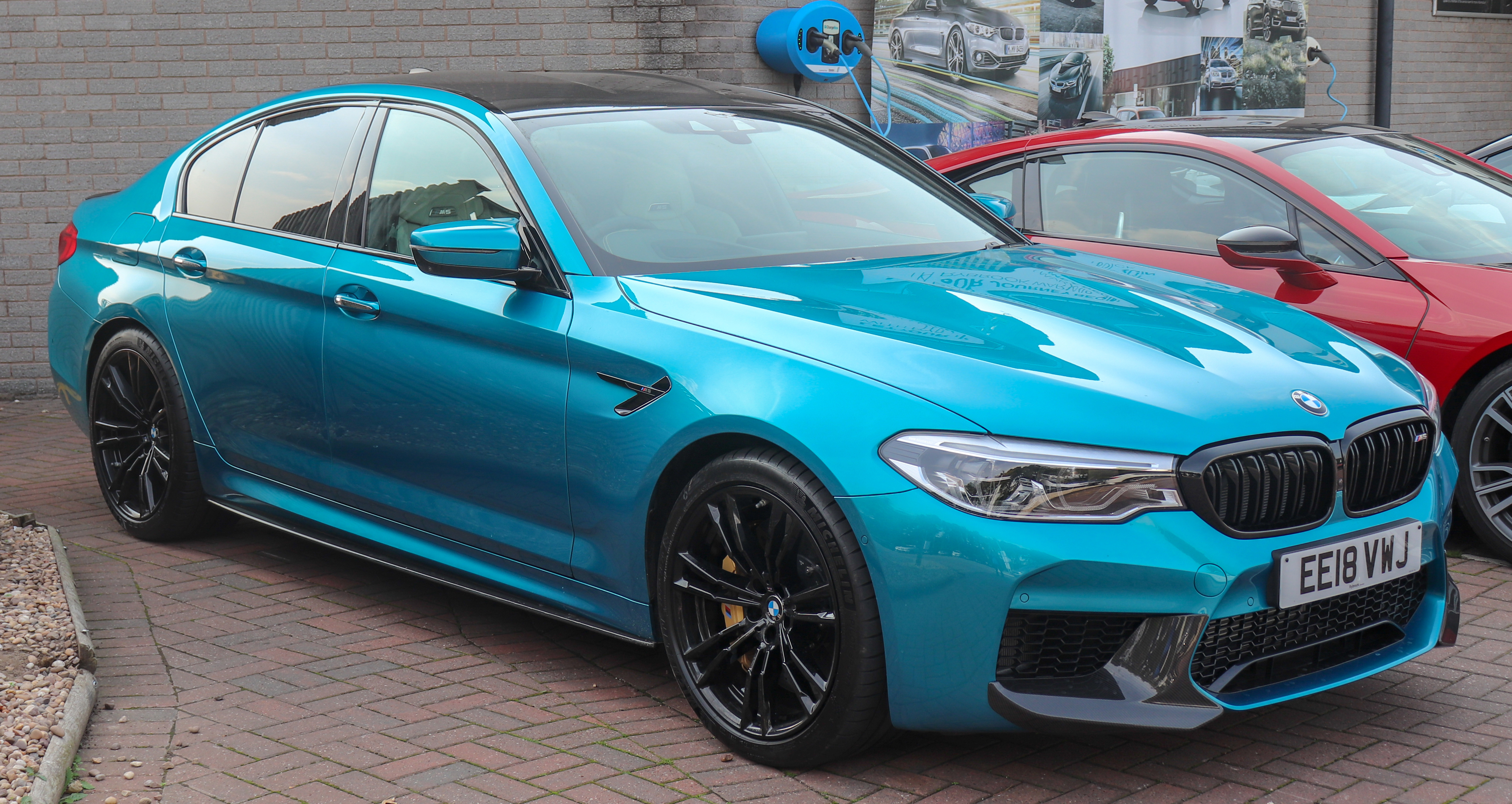
Previously, dealers were not responsible for collecting sales tax from Montana LLCs.
Right?
We don't care who you are.
Just whatever.
Now it is a dealer's problem because they have updated the code to quote, add
a presumption that the non-resident purchaser exemption claimed on such-and-such forms does
not apply to transactions where the purchaser is a limited liability company and a member
of the LLC is a resident of Illinois.
I feel like this is a smart way to get around the problem.
It pretty much puts the kibosh on the whole biz.
Yeah.
So at least in Illinois, dealers cannot give tax exemption at the time of sale if the
person behind the LLC who's purchasing it is a resident of Illinois.
Let's see.
It adds a presumption that the exemption from motor vehicle, the sold in Illinois to non-resident
where the vehicle is titled in Illinois does not apply, said that already.
A purchasing non-resident LLC with a member who is a resident of Illinois may rebut the
presumption that the exemption does not apply by providing evidence such as proof the item
is insured for primary use at an address outside of Illinois or proof that the item will be
permanently stored or garaged at a physical address out of Illinois to their selling retailer
to properly claim the non-resident purchaser exemption.
So Illinois is basically saying, nope.
Love it.
For Illinois residents who are trying to skirt the taxes by forming a Montana LLC at the
time of sale, done.
Well, and this seems like it creates some probably annoying hoops and hurdles for real
people who have this situation where they have a Montana LLC and the whatever.
So, but I imagine...
Are there any?
Well, that's what I was saying.
I imagine that is such a small group of people that the extra legwork is probably
annoying for that one or two people.
But yeah.
Yes.
It's great.
Can you imagine if California did this?
Holy moly.
California has been pretty strict on Montana LLCs for a while.
I know there are a lot of Montana plates out there, and a lot of them are to get around
smog rules, interestingly enough.
But I feel like Ohio is not far behind Illinois here because Ohio has been tattling on people
who are buying out of state who have Montana LLCs, so they've been tattling to other states
for quite a while.
Nice.
So, Ohio is probably going to read what Illinois did and enact this pretty soon.
I would not be surprised at all if this is coming down the pipeline for a lot of other
states.
So, it's unfortunate, but I have to say, unfortunately, I think we were right and
we are being proved right in our general advice.
Because something as possible doesn't mean it's worth it.
Soul and spine wants everyone to have a higher quality of life.
They specialize in nonsurgical options for those who have been told that they need injections
or surgery.
They offer state-of-the-art techniques that help over 90% of patients become pain-free
in just weeks.
Starting with thorough medical history and comprehensive examination, you'll work one-on-one
with Dr. Hoover to meet all your treatment goals.
Their mission is to unleash your body's own healing potential to avoid drugs and surgery.
Visit www.soulanspine.com to learn more, located in Solon, Ohio.
Speaking of government oversight, there's a couple articles lately that are very
concerning to me, and they're all about the surveillance company Flock.
Flock is mostly known, at least to me, as having the license plate readers or ALPR, automatic
license plate readers, that are mounted on vehicles, mostly police vehicles, but I've
seen civilian vehicles with them, bail bondsmen and stuff, and mounted at the outskirts
to certain cities.
This is a city we used to live in.
Twinsburg has them at the entrance, and if somebody drives by them and they go, oh, this
plate comes back to somebody with a felony warrant, okay, let's go get them.
Dispatches the cops, they maybe go make an arrest, and we had a pretty crazy situation
actually when we lived there.
There's a police chase into our neighborhood that was triggered by a Flock camera who
picked up a felony warrant.
Why somebody with a felony warrant would drive a vehicle registered to them, I don't
know, put a dang fake plate on it already, but they crashed out a couple blocks from
us and the guy was on the loose, and this was like, I don't know, 11pm, and I had
the scanner on, or I heard the siren, so I put the scanner on and there's a felon
who's running around our neighborhood, so I went out in the backyard with my dog,
and I let him out to see, make sure, because I knew he would sniff out if somebody
was hiding in our backyard.
You could sniff him out if they were down the street.
Yeah.
Start barking about it.
Yeah.
If there were Girl Scouts trying to sell us cookies, eh criminals, get them.
It was a little bit crazy, and at that point I'm going, man, this is great, cops
are here, they're getting these felons off the street, well, sort of, or not.
They're running around.
They're entering into people's backyards, Doug.
Backyards, but, however, however, what Flock is doing now is essentially time
traveling us to 1984.
One of the articles comes to us from the ACLU of South Dakota, and I'm not the
biggest fan of ACLU in general, but I am a fan of our constitutional rights
as individuals, and it seems like, oh boy, this is the new Patriot Act here, but
with a private company.
Surveillance, the article reads, surveillance company Flock now using AI to
report us to police if it thinks our movement patterns are, quote, suspicious.
Yikes.
Yeah, the police surveillance company Flock has built an enormous nationwide
license plate tracking system, which dreams records of Americans' comings
and goings into a private national database that makes it available to
police officers around the country, so the cops can search these movement
records of any vehicle that they identify that comes to their attention.
But now the company is analyzing our driving patterns to determine if
we're, quote, unquote, suspicious.
I feel AI somewhere in here, Doug.
What's that AI?
Oh.
Didn't you hear in the headline that's using AI?
I'm just trying to grapple with this whole, look, Doug, so I've been, this might
not be, this might not resonate with you, but I've been playing Cyberpunk 2077
lately, fantastic video game.
I thought it was a band, but okay.
No, no, no, it is about a dystopian far future where private corporations
run everything, lots of surveillance, like essentially techno dystopia in
another flavor from like Blade Runner and stuff like that, but this
feels eerily like that kind of situation.
It just makes me feel uncomfortable.
The, what is suspicious and suspicious to who?
And that's a very good question because that is already, I don't agree with
all the First Amendment auditors, quote, unquote, but I also know that
police will often overstep their bounds and the bounds of our
constitutional rights during traffic stops because they think something
is suspicious.
Now, suspicion alone is not reason to extend a traffic stop, to do
an unconstitutional search, to really do anything to detain somebody.
There has to be reasonable, articulable suspicion, suspicion of a crime.
There has to be something more than just, yeah, you're suspicious.
Does this mean that those people that have the, the, the, the signs
on their windows that says, I will not put down my window.
I was sectioned this of the law.
Sovereign citizens?
Yeah, the sovereign citizens.
No, they're totally off base.
Okay.
No, if you were stopped for a traffic stop in almost every state,
you have to provide your ID.
And typically the things told to you during a traffic stop are quote,
unquote, lawful orders.
Again, this is not legal advice here.
This is just like, this is, this is what it is.
There's some states, every state has their own nuance of what is a
lawful order during a traffic stop.
But I know there's a, there's one specific, I think it's a federal law that came
as a result of a lawsuit years and years ago as now case law that a police
officer cannot extend a traffic stop beyond what is reasonable for the
original purposes of the traffic stop.
So they can't just be like, oh, well, you know, what you're doing,
where are you going, what do you have in your car?
Like, unless there is suspicion that arises during the course of normal
traffic stop, they can't just be like, well, we're having a drug
dog come out for watch it.
Yeah, like our traffic stop is over.
So that that's, so that's where in person, this quote, unquote,
suspicion thing can get out of hand.
But now we have cameras using AI to determine that we might be
suspicious purely based on our movements.
Now, a little shifty over there.
Sounds good, because they're saying we're targeting human trafficking,
drug trafficking, organized crime.
Those are all bad things that we as citizens want stopped.
100% another tool to potentially stop those things on board for that
specifically, however.
But where does it end?
This is a very broad spectrum, especially when we have no
accountability with this private company of what determines suspicion.
What if they get hacked?
I go for fun drives randomly.
Yeah, this very suspicious.
I guess cannonball suspicious person's rocketing across country.
You might have a point with the cannonball they're doing.
What are you saying?
I just, you're moving a little quick occasionally, sometimes
allegedly, I was a drug trafficker.
I drive the speed limit.
That's true.
That's suspicious.
Driving 150 miles an hour is not suspicious.
It's illegal, but not suspicious in the least bit.
But this is like, what is suspicious?
And the, whoever's looking at the data or getting notified could
have a different definition of suspicious.
And this is.
Well, and this is actually funny back to cannonball.
They're using a tool called multi-state insights.
Many large-scale criminal activities such as human and narcotics trafficking
and organized retail crime involve movement across state lines.
True.
With our new multi-state insights feature, law enforcement is alerted
when suspect vehicles have been detected in multiple states, helping
investigators uncover networks and trends linked to major crime organizations.
So if you're going to Disney with your family, apparently now
you might be human trafficking.
I got to say, though, this interstate situation, this could have been
the proof that Fred Ashmore so desperately needed.
No.
I just, I don't know.
No, it could have been had he actually done his claimed cannonball.
Here's another scary thing.
This comes from 404media.co.
Flock, the surveillance company with ALPR cameras and thousands of
communities is looking to integrate with a company that makes AI powered dashcams
placed inside people's personal cars.
The move could significantly increase the amount of data available to
Flock and in turn, its law enforcement customers.
So Flock is basically wanting to partner with the dashcam company
to turn private vehicles into roaming surveillance tools per this article.
Hate it so much.
See, this is why I don't have, I'm going to sound like a conspiracy
theorist, where's my tinfoil?
I don't have a ring camera.
I don't have any of this like.
I was going to say, you're not married.
So yes, you don't have a room.
Almost, we're getting there.
But in all of that stuff that seems to be, oh, this is so convenient.
You get a video of that.
It goes through our server.
We get it's like, no, no, no, no.
That's just, I don't even want a Roomba.
I don't want anything mapping my house that goes like, I know this has to
go to somebody else's server and I know it's not going anywhere.
I just don't trust it.
This is what I get for being in technology.
I don't trust any of it.
I agree.
Oh, I still have a smartphone.
I acknowledge the hypocrisy of me holding this rectangle that is sending
a lot of data, but I, I acknowledge the risk of this rectangle and
I don't want any more.
I am perfectly willing to throw my smartphone in a lake.
If, if my business could survive without it, I, I would
go live in 1984 and not the proverbial 1984, the actual 1984.
No stinking cell phones and, uh, carburetors.
Uh, when did we get fuel injection?
That's where I'm looking at.
Racing NASCAR.
Do it for Dale.
A fuel injection like the 40s.
Yeah, yeah, yeah.
So we're long, long time ago.
It's not ubiquitous until later, but, uh, this is scary stuff.
Honestly, I am all about law enforcement using the tools available
to them to enforce real crime.
I am not about when broad strokes laws are made or tools are
given that can, can be used just the power that is given to
these companies to collect data on law abiding citizens is, is scary.
It comes back to Thomas Jefferson's quote, not Thomas Jefferson.
Those who would give up liberty in the name of security will
have neither butchering the quote, but.
So I, hmm, I don't like this.
I have found, I think from Flock's own website, flocksafety.com that
they secured in March of this year an additional $275 million in funding
from the government, from green Oaks capital, bedrock capital,
Meritech capital, matrix partners, sans capital founders fund,
Kleiner Perkins, Tyner, Tiger global and Y combinator.
None of those are the federal government, which I don't necessarily
want to say I trust the federal government with this, these datums.
I don't trust large corporations, hedge funds either hedge funds
and venture capital funds.
And all they care about is profit.
So eventually VC money ruins everything.
Well, it comes back to the Facebook model of people have discovered
that we are the product, not the customer.
And in the case of flock, we are the product, but the customer
is the federal government or local on and or local law enforcement agencies.
I just, I don't like that a for-profit company is gathering up this data.
That's my problem.
If this was for public good, allegedly under the guise of public good.
Well, I'd feel I'd sleep a little easier at night, I guess is though.
I wouldn't be great, but it'd be like, whatever, this sucks.
But I feel even worse.
Maybe that's a better way to put it.
I feel even worse that this is private, like investment hedge fund,
hedge funded stuff.
I in some sense, I will agree with you there because as we've seen
with the suppression of free speech, we'll say, or the censorship
that is done by companies like TikTok, which we've recently
been demonetized from for no apparent reason.
And Facebook and Instagram, et cetera.
Those private companies are exempt from upholding constitutional rights
that belong to individuals because they're not the government, they're
private companies, but they are essentially becoming an arm of the federal government.
So you have this private company flock who's going, well, we're a private
company, we can violate all your constitutional rights all we want
because we're a private company, but our customers are federal government.
So they're a subcontractor of the federal government who's an end
around for our constitutional rights.
So it's scary.
Benjamin Franklin was the guy who said those would give up essential
liberty to purchase a little temporary safety, deserve neither
liberty nor safety.
Do you like the vamping I did about sadness to give you the time to
figure that?
Yes.
Is that we're professionals here on switch.
And that's from NPR.
I've quoted NPR and ACLU, which if you've listened long, I'm sort
of libertarian, but listen, I'm all about running temp.
Truth, I'm all about the Constitution.
And yeah, I'll side with anyone who's on the side of that.
Is it time for true negotiator?
It is one last point.
This is why a lot of cannonballers are putting just straight up fake plates
on their cars, not like fictitious plates in the terms of like this goes
to a different car, but just like eBay plates.
Because you can't track the movement of a plate that isn't in the system.
And if any of you are from the UK or Australia, you know that we're
just catching up to you guys.
That's the draconian laws and enforcement methods that are going
on using cameras in those countries are absolutely freaky.
And I think the only reason the US is so far behind is because of the
in the natural inefficiencies that come with state sovereignty is
like these states don't talk to each other and can't without subpoenas
and stuff like that.
And, you know, you have the federal government and then state government
and different government departments.
And that's one of the only things keeping a lot of our
civil liberties and personal liberties alive is the inefficiency
of government to violate them.
But boy, it's coming, it's coming via via flock, not a fan.
Shrew negotiator.
This is when somebody's trying really hard to sell or buy something
and end up maybe trying too hard.
Facebook Marketplace 2007 Ferrari 612 Scalietti.
Nice factory gated manual.
Nice for only one hundred forty four thousand bucks.
It was cheap. It is cheap.
Odometer shows thirty seven hundred miles, but the instrument cluster
was replaced in 2015.
It's a 2009 European 612 engine installed by Beverly Hills Ferrari.
Nineteen thousand miles is actual in 2012.
The car was caught in a subterranean garage during Hurricane Sandy.
Subterranean quickly became submarine.
I was going to say, did it become like an aquarium afterwards?
Is this like fish women through the windows?
A replacement engine and instrument cluster were installed.
It has a flood title.
Yikes run, but the car runs perfectly and looks fine.
It's far superior to the American version.
The car was made for American production.
It is not a European car.
What's the American vert? What?
I don't know. I think he's talking about the engine,
but it was not clear because it's a European 612 engine,
which is far superior to the American version, even though he's talking about the car.
Bizarre, the 612 is initially underappreciated.
It's coming to its own as the finest, most comfortable luxury
touring car Ferrari ever made at the factory manual turns mission to the mix.
And you have the sport that people want, but can't get with the F1 transmissions.
Only 199 manuals were made, blah, blah, blah through the entire production run.
2007 is the last year Ferrari made manual transmissions wrong.
2010 was the bottom line is that other than the piece of paper,
you know, the flood title, not to mention the saltwater and sand everywhere.
Joey Craig has entered the chat. It's just a piece of paper.
You ain't got this car is far superior to any 612 on the market
with an F1 transmission. It's a smooth criminal.
These people who like, I don't need the Wikipedia frigging chat GPT history
on why a Ferrari 612 is great.
Tell me about what was repaired, the service history.
Like I need real data on this car,
especially on a flood title car.
How many miles has it had?
Oh, it's what have you done since then?
How many electrical issues? It's dry now.
It's dry now.
Hopefully the engine isn't.
Well, that's true.
Anyway, this is trying too hard, but not hard enough.
The Sheffield brand was recently revived by Jake Turkbus,
an owner of an original Sheffield all sport diver
he received from his parents in 1970 when he was just 11,
beginning his love of watches.
As an adult, Jay used his extensive expertise in product development
and marketing to revive the brand that started it all.
He set out to develop watches with a high level of quality
and specification and a value price.
His first effort and a successful one on July of 2023
was the debut of the Sheffield all sport diver one.
It had the kind of build and movement that much more expensive
watches use and his debut price of one hundred and eight dollars
was equivalent to the thirteen dollars his parents paid in 1970.
Since that debut, Sheffield has expanded to a wider range
of automatics and Kronos, many designed around vintage Sheffield
dials of the sixties.
The Sheffield well of clever and unique design remains his inspiration
as well as maintaining the goal of high quality, very affordable
range of automatic and quartz watches.
Sheffield watches value on merit, not just price.
I love mine, so get yours at Sheffield watches.com
and be sure to mention you found them on Switchcast.
It's time for story time with Doug Tabott.
Ooh, we cover a lot of news topics on here, but sometimes
it's just nice to reflect on things that happen in the car
business and barn finds are, of course, all the rage.
People love seeing stories of Ferraris, long lost Ferraris
or Lamborghinis discovered in barns and, you know, it's
like the, what's that show where people go on?
It's like the Cracker Barrel show where they bring their watches.
And oh, my gosh, Antiques Roadshow, Antiques Roadshow.
Yeah, yeah.
The Cracker Barrel show, not eating pancakes, but we got there.
Right. That's OK.
Man, I'm with the connection.
But there is a less glamorous side to barn finds for all
the ones that you see on TV or Facebook that go viral.
There's a whole bunch of just dilapidated cars rotting away
in barns that, unfortunately, are not worth anything.
Well, like one thing I've always wondered is, are there any left?
Yes. In the internet age, where everybody's searching,
everybody's grandma's barn looking for a hemicuda that's
one of 50 with this option made on a Thursday.
Like I can't believe they exist anymore.
Well, they're changing. OK.
Because barn finds used to be the one of one plum crazy
hemicuda with a hood mounted tack that has 13 miles on it.
And now it's that 1989 Toyota Supra.
Oh, yeah.
So they're evolving as the hoarders and neglectors evolve
as parents are from a different generation and stuck away
project cars that they swore they'd finish.
I got a buddy of mine that keeps telling me
once a project car is like, bro, no, you're not going to finish it.
Nobody know. OK.
Why don't you buy a car? You can drive a project car.
But a lot of it, too, is that
it takes time for those cars to come out.
A lot of them are known, but they're never
brought into the public light because they don't transact.
They're kept a secret for a long time.
Somebody may know about a car for 20 years
before it's a quote unquote barn find because then it's finally brought out.
Ed Bullion recently with the help of the private detective guy
discovered the Lamborghini Diablo Vs. Yes.
So that was essentially a barn find that was hidden away.
Nobody knew where that was.
I was searching for it for a while.
And yeah, so that's a nineteen ninety seven, eight.
I think it was.
That's a barn find.
I guess it's our era barn find anger find or whatever.
But in searching for these barn finds,
I found a couple pretty cool ones,
but I found some really, really not ones, not ones, not cool.
No, no, I think that works, just they're not.
They're not walk away, turn around.
They are found, but I wish I didn't find them.
And in the last couple months,
we've uncovered some things we kind of wish we didn't.
I was called out to a collection of about ten cars
in Eastern Ohio and there were some MG 1500s,
which are nice, but nothing super collectible.
Some other random cars and I think it was a fifty seven T bird.
And they had been there for decades, as most of them are.
And sometimes that's a good thing because you go, well, shoot,
they're going to be really, really low miles.
And even though they might need a restoration,
somebody out there wants a car that's been tucked away for 50 years
and not driven because that's just what people want.
Go to some of these crazy auctions and a barn find brings almost as much
as a pristine example because people are buying the story.
Yes. And people like the process of spending money on a restoration.
I don't know why.
Well, and I think there's some draw to being able to do the restoration
yourself and make decisions and make sure it's done to your taste.
You're not trusting some other guy to not cut corners.
It's something to do.
Just or like redecorating the house or whatever women like to do.
I don't know. What are they even doing?
What are the women? I don't understand them.
So I went out there and the T bird was the nicest car there,
which wasn't saying much.
The unfortunate part was that it needed everything done, full restoration.
It was rusty underneath.
It hadn't ran when parked, but it also wasn't low miles.
It was 25, 35, whatever thousand miles.
I could see two to three layers of paint all in different colors.
So it wasn't even a survivor car.
It was just straight up a car that needed a restoration
and a really, really good T bird of that era is 30 to 35 grand.
A banana's award winning rest restoration car,
fresh restoration would be, I don't know, 80 grand, maybe.
So not worth it to not worth it to restore.
Yeah, maybe somebody wanted the project because usually people
who restore cars recognize that they're not going to get their money back.
So it's like, OK, well, that one's maybe a little bit interesting,
but not to me.
We go out into the barn where all the rest of the cars were.
The lady and her sentiments were accurate.
My husband bought two MG 1500s.
One of them was a restoration project.
The other was a parts car.
I'm not sure which one is which.
Well, OK, so let's be honest.
If you're buying a parts car for a restoration project,
they're both parts cars.
No, I would disagree because like one has something.
One is salvageable.
The other only has things which are salvageable or usable.
I guess, but they're both rough.
They were both so rusted through.
I went into this barn.
It was a dirt floor first problem.
Yes.
And the groundhogs had made such a mess of it
that we had to like watch where we stepped.
It was land mines in the sense of like holes,
caves that we would fall into.
And the bodies were rusted through.
I couldn't tell which one was supposed to be a parts car.
And I wasn't even sure if either of them were usable
as parts cars at this point.
There was a couple of Chrysler's that I didn't know what they were.
And there was a Jaguar XK SS replica, OK,
which was actually in the best condition
because it was fiberglass.
Yeah, so the body was OK.
And, you know, she's like, well, somebody wants them.
You know, the old there's an ask for every seat mentality.
I was like, I honestly think you're going to have to pay
somebody to take these away.
Like, I'm not even sure they're worth scrap.
Maybe the Chrysler's were maybe and maybe the T-bird.
But I'm thinking about it going.
I'm 40 now.
I arguably have more money than time.
And I think about project cars as my million mile
for our 456 GT is rotting now a year and a half
into trying to service it going.
When you commit to one of these cars,
you're not just committing to a car.
You're committing to giving
a portion of your limited time left on this earth to this car.
And I'm at a point in life where I love saying, no,
somebody wants me to join a committee.
No, somebody wants me to volunteer.
No, I am fully committed to what I have already.
And anything that I am committing to comes at the expense
of something else at this point in my life.
So to buy a car like that to me is I wouldn't take it
if you gave it to me with the money to restore it
because I'm going, that's time.
Yeah, it's time off of my life.
Now, if you find enjoyment in that, awesome.
Well, and I think that's a different story
because that brings you something.
It's not just a draw on you.
It's it brings you joy, brings you satisfaction, whatever.
That's what you want.
Fine, like you said, but not everybody is that way.
Also the type of car that that is like those
those people are dying off.
So the number of people that want to restore
those types of cars is almost none.
The next one we went out to look at.
We had a good success with the Portion 993
that was bought off of a widow and she had had it for a number of years.
That one was only parked for like two years
and it was actually in quite good condition.
It just had a tiny bit of interior mold that was easily treatable
and the car ran and was fine and needed catch up service.
And yeah, you know, it was leaky and stuff like that.
But it was like a good car.
So that was red.
So sad it was red.
Harry Tyler.
God, Doug, can't you find better color?
Sorry.
But then the next day we went out to look at a Porsche 996
that we thought was just like, OK, well, it was a very, very low mile car.
Hold on a second, Doug.
Yes, 996s are coming into the realm of barn finds.
Are you kidding me? This one was. Oh, my God.
It was a 996 Cabriolet first strike.
Gray interior, second strike.
No, no, no, no, no, plus we're back up to
near we're not zero tip.
Tronic. Oh, no, negative third and fourth strike.
But it had like 20,000 miles on it and a factory hard top.
So we go out to this garage thinking all we're doing is just picking up a 996.
We put the key in and drive it back to our shop. Yeah.
The car was stored with the top down.
Oh, which is not great for tops.
Yeah, because it the servos.
Yeah, yeah, because it get like creasy and full and like the things freeze up.
Yikes. Yeah.
This car had more mold than an abandoned cheese factory.
How? I don't know.
It was disgusting.
We walked up to it and just turned around and walked away and told the guy
we're not touching this car.
He's like, well, it can be clean, not by us. Yikes.
I recommend that you find.
I mean, it was covering the seats, the dash,
the interior was as fuzzy as a frigging baby.
God, how it was disgusting.
Was it stored in like a bat, like a it was just I don't think it was leaky.
And he said, oh, I don't have any leaks in here.
I'm like, I walk in here and I smell the must.
Like it's just a damp building.
Just was not stored well at all. Yikes.
And I'm like, Yikes, it's already a tip nine, nine, six cab.
And it is literally the most undesirable nine, nine, six.
You could possibly practically need to pay somebody
$50,000 to take that car away from you.
OK, now, now, now, don't be a snob
just because you have a rare green manual seat to coon, whatever.
It's just unfortunate that that this is what's happening.
So that one we walked away from.
So multiple strikes.
And then I went out again, Eastern Ohio,
to look at a 59 Cadillac Coupe de Ville.
Now, that is one of the boomer cars that is kind of surviving
because it just absolutely so beautiful.
And it was sent by the person who passed away to a storage facility.
And it was it was nice when it was sent there.
But the storage facility was an outdoor dirt floor shed.
Whoa. And it had sunk in into the ground.
Oh, no. And was likely completely rusty underneath.
And it was just very, very sad because in order to get to it,
we were avoiding yellow jackets, nests and, you know,
climbing over dirt and other tools and stuff.
And it just like it was a sad picture of.
I mean, honestly, like all of these were a picture of
kind of the the fleeting nature of life
and the things upon which we place value.
And and like we're seeing the.
Diminution of value of.
That's a big word.
I don't know if I used it right.
But homeschooler here, I just say it confidently.
And of.
Cars from the 40s, 50s and 60s as that generation is dying off.
And so these barn finds, even if they're cared for,
becoming less and less valuable.
And it was just kind of like this.
I had this philosophical moment where we're like stuck
in this in between of the circle of life.
I'm at the point where I'm starting to collect cars
and the cars that we love are starting to become
really, really valuable.
And then I'm seeing the previous generation where
their cars are just tanking in value
as they're dying off.
Is this and I think your answer to me is going to be no.
I think that this is the first time
that we are seeing this as starkly.
As what you are talking about.
So I think there was a generation that was probably really
into prewar stuff, because you're talking about
among all postwar muscle cars, 60s, 70s, 80s cars.
When the when the transition happened
from the prewar stuff to the 60s, 70s muscle cars
or the 50s, even the 50s, like shark fin, whatever.
We were not as connected as a people.
So I think we didn't the view that you are talking about
wasn't as common because people didn't see it online.
Like you've seen it firsthand.
You're talking about a lot of firsthand experiences.
But I think we can see this stuff happening online.
And it's the first time that somebody like me
gets to bear witness to some day that will happen to 996 GT3s.
Nobody's going to give a hoot and they'll be rotting
and worthless.
But it's something that I hold at such a high like,
oh, my God, I like have to have this.
Right. We're we're seeing a stark difference
between the explosion of values in the cars that we appreciate
and the tanking and values of cars
that we also don't necessarily care about.
But have always been, oh, my God, these are expensive.
I'm still amazed.
And when we were coming up with our cars,
you can have for under 25 K episode that we did previously.
I was amazed at what you could get from like the 60s
because in my head, I'm like, oh, this is like a $60,000 car
because I remember the 50s, 40s, 30s. Yeah.
Like I'm going to my Barrett Jackson,
like all these crazy things and propped up by
the one of one Hemicuda with the three options or whatever.
Like all of that market cooling so significantly wild.
The lesson here, sell your stuff when you're like 65
because that's when everybody else has the money,
you got to get the money to have it before you're 65.
And then sell it then, get off the sinking ship, essentially.
This is not financial advice. Yes, it is.
Yeah, it's it was it's
it's frustrating because I'm I'm the curmudgeon already
that's complaining about being priced out
about my from my dream cars.
And I think that cycle is coming way earlier for us
because there's so much more money at a younger age
for our generation than there was for the boomers.
They work their butts off and at retirement
started collecting these cars or later in life.
Yeah. And they're only seeing this decrease in value
as they pass away.
And we're seeing that cycle start earlier
and you're right, it's we're seeing the two kind of clash.
It's it's a weird kind of clash with how connected and visible
our world is, I think. Yeah.
Yeah. And it's also sad because
the I'm seeing the people who can't
who physically can't enjoy their cars anymore
who still want to and they're not concerned about the dollar value,
but they physically can't get in or out of these cars that they love so much.
So yeah, it's interesting.
That's that's barn finds gone philosophical
props and flops brought to you by switch cars.
And as you know, switch cars is the enthusiast dealership
where we buy and sell cars that we like ourselves.
Check out our handpicked inventory at switchcars.com
and mention switchcast for some special pricing when available.
$900 off. Yeah. Deep reference there.
You could, of course, find more information online at switchcars.com
or you can visit our indoor showroom in Twinsburg, Ohio.
Doug, what do we got for the pick of the week?
Pick of the week.
I've been driving this car home lately.
It's black on black, which is not my favorite color,
but I know some people love it.
It is a 2011 Aston Martin V8 Vantage
coupe with the desirable six speed manual transmission.
It is the kind of second generation V8 Vantage
with a 4.7 liter V8 and updated electronics
and sport suspension package.
And man, it is just a joy to drive.
These cars are really, really underrated,
in my opinion, in terms of dollar for value,
value for dollar enjoyment per dollar.
They make amazing sounds, fantastically appointed interior.
They don't have all the features you want,
carplay, blah, blah, blah, but who needs it
when you have a perfect exhaust note?
And if it was black over black is not a dandy set color,
I don't think so. Yeah. Not a challenge car for him.
Right. Let's see.
The flop of the week, I already knew
that the new M5 Touring was fat and heavy.
And OK, it's great that BMW is finally bringing a wagon
to the states that we've wanted in the past,
like eight generations.
Yeah. And this is what we get.
This this is what we get a fat pig.
But the local BMW dealer, Taylor Davis,
turned me on to this interesting fact.
It is so heavy that it qualifies
for the accelerated depreciation.
Exemption, which is for work trucks, essentially.
So this is a tax write off where I buy a work truck
used for company purposes over six thousand pounds
gross vehicle weight rating, which is the curb weight plus
the maximum weight of passengers and cargo.
If that's over six thousand pounds, you can write off.
I think it's 100 percent of the vehicle's value in the first year.
Now you have to use it exclusively for work purposes and stuff like that.
But a BMW Motorsports M stands for motorsports.
A M5 performance wagon is so freaking heavy
that it gets the work truck tax write off.
How about them apples?
My soul hurt BMW.
When we wanted this car, we wanted the one from like 20 years ago.
I want this garbage.
I want an E39 M5 wagon, which they never made.
Well, yeah, I said 20 years ago.
They didn't bring they would have brought it to the US podcast audience.
You feel the same.
This is not the garbage we wanted.
So heavy too late.
I'm going to go watch Top Gear and cry.
So heavy.
So heavy.
Because I got all the good stuff.
Prop of the week from the iron butt community.
The what?
Room old man, Pat Cornell, took his Indian motorcycle
and his challenge was to ride 125,000 miles in 125 days.
A thousand miles a day for 125 days straight.
Cannonballers be quaking in their boots.
That's in my goodness, right?
We have massage seats and crap.
This guy's on a motorcycle.
Iron butt, maybe iron bowels.
He is he did this for the Myotonic Dystrophy Foundation.
This was a charity ride.
Tyler, what is Myotonic Dystrophy?
Myotonic Dystrophy is a type of muscular dystrophy.
So really where your muscles get very weak
and you can't control them as well.
I don't there's a lot of specifics
that I'm not going to try to really get into,
but it is a very, very terrible disease.
Weakness of the voluntary muscles.
Inability to relax muscles
that will difficult to let go of someone's hand
after shaking it, for example.
I don't mean to make light of this,
but if I rode that much on a bicycle,
I don't think I would be let go of the grips.
I do think there's a lot of parallels
to what he was doing with this with Myotonic Dystrophy.
Maybe that's why you did it anyway.
Yeah, so he has completed it.
He did it. Hooray. Look at that insane.
His butt's got to be aching.
Right. Right.
One of the comments I just read said no frigging way
a Harley could do this without a top end
rebuild and new trans and a few dozen belts.
It's accurate. That's accurate.
So props to Pat Cornell.
A really, really amazing thing that you did
for charity, whether or not it was for charity.
That is awesome, but but massive,
massive props to you on that one.
Thank you for joining us for Switchcast
with Doug Tabott and Tyler Sanders
produced by Ethan Huffnagle.
Switchcast is an automotive entertainment
and opinion show and nothing we say
should be taken very seriously.
We do not give tax, investment, legal, emotional
or professional advice and the only licenses
we hold are driver's licenses.
The opinions expressed on this show
are exclusively held by the people
pontificating at that moment
and do not reflect the values
of our producers or sponsors.
Our theme music is provided by Emily and Ivory.
You can stream their full album
on Spotify or SoundCloud.
If you like this show,
you can stream it in its entirety
on your favorite audio podcast platform.
Check out switchcast.live for more info.
About this episode
SwitchCast dives into the controversial world of vehicle surveillance with a focus on Flock, a company using AI to analyze driving patterns and report 'suspicious' behavior to police. The hosts discuss the implications of such technology on privacy and civil liberties, drawing parallels to dystopian themes in popular culture. They also share personal anecdotes about barn finds and the changing landscape of collectible cars, reflecting on how values are shifting as generations pass. With humor and insight, they explore the intersection of technology, law enforcement, and the automotive world.