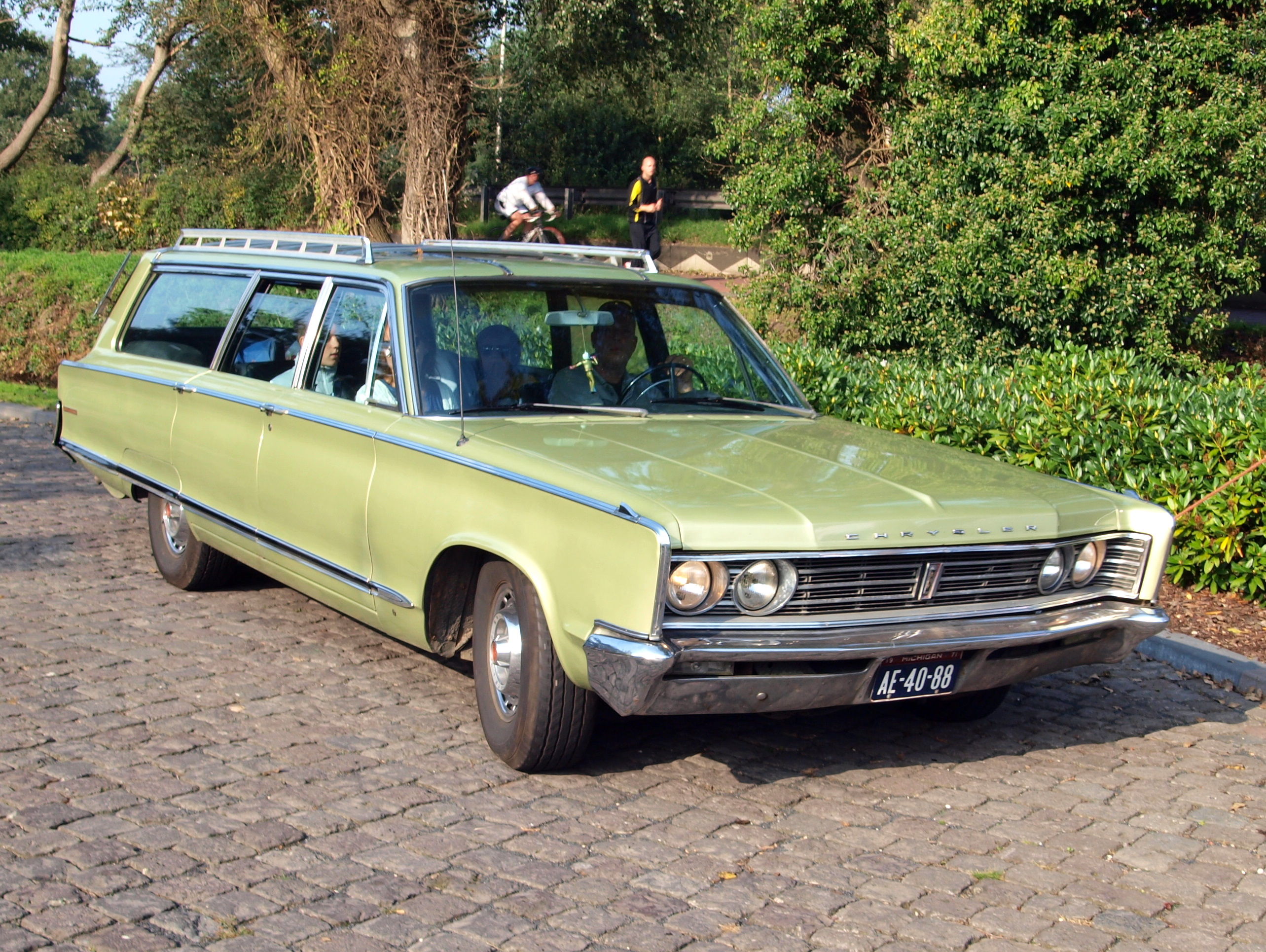
The Chrysler Town & Country LXI is a family minivan from 2003. It's designed to be spacious and comfortable for families, making it a popular choice for transporting kids and cargo.
A 3.8 liter engine is a type of car engine that has a total volume of 3.8 liters in its cylinders. This size is common in minivans and provides a good mix of power and fuel efficiency.
The rear differential seal helps keep oil inside the rear differential, which is important for the car's movement. If it breaks, oil can leak out, which can cause problems for the car.
The Chrysler Town and Country is a type of minivan that is designed for families. It has a lot of space inside and can be equipped with all-wheel drive for better traction in different weather conditions.
A rotational seal is a part that helps keep fluids inside moving parts, like where a wheel turns. It stops leaks and keeps everything working properly.
Justice Brothers is a brand that makes special products for cars, like liquids that help stop oil leaks. People use their products to fix small problems in engines.
Cardash Part is a website where you can find car parts from different sellers in North America. It helps you search for parts that are available near you or across the country.
The rear axle assembly is the part of a car that helps the back wheels turn. It connects the wheels to the car and helps move it forward when the engine is running.
The rear differential assembly helps the back wheels of a car turn at different speeds when going around corners. It makes sure that the wheels can move smoothly without skidding.
The Ford Mustang is a popular sports car that has been around for many years. The 2001 version is part of a series of Mustangs that are known for being powerful and stylish.
Fuel stabilizer is a product you can add to gasoline to keep it fresh for longer. It's useful if you're not using your car for a while, as it helps prevent the fuel from going bad.
The 3800 engine is a type of V6 engine made by General Motors. It's known for being strong and reliable, and it was used in many cars, including the Chevy Impala.
The intake manifold is a part of the engine that helps deliver air and fuel to the engine's cylinders. If it leaks, it can cause problems like coolant leaking.
O-rings are rubber seals that help keep fluids from leaking in cars. They are shaped like a circle and are used in many parts of the engine and other systems.
OEM means Original Equipment Manufacturer. It refers to parts that are made by the same company that built the car, ensuring they fit and work just like the original parts.
Dorman Products makes replacement parts for cars, helping to fix or upgrade various components. They are popular among people who work on cars themselves or in repair shops.
Antifreeze is a liquid that keeps your car's engine from freezing in cold weather and overheating in hot weather. It helps keep the engine running smoothly.
A gasket is like a seal that goes between parts of the engine to keep fluids from leaking out. It's important for making sure everything stays tight and works well.
Drum brakes are a kind of brake system that helps stop the car. They work by pressing brake shoes against a round drum, creating friction to slow down the wheels.
The OBD2 port is a plug-in point in cars that helps mechanics check for problems. It lets them connect a device to read information about how the car is running.
Toe is about how the wheels are pointed. If they point too much in or out, it can cause problems with how the car drives and how quickly the tires wear out.
Camber is how the wheels are angled compared to the car. If they're tilted too much one way or the other, it can cause uneven tire wear and affect how the car drives.
And don't forget you can subscribe to our YouTube page or follow us on Facebook and watch our
Facebook live videos when we do the show every week, Thursday morning from 9 to 11 central.
And we do have some podcast sponsors.
Berkeley won classics.
Your key to collect your car insurance.
And road ready wheels, replica OEM wheels add huge savings.
Use the offer code hoodie for even more.
And by car dash part, over 200 million used parts ready to ship to you fast.
Thanks for listening to the Under the Hood show podcast.
Here's the show.
This is Under the Hood.
Welcome to the Under the Hood show.
We are glad to have you with us.
Shannon Nordstrom is here to answer your automotive questions.
Welcome, hoodies.
Thanks for tuning in so we can help you tune up.
Russ Evans is here to do the same.
Thanks for joining us Under the Hood.
I'm Chris Carter here to answer your calls at 866-594-4150.
866-594-4150.
Terry in Nebraska has been standing by patiently.
Thanks, Terry.
You're on the Under the Hood show.
What can we do for you?
I've got a 2003 town and country LXI with 3.8 liter in it.
And I've had it in the shop three weeks today.
And it's got a rear differential seal out.
And I'm not sure which one it is.
But this shop, and it's a reputable shop, they're swear,
and they cannot find a replacement part for it.
I was wondering if you've ever ran into the situation
and where we might look.
So you've got an all-wheel drive town and country,
which is not highly produced.
They were starting to really, I would say,
as they got newer, they made less of them.
I think they made more of them from 94 to 2001.
That was the hot thing in the early 90s.
Topaz and Tempo, four-wheel, the all-wheel drive.
They had a lot of cars that were all-wheel drive
that they just faded away.
People didn't really buy them, so they dropped off,
especially in southern markets.
I would guess O3 had to be almost one of the last years
that they did that.
Well, here's the problem with it.
If you had a rear differential leaking in that,
I think they never made a seal for it.
I have never seen.
I've never been able to get one.
I've only seen a couple leak ever,
and we replaced it with a certified used rear end,
the whole assembly, because there's not much fluid in it,
and usually if it's leaking, it's too late,
and we see that it's dried up on there,
and it's already making noise, and they want us to check it.
So we look at it, and we find that it's burnt up,
and we replace it.
But we've also had them come in where they're very wet,
and we said, well, let's add some fluid to it
and try to find you a seal.
We could not find a seal.
Then there's a lot of parts over the years
that have been made for a lot of pieces of equipment,
not just cars, and that seal gets made just for that unit,
and they buy 10,000 or whatever it is,
and say we're making them, we want them this size
and they do it, and then you can no longer
buy a seal, period.
So it's very possible, and very likely,
that there is no seal available for that,
and there never was, but also they did not leak
very often out of all the ones we had come in,
including the ones that still come in today now,
and then they're just not leaking.
They may be a little dusty where they collected some
from the moisture of the oil back there,
but they just don't have a big problem with the leaking,
so there's no reason that a company would make
a part for it if they don't have a demand,
and typically the demand from what we've seen
talking with Gates and Timpkin and companies
where we've had direct relation with a representative
from that company where we've asked them certain questions
like, hey, how come you don't make dormant products,
our partner?
How come you don't make this part?
Well, last year, for example, we had a request
for 2,000 of those.
It's just not profitable to make, let's say,
less than 100,000 of those.
So to stock it, to have it designed and made
and all that, so they just don't keep it.
And I would guess the request rate for this,
it's probably more than you think,
but less than what production would demand.
I would bet the request rate for a seal
for that carrier on that unit is probably less than,
less than 1,000 a year.
So it's probably more than we think.
I think of that because I look at, like,
Dakota Digital, our friends over there,
and I was like, how many speedometers do you sell
for classic cars?
I didn't think there was that many on the road.
Oh, you know, 10,000 of those a year.
Wow, that's-
Or whatever that number was.
Yeah, it was just amazing how many,
for a certain model of car.
So when we get into something like this
that doesn't really have a call for it,
it's gotta be low.
It's somewhere between, I'd say it's somewhere
between 50 and 1,000 that are requested
in an entire year, so they're just not gonna make it.
If the part is leaking bad enough
that you cannot get it sealed.
There's other methods, the mechanic,
like you said, they could use, they could split it open
and try some, you know, permagascous-type stuff
or different things.
It's gotta be replaced anyways.
I'm thinking it was a rotational seal.
You might even try some stop-leak,
like Justice Brothers' engine oil stop-leak
because the part's no good to you leaking.
I'm guessing they've tried some of those things,
but if not, we would recommend,
and maybe you've done this already,
but if you look under rear differential
on Cardash Part, one of our partners,
Cardash Part is where all of the North American market
puts their parts as one place for them to be displayed
and you can search regionally, you can search nationally
and find an auto-recycler that's near you
that has that part.
Sometimes Chris will play a game and do this in the break
and look things up, but things like this
can be hard to know what to look up sometimes
because you kinda wanna look up a rear axle assembly,
but that's not where our industry categorizes that part
and so I think you gotta look under
a rear differential assembly.
Yeah, because that one actually has two axles.
Exactly, so you have axle shafts, you have the beam,
you have the carrier, and then you have like a torque tube
that comes off that carrier
that's usually sold together with it
because the leaks usually start happening
around those areas if they're gonna have a leak,
but I think CardashPart.com would be a place
that if there's one out there to be found,
that's where you're gonna find it.
So the simple answer for Terry is they need to look
at an entire rear diff.
If they can't find the pieces,
just find a whole other unit
and when you talk to the other facility, tell them,
hey, I don't mind buying this,
but you gotta inspect it to make sure it's dry.
Right.
And then re-lubricate it when you get it,
make sure it's back to factory specs,
install it just like you would a new one
and I think you can get lots of years of service
out of that all-wheel drive van.
Terry, thanks very much for the call, good luck.
866-594-4150.
Let's talk to Michael, you're on the end of the hood show.
Michael, what can we do for you?
I've got a 2001 Mustang with the V846.
I've had it in storage for about a year and a half.
I've got premium fuel in it.
I put stabilizer in it.
And I was talking to,
I plan on taking it out here this spring.
Anyway, I was talking to a gentleman at Sturtervans
and he's got, he recommended maybe a BG44K
as a product to put in the gas tank.
And he said, you don't want to do it
until you start running the car and run it on the road.
And I was wondering if that's a good program for me
and there's a couple other things I like to address.
And I guess the overall process,
I've had it sitting for a while.
It's inside, it's in storage, it's in a warm place
or you know, it was a nice garage and stuff.
I like to get your expertise on that.
Well, the product he's telling you about
is a product to help clean up any sludge
and varnish in that fuel system.
And BG44K is a product made for that.
And it works pretty well.
Our preference in our own shop is Berryman B12 Chemtool.
We believe it does a little better job.
We switched to Berryman B12 about 14 years ago
in place of the BG.
So we're very familiar with the BG products,
but we're also very familiar now with the Berryman
and price and the way it works.
It just works good for us.
Anything we talk about that we're passing on
to our listeners on the show
is because we're using it in our shop daily
and we know how it works.
And yeah, you sure want that to be out on the road
so it's burning that fuel as it cleans it, right?
Yeah, you wanna put it in
and you wanna drive the car and don't over put it
and you really don't need to.
And some products actually don't work as good
when you put too much in.
It's like if you put,
if you've mixed up too much dish soap in your sink,
it's sometimes it doesn't work as good
as with the right amount of water in there
to get the right ratio.
And the water rinses, which was what gas does,
while the chemical cleans too much chemical,
it can be hard on things.
So that's the first thing with that Mustang.
You put it in and drive it
and it'll help with the older fuel you have in there
and preventing things from gumming up
as you run it with old fuel,
but it'll also help clean as you drive it.
It might help pull some of that older fuel through there.
And if the fuel is of good quality
and this has been in a climate,
is it heated and air conditioned or just heated?
That just, I have it so I can heat the garage,
but I normally don't heat it.
I would say that the ambient temperature in a garage
is right around 40 degrees most of the time.
It's about around except for when summer,
it gets warmer.
But I mean, it's in a,
I don't wanna say a controlled environment,
but it's better than just sitting in like a storage shed
or something like that.
I don't get as scared when you say a year and a half
as if you would have said five years, right?
Yeah.
We have customers often that bring us cars
that have been sitting up to two years without running
while they save money to put an engine in
and they've been just fine.
It's usually a car that's four to six years
when they come in and I go,
well, where's your license plate say, 1999 on it?
Well, it's been sitting a while.
I'm like, yeah, it's gonna need more than an engine.
But I think your overall car is gonna be fine.
You're gonna wanna just maybe make sure
and check the tires,
make sure none of them have gotten cracked up,
sitting there from age,
looking for weather checking and those sort of things.
And the date code on that.
Yeah, your first drive, you're gonna wanna,
after you've checked the fluids,
check your coolants, make sure nothing's leaked down,
check your oil, make sure it's all full
and it's supposed to be at the levels,
transmission fluid, if it's an automatic,
just make sure everything's at the levels.
You can see fluid, it's there.
Then I'd start the car up and drive it.
Check the brakes gently the first time
just to make sure nothing is not working there
or a brake line got somehow rotted away
or something that sounds like a pretty clean car.
I doubt that, but just give it a gentle check first.
I think overall you're gonna be just fine,
just driving the car and that first tank of fuel
may not perform as good as the next tank of fuel.
But gosh, even that, I've seen a year and a half
not be a huge problem.
It'll be fine.
Michael, thanks very much for the call.
Good luck.
866-594-4150, that's the number to reach us here
at the Under the Hood Show.
Now let's talk to Joe.
You're on the Under the Hood Show, Joe.
What can we do for you?
I got a 2004 Chevy Impala with the 3800 engine
and starting last winter, I had coolant
puddling on top and after a little research,
I thought maybe it was the intake manifold
in the warm summer months, it didn't pool at all.
But now that it's cooling off again,
I have coolant pooling again.
Sure sounds like a leaky intake manifold.
Yeah, because I mean some of those symptoms
that you said there are the telltale signs
like you originally thought.
Yep, because they shrink when they get cold,
the plastic does and they start leaking.
You're talking about the upper plenum.
That upper part between the upper and lower intake,
that's where they start to come out the side
and they run down the intake.
That and the coolant elbows on the front end of the motor
by the water pump, both of those,
those o-rings tend to leak when it's cold.
They run kind of like a heat pipe
up through that plenum bypass.
Yeah, and the design there just got
where they warped a fair amount in that area over time
and that was always a problem.
Like I said, I know there's replacements
from Dorman that are made.
Metal. Yeah, they're made completely different
than the original OEM one.
Dorman makes a amount of metal
instead of that cheap plastic.
Is the OEM replacements still the same?
Yeah.
They've never changed the part number or anything?
Not that I've seen, you can get other metal ones
but the factory ones, we have ordered,
I remember we ordered just that one time,
I was like, why are they still plastic?
Well, that's what they made.
And then Dorman products,
I'm looking through my parts application online here.
Oh, metal, huh?
Let's try that.
They make complete intake assemblies
that are made of metal
and the oil cooler housings that are metal,
so they upgrade them.
But with this intake,
I'd be really strongly looking at that.
Right around, and the worst part
where they leak is on the driver's side
where the EGR tube goes through there
because of the heat and the cold changing.
But if it's leaking there,
it's considered like a friendly warning sign
and it's given you plenty of time without engine damage
if it needs to be replaced.
Let's do it.
Have you ever noticed anything funky with your oil
when you pull the dipstick?
Have you ever noticed when you pull the filter off,
if you ever cut one open
and if you ever gotten creative enough to see,
you know, any sort of moisture indications
in any of that?
No, the oil's always been clean.
Okay.
It means you still have time to...
Well, if it just...
Sometimes they start leaking down into the lower intake, too.
Oh, yeah.
And you can get bigger problems once that antifreeze,
that glycol in the antifreeze
just kind of wipes the bearings eventually
and takes your lubricity away.
You know, at 20 years old,
it's really a maintenance item to do the lower
and the upper, and replace the upper plenum
and replace those lower gaskets
because we had these fail at five or six years old
and cause engines to need to be replaced,
but as long as those engines last,
and some of those engines we see with 300,000 miles on them
and they get intake gaskets and a plenum on them,
they'll just keep going for a long, long time.
So did we go plenum crazy
and you were gonna tell us you already put a plenum on it
and you don't think that's the problem?
No.
No, I'm just sitting here wondering how big of a job
that is if an average guy can do that or...
Yes.
Yeah, most, I've seen a lot of people that,
if I gave Chris a torque wrench and a gasket scraper
and a pile of shop rags and a YouTube video,
I would say, Chris, go for it.
He could, not a problem.
How many wrenches would this be?
We've always jokingly said about our wrench scale
before one to 10, do we use our wrench scale?
We've gone for between five and 10 depending.
What should we use?
We should really...
I think one to five is a good scale.
One to five, it's probably a two and a half.
It's right in the middle.
It's bigger than...
It's about like putting drum brakes on.
If you can do drum brakes, you can do that intake.
It disc brakes, it's a little different.
That's a little easier.
If you own a torque wrench, you can probably do that.
Yeah, yeah, yeah.
It doesn't count.
Some people just buy tools.
I like it.
I do it.
I have one.
I was thinking of you.
I was thinking of you.
To watch the YouTube videos
because the biggest part of this
is gonna be the inspection of the lower intake
when you remove it
to see if you...
To determine if it should be replaced
or taken to a machine shop
to have it cleaned up and machined
because of pitting that's on it.
But if it's clean and free of, you know,
any problems on the surface of that aluminum,
you can leave it and put it back together.
But things to avoid,
don't scrape it with anything metal.
You wanna use like a gasket remover.
They have some sprays for that.
And plastic scrapers available at pretty much
any big box store.
On the chat, Edward says,
one of my first mechanic jobs
is replacing a plenum on a 3,800.
Great beginner job.
Just be careful not to get too much coolant in the oil.
And do not use an abrasive wheel.
To clean.
No.
No power wheels.
No power wheels.
Do not do that.
That mistake has been made many times.
Plastic gasket scrapers will do the job.
Sometimes you gotta spray it.
They have gasket remover you can buy
at auto parts stores.
Spray it on and then let it sit a little bit
and scrape it off.
And what we do, we drain the coolant first.
But once we get it all put back together
and we've got shop rags in the valley of the engine
when we're cleaning this gasket off,
get it all put back together,
make sure you use a shop vac vacuum it all out really well.
And once it's all assembled
and you put the coolant in it,
pull the drain plug for the oil.
Then leave it full of oil
until you're ready to change it.
So when it's all done,
you pull the plug, you drain it,
you put a filter on it, you fire it up,
and you run it.
You really don't even have to put a filter on it.
Just drain the oil, put the plug back in,
put four quarts in it, start it, run it like two minutes,
shut it off, then change your filter and your oil.
Then you can ensure you've got all moisture out of there,
coolant, dirt, debris, anything that may have fallen
in there, keep it clean.
The cleaner you can keep it,
the longer that engine's gonna last.
Joe, thanks very much for the call.
Good luck.
Let me just say, I would have done exactly what Joe did.
It would have leaked last winter,
and then when it stopped pooling over the summer,
I would have thought, well, maybe it's fixed.
I'm gonna wait till it gets cold again
and see if it does it like it did last winter.
That's exactly what you would have done.
Yeah, totally.
866-594-4150, let's go to Michigan
and talk to Leonard.
You're on the under the hood show, Leonard.
What can we do for you?
Yeah, I have a 2002 Ford Ranger.
It's a six cylinder, four liter.
Bruns great, but I have one problem.
I cannot find the keys to the car
and it has a chip in the key.
That makes for a slight issue,
but I will tell you that in the last,
I don't know, I hate saying years because I always miss,
but as of recent, there are more specialized locksmiths
out there that have done the right licensing.
They've done the correct technology,
they have the technology and the tools that they use
that the mobile locksmiths are getting where now
they can do these things wherever the vehicle might be.
Now you may not have one in your area,
but I know I could pick up the phone today
and call two of them that would come out to our business
that have the ability to make a key for that,
program it and make it work.
Now just 10 years ago or less,
that vehicle had to get loaded on a flat bed
and taken down to the dealer to have that key made.
Would that be fair Russ?
Oh yeah, for sure.
And now it's as simple as you plug into the OBD2 port
under the dash, you cut the key by the number you have
and hit the button and program it, you're good to go.
Yep, and so I mean, but the technology's-
It's not gonna be $4 like getting a padlock key cut.
No, you're gonna spend probably depending on where you live,
you're gonna spend somewhere between $125 to $275.
For a set of keys, program where you go.
You say you're in Ann Arbor, Michigan?
Ann Arbor, Michigan.
Sweet, yeah, Ann Arbor, you can,
you're gonna be able to pick up the phone
and probably get a dozen of them in your area.
Thanks very much for the call, Leonard.
Paul, you're on the under the hood show.
What can we do for you?
Camber versus tow, these newer cars
don't have adjustable camber arms
and seeing a lot of rear tire wear because of this.
Yeah, we've seen that.
Like Mazda is one of the worst ones for it
and they've now come out with a kit
that will allow you to put adjustable arms on it,
adjustable bolts and things like that.
So a lot of these cars,
there have been aftermarket kits made.
And if you talk to an alignment shop
that does a lot of cars,
they should be able to tell you if that kit has come out
because like when I was at a shop
that did alignments all the time,
we were doing, you know, I was doing a dozen,
sometimes 15 a day and when I do them,
I kept getting these catalogs that was before internet.
Sure, but the catalogs would come
and they'd be like, hey, look,
we've got a new package of adjustable camber bolts now
for front, rear, different things for slots,
different shims, all sorts of stuff.
But you're right, the factory is good.
The factory has admitted to it.
Yeah, they're good, but they're not perfect.
They're like right at the edge of the wear limit.
So any change at all from a pothole and you're done.
You've got to actually physically bend something
to get it back and it's not good.
They should be putting adjustable stuff on all these cars.
And Tesla's newest stuff,
they didn't learn from their old,
the new ones are even not adjustable.
Yeah.
So, and what they do is they cheat the toe
to make up for the camber.
Well, and that just changes your,
that and it also changes the handling on it.
But you know, you got a heavy car like that.
You can, then there's even more issues.
Does this one have the ride control suspension on it too?
Many of them do.
Yeah, but does this one that has the problem
with the camber?
Cause that makes it worse.
They all have it.
Okay.
They all have it.
Yeah. Cause when you got a ride control
and you have the camber problem,
it makes it even worse.
Cause as the thing goes up and down,
it really gets weird.
Paul, thanks very much for the call.
He was asking about a camber and this and that.
If you've got tires that are towed in,
you know, like they're put your two feet
straight forward and then you put your toes
towards each other.
They're towed in.
Pigeon towed.
Yeah.
They will wear when they're pushed in like that,
they're going to wear the outside edge of the tire
all the way around or featherism really bad.
If they're towed out,
put your toes away from each other and your heels in,
they're going to wear the inside edge of the tire
cause it's scraping it as good on the road.
And camber, is that the back and forth?
Yeah. So the camber on that,
if the camber, it can pull to one size
and also call tire wear on one side
or both depending on how bad the camber is off
as well.
So all these things are something that alignment shop
needs to go through on a car.
If you've got any signs of tire wear
before they get too bad.
Yeah. Cause it can go bad fast.
Oh yeah.
The tire real quick.
Oh yeah. Like within a hundred miles if it's bad enough.
The under the hood show podcast is brought to you
by exclusive sponsors like Berkeley one classics
celebrating 50 years,
your key to collector car insurance
and by car dash part.com with over 200 million parts
find them online at car dash part.com
and by road ready wheels.
OEM replica wheels at a huge savings.
Road ready wheels.com.
Thanks for listening to the under the hood show podcast.
When you need parts for your car,
finding them is half the battle
and we have a great source for you to find those parts
you need at great prices.
If you need parts, whether it be for a brand new car
or going back about 20 years, it doesn't matter.
Check out car dash part.com.
It's fast and it's easy.
Over 200 million parts strong all across North America
over 4,000 recyclers to choose from
giving you the largest selection available.
Whether it's an engine, transmission, doors, seats
or wheels, you can find them on car dash part.com.
We even let you know what parts
from other models and years fit your car.
Many recyclers supply pictures of their parts too.
We even have a mobile app search us in Canada
or buy from your local independent recycler
whichever you choose buying recycled
is good for the environment and good for your wallet.
If you're a repair shop,
there is a professional version available for you
at no charge.
That's car dash part.com.
Car dash part.com.
Check it out today.
This is for those of you who need a new wheel
or a set of wheels due to damage or leaks.
You've heard people call our show
with wheels that are constantly leaking air
or have been damaged in some way.
Maybe that person is you
or maybe you want a set of spare wheels
that you can install on your vehicle
over the winter months with snow tires
to avoid damaging your nice summer wheels.
Road Ready Wheels has replacement wheels
for many OEM manufacturers at substantial cost savings.
These wheels look and perform like OEM wheels
so save money and go with Road Ready Wheels
when you need a replacement.
Are you tired of needing to add air to your tires
every few days because your wheels have been eaten away
by road salt and corrosion?
A new set of wheels from Road Ready Wheels
is the cost saving way to go.
A new set of Road Ready Wheels will stop the leaks.
Do you have factory steel wheels
and have shopped in the seemingly endless
and expensive aftermarket wheel scene
not knowing what to get but you want a better look?
Road Ready Wheels can help you upgrade
to factory looking OEM aluminum wheels.
Over 40,000 wheels with free shipping available
and returns with a one year warranty.
Under the hood listeners save 10%
when you use the code hoodie at checkout.
These wheels are a direct fit
so your factory caps and TPMS sensors will fit.
Find out more and order yours at roadreadywheels.com.
When I got my first specialty car,
I called up my agent and had him
put it under my regular auto policy
and had very minimal coverage.
Even dropping coverage in the storage months
to keep the cost down.
That was before I met the professionals
at Berkeley One Classics.
I'm Shannon Nordstrom, host of the Under the Hood show
with Russ Evans and Chris Carter.
Berkeley One Classics ensured me
with an agreed value policy.
That means if you suffer a loss,
there's no haggle over the value of your vehicle.
They also show me that I could ensure my vehicle
for what it was really worth
and keep my coverage year round and still save money.
I did not know that my homeowner's policy
did not cover my car
when it was stored in my garage for the winter.
For 50 years, Berkeley One Classics
has ensured a wide range of vehicles
from sports cars and rare exotic cars
to antique vehicles including cars, trucks,
tractors, and motorcycles.
Berkeley One Classics makes it easy to get a quote.
Just visit them on the web at berkeleyclassics.com
and use their online quote tool
or give them a call, 1-800-603-3330.
That's 1-800-603-3330.
Welcome back, everybody.
It's time to get back under the hood
with a motor medics.
866-594-4150.
Let's talk to Bruce here on the end of the hood show.
Bruce, what can we do for you?
Yeah, thanks for taking my call, guys.
My question is, I bought a,
this summer I bought a 1989 short bed Chevy,
a two-ill drive with a five-speed manual.
I can see it, I can feel it.
4.3-liter V6, right?
Yeah, took it out.
It was tired and I didn't like it.
So I wanted the thing to move a little bit.
So I put a mid-80s, 3.5 in there with a mild cam.
Here's my problem.
Everything runs great.
I have a squeak in that thing
and it sounds like a belt squeak,
but it's by exhaust.
It's really odd.
I took my exhaust loose in front of my muffler.
Still squeaked, I took it.
I took the Y-pipe off and put new gaskets in
between the manifold and the Y-pipe.
It still squeaks.
It's a odd, odd squeak.
If I pulled up your shop,
you would think I got a belt squeaking, but it isn't.
You put your hand over the muffler
or over the exhaust, the tailpipe in the back
and it goes away.
Any ideas?
Sounds like vacuum, like a...
Sounds like the valves might need to be adjusted.
Yeah.
It sounds like maybe you got a valve
that's just a little too tight.
You've got a hydraulic lifter
that's not working correctly
or it's just a little too tight.
So it's passing air by that valve.
It's not 100% seating.
Not enough to cause a huge miss,
but maybe a little bit of loss in power.
But if it's, yeah, if you get a valve too tight,
I've had them happen like that
where just recently we had one
that just was a nightmare of an engine
and got a few replaced in it.
We had to adjust the valves every time in it too
and every time I would adjust it,
I would tighten them up a little bit
and then I'd hear it squeak, squeak, squeak
and then loosen it up and go until it clicked
and then I'd go back a little bit
and found the sweet spot in there
and finally got it working just the way we wanted to.
But yeah, it would squeak when they were a little too tight.
I'm wondering if one's just a little,
it would have to be an exhaust valve.
I'm wondering if that exhaust valve
was just a little too tight on one of those cylinders.
I could be...
Okay, okay, super.
Bruce, thanks very much for the call.
What, where's that bolt or screw
or wing nut or...
They're under the valve covers
and you know, this last one I pulled the covers off,
popped them off, four minutes, you know, flat each side.
Boom, boom, boom.
I pull these things off
and I go to a, I start it up so I can adjust them
and sometimes oil just drips out, drip, drip, drip, drip
and it falls right down into the head
and goes into the oil pan like it should.
Other times you get a little more coming out,
you know, a little bit.
I've done this, it's like drip, drip, drip,
then it squirt a little bit, but not a lot,
but right just enough to leap over the head
and onto the exhaust, man.
That's where it smokes.
This last one I did, when I fired it up,
the back two on the passenger side
shot out like a 40 PSI rocket,
like over the fender and just sprayed everywhere
and there was nothing you could do about it.
It's like, what, how am I supposed to adjust these?
So I ended up sticking sockets over both of them
to keep them from shooting all over the, it was hitting that
and then just going all over the exhaust of course,
but it's like, come on.
That's quite an oil pump in that one.
It was just the two.
So it was just the way that the cheap rockers
and push rods and just the way they,
the angle they were at was no good.
Messy oil, they used to make these plastic,
clear covers for adjusting rockers, Chris
and you could put them on and the top was open.
So you could put your socket in there
and they would hit the side of it and adjust.
I used to have one for the Ford, you know,
with the solid cams because you were adjusting them
all the time.
That was a great little tool.
Did they, then they don't, can't get those anymore?
Oh, I bet you can.
I bet if you looked up clear adjustable rocker arm
adjuster cover, they probably make them
for the old Chevy's and four.
Or it could have one printed for you
in two days, have it on your doorstep.
866-594-415.
Let's go to Indiana and talk to Randy.
You're on the end of the hood show.
Randy, what can we do for you?
Hey guys, thank you very much for taking my call.
I've got a 2011 Dodge Durango
and the hatch won't stay up in the back.
So I'm assuming those cylinders
or hydraulic cylinders need to be replaced,
but I've been Googling it
and some say just one of them needs to be replaced.
Some say both, but wanted to get your guys' take on it.
How many times have you hit your head on it?
Thinking you got it this time?
Several.
Yeah, whatever that cost is for the headache, just buy two.
Replace them in pairs because that's just what I do.
If you put one on, the stress from the other one being bad
will blow out that new one in less than half the time.
Okay.
Less than half.
Not just half because it's half of a repair,
but less because you're put twice the load on that thing.
I have, you guys, if you listen to the show,
you know, I have a little affinity for firebirds
and transams and they've got a huge hatch on the back,
the Camaros and things like that of that era.
And I don't know how many times I bonk my head.
And then finally, you go online,
there is no less than 100 vendors
trying to sell you those things.
Cheap.
Yeah, and they've gotten so affordable
because back in the day, when those would go bad,
they used to be like 80 bucks a piece,
100 bucks a piece and now they're like $14.99.
A pair.
There's more.
There are some of the newer ones though
that we have seen that are specialized
because they run hydraulics and electric and sign them,
they're quite expensive.
But as far as the traditional ones
that are just hydraulic only, the prices went way down
and there's a bunch of people that may come
just jump online and you'll find plenty of opportunities.
But in that mix, there are some that come directly
from overseas that the shipping might take
a little longer, I'd stay away from them.
I'd go to a vendor in the state side
that's got them, that's stocking them and selling them.
You don't want to give them your credit card anyways.
On the element, our hatch is slowly going lower
and lower each time.
You're replacing both now.
And right now it's at my head.
It used to just hit my son in the head
because it looks like it goes up.
And now it's right about where I hit my head
because you put it up, it goes up just like normal
but it's right above my eyesight.
But right at my head, and I bet by the time
it gets down to my wife's height,
we'll for sure get it replaced.
When you open it when it's cold, you might get a surprise
because sometimes they just fall.
They'll open it and all of a sudden.
Are you a lot taller than your wife?
I don't know if I'm offended by that.
Yeah, I mean, just trying to think that
when you said that. Three, four inches.
Okay. Yeah.
All right, just check it.
I'm adult-sized, I'm a little less than average maybe
and going down, by the way.
You must have a hunchback, Chris
is every time I see her, I picture her
as like a foot taller than you.
No, she's, no, I'm...
I'm sorry to call that out. How dare you.
Feel free to come at me with something soon.
It's I good.
I did just have an appointment recently
and it's lower.
It's lower now than it used to be.
You have shrunk?
Yeah.
Let's talk to David.
You're on the end of the hood show.
David, what can we do for you?
Hey guys, I think I'm about tall as Chris.
I feel offended too.
Yeah, thank you, David.
Anyway, hey, I got a 2016 GMC Acadia
that's got about 110,000 miles on it.
And now in the transmission,
when it shifts from second to third gear,
if you're driving it like grandma or grandpa,
the RPM's kind of speed up.
But if you let your foot off the gas,
then it'll shift.
And then if you put your foot into it,
it'll always rev up to that, you know,
3,500 RPM's before it shifts.
I've taken it to my local dealership
and they put a valve body in it
and that did not address the system.
And then I've talked to some other guys
and they go, well, we really don't work on those.
We just recommend putting in a good remanufactured
transmission.
Is there anything else that I should be checking out
rather than replace the transmission so quickly,
I guess.
Well, they're gonna be able to do some diagnostic tests
on that transmission to be able to tell where it's at
as far as the pressures and different things.
Have you ever had any flashing trouble codes come up
on your shift lever or had anything for a check engine
light that you've had to have cleared?
No, not that I know of.
I don't know if they had a code
when they did the initial analysis
that led them to put in that valve body.
They said the transmission fluid was still good color side.
No, I didn't see anything.
Nothing flashed.
I've seen that before on my other view.
No, no, just curious.
There's some bulletins about the valve bodies and those
and that's probably why they replaced that.
We've seen a number of them
that had sticking valve bodies that causes.
And if the fluid's not burnt yet,
sometimes that fixes the problem
but depending on the miles,
if I see one come in with over 100,000 miles
and the fluid's still pretty good
and it looks like it's gonna need a valve body,
typically, I give them two choices.
Our procedures, we're gonna replace that transmission
because of the number we've seen fail
or they can take it to a trans shop
and see what they wanna do.
Of the ones that get fixed,
often they call me back and say,
well, how much for a trans again?
And I tell them and they say,
well, I went and I took and I had the valve body replaced
and it didn't fix it.
So now I need the transmission.
I should have just done that.
I just see most of the time
the valve body doesn't fix it.
Occasionally it does, but sometimes it doesn't.
Are they better now?
Like if it gets it replaced, does the problem go away?
So if you get one, you can get a good certified used one
and it's not like these fail every day and every one.
They're usually pretty good.
You either get a good one
or you get one that's gonna fail.
But if you get one that's remanufactured, yes, Chris.
They have lists that they keep at like ATRA,
the Transmission Rebuilder Association.
They collect data and say,
oh, what's common failure from all our shops in these?
Oh, wave plate problem, valve body problem,
you know, accumulator problems.
All right, well, when we're gonna rebuild these,
we're gonna put in updated parts
that are made stronger to cure this problem.
And then they build it, sell it to you
and hopefully that problem has been addressed.
And most of the time that's fixed it.
Taurus, Ford Taurus had a problem
with almost every transmission with the piston cracking.
Do you remember that, Shannon?
Yep.
And they wouldn't shift.
They got rebuilt.
I've never seen one fail a second time
after that replay.
Man, it was a $10 part.
But unfortunately it was the hairy last piece
you removed from the transmission doing a rebuild.
Clutches and everything came out and boom, there it was.
Shit had a hole in the side of it
to just pull it right out.
But once that was replaced, they just didn't fail again.
But some of them were failing at 30,000 miles
when they were new.
So, you know what, for me, you got a vehicle,
a 2016, that's still worth a ton of money.
It's a sought after vehicle.
I would probably opt for the remanufactured unit in that one.
One year later, it would have been a 17
and we haven't seen the problems manifest yet
that we did in the 16s then back.
David, thanks very much for the call.
Good luck.
866-594-4150.
That's the number to reach us here
at the Under the Hood Show.
Brian, you're on the Under the Hood Show.
What can we do for you?
Hi, I've got a 2005 Ford Escape
and the anti-sector alarm will just randomly go off,
you know, flashing horns, all the good things
that you don't want in the middle of the night.
Just kind of wondering if you have any ideas.
I'm not necessarily needing a fix.
I would be fine with just a way to just disable it almost.
Is this the factory alarm going off
that you can activate by pushing the horn button
on the remote?
Yeah, but that's what it is.
There's no way to disable that.
You're gonna have to find out what's causing it
and address that issue.
It's built into the systems of the vehicle.
I wish they had made it easier to disable,
but as a security system, federal regulations say
you have to have so much security in a vehicle
when they build it and everyone's different.
One of them might have wheel locks or something
that goes, I think they've got a point system
that it seems like, but the way they do it,
it can't be something easily defeatable.
So it's not like it's gonna have a fuse in the fuse box
that says alarm and you pull it.
Otherwise somebody could just break into the car
and they'd know exactly where to go
and they'd reach around the dash and pull it out
and shut it off.
So they didn't make it very easy to disable.
If you disable that alarm,
you're likely gonna disable a lot of other things
like your dome lights and your car horn
and all sorts of stuff.
The horn, you could do, there's two things going on.
You shouldn't.
You need a horn when you're driving.
It's amazing how many people call me and say,
do ya?
Roast my horn doesn't work on my Prius
since you guys put it back together years ago, Doug Maschik.
Hi, it works now though, doesn't it?
I just plugged it in and it worked and that's stupid.
That's all it takes.
It just wasn't plugged in under the hood.
That's crazy.
I don't know if I ever told Doug that,
but it just wasn't plugged in.
Either one of them.
It happens.
So you could put a switch on it.
I've seen people that get tired of this
and like old Lincoln's that did it all the time.
They go, what am I gonna do?
I need my horn,
but I can't just put a toggle switch on it.
So they find the horn wire clip
and they put a toggle switch in there
and turn it on when they're driving,
turn it off when they're parked.
That way it doesn't go off at night.
That's what I would do.
I had to.
I had to.
That was my question if I could just do that.
Yeah, yeah.
Well, and then it won't cause any other damage
or lead in, okay.
No, it'll be fine,
but it more than likely you have a door,
a jar switch that's out in your door latch.
Oh yeah.
There's,
It's just seeing the doors open.
No, that's a whole latch on an O5.
It's not replaceable.
That's an integrated assembly.
If you were to,
I would say,
I'm gonna go out and pull two of those latches,
put them in and see if the problem's fixed.
Would you start on the two front doors?
Yeah.
Yeah.
I would start on the driver's door.
Right.
For sure.
Yeah.
Because that's the most used.
Unless you're always going two people
in this thing as a car pooler, but.
It's just, so that thing has,
it has each door latch has a trip sensor
to set that alarm off,
including the rear hatch.
And it's got one on the hood sensor,
but the most likely is the doors.
And that's pretty much the end of what can set that alarm off.
Inspect every door to make sure
there's not something jammed in the weather stripping.
There's not something in your rear hatch
where maybe the carpet has slid back
and it's not closing all the way
and it's on a hair trigger
because it's not quite down all the way.
I mean, stupid stuff like that can do it too.
Would it help?
So he gets out and brings the keys in the house, locks it,
you know, and then goes out and tries the doors
and wiggles some wood it.
Like three minutes for it to arm.
And then you, what you can do sometimes
if you go out and you tap on the door.
Yeah.
You know, and if it goes off, it's that door.
Sometimes that'll do it
because the way the switch is it's,
they stick, they get sticky.
Sure.
Make sure all your remotes are accounted for.
You know, we had, we had a guy one time
that had a pickup truck with a spare key,
but it also had a remote hook to it
underneath his bed mat or spare tire, whatever it was.
And the tire would rock.
Yep.
And it was unlocking and locking the doors,
drove him crazy until he figured that out.
So there are a few fixes here or even workarounds.
Does that help you, Brian?
Okay.
Yeah, yeah, it does.
Yeah, at the very least I can get in
if I can't figure out the doors.
I can just undo the horn and then the neighbors
aren't yelling at me for it going off.
Yeah.
It'll still blick.
Is there any danger of it,
the lights killing the battery or anything?
Maybe, but it goes probably not all night,
but it's not going to.
More danger of the neighbor killing you
than the battery or of all the dogs that you alert.
Mine went off one weekend and I was,
I was up in Minneapolis.
I was a long way away and I had a neighbor
that did not have my phone number,
but he found a way to finally track me down
and tell me that my horn was going off
and that he had gone over there and crawled under it
and cut the horn wires.
Yeah.
Oh, thanks.
Thanks for doing that.
I'm on his side.
I think.
Oh, it was, yeah.
I can imagine it was pretty annoying.
Hey, Terry in Nebraska,
Kardashian Park, go and look under Carrier Assembly.
They're out there.
Carrier Assembly.
Pretty cheap, too.
Pick your year in town and country,
Carrier Assembly, they're out there.
That's going to do it for this hour
of the Under the Hood show
until next time you can find us at undertheshowshow.com.
Don't forget to subscribe to our YouTube page
and our Facebook page
and all the places you can find the Under the Hood show.
Thanks very much for joining us.
We'll see you next time on the Under the Hood show.
With Russ Evans, this is Shannon Nordstrom thanking you
for tuning into the Nordstroms Under the Hood show.
Have a great day and remember PTLA.
The opinions heard on this program
based on the many years of experience of Russ and Shannon
are offered for entertainment value only
and as a guide to your repair needs.
No claim to repair or cause is given or implied.
Always consult with your own certified technician
and follow all safety procedures
before attempting any repair.
To be a part of the show, call 866-594-4150.
Find out more by visiting undertheshowshow.com.
Under the Hood is produced by Prairie House Productions.
All content is the property
of Nordstroms Automotive Incorporated
and may not be used without our permission.
Copyright Nordstroms Automotive Inc.
About this episode
Listeners are treated to a wealth of automotive advice as the hosts tackle a variety of listener questions. Topics include troubleshooting a leaky rear differential seal on a 2003 Town and Country, tips for reviving a stored 2001 Mustang, and addressing coolant leaks in a 2004 Chevy Impala. The discussion also covers the importance of replacing both hydraulic cylinders for a hatchback, dealing with transmission issues in a 2016 GMC Acadia, and managing a malfunctioning alarm system in a 2005 Ford Escape. The hosts share practical insights and solutions, making it a valuable episode for DIY enthusiasts.