Formula 4 is a type of racing for beginners who want to become professional drivers. It's a way for young people to learn how to race in a safe and controlled environment.
Tires are the round rubber parts on a car that touch the road. They help the car grip the road and are important for safe driving.
Car
Morris Thousand
The Morris Thousand is a small car that was made in the UK a long time ago. It was popular because it was cheap and useful for families.
Car
Morris Thousand Traveller
The Morris Thousand Traveller is an old British car that has a distinctive wooden frame. It's known for being practical and was quite popular in its time.
Formula Ford is a type of car racing that uses small, lightweight cars. It's often where new drivers start their racing careers because it's more affordable and focuses on driving skills.
A Grand Prix is a big car race that happens in different countries, usually featuring the fastest cars and best drivers. It's part of a series of races that make up championships like Formula 1.
Formula One is a type of car racing that involves very fast cars racing on special tracks. It's one of the most popular and prestigious forms of motorsport in the world.
Formula Four is a type of car racing that helps young drivers learn and improve their skills before moving on to faster and more powerful racing series like Formula One.
Le Mans is a famous car race that lasts for 24 hours. Teams compete to see who can cover the most distance in that time, making it a test of both speed and how well the cars hold up.
Formula 1 is a popular type of car racing where specially designed cars compete in races called Grands Prix. It's known for fast cars and exciting races that happen in different countries.
Car
Crosley 25F
The Crosley 25F is a type of race car that was made for racing competitions. It's known for being light and simple, which helps drivers go fast on the track.
The McLaren F1 is a famous supercar from the 1990s that was really fast and had a unique design with three seats. It was one of the most advanced cars of its time.
The BMW 6 Series is a fancy car that is designed for comfort and speed. It's great for long drives and has a lot of nice features, making it a favorite among people who like luxury cars.
The Ferrari F50 is a very fast and expensive sports car made by Ferrari, famous for its racing technology. It's a special car that many people dream of owning because it combines speed and luxury.
The Ford Mustang is a classic American sports car that many people love for its speed and cool looks. It has been around since the 1960s and is often talked about because it's a fun car to drive and has a lot of history.
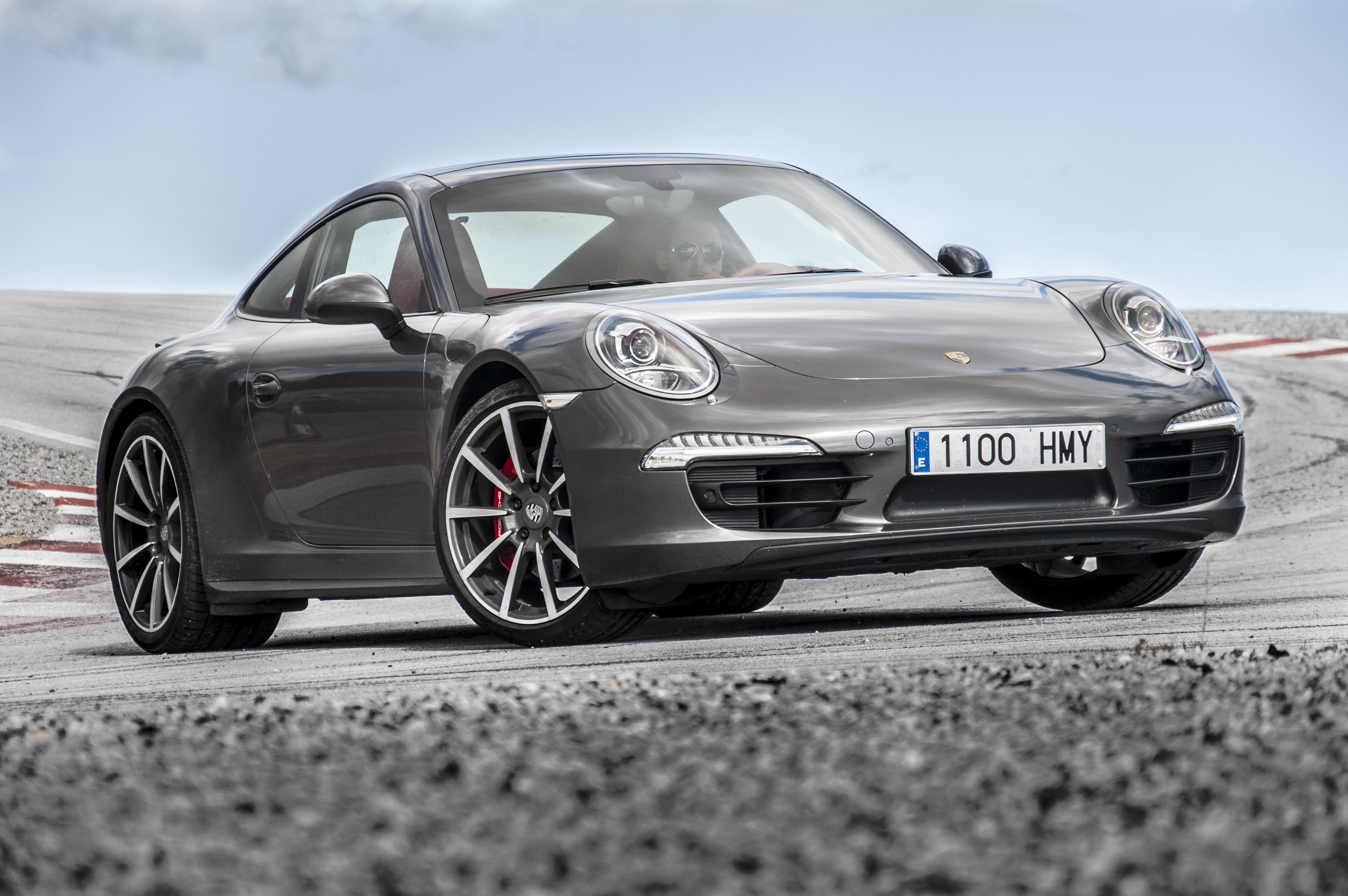
The Porsche 911 is a famous sports car that many people recognize because of its unique shape and fast speed. It's been around for a long time and is loved for how well it drives and how fun it is on the road.
The Chevrolet Camaro is another popular American sports car that many people enjoy for its power and sporty look. It's similar to the Mustang and is often talked about because it's great for racing and driving fast.
LIVE
So did Fifth Gear give you everything you think Top Gear could have if you stayed with it?
No, not really.
I like going around the world as a BBC Top Gear presenter, and it was taken away from me.
Tiff Niddell!
I'm a racing driver, it's better known as the bloat that drives cars sideways on television.
You were one of the founding faces of Top Gear, right?
Well, yes.
People forget how much we did in the 90s.
I've been on more Top Gears than anyone except Jeremy.
Jeremy and Willman came back because Fifth Gear I created and got that going.
Welcome to Fifth Gear.
If we hadn't created Fifth Gear, Top Gear may have never been reissued.
Clarkson annoyed me recently.
He seemed to completely forget his decade with me on Top Gear.
It was a bit insulting.
Without Top Gear in the 1990s, Jeremy wouldn't have been where he is today.
Tiff, I'm sat here today with you because you were part of my earliest years of loving motoring and cars.
It consisted of Top Gear and Fifth Gear, and you have frequented both.
But when I was planning this episode, I was actually struggling
because I had too much material, too much information to put into it
because of your long career in racing and the amount of different things you've done.
So if I asked you, Tiff, in your own words, who are you and what do you do?
I've no idea who I am really, but I'm a racing driver.
It's better known as the bloat that drives cars sideways on television.
I was only really on tour to be a racing driver because the television thing just came as a sidekick thing.
So, yeah, racing driver, I'm a racing driver.
And I actually listened in preparation to this for a podcast with Sam Morse that you did a little while ago.
And you said that straight away, I'm a racing driver.
I'm a racing driver.
I'm not a teleman YouTuber.
That's just a side gig.
I'm a racer.
Why is it important to you that you still identify yourself?
I'm a racing driver for in front.
Is that because you're like what you're most proud of?
All I ever wanted to be, I mean, I was a civil engineer.
I should have missed that out, really, because I had to get a job when I left school and, you know, there was no silver spoon.
So I was a working civil engineer when I, of course, won this auto sport competition
to win the Formula 4 that actually got me to be a racing driver.
Well, I've already been to the school, though, the Brands Hatch School,
where I borrowed Mum's Morris now, so I had to go there and pay £10 for the initial trial in 1967 or something.
69.
So, yeah, but I just dreamed of being a racing driver.
That's all I ever really wanted.
And the fact that it came true was completely by chance and by luck that I won that magazine competition.
Well, have you had some of your best experiences in your life?
That could be friends, happiness, whatever your measure of success is.
Is that the best experiences come from racing or the work you've done on tele?
Oh, no, just racing completely.
I feel I feel very awkward on tele, you know, sort of having to work a script out and I love doing it.
I mean, I started doing journalism when the Grand Prix career didn't quite work out.
So I started an attract test for Autos Book Magazine.
And being a civil engineer, I didn't have the sort of the writing skills of Clarkson and others.
So I just said what I felt every time I get in the car, look at the dials.
And that's the sort of way I did on television as well, really, not.
But you feel responsible for trying to come up with some clever words
because Clarkson come up with some brilliant ways of describing things.
I just say, oh, this is very nice and epic.
So my so yeah, it was just sort of feeling what the car felt like.
And I think that worked because people could relate to that much easier
really than going into great long, clever dick sentences.
Well, it wasn't always written by Clarkson.
I've had Mr. Richard Porter in the back of this van.
She was watching Wiseman.
And I think a lot of your content has always been very authentically you,
which is where there is a bit of a difference there.
But if I go all the way back to the authentic tiff teenager,
I usually have to unpick a guest's earliest years, like getting there
with sometimes with the spoon and trying to figure out, oh, there's a bit of that in that.
Yours, it seems quite simple, was that you were already had
motoring love running through your veins and then bang opportunity.
Don't just talk us through that opportunity of winning a car from a magazine
because these days all we have is digital competitions and win this for a fiver and that.
How did that work?
I still have to pinch myself every time I think of it happening, you know,
because as you said, to fuck the winning a car, then seven years later,
being on the Grand Prix grid just seems such a thanks for Hollywood sort of script.
It's actually been a competition in 69 to win a Lotus 61.
People get confused with that because I won a Lotus 69 in 1971.
I'd entered that when I was at school, you know, because I had the magazine stuck.
Everyone else had girls on the wall with them behind their desk.
And I had Jim Clark posters and this competition I entered.
And of course, it was a skillful competition.
You had to put things in order, important.
These are ten items preparing a car for a race and you'd buy a line.
There were there were two shillings, a line.
So I lashed out a whole two quid, I think to about 20 lines,
putting these orderly ports to different lines.
Was it was it hard questions?
Because these days they still got that role, which is if you go on
like a car comp site, you still need to pick like you anti to answer the game
of skill question, literally, like they show a picture of a Ford badge
and say, what car is this?
And this was more like it was 10 things for preparing a car.
So it was like engine, tune, chassis, tune, tires, other sort of things.
So I can't I should bought a magazine.
I still got the magazine, obviously.
So but it was still just a ridiculous dream that I was going to win this
competition until I got the phone call when I was watching
top of the pops with Olivia Newton-John in her very sexy one
piece velvet jumpsuit.
I was remember that just singing and she was singing.
This is absolutely true.
Whatever Thursday night it was, if not for you.
We should have been hit in 1971 and the phone rang and I was upset
because I wanted to watch Olivia Newton-John flipping phone ringing
and, you know, hoping mum would answer the call.
And, you know, I picked up the phone to the voice said,
this is Simon Taylor, editor of Autosport magazine.
You're a very lucky boy.
And I'm just both.
I was just I didn't remember anything from then on.
I was just sort of talking on the phone and just not believing it.
And I said the phone up the next I went down the pub with my mates
because I had to film me make some of what I want a racing car.
So they they started saying, well, do you know, it's April 1st
tomorrow, Tiffany West, it was April 1st, the next day.
So I just had to phone up Autosport and say, oh, is that Simon Taylor?
Because I think you phoned me yesterday, but I didn't get any of the details
because he talked about, you know, picking up the car and everything.
It was just unbelievable.
I mean, because we had no family money at all.
You know, and I didn't have a car.
They didn't even own a car.
I borrowed mum's Morris Thousand, which begs the question, you see again,
and if I relate it to modern day with the competition companies,
a lot of the time I'll be there going, oh, my God, they took the cash
if they'd have just took the car and then sold the car.
They'd have made like 40 grand and more, but most people take the cash.
Now, if you were in that position, was there any family pressure?
There was maybe say thanks.
My grandmother said, is it one of those competitions deal
where you could take the money or the car?
So it was never, never going to happen.
The car was going to come.
So I think I did own my first car with a very rusty Morris Thousand Traveller.
And I remember scraping away the rust of the chassis to put this witter that they still make.
No, witter tow bars.
And I bolted a witter tow bar the back of my Morris Thousand Traveller.
Well, my famous videos on on love cars, if you look on the Love Tiles list of YouTube,
I reenacted borrowing the Morris Thousand and trailing the Lotus,
which I now own, of course, because I bought it back
and put it in the same colours as when I won it.
So it sits in my garage now looking my pride and joy.
See, that's everyone's special automotive romanticism story.
That isn't it? Buying back their first video, buying back their first racing car.
The video is just amazing, because I mean, I didn't have a camera in those.
So I've got no photos of towing the Lotus 69 behind a Morris Thousand Traveller
because I didn't have a camera.
I didn't have a phone, especially not a phone with a camera on it.
So that's why I wanted to recreate this.
I borrowed a trailer and put the car and drove it around.
And it was just a Morris Thousand Traveller doesn't stop very well on its own
without these drum brakes.
And you put a four to four racing car.
It takes about three miles to stop going down a hill.
So I brought back all those memories of trailing this car around Britain
until the chassis gave up on the Morris Thousand in the end.
Even though we talk about the moment of winning the car as luck,
there's luck in there, but you've got that.
Do you think that there was an equal amount of luck
in the fact that you were prepared to take it in the sense that you're already
engineering, you already had those skills?
Because it wasn't a racing car plus a year's fun.
No, no money was a trailer.
What did they think people were going to do with this car?
It was funny, the guy that won it in 1969
crashed the first broke his neck.
I mean, not fatally, but literally his first race start at Silver's.
Then he got turned into the pit wall and so there was no guarantee of
you know, I had a big crash in my ninth race.
So that took me out for about two months.
Well, I saved enough money and I had a helper, a little bit, 10 pounds
of 10 pounds a meeting to take him along with me, which was very generous
and much needed.
You know, I was a civil engineer.
So five days a week, I'm a civil engineer by day.
And in five nights a week, I'm in a little garage of the weekend.
I'm the racing driver, the mechanic and the van driver.
I did this for five years, you know, I was still civil engineering for five years.
Well, I'd slowly bubbled my way up the national rankings, but I didn't know
what I was doing at all.
I remember taking the gearbox to change the gear.
I had a friend with a pen and paper.
So I undid the human gear and pulled her back and as the bits fell out,
he wrote down the order.
So I wasn't a natural mechanic, but I had to become a mechanic.
So couldn't afford one.
But that word, that word is going to be so critical throughout this podcast,
which is natural.
So I want everyone to kind of remember that and sort of go back to it as we
as we talk, because I've got a friend, probably my neighbour, actually,
Louis, and he works on this podcast.
And I like to bring him along a lot of the times when I'm with racing
drivers, professionals, because Louis is working his way up the Saxo champion.
And he's damn good, he's amazing.
Hi starts.
And we always knew he would be because he's just born to drive something.
But the reason I bring it up is the other day is dad, let him drive his AMG
GTS on Donnington for the first time.
And what separates for me, the naturals, is when I leave a pit lane,
I've had the lucky chance to do in many of my cars and head out onto the track.
I always get this little like, as I got, I remember I had it on Coon once.
So I'm like, oh, my God, this is a bit spooky.
And Louis just went, but he nuts.
First lap faster than I'd have done already in the rain.
In a car, his dad has just given him to have some fun in for some laps
and said, be careful.
And he's sideways coming onto the main straight.
Was that the same with you in the Formula Four?
To the natural talents?
Do you just send it and not think about the consequences?
We didn't know because I couldn't afford to crash.
So I mean, I learnt my driving skills in Mums, Morris,
Thousand in the Wet, where I could power slide round and round
about 20 miles an hour and knock.
Oh, I just got stopped by the police once.
And the policeman actually said to me, do you normally drive round
round about sideways, sir?
And there's this very old.
So I said, well, I got caught out office.
It was a bit slippy.
But, you know, when the snow came on and keep on,
mum, I've got to go down the shops and mum, I've got to keep on going out.
And just to suppose that and driving the race and driving to school.
So I went to Brands Hatch, you know, wherever I could save up another
10 quid and have another 10 laps at one pound a lap in a Formula Ford.
So I'd sort of grown up slowly of that and had the sort of skill
seemed to be there.
But now once I started racing, it was tricky because I've the fact
that it was dangerous in those days that the barriers and banks
were just three feet off the track.
And I just someone wrote a great column about me when I'd done about five years.
And I was a 98.4 percent finisher.
So the whole difference in the way the kids race now and the way we we raced,
I was slowly build up to the limit.
You know, get nearer and nearer each lap.
And then you have a bit of a moment over the curb.
And they all go, I miss that big bank.
And to found the limit by going slowly, faster and faster,
was now would always run off.
They all go down to O-Ros just full throttle
because they know that if the corner is too tight for them,
they just go off into the car park.
So in fact, they actually learn in a reverse way to me
because they just deliberately go too fast and then back it down a bit.
Whereas the old ways where you build up slowly,
you know, it's like when I watch any Grand Prix or single seed or DTM races.
Now, where there's runoff, they all just barrel in and go straight.
I still watch O-Ros at Spa and it makes me cry when I see, you know,
they just all straight line the top of the hill and come back on the track again.
They might get a track limits tick,
but it's much easier for the less skilled to go fast in modern circuits.
Whereas the real talent is harder than to stand out
because precision is what racing should be all about.
So you've got a moniker and you see Senna or someone, you know,
and a millimetre from the barrier at every corner.
And that's what is the most rewarding thing when you're precise and fast.
Do you love detail?
Yeah, but that's what I used to think all the time.
So I was so I built up slow, although I could catch the slides.
You didn't go out and drive like a loony, like your mate did.
Because you probably had ABS on and probably had ESC on.
And, you know, I hate GT3 racing now
because they've allowed ABS and traction control
to help the amateurs come in and race in international series
because the amateurs love ABS and traction.
Whilst recording a recent episode with Yanny from Yanamize,
the team from Garage Style were busy transforming my garage at home
into a brand new space.
It was looking so tired and in need of a complete uplift.
The team from Garage Style have worked with so many guests
that have been on this podcast like Yanny from Yanamize, Matt Armstrong,
Chris Slicks and many more.
For my garage transformation, I chose their black vented floor tiles
and we had an orange surround, so a different color
to make sure the cars get parked within and it looked unbelievable.
The team turned up in their van, literally smashed out the entire job in two hours.
They also put together the hexagon lights,
which transformed the look of the garage that went on the ceiling.
The electricians come, wired them in and the garage now looks a million bucks.
If you want to upgrade your garage space,
whether it be to something to house your pride and joy or use as a gym,
Garage Style does a variety of amazing products to get out your dream space.
They even supply toolboxes and garage doors
and they don't just work with individuals in small single bay, double bay
and quadruple bay garages.
They do everything right up to commercial premises, too.
They have partnered with Road to Success to offer you guys 10% off the whole website.
So if you want to get out your garage in the new year,
freshen up your space, doing the thing that you dreamed you should have done,
get it cleared out over Christmas and get it updated with the guys at Garage Style
using my code RTS for that 10% off site wide products
to make it a little bit cheaper, too.
Thank you to the guys at Garage Style for partnering with us for this episode.
But the thing I picked up the most when I was listening to you talk to Sam
Moore before this today was how passionate you are about all forms of racing
rather than the spotlight just being constantly on Formula One.
So I'll bring the question back to when you were in that Formula Four championship
because these days we do these enormous crashes in F1 and very low fatality rates.
So if you think back to Grozon's crash, I'll never forget for the rest of my life.
I always think, you know, when you're referencing things that are back in back in 1979
at the so-and-so Grand Prix, this happened on that X.
And I think when I was a bit younger, I think I just don't get how like they can remember that stuff.
I don't have any of those moments.
It's only now I'm getting a bit older.
I'd be like, do you remember that when Grozon went through that barrier?
But in your day, for the other forms of racing,
was there a lot of fatalities in that big crashes happening?
Because it was less safe than that.
There was more in Formula One.
To Le Mans, I was driving on the track with about three or four fatalities
over all my 16 Le Mans.
So yes, you know, you go past a burning wreck and think someone's dead.
But I just you never think about you just get on and just keep going,
because that's what you've watched all your life.
And, you know, you look at, you know, when when Roger
Williamson was killed at the Zambor, you know, upside down on fire.
You can't believe all these other drivers drive past, you know,
probably Perley was out there, David Perley trying to get someone
to turn the car back up the right way, which would have saved his life.
It was just the way it happened, the way it was.
And so that's the way I grew up as well.
You know, you didn't think, you know, people get hurt, they get hurt.
But I liked it being dangerous.
You know, that's what made circuits that were edgy,
like Macau up the top of the hill through the kinks and drops.
And I want to be on the edge.
That's what makes me more excited.
You know, I don't want to go out to a circuit that's just a huge runoff area
because there's no edge then.
Get a cop's at Silverstone, our first call.
We'll go too quick. I'll just go out in the car park.
There's no jeopardy.
And I want that jeopardy.
I want that danger to make you come alive.
What was the first moment that you stepped just over the jeopardy into all that?
Well, probably when I was rolling it on my ninth race,
that was because someone spun in front of me at the famous Russell corner.
But see, I have a screenshot of a photo I took last night,
although this new apple photos is horrendous.
But I have a screenshot somewhere.
Where is it gone of that?
I thought perfectly summed you up.
However, there's a real big element of danger here, because this is you.
Oh, yes, about to roll the which what, yeah,
which eventually Freddie did some more success for me,
which I wanted to kind of bring up because it's like in the moment like that,
we've obviously seen what can happen in a moment like that.
Very similar car.
Freddie nearly lost his life on camera, on show.
And at that moment there, is there any fear, any sense of that being a reality?
Fatalist. I'm a complete fatalist and just it stopped.
And then I laugh about it.
I said, oh, that was a bit close.
So no, it's weird.
And that's weird.
But I don't think you could be scared driving a racing car.
People and so many people say, well, is it scary?
Well, you couldn't do it if it was scared.
If you're scared, you can't drive fast because you can't get near the limit.
But if you're quite like the hedge being dangerous,
then it's so much more rewarding in your chat about racing.
You talk about when you got really good in your earliest years
and you were picked up for being in 1976, young driver of the year,
sort of at Autosport.
And that really exposed you to the teams.
I say, say, come to me and do this.
Did you have the same thing for your personality
with the media side of it over the years?
Because you're so look at this kind of fizz in the buzz.
And it's just fantastic.
All right, it was a journalist that helped young drivers.
You know, I never managed.
I mean, I think nowadays these kids don't have just managed.
They have a management team negotiating for you.
And so, you know, when someone broke a leg in a Formula 2,
you had to work out on the Monday morning
when you've got to drive in a matter of a drive.
You know, how soon do you phone up the team manager
and say, you broke a leg and can I have to drive?
You know, whereas now, of course, you have someone do that for you
when the phone goes round.
So as a driver, you just sit there designing your new
flipping artwork on your flipping crash helmet
and thinking, well, look at my crash helmet.
You do not like those crash helmets, do you?
You know, I had to decide to phone people up, you know,
and try to get drives to complete on my own.
So it was very, so I was a bit shy.
I thought I wasn't good enough at that, managing my way
through chatting people up.
And I'm much more sort of much more on mate with the mechanics
that I am a mate with the team managers or the overheads.
I'm much more just happy talking rubbish with mechanics.
Same when I'm filming, I'm much happier talking to the cameraman
and the sound man than I am to the producers.
So Clarkson and Quentin Wilson used to go to the top of the BBC,
you know, and when we were the top gear in the 90s,
to have ideas and suggestions of what to do or other shows
was I just not bother.
I'm very sort of, yeah, very sit back, funnily enough.
Bubbly is a word I'd use to describe you as very bubbly, very happy,
which is not to bubbly when I'm comfortable, a racing driver.
There's some racing drivers
that when they go into the media pen, if we just take F1
because it's the thing that the wider audience will know, listen to them
and you think, yeah, no, I'm just not interested or what did Max say?
Like, what did Max say to him?
Did he do something clever?
Because he's got that personality that something could happen.
I can't picture the tiff I've watched for the last 15 years of my life
being the angry killer when the visor hands down.
But is he in there?
None of the years. I think he's just a happy.
I mean, I never planned anything.
You know, my racing career just sort of went this way and that by, you know,
people phoning me up or do I want to drive?
And so as I said, I didn't wasn't self-confident enough.
Surprisingly, to sort of push team bosses and stuff for drivers.
But again, I never really sort of thought aggressive or danger.
I just sort of did it.
Just got in the cars and drove them.
So when you what would your before you won the car?
If I'd taken it before you won the car, I didn't even know that was going to happen.
What would your.
Success of life looks like this for me one day, kind of vision.
You know, in here and you still have the dream of the race and drive.
But I was going to write that I could do that.
That would be really good.
And was that still racing?
My brother and I were going to build a U2, the clubman's car.
And you could buy kit form is really kit form of car.
So we were going to go racing of some stage, but obviously not as a career.
And if you believe what I was doing for me to forge, you know,
when my dad telling my brother somewhere, you know, what I think Tiff's got,
got it really, it's not going to work, you know, because I still remember that.
Yeah.
But of course, as you get the car right, you can't win races.
Even in Formula Ford, you know, I could, you can win occasional races.
I was that when I finally got the best Formula Ford in my fifth year of Formula
Ford, I finally managed to borrow one buy.
That's another story.
I'll tell the story of a guy called Chris Hyatt Baker lived down in Bristol.
And you ever heard of the danger of sports?
But the first bungee jumpers off the off the bridge, the famous Clifton.
No, no, no.
I know that they have bogged down mountain sides on pianos and things like that.
They called themselves the Dangerous Sports Club.
So he'd been doing Formula Ford in 1974, kept on crashing.
And it was a bit wacky, wacky smell about who used the thing.
We hoped it was only after the race.
But in the winter, he bought the best Formula for the Crosley 25F.
And in 1975, when my results were getting rubbish, I had a free Eldon Mark 17,
which was a rubbish car and I was finishing fifth and sixth.
And it was all over.
I was going to be a civil engineer.
When he advertised his Crosley for sale middle of the year.
So I phoned him out, so Chris, Chris, I need, can I buy your car,
but not pay you for it until I sell it.
And he said, yeah, far out, man.
Oh, yeah, it's flowing for you.
Yeah, come and pick it up, man.
So literally, I've jumped with my transit fare, with my rusty.
I'm sorry.
It's rustle.
I just want, I love focusing.
It's almost like in my brain, I'm going to highlight a sentence in bold.
Like, can I buy your car when I sell it?
Like, can we just like hold that to sex?
Because we hear these insane stories.
That's almost like to me when Branson was like,
can I just lease one of your fleets of planes and make enough money
to eventually buy one if that's okay fleet?
It's almost like a Maverick moment, that is, man.
It was complete.
Because, you know, just transformed my whole life.
Because, you know, I'm rushed down to Bristol.
Funny enough, what I discovered he'd done to give up car racing,
he was about a 19, 20 year old kid.
He'd invented the hang gliding and just begun in its infancy.
And he actually was running a school of hang gliding.
And it was actually even more funny.
It was called the high school of hang gliding,
which I thought was very appropriate for Chris.
And there was this in the cord, it was this dusty, you know,
unused, crossley 25 AFs.
And I kept on talking to him while I got it out
and got it on the trailer before he changed his mind.
But I hadn't, I'd won races every track in Britain.
I always remember this, but Brands Hatch Club Circuit.
Well, of course I did the racing school, you know, five years earlier.
I'd never won a bloody race.
I had lots of second places.
And once I got the crossley, I won the next 12 out of 13 races.
Nonstop of races, just one and one and one and one and one and one.
Can we just talk about our racing school for a minute?
Because the only other thing we're going to have to do
is just put slight pauses because your story is so,
there's so much in your story.
Is it?
Yeah, no, there's so much quantity.
There's so much mass of good and interest in your story
that we just need to pop the time limits.
Because when you say racing school,
I don't think many people know,
but didn't you actually train Dario Franchetti?
No, he was working one of the leads.
That was a nice start.
I put him in hospital.
He deserved it.
He was mucking about these drivers.
So when, I don't know, this is in the 80s and 90s.
So I used to do corporate days, obviously.
I was on top gear and stuff and good money.
And then both Citroen and Nissan,
they used to run their new car launch days.
I'd have about 30 instructors.
So I'd pick all the Formula 4 drivers
because I thought they need money, you know.
But we used to, in fact,
I'm working out Thruxton doing my passenger rides around there.
And sadly, there aren't that many kids instructing anymore
because they're all bloody rich kids.
So they don't need 150 quid a day or whatever it is.
Yeah.
Because they got the money
and they spent 150 quid a day redesigning the crash helmet
so they can polish it up and say,
look at my new crash helmet on YouTube and my video.
And Dario was one of the kids that was working for me.
And the bad boys during the day used to pick up the cones
at the end of the day,
because obviously we'd put out the apex exit cones for the drivers.
And so they always sent off the bad boys
who had to stay behind and Dario was often the bad boy.
But he decided, or they decided,
I don't know who was in the van driving the van,
to not stop at each cone to pick it up,
but to lean out from the side and grab the cone.
And obviously the driver would go faster and faster
because that was half the fun of it all.
And it was down the old hairpin, I think,
one of the quickest corners at Donington
when Dario managed to fall out to the van
whilst trying to pick up a cone at 50 miles an hour.
And so I had to phone Mr. Francketti to say your husband,
your son's in hospital, I'm afraid, because he's got a scar.
He's very proud of his scar for when he bundled him down the road.
It's always the non-racing things
that get most of the racing drivers, isn't it, in reality?
Which is crazy, but...
But a lot of young drivers, it was fun.
So I enjoy employing them all and meeting them all
and seeing these talented kids.
I said before we started recording
that I was one of the lucky ones
that you've actually thrown around Thruxton in a BMW M4 before.
And that was way before I started this podcast.
It was just, I was on an experience day,
I was having a bit of fun,
the thing I went with a friend from memory.
And I remember, I still remember that today.
So it's insane how like one 10-minute lap or something
can have such an impact on someone.
But do you still do that,
not for like the financial gain slash reward
because you love going sideways in cars?
Yes, the money's handy, the money helps.
But I started about 10 years ago as a BMW ambassador.
We had an M3, it was my, you know,
so we just started passenger rides,
thinking to do it for one year.
It just became so pop, I've not done it for 10 years.
We added up, I've done over 8,000 passenger rides,
three laps of pop.
So that's 8,000, that's 24,000 laps of trucks.
Do you think you can do them with your eyes closed now?
But everyone's an experience.
I just love the reaction you get out of people
rather screaming, crying, laughing, silent completely.
And the most majority of people at the end
is the fact they can't believe that a road car could do that.
And that's a sports saloon.
I mean, they've got no concept of, you know,
how quick and how sideways,
and I'm still only driving at 90%
and having a bit of a laugh.
And I once had an 83-year-old Yorkshire
with my best ever compliment in my life,
who went and she'd gasped.
She got off it.
I wasn't thinking she was passing all the way with her laugh.
So she cackled away for the three laps
so that her daughter was waiting for her to board the ride.
And she just said,
oh, it's best thing I've done in life, chug.
So I thought of an 84-year-old woman,
the best thing she's ever done in her life
was to come out with an idiot for three laps.
That's very rewarding because you get that feedback.
And I like it, you know, just meeting people
and mixing them in.
It's very relaxed.
In those cars, there's also some cameras to capture that experience.
Yeah, yeah, yeah, it's all on.
And being in front of the camera in cars for you
started in the 80s, am I right to say?
When it was 87, the first top gig was 87.
Do you think the wider?
Because to me, I'm 26.
I started probably watching motor in television,
2005, 2006.
Like, I really remember the Bugatti Veyron.
That was the big car for my youth.
Others would be McLaren F1.
And then you've got the wrong one, but never mind.
Kind of, you can't all be right.
But there you go.
But with shoots like that, so for me,
I grew up in Clarkson Top Gear and Tiff Fifth Gear.
Like, and I would watch both of you and Jason Plater.
I remember my favorite film was the Aston Martin Vanquish versus F12.
Yes.
Absolutely loved that shoot.
But I don't think the wide, the huge, the big circle,
as I call them, would necessarily all know
that you were one of the founding faces of Top Gear, right?
Which really annoyed me, because Clarkson
he annoyed me recently because he did a little video
when he was on holidays somewhere to promote Willman's book.
Who I've recently had in the van as well.
And so, Revengeance, Clarkson said this thing
that's gone around the world, the most amazing program,
and it was created by this man who transformed it
from a regional TV show to this global amazing
and his skill and his talent.
And he seemed to completely forget,
forget his decade with me on Top Gear in the 90s.
So it's like I'm Vicki Butler-Henson and Quentin Wilson.
And it was a bit insulting, almost, because in the mid-90s,
we built up six million viewers, the same as they sort of had,
they got about eight million, I think was the best.
And we created Top Gear Magazine and we did Top Gear Live shows.
So Top Gear in the 90s was massive.
And it went around the world.
I used to go and watch BBC Worldwide and see myself in Hong Kong,
Top Gear.
And so we had a really good show, which Jeremy then left to do his chat show
and that didn't work and Quentin left to sell cars, second hand.
So Top Gear died off viewing figure-wise in the end of the 1990s.
And then we had a new producer that wanted to dumb down.
Dumbing down arrived.
Well, I've got to take my shirt out and put a gel in my hair.
Do we have to talk about all these numbers?
Do we need numbers, you know, nought to watch these noughts of 62?
So, you know, the program died and then it was taken off air in 2001.
You know, then Jeremy and Willman, you know, came back.
It was fifth gear I created and got that going.
So I think, wait, if we hadn't created fifth gear,
Top Gear may have never been reissued.
Because I don't think the producer woman, the top of BBC Two,
I don't think she wanted cars on her, her image of BBC Two wasn't a car show.
So it was off air for this year while we created fifth gear.
And then all of a sudden Jeremy said that...
This gear came before the Top Gear reboot.
About a year, yeah.
So you think that that was almost a BBC reaction to fifth gear?
Yeah, I mean on Channel 5.
Because the Channel 5 put posters up outside television centres saying
the Top Gear team has moved to Channel 5.
Trying to list, I mean, the Top Gear team in Birmingham in the 1990s
was like six people, two directors and three researchers and a secretary.
So I got them all to leave and join fifth gear off bits,
which was set up in Birmingham.
Sounds like you're pretty passionate about the television side as well.
As well as your Ryan Hyde.
And I was annoyed with the way it was all dumbed out.
I'm annoyed with the way it's not respected as much now as the new.
And funny enough, I mean, a fact that always makes me laugh how television works.
Because the first is when they came back for about three years,
we were getting about two and a half million.
And I think they got up to about three and a half, four million viewers.
Hammond bumped his head.
Small crash somewhere, by the way.
The first show when it came back on had eight million viewers.
So the thing that really made Top Gear was almost Hamilton's crash.
Hammond's crash, yeah.
Hammond's crash because, you know,
every mom and every mom in Britain wants to hug you and look after you.
Sad, really, because it's almost like people,
I notice it with podcast titles.
The audience sometimes shout at me when I've done something a little bit
negative or spooky at the start, whatever it is for the hook.
Because people react so much better to bad news than good news.
Sadly, in our world, that's the way it is.
And I've never looked at it like that with the Hammond crash.
There was kind of a bit of a spike afterwards.
I mean, it doesn't take away from that.
It's a brilliant show.
You know, I can't deny that it was a very, very entertaining,
car-ish based show.
We kept on going with Fifth Gear, which is just a magazine program like Top Gear.
But that's a brilliant show.
But I just get annoyed sometimes that the show that made Jeremy, don't forget,
without Top Gear in the 1990s, Jeremy wouldn't have been where he is today.
What was your best memories of Top Gear from the 1990s?
Even though you'd done all that racing, you'd been on the grid at Monaco,
the Grand Prix, stepping in for another driver,
done all these things that would have been incredible to have told you
that the day before you entered the MAG competition.
And yet you still have all these amazing experiences from being on camera
and going places and doing stuff.
What was like a mum I did this moment from your years at Top Gear?
Probably driving at a cross-crawl pre-Ferraria link.
Of course, it's a Formula One experience.
Well, Jeremy was in the F50.
So it was the F50, which was, of course, Ferrari made a big fuss about it.
It was a Formula One car with a V12 engine.
So I was in Prost and Jeremy was in that,
and that was a pretty special runway appearance.
So the trouble is you didn't actually film much with each other.
That was the difference of a magazine format.
I'd go off and do my seven-minute piece somewhere,
and Jeremy would do one, and Quentin would do one, and Vicky would do one.
So you never really worked together that often.
So it was only really when there was an annual car of the year show
or motor shows at both Birmingham and London
that we'd actually worked together.
But most time we worked together was when we had these live stage shows
with me, Jeremy and Quentin standing on stage talking complete bollocks
at the motor shows.
And that was the time I spent more time with them.
Of course, we sadly lost Quentin, yes, and so he didn't, right?
And it kind of brings up, who did you become kind of closest to?
In terms of co-presenters, because Hammond and May have a real
friend-like bond.
You can see it, and you can see it separating away from Clarkson over these latter years.
It's definitely a separation.
But who did you, because you worked with?
Well, Jeremy was really, you know, I've done the second most top gears.
I've been on more top gears than anyone except Jeremy.
So people forget how much we did in the 90s.
We were doing show after show after show.
So you were great friends at one point.
Yeah, yes, we still am.
So Jezra and I.
So, but it was funny how, you know, look at Rich Hammond, he wanted to be a top gear presenter.
And he tried three times to audition to be a top gear presenter
and kept on getting rejected and depressed.
So he was doing, what's that YouTube men and motors?
Wasn't he on some YouTube channel?
Not YouTube channel, but a Discovery channel.
I still remember to this day that in the about year 2000, right when
Top Gear was dying, they were still looking for new presenters.
And there was a choice between Agent Simpson and Richard Hammond.
And I remember actually voting for Richard Hammond in the Top Gear office up in the thing.
And he didn't get it.
That was his third time he'd auditioned to be on Top Gear.
But Agent Simpson got it.
So when we created fifth gear, Agent Simpson came with me to Top Gear
and Vicky Buttenhenderson and we got Quentin back.
But if Hammond had got that vote, he would have been on fifth gear.
And the Top Gear job would probably never have happened.
Isn't it funny how little twists and turns of fate.
And he was desperately going Top Gear.
And then he didn't get it.
But ended up on a much better Top Gear that created his whole future.
Little twists.
But like my racing careers like that, I always look at so many little turns
that made the next step happen that weren't planned.
They just sort of happened.
Was fifth gear for you then?
You mentioned earlier, you went with the idea.
Was it your creation, the idea for that show?
Did you have the vision for it?
There was a previous Top Gear producer, Richard, who I had lunch with afterwards
when they'd said we're going to shut down the show.
You know, we were like, what are we going to do?
It's a bit of a bore.
We quite like our Top Gear show.
It still gets any hot two million now, two and a half million.
You know, it's not as big as it was,
but it was still a very good magazine format car show that they was enjoyed.
So it was when it was shut down, he was actually working for Chris List then,
which became North One Television now.
It's about a lunch in Birmingham.
So we were trying to invent a new car show.
And then we thought, well, I don't remember.
Top Gear's fine.
We'll just do the same thing.
So he was the one that actually took Chris List Television to Channel 5
and said, would you like to buy this format?
It's funny.
I want to bring up a quote that you kind of, I've noticed in your videos,
you say something repeatedly in a lot of different times.
I've told you a lot of different times you refer to something.
I kind of want to dive into it and kind of use that as a thing.
You say, of course, I'm not as successful as the others.
And you've always kept saying, I've not been as successful.
I've not been as successful.
What is your definition of success then?
To become from winning a motor in car, that luck piece,
which has landed you on the grid of Monaco,
to then hosting the second most episodes of Top Gear ever,
which become the biggest motor in show in the world,
and creating fifth gear.
And the reason I'm bringing it around there is because you always seem to do it
by just being like the funding's like the last thing you seem to think about.
Like, oh yeah, I'll go get the car and I'll just pay him when I sell it at some point.
What is your definition of success?
Why do you feel that slight bit of insecurity around that thing?
Always just...
Is it humility?
I feel uneasy with bosses.
I feel uneasy with hierarchy that talk clever stuff and contracts.
Like I said at the beginning, I'm much happier with the mechanics
or the cameraman and the sound man that I am with the producers.
I've just always had that...
I don't seem to be shy in a bizarre way.
Saying I'm shy is probably unlikely, but...
Well, let's look into that then,
because we're filming this on the 18th of December.
Thank you, because everybody keeps saying,
oh, we'll just do it in January, mate.
We'll do it in January.
I'm like, I've got no episodes.
It's like...
That's it, I'm just standing there.
No, it's perfect.
It's perfect timing.
And the reason I bring it up is because what would your Christmas look like
back when you won the car in the magazine?
What was your family makeup?
What did they do?
Boxing Day Brands Hatch.
Boxing Day Brands Hatch.
Every Boxing Day Brands Hatch.
I couldn't sleep the night before going to watch motor races,
because my dad brought me up and mum and we went to Goodwood,
which was the local track, you know.
Only about two or three times a year,
they couldn't afford, you know, tickets and stuff that often.
But then we'd go to Boxing Day Brands Hatch to watch the motor racing.
So Santa Claus was a bit of a secondary thing to going.
And I just love it.
We sat in the grandstand with the tomato soup in the thermos
and a rug over our knees and watched motor racing on Boxing Day.
What would they want you to be?
What would they always try and hum into to be like a certain way?
Was it humility, humble, fun?
Was there any life lessons you really remember?
No, really, Dad was very busy on his boating business.
He was quite aloof and didn't talk much.
And mum was the sort of boss of the kids.
So he was entrepreneurial?
Well, no.
He was a complete bankrupt.
He was in debt all his life.
Bless you, my dad.
He became a naval architect designing boats.
And just a big part of them.
And he's got his own company doing surveys and boats.
But so many boat business go bust.
I still remember Dad would have a whole lot of work
and then no money for it.
And then he invented powerboat racing.
So he became the big boss, the silamane of powerboat racing.
Wrote the regulations for the first offshore powerboat races,
the cows to talk e-race.
So he had a great life going around the world,
then promoting running.
But it was unpaid in those days.
And it paid to be a sort of a scrutineer.
So we stood up and brought in cars.
So Dad was very much involved completely in the powerboat racing world.
Arguments on the phone about regulations and rule bending.
And so he was obsessed with that.
So Mum sort of run the household.
And it was just a family life, a happy family life,
without any edges or plans.
Again, no plans.
It was just...
To all my loyal listeners listening on Spotify,
Apple and other streaming platforms,
I urge you to do me a quick favor
that you might not know that you could do.
You can actually follow if you're listening on Spotify,
the Road to Success podcast,
and also rate it with how you feel these conversations have been,
how they may have helped you,
or if you're just enjoying the one that you're listening to today.
It really will help us if we're able to grow our streaming platforms
beyond hundreds of thousands of monthly listeners.
Thank you so much for listening to this episode of the podcast.
And I really hope to bring you some more inspirational guests soon.
What I'm getting at is if someone piped up too much,
or was too like,
oh, I've got this, you know,
would they have put you back in your box
if that was you and your uncle?
Because you seem to be, to me,
the type of character that maybe says those things,
because you still want to be the guy that gets on
with all the engineers in the garage.
Yeah.
Well, we didn't have anything,
so we were always...
I came from a very low heat slide, so...
I think mum, the first ever car,
the new car that mum owned,
was a Datsun 120Y estate,
which she splashed out on,
which they then drove to watch me
make my Grand Prix debut in Belgium.
My girlfriend Patsy, now my wife,
and my mum and dad and a friend
squeezed into and drove to Zolder
and to watch me do...
They didn't fly out in helicopters
and they have corporate entertainment.
They went to the fence and clung to the fence
to watch my Grand Prix debut.
So we just came from a very low level.
Humish...
Hum...
What's the word?
Not humidity.
Hum...
Humble.
Humble.
Humble.
That was the word.
Very humble.
Humble background.
And I suppose that just...
Do you think for you Humble's been
one of the keys to being happy?
Do you seem like a very happy?
Yes, very happy.
So honest, you know, just to...
In fact, fun enough when the...
I lost the Formula One drive quite quickly
because the team thought I wasn't good enough.
So again, I didn't push myself maybe enough.
I didn't go and say,
your car's a fucking piece of shit.
You know, give me a decent car.
I sort of said, well done as quick as I can
and that's it, sort of thing.
And it was one of the sponsors,
Unipart Sponsor Mike Bratton said,
the trouble you did, if you're too honest,
and instead of saying the car's shit,
I just do my best.
That's it.
They say nice guys finish last.
Well, I know, I think it was a bit of that image somehow,
but it was so frustrating, the Grand Prix drive I had,
which was the briefest one in the world,
because it wasn't going to get a substitute
even if you played good clay records,
only broke his back in Long Beach.
It was only a single car team, the Unipart team.
So I got half a day testing at Donnyton in a Grand Prix car,
and then I was qualifying for Belgian Grand Prix.
You know, they took 30 cars you stood up in those days,
only the quickest 24 got on the grid.
So you did the Belgian, what about Monaco?
Well, then I went to Merck,
then I didn't qualify.
Okay.
And that was the end of it.
So you did the testing at Monaco
and you did the Grand Prix at Belgium?
Yes.
So Belgium, I got the drive through the Rouge.
No, because it was older, unfortunately.
Oh, no.
Not the great track.
So I qualified 23rd, started the Grand Prix,
my debut Grand Prix,
Emerson Finnipaldi alongside me.
Emerson Finnipaldi.
One of my schoolboy year, Emerson Finnipaldi.
And I was a bit like that.
And literally when the mechanics left me on the grid,
the two-minute warning started the engine.
I literally, absolutely honestly, started going,
Emerson Finnipaldi, it was just a dream that had actually come true.
And I diced with Emerson for the honour of being last
in the 1980 Belgian Grand Prix
for about a dozen laps and the engine broke.
But based on qualifying the car,
where Reagan's only qualified at Long Beach,
well, it's his kid Jan Lamers,
most motorsport fans will know about.
At Long Beach, he'd qualified fourth in the ATS,
which is another back-of-the-grid sort of car.
So he'd stunned everybody.
An ensign then had an American sponsor.
He said, gee, we got the Jan Lamers, he's the boy.
So Lamers took my place
and then didn't qualify for the next six Grand Prix.
Couldn't even get in the top 24.
I had been to Monaco, as we said,
which was a magical experience to drive a Grand Prix car around Monaco.
I mean, just out of Sandoval, the hill,
and you just, you can't even see more than about 200 yards
because it just weaved slightly over the crest in the casino square.
But there, only the fastest 20 cars got on the grid.
And in the wet qualifying, I was 19th.
I remember I was about 4,000th of a second behind some bloke
called Alain Prost in his Renault.
So I thought, I'm in the Monaco Grand Prix.
But in those days, the qualifying one was on the Thursday
and there was a day off and then the Saturday.
And so the whole of Friday, I was going around
hoping for thunderstorms and hurricanes and doing a rain down.
They didn't come and the car wasn't quick enough
and I crashed it in the end.
So, but it's so frustrating.
I mean, it was a car that if I had a teammate
or if the team had believed in me more,
they'd obsessed with Jan Lamers,
going to be there the answer to all their dreams.
And he wasn't.
The car was rubbish.
See, in your story, say pre-2000s,
because it's almost like a whole new era of you begin
at the turn of the decade.
And I feel like if we start with that moment,
that pivotal magazine moment, as we'll call it,
there's so much like upward trajectory that...
Yeah, yeah, yeah, yeah.
There's so much going on.
Where was your...
Like, we all have them in life.
Was there like that great levelling moment of like,
oh, it's not all good sometimes.
Like, that can all...
Was that maybe the end of that top gear experience,
then trying to work out with the gear or just kept on going,
kept on stepping and weaving and...
Is your mind...
I've never done a screen test.
I've never done an audition for anything.
I've never paid for a ride in motorsport.
All my drives were paid for by people, sponsors and stuff.
Once I finished Formula 4, that is.
So I was a professional.
I love those kids when they look at their CVs
and they're doing Formula regional and they're 18
and they put a professional racing driver.
A professional racing driver.
So many people hate that, but they put a professional racing driver.
I mean, sometimes they are,
because they take two million pounds to a Formula 2 team
and the team give them 20 grand back,
sort of pay the driver, sort of a back kick.
But to be actually asked and paid to race
was always my pride and joy,
rather than ever buying a ticket or getting anywhere.
With fifth gear, was there a certain...
You mentioned the drive in the car on...
That was top gear days versus Jeremy in the F50.
Yes.
But fifth gear, for you, was that the McLaren F1 then?
No, that was in top gear.
Was that top gear as well?
Yeah, that was all top gear.
Because top gear at 87, I went in there.
And again, that was a little...
Because I'd already been...
Like I said, I'd used to write track test,
brought a sport magazine to earn more money,
spread my name, drive team's cars.
And I was one of the early expert analysts with Murray Walkham,
doing Formula 3, Formula 4, touring cars at Brands Hatch, Rallycross.
And again, I'd been just brought in,
because I was hanging around race tracks trying to get drives.
And it was the year when James Hunt was Formula 1 commentator,
and he couldn't be bothered to do Formula 3s and anything else.
So BBC knew my name and heard me talk,
because I was a commentator.
And then when Chris Goffey broke his leg
when he was supposed to test a Formula 1 racing car,
they needed a driver for that weekend.
So they phoned me up and said,
can you come and just drive this Formula 1 for the weekend?
Well, for a day.
And that's what I'd...
Before I went, thought quite often,
you watch the television, it looks easy,
and turn it, go on, and after I turn it, the next car,
it just looks too easy.
To literally when I went out to the Formula 1,
I deliberately chopped it sideways.
Because, you know, I thought,
you've got to make it look like you're on the edge.
You know, if you're not on the edge,
it doesn't look exciting.
Because that's why I did.
But there's a crazy thing about it.
I thought we began the whole thing.
You love your racing so much,
and the racing that you did.
Yet you also love spending so much of your life sideways,
which is the least fastest way to go around a lot of circuit.
The bizarre thing was that...
Because that was 1987,
and Jeremy joined the program about 88 a year after me.
And then Quentin Wilson came.
So I was in before Jeremy got going.
But what I thought then in the early 90s,
and I'm a telly now, I'm a big telly,
and they'll all watch me in team managers.
And I've got the feedback in the end
that team managers looked at my driving style.
I thought, bloody hell, if he drives like that, you know,
I don't want him driving my racing cars.
So in fact, my showbo team style,
and paper perhaps didn't help me get more rides in the 90s.
When you talk about the telly,
you almost talk about it like it's a side hustle,
like it's a side crest.
Like, yeah, I'll just go and do some telly.
What did your family react when you were on the big screen?
Like, what was your friends?
Did you talk about your friends when you got into racing?
Be like, I can't believe you won that car.
Like, what was the reaction from your circle being on the big screen?
And you were just like, it's just like nothing really.
No, the same friends all just took me as I was.
Because again, you know, I never had an air or a grace.
I didn't sort of promote myself.
Look at me now.
I won't tell you, you know, I've just won one of the boys,
one of the mates.
Get recognized when you're off going to the bar
and the pub constantly.
Yeah, that was all right.
That was enough.
I still get that now, just about not as much as I used to be.
But that's quite nice.
Because I, in fact, that's interesting.
Interesting, another story how it works.
That you, if you get too famous,
your life gets taken over by paparazzi and stuff.
But Jeremy's got a terrible dose of it.
And it was in the mid 90s,
when Top Gear was beginning to go from 2 million to 6 million.
And me and Jeremy and Quentin,
when we did meet for the Car of the Year show,
the occasional meetups in Birmingham nightclubs,
we got a drink in the three of us,
you know, people come up and say, I'd love to show,
you know, great.
Thanks, boys.
And then they walk away.
And gradually, the same fans will come up and say,
I'd love to show.
And we'd all say, oh, yeah, what about that?
You turn around, they haven't moved.
And the fans then would think they own you a lot.
You've got that impression.
And they just stay with you.
So then that grows more and more and more.
So eventually Jeremy turns around at one and says,
oh, the fuck's that piss off?
Well, you know, having said hello and thank you.
Then of course, they run to the daily sketch and say,
you know, that Jeremy class, he's done me back off.
I only wanted to say hello.
And so gradually you get closed down.
And I saw this happening hugely with Jeremy.
But luckily I was still this peripheral boy
who didn't get that.
I forgot the nice thank yous.
Oh, so then that.
And so they walk away again and leave me to my normal life.
That begs the question then, really, do you have the success?
Because it's whatever you define success by.
Because I remember the first time I ever heard you say this line.
And I watched Hayden.
It was when you were going through the,
oh, this is my humble car collection.
Yeah, I've got 170,000 miles this and that.
And of course, I didn't have as much success
as others on TV.
How about you put it?
Yeah.
It was true.
But did that give you greater success
on how you're able to live your life
and maybe not go into the mood?
I could have done with a bit more money to be honest.
I still got mortgage on my house.
I could have dealt with it before.
I'm jealous of those more successful, but not.
Did you ever ask for a graph?
Particularly want.
No, I never asked for all money.
I just took what came my way.
Yes.
That's a really interesting point.
Because I think anyone that's thrown around an F12 on telly
next to an Aston automatically thinks,
oh my God, making millions,
Clarkson sat in the Bahamas doing X1 and said,
is that not so much the case?
Well, no, because I'm not jealous of their money.
Well, I am jealous of their money,
but I wouldn't want the fame they have.
So I wouldn't want the intrusion to my lifestyle
of being that rich or famous.
So did fifth gear give you everything
you think top gear could have if you stayed with it?
No, not really.
Because I like being a BBC man.
I like going around the world as a BBC top gear presenter.
Channel five was never quite the same.
Didn't have to send cash, eh?
Did it?
So I was loved to be a top gear presenter.
And it was taken away from me.
But did you still enjoy your time at fifth gear?
Of course.
Yeah, I still enjoyed it.
Because I remember that on that Morgan shoot,
you spent quite a bit of time with Sabine Schmitzer.
Yeah, well, Sabine was wonderful, yeah.
We talk about a lot because one of my friends these days
has become Misha from The Nerve.
Oh, yes, brilliant.
And he's such a character.
And the way he is, the way he can throw cars
around the level of sheer grit and determination
he has on every drive.
He's unbelievable.
And he's a fantastic entrepreneur as well.
But still at the ring, Misha is the most popular,
the most known, brought the most fans to it now.
But before Misha, it was Sabine with the rim.
What was it like working with Sabine?
She was so funny, she was just laughing.
Huy, huy, huy, huy, tiff, tiff, tiff, you know,
patting me on the back to classical German humour.
So she was always having a laugh.
So I did about three items with her or more.
And she was just a lot of fun and just took it easy.
And she wasn't very demanding either.
She just turned that and happy to do what we did.
But Misha is another thing, isn't she?
Well, I'm worried about Misha.
There's some of the things she gets into that some of her
is my modified chip, date, hundred horsepower,
voxel vector or something.
I'd be rather worried to drive some of the stuff that he gets asked to do.
Don't know what's under the wheel, is it?
No, I know.
Because you've got brake pads in it, and will it run out?
I sort of asked that, and Amisha's kind of response is,
oh, the way he kind of responds to it is how I imagine someone walking around a car and sort of
kicking the tire a little bit, like, yeah, I've checked it over,
and he actually listens to this, so he'll probably be listening to this.
I think...
Well, he's created a brilliant niche for himself.
He's like the doctor.
He knows if there's something kind of wrong with it,
and I think he backs off when he, if he feels that when it initially goes out.
And I think very much more so now that he's building a family,
is I think maybe a couple of tents have backed off the laps ever so slightly, so...
Yeah, but is he?
Has he booked for months here?
I think Amisha now focuses on not only the YouTube side and the laps,
but he's so passionate about Vulcan Alpha, because he's a bit like this...
About what?
Vulcan Alpha, which is his carbon fiber aero business.
A lot of the patches to make the cars go quicker and have more downfall.
All that rubbish, you don't need.
It's funny what comes from an experience, because from this podcast,
I've ended up investing in people that have come on, going and doing things,
having amazing experiences on track and driven around the world with guests that have come on.
It's been fabulous.
And when Amisha, he met a chap called Lapo who invited him to drive his car,
and he was so baffled how he'd got this car to essentially almost make ground effect out of this
little Renault that you have to sort of wear a helmet on.
He said, what do you do?
It turned out he did carbon fiber for Ferrari and aero turn design,
and so they've been making parts at Vulcan Alpha for all kinds of cars,
the Porsches, the Mustangs, one-off packages.
They're doing something insane for my friend Chris at the minute.
And it's just that passion for racing and all the detail that we talk about.
Is there anything that, because you've got so much, as we said, packed into your story,
do you, is there anything you'd have loved to have done that you feel you've missed out on?
I don't think so.
Like I've raced everything around the world.
Haven't raced Australia.
There's lots of tracks I've never raced on the Nurburgring.
In fact, one of the group C World Championship sports cars,
it was the first year they had the stupid, horrible, modern girl, pretty track.
It was so depressing.
So yeah, I just, I like traveling and racing in different parts of the world and different
cars.
So I don't think I've missed out on any of things.
It sounds to me like kind of one of your missions at the minute from,
this is just pick it up from conversations and pieces, is you seem to get frustrated that the
other forms of motorsport don't get the same coverage as F1.
Yeah, but I'm running my little podcast and I'm now going to be involved with drive,
tribe, scribe, tribe, thing, little group of journalists and I'm going to be writing and
I quite like the fact I'm going to read it every time.
So you have my voice reading your story on a Monday morning.
And my columns.
So I'm looking forward to doing that because my podcast is the same.
It's just I look around the world, what went on last weekend, what we missed out on,
you know, because everyone's obsessed with formula.
Funny enough, I do some corporate work, entertaining for a travel company that got a
moniker to sit on the yachts with the rich companies and private people and paddock club.
£8,000 a ticket or £4,000.
And you must have been like, I mean, for you or mad.
And I sort of do that.
But but but this year, because Indianapolis move Monaco moved,
so we could never do Indianapolis as a corporate trip.
So now Indy 500.
Right, let's send a brochure to all our guests that come to us and spend £8,000 on paddock club
in Xtelor come to Indy.
That two people.
And I flogged it and wrote the story and said,
this is real racing and this is the most amazing spectacle.
But this obsession with Formula One where he's blinkers.
It's just funny.
It frustrates me.
I get what you mean because I go to revival.
I think revival is better than Festival of Speed.
I love revival.
And anyone that hasn't been to revival and sort of chooses between the two,
please do take a year off from Festival of Speed and go to revival because it is so.
Well, the members as well now you can go to April, May, April, March.
I was wondering, I never seem to get into these things like you know,
the Bista heritage events and things like that.
I always say, I call my phone on like a Sunday morning and it'll be on.
The tickets will be selling.
I'll be like, I never knew that that was happening.
Like I've just completely missed out, which is why I think a lot of people focus on the big one.
I always look at it and think that's proper racing.
We watch Indy car, Indy car.
You see these racing in America is pre-year, but let's drag racing.
But as an experience to go and watch it impressed me more than I thought it was.
But Indy car.
What's the problem?
Why aren't people getting into these things?
I don't know.
I don't know.
But again, it's just because they haven't done any big crowds.
It is promo.
It's what Formula One's done with Drive to Survival, whatever it's called.
But you go on board with Indy car drive on his own.
You can see the driver is driving.
St. Petersburg, first round of the year.
Then out with walls, kissing the wheels and the cars are built strong.
Do you think if the drivers started putting more attention to what they were putting on
their racing helmets and promoting the other forms of media around the drive,
and that it would do better?
Well, yes, possibly.
But when you're driving a Formula One car, you can't drive like that because these
But I mean, Indy car, you know, the driver can make so much more of a difference.
So we're still the top teams.
Again, everybody says it's a spec chassis formula.
And people are anti-spec chassis formulas.
So the engineers don't get a freedom to work.
But still, the big teams will make the same chassis go 0.2 or 0.3 quicker because they
got better engineers.
So you still need the engineers.
But you know, and it frustrates me Formula Two and Formula Three because you get the team.
You look at a grid position and it's the two Invictus and then the two Dams and then the
two Premers.
And you think, well, hold on a minute.
Is this showing who the best driver is Formula?
Or is it showing who's best at tweaking a one-make chassis?
So actually finding out who's the best driver now becomes harder and harder.
With Indy car, you jump in and you can see the drivers who are the best drivers.
And they make more out of the car than the engineer does.
Do you think Max, though, probably is?
Not Max, yeah.
I mean, much as we didn't like him when he first started driving people off the road.
One of the most liked drivers on the grid.
Now.
Yeah, now.
And he's because I loved, you know, when he went to Vegas for the first time, he said,
well, I'm not going to do all this PR stuff.
I'm here to be a racing driver.
I'm not going to put a cowboy hat on and go yee-ha down the high street in Las Vegas.
And he just shows it how he thinks.
He said, for next year's Formula, if he doesn't like these new cars,
he's going to go to Le Mans and do more Nurburgring.
And I think he's absolutely wonderful.
Um, and his skills are just sublime.
I mean, it's just so annoying.
My favorite bit of, um, like the recent weeks was there was the big presentation awards
end of year dinner that I went to.
And Lando picked the trophy.
And he did a message and I think he like coughed in it.
So I'm not very well.
That's unfortunately I can't make it, but Lando, well done.
And then someone had done like a meme online and it was him online, like minutes later on iRace.
Um, it's an incredible skill.
I don't know who's going to beat it really, but I'm going to put the cars next year.
It's going to be a real question mark.
But, um, obviously I was big happy to land over one.
You have to be Australian sports.
I mean, I like Austria as well, but, you know, in cricket,
and Australia is our biggest sporting enemy.
Were you closer to Lando during your racing days than a Max?
And I say that by being a bit more of the nice guy, a bit more of the go with the team.
I think I was more of a James Hunt really, I was thinking.
I actually recently had Freddie in the van.
Oh, did you?
Was he a spitting image?
Yeah, yeah.
No, I didn't think I would like him.
Spookily.
I did think that I was talking to him, but the other people that I've had in the van
that I kind of want to bring up and link to is, uh, Johnny Smith.
Yes.
Yeah.
He spent a lot of time with it.
And yeah, I love Johnny's show.
The things that he's so passionate about, like his barn finds and all the bits that gets Johnny ticking.
But he's obviously built the late break show as Johnny's show.
We see you everywhere.
We've seen drive tribe, love cars, fifth gear.
Like there's so many places that you can watch, which is brilliant.
It's excellent.
But have you ever had that in this stage kind of desire to build tiff on cars?
I'm not a business man.
You see, I've told you I want to sit back and just be invited.
So that's why I just appear in lots of things.
I wouldn't have to start creating a business or, you know,
I'm just absolutely useless on that.
Like I get afraid of going out there and selling myself to people.
I don't know.
Cause I don't think I think it came from seeing your dad maybe struggle with that.
I just maybe don't believe in my own self enough.
So I always back when people write really nice things about me.
Like Simon Hill just tweeted yesterday about there's a photo of me basically at Daytona
sports cars.
This is Jake Hill's dad.
And there's a picture of me, Kenny Atchison, Jeff Lee's.
And he said three people that should have had a full time F1 seat on talent.
And I was like, what?
I almost blushed him with such a compliment.
So I just, I don't know.
I just always wouldn't push myself for a business.
Every business I try to join seems to fold.
I'm a bad luck anyway.
I've been fronting a couple of auction houses recently that probably trying to, you know,
battle against collecting cars or something, you know, hasn't worked.
So now I'd rather just sit back and go and mow my grass and play around a golf.
So just not pushy enough.
So I come back round to when I see you saying I've not been as successful
as the others, as I should have been.
I hear you with quite a sounding really fulfilled.
So it just begs the question of what is the definer of success?
Well, yeah.
But I should have earned more money in my life.
I should have pushed out.
And if you had done someone that definitely earned a lot of money
in their life that I've had on the podcast that I mentioned,
it's a big car geek, it's Jay Leno.
And he did have the McLaren F1 in the background of the shot.
I mean, I hated it.
It was a day to brag it was there.
But what would have been, what would have been the tiff insane garage?
If you wanted to like pick four or five cars that you could have kept all the same.
Well, obviously, Morris Thousand.
I probably have a conversable Morris Thousand in the garage with the roof already down.
So, you know, every time the summer days you go in the pub in the Morris Thousand.
A lotus of some sort, the earlier land, maybe.
Ferrari, a four, five, eight Ferrari.
Oh, my favorite.
I've been very lucky to have the last naturally aspirated.
So it's sort of a BMW of some description.
Do you know, though?
Three.
This is my, this is my maybe slightly tiff quote,
because I've obviously spent so much time watching car television over the years.
And here in these, I remember Clarkson's.
It sounds like a burning bear in the 458.
Clever words.
Gee, clever words.
Which Richard Porter wrote.
Okay.
So, like, I just remember all these things.
And I decided to buy, was it a year and a half, two years ago now, 488 Pista?
Yeah.
Ferrari.
Yeah.
And had a 458.
And I had an 812 and I really didn't like it.
Really didn't like that car.
Everybody liked it.
I really didn't.
And I got this Pista and everybody would say to me, Andy Harris who's got a speciale
who we know that's friends of Ben Collin and they'd all say,
oh, you should have got the 458 speciale.
It's naturally aspirated.
And I've driven one and it's got the engine.
Why would you go for the one with turbos?
And I thought, well, I know they normally dull down the experience bit,
but after owning that car, my quote, based on all my favorite motor and journalists
and television people is the 488 Pista is like a speciale,
but with a bit of chili on its butt off.
Because it's just off.
It's not.
It's got an extra 200 brake.
There's no turbo.
Well, you don't need it.
But I'm the opposite.
I always say just have the entry level car because that's quick enough.
I would think go for the basic one with a bit more suspension travel.
Porsche 911 just have the rear wheel drive.
I am coming round to that.
I have to admit, I am now coming round.
I don't want this diva car with seat belts all like a harness.
I want a lap and dive.
I want a seat belt I just want to get in.
So I often much prefer, like when you test a car,
they never give you the entry level version.
You've always got to suit that low profile, 80, 90 inch rims that ruin the ride quality.
I like just the basic car.
I wouldn't.
I would never tune a car up ever.
Well, that if I had this list of cars,
that is definitely something that I'm coming more round to a semi morbid question,
sadly, because it is sad that we have to talk about in the last few years,
you lost so many great people that you've worked alongside Sabine Schmidt, Quinton,
which is terribly sad.
And we remembered for Schmitz in the van is probably the most iconic memory,
the person that brought the Nürburgring to fruition.
I would have loved to have her in my van chatting.
But Sabine, we kind of talk about that being part of her legacy,
which did with the Green, the Green, Halic, Satcha, Quinton, the early Top Gear.
What would you love to be your legacy?
Or does it bother you?
Do you even care?
Do you care?
It's a nice bloke who just like love cars.
A racing driver, not a TV tart.
A racing driver.
Yeah, just just a racing driver that people liked without any issues.
And just love a lover of motorsports,
which might get frustrated by modern Formula One and things.
And I get talked about as being the Simpson's man shaking me fist at the sky in the old bed.
Is that what the mugs for?
Is that what the mugs for?
And the Trumpies, I always hated old Twitter and stuff when they always said,
well, if you don't like it, don't watch it.
But my view is if you don't watch it, you can't criticise it.
So having been a Formula One fan since 1958 or something,
when Mike Orthon won the championship, that's about 60 years ago, 70 years ago.
So I love the sport.
So I don't want to stop watching Formula One because it's going through a shit period,
you know, because it's still Formula One.
But it is frustrating to watch now and Formula E coming.
I mean, at the overtaking next year, I think we're going to have sort of down as there's,
they'll just overtake all of a sudden out of the blue.
Not because they come out of a corner one mile now faster on the ragged edge,
like Vealnerve or something.
So for the guys that are totally engrossed in this conversation,
and they're loving this and their minds going, okay,
what should they put on the telly next year or clips?
Go and go and look at something they may not have looked at.
IndyCar?
Oh, IndyCar, 100%.
What is on telly?
You're going, now it's on them.
Not on their telly is what I'm saying.
They'll go and have to actively do something to start watching them as a YouTube.
I love NASCAR.
I love IndyCar.
Aussie touring cars.
Brilliant Aussie touring Bathurst races.
I mean, they're big V8s, aren't they?
Camaros and Mustangs.
I mean, they're really racing and pushing and shoving.
I mean, the British touring car challenge is like a sort of little shopping trolley championship.
You know, it's great.
It's publicity and, you know, Plato's back and which is great to see Josie.
But, but, you know, I always encourage all the drivers like Jake Hill now has done it.
He's left it.
He's moved because there's so much more out there.
Jason Blater, instead of being a 97 winning 3TCC driver, should have been a Le Mans winner
and a prototype.
But a lot of drivers, they get very comfortable like Jason did in the British touring car championship
and they're there.
And they don't venture out enough.
I keep on showing them.
They've got to go.
Well, move.
I'm hoping that our conversation, along with the ones that you're having on your own podcast
that you begin with and the stuff that you're doing with drier,
opens more people up to more forms and more things so that there's more successful drivers,
more people being identified as having natural talent and much more.
So, Tiff, thank you for squeezing so much into our hour and 10 minute conversation
because there is so much.
Yeah, it's been absolutely fantastic to have such a motoring icon in the van.
Happy Christmas everyone.
Well, let's go out before Christmas.
This is out before Christmas.
There'll be the Christmas week.
So, happy Christmas everyone.
And please check out some other forms of racing during that period.
And also, just remember that the two people that have been speaking on this podcast,
one, that early years, the magazine, something that can happen that can change the course
of the direction.
And from me, someone that I spent so many years growing up watching,
sliding around vanquishes and 812 and F12s and everything,
is now Sam in a conversation opposite.
So, pick up that lottery ticket or take out that car competition,
this Christmas and this Christmas.
And we wish you the best.
So, Tiff, thank you so much for coming on.
It's been an absolutely pleasure.
My pleasure.
About this episode
Tiff Needell shares his journey from racing driver to television presenter, reflecting on his time with Top Gear and Fifth Gear. He discusses the evolution of car shows, his passion for racing, and the importance of authenticity in motorsport. Tiff also touches on his early experiences, the luck that led him to win a racing car, and the camaraderie with fellow presenters. He expresses his frustrations with modern motorsport and emphasizes the need for more recognition of various racing forms beyond Formula One.
Check out Garage Style here - https://garagestyleltd.com/Don’t forget to use CODE: RTS for 10% off SITE WIDE!Long before algorithms, thumbnails, or celebrity car shows, Tiff Needell was chasing one thing: the feeling of driving at the limit.This episode is the full, unfiltered story of how a working-class kid with no money, no contacts, and no master plan won a racing car in a magazine competition — and seven years later found himself lining up on the Formula One grid. Not because he shouted the loudest or pushed the hardest, but because he kept saying yes, kept turning up, and kept driving.This isn’t a polished success story.It’s a conversation about risk, humility, timing, and what success actually means when your only goal was to drive as well as you possibly could.Don’t forget to subscribe to our channel for more exciting content about your favourite shows and celebrities. Hit the bell icon to stay updated on all our latest episodes👍 Like, Comment, and Share this episode. Join our discussion in the comments sectionCheck out Tweak: https://www.tweakuk.com/🔗 Follow Us:Instagram: @Roadtosuccessofficialpodcast@benedictfowler