Track driving means driving on a race track instead of regular roads. It’s usually more expensive and more intense, so it can be harder to fit into a busy schedule.
Canyon roads are twisty mountain roads with lots of curves. People like them because they feel fun to drive, but they’re still normal roads with traffic and hazards.
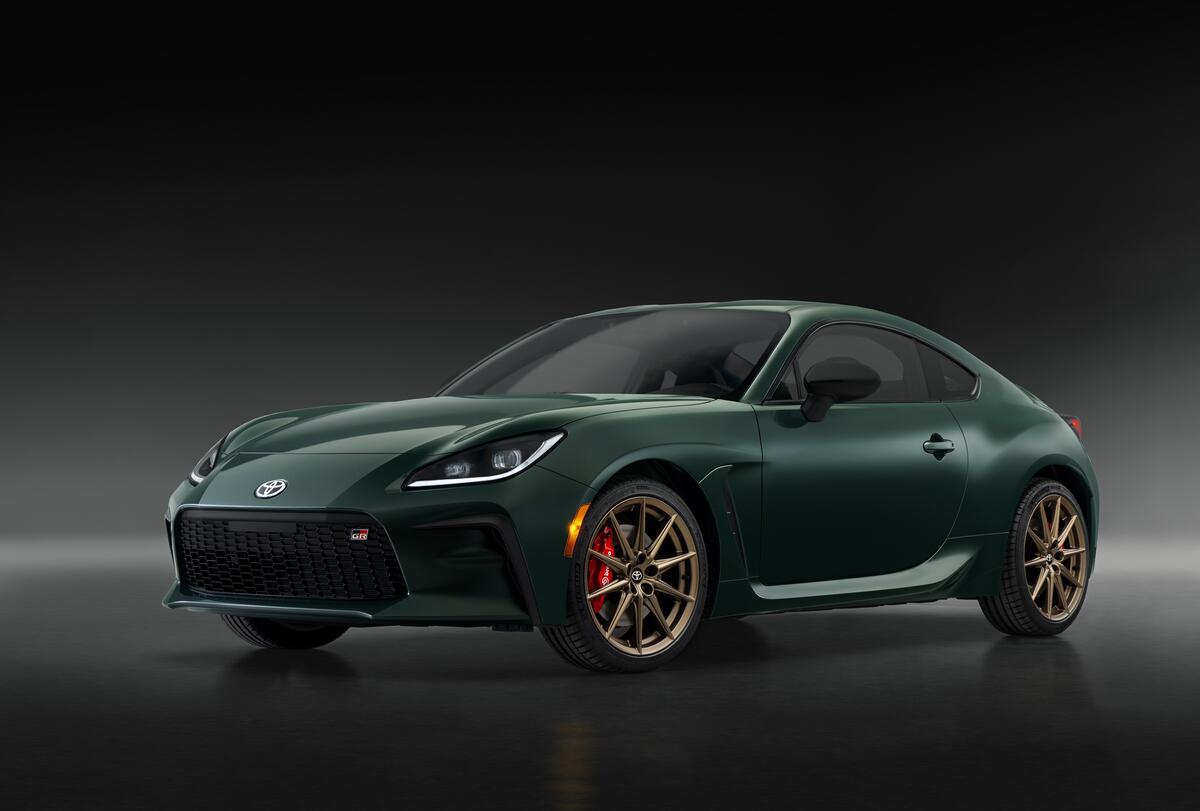
The Toyota GR 86 is a small sports car from Toyota. It’s made to be fun to drive, especially when you’re steering and taking corners. It’s often mentioned alongside other sports cars because it’s a popular entry point for enthusiasts.
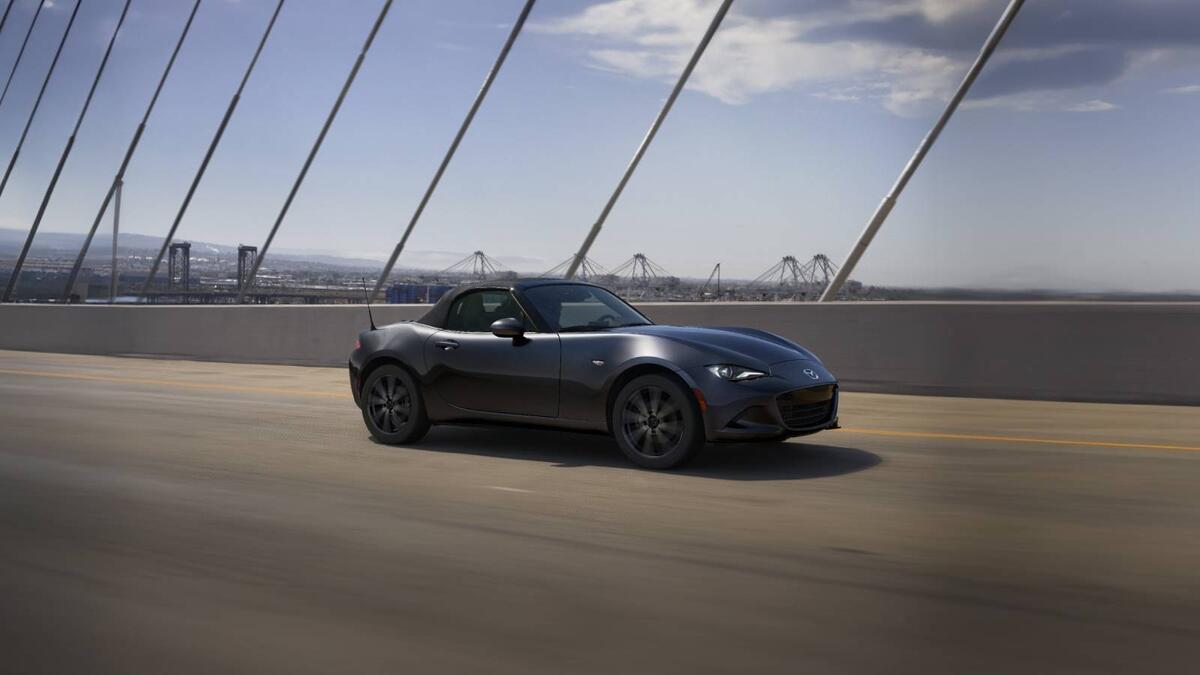
The Mazda MX-5, or Miata, is a small two-seat convertible. It’s designed to feel light and easy to drive, especially on winding roads. People mention it a lot because it’s a classic choice for car fans who like simple fun.
The Shelby GT500 is a very powerful version of the Ford Mustang. It’s built for performance, with a focus on speed and strong acceleration. The podcast mentions it as a fun comparison to a lively, energetic dog.
NASA TT is a racing event where drivers compete by setting the fastest times on track. It’s not about racing side-by-side; it’s about beating the clock in your class.
Boost District sounds like a local shop that tunes and works on performance cars. The host is saying the owner is well-known for being a reliable place to go for tuning.
Wine Country Motorsports is a shop/dealer the host visited. They’re portrayed as active in the racing scene and connected to the people behind the story.
They talk about making the story feel real by using real locations and inside references. The idea is to include little hidden nods that local readers will recognize.
RPM means how fast the engine is spinning. “7,000 RPM” is pretty high, and it usually corresponds to the engine sounding more intense and working harder.
They’re using “casting cars” like you’d cast actors—choosing the right car for the right character. The car has to match the personality they’re describing.
The racing line is the best way to steer through a turn. If you take the corner on the right line, you can carry more speed and keep the car more stable.
The Porsche Cayenne is a Porsche SUV. It’s built to be more performance-focused than a typical family SUV. The podcast mentions it as an example of a high-end car someone could drive.
A hybrid uses two kinds of power to drive the car—usually a gas engine and an electric motor. The electric part can help the car feel quicker and can also save fuel.
The Porsche Cayman is a sports car with the engine placed closer to the middle of the car. It’s designed for handling and driving feel, not just straight-line speed. The podcast mentions it in connection with a specific maintenance issue.
Velocity Yellow is a specific named yellow paint color used on the Corvette. They’re saying they chose the exact factory yellow and the matching paint code.
A paint code is like the exact “color recipe” for a car’s paint. If you use the right code, the new paint should match the original color more closely.
The Challenger is a muscle car from Dodge. It’s known for having strong engines and a classic look. The podcast mentions a high-performance version (Hellcat) as part of an enthusiast discussion.
Ceramic coating is a protective finish you put on a car’s paint. If you apply it and wipe/buff it at the wrong time, it can turn cloudy or hazy instead of looking clear.
Here, “haze” means the coating looks cloudy instead of clear and shiny. It usually happens when the coating starts setting before it’s properly wiped/buffed.
Concept
constantly respond to variables and different things and unexpected
Racing isn’t only about going fast—it’s about adjusting to what the car and track are doing in real time. If you get too emotional or react poorly, you’re more likely to make a mistake.
The Jaguar XJS is a classic Jaguar coupe, and some versions have a big V12 engine. The point here is that trying to steam-clean that engine can cause serious damage if water gets into places it shouldn’t.
Steam cleaning is when you use hot steam to wash an engine. The risk is that water can get into electrical parts and cause problems, particularly on older engines.
Time attack racing is all about making your car’s lap time as fast as possible. Instead of racing side-by-side, you’re trying to beat the clock with each run.
“Grid life” means the behind-the-scenes stuff at a race weekend—what teams do before and between runs. It’s basically the routine and atmosphere around the cars waiting to go out.
They’re talking about a Camaro that’s been modified to make about 2,000 horsepower. It’s an extreme build meant for very fast laps, not a normal street car.
An “unlimited class” is a competition category with very few restrictions on modifications. That’s why cars in this class can run extreme power levels and custom aero parts aimed at maximizing lap time.
Term
super arrowed out
They’re describing the car as having very aggressive aero. The idea is to push the car down onto the track so it can corner faster.
The Honda Civic is a popular compact car. Here, they’re saying a front-wheel-drive Civic can still keep up surprisingly well in cornering compared with a much stronger car, which shows that handling and driving technique matter.
Front-wheel drive means the front wheels do the work of moving the car. In corners, it can change how the car feels—especially when you’re accelerating out of a turn.
The Honda Civic Type R is a high-performance version of the Civic. It’s the kind of car people modify for better sound and feel, while still being usable day to day.
“Exhaust” is the system that routes gases out of the engine. Changing it can make the car sound louder or more aggressive, and sometimes it can slightly change how the car breathes.
“AP brakes” are upgraded brake parts from AP Racing. Putting them on the front helps the car stop harder and more consistently during track driving.
Company
used deal marketplace
The speaker is referencing a “used deal marketplace” as a place to buy track parts secondhand. In enthusiast circles, this often means buying used brake kits or other performance components from other owners.
SCR Performance is the company the speaker credits for helping with suspension work. They’re likely the kind of shop that installs or supports aftermarket handling parts.
A radiator mod is an upgrade to the car’s cooling system so it can shed heat better. That can help the engine stay in its best operating range when it’s hot.
Five-point harnesses are stronger seat belts used in racing. They hold you in place with multiple straps so you don’t move around as much during hard driving.
“Mid-engine” means the engine is placed closer to the middle of the car, between the front and rear wheels. That often helps the car handle more smoothly and feel more balanced on a race track.
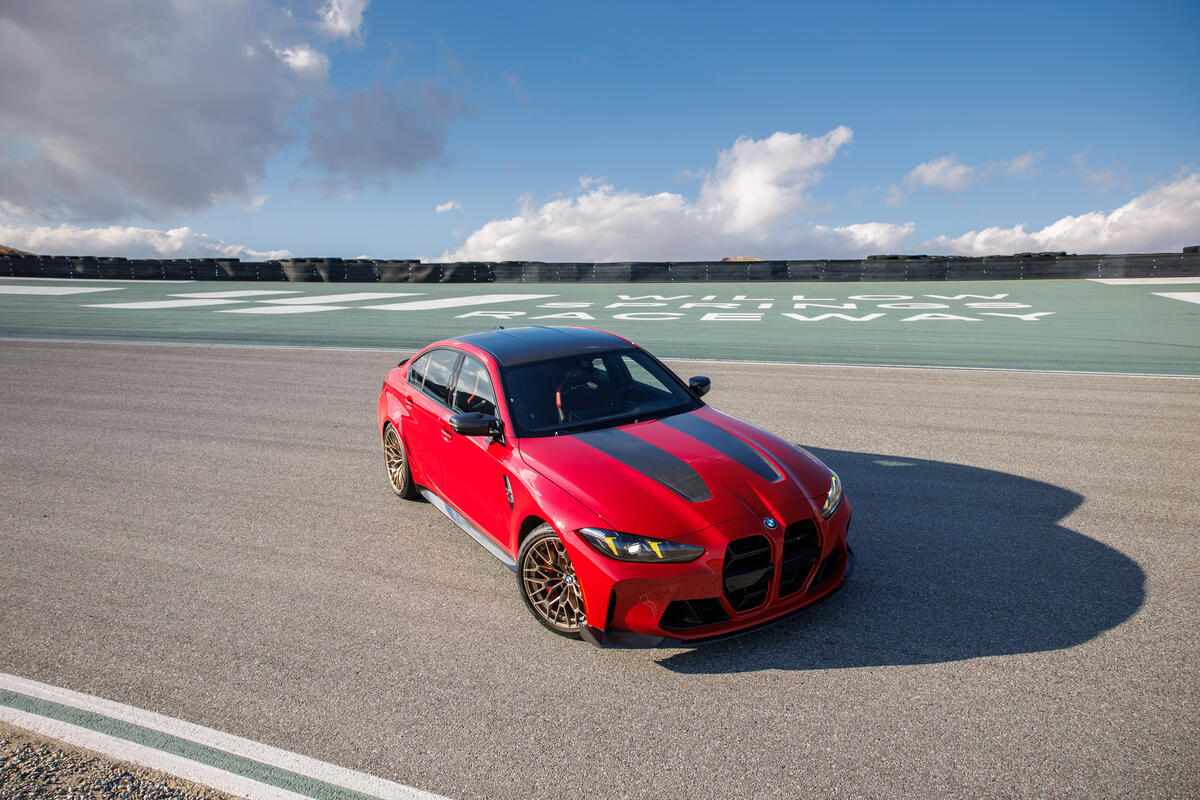
The BMW M3 is a performance version of the BMW 3 Series. It’s made to be faster and more fun to drive than a regular 3 Series. In the podcast, it’s mentioned as one of the cars someone currently has.
The Honda Fit EV is a small electric car based on the Honda Fit. Instead of using gasoline, it runs on electricity. The podcast brings it up because it’s an EV that people don’t always talk about.
Term
stage two transmission swap
A transmission swap means replacing the transmission with a different one. “Stage two” usually means it’s more than just swapping parts—it’s a bigger conversion, and here it results in a manual.
A turbo is a device that helps the engine make more power by pushing extra air into it. In this story, the host says they moved to a turbo after the non-turbo car couldn’t handle the hills well.
Topic
track car vs. being passed
They’re talking about how track driving feels different depending on how fast your car is compared to others. It’s basically about what you tell yourself when you’re getting passed versus when you’re passing people.
The GT3 RS is a Porsche 911 made for track driving, not just normal commuting. They’re using it as a benchmark for “who’s faster” on track—passing it is impressive, and getting passed by it means you’re likely slower.
Car
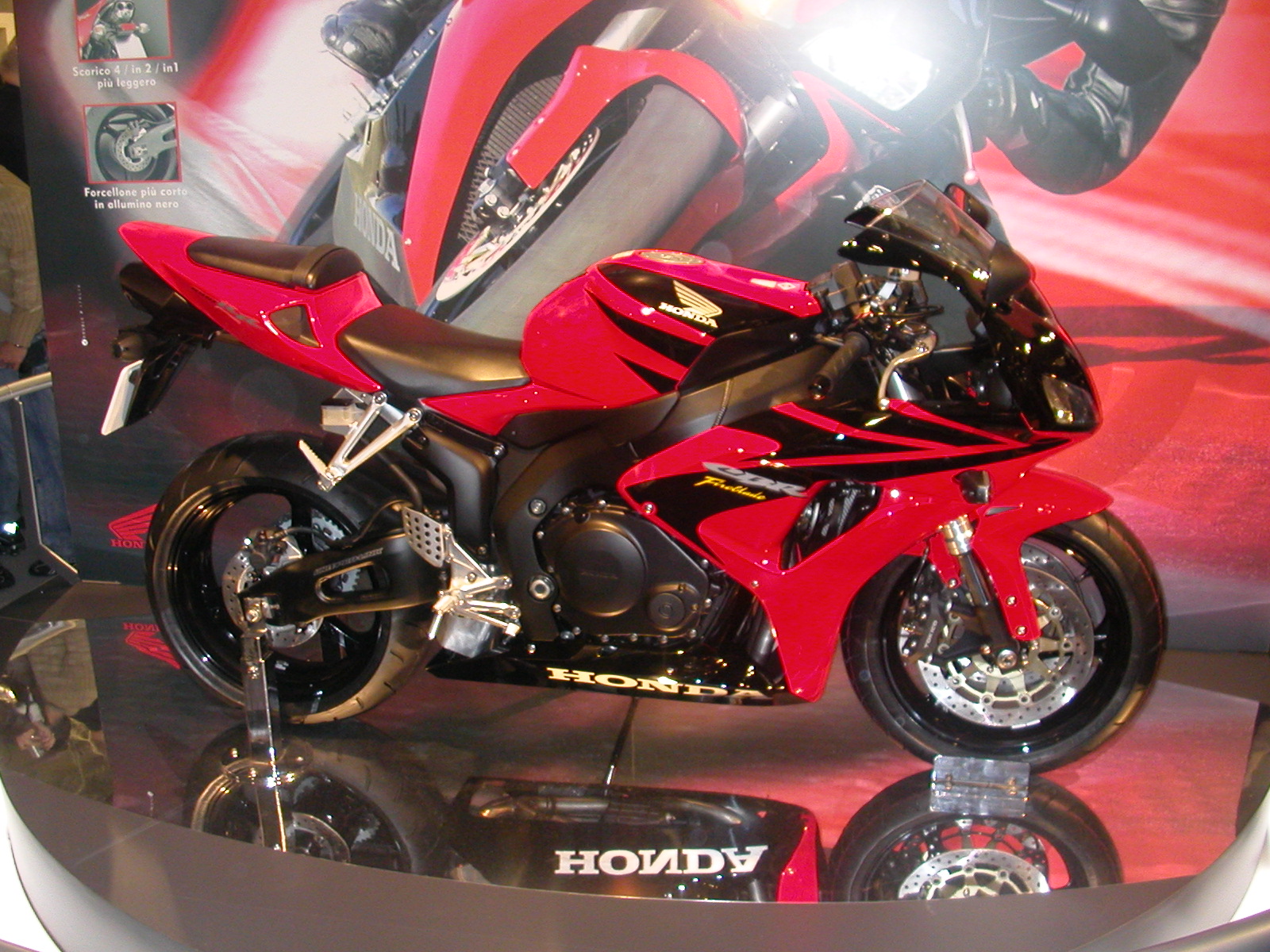
Honda CBR 1000
A Honda CBR 1000 is a big, fast sport motorcycle. It’s the kind of bike people choose when they’re ready to move up to higher power and more serious riding.
Track racing is driving or riding on a closed course designed for speed. It’s different from normal street riding because the whole goal is controlled, repeatable laps.
SoCal Superman sounds like a local company that organizes beginner-friendly track sessions. The idea here is you can practice on a bike and get track time without jumping straight into a full track day.
Go-kart tracks are smaller tracks with lots of turns. They’re commonly used for beginners because it’s easier to learn without going as fast as on a big track.
A track day is when people take their bikes or cars to a race track for practice. It’s usually not a competition—more like learning and getting better safely.
Term
CVR 1000
“CVR 1000” appears to be the name of a motorcycle they rode repeatedly. The “1000” usually means it’s in the big-engine class, but the exact model name isn’t clear from the transcript.
Supermoto is a motorcycle style/race that combines normal street riding with dirt riding. The idea is you get to ride on pavement and then switch to a dirt section in the same event.
“Swinging that rear out” describes oversteer behavior on a motorcycle—breaking traction so the back end steps outward while the rider controls the slide. It’s a common way riders describe the feel of drifting/controlled slides in dirt or loose-surface sections.
Enduro is off-road motorcycle riding/racing over longer distances. Instead of just short race laps, it’s more about riding through lots of different terrain for a long time.
A Corvette is a high-performance sports car from Chevrolet. Here, the person is saying it’s a better fit for doing lots of repeated track runs and getting more seat time.
The Pontiac Firebird is a muscle car made by Pontiac. It’s known for its bold styling and strong performance. The podcast references a specific Firebird from 1978 because it’s a well-known example.
“Cars and coffee” is a relaxed car meetup where people bring their cars and hang out, usually with coffee. It’s a common way for car fans to meet locally.
The Mercedes-Benz 190E is a Mercedes-Benz car from an earlier era. Some versions were made to be much faster, including the 190E Cosworth mentioned in the podcast. It’s discussed because it’s a distinctive performance Mercedes.
“Exotics” is a car-enthusiast way of saying very expensive, high-performance sports cars—think supercars. They’re usually rarer and more specialized than normal everyday cars.
This sounds like a Toyota Land Cruiser that’s been modified with a Chevrolet LS3 engine. The LS3 is a popular V8 swap because it makes the truck feel much more powerful and there are lots of parts and know-how for it.
Concept
super modified
“Super modified” just means the car has been changed a lot—more than simple upgrades. It’s the kind of build where people go deep into the mechanical stuff, not just cosmetics.
A CD player is the car’s system for playing music from a physical CD. The hosts are talking about how unusual it is now because most people stopped using CDs.
Kenwood is a company that makes audio equipment. The speaker is saying they bought a Kenwood portable disc player when CD players were just becoming popular.
A tape deck is the car’s player for cassette tapes. In this story, it’s part of the “old days” setup where music could be disrupted if the car or the player wasn’t stable.
Concept
CD skipping from disc handling
They’re talking about the CD “skipping” problem—where the music jumps or stops because the disc/player can’t stay perfectly stable. They had to hold or position the disc to keep it playing.
A five-disc changer is a CD system that holds several CDs at once. In this case it was in the trunk, so you couldn’t easily change music while you were driving.
Concept
G80 and 3
They mention “G80 and three” as a way to talk about a newer BMW 3 Series generation. The point is that they’re comparing the “old days” audio experience to the newer era of these cars.
LIVE
It's engineered for perfection.
Every contour sculpted for uninterrupted motion, wider, smoother, more refined, and drives like
a dream.
Introducing the 2026E470.
Experience the difference.
Very happy.
I mean, I love a happy ending.
That's it.
There's a clip.
Not like that.
We do talk about the book, of course, but we cover a lot of other stuff, too.
Track days, tuning in the power of authenticity.
This is a fun one.
Time attack is a good read and Steve's a nice guy.
I think you're going to enjoy the conversation.
So stay tuned.
It's that car show.
Hey, it's that car show, Dan's away doing Dan things tonight.
So it's me and Lindsay and we are joined by Steve Schlosser, author of a new book aimed
at enthusiast folks like us called Time Attack, a car-centric racing novel.
Hey, Steve, how you doing?
I'm doing great.
Thanks for having me on.
Yeah, it's good to have you on.
And you know, it pains me to admit at age 50 that I am not much of a reader anymore.
And it's not just because I refuse to buy readers.
It's just that it's, you know, as you guys know, it's too easy just to grab your phone
or turn on the TV.
And I'm also a little embarrassed that I've gotten away from track driving in recent years.
You know, life is busy.
The track can be expensive.
And I'm fortunate to have some really wonderful Canyon roads.
You know, not too far from me.
And Lindsay, I think can see the same thing.
But I will say that I read Time Attack in just a couple of days because it's, you know,
it's unusual to find a book that incorporates M3s and Corvettes and GT3s and GR86s.
The Lotus.
Right.
That was a great inclusion.
There were so many to choose from.
But yeah, it was very engaging.
And when I finished it, I was like, oh, that's right.
I do love reading.
Yes.
And you know, just a great reminder.
Thank you for the excuse to sit down and read a real book.
I'm so glad you liked it.
You know, reading just like the on the tracks like riding a bike, right?
You come back to it and you're like, wow, that wasn't scary.
I did finish that book.
It was so great.
I did those laps.
I did that session.
Nobody died.
Yes, yes.
That I can do that again.
Yes, yes.
And speaking of nobody died.
I mean, Steve, Time Attack really is a cautionary tale.
A little bit, a little bit.
Yeah, there's, you know, it kind of started out.
It's funny.
When I set out with the mission of the book, one of the things that bothered me
about like racing, fictional media was it's all centered around crime.
We love Fast and the Furious.
Right.
But they're all criminals.
You know, that's lovable criminals.
They're family.
Okay.
But you know what I said, you know, I was trying to think of the plot to
start it.
What's the lesson learned to begin with?
And I said, I guess I could start it here, but it's going to be, it's going
to be one and done.
It's going to, it's not going to be this.
I did two years at Lompoc or, you know, whatever the, whatever the
storyline is.
And I need, I need the character to, yeah, true.
And I need that character to kind of, to grow and evolve because you'd be
surprised speaking with people into cars, track or not.
A lot of them have done a couple overnight stints for street racing.
I mean, literally I had three or four people reach out to me.
Three or four people reach out to me and they said, how did you know I was in
jail overnight?
Literally my buddy, I had a friend all the time.
He just had to do an overnight stint like one day, you know, and I was like,
You're like, I did not, but thank you for sharing.
So how did you, like what was the inspiration for the book?
And it sounds like you started with kind of the mission of what you wanted
to accomplish.
I mean, can you share, I know you share this in the notes at the back of the
book.
And I really like was drawn to that part of it.
So can you kind of talk about what the goal was and then how you built the
story around that?
Like what your inspiration was.
So like to start out, it's probably been like a decade for me where I've been
dragging people to the track.
Even when I had periods of myself where I was unable to go, you know,
I'm just so passionate about it.
Like my best friend Zach, who I, or my very good friend Zach, who I credited
in the book for kind of helping me, you know, he was like a street,
street motorcycle guy.
And now he's entering CVMA, you know, the racing course.
And I'm always talking about the track and getting people to go to the track.
And so it's something I'm very passionate about.
And I was in the winter.
Vince, you know, I saw this video with Vincent Pella, if you remember his
crash and his Ferrari on the Angeles Crest Highway.
And I just, I had been thinking about writing for a while.
It had always been a little bit of an outlet for me in general.
I've always liked writing, writing.
And, you know, who has like more of anything than the founder of Infinity
Ward, right?
I had just watched him on like a YouTube video where he had bought a
McLaren Solis, $4 million, like basically formula one car.
Yeah.
You know, and then here he is.
And it's so tragic.
And when I lived in California, we used to ride all the time on
highway 94 and stuff.
And, you know, I saw a person crash and get hit by a car.
And, you know, that was it.
And there had been stories where I had ridden with people.
And then a couple of weeks later, a couple of months later, we're telling
them to that guy, team him with something.
You know, I'm going too fast.
And so it's something that I rapidly grew so passionate about.
And I just had this draw that I'm going to write about.
I'm going to write a story and I'm going to, I'm going to progress this,
this just personal mission I've been on into a sincere effort.
And I want to try to entertain people to get to the point where they say,
maybe I could try that.
And so it just started.
Yeah.
And you just decided, Hey, I'm not busy enough.
I should write a book.
I mean, it just sometimes things just like explode out of you.
You know, I apologize to my wife a little bit because I went like full
hand in way with this.
Like I started writing and I have my friend Zach and he read the first
chapter and he's like, this is interesting to keep going.
And then I was writing eight hours a day.
I mean, I was like, like all weekends, I was like, Hey,
Kate, my wife, you know, what are you doing?
Do you want to like watch TV and maybe play the Sims a little bit or
here and there and I'd get out the laptop and I'd start writing.
Yeah.
You know, we, we, uh, we do dog trials on the side where it's like
dog agility time attack for dogs.
You said dog trials.
Yeah.
So this is like, do you know, have you ever seen agility with dogs like
jumps and tunnels?
Oh, yeah.
It's not a judicial system thing.
No.
No, what is this?
He's sentencing dogs to hard time.
Yeah.
It is, it's called a truck.
It is a dog sport.
And in this sport, you have a preset of course with obstacles.
Oh, sure.
It's, it's just like time attack for cars.
I know I'm pairing it.
That's amazing.
But, but it literally is, it's, it's, it's you and your dog in a ring.
You get the only prior exposure you have is about 15 minutes to walk it and
figure out how you're going to handle your dog and then one shot, one kill.
You step up and you got to run the course and make the obstacles with them.
And so we had a dog trial and I'm out there with my laptop in between
turns writing, you know, it just, it was, it was exploding at it.
Right.
And so I did it.
Wait, I want to know more about this, these dog trials.
I mean, do you want like a dog with low center of gravity?
Like because like, like what wins?
You want a very well balanced mid-engine dog.
You want a well balanced mid-engine dog.
Okay.
So how the classes go are by height classes.
So there's height classes for the dogs and then there's different ones.
You can do one that's like, like the general agility class has all the obstacles.
There's a teeter totter and weave poles and all sorts of stuff.
There's ones that's only jumps and tunnels, right?
There's all sorts of different classes you can compete in.
And then the dogs compete on a height basis.
And I would say that the most popular dog is probably a Border Collie.
Okay.
But, you know, so we, so we have two Shelty's there, which are Shetland sheep
dogs and then I also have a freak of the nature.
She is a 70% whip it and 30% Border Collie.
So she's like a super smart speed missile.
Oh, wow.
You know,
And now do you have the issues or no, maybe I'm thinking of Greyhounds where like,
if they get out, they just run.
So you have to make sure they don't get out.
She's very fast.
I trained her a lot on recall, you know, so thankfully, yes.
It's fascinating to know what people do when they're not behind the wheel.
And that is the first for us.
So dog trials.
Yeah.
We were just that one this past weekend, actually.
And I'm proud to say we took home two firsts, a second and a third.
Congratulations.
I love it.
I love it.
I don't think a successful weekend.
Yeah.
Good to know Border Collies are the Miata of the.
Okay.
Hold on a second.
I have thought about this.
I have thought about this.
Okay.
So Border Collies actually totally not the Miata.
Okay.
Here's the deal with Border Collies.
They're very smart.
They're very fast.
They take these big leaping turns.
They're very hard to keep up with.
So I've always thought Border Collies like maybe you put that into like a,
like a, a Shelby GT 500.
Okay.
So much power, but you're lacking on the track.
And the second you get behind it and thumb, right?
Yeah.
Shelty is like my dog's 100% portions.
Like the running my dog.
He's not the fastest runner.
He's so easy to handle.
Like, and, and he's, and he actually beat my whip at Border Collies.
He didn't know she's so much faster, right?
Because I can, because he's more consistent and I can get where I need to be
and make his lines smoother.
He beat her about in the, by a couple of seconds.
So, you know, things like that.
I thought about this.
I was like, Oh yeah, this is the analogy, you know,
Kelly is not always the answer.
This is the stuff that I love where you're like,
I didn't know that I was going to be applying the lessons that you learned
at the track to dog agility.
I mean, it's like, like the number of things in life where you're doing
some form of traffic management, you know, it's funny where I'm like,
I didn't think that that's part of skiing, but it is.
That's true.
That's true.
Everything, you know, when you find passion and everything relates to one
last thing.
So my dog, the whip at Border Collie, 100% a former in the one car.
Like, I don't even know what I'm doing.
I'm terrible at handling her.
She's slower because she's just to it.
I'm catching up with her.
I love it.
I love it.
That's amazing.
Yeah.
You never know where the conversation is going to go.
You know, we should probably bring it back to the book.
And this is the book, their time attack, Steve Schlosser, a great cover,
by the way.
Thank you.
That's what you want to see on the shelf, right?
When you're looking for books, I got down, I got together with.
So the editor of my book, here's a really cool story about it.
When I was looking for an editor, there's, you go to the way,
the best way to do it is that there's a website called BFA and that this is
like the association that people who copy edit professionally go to.
And you can see their rates.
And so you kind of post an ad.
Here's my book and stuff.
And I got reached out to, and her name is Chris Knight.
I credit her in the book and she says, I can't believe this is like the
biggest thing I've ever been drawn to before.
I used to race American iron NASA in my like nineties Camaro.
Really?
You know, and that was years ago, but now I'm an editor and stuff.
And I was like, you are hired.
And so, so through her, I found Eric meant to be.
I'm going to, I'm going to botch his name, but Eric LaBotte's L O B A C Z.
And, and he was a great book, book cutter guy for me.
Oh, that's great.
No, it's, you know, and it's so important.
You got to have an editor who knows what you're talking about here.
You know, because I think Lindsay and I were both looking to, you know,
get you on something, right?
Like, you know, just all the details are like, are there at very descriptive.
You know, I guess we should probably ask you to set the scene without
giving the book away.
This is a tale of redemption.
It's a cautionary tale as we talked about the protagonist.
Okay.
Yeah.
You want to start there?
Yeah.
So, you know, basically we have me Thomas.
He's young twenties.
I don't remember his exact age out there.
Young twenties.
He's a street racer.
Right.
He just finished like an associates degree and got his certifications
and automotive stuff.
He works like a Chevy dealer.
He raises as far as he goes to cars and coffee, you know,
and basically chapter one starts off with him getting booked into
Denver County jail.
Yeah.
Can we stop there for just a second because this was a very descriptive.
I want to say passage, but that's probably not the word.
Did you interview people?
How did you, is this, I mean,
there's a little bit of you in this book, Steve,
like break this down for us because I learned more about getting booked into
a jail.
I think that I've ever learned from a book before.
I have a friend, a very good friend of mine who has been in the system before
sadly.
Okay.
So I talked to him about it.
I also have a very good friend in a Larry McCarrie sheriffs.
So I pinged a few questions off him, but the rest is really, you know,
you researched, right?
I can, you can, you can find a lot about the jail system online.
Right.
You can go and you can see pictures and you can see what the jail system
looks like and you can see some of the programs and stuff like that.
And then, so, you know, in a, in a weaving this story,
but the book in totality is a fiction novel interwoven with reality.
Right.
So it's like contemporary fiction.
And so that's what I sought to do.
Like, and, you know, some of the thoughts that Luke has as he's going in,
like I have to imagine myself.
Yeah.
Right.
I'm not a prison guy.
Yeah.
Right.
I only know about it from TV.
These must be the thoughts that I would be thinking.
Yes.
I am getting checked into prison.
We've all thought about it.
Yeah.
It's in the back of our, you know, I think you did a good job of capturing
just like you said, the kind of like, this can't be happening.
The denial of like, this isn't real.
Yeah.
Cause I mean that, that's like, you know, we see TV shows, they sentence you
and you know that the handcuffs are wrong and you're off and you're getting
booked in and that was it.
And that, that was the real reality that Luke had to face is that, you know,
you get, it's very easy to get speeding tickets and you get your license
revoked, but then you can apply for a work purpose.
So that's my friend Zach.
I'm going to shout out.
He got his license.
We're both pretending I know, but he's a track dial.
So we're happy with him.
Good job, Zach.
Yes.
But, you know, and you can get your license as long as you use it for work
and then how many people actually, you know, abide by those rules.
It takes a long time.
And, you know, I have to imagine that by the time it's like, this is it,
you are going to prison.
And, you know, the stark reality of that must just, you know, it's fear.
Yeah.
Well, because I think there's so much in general people go like, well,
but it'll never happen to me.
And then like you said, there's a process of like, you lose your license,
but you can still drive to work.
And so there's, it's so gradual that you'd be like, well,
but there's got to be one more step in between me and jail.
Yeah.
You have a car.
Right.
It's something I really liked about the book is it was so well researched.
I mean, the detail you set the scene.
It really, to me, almost brought like a screenplay.
So, you know, I know, is that, was that intentional?
Yeah.
Okay.
So when I first started like,
I just started dreaming about some of the details and thinking about it.
And at first I was like, this would make for such a great,
like angles on prime series or something.
And then I was like, I cannot be the guy who just says,
like, will you read my screenplay?
And, you know, my, my favorite author,
I was literally just at a book event because he has a new book that came out last week.
You know, one of the things that he says is he always likes to have the source of truth to go back on.
Okay.
And I was like, and that's in the mall.
I was like, you know what, I, I'm going to write the book.
So who knows where this goes.
It could go nowhere.
Okay.
I would love for it to be, you know, passionate and inspiring and get that big appeal.
But I want there to be that source of truth where anybody could go back and see what the original intent of writing the book was.
And so I decided this cannot be a screenplay to start.
It needs to be a metal.
I love that.
And yeah, then you have that kind of touchstone.
You can see where everything jumps off from there and becomes the time attack empire.
And you heard it here.
The time attack empire.
Right.
This could be a whole series, right?
I mean, you know, pretty, pretty easily if we get that lucky, right?
You know, I mean, and it's, uh, and I've seen a lot of the people in our community talk about it post, uh, you know, to social media about it.
So I think you're getting a buzz, which is, which is great.
I would be great.
Yeah.
One of the things for me that I think connected with me is that, you know, Denver is not London.
You know, it's not Paris.
It's not a literary city as, as, you know, as we know it.
I think there've been a couple of movies here, things to do in Denver when you're dead and, you know, but Denver's not real.
It's not Chicago for that.
Right.
I mean, it's, it's just not, you know, on the map, right?
When it comes to books and movies and things.
So it was really neat to read a story, right?
That referenced things in my own world.
Uh, you know, whether it was the Adams polishes, you know, you know, international business, but said, said here, right?
Right.
Um, uh, headquartered here, uh, you know, to the, um, you know, uh, the tracks, right?
You know, that, that, that I've driven, which was cool.
You got all the details, right?
Even Snarf's sandwiches, right?
Snarf's sandwiches made it in there.
That's a real place.
That's a local, a local joint.
Yeah.
I think it started in Boulder.
Maybe we've got one not too far from me.
We can walk to you.
All over.
So much better, right?
Then you're typical like subway.
Yeah.
You know, even.
And he didn't, um, even like SCR performance, like with Mark Barry's down out.
Okay.
They, they are a premier race dealer.
Mark Bayer is the owner.
He wins all the NASA TT stuff in his class and, you know, I had them do some work on my Corvette.
I love those guys.
They're really cool.
You know, Harvey in the book, he actually owns boost district in Longmont.
And he's kind of notorious for being one of the, uh, the go-to tuner guys, you know,
wine country motorsports.
I was just down there.
They, they, they, they stocked this book.
They, they got a couple of books from me and, you know, they helped me out.
Get my Hans device in my helmet.
So again, I wanted to have that authenticity in there.
That's like, you know, cause if you just make up places, you can just do whatever you want
with it.
You know, and it's kind of, it's got to have some reality in there.
Yeah.
Yeah.
Well, again, it gives it kind of an anchor.
Like you talk about the book being the anchor for what you're trying to accomplish.
And it's nice to kind of anchor the book with these little Easter eggs, especially for
people that are local to Colorado.
Cause that's, I know like there was an author when I was growing up who lived in my town
and, um, it was Dean Coontz.
And so he cut these little Easter eggs of like a street name or a whatever.
And I was reading that as a kid and being like, wait, what are we doing?
So it's really fun.
Like you said, Ryan, to see the real names in a story.
Yeah.
And Steve, I'll give you something else.
Like just the, the vernacular, right?
Like the phrasing of, you know, in terms of phrase and things, just these, these sound
like people I know, you know, I felt like a, you know, if I didn't know these people,
I'd met these people, right?
Wow.
Out and about it, a cars and coffee or whatever, you know, you really, the car casting.
So we had a guy, Oscar winner, uh, Robert Nagler, buddy, Robert, um, he's done Ferrari,
Ford versus Ferrari.
Oh God.
Basically every movie that's got, you know, great, you know, all the good car stuff.
Right.
I think in the book, I did not quote the, uh, the line.
No, I took it from somewhere else.
Didn't I?
Like parts.
Yeah.
Well, there was one.
Are you talking about the sunny haze line?
Yeah.
Um, yeah, I took it from sunny haze, but I almost put the quote in from Ford Ferrari.
I think it was.
The car shall be.
Yes.
7,000 RPM.
Yes.
I almost put that one in and I was tired and interrupted, but I was like, well, nothing
really ribs to 7,000.
Maybe the Porsche.
I was like, I'm going to go with the F one quote.
Yeah.
Yeah.
No, it's the stuff shows, you know, with Robert, we talked about, you know, car casting.
And so not just getting like the driving right in like the racing line has to be correct
and all this, but, but casting cars almost as if you were casting people.
And I thought you did a really great job of that.
Like, Oh yeah, that guy would drive a 06
Yes.
Oh yeah.
That guy would drive an M three or, you know, the, the Cayenne for that matter.
Right.
Right.
Such a great car.
Yeah.
I think it's real.
Right.
If you're in the car world, the car is kind of an extension of your personality or your
interest.
So for live, right?
Luke's mom, you know, very well established business woman likes the sporty stuff, right?
Her, her, her boyfriend is a, is a race shop owner.
She's inspired.
So she's got the porous, but she went for the, the hybrid.
That's even faster, which, which probably pisses him off sometimes.
Right.
But also kind of practical, right?
Yeah.
But also kind of practical.
Yes.
Exactly.
And, you know, even, even at the cars and coffee, right?
We have the, the football player who he wanted something with speed, but he's a big guy.
So what's he going to drive?
He's going to drive the hell cat.
Yes.
Yes.
That was a funny detail.
Yes.
He's like, I'm enormous.
What, you know, I only fit in so many things.
Yeah.
Yeah.
Like his foot catching on the, on the thing.
Oh my God.
Yes.
As someone who wears size 14 himself, you know, that so, so, so true.
You feel his pain.
It's just, yeah.
Absolutely.
You snag the top of the toes.
Right.
I think, you know, I think you had an episode where you just said, wasn't it the alpha
or male?
Your foot was catching.
Oh yeah.
Yeah.
Yeah.
And it's terrifying because not just an alpha male, but an alpha holics, like a, you
know, $750,000 car or whatever.
You know, it's just like, this is not when you want to mess this up.
And I will tell you, I used to do a show years ago before I even met Lindsay called the steering
committee with Doug Fogler here in town.
And we had an episode that talked all about me getting a new 718 Cayman in breaking the
throttle pedal assembly three times with my big giant Claude Hoppe.
No way.
And it's funny, you know, you could talk about, you know, details in cars and stuff.
That was, you know, that was the base car.
That was the four cylinder, you know, that's a plastic unit.
I've had this GT4 now for several years.
That's all metal.
Right.
So it's just, it's like little details like that.
But that's the kind of stuff that you got right in this, in this.
I'm so happy.
Yeah.
I mean, I'm an enthusiast.
And so even like researching some of the small details, I found it fun.
You know, when I was, when I was building the cars in the book, I went on the Porsche's
website.
I was like, oh, Algarve blue.
I hope I said that right.
I was like, what a cool color.
You know, if I was live, I would, I would choose that color because it's elegant, but
it's got some spice to it, you know, and then, you know, I'm a sucker for yellow Corvette's
right.
So Luke's car had to be yellow.
Made sure I got the, I think it's called velocity yellow.
I think it is for that.
Made sure I got that paint code.
Right.
The same thing with the red at the Hellcat, you know, I'm an enthusiast.
I like stuff.
Absolutely.
If we screw up, you know, we occasionally will say something incorrectly.
We do hear about it.
You know, and I guess you could probably argue that's good, right?
For buzz or whatever, but people will catch you.
Yeah, people will catch you for sure.
You know, so there is a scene, talk about authenticity that of all the scenes, it's the one that
really just got to me made me cringe.
The one where it's a detailing scene.
I'll leave it at that.
Oh God.
Oh, I know a very nice car and that hit way too close.
It was a little bit of real panic on both of our part reading.
I know.
Yeah.
And that look, we've all seen stories or maybe we've had some experience with it ourselves
where, you know, detailing culture is like probably the fastest growing thing.
There's so many products.
There's so many things, you know, everyone's trying to, you know, like showing a coat their
car and prep it and do all this stuff.
And, you know, Luke is, he's trying to prove his merit in the shop and he's trying to show
like I can add value.
I'm not just a porter, you know, and, and, and that trust is bestowed upon him by the
shop's owner, Nick.
And so yeah, you know, some mistakes can happen.
Yeah.
Right.
And it's another inflection point.
It's another thing where like if you're a ceramic coating your car and you don't get
it up fast enough, right?
You get it all fast enough and it starts to haze or something like take a breath.
Okay.
We can, we can figure it out.
Right.
Right.
It's going to be okay.
Yeah.
And so, you know, that, that scenario was just another level of inflection point.
And I also wanted to use it to show, and I think Nick makes a statement around this about
like the most important thing about being a race car driver or racing is not necessarily
being the fastest guy in the track, but you have to constantly respond to variables and
different things and unexpected.
And you have to do so decisively, but also calmly.
And if you lose that emotion in your, if you let that emotion control yourself, right,
you're going to, you're going to make a mistake.
Yeah.
Yeah.
Hit me doubly hard because I actually have an appointment tomorrow.
Our friends at spider auto detailing buddy Jaden's coming out to detail my GT four.
And so I think I'm a little, a little sensitive right now, a little, a little vulnerable.
Are you going to make him read the book first and you're like pay particular attention to
this.
And now we go near my car.
That's, that's right.
Yeah.
Steve, I actually, I mean, like I had to stop and sort of like got the, got the vapors for
a second.
Like it really, like I got into it and it was just like, oh, the fear of.
How is this going to pay like, what are they going to do?
I know, especially because I don't, again, I don't want to give the car or the details
too much.
Imagine that car and imagine, imagine being them.
Oh my God.
That car has such a title.
That would be the one when I was in high school.
I'll never forget this guy's name.
Stuart Altamire.
He was a year older than me.
He's a lawyer now somewhere.
Go look him up.
Much more successful than, than, than me, but he was one of these guys that was, you
know, go get her.
And he decided to open a, you know, detail shop.
He took on an XJS.
Remember the big V12, you know, oh good.
Jaguars.
Yeah.
Decided he was going to steam clean that engine.
Oh, pretty quickly that engine was, was ruined.
And that was the end of that enterprise.
But there's something just when you're working with something high, it's going to be the
expensive car, right?
Is what I'm getting at, right?
And back then that was expensive as, as anything in Indianapolis, Indiana, you know, so those
details, you did mention a podcast in the book.
I did.
I read the word podcast.
I'm like, oh yeah, please let it be us.
Please let it be us.
Maybe future editions, but what was that podcast?
Okay.
So the podcast is the perfect lap podcast.
And the reason why I chose them, not only do I love what they do, but they are the,
they are, at least for me, they're the real source for like time attack racing.
Yeah, exactly.
You know, they talk a lot about grid life.
They talked a lot about the major racing events and time attack, you know, Jaeger and
Kilgore, they are extremely knowledgeable on the subject.
They are super passionate about it.
They talk very well.
And, you know, it's really, it's really informative, you know, after a grid life,
when I, or a global time attack or, you know, pick your own, pick your event, they're the
ones that I go back to to really understand like what happened.
Cause, you know, when, when you, when you're watching these events live, I mean, like
grid life, uh, road Atlanta, right?
There's five or six sessions that are like 15 minutes long.
And then there's a podium sprint that's three laps.
And all you get to see is the car that the camera is focusing on.
It's not a wheel to wheel race where all these, you know, and so, so you get to see the tidbits
they pick up, but not the, but some of the other stuff, like, for example, and I love
them for this.
Yeah.
One of the things they featured this driver, Jimmy Rock, and he has a Honda set that is
blowing people away.
And something I didn't realize they mentioned this at road Atlanta.
There's, um, there was another car in the unlimited class, 2000 horsepower Camaro, uh,
like a 67 Camaro super arrowed out.
They even, they even redid the front to make it like a spoiler instead of that flat, like
where the headlights, I mean, it's a very, very awesome car.
And they did this breakdown of Jimmy Rock.
And they did this video.
Jim, they were looking at the timing of Jimmy and his extremely modified unlimited, uh,
Honda Civic.
And they're like, look at this.
He is only like two or three seconds off this 2000 horsepower Camaro in his 500 horsepower
front wheel drive Honda Civic.
Wow.
And, and you, when you watch him go through the turns, it's incredible.
And so there's things like that, you know, as a viewer, you can't tell how fast people
necessarily are going through the turns.
Either way, they do a really great job.
Um, you know, they might pick me up to be on the podcast.
They should.
You know, good you are here.
Right.
You know, and the, uh, the minor leagues, right?
You know, they should pick you up.
It's, uh, yeah, that's a shout out to them.
You know, it's, uh, um, you mentioned Civic too.
There's a, there's a Civic type R. I think it's a 17 type R in here.
Yes.
17 type.
Yeah.
And that also was exactly the right car for that, that character.
So, so.
Yeah.
I thought so too.
You know, he's going, uh, I can't remember the character's name at the top of my head,
but, uh, he's, you know, he's, he's a kid.
He's, he's in college for engineering.
What's a college graph?
Thank you.
That's right.
I'm like, what's a, what's that?
A college sporty car.
You know what?
A Civic type R.
You know, you can go a little exhaust on it.
He did a couple of mods to it.
That's like the perfect car.
And it's a super great sports car.
I love type R's.
Yeah.
I had the laugh because when I first got this GT four, I rolled up to the, I don't know,
the, the conico or whatever is there in golden, right?
By the school of minds.
And I was so proud of this thing.
And I was also so pissed off that no one had come up to me at a gas station yet and said,
hey, nice car or whatever.
Well, that's where it happened for the first time.
And there was a college kid in a type R.
You know, I mean, it's just, it's like, you know, you read their minds, you know, it's
foreshadowing.
Yeah.
Yeah.
Yeah.
Just again, authenticity.
It's so important.
It just takes one small thing to take you out of a, out of a story.
Yeah.
And that's, yeah.
It goes back to casting the car.
Right.
And same thing with the football player, right?
Like in my mind, if he's got a full ride scholarship to see you, he's making a little
bit of money because, you know, college athletes can make some money.
Right.
Right.
So the, the next step up, host wise from a tight bars, probably like a hell cat, right?
Yeah.
And so I could, you know, it checks out.
Yeah, absolutely.
Well, and I love thinking about that part of it because it's part of building the character.
Like you said, it's an extension of the character and we've talked about that before.
You know, people will say like, yeah, it's, it's a way to indicate something about yourself
to the rest of the world because sometimes they'll see the car before they see you or
it's an extension of your outfit or your personality or whatever.
And so I love the amount of thought that you put into finding the right car, even the right
color for each character, because it really did paint a picture and it introduced the
characters through without you saying, you know, well, this person is a go getter or
this person is a whatever it's the way to illustrate who these people are indirectly.
I love that.
Yeah.
I love that.
I spent a lot of time thinking about it and, you know, I love that the guy in the semi
private jet.
Right.
We all know that type.
Right.
We all know that type.
And he's going to have it on Instagram too.
Right.
So I appreciate that.
Well, let's talk about your car because, you know, Lindsay and Dan and I have realized
if we stop, you know, talking about Porsches once in a while and mention, you know, other
cars like Ferraris and Corvettes and, you know, BMWs then that's great SEO for us.
You've got a Corvette.
So yeah.
We M3s, you know what?
So tell us about your car.
Okay.
So I have a 2025 CA Stigera Z51.
I love that car.
It's the best thing I've ever driven, you know, I've done a couple of things to it because
my goal with the car, ultimately I want to race in NASA TT3.
I'm working up to that and, you know, I'm always make sure that my times are pretty competitive
before I like just jump into it and then, you know, pay the money and kind of like walk
away, you know, so far away from the group, you know, it's an amazing car.
I've really never been in a mid-engine car and in a track environment and it's incredible
to me.
You know, it's a different experience.
I'm sure, you know, Porsche got it right.
Like when you do it and it just works, you're like, I can't even believe this.
It's so, so smooth that anybody that I've taken in it, they, you know, you're hauling
down the track, the DCT hits, it's so smooth, you know, I've done some upgrades so I'm not
crashing into walls at Laguna Seca.
Too soon, too soon.
Too soon.
So, you know, I've got, so I've done a couple of things.
I've done AP brakes in the front.
I got a really great used deal marketplace shout out, right?
So I got a great used deal.
I put AP.
See, is that, is marketplace where you want to buy brakes?
Oh, well, I'll say this, if the AP racing brakes, you can probably buy them off a dumpster
and they'll still work, you know, true, true.
So, yeah, so I got, have the AP brakes in the front, which was such a weight
savings to like 20 pounds of wheels, probably huge difference.
Did the sway bars, SCR performance helped me with the sway bars because you have to
drop like a front sun frame or something to get the sway bar and it's kind of asinine.
But the pay off is worth it, right?
The payoff so worth it.
Yeah, I just did an added radiator mod that it's kind of interesting when GM ships these
cars to the Middle East Abu Dhabi or whatever, they throw in a third, fourth, whatever the
number is, radiator and we don't get it here in the States.
Sounds like something Porsche would do to be honest.
Oh, really interesting.
So, you know, you can buy these parts direct from GM or there's a company that did a little
testing and put it together.
And because what I was noticing is on the summer temperatures, we're at altitude here, you
know, I'm hitting oil temps of like 260 to 65.
Sometimes the coolants getting up there to 3235, you know, certainly not engine blowing
temperatures, but to the point where it's going to start pulling timing.
You know, I definitely saw my lap times drop like a second and a half or two seconds.
So I went ahead, I added that radiator in there.
You know, I got the harness bar so I can I have some five point harnesses in it.
In high planes, if you're not local here, it can be 85 in Denver and it feels like 110
at high planes.
There are a few trees, you know, but it's pretty open, you know, it's it's
Kansas almost.
Yeah, really, it really is.
It feels that way, you know.
In fact, it's so Kansas that oftentimes big storms will roll in while you're out there, as
I'm sure you've experienced.
But yeah, I had a friend of mine, he has a famous picture of his gets an S14 going
down the back straight.
There's a tornado in the background.
Yeah, that's my planes.
Yeah, that is a framework.
Yeah, it sounds like Oregon Raceway Park.
That's like it's brilliantly sunny.
And then just like line squalls come in, you're plastered up against the fence
because of the wind and then like 15 minutes later, all better.
Lindsay's our track, a resident track expert here.
Love it.
That car show.
Dan and I, we dabble, but Lindsay grew up on the track.
And I think you probably, you know, we can both back up the mid-engine thing.
It's kind of like a cheat code.
Lindsay's got a 16 GT4, you know, I've got 20 and it's just, yeah, you just feel
like you're getting away with something.
But Lindsay's also got what, an M3?
What are your other cars currently?
You've got a 36 M3.
That's the track car.
Love it.
Love it.
And it's a sedan, but it's now a two-seater, of course, because everything
got pulled out.
So that was another scene where you're like, I don't remember which car it was,
but you said everything's been stripped out and you know, it's got a cage in it.
And I'm like, yep, that tracks like pun intended.
Yeah, it does.
And then I have a 2007 BMW X3.
That's a manual.
Oh, that's a very good, that's pretty fun.
But I met someone this morning, I met a gal this morning and we were chatting
and she said, what do you do?
And I mentioned the podcast and she said, well, what's the podcast about?
And I said, it's about cars.
And she goes, I love cars.
And she said, you guys are like this.
She said, what do you guys talk about?
And so I was telling her, you know, kind of generally, and she said, well,
do you ever talk about the Honda fit?
And I said, I don't, should we?
And she said, I have one.
And I think they're the best.
I'm like, yeah, it sounds like you have thoughts.
And she said, and I did a stage two transmission swap.
And so she turned it into a manual.
Oh, nice.
So actually in, in bread life, I think it's, it's like one of the
bottomless classes of time attack.
The most popular car is a Honda fit.
All right.
I'm a huge fan.
When my wife and daughter and I moved to Denver from Chicago about 11 years ago.
We had a nine and seven car ass and a Honda fit, both manual.
And we, you know, I got, got the Porsche later, but we came out here in that
Honda fit, you know, plants in the backseat, everything else.
It was a manual.
It was, you know, 80, it might be 110 horsepower, right?
I mean, that's what my 81, 320 IBMW had, you know, low so many years ago.
And it was fine in Chicago, right?
It's a city commuter.
And I'll never forget the first time we tried to go up like Floyd Hill.
So I 70 going into the mountains from Denver and having that car with
the, you know, two adults and a baby basically in third gear, just
pegged and just trying to maintain maybe 60 miles an hour.
You know, and within a year, we got a turbo, you know, take one, right?
Just because we're like, this is not going to work.
Just, but that said, that car shifted like a sewing machine.
You know, it was quick enough in traffic.
It was all glass, which I think is the most underrated, you know, sort of thing.
We don't have a good thing.
Right.
You have visibility, the biggest safety thing you can have.
Wonderful car.
We'd still have that car today as a third or fourth car, but, you know,
got involved with one of those Colorado Hill stores and that car.
She made money then, but I will, I always wanted to, if nothing else,
turn that into a track car, right?
Because, you know, it's kind of like a built in excuse, right?
Cause you've got Miata's flying by or whatever, but it was just such
an inherently good car, right?
Anyway, all the praise in the world for a fit.
There you go.
It was like this London.
There's like this polar opposite with cars on the track and the Honda
fit falls into the category where if you get passed, doesn't matter.
You're in a Honda fit, but if you pass people, oh boy, are you cooking?
And it's the same, it's the same opposite excuse with like a GT3RS, right?
If, if you're passing people in the GT3RS, like pat yourself on the back.
People, if people are passing you, you know, you better, you better look the other way.
Yeah, if you get to be the driver that's passing the GT3RS, you're like,
So yeah, thanks to my new friend, Grace, for inspiring us to talk about the Honda fit.
Hey, Grace, and if you don't mind, I just, you know, something that was
really passionate about bringing it back to the book females in the motorsport
industry, like you see this with like F1, there's really popular female race
engineers, there's, there's up and coming female racers in this.
And it was really important to me that the protagonist, Luke, he's actually
guided along this story by some really strong female figures, right?
We have Amy, who's the really brainy, like engineer Sabrina, who's like
the kind of like edgy, you know, mechanic racer.
She's kind of based off of a friend's girlfriend or fiance that I know.
And, and live obviously his mom, again, strong independent business owner.
And so I wanted to capture that too, because, you know, even if it is mostly
men reading the book or who knows, I just wanted to, to highlight the fact
that like the space is nobody cares about who you are or what your background is.
Or, you know, what your opinions are about anything in a race track or cars.
We all come together in this, in this car environment.
And it was important to me to sound that story, you know, write that story.
Yeah, yeah.
And they were very believable characters too.
I feel like I don't like that.
And there are a lot of women involved with the race scene and the vintage
race scene here in Colorado, which is awesome.
But Lindsay, sorry to cut you off.
No, you're good.
But yeah, they I loved that the women were involved.
And I wanted to, I wondered if you could share, like, how did you get involved
with track driving?
Because that's kind of what started this whole thing and your love of writing.
Yeah, good question.
OK, OK.
So with track stuff, this goes back to, I don't even know, 2012 or 2013.
I was two years ago, Steve.
What are you talking about?
Yeah, I know, right?
So I was the smartest kid ever.
And I, for my first, basically, for I had some motorcycles as a kid,
like kind of small stuff, the very first, like, real sports motorcycle I had.
Of course, a CBR 1000.
Why would anybody start on anything else?
Right. And I had started riding it and I had a guy friend of mine
who his landlord was really into track racing and stuff like that.
And he was like, come on out.
You know, he he helped me get a suit and stuff like this.
And and I told myself, you know, before I should do this,
before I really take my 1000 on the track, let me go do.
There's there's a company out in San Diego called SoCal Superman.
Oh, shout out to them.
And they basically, you know, at the time, it was like 250 bucks
and you get the bike, track time and it's on go-kart tracks.
And you learn on a super motorbike, right, which is like dirt bikes
with stiffer suspension and, you know, like 200 or your street tires, right?
And I fell in love with it just like that.
I'm out doing that track day.
It was amazing.
And that just like catapulted me, you know, I just continually got
more and into a track or private motor sports,
whether it's dirt or something like that, you know, because I then I did
my CVR 1000 for a bunch of times and, you know, you kind of pour one out.
That bike got stolen, but it but then I was able to buy a super mono
because, you know, the insurance, right?
And then it happens.
Silver lining, right?
So, so, so sad.
The bug is so beautiful.
You know, and then raised super motor for a bit.
And then the part that I loved, I really loved about super moto was the dirt section
because that's the other thing with super moto is you're on street times,
but there's a dirt section in between the track section.
And then I realized, man, swinging that rear out, you know, that's so much fun.
Then I got to doing dirt bikes and motocross and enduro.
And and finally came the time in my life where the high school dream car,
I was ready to buy, which was an STI.
Okay. Oh, sure.
And I said, I'm going to track.
Nice choice.
You know, I've been doing it here.
It's like it's a little bit of a don't meet your hero's story.
But I still I still have some, you know what I mean?
Still have some heart for it.
But and then I said, OK, I've been doing this for a while on two wheels.
I'm ready to, you know, it's I want to do this.
And cars, and so I started doing it with this year.
We did 567 track days.
Did realize due to some, you know, fallbacks with the platform
that it maybe was not the car for me for someone who just wanted to go
and be able to go 20, 30 minutes repetitively, you know, and then really
get that seat time in and now I've got the Corvette, which is just phenomenal.
Yeah. Yeah.
Do you grow up wanting Corvettes or I mean, what were you what was on your
wall as a kid other than motorcycles?
What was on my wall was the smokey and the bandit 1978.
Bert Reynolds, Firebird.
I don't need to guess your age, Steve Younger than you think.
But I don't think I say I feel like that's a vintage.
Steve was making vintage choices, even.
OK, yeah, yeah, you do seem pretty young, but I was hoping, you know,
you're a little older, but yeah, I don't even know how I got into it.
Somebody gifted me in some random birthday because I was like into cars.
OK, like like a toy, firebird toy.
You know, it was a 73.
I remember the toy and it was red and had to stream an eagle on the hood.
And I was like, I need that.
And then I remember I was in summer camp at like 11 and one of the camp counselors.
I swear his name was Andrew.
I still remember that.
And I think he was kind of calling out at one of the other
female camp counselors and he had a black firebird.
Oh, right.
And so my first car as a kid was a $1,000.
1974 firebird with a inline 63 speed manual on the floor.
And so that's how I'm going to drive, you know.
And and and then I had a 97 firebird, which, you know,
I worked at Wendy's and Publix and I saved up and I bought a 97 firebird.
And, you know, I just I just went from there.
Oh, yeah, those are great cars.
It's like automotive.
It's like the automotive version of like a baby animal imprinting on their parent.
Yes, I turned it on the firebird.
Yeah, right.
It's funny you mentioned that the smoke in the band at Dan,
who's not here tonight is a huge fan.
You know, he's from the UK.
I think, you know, he was way more into it than even I was over here.
But yeah, that was the that was a, you know, that was a seminal movie.
And, you know, Jackie Gleason, come on.
Yeah, you know, and watching it now, it's kind of amazing that was ever made.
But I know it definitely makes it so great.
As you go back and you're like, this is fascinating.
I mean, it was definitely.
Yeah, it's one of those classic car movies, for sure.
And that's one of the great things about fiction, too, is that whenever you
ride at that point in time snapshot, you know, very rarely, if someone
you know back and be like, I can't believe I said that or whatever, you know,
like it's part of that era and that beauty of it.
Yeah, yeah, just real quick.
I want to give a shout out to a friend of ours, the show, Willis Wood.
He is putting on his very first cars and coffee here in Denver this weekend.
It's Saturday, May 23rd.
Willis was a sponsor of my previous podcast.
He had a business called Rhino Signworks.
And he's now moved on, but he's still into cars.
He has an M-Coupe.
He's got a 190E Cosworth, which is a super cool car.
And he's got a lot of car friends in the community, Automobily Rally.
And anyway, they're all putting on this, this cars and coffee Saturday, May 23rd
from 10 to two at the Denver Design District, which is at 675
South Broadway in Denver.
If you know the big, giant yellow sculpture, it looks like a stack of French fries.
That's that's the place and now you're hungry and and you should definitely
go check this out.
I just wanted to get that in for him because Steve, you're a local guy.
I think we probably know a lot of the same people.
Lindsay knows this.
I've talked about this before, but we have a really tight car community
here in Colorado and in Denver.
I think we have a very outsized car community, the quality of the cars
that are here. I don't know if it's just, you know, the monies that
the streets, the roads rather, it's just, it's a fantastic car community.
You've lived other places.
What do you think is different about the car community here in Colorado?
That's a good question.
I see, I see a lot of variety.
And I think when you're living in California, when you're, you know,
I grew up in South Florida, what you really see, you see exotics,
you see the big stuff out here, you get a lot more jeeps than a crazy modified.
You get the Broncos, right?
The guys that do the off road, all those kind of really cool cars are out here.
You know, I hacked it to the author I was talking about earlier,
but I hacked it with an LS3 Land Cruiser.
You know, that would be a car that you would, that would be a car
that you would see out here in Colorado, would be a super modified
the Land Cruiser. And so I think you get some of the really cool things
out here in Colorado that, you know, may not necessarily appeal
to the San Diego or the Miami elite.
Yeah, yeah, that's what they say in Anchorman, San Diego.
Yeah, yeah, I think, you know, people drive them here too.
You know, we have such wonderful roads.
I think I'd put our roads up to anyone's Southern California included.
We've just, you know, it's fantastic because those roads are words, huh?
I will put Squaw Pass or I'm sorry, it's called Mount Blue Sky
against any road in the country.
But, you know, there you go.
The only thing I'll say, OK, is, you know, California roads,
for sure, you can drive to your own Florida.
They don't really have any good roads anyway, but you know, you've got to watch out for alligators.
California is pretty great.
And, you know, I think, you know, we've talked about this before,
but it is kind of the mothership for those of us.
You know, I mean, who don't live there, Peterson Museum is there
and just the great roads and the iconic stuff from the movies.
And you got the ocean right there.
I mean, it's just even for out for a cruise.
It's pretty wonderful.
I mean, it's just, you know, it's it's the center of the automotive universe.
I guess there's a reason, you know, Fast and Furious, you know, was was filmed there.
And I guess. But I'll tell you what, Denver.
But I'll tell you what, on a on a California fall,
you're not going to drive up to Estes Park and see elk in the rough, you know.
And so there's some really awesome things that we get in Colorado driving up the Estes
and, you know, the road that just kind of winds all around the Rockin' Out National Force
is just so beautiful up there.
And so that's something that's really unique is that the picturesque
in the atmosphere comes along with it.
Yeah, yeah, we're pretty, pretty fortunate here.
And Lindsay's, you know, fortunate because you get to drive, you know,
half the time in SoCal. Yeah, the time.
Oh, cool. So yeah, a bit of both.
But Lindsay just posted, if you haven't seen it on Instagram,
just posted her mudfest video.
Oh, I haven't seen it.
But it was very dusty. There was no mud.
It was dust-fest this year.
In fact, he played.
What is it? Dust and the Wind.
You know, as you're putting it together and I'm like, all right, what song?
Let me put in dust and see what comes up.
And that came up and I went, yeah, that's no question.
I got to use that song. It was too perfect.
What did you guys think about, if you're not,
what did you guys think about the like some of the musical references in the book?
Did you enjoy that? Did you think it was a drawaway?
It's a good question.
So I'm not a big listener of any of those bands, but I still appreciated it,
right, because it was just sort of one more level of authenticity.
You know, had you had the bands that I listened to in the book,
I would have had some major questions for you.
So I think it was probably good that you went with what you did.
But Lindsay, did that connect with you?
I mean, are those bands that I'm a little older than you, too, Steve?
I know, I think that's part of it is I don't know the bands,
but I appreciated the sort of scene setting like it rounds it out.
It's like including the colors of the car and the details and all that.
It's sort of like and you've done this a couple of times while we've been chatting,
like you're very good at painting a picture.
And so it definitely drew me in because you can sort of feel like you're in the car
and you know what the car looks like and you know what they're wearing
and you know what they're listening to and you just sort of like it's immersive.
So I liked it. Good.
Because that's like the next factor on your drive.
I mean, if you're not listening to that car show, you might be listening to,
you know, you might be listening to. I know, right.
But, you know, you might have your favorite CD.
And I'm sorry, you might have your favorite Spotify, you know, song.
We're old enough for CDs and the CD, the CD changer, though,
I didn't appreciate that.
Yes, yes, yes.
My truck still has a CD.
I think it has a single CD.
I remember my mom's Mercedes in the nineties.
You had to like pull a body panel off and then there would be like the six
CD changer and you would pull the tray out, you know, and you would load the tray
and then you put it in and you'd make sure it registers, get the tray is in.
And then those those six CDs are what's in the car for the rest of the car.
Someone just posted someone in our circles, just posted an Instagram
the day about somebody who goes through a lot of cars, you know, auction cars,
you know, and how he always looks forward to seeing what's in the CD player
because a lot of people stopped listening to CDs 10 years ago.
So there was one, it was the I think it was a mixed tape called Sexy Singles.
You know, what's going to be on a CD like that?
And fun fact, this Porsche behind me is a 20, but they made this up through,
I guess, 26.
I think also has a CD player and had a CD player.
I think it was one of the last cars to have a CD player.
But it's the way it's situated.
It's just sort of above the panel.
You'd never know it was there.
Thank God, you know, it's not something you want to advertise, you know,
but it's retro shock to discover that it had a CD player.
Well, what's so funny about the truck is that it has it had memory.
And so you could put the CD in and basically rip the CD
onto the internal memory of the truck and then take the CD out.
So that solves the problem.
You're not going to accidentally give your CDs away when you sell the car,
which I feel like is not a problem that many people are dealing with these days anymore.
Yeah, that's kind of interesting.
I'm the oldest one here by several years, I'm sure.
And I do remember when CD players were new and, you know, such a big deal.
And I went out and I got a Kenwood, like a Discman, right?
But it was really for the car.
And I was so proud.
My dad had an E3 325 at the time, of course, didn't come with the CD player,
but you could use the tape deck to play.
And I was going to say that tape with the wire on.
Right.
It's not like I was going to say a lot about that.
And, you know, and, you know, I don't think we made it
on the driveway before that damn thing started skipping, you know,
and I was so disappointed.
So if you wanted to listen to the CDs, you had to basically have it in your lap
or hold it and sort of compensate as you.
It's just such a mess.
And you're like driving one handed so you can hold the disc
totally, totally the price of being cool, you know, cassette singles,
you know, the things kids, you know, those didn't skip.
Well, the M3 had a five disc changer, but it was in the trunk.
I mean, so many of them were in the trunk and you're like, yeah, I'm not going
into the trunk to change my music all the time.
I mean, that's why you'd load it up.
And that would be your soundtrack for the rest of time.
You know, how far we've come.
Right. So good old days, right?
Yeah, yeah, you're probably noticing the book.
There's like a little bit of a love letter to the to the G80 and three in there.
You know, kind of like, and that comes from my wife's car.
She has she has an N through comp.
And, you know, it's good taste for real.
Nicely done, Kate.
And she did the individual color of liquid copper, which is astronomical.
I can send you a picture of it sometime.
Yes, I will when you're in that car.
And there's there's just something that BMW really captures
that's such perfectly like a trap capable car.
And then just, you know, a button press or whatever.
And it's like this luxury cruiser.
It's quiet.
It's so comfortable that everything looks modern and neat, right?
There's not there's just enough tactile things, buttons and switches.
But, you know, it's where it's not just like, you know, touch screen, touch screen,
touch screen, but you have a little bit of that too.
And then next thing, you know, you've got 125.
Yeah, yeah, yeah.
By accident, right?
I mean, because it's so good.
Yeah.
Well, it's sort of the luxury, the restraint of like, you have what you need
and it's lovely, but you don't have more than you need.
Yes.
Yeah.
Hey, speaking of romance, what did Kate think about that scene early in the book?
OK, when I first wrote that, I had told her that I wrote kind of a spicy scene
in the book and she's like, I need you to read it to me.
And I was out loud and out loud.
And I think I got I got like five words in and I was like, I can't do this.
I can't do this, you know.
And it's sometimes I think about like, should I put that in there?
Should I have not put that in there?
But I just I'm happy I did.
It's yeah, yeah, yeah.
You know, I just didn't know it was going to go there.
But it kind of said the relationship.
And before you got on, you know, talk with Lindsay, just sort of the state
of mind of the people and they're not, you know, well, I don't want to give
too much away, but it sets the same for for later the relationship that that is.
So and yeah, and that's what I wanted to portray is like, you know,
just like people in love and their adults, right?
And this is this is life.
Well, adults, you know, right, it's well rounded.
Yeah. Yeah, it was interesting.
Like were you, you know, because the relationships and again, not to give
anything away, but like some of the relationship frameworks are not traditional
or, you know, they're based on like you said, like some of the characters
histories have colored how they've lived their lives or like how they've set
their lives up when the book starts.
And were you drawing from like personal experience or people that you know?
Or was that just something that you came up with?
I think I think I'm a little bit of a romantic at heart.
And so I think I kind of had, you know, where it goes with with with that couple.
I kind of had because they're on a journey of their own.
Right. Right.
And and I kind of had that mind where I was like, man, that would be so fantastic.
I built the live character.
Obviously, I'm a little bit off my wife, but the story of her
profession and things like that, my friend, Zach, mom, she has a very, you know,
they work on a very, very successful escrow business.
And when I was thinking about that type of person, I was like, you know,
that would be a really great role for for for live the character.
Right. And and then watching their relationship
grow over the course of the book and where that landed.
And I just thought it was, I thought that was really great.
And I really, I was very happy.
I mean, I love a happy ending.
That's it. There's not like pun intended.
Absolutely. Steve, this is the first book you've ever written, right?
Yeah. Well, I wrote a book in fourth grade.
OK, like, you know, one of those kids books.
Sure. Sure. Yeah. Yeah.
This was not that you've grown. Yeah. Yeah.
This is fantastic.
And I hope you'll, you know, I hope this turns into a second and a third book.
I hope that the podcast and the next book is us.
But, you know, it's really a great, great book.
And here's the cover.
So when you see it in the time attack, you know, what you're looking
for, time attack, Steve Foster, you know, it does what a good book should.
And that you find yourself a little bit in each of these characters, right?
And it covers the spectrum of emotions, too.
And just really reads authentically like we've talked about.
So really well done, man. I mean, you know, hit it on the ballpark this first time up.
Good job. Bravo.
Thank you. Thank you.
And I just I hope the readers really enjoy it.
I hope that when you read a fiction novel, you know,
you kind of take a little bit of that character with you.
And I hope that this entices anybody like, let's go to the track.
You know, if you're in Colorado, reach out to me.
I do passengers all the time.
I have something coming out with me this Friday.
She has a mini Cooper S and she said, I kind of want to I'm interested
what it's like. I'm kind of scanning my car.
I said, come out and ride with me for a few laps, ride with my friend for a few laps.
And then next time you can drive your car.
And so that's what I'm passionate about, right?
Just getting people to the track.
And I hope that message comes through the book.
And I hope that it inspires, but it also entertains.
Absolutely. No, our friend of the show, Bruce Meyer, was just with him recently.
And I got a thank you note from him.
And he very famously signs all his correspondence with Never Lift.
You were kind enough to sign our books for us.
And you've got it almost as good of a, you know, Never Lift is pretty amazing, right?
I mean, that's that's epic.
But take it to the track and really, that's what this book is about.
I love it about and, you know, a bit of advice in there for all of us.
So Steve Schlosser, thank you so much for joining us tonight on that car show.
We should probably tell people what your website is, how to find you,
where to Amazon, I'm sure this book is available in other places, Wine Country.
Yeah. Yeah, so Wine County, Country.
It's Wine Country, Wine Country Motorsports.
If you're local, you could buy a copy for them.
Otherwise, it's available on Amazon.
Search for Time Attack, Steve Schlosser.
You'll find it.
You can go to my website, timeattackbook.com, and that will take you to Amazon.
If you want to reach out, if you want a signed copy that says,
take it to the track, those will contact me.
I'll gladly send you one, you know, or if you want to come to the track,
that's a great way to get to.
You can follow me on social media, my personal account, Steve921,
but there's also a Time Attack book, you know, on Instagram.
You can you can find me.
So, you know, thank you again.
And for the readers who, you know, read this book, inspired by this book,
thank you so much.
Thanks for joining us, Steve.
So it's that car show.
And until next time.
Remember, always be driving.
Thank you so much for telling your enthusiast friends about us,
liking and subscribing.
And Steve, of course, thanks for joining us and we will see you all next week.
About this episode
Steve Schlosser stops by That Car Show to talk about his car-centric racing novel, Time Attack, framed as “a cautionary tale.” The hosts connect the book’s authenticity to real track culture, tuning shops, and even how “grid life” and replays help you understand what happened. Between stories about detailing, ceramic-coating timing, and track driving mindsets, the conversation also detours into dog agility “time attack” analogies and a deep dive into real-world time-trial goals like NASA TT3.
It’s That Car Show and this week Lindsey and I are joined by Steve Schlosser, author of the new book Time Attack: A Car-centric Racing Novel. If you’re anything like us—and I think you are—you’d probably read more... if the books were filled with cars: M3s , Lotus Exiges , Corvettes, and Porsches and the kinds of stuff that fills our garages. We do talk about the book, of course, but we cover a lot of other stuff, too. Track days, tuning, and the power of authenticity. This is a fun one...Time Attack is a good read... And Steve’s a nice guy. You’ll enjoy the conversation. So, stay tuned… it’s That Car Show.