The average transaction price is what people really pay for cars after all the haggling and extra costs. It's usually different from the sticker price that you see on the car.
MSRP is the price that car makers suggest dealers sell their cars for. It's like a starting point for how much a car should cost, but the actual price can be different.
Stellantis is a big car company that makes many different brands of cars. It was created when two companies, Fiat Chrysler and PSA Group, joined together.
Car
Fiat Topolino
The Fiat Topolino is a very small car that can only fit two people. It's designed for driving in cities and can't go very fast, making it easy to park and maneuver.
Car
Citroën Ami
The Citroën Ami is a small electric car made for city driving. It's easy to park and helps people get around without spending too much money.
The Opel Rocks-e is a tiny electric car made for driving around the city. It's special because it's small and helps reduce pollution, making it a good choice for short trips.
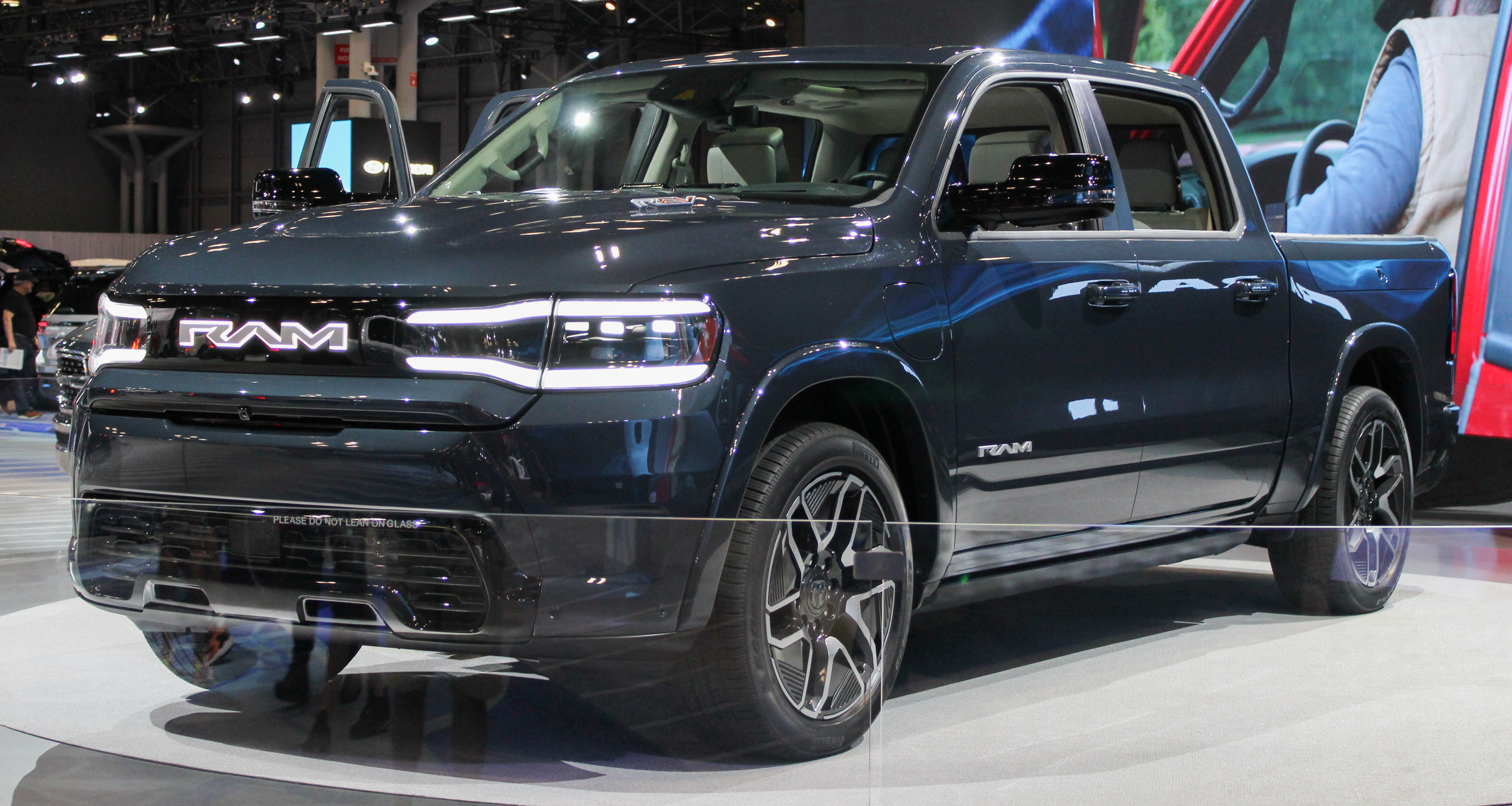
The RAM 2500 is a stronger version of the RAM truck that can handle bigger jobs. It's great for towing and carrying heavy things, making it useful for work or outdoor activities.
A VIN, or Vehicle Identification Number, is like a car's fingerprint. It's a special code that helps identify your car and gives details about it, like its make and model.
NHTSA stands for the National Highway Traffic Safety Administration, which is a government agency that makes sure cars are safe to drive. They help people find out if their car has any safety recalls.
Ferrari is a famous car brand from Italy that makes very fast and expensive sports cars. They are known for their bright red cars and success in racing.
A recall happens when a car company finds a problem with their cars that could be dangerous. They ask owners to bring their cars in to fix the issue for free.
The Jeep Recon is a new electric Jeep that can go off-road, which means it can drive on rough paths. It's important because it's part of Jeep's move to make cars that are better for the environment.
The Lotus Elite is a fancy sports car that is very light and can turn very well. It's special because it's designed for speed and style, making it a favorite among car enthusiasts.
The Ford Escape is a small SUV, which means it's a bit bigger than a car but smaller than a truck. It's great for families because it has plenty of space inside and is easy to drive.
The Ford Ecosport is a small SUV that's easy to drive in the city and has good fuel efficiency. It's being talked about because Ford is changing what cars they sell, and this one might not be available anymore.
The Ford Mustang is a popular sports car that many people love for its speed and style. However, it might not be the best choice for driving every day, especially in bad weather.
The Ford Fusion is a family-friendly car that is comfortable and has plenty of space inside. It's a good choice for people who need a reliable car for daily activities.
The Ford Festiva is a small, inexpensive car that was made by Ford. It was popular because it was cheap to buy and easy on gas.
Car
Kia Sophia
The Kia Sophia is a small car made by Kia that was sold in the early 2000s. It was designed to be affordable and a good option for people looking for a budget-friendly vehicle.
The Isuzu Rodeo is a type of SUV made by Isuzu. It was popular for its ability to handle rough terrains and was made from the early 1990s until the early 2000s.
The Isuzu Amigo is a smaller SUV made by Isuzu, produced in the late 1980s and 1990s. It was known for being easier to drive in the city while still being able to go off-road.
The Jeep Gladiator is a truck that can go off-road, meaning it can drive on rough terrain like dirt and rocks. It's special because it has a truck bed for carrying things, while still being a Jeep that can handle tough conditions.
The '13th month' is a nickname for the last week of the year when car dealerships often have big sales. They try to sell as many cars as possible before the new year starts.
Transparent pricing means being open about how much a car costs, including all the extra fees and charges. It helps buyers know exactly what they are paying for without any surprises.
LIVE
We're doing better as a result of social media presence.
It doesn't do those three things, then it's on the chopping block.
It's in return on investment discussion.
Hey everybody, welcome back to another episode of The Daily Dealer Live.
I'm your host, Sam Darkin.
Welcome to this space where automotive comes together
to learn, to share, and most importantly, to execute.
Thanks for choosing to be here on this the 10th day of December.
We have got one heck of a show coming up today.
We've got the owner of Toothman Ford
to talk about all things retail.
We've got a co-founder of Full Throttle AI
to provide perspectives on IT and all things AI industry.
And then we've got the great Glenn Lundy up for a second
or I think third time on the show.
Excited to have him on board to talk about operational excellence
closing out 2025 with a bang and looking forward to 2026.
But first, let's jump into this week's and today's industry
headlines.
First up today, new prices, new vehicle prices
barely moved in November, holding at an average transaction
price of $49,814.
That's up just 1.3% from last year,
and basically flat month to month.
Meanwhile, MSRP's continued creeping up higher.
The average sticker hit $51,986 in November.
Get that, almost 52 grand, basically 52 grand.
That's up 1.7% year over year.
Instead of dipped versus last year,
but real slightly from October landing at 6.7% of ATP.
However, the model mix keeps shifting upscale.
Full-size pickup MSRP's reached $70,178
while vehicles under 30K fell to just 7.5% of total sales.
That's down from more than 10% just a year ago.
And of course, EV pricing remains volatile
after those federal tax credits went away.
November's average new EV transaction price
jumped to $58,638.
But sales did fall more than 40% year over year.
What's the bottom line with all this?
Will dealers still have real pricing power
with higher income buyers,
which is keeping prices elevated.
But as incentives trend down,
retailers will likely need extra discipline
on discounting to protect gross
as the ceiling keeps rising.
Next up today, Stellantis is getting ready
to bring one of Europe's tiniest EVs to the US.
And actually this cracks me up
because Trump just announced last week
that he had approved tiny cars in the US.
We're seeing that now.
The Fiat Topolino, it's a two seat quadra cycle
that's under 100 inches long.
This thing tops out at 28 miles an hour.
It goes less than 50 miles on a charge.
And right now it sells for about 11,500 bucks in Europe,
though US pricing is still unknown.
The Topolino shares its bones
with the Citroen Amy and Opel Rocks Electric.
And right now it's built in Morocco.
It's a true micro EV built for short trips,
dense urban areas and low cost mobility.
Why now?
Well, some industry watchers cite
President Trump's recent comments
about publicly praising Japan's Kai cars,
KEI, in case I'm mispronouncing it,
reigniting the conversation about micro vehicles.
We laughed about this on the show last week
because I can't imagine Americans
driving small cars except resort towns
and on the golf cart course.
However, historically microcars
have had very small US presence.
The best year sales wise was 2014
with just get this 114,000 sales
according to S&P mobility.
What's the big picture here?
Well, if Stellanus moves forward,
the Topolino will more likely become
a niche urban use add on for dealers,
not a volume play.
Next up today, we turn to Asbury Automotive.
You're about to get some behind the scenes look
into the structure of a company.
Asbury Automotive CEO, David Holt
will be stepping down after eight years
and move into the executive chairman role.
Taking his place is CEO Dan Clara,
who will take over as president and CEO
after the company's 2026 annual meeting in May.
The move caps a huge run for Holt,
who more than tripled earnings
and shareholder value during his tenure
with Asbury stock up 273% over the period
per the company announcement.
And Clara steps in with deep institutional knowledge,
having spent 23 years at Asbury
and helping drive the company's biggest acquisition,
integrations and its evolving retail strategy.
Additionally, Bridget Ryan Berman
will become the lead independent director
while Tom Redden will stay on board
after ending his term as non-executive chairman.
What's the takeaway here?
Clara now has to show that the market,
Clara has to show the market
that Asbury has another chapter
driven not just by integrations and synergies
but by sharper execution and a robust longterm strategy.
And finally up today, we turn back to Stellanus
who's issued two separate recalls
covering 74,000 RAM pickups at the beginning of December.
The first recall covers 72,509 RAM trucks
from the 25 to 26 model years.
Due to some 12 inch digital clusters,
they go completely blank,
either at startup or while driving,
which can wipe out critical info
like brake warnings and gear positions.
Probably can also be gently disconcerting
if your dashboard goes blank.
Issue traces back to software
from supplier Morelli North American
while Stellanus believes the defect rate is low,
dealers will need to reprogram or replace clusters
to keep trucks on the road safely.
On top of that, Stellanus issued a second smaller recal
for 879 RAM, 1500 classic 2500 and 3500 trucks
from 2019 to 20 tied to curtain air biog inflators
that may rupture due to moisture contamination,
making this the fourth recall
for this same issue since last year.
As always, dealers will fix or replace
faulty components free of charge,
and it's a revenue driver and fixed ops for those dealers.
And drivers can check their VIN numbers
at nhtsa.gov forward slash recalls.
And of course, as always to see more recalls,
head over to the CDG Recall Tracker
powered by busycar at cdgrecalls.com.
And that is our wrap on today's industry news.
Yulia.
What's up, Sam?
You remember where I was Monday.
Yeah.
How can I forget?
Yeah.
And then you remember the Ts from the week before.
I'm like, you know what, I think there's like a shot.
Like, Leno's gonna be in the room,
maybe we can get him on the show.
And yet there was no Leno.
And I didn't wanna say it on Monday's show
because I didn't wanna, like Chase was super nice
to have us, they were super hospitable,
but they're also like, hey,
out of respect for all the CEOs in this room,
Jamie Dimon, all the people and perspectives we got,
they're like, let us come on the show
and provide that direct.
You need to be discreet.
So I didn't wanna like say, hey, Leno's here,
he's in the room, but check this out.
Do you see this picture here?
That's awesome.
That's me talking to Jay Leno.
Do you know I watched Jay Leno as a kid?
I was, it was so exciting to like talk to him
to hear his perspectives on automotive,
the cars, he likes, guess who's the one OEM
he does not like.
And it hurts my heart in it.
May hurt your heart as an Italian with that background.
It's Ferrari, because he doesn't like how Ferrari
you have to like climb the ladder,
you have to get that car, you have to send us a perfect way.
Anyway, that picture right there,
that's me talking to him.
I'm going through Daily Dealer Live, he loves the show.
And I'm like, will you come on?
And he's like, of course I'll come on.
So I think what's gonna happen, we go out,
we do Jay Leno's garage, we do a live from the show here.
Our audience gets to see inside that garage.
So we're working through the details on it,
but that right there is the moment.
Somebody got a picture of it, where he said,
yes, which is pretty cool.
Yeah.
That's better than pretty cool.
That's pretty cool.
All right, other interesting info,
the circle groups are ongoing.
That was a big topic of conversation
at the Chase event among CEOs.
They're like, it's so cool to be part of a group
where we get a talk and we get a share, perspectives.
Well, there's a recap that gets put out
from all the groups using AI.
And it's interesting, I got Yossi's permission
to just share a little glimpse into it.
We don't wanna share too much because we want those groups
to be able to have candid, vulnerable conversations
without fear of being reported here.
But Dealer Principles across 21 Watts app groups
reported a challenging November with widespread,
real drop-off in sales volume
for both new and used vehicles.
Fixed Ops remained a consistent bright spot for most,
showing year-over-year growth.
Early December reports indicate a stronger start for many.
By the way, the strong start in December,
that's kind of how November began.
So, so cool.
So anyway, it's just cool to see the different perspectives.
I love Cardiola ship guy Yossi.
He has put together this circles in such a thoughtful manner
to be able to let people be transparent,
share their real takes on the economy,
and then us be able to take actionable stuff
as quickly as they can into their business.
So, the podcast levels up with transparency
in the CDG circles just absolutely
blows it out of the atmosphere.
So, cool comments online.
I'm looking left because I have a different monitor today.
So, Cal Chase No13 says Jay is a legend.
I agree, although he is older now.
Like he has aged and we love him.
So, we're excited to have him on, but he's older.
Dan C says good work, Sam.
And then Lauren Klein says you should do a series of tours
of all our great dealer partner owners' collections.
Ooh, I would love that.
Yeah, that'd be cool.
By the way, if we do that at some point,
I would love that idea.
I need to be able to at least drive one or two of them.
All right, so we've got at the Ziggler Auto Group,
we have a Ferrari store.
Guess how many times I've driven a Ferrari?
I'm not gonna tell you because it will be embarrassing.
People are like, you've got a demo.
Surely you've got a Ferrari demo.
I do not.
Yeah, I had to figure it was somewhere closer to zero.
Yeah, it's, but I'll tell you what,
those things are more like museum pieces to sit in them,
to be around them, to get to know them is just awesome.
So, yeah.
Works of art.
They are, works of art.
And Hannah says Sam's Christmas dream come true.
It's more than that.
Like I want the best of the best.
So, Jay Leno will go down as a great interview.
I've interviewed Bill Nye, the science guy before,
incredible guy, super interesting.
Sam Acho from Sportsfame, Chicago Bears,
Sportsfame current commentator.
And then all the great people that we interview here
on this show, get added to that list,
including our first guest today,
owner of Toothman Ford.
Let's turn to JR Toothman.
JR, welcome to the show.
Thanks for having me.
It's always an honor.
Hey, JR.
Jay Leno, what's your take on Leno, JR?
Are you of that age where you remember growing up on him?
Because I certainly did.
Leno's outstanding.
Actually, he came to a Ford meeting one time
and did the stand up.
And he's such a car-offician auto, so it's amazing.
We actually, I had the honor of selling a couple
celebrities last year.
And it's amazing how much they, Rob Gronkowski.
And then he went on Jim Farley's podcast.
And then Zach Bryan, before he became
one of the biggest country stars in the world,
bought a Bronco from us.
So that was pretty cool.
Wow.
Wow.
The Gronk.
He took his million dollar bonus, right?
From the Patriots that one year
and he bought a car from you.
I love it.
Yeah, that is awesome.
We customized the seats for him
and we call it the Gronco.
Yeah, that is cool.
That is cool.
Well, we need you to come back
and listen to the Leno show.
And you need to give me some perspectives and ideas
on good questions to ask, because I
think that would be fascinating.
JR, you're also part of CDG Circles.
We talked about that a little bit at the top of the show.
Give our audience a little perspective
on what those conversations look like behind the scenes
without betraying any confidences or trusts
within the group.
Yeah, it's honestly, I told Yossi from the beginning,
it's like a 20 group on steroids.
Because one of the group that happened to be in
is by some of the most impressive people
in the automotive industry as a whole.
So I'm kind of humbled to be in there.
I sit back, sometimes there's a wallflower
and if I get some occasional input,
I'm glad to add to it.
But for the biggest part, I like to listen and learn
and there's so much to be learned
from all the amazing people in that group.
Yeah, I'm in your group, JR.
So I'm going to take that as a compliment.
We've got Ben stuck in there and a bunch of others.
I remember a Saturday we get a picture of an EV,
the one of the Honda EVs from Ben's stock
and I'm like, it took me like 15 minutes
to figure out what the picture was of
and what was being sent.
But the quality of conversation, again,
I love that quote from Tony Robbins
where he says the quality of conversation dictates
not only the quality of our relationship
but also our ability to execute
and be successful at business
and being able to learn from each other
in the way that we do.
So the show takes it to one level
and then this just takes it even that much higher out.
Yeah, and the beautiful thing about too, even a 20 group,
you kind of get grouped into similar size dealers,
same manufacturers.
With this, you get a broad scope perspective
that kind of opens up your eyes so much more.
Yeah, yeah.
All right.
I don't want anybody to think this is a promo.
It's not.
I was just super fascinated by the little recap
and then it's fun to catch up with you
because, again, you and I are in the same group.
All right.
Tell us how's Biz, JR,
and for our audience who doesn't know you,
give a little bit of background on you,
what you do in your group.
Yeah, we're in a small town in West Virginia,
about 3,000 people.
My primary store where I'm at every day,
we sell about 150 to 170 used cars out of the spot,
about a 12 to one used to new ratio,
which is kind of unheard of.
Wow.
That's great.
But, you know, got an interesting paradigm,
but it works for us and we've, you know,
we continue to build it.
And my second Ford store,
we do about another 100 used out of there.
It's a little closer with about 40 or 50,
but it's a small area, not a great economy.
So we try to make lemonade out of lemons every day.
So JR, you sell so many more new, used than new.
Is that intentional?
And what was the path that led you down to that ratio?
12 to one is substantial?
I think from the beginning,
as we were growing our business,
when I first got into it,
it was a struggling store.
And by building your used car department,
you automatically build your service department
and you build your finance department.
So it's basically the only department
that can feed every other department almost instantaneously
once you start, you know, selling used cars.
So that was the way we kind of build our identity.
And we've just kept going down that path.
And we really feel like even with the population limitations
that we can hit 200 units a month fairly consistently.
So with that big a ratio, getting used cars,
you're not just getting them for customer trade ins.
It's not just service drive.
It's not even probably, what's your biggest source,
biggest best couple of few
to three sources of used car acquisition?
Obviously off the street is our preferable mode.
That would be an all you can eat buffet.
We'll buy anything and everything we can
from that method and out of the service lane.
We're a little bit more reliant on the auction path
than I would like to be
because we obviously know the margin compression
that's going to occur when you're in that.
The one thing that's helped us tremendously
over the last 18 months is a software called Agile Auto,
which has allowed me to make a very targeted approach.
I think before I was taking more of a shotgun approach.
Now I'm very rifled in on the vehicles
that we can buy and take chances at.
So it allows those wholesale losses to be minimized
and tighten up my gross a little bit.
How does it work?
Well, it basically is, it's an intelligence platform
that overlays on top of your IMS and your DMS.
So it's taken the best of both worlds of those
and combining actionable items to create buy lists
for you, not only how your market's performing
but how you've performed in the past,
your propensity to finance certain vehicles,
making sure those two match up.
And it's helped us really hone in and be more targeted.
And who is your IMS and DMS?
I suppose it integrates completely with those.
Yes, V-Auto and Dealer Track.
Okay.
And ballpark price of the program?
About, not an ad, but interesting.
This is a new,
I'm asking because we haven't heard that much about it.
I've not heard, ever heard about it.
Yeah, it starts out of like 395 a month.
And if you can get more complex,
the more you want to go deep into it.
But yeah, it's been a key to our dealerships
as far as how we've been growing this year, so.
And how long have you had it for?
About 18 months.
Okay, okay.
And then do you have any quantifiable difference
before and after in terms of the impact
to use vehicle acquisition?
Because again, you're in a super unique environment
with that larger use to new ratio.
That is a significant problem acquiring enough used cars
to be able to support that need.
It's a huge issue.
And it's a 24-7 type of job.
But we have actually grown our volume this year,
even in a market that's still depressed of inventory.
And to be honest with you, the bottom hasn't hit yet.
It's still going, it's going to bottom out.
And it's going to get more challenging.
So we want to be more targeted as we take these chances
and know the particular vehicles that yet,
even going beyond profit time, or some of those are,
like what Danny has with BenQ,
some of the vehicles you can hold on to
a little bit longer to take those chances.
But some of them you need to turn and burn fast
because otherwise you're creating your own problems.
So we had on Cox Economist last week
and he talked about the larger than normal tax refunds
that are coming our way, Q126.
And there's an industry perspective out there.
Hey, it's okay to stock up a little bit,
have a little bit less use car turn discipline.
Do you buy into that?
And what are you doing to kind of prepare for that
in terms of use cars?
Probably the only, I would agree with that,
probably for the next 20 to 30 days.
I actually told my buyers this morning
that I said, I think you're gonna have a grace period
that you're not gonna be able to get hurt,
you know, unless we're just make stupid decisions
or bi-mechanical problems
because I've never not seen the,
even in a lesser tax market,
not seen some inflation over at least
through February and March.
I think, yeah, I would agree with that.
If we're gonna be heavy, I'd rather it be heavy now
for the next 45 days in our buying cycles.
So using this technology,
what's the number one vehicle you're after now
in your marketplace?
What's the hottest thing in West Virginia?
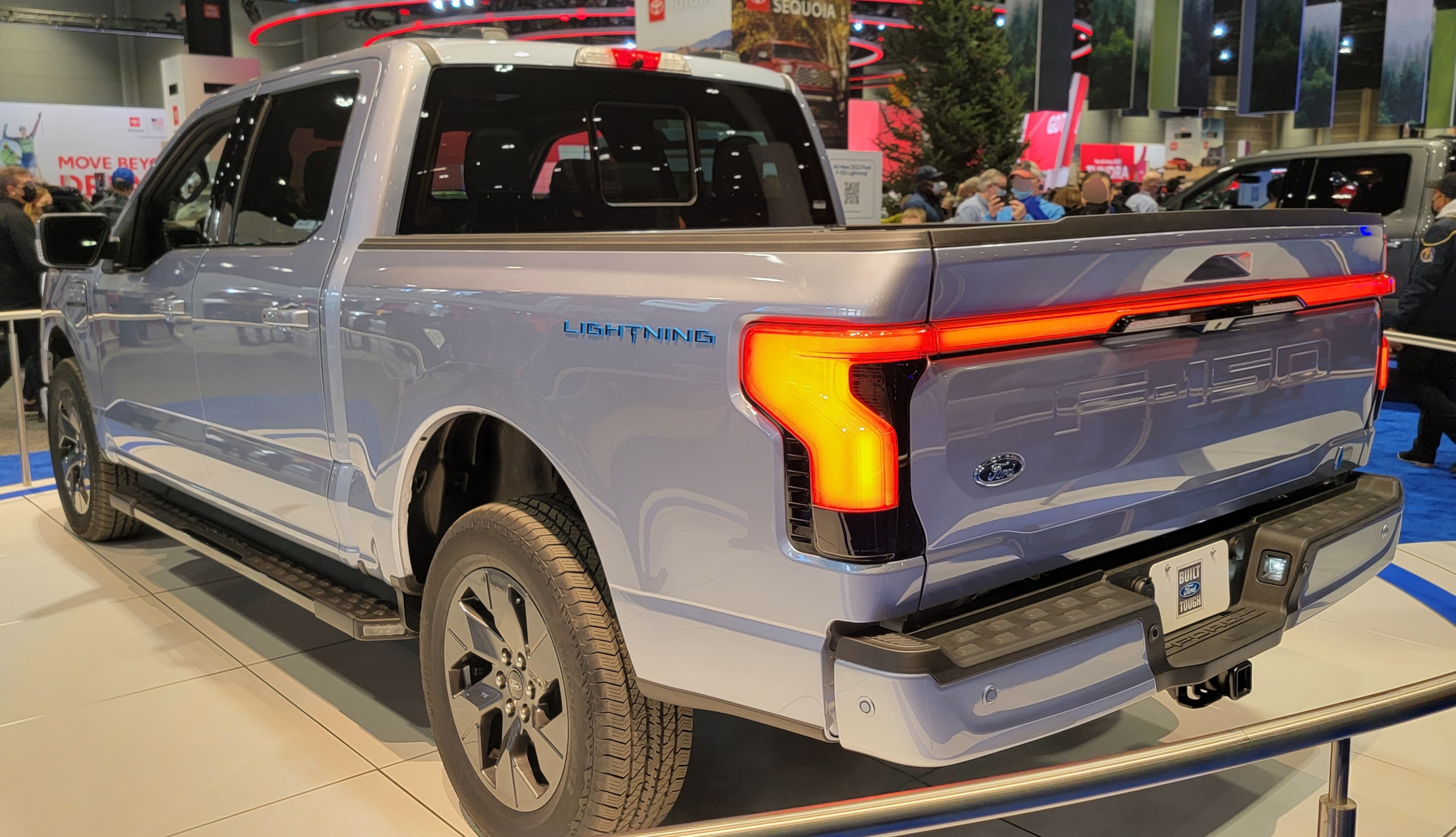
Well, the market loves F-150s and our store loves F-150s,
so that's a pretty good staple.
Ironically, though, the compact SUVs
are the number one sellers
and I think that's more of an affordability issue.
It's not so much that they wouldn't go
in a different direction,
it's just what they can afford at that particular time.
Yeah.
So you're a Ford retailer.
You sell a ton of used cars, but you also have the new.
Ford's the number one most recalled OEM this year.
They've had a significant amount of recalls.
What's your take on that?
What's the impact been to your fixed operations
of all those recalls this year?
I mean, it's been good.
I mean, we've actually, at one point,
several years ago, our fixed absorption
was embarrassingly low.
Obviously, the internal work helped build that.
We've grown, we've got some amazing technicians now,
I think for a store, fairly size small,
I've got six master certified technicians.
So I mean, even though we don't welcome
the inconvenience for the customer,
we welcome the opportunity to take care of these recalls.
I think Ford's been at the forefront of admitting
that there's too many of them
and they're working to get that corrected,
but in the meantime, I think it's kind of like
any other time as a retailer,
we can't apologize for what happened,
but we can try to make it a positive experience
moving forward.
And so to that end, you've actually invested significantly
in your fixed operations capacity.
You've expanded your shop
and some of those other offerings,
at least I understand.
And then I don't know if you've gotten
into mobile service at all,
but talk to us a little bit how you've met
that increased need for fixed operations at your store.
Yeah, we invested probably in the last 36 months
about two and a half million dollars
in building additional service racks
and service buildings to standalone recon building,
because when you're selling 150 to 200 used cars a month,
you have to have the capacity to take care of that.
Also mobile service, I think is amazing.
I've been really proud of Ford
at being at the forefront of that,
because I think we're meeting the customer demands
where they want to be met,
if that's in their driveway
or if that's at their place of work.
And I think it's a huge initiative
and I'm a huge fan of it.
So Ford has significant factory incentives
to support that mobile service business.
We've seen on the show, Yuli,
and I have had some Honda dealers and other OEMs
without that support still getting into mobile service.
Would you be in that business absent the Ford support
or was that important to kind of planting the seeds
and getting that up and running?
Initially, that's a great question
because I think initially,
if it hadn't been for Ford incentivizing it,
I would have been reluctant to jump in.
But even now, if they do take the incentive away,
and I see that they probably will over time
to some degree, we would still stay in it
because we see how much value it brings to our customers.
I mean, they absolutely love it.
It's great for recalls,
it's great for small reprograms, that type of thing.
So it kind of takes a sting out of that recall letter
when they know that you're coming to their place
or the worker to their driveway
so there's not a tangible inconvenience to them.
In fact, oddly enough,
and we've talked a lot about this,
I feel like the number of recalls at a Ford dealer
is a great opportunity to not only create a lot
of revenue for fixed ops,
but also create that elite type of experience
that binds you to that customer forever, right?
The recall doesn't have to be a negative, does it?
Well, I mean, like I said,
I don't think anybody's probably happy about getting it,
but even if the people do come back to your dealership,
it gives you an extra opportunity to sell yourself
and the experience and show why you are different,
not to be so transactional.
Pick up and deliveries and other part of it goes
with that mobile service departments
that Ford has pushed as well,
because it's easy for us to pick it up,
deliver it back to them and they're not really,
it doesn't mess up their day or their week
or that type of thing.
And I think at that point,
they think if I am in the need for another car,
who am I gonna call?
Because maybe other people aren't gonna do that for me.
Yeah, well, it is a great opportunity.
So I wanna talk a little bit about Ford as an OEM,
but first wanna go a little bit into AI.
So I was at this Chase gig,
it was the CEO event and I'm gonna tell you something,
the data and information you get out of that
really did a great job for setting the table
in my mind for next year.
Some of the pluses and minuses from an economic standpoint.
One of the things that I took away from there,
I won't cite who said it
because I agreed I'd be super discreet
about the info there,
but a couple of their economists said
that they think AI will be a big enough segment
in the US economy that it will actually hold off
any type of recession for the next year potentially too,
which kind of makes sense.
And Yuli, we've talked so much about AI on this show,
we start to think, oh my gosh,
are we talking about it too much?
I came out of there convinced we're not.
Like it is here and it is,
for an entire segment of the economy
to pull the US economy and keep it away
from a recession like that'll do is significant.
It is gonna have a big, big impact.
So are there any AI tools that you're using
aside from your inventory management,
maybe fixed ops that are working in your world, JR?
And what are they and what are they doing?
We've used AI pretty extensively with some BDC applications.
And we found out to be fairly effective
also with some cost savings.
Also you don't have to worry about the high level
of turnover or absenteeism
that we were sometimes experiencing in that department.
So that's been, and we've definitely,
we actually are leaning into a couple other things
with AI that I hadn't seen.
And it's very enticing to see
because it's moving so fast.
And I feel like we better get on the train now
or when the internet came on,
which I'm obviously showing my age at this point,
but you know, there was a lot of people saying,
oh, you know, I think it's a bad, that type of thing.
Well, we were fortunate enough that we jumped on pretty early
and we're able to take advantage of that.
And I think this is gonna be the same way,
but at warp speed even faster.
Is there a particular tool you wanna share with others
that you're finding to be efficient, effective now
in the BDC?
Essentially what we're using is Podium.
They have a BDC type chat thing.
A lot of times we were finding that our agents
were given up on request three or four being ignored
and she just keeps working at it
and eventually gets a response.
It's also been effective for people selling their cars
because a lot of times they shotgun out KBB leads
or something and 10 dealers are calling them.
Dealers give up after a couple of days
if the people don't answer, but she doesn't give up.
Very cool.
Well, thank you for sharing that success.
So it's a final question
because we're getting close to it here on time.
Ford is an OEM.
We talked about the recalls.
We also talked about the support for mobile service.
One thing that Ford's getting right today
and one thing that you'd love to see changed
or different as a Ford dealer, JR.
I think that Ford for basically my lifetime
has done right by their truck brand, the F-150.
I mean, it continues to be at the top of the food chain
and so very pleased with that.
The one thing that I wish looking back
and we felt like it was a mistake at the time
and I still continue to feel that way
is the lack of an affordable starting vehicle for somebody.
Basically we're losing the escape.
We don't have an EcoSport.
We don't have a car line, essentially
because the Mustang, even in our weather conditions
is not a, can't be an everyday driver.
I wish that we had like a focus type car
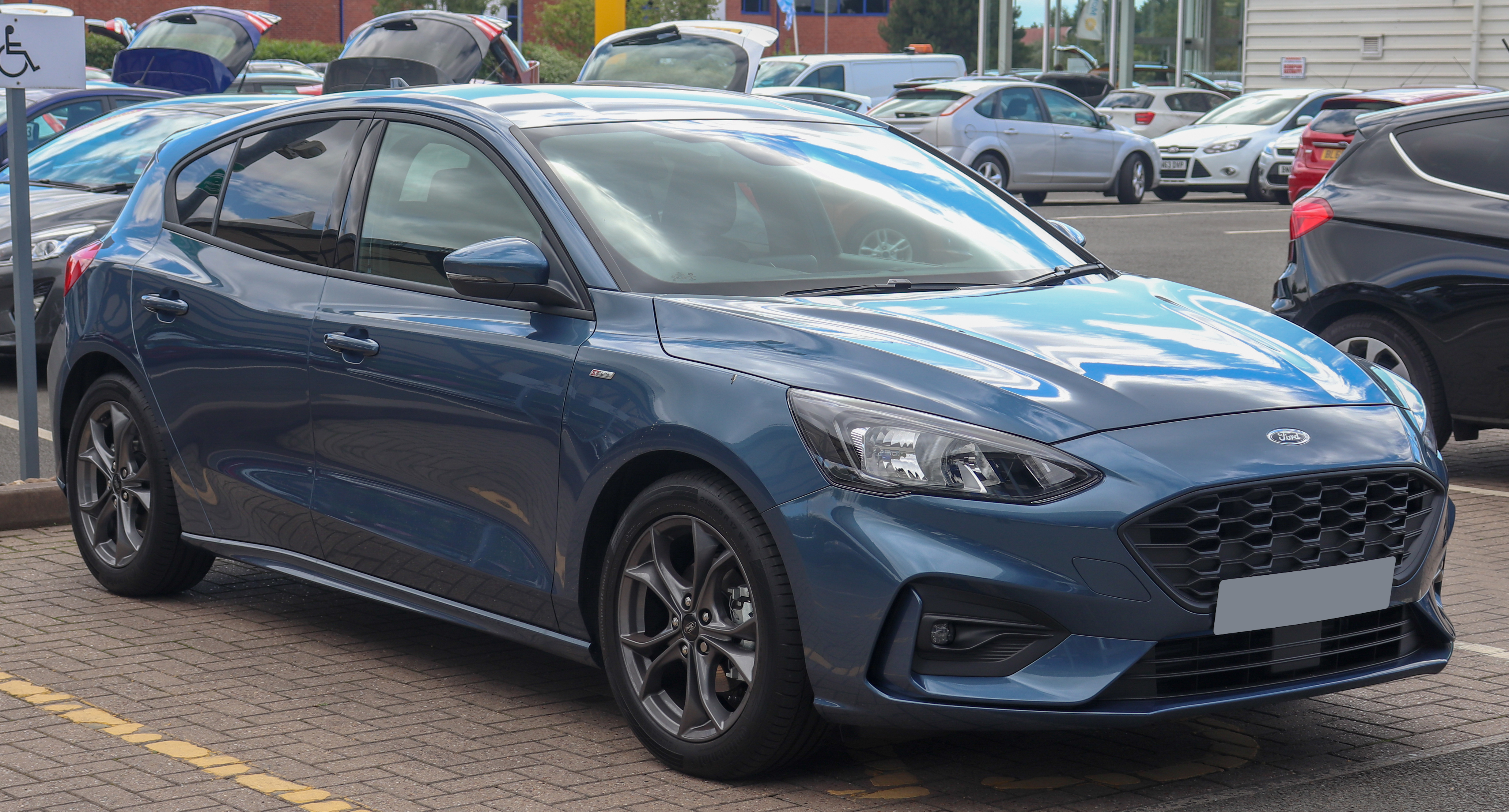
or something to get.
Focus, fusion.
Exactly, to get people.
Yeah, especially in your market.
That would do really well, wouldn't it?
100%.
I mean, the average household income
in the county that we reside in is 39,000.
So I mean, it's a budget conscious area for sure.
Yeah.
Well, JR Toothman, owner of Toothman Ford,
we appreciate you being on the show,
sharing your perspectives.
We know Ford listens to this show.
So hopefully that will be taken into consideration.
I agree with you.
You know, I think a lot of these OEMs
are gonna return to some of the lesser priced vehicles.
The mini-car is a good example of that
proposed in our news, Trump suggesting
he's approved the sale of mini-cars in the U.S.
I don't know how the president does that,
but he announced Ford's employee pricing
for all earlier this year.
So I guess as president, he gets to do that.
But JR Toothman, thanks for being on the show.
We appreciate you being here.
Hey, thank you very much.
And the one disservice he did
was having me on the same show with Glenn Lundy,
who's like the world's best speaker.
We're excited for his perspectives
on crushing it through the end of the year.
But JR, we thank you for your perspectives
on all things Ford, fixed ops, sales and AI.
Thanks for being on today.
Thank you very much.
A lot of fun comments.
I'm gonna turn my head left
because I have a different monitor today.
So DNC says 142 Ford recalls here today.
That's a lot of recalls.
DNC, thanks for saying that good work, Sam.
Appreciate that.
Scott Simon says JR is not only a great car dealer,
but he's an even better human being.
Very cool for that to be said.
DNC also shares, I worry the recalls hurt
the brand image in the long run.
And then Lauren Klein says jump in the small SUV need
is partly due to the lack of sedan options.
DNC obviously Ford Festiva, a blast from the past.
You know, it's so funny
because way back in the early 90s in Utah,
I sold the very first Kia Sophia.
So when you say Ford Festiva,
this is how long the car business is.
The Kia Sophia we could sell 54.95 manual transmission,
no air, manual everything.
And we were so excited
because we told everybody this has a Ford Festiva engine in it.
Like it's got it right.
How far Kia has come since then.
Oh yeah.
I would love to have somebody on from Kia,
the OEM just to talk about their trajectory.
Cause again, I sold some of the very first Kias
in that state alongside Isuzu's.
Isuzu's no longer around now Kia's a powerhouse
and Ford is perfecting mobile service.
Isuzu is still doing trucks.
With the box trucks.
Yeah, yeah.
But they're not doing the thing everybody loved,
which was the, not the rodeo.
Yeah.
No, you had the rodeo.
Yeah, Isuzu rodeo, the Isuzu Amiga.
Yeah.
Yeah.
Fun times.
And then they had that cross deal with Honda for a little while.
But let's talk cars.com, Julie, if we can.
Today's episode is brought to you by cars.com,
the number one most recognized market brand,
helping your dealership show up and stand out
to the most valuable car shopping audience.
If you want to learn more about cars.com,
you can scan the QR code off to my side,
click the link in the show notes.
We appreciate cars.com for supporting today's content,
including the news of this new mini car
potentially being brought to market by Stellanus.
The conversation on CDG circles,
which we had with JR, which is a heck of a lot of fun.
And then JR's perspective on his hugely,
bigly, to use Trump's term,
outsized used car department in his marketplace.
You know, thank you cars.com for supporting the content today.
And just as a reminder, if you enjoy the content,
please hit like, please hit subscribe,
and please share today's show.
Because as JR correctly noted,
we've got Glenn Lindy coming up here shortly.
But first, let's turn to Amal,
co-founder of fullthrottle.ai, Amal.
Welcome to the show.
Hey, thanks for having me, guys.
Amal, I didn't dare try to pronounce your last name, Amal.
Give it to me, just so I got it.
It's Weisham Hein.
So, Weisham Hein.
Oh, I could have done that.
I would have got that right.
It looks way more intimidating
than it actually is when you say it a lot,
but it is 13 letters growing up.
I had to do it.
You've thought all the SAT things for 13 letters,
so fun times.
I love it.
Well, hey, you know what?
Mine's French, de-apostrophe, ARC.
So I only had four letters and a weird thing,
but nobody could get that right.
My entire youth, I had to explain it away.
So, Amal, welcome to the show, Yuli.
Amal, let's get right into it.
Obviously, we have our signature question,
how's biz in your neck of the woods?
And while you're letting us know how things are,
just tell us a little bit about yourself
and what you guys do.
Yeah, for sure.
So business is great.
Our business is significantly year over year,
and we really feel like we're just getting started.
So I'm really excited going into the next year.
We expect it to be probably our shining breakout year,
to be honest, given.
As you guys covered a lot going on with AI,
it's kind of a golden year next year
for a lot of key transformation,
ourselves being in the ad tech space.
We rolled out the world's first automotive DSP,
and there's another acronym,
but we could talk about all of that actually means
and really simplify it for dealers
and our audience and our listeners.
But yeah, really excited going into next year.
We've done some really, really amazing things
and have some great group points.
That's exactly what we have to talk about.
So you're the co-founder of Full Throttle AI,
but for the dealers watching,
like I guess in plain English,
what is an automotive DSP
and why should dealers care about it?
Great question.
So I'm gonna give an insight of why we built it,
and then that is gonna better,
and I'll explain exactly what it is.
So essentially a couple of years ago,
we interviewed about 500 dealers
and we said, who is 100% confident
where they're non-search, non-social,
which means not Google, not Facebook, not YouTube.
Do you know where your dollars are actually gone?
Do you know what kind of actual impact they're having?
The other one's a little bit easier, everyone knows, right?
But in terms of non-search, non-social,
no one really knew.
You guys want to take a guess about what the confidence level
was across 500 dealers, across the country,
across pretty much all the makes.
Wild guess.
I would hope it would be 100% confidence,
even if they knew they were 100% wrong,
but I'm guessing pretty low.
Yeah, 11%, 11% is pretty low, right?
So the thing that I think about,
and I'm actually doing this for my NADA session,
so I'm doing a NADA presentation this year as well.
And to make it fun, I thought about those PBS
or the public broadcasting messages back from the 90s,
which is like, hey, it's 10 p.m.,
do you know where your kids are, right?
Yeah.
Similarly, my theme there,
and the way that I explain to people is like,
it's the middle of the month,
do you know where your ads are, right?
And so same idea of like,
so there's a lot, you think about that theme,
and it's like, well, how do I get a better handle on it?
And essentially what we did is we launched
a automotive DSP, what is a DSP though
at the end of the day?
Think about it like a stock market for ads, right?
So using a bidding system,
you can buy ads with real-time bidding at certain rates,
you can have audience targeting,
you can bring in your creative to it as well.
How does real-time bidding actually work, right?
You basically only pay when your ad
is actually shown to the right person,
you compete for attention, you can target smarter,
but it's an auction that happens in milliseconds
every time that a page loads, right?
So let's think about any of us just going
and using the internet, a customer visits a website,
any kind of website, weather.com, auto trader, whatever,
and the browser loads a page with that ad space
and an auction happens instantly.
So you have dozens of water called DSPs
and they bid on that ad slot in real-time,
again, within that millisecond
and the highest bid wins that slot.
So your ad wins if your bid
and the relevant score beats others
and then the ad is pretty much displayed instantly, right?
So the user will see the dealership ad
even before the page finishes loading.
Now, there are a lot of you that are familiar
with this bidding process through paid search, right?
It's like, well, how do I bid
to show up in that paid search
when someone searches for me in Google?
The truth is every single ad,
most of the majority of the world's ad
has run through the same programmatic method, right?
So if you're talking about CTV, you're talking about Hulu,
you're talking about HBO, you're even talking about Netflix,
all ads run through this programmatic layer.
So that's really what a DSP is.
Most dealers are not directly using a DSP
unless some of the larger groups
or some of the listeners who are part of large
automotive groups that have internal marketing teams, right?
And those internal marketing teams are like,
I'm gonna be more hands-on.
So they have a little more familiarity
with these kinds of tools.
Otherwise, the two key reasons
why most people have not heard of it
is because it's being done by the agency.
So when an agency works with a dealer and says,
hey, I am going to run all this media
and all these different spaces and blah, blah, blah,
dealers are like, cool, great.
I'm gonna look at the reporting.
It's pretty much done.
And they're in this monthly cycle.
And now then the agency is like,
okay, I'm gonna go and do this whole bidding thing.
I'm gonna use the DSP out there.
I'm gonna try to accomplish it.
And so that's generally just for education purposes.
That's how it works.
So it's a marketplace and you give dealers access to it.
And it's faster and it's probably smaller margins
when we place advertising and we can do ourselves.
What are the three letters DSP stand for?
You've used that a few times.
Yeah, it's called, it's demand side platform.
And so again, it's very like add-to-key.
It's very like more acronyms, right?
And again, I typically, we don't even use that word.
But what has changed over the last year or two?
Why are people talking about this now?
Even though this has existed for the last decade, right?
Any guesses you guys mentioned it a little earlier?
AI.
AI, exactly.
So historically, the work could only be done
by your huge agencies with large teams
and you gotta use all this complicated software.
What does AI do?
It takes all that complicated software
and it makes it super simple
and brings in your dealer's DMS data.
It brings in your cars.com
and other kinds of audience data as well.
And now a dealer can do,
I'll give you like three use cases
that dealers do today using our platform
or their agency is using our platform to do it.
Same thing, right?
And so one example is,
let's say you wanna build and launch a Univision
CTV campaign, connected TV campaign.
But you wanna target your least operate customers
in your DMS.
And you wanna hit the least conquest customers
in your market.
And you wanna target in a Hispanic markets Univision,
you know, CTV, you can build and launch that in two minutes.
Dragon Drugs are creative and you need to creative
or maybe your agency helps you.
You can build and launch it in two minutes
and then in real time,
see how many lease renewals or new car sales
or used car sales you got from that direct audience.
So it's like direct mail, right?
Because you could do that with direct mail
a long time ago.
You can't do it today
because it's been too much complication.
So let me ask you-
Simplified.
Sorry, go ahead.
Let me ask you this from yoga cars.
Yoga cars saying,
what's the difference between a general DSP
and an automotive DSP?
So yoga cars must acknowledge.
Yeah, fantastic question.
So most agencies are using general DSPs
and they're trying to get them to work within automotive.
But all of us and all of our listeners know
that automotive is a beast of a different kind.
It is just different,
especially at that tier three dealer level.
And so what we've done is said,
okay, imagine you had a DSP,
but you natively baked in all of the DMS audiences, right?
So you have equity built in,
you have who's in equity and at risk in my DMS.
You have real time modeling against,
hey, I'm taking in all that RDR data,
urban science data, folk data.
And it's, but it's natively in your DSP.
If you have a general one,
you're like duct taping 10 different things,
trying to make all the data flow into one place
and dealers don't have time for that.
Frankly, your agency doesn't have time for that, right?
And even some of the larger OEMs,
they struggle to do that as well.
So because AI allows us to kind of bring that better
and make it more presentable and usable in a different way.
That's really why it is all coming together.
It's why it's different than your general DSP.
You can try to work on your general DSP
and you can waive a lot of money
and try to get them to kind of bend the knee.
Think of like game of thrones, right?
Like they won't be able to, right?
So you had to start from scratch
and build something that was specifically focused
on moving metal off of lots
or moving metal into the service drive.
Yeah.
So this is a great way to be hyper intentional
with your marketing spend.
Let me ask you for a single point store.
What are the first two to three data sources
that they should plug in to start building
a real in-house, in-market household solution?
Yeah, for sure.
I mean, basically it takes about a week
if like a dealer wants to do it
and there's a tag that goes on the website.
And so we're integrated with all the website providers
and the shift digital and the JD powers
and all those in the world.
So super easy to get the tags on site.
And then we have a turnkey DMS integration.
Takes about a week, everything goes through
and all the little things are calculated along the way.
So it's super easy to then just drag and drop
and build your campaign, run it and measure.
So what are the success metrics that you're seeing?
So utilizing the DSP, the AI to help you place those ads,
like is it reduced spend, more effective spend,
reverse increase close rate?
What are the three most important metrics
that you're tracing as part of this?
So the top level metric to almost like
an outside business consulting like,
I'm wondering what has materially changed, right?
Market chair, 100%.
You are now having full funnel marketing,
not just, oh, I got one for the click my paid search ad
who are already in market, right?
I'll click on the page again.
You are full funnel changing market chair.
You're using tier three audiences from your DMS,
you're using tier one audiences where the OEMs
are sharing that right directly into our platform
and you are beating your competitor to market
with the right message so that the person
who's in market or near market
and it's gonna go spend their whole weekend
shopping for cars, they stop at your store first
and they don't leave, right?
And so that materially changes market chair,
but the real answer is never until this point
could anyone ever tell you, hey, here's how many new cars
use cars and gross profit I had on this campaign
that was streaming, CTV display video.
You could do that with direct mail,
you could do that with like an email campaign,
people have been doing that for decades, right?
But you can never do it
with this big open streaming space.
And so we brought all that into one,
we brought indirect mail into it.
You have true one on the channel campaign
and it materially helps you impact
your market share month over month.
You mentioned getting DMS and CRM integrations.
That's pretty tough, Byter.
Is it Byter actually with most of them?
Some of them don't play well.
Yeah, yeah, for sure.
But we've been in this game since, you know, 2018.
So we've been through all of the,
those kinds of fun items in the trenches, right?
And so we learned how to do all of that.
It doesn't really need to be bi-directional
because you wanna use this as your like ad account.
So the former listener, they're probably familiar with
like, yeah, I have access to my Facebook ad account.
I have access to my Google ad account.
I have no idea what happens
to the big Wild West outside of that.
So now think about it like it's an ad account
they can own, they can invite their agency to it
and all those things.
It doesn't have the feedback to CRM directly,
but it can bring in data, you know,
and then you can have a better marketing campaign.
It sounds like a fascinating tool.
It'll be interesting to pilot one of our stores
to becoming more efficient, more effective.
Just in the last 30 seconds, last question up,
what got you to co-found Full Throttle AI?
What's your background story on that?
For sure.
So Full Throttle was actually founded within an agency.
So myself and David Wren co-founder,
he's also co-founder of Stream Companies.
And so we founded that as an idea,
knowing that we lived in the agency space,
we wanted to deliver better audiences for dealers.
We wanted to help agencies have better tools, right,
and get more efficient at actually delivering impact
and results.
And so the best way to solve your industry's problems
to start solving your own problems
as being part of the industry.
And so we did that.
It's tremendous success.
We then basically spun it out as a purely independent technology
and software company.
And now we are on over 6,000 stores nationally.
We have 40 plus agencies that use our platform today
in a number of different ways.
And we have partnerships with OEMs in a number
of different ways, as well, because everyone
could take advantage of a true AI-centric workflow
and solution that brings together audiences, activation,
and true business outcomes down to then.
All right, so one last question I lied.
I'm going to give you one more question,
because then we've got to go.
And Yoga Cars had a good question.
How does this DSP handle ad fraud that
is rampant, is Wild West of DSPs outside Wald Gardens,
like Google and Facebook, with 20 seconds or so?
It's a great question, essentially.
That's where we use both a combination of AI and humans.
So it's our own DSP, so we have deep log level
reporting of exactly where things are being shown,
what kind of content is being shown.
We have an AI team and set of agents
that make sure that we have a verified list of making sure
there is no ad fraud.
And there's human oversight observers.
I think of them like AI are agents in the zoo,
and you have the zookeepers who are making sure
everything is going according to plan.
So we use both an AI assisted way
to get it to 80%.
And then we have human oversight
to make sure that we're clear.
And then we give reporting down to what
is the top ways where your audience is actually
consumed content, what kind of content that they consume,
and that is essentially a way of seeing where your ads
are actually running.
And on that, co-founder of Full Throttle AI, Amal,
Wash Paying, thanks for being on the show.
Thanks for sharing your perspective.
How close did I get Amal?
Did I get close?
Very close, very close.
We'll take this.
Thanks for having me, thanks guys.
Appreciate you being on.
Thank you.
It's a good conversation.
AI is going to take out a lot of waste out of the economy,
and it was a fascinating part of the conversation,
again, at the Chase GIG.
AI is expanding so fast, it's going
to provide an economic lift to the United States.
And another interesting comment I thought,
there'll be two types of people within AI,
and this is the rally call for all of us
to learn it and understand it.
There'll be those that are in charge of it, the masters
of it, and there will be those that serve it,
servants of it.
And the differentiator, they said,
will be STEM education.
It will be education.
It will be going out and learning and understanding
and figuring out how to maximize it in your industry.
If you don't understand how it works,
and it's why we're here, it's why we're
asking so many questions, you're going to be a servant to it.
And the economic prosperity will come from understanding it
and using it to apply to problems.
So cool to hear how he's doing that in the ad spend world.
And our next guest is going to provide us
additional perspective on closing out the year
and starting next year strong president, 800% elite auto.
Glenn Lundy, welcome.
Welcome to the show.
What's going on, guys?
Thanks for having me.
Glenn, thanks for coming back.
This is your second or third time,
I think it is on the Daily Dealer Live pod.
And we wanted to have you on today just to get us fired up
as we get close to the end of the year.
But before we do that, how's Biz tell us a little bit
about yourself for those that don't know you, Glenn?
Yeah, Biz is steady.
That would be the word that I would use
in this particular season right around this time of the year.
I'd love to say, we're growing, and we're killing it,
and we're crashing, and everything's kind of rocking and rolling.
But that's not typically what we see in kind of November
and December, right?
There's a lot of holidays, a lot of distractions,
lots of things going on.
So business is steady.
We're not downtrending in any way, shape, or form.
But I am definitely excited for 2026 to get here.
Yeah.
So for those that see the distraction in December
and still feel terribly committed to putting together
an outrageously successful month, which I think
is all of us, especially those of us in the leadership position.
What are two to three tips for winning in December today?
Whether you've got weather on the ground,
whether you've got interest rate distractions,
and all the other retail holiday year end stuff,
how do I win this month, Glenn Lundy?
Well, you're not going to like my answer.
But the best way to win December
is to plan for it in September.
That's the best way to win December.
If you're here on December 10th
and you're trying to figure it out at this point,
it's probably too late.
The decisions we made 90 days ago
are ultimately what are determining our results today.
And that's why I tell everybody going into 2026,
like, dude, 2026 has already started.
It started at the beginning of November,
somewhere around there,
is going to determine what January looks like for you.
And so it's really important that we get,
especially in this industry,
I think that we get so tied into our 30-day buckets.
And it's really important that we get outside of that
and start planning like big boy companies do,
which is miles ahead of time.
Yeah, yeah.
In fact, it reminds me of a quote gladiator.
Do you remember the gladiator movie, Russell Crowe?
Oh, yeah.
The one of the great quotes of that movie,
what we do in life echoes an eternity, right?
So it always means to me that, you know,
Game of Thrones was quoted here today.
Winter's coming, right?
You got a prep in September.
So in September then,
what would you have told us for December, Glenn?
That way, dealers can check the box
on the things that they should have done.
Well, we can talk about February now, too.
You can feel comfortable.
Yeah, we can talk about February.
So it's really the best thing to do at this time of year,
I believe.
The best thing to do at this time of year
is let's start taking a look ahead.
Let's look at 2026, for example.
Let's look at 2026.
What are the targets, the goals,
the achievements that you hope to accomplish in 2026?
And let's use the rest of 2025,
starting to put those things in place
that are gonna be required to achieve that result.
So I work with dealers all over the United States and Canada,
and one of the things that I always challenge them
is to really lock themselves away.
Go into a room for seven hours, eight hours,
however long it takes.
Turn off the phone.
Yeah, turn off the phone.
Get rid of it all.
Put a big calendar on the wall for the whole year
and literally every single day,
what is, how many leads we have to generate
for this day to be successful?
How many appointments are we gonna have to have
for this day to be successful?
How many people are we gonna have to have
for this day to be successful?
February looks different than April.
September, when we're going back to school,
is a lot different than July,
when we're right in the middle of the summer.
And December's look completely different than August.
And so when you can put the whole thing up there,
now we're, and we're looking at what we need
every single day, well, every day,
every day is gonna need something a little bit different
because March is gonna have spring break
in the middle of it, and April's gonna have Easter
that's gonna fall on whatever weekend.
And this year, like, if you really look at this year,
Christmas is on a Thursday.
Correct.
New Year's Day is on a Thursday.
Yep.
I know a lot of people like that last week of the year,
they call it the 13th month in a lot of car dealerships.
I think there's gonna be a little bit of challenges
with that, though, the way the calendar's falling.
People are gonna have Christmas on a Thursday,
how jacked up are they gonna be for the weekend,
or are they actually gonna use that weekend
with their families after Christmas?
And then we're gonna roll right into New Year,
which is another weekend.
So I think the best thing that you can do
as a leader of the organization is expand out a little bit,
go to 30,000 feet, what are the trends,
what do we know is gonna happen,
and then effectively adjust your advertising budgets.
Like you should not be spending,
I should use the word investing,
nobody should be spending,
you should not be investing the same amount
of advertising dollars every month of a year.
Because some months there's more demand,
some months there's less demand, right?
So you take your yearly budget and adjust it
based on the trends that we know exist in the market.
Same with staffing, if you're growing,
you're gonna need more people in the fourth quarter
of next year than you need in the first quarter
of next year.
So what is your growth plan?
Like what is the path?
How are you gonna hire those people?
Where are you finding them?
And if we need them in December,
we don't need to hire them in December,
we gotta hire them in September
so they can be trained up.
So they can actually be successful in December.
Because they've gotta be ready to go in December.
So it's an advanced strategic problem.
So last time you were on the show,
we had a great conversation about BDCs.
And you talk about BDCs as frontline sales.
And that was a newer notion, I love the idea.
I've definitely been implementing elements of that
across our own auto group.
Take us back to that conversation just a little bit.
You've often said there's a math problem
in how stores split sales and BDC.
What does that math look like in real life?
Yeah, so when it comes to BDC,
business development center,
I don't even really know what that means.
But ultimately, if you look at how the auto industry
has evolved, we used to have majority of customers
walking through the showroom floor.
Some people might be calling in,
some people might be setting an appointment,
but for the most part it was walking traffic.
So we built our showrooms that way.
You had a bunch of showroom sales people out there,
smoking cigarettes, waiting for the walk-in traffic, right?
That's not good for you, Glenn, no serious.
Take away vape, they're vaping, they're vaping.
Now they might be vaping,
but back when we built this, right?
Yeah, they were smoking, but they're all vaping.
And so we built it
because that was how the consumer was doing business
with us.
Now it's switched, right?
There's far more traffic coming through the digital channels,
the phone, the chats,
far more traffic coming through that side
than there is people just walking through the showroom.
So the consumer has flipped,
but yet our dealerships still look the same.
Got a bunch of guys waiting for the showroom traffic,
and we have a glorified receptionist
answering the phone that really can't answer
any of the customer's questions anyway.
So the customer's getting the person
that's least trained to solve their problem,
and it's not until they show up in the showroom
that they actually get someone
who's qualified to solve their problem.
So when I was running a store, we flipped that,
and we said, okay, what if they were all just one
department?
They're all salespeople,
and they're all trained as salespeople.
They know how to handle objections,
they know how to give, help evaluate trade-ins,
they know how to give hope for gain.
They're not just there to set an appointment, right?
As a frontline sales rep on the phone,
they're there to give the customer
every piece of information they need
to make a decision without ever putting them on hold.
And so when we made that kind of clarification,
it was like, oh, okay,
so we just need to train them all the same way.
And really the only difference is
showroom salespeople go on test drives
and negotiate deals in the showroom.
Frontline salespeople don't go on test drives,
and maybe you can give them every other Saturday off.
But they should be able to make the same amount of money.
They should have the same opportunity.
You build it into your comp plan
to where there's two people on 75% of your deals.
So you're not getting your comp out of line,
you're not paying ridiculously, everything lines up.
You increase the volume of the individual salesperson,
or showroom salesperson,
because now they have an assistant, basically.
They have help, and ultimately under that model,
we were able to grow our store 800% in six years
because we had such an incredibly qualified team
of salespeople, whether it was on the phone,
in a chat, or on the showroom.
Yeah, it's interesting.
I probably heard out in the world,
I'm not gonna admit it's within our own group,
but I probably heard a GM at one point saying,
you know what, I hire people first
to kind of train them in the BDC,
and then if they do a decent job there,
then we'll move them onto the floor.
And you think about the volume of traffic,
calls, leads, interact.
Like BDC, Glenn is tip of the spear today,
like if it's a well-run BDC.
First touch.
And then it's like, okay, let's make them
full-fledged salespeople.
Well, is the BDC the same quality of folks
as the sales team, sales floors?
And if they're not, that's probably a problem.
That's a little bit of a paradigm shift.
So I told you in the green room,
I was probably on a Sherman floor on a Saturday,
and there were salespeople watching the snow going.
My team, they're gonna love this.
They were probably watching the snow flying outside.
The BDCs back there doing a couple of few calls,
and I'm just like, guys, go engage with the BDC,
let's make those calls, let's send those videos,
let's do those interactions.
You be tip of the spear, right?
And then let's allow the BDC to back us up
in those efforts.
I think there's still a need for BDC,
particularly in service and whatnot,
but to your point, I'm bought off.
Like they have gotta be tip of the spear as well trained.
Give me your perspective on that idea
that we train them in BDC,
and then if it works out, we move them to the floor.
Yeah, that's like, you know, it's so backwards
that it's almost like funny how backwards it is, right?
That'd be like a major league baseball team saying,
we're gonna take our new players
and we'll play them in the games,
and then we're gonna,
once they get some game experience,
then we'll push them back over to the bench
where nobody is, right?
But Glenn, make me feel better
and tell me that that's not unusual in the industry.
I mean, there are some other people
that see it that way, right?
We'll test them out in the BDC.
It's not unusual, it's definitely the norm.
And I think it's because we,
at some point along the line,
and I get it, this is how things evolve.
At some point along the line,
someone said, hey, Susie's over there
sitting around Twitter, lend her thumbs.
Why don't we have her make some phone calls
or answer some calls
and try to set some appointments with the downtime, right?
We're paying her 12 bucks an hour.
Let's keep her busy the whole time.
Somebody made that decision
and they called it a BDC at some point
and it just kind of evolved, right?
And now that the consumer side has completely flipped
the way I look at it, when I was running my store,
if one of my friends called and said, look, man,
I'm looking to buy a car,
I would always go, okay, I want them to be with John.
John's my best guy.
The best, yeah.
I want them to be with the best.
And then that's how we should feel
about every customer that's calling out for
is we want them to be with the best.
We don't want them to be with the least trained.
We don't want them to be with the lowest paid.
We want them to be with the best.
That's how we drive better results.
Yeah, that's cool.
Well, I bought off in that and we're shifting that.
So just thinking, and we're a little bit over time,
but I appreciate this conversation our producers are like,
let's go just a little long, we're okay with that.
So I have a couple of questions if you're okay with this.
Sure.
So three things that dealers should be thinking about
either organizationally structure or process wise
going into 2026.
Frontline sales, I'm bought off.
That's one big one, right?
So we can use that as one.
What are a couple, two, three others
that dealers from your perspective are missing
in the business this year
that should be part of it next?
Well, I think that I would say that there's a lot
of discussion probably around some of these things,
but as far as actual execution,
that is where we are lacking in this industry.
So I wouldn't say that they're necessarily missing it.
I would say that they're just not necessarily
executing on it.
So when I look at automotive,
I break it down into a very simple triangle.
Call me a curmudgeon if you want,
but I like to simplify things.
I don't like to complicate things.
And so in auto, you have this triangle.
You have inventory on one side of the triangle.
You have marketing on the other side of the triangle.
And at the base of the triangle
is your people and processes.
It's the foundation of everything.
And the reality is if you wanna grow
and scale your business,
you have to grow all three sides of the triangle equally.
Otherwise the entire thing will fall apart.
So over on the inventory side,
one of the most important things that's happening,
and like I said, everybody's kind of talking about it,
but not everybody's executing on it.
But one of the most important things
is figuring out how you are going to acquire vehicles,
private party, private party acquisition
and utilizing your CRM.
That is going to be ridiculously crucial in 2026,
especially as we're dealing with the fallout
from a two year shortage of new vehicles.
So we've never been in a position
where we've had a shortage of used cars.
We are gonna be in a position of shortage of used cars
over the next two years.
So how are we gonna acquire private party
and how we're gonna acquire from our CRMs
is crucial on the inventory side in 2026.
When you look over at the marketing side
in 2026, the thing that I believe is most important
that we're focused on and that we understand
is how is AI changing search results?
Yeah, chat GPT, all the other AI tools, yeah?
And we're seeing it all over the place right now, right?
Google, the price of Google ads is going through the roof
and the results are going down, right?
It's costing us more money to generate less.
So what's happening out there?
Well, consumers are starting to mix up
where they actually search and how they find information.
So it's important that us as dealerships
understand how we land in that AI world
and how we can stay relevant and in front of these consumers
as the technology is changing.
And Glenn, a good test for dealers is
to actually search chat GPT and some other AI technology
tools for a vehicle from their dealership
and show how they do or don't show up.
They may or may not truly, right?
In a lot of cases, they will not, especially
with some of the OEM connected websites,
just the way that those are built and set up.
So that's what I would say is the one thing on that side.
And then when it comes to our people and processes,
the foundation of everything, as dealers we need to,
A, work on our efficiencies, making sure
that our customers are getting the appropriate responses
in a very quick amount of time and that we're
able to process what it is they need done very quickly.
But most importantly on the people side
is we have to understand that the game has changed.
You can't just work people 80 hours a week,
kick them in the teeth and expect them to show up every day
with a big smile on their face.
There's opportunities everywhere.
Elon just got a deal that could pay him a trillion dollars,
which is just insane to things
that we're even thinking those numbers.
There's kids on YouTube making $26 million a year.
Like, you know, back when I was in the business early,
kicked me in the teeth.
I had nowhere else to go.
I didn't have a whole lot of options
where I could make the kind of money
I was making in the car business.
But people have options these days.
So we really need to create environments
that are conducive to the growth of the individuals.
And we need to make sure that those are attractive
as well.
So those are the things I'd say around that triangle.
I love it.
Some good future forward-looking tips
for everybody out there in automotive.
Just a couple of things from our comment section.
I'm going to go off left here.
So YogaCar says, Sam, let's see.
Google just announced ads coming to Gemini in 2026.
So it is interesting.
Again, I keep quoting this Chase deal.
There was a conversation between over there about chat
GPT versus Gemini.
Gemini is making a super good play
for getting that AI search back.
And some people are projecting
that it may return back to Google.
Definitely, we've seen a shift where users
have more credibility confidence in chat GPT right now
and are utilizing that a lot more.
And then AI pulls so much from dealer reviews.
So those need to be on point from Lauren Klein.
Dealer reviews are super important when
it comes to generating those agentic AI, Glen, yeah?
No doubt.
From what I understand, things have to be aligned.
That's how you show up in an AI search.
So if you say, for example, we're
in the home of the 30-minute oil change,
but everyone's on Reddit talking about how it took them
an hour and a half, like the guy will just pull it out
because it's not that the information isn't syncing up.
So the reviews have to be on point.
Your responses have to be on point.
Everything has to align from what
I understand for the AI to be able to really put you
up front.
What are you?
Last question here, because that brings up a great question.
I had an interview with a dealer that's
going to get released Thursday.
The king of Staten Island has all the dealerships
in Staten Island.
Great conversation for anybody that wants to see it.
A big part of that conversation from him
was, as we think about next year, the need for greater
How do you see transparency in all of that in automotive
as a play in 2026?
How should dealers be thinking about that?
Well, it's interesting.
Humanity calls for authenticity and transparency.
We want transparency in our relationship with our spouses.
We want transparency with our kids.
We want transparency with our schools
and in our local community.
So it's no surprise to me.
It's kind of a surprise it's taken this long,
but it's no surprise to me that we want transparency
when it comes to a retail transaction with a car dealer.
I think what's really neat about that, though,
is if we look at some of those that shall not be named,
those big names that nobody wants to talk about
that have the big valuations and huge stock prices
and so on and so forth, a lot of what they do
is very, very, very transparent.
And they are far more profitable than we are.
So I think the nice part of what this whole experience
is what it has shown is that the more authentic,
the more real, and the more transparent we are,
that can actually end up being a more profitable endeavor
than all the hiding behind closed walls and curtains
and tricks and tips and whatever
that the guys before us had to do.
Now, maybe that was how it worked.
When we had to do that to get to where we are today,
but I see a more profitable industry ahead
as we get more authentic.
I agree with you, and that's actually an industry.
You mentioned culture and ours
and all the things for a younger generation.
That will end up being the gravitational pull
for many of those folks into this industry
because they want to be in something
where there's purpose.
Again, there's transparency.
They're able to be part of a team
and some of the stuff that's gone on.
The shenanigans of the past
Glen Lundy, we appreciate you being on the show,
sharing your perspectives and your energy
for all things automotive.
Thanks for giving us some tips coming into 2026.
Glenn, thanks.
Hey, thanks for having us on.
And I heard you mentioned to the last guy,
maybe piloting his product in one of your stores.
I'd love to have that conversation with you
at the Think Club.
Let's go!
Call me. Let's go.
Let's go.
You get our crew fired up like you get me fired up.
I'm all in.
I'm all about it.
I'm calling you.
I'm calling you.
I'm calling you.
I'm calling you as soon as you're out.
By the way, Glenn, talk to us about that.
Energy is the currency of high performance
in so many ways in automotive.
Like, you have got to engage with your customers
with energy, and that is a differentiator
between some of these other big names
that are doing it online.
And if we fail at that brick and mortar,
it'll just speeden and hasten that transition
to online, Glenn.
Talk about energy.
Yeah, man.
I've actually once read that the transference of energy
is about one-tenth of what we give, right?
So if I'm given a seven on an energy scale,
they're actually only receiving like a point seven
over on their side, right?
So we have to make sure that we're elevated
and we're excited and that we bring all of that energy,
especially if we want them to be able to receive
even a small dose of that.
And what's kind of great is, you know,
if others aren't and you are, then you really stand out.
People remember how you made them feel far more
than they remember what you said or how you said it.
So it's all about how you make people feel.
And that is great sales.
And that's great leadership in automotive, Glenn.
Lendi, thanks for being on the show.
Yes, sir.
Thanks for having me.
Thanks, Glenn.
And by the way, Yuli, I love just props to,
where was it?
Props to a yoga car.
Sam, we're on the internet.
There is no show after.
Keep it going.
No limit.
Let's go.
We just stay on forever.
Yeah, we'll just continuously live stream.
By the way, we get some content like we had today,
those three interviews.
Very cool.
Great for J.R. on the conversation on all things.
Ford straight through tech and AI right on to Glenn Lendi.
What a great show today, Yuli.
And we're going to do it again Friday.
So thanks to everybody out there for watching
Daily Deal Live.
We break down the biggest news in the car business
as they happen, including, by the way, coming up
Jay Leno from his garage.
Don't forget we're here live every Monday, Wednesday,
and we'll be back this Friday.
So if this is your world, hit like, hit subscribe,
turn on those notifications so you never, ever, ever miss a beat.
And we'll see you next episode, everybody.
Thanks for being here.
Thanks, guys.
About this episode
A dynamic discussion unfolds as Sam Darkin hosts industry leaders, including JR Toothman of Toothman Ford and Amal Waishampayan from Full Throttle AI. They delve into the evolving landscape of automotive retail, emphasizing the importance of social media, AI in advertising, and the need for transparency in dealership operations. Key insights include the challenges of managing inventory and the significance of a well-trained BDC. Glenn Lundy joins to share strategies for success in December and beyond, highlighting the necessity of planning ahead and fostering a positive work culture to attract talent.
Today's show features:
JR Toothman, Owner of Toothman Ford
Amol Waishampayan, Co-Founder of Fullthrottle.ai
Glenn Lundy, President of 800% Elite Auto
This episode is brought to you by:
Cars.com – the #1 most recognized automotive marketplace and the place shoppers turn for trusted expertise and a better way to compare vehicles. Unlike marketplaces that reduce everything to price, Cars.com automatically merchandises your inventory’s most compelling features and accolades to highlight true value and help shoppers make confident buying decisions. Cars.com is the flagship offering from Cars Commerce, an audience-driven technology company simplifying everything about buying and selling cars. Learn more at https://www.carscommerce.inc/marketplace.
Fullthrottle.ai – fullthrottle.ai® helps dealers, OEMs, and automotive agencies deliver laser-sharp, household-level omnichannel targeting with the first generative-AI powered automotive DSP — enabling identity-based reach and real-time bidding efficiency. We’re also a proud partner of the Automotive Media Marketplace, bringing smarter, tierless activation to the industry. Meet our team at NADA 2026 at the Auto Media Marketplace Booth #1915W or at the V20 Booth #2001W. To learn more or book your demo, visit https://www.fullthrottle.ai/the-automotive-dsp/
CDG Circles – A modern peer group for auto dealers. Private dealer chats. Real insights — confidential, compliant, no travel required. Visit https://cdgcircles.com/ to learn more.
Car Dealership Guy is back with our second annual NADA Party—happening in Las Vegas on Thursday, February 5th. It’s the hottest ticket at NADA 2026. Spots are limited and unfortunately we can't invite everyone —so RSVP today at https://carguymedia.com/cdglive and we hope to see you in Vegas!
--
Check out Car Dealership Guy’s stuff:
CDG News ➤ https://news.dealershipguy.com/
CDG Jobs ➤ https://jobs.dealershipguy.com/
CDG Recruiting ➤ https://www.cdgrecruiting.com/
My Socials:
X ➤ https://www.twitter.com/GuyDealership
Instagram ➤ https://www.instagram.com/cardealershipguy/
TikTok ➤ https://www.tiktok.com/@guydealership
LinkedIn ➤ https://www.linkedin.com/company/cardealershipguy/
Threads ➤ https://www.threads.net/@cardealershipguy
Facebook ➤ https://www.facebook.com/profile.php?id=100077402857683
Everything else ➤ dealershipguy.com