A catalytic converter helps clean up the car's exhaust so it's less harmful to the environment. If it's removed or damaged, it can cause problems and make the car illegal to drive.
Car
Chang Li
The Chang Li is a very inexpensive electric car from China. It's small and mainly used in cities, making it easy to drive around town.
The Pontiac Fiero is a sports car from the 1980s that was different from most American cars because it had its engine in the middle and a body made of plastic. It was meant to be a fun and affordable car, but it had some problems that made it less popular. People talk about it because it's an interesting part of car history.
A four-speed automatic is a kind of car transmission that helps the car change gears automatically. It has four different gear settings, which can make it less efficient than newer cars with more gears.
A CVT, or Continuously Variable Transmission, is a special type of automatic transmission that helps the car use fuel more efficiently. It can change gears smoothly without the usual shifting you feel in other cars.
Lower control arms are parts of a car's suspension that help connect the wheels to the body of the car. They play a key role in how the car handles and rides on the road.
The Kia Soul is a small car that has a distinctive boxy shape. It's known for being practical and affordable, making it a popular choice for many drivers.
Spark plugs help start the engine by creating a small spark that ignites the fuel. They need to be changed regularly to keep the engine running smoothly.
The Subaru Brat is a small truck made by Subaru that was popular for its unique look and ability to handle rough terrain. It was made from the late 1970s to the early 1990s.
All-wheel drive means that all four wheels of the car get power from the engine. This helps the car grip the road better, especially in bad weather like snow.
The Ford Maverick is a small truck that is designed to be practical and fuel-efficient, making it a good choice for city driving. It also has a hybrid version that uses both gas and electricity to save on fuel.
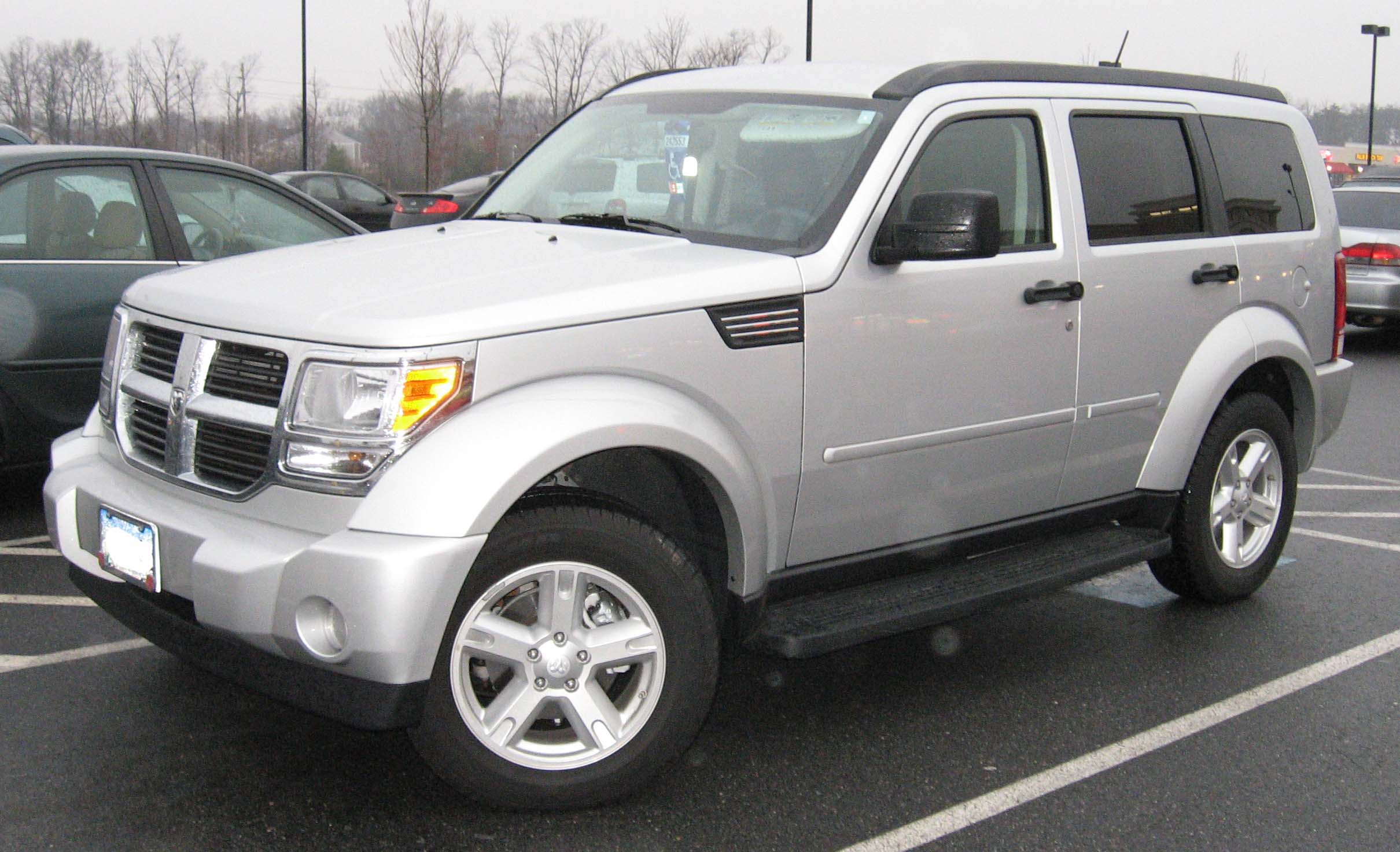
The Dodge Nitro is a type of SUV that looks tough and can handle rough roads. It has a lot of space inside for passengers and cargo, making it good for families or trips. People mention it because of its strong look and ability to drive in different conditions.
The suspension is the part of a car that helps it ride smoothly over bumps and keeps the wheels in contact with the ground. It makes driving more comfortable and safe.
The Lincoln LS is a fancy car made by Lincoln, which is part of Ford. It was built to be a comfortable and stylish sedan, similar to luxury cars from Europe.
The Subaru Crosstrek Wilderness is a special version of the Crosstrek that is made for off-roading. It has features that help it drive better on rough surfaces, like higher ground clearance and tougher tires.
Off-roading is when you drive a vehicle on rough surfaces that aren't paved, like dirt or rocks. Vehicles made for off-roading are built to handle these tough conditions better than regular cars.
The Subaru WRX is a fast car that is great for driving on different types of roads, especially in tough weather. It's popular among people who love cars and racing.
The Subaru BRZ is a small sports car that's really fun to drive. It has a sporty design and is built to handle well on the road, making it a favorite for people who love driving. It's also not too expensive compared to other sports cars.
The Subaru Forester is a compact SUV that has a lot of space inside and is great for families. It can drive well on different types of roads, including rough ones, and is known for being safe and reliable. Many people like it for everyday use and for going on trips.
The Toyota RAV4 is also a compact SUV like the Subaru Forester and Honda CR-V. It's popular because it's dependable and has a lot of features for families.
The Subaru Outback is a type of car that looks like a mix between a car and an SUV. It's great for people who like to go on adventures because it can handle rough roads and has a lot of space for gear. Many families like it because it's safe and reliable.
The Bricklin SV-1 is a rare sports car from the 1970s that looks very different from most cars because it has doors that open upwards. It was designed to be safe and fast, but not many were made, which makes it special. People talk about it because of its unique style and the interesting story behind it.
LIVE
Hey everyone, Jason Torchinsky here.
And first, thanks for listening.
Second, thanks to our new sponsor, Marble.
Marble?
We got a rock to sponsor our podcast.
No, David.
Marble with a capital M. It's the only all-in-one app for managing your insurance policies
and getting rewarded for it.
Okay, all right.
Well, I have a bunch of cars that I think they're all probably insured, so this could
help.
Probably not.
But Marble's great.
It's fast and it's easy to set up as it'll put all of your different insurance policies
in one place for you.
It's free, which we love around here, being Cheapskates, and it will automatically alert
you if your rates are going to increase, probably with some kind of really loud sound.
Once you set it up, you don't have to do anything as it does it for you, like a robot
trained to monitor insurance.
And you get Marbles, which you can redeem for rewards or use to donate to charity.
A Marble spewing robot.
That sounds great.
How many Marbles did you get from it?
I got, let's see, the two 900 Marbles.
What do you do with that many Marbles?
I just put them all on a Target gift card.
Okay.
What'd you do at Target?
What'd you get?
I got a big crap load of Hot Wheels.
I assume for your child?
Yeah.
Yeah, sure.
For my child.
Okay.
Well, anyway.
Okay, that sounds good.
I like Hot Wheels.
Where do I sign up?
So you just go to joinmarble.co slash Autopian and you start adding your policies.
And not only will you be supporting this podcast, you will also get rewarded just for being a real
adult and keeping on top of your insurance.
Joinmarble.co slash Autopian.
Is that right?
Yes, David.
That's joinmarble.co slash Autopian.
Welcome to the other episode of the Autopian podcast.
Today we're talking Subaru.
I'm here with Matt Hardigree.
We just saw the unveiling of the new Subaru Forester at the LA Auto Show.
We're going to talk about that in a bit.
But first, Jason Torchinski, he's down for the count.
His heart exploded, possibly because there was too much love in it.
Love for cars, especially micro cars.
We have a lot of theories on why his heart exploded.
He had an aortic dissection.
Very dangerous.
I really shouldn't be joking about this.
But Jason jokes about everything.
So we should as well.
Yeah, it's an aortic dissection.
And when we posted the picture of him, my buddy who's an ER doc goes, oh, it's a good
thing Sally got it in an ambulance fast.
Because there's two kinds and one's deadly and one's super deadly.
And he had the super deadly kind.
So he's like, you didn't have a lot of time.
So yeah, he luckily lives within like a mile of the hospital.
And he got there immediately.
You know, one thing I worry about is he called up Sally and he was like,
yo, man, my chest feels weird.
It hurts.
And it's like, I feel a pain down toward my stomach.
And she was like, okay, call the ambulance right now.
And it's like a lot of people are hesitant to call the ambulance because
of our, you know, health care concerns and that kind of thing.
Also just like being a man kind of macho, whatever.
But that here would have been catastrophic.
So I don't know.
I don't know where I'm going with this, but if you.
Get the ambulance.
I was with my now wife, then girlfriend in Chicago.
And we had just moved to the city.
And she passed out in a book at a Beppo's in a restaurant.
And we were like, we didn't know.
She's low blood pressure.
It was just like low blood pressure.
It was like nothing bad.
Like it turned out to be completely fine.
And they're like, call the ambulance.
And they were like, you go get the ambulance.
Go get me a very Chicago.
And I'm like, yeah, absolutely.
And then they're like, I'm like, can I get in there?
Like, are you married?
And I'm like, I was an idiot.
I said, yes.
I said, nope.
They go, nope.
I'm like, I guess I'll get a cab.
And they're like, as they're loading her into the ambulance to go, oh,
you don't need a cab.
The hospital's right there.
And they point to a building that's so close, I can see it.
And then they drive us there.
And it was like $1,400 to go like three blocks. So.
Yeah.
Do I get it?
I get it.
Yeah. Yeah.
But just, just the advice here is.
Or on the side of caution.
Anyway, luckily.
Our readers have been incredibly kind towards Jason.
With one named fad, setting up a.
A go fund me that has raised over 25 large to help Jason pay for
all the medical expenses.
And so that's all great.
So we just want to say thank you to everyone.
Jason is recovering well.
He is going to write his first blog in a few weeks.
Very soon.
He's going to recount his heart explosion.
We're going to get all the gory details.
We're going to see the scar up close. So get ready.
Check out the website.
It's going to be good.
It's going to be great.
I'm glad that also I think I, I'm not sure.
I'm trying to remember where heart exploded came from,
but it's not medically what happened.
But we're trying to get clicks here.
Yeah. Emotionally.
It's what happened because it started when it happened.
Cause you, I didn't fall.
I'd gotten up really early that morning and calls Jason and like,
I'd gone up and I like started my like winter holiday exercise
routine of like waking up early.
So I was miserable.
I fell asleep at like 30.
I felt I was so tired and then I got a text and like,
it was like, Oh, I don't want to look at the text.
And I was like, Oh, Jason's heart's whatever.
He's going to the hospital.
Like, okay. Cause it's kind of later at night.
And I was like, Oh, that's, that's bad.
And like, I was like, couldn't sleep then cause I was all jacked up.
Like what's, you know, what's going on with Jason.
And I'd already been asleep for like four hours at that point.
So like, you didn't mean checking. And I was like, Oh, you know,
maybe his vital signs seem good, seemed good.
He's talking like it seemed okay at first.
And then all of a sudden it was,
he needs to go into surgery right now.
And it was like, Oh no surgery right now.
That sounds serious.
And then it was like eight hours later or 10 hours later
until we found out that he was okay.
And it was like, Oh, this is, this is serious, serious.
Yeah.
Some readers have hypothesized that it was a result of Jason
using a chainsaw to cut out the batteries from his Chinese
Chang Li electric car. I think that's unlikely, but anyway,
we can't, we can't dismiss it.
I think that's a fair question.
I would also just like to say not only is Jason doing well,
but as he's reminded us a few times,
and I'm not sure if he remembers that he's reminded us a few times,
he's heavily on opiates because they put a giant, like,
I mean, it's like a 12.
What's so the normal?
Yeah.
Yeah.
Yeah.
Honestly, other than the repeating himself,
he doesn't actually seem that different.
But I did convince, I did try to convince him to watch all the
Fast and the Furious movies in order of chronology,
while he's high anyways and not watch them in order of release,
but watch them in the order that it actually happens because they
retconned a bunch of stuff.
So it's super backwards, including you to understand it.
These random characters that show up Vin Diesel directed and wrote
a short film called Los Bandereros.
That is like half in Spanish and is it's almost like an art film.
It is completely bonkers and.
It's just all the weird plot issues or what?
It doesn't explain all of them like a fiero in space,
but like it explains a lot of like, how is this guy alive when I
just saw him die?
And with spoiler alert Han dies in the third one and yet he shows
up in the fourth through seventh films.
And you're like, how is that, how is that possible?
Also, who are these random other people who just show up all of a
sudden because they're in South America and it's all explained
with the very excellent Vin Diesel short film Los Bandereros,
which I should check.
I'm going to make sure that before Jason gets off opiates,
he watches it to see if he understands it better while being
completely wasted on prescription painkillers.
Okay, I'm going to read one comment from a reader named monkey.
Monkey the melon.
He says he or she says, never stop torch.
That's not a request.
That's an order.
Us car nerds need you.
These kinds of comments are what Jason needs to get better fast
and give us the blogs we deserve.
Anyway, moving on, let's move on from Jason.
We don't want it to become too obvious that we're stalling
because our Subaru episodes too short.
So let's talk about the Subaru Forester.
There was a debut at the LA auto show.
And I, well, I wrote about it.
Basically what I said is in my article, it kind of doesn't,
doesn't really look like it's any more modern than like,
if you had told me the outgoing one was the new one,
I would have believed it.
Anyway, it was just a basic.
Here's the new Subaru Forester blog.
Very simple.
And if we had written about most other cars,
like we had said, here's the new Honda pilot.
I'm not sure we would have gotten 130 comments.
There's something about Subaru as a brand that is so,
I don't know if the word is appealing,
but certainly tons of our readers own them.
And what's weird is tons of our readers begrudgingly own them.
It's like, if you read the comments,
half the comments are just people,
just complaining about their Subarus.
They all somehow ended up owning.
Well, here's one.
Here we go.
Abraham Smith.
Things I love about our Subarus 2010 and 2014.
This person has two of them.
Loves.
No nonsense interior design.
Glass.
Big windows all around.
Easy to work on.
Easy to smash around fourth roads and farm trails.
Things I do not love.
Body and interior plastic break easily.
Shitty gas mileage.
On the 2010, a miserable four speed automatic.
On the 2014, a CVT that feels like a rubber band.
And then come J double dub response to that.
As an owner of a 2010 Outback,
I need to bitch about the easy to work on part.
This car has been dead reliable for 70,000 miles,
but all the basic maintenance items are a pain in the ass.
And it just goes on and on from everyone complaining about.
There's look at this.
Okay.
This guy's complaining about his, their wife's Subaru.
She has no idea about a CVT at all.
Much less to complain about it.
I hate it.
Mind the hair over 100,000 now and it shutters on cold mornings.
Fluid flush made no change.
Their wheel bearings can go fuck off.
Like it's just hilarious.
How many, why, why are all these car enthusiasts ending up owning Subaru?
You own one.
You're a huge cop.
What's happening?
I own one.
I do.
I own.
I have a 2016 Forester in that really hilariously anonymous rental car,
like light silvery blue color.
Okay.
There's actually a quote here that I just hit me right in the heart.
This is from fuzzy vice or fuzzy vice.
We've had our 2014 Forester for about six years, just a daily driver road trip
every couple of years.
Exactly what our thing is still, or it's a 2016, but same concept.
Same.
And it's the same generation car still has less than 70,000 miles on it.
Mine just rolled over 70, yet somehow the rear bearings,
front control arms, bushings and speaker speakers failed on it.
Okay.
Clarify.
I have, I have 73,000 miles on my car.
I have replaced both rear wheel bearings at 50,000 miles and 60,000 miles.
The rear bearings on once I didn't even last 50 and the other ones were still
screaming, but I was just too mad about it.
I've replaced both front lower control arms each side.
And at first I thought, Oh, maybe it's just,
there's a lot of construction around here, whatever.
No, as soon as I brought it in, the guy at my mechanic,
I have a really good Subaru mechanic.
He goes, lower control arms.
I was like, dang it.
He says, all we do on these cars all the time is replace front lower control
arms and rear bushings.
And that's not cheap.
Like for a car that's 70,000, my dad's Kia Soul.
I just want to point out, which we've written about a few times because
it's both under both warrants.
It's actually under both recalls.
He can't park it outside because it might catch on fire and he can't park
it inside because it might get, or outside because it might get stolen.
He can't park it inside because it might catch on fire, which is amazing.
But he, we just replaced the spark plugs in it at 170 something,
180,000 miles.
No, we're actually, I think the front bearings probably started to go.
They're starting to get loud.
That's amazing.
So why did I buy it?
2016, it was a good value.
I think they are good at everything.
They're not great at anything, but they're all okay.
It was relatively cheap.
It was well designed.
Here's the thing.
Aesthetically and even on the inside, it's not that interesting.
I think that like conceptually, it's a good package.
And I agree the big windows, like the visibility is really good.
It's really good in the snow with the right tires on it.
But like, I would agree with Fuzzy Weiss at the end.
He says, I'm going to have to pass on getting another one, like probably ever.
And which is sad because I had a brat.
My parents had a brat and thought the thing was awesome.
Rust like crazy, but still awesome.
I don't think I'm ever buying a Subaru again, to be honest.
This might be the last one, at least for a while.
I've heard that from a number of people.
It's safe.
I think it's all the good safety scores.
And it gives like, you buy into the lifestyle, you know, you people who are outdoors,
people love animals.
Like that is the car for them.
And it does what they need it to.
It, you know, all wheel drive works well in snow.
But like, you could buy a Toyota and not have to do those wheel bearings and front control arms
until about 130,000 miles at least, possibly.
And it's like, it's hard.
It's hard to, you know, to deal with those maintenance costs.
And they're inefficient.
I get pretty poor gas mileage.
And I mostly drive in the city.
Like I'm like, I, people who read this, I know this, like right now my two front runners were replacing it,
which I'll probably do before it gets to 100,000 miles are an all wheel drive hybrid Maverick.
If they come out with one, but they probably fingers crossed.
You're going to announce one next year.
And then a cross-curl across hybrid, because I had a curl across hybrid,
which I didn't even want.
But the reed and slack and the discord, sorry, and the discord people were like,
I had a list of press cards and they're like, go drive this.
And I'm like, that sounds boring.
I'll probably hate it.
And it's fun.
It's good.
Yeah.
That story did like better than I would have expected it to do.
Yeah.
Yeah.
I don't know.
Those are both good options, by the way.
I, I think I'd probably prefer the first one, but I mean, I don't know.
It all depends.
Um, I can talk everyone into getting a truck and the all wheel drive hybrid isn't too
expensive.
It's, if it's comfortably priced, because right now the front wheel drive hybrid is
cheaper than even an XLT is cheaper than a Corolla cross hybrid SCXSE.
So like I would prefer the Maverick, but up here, people want all wheel drive,
even though I think just having steel wheels with winter tires is probably even better.
But like, um, yeah, like if it's pro, if it starts at 30 or 29 or something like
that, 32, I think that I could probably, I think the first, basically what I'm
going to do is I'm going to like, if I hear it's coming, I'm going to be like,
Christine, I'm going to try to, my wife, I'm going to try to talk her into it.
And then if I can talk her into it, the second that deposits open, I'm giving
Bo, I'm calling Bo on upset.
Here's my 200 or 300 or $500.
Like, like even if I don't actually even not, I'm not even going to try to talk
anyone into it.
I'm just going to, because it's going to probably take so long to get, I'm just
going to give the money and the deposit because it's refundable.
And then I will figure out if I want it later.
And then wait two years or whatever.
Yeah.
And 67 years, I'll get it.
Yeah.
All right.
So now we need to introduce our podcast where we spoke with someone from Subaru.
It was slightly shortened.
Oh, I was supposed to talk about membership first.
Okay, Matt, go ahead.
Get into it.
I haven't talked enough already.
Hey, so I'm Matt Hardegree.
I'm the publisher of this establishment.
A year ago, almost exactly, we started with membership and, you know, just from
like a high level, we started with membership first because honestly, we want
to make something that's so valuable to people that they want to read it every
day and they want to be a part of the community.
And we want to give them so much value, want to give you listeners of this
podcast so much value that it is worth giving us a little money in
exchange for us not having to put so many ads on the page.
The best way to do this for us would be to just be 100% membership
realistically to be sustainable.
Probably not something we can do anytime soon.
But right now membership covers a rather decent sized chunk of our
operating costs, which is awesome.
It allows us to keep really amazing journalists employed.
It allows us to have really great contributors and freelancers.
And what I just want to say a message out there.
First of all, thank you if you're already a member, whether you're a
cloth vinyl velour or rich Corinthian leather member.
I want to thank you for being a member.
It's incredible the response we've had.
We have over a thousand paying members, which is really huge and really wonderful.
I would like to remind you if you are a member, please make sure auto renew is
on please renew even if you need to go down a level or you want to go up a
level, we've actually had more people upgrade plans so far than downgrade.
I mean, generally, generally in life, you want to level up.
I mean, just generally speaking.
Get some new velour, velour of perks, perks, get yourself that sweet, sweet badge.
So please renew.
And if you haven't become a member yet, please become a member.
We are hoping to bring on some really great voices next year.
We just brought in Lou and day from the drive.
He's been contributing to the website.
He's been doing awesome.
You know, we want to continue to expand.
We also have some new series coming up, some new video series.
That's right.
Trade in Tuesdays.
So we are one of the obviously bow is the co-founder and he runs Galpin, which is
just enormous dealership franchise that gets all sorts of trade in some crazy ones.
You know, I've like I drove a an eight series, you know, the sort of wedge nose
BMW recently way more baller than I ever would have guessed.
I also drove a Dodge Nitro with a hacked out catalytic converter.
And that thing driving that round LA was absurd.
Anyway, the enough spoilers we've got.
We've got trade in Tuesdays.
We've got suspension secrets.
Hubert Meese, who is a designer behind the Tesla Model S suspension, the Ford GT
suspension, the Lincoln LS, and he's going to tell you how suspensions work on some
of the most legendary cars of all time.
We've got podcasts coming up.
Autopian drives.
It's going down.
We're going to keep improving because we need to earn your membership.
We never forget that.
Good plug.
All right.
That's all the plugs.
Now do you want to explain when what why this thing is only 10 minutes long?
Well, I'll be brief on this because, you know, I don't want, you know, I don't want
to get too contentious here.
Maybe I drove a Subaru Crosstrek Wilderness or really could have been any of them that
just threw it out there randomly.
And I wrote a story about it's one of its bits of hardware that I found to be insufficient.
And I just wrote a story about that.
And I don't pull this stuff out of my mind.
Okay.
You know, I have an expertise in certain areas, including off-roading, including engineering.
And so I wrote about this piece of hardware that is insufficient.
And Subaru wasn't thrilled.
They weren't thrilled at all.
And I'm not sure how did that factor into our podcast being shorter?
I do remember it coming up.
Yeah.
Well, look, the biggest reason why we are short is that the Toyota podcast of your list
of those guys, those guys were great.
They got lost.
So we started late.
And then the designer, Derek Jenkins from Lucid, who that podcast is also out, was awesome.
And that went long because we were in a lot of us.
We were just having a great time.
We were laughing.
So that went like long.
So by the time Subaru got there, we were a little tight.
And then we might have had a little conversation about your article beforehand.
And that might have put us a little bit back.
And then all of a sudden the guy had a heart out at a certain point.
So by the time we actually got him sitting in the chair, we were going.
And then the Subaru press guy was giving me the death stare.
And so we, we yanked it.
So it got a little short, but it's great.
I did some good info in there and it's worth looking at.
And we're grateful to have Subaru's time.
Absolutely.
And, you know, yeah, it was, it was a great, good discussion.
And he was a big fan of ours.
And so, you know, just to be clear, we're grateful on that front.
And anytime we can get insight from an industry insider is always great.
And yeah, so if you're into Subaru at all, or yeah, here we go.
Listen to this and comment wherever you can on whatever platform you're reading,
you're listening to this on, if you can.
Tell us about your Subaru woes, if you have them, or if you just love your Subaru
and you've got 300,000 miles on your rear wheel bearing somehow,
let us know about that too.
We like to say we started out as kind of a scam and turned into a legitimate car company.
It does sort of seem that way when you read the early history of Subaru.
Yeah, the Brooklyn thing is so weird.
Kind of like a Get Rich Quick scheme, and now it's like this company that people really love.
Welcome to the Atopian Podcast.
I'm David Tracy.
Next to me is Atopian contributor Stephen Walter-Gossen.
And across from me is a very special guest, Bill Stokes.
Carline planning manager for Subaru, is that right?
That is correct.
Yeah, I'm a carline planning manager for Forrester WRX and BRZ.
Okay, that is a very interesting lineup of cars, because in some ways,
it seems like those cars kind of serve different customers.
You sort of have your WRX, BRZ enthusiasts, crazy car nut,
and then you've got Forrester owners who may be a little bit more sensible.
That's very true.
But a little shout out to my parents.
My mom's got a WRX, my dad's got a Forrester,
so it's not necessarily the weirdest combination.
Your mom's the hero in this.
She really is.
My mom's a champ.
That's awesome.
And I'm trying to get my dad into a BRZ too, but it's always a challenge.
So yeah, it's a good point.
Forrester is definitely more of the practical, traditional style of Subaru,
where it's got good capability, it's very usable every day.
People buy them to drive their kids to school and take themselves to work.
And a BRZ and WRX customer is a very different mindset.
It's a very different type of buyer.
It's a lot younger, it's a lot more male.
And so it's interesting having to kind of shift the mindset
as I'm thinking about the planning for both of those different types of vehicles.
So speaking of the fact you said they're both mostly more male audience for the two of them,
how do you reach out and how do you find more ability to connect with non-male customers?
It's definitely a, I mean, the enthusiast audiences, as you guys know,
it's definitely skewed toward male and it has for a long time.
But we try to make sure that our vehicles have just a range of characteristics
that any customer would want.
Like we try to make them safe and comfortable and well equipped
and reasonably fuel efficient and things like that.
So we're not making vehicles that are so hardcore that they're only going to appeal
to the very, very focused enthusiast customers, so to speak.
Exactly.
And that means that we can pick up more customers that are female,
that are a different range of ages, different psychographically,
different ranges of the country.
So those things all are focuses that we take into planning out products
that will appeal to a lot of people.
Yeah, I think the WRX and the BRZ are livable cars.
These are not crazy rally only cars.
They're track special.
Yeah.
And we try to make them capable in those scenarios as well,
but we don't want to make them only capable in those scenarios.
Okay, so we were just talking about your three vehicles that you're responsible for,
WRX, BRZ and Forrester.
The Forrester, that's your volume vehicle of those three, right?
And you have a new one.
That's why you're here, I assume.
This is kind of the big debut at the LA Auto Show, the 2025 Subaru Forrester.
Can you tell us a little about it?
Yeah, so the Forrester, as you said, is a really, really important car for us.
It's one of the two top-selling vehicles in our lineup, along with Outback.
You're in and you're out.
Those are the two cars that are the top models for us in terms of sales.
Forrester is a very practical car.
It's a vehicle that people shop against, things like CR-V and RAV4,
which are very much the stalwarts in that compact SUV segment.
And those are cars that people expect to do everything, absolutely everything for them.
So it has to be able to be comfortable for everyday use.
It has to be fuel-efficient.
It has to be good for a long highway drive, a road trip with the family.
But it also has to be good for adventures sometimes.
And we find that our customers are more skewed towards the adventure end
than maybe the average of your RAV4s and CR-Vs,
because that's what Subaru's expected to do well.
So the new Forrester that we've got is designed to keep all those attributes
that people expect from Forrester, like symmetrical all-wheel drive,
8.7 inches of ground clearance, all that capability that comes with all of that stuff.
But also bring in more comfort, a little bit better design, more refinement.
It's quieter inside. The structure is more rigid.
It's got tons of cargo space, even more than the previous one.
And a few more safety features, things that bring it up to date and make it more advanced.
Better technology, wireless charging, Apple CarPlay that's wireless.
All those things are improving the usability of it, but not limiting the capability of it,
which is so important to our customers.
I think you guys have really leaned into the outdoors angle.
Even the pets marketing that you guys have had recently.
Genius, honestly.
Genius. And what you were talking about, Forrester and about that being your bread and butter.
Everyone, you know, you're leaning into that narrative of the outdoors, the adventurism,
that freedom angle.
How do you then segue from that to the other two cars,
which don't necessarily project that theme?
It's like you have two completely different sort of marketing strategies.
Exactly, yes.
It is a little bit weird. It's very bimodal.
You've got two different mindsets, like I was saying earlier,
but there's a lot more crossover, if you pardon the pun, between the two.
Because we find that often you'll have a WRX owner that has a Forrester or an Outback
or a Crosstrak as the other car in the family.
Or if they've got a Project car, an older WRX or BRZ or something,
or a Track Day car or something like that, Rally car,
then they need something to drive every day,
and we want to be there with some practical options for them to choose.
And the core technology is the same from one to the other.
So WRX has basically the same all-wheel drive system as a Forrester does.
And even though it's much quicker, it's positioned for a different customer,
it's a different package and style of vehicle,
it's got the same fundamental goodness, right?
So it's not like...
Yeah, exactly.
So we're not trying to make cars in different ways for different customers.
We're using the same core technology and just putting it in different wrappers
and with different levels of performance or capability.
So hopefully a customer that likes one will see the value in the other.
A few brands can really leverage that to take those two separate tracks,
the performance track and then the Outdoors Adventure all-wheel drive,
and then serve some customer that sits in the middle of that Venn diagram.
Yeah, it's certainly not like every customer is going to see the performance vehicles
as being really relevant to their lifestyle every day,
but knowing that the cars use the same technology to be like this great,
rally-inspired, fun performance car,
but also it's what's underpinning your Forrester,
it tells you that there's something good there
that you can believe is going to be well engineered and well made.
I'd just like to point out that the Subaru Story in America
is one of the most incredible stories I've ever heard.
It really is.
I mean, starting with the...
The 360 was the very first one that came in with Malcolm Bricklin.
It's just an absolute...
And now we're at a point where people are Subaru diehards in absurd volumes.
So it's just an incredible story.
Such a strong brand.
Yeah, it's very unusual, definitely, that we started out as...
What we like to say we started out as kind of a scam
and turned it into a legitimate car company.
It does sort of seem that way when you read the early history of Subaru.
Yeah, the Bricklin thing is so weird.
It's kind of a get-rich-quick scheme,
and now it's like this company that people really love.
Yeah, and Malcolm Bricklin went to Fuji Heavy Industries to buy scooters.
He was trying to buy rabbit scooters to sell in the US
because Honda was having success selling motorcycles and scooters in the US.
And they basically told him,
hey, we're going to take this thing out of production so we can't sell it to you.
And so they put together a deal kind of...
What else you got?
On the fly.
Yeah, what's in the back room on the cover?
They had this tiny car, and he said,
well, maybe I can sell those.
So he set up a distributorship and started the company,
and somehow we managed to snowball into selling more than 700,000 cars a year
and competing in all these major segments with really good products.
And there's the whole rally story, which is a whole separate thing.
It's absurd.
The whole story is wild.
And that 700,000 number, I'm sure, is going to go through the roof
as we offer more hybrids, including you have a Forrester Hybrid coming up,
which we can expect in the next year or so, is that right?
Yeah, the Forrester Hybrid should be here in about a year after the launch
of the non-hybrid version.
It'll be based on the same platform, obviously,
but it's a next-generation hybrid system,
which isn't shared with some hybrids that we have in other markets
that are more mild hybrids.
This is a little bit more advanced.
So we are still finalizing the development of that,
and it'll be a little further out from the initial launch of the Forrester.
Be very excited for that.
I'm sure Forrester owners are pumped to get a little better fuel economy.
That's going to be coming out, you know, not too distant future.
So we're getting the wrap-up signal.
So just wanted to thank you, Mr. Stokes, for joining us
and enjoy the rest of your show.
Yeah, thanks for having me.
I really appreciate being on the show.
And a huge fan of Autopian.
Thanks.
Awesome.
Thanks a lot.
All right.
That's been the Autopian podcast.
Thank you very much for joining us.
Have a great day.
Thank you.
Yeah.
About this episode
The latest episode dives into the recent unveiling of the 2025 Subaru Forester at the LA Auto Show, featuring insights from Subaru's Carline Planning Manager, Bill Stokes. The discussion highlights the Forester's practicality, safety features, and design improvements while contrasting it with the performance-oriented WRX and BRZ. The hosts also share personal anecdotes about Subaru ownership, touching on common issues faced by owners, and reflect on the brand's unique appeal. Additionally, there's a light-hearted update on co-host Jason Torchinsky's health scare, adding a personal touch to the episode.
First, Matt and DT talk updates on Torch and his bum heart, then they begin pathetically groveling for membership and a top it off with a preamble to a short but sweet Subaru chat at the Los Angeles Auto Show.
Here's to Torch getting his carburetor back to optimum performance!