
Annotations will appear as you listen
0:00
26:42

Car
Infiniti QX80

Car
Infiniti QX50

Car
Infiniti QX55

Car
Infiniti QX60


Car
Ford Bronco

Car
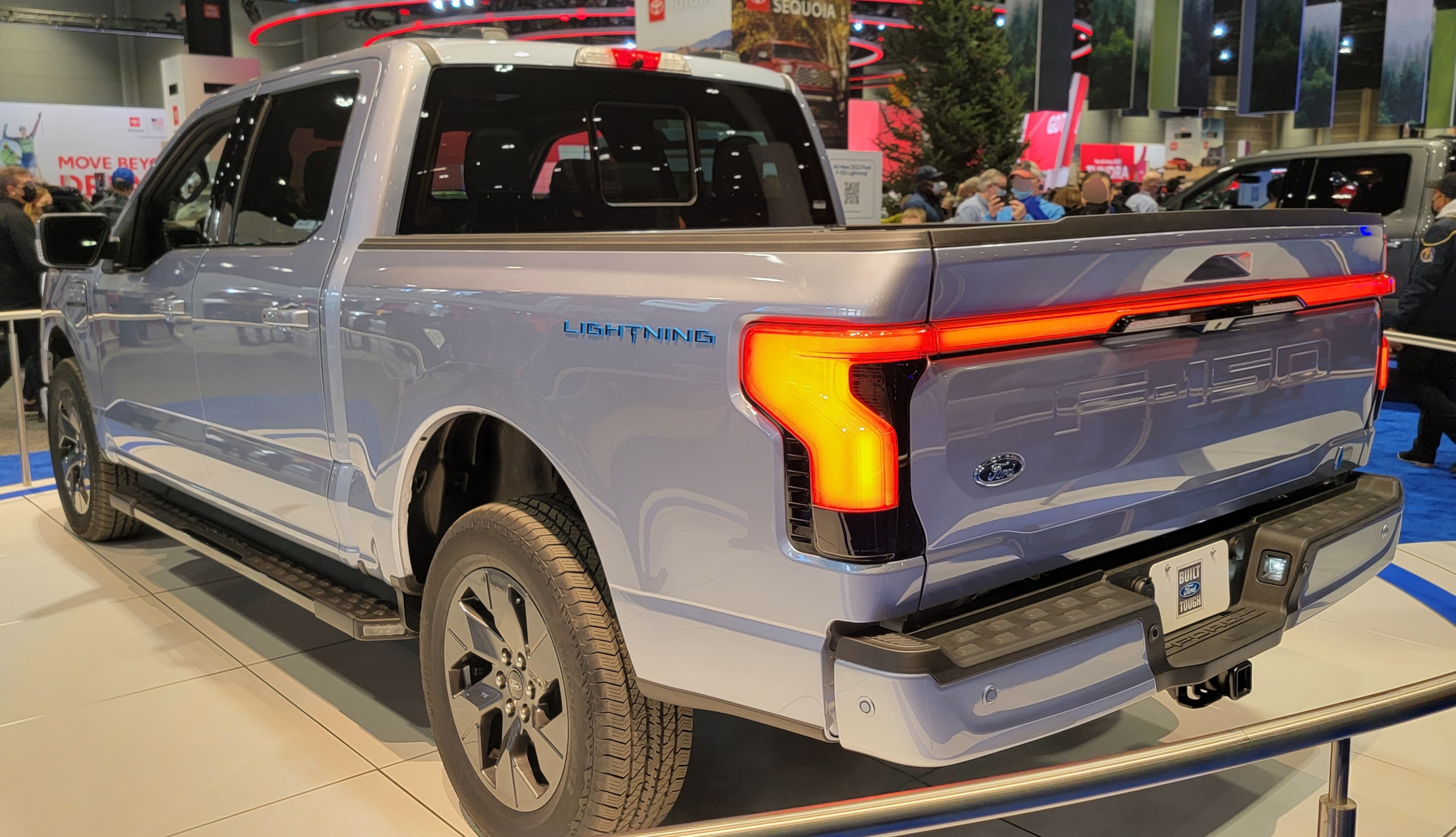
Ford F150
Car
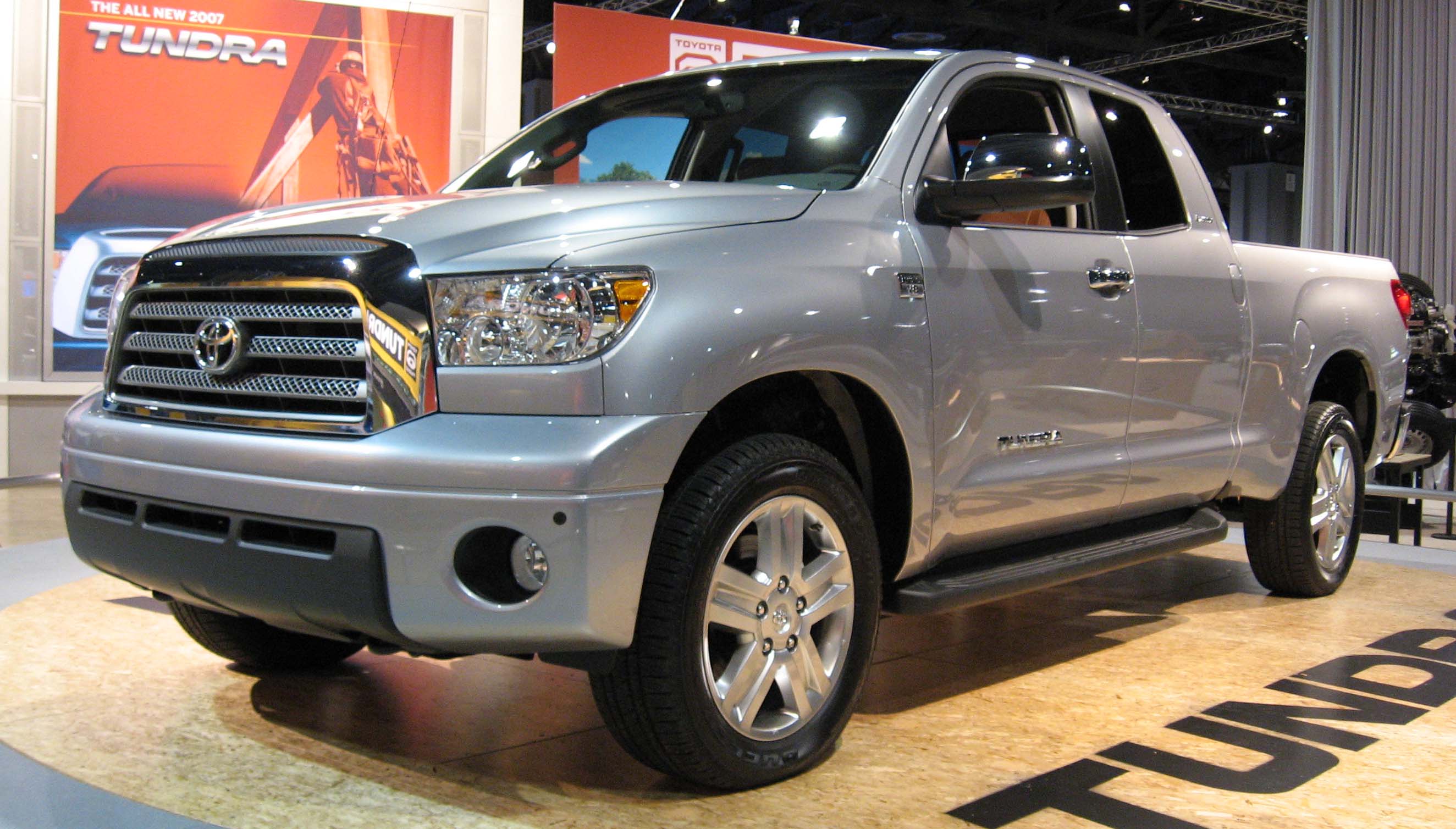
Toyota Tundra

Car
Kia EV3

Car
Kia EV6

Car
Kia EV9

Car
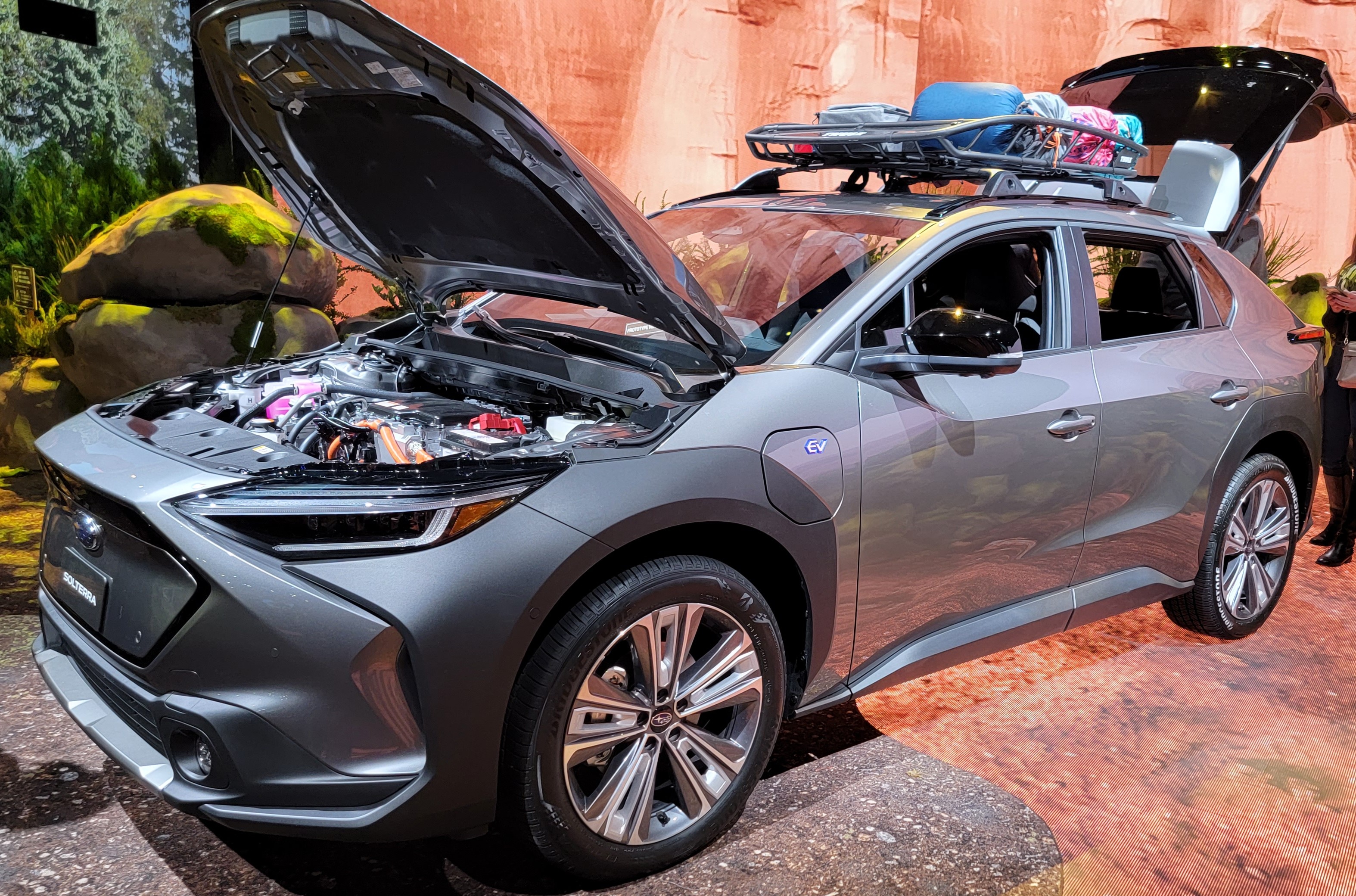
Subaru Solterra

Car
Wrangler Rubicon

Car
Kia Sportage
LIVE
Hello, and welcome to the Truthwell Cars podcast. I am Tim Healy, the managing editor, and this
week we're in New York for the 2026 New York Auto Show. I speak with Eric Landrieu from
Infinity about the brand's future, and T-Tech contributor Matthew Guy teaches us about tire
deflaters. Finally, we take a break from the NASCAR chat so I can give you my takes on the 2026
New York Auto Show. We are sort of live at the New York Auto Show with the Truthwell Cars podcast.
Again, I'm Tim Healy, the managing editor, and we're with Eric Ladoo, the vice president of
the America's sort of infinity. Eric, how are you doing today? I'm doing great. Thanks for having me.
Yeah, so thanks for hopping on. So what we're going to talk about is, I'm going to try and put this
as nicely as I can, but Infinity's taken a bit of some shots lately and kind of in a bounce back
mode. So what is the plan to get Infinity back on the radar of the luxury customer,
of the Lexus customer, the Mercedes customer, that sort of thing? So love your word bounce back,
right? So we are really in the beginnings of our climb to more volume, more vehicles.
Matter of fact, we just wrapped up our fiscal year last night, had an amazing month.
And matter of fact, we beat last year's volume with two vehicles in our show on the NASCAR.
So a year ago, we had a sedan, we had QX50, QX55, QX16, QX80, and right now as we sit here today,
just on the forefront of QX65 coming to market, we have QX60 and QX80 and actually delivered
more volume with those two vehicles than we did last year with five. So momentum is very real.
We've done a lot of intentional work with our retail partners to build that momentum
and get ready for QX65, as you saw here in the Crystal Palace. We're so excited about what QX65
will do for us. And that nameplate will come right in the heart of the market, right? The luxury
midsize SUV market is the heart of the luxury market. And we're very excited about what the
vehicle can do for us. You kind of saw my thunder home next question. You already touched on it a
little bit, but I was just going to ask, how does QX65 play into this kind of quote-unquote
comeback story? Yeah. As a matter of fact, we call it the next chapter in our product renaissance.
So we have one vehicle every year for the foreseeable future that will be coming to the showroom.
So this is the next foray. Next year, we'll be bringing a high-performance sedan. We'll have
some derivatives on our current lineup, too, that we're working on that we're hoping to launch in
the next 12 months. So lots going on and yeah, a lot of excitement around the brand.
So I know you can't speak about future product. That's the standard line.
Lost in the media side, I always hear that. But to the extent that you're allowed to speak at
future product, you kind of already touched on it a little bit with the one model per year plan.
What is the plan? I mean, did you already cover that with the one model per year?
Yeah, no. So this year, QX65, a midsize SUV in the heart of the market. Next year,
a high-performance sedan. We'll call it a C to D segment sedan. So very excited about what that
vehicle will bring, not only for the brand, but also bring back some of our performance heritage
and some of our enthusiasts that think about really the growth of the brand back at the beginning of
the 2000s was really centered around G and the G sedan. And there's a passionate buyer out there
that still wants to reward themselves with high-performance luxury sedan. So that's next.
Then following that will be a midsize SUV below QX65, which we'll be very excited. And that will
bring also a new price point, but also a new technology with our e-power hybrid technology
will be packaged in that vehicle. And then after that, you probably heard about some of
our frame-based vehicles that are being developed for the entire company, and Infinity will be
part of that strategy as well. You mentioned a high-performance sedan. What are luxury buyers
looking for? So with luxury brands, whether it's Acura, Infinity, Lexus, particularly luxury
brands that are tied to a more mainstream brand is Infinity and Nissan. Our customer is looking
more for luxury comfort or looking more for performance or blend of both. What are you seeing
as you talk to your customers? The short answer is yes. And I think it really depends. And that's
what we love about the QX65, right? So you want a responsive, torque-filled type of experience
when you're driving a midsize SUV, it's going to deliver on that front. You want technology with
standard Google built-in and some creature comforts like massaging chairs and panoramic moonroof.
It has that shade. You want something that speaks about your achievements and luxury and
beautiful design of what we call thoughtful hospitality and our whole total ownership
experience. It delivers on that promise as well. So speaking a little bit to design heritage,
doing some performance with some of our packaging, as well as technology and features that the
luxury buyer are looking for, we try to deliver on all three. And certainly back to the sedan,
that there's always been this take for the past, I don't know, five years, sedans or dad,
sedans or dad. Everyone wants crossover. Are you seeing that there is a demand for sedans? Obviously,
you're coming out with loans. There must be some demand. Sure. And sedans, really,
the luxury market still are very viable, right? The driving dynamic of a sedan,
especially for a true driving enthusiast, we'll call it a driver's car. There's absolutely a
marketplace to that in the luxury space. And can you speak to not just tariffs,
although that's obviously important, but the near-term challenges, whether it's tariffs,
price of fuel, with what's going on in Iran, what are the challenges that all
automakers are facing right now? How are tariffs affecting your plans? How is the price of fuel
affecting your plans? Yeah, so I'll answer the second one first. Right now, price of fuel,
we're not seeing any big impact. Matter of fact, we foresee this year's luxury industry volume
really being somewhat in line with last year. So far, so good. Of course, that'll evolve as the
year goes on. But so far, we don't see any impact on luxury, as per se. And then in terms of tariffs,
listen, every car company is navigating tariffs in some way, whether it's where they're sourcing
their parts, where they're finally doing final assembly. Everyone is navigating that space.
And I will tell you, very proud of what we've been able to do, not only as a brand, but also as a
company, and that because we're sourcing so many vehicles in the US, for the US market,
think about it, our lineup, when QX-65 comes out now, is going to be two out of three of our
vehicles are built in Tennessee, right here in the United States. So that gives us a really
a ton of advantage. In the meantime, we haven't passed on any pricing to the consumer,
even for some of our vehicles that are imported or will be imported. So navigating all that is
a challenge, but it's a challenge that we're up to. Matter of fact, our chairman spoke about that
this morning, that tariffs have really allowed us to do more localization and build more vehicles
here in the United States for the United States. And I realize a lot of makers have
three to five years outlook on a new product too. So something you've been planning for two years
already is going to be, it might be too far along in the pipeline to change. So I understand that.
The last question I wanted to ask you will circle back and kind of circles back to the first question.
In the position you're in and your job, overseeing, like you said, a bounce back or turn around
and getting that plan together, how does it work just overall? Not so much the specifics of QX-65
of this model, that model, but just kind of the bigger picture of you, the 30,000 foot view of
we have to do XYZ to kind of bounce back. So how does that work in your shoes? How do you sort of
do that? Yeah, so first of all, it's so fun to be back with the brand. I actually started with
Infinity 20 years ago when I joined Nissan. So it's a lot of fun, but also privileged to be back
on the team. Some of the things that we're executing on today, we've been working on for the
past year point, a year or two, or getting ready for some of these products. But sitting here a
year ago, some of that one vehicle per year, all that cadence wasn't necessarily firmed up. So
there's been a lot of hard work that's been done in a very short amount of time. In terms of my day
to day, I think you really have a responsibility to do several things. Number one is to deliver these
world-class products each time they come to market. So that's, I'll call it the basics, but I think
it's very important. And by the time we get to those four to five years, we'll have what we see
about 80-85% coverage of the luxury market with our lineup. So that's number one. Number two,
really core to the Infinity brand is our total ownership experience. We call it thoughtful
hospitality. So whether you're purchasing a vehicle, whether you're riding along in a vehicle,
whether you're servicing your vehicle, whether a retailer in your local market is actually sending
a vehicle to your workplace to pick up for valet service, all of those kinds of really important
ownership experience moments are core to our brand. As a matter of fact, QX80 and QX60 in our
lineup just won number one SUVs in customer satisfaction for JD Powers in the industry. So
we're very proud of that. It's really about delivering on product, but also on the total
ownership experience. Yeah, and piggybacking off that. So I kind of lied. I guess I have two
of one more question. Outside of product, how does that dealership experience and service experience
keep the existing customer and bring in new customers, conquest, or bring back
people who owned an Infinity 20 years ago and haven't been back in a while?
Yeah. So we've at Infinity, we've elected to go to market through our retail network and our
retail partners throughout the United States are really, they live in their communities and they
are business owners in their community, and they do so much for their community. And so
we love to be able to deliver them products, but also processes, technologies, partner with them
on valet service, as I just mentioned, those kinds of experiences. Because anytime you talk to a
customer, and it's funny, even over the last few days, we do a lot of press to reveal. And
almost to a person, I used to have an Infinity and my parents used to drive an Infinity. We had
an Infinity. We loved it so much. We have an Infinity. I'm driving currently a QX60. I mean,
everyone just has a positive story about Infinity. And it's centered around two things,
one, the product, and two, the experience. And so to continue to deliver on that is a lot of fun.
And our retail partners do a really great job in delivering on that promise each and every day.
Yeah. So that last question, David, the planning, is it all like being a coach, taking over a sports
team that needs to be rebuilt? Was that kind of a fair comparison?
Well, you live kind of in several worlds. As a matter of fact, yesterday was a perfect example.
I was having, you know, press interviews, and we were landing the month. Oh, by the way,
we were landing the quarter and our fiscal year, right? All in one day. And then yet I'm sitting
here talking about products for 2028, 2930 in a meeting 20 minutes later. So we live very much
into today, but also in the upstream world in this role. And that's what makes it so much fun.
It's so exciting. Thank you. So again, on the Truth About Cars podcast, we've been with
Eric Ladoo, Vice President of the Americas at Infinity. Eric, thank you so much for your time.
Tim, I really enjoyed it. Thank you.
Hey, thanks for joining us for the Stuff We Use segment here on the Truth About Cars podcast.
This is Matthew Guy. And I was doing some four wheeling this past week out in Moab out in Utah.
And this is around the time, you know, as Easter Jeeps of Harry, all that type of stuff is going
on. So there's lots and lots of four wheelers out there. And some are off road, you know,
some are the power sports side by sides. I was in a Jeep. There was lots of them. There were
some Broncos. There was all kinds of really cool machines out there, but something that
a lot of off roaders do and sensibly do before they hit the trails, they air down their tires a
little bit. And if you're unfamiliar with four wheeling, that might seem a little bit counter
intuitive. Why would you take air out of your tires before hitting the trail? And the reason why
you would do that is that it allows if your if your tires are pumped up to specs, say 35 psi,
when they strike a rock or when they are going over an obstacle, they're not going to be very
pliable, at least not as much as if you deflate them to about say 25 psi or 27 psi. There's also
the advantage as well that if you can just imagine you had something gel like that was
rolling over like oozing over a rock, you can imagine that that gel would cover more surface
area than, you know, a basketball or something like that. And this is the same thing with tires.
If they're aired down a little bit, they'll spread out a little bit on the bottom as you're going
over the obstacle and more tire surface means more contact with the ground. So that's why,
generally speaking, people will air down their tires and we did when we were out there on our
trail called Porcupine rim and also on another trail called Finns and things. If you got a
any sort of hankering for off road, even if you just like being part of a car show,
it's really cool to go to Moab, especially during this particular week of Easter Jeep Safari. There's
all kinds of activity going on. So the old school way of airing down would be to get a sharp rock
or to get a twig and just just press on the on the valve core there and let a bit of air out of
your tire. But you're really that's a very old school way of doing it. There's nothing wrong
with doing that in the pinch. But you do need to check the air pressure very, very frequently as
you do that because you might let out too much air. And all of a sudden you've gone there from 35
down to 10, which is not enough whatsoever. And you need to break out your compressor to air your
tires back up. So a far better solution is something called a tire deflator. And it does
exactly what you think it does. What you do is you screw it onto the Schrader valve, just like
you would if you on your tire, just like you would if you were going to pump up your tire with an
inflator. And it comes with a handheld that the one I was using anyways was an ARB branded
tire deflator. And it came with a round analog pressure gauge. So that as soon as you screwed
it onto the Schrader valve, it would go up and it would say 35 psi just as we were at the trail
head. And then there's a very easy to use, even with one hand valve on the back there. And you
just turn that valve and it starts freezing off just a little bit of air. You can hear it go
like that very, very gently. Or you can open it up and let out a whole bunch of air all at once
depends on how quickly you're trying to get this done. But the main thing is that analog gauge
because it allows you to keep an eye on when you're getting close to your target air pressure
off. In this case, it was about 25 psi. So super easy to use. You can pick these up in a whole
bunch of different places, places like eBay, but also then directly from places like ARB,
and then also places like Quadrotech. And you can probably even pick them up at local dealers.
They seem to be around just doing some basic research here around 60 bucks American. I can
certainly imagine that you can find them a little bit cheaper if you looked hard enough,
probably around 50 bucks. And it is something that I would absolutely put into my trail kit,
no matter what I was wheeling, just because it makes life a little bit easier. And it's
cheap insurance. So, you know, for that amount of money, I think that that would be a very,
very good addition to someone's four wheeling kit, especially if they're just getting into
that sort of off road entertainment. That's not the quite right word I'm looking for if you're
just getting into that lifestyle. There we are. I think this will be a good first, or second,
or third purchase to add to your off road kit. So that's the stuff we've been using this week,
and the stuff that we recommend. Hope you tune in again next week, where we'll have more
details, and we'll have more different items on the podcast about the stuff we use, and the stuff
we think you should use too, as a gearhead who very kindly listens to our podcasts.
This week, the Truthwell Cars podcast is in the Big Apple. That's right. I am Tim Healy,
the managing editor, and we are covering, I am covering the show from Javits Center here
along the Hudson River. And we got a few things to talk about. Kind of a busy show for the first
auto show in a while. It's been busy, first show since the LA show back in the fall, probably. So,
let's talk, we're not going to have time to go over every single unveiling, but there were several,
two Subaru's, two Dodge's, or actually two Stellantis products, Chrysler Pacifica,
and Dodge Durango, America's 250th anniversary. So we're not going to go too deep into those.
Subaru, as full disclosure, Subaru did host my trip. So we'll talk a little bit about the
wilderness hybrid. And then we can also get into the getaway EV, possibly, if we have some time.
But what I really wanted to talk about, because I think it's the biggest news, and was also
surprised news, was the Hyundai Boulder concept. The Boulder looks like a Ford Bronco, but it's
really not previewing necessarily a Hyundai off-roader, although that could happen. It's
previewing a Hyundai pickup truck, a body and frame pickup truck. Size wasn't specified, but body and
frame implies full size. So that's pretty interesting for Hyundai to enter that space, and they're
looking to do it right around the year 2030. So a 2020-30 model for Hyundai would be quite the
thing to compete with the Toyota Tundra, and of course, the stalwart Ford F-150, the General
Motors trucks, and obviously the stalwart, sorry to say stalwart twice, but the stalwart Ram 1500
as well. So can Hyundai do it? It's hard to say, especially since the Boulder concept doesn't really
have a lot of specs so far. All we know is the concept has 37-inch tires on 18-inch wheels.
I'm not even sure it has a running engine underneath it. Concept cars sometimes don't
have engines. So that being said, we don't know what engine Hyundai would use. I would guess,
obviously, something torquey, probably naturally aspirated, although supercharging or turbocharging
is not out of the question, as we've seen from Toyota. So maybe even a hybrid powertrain,
so we'll see there. That is the big news from New York, and my takeaway is it's a cool-looking
vehicle, and it's interesting to see Hyundai into that space, and we'll see what happens there.
The other big news comes from Hyundai's corporate partner, Kia, with the new
Celtos, which is now borrowing from the Telluride in terms of its grille and its looks.
It is now borrowing from the bigger Telluride, and then the Kia EV3. So Kia's got another
smaller EV to fit in. You've got the EV6 mid-size, EV9 full-size SUV, and the EV3,
kind of a smaller crossover. So big news from Kia there, and I think the new Celtos looks a lot
like a baby Telluride. So it sounds like Kia has decided that design language is working and selling.
Obviously, these takes that I'm firing off here from the Javits Center are based purely on looks,
and to a lesser extent, specs, because I have not had the chance to drive any of these vehicles yet.
Now, some automotive journalists have driven a prototype Volkswagen Atlas that was the other
big reveal here in New York. It took place the night before the show. I have not yet driven the
Atlas, but it will remain on the same platform as the Volkswagen Tiguan. So the Atlas will just be
the larger SUV, the three-row SUV that's larger. It'll use that same engine from the Tiguan,
but have more power. So expect power boost there. It still remains blocky in terms of design and
blocky and angular, but it's more of a refresh stylistically than a full makeover, but it definitely
looks to fit into Volkswagen's SUV patterns. And if you go to ttech.com, you'll be able to read
all about it and see a lot of pictures. That's the main thing. And with that said, I wanted to kind
of get into Subaru just a little bit. Like I said, Subaru had two unveilings here in New York.
Forester Wilderness Hybrid, that's a mouthful. And the getaway EV,
it sounds like Subaru is kind of just saying, hey, you know, this is a vacation vehicle, a road
tripper, use it to get away. Pretty obvious there. So the Wilderness Hybrid is basically
your Forester Wilderness with a hybrid powertrain. For those who really want to maximize their time
on the outdoors and be passing up gas pumps, you'll get 25% better miles per gallon, at least
according to Subaru. We've not had a chance to test it independently. 25% miles per gallon
better than its predecessor. So you still be able to go off road. We have a Subaru Forester and
Forester Wilderness reviews on the ttech website. So check those out. And then let's talk about
the getaway for a minute. The getaway is is another all electric model following the Solterra.
And it's the most powerful, according to Subaru, of course, the most powerful production Subaru
available at 420 horsepower. So it's an off road focused EV off road in the terms of what Subaru
likes to do, which basically means getting you to the trailhead, light off roading, canyon roads,
fire roads, some of it's difficult and challenging, but maybe not what a Jeep Rubicon would do.
So again, all electric for the getaway and looking at 300 miles on a full charge with a 95.8
kilowatt, excuse me kilowatt hour lithium ion battery. And so it's also using the next charging
port so you can use Tesla supercharger stations on the way to the woods. So that is kind of a
quick rundown of all of what we've seen then in New York. Like I said, I don't have takes on
everything. I think my strongest take is that the Boulder concept looks pretty interesting. I'm
also a little bit disappointed to see that the Pacifica, the Chrysler Pacifica is hardly changed,
just a mild refresh stylistically. And I don't know if we need a 250th anniversary edition
celebrating America's birthday with the Dodge Durango, Dodge trying to prove how American
they are, I suppose. So you know, that's that my big takes are the Boulder concept
is going to be very interesting to see how Hyundai brings that to market with a pickup
truck on the way. And if they actually bring the the non truck version that they showed here
to the market as well, we'll keep an eye on that the target date for that is 2030. So a lot could
change that could change Hyundai's product plans, but we'll keep a keep an eye on that going forward.
And then the other big news to me is Kia with another EV to go kind of small, medium and large
in its EV crossover lineup. And then a Celtos that the current Celtos has interesting styling,
unique styling. And now they're bringing the new one more in line with the brand, particularly
not so much the Sportage, but particularly the Telluride. So obviously, Telluride is doing well
for Kia in terms of looks, or at least they think it is. And so they're bringing a vehicle
along to better match it. And then finally, going over the Volkswagen Atlas, not a ton to say there,
but I think it's steady as she goes on that one, keep it pretty similar to the current model. And
the big thing there is just as we've we've kind of ripped Volkswagen for before is the
the happy touch interior that's been a problem on current Volkswagen's.
Volkswagen's pulling back a little bit from that with the new Atlas. So,
you know, we'll see if it if it drives like a Tiguan does, I just had a Tiguan to test recently
and really enjoyed driving it. I did not enjoy the haptic touch interior controls. And this is
again, a vehicle that is going to share a lot of its platform with the Tiguan. So we'll see if
adding size and weight hurts that. And we'll see if changing the the interior up a little bit
can can really improve improve the vehicle
and kind of get us get Volkswagen kind of back in the right direction when it comes to interiors.
So with that, I think we're going to go ahead and close out this segment
coming at you live ish sort of semi live from the 2026 New York Auto Show in Manhattan. This
is the truth about cars podcast. That's all for this week's truth about cars podcast coming to
live ish from the 2026 New York Auto Show. I am Tim Healy, the managing editor, and you can find
us wherever you get your podcasts. You can also find us online at tthc.com. That's ttech.com
or the truth about cars all spelled out.com. We thank Eric Landro and Matthew Guy for their time
and Matt Poskey for editing. Most of all, we thank you for listening. We'll see you next time.
About this episode
New York Auto Show coverage mixes brand strategy, off-road gear, and quick takes on fresh concepts. Infinity exec Eric Landrieu talks “bounce back” momentum, highlighting a one-vehicle-per-year cadence and the QX65 as the next chapter—plus a high-performance sedan, a smaller e-power hybrid SUV, and even frame-based plans. Tire deflator expert Matthew Guy explains why airing down helps off-road traction and how a valve-mounted deflator with a gauge beats the old rock-and-needle method. Tim Healy then spotlights Hyundai’s Boulder pickup concept (2030 target), Kia’s EV3 and refreshed design language, Subaru’s Wilderness Hybrid and Getaway EV, and a steadier Volkswagen Atlas update.
Original notes
Hey hey there! It's time for the TTAC podcast!
I am Tim Healey, the managing editor, and this week we’re in New York for the New York Auto Show. I speak with Eric Landrieu from Infiniti about the brand’s future, and TTAC contributor Matthew Guy teaches us about tire deflators. Finally, we take a break from NASCAR chat so that I can give you my takes on the New York Auto Show.
You can find us wherever you get your podcasts or by clicking here. If you like what you hear, please leave a review!
We thank Eric Landrieu and Matthew Guy for their time, and Matt Posky for editing. Most of all, we thank you for listening! We’ll see you next time!

The Truth About Cars
TheTruthAboutCars.com
0:00
26:42