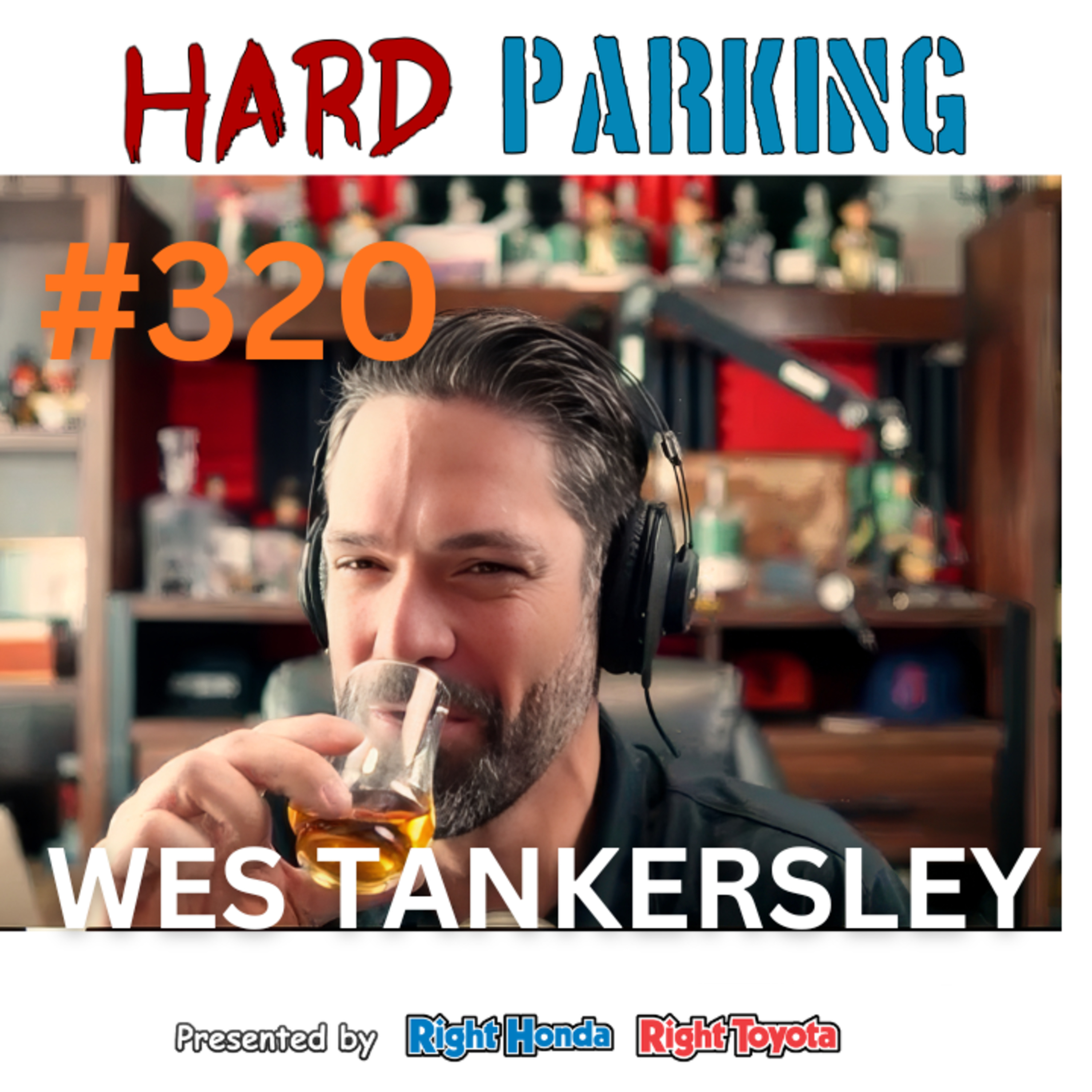
Two Nobodies with Wes Tankersley | One Drink Wednesday Crossover (Ep 320)
About this episode
Wes Tankersley joins Jay Finning for a One Drink Wednesday crossover, mixing casual bar-chat with sharp commentary on how people react to politics and culture. They discuss “facts over feelings,” why polarization makes listeners reject new information, and a Boise flagpole controversy tied to Pride/BASC symbolism. The conversation also touches transgender participation in PE, gun-safety expectations during traffic stops, and how tragedies can be understood through root-cause thinking without excusing harm. They wrap by promoting the interactive Instagram live format and movie trivia.
Jhae Pfenning welcomes back Wes Tankersley to the Hard Parking studio for Episode 320 – a true "Two Nobodies" crossover hang. Wes, co-host of Two Nobodies Who Know Nothing, host of Shaping Success (and Shaping Success Treasure Valley), and your regular partner on One Drink Wednesday IG Lives, joins for relaxed conversation, drinks flowing (maple bourbon for Wes, vodka for Jhae), podcast life stories, and whatever comes up between two friends.
This laid-back episode captures the spirit of Hard Parking: real talk, zero pressure, and good company. Whether you're catching up on the shows or just here for the vibes, it's classic conversational podcasting at its finest.
Support the show and join the crew on Patreon or YouTube memberships!
Timestamps
- 0:00 – Intro & "Ready for this, Mr. Wes Tankersley"
- 0:18 – Brought to you by Right Honda & Right Toyota (Scottsdale, AZ)
- 0:35 – Welcome back Wes + One Drink Wednesday vibes
- 3:20 – Maple bourbon pour & studio energy
- 7:10 – Podcast intros: Two Nobodies Who Know Nothing, Shaping Success, Shipping Sources, Treasure Valley
- 15:00 – Main conversation & random topics
- 25:00 – Patreon supporters shoutout (Mark Stoneman, Kathryn Cox, Eddie Ramos, and the crew)
- 32:00 – How to support the show (Patreon, Buy Me a Coffee, memberships)
- 35:00 – Questions, comments, concerns + next week tease
- 37:xx – Outro
Follow Wes Tankersley:
Instagram: @wes.tankersley
Instagram: @OneDrinkWednesdayShaping Success Podcast: Spotify | Buzzsprout
Two Nobodies Who Know Nothing: Search on YouTube/Spotify or check Wes's IG for latest episodes
Contact – Hard Parking
Email: [email protected]
Website: www.hardparking.com
Patreon: patreon.com/hardparkingpodcast
Instagram: https://www.instagram.com/hardparkingpod/
YouTube: youtube.com/@HardParking
Wright, Hunter and Wright Toyota
"This is Hart Barkin, brought to you by Wright, Hunter and Wright Toyota out of Scottsdale, Arizona."
They’re a Toyota dealership that’s sponsoring the podcast. Sponsors like this often support the show and may offer service or deals to local drivers.
This is a Toyota dealership group mentioned as the show sponsor. Dealership sponsors are common in local automotive podcasts because they can promote service, parts, and sales to local listeners.
One Drink Wednesday
"But you know, we talk about One Drink Wednesday all the time, or I talk about it. You hear it on the closing of every episode and I figured, hell, why not get you on here"
This is a recurring part of the podcast where they do a themed “One Drink Wednesday” bit. It’s mentioned as something the audience already knows from other episodes.
“One Drink Wednesday” is a recurring podcast segment/format referenced as something listeners hear at the end of episodes. It’s not an automotive topic itself, but it frames the show’s recurring content and crossover context.
chapter by chapter
"We started out like going through his book. He has a book called R's Victorious and we went through chapter by chapter"
They’re describing how they go through a book in order, one chapter at a time. That helps keep the discussion organized.
“Chapter by chapter” describes a structured discussion method—working through a book one section at a time. In a podcast context, it’s a format choice that can affect how the conversation builds and how listeners follow along.
Copper State 1000
"I forgot to mention in the opening that this Sunday is the Copper State 1000. If you recall recently, I had Desi Alazzetta... And so the Copper State 1000 will be held at Tempe Diablo Stadium."
The Copper State 1000 is a big off-road race in Arizona. It’s the kind of event where your car has to survive rough roads, not just go fast.
The Copper State 1000 is a long-distance off-road rally in Arizona that’s known for testing both driver skill and vehicle durability. It’s typically run as a timed event with a mix of rough terrain, so prep and reliability matter as much as speed.
Tempe Diablo Stadium
"And so the Copper State 1000 will be held at Tempe Diablo Stadium."
Tempe Diablo Stadium is the venue mentioned for the Copper State 1000. For listeners, the key takeaway is that the event is tied to a specific staging location, which often affects logistics like start/finish areas and spectator access.
BASC
"I mean, BASC is a big thing here too. Like there's a lot of BASC people here. And so they can't really hang up a BASC flag anymore either. ... You have like the BASC district. BASC quarter, yeah, is what they call it."
BASC sounds like a local group or community. The conversation is about whether BASC-related flags are allowed to be displayed, and how that compares to state or American flags.
BASC is referenced as a major local group in the area, with people and flags associated with it. The transcript treats it like a recognizable organization or community identity, similar to how a city district might have its own branding.
flagpole
"They just don't want you putting something other than the state flag or the American flag on a flagpole, you know? So the BASC thing is, I'm curious with that because it was a couple blocks, right?"
A flagpole is just the tall post where you hang a flag. The speaker is talking about what kinds of flags are allowed to be shown there.
A flagpole is the vertical post used to display flags. In car-related contexts, it can also refer to how vehicles or event setups mount flags, but here it’s mainly about rules for what can be displayed.
situations degraded
"We're saying this is why this happened, and we understood why it happened, and it's fucked up. But I'm not going to go outside and start picketing or screaming to the top of my lungs, because I can see how both situations degraded to where they are."
They’re saying the situation got worse over time. Once people start panicking and reacting, it can spiral fast.
The speaker is describing how a tense scenario can rapidly worsen—people panic, assumptions form, and actions escalate. In car terms, it’s similar to how small mistakes compound when drivers don’t recognize the risk early.
officer pulls me over
"...if an officer pulls me over, I'm coming at that officer with respect..."
An officer pulling you over is basically a traffic stop. The safest move is to follow the officer’s directions and stay calm.
A “pull-over” is a traffic stop where an officer directs a driver to stop the vehicle for questioning or enforcement. How a driver responds—like staying calm and following instructions—can strongly affect the outcome.
put my hands on the wheel
"...I get pulled over, I put my hands on the wheel, if he told me to stop, I'm going to stop."
When police pull you over, they often want you to keep your hands visible. It’s meant to show you’re not reaching for anything and that you’re cooperating.
This phrase refers to the common safety instruction drivers follow during a police stop. It signals that the driver is complying and reduces the chance of misunderstandings or escalation.
root cause
"...it's like, okay, well, how do we get here? Like, what was the root cause? What could have prevented this?"
“Root cause” means asking what really caused the problem, not just what happened right before it. It’s how people try to prevent the same thing from happening again.
“Root cause” is the idea of tracing an incident back to the underlying reason it happened, rather than focusing only on the immediate event. In safety and incident analysis, this approach helps identify prevention steps.
RCA report
"And it's called RCA report, root cause analysis. And so what happens is you have to identify, and we would do what's called patient rounding to"
RCA means “root cause analysis.” It’s a way to figure out the real reason something went wrong, so you can stop it from happening again.
RCA stands for root cause analysis. It’s a structured method for figuring out why an incident happened, not just what happened on the surface.
preventive vs reactive
"And it's not a preventative major, a preventative step. It's something like, how can we make sure it's reactive, not proactive?"
They’re talking about preventing problems before they happen versus dealing with them after they happen. The goal is to catch the risk early, not just react once damage is done.
The speaker contrasts proactive prevention with reactive response. In safety engineering, “proactive” means addressing risks before an incident, while “reactive” means responding after something goes wrong.
traffic stop
"And his thoughts are, okay, I pull you over. The first thing that you need to do is you need to put your hands on the steering wheel, roll down the window and wait for me to come talk to you."
A traffic stop is when police pull your car over. The point here is to follow a safe routine so the officer knows what you’re doing and doesn’t get surprised.
A traffic stop is when law enforcement stops a vehicle for a suspected violation or safety concern. The speaker is describing a safety-focused procedure for how to communicate and handle documents and potential weapons during the stop.
steering wheel
"The first thing that you need to do is you need to put your hands on the steering wheel, roll down the window and wait for me to come talk to you."
The steering wheel is what you hold to control the car. During a stop, keeping your hands visible helps the officer feel safe because they can see what you’re doing.
The steering wheel is the primary control you hold while driving. In the context of a traffic stop, being told to keep your hands on it is about making your movements predictable so the officer can approach safely.
license and registration
"When I get there, and I ask for your license and registration, you say, hey, is it okay if I get it?"
Police usually ask for your driver’s license and the car’s registration. The idea is to have them ready so you can hand them over calmly and safely.
License and registration are the key documents drivers must typically provide during a traffic stop. The speaker emphasizes having them ready and accessible in a controlled way so the officer can verify identity and vehicle information without escalating tension.
glove box
"It's in the glove box or it's in my pocket, I'm reaching for it. Then hand him both your concealed weapons permit and your driver's license at the same time so that he knows that you could be carrying so that he's not freaking out thinking that you got a gun."
The glove box is a small storage compartment in the front of the car, usually on the passenger side. Here it’s mentioned because people often keep their documents there.
The glove box is the compartment inside the passenger side of the dashboard used to store documents and small items. In the transcript, it’s mentioned as a common place to keep paperwork so you can retrieve it only when the officer allows it.
under the seat
"And then he may ask you, hey, do you have a gun? Yes, I do. It's under the seat. I'm not going to get it."
Some cars have space under the seats where people store items. The transcript is saying that if something is under the seat, you should communicate clearly and avoid sudden reaching that could alarm the officer.
“Under the seat” refers to storage space beneath the driver or passenger seat. The speaker is describing a scenario where a gun is located there, and the key point is that the officer should be told clearly and not be surprised by sudden movements.
Officer spotter
"There's one that comes up to the driver's side and there's always a trailer that kind of comes up with a passenger side. And the trailer that comes with the passenger side is... the spotter, right?"
Sometimes two officers handle a traffic stop. One talks to the driver and the other watches closely from the side to see what’s happening inside the car.
In some traffic-stop tactics, one officer approaches the driver while another officer positions on the passenger side as a “spotter.” The spotter watches the driver’s actions and the vehicle interior to reduce surprise and improve situational awareness.
Smile Spirits
"But we've had people on like Mitchell Bailey from Smile Spirits and trust me, [1856.7s] Vodka, and then we had Andy Koenig on from Koenig Distillery."
Smile Spirits is a company that makes drinks. They’re mentioned because someone from that brand has been on the show.
Smile Spirits is a spirits brand referenced as a guest connection. It’s part of the “One Drink Wednesday” crossover theme in this episode segment.
Koenig Distillery
"But we've had people on like Mitchell Bailey from Smile Spirits and trust me, [1856.7s] Vodka, and then we had Andy Koenig on from Koenig Distillery."
Koenig Distillery is a company that makes spirits. They’re mentioned because someone from there was a guest on the show.
Koenig Distillery is a spirits producer. The hosts reference it as a guest connection for the show’s drink segment rather than as an automotive topic.
Whistle Pig
"And we had a couple Whistle Pig. [1862.5s] I can't remember her name, Whistle Pig. [1863.8s] Yeah, we have the girl on from Whistle Pig."
WhistlePig is a company that makes whiskey. They’re being mentioned because someone from that brand has appeared on the show as a guest.
WhistlePig is a spirits brand best known for rye whiskey. In the episode, it’s mentioned as a guest/brand crossover tied to the show’s drink-focused segment.
Patreon
"Of course, Patreon business supporters."
Patreon is a website where fans can pay a creator regularly to help support the show. It’s like a subscription for podcasts and videos.
Patreon is a membership platform where fans support creators with recurring payments. In automotive podcasts, it’s often how the show funds production and keeps episodes coming without relying solely on ads or sponsorships.
Request an Explanation
Heard something you'd like explained? We'll add it to this episode.
Sign in to request explanations for terms you heard.
Want to learn more?
Browse our glossary for plain-English explanations of automotive terms, jargon, and concepts.
Help improve this episode
See something that's not quite right? Our annotations are AI-generated and can sometimes miss the mark. Click the flag icon on any annotation to suggest a correction.