Hello and welcome to another Auto Buyer's Guide podcast episode. Today we're taking viewer questions.
We're going to be talking about hands-off the wheel driving, people that are underwater on
their loans, what you can do about it and why this is becoming a big, big problem.
And I'm using a fisheye lens because I am in a fish bowl catching me between flights. But before
my flight takes off, we've got a whole episode for you. Well Travis, I think the first story we
should step into is Trailseeker versus Blazer EV. This is of course the electric outback we're
talking about from Subaru because when we were at the launch of the Trailseeker, you asked me,
why don't you buy one of these? Yeah, I thought you're looking at a family vehicle and this is
built for families, at least to my mind, right? And how that you're as against like a big tall
SUV as I am, but you like a wagon just as much as I do. So I thought, why not look at a Trailseeker?
I do love a wagon. I have owned a wagon in the past. I will say that I went into this thinking,
you know, maybe this could work because on the outside, it does seem kind of blazer-y, right?
I mean, they're about the same size, length-wise and height-wise. The Trailseeker's got a bit of
extra ground clearance. Everything looks pretty good. And the range figures, those are pretty
decent according to the EPA, right? Yeah, I mean, I thought that it was surprisingly efficient for
associating how powerful it is and probably a little bit more interesting to drive in the blazer,
too. I like a lot about the Trailseeker, but I did run into a few things. So this weekend was
Visit the Grandparents Weekend and they are 105, 110 miles away, something like that
from home, I should say. And that means climbing up and over two mountain passes and of course,
higher speed highway because there's some 70-mile-an-hour sections of highway there.
And I realized that the Trailseeker unfortunately cannot do that with the two mountain passes
and the higher speed stuff in the way. Cannot do that on one charge. Right. And admittedly,
when we've talked about vehicles that would work for you, this trip is the one you have in mind,
is the consistent have-to. And it has been the overall range. So it was a concern here. I guess
we're coming up short, but you can offset that with charging, right? Yeah, there are a few other
things, I guess, going on. Yes, theoretically, you could offset that by charging, but screaming
nine-month-old in the back, I think that the consensus in the car is we just want to get home.
Yeah. So there's that problem. The other problem I discovered was it actually does have significantly
less passenger room on the inside than blazer. So on the surface of things, it looks like it's
about the same size, but the much longer wheelbase that we have in the blazer really does help out
the rear seat room. And the wheelbase is surprisingly longer in the blazer. It's also wider. So the
blazer is a significant amount wider than Trailseeker, part of how Trailseeker gets to the better
efficiency, I think, is that narrower dimension. And then on the flip side, though, Trailseeker has
a much better cargo area. And so it's no secret where the blazer's extra backseat room comes from.
It comes from that cargo area being about five inches shallower.
So if they're roughly the same length, how much longer is the wheelbase over on the blazer?
I believe it's nearly six inches somewhere on there. It's a big difference in stretch.
And it's really obvious when you actually park them next to each other and really get a hold
of these things visually. And this is why I encourage people to really get up there,
their tape measures, if you're interested in that, or at least go to the dealer,
see these vehicles in person while you're comparing before you make snap decisions.
Because parked side by side blazer to Trailseeker, I really started noticing, I'm like, gosh, this
blazer, this really does seem big. And indeed, we measured it and both doors are over two inches
longer in the blazer than in the Trailseeker pros and cons. The opening in the back of the blazer
is much bigger. So getting it in and out is going to be a little bit easier. But it also means in
a parking lot, you can't open those doors as far because the doors are just so much longer
that that arc is very differently shaped. And how does the roof line work between the two? I mean,
so obviously you need the opening space, but leaning down to get child in or whatever you're
trying to load, is it pretty much the same between the two? They're honestly not far off. The roof
line in the Trailseeker is much more horizontal as it goes to the back. It doesn't drop down as much
as it has much more of that traditional wagon vibe than the blazer. The blazer is trying to be
swoopier and the roof line also comes down a bit lowering practicality. But there's a huge
difference in the cargo capacity in Outback. I mean, it's something like 40% more cargo room.
So it's a pretty, pretty big difference there. And that's mainly down to it's just being upright
and boxy compared to what we have in the blazer. And that important, you know, about five inches
deeper. It's a big difference. I was able for instance to put my daughter's high chair in the
Trailseeker to go there because they don't have a high chair on the other end. And I could do that
in the Trailseeker and I could not do that in the blazer. Yeah, I mean, this is why people tune in
is to know whether or not not can you put the child or the stuff, but all of the specific stuff
like the high seat, I do have to ask though, after spending a week with it, are you are you more
less or same in disappointment that it's not called the electric Outback or the E Outback?
Why do we get a different name than every other market out there? I don't know. I have this feeling
that Super didn't explain it mind you, but I have this feeling that it had more to do with
a desire to create a separate brand and a separate lineup identity for their electric vehicles,
which they're really trying to do with that, that different lighting element on the front,
etc. They wanted to separate these models, I think a bit from one another. As I understand it,
and this someone can correct us in the comment section, but as I understand it in every market
where it is labeled the E Outback, it is also the only Outback sold in that market. I don't know,
maybe Japan, but I don't know if there are any other markets where both are going to be sold
as Outback and E Outback, although I think that Americans could have understood that the E meant
electric. I think that might have made more sense personally, building on the success of the Outback
name and the recognition of it, but you know, I'm not in marketing. What do I know?
For me, it comes down to whether or not they could leverage the Outback name and with a brand
like Subaru that honestly has not had a lot of hybrid, has not had much in the electrified realm,
has so many consumers who want to go electric. I just think it's a missed opportunity. I know you
could potentially hurt Outback and honestly something like Blazer was sort of a risk. Do you
go Blazer EV instead of a completely different branding on it? I just think Subaru, if they had
to flip a coin, it might have come down to that. I think electric Outback or Outback E or E Outback
would have been better for sales than worse, but now of course the Outback is going a little bit
different direction and the Trailseeker is a little bit more wagon proportioned than we see in the
about that. I don't think that Blazer EV hurt Blazer at all because who buys the Blazer? It's
not a high volume car at all. I'm sure a significant percentage are fleet sales and people that are
just like, I just want a cheap, Chevy thing that is shaped like this, that has a cargo area in the
back, that kind of thing. And so I think Blazer EV worked. Yeah. I just, in my brain, Trailseeker
is too much like Trailblazer, so I kept calling it a Trailblazer. Yeah, I can imagine filming those
side-by-side a weird difficulty. So I apologize to Subaru in advance when that video comes out,
if I call it a Trailblazer. If any of those snuck through into the final edit, I apologize.
The last thing that struck me, and I don't know how you feel about this or how often you use this
feature, mind you, is that the EV routing in the Subaru and actually in all of Toyota's EVs is
really not great as far as routing you to Chargers. Okay. I mean, and here's the thing,
20 years from now, it might not be as important because people don't really route themselves to
gas stations, but right now it's not nearly as prevalent and most people are still early adopters.
So that's a bit surprising. It doesn't seem terribly difficult. A lot of manufacturers have
done it, I guess, pretty seamlessly, but that's going to hurt ownership experience.
And I'm torn there because I don't know if I care personally because I don't always
follow the instructions on the routing for the cars that we have that suggest charging stations,
mind you. So it doesn't seem like it's a big deal. I do wish that they would put the software hooks
in the software so that we carplay could do the EV routing because that would be the easy solution
so the carplay could do it like in Fords, but they don't do that. The software doesn't add
charging stops. It just goes like, hey, you know, you're driving to Los Angeles, that's great,
you're going to need to charge in order to get there. Good luck, buddy. Yeah, that's, and then,
and I mean, I would expect at that point, okay, like, so you and I, right, we drive EVs all the
time. I know where all of my EV stops are. I do, oh gosh, even just to the airport and back is 120
odd miles each direction. I know where all of my stops are because I've stopped at them over the
years. So I don't need them locally. But if, so if I could turn that off as standard, I probably
would, but I'd want a little pop up that says, do you want to plug in EV charging routing? There's
no pop up, I assume. There's no pop up to do that. You can add EV charging stops to the route and it
will precondition the battery. But the way that it sorts the charging stops, it doesn't give any
sort of priority to reliable charging stations, compatible charging stations, or quick charging
stations. So it's loaded with a number of level one and level two charging stops there, which is a
little box, which is bad. But the bigger thing, I think actually I could still live with that,
because again, I would never use it. So I don't know if I care. But I think the bigger thing is
that I have really gotten used to EVs where you have commonly used destinations. This is a Google
mapping thing, to be perfectly honest, because the way that Google does this with Android Automotive
built into the car, where you have your typical destination's homework, whatever, in your list.
So wherever you are, it's going to tell you, hey, you'll be at this percent when you get to work or
when you get to home. And that's really handy. That's probably the only thing that I would want.
And I do also love the flip side of that, where Google will tell you, oh, you're going from here
to there, you'll have X number percent battery by the time you get there. But also, to drive there
and back to here, you're going to be negative 10%. So you might want to do something about that. So
even if you're not actually using it for charge riding, it gives you that little gentle reminder
like, are you okay? You might want to do something about that. Just a heads up, you're going to need
something. It's a bummer, because I don't think we've had a Subaru as a long term test vehicle
for a little while. And I was hopeful. I mean, I personally like the Trailseeker. It's probably
a little bit bigger than I would need. And I was hopeful it might be a good fit for you. But I guess
that search will continue. You know what I did find? Just the hair. Well, maybe there's something
bigger. We'll find out. You know what I did think would be a great next vehicle for you?
And I wish I'd grabbed the name of it. But you think you need one at the office. I was
recently at a Dodge event where they had, oh, you're going to love it. You know what it is,
but you don't know this is coming. I was at a Dodge event where they had all the powertrain
available for the new charger. So we had the standard output hurricane. We had the high
output hurricane. And of course, we had the Daytona. And we weren't allowed to take the Daytona out
in the snow, which was a little bit of a bummer. If you want to see me trying to drive, let's say
spiritedly. We'll try and put a link down there so you can check out our review of the Dodge
charger where we got to take it in the snow. That said, they had the mobile DC charging unit
that you and I first saw, I think at the Wagoneer S launch. And it is the cutest little robot I have
ever seen. And I was thinking, I love this, but I have no idea why it exists. And then I was talking
to somebody about airport charging because I got lucky and I got an EV spot at my local airport.
And that hasn't happened at that one in a long time. And they said, oh, do they get annoyed
that you're going to be parked there? And I went, no, I mean, there's no way for them to do it. There's
no valet service. But this robot would be the valet service. And I know that you've got quite a
few EVs piling up at the office. And I'm wondering if it's time for you to get a little DC charging
robot. It goes to sleep, it charges up. And then during the day, it just comes out. Oh, come on,
where's the fun? Where's the money going to come from? Those things are expensive. But I do like
concept for an airport. I'm sure they could send you one to try. I do love the concept for an
airport. It would just require a valet service with the dude to drive it around and plug it in.
And somehow your charge door would have to be open and unlocked and all that. But I kind of like
the idea of being able to schedule like I'm gone for two weeks. And I just want my car to be full
by the time I get back. So plug it in in this window and give me X number of whatever, whatever
you got, give me some give me some juice there. So that would be kind of cool. I would buy and I
was down to 15%. And I was like, listen, I'm going to be in a rush trying to get home. I am gone for
three days, but only three days, you know, I'm not gone for two weeks. Otherwise, I would not have
taken up the spot. But yeah, that'd be that'd be a great solution. I guess we'll just have to wait
to the next one. But unfortunately, I don't think you're going to be on board for the charger as
the next vehicle. But you know what, Alex, I have to admit, I did one of the clickbaitest intros
I've ever done. They took us out to Vermont and they said, we're going to go drive an all wheel
drive charger out in the snow. We're doing a snow course. Vermont is very much like the Pacific
Northwest Subaru Haven. Yes. And I thought you could actually replace a Subaru outback
with a Dodge charger these days. I'm not saying you should. Yeah, you could. It's so big. So much
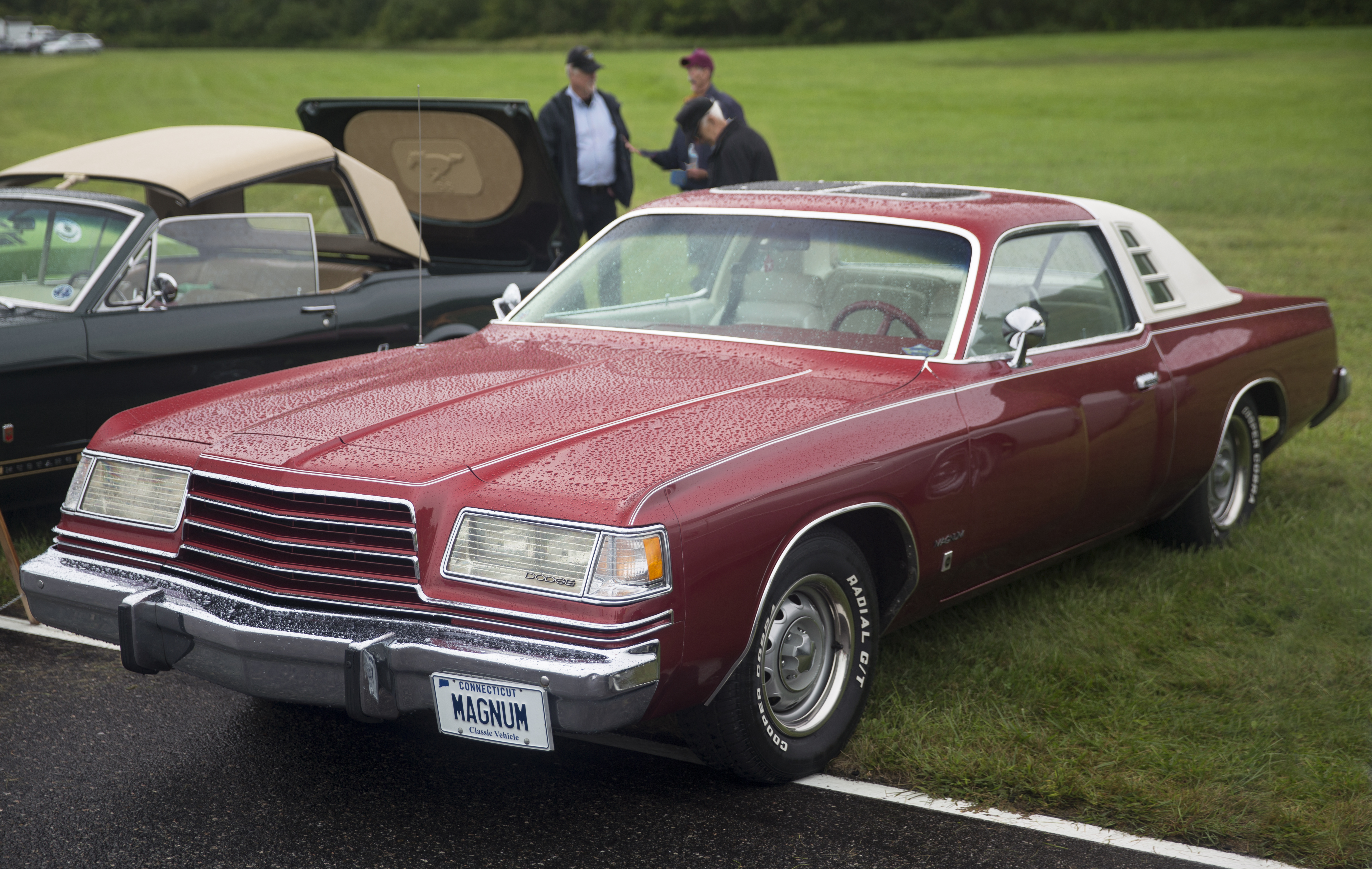
space inside. It is not really SUV. I want to return to the Magnum. I want to I want to charge
your wagon. But you know what, I am so on board. Speaking of wagons here. So we have a question
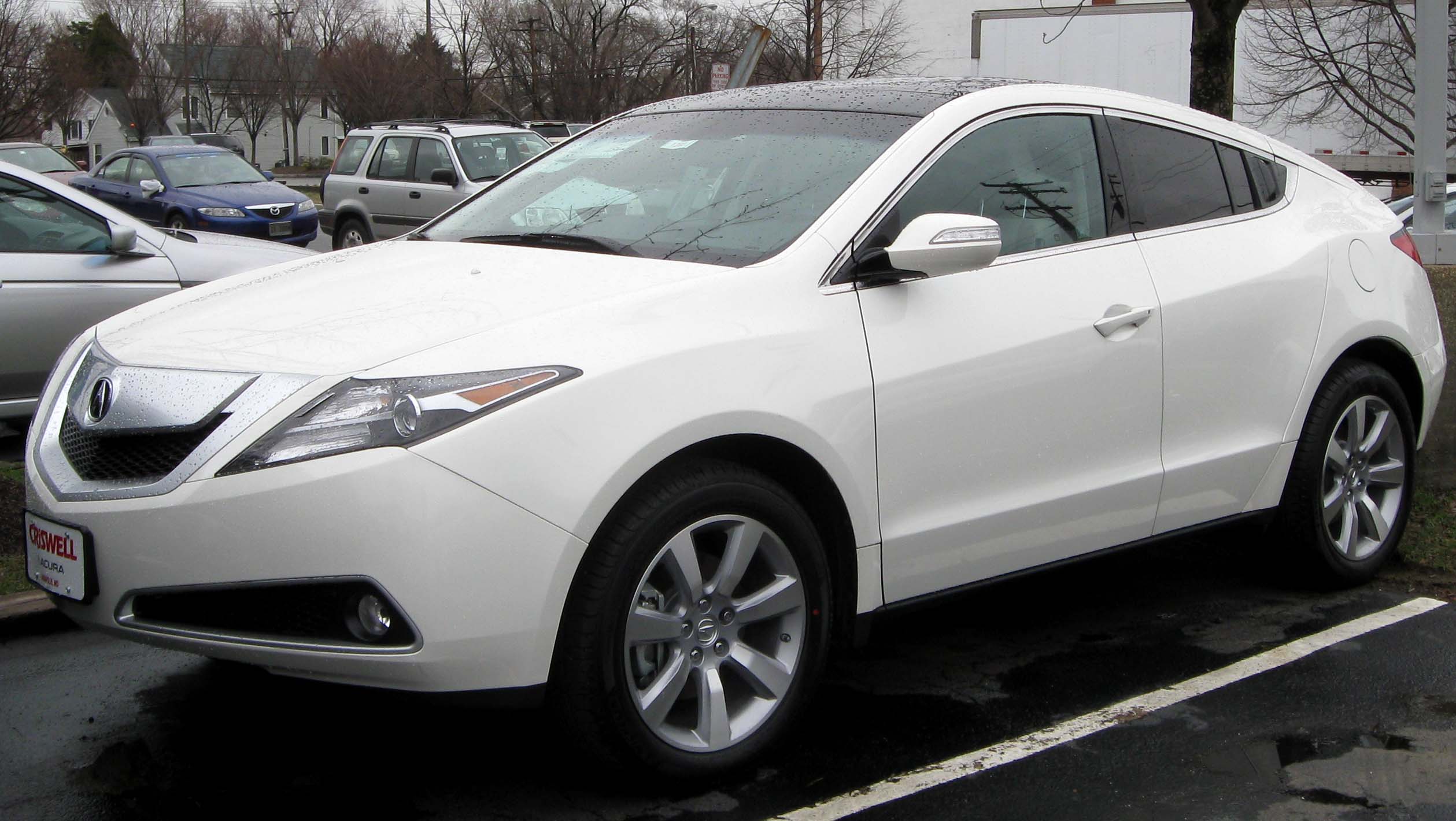
coming in here from Anna. She says she's looking at a ZDX for the Acura Watch 360 Plus system,
specifically SuperCruise. That should tell Acura something, by the way, guys, over at Acura.
They have a new 44 mile round trip daily commute after five years of remote work,
given that Honda has discontinued this GM partnership to move to their own house EV architecture.
Should she lease the ZDX or look for an alternative with level two plus ADAS? She really wants the
adaptive air suspension for comfort to be able to raise and lower the car, wireless Android Auto
and Apple CarPlay. She likes the fact that the ZDX looks better than the Lyric or the Blazer.
She's scared. She doesn't want to see, she doesn't want to get stuck between a rock and hard place
or something that eventually breaks out and causes an issue about servicing or fixing it.
There are massive discounts on MSRP that look very enticing. It will most likely be a second car,
so they'll have a safety net, etc. What are our thoughts, lease or runaway or choose a different
car with level two plus ADAS? Second related question, how would you spot a good lease deal
with a ZDX in this situation? If I might start off here, my first thought here is,
there really aren't very many things out there with a super cruise like system. I mean, you're
basically Tesla full self driving or super cruise and a very limited number of options outside of
that. Yeah, I mean, and even even, you know, blue cruise and I know Stalantis has their hands
off the wheel products, they all work. It's just how well they work. And I guess some of it's,
you know, what's your specific situation? If you want the vehicle to be level two plus,
I think that's a good way to put it right now. In the city, there's one option. It's Tesla.
But that how it performs is going to be a little bit interesting, depending on how unusual your
roads are. I love the super cruise system. I think there's a huge win for Acura that this model
has it. I disappointed that it got the axel quickly. I don't think I have any concerns,
though. Do we know that Acura is not, well, did not make most of what's inside of that vehicle?
Yes. But all those parts exist in other vehicles through General Motors. So if it comes down to
if something breaks, can you get it fixed? The answer is absolutely. In 20 years, could it be
like, oh, yeah, GM didn't make that many of those parts for the ZDX specifically? Maybe. I don't
know if I'd have to worry about leasing it, though. And if you're worried and you like the vehicle,
go ahead and lease it. I think Acura is one of those companies you can buy the lease out,
which does make it a little bit more expensive, well, probably more expensive in the long run,
but it's also a bit of an insurance policy. And if you love the vehicle but are scared
or concerned or whatever, I'd take out the insurance policy, get a lease that fits the
miles you expect to drive, and then decide at the end what you want to do with it.
Well, she's saying specifically she wants a lease and it'll be a second car. So I think that the
easy answer here is yes, because to your point, in the average lease window, it should not be a
civility question. I don't think we'll see any issues until maybe the 7 to 10-year mark when
that's when you might see accident-related issues sourcing parts. Like, is there going to be a
supply of bumpers or headlights or things like that after 7 to 10 years? Limited production
model, probably not. The only question that I might have related to ZDX and Supercruise specifically
was, I was able to drive at the launch of the Chevy Bolt. I would assume yes, because that
platform and that architecture has Supercruise from Blazer and Lyric, etc. Those are the two
most closely related products there. So I'm assuming it will still get those. They have basically
said that it will get Supercruise for the lifetime of the vehicle, but that lifetime air quotes
really means we don't know. Probably related to sale or connectivity, as long as those
sale modems are fine, etc. You should be okay. But I will say on the level 2A dash front,
the reason I like Supercruise more than some of the others is its interaction with the driver
from a safety perspective. So it's really obvious what the system is doing. That lighted bar on the
steering wheel is just really practical with most of the BlueCruise implementations and the Ram
implementations as well. You simply have a different color on the instrument cluster,
but you have the eye monitoring. So if I'm looking at the camera up there, I'm not looking down
there at the LCD to change color, and it doesn't do a great job at going, hey, this is time for you
to take over. I think GM just does a much better job with that. It's more expensive, of course,
Supercruise is. The more expensive hardware though on Supercruise also does seem to be better
at following lanes without interruption and without deviations versus the Nissan Infinity
system, the GM, sorry, the Ford system or the Stalantis system, the other major ones that are
out there in this segment. GM has also been really aggressive at mapping roads and continually adding
more miles to roads. So right now they're really focusing on rural two-lane roads, which is a
big difference. And there's a lot of that in middle America. So if you're living in Texas,
for instance, I didn't actually pay attention to where you were located, sorry about this,
but if you're living in Texas, the farm-to-market road network is massive and it's very boring
in a lot of locations, very straight, very long, very boring. And nobody else is there,
but you. So it's the perfect place for this kind of hands-off-the-wheel guidance system that I think
has done really well. The novelty now with the new Supercruise and the Bolt is that now it will do
freeway interchanges. And there's some asterisks here because again, GM is very conservative. So
we know that the system is capable. It's what is GM willing to let it do? So now GM is willing to
let it take freeway interchanges if there is a dedicated exit lane to the freeway interchange.
And that lane does not have any immediate merging or other issues on the other end as well. So if
the car can, if the car can auto lane change you over to that exit, now on guidance with
the nav system, it will do that. It will do the lane changes, take you onto the exit, take you on
the interchange and then merge back onto the other highway now, but limited cases. So if again,
in this situation, say we have a three lane, three lanes going in one direction, the right lane
becomes the exit lane for this new interchange and that turns into a lane on the next highway
that you are now entering and does not end for some number of miles ahead, then it will do that
completely and then it will move over for you. But if there are lanes being added or subtracted,
it will make you take over, complete the interchange, start steering on the interchange
depending on the format and then make you merge on the other end perhaps. Just sort of depends on
some of those finer details. Yeah. And the thing I love about a system like this is that it is
built to grow. It's not like there won't be a super cruise version 2.0 that uses completely
different hardware or something down the line. Ultra cruise. Right. Super hyper mega cruise.
And then that'll be a whole other system, but it doesn't mean that this system doesn't continue
to improve. And while I might say vehicles already can drive themselves, I don't blame
General Motors for being a little bit cautious about how they implement these things because
the biggest variable out there, human drivers. And boy, are there still a lot of those out on the
road. So take it easy. And I'm not kidding. Ultra cruise is the next generation. Ultra cruise.
GM has said that that is their next. That's the name. Level of autonomy. Yep. Ultra cruise.
Okay. Okay. Super cruise. Ultra cruise. Yeah, we're not going the pokeball route. So no great
cruise. Ultra cruise. Master cruise. All the cruises. Yeah. Yeah. I guess the only question I
would have and maybe we can reach out to Acura. I'm not sure we'll be able to get an answer right
away is what is the contract for this hardware? Because from the Blazer EV to the ZDX, the same
system, right? Same computers. I imagine to the T same computer, same cameras, same programming.
We have some of that now. We have some of that now because they did say at the launch event
that they fully expect it to be supported and warranted and everything and serviceable
for the same lifetime as any other Honda vehicle, whatever that turns out to mean.
That's the statement. Yeah. But supported and upgraded are potentially two different things.
That's my only thought. I mean, obviously, you'll be able to pay your subscription and it will
keep working. And it's good that it'll keep working and not shut off at some point, you know,
just randomly out of the blue. But will it continue to progress? I think that's the question
I'd ask Acura next time I get the chance. The Google Automotive software is going to be getting
probably safety and security updates continuing. The question, I guess, would be features and I would
bet no extra features would be coming to this software. So, you know, it's not like they're
going to be adding, I don't know, whatever thing comes in the future. That would be my guess there.
But let's move on to another viewer question because we have Adam here asking about climate
controls. Hey, all the buyers, guide crew. This is Adam in San Diego, one of my pet peeves. And in
fact, deal breakers in a new car is HVAC air vent controls that are exclusively digital in the screen.
I find it very frustrating and try a few cars with them. And we change our HVAC, you know,
vent controls quite a bit. We have multiple drivers. Everybody likes something different.
And doing it on the screen is pretty annoying. I wonder why automakers are doing this. It seems,
by all accounts, like it would be more expensive to do that. There's more moving parts,
more potential for something to break, more distracting, even less safe because you have
to fiddle with the screen if you want to change while you're driving. So I'm just wondering why
automakers seems like more and more are doing it lately. And I just can't figure out why because
I've not really come across anybody that likes it. I've only come across people who don't mind it.
And then a lot of people who hate it, including myself. So just curious what your thoughts are.
Thanks. I appreciate them. I don't know if I go so far as to love them, but here's my specific
scenario. I like to have the air not directly blowing on me, but very close. So dial it in
one time. It's set. And then I turn my climate control on auto. So I'm not one who really starts
messing around with things, but I did jump in a friend's Tesla the other day. And I sat where
his wife sits, and I did not want to start moving those vents because I knew they'd be a little bit
of a pain to vent back. And I don't remember, it should, but I don't remember if it does,
should be saved to the driver profile. I 100% believe that. I don't mean it might. I think it
should. It'd be required. Why not? So hopefully it does, but they don't have one for a passenger
profile, which would be a great feature ad in the future. And that way, again, you can click,
click, and it's your temperature settings. So I appreciate it, but I understand where people
wouldn't. I know some folks, they really want to change the temperature. If they want it to be
cooler, they crank it to low. If they want it to be hot, they crank it to high. And there's very
little in between. Do you want it on your face today? Do you want it moving around?
My biggest one actually comes down to the controls for the temperature, not necessarily the vent
location. That should be a button in most cases, because that's the thing I think people will move
more often. Yeah, I am anti-digital vent control, generally speaking. And the reason's twofold.
It just takes longer to do it. I just want my air somewhere else. And it also seems to be
an answer in search of a question, because I'm not clear who wanted this. No one that I know
ever seemed to want this, other than designers of dashboards and Tesla really wanted that clean,
smooth aesthetic. And it kind of makes more sense when you do it like Tesla does it.
Not that I would like it either. I would rather Tesla just gave us manual vent controls, but it
makes more sense with that design than it does with some other auto designs that I've seen,
where the dashboard is a little bit cluttered anyway, and it's not like they've gotten that
clean aesthetic going on, or some vehicles where it's digital and physical. So you get to choose
how you want it, which is also a little funky. Like that's a next level of complicated. Or maybe
give it a high-end trim, where if you want all the doodads, this is one of the doodads.
I just don't know anybody that wants the doodad. That's the question. I'm not sure. Given the choice,
I'm not sure who would take the more expensive alternative that is intrinsically going to be
less reliable. Like there's no way that moving parts that are not going to break at some point
in the future. Bearing in mind, though, that we don't have any data on unreliability of the Tesla
implementation that could just be completely solid and it will outlast the vehicle for all
we know, because I haven't heard any problems with it. But invariably, it is going to be less
durable than something that's simpler. I just don't understand who it's for is the question.
And I'm the kind of person that will occasionally move the vents, and different drivers definitely,
people move the vents around, and maybe that's more than some cars profiles will be able to handle,
or you just want to move it real quick, etc. So I kind of get it. The cost seems silly to me.
Yeah. So would I select it as an option? Probably not. Like you said, into the Tesla
implementation, sleek is the key. And it could stand out having the knobs that you got to move
around. I don't think so. I wouldn't pay extra for it. I appreciate mine. And but the reason is,
I don't move my vents. And the best way to get around this, which would not be great for the
reliability anyway, because we'd be using it more, mine will last forever, because I don't move them,
they're just fixed in place. But if you said, you know, hey, I'm trying to dry out my shirt,
or I could use a little more air on my face, and those are like pre-programmed settings,
that would that would avoid some of the frustration of having to go in and manually adjust it.
And they said, you know, put the vents back to where I had them. But that's a lot more programming
than I think any manufacturer wants to take on right now. And I honestly don't think they should.
I spent half an hour this morning trying to program my smart home to do a, you know, a feature here,
a feature there, those things timed up. And while it should be easy, it is a real pain in the ass.
Yeah, there are some EVs that will do the sort of gentle wandering of the air moving around. I
think that actually makes more sense if we're going to do the digital vent as they're implemented
now, because that is kind of cool. If you can see the louvers moving around like you can in Rivians,
then I'm like, why are we doing this? Why don't we just, why don't we just have a vent?
There's no mystery. And speaking of mystery, let's move on to the news, because Scout has
delayed their deliveries seemingly yet again, because now they've clarified in a report their
CEO did, that they will be delivering their vehicles in the vague sometime of 2028.
The vague sometime. Yeah, I mean, when it said 2028, I think people immediately think
hopefully early by identifying that it is not specifically early. Something like late 2020.
Yeah, I think this is great news for Rivian. I know that Scout is going to have E revs and or
you know, plug-in hybrids and that's going to be, that's going to be the almost all they're doing
really, really, to be honest. Right. So that's going to be their bread and butter. But if you're
looking for a performance off-road adventure something, you know, Rivian just rev revved up
their rad team, which is the adventure program. And it's not going to make the cars suddenly way
more capable. But that's going to, that's going to cut into that audience. And Scout, Scout needs,
needs buyers, they need to get cars on the ground to get people excited. And the excitement that
existed is going to start wearing off soon. And I say Rivian is the big winner, because that R2
is going to be here sooner than later. And that's not going to be what Scout was selling, but it's
still going to draw more people towards Rivian. Now, let's, let's pick this apart just a tiny
bit more, I think, because my, my, my wonder here is, will Scout really have a chance? Because by
2028, hopefully the ER EV Ram will be out because it's a thing. It already exists. We know the
drive train, we know the details. They could build it tomorrow if they gave a crap, right?
The Wagoneer should be there. Wagoneer will definitely be on sale before then. We'll see
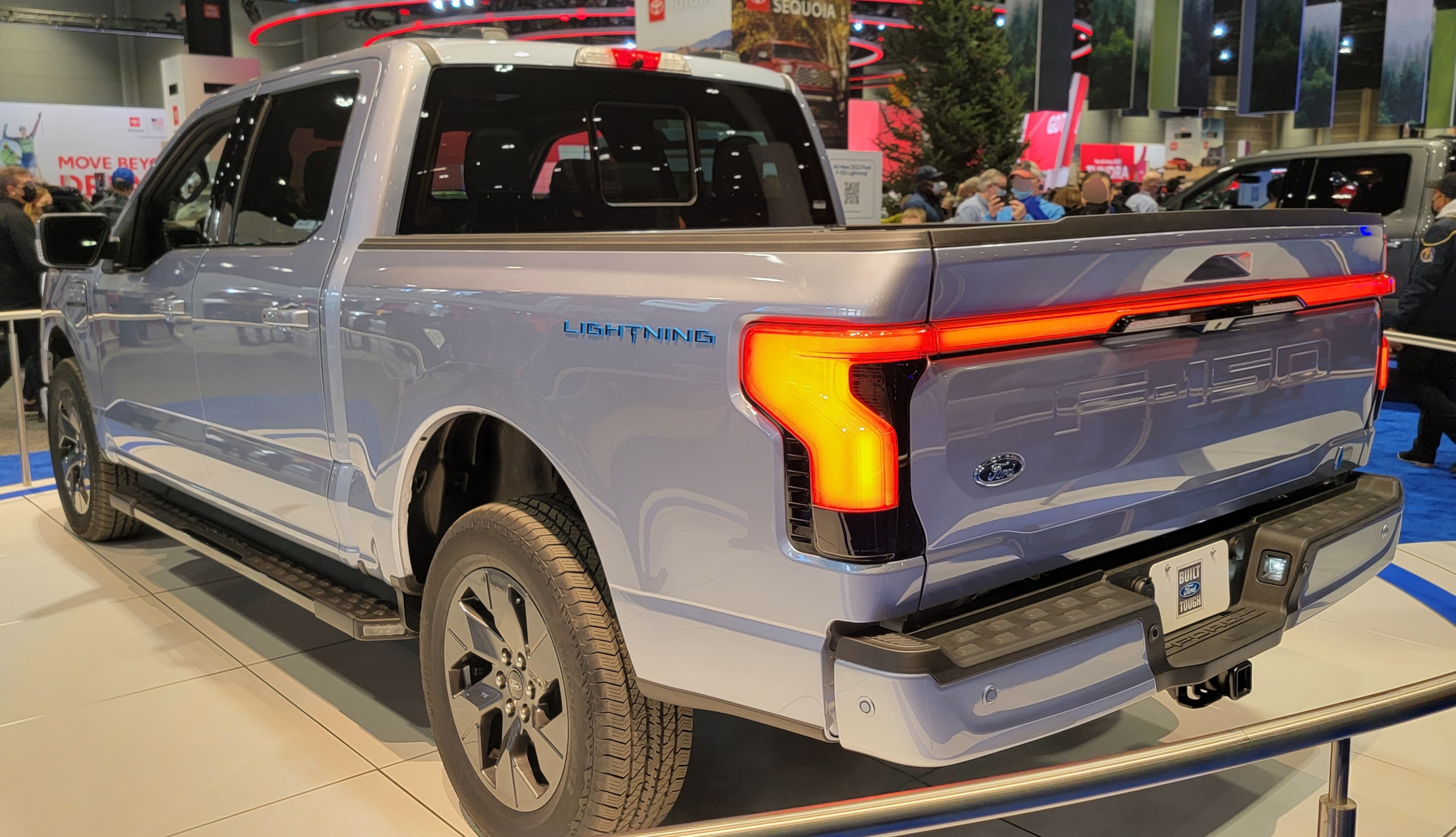
how that goes. And to be honest, the next generation lightning will probably be out by 2028,
would be my guess, because they've already said it's going to be an E rev. Ford likes to keep
things under wraps and then just spring them out more, more, you know, then drag it out like Scout
has with this thing. It is also telling that we still do not know what exactly is going to be
powering the Scout in the back. We know that its position is going to be behind the rear axle,
which is most unusual. So it'll actually be a rear engine, rear engine truck, the one that I
only have. How very, how very German, maybe even Volkswagen. But we don't know which engine it's
going to be. We don't know any details on that unit. We do know that they're trying to now
scurry around and fix the towing and hauling problems with that positioning, because there
was a reasonable amount of towing loss for the position of the range extender in that vehicle
being behind the rear axle. Yeah, it cut things in half. So your towing was cut in half to 5,000
pounds maximum instead of 10,000 pounds maximum payload was cut dramatically as well because
of the weight of the ER EV and its position in the back. Adding that much weight behind the rear
axle is kind of like loading up a really tongue heavy trailer in a way to the vehicles. That's
the thing there. Now they're saying that they're going to be mitigating this as much as possible,
but we don't have any details on how exactly that's going to work. So with so many details
still yet to be announced, it's not surprising that it's delayed. Let's put that way. I think
that had this been the original plan of full on electric with a smattering of ER EVs,
the electric one would have been delivered sometime a lot earlier, and then there would
have been like, okay, details on that other thing coming up next. And I don't want to be
conspiracy theorist here, but part of me wonders, was the ER EV more so than reality at the beginning,
and now it's turning out to need to be a reality where maybe they thought, we'll see how this thing
goes. And if no one's interested in it, we'll just cancel it. So it didn't need to be fully baked.
It'll be a catchy tagline, but do we really need to be doing too much with it? Yeah. Yeah, I mean,
it does make you wonder. You could look at what Ram did. I mean, this happened after the fact,
I believe, time-wise, but Ram canceled their rev and said, we're not doing a fall at your truck,
we're just doing an e-rev. And I believe that happened after Scout, but you could see,
there's some writing on the wall there. Somebody was reading tea leaves. I mean,
that really happened when the political waves changed and Ram didn't need the full EV Ram
anymore. Right. Did a full reflating. I'd say, Solantis has made a lot of changes away from
vehicles with plugs or large batteries, but do you think Slate's going to come out first or Scout at
this point? I don't know. I would think Slate might come out, but I think it's going to be half vapor
where maybe it's going to be one of those things that launches and then fizzles very rapidly,
because I just don't understand if, I don't know if there's enough money there to make something
that inexpensive really work. I would love to see it function, but I think that that Slate would need
to be purchased by someone to really make a go of it. Like if GM could get their claws into Slate,
that could help. I think honestly, that pairing sounds stupid at the beginning, but when you think
about GM's honest dedication towards making a large number of EVs and making affordable EVs,
it actually kind of works. Equinox EVs cheap, bolts pretty cheap. That would be an interesting
addition. The whole rest of the Slate manufacturing side and distribution side and
everything that gets wrapped around in that and so many unanswered questions as to whether it could
really be viable long term. What do you think about, and I know the money would be tight,
but what do you think about a Nissan acquisition and that's the new hard body?
It wouldn't be the worst idea. I just don't know if Nissan has the cash to help anybody even themselves.
Yeah, I think there are no buyers. A Nissan goes, I have a dollar, but not just the shape of it,
I think is actually throwback to that old hard body pickup. But if you're looking for affordable EVs,
which Nissan has in the Leaf, you can have an affordable EV truck and that could be the new fleet
champion of the world. Maybe up in the Maverick, but there are a lot of things that would have to
happen there. I do want to jump back real quick to the charger before I get lost in it. There are
three big powertrains for that vehicle and there are two and four door layouts, which of course
are three and five door because of the hatch. Do you have a preference among that bunch? If your
money was on the line and you could buy one because you could put your little one back there.
I would go for five door Hellcat because we all know that's coming.
Well, at this point, God, it should be.
I think my memory is bad as to whether they've officially said it's coming or they just have
loosely said it's coming, but basically we all know it's coming because I don't think it's an
official thing. I don't think it's an official thing, but they made this comment and they were
like, oh yeah, that fits under there. We made sure that engine bay fit this thing. No problem.
Okay, so a lot more Hellcats are coming in the future. The rumor mill says we're going to get a
Grand Cherokee Hellcat back. We're going to get a Ram Hellcat. Maybe that's a street truck. Who knows?
We're obviously still Durango Hellcatting. That has resurrected yet again. The 6.4 liter
Hemi is back again in the Durango. I think it's only a matter of time. I do really want a wagon,
though. I think that they could somehow charge your Outback Hellcat something. I don't know.
That would be two. I'm with them, the Magnum. Just call it the Magnum. Bring that back. I asked
because I've driven very briefly the Daytona. That's the full electric one. I thought,
I don't know if this is doing anything for me. It's fast as all hell, but it just didn't fit me,
and so I wrote it off. But we were driving the RTs, so those are the standard output of the
inline 6 there. Only 420 horsepower, only. That's an insane number for what you don't have to pay
for it. Then 486 pound-feet of torque, which is a lot closer to the high output inline 6
than the standard output, or you would think. I said, I'm good right here. Getting my options
package that I would like, but there's no slow version of a charger. I'd be just fine with the
RT. It's an interesting question. Will they be able to recover all those sales that they had before
because Charger sold really quite well, so did 300. It was the best-selling full-size sedan lineup
in America, those two combined. They sold a ton of them, really. I just don't know whether those
customers have gone to something else because they took so long off. There's such a pause between
Charger 300, Challenger going offline, and Charger returning. Will they be able to come back?
Will Charger 2-door outsell Mustang again, or is that era over? We just don't know yet.
I think some of the other headwinds are definitely price-driven, which goes into our next story here,
which is that now approaching 30%, 29.6% of new car shoppers are underwater on the trade-ins that
trading in on their new car loans, with a quarter of them being $10,000 underwater, rolling that
into their new loan, and the new average being rolled into a loan that's that 30% or so. The new
average is $7,000. Oh my God. I bet you there are a lot of those $10,000-plus folks who might be
well, well into it. Cars can get really pricey these days. I would love to get a deeper dive
into that data set because a lot of people have been underwater, and these are the folks who
are not really concerned about how much the car does or doesn't cost. They're just happy to jump
into the new one, and they can afford it. But I think of the families that are stuck in something.
And to average $7,000. If it's a couple thousand, I go... I'm going to go with if this is the family
that could afford it, they wouldn't be underwater, and they wouldn't be doing the trade-in financing
in this structure. Because if you're $10,000 underwater, and you're going into buying another
$40,000 thing, then you're going to be paying a premium for your interest rate on that next vehicle.
You're not going to be getting that 0% rate. It's not like this is free money,
and the cost of money is 2%, and we're going, oh, well, it's free money. Just continue rolling the
ball down the road. That's not how these kind of loan structures generally work,
and this is why they're going to use these 84-month loans, et cetera.
Yeah, I think part of what could be happening there, though, this is probably not the prime
consumer, either in income or credit score, right, is that when you get vehicles with big
discounts, these are the vehicles that you can roll something into. So if you look at an American
pickup truck, they're going to have $10,000 off the hood. That's where you can roll in some of that
negative equity, and you go, oh, okay, great. It's gone, but it's never gone. It's still there.
It gets you, I mean, at that point, you're now paying MSRP, but you're still going to be eating
the interest on that $10,000 loan. But depending on the financing company,
you can roll that $10,000 to anything. I mean, you can roll it into an accurate type S that's
selling over MSRP, or sorry, a civic type S going over MSRP, et cetera. The structure doesn't
necessarily matter. You're just not going to be getting the most competitive interest rate,
and it is concerning in a way that people are finding themselves in this with these longer
term loans. And that's the one thing I would caution shoppers out there is try really hard
to avoid those longer term loans. If you can keep your loan four or five years, absolute tops, I
would not recommend anybody really going any longer than that period of time, because something
goes wrong, your life situation changes, your needs change. There are valid reasons that you
might need a new vehicle. One would hope, but you can't always guess that this is going to occur
within the timeframe that you're still paying off the vehicle. So I totally understand that you have
a child unexpectedly, you change jobs, you need to move, something happens, you get divorced,
you get married, you get whatever, and all of that can happen within a four to five year period.
But the level of unpredictability in a 84 month loan is just so much bigger,
and you're so underwater at the beginning of it, because you're paying so much more interest,
the principal's being paid off so much more slowly, that you could be massively underwater
four years into that 84 month loan, 48 months into this 84 month thing, that this is where
these big numbers come from. So the affordability problem is being furthered by this push by
finances, finance companies and car manufacturers to allow these longer term loans, that people
probably really shouldn't be getting into to begin with. It's like the concept of a 50 year
mortgage, that seems really dumb, you'll never pay off your house, you probably will die before
that happens. Yeah, I mean I might even at this point die before that happens. I could be dead
before I pay off my mortgage, and I'm almost halfway through it. Yeah, so I have a larger question.
Two kids might kill me, I don't know. Yeah, it's an opinion here. Would you rather have, and I'm
going to tell a quick story, very quick, would you rather have as the buyer incentivized financing,
so a let's say a 2% or lower, maybe even 3% or lower for 60 or 72 months, or would you rather
have a discount, money off the hood? And here's where I'm going with this, because we're touching on
buying habits and what's best for the consumer, what's best for you, the listener, the viewer.
I'll tell you my story on my Tesla, because on paper right now, it's been a few months since I
checked, but I'm about $10,000 underwater on my Tesla. That is not the whole story. I bought the
car before the Model 3 got a $5,000 discount, which is unfortunate, because my car is not suddenly
immune from that effect, it just overnight became worth $5,000 less. That hurts. But I did get the
federal tax credit of $7,500, so the roughly $10,000 I'm underwater is effectively $2,500,
because I have already received some sort of credit and I did not put it towards my loan.
And the reason I'm so far underwater is because I put zero down on my car, which for me made sense
and still does make sense, but there's risk involved. And I'm actually at the point right now
where I'm maintaining my car loan at a roughly 5.7, maybe 5.9 interest rate, which right now is still
not bad. And at the time was what everything was going for. There was no special financing
from Tesla and that was actually a pretty good deal. But I'm maintaining my loan
so that on my car insurance, I have gap protection. And that's a really weird way for me to carry
insurance policy of I am underwater, but if something happens to my car, I am not suddenly
going to be out of cash. So I'm paying more, I'm paying more twice. I'm paying for the coverage
and I'm paying the interest on it so that I'm not all of a sudden going to be asked to fork $10,000
in cash over if something happens to my car. So none of these situations are especially
straightforward. And if yours is wonderful, try and keep it that way. But when you're shopping,
is it more motivating to you if you have two cars of the exact same kind or you're down to one car
and they say, do you want the cash off or do you want the financing? What do you think?
Yeah, I mean, it really depends on the deal. Generally speaking, the way that most of these
offers are structured, again, generally speaking, cash on the hood is the better deal
than the finance incentive. So it depends on your particular situation. But generally speaking,
that's how most of these offers are structured. When it's this cash or that financing offer,
you'll find that generally speaking, the cash is the better, better deal for well qualified buyers.
It's another little asterisk there on that. Well qualified for the well qualified.
Right. Well qualified buyers, quote unquote. And this cash on the hood problem is interesting.
And the finance rates and links are interesting because this all does affect how the values of
the cars are seen, resale value calculations are done, whether you're underwater, overwater, etc.
And the ever popular dealer markup. I blame some of this on dealer markup because there are still
vehicles going for outsized numbers. And there are shoppers that are not paying good enough
attention, I think to this or unscrupulous dealers that are trying to swindle and push
those those ADM charges high. There are also problems with the dealer installed accessory game.
And this is big, big, big on Wrangler, on Bronco, on a lot of off road vehicles for runners.
For runners. Yeah, this is not. I assume. Yeah. Type S is a problem or type R rather civic type R
because a lot of dealers are doing paint protection film and this protection that whatever and this
accessory and that accessory on type R. That's a that's a big thing that I've seen out there as
well. So the problem with this is those accessories are worthless. So when you when you've optioned
up your Wrangler to $20,000 over MSRP, now you're going to go finance this thing for a huge dollar
amount. And a it's not going to get you quite as good of a rate as if you had no accessories,
most likely, most likely, not always though. But the minute you drive that car off the lot,
you're going to get the typical big slam of depreciation on the vehicle. And then you get
an even bigger slam on all those accessories. This is interestingly why when you look at Wrangler,
Wrangler specifically and Bronco specifically have good resale value for an American vehicle
because of this accessory build and ADM charge. When you look at this and you your vehicle is
$30,000, but you really paid $35,000 for it. When they're talking about resale value after
five years, it's worth $20,000. You're like, great, 66% of its value. No, no, no, you paid more than
that $30,000 for it because of all the other stuff you got on it. And all that stuff is now
worthless. So now you're going to try and turn it in. And they're like, that's great that you
have max tracks. They add nothing to this car, etc. Great that you have a roof rack that's
lovely $5 is the value of that roof rack, etc. That's the problem that we see a lot of people
getting into. Yeah, if it's not stock, if it's not included with the vehicle, it will never
really be calculated with its overall value. And unless you have the car that's built and
kitted a certain way and you find the person who is really looking for that, it will be
cheaper for them to buy that than buy one on their own and then put all the kit on it.
But I can't imagine I would say, oh, yeah, I believe your car is worth every dollar that
you say it is because of the dollars you put in. I didn't choose to put those dollars in.
And I can go buy the same car in, you know, very close to the same car for $5,000 less because
it doesn't have your silly bits on them, you know? And I go, yeah, that's tough. Tough one to
swallow. Tough one to swallow. Here's an interesting question for you. Have you, this is a random one,
have you ever used car wash mode in your Tesla? I have. And do you regularly do it or have you
only played with it? Like if you go to a car wash, are you religious? Enable every time? Yeah, yeah.
Yeah. And I don't go to car washes very often. And why are you interested in car wash mode
rather than just turning off your wipers? So it depends on the car wash. Some of it's about
free roll in, so you have to put it in neutral and then you turn off your wiper. I hate my wipers
and I do not trust them. So I put it in car wash mode so it disables them. It's actually going to
be one of the biggest answers to that. I did it a couple weeks ago and it disengages over 10,
maybe 20 miles an hour or something like that. So I didn't have to worry about
putting it back on. But I do use car wash mode, though I had to look for it and I think you
can do it via voice command. But I do use it. Interesting. I was reading your review,
the reason behind this, I was reading your view of the Volvo EX30, which we have and recently
got a little software update, which is adorable, but also kind of a problem. Get to that in a
second. But this reviewer, who I know well, was like, oh, the car wash mode is so hard to find
and so hard to use and I stabbed and I stabbed and I stabbed and I stabbed and this and that
and whatever. And then I got in the car and I thought two things. One was, I don't know if I
would ever use a car wash mode, like I don't care about the turn the wipers off, just turn the
wipers off, like put it in neutral, turn the wipers off. I actually don't like it when it folds
the mirrors. I don't understand why car wash mode folds the mirrors because then you don't get clean
mirrors. Right. That always seemed weird to me. But, but yeah, I would just turn the wipers off.
But also, I found car wash mode pretty easy to find in the Volvo software and Volvo also tells
you what to do. So there's an additional step where you have to put it in drive or sorry,
put it in neutral. So you enable car wash mode to then cause car wash mode to really turn on,
you then put it in neutral. And then it tells you if the parking brake has automatically engaged
because of whatever level the car is on, you will need to turn it off. And this person was this
person was so confused and so flustered and like parking brake was on and then I did. Why was the
parking brake on? Well, did you read the screen? It told you what it was up to there. Yeah. Yeah,
luckily mine was only a click or two away and I think it was under maintenance. But I that's
where I thought it might be. But, but I also don't use it very often because I do I do prefer to
wash my own car. Yeah, that's that's another factor where I probably wouldn't use it either.
But yeah, I was I was intrigued by this. I'm also sort of intrigued by Volvo's seeming dedication
to continual software updates, which has surprised me to be honest, that that users of the previous
generation interface are going to get not in every vehicle, but a large portion of them
are going to get the new software interface. Okay, they're also so like our XC40 or sorry,
the C40 Recharts that now now is in the office, but it's not in the office, not ours anymore.
Andrew is actually going to be getting the new software shortly, theoretically, which will also
include the option to buy adaptive cruise control if your car had the software in on the vehicle,
but not enabled and has all the hardware on the vehicle, but not enabled, which does apply to
a decent number of Volvo's because they put the radar sensor in there for the pedestrian and large
animal detection, but they didn't turn it on for cruise control. So it is interesting that they're
going to actually start this over the air software purchase thing on vehicles that weren't designed
to have it from the beginning. But I also am intrigued because we're also in the moment where
more mainstream brands like Volvo, they're having features change over time and functions change
over time, which is not something that anybody outside Tesla and the more tech oriented crowd
that they really were marketing to had before. So for instance, our EX30 just got an update where
the range is now being displayed differently. So previously it was very Tesla like in that when
the battery was full, it showed the EPA range on the screen. At 100% charge, it was like 200
how many miles, like whatever the EPA rating was. And now they opted for a predictive range display.
So now it's fully charged. Now it says 189 miles, which is really scary if you don't know what's
happening. Yeah, it's something I didn't notice on first glance. And then I double double I was
like, Oh, oh, okay, that makes sense. Like that's what that battery really is. Yes, capable of
when you drive it as we have been driving it because it is on the floor and we drive on
hilly roads. Sure. But also a little disconcerting on that that back. Oh, oh, that's low.
Is there a way to change it? Or is that just as that's just a new default and you can,
you can make changes as you see fit. We just installed the update yesterday. So I don't know
yet. I have to have to add that it. And that's a big one. And and sometimes it's, oh, and here's
everything that's changed. That's great. You know what you don't have time for on your way to work
that. And then as soon as you start driving, you forget it was there. It's, you know, the owner's
manual. I'd love to know the percentage of people who have ever looked for more than two or three
things in their owner's manual. And that's you're on the side of the road. Where's the jack? What's
the, you know, like there's a couple things you might look does my car have a spare tire, right?
No one reads their owner's manual these days. At least I don't think so. If you do, let us know.
And I applaud you for it. You ought to, but I'm hoping no one reads it like a novel. I'm sure
having no one reads it cover to cover, but you do it chapter by chapter over a period of time and
just, you know, learn more about the propulsion system and your brakes and the, you know, but
what would you do if you got sent out of a leaflet that said, here's the new insert for your owner's
manual? What did you even get to the car? No, I didn't bother. I was like, I can't remember what
it was for. And I thought to myself, if it had, if it was sized appropriately and had like a little
sticky strip on it, where you could actually stick it in the owner's manual, I would be all for that.
But no, it was like a letter size sheet of paper that you were just supposed to like jam in there
somehow. And I was like, nope, that's getting circular filed right now. Who cares? And that's
what these updates are. I think is they just get, they just get ignored and all of a sudden the car
is different. And I do have feelings about adding features. It's one of those like by all means.
But when you start changing things that somebody purchased originally, there should be a much
more intensive. If you do this, here's what will change because it doesn't really tell you in advance
what's changing. You have to find out and then it tells you what it did, but it doesn't, it doesn't
really clearly tell you what this looks like. So okay, you want to make changes. And maybe you
only do it over a life cycle and a half of a vehicle so that you don't have software engineers
working on vehicles that, you know, aren't making them any money. And you may not have a choice.
Yeah, your car changes. Yeah. And you may have a choice in this process, because GM has said,
for instance, that in their Altium vehicles, if you don't update the software on a regular basis,
then that can be a cause for invalid, invalidating your warranty. So curious to see how that really
holds up in what is probably going to be future legal action. But their point is that if you
don't have powertrain updates and stability updates and things that they have discovered
may need to be tweaked for better wear and tear or whatever, that that you're, you're putting
yourself at risk and their answer is you just shouldn't be allowed to do that or you have another
option. You didn't select to do it. I don't think in most cases, this is going to be a massive
issue. And for the consumer, the average consumer, they go, Oh my gosh, my car got better. And that's
awesome. There are just going to be some folks who it's disorienting. They don't like it. And
there's no way to avoid it, except go buy a different car. But what happens when that other
car gets a software update? Yeah. And what happens when they take features away, like Tesla shoppers
that had, you know, radar sensors and ultrasonic sensors that were taken away because they didn't
want to fork the software and have an R&D team working over here on that side and R&D team
working over there on that side for different features and different vehicles, they were just
like, Nope, sorry, no more sensors for you. And well, Tesla was the first one to do this. They
will by no means be the last this kind of thing could happen to any number of vehicles out there
that are as updatable as this modern group of vehicles, not just EVs, but we're seeing more
and more gasoline vehicles built with the same kinds of systems. The average GM vehicle now
running Google's automotive operating system, the vast majority of them are highly updatable as well.
We don't know exactly how much control the over the air updates will have on on the actual engine
control module or the transmission control module, but the active safety stuff, the everything else
there is very updatable and features could come, they could go. We don't know. Yeah. And I was having
a conversation with a friend the other day about about functionality and things that are added.
And we were talking. So this is the test I was writing in and it was, man, it's kind of annoying
when I have to pull my phone out because it doesn't recognize the vehicle right away. And I said,
Well, you have to wake it up. But that to me is a it is a minor inconvenience because most of the
time it works just fine. Obviously, if you have your hands full, it's a pain. But if you had to
use a physical key or a button, you'd have to be messing with keys anyway. Here's where I'm getting
and I know how I know you feel about it. But go ahead. Go ahead. No, no, no, no. I'm just going
to relate a story. The reason I'm laughing now is because when I was charging the trail seeker
at the supercharger station, which we probably ought to talk about because that was kind of funny
too. This guy pulls in in a Model S and the Tesla charging station that I stopped at had a whole
bunch of shops nearby. So the guy goes out shopping, comes back with his hands full, and he has just
left his car and he can't get back into his his Model S. And and he's just waiting. It was a brand
new one. And he was waiting there, waiting there, waiting and waiting. And you can see he's like
trying to juggle things that he starts putting stuff on the roof. And then he has to take out
his phone and he's playing with his phone. And then all of a sudden the car unlocks and opens.
Now it's like, see, that's why phones should not car lock interfaces should not be Bluetooth.
Right. And so that's where I'm getting at is they are Bluetooth. And I am fine with it.
Not on all of these. Right. I know. But I'm fine with it because it works most of the time and
it's cheaper. And it was one of the first to be doing this before ultra wide. Ultra wide is now
the standard. And it's way better than Bluetooth. But what if somebody wants a key and Tesla will
let you get a key, use your phone or use one of the little key cards. And so you have options. But
none of them, like when you look at the greater range of manufacturers, my phone has free connectivity.
And I can I can remote start my car from anywhere. But I don't have a key that can remote start it.
So what if I wanted to use a key function, but didn't have my phone nearby? Or what if I just
didn't want to pay for remote connectivity on a phone or an app? And I instead wanted to press
the button on my key, which has been there for years, and is now non existent. That's where we
get into the, is it really consumer friendly? And that one I start to think is not put the button
on the key fob and make it a remote option, because they can send two different signals
in two different capacities. But you really are starting to take some choice away from the consumer.
And that's one where I would like to use my phone, but I don't like that I'm losing options.
I think I would be okay with the middle ground where we had a small maybe
just bigger than a chiclet sized key that had no buttons on it and was just a UWB key.
Because those work really well. Our ex 30 has not the small not that small, but it could be a lot
smaller, but it has a no button remote. And that works absolutely flawlessly. I do have to admit
that ex 30 is now that the smartphone and smart key stuff works with the watch and the phone,
etc. They've made that pairing. Thank God easier because it was a hot, hot mess when it first
launched in the software. But it is oddly reliable. Every time you want to use the car,
like gone for a week or two, whatever, no problem, you just walk right up and
hey presto, the car opens. The interface with the smart watch is well done. So if you have an
Apple watch that that works really quite well. And they just expanded it to a bunch of different
Android phones with this last software update for that functionality. You can share the key
seamlessly, which is super handy. So we needed Edgar to move the car at the office and and he
didn't know where the keys were kept here. So I said, it doesn't matter. I'll send you the key in
that process does work really quite well. And that's why I think a lot of traditional car companies
waited for this moment. So now Hyundai and Kia are really deep into the UWB keys and Genesis and
number of other brands really seems like everybody else has agreed. That's the direction to go. No
more Bluetooth, but it requires one tiny inexpensive chip in the car that other car companies may or
may not want to use to do the basic functionality. And if you want the broader functionality to
imitate a smart key like pretty much everybody's doing, then you do need a few more chips in the
car because you have to have the receiver by the doors by the trunk, etc. So that way it knows
where you are in relation to the vehicle. And that's the cool part is that it functions just
like a proximity key does only your phone is now that proximity key. Yeah, now tell us that your
charging story before my plane threatens to take off without me. Yeah, so the funny part that really
struck me with the Trailseeker is the whole Oh, it has it has J3400 NACS. That means everything
will be lovely and everything is going to be perfect. Charging is going to be perfect,
availability is going to be perfect. Well, I took off and I managed to forget my charge adapter,
which would be this one, because this one is the one everybody with a new NACS car still going to
need. So you can charge it a CCS station, because there was no Tesla supercharger near where we
were staying at the inlaws. So I had to drive to go get one, because I didn't have this guy. So I
couldn't use the EA station that was right there in town, or some of the cheesier slower ones that
would have been just fine, because I had plenty of time I could lift it apart for a while. So I
had to go drive for that. That was kind of a bummer. The other thing that did surprise me was at
the latest supercharger stations that I've been to, and maybe this is an inlet problem with this
trail seeker. But I put the NACS plug in the car, and it kind of sagged a bit, and the car didn't
charge. And I was like, what's going to happen here? Shit, what am I going to do? Now I really
don't have enough power to get home. And so, I'm like, did I put the wrong station number in here?
No. And then what really happened was it was just loose. And so if I pushed it in the car,
and held it there, and then initiated the charge, and then the latch mechanism latched onto it,
then it actually charged the car. And it was not a problem. But I was just a teeny bit concerned
there. Yeah, that's not what the 3400 standard is going for is holding place and teleconnecting.
Right. And I will say also, I have now been recently at charging stations when I was at the
Blazer, or sorry, the Chevy Bolt event, that started very unusually for an event, because
Chevy was like, here's a car at 10% charge. Oh, enjoy. Because now they do the whole better
integration with the test supercharger networks, they wanted everybody to do this. So they were
like, go supercharge your bolt. And I got supercharger station and two fun things happened.
The first station I pulled up to was not delivering the right amount of power. So that was kind of
a sad part, because that's highlighting growing problems with the supercharger, because things
have expanded. So the car was pulling down 30 kilowatts. And I'm like, fucking bolt. This is
than the old bolt. What's this bullshit? Yeah, then I noticed that the car was like car GM,
thankfully, does a very good job at this as does actually Subaru with their new cars. It tells you
car is requesting this station is delivering that and you're like, Oh, good on your blaming.
You can find the weak link in the chain. So I unplugged went to a different podium available at
the at the supercharger stalls there. And this one had a broken latch. So the connector was just
hanging on the ground. And initially, I was like, these supercharger people, this kind of clientele
is just leaving their connectors everywhere. What was this? Some equinox, equinox EV shopper?
Surely it wasn't a Tesla shopper. I'll try. And so, so plug it in the bolt, that one charged
beautifully hit 155 kilowatts a little bit over the spec. It was like perfect, sung along, got the
charge we needed to unplug the vehicle, tried to dock it up again. And the thing just crashed
right on the summit. And I saw a piece of plastic fly off into the distance. And I was like, Oh,
I am now part of the problem. Oh, no. I've had a few of those where you try to hang it up and
it's just not going. And and if you expect it to go like it should, you put it in, you walk away.
And that's that's where you end up with the collision damaged this last thought before we go.
My other thought on J3400 is not related to that, but it was the rush to standardize on J3400 came
fast, came swift. Once one car company did it, everybody else felt like they had to jump on
the bandwagon and were like, new standard for America. But was it wrong standard for America?
Because in China, there is now an actual production EV and actual charging stations
that will charge those EVs three times faster than anything in the US is capable of right now.
And actually about five times faster than than the reality of charging in America, because they
have a 1.5 megawatt charger. And the design of this connector is suitable for three megawatt
charging. And even if the stars align with NACS, this connector is capable of about 900 kilowatts,
maybe one megawatt, depending on who you ask. But apparently to go to this next level where
the 50% more current, 50% higher voltage, the new connector in China is rated for 1500 amps,
1500 volts. I mean, this is bonkers, but it's also a big, it's a big chunky connector.
Yeah, I, I think we're fine with a smaller connector. Not that those numbers are not
terribly impressive, but there's going to be costs. There's going to be what it looks like to
install these things, the additional cost of the maintenance. I mean, that, that electricity is
going to cost more because that station is more. I'm honestly not too worried about anything
needing to be over 500 kilowatts. And I might, you know, I might be this, this out on my own
island there, but charging is not pragmatic of you. I know, but charging is not something
you really do a whole lot at level, at level three at your DC charging. Not really. So I don't
know if we need to over invest in it. We need more stations. I guess I'm worried about more
stations than I am about how fast can that one's car pull in? And that just has some more to do
with availability on routes, not, you know, get there and, and I, this is intriguing though,
in, and this is the reason why I think it, it should have been a consideration in the U S
because the BYD that is capable of this will now gain supposedly not, not EPA or, you know,
their, their version of the EPA range, but a real world 240 mile charge in just five minutes,
which is incredible. No doubt about it. That replaces a gas station. It does. It does. And now,
and not only does it replace it in the consumer's mind's eye, it can replace it in the actual format
of a gas station. You could have six or seven stations, you know, slots at a station and you
could push through roughly the same number of cars. You know, obviously there's going to be some
limitations as a gas station. Maybe you need to add, you know, 10% more stalls versus gas pumps,
but we're talking surprising amounts of throughput through a station like that, that would, would
be the answer to what the consumer is claiming in America. The consumer claims here in survey after
survey that charging times are their biggest concern, one of their biggest concerns.
Yeah, maybe we should look at redesigning gas stations at our next episode.
Fueling stations, we'll call them.
Also, the other thing that gets me thinking about this is it's also a worldwide standard. It's not
like China went out on their own. Apparently, GBT and Chatham are teaming up and the next
version is going to be this like kind of rectangular, chunky, rectangular connector,
but it's back to separate inlet for DC. So no AC on that connector. AC is something different.
You got this thing for DC and I, I do have to kind of wonder, was that actually the right
way to go? Especially if you say DC charging is not necessarily that common, which it necessarily
isn't for those situations. Maybe it makes sense to have a connector more optimized for that
and a connector optimized for slower AC charging when you're doing that, they could be less expensive.
That's true. I mean, this is not going to be done, done for a long time. We're going to be at
where we're at for probably a decade or so, but there's more innovation to be found without a doubt.
I have this sneaking suspicion that if we truly do get to a stage where solid state batteries
or everything that everybody's hoped for and, you know, and a bag of biscuits, then I would assume
there's going to be pressure to change the charging connector. Because if we do get to
this world where all of a sudden we're pushing up against the barrier of what this connector is
capable of, then a whole bunch of people are going to say, well, gee, we made a mistake. I'm,
I'm going to go with there's going to be at least buyer's remorse in five years.
And there may be pressure to change to a different connector in 10.
Yeah, I think 10 years is the right window, though.
And it does make one wonder if you're going to change it eventually, why did you change it now?
Yeah, in addition, and it would have, the format would have worked with the existing, you know,
J1772 AC connector, because that could have lived on and you could have a new thing below it for
whatever. By all appearances, the, the pin isolation in, in CCS is greater. The distance
between the pins is greater. So intrinsically, the connector could support higher voltages for,
because of that greater isolation. Details are sketchy, of course, on, on whether that's
actually true or not, but it is, it is nevertheless interesting. Indeed, it is. And with that,
we shall see all of you later.
About this episode
The podcast dives into several automotive topics including the challenges of underwater car loans and their growing prevalence, the pros and cons of the Subaru Trailseeker EV versus the Chevy Blazer EV focusing on range and interior space, and a detailed discussion on the Acura ZDX with SuperCruise driver assistance. They also critique digital air vent controls, share personal EV charging experiences highlighting issues with new standards, and discuss the impact of software updates on vehicle features. Additionally, the hosts touch on delays in Scout's EV deliveries and the future of charging technology, providing insights into evolving automotive tech and financing trends.
After we recorded this video, Acura announced that their new EV that was supposed to start production in just a few months, has been cancelled, so if you want an EV with an Acura logo on it... The ZDX is your only way to go. In this video Alex and Travis also talk digital air vents, all digital controls, GM's upcoming SuperCruise update, and we compare the EV "wagons" from Chevy and Subaru.