The Subaru Outback Premium is a version of the Outback SUV that offers extra features and comforts. It's known for being good in all weather conditions and is popular among people who like outdoor activities.
A 2.5 liter four cylinder engine means the engine has four cylinders and can hold 2.5 liters of air and fuel. It's a common engine size that offers a good mix of power and fuel economy.
A CVT, or Continuously Variable Transmission, is a special kind of automatic transmission that can change gears smoothly without the noticeable shifts you feel in regular automatics. It helps the car accelerate more smoothly and can save on fuel.
The Kia EV6 is a new electric car that has a lot of cool features, like the ability to charge your phone without needing a cable. It's designed to be comfortable and high-tech.
The Subaru WRX TS is a sporty car that is great for driving, especially in tough weather conditions. It's known for being fun to drive and has a design inspired by rally racing.
The Honda HR-V is a small SUV that can handle different types of roads and weather. The 2026 version has a feature that helps it drive better in slippery conditions by sending power to all four wheels.
The Honda Fit is a small car that is very practical and efficient. It was used as the base for the first version of the HR-V, which means they share some design elements and features.
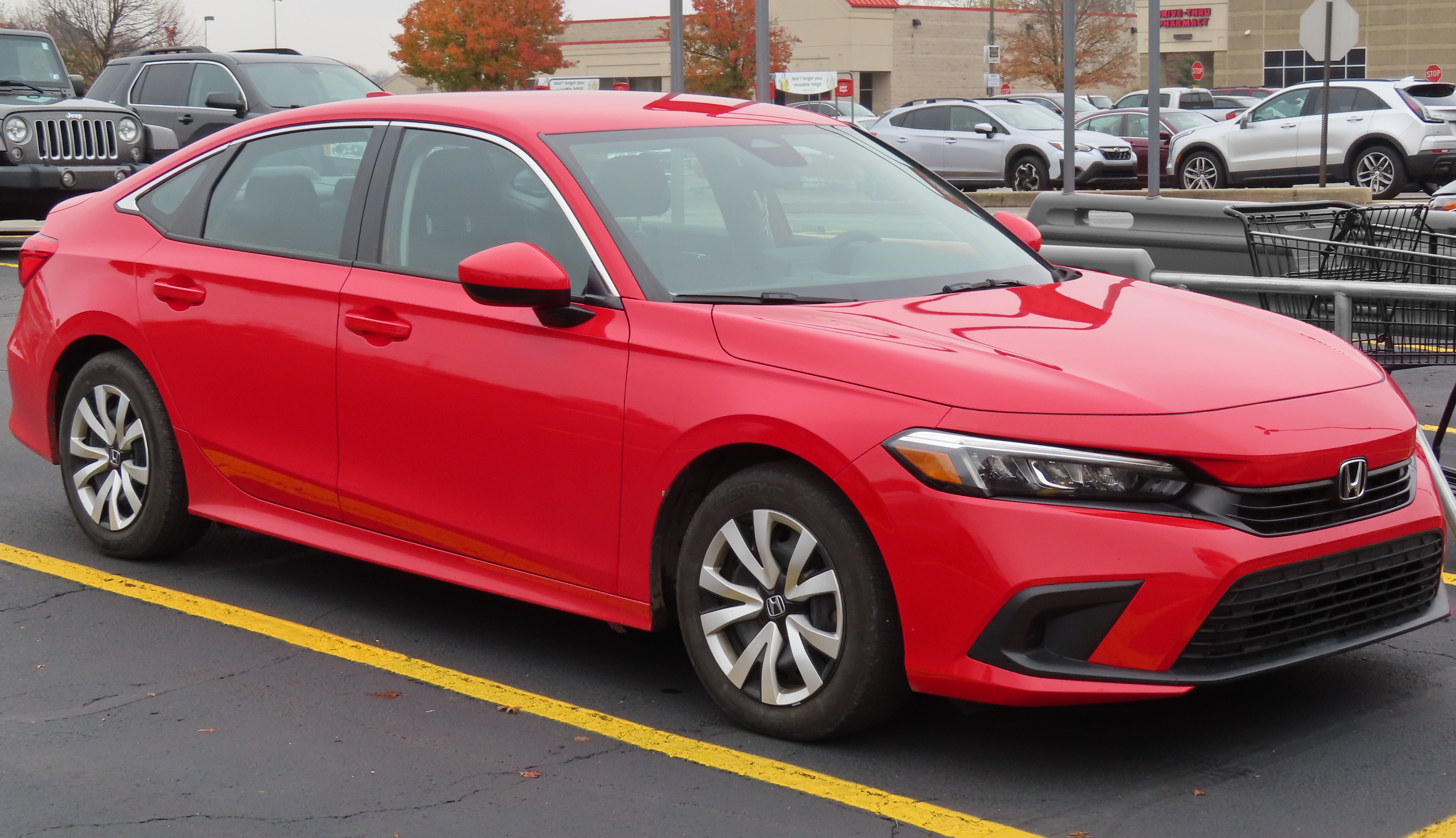
The Honda Civic is a small car that many people like because it's dependable and doesn't use a lot of gas. It's been around for a long time and is known for being a good choice for everyday driving. The newer versions are a bit bigger and have a modern look.
The Acura MDX is a family-friendly SUV that offers a lot of space and comfort. It's known for having a powerful engine and a smooth ride, making it a good choice for long trips.
A naturally aspirated engine gets air into it without any extra help from turbochargers or superchargers. This means it relies on the air pressure around it, which can make it feel different when you drive.
Honda Magic Seats are special seats in some Honda cars that can be folded down in different ways. This makes it easier to carry larger items in the car.
The Monroney sticker is a label that shows important details about a new car, like how much it costs and what features it has. It's something you should look at when buying a new car.
The destination fee is what you pay for the car to be delivered to the dealership. It's an extra cost on top of the car's price that you usually can't avoid.
Miles per gallon tells you how far a car can go on a gallon of gas. The higher the number, the less gas you need to drive a certain distance, which is better for your wallet and the environment.
The Honda CR-V is a bigger SUV than the HR-V, providing more room for passengers and cargo. It's a popular choice for families because it's reliable and practical.
Car
Lexus UX300h F-Sport
The Lexus UX300h F-Sport is a small luxury SUV that uses a hybrid engine, meaning it runs on both gasoline and electricity. It's designed to be stylish and comfortable while also being fuel-efficient.
A hybrid powertrain uses both a gas engine and an electric motor to make the car run better and save fuel. It helps the car use less gas and produce fewer harmful emissions.
The Toyota Prius is a car that uses both gas and electricity to help save on fuel and be better for the environment. It's one of the first cars to really focus on being eco-friendly. People talk about it because it shows how cars can be made to use less gas.
The Toyota Camry is a popular family car that is known for being reliable and comfortable to drive. Many people choose it because it has a good reputation.
Fuel economy is how far a car can go on a certain amount of gas. If a car has good fuel economy, it means it doesn't use much gas to travel a long distance.
The BMW Neue Klasse is a new line of cars that BMW is making, focusing on electric power and modern looks. It's part of their plan to make better cars for the environment. People mention it because it could change how BMW makes cars in the future.
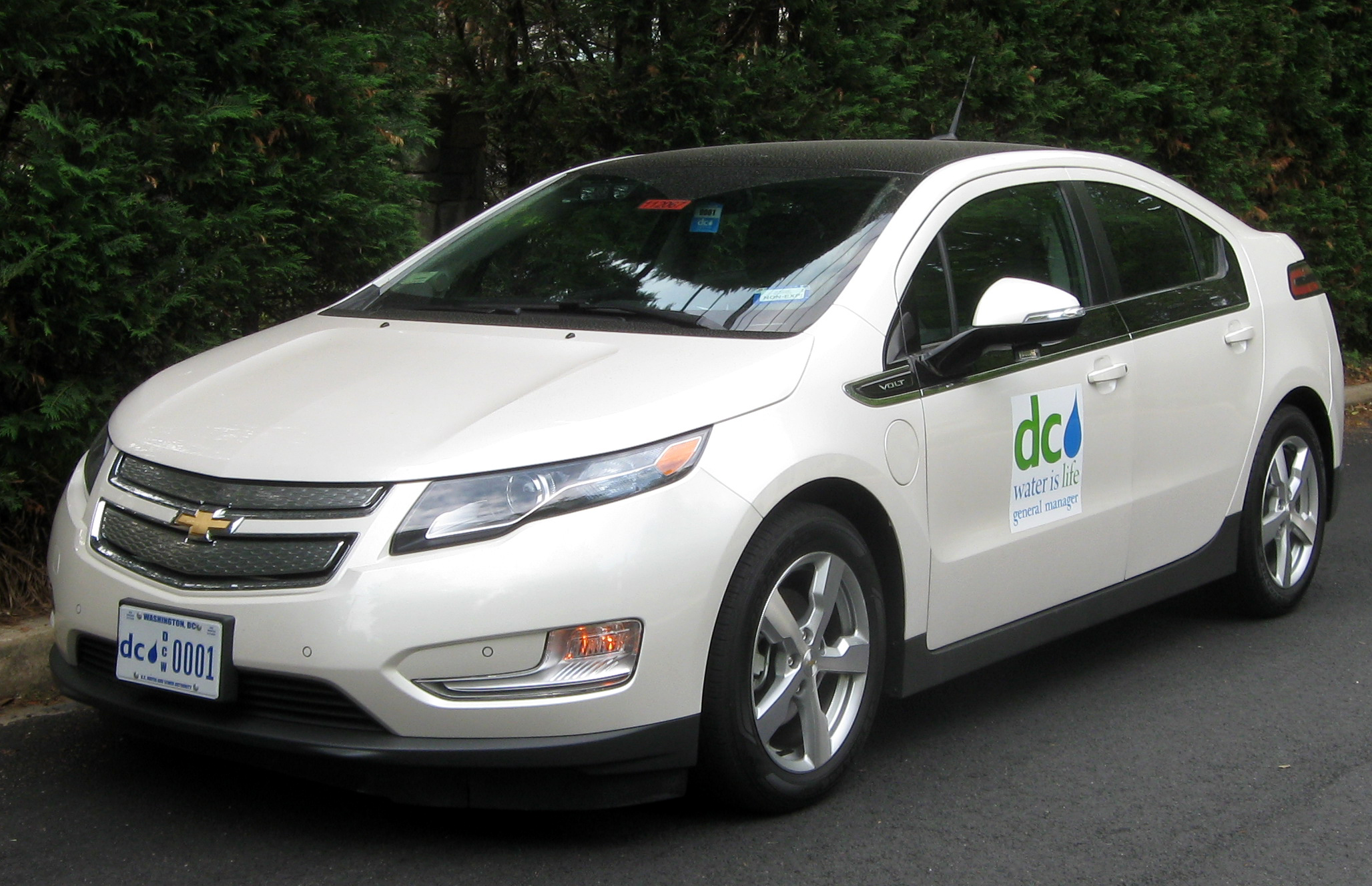
The Chevrolet Volt is a car that can run on both gas and electricity, which means you can drive it without using gas for a little while. It's a good option for people who want to save on fuel. People mention it because it was one of the first cars to mix gas and electric power like this.
The Lucid Air is a fancy electric car that can go really far on a single charge. It's designed to compete with other luxury cars but runs on electricity instead of gas. People mention it because it's a new and exciting option in the world of electric vehicles.
The Toyota Crown is a large, comfortable car that feels fancy inside. It's been around for a long time and is known for being smooth to drive. People mention it because it's a nice option from a brand that usually makes more affordable cars.
The Jaguar F-Type Coupe is a beautiful sports car that's really fun to drive. It has a powerful engine and a stylish look that many people admire. People talk about it because it's a great mix of luxury and speed.
The Mercedes-Benz SL is a stylish sports car that can be driven with the top down. It's known for being very powerful and luxurious, making it a dream car for many. People talk about it because it combines fun driving with a fancy look.
The Hyundai Ioniq 5 is a new electric car that looks cool and has a lot of space inside. It can go a long way on a single charge and charges quickly, making it convenient. People mention it because it's a great choice for those looking to drive an electric car.
The Rolls-Royce Phantom is a super fancy car that's all about luxury and comfort. It's made with the best materials and is designed to be very smooth to drive. People talk about it because it's one of the most expensive and luxurious cars you can buy.
The Cadillac Optiq is a new electric car that Cadillac is planning to release, focusing on luxury and high-tech features. It's part of their move to make more electric cars. People talk about it because it could change how Cadillac is seen in the car world.
The Jeep Wrangler is a tough-looking car that's great for driving off the road, like in the mountains or on trails. People love it because it can handle rough terrain and has a fun, adventurous style. It's often talked about because of its ability to go places other cars can't.
The Chrysler Pacifica is a family-friendly minivan that has a lot of space for kids and their stuff. It can also use both gas and electricity to help save on fuel. People talk about it because it's comfortable and has many features that make family trips easier.
The Volvo XC90 is a big, fancy SUV that's really safe and comfortable for families. It has a lot of space inside and looks nice, too. People talk about it because it focuses on keeping everyone safe while driving.
The Honda Accord is a larger car that's known for being very reliable and lasting a long time. Many people choose it because it's comfortable to drive and has plenty of room inside. It's often mentioned because it can go for many miles without needing a lot of repairs.
The Honda Passport is a bigger SUV that has lots of room for passengers and cargo. It's good for families and can handle some rough driving if you want to go on adventures. People talk about it because it's a practical choice for both city and outdoor driving.
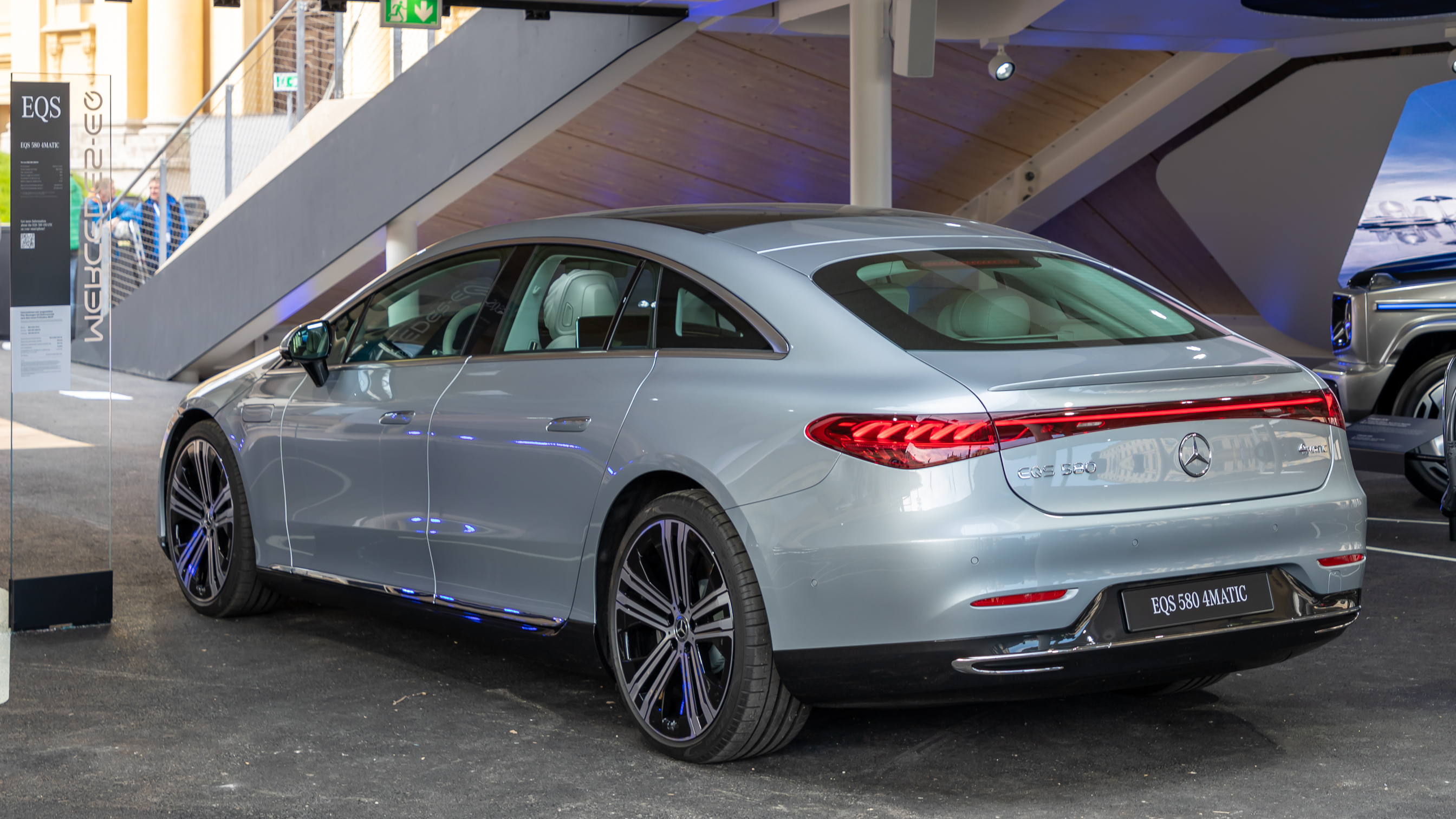
The Mercedes-Benz EQS is a fancy electric car that has a lot of high-tech features and a very nice interior. It's designed to be luxurious while being good for the environment. People talk about it because it's a top choice for those who want an electric car that feels special.
LIVE
If you're a podcast host, listen up this once for you.
My name is Allie Jackson.
I'm the host of Finding Mr. Height,
a dating and relationship podcast
that I've been doing for four years now,
sharing my positive and practical approach to dating
that's built on my own life experience.
And I wanted to share another experience that I've had,
my secret behind monetizing my show.
It's called Red Circle.
And I was just telling my colleague
about how much I love their platform.
With Red Circle,
not only am I getting a seamless hosting experience,
but I also love the support I receive in AdSales.
It's not just typical AdSales either.
It's targeted opportunities based on my show and my life.
And the platform is super simple.
You just set your preferences
and Red Circle matches you with sponsors
that align with your show.
You can vet every opportunity
and their platform gives you great analytics.
More recently too,
my Red Circle team has brought me opportunities
outside of my podcast on social media.
To really augment the podcast partnerships,
bring them full circle.
I just can't recommend them enough.
If you want to give it a try,
go to redcircle.com to get your free trial.
That's redcircle.com for a free trial.
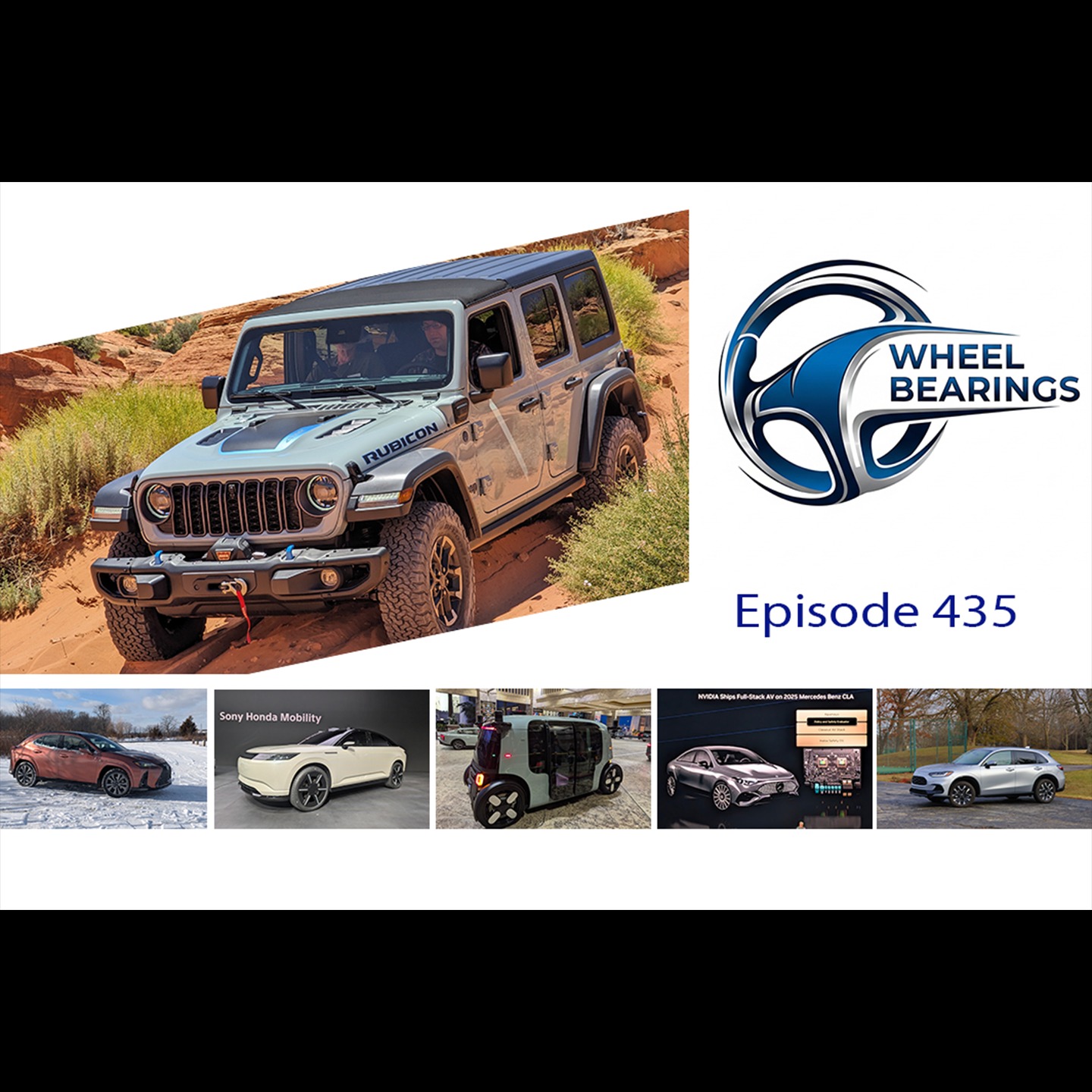
This is episode 435 of Wheel Bearings.
I am Sam of Well Salmon from Telemetry.
I am Nicole Wakelin from Top Speed.
And I'm Roberto Baldwin from SAE International.
And this last week, when Robbie and I recorded,
I was already in Vegas getting prepared for CES.
And now Nicole is back with us.
And there's a bunch of stuff from CES to talk about.
And a bunch of other stuff too.
There's lots happened this week.
Stuff.
It was a week full of stuff.
Craziness.
Yes, yes, lots of craziness.
But let's start with what we've been driving.
Nicole?
So I get to go first?
Okay, I have been driving the 2026 Subaru Outback Premium
in Sapphire Blue Pearl.
It's very pretty actually.
I decided blue cars are my favorite color.
I like red cars, but red is red.
The Sapphires are pretty blue.
Like that song from the 90s about blue cars?
What?
Oh, is there a song?
I don't even remember it.
I don't remember that song.
Tell me all your thoughts on God
because I really like the meter.
Oh, now I know what you're talking about.
That song, yeah.
I think the song is called Blue Cars.
Blue Cars?
Well, this is not that song, but it is a blue car.
So the Outback was completely redesigned,
seventh generation of this.
So they've done all sorts of great stuff
to make it newer, faster, better, stronger.
It's much boxier.
It has this very boxy rugged.
Like it was courier.
It's different.
It's different.
Tell us what you really think Sam.
So they've changed how it looks.
You know, it's funny because the styling,
I feel like the SUVs sort of swing one direction
and then the other, they go very like,
we must not look like an SUV.
We want to fake you out.
I want you to think I'm a coupe.
I'm just rounded and curvy and sexy.
I'm like, nah, I'm an SUV.
I'm boxy and this one went the boxy direction.
So the MSRP on this, it starts,
I don't have a, I'm unroany and they're shocked,
34, 995 and destination.
What I have, you guys want to take a guess?
We've got three different numbers.
So I'm going with one of them.
Mm-hmm.
Pick whatever number.
I'm gonna go with 1495.
Okay, I had 1450, so Sam wins.
I also found another spot that said 1595,
but that seemed like a weird number.
So we're going with 1450.
Either way, Sam wins.
Sam wins, no matter what, Sam wins.
Nicole's always wrong, Sam always,
I'll call it problems, Sam always wins.
That's how it works.
No, I think Robby, some day we'll go back through
and do some stats, but I think Robby
actually wins more often.
Is Robby the winner more often?
I hope it's not me.
Oh, maybe it won't be me.
I've got to go back and do all the specs.
All the specs.
So two row cross, it was five rows, five person.
Two row cross over, five rows.
Mine has right now, it's January in New Hampshire,
so it has the super rugged plastic floor mats
designed to keep the salt from eating your car.
And it's funny, the regular ones are in the back.
Like they swapped them out.
I'm like, oh, there's the pretty ones.
They're like in the cargo area when I lifted it up.
But those get destroyed in a heartbeat
if you live anywhere where there's salt.
So this is kind of like the perfect condition.
This is like why you buy a Subaru
if you live in New England is the month of January.
That's pretty much it.
Because it'll get you through whatever you have.
I drove it in, we had a little bit of an ice storm.
And I was driving around in that because I had to
and then it was encased in ice in my driveway
to the point that I had to like bang on the door.
Like bang, bang, bang, bang, release door.
Like yeah, bang, bang, bang, around the scene of the door.
It's like, please be free, please be free.
So it was great.
And even my driver was covered with ice
because of when I came home.
And ice is like the trickiest of things.
Snow is one thing, but when it's icy
and the control you have when it's icy
and your tires make such a big difference.
But it was really good driving around
in really horrific conditions.
Didn't have any problems getting over the little snow banks
that I see a little mass at the end of the driveway.
So as far as winter weather driving,
which I don't always get to test a vehicle in,
I did test this one and it was fabulous.
There's a 2.5 liter four cylinder under the hood.
It's a 180 horsepower, 178 pound feet of torque.
There's a CVT.
You know this is a CVT.
Like you really know this is a CVT.
It is a bit on the loud side.
It's like almost disturbingly so.
I was a little disappointed in how loud it was
because you don't have to really,
between the sound of the engine and the sound CVT,
it just constantly sounds like it's working
really, really hard.
Now I think it's one of those things
that if you are not someone who is criticizing
and critiquing cars like the three of us do,
you might just say, oh, engine, whatever.
But it is kind of loud.
It's not exactly the quietest driving experience,
but it's enough to, it gets you up to speed.
I mean, it's strong enough.
It wasn't a problem driving it.
It was, you got going, it was good.
So in terms of that, I enjoyed it.
And it has, there's now a 12.1 inch infotainment touchscreen.
There's a 12.3 inch digital instrument cluster.
So it looks, it has an updated look.
It looks modern inside.
Felt like the touchscreen was nice and responsive,
which is good.
The only thing I could not get to,
it just, it fought with me the whole time.
So I don't know if this was just,
I even took the case off of my phone.
So I could not get the Qi little charging pad to work.
And it's, and at first, sometimes my case does that
just because of my case.
So I popped it off, I put it in there.
It still won't work.
It is as centered as one can possibly get it
on that little charging pad.
It wouldn't work.
And then when I finally got it,
like it would be like off on, off on, off on.
But it's also, it's just smooth, smooth plastic.
So even if you do get it in the right spot,
the first time it has an opportunity
to move a quarter of inch out of place,
it's like, whoop, you stopped.
I'm sliding out of place.
So that was like, what a, like my biggest complaint.
Gosh dang it, make it so that your phone
doesn't slide around on the charging pad.
Like give it some kind of little bumpers
or give it some kind of click into place
or something to keep it from just shooting around
inside that center cup of the area.
Nissan's got you covered on the,
starting on some of their 2026 models.
I know.
They got the first G2 with the magnets in there.
I love this idea.
Make everything just, cause then you know too,
then you're not doing that.
Like you're like, is it on, is it on?
No, is it on?
Like if you ever do that, you just kind of
just keep sliding a little bit,
slide a little bit, slide a little bit
until you think, oh wait, there you go.
And you realize that it's,
but then as soon as you go around the corner,
this one's really bad.
We have wireless charging in the Hyundai.
Yeah.
And we never use it.
I use it all the time.
And it's below, it's on the bottom.
Like we should use it a lot.
Like you can get to it and it's in a spot
where it shouldn't slide, there's a little lip for it.
Like everything should work as it should.
And it does when you plug in it,
but it's like, man.
I was born as man.
I love having wireless charging.
On the EV6, it's right on the center console.
Oh, that's how I lost my phone.
You lost it?
Well, I left it in the car at an EV6 GT drive
because we were doing, you know, we were drifting
and it shut off and I got back to the hotel
and I had to call them and be like,
hey, I think I left my phone in the car
and I had to find my iPhone on.
And they're like, okay.
And then they went to the taco place
before they brought me the iPhone.
I was really tempted.
They like text them again and be like,
hey, could you bring me some tacos?
Yeah, while you're out,
I could take a taco before you come back.
If you guys can't be stressed about my phone.
I was really stressed.
I mean, you can get mostly everything I needed
on my computer.
So like all my text messages, emails, everything.
That is the worst thing I've found.
The big problem we have both in the EV6
and I've had in a lot of other cars
is, you know, after a couple of minutes,
it comes up and says, you know, your phone's getting too hot.
Too hot, yeah, it'll stop charging.
And it's not clear why that hit.
And then on a bunch of other cars,
like the one that's in my driveway right now,
you get the message that, you know,
you can't have metallic objects in between the phone
and the car.
I mean, the phone is a metallic object.
You can't just like,
you can't rest it in aluminum foil.
It's going to be metal.
Yeah.
So, yeah, we just, I don't know.
We plug it in.
Yeah, that's what I did.
I put a cable in the car for my wife and, yeah.
I like the wireless.
So I try to use it in press cars and some of them work.
Well, some of them don't this didn't,
but overall, I mean, I like, I do like the Subaru.
It is the car that you get when you want durable rugged.
And I was even looking at, you know, like I said,
there was ice.
Durable rugged?
Durable.
Oh, durable.
Okay.
Now she said durable.
Mr. Ruggard.
Durable, durable.
I spoke to him.
Durable rugged.
Durable rugged.
It's durable.
Durables don't seem like the most rugged animals to me.
Well, you don't pretend you never have a durable.
I mean, they're pretty sneaky little things.
Anyway, I did like driving it and, you know,
for the case study of like, I live in New England.
I want a car that has plenty of room that can handle
the mud and the muck and also the salt.
There is a lot of salt on this car.
Like the blue is not really blue.
It's kind of a easy white at the moment,
but that's like the worst for your car,
but it also means the conditions have been terrible.
And it's fine.
Even getting it out of the car, like I'm looking at getting
on the, you know, the really rugged floor mats
that I was talking about, but it's not so delicate
that every time I get in, I think, oh gosh,
what am I bringing?
I actually am not worrying about it.
Like, not like I'm trying to ruin the Subaru,
but there are some cars you get in in this time of year
and you think, oh man, my shoes are destroying this thing.
You don't worry about it as much, which is kind of nice.
It's sort of nice that you feel like you don't have to panic
that you've destroyed your car because there's salt
on the roads or chemicals or whatever the heck they're
putting on it wherever you live because it's harsh on things.
But it does have that, that rugged, durable feel to it
so that you don't think that you're going to ruin your car.
And I feel like that's kind of why you buy Subaru.
You want it to hold up and you want it to be able
to handle things like snow.
You just want a rugged car that's comfortable,
that doesn't have a lot of frills
and has a lot of buttons in it.
No. That's it.
And you want, and you have a dog.
That's it. That's why you buy Subaru.
Or kids, because a dog or kids equal levels of mess,
the kids probably more.
But yeah, dog or kids.
The kids don't usually have claws though.
Yeah, but kids are destructive little buggers.
They are.
Kids do things unexpected, dogs scratch stuff
and chew on things.
Kids are like, how did this, what happened?
How did this fall apart?
What did you do?
So yeah, so overall, I mean, I like it.
I think it's nice improvements.
I know styling, I can tell Sam, you're like,
but I like how it looks.
I think it looks okay.
I mean, as they say, beauty is in the eye of the beholder
and I'm not beholding any beauty here,
but that doesn't mean it's not a good view.
I don't know that I'd be holding beauty.
Beauty's going a little far.
I'd be holding attractiveness.
It's too SUV in the outback who's always like a wagon.
Yeah.
It looks and feels like an SUV.
Yeah, it's lost.
It's wagging.
But also, that's what people buy.
Yeah.
If you're Subaru, you make like seven cars.
And they have the trail seeker coming now.
I mean, for people who prefer the look of the old outback,
well, frankly, we have all the outbacks before this one.
Every outback prior.
Yeah.
The trail seeker, that's the car for you.
So I'm curious, obviously, you used CarPlay,
I assume most of the time,
but did you mess around with the new infotainment system?
Because this one is the first Subaru,
I think with a new infotainment system in there,
a new Subaru infotainment system,
unlike the Salterra, which has a Toyota,
a skinned Toyota system.
This has Subaru's new system in there.
Did you play with that at all?
I mean, I played around with it a little bit.
I didn't like deep dive into it.
But I did think that the system,
more than old Subaru systems, was more responsive.
Like I feel like it's the layer, I thought it was better.
It's an improvement.
It's not a dramatic improvement to me.
But I thought the old system was kind of,
it felt old, let's put it that way.
It just felt old in how it was laid out
and how it looked.
Just even the design of the icons and stuff on the screen,
like it had an old style look to the graphics almost.
This one now looks modern.
This one looks a little better, looks a little current.
I didn't have any issues with it.
I thought it was more intuitive than the old one.
So yeah, definitely better
than what the prior Subaru systems were.
Sam and I described, yeah, we described the old system
as an old iPad.
Yes, it just like everything works on the old one.
You're just like, this feels like it needs to be newer.
Yeah, I mean, last week when you weren't here,
I talked about the WRX TS that I had,
which great car, I really liked that car,
except for the infotainment system,
which was slow and clunky and took a while to boot up.
Basically like using a Gen 1 iPad in 2025.
Yeah, and this one, it's lost that feel.
Like it's not like this is some giant step forward
in infotainment systems,
but it's improving over what Subaru was doing before.
If you had an old Subaru with older system
and you now get the new Subaru, you're like, ah,
they fixed this.
So yeah, I think it's better.
And I believe in your neighboring state of Vermont,
Subaru's are the only cars that you're legally allowed
to register for.
Yeah, it's like a law.
Correct, correct.
They won't let you register anything but a Subaru.
I think even in New Hampshire,
there's a limited amount of time you can live here
before you're required to register at least one.
It just shows up in your driveway.
One day you're fancy.
When does this come from?
You get a bill, you're just like, it's okay.
It's your time with the Subaru.
Here's your Subaru.
Here it is, you can stay out.
This is how I live, okay, fine.
So that's the Subaru out back.
So I liked it overall, nice improvements.
I think they did a good job,
I think other than like you're saying,
less wagging, more SUV, but if you're okay with that,
I think this is a good vehicle
and they did some good improvements to it.
Okay, there we go.
Cool, woo!
Well, did you drive anything, Robbie?
I did not, what was I doing?
I don't know, working, I guess.
Did I drive anything?
You talk, I'll look.
You talk, I'll look.
Well, I had two different compact crossovers
that I spent time with that one is larger and less expensive
and definitely I think less fun to drive.
And the other one is arguably less attractive,
but more fun to drive.
Actually, even the other one is not terribly attractive.
So I had the 2026 Honda HRV all wheel drive VXL,
which is the highest trim level of the Herve.
And unlike Subaru, where they call their base model premium
on all their vehicles, which is kind of odd.
It's easy.
Yeah, Honda doesn't do stuff like that.
They just have random letters and stuff.
So yet the EXL is the highest trim level of the Herve, the HRV.
And so this is the second generation of HRV in North America.
The first generation was based on the Honda Fit platform.
And the rest of the world got an updated HRV
that's based on the latest generation of the fit or jazz,
depending on where you live.
But because we don't get that vehicle here
in North America anymore, they gave us a new HRV
that is a little bit bigger
and it's now based on the Civic platform.
And the styling, it's not bad.
It's just kind of, meh, it's just kind of boring,
kind of a blob, so it's not exciting.
It's absolutely inexpensive.
You could rob a bank and they wouldn't be able to find you.
If you got to watch one of these.
This is like the ultimate camouflage car.
Where'd they go? I don't know.
Sit right there.
What, I don't see anything.
It's right there at the curb, but where?
I don't see it.
We'll never catch these thieves from my masterminds.
At least this one, unlike the ADX,
which is basically the same car, but more premium.
This one thankfully did not come in urban gray.
This one was finished in a silver,
which is slightly less boring.
But it's a fine car to drive.
It has less power than the Acura ADX,
but it also weighs about 300 pounds less.
So that's a plus.
That was one of my complaints with the ADX.
The powertrain was okay, but it was too heavy.
It was about 3,600 pounds.
The HRV is about 3,300.
And really, with the first generation HRV,
my biggest complaint with the car was the powertrain.
You know, that one had a 1.8 liter four cylinder
with a CVT.
This time around, it still has a CVT,
but it's got the base two liter naturally aspirated
four cylinder that's in the,
you can also get in the Civic,
which is I think about 149 horsepower,
if I recall correctly.
Sorry, 158 horsepower.
So, it's definitely more,
significantly more powerful than the previous generation HRV.
But it's not gonna get your blood boiling.
It's not exciting.
But it's also, it's not a slug.
So the one I had was the all wheel drive EXL.
The, when you get inside,
if you've been in a current generation Civic,
the environment will feel very familiar.
You know, it's, they've gone to,
Honda's gone to this more horizontal theme
like a lot of car companies do.
You know, it makes it look wider and larger than it is.
Across the center of the dash,
spanning all the way across is this hexagonal mesh
type of grille and the vents are behind that.
And the vents are manually controlled
as they should be in any proper car.
The seats, you know, are typical Honda comfortable.
They're not, you know, the, this one,
the EXL has the, has some power seats for the driver,
but you know, it doesn't have a huge number of adjustments,
basically four aft, you know, height
and the seat back angle.
But that's fine.
You know, for somehow Honda just makes them work,
work really well.
They're fairly supportive.
The, the HRV, like the Civic has a conventional shifter.
It doesn't have the push button style
that you find on a lot of Hondas and Acura's these days.
It's got three knobs under the center vents
for your temperature controls and fan speed.
There's another knob on the side of the nine inch touchscreen
that sits on top of the dash for volume.
You know, it's, it's all, it's just all very functional
and works, works well.
The, the one that I had had the gray per,
because it's in the EXL has leather interior.
It has gray perforated leather.
You can also get it in black, which, you know,
looks a little more, the gray, the gray looks a little brighter.
You know, it looks, makes it look a little,
feel a little more open and airy, but, you know,
I'm not sure I'd actually want to have the gray,
especially if I had to home my dogs around or kids,
because it's, you know, it's a, it's a very light gray.
And so it's, you know, it's much more likely to pick up
colors that it didn't originally have.
Let's put it that way.
Magic colors.
Yes, magic, magic colors.
You know, the, the, the driving dynamics are fine.
It handles and rides reasonably well, you know,
as you would expect of anything with the Civic platform.
You said it, you can definitely feel the difference
in the weight between this and an ADX, the ADX,
even though Acura is supposed to be the performance brand
of Honda, that particular car, just because it's heavy,
just doesn't feel that lively.
This one, you know, not as lively as a Civic,
but definitely I think better than the ADX to drive,
even though it has a little less power.
And overall, you know, it's as a, as an urban, you know,
as a relatively compact, urban commuter crossover,
you know, I think it works really well.
I think, you know, one of the things that, you know,
this one obviously misses being based on the Civic,
rather than on the Fit platform.
The old, the old one had the Honda Magic seats
that you could either flip them down.
So you have a big flat load floor
or you can flip the rear seat cushions up,
which, you know, if you have a tall object
to put in there like a bicycle, for example,
you can fit some really tall stuff in there
because it's got a relatively flat floor
and those seats fold up and you get a good amount of room.
The HRV's wheelbase is a little bit shorter than a Civic,
so you actually get a little bit less leg room
in the HRV than you do in a Civic,
but you get more headroom because it's taller.
So you're, you're trading off,
depends on, depends on the proportions
of the people you're gonna carry around.
If you've got younger children with long torsos,
the HRV may be a better choice.
Otherwise, you know, the, if they got long legs,
the Civic might be a better choice for you.
All in, let's see, the one that I had is straight,
oddly enough, this one did not have a Monroni,
which is fairly unusual for, for here,
but I think it's because this one had just come into the,
the local press fleet and they didn't have it all scanned
and put in the system yet.
So total MSRP on this one with for the EXL,
basically no other options on it.
You know, Honda tends to package stuff,
so there's not a lot of individual options with Hondas.
You basically, you know, you picked your trim level
and it's got a certain set of stuff.
There are a bunch of user, dealer installed accessories
that you can get, but all in,
this one came to $33,300, which, you know, is not bad.
You know, like I said, it's not,
it's not an exciting, exciting car to look at,
but it works, it's functional, gets the job done,
it's got a decent amount of cargo room, decent amount of space.
You want to take a guess at the destination fee?
Uh, $295.
Oh, I was going to say that.
I'm going to go, I'm going to go lower, I'm going to go,
I'm going to go lower, I'm going to go,
no, I'm going to go higher, I'm going to go $1350.
You win.
I win?
It's actually $1450.
Who take that, Robbie?
Steal my number.
Oh, sorry.
The one other issue I had with the HRV
was the fuel economy was not great.
You know, no hybrid available in HRV,
and I, you know, it was, it was fairly cold
the week that I was driving it,
and it averaged about 23 miles per gallon,
23, 24 miles per gallon, which, you know,
for a relatively smaller car, it's not that impressive.
You know, it'd be nice to see Honda offer
their hybrid system in the HRV,
since this is based on a civic platform,
should be fairly straightforward to do,
but they do not currently offer the hybrid in the HRV.
If they did, that would absolutely be the one I would recommend
because it would have more power
and substantially better fuel economy.
But if you want a Honda hybrid crossover,
you're going to have to step up a size class
to the CRV instead of the Herve.
So that's, that's the 2026 HRV all wheel drive VXL.
The other vehicle that I drove
is also a compact crossover,
but this was the Lexus UX300H F-Sport handling.
So this is the smallest Lexus currently sold
in North America.
I think they actually do have a smaller model
that they sell in Japan.
I can't remember the name of it,
but they have an even smaller crossover
that they sell there that I think is based on the Yaris,
if I'm not mistaken.
And this one has the two liter four cylinder
hybrid powertrain from the Prius.
And it's 196 combined horsepower.
It, you know, it, it is the typical,
you know, it's the same hybrid system you find
in a lot of Toyotas and Lexi.
But because this is a Lexus,
it's got a little more sound deadening material.
And so even though the behavior is largely the same
as what you get in a Prius or a Camry
or a Corolla or a RAV4,
in terms of, you know, when you go to accelerate,
it revs the engine up.
It doesn't sound quite as obtrusive.
You know, the engine is still, you know,
it's not the most refined engine in the world,
but it works and it's just a little less,
a little less noisy in the passenger compartment.
Cause I think they, you know,
they add some extra insulation to keep that noise up.
The UX comes with front wheel drive.
It's not all wheel drive.
It's got dual zone climate control,
manual folding rear seats, there's a tonneau cover.
The color on this one is the copper crest color,
which is sort of a cross between a copper color
and sort of a rose gold.
So it's a little more pinkish than you would typically find
in most shades of copper.
You know, it's an attractive color.
You know, I'm not a huge fan of the design,
the shape of the car, but the size, I like the size.
It's actually a little smaller than the HRV.
And when you walk up to it, you know,
the roof line is surprisingly low.
It, you know, it feels more like a car.
It's actually, it's a few inches taller
than a Corolla or a Civic, but not as tall as an HRV.
Certainly not as tall as an RX
or most other larger crossovers.
So it feels more like a slightly tall compact hatchback,
which by me, you know, in terms of the form factor,
I'm actually good with that.
I like that.
You know, so you're not unlike some, you know,
a lot of, you know, traditional passenger cars,
you know, especially as you get an older,
you know, you may not want to drop down into the car as much.
You know, I think, you know, this one's got a reasonable height.
You know, it's easy to get in and out of.
You don't have to climb up into it.
You don't have to drop down into it.
It's kind of like that sweet spot right in the middle there.
And the back seat is a little tighter.
It's, you know, I can say it's smaller than the HRV.
So, you know, you can you can certainly go out to dinner
with with another couple with a pair of adults
or your adult children.
But you probably don't want to take a long road trip
with two adults in the back seat.
It's definitely a little more snug back there.
Fuel economy, of course, you know,
it's as a Toyota slash Lexus hybrid system
that is not on a body on frame truck or SUV.
Fuel economy is excellent.
It's rated at 45 city, 41 highway, 43 combined.
I got, I think, I'm trying to remember now,
I think I got 44-ish on my fuel economy loop.
Again, that was in cold weather.
So if you, you know, if you're driving it in warmer weather,
it'll probably do even better.
This one had power moonroof, 18-inch sport alloy wheels,
camera all season tires.
It's got the same infotainment system
that we've had on Toyotas and Hondas for a few years now,
which is, you know, it's fine.
It's, you know, my the performance of it is good.
My, as I've said before, my only real complaint with it
is just the not have not being able to display
two things on the screen at once,
like your maps and your media player.
So you have to toggle back and forth to, you know,
if you want to pause what you're playing
while you're listening to nav, things like that.
And that's, that's something that's going to be addressed
as models get updated, starting with the new RAV4.
That's the first one that's got their,
their next generation infotainment
and they take care of that problem in there.
Overall, you know, it's a, it's a nice premium small crossover.
So if that's something you're looking for,
it's not, it's not a bad deal.
This one had a few options on there,
the heads up display for 900 bucks.
The premium paint, that copper crust paint was $595.
Mud guards, few other things.
Grand total came to $48,795,
which is, you know, seems, seems a bit pricey
for, you know, a small, you know, small hatchback.
But it's, you know, when you compare it
against other premium offerings, you know,
in the size class, you know, if you load,
if you take an Acura ADX and load it up, you know,
with, if you get like the A-spec
with the technology package and all that,
you're getting close to this price point as well.
I think this was actually more fun to drive than an ADX.
So this, you know, it's a, it's an interesting choice.
If you like the, the design, you know,
I think it's, it's got a lot of good functionality.
And you want to take guesses at the destination charge?
14.95.
Uh-oh.
Robbie gets it.
It was actually 11.50.
Wow.
Relatively modest.
Okay, totally the wrong way.
Yeah.
Even though this, this car is coming from Japan.
It's built in Japan.
So have you ever searched for yourself online?
I do it because in the work I do as an industry analyst
and journalist, I have to maintain my credibility
and can't afford to have it damaged by bad actors
that are abusing my data.
You'd be surprised and upset about what you can find
about yourself online.
Your phone number, home address,
even details about your family are out there,
whether you agreed to it or not.
That's because data brokers are collecting
and selling your information to marketers, scammers,
and basically anyone willing to pay.
It's the reason robocallers know your name
and why ads seem to track you across every screen.
Or a fight's back.
They remove your personal data from broker sites
and keep it off.
Or also alerts you fast if your information shows up
in a breach or on the dark web.
But or it does more than just cleaning up your data
from brokers.
It's a full suite of digital security tools
that protects every part of your life online.
Or it gives you a VPN to stay private,
antivirus to block threats,
and a password manager to keep your logins safe
and spam call protection to cut off the scammers.
Or it also scans the dark web for your most sensitive
information like your social security number,
bank logins, and passwords,
and notifies you instantly if they're exposed.
And if your identity is ever stolen,
you're backed up by up to $5 million in insurance
and a 24-7 US-based fraud support
to help you recover it quickly.
Other services charge about the same,
but they only cover one or two areas.
With Aura, you get it all.
Data broker removal, credit and identity monitoring,
device protection, and fraud support,
all in one simple app.
Aura cleans up what's already out there,
protects what isn't, and puts you back in control.
Right now, you can try Aura free for 14 days
when you visit aura.com slash remove.
That's enough time for Aura to start removing
your personal information from data broker sites.
Sign up today at aura.com slash remove
and get the peace of mind that your privacy,
identity, and finances are safeguarded.
That's Aura.com slash remove.
Certain terms apply, see the site for details.
This show is sponsored by BetterHelp.
New Year's resolutions are weird.
Change this, start doing that.
A new gem membership?
No.
The reality is if you're like me,
real change that helps me day to day
comes from finding tools to help me better interact
with friends, family, and work,
and just deal with my general anxiety.
It's easy to get overwhelmed by the world at large
and the pressure to make some big changes doesn't help.
What has helped me navigate an increasingly complex world
is talking to a therapist.
To help you find someone to talk to,
BetterHelp makes it easy to get matched online
with a qualified therapist.
Getting started is easy.
BetterHelp does the initial matching work
so you can focus on your therapy goals.
They have a short questionnaire
that helps you identify your needs and preferences
and with over 12 years experience,
they're gonna help you find somebody.
That means they typically get it right the first time
and well, this next part is very important.
If you aren't happy with your initial match,
you can switch.
You can switch to another of BetterHelp's
over 30,000 therapists.
At any time.
Sign up and get 10% off at betterhelp.com.
That's better, H-E-L-P.com.
Did you know you can support wheel bearings directly?
Head to patreon.com slash wheel bearings media
and you can become a patron today.
Your contributions will help fund the platforms and tools
we use to bring the podcast to you.
And exclusives and improvements are already on the way
thanks to your generosity.
So if you want to be part of an automotive podcast
like no other, head to patreon.com slash wheel bearings media.
We've updated the wheel bearings merch store
and now there's a whole bunch of new choices,
new colors, new styles, t-shirts, sweatshirts, hoodies, hats,
mugs, travel mugs, stickers, aprons, tote bags,
you name it, you can get your wheel bearings merch
at shop.wheelbearing.media.
Go check it out.
That's shop.wheelbearing.media.
Okay.
All right, so that's the garage.
Let's talk about some other stuff that happened this week.
So Nicole and I were both in Las Vegas.
I'm not sure how long you were there for Nicole.
Most of the week, I was there for a good while.
Yeah, I got there on Saturday.
I had some stuff starting on Sunday
and I came home on Thursday afternoon.
I got there Sunday and came home Thursday night.
So pretty similar.
But we didn't run into each other,
although I did run into some other folks
that I know just randomly.
Yeah, it's a busy place.
You see people or you completely miss them
and you have no idea how.
So what did you see?
I saw a lot of stuff.
It's kind of funny because there was a point in time
where all the automakers were suddenly appearing there
and now they're not.
Like they've sort of gone backwards.
They're just not with booths,
not with giant booths and displays and announcements.
Right, they're sometimes as a part of something else,
like they've got technology from XYZ company.
XYZ company decides to have their car
sitting in a booth to highlight their technology.
Well, Hyundai had a huge booth.
Hyundai did, but did you go to-
I just didn't have any cars in it.
I was gonna say, did you go to Hyundai's presentation?
No, because I went to the NVIDIA keynote instead.
Okay, the Hyundai presentation was really cool,
but had nothing to do with their cars.
Like all robots all the time.
And the robots, the little dancing robots,
as Robbie said, the dancing dog robots,
which was like, this is really cool,
but it was a little like thrown.
I'm like, I can't write.
Dancing dog robots are not necessarily automotive.
I mean, they use them when they're manufacturing.
And then they had their new humanoid robot
that's all with Boston Dynamics.
All with Boston Dynamics.
And then we had a Q&A with them afterwards
with a whole panel of some of the folks from Hyundai
and some of the folks from Boston Dynamics.
And it was really interesting,
but it was all about how their robots
are gonna be coming in.
It wasn't car related,
but it was really cool because it got Boston Dynamics.
Guy said, these will be in your house someday,
but first they have to work in a-
Not gonna be in my house.
In a manufacturing environment, right?
And they look very human, we're all kind of like,
but Skynet, like they show us this diagram.
No, no, no, they're all like that.
I mean, other than having two legs,
two arms and a head that don't really look human.
I know.
Well, it freaks me out is because
they have these really movable ball joints.
They can pick up a box and instead of turning their feet,
they just swivel their hips the other way.
I'm like, mm-hmm, it just feels wrong.
But anyway, so that was Hyundai's thing.
So Hyundai's thing wasn't actually cars.
BMW did have cars, they had a car.
They have the IX3 and they have it outside
in this silver lot, it's the loop at the silver lot,
outside the convention center,
which is apparently where they always have their stuff.
But the thing that was kind of interesting to me,
I mean, the car is the car, cool.
But they had the car, but they had no pavilion
like they've had in years past.
No, it was just like the car out there
and they had five or six of them, they had people,
they had really good coffee,
they gave me a little macaron, it was cool.
But you could chat with different people.
And I chatted with Nick Gersner,
who's a project manager for the IX3 in the US.
And it was interesting hearing about the car
because this is the first, am I gonna say it right?
Neue Klasse, am I saying it right?
I think, Neue Klasse.
So it's a big deal, it's this whole new thing
and it's the second gen IX3 and they reimagined it.
And they say it's gonna be available summer of this year,
summer 26, it was faster charging,
they redesigned the interior,
they had to have this like pillar to pillar screen
in the front, I guess you'd say like,
I don't wanna call it an infotainment,
I mean an instrument cluster
because it's kind of got everything in it.
But then there's also like a head up display
in some of them.
So it looks really cool, it's beautiful and it looks cool.
But the interesting thing when I was chatting with them,
I said, okay, cool, cool, cool.
But you're interested in this whole new platform
for your EVs, but people are not as hot to chat
on EVs in the US as they were a couple of years ago.
And they still have the X3, which is the gas version.
And they made this really, like really concerted after
to say, yes, gas is going nowhere.
We are not kicking gas to the curb.
There's two different vehicles, two different people
and we shall have them both.
So it was kind of weird to see like what they have
at the show is IX3, IX3, IX3.
But don't forget, we do gas vehicles.
So it wasn't like a back pedal, but it's interesting
to see an OEM who's clearly gone all in with that angle
to then try and say like, but also guys,
don't think of us as just an EV.
We're not going all EV.
We're gonna honor the gas engines.
And they talked about, I talked to a couple different people
there that all said the same thing.
Like you drive the EV and it's very nice
and they love it and it's fabulous.
But there is something different about being
in a gas vehicle and that's also fabulous.
Like it's a trade-off.
It was interesting to hear them say,
it's not this one is better and this one is worse.
It's just, these are two very different things.
You think, well, yeah, I'm not saying,
but I mean, they're saying in terms,
they're trying to say like in terms of like EVs period
or combustion engine period,
that there's very different like experiences
driving each of those.
So yeah, it was, but it was funny to see all these IX3s,
which look fabulous and looks like they've done
some great things and you know,
I hopefully will get to drive one sometime soon
and we'll experience what it's like.
Because this was really just seeing them
and looking at them and talking to product people.
But it was nice that they said,
you know, we're going, we have these EVs
that were really good at doing EVs.
They've been doing them for a long time.
It's not new technology for them.
Doing an EV is not a new space for BMW,
but hey, don't forget,
we're not getting rid of the gas engines.
Which I don't know that that was so much
the statement years ago, you know,
they sort of changed,
or not even if they've changed their point of view,
they're refocusing what they're saying.
Well, what's interesting I think about BMW is,
they have arguably done the best job
of any of the German automakers at building EVs.
Yes.
But they have also been,
they were the least aggressive
in terms of their prognostications
on when they would transition away
from internal combustion.
Exactly.
And this is why, you know,
that they focused on most of their platforms
were flexible platforms that could do combustion,
could do hybrid, plug-in hybrid,
or full battery electric.
And, you know, I, you know,
admittedly I was somewhat critical
of that approach in the past,
mostly because I thought it didn't necessarily
optimize to gain all of the benefits of an EV.
Yeah.
Yeah, because they were really, really good.
They were way better than I anticipated.
You know, now the I-4, the I-7,
you know, you lose some packaging efficiency,
you know, like it still has the,
you know, the drive shaft tunnel down the middle
in the back seat, you know, rather than the flat floor,
like you would have if it was a pure EV.
But, you know, that's,
everything else about it is so good.
And I'm, you know, I'm anxious to drive the I-X3
and the other Noia-class models to see, you know,
and they've done a lot of interesting stuff with that.
You know, because they did such a good job
with the powertrain, especially on their,
on all their EVs.
It's, you know, very efficient that I'm,
I'm looking forward to driving it.
The only thing I'm not looking forward to,
that I-X3, Vents.
Oh, no, are the vents in the, are they in the wind?
Oh, I can't even get the words out.
I don't have real vent controls, do I?
I didn't check that.
Oh, for the love of God.
Why?
This makes me sad.
This makes me sad.
Oh, I miss that.
But I'm still excited to drive it.
I still am, even though, you know, dang it.
That's like a deal breaker territory for me.
The ID Polo.
The ID Polo.
Mm.
Like, oops, are bad.
Yeah, we've made you angry. Yes.
It doesn't save cost. You know, it's more expensive, it's more complicated than mechanical events. And it just doesn't work as good.
Right.
I like how it looks. I like it. I think it's overall I like it better than I don't feel like the grill is so much to giant teeth in the front.
Because I think it looks like beaver teeth. I didn't like how it looked and I think it looks better. I did not like that giant beaver teeth era for BMW.
They did. Like they did not. They're like maybe it's like they thought maybe if we leaned into it hard enough that okay, everyone's going to like it.
They're like, hey guys, they still don't like it. Maybe we should change this up. They did. They did still sell them.
I can just walk up to it from behind or from the back. Like don't ever back into a parking space. Pull into your parking spaces. You only have to look at the rear and the side.
Yeah, so that so yeah. So that was so that was one of the I thought BMW is interesting because I just it wasn't so much the vehicle itself but just how they were addressing things.
I thought it was interesting and like they also said at one point like, you know, we think we did it right like other people who went all in with EVs were like, you know, we did not say that it was the end of combustion engines and we think we did it right.
Right. Yes.
Yeah.
Yeah.
Oh my gosh.
Well, I had dinner on Tuesday night with some of the members of the tech leadership team at Ford, including Doug Field, who's head of Model E and like chief product officer for EV and digital.
And Alan Clark was also there. He's can remember his exact title but he's he's in charge of the whole Skunk Works program, doing the universal electric vehicle platform and talked with them quite a bit during that dinner.
And it's, it's good. I'm going to be very interested to learn more and you know they're, they're promising to start telling us more about this, this platform and this vehicle over the coming months.
You know, before it's scheduled to go into production around the end of the year. And, you know, they want one interesting detail that came out of the conversations I had with Alan Clark.
You know, I asked him, so have you guys figured out how to keep the 12 volt battery charge and and there's no 12 volt battery. It's going to be an all 48 volt system like like the cyber truck.
Yeah.
I also asked Alan, like, you know, about software development and what percentage of the software team, you know, software engineers and his team came from legacy Ford versus coming from outside.
And he said it's about 85 90% came from outside, very few from from inside. And I asked Doug field, you know, one of the one of the problems when manufacturers have done stuff like this in the past like when GM did Saturn in the 90s.
And even forward doing team Edison, like six years ago, is that you know they did all kinds of cool innovative things. And they completely failed in being able to integrate that back into the main organization.
And, you know, I asked, you know, how, you know, are you going to be able to do that this time said, basically said, you know, for for the time being, we are keeping them completely separate.
They're they're not even trying to integrate that back. You know, essentially, most of the interaction between the the UEV program and the rest of Ford right now is just at the manufacturing level, you know, working with them to actually get it built.
But everything else, all the product development there, it's completely, it's like two separate companies.
Yeah. I mean,
Yeah.
It, it's, you know, it's good in the short term, because it will hopefully let them get this thing out successfully, assuming they can execute. I mean, that's, that's always the problem is actually executing on the plan.
But, you know, three, four, five years from now, as they're working on next generation stuff, we know, what, what happens, you know, are you just going to let the, are you just going to keep them separate and let the legacy Ford wither and die, and let
the UV or UV team kind of become Ford. I don't know, you know, or, or do you have like these two separate organizations running in parallel for the foreseeable future? It's not not real clear how that's going to work.
Yeah. And, you know, it's interesting, you know, I had some, had some conversations this week with another company that shall remain unnamed about what's going on at GM, you know, and, you know, a few months ago, they hired Sterling Anderson as Chief Product Officer.
And there's a lot of discussion going on around the industry, you know, but potential that he could be the next CEO of GM replaced, you know, when Mary Barra decides to step down and retire.
And, you know, from what I'm hearing, you know, I don't know this for certain, but what I'm hearing is that basically he's saying what doing the approach that you said, Robbie, it's like, this is the way it's going to be.
This is what we're doing. This is a strategy. He's gone in and he's just he's making decisions and moving forward with that. And, you know, that it sounds like that's, you know, the stuff that we heard from GM in, was it October, November in New York at the GM forward event, when they announced that they're going to do a level three hands off eyes off system.
And then this new electrical architecture sounds like a lot of those decisions were made, like just in the few months leading up to that, like he joined GM in May. And, you know, this was in October and in that interval, you know, they evaluated a lot of stuff he made a bunch of decisions and that's the direction they're taking the whole company,
rather than doing this separate parallel program, he said, this is the this is the direction the company's going. And it's led to some, some interesting decisions, you know, that can't necessarily get into right now, but talk about them more at a future time when I'm sure I'm allowed to talk about them.
But yeah, but you do this, those moments you start to open your mouth, you're like, Oh, and never mind.
But, you know, I mean, it's, it's like very different approaches that GM and Ford are taking. And, and then there's Stellantis and, you know, the coming up this week is the Detroit auto show and Nicole and I are going to have a chance to sit down with Tim Kaniscus and chat with him.
And if, if anybody's got any questions, I put it out in the discord. But if anybody's, anybody listening has any questions that you wanted to ask Tim about what Stellantis is doing, send them to us, you know, either in the discord or, you know, feedback at wheelbarrings.media.
Let us know what you would like to hear from Tim.
But, yeah, well, you know,
And it's inappropriate, we might have to rethink that.
Yeah, go.
Yeah.
You know, somebody had, I was, I was chatting with somebody, somebody else who was not interviewing Tim and saying I was talking to him and he very politely asked a question and I said, I don't know, I might ask it this very not polite way.
He's like, that might get a more of an answer.
Yeah, I mean, yeah, with Tim, that might be the way to go.
Yeah, I mean, for, you know, whatever else you may think of Tim Kaniscus, you know, he, you know, he's very blunt, you know, he says what he thinks, he's, you know, he is one of those, one of those executives that, you know, whatever he thinks, that's what he's gonna say, which I'm sure drives, you know,
Kayleen Connelly and Sean Morgan and the rest of the communications team at the Stellantis kind of crazy.
But, you know, it is what it is.
It's a tough job being in product, you know, in communications for a big company like that.
I did that.
They're going to the dark side.
No.
Sadly.
Yeah, look and see what it says and pick some clothes, dude.
It is normally the dude.
Yeah.
I mean, let's be real.
I was like, I don't know how to dress for this guy.
Like, do I need a jacket?
I don't know, do you?
How old are you?
When it's 47.
Put a jacket on.
Exactly.
Maybe even bring an umbrella in your bag, you know.
No.
No, geez.
You fought with people.
What did you fight about?
Oh, I got you.
There's just things that they don't necessarily want spoken of.
Yeah, yeah, yeah.
I don't think I've ever had an argument.
I maybe had one or two.
But are you like that jerk at SFO the other day?
I saw a video this morning that was complaining about, you know, during pre-boarding, a family
with two little kids was ahead of him and he was like some United Global Services, you
know, which is their equivalent of Delta 360.
Yeah.
I want to go in front of them.
It's like, fortunately, the gate agent treated him the right way and just said didn't didn't
really say anything to him, just ignored him and just kept dealing with the family that
was trying to board.
Yeah, that's like, yeah, don't be that kind of jerk.
Yeah.
Yeah, none of us really are.
Yeah.
Anyway, getting back to get back to cars.
So, you know, as we mentioned earlier, you know, there's there's a lot less of like the
huge automaker presence at CES than there was five, 10 years ago.
You know, in the early 2010s, automakers all flooded the CES, they abandoned auto shows
and went to CES to try and change their image to be thought of as tech companies.
And it didn't work.
And so most of them realized, wait, we're spending just as much money for a booth at
CES as we do at an auto show.
We're not getting any more return on our investment.
And so they stopped, most of them has stopped, largely stopped doing that.
They still get some like, like Hyundai, you know, has a big presence there, but it was
all about robots this year, not even about cars.
But you still, you know, there's still people from every automaker at CES.
A lot of them are wandering around and I ran into some of them, you know, that are just
just wandering a little bit without a booth of their own.
No, they're there.
They're there.
They're there not to present their own stuff, but to see what else is there.
Looking for interesting new technology, looking for potential new suppliers.
And so they're there, you know, as attendees, not as exhibitors.
But also, you know, you get occasionally some of them show up on the stage, like, you know,
the aforementioned Doug Field was on a panel on Wednesday afternoon, I think.
Unfortunately, I had a schedule conflict and couldn't make it to that.
But during that, you know, they announced that this universal EV platform, it's going to be
they're going to have an AI chatbot agent in there.
So so is everybody else big deal.
Yeah, but they also announced that they're going to have a new in-house developed ADAS
and automated driving platform, including level two plus.
So that's hands off eyes on.
So basically a next generation of blue crews that is going to be debuting on on this $30,000
electric truck that's coming at the end of the year.
And then they're going to have hands off eyes off level three system coming in 2028.
And 2028 is like the year when everybody is planning to launch level three systems.
So Ford's doing their own, which will be interesting.
I mean, that's that's being led by the team from latitude AI, which is another business unit of Ford
that is staffed mainly by it's led by Sammy Omari, who used to be head of development at Motional,
another AV company.
And most of the engineers there came from Argo AI, the the AV company that Ford was funding
and shut down in 2022.
They've been working on an in-house level three system.
So that's going to be coming to this platform.
My guess is that you will not get any of that stuff for that base $30,000 price point.
You're probably going to be paying somewhere in the mid to upper 40s.
If you want all of that stuff on your car on your new Ford EV.
But they're doing it.
And then we had a Q&A session with Mark Winterhoff, who is still the interim CEO.
Now almost a year later at Lucid.
And he announced to us that Lucid is going to be adopting some new software from NVIDIA
that Jensen Wong, the CEO of NVIDIA announced on Monday during his keynote.
So part of the keynote significant part of the keynote, Jensen talked about automated driving
and talked about their Hyperion Drive software stack, which is kind of their reference platform
that they have that includes all the hardware and all the software.
And then automakers can take whatever pieces of that that they want to use.
Some of them use the compute part of it.
Some of them use some of the sensors.
Some of them use all or part of the software stack, the CLA and Mercedes CLA that you talked about, Robby.
That's the first production model to use the entire Hyperion Drive software stack.
And it's coming to a bunch of other vehicles as well.
If and when JLR ever introduces any new vehicles, they're going to use the Hyperion Drive stack.
But part of that, that's what I've heard.
Yeah.
Yeah, so so the NVIDIA software stack, you know, starts with an operating system or Halos operating system at the bottom.
And then above that, there's actually two completely separate automated driving models.
There is the classic what they call what they're referring to as their classical AV stack, which is a more traditional rules based type of system.
And then above that, there is what they're now calling Alpamao, which is they're, they're saying it's a complete end to end AI based driving model.
So basically it takes the sensor signals in outputs the commands to the actuators and then everything else in between is a complete AV stack.
And in between, there is what they call their safety and policy evaluator.
So there's this layer of software that is constantly looking at what the Alpamao part of it is doing.
And if it comes to the determination that the command that it's issuing might cause or contribute to a crash being worse, then it reverts to the classical stack, which is running in parallel all the time.
So it can switch back and forth between the two.
And when I talked with Ali Connie, who's the head of automotive at NVIDIA the other day, he said that, you know, right now, about about 97% of the time when you're driving with this system, it's just whatever Alpamao is telling it to do.
And so about 3% of the time it's having to revert to the traditional approach.
And so that's, that's kind of interesting.
I'm looking forward to actually getting a chance to try this out.
But what when we talked with Lucid, they said that yeah, we they're going to adopt the Alpamao model because the other thing that Jensen Wong announced is that Alpamao is going to they're open sourcing it.
It's available to anybody to use.
And so Lucid is going to add that to their software stack.
So they've got their own ADAS system that they've developed in house, but they're adding Alpamao to it on the gravity and the air this year, like in the next few months, they'll be adding that.
And by the end of the year, they expect to have, you know, what's commonly referred to as L two plus plus capability.
So that's the kind of thing that Mercedes is doing where you can go hands free in highway driving, city driving, suburban driving, it recognizes all the traffic signals.
You still have to supervise, but it's basically doing everything, which is kind of what the Tesla FSD does, except that it's also, you know, unlike FSD, it still has that that safety layer underneath.
And then the gravity and the air currently use the NVIDIA Oran chips, which is their previous generation of driving processors for the new midsize model that they're going to be revealing later this year and goes into production in early 27.
That one is going to go with dual Thor chips.
So those are about four times as powerful as the Oran chips.
And when they have that with Alpamao, they plan to have level three capability in 2028.
And then level four, like true self driving in 2029.
So we'll see if they can actually achieve that.
But you know, it's like 2028 seems to be the year when you'll be able to take your eyes off the road for a lot of companies.
We'll see if that happens.
I don't trust that.
These claims are nothing.
Yeah, just guys in a couple more years, one more year from now, two more years from now.
Yeah, for realsies, we're not kidding.
We really, really mean it.
Jason Fansky.
Yeah.
Maybe hopefully.
Yeah, I also spent a bunch of time at an event this week talking with Jean-Philippe Gaultier, who's the new head of product development at Lucid.
And I had talked to him in an episode earlier this year, including an interview I did with him about the electronic architecture on the gravity after when we did the Gravity Drive program last spring.
But we spent quite a bit of time talking at this event.
And one of the things he was, they told me it was that earlier this year, he went to their Arizona factory and spent several days there actually working on the assembly line.
Because they've had a lot of issues with just trying to get cars built.
And as they're going through and finalizing design stuff for the new midsize model, I think it's going to be called Earth, Lucid Earth.
That one, he's also had a lot of the other engineers go and actually spend time in the factory, seeing how stuff actually has to go together.
And it's led to a lot of changes in the design in order to make it actually buildable so they can start to get quality improved and get costs down and just make it something that they can actually get out in significant volume.
And we talked about a bunch of other things as well, but it's interesting that they're actually spending a lot more time now trying to learn about what are the problems that customers are having and what are the problems that people on the assembly line are having with their cars.
And so hopefully that will lead to the Earth and updates in the gravity and air making those vehicles a lot better.
All right, let's see. What else? Oh, aphela. Did you go to the aphela booth, Nicole?
I did swing by aphela because I wanted to check it out. And they now have their new aphela prototype, which is, is it an SUV? What is it?
I was at the press conference on Monday afternoon for that one. Yeah. And when it rolled out, you know, we looked at each other and said, basically a toy at a crown.
You know, it's, you know, it looks, you know, the design is very similar to the aphela one. You know, it's a very similar shape. You know, it's actually larger than the aphela one, but it's, it's jacked up.
You know, so it sits higher. So it's kind of like an aphela one with, with a lift kit. But, you know, it's sort of a, you know, a crossover coupe type of thing.
So sort of sedan like, but not quite, you know, that hence, you know, the crown reference because it's, you know, it's sort of sedan-ish, but sits higher than a typical sedan.
Yeah. So this is, they call it the prototype 2026. And this is going to be their second model, or at least that's, that's the plan.
Do we really have a first model yet?
Could we get a model we can go zoom, zoom and drive in yet?
They've got pre-production once.
Okay.
They've been building them on the assembly line in, in Ohio.
Okay.
Steps in the right direction.
Yeah. And it's, it's supposed to actually start deliveries late this year because it was supposed to be delivering now.
Yeah. I know. Well, and now we're looking at the end of the year, is it? End of the year, right?
So we're a year late.
So is this like the level four driving? We'll see when it actually shows up.
I don't, I don't know. I, I, I kind of making, like making fun of it. I really, but I hope they all work. Like, I hope they all succeed.
I never want to see any company fail because it's, you know, it's a lot of work they put into these. And in the end, it's always, there's technology, there's all this stuff, but it's people.
Well, somewhere there's people, somewhere there's people who are working on this.
But when I saw this, they debuted last year at CES. Was that what they debuted? That's my first thought.
They, they, I mean, they first showed the original concept in 2020 at CES.
Oh my gosh. Did they really?
Yeah. Okay. And then it was before they did the deal with Honda.
It was just a Sony Vision SL one or something like that.
Okay. That's right. Oh my goodness.
Gerrard, information's wrong.
God.
Yeah. Well, I, I did, I did a demo with them last year and then I did another one with them this week.
And we did a walk around and we sat inside and last year, the software was, shall we say, far from complete.
This year was, it was, it was a lot better.
It was a lot closer.
And, you know, they talked about the PlayStation remote, remote play capability.
So if you get the, the, the upper trim level of the Fila one, it'll have a couple of screens in the back.
You can bring your PlayStation controller, you can stream games from your PlayStation five at home, right to the screen in the car.
Unfortunately, you, you won't be able to do that to the screens in the front, which would be really cool when you're sitting and charging.
You know, if you could use your, use your steering wheel as the controller to play Gran Turismo while you're sitting there waiting to charge, but you won't be able to do that.
It's only going to be remote streaming in the rear seats.
And we, we had a round table session with the president of Sony Honda Mobility America.
And basically, you know, one of the things that came out of that, he was, he was surprisingly frank.
But one of the things that came out of it was that, you know, they are not, you know, they're, they're expecting a Fila to just be a niche premium brand.
They're not, they're not trying to make this a high volume brand, which, you know, not, not sure.
Yeah.
And why are we doing this?
Yeah. Well, I mean, this is why they've got Honda building it for them.
And all, you know, most of the mechanical stuff is coming from Honda.
So the motors, the suspension, the batteries, that's all coming from the Honda zero series.
But then all the design and all of the, the user experience stuff, that's all Sony.
And Honda is also working with them on the driver assist stuff and the automated driving stuff.
So that's going to be a Sony Honda collaboration on that.
But, you know, all of the interior stuff is all Sony.
So that's, you know, you get the big widescreen and.
It's just weird.
It's like.
Uh huh.
Uh huh.
Yeah.
Yeah.
So it's, uh, we'll, we'll see if, you know, if this thing's any good or not.
It's going to be a while, but.
It's going to be a while.
So that makes me have my doubts.
Anytime things get pushed too far in the future for, especially from new ventures, I guess.
Oh guys, I know all this is hard.
I know.
Right.
It's that you wait too long and, and what made, well, and also there's a certain.
Yes.
There's a certain excitement and hype about something anytime it's new.
And it's, if you get that going and then you're like, see you in two years is like, wait, what?
You just lose.
It's like when you watch a show, when you do the whole show and you love the show and
they're like, okay, next season's coming in two years, two years come down and you're
like, what was that show again that I loved?
Right.
Like it's too long.
That's what I did.
I power.
I did the same thing.
We stopped watching after season two things.
Well, I powered through and watch the end, but it was like.
Yes.
That's what I wanted to see.
So, so apparently a feel is stranger things.
That's what I feel like it's in danger of happening.
A feel is in danger of becoming stranger things, but they never had the good.
Right.
But this is the case.
It's truly the case for a lot of cars slash car companies, even ones that I'm like really
excited about.
And I think of a lot of potentials that you wait too long to show the goods and or deliver
the goods, you show them and then wait too long to deliver.
And then it becomes, it becomes a problem.
Yes.
One or the other wait, don't, don't do the yeah, because otherwise you lose interest.
And I feel like that's going to happen with the feel.
And I feel like is more and more things come out from other automakers and the vagaries
of public perception, blah, blah, blah, which you like one week versus the next.
I feel like it's danger territory for those guys.
Danger, danger.
All right.
Yeah.
So do either of you two ever use the automatic parking features in the cars that you test?
Never.
Cause they're too slow.
They're so slow.
Yes.
Like if you try and, if you try and parallel park in any of that, half of the city that
you're currently in will be honking at you by the time you're done.
Cause they've all tried to drive by you as you slowly parallel park on main street.
Yep.
Well, active may have a solution for you.
Hmm.
They have, they have, yeah.
Cause you know, right now for all those auto parking systems, they use the ultrasonic
sensors, which are extremely low in resolution.
They don't know what anything is.
You know, they kind of know where it is in physical space, but they have very limited
information.
And so they're kind of doing a lot of guesswork, which is that's why they're going so slow
to minimize the potential of anything going wrong.
So they have a new sensor called the pulse sensor.
And it's, it's actually an acronym for something that I don't even remember.
And it doesn't matter, but what, what, what, what it is, what it is, is a little sensor
similar in size to the, um, to the, the ultrasonic sensors.
You know, those little buttons you see on your bumpers of your cars, but it's actually,
wait, I got it.
Would you like, it's the parking urban localization and surround enhancement sensor.
Okay.
Anyway, it's, it's a, it's a cam.
It's a combination of a little wide angle, ultra wide angle camera, um, and a radar sensor
in one little module.
Um, and you can, um, because it's got the camera, it can tell what is around you and do the
classification.
And the radar sensor gives you much more precise accuracy on exactly how far away you are
from the other car or from the curb, because, you know, ultrasonic sensors can't see the
curb.
They don't know where the curb is.
So one of the things, if you're using these auto parking systems, they often leave quite
a bit of a gap to the curb because they don't want to curb your wheels.
Um, so, um, this thing, because it can see where the curb is and it's got radar in there
as well, they, um, you know, they say it can park much faster than the ultrasonic sensors.
Let's see.
Um, but, you know, they also say that it's the, the whole sensor cluster is similar in
price to the ultrasonic sensors, but the system cost will be lower because you don't need as
many of these sensors.
Some cars now have as many as 12 of these ultrasonic sensors, which means you got to
have wiring to all 12 of these things.
Um, and because of the, the wide angle nature, the information you get from the pulse sensor,
you only need like three or four of them, uh, in order to, uh, to get a surround view
of the car and you can park much, much faster than before.
So it'll be interesting to see when, you know, when that car start coming out.
When they say much, much faster, I'm cool with that, but much, much faster compared to what
it was.
It's kind of still really slow.
Like, is it going to be like a normal human?
Right?
Is it going to be normal human speed?
Like I want to know if they're going to park just as quickly as a competent person would
park.
We don't know yet.
Okay.
That's what I want to hear.
Yeah.
Maybe it's possible.
Yeah.
Yeah.
I mean, you know, it's, it'll still sense out to about 20, 25 meters.
Uh, so, you know, just maneuvering around urban spaces, you know, it should be a lot better
for that as well.
Yeah.
All right.
Um, let's see what else.
Oh, um, uh, we don't need to talk about that.
Um, let's talk.
Wow.
Okay.
I don't know what just got out.
Do you have to put a little the Kodiak and Bosch partnership?
Okay.
Um, let's talk about Zooks.
So Zooks is, uh, another Robo Taxi company.
They were, they started in 2014.
And, um, right from the beginning, their plan was to develop an automated driving system
and to develop a purpose built Robo Taxi, not to modify Jaguar I-paces or Hyundai Ionic
Fives, but to have a purpose built Robo Taxi.
And, um, they finally have those in service now in Las Vegas.
They also have some that are testing in San Francisco.
Um, and, um, so if you're in Las Vegas, depending where you are, you can, you can download the
Zooks app and depending on where you are, you can summon a ride with one of their little
Zooks pods.
Um, and it's, it's kind of a cool vehicle.
Uh, you know, it's, it's a four seater with what they call carriage seating.
So everybody's facing the center of the car.
Uh, and it's got sliding doors.
Uh, it's completely symmetrical.
There's no front or back to the thing.
Um, when, depending on which direction it's going, the, um, the lights on the end of the
car that would be considered the back are red and the lights on the other end of the
car are white.
And when it goes back in the opposite direction, they just switch colors.
Um, so, you know, it's got two, two motors, uh, two complete sets of breaking and steering
systems that are, uh, independent.
So you got full redundancy.
So if something goes wrong at one end of the car, you still have steering and breaking
and propulsion capability from the other end of the car.
Um, it's a pretty cool vehicle.
Um, and I decided, you know, while I was in Vegas that, you know, I should probably go
take a ride in one of these things because it's my job.
Um, right now, if you're in Vegas, they are not actually charging for rides.
Um, so yeah, free rides, which, you know, when you consider what it costs to take an Uber
or a lift and or a taxi in Las Vegas, that's a, that's a good deal.
Um, and Sunday afternoon, um, after, uh, some other stuff I had to do, I decided to go over
to Mandalay Bay and figured, okay, I'm going to, because they showed in the app, they show
the map of where the service area, which covers like most of the area around the strip and,
and, uh, you know, from basically from Mandalay Bay up to like the stratosphere area.
Um, but what they don't tell you at first is that, you know, we can't actually stop at
all of these places yet.
Um, right now there's, there's only seven places they could go.
So, so I went to Mandalay Bay, not realized, you know, and I pulled up the app and figured,
okay, so I'm going to ride.
Um, and, um, said, oh, sorry, can't, can't get a, can't get picked up here.
You got to go over to the Luxor and the Luxor is next door to Mandalay Bay in Las Vegas.
But, and the Luxor, if you, if you've seen pictures of Las Vegas, it's the one that's shaped
like a pyramid, like an Egyptian pyramid.
Yep.
Um, and last year they had one side of it all wrapped like a giant Dorito.
They had sponsorship from Dorito.
Uh, the Dorito sponsorship, I guess, has ended.
So that's, that's gone.
But, you know, walking next door somewhere in Las Vegas, if you've not been to Las Vegas,
Las Vegas, not a walkable city.
Like next door sounds easy, but yeah.
Yeah, just cause you can see it doesn't mean you can walk there in the same day.
Yeah.
Well, I mean, and on Thursday or Wednesday, I had two meetings, um, at one and fountain
blue and the other one in the West Hall of the convention center.
And, you know, again, literally right next door, you know, when you are outside standing
outside the fountain blue, you know, it's about 40 feet to the wall of the convention center.
But to get from where I was in the fountain blue to where I had to go in the convention
center, it was a good 20, 25 minute walk.
Yeah.
So, yeah.
Yeah.
You know how on your Rivier mirror, it says objects in mirror are closer than they appear.
Las Vegas is the opposite of that.
Objects that you can see are farther than they appear because of the scale.
These giant, enormous hotels, everything looks closer than it really is.
And you can never walk a straight line from one point to another in Las Vegas without
meandering around.
So, uh, anyway, um, I walked, you know, it was about like 15, 18 minute walk over to where
where the pickup point was at the Luxor.
Uh, and so as I'm going over there, once I got in range of where, um, uh, where, where
the zoo's pickup was at the valley pickup, um, I opened up the app requested a ride.
And at first it said like 45 minutes for a ride.
And as I got closer, that time got longer by the time I got actually got there, it was
like 54 minutes.
It turns out the reason why, uh, I'm unknowingly, I made the mistake of, um, of, uh, doing this
right at the time that the football game, the Las Vegas Raiders football game was getting
out.
So it was just tons and tons of people.
Um, so I, I sat around waiting for nearly an hour, but finally ended up getting, uh,
getting a ride and a bunch of these things came through picking up other people.
And it turns out there's about 40 of these things operating in Las Vegas right now.
And so I rode from the Luxor up to, uh, Resorts World, which is the northernmost drop off
spot and, uh, it was pretty uneventful ride.
It was smooth and quiet.
And it's nice.
You get inside, you sit down and put on your seatbelt.
Um, you guys, you've been in a Rolls Royce Phantom that's got the, uh, uh, the star thing
in the, the, the ceiling.
They've got little fiber OPTIQ things and lights up the, it looks like the night sky.
They had that in the, in the roof of the, the zoo's, um, the zoo's robo taxis, which is
kind of cool.
Um, yeah, and it's got, for, for each of the four seating positions, there's a wireless
charging pad.
So you can put your phone down and charge it and then forget it when you get out of the
zoox.
Um, and cup holders for everybody, seat belts.
Um, and it was, it was a smooth ride.
It was good.
Except for the long wait.
I was talking to a driver and I think, I don't know if there's an Uber or whatever and asking
about the zoox.
He said, you know, we haven't any issues with them.
I haven't seen any problems.
I'm driving around all the time and never hurting issues about them not working.
Right.
So he was pleased with them.
Right.
Exactly.
But they only have 40 cars in Las Vegas.
Yeah.
Yeah.
Yeah, so limited.
Well, you know, I mean, half of, half of fatal crashes in the United States are on rural roads.
You know what doesn't operate on any rural roads anywhere in the country?
Autonomous vehicles.
Autonomous.
Yeah, hold on a second.
Yeah.
The world.
Uh, all right, uh, let's see what else.
Um, oh, Volvo EX 60.
Um, Volvo is doing a full reveal of the EX 60, which is their next EV.
It's their, their mid-sized crossover, uh, in a couple of weeks.
Uh, but they released a teaser and some data this week and, um, it's, uh, looks pretty promising.
What, what do you, what do you think of, um, see with it, charred 810 kilometers.
So about 500 miles of range.
Um, 200 miles of, uh, charging of range from charging in 10 minutes on a, on a 400 volt
or 400 kilowatt charger, uh, 800 volt electrical system.
I mean, it sounds good.
500 miles of range sounds fabulous.
So just getting 200 miles in 10 minutes.
So they do.
Yeah.
Yeah.
Literally every automaker.
Bye everybody.
Yeah.
It's about 500 miles.
Yeah.
So we'd like for probably 400 ish.
Yeah.
That's a lot.
I mean, for that, that takes you through so much.
Um, all right.
So Nicole, you got rid of one Jeep.
You still have one in your driveway.
Well, in the, not in the driveway, cause you know, there's other issues where you're
not supposed to park it in the garages and buildings and stuff, but go ahead.
We'll go with that.
Where do you park your, uh, the, uh, the Wrangler?
The Wrangler's just parked in the driveway so that if it catches fire and bursts into
flames, it doesn't take the house with it.
Apparently that's what I've been told I'm supposed to park it in the driveway for now.
It's perfect in January in New Hampshire, by the way.
Yeah.
Perfect.
Um, well, um, this week, uh, Stalantis officially confirmed that they are discontinuing all of
their Jeep and Chrysler plug-in hybrid models in North America.
Shock, disbelief, no way.
So the Pacifica plug-in hybrid, the Wrangler, um, the, um, Grand Cherokee, they're all done.
Was the Pacifica having all the same problems that the Jeep was having, honestly?
They had quite a few recalls on the, uh, battery fires on, on those.
Yeah.
There were, there were multiple occasions where they, um, they, they told customers not to
park them in the garage, not to charge them.
Um, in fact, um, Robbie, do you know, uh, DeVinder Hardware, uh, from Engadget?
Yeah.
He, yeah, he, he had, uh, he had a Pacifica plug-in hybrid for a while and, um, they
eventually got rid of it because he got so fed up with not actually being able to use
the plug-in part of it and having to park it outdoors all the time.
Um, and they, they subsequently replaced it with an XC90 plug-in hybrid and he's also
got a leaf that he uses for just around town commuting.
It is super frustrating.
I know more than a few people have ditched, um, plug-in hybrid Jeeps that they've kept
for a certain amount of time, like a brief less time than they intended and then they
got rid of them because, you know, the number of times it's don't plug in your car and charge
it, don't park it in the garage.
Um, or it just flat out says, no, I'm not working in EV mode.
Take it in to figure out why.
Um, it's, it, it was frustrating.
I think that the, you know, I get why they did it given the track record their vehicles
have had, but I think that like, well, I don't even talk about my wagon, the RS, just the
problems they've had with the P haps, you know what I mean?
And, but it does make you a little bit wary.
I'm like, okay, so you're coming out with a recon.
That's another EV and you've got the Cherokee hybrid and it's not a plug-in, but have you
guys figured this out?
Have you figured it out?
Why should I trust you?
That's what I want to ask Tim Kineskis.
Why should I trust you?
Yeah.
Should I trust you?
That's a good question.
You got this.
Why should I trust you, Tim?
That's a good question.
Even with just a hybrid because we've, mm-hmm, mm-hmm.
Yeah.
If you can't plug-
It's kind of pointless.
Like you bought a plug-in hybrid.
Yeah.
Yeah.
Yeah.
Like honestly, you know, the thing is like, it's such a reputation killer.
I mean, it just, you want to be like, just don't build them right now.
Just say, you know what?
You know what?
We're not on board with this.
We can't build these right now.
We're figuring it out.
We're going to take a little time.
We'll see you soon.
Like don't do it.
Don't.
That is, and that's a problem.
Like the trust thing is huge.
That if you can't, and I don't know the number of people that I've spoken to in
terms of listeners that have messaged us after my experiences and just reading
things and they have a trust issue.
There's getting to be a trust issue.
Well, apparently if you want to trust your car, there are some, there are some
good choices out there.
You had something published this week, Nicole.
Yes.
But commuter cars that will have a high likelihood of hitting 250,000 miles.
Wasn't that, wasn't that yours?
I don't, and literally my screen went out so I can't even look, but where was
Oh, you know what?
Never mind.
That was, it was on, it was on top speed, but it was Peter because it came up
when I searched for your name to see what you had written this week.
Is it an image from me?
No.
I wonder if it's, no.
Oh, maybe.
I don't know.
Maybe, maybe it's, maybe it's one of your photos.
No, it looks like these are all press photos.
I'm like, I don't think I wrote that.
I don't know why Google popped that one up with your name.
I didn't, I should have looked closer.
Google gave me a little extra.
Anyway, I can't see the screen so I can't even look anything up.
My computer's frozen, but I'm afraid to touch anything.
All right.
Oh, okay.
Okay.
Cool.
Cool.
Anyway, it's got a list of the 250, the commuter cars that are most likely to get to 250,000
miles.
Okay.
And shockingly, four of them are basically the same car.
What are they?
Are they Toyotas?
Yes, they are.
See, without my screen, I know what it says.
My mouse is going nuts here.
Toyotas and Hondas?
Yeah.
Okay.
Oh my gosh.
It's Toyotas and Hondas.
Lexus ES hybrid.
Surprising no one.
Okay.
7.5% chance of hitting 250,000 miles.
Okay.
Okay.
The Honda Accord, 8.8% chance of hitting 250,000 miles.
The Toyota Camry, 9% chance of hitting 250.
Also the Camry Hybrid, which was at 10.2%.
And the Toyota Avalon, which is no longer available.
It's out of production now, but that one is 9.7% chance of hitting 250,000 miles.
And of course, the Avalon and the ES are both based on the same platform as the Camry.
So, four that are basically the same car.
Surprising no one if you want a car that lasts forever by a Toyota.
Yes.
Or a Honda Accord.
Or a Honda, yes.
Yeah.
Yeah.
Let's see where.
Where could you get that information?
I wonder.
I'm not sure where you got the numbers, but at least anecdotally, it seems correct.
It tracks with what we would all accept.
Yes.
Yeah.
There we go with our lived experience.
All right.
And then, oh, one more here.
Tenser.
You didn't talk about Tenser, did you?
So, I didn't.
So, when we were talking about the autonomous stuff.
So, I spoke to the folks at Tenser.
I spoke to their, well, I got to look at my paper because it was green.
Amy, look who's the chief marketing officer.
She was really cool to talk to.
Walked me around the car, showed it to me, but what kind of makes it neat is Tenser,
they say it's going to be on sale in the U.S. by the end of the year.
Coming.
Just like the Avila.
Uh-huh.
And this is a level for autonomous vehicle that you can own.
Instead of being like a robot taxi that you're going to Zooks or whoever and you're just calling it for your taxi ride.
It's going to be your very own.
Like you can buy it and you can own it.
Um, and the idea being that you can drive when you want to drive because there is a steering wheel.
It kind of niftly.
So, it's when it's a steering wheel, it's a steering wheel, and then it pops into the dashboard and sort of the second screen,
which is the infotainment screen goes whoop and covers the steering wheel when you're not driving.
So, it slides back and forth.
Um, and it's, it was built as a very tech forward car.
I says, I think a hundred sensors and all, you know, so there's a lot of redundancies in a good way so that you
theoretically doesn't matter if it's raining, snowing, sleeping, whatever.
Everything's going to be fine.
It's going to be able to see everything and do everything.
And so good that you could actually rent out like you could have your Tenser join up with Uber or something and just give people drive.
So, it could make money for you when you're not using it.
That's what they're billing this as.
It looks pretty cool.
They don't have pricing on the app.
They're saying she said this is a luxury vehicle.
So, that should tell you.
So, it's going to be, I would imagine a six-figure car.
I'm thinking Lucid Territory is what my, I would guess.
But it was neat because it was, it really was something that they build as like designed to be a level four vehicle right from the get go.
This, this is where it's going to be.
This is their whole objective and something that you can choose to drive, choose not to drive.
You can get out of it and say, go park yourself.
You can call it, you know, so you don't have to go out and walk in the rain and the snow.
The idea of this is so very cool, but like we were talking about a lot of things.
Whether it will come to fruition, that's the big question.
But it was amazing to see it.
So, end of the year.
So, so Tensor for a little background on the company.
Tensor was formerly known as Auto X.
And this was a Chinese company that was developing rubber taxis that were not intended for sale to.
Regular consumers.
And they, you know, they, they were running some robo taxi services in a couple of Chinese cities, you know, piloting some robo taxi services.
So, you know, they, they definitely have the technology.
They know how to do this.
You know, and previously their, their robo taxi fleet in China was using the aforementioned Pacifica plug-in hybrids.
Because along, along with a lot of other AV companies that were using those, because Chrysler for a time offered an AV ready version of the Pacifica.
You know, after they did their original deal with, with Waymo to supply them with Pacifica's.
They created basically an off the shelf AV ready version of the Pacifica that was prewired for all the compute and all the sensors and everything.
And was fairly made as close as possible to plug and play for a company like Auto X or Aurora or numerous others to buy these, plug their computers and their sensors into it.
And get up and running relatively quickly, you know, without having to tear apart the entire vehicle.
This is not that.
This is the same automated driving system, but it's a completely different vehicle.
But when you look at it, you know, it has the same kind of sensor array that you would find on a Waymo or a Zooks or something else.
You know, so it's not a pretty vehicle.
Yeah.
Got a little hat.
Got a little hat on it.
Got a little hat.
It's different.
I'm sure it's going to be expensive.
It's going to be expensive.
Like she didn't say it's going to be expensive just like it's a luxury, you know, vehicle.
So it's not going to be cheap.
It's kind of in a way like what you're talking about with the Fila, it's going to be for a, it's a very small number of people who probably going to be able to afford it and who are going to want to go all in with this, you know, sort of.
So I don't see, it's not like they're making a mass market vehicle that can sell like a Camry or something, you know, it's going to be a really small niche.
That's going to want to buy this, but I did find it interesting the amount of like just how redundant they made the systems like they sort of alleviate the fear of what if a sensor is blocked?
What if this is like, no, there's so many, there's like system upon system upon system to make sure it sees where it's going.
And also, which is good.
The way it should be.
Which is good.
Right. Which is a good thing.
And the idea that they, you know, they're, they're, they're calling it a robot taxi.
And, but they're saying it's a robot taxi you buy instead of a robot taxi you hail, it's a robot taxi that you buy.
Now you, you own a robot taxi that you can send out and do it, you know, to do things like an Uber or any other robot taxi would do.
And you can use it on your own and just relax in the back or you can choose to drive it if you want to drive it.
It's, it's an interesting idea.
I would love to see if they can hit, you know, on sale by the end of the year.
I mean, I think they could probably hit on sale.
There was no delivery time given.
So even if it's on sale at the end of the year, we don't know is, is delivery January of 27 or is delivery, you know, 2029.
I have no idea.
That's, that's always a kicker, right?
It's like, when are you actually going to have this thing in people's hands?
It's, and it's, it'll be an interesting vehicle to see how far they get and how quickly they actually get it on a road in the United States.
Yeah, it'll be fascinating to see how many of these they can sell because I think the number is going to be somewhat small.
I think it's going to be small.
Yeah.
Oh, you know who else was there?
They still.
Yeah, it's not clear who they're, who they're going to work with to build these things.
Yeah.
Right.
Right.
Right.
And we'll pull it off for you.
Who knows?
That could be where it goes.
Also, Sam, didn't we take a ride in a Faraday last year?
Wasn't I with you?
Yes.
Very slowly around a small parking lot in the Faraday van.
I thought of you the Faraday van.
I saw it.
They had a whole big activation inside the Renaissance hotel.
Yeah.
They had, they had an investor day.
Is that what it was?
I just saw it and it was like, oh, I like walked, honestly, I walked in to use the bathroom
people and I was like, Hey, Faraday's here.
Like that's all in the lobby.
I had no idea they were there.
I'm like, they're still kicking.
They're still, they're still kicking.
Yeah.
Well, I guess this year they announced they're going to do humanoid robots this year.
Oh, because are you even, are you even really in technology if you're not trying to make
a humanoid robot at this point?
Absolutely not.
I mean, I don't know, I don't know what all the other car makers are doing if they're
not doing robots.
If you're not doing robots, Tesla and Hyundai, you know, that's basically it.
That's yeah.
Honda had one they got rid of.
What was his name?
Asimo.
Asimo, Asimo's dead, isn't it?
Yeah, about 10 years ago.
I know, but Asimo died.
Asimo, Asimo was first to market and he's dead already.
Yeah, but the name was on, but the cute little bot doesn't.
Mm-hmm.
Mm-hmm.
Yeah.
Poof.
Standing's hard.
You know, it's hard.
We all have our bad days.
That's why these robots should be on wheels, not on two legs.
Yeah.
But the dogs are creepy.
The early dogs, I mean, the yellow dogs, the robot dogs, the ones that Hyundai uses
in their plant.
Spot.
Cute name.
Creepy dog.
Yep.
Mm-hmm.
Mm-hmm.
When the, I watched, he grabbed a door handle at the CES thing and he walks up the door handle,
the little head, neck, arm, whatever goes higher and then very slowly those claws go
up and open.
I'm like, I don't know.
Mm-hmm.
Because I'm going to wake up and it's going to like squash my brain in the middle of the
night when they take over.
Oh, yeah.
I have not watched that.
Is it heavy metal?
I think it was titled?
Yeah.
Okay.
Yeah.
Oh, jeez, maybe I shouldn't.
All right.
We have some more listener suggestions for Nicole's shopping journey, car shopping journey.
Oh, cool.
What are they, since I can't read anything right now?
So Eddie M suggested, this was a very short one, says, I know she liked the Honda Passport.
Why not just get one?
Because it's not as fancy as I want it to be inside.
I went, I went a little bit, I went a little bit more fancy.
It's lovely.
If I was looking for like a mat, like a, that level of car, I would be considering the Passport
because I do love it.
I like it very much.
But I don't think that's not, that's not the vibe I want in my car.
You're at the point in life where you want to treat yourself.
Correct.
Good sir.
That's exactly it.
I'm at the point in life where I would like to treat myself.
All right.
Well, then I think Sean W's got you covered.
Okay.
Hello wheel bearings crew.
I think Nicole should get an EQS sedan.
Mercedes EQS.
Not just any EQS sedan, but this one.
And he's got a link.
I don't know if it's, it's to a dealer.
When I can read everything on my laptop.
North Coast, North Coast Mitsubishi in Cleveland.
Oh, it's still available.
Oh, look at that.
So it's in West Cleveland.
Okay.
I'd have to go to Cleveland.
And so why?
So I can stop thinking about it.
I test drove it and enjoyed it.
Range is great.
Comfort is great.
The rear wheel steering is unreal.
Why $122,000 car doesn't have a heated steering wheel makes no sense.
But compromises have to be made.
The hatch is great.
My cyclocross bike fit inside super easily.
Why would I not want this $80,000 plus off EQS?
Because it's just a smidge less quiet than my current least Cadillac Lyric.
She could also consider an off lease Lyric.
All wheel drive, more power than anyone needs.
Comfort and quiet.
And, and sorry, Sean, but, you know, quiet is spelled Q U I E T, not T E.
You just made that same typo twice here.
I know.
Look at you being the grammar police.
Sean, it's okay.
All right.
So anyway, all wheel drive, more power than anyone needs.
Comfort and quiet, a company committed to EVs.
Don't get the poverty spec 2024 only tech only tech line and she gets supercruise.
So if you get anything but the tech line, you get supercruise.
Everybody has said to get actually I've had a lot of people say Lyric.
You're not alone in that.
Rear seat room and cargo space are massive for her husband and daughter's boyfriend.
Or if she, you all can help convince me, I'm not crazy for liking the Lyric more than an EQS sedan.
That would be great.
Bonus for the Lyric.
The Ohio titles call it a station wagon.
Same is true for our key EV six here in Michigan.
The title says station wagon, not SUV.
So, so this, this, this particular EQS that is for sale is $39,699.
Wow.
And it only has 20,691 miles.
But I feel like the part I took out of that was it has no heated steering wheel.
Yeah.
Is that a, is that a deal breaker in New Hampshire?
It's a deal breaker because I, yeah, because the Subaru I'm in, unless I missed it also doesn't have a seated steering wheel was very displeased with this.
When I was looking everywhere, I couldn't find the butt.
Heated steering wheel, heated seats.
Remember, I want the fancy.
If your fancy doesn't include the heated steering wheel for that original price.
What the heck?
So I think Lyric, Lyric has both, right?
Yeah, Lyric has a heated steering wheel.
And you get super cruise.
Lyric would be a better option.
And the super cruise, I do like super cruise.
I like the super cruise.
I don't know.
I'd even thought really a Cadillac, but everyone keeps saying Lyric.
That has come up more than once.
Hmm.
Yeah.
Hmm.
You know, it's, it's, it's a similar size to what you had.
Yeah.
Probably better rear seat room than the, this wagon here.
Probably.
And, and, you know, it will actually work.
Yeah.
That's the biggest part.
That's the biggest part.
As long as you can live with going in the touch screen to open the glove box.
You know, it does have.
How could you go in the glove box though?
See glove box touch screen I can handle.
It's the vents that I touch all the time.
Yeah.
I can't handle.
That would make me cranky.
But like the glove box, like when do you need to go in there?
When you need your registration for something because you got pulled over or because you're
at the, the getting maintenance on your car.
That's it.
Yeah.
And see, there was also in the discord.
I didn't put it in the rundown here yet, but there was also from Staniel.
And I can't remember if we talked about this one or not.
We might have.
Wait, I remember the name.
Oh yeah.
Yeah.
Okay.
We did talk about this one.
Okay.
And he had also brought up the Lyric.
Yeah.
See.
Lyric has come up.
Yeah.
Lyric keeps coming up.
That should be on my list to go.
Yeah.
Give it a spin.
I should give Lyric a spin.
I've driven it.
I should just give it a fresh spin.
Yeah.
And, and for now, you know, you can still get carplay on there.
So.
Oh, that's right.
If I get it now and then it's going.
Yes.
You want to get it before carplay goes away.
Yeah.
Or, you know, like they suggested, you know, somebody suggested, you know, get an off lease
lyric.
Yeah.
You know, you can, you know, you can get amazing deals on, on lightly used EVs like we did.
So that's, that's definitely one to consider, I think.
So, Sean, I'm sorry, but we're, you know, well, can we, can we explain, can we give
Sean a justification for not buying the CQS?
It doesn't have a heated steering wheel, Sean.
Okay.
Well, no, I mean, I mean, we don't know what Sean's family situation is.
No, it's for Sean, but the heated steering wheel.
That's the reason.
Yeah.
That's how you, that's how you.
He likes the hatchback and he can get his bike in there.
So, you know, but the heated steering wheel, you know, if that's, if that's a deal breaker
for you, Sean.
You live in Cleveland.
It gets cold, heated steering wheel, my friend.
That's what you want to focus on.
Yeah.
I mean, you get those, those lake effect snows off of Lake Erie.
Yeah.
The freeze you have to death.
It's that time of year.
Yeah.
So, so don't, don't get the EQS, Sean.
Unless you really feel like you need an EQS, then, then, you know, go for it.
Go ahead and get what speaks to you.
Yeah.
And, you know, it's less than 40 grand for a car that costs 122 new.
Geez, that is cheap though.
Yeah.
All right.
Well, that's it for this week.
I do have an interview that will be added on here at the end.
So keep listening for my conversation with Glenn DeVos, who is the CEO of Microvision.
I first met Glenn years ago when he was CTO at Aptiv and he left Aptiv a couple of years
back and he's now CEO of Microvision, which is a LiDAR company.
Well, it was, it was other stuff.
It, you know, it was mostly an R&D company for most of its nearly 30 year history.
But in the last couple of years, it's really gotten into LiDAR and trying to commercialize
it.
And they've got a new LiDAR sensor that is like 200 bucks.
Speaking of LiDAR, I had a conversation this week with David Lee, who's the CEO of Hisai,
a Chinese LiDAR company.
Last year in China, three million cars sold with LiDAR, a million of which had Hisai LiDAR
sensors.
Wow.
And they are currently building a factory in Thailand, which will be coming online later
this year to supply LiDAR sensors to the rest of the world.
Wow.
Cool.
Yeah.
So, you know, no, no China tariffs on those.
So, we may see Hisai LiDARs coming to vehicles outside of China in the not too distant future.
But stay tuned for the conversation with Glenn.
And we will talk to you next time.
Bye.
Bye, everyone.
All right.
Glenn, it's good to see you again.
I think it was almost 10 years ago that I first met you when you were CTO of Delphi.
Yeah.
And one of the things, you know, when we first met, it was when we were learning about what
Delphi was doing in the area of automated driving.
And over the years is that transformed from Delphi to Aptiv.
But now you've got a totally new role.
You are, since the last few months, you've been CEO of a company called Microvision.
So, tell us, what is Microvision?
Because most people probably have never heard of it.
Yeah.
That's a great question.
First of all, Sam, great to talk to you again.
Like you said, we've been at CES many times and other shows.
And it's always a pleasure.
I joined Microvision in April as CTO and then took over as CEO here in beginning of October.
And Microvision is an interesting company.
It's been around, it's spun out from University of Washington back 30 years ago.
And so it's been a public company for 30 years.
And historically, it's been focused on laser projection systems.
That's been its history.
How to manage and develop laser projection systems, working with lasers, working with MEMS.
So as part of the projection and guidance system.
And about five years ago, realized they have technology that would be interesting for auto.
So if you think about five years, a lot of interest for LiDAR for auto.
And then about three years ago, Microvision acquired iBail,
which was actually one of the first companies I worked with at Delphi
for the automated cars we drove here at CES in 2015.
So they acquired iBail about three years ago and that really brought on short range LiDAR capabilities as well.
So long range scanning with MEMS.
That was the Microvision IP and then short range coming from Flashlighter coming to iBail.
And so what I'm doing now as CEO is really taking that core technology
and then driving applications in three markets.
The first is auto.
That's the big market for LiDAR.
And I'm convinced and I know we can lower the cost of LiDAR to where it's not only affordable for level three,
but ultimately affordable for level two systems.
The other markets are industrial.
And what's exciting there isn't just industrial automation, which is really picking up.
But industrial ADAS.
So equipping forklifts, tuggers, and other industrial vehicles that are manually operated today with no safety,
with no ADAS systems, being able to equip them with ADAS systems, prevent accidents,
and really other issues with manual driven vehicles.
The third market that we're in now is security and defense.
And so that's looking at using LiDAR on drones to do real time mapping, navigation in denied areas,
and then also extending the perception system of ground based autonomous vehicles.
So putting a LiDAR in a drone that moves ahead of the vehicle 50-100 or half a kilometer
and is able to basically extend the perception system for those off-road autonomous vehicles.
That's what we're doing.
26 will be a really important year for us as we start now getting commercial traction on the technologies.
And excited to be talking to you more about how this is successful on the way.
Yeah, so I first became aware of microvision probably about five years ago.
Around that time they started looking at the automotive space.
And I had never heard of the company before, as most people hadn't.
And they started showing a MEMS LiDAR sensor.
So this is the LiDAR sensor that's using a solid state,
little tiny micro mechanical mirror system to steer a light laser beam.
And there's a bunch of companies that are doing that kind of technology.
And it didn't seem to be anything particularly unique about what microvision was doing at the time with that.
But then when you acquired Ibeo, Ibeo is also an interesting company that I've been talking to you for many years.
And they had a very interesting, completely solid state flashlight system.
So describe what the difference is with what is now known as the microvision MULVIO S sensor.
Versus that MEMS type of LiDAR.
And the one that most people are probably most familiar with the kind of the spinning LiDAR.
So Muvia S, which is, as you said, a flash LiDAR system.
And that's what really enables it to be solid state.
It's a VIXEL, which is an edge emitting laser that illuminates, paints the area, and then a receiver chip.
A SPAD receiver chip that then receives the images.
And that technology is very much used for shorter range, so 30 to 50 meters.
If you think about it, it's a fixed resolution.
So it's kind of like a camera, it's fixed in terms of the resolution.
So the way you expand this field of view is through the lens.
So depending on what lens you put on, you could do 60 degree field of view, you could do 180, which is what we were showing.
And so the lens determines the field of view, but obviously influences the resolution.
Well, now that we have VIXELs and SPADs that have sufficient resolution to be able to see with adequate detail 30, 50 meters out,
we can now take a solid state LiDAR and really make something useful for automotive.
That gives you a near field detection, that's just amazing.
Wow, how is that different than kind of the spinning LiDAR or the electro-mechanical?
Spinning LiDAR, let me talk automotive first.
Spinning LiDAR that you see today usually has a mirror or some type of a rotating spinning reflector that takes a much smaller number of beams and scans over a limited field of view.
So you may only do 60 or 120 degrees horizontally and maybe 30 degrees vertically.
So it's a narrower field of view, it's far fewer lasers, because you're just scanning as opposed to...
Manic is just one single laser.
It could be one, it could be four, but it's a lot fewer.
And you're using electro-mechanical scanning to be able to cover the area of interest.
But those tend to be used for longer range, so you don't have the wide field of view, but you have range.
And that's what you see today by and large in automotive applications.
Some scanning mechanism now.
What was interesting with Maven, which is Microvision's product for long range, today is it uses a MEMS for scanning.
So it doesn't use a spinning mirror or a mirror on a stepper motor.
It uses actually a MEMS microelectronics mirror that does the scanning.
And that in combination with the photo optics and what we call field expansion optics gives the range of motion.
And the advantage to that is MEMS are very compact.
So it's a much more compact technology.
You can drive them at 20 Hertz frequency is not an issue.
And it really means you don't have a motor or moving parts.
You have a MEMS, which is a very mature technology that actually does the scanning mechanism.
And that, again, can do 200 meters for long range detection.
Spinning LiDAR, which has been, ultimately, which was, if you think back in the day, the big velodyne called the KFC bucket,
that's the origin of spinning LiDAR.
And that is I take a row of emitters and I spin and I detect as I'm spinning.
And that gives you, it can give you very good long range coverage as well as 360 coverage.
That's the big advantage. I get 360 coverage.
I'm not limited in terms of my field of view.
And then you've seen that technology get smaller and smaller.
You know, with what velodyne had done and now stir and the others, they're making more compact, adding more beams.
The issue with spinning LiDAR is one, it's a complex spinning mechanism.
So from a cost standpoint, it's expensive.
The second issue is obscuration.
You only have one sensor, so I got to put the sensor and the vehicle itself or other things will obscure what the sensor can see.
And so for near field detection, you know, you can't see around things.
And so, and then, so you end up with more than one, which means more costs.
And that's really been, you know, kind of, but that's been the state of the art, if you will, for industrial as well as for kind of the robotaxi market.
So what we're excited about is being able to offer more of a satellite sensor architecture, lower cost, smaller, lower power sensors that you can put around the entire vehicle to give you a very, a very good mapping of the vehicle and doing so at a lower cost.
Yeah, so the the movie OS is this the flash LiDAR.
And you know, we took a ride in one of your development vehicles.
It's got Korea these out there.
It gives you a full 360 degree view around the vehicle with about 25 or so meters.
So what do you see?
You know, what are they the kinds of, you know, automotive, you know, what are the kinds of applications where that's going to be useful?
Yeah.
So really, it's around urban driving.
So if you think about autonomous or level three systems today, those are primarily highway driving.
And where you're looking down the highway, you're, you're really focused on long range.
So when we talk about movie ass, it's more around near field detection.
So it's more for urban driving.
So you're driving in an area that has a lot of pedestrians and bicyclists and cyclists and, you know, ballards and all sorts of, you know, you name it, all sorts of things right around the vehicle, other cars.
And, you know, this is a sensor that really shows and can detect in that environment.
So it's not, it's not focused on highway driving.
It's focused more on urban driving.
The other thing is, and you saw in the vehicle, it can see right down the, what we call the drip line of the vehicle.
So it's perfect for things like parking functions where you can see the curb.
You can see if somebody's there.
You can see Pat, you know, debris or trash or bottles.
It's all visible right along the drip line of the vehicle.
So for parking or near near field detection, it's perfect.
And so as level three moves from simply being a highway specific function to being more urban, this is where you'll need this type of sensor.
Yeah. And, and you've talked about tri-light our architectors.
So using, you know, two of those short-range sensors in the front quarters.
And then, you know, that providing kind of your near, your near field all the way around the vehicle coverage.
And then a long-range sensor up by the top of the windshield somewhere to give you that higher speed capability.
Yeah. Today what you see is usually one sensor in the car.
And that's mainly for highway pilot or highway functions.
And what we expect is level three will take on urban driving as well and all things in between.
And that's where you'll need that.
You'll need that much wider field of view near field detection to do that.
And then along with that, just for ADAS systems, the concern around vulnerable road users, I mentioned, says we need better near field detection on the perception system.
Radar is getting better, cameras continue to get better.
The LiDAR is really excellent at doing that.
And so we think it can be helpful.
And in the past decade, you know, the increase that we've seen in traffic fatalities has been almost entirely due to vulnerable road users.
Pedestrians, cyclists, you know, the people inside the vehicle, they're safe as they've ever been, probably safer, but it's the people on the outside that aren't in cars.
Well, it's interesting because, you know, you're seeing some of that data coming on now about automated driving and ADAS systems.
There have been enough, you know, millions of miles driven where they can see it's having a very good impact on traffic fatalities for vehicles or automotive fatalities.
VRUs and pedestrians, on the other hand, those fatalities are going down.
And in some respects, you know, distracted driving is even more about it.
Distracted driving and more people driving big SUVs and trucks where you have less visibility on what's around you.
Yeah, you know, that's a problem.
This is something where this type of sensor could really help.
So how much does it cost?
So for automotive, we're expecting watch timing at 29, calendar year 29.
And that's at $200.
Okay, $200 per sensor.
And that's what we believe is, you know, that gets you into a level three system.
I mean, a level three system can afford that.
We know that to get down to level two ADAS systems, you really got to be more around 100.
And so we have to get to there.
That's really where our next generation is targeted.
Okay, and the current Muvia and Maven sensors is not the end of the line for our microvision.
You just closed the acquisition of another company that's going to help you with another next generation sensor that's even higher performance.
Yeah, yeah, we closed on the acquisition of scantino scantino photonics in old Germany.
And that team has been working on 1515 1550 nanometer FMCW or frequency modulated continuous wave technology.
So ultra long sensing.
So 300 meters 1550 has some really nice advantages relative to weather weather performance.
You know, you think about our near field detection.
It's not as susceptible to that.
You got a lot of points.
It's, it's, you know, weather is not going to be a big issue.
Long range weather.
There's a lot of weather between you and the object.
You got snow and rain coming out.
1550 is a great technology for that.
So for ultra long range and the chip scale packaging that they're able to do of the photonics integrated circuit.
So being able to put the lasers, the detectors, the optical amplifiers all onto a single pick, as we say, a photo photonics integrated circuit is a real game changer, we think.
And so we'll come out with our first a samples of that product early next year.
And from there on, you know, then it's all about bringing it to market.
What do you see as a potential timeline for that type of sensor to hit the market with a samples probably more in the 30.
31 time frame.
Yeah, so from where we are today.
Yeah.
Maybe sooner than that for defense or some of the other applications.
But when you think about vehicle development times, you know, a sample plus four years to, you know, SOP, not uncommon.
Yeah.
All right.
Well, Glenn, it's great to see you again and great to find out more about what microvision is doing.
Because they said it's a company that came to my attention several years back.
Wasn't clear what what their intentions were, you know, because they didn't have any real presence in automotive or anything else for that matter.
And nice to see something concrete happening with the company.
No, we're really excited.
And Sam, great to talk to you again as always.
Thank you, Glenn.
Thank you.
All right.
If you are a podcast host, listen up this once for you.
My name is Ali Jackson.
I'm the host of Finding Mr. Height, a dating and relationship podcast that I've been doing for four years now, sharing my positive and practical approach to dating that's built on my own life experience.
And I wanted to share another experience that I've had, my secret behind monetizing my show.
It's called Red Circle.
And I was just telling my colleague about how much I love their platform.
With Red Circle, not only am I getting a seamless hosting experience, but I also love the support I receive in ad sales.
It's not just typical ad sales either.
It's targeted opportunities based on my show and my life.
And the platform is super simple.
You just set your preferences and Red Circle matches you with sponsors that align with your show.
You can vet every opportunity and their platform gives you great analytics.
More recently, too, my Red Circle team has brought me opportunities outside of my podcast on social media to really augment the podcast partnerships, bring them full circle.
I just can't recommend them enough.
If you want to give it a try, go to RedCircle.com to get your free trial.
That's RedCircle.com for a free trial.
About this episode
Sam, Nicole, and Roberto dive into the latest automotive news and reviews, including their experiences driving the redesigned 2026 Subaru Outback Premium and the 2026 Honda HR-V. They discuss the Outback's rugged features, infotainment upgrades, and winter driving capabilities, while also critiquing the HR-V's design and performance. The episode features insights from CES, including discussions on electric vehicles and the future of automotive technology, as well as a look at the latest trends in LiDAR technology with Microvision's CEO, Glenn DeVos.
Unfortunately, the audio is a bit weird this week, Robbie's audio stopped recording after 26 minutes so there are some gaps, but most of it is there.
Nicole is back and she drove the new 2026 Subaru Outback Premium. It doesn't look much a like a wagon anymore, but its still a Subie through and through. Sam had the Honda HR-V AWD EX-L and Lexus UX300h, two very different compact crossovers.
Lots of news this week with both Sam and Nicole attending CES. Nicole spoke with BMW about the new iX3 and learned about the Tensor robocar. Sam went to the Nvidia keynote to learn about their new world driving model Alpamayo that debuts in the Mercedes-Benz CLA this quarter and is coming to Lucid later in the year. Lucid plans to have eyes-off driving in 2028 and brain-off in 2029. Ford is also bringing eyes-off driving to the new universal EV platform in 2028. If Afeela ever actually starts selling cars they may have brain off around then along with a second model that that they showed at CES. Aptiv's new Pulse sensor could make auto parking a lot faster. Volvo is teasing out its new EX60 and Stellantis is killing off all of its North American plug-in hybrids. Sam went for a ride in a Zoox robotaxi while he was in Vegas. We've got more listener suggestions for Nicole's car buying journey and Sam has a conversation with Glen de Vos, CEO of Microvision. ,