It’s a report that tracks how prices for used cars are changing. Think of it like a “used car price thermometer” that helps people understand whether used cars are getting more or less expensive.
This is the cheapest used-car category—cars priced below $10,000. If there aren’t many of them, budget buyers have fewer options and may have to wait longer or pay more.
It means how quickly dealers sell the cars they have. If turnover is fast, it usually means buyers are snapping them up and there aren’t many replacements.
This is the typical price dealers list for brand-new cars. If new cars get more expensive, it can affect what people are willing to pay for used cars too.
A reserve price is the lowest price a seller will accept. If buyers are paying that price and the cars are selling, it usually means demand is strong and prices aren’t being discounted much.
“Days supply” is a way to measure how many days of cars are sitting on lots before they run out. If it’s low, it means cars are selling fast and there aren’t many extra cars available.
During the pandemic, fewer cars were built. That means years later there are fewer cars available to sell as used cars, because there weren’t as many new cars to begin with.
A used car inventory shortage means there aren’t enough used cars available for people to buy. When that happens, prices tend to stay high because buyers have fewer choices.
An “affordability crisis” means cars are costing more than many people can comfortably pay. The host is saying automakers talk about it, but the prices and availability problems remain.
Term
long-term averages
They’re comparing today’s car prices to the usual pattern from past years. If today’s numbers are far from the long-term average, it means the market is acting unusually.
“Hold their value” means how well a car keeps its price instead of dropping quickly. If it holds value better than usual, it can make buying used cars less painful.
They’re describing a confusing split in what’s happening—like the market is behaving in two very different ways at the same time. In this case, it’s about how used cars are changing in price versus what normally happens.
EVs are cars that run on electricity instead of gasoline. The hosts are saying used EVs are costing a lot more than they used to, compared to the past trend.
A powertrain is the parts that make the car move. For an EV, that includes the battery and electric motor, and the hosts are saying used prices are behaving differently for EVs than for gas cars.
Some EVs are owned through leases instead of bought outright. When those leases end, the cars come back and can change how many used EVs are available.
They’re a big company that provides automotive services and data. Here, they’re mentioned because they own Mannheim, which tracks wholesale vehicle activity.
Term
repo check-in index
This index is about repossessed cars—vehicles taken back due to missed payments. If more repos are showing up, it can mean more cars are entering the used market.
A repossessed car is one the bank or lender takes back because the previous owner stopped paying. These cars often haven’t been maintained well, so they can be rougher than other used cars.
Basis points are a way to talk about tiny percentage changes. One basis point is one-hundredth of a percent, so it helps quantify small moves precisely.
A lease check-in index tracks how many leased vehicles are being returned to the leasing company at the end of their lease terms. If the index drops, fewer lease returns enter the used-car supply, which can raise prices.
Rental cars are cars people borrow for trips. Because lots of different drivers use them, they can show more wear and damage than a car that was owned by one person.
“Premium prices” just means cars are costing more than normal. The speaker is saying the used-car market is tight, so dealers can charge higher prices.
Off-lease vehicles are cars that were leased and then the lease ended. They’re often in better shape than cars that were repossessed, because the lease usually comes with rules about condition at return time.
This means the car loan is paid back over about 8 years. It can make the monthly payment smaller, but it also means people may still owe money when the car starts having costly problems.
This is the part of the show where they share advice on how to buy a used car more safely. The goal is to help you avoid overpaying or getting stuck with a problem car.
The Jeep Wrangler is a popular off-road SUV. The hosts are using it as an example of a used vehicle that’s gotten much more expensive at auction and then at the dealer.
The Nissan Rogue is a popular SUV. The hosts are saying that even a few-year-old Rogue is costing much more now than it used to, especially when dealers buy them at auction.
It’s a saying that when the whole market shifts, lots of different prices move in the same direction. Here, the host is saying higher new-car prices help push up used-car prices too.
Wholesale prices are the prices dealers pay when they buy cars. Retail prices are what you pay at the dealership after they add their markup.
Concept
spread needs to be
It’s basically the difference between what a used car costs and what a new one costs. If that difference gets too small, people stop thinking used is a bargain and start looking at new cars instead.
Lease penetration just means how common leasing is compared to buying. If fewer people lease, fewer cars come back from leases to become used cars, which can affect used-car supply and pricing.
That phrase means very long car loans—paying for the car over 7 to 8 years. Longer loans can delay when cars get traded in or sold as used cars, which can affect supply.
Used car inventory issues describe a shortage (or imbalance) of available used vehicles relative to demand. If inventory is tight, buyers face fewer choices and prices tend to rise.
Used car values are basically what used cars are expected to sell for. If values are projected to go up, it usually means used cars will cost more later than they do now.
This is a 2021 Chevrolet Colorado pickup truck, in the LT trim. The hosts are using it as an example to show how expensive used trucks are right now and how much value they lose over time.
Carvana is an online used-car retailer that sells vehicles with a streamlined, mostly digital buying process. In this segment, the host points out that Carvana pricing can be higher than traditional dealerships because you’re paying for convenience.
Depreciation means the car loses value as it gets older and racks up miles. The host is using a specific example of how much value they say this truck loses over time.
Term
premium for the convenience
A “premium for the convenience” means you pay more because it’s easier to buy the car. The host is saying Carvana’s process is convenient, so the price can be higher.
They’re limiting the search to cars within 500 miles. That matters because it changes how many listings you can find and how far you’d have to travel.
Term
depreciate more than 11% in five years
Cars lose value as they age. This phrase is basically saying: “In five years, should this car’s price drop by more than about 11%?” If it drops more than that, the deal might be worse than it looks.
An “AI negotiator” is basically a computer tool that helps with bargaining. Instead of you doing all the back-and-forth, the system tries to steer the deal toward a better price using information it has.
A “car buying service” is a company that helps you buy a car. They may do things like find options and help with the price discussion so you don’t have to handle everything yourself.
This is talking about used cars that cost $10,000 or less. The hosts’ point is that when the market is bad, the people who can only afford that low price range suffer the most.
Inventory turnover just means how fast dealers sell the cars they already have. If turnover is slow, it usually means there aren’t many cars to choose from.
Term
price-first mileage
This is basically a way to search used cars by starting with your budget (price) and then looking at mileage next. That way you can compare cars that cost about the same but have different driving histories.
“LT trim” means a particular version of the same car or truck with a specific set of features. The host is filtering the listings so the comparison is fair.
“Used vehicles” refers to cars and trucks that have already been sold and are being offered again in the resale market. In market analysis, separating used from new is crucial because supply, pricing, and incentives behave differently.
Term
max price of 10,000 big ones
This is just a budget filter: the host is only looking at used vehicles priced at $10,000 or less. It’s a way to see what buyers can realistically find at that price.
This is a Chevrolet SUV from the early 2000s. The interesting part here is that it’s an older vehicle but the mileage sounds low, which makes people wonder what’s going on with the car’s history or condition.
This is a Mercedes-Benz luxury car from around the year 2000. The host is pointing out the mileage, which matters a lot for what you should pay and what maintenance issues you might expect.
This is a Volkswagen Golf that runs on electricity instead of gas. The “SE” is a nicer trim level, and the key point is the relatively low mileage for its age—people will wonder if the battery and maintenance were handled well.
This is Infiniti’s larger, family-oriented crossover. The host is mentioning the trim and mileage to suggest it might be priced low compared to what you’d expect for a car this age.
This is a small Ford car from 2014, and “SE” is a trim level. The mileage matters because it helps you estimate what kind of maintenance the car may need by now.
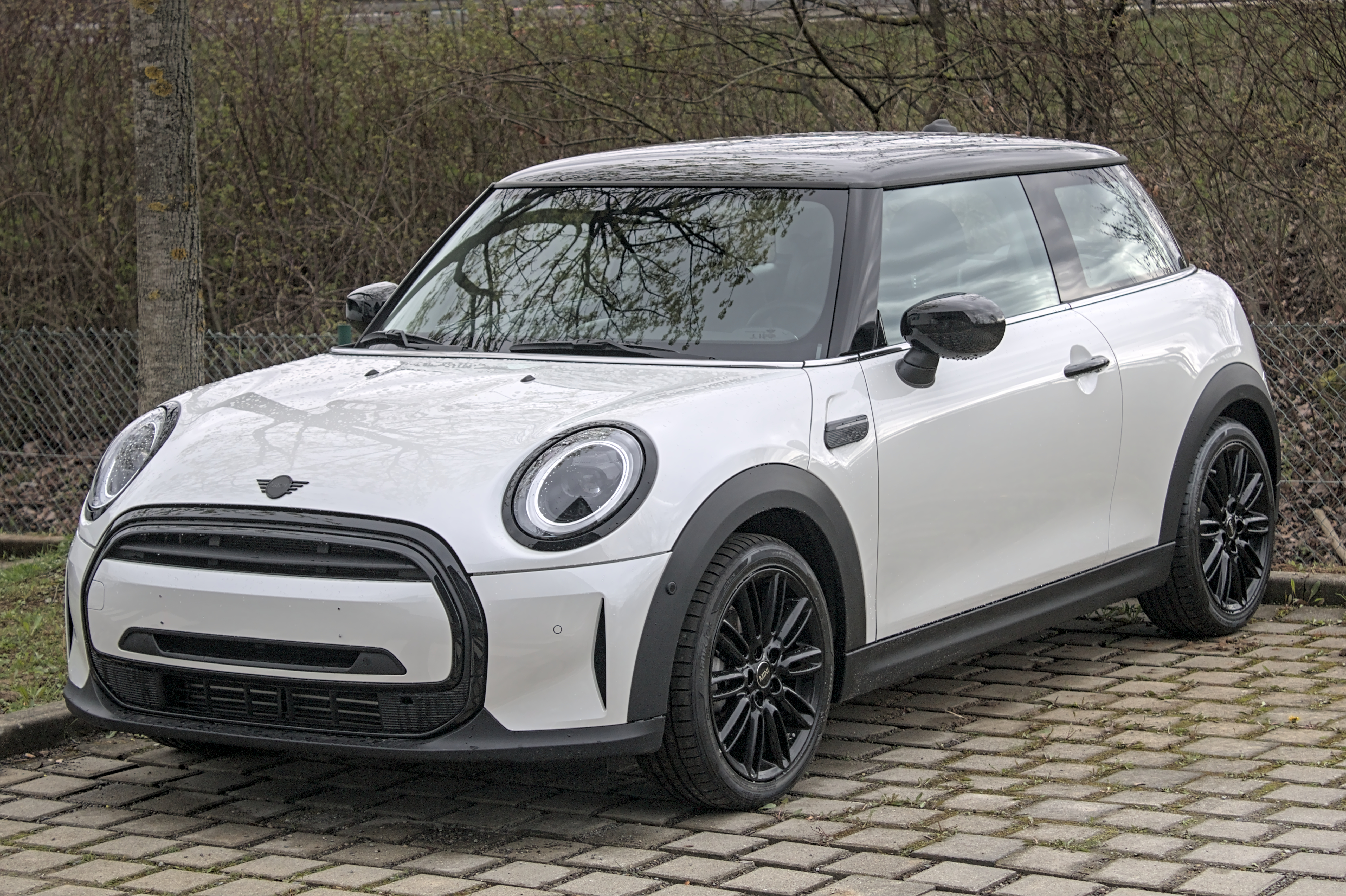
This is a MINI Cooper S from 2008. Even though it has low miles, the host says it spent a lot of time at dealerships getting repaired, which can be a red flag when you’re shopping used.
Auction demand means how strongly buyers are bidding for cars at wholesale auctions. If demand is high for cheaper cars, prices stay high and it’s harder to find good deals.
Concept
slim pickings
“Slim pickings” just means there aren’t many good options available. Here, it’s describing a used-car market where the choices—especially at certain prices—are very limited.
This is a 2015 Nissan Sentra S, a basic, budget-friendly car. The point being made is that even a relatively low-mileage one is hard to find for the money right now.
The Ford Fusion is a common used sedan. The host uses it to illustrate that when choices are limited, you may end up with cars that have very high mileage.
A pre-purchase inspection is like getting a used car checked by a qualified mechanic before you pay for it. The goal is to find problems you might not notice during a test drive. It helps you avoid buying a car with expensive surprises.
Here, it means the inspection is done by a mechanic who works for themselves (or a separate shop), not for the person selling the car. That can make the inspection feel more trustworthy.
Term
door price
“Door price” is basically the price the seller starts with. It’s the number you can try to negotiate down before you agree to buy.
Ask Car Edge is a tool on their site where you can type a question and get answers based on their past articles and videos.
LIVE
It's noon here in Venter City, New Jersey, and our nation's capital, Washington, D.C.,
and this is Car Edge Live for Let Me Get The Date Right Thursday, July 9th, with your host,
me, Ray, hanging out here in my living room, and Zach, hanging out in the office.
How?
How?
How the hell are you today, handsome?
I'm doing fantastic.
Happy Thursday, everyone.
Grateful for your choosing to spend some of your day with my dad and I.
Today's show is brought to you by none other than the folks put in the edge into car buying.
You want the edge when you go to the dealership or even don't go to the dealership.
I don't know, caredge.com.
We're up to almost seven years now, folks.
We've got a car search, a buying service, Ask Car Edge, our research center, dealer
reviews, and the elusive more.
You can also learn more by getting a free consultation with our team in Pops.
We are up to over $3 million.
We've helped our car edge community save when buying new and used cars.
What an incredible milestone for our teams.
That's like in the last month?
No, that's the last six and a half years.
It's got more than that.
That's since July of last year.
We started keeping track of it in real time since July of last year.
The big story this morning, folks, the used car market, it's in disaster territory, man.
We're going to start here with some analysis pulled out of.
We're going to spend a lot of today's show in a new report that came.
It's 40 pages of information from the Q2 2026 Mannheim Used Vehicle Value Index call.
We're going to spend a lot of time in this.
That was yesterday, but we're going to start right here.
When you pull out some of the data, Dad, it's a very, very clear picture.
There is record low inventory.
Now, look at this, more than 150,000 vehicles under $10,000 sold per month.
You might think to yourself, that's a huge number.
That's a big number.
There's way more than 150,000 people who are trying to buy $10,000 or less used cars every month.
We'll start here.
These vehicles are turning on average 33 days.
We talk about day supply of inventory, how long it takes to turn cars over.
This number is very low, meaning there's not enough inventory to match consumer demand right now
of these inexpensive, affordable used cars.
May I suggest that that 150,000 a month, if there were enough cars, that number would
go up significantly because there are more and people who can't afford
to spend more than that in this country.
It's getting harder and harder to find those cars.
As we know, I'm going to share a number with you that I just got off of Automotive News
this morning.
A number coming, folks.
Here it is.
The average new car asking price as of this morning, $52,190 up a mere $2,642 from a year
ago.
Now, you think to yourself, okay, so what's the significance of that?
There's that old phrase I've heard that a rising tide raises all boats.
Okay.
So what does that mean?
To me, it means as your new car asking prices continue to go up, it drags retail asking prices
on used cars upwards as well.
What makes a used car seem like a bargain?
There's a spread.
It's less expensive than that new car.
As long as that spread stays significantly big enough, regardless of the prices continuing
to go up, people will continue to buy used cars.
So people are going to pay more for used cars, whether it be 12 three-year-old used
cars, whether it be 10, 12, 15-year-old used cars, and there's more and more people finding
themselves falling into the category of only being able to afford $10,000 or less used cars.
Because the earning gap is getting bigger than it's ever been.
What's also happening right now is that the limited inventory that makes it to the dealer
auctions, it's getting bid up and bought at a very high rate.
What you're looking at here, we're going to get into the nitty-gritty today.
Forgive me if you don't want to get into the details of how the used car market works.
Maybe today's show is not for you, but this is the nitty-gritty of how used car prices
get set in the dynamics within the used car market.
This is the sales conversion rate at the auction from 2024, 2025, 2026.
It keeps going up, meaning that more of the vehicles that make it across the auction
block are actually selling.
They're hitting reserve prices and they're actually selling.
You can see there the days supply at the wholesale level is at 27 days, 26.9 days.
That is insanely low.
We are still seeing huge impacts in the used car market from 2020, 2021, when the pandemic
was in full force and all these vehicles weren't produced.
There's a dearth, and I know you like to use, of available used car inventory right now,
and there's not enough new cars out there at affordable prices for the consumer demand
to go somewhere else.
It's really, really crazy how bid up these used car prices are getting right now.
Yes, and that shortage, that dearth of used cars will continue through the end of the
decade.
You can't suddenly make up for 10 to 15 million new cars that were scheduled to have been
built globally that were never built, that those sales never took place, so those trades
never came in.
You can't make up for that magically.
It just doesn't happen overnight, and this is something that we at this channel spoke
about 34 years ago.
I don't want to pat myself on the back, but I believe we were one of the first ones to
suggest that this was going to be an ongoing issue throughout this decade and that people
just weren't being aware of the fact that this shortage would continue, and it has.
Used car values have not stabilized or returned to pre-pandemic levels, or will they, and
I know the automakers talk about the affordability crisis, and that's all they do is they talk
about it.
They don't do a damn thing about it, but they talk about it, which is great.
It's lovely they talk about it.
They're the ones that could actually do something about it, but they're not, and they won't,
and it just makes it harder for more people to be able to get cars new or used that they
find, I mean, six years ago, seven years, what, 2019?
The average new car sold for a little over $37,000 last year, 2025.
The average new car sold for a little over $48,000.
That's $11,000 that new car prices have gone up in six years, which impacts the used car
side of things.
Totally.
If I may, Dad, I want to share some more data.
I want to pull this back to the data.
This chart that you're looking at here, it shows historical long-term averages for how
vehicles hold their value based on how old they are compared to what's happening right
now.
The light blue that you see on the chart is what's happening right now.
The lower this number is, the better for consumers.
The more these vehicles are depreciating, appreciating relative to how
they historically have depreciated in the used car market.
If you've got a 10-year-old used car, it used to be, but that thing would depreciate
96.9% of its overall value.
This year, it's at 102.8%, and it's actually increasing in value.
We have this really strange dichotomy again, and also I want to pull up by powertrain.
That's the other story here, pops.
EVs right now are insanely expensive as used cars relative to where they had been.
This chart showing you electric vehicle powertrains, non-electric vehicle powertrains, both are
up for the year.
Both are up relative to last year in terms of vehicle values, but EV prices, that's the
green line up there.
You can see they had been depreciating rapidly in prior years, but ultimately when gas prices
went up, so did EV used EV prices.
There's a dearth of inventory, and then there's a lot of demand for certain powertrains, for
example, things that are more fuel efficient, and it's just supply and demand at its core
prices going up.
Unfortunately, yes.
The other thing for EVs is that there's going to be a much higher percentage of EV leases
coming due in the next year or two, so that will see even more EVs making it into the
market, and as long as fuel cost, energy costs remain relatively high, and I know they dropped
about 10 or 11% in the last month, but they're still significantly higher than they were
this time last year.
As long as gas prices remain high, then the desire for EVs is increased, and so we're
seeing EV prices, pre-owned EVs, going up about 12% higher than ICE vehicles have.
Yeah, which is non-trivial.
Now, a really important thing, and another nuance in the nitty gritty of the auto industry
is where is the used car inventory coming from, and this chart that Mannheim puts out
every quarter is so interesting.
For those of you that are unfamiliar, the reason we reference Mannheim is they're the
largest wholesale dealer auction in the United States, they're owned by Cox Automotive,
they're massive.
A DESA is owned by Carvana, if I'm not mistaken.
Now, they're the second largest, but Mannheim is the largest process as the most vehicles,
and you can see here we're going to start in the top left, the repo check-in index.
Compared to 2019, what percentage of vehicles making it through the dealer auctions are
repossessed to vehicles, and you can see it's at 136%, so it's 36% or 36 basis points higher
than it was back in 2019, and you can see there, up 36% versus 2019, up 11% as compared
to last year.
Lease check-in index, it was at 100% in 2019, it's at 43% right now, so it's down 57%, and
rental cars are down 15% since 2019.
It's really interesting to look at this chart, that because it tells us more and more of
the available used vehicle inventory that is commanding premium prices at the dealer
auctions, which ultimately means it's commanding premium prices at the dealer's lot are repossessed
vehicles.
Now, I'm not saying repossessed vehicles are bad quality relative to off-lease vehicles
or rental cars, but they might be.
I'll say it.
You say it.
Yeah, repossessions are typically in worse condition, cosmetically and mechanically
than certainly lease returns and even many rental cars, which are beat the crap, but
the reason repos are in worse condition is, hell, if you can't afford to make the payment,
you certainly can't afford to maintain it, and typically those people don't.
So, yeah, the dealers are paying a premium for pre-owned cars, whether they be lease
returns, rental sales, or repossessions, because there's just a shortage of used cars
out there.
If dealers are paying that premium, they are paying that premium based on the fact that
they know ultimately that their customers will pay that premium, and their customers
are.
So, people are paying a premium to buy lower quality vehicles than they have in the past,
and it's quite unfortunate, but there's nothing on the horizon that will change that.
And my suspicion is, based on the number of 70 to 84 96 month loans that we're seeing
presently, that they ultimately, the number of repossessions will go up, because if you
have a six year old car and you still have a year or two years worth of payments left
and you are confronted with a expensive repair, in many cases, the customer is just going
to walk away from it.
For sure.
We'll get into some used car buying tips in today's show as well, but some more data
here.
This is another chart that, again, this is the nitty gritty of a quarterly used car
auction dataset that gets put out.
These are the top vehicles being sold at dealer auctions, broken down by some categories,
Mid-sized SUVs, heavy duty full-size pickup trucks, et cetera.
We'll look at these in a second.
Just look at this chart of those average prices for three year old most popular vehicles
across segments.
Used car prices at the wholesale dealer auctions for the most popular vehicles have gone up
about $10,000 from where they were 10 years ago.
So it mirrors a lot of what you were describing with the new car side, but then as a proportion,
it's crazy, right?
So back in 2016, these vehicles were selling on average for $16,763 up over a decade to
$28,235.
I'm trying to do the math in my head.
That's like a, what, 80% price increase?
Something like that?
I mean, it's a tremendous increase in price for the same three-year-old option of a Nissan
Rogue, a Nissan Altima, a Jeep Wrangler, a Kia K4, an Altima, et cetera, et cetera.
The prices have just gone up proportionally, an insane amount at the dealer auctions and
then obviously they're marking it up to consumers.
Well, that means that what I said earlier, that a rising tide raises all boats pretty
much shows that.
And we know that new car prices have gone up $11,000 in the last six years.
And we can see that wholesale prices, and I'll try to say wholesale as opposed to wholesale,
wholesale prices have gone up almost $10,000.
So why is that?
Because that's the type of where the spread needs to be for people to still consider used
cars and to say to themselves, okay, well, that's a veritable bargain in comparison to
that new car.
And I just, excuse me, I just don't see that changing.
I don't know.
I believe in my heart of hearts that we're going to continue to see this for the next
several years.
So for all of those doomsayers out there, and God knows we've been classified as doomsayers,
you know, because I don't know how many times we have predicted that the market is crashing.
The market's not crashing, and it's not going to crash.
And at least in my mind, because I just see that we're going to continue to have prices
continue to escalate.
And so that anybody looking for a car waiting and thinking that, well, the prices are eventually
going to go down.
Yeah, I don't know, maybe a dozen years from now, I don't know.
So let me pull up this chart, Deb, because that's where I wanted to wrap our conversation
on the used car market.
So it's right here.
Cox puts out their 2026 forecasts.
Every single segment of this, you know, boxes on the screen have read down arrows except
for one.
The one that is green and up is the prices of used cars.
They expect the prices of used cars to increase between now and the end of the year.
Everywhere else, they expect sales to be down for new cars, used cars, fleet sales,
lease penetration, everything is down, but they anticipate used car prices going up.
Let's talk about that.
So what is the motion here for someone who's thinking about buying a used car?
Is it do it now?
Is it do it next year?
Is it never do it?
What's your take on that, especially with this as your context?
Well, if you look at this, and let's assume for a second that their projections are correct.
There's two things that I see there are very troubling.
Lease penetration going down, which means that more and more people are going to find
themselves in the 84 and 96 month notes, as opposed to leasing where they're forced to
come back every three years or so, which could actually help to alleviate some of the used
car inventory issues.
So seeing that being projected to go down 22% doesn't bode well for used cars, and then
them projecting that used car values are going to go up another 2% this year, which might
be a tad on the light side.
So if you're a used car buyer, there is nothing in this forecast that would suggest to you,
hey, you're better off waiting.
I don't think so.
Everything would indicate if you can find it today at a price that you can live with,
you're better off buying it today than hoping that it actually goes down in value when the
expectation is it's going to go up in value in the next few months.
So how do you read it?
I think that we're going to continue to see used car prices go up, and I think we're going
to continue to see fewer people actually purchasing vehicles.
I read it exactly as this slide suggests there's going to be fewer sales and there's going
to be fewer people buying them.
And then I think what ultimately happens is I sort of disagree with that.
I do think there will be a market reset.
Eventually there has to be some sort of market reset because automakers, everyone in this
space wants to sell more volume.
That's the name of their game.
So yeah.
No, do they?
Yeah.
Show me the stats that says that.
Show me anything that suggests.
We know from 2016 when 17.3 million new cars were sold in this country, the high water
mark for the new car industry was 2016, and it's been going in the opposite direction
since then.
And we know that the manufacturers understand that sales are going down, and so they know
that they're not going to build as many cars.
And if they're not going to build as many, what cars are they going to build?
It seems to me they're going to build the high profit margin, high priced vehicles that
will help shrink the market even further.
Yeah, I disagree with you.
I think eventually there's going to be this reset in desire to expand how many people are
buying or leasing vehicles.
But we don't have to get into that too much right now because for the purposes of if you're
in the market to buy a used car right now, I think we both agree.
Go make that move now.
We're outside spring selling season.
Spring selling season was when the used car prices, wholesale used car prices and retail
used car prices go crazy.
That ended.
That ended.
That was tax time, tax return season, it's over.
During the market for a used car now, look at it.
Look at the market.
Do your analysis.
I was just pulling up because I was curious, Dad.
We could look at some of the available Carvana inventory out there.
See what the heck they're asking for.
So I'll pull up one on the screen.
Let's just take a quick peek.
Sure.
I'll pull it up at Carvana 2021 Chevy Colorado LT.
Almost 50,000 miles on this thing.
They're asking $27,590.
They've had it for 31 days.
I'm super curious, Dad.
I mean, they're saying it's depreciated $3,300.
In five years.
In five years and 50,000 miles.
That is, unfortunately, what you're going to see a lot of.
And obviously, this is Carvana.
So you're paying a premium for the convenience and all that.
You can obviously get a cheaper price from a normal car dealer.
But that's the reality of the used car market right now in a Chevrolet.
We're not even looking at a Toyota.
That was an example of the Chevrolet.
Do me a favor, since you like to do things live, unscripted.
So that was a 2021 Colorado LT.
Yes.
Correct.
Yes.
With about 50,000 miles on it.
Yes.
Okay, let's search elsewhere other than Carvana and see what dealers might be asking for the same type of vehicle.
Okay, sure.
Let's do it.
So we have shop cars used.
What did we say?
That was a 2021.
2021 Chevrolet Colorado.
Is that a Chevrolet?
Yeah, that was Chevy.
And then that was a Colorado.
What was it, an LT?
LT.
Okay, drum roll please.
Waiting for it to load.
LT.
All right, here we go.
And we'll expand our radius here.
We'll go within 500 miles.
Okay, so let's see here.
We've got, yeah, there was the Carvana option that we were looking at a second ago.
And you said what, 50-ish thousand miles?
Yes.
Okay, here's one out of dealer already.
$5,000 difference in price.
And you can see there it's got 10,000 more miles.
So yeah, there's probably a veritable bargains
instead of going to Carvana, of course.
But still, I mean, I don't know.
What was it?
Okay.
Here, we'll go back up to this one.
Let's see.
So they're asking 22.9.
It's got 59,000 miles on it.
They've had 27 days, so relatively no.
There you go.
Yeah, they're asking significantly less.
Yes, because it shouldn't depreciate more than 11% in five years.
Completely agree.
Yeah.
But I think that is the reality.
And the reason I bring up Carvan is because people want convenience and everything.
Yes.
To be clear, this is a great sales pitch moment for AI negotiator,
our car buying service, all the crap we do.
But use car market, is it going to depreciate more than 11%
when we get out later to the year?
We're just looking at all the data that suggests probably not.
It's just crazy to think, absolutely crazy to think.
It is unfortunate for those who need vehicles,
not necessarily who want vehicles, but who need vehicles.
And it's especially unfortunate for those who need vehicles,
price $10,000 and less.
Which is where we started, which is where there's the quickest turnover of inventory,
the least availability.
Yeah, it's really, really, really a tricky situation right now.
And quite frankly, a bit of a disaster in the use car market at those more affordable price points
that you just don't have options there that are reasonable.
They are reasonable because the market sets the conditions,
but they feel unreasonable, especially when we could pull back up that other chart.
It showed, use car prices have gone up, what do we say, from $16,000 to $28,000,
or $18,000 for the same cars?
Come on then.
Again, percentage wise, that's got to be like 80% increase in price in a decade.
That's nuts.
And you have to think to yourself that $10,000 vehicle.
I mean, what are you buying that's $10,000?
How old is that vehicle?
How many miles on that vehicle?
Yeah, let's look.
And I would imagine that we're probably looking at vehicles between 15 and 20 years of age.
For what it's worth, we have this right here.
So when you search for used cars on the car edge, car search, a price-first mileage,
little matrix shows up here.
So we still have the same things, Chevy, Colorado, LT, et cetera.
You can see here at the $10,000 price point, there is supposedly one vehicle here with 40 to
60,000 miles.
We'll take a peek at that in a second.
Another vehicle at 60 to 80,000 miles.
Another vehicle at 80 to 100,000.
Let's pull in a little bit more data here for this though.
I want to get rid of the LT trim and I'm going to get rid of just 2021.
I just want to look at Chevy, Colorado's.
Just look for vehicles, used vehicles under $10,000.
All right, perfect.
All right, so we're going back to used.
Take off, you had new clicked as well.
Whoops, thank you.
Got rid of new.
We're just doing used.
And we're saying a max price of 10,000 big ones.
All right, let's see here.
I guess this thing's loading.
Is it loading?
I need to refresh the page.
Loading, that's a shade of green.
I remember that.
I'm refreshing the page.
Give me a second here.
Okay.
This thing is loading.
Come on, baby.
Come on.
Well, it was my favorite color sweatshirt I had from LeMode de Golf one time.
What is this?
The color?
All right, here we go.
Loading some more, but it's close.
Yes, it feels close.
We're getting close, ladies and gentlemen.
That's the beauty of live experiments.
All right, so we've got a 2002 Chevy Tahoe with two
computer 19,000 miles.
Okay, so I'm not real good at math.
That would make that one about 24 years old.
We've got a 2000 Mercedes Benz CLK with 134,000 miles.
Here we go, 2016 Volkswagen E-Golf SE, only 70,000 miles.
One has to wonder what is wrong with that.
A 2013 Infiniti JX base with 132,000.
I mean, these are bargains, dad.
Vertible.
2014 Ford Fiesta SE, 86,000 miles on it.
Come on.
Yeah.
Zero dealership, Acura North Scottsdale used to work there.
Oh my God.
2008, some Mercedes Benz, Mini Cooper, or 20.
I mean, come on, man.
What do you want?
2008 Cooper S with only 61,000 miles.
And the reason it only has 61,000 miles
is it has spent so much of its lifetime at the dealerships
being repaired.
We can see here earlier in the show from Igor,
is that the auction yesterday demand for cars
is as high for cars under $10,000 to $15,000 per person.
Yeah, I mean, that's why we're seeing again the options here.
Feel like slim pickings?
I mean, I don't want to overstate it.
Like maybe we're not digging in too deep.
Slim pickings was a great actor, by the way.
Well, you're on a roll today.
I mean, look at this.
This is a low mileage from a lean on me automotive,
low mileage 2015 Nissan Sentra S of 10 grand.
That's only 50,000 miles on it.
That's what you're getting right now.
Yeah.
Ford Fusion with 193,000 miles.
Now we're at Brandon.
You know, we're at his lot.
Yeah.
There are options, but most of them are between 15 and 25 years old.
Yeah, you're looking at a 20 year old car
at an under $10,000 price point.
And again, that's where we have the concern about repo.
So they're coming from repos and they are turning over so quickly.
So actually, let's turn our attention here.
Okay.
Use car purchases.
Yes.
Pre-purchase inspection.
If you take nothing away from this show,
if you're going to go into the market now because you're afraid,
hey, prices might go up more this year,
we're right there with you.
We think prices will go up more too.
Pre-purchase inspection.
It's a worthy investment.
What is a pre-purchase inspection, Dad?
And why, why, why do people have to invest in one of those right now?
What's a pre-purchase inspection?
A pre-purchase inspection is a home inspection,
but for your pre-owned vehicle.
When people buy houses, one of the clauses in a sales agreement
is usually for a home inspection,
where you have like seven days to get a home inspection done,
where an independent contractor comes in,
takes a look at the house and sees if there's any issues with it.
Well, the same can happen for pre-owned cars,
and you can get a pre-purchase inspection.
You get an independent contractor to come in,
an independent set of eyes to take a look at the vehicle,
thoroughly go through it and see if there's any issues that
presently exist or issues that should crop up rather quickly after ownership.
So you need to know that before you buy the damn thing.
So any pre-owned car, a pre-purchase inspection is something that you should do.
Typically, probably runs between $150 and $200,
and it could probably be the best $150 to $200 you ever spend,
because you'll have a better understanding of what you're getting into,
before you actually get into it.
100%. So yeah, do we have a little bit of a used car market disaster?
Unfortunately, it seems that way, and it has been, it probably will be,
and doesn't look like it's going to get any better for years to come,
is the unfortunate reality.
So if you're going to take advantage of it,
please, if you're going to take advantage of the fact
that now might be the best time to do something,
get a pre-purchase inspection without a doubt.
That is the number one piece of advice.
Obviously, negotiate about the door price,
all the things we always preach,
but definitely pre-purchase inspection.
A friendly reminder, actually we have articles
about pre-purchase inspections too,
so you can just Google pre-purchase inspection car edge
and our articles will come up.
A friendly reminder back at caredge.com, we're here to help.
So if you haven't taken advantage of what we have to offer back on the website,
please do.
Very grateful for all the things that we are able to do back at caredge.com,
and encourage everyone to learn more about our story,
and what we do in the ways that we're able to help back at car edge.
There, if I may, there are so many guides,
and so many blogs that we have posted over the years.
Anytime I see comments that go,
well, how do I get a discount on an order of car?
I think it was like five or six years ago,
we wrote how to shop.
So anytime you have a question,
just go to that Google machine and type in the question slash car edge,
and there'll probably be a video or written blog that will come up.
We've also uploaded everything into Ask Car Edge,
so you can use Ask Car Edge.
You can literally just come here and you can ask.
Yeah, so we've uploaded everything we've ever done
into this corpus, into Ask Car Edge.
So you can also just come here.
I encourage everyone to use it,
because I think it's the most intuitive and easiest to just write that.
Ask Car Edge.
Any questions you'd ask my dad?
You'd ask me to put it at Ask Car Edge first.
There's a high likelihood it's going to be what we would say.
We're back tomorrow, Friday.
We're going to be answering car ban questions,
all car related things,
but it's going to be no news.
We'll just focus on answering questions from the community.
So please, if you want, email me a question.
Just put Friday Show as the subject line,
and we'll address it tomorrow.
Dad, enjoy the afternoon.
I look forward to doing this with you again tomorrow.
You know, that's my plan.
God will and the creek don't rise.
I'll be here tomorrow.
I promise it, noon.
Going it's noon.
Have a great afternoon.
I'll be quiet now.
I love you.
I love you too, Dad.
See you all back here tomorrow.
If you liked the show,
please take a moment to rate, review, and subscribe.
It really does help the show to grow.
Thank you for listening.
About this episode
Record-low used-car inventory is driving a “disaster territory” market, especially for cars under $10,000, where demand outstrips supply and vehicles turn in just ~33 days. The show digs into Mannheim’s Q2 2026 data: wholesale days supply is around 27 days, auction conversion rates are rising, and limited inventory is being bid up. New-car prices keep climbing, pulling used prices higher too. EVs are also holding value unusually well, while repossessed vehicles are making up a larger share of auction supply—often meaning worse condition for buyers.
Today on CarEdge Live, Ray and Zach discuss the latest on used car inventory. Tune in to learn more! Hosted by Simplecast, an AdsWizz company. See https://pcm.adswizz.com
for information about our collection and use of personal data for
advertising.