A service contract is like an insurance plan for your car that helps pay for repairs and maintenance. It means you won't have to pay for certain services out of pocket.
CPO means Certified Pre-Owned, which is a term for used cars that have been checked and approved by the manufacturer. They usually come with extra benefits like warranties.
The Cadillac XT5 is a fancy SUV made by Cadillac, known for being comfortable and having lots of tech features. It's designed for people who want a luxury vehicle.
Manufacturers proficiency objectives are goals that car makers set for their dealerships to make sure they are doing a good job in selling and servicing cars. Meeting these goals helps the dealership stay in good standing with the manufacturer.
FNI means Finance and Insurance, which is a part of car dealerships that helps customers with loans and insurance. It's important because it can help the dealership make more money after selling a car.
The service department is where cars get repaired and maintained at a dealership. It's important because it helps keep customers coming back after they buy a car.
The Ford Mustang Mach 1 is a special version of the Mustang that is designed to be faster and more powerful. It's popular among car enthusiasts for its sporty features.
M Sport is a version of BMW cars that looks and drives sportier than the regular models. It has special features that make it more fun to drive and gives it a more aggressive look.
The Chevrolet Equinox is a small SUV that many people buy because it's easy to drive and has a lot of space inside. It's a good choice for families or anyone needing extra room.
The used EV market is where people buy and sell electric cars that have been owned by someone else before. It can change based on how many new electric cars are available and how much people want them.
A tax credit is money that the government allows you to subtract from the taxes you owe. For electric cars, there are often special tax credits to help lower the cost of buying one.
An EV, or Electric Vehicle, is a car that runs on electricity instead of gas. They are better for the environment and can sometimes get you tax breaks.
Tax incentives are like discounts from the government that help you save money when you buy something, like an electric car. They make it cheaper for you to buy the car.
The Mercedes-Benz SL is a fancy sports car that you can drive with the top down. It’s known for being very stylish and powerful, making it a favorite among people who love luxury cars. It’s often talked about because it represents high-end driving experiences.
Carvana is a company where you can buy and sell used cars online. They even have special machines that look like vending machines where you can pick up your car.
CarMax is a store where you can buy used cars without having to negotiate the price. They have a lot of cars to choose from and make the buying process easy.
A chip shortage means there aren't enough tiny computer chips that cars need to work properly. This can make it harder to build cars and can raise their prices.
Sales history data is information about how many times a car has been sold and how long it took to sell. This helps car dealers know if a car is popular and if they should buy it.
AutoCheck is like Carfax; it provides a report about a car's history. This report can help you see if the car has had any accidents or other issues in the past.
The Toyota RAV4 is a small SUV that’s great for families because it has a lot of space and is known to be very reliable. It’s popular because it’s easy to drive and can handle different types of weather and roads. Many people like it for everyday use.
The Tesla Model Y is a type of electric car that looks like a small SUV. It’s known for being fast, having a long battery life, and lots of high-tech features. People talk about it because it’s a popular choice for those wanting to drive an eco-friendly vehicle.
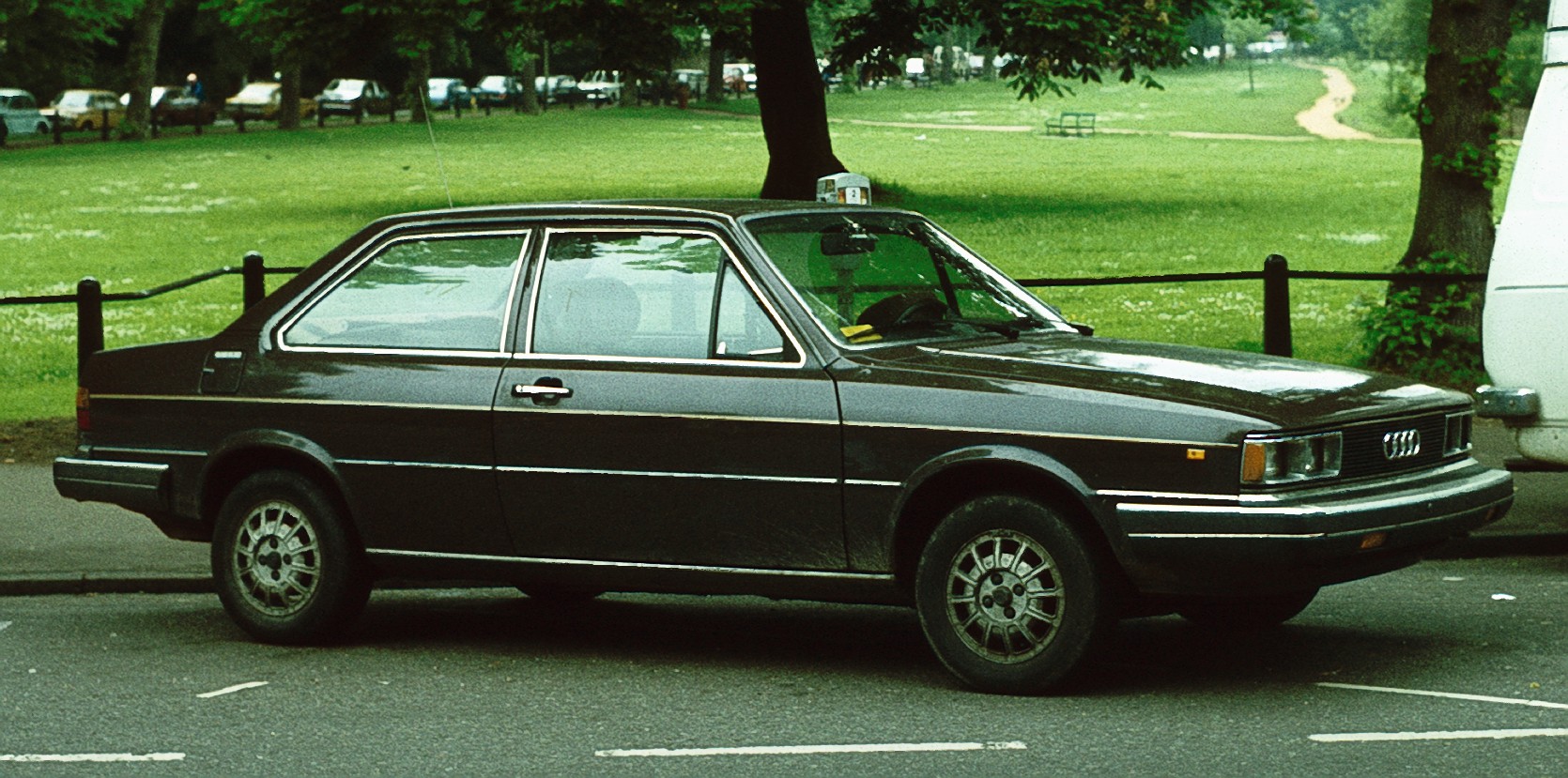
The Audi 4000 is an older car from the 1980s that was made by the Audi company. It was designed to be a nice, comfortable car that also performed well. People mention it because it’s a classic model that some car fans really appreciate.
LIVE
Hey everybody, welcome to another episode of The Daily Dealer Live.
Hi, I'm your host, Sam Darkin.
Thanks for joining us today in this gathering place for all automotive to learn, to share.
Let's hit today's news first up today.
Total new vehicle sales were estimated to reach 1.25 million units in October.
That's down 6.9% year over year.
Analysts expect retail sales to slip nearly 6%.
And seasonally adjusted annual rate, that's SAR, to drop to 15.1 million.
That's off by more than a million units from last October.
The reason Thomas King, president of OEM Solutions, for JD Power noted that EVs quote,
account for 1 million of the 1.2 million decline in the industry sales pace compared with a month ago.
However, even as sales slowed, retailer profit per unit is expected to increase to $2,295,
up $97 from a year ago.
Bottom line, dealers headed into the holiday are facing thin incentive, slower EV demand,
and affordability fatigue.
Next up, a new report from Cox Automotive shows that most dealers are still just dipping
their toes into AI, even as early adopters are already seeing major payoffs.
The 2025 AI readiness in auto retail studies surveyed more than 500 dealership leaders.
25% say they're taking a wait and see approach.
Another 60% are just starting to experiment, and only 15% have fully integrated AI into their workflows.
Cox calls this a quote, learning phase where curiosity is high, but practical adoption is still catching up.
But among the stores that have leaned in, the benefits are clear, higher efficiency,
better profitability, and stronger overall performance.
And we have tested those claims over and over again on this show.
It's a fascinating topic, and we'll continue to do so.
What's the big picture in AI?
Well, dealers moving beyond AI experimentation and building a clear strategic plan are setting
themselves up to grow, to operate more efficiently, and to protect profitability.
And next up today, global auto supplier Bosch is sounding the alarm over the growing dispute
between the Netherlands and China, involving Dutch chipmaker Nexperia.
Never heard of Nexperia?
Never known about a Dutch chipmaker?
Well, you soon will, because it will impact automotive.
As a result of the standoff, the exports of key semiconductor chip materials and components
have been restricted.
And because Bosch relies heavily on the flow of the components, it may have to furlough
workers if the issue isn't resolved soon.
Bosch says it's doing everything possible to keep production at its sol's getter plant
in Germany running, but the ripple effects from the chip disruption are getting hard to contain.
German automakers, including VW, BMW, and Benz are already bracing for potential supply
shocks in the weeks ahead.
And finally, up today, we turn to the CDG Bicell Tracker at CDGBicell.com.
Orsman Automotive Group.
Absolutely. Orsman Automotive Group has expanded, again, acquiring Hendrik Hondo
Woodbridge in Virginia from Hendrik Automotive Group in a deal that closed October 21st
at this, according to the Presidio Group.
The move gives Orsman three stores in the Woodbridge market joining its hood in Chrysler
Dodge Jeep Ram locations and strengthens its foothold in northern Virginia.
For Hendrik, the nation's largest privately owned dealership group, it's a strategic reshuffle.
The company still runs 95 dealerships nationwide, but says it wanted to reallocate
resources to markets where it has a larger presence.
Hendrik President JV Brown called it a, quote, strategic decision,
saying the group remains committed to its partnership with Honda,
even as it refocuses its footprint.
And that's a wrap on today's industry news.
All right. Let's turn to our round table today.
We're excited to bring a conversation having to do with all things automotive,
all things used car pricing.
The question we've got is automotive and used in particular is a large industry.
The used car market is estimated approximately $1.05 trillion in 2025.
It'll hit $1.2 trillion by 2030.
And as dealer groups, we're all operating in a massive market shift.
The question isn't if you use data or if you use gut in all things used cars.
It's how much you lean into one or the other when your margin, your turn rate,
and your reputation are all on the line.
So with me today, we've got four heavy hitters sitting around the table.
We'll challenge them. They'll challenge each other.
My job is to bring your comments posted to all CDG social media platforms into today's
conversation and to push our panelists into the triggered zone so all of us
can lean in, learn, and take notes.
So welcome to the show.
First up today, let me introduce Nate.
Nate Myers, used car director, Mercedes-Benz of Westchester.
Welcome to the show, Nate.
Thank you.
We've got Bert Davidson, used car platform director at Deal Automotive Group.
Welcome to the show.
Thanks.
And we've got Eric Miller, who's been on the show in the past,
used car director, Maurice Auto Group.
Welcome back.
And we've got Charlie Spradlin, sales director from ArtMain Auto Group.
Charlie, welcome to the show.
Thanks.
And Charlie, the conversation started last week.
You were on the show and you were talking about your strategy to acquire used vehicles
in the marketplace.
And you talked about how gut played a role and how you balanced it.
So let's actually start, Charlie, with you.
Domestic brands, sales volume focused.
Does your acquisition model differ because the market behaves differently today,
given all the technology, all the analytics tools,
all the data that is available to you to make decisions?
Yes.
I kind of, we talked a little bit about gut being important to me.
And now I have a buyer who focuses primarily on his gut,
another one that focuses primarily on his data.
And the way that they perform almost identically on a month-to-month basis is,
I think incredible and it just lends itself to both sides can work.
But the biggest shift for me is that acquisition is how we do business
and how you acquire cars is how you become profitable or how you lose a bunch of money.
And so, I think gut's important because gut determines what you do with data.
Everybody can have data, people can all read it in a bunch of different ways,
what's going to work, what's not.
Gut and experience allow you to predict or try to predict the market
and put yourself in a positive spot moving through quarter four and into quarter one.
I think if you don't have gut that's dialed in,
you don't know what to do with data and you end up just waiting for the 30-day report,
the 90-day report, to say, oh, I made a mistake or oh, I didn't make a mistake.
Gut helps you be predictive.
Yeah, Bert, you're a multi-store platform.
You rely on data.
But we've got a lot of data.
Is it data or gut that helps you make your best buy and sell decisions in the used car arena?
Well, I can't teach gut, so I have to go with data, especially in building something,
from the ground up, say a buying center, a deal, which we did,
and then service lane acquisition as well, which we did.
For me, it's all about interpreting the data and setting up a set of standards around data
interpretation, which I handle.
Now, I'm 30 years in the business.
Maybe I have a gut.
Maybe I don't.
I don't know.
But the people I'm hiring and the people I'm teaching,
I'm teaching them to react with data.
Now, obviously, the data parameters change, depending on the market and where we're at.
that touches used cars as for, is using that data to educate and to change people's perception and
paradigm, and that's the key.
Keep it simple.
I might have a lot of data.
I might have 800 spreadsheets that I'm looking at, but when I'm talking to the crew,
I want to keep it simple and focus on a few key points.
Nate, in your luxury market, what's one thing that's changed about how you acquire
three years ago versus today in a data-driven world?
Well, right now, in the data-driven world, you have to really pay attention to some of the COVID
build cars that might not have the options.
A few years ago, you were just acquiring certain cars to get the inventory that was in demand,
but there's just little ads in the part of the country.
Again, it could be something as simple as heated steering wheel on a car will make
all the difference, especially going to the winter, where that option might have been
deducted because of the COVID builds.
And if you're down south, that isn't as important.
So you definitely have to be a little more analytical, and data-driven is definitely
a part of that.
But some of that data is not readily available.
So some of that, I guess, would fall to the gut part of understanding the market
or understanding what your builds are that perform well.
Yeah.
So, Eric, what's your take?
As far as acquisition goes, I think you have to
balance that there's going to be opportunity, there's going to be data, and there's going
to be gut, and it's going to be an even blend.
Opportunity is really the biggest part.
You can set out to say, here's what I want my inventory to look like.
Here's what the data tells me to acquire or where I need to be.
But often that week, that month, things don't go that way, right?
Those units aren't available, or for some reason, there's a smaller supply.
They get bid too high, and you have to look for other opportunities that you didn't quite
prepare for.
And that happens every week, every sale.
I can bid on 40 vehicles and get one.
So there's going to be the gut that goes along with that that says,
I didn't look at the data.
What can I acquire today that'll show up and turn quick?
And put some money in our till, more importantly, put another customer in one of our vehicles
and start the life cycle.
So I'm pretty even split.
So Eric, you are even split, but you do rely on the data, and large groups rely on it, right?
But just because you can use the data doesn't mean you're winning with it.
So Eric, walk us through your acquisition dashboard.
What are the top three metrics you look at every day in the acquisition world?
Well, looking at history for the rooftops, what hasn't been selling, what are the price
points, what do we have out there in the market that we could acquire from our own people,
our own guests, I think we're looking at day's turn.
We're looking at profitability, what's left on the bone by the time we buy it, pay the fee,
ship it, recondition it, have it sitting here.
And it's going to be a blended strategy.
We know we're going to acquire cars that may lose money right out of the gate, but it'll
turn quick.
It's at a price point that will have a customer participating in the finance office.
And the likelihood of getting a retailable trade may be better.
So that strategy might be $0 from day one.
And we might acquire other vehicles that we know, based on our history, our location,
our customers, it might take 30, 45 days to sell.
But it's the big fish where we're going to make money.
What's an example for your group where you're willing to take a loss or a very small margin
on a vehicle at acquisition to get that opportunity in FNI?
What are you willing to go negative on to get the up?
Sure.
Well, I should say almost anything, but it's the almost anything that would be more likely to
generate a finance customer where they are both financing the vehicle open to purchasing a vehicle
service contract.
And like I said, the other is going to be the trade and it's going to be how likely are they to
come back and service with us.
Luxury brands, which is what I'm responsible for.
And I'll use Bentley as an example.
We may generate leads on a particular type of car all over the country.
And that doesn't necessarily benefit me with getting a trade, with having service customer later.
We deserve to make money because the risk is huge.
Right.
A CPO Cadillac XT5 that I can replace any day of the week and that I compete not only against
other Cadillac dealers, but also Bubba's side lot.
We may look at as one a CPO count, which benefits us in our manufacturers proficiency
objectives and very likely to sell locally, very likely to have a service customer from that
transaction.
So if I have to be $0, if that's what the market is kind of pointing to on the acquisition side,
I have to look at it on the sales side and not the acquisition side.
Does anyone else agree with the $0 acquisition that I'll go to the opposing opinion?
Is anyone else looking to, yeah, go ahead.
Are you willing to buy at zero or a loss to get the FNI opportunity and to own the customer?
Yes, because it doesn't just stop with the sales department.
Every opportunity, every car that comes through the doors is more service department gross.
I'm keeping people employed.
I'm keeping detailers busy.
It's not just like I might lose a thousand bucks on a car, 1500 bucks on a car,
but the store netted out positively between different fees associated with it.
We pay retail as a store and I think all sales departments should.
There's so much more profitability generated with a car that comes through the dealership
than just your front-end gross.
Not to mention the benefits of a trade-in or opportunity and finance or just gaining
market share in your area, but personally, I don't have a number.
I'll lose, I'm not planning to lose several thousand dollars, but it happens all the time.
And I think anybody who's in the acquisition game knows that it does.
But if I can plan on losing 500 bucks, 800 bucks after everything's said and done on the front,
I'm probably going to make it up in the back.
I'm going to gain a customer.
I'm going to, you know, all the service department work everything.
But what are the dangers of planning a $500 or $1,000 loss at acquisition
if you potentially hang onto that longer term?
Anyone else have the other side of that?
Yeah, I think that, you know, I mean, the segment, the only segment that I would be
tied on and maybe willing to lose 100 or two on would be the $18,000 to $25,000
retailable all-wheel drive SUV segment where you're virtually guaranteed financing,
you know, and just the finance and the FNI aftermarket products convert so much better there.
Anything beyond that, I'm not there yet.
I mean, maybe one day I'll get there, but we've got strong enough buying centers
throughout the group that we don't source cars at auctions.
So I'm not there yet.
And I've seen the flip side of the coin where, you know, somebody might ramp up,
take some chances, and then, you know, when the market turns like it's turning now,
it can be brutal, especially for the higher dollar cars.
What is the market turn right now you mentioned?
What are you seeing in the market that's turning today in October of 2025?
Well, I'm seeing the good old, you know, fall decline.
All of a sudden, everybody's, all of a sudden, minor car faxes mean something.
All of a sudden, the beige car means something.
You know, all of a sudden, the high miles mean something.
You know, the scratch on the door, it's, you know, and it changes really quick.
And in the springtime, that stuff all goes by the wayside because we're trying to get cars
because the consumers are out there.
But now that the market's falling the other way, I mean, you know,
the perfect car will still bring the money.
But all those other cars that we justified in the summertime,
you can't justify in the fall when the market's like now.
Now, is that a seasonal adjustment or is that a market shift overall given economic conditions?
I think it's seasonal.
I don't know.
I'd be interested to hear what everybody else says.
I'm just, so far, I'm just seeing seasonal market trends.
Nate, what's your take on that?
Yeah, I would agree with this.
It's the seasonal fall decline.
I think anybody, you know, everybody in here has been in the business for more than five years.
So this was something that we all saw pre-code.
You know, the rental car companies are dumping, right?
And that's driving the values down.
So if you are somebody that dabbles in that,
do you have that car more than a couple of weeks,
it's going to sting if you have that car now or next month.
But I would agree with that.
I think it's the seasonal decline.
And I would agree with Bert.
I mean, the right car, you take that 18 to 25 grand segment with a clean car fax, that car,
that car is still golden, right?
Like that's still a car you want for your inventory.
There's still a buyer out there for that car.
But the higher dollar stuff you definitely have to be careful with.
If it's not something you have good experience with,
you should probably AWC approach with caution.
It's probably not the right time to try stuff out that you don't have experience with.
So Yoga Cars Online has made a great comment.
It says, sold price and the profit is the ultimate data point.
Everything else is a lagging indicator that we need to look.
Mustafa also says, this is a great question for our panel.
How do you use competitors' inventory mix data for your sourcing strategy
by similar hot moving and undercut or find gaps?
How do you use competitor inventory mix data for your sourcing strategy?
Anyone want to take that?
Well, can I tackle that first question?
I couldn't do more.
Say, okay, profit.
I mean, listen, profit's dependent on how you acquire the car.
So that has absolutely nothing to do.
Like if I just looked at a list of cars I made profit on,
I think we made a lot of money on a Mach 1 Mustang the other day.
I just go out and buy a bunch of Mach 1 Mustangs.
So that's a mistake you're saying.
Right.
Right.
The total mistake.
No, you have to look at.
But that's a great example of data.
That's a data set showing profit where you made a profit on vehicles.
Why wouldn't you chase that data set of if you made it in the past,
stance or reason, you'll make it in the future?
Well, you got to balance that out with cost to market.
You know, did I acquire the car really right?
And that's why I made profit.
And then what did I sell it for?
Did I sell it for market price?
Are there vehicles that I'm seeing that are going for over market price?
You know, then you source those.
So the profit, I mean, you certainly look at profit.
Obviously, everybody wants to make profit,
but that's got to be balanced out by what you own the car for
and what you sold the car for and what the relationship to that is.
Yeah.
Nate, agree?
Yeah.
I mean, I agree with Bert.
I mean, there's so much more to it than sometimes just looking at a list
and trying to find out why a car sold or what car is selling over the market price.
I mean, there's definitely some drivers there.
So Bert, I want to come back to you.
So you believe in data.
You follow the data, but you're saying not all data is equal.
What are some other examples of bad data where a used car manager or director could
follow the data trail and be horribly misled to make terrible decisions?
I'll answer that for you, Bert.
I got a good example.
I mean, you know, I sometimes think since everybody's on V-Auto that
market day supplies a self-fulfilling prophecy, because of all four of us taking a car with
a 150 market day supply and our instinct is to make it top three out of 20 in the market,
that's a sell.
And we all sell it quick and we congratulate ourselves for a great strategy.
Is that because we all just, it was all just a race to the bottom and it was a self-fulfilling
prophecy because it's been drilled in our heads that a 150-day market day supply car needs to
price cheap.
So, you know, chasing one metric or another metric, I mean, the car business I think is
way behind on data.
You've got to get all the data together and then try to find some correlations in the data
that then make sense.
If you just look at one data point, cost of market, market day supply, days to sale,
if you just look at one data point, I think that's where you get in trouble.
And that takes a while and that's trial and error.
I mean, you've got to look at that data over a period of time and then make corrections to it
and see what the mix is.
I mean, I'm always chasing the magic mix.
I haven't found it yet, but I'm always chasing the magic mix.
Isn't the collaboration and the combination of all that data, isn't that the very definition
of gut that experience brings and allows you to bring things together?
Charlie, you're giving thumbs up there.
Yeah, I couldn't just help but smile.
But I mean, gut is experience.
It's knowing what to do with the data in front of you and trying to come up with a strategy
to do that.
And my strategy is going to be different than Bert's.
It's going to be different than anybody's, at least to a degree.
And to me, that's gut.
And maybe that's experience, but gut is what you decide to do with your experience or with the data.
Bert, one follow-up on this, and it's an interesting point.
And then we're going to go to Nate because I want to hear the comment that you had there.
But Bert, some data is, tell me if I'm wrong.
What would you tell a dealer that says some of the data that's provided to us by vendors
misleads?
It's just not accurate.
Sometimes it serves their own interest rather than ours, which is serving the customer.
Yeah, I mean, I don't think the data is very sophisticated.
I don't want to pick on Viada, but I don't think the data is very sophisticated in Viado.
Because if you're looking at other competitors or other pieces of software,
you're going to get different things.
So what's a valuable counter to a data set you're getting in Viado, like Day Supply,
that you're saying is misleading?
What's a good counter to that in your experience?
Well, we use AccuTrade, and we also use Vincu, and you want to take a look at the days on market
along with the market day supply to see.
And then you want to look at the actual data set to see if the guy bought one as a demo,
and he's just got it in his wife's driveway.
And that's why it's been on the market for 180 days.
So you have to end at Charlie's point.
Yeah, I mean, that is gut, experience and gut.
It is, it's the definition of it, right?
It's taking data to combine it with experience and then using that to make a decision.
Well, I'll say you can torture data until it tells you what you want to hear.
And we find that a lot when I'll use a Viado, not picking on Viado, but
if you've got a big enough data set, at what point do you stop drilling down to try to make
a potential acquisition or trade or a vehicle that's in your inventory
kind of bend to your will, right?
And so we bump into it a bunch in luxury where we've got to go pretty far out
before we find a large enough data set just in general.
And you may not have the ability to drill down enough within that small data set
to really tell you the difference.
So I'll give you an example perhaps on a BMW.
Is it an M Sport or not?
Well, if I only have 13 within 600 miles and there's a mix between M Sport and not,
do I click and look at only M Sports and end up with three?
Or do I go up to 1500 miles to get enough M Sports to show a big enough data set?
Where I get suggestions back.
And the gut, you know, you already know the answer, right?
So at what point do you...
You had a high line luxury import.
Is it more important with certain OEMs like Mercedes and Ferrari and BMW
and some of the high line luxury imports where there may be less of a data set?
We know that's true.
I mean, anybody who's been in this business for a while understands it.
We've already talked about it.
You know, there are certain options that are really hot and there are certain colors
that might be completely dead and you should stay away from them.
So if you've got a young buyer or a young, you know, manager who doesn't have some of that
kind of street wisdom, the data can make you make mistakes because you're not
getting to the real data.
So trusting only what pops up, you know,
the auto would be kind of the provision procurement.
And, you know, how should you handle this?
I ignore it all the time and that better be gut, right?
It's like falling on autopilot or saying, no, no, I'm going to take a control here.
You'd love for it to work because as, you know, he pointed out the scalability
is what we're all looking for.
We'd love to be able to replicate this with new people over and over and over and say,
just use the data.
Here's the playbook.
Here's the formula.
Just keep doing it and it's tough, right?
You're going to step on it quite often doing that.
So Nate, you had an example.
Yeah.
So I was going to kind of answer that second question you had about
analyzing, you know, competitors or market data.
And I'm sure Bert, anybody in the room will agree on this, but if you're somebody that just
goes off of, let's just use the auto, for example, like my day supply data is really
good on a car, you're looking at, you know, if you want to pull your data from auto trader,
car gurus, or if, you know, there's so many different sources to get registration data on
where cars are selling, well, just because a certain car might be a fast mover in your
market doesn't mean it's a right fit for your store.
So you need to go through and look at what your competitor is in your marketplace
and really understanding sometimes you may have to go out a thousand miles to look at
a set if you're at a high line store.
But just because the reporting is telling you that a Chevy Equinox is a really fast
mover in your car and a bunch of them sold, just because you buy that car doesn't mean
you're going to have the same success, right?
So that's where it's important sometimes to leverage the data around understanding the
business model of the people that are around you.
I mean, if you're close to a place that specializes in a lot of subprime and they sell cars that
fall into that category, if you're not paying attention and you buy a car that has a good
like my day supply, that car is just going to sit.
Yeah, interesting.
Any other thoughts?
We'll move to our next moment here.
It is interesting.
Everybody has their own goal when it comes to use car acquisitions and certainly the goal
plays into how you acquire.
To your point, Bert, the profit is made at purchase, not at sale because you price it
in such a way that aligns with your strategy.
Is what's the metric for success?
Is there one metric for success in all of automotive for a successful used car department
or do they differ based on geography, OEM, dealership size?
That's an open question.
Anybody want to take that?
I mean, I like to base a lot of it off of net to sales.
I could show a bunch of profit on the front end of my car, but if my expense structure
and all my stuff is out of whack, then at the end of the day, the bills aren't being paid
the way that they need to be paid.
I think that to sales, assuming you track everything the same way as somebody else,
if your net to sales lines up with what you're trying to accomplish as a store,
then you're doing a good job.
If it's out of whack, then you got to figure out what that is.
For us, for the size of our store, volume and profitability ultimately mixed together
to create an environment where our net to sales continues to be something that we're proud of.
For other places, that could be, I just need to crack heads on every single used car that I get.
That's my profit strategy.
And that can work depending on who you are and what your goals are.
But for me, net to sales is really how I grade myself.
Net to sales, go ahead, Bert.
You're going to counter that, I think.
I would say acquisition, and I mean acquisition, not just buying cars,
trading cars the right way too, with new car and used car trades.
And I'd say acquisition because what I found in my dealer group is
there might be one store that needs, like I track leads per car per month.
So there might be one store that needs 2.5 leads per car per month
to achieve the same kind of sales volume and efficiency
that another store might need five leads per car per month.
Then I might have to sell my inventory 3% less
than another store that's got a really good sales force where I can charge 3% more.
And all that stuff is variable that you can adjust that you can change.
But if you can control your acquisition and acquire vehicles right on trade
and wherever else you're sourcing them from,
you can adjust those other variables to achieve a measure of success at your stores.
Let's talk about that. You have a buy center.
You private purchase most of your inventory that you buy for sale.
What's your strategy on that?
You earlier on said you buy almost no vehicles at auction.
Most of them are through this buy center.
How many do you buy through the buy center a month?
And what's your strategy in there to buy used inventory for sale?
We're buying over 110 a month now. We'll buy anything.
Obviously, we're focused on the cars that we want to sell.
We don't have high line brands. It's commodity brands.
So we're focused on that, but we will buy anything.
And it's hugely process driven.
I mean, the people that work in my buy center go through a process.
And we're constantly talking about the process
and we're constantly talking about the experience that we give to the guest coming in.
And that's kind of been our success is being transparent with the guest,
focusing on that experience and that process, and then all the way through.
And there's a lot of moving parts.
David Long, who I think we all know, says it's hard.
It's not easy. It's hard.
And that's why a lot of people have trouble with it.
But if you get it right, what makes it hard?
Because actually, as you describe it, it actually hits my head as it's taking data
and it's aggregating it in a very gut driven way.
And it's interesting with the limitations of data, which is so valuable.
How do you teach that instinct that's required to successfully buy vehicles
private marketplace?
You're combining data with the needs of your store,
with balancing customer experience and customer satisfaction
and being able to earn a customer for life.
Those are gut, right?
How do you teach and train that?
Well, I think you have to start out by making sure they understand how to appraise vehicles.
And then you have to have no fear when it comes to giving customers the numbers over the phone,
which is such a pain point with still so many dealerships.
And you've got to go all over it.
And then you can't be afraid when they come there, this is where the process comes in,
you have to have a process to professionally devalue their vehicles when they get in the door.
And if you don't have that, then that's where you wind up in trouble.
But it's just you've got to train people how to appraise cars
and you've got to train people how to follow a process to devalue the car, too.
When you talk about what a challenge it was, certainly there were lessons learned.
What was one of the biggest mistakes you made in that process?
Not devaluing, not following the process all the time, not devaluing the vehicles,
maybe trusting things you shouldn't trust, the whole trust but verify.
That's a big slogan in the buying center.
And it's anytime you veer from the process is when you get into trouble.
Like when I analyze the not so great buys, the buying center,
it's usually somebody veered from the process somewhere.
And that's the battle and that's the tough part.
Anyone else on the panel have a buy center?
Yes? So what do you guys do at Moorys?
How does that work? How does the buy center, Eric, work in your world there?
It's an independent buy center and they acquire vehicles from the public.
The tough part is deciding where they go.
I think Bert's point was every store is going to have a little different experience level,
sales staff, the ability to walk around a scratch or sell around it,
or a particular model, a particular brand.
And if you think you can, you can.
And if you think you can't, you can't.
You won't, yeah.
There's a lot of nuance to if you're multiple rooftops,
where do you send each car from your buying center?
How do you make that decision then?
Is that data driven? Is it gut? Is it a debate or a fight among the GMs?
We haven't done that a lot because if you create a group buy center,
how do you decide where the best cars go?
The profit is made in used cars at the time of acquisition.
You're essentially deciding where that profit will go.
How do you do that?
It luckily isn't my job.
I think the decision of where to send is data.
It is looking back and saying, whether it's a price point or a model,
how quickly is that vehicle going to sell at this rooftop versus that one?
And again, kind of that gut about, is their sales staff prepared?
And so perhaps it's an EV, where who's doing a good job selling EVs?
If it's a vehicle that has a scratch that you don't think is worth making the repairer,
who is better at selling around it?
I think you're always going to have pushback,
both from the sales staff, from the managers that are going to be getting that inventory.
It never feels fair. Everybody would like to have more inventory.
You just have to be willing to be the bad guy and talk about the data and say,
this is the data. This is why it's sent to this store, that store.
And hopefully it works out. You're going to have winners and losers.
Do you have to balance it and balance the need?
Anyone else struggle with where to send vehicles from a buy center?
How to hand that profit out among a group?
Yeah, Charlie.
I'm sorry. I don't know if I'm supposed to raise my hand or not.
No, no. You guys can just go. Charlie than Eric or Charlie than Nate. Sorry.
We don't have enough rooftops to make that decision.
But the one thing with that, that it crosses my mind as being problematic,
is if vehicles aren't placed consistently in a store,
then they don't really have the opportunity to build up the sales production to allow for that.
So in my one store, that's a little bit smaller. The volume is lower.
Overall, the trade volume is lower. They're not getting the opportunity to maybe sell
some high profit fast moving cars because the data doesn't show that they can sell it
because they haven't had one in stock for 12 months or 18 months or whatever.
So I always kind of, I look at that and I'm like, well, if I don't get the opportunity,
then how can I maximize it or how can I prove to you that I can sell it?
And that's the moment you have to override data with gut.
Yeah. I would imagine that position is kind of hard because you're like, well,
the data tells me this store will kill it. And so I'm going to veer off from the data.
And so I don't envy that job, whoever has that.
But I think that that's one of those places where data is very limiting,
especially the stores that are trying to grow, trying to create better processes.
It can be very pigeonholing if really the high producing stores are getting all the love.
What you see with manufacturers all the time, it's like high turning stores,
high volume stores that maybe aren't that profitable end up getting all the love
because they're just blowing them out. And it's like, well, we would turn them
just as fast and we'd probably make more money on it.
So let's turn to an area where the data may not tell a full and correct story.
So last month, the EV rebates ended and the EV market changed.
So a couple of questions for this panel, maybe just go whoever wants to take it.
Who has seen a drastic change in the EV market and what's your strategy today for buying and
selling? And how have you developed that strategy?
Yeah, I mean, not to jump in too quick, but with Chevy, they've really like,
they've yanked us around quite a bit. Honda, the demand is almost non-existent in my area.
But we're just treating it like any other model. We're throwing out the last six months of data
because it's poor, it's awful. It was highly incentivized, even on the use side.
And most of the used EVs I sold were subprime customers that we got a good bank call because
they had four grand down. But we're just treating it like a normal car. If it makes up X percent
of sales over 12 months, we'll add, we'll drop, and we'll do that as we see fit.
The manufacturer still continues to try to push, hey, you've got this many cars on consensus,
but man, we sure do have a lot of EVs if you're lacking. And we're treating it like any other
model line. It makes up for X percentage of business, and it needs to be treated as such.
But there's a market's worth, it's just... Yeah, Nate, Benz has done a little bit of a 180 on EVs,
or at least they've declined. What's your approach on buying used EVs right now?
You know, on the new side really, because of the struggles we've had with it and probably the
market we're in, it's definitely a challenging. Obviously, it was different because the price
point of our cars didn't fall into the EV necessarily tax credit. What moved a lot of them
towards the end was the big incentives, the leasing program. So you're going to see a lot of those
cars come back in two or three years. But I would agree from a used car perspective,
I wouldn't treat it any different than any other used car that's out there. I mean, I think that
if you're looking at an EV on the used side that qualified for the tax money, I think you have to
be cautious. Like Charlie mentioned, you got to look at what kind of deal was put together on that.
But I can tell you that there are certain EV models out there that are successful, that were
successful before, you know, that didn't qualify for the incentives. And it's just understanding
that buyer, understanding your market, understanding the difference on those cars,
you know, to dive deeper to where, you know, Bert would agree probably, where Viotto, all the
software out there, a lot of them don't really even understand that car. So it really takes a
used car person, minded that's going to take the time to educate their self on it
and make the right decisions for their business. All right, so I'll go ahead. I'll talk about
dissent. I'll have a counterpoint to this, right, is, and then I brought this up last time, it's like
catching falling knives. You want to get on and get off as quickly as possible.
The reason that I think it's more important right now than it was a month ago or three months ago
is that the manufacturers are scrambling. And whether it's Mercedes-Benz or Kia or General
Motors or Ford, yes, they have some long term strategy, but these are super tankers that take
months or years to turn completely. And in the interim, they got to keep making cars.
So when you talk about the incentive going away, you talk about the federal tax credit,
and even if it's a Mercedes or in my case a Cadillac, they qualify through the lease, right?
You have to look at when you're acquiring a used model that here's what a new model is going to
sell for, net of the credits, net of all the different incentives manufacturers come up with,
you have to have a compelling story well below that, right? We know that. The problem today
is that that story, as we just heard, talked about changes. General Motors has changed back
and forth a little bit about how they're going to be handling this. So do you go acquire a bunch of
very cheap Equinox EVs off rental, right? You can find them $19,000 on the purchase in the
seven or eight thousand miles. But tomorrow, General Motors could say, our sell rate isn't
where we want them. We're going to come out with a lease program at $3.99 a month to get rid of all
this inventory. So dealers order more and you've got a used car that now just died, right? So what's
your answer to that? What's your approach? What are you doing? Get in and get off fast. That's
the approach. Where you thought you could make, I don't make up a number, three grand on a car
like that. Wow, is it cheap today compared to what it was mid-September? That you can't get
porky. You need to look at where the market is, where your competitors are, and figure out how
to sell that car quickly. Now the flip side of that that goes hand in hand is they're easy to acquire
as he pointed out. If you're in the market and have a good sales team that can sell EVs,
if I sell one, I can get more and I can get more and get more and I can turn them pretty quick
if I've got that strategy. So it's a mistake, I think, to say, oh my god, this car was $25,000
last month and now I can buy them for $19,000. We're going to make $6,000. I think that's not the
way it's going to go. And that goes back to the comment of you can't look at the gross. You've
got to look at what your cost acquisition is, what the market and what will be in the future.
All right, we're going to go to our sponsor for a quick moment and then I'm going to come back
with a little bit of a lightning round as we seek to wrap up here today. This has been a fun round
table. Let's talk. Escalating fines and enforcement actions are hitting dealers hard. KPI's Complete
Compliance Suite protects you from every compliance risk while helping to reduce insurance premiums
and liability exposure. Visit kpi.io forward slash automotive to learn more. You can also
click the QR code if you're watching the live show. Also, if you're in the notes for the podcast,
after this live show, you can click the link to learn more. We appreciate KPA for supporting
today's content, including this fascinating conversation on all things use car acquisition
and automotive. And again, props to our panel for being here today. We appreciate your perspectives.
I'm going to go into a little bit of a lightning round here as we get closer to the end of today's
conversation. We've had a lot of great comments online. We appreciate those. Keep them coming.
Just in a couple of few words for each of you that want feedback on this, and then we're going
to go into some metrics. What do you see as the future of used car acquisitions over the next,
let's say, year, 12 months, with so much data being out there and so much interpretation being
necessary to be successful? What do you see as the future of automotive, 12 months, 20,
24 months down the road? And Bert, let's actually start with you, since you had
such an interesting take on the viato conundrum. I think that we're on the cusp of a huge revolution
when it comes to acquisition. Car dealers, as usual, lag behind the rest of the business world
when it comes to data and metrics. I mean, you see it with Carvana. Look at the success they've
had. I don't think they're making a whole lot of gut calls over there. I think that we're going to
have a real revolution in third-party software and acquisition software using AI over the next
two years to tell us that we can put $400 more into the white diamond whatever, or the black
whatever, or because it's got this package or it's got that package. I mean, the data's there.
I mean, it's waiting for somebody to come in, aggregate that data, and make better stuff.
Now, they've made good decisions. Used car acquisition. It'd be interesting to do a similar
roundtable on performance of loan portfolio. That's also a data-driven decision that some would
argue. Maybe they haven't caught all the positive side on, although they haven't necessarily had
a challenge with that. Eric, give us your take on the next year used cars or two.
Well, you can't overlook what's going on with economic indicators. We're also looking at being
four years out of what the pandemic did to scramble the market. We're going to have a growing,
or if you believe the indicators, we're going to have a growing supply of repossessed vehicles,
of off-lease vehicles, of rental cars coming back to market. Those don't necessarily follow the,
hey, I'm going to buy it from my service line, or I'm going to be buying it from the public model.
As much as you should be doing that, and that's been a drumbeat of 2025 for a lot of dealer groups,
I think 2026 is going to have better opportunity to acquire from captive sellers,
whether that's manufacturers or rental car companies or finance arms,
and that has to be in the mix. And look, when you talk about data and you talk about colors and
models and all that, it's self-fulfilling in a way because the perfect performance of a marketplace
is that, let's say a green car is not going to perform as well in terms of demand,
but if that green car is $3,000 less than the diamond white one that everybody wants,
now all of a sudden it's hot. Does that make sense? I think those things self-fulfill. So the moment
you've got the data that tells you you should acquire a diamond white with a platinum package,
with an adaptive cruise, when all of us who are here in this roundtable and throughout the country
start believing that, now all of a sudden those other vehicles get cheaper and cheaper and cheaper
until they find their market stasis and now we're all looking for green ones because they're,
you know, $3,000 less. So that's a difficult place to be.
So Igor Kay made an interesting comment online in response to the earlier comment. He says,
Carvan and CarMax and AutoNation all learned how to shift inventory around and that's why it works
for them going 100% data-driven. That's a fascinating commentary. And then Igor also said,
another chip shortage might potentially hit again driving values up again. We're still not
out of the woods to call used car markets as stable. So we read about the Dutch dispute with
the Chinese and the impact that could potentially have through Bosch on automotive. That's something
we have to consider in the used marketplace and we have to continue to be nimble. The data could
lag on that. All right, times ticking dealer owner operators tuning in. They want one rule,
one metric, one behavior this week that lifts everyone's acquisition gain. So what's one metric
this group would print and tape to our desk this week and live by when it comes to buying used
that other dealers could learn from? Give me one metric. We'll take two of them. Just first two to
speak. Go. At this point, my take is going to be the ability to turn it fast and turn it to a
customer that will stay within your ecosystem. Yeah, I like that. One more. I would go with the
sales history, but somehow tie in the lead counts on those, right? I brought that up earlier. I mean,
if you have a car that turns in 10 days and after it's sold, you run a report and you see that you
had eight leads on that car, make decisions on cars that you see have the demand. Even if the data,
you know, let's say a like my days fly market, a supply is not the best on that car, but
great for something like that or you buy it on a curbside purchase from a customer.
How often do we get burned by that sales history data though? It's fascinating. We've seen that.
Like you'll sell a car and it'll come back. The car facts, the auto check, whatever pops up
something after the sale and we're ultimately accountable to that. That's an interesting thing,
right? Two of you pop in on this one. What's one instinct you train new buyers on that you
believe separates elite from average? Whether it's in your buy center or it's a used car manager
buying cars, what's one instinct you'd love to train every buyer on? Plan for the worst,
hope for the best. Oh, I like that. Yeah, exit plan on everything. Charlie?
I mean, anybody who can critically think like the ability to like look at a problem, come up
with a solution, even if it's wrong and have a discussion about it, that I think in this industry
is probably the biggest thing that we're lacking is I'll share my idea. I could be wrong, but we're
going to talk our way through it and find the best course of action. That's the number one trade
that I think is the most valuable. Oh, that's good. What's the biggest mistake you see today with
buyers buying used cars in the market, whether through a buy center or directly in auction?
What's one big mistake you see? Just because one car doesn't work is to swear that car off.
You have to have a thoughtful conversation on why that car didn't work. There could be
10 different reasons why and if you swear off inventory like I've heard stories of people
having do not buy list, you got to really dig into it and understand why it didn't work.
Yeah. Any other thoughts? I've got one more. I think buying the way we've always bought is just
like one of the craziest mentalities to have right now. And I see it talking to people all the time
and you have to be willing to adapt. But I always bought these types of cars every year at this time
of year. And it's like, well, yeah, but can people afford those now? I don't know. I just said,
old habits die hard and they cost a lot of money. I think putting the same number on a customer
trading and service as you would on an auction vehicle, horrible mistake. And yet you see that
out there over and over again. And that, by the way, is one of the biggest advantages I do think
Carvan and CarMax and others have just looking at the data. They're willing to ratchet that up to
get that customer trade versus something at auction, which is a fleet. It's somebody else's
problems in so many. All right. So this brings me to rapid fire. Auction or street buy? Where's
the bigger margin right now? Off the street or at auction? Oh, street buy. Street. Yeah. Yeah, of
course. Auction can pay the bills. Okay. What do you mean by that? I just mean, if you're not set
up to acquire the amount of volume you need through the street, auction will keep your service
laying rolling, your detail laying rolling, volume, more trade-ins, more finance opportunity.
Just because they're not the big hitters doesn't mean that they don't pay a lot of money in the
long run. Yeah. All right. What's one tool you think that's overhyped and could be dropped this
year? Use car acquisition or data tool in automotive that could be dropped and it's overhyped?
Viola. No. Oh, no. All right. I like BenQ. We're not going to let break into this. All right.
What's one car you'd buy site unseed no matter what the data set says? What's the hottest car in
your, that you want right now in the marketplace? Use Toyota RAV4. Oh, yeah. Very good. All right.
2022 Blazor or Wheel Drive. Okay. All right. Nate. Those are two vehicles that I would
not have the same kind of luck. This is going to be a wild one, but I'd probably throw a Tesla Model
Y performance or long range upgraded wheels. Really interesting. Anybody else want to,
anybody else dispute that? That's kind of a risky buy in my mind in today's marketplace,
no? Although, Evi Alex would dispute that. He'd say that's the car to buy right now.
I love to use Teslas. They turn fast as long as I can acquire them correctly.
They sell fast. I don't love any other manufacturer's Teslas, but I like to use them.
Really? Yeah. All right. Last question we wrap. Appreciate everybody on the panel today. Winning
and use cars in 2025. What's one sentence? What's your definition of winning between now and the
end of the year? Q4. Burt, let's start with you. Turn. Turn. Eric? Acquiring more customers,
you know, keeping more customers in your market. Nate? I would say maintain the turn,
stay out of any aging issues. And if you have the opportunity to grow,
there's some opportunity out there. Charlie? The acquisition is mine. Acquire, acquire, acquire.
Well, gentlemen, Nate Myers, use car director, Mercedes-Benz, Westchester,
Bert Davidson, use car platform director, deal automotive. Eric Miller,
use car director, Morris Auto Group, and Charlie, sales director, Art Main Auto Group.
We appreciate you all for joining this panel today. I think our big takeaway,
I'll give it more in my post log after you guys depart, is it is a healthy combination of both,
but data is so important in today's marketplace. But the wisdom to use that data and see through
where it fails us, that's where the money is made in automotive. Gentlemen,
thank you for being on today's show. Thanks, Sam. It was fun.
So thank you all to our Daily Deal Live audience for being here today to our over 4,000 live viewers
today who tuned in. Thank you as well for being here and continuing to be here every single week.
It was a heck of a fun conversation on all things used acquisition. A ton of great comments online.
I'm just going back online. Igor K. Toyot is all day long also, but Lexus,
he said he'd buy with his eyes closed. Brian Tortega says great panel. And then Igor K came
back and said, hey, keep those days on the lot low. And we couldn't agree more with that as well.
So thank you to our audience for watching Daily Deal Live. We break down the biggest moves in
the car business as they happen. Don't forget, we're here live every Monday, Wednesday, and Friday.
We'll be back Wednesday, 1 p.m. Eastern. So if this is your world, hit like, hit subscribe,
turn on those notifications so you never, ever miss a beat. Thanks everybody for joining our
About this episode
A deep dive into the used car market reveals significant trends and strategies for acquisition as dealers navigate a shifting landscape. The panel discusses the balance between data and gut instinct in making buying decisions, with insights on the impact of EV sales declines and the importance of adapting to market conditions. Notable guests share their experiences on how to leverage data effectively, the challenges of inventory management, and the future of used car acquisitions in a competitive environment. Key takeaways include the need for agility in strategy and the critical role of customer experience.
Today's show features:
Nate Myers, Used Car Director at Mercedes-Benz of West Chester
Burt Davidson, Used Car Platform Director at Diehl Automotive Group
Eric Miller, Used Car Director at Morrie's Auto Group
Charlie Spradlin, Sales Director at Art Moehn Auto Group
This episode is brought to you by:
KPA – Non-compliance isn't an option. OSHA, FTC, and state regulators are actively targeting dealers with escalating fines and enforcement actions across safety, privacy, and F&I compliance. KPA’s Complete Compliance Suite is the only all-in-one solution that protects dealers from every compliance risk. Our integrated software, expert consulting, and award-winning training address every compliance gap, helping you reduce insurance premiums, mitigate liability exposure, and protect your dealership's reputation from business-threatening violations. Stop managing compliance manually with patchwork solutions that leave you vulnerable to audits and lawsuits. Visit https://info.kpa.io/cdg to learn more.
Car Dealership Guy is back with our second annual NADA Party—happening in Las Vegas on Thursday, February 5th. It’s the hottest ticket at NADA 2026. Spots are limited and unfortunately we can't invite everyone —so RSVP today at https://carguymedia.com/cdglive and we hope to see you in Vegas!
—
Check out Car Dealership Guy’s stuff:
CDG News ➤ https://news.dealershipguy.com/
CDG Jobs ➤ https://jobs.dealershipguy.com/
CDG Recruiting ➤ https://www.cdgrecruiting.com/
My Socials:
X ➤ https://www.twitter.com/GuyDealership
Instagram ➤ https://www.instagram.com/cardealershipguy/
TikTok ➤ https://www.tiktok.com/@guydealership
LinkedIn ➤ https://www.linkedin.com/company/cardealershipguy/
Threads ➤ https://www.threads.net/@cardealershipguy
Facebook ➤ https://www.facebook.com/profile.php?id=100077402857683
Everything else ➤ dealershipguy.com