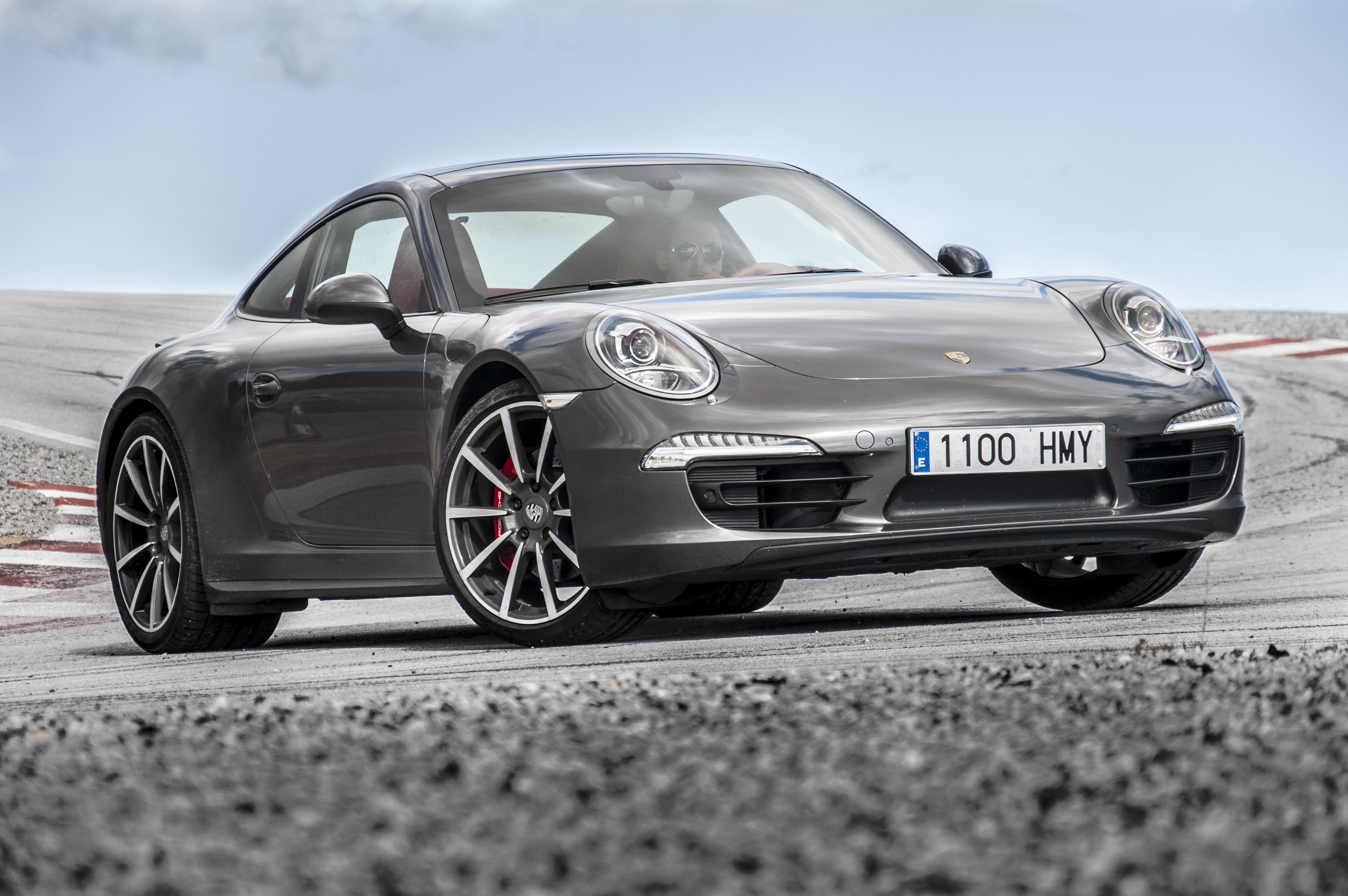
The Porsche 911 is a famous sports car that has been around for many years. It's known for being fast and fun to drive, and now they're even making a version that uses both gas and electricity to be more environmentally friendly.
Air-cooled 911s are older models of the Porsche 911 that don't use water to cool the engine. Instead, they rely on air to keep the engine at the right temperature, which is a unique feature of these cars.
Battery Tender is a company that makes devices to help keep car batteries charged. Their products are useful for people who don't want their car batteries to die, especially if the car isn't used often.
A jumper box is a small, portable battery that can help start a car when its battery is dead. You connect it to the car's battery to give it a quick boost of power.
A battery charger is a tool that helps recharge the battery in your car. If the battery runs low, you can use this device to fill it back up with energy.
Lithium-ion is a kind of battery that you can recharge and use again. It's often found in electric cars and gadgets because it lasts longer and is lighter than older battery types.
The Toyota Prius is a car that uses both gas and electricity to help save on fuel. It's known for being very good on gas, which means you can drive longer distances without needing to fill up as often.
When someone says they 'dinoed' a car, it means they tested how powerful the engine is using special equipment. This helps them see how much horsepower and torque the engine produces.
Passing times are how long it takes a car to speed up when you're trying to pass another vehicle. It's important for knowing how quickly a car can go faster when needed.
A naturally aspirated engine gets air for combustion from the atmosphere without any extra help from a turbo or supercharger. This can make the engine feel more responsive and connected to the driver.
Air-cooled cars cool their engines using air instead of water. This makes them lighter and simpler, and many classic cars, especially from Porsche, are designed this way.
The starter motor is a part of the car that helps start the engine. When you turn the key, it makes the engine begin to run.
Term
G50
The G50 is a type of transmission used in certain Porsche 911 models, known for making the car easier to drive and more reliable. It's a key feature that many Porsche fans look for.
A fully electric car runs only on electricity and doesn't use gas at all. It has batteries that power the car, making it different from regular cars that need gasoline.
Weight reduction means taking out things from a car to make it lighter. This can help the car go faster and handle better because it doesn't have to move as much weight.
Central locking is a feature in cars that lets you lock or unlock all the doors at once, instead of having to do each one individually. It's usually controlled by a button or a remote.
Air conditioning in cars helps keep the inside cool and comfortable, especially when it's hot outside. It works by removing heat and humidity from the air inside the car.
The Rolls-Royce Phantom is an extremely fancy car that is all about luxury and comfort. It's known for being very powerful and having a beautifully designed inside, making it one of the most expensive cars you can buy.
Regenerative braking is a system in some cars that helps recharge the battery when you slow down. Instead of wasting energy, it captures some of it and sends it back to the battery.
The Porsche 959 is a famous sports car made by Porsche in the late 1980s. It was known for being very fast and had some of the latest technology for its time, including all-wheel drive.
The Porsche 911 Turbo S is a super-fast version of the 911 sports car, known for its amazing speed and handling. They're talking about making it use both gas and electricity to be even better.
Car
Porsche 912
The Porsche 912 is a car made by Porsche that has a smaller four-cylinder engine. It was created to be a less expensive option compared to the more powerful 911.
The Chrysler 300 is a big car that looks very stylish and has a lot of room inside. It's known for being comfortable to drive and has powerful engines that make it fun.
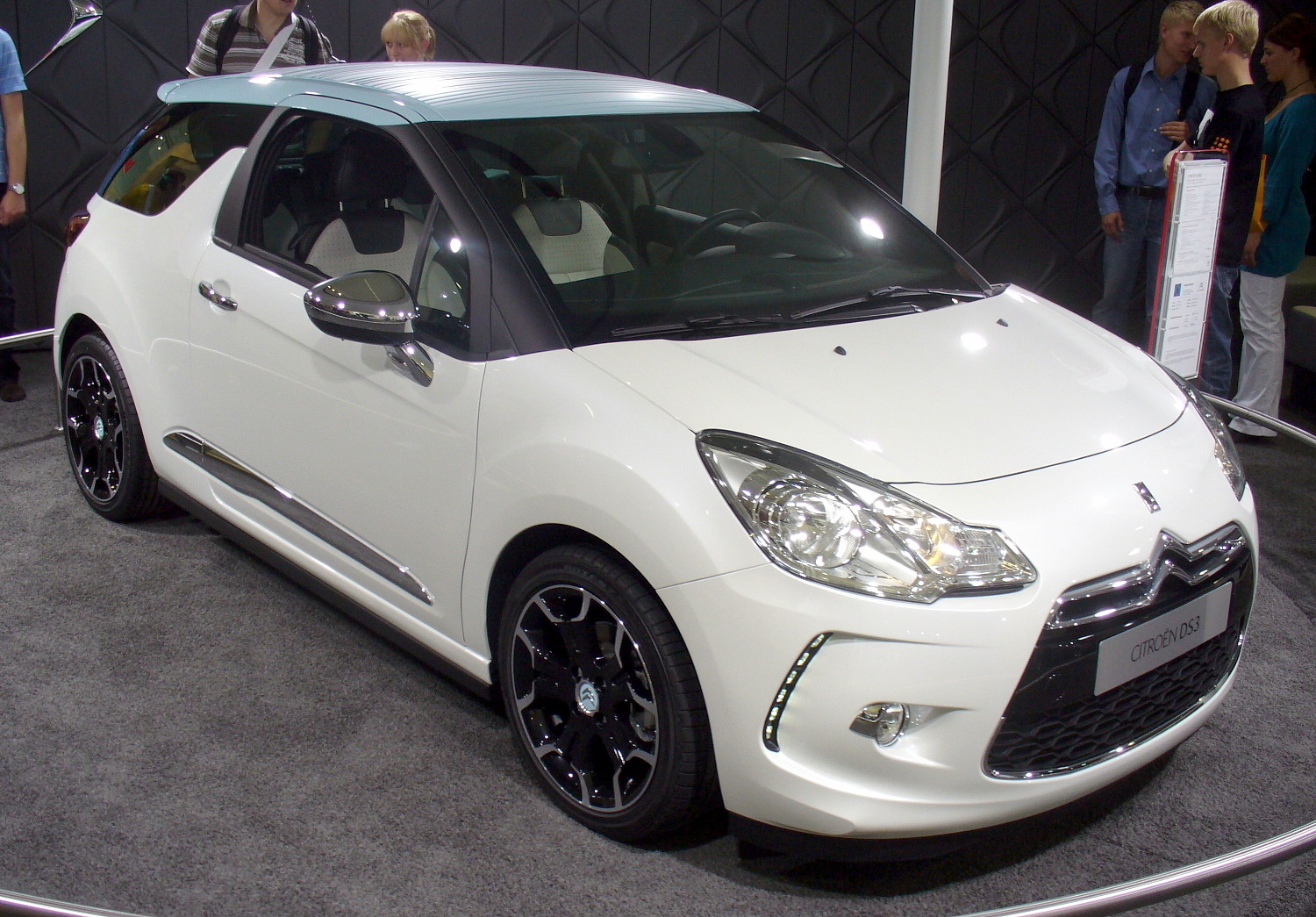
The Citroen DS 3 is a small car that stands out because of its cool design and the different ways you can customize it. It's a fun car to drive and is popular with younger people.
The BMW 3 Series is a popular car that many people love for its sporty feel and comfortable ride. The E30 model is especially liked because it has a classic look and is fun to drive.
LIVE
Greetings, Earthlings. Aren't we beamed to other planets yet? Depends on how good their internet is, I don't know. This is the Carmage and Show. Available now on Earth. On Planet Earth, my name is Ian, because I speak alien, and that is hyphen. Which oddly sounds exactly the same in alien. This episode of the Carmage and Show is about a hybrid 911, a hybrid air-cooled 911.
It's a hybrid 911 presented, created, engineered, built by Vaughanen, and includes our impressions about whether it completely ruins the 911, or whether it is just more of the same. 911ly goodness that we love.
And if you're not a fan of air-cooled 911s, couldn't give a fuck about them or hate them, you probably still should listen, because this is an interesting lesson in the benefits of electricity.
Yep, and how they could be used to change your experience in an old car. We're a new car. Exactly. Brand new, old, anything you want. Derek's gonna clap, we're gonna get right into it.
It was like a C minus.
You can put away your homework now.
Never. I see the dog has not eaten it. Yes, I eat my own homework. Thank you.
This episode of the Carmage and Show is sponsored by Battery Tender. Because you know why? Tell me why. When is the best place for you? What's the best time for you to have a dead battery?
I don't know. When you roll into the garage, adjacent to your charger. That is not the best. That is the least worst time.
Okay, the answer to that question is never. Yes, exactly. And so Battery Tender has a number of solutions to that end.
Including the charge and start. Charge and start. So that means it does charge and start. That's clever. I see where they got the name.
This is something I've not seen from any other manufacturer, which is a jumper box together with a battery charger maintainer in one thing.
Which does beg the question, are those things geographically aligned? Like one of those things I typically have at home and the other one I typically take with me.
And I've never seen them together. I wonder if you need that. I would argue that you just keep it always with the car and then no matter where you are.
I actually do encounter this in the course of collection management. I do a lot of collection management and one of my clients has cars in like three places.
And what happens is that you leave the charger, the battery charger and then you take the car somewhere else and there's no battery charger for it.
If you leave it with the car and it does that function as well. In fact, every car has a jumper box separately from a Tender in it.
And so this product probably sounds like it could be very useful for this client.
Well, you should give this client the coupon code haggardy20 to get 20% off of battery Tender.
Yes, they probably need a URL to go with that. Also, there's probably in the description. I just work here.
Great. Well, thank you, better Tender. Now, batteries bring us to lithium ion, brings us to bat. That's a battery.
What does a battery in it as most Porsche do?
So far, I'm with you. Seems like a Porsche 911. So far. So, yes, behind us is a 1980 Huat. What?
Eight is an eight in 1988 Porsche 911. 3.2. This will beat the G50 in dark blue. Yes.
Difficult for us to light in a black studio. Yeah, it looks black. The color name is imaginatively from Porsche is dark blue.
With orange wheels and a big banner on it that says Vaughanen.
It's exciting. I have waited, well, technically my entire life for this.
But I have waited six and a half years, six years and five months for this moment.
Six years ago, I got a phone call from this company called Vaughanen and they asked me to come drive a car with Vaughanen shadow drive VSD.
I do like that there's a bit of a shadow on the wall behind the car. I think we're sort of helping them brand and driving the shadow.
And basically, I knew very little about it. Otherwise, they, other than they had taken a 991.1 Porsche 911 and made it a hybrid to which I said,
great, how many MPGs does it get? And well, it's sitting the left lane like a Prius. And they said, no, this is about performance.
So, what's the number of MPGs? I don't give a fuck. What it then did do was make a 991 much quicker.
And it's an ingenious system VSD as I think they still call it that. It's an ingenious system of a sandwich motor put in between the engine and the transmission.
That, in the case of that 991, just read the CAN bus data from the cars on board computers and would just apply torque in one of three different modes.
There was sort of overboost mode, which is kind of a party trick. And then there was a shadow mode, which sort of just the car,
the system faded into the background and only helped it when you really needed to. And then a sport which made itself much more announced.
It was rated at that time at 150 horsepower and 150 pound feet of torque and required basically no additional hardware,
other than the motor and the inverter and no alterations to the car. And it was one kilowatt hour battery that's sort of up front.
It would do regen. You can probably read all about it because I wrote an article for road and track on this cars magic.
It was transformative in that the car just became, I think I called it at the time the world's first five liter Porsche 911.
Yeah, because the system worked basically transparently other than you could hear a little bit of an electric motor wine.
And the inverter was in the car with you in that one. So you could hear that sort of like futuristic sound.
But otherwise you would have no idea that it was just a stock slow quote unquote by comparison.
Yeah, slow with 350 horsepower or whatever it was.
Well, now it had 400 and something pound feet of torque instead of 200 and something pound feet of torque and it was transformative.
I loved it. We dinoed it because I wanted to see what the real difference was and it was the whole experience was great.
What was the figure? Oh, I'm just asking you to go dark, deep past digging.
Oh, he's on the move. Derek, you got the computer.
You know, you make me do this. What I did, if I remember, yes, I did done do this.
So, okay, horse power gains. So the peak gain in blue, which is street mode was 120.
Oh, it's not going to tell me 100.
112.03 wheel horsepower was peak gain.
Raw gains, raw gains in torque were about 120 pound feet at the wheel. So the system did is advertised.
I think the more important thing, I can, we can, it's a million charts that I can put up.
But the most important thing was I entered in all of the data into my little VDC, which is my patented not patented spreadsheet that I made in college that was vehicle dynamics calculator.
And you could see the difference between what the system would do installed and turned off based on the torque curve.
And so 0 to 60 when a standard 991 would have been according to the dyno data 5.0 seconds.
And this takes out the launch and sort of moderates any wheelsmen or anything in this particular algorithm.
With the system, it dropped to 5.2.
It went from 5 to 5.2.
That system turned up fully off.
And the reason why is that system added net weight of about 175 pounds to the car for my notes and story back in the day.
Plus it probably presumably adds a little bit of drag.
And so, but with the system in street mode, that 5.0 and 5.2 dropped to 4.0.
And then in overboost it dropped to 3.6 seconds.
Quarter mile one from 13.5 to 13.7 to 12.2 to 11.8.
And gained 9.10, 11 miles per hour in the process.
And then passing times were just ridiculous.
50 to 7th and 5th gear, for example, 50 to 70 in 5th gear went from 6.4 to 6.7 with the system, then down to 4.6 and 3.9.
I'll post that chart online.
Most importantly, this turned this car into what effectively would have been the case if somebody had spent $50,000 in built of 5 liter, if you could, 5 liter high revving Porsche engine.
Still naturally aspirated.
And what I loved the most about the system was you're not changing the character of the car.
You're just adding to the character.
The engine computer didn't even know that the on and system was there.
Just suddenly the car was fast.
It means if you smog it, no problem.
The computer don't know is what the emissions testing people can't see.
Yes.
Correct.
I loved it.
And I also love that there was some other point I was going to make.
And I don't remember.
I love that it didn't change the character of the car.
But what I said to the Vaughn and guys is it's a hard sell.
The system was $75,000.
This is again six years ago.
And I thought it was brilliantly executed.
It worked flawlessly.
The only issue was that it would run out of thermal capacity.
So the system would sort of put protect itself from overheating.
And in overboost mode, you could turn it get it to turn off within 10 seconds.
But you know, overboost again was a bit of a party trick.
In sport mode, I did a climb.
I climbed a whole thousand foot mountain.
And it was at the top that it was just about to de-rate.
And that was a pretty significant stretch of Tom Foulery that I had engaged in.
I recovered.
Stop it.
It's my job.
Professional driver.
Professional Tom Foulery.
It's not Tom Foulery in that case.
It's Tom Foulery.
Yes.
Dr. Tom Foulery to you.
Thank you.
I want to make a t-shirt about that.
This is not Tom Foulery.
It's Tom Foulery.
Anyway.
That feels like something that belongs on throttle height.
Hello.
My name is Dr. Tom Foulery.
Anyway.
It was a bit of a hard sell to put a $75,000 power upgrade on a car that A didn't need it.
But B was also only worth $75,000.
Yeah.
With the plan to sort of depreciate in the future as it, you know, continues to age.
Because at that point, the car was not on one point.
One was seven years old.
If it was six or seven years old.
If it was an early car.
I don't know.
And so then, you know, further depreciation ahead.
It's a bit difficult to justify putting that kind of money into a depreciating car.
And so my suggestion to the Vaughn guys was like, this is amazing.
I would love to see this on an air-cooled car.
And they're for a number of reasons.
Like the one behind us.
For number of reasons, number one, the value of the cars is growing up, which helps.
They're appreciating.
And number two, they need the power more than, especially cars without variable valve timing.
You know, they have sort of flat.
These cars are known for long gears and very sports car like sports power delivery.
Yes.
In nobody home until 5,000 and that's over at six.
Yeah.
And that's true for the older cars.
I mean, this car has reasonable cubes.
It's actually not.
So-so like that.
But by modern standards, it's a slow car.
I mean, this is a car that did in period zero to 60 in the probably six second slow sixes range.
I would love to see car drivers street start on that because-
The five to 60.
Yeah. If you got this car to 60 miles an hour, you were doing a 6500 RPM clutch dump to get it moving.
I would guess the five to 60 street start in that car feels closer to mid-7s or eight.
They're fucking slow unless you're beating them up.
And part of that is gearing.
Part of them is the way they deliver torque.
The big huge problem with doing this is you don't have a can bus.
So you can't just read the information coming from the powertrain, which presents another level of engineering requirement.
So you have to figure out a way to get throttle position and you're not dealing with an automatic.
So you have to deal with any gearing issues.
Do you like that?
Six and a half years later, they called again, hey, we have an air-cooled car.
And I tried to tell you as little as possible, but you're too fucking smart and it's got stickers on it.
I really wanted this car to show up with you knowing nothing and I say, go drive.
You're ready to tell me what it was before it arrived?
I had to.
But you did go and drive the car without really knowing anything about it.
Correct.
So I would love to hear what your impressions are before we-
My first impression is that it felt like a 9-11.
Like it felt very familiar.
It did everything I expected.
It would sound it and behave exactly the way that a 9-11 normally does, except for it was, you know, a lot faster.
It's a starter motor.
Yes, no starter motor, which was the first thing I noticed.
The starter motor is very distinctive noise on these cars and this car didn't have that.
Is it used as a sandwich motor?
Yes, so it's just-
Yep, so it's just on, which is very odd because it's a very modern experience in a car
that's otherwise very much not modern.
I've owned four G50 career 3.2s, so this is an 88.
It's a G50 car, which we'll get back to that in a minute while that's important.
So, you know, I know what they are normally like.
I've had hot-rotted ones that, you know, one that we'd probably three or four hundred pounds less than normal
that had a little bit of motor hot-riding done to it.
And, you know, this car maintains the character of the original car.
And, you know, we did this episode about the sacrilege motor as EV 9-11,
which obviously is a dramatic character shift in the modernization and the application of tech.
Because it's fully electric.
Right.
This car was not like that.
It felt like a hot rod 9-11 is basically what it felt.
But it felt, you know, it was still identifiably very much an air-cooled 9-11.
You know, to me, this car felt like a 2,200 pound 9-11 with 300 horsepower.
Functionally, what the my seat of the pants feeling was driving this car.
And 2,200 pounds in a 9-11 means that it has no back seats and it has manual windows and no AC and no heat.
And maybe like fiberglass body panels and no sunroof and no sound insulation.
And no radio and it's a bunch of stuff you have to remove in order to get to a 2,200 pound 9-11.
It's very fun.
But it's a little bit focused.
So...
3...
A 2,200 pound 9-11 is...
That's just the experience.
And this car, you know, has all of that stuff in it because it's a standard car 3,2 in terms of features.
Which means it has very feeble air conditioning.
But electric windows, it has cruise control.
They cruise control never works in these cars.
So I assume this one also doesn't, but maybe it does.
That would make it one of the finest in the world if the cruise control worked.
But it has all of the sort of functions and features and features and featureality.
God darn.
You're struggling with English today.
It has stuff in it and does things.
It's what I'm trying to say of a standard career 3,2, which was, you know, at the time a $40,000 car.
And so, you know, Porsche put a bunch of stuff in it that American consumers demanded, like, central locking.
And electric mirrors and a sunroof and air conditioning.
So what is the way you could factory there with 32?
No, I would say factory this car is probably 2,800 pounds or so.
My mind was 2550 and it had been dieted.
It had no soundproofing and no back seats and no air conditioning and blah, blah, blah.
So I would say these cars are probably 28 something out of the box.
So one of my first questions about this system is how much does it weigh?
There is some weight savings because you have no starter and you have a lighter flywheel.
And let's see, where's that the major?
There's a bunch of other ones.
So the, I have a list here once my downloads because I email myself like a weirdo.
It's the easiest way to send myself notes that haven't arrived yet.
There we go.
Okay, so the raw system does still weigh 175 pounds.
All the componentry is similar in design and identical in philosophy to the 991 I drove
with just some revisions to better than it was possible over the years.
So raw system weighs about 175 pounds, but the flywheel has been taken out.
And a place with a motor.
A place with an electric motor, but that saves about 15,
some 15 pounds if it's a single mass flywheel.
That's in closer to 30 if it's a dual mass.
Which is apparently was originally a dual mass starter motor is apparently 25 to 30 pounds
on these cars.
That's shocking to me, especially how feeble they sound.
Because they're, but whatever.
The 12 volt battery has been replaced with an integrated lithium ion battery,
which I find really interesting.
The problem with all the new modern, the sort of the drop in lithium ion battery
replacements is they can deliver the cranking amps, but they don't have capacity.
So you kill them very easily and phantom drains will kill them on a car sitting.
That's why you need a battery tender.
But this has the ability to just jump start it off of the hybrid battery,
which sort of solves that issue.
So the battery was 65 pounds and is now six or seven pounds.
And then on this car, they removed the spare tire and filled the front
with a slightly smaller fuel tank.
So they cut four and a half gallons out, which would be a problem on most cars,
but horses have 20 gallon tanks to begin with.
And so you've lost what 25% of cruising range and replace that with the battery and whatnot.
So I thought I had written down with the total 110 pounds.
And that weight change is 110 pounds increase.
And approximately where it used to be because the motor is in the back,
but the, you know, and motor inverter in the back,
but the battery in the front and pick up battery in the front.
Yes.
Other battery in the front, which is closer to the center of gravity of the car.
So actually, probably, yeah.
Needless to say, I don't know these cars well enough to know.
I did haul ass on a back road in this and I don't.
Nothing felt not portioned to me, but I would never.
Yeah, you fortunately had recent experience driving my, my,
uh, torsion bar 911, my SC.
Um, yes.
And so this one is 215 horsepower stock.
217.
217, technically.
Yeah.
Originally, but this motor is a stock 193.
So, yeah.
Yeah.
Yeah.
Can I have two horsepower for age?
Oh, yeah.
Right.
That's how that works.
Um, and this motor adds the same power, 150 horsepower,
but about 130 pound feet of torque.
It's slightly less.
Um, it is, I'm just going to go through these specs and then we can just talk about.
So add please as I'm forgetting things.
Uh, the system is $69,000 for the system and software.
And then the installation is another 6k.
So figure the same 75,000 dollars.
75,000 dollars.
Um, which is remarkable given that six years of elapsed.
And they have been very inflady years that the price has not inflated.
So it's probably come down tremendously.
Yeah.
And, you know, some refinements of the system presumably.
Um, this one needs also some stuff that the other car didn't.
Um, so without that can system, it needs a clutch sensor clutch pedal sensor.
So it can disengage as soon as you go for the clutch.
Uh, it, they smartly did a break pressure sensor and at the rear wheels.
Uh, and the reason here is because when you come off the power,
uh, you obviously want a, you want some regenerative braking,
but you need to fade that out as you get closer to the limit of adhesion
or you're going to lock up the rear wheels.
And if you're on, did you experience the regen?
Did you perceive the regen?
No.
I did once.
I did once because I had touched my foot on the clutch pedal.
Hmm.
I felt like I got, well, how did you feel?
I think that's probably potentially what I did, too.
But at some point I felt the regen.
Yeah.
Yeah.
Nudge.
Uh, I felt a little tiny nudge.
And it's about 40 Newton meters of regen.
It's not nothing crazy.
Um, right.
So they did obviously clutch and then break pressure sensor on the rear line,
which is genius.
Um, they will do it.
Uh, throttle position sensor we're needed.
And some of these cars, uh, like this one just had a, like, sort of,
a lot of these, lot switch, lot switch effect.
Yeah.
Wide open throttle.
So this now is a potentialometer.
So it knows exactly how much throttle you're requesting.
Which is from a later 9.11.
It's from a, uh, 3.6 liter car.
Or so a 9.64 or a 9.93.
Yeah.
A lot of cars in this generation of Bosch fuel management had a three-way switch,
which was, are you at idle?
Yes, no.
Are you somewhere in the middle?
Yes, no.
Are you at full throttle?
Yes, no.
Um, and the idle setting just told it, hey, just monitor idle and use the idle state,
idle control valve.
Um, anywhere in the middle was used the oxygen sensor and just get the mixture right.
And then somewhere at the top was wide open throttle, which is,
Buck the oxygen.
Buck the environment.
Yes, rich in the fuck up and make power.
Yeah.
Um, the battery up front is still one kilowatt hour of capacity.
Um, they actually did boost by gear on this car.
Which is interesting.
Well, in one gear.
In one gear.
Boost by first gear.
Uh, in first gear, they halved the amount of, of, uh, assist torque just to protect the gearbox and output shafts.
Yeah.
And they did that by using just a rear axle speed sensor.
So it knows the relationship between engine speed and road speed in...
And can deduce what gear it's in.
On that basis.
Um, there are two liquid cooling loops, so that is no longer a strictly error.
I know.
When I, when they mentioned that, I was like, oh, it's not air cooled after all.
It's hybrid.
It's cool.
Best of it.
It's like a 959.
It is exactly a 959.
Yes.
Yes.
But other than that, yes, it's exactly like a 959.
Well, just as the 959 predicted the future, this predicted the future also because Porsche did hybridize.
The next GT, uh, the next turbo S will be hybrid and the current GTS is hybrid.
Um, but there are two liquid cooling loops, one for the battery.
Um, which wants to be at room temperature or, or not my tire.
And then, yeah.
And the heat exchanger for that is in front of the engine's oil cooler inside of the front right fender.
Which I know how you got under this car.
And you know, it's the first thing he's like, wow, you put smaller horns in to make, to make room for the...
And the Vaughan and guys were like, I don't know.
Like I warned you.
He's a fucking encyclopedia.
Um, but you've owned a lot of these cars.
Yeah.
I know what they're supposed to look like under there.
So it has, so you, the sound of the starter and the sound of the horn will be different.
If you're an air cooled 911 purist.
I did not hunt the horn.
Uh, then, then those things will both be different.
So hopefully you're okay with those things.
Um, the second cooling circuit is for the motor and inverter, which can bolt the higher temperatures.
Uh, and then finally the last of my notes before I just got an intro.
Um, was that there, the motor itself is only 22 millimeters thick.
So that's less than a inch.
22, I thought was 70.
22 millimeter space for the motor.
Maybe they just needed 22 millimeters of, of additional space.
Um, which would make sense because you're replacing a flywheel.
I think it's 70 millimeters total sickness.
And this was part of the reason why they've used a G50 car.
The G50, the transmission actually mounts in a different location.
And so that transmission was used 87 onwards.
Uh, and they made a five and six speed version of it.
So all air cooled 911s from model, your 87 onwards used the G50 transmission, which is physically longer.
And it feels much more modern and pleasant to use.
And now there's sort of a fetishization of G50 cars in the collector market because people say they're better.
And they have hydraulic clutches.
Uh, and the, the apparent dimensions of a 915 are such that, which is the predecessor of the G50, which was used from 72 to 86,
uh, are such that there's not as much space in there, which is why if you want to put a G50 in an early car,
you use a short bell housing on a G50 and then it will fit and it'll put the mounts in a place that works for in the early chassis car.
So the chassis is actually different. They modified the tunnel in the 87 model year to accommodate the new transmission.
Uh, so currently the system works in G50 cars and that are six cylinders.
That is, we'll get to that in a minute also.
And they had to slightly move the engine after ever so slightly.
And I would have never noticed this had they not told me that they did this, but the carrier for the, for the engine at the back when you open the engine compartment right there at the back of the engine compartment.
It's ever so slightly modified to move the engine back, I guess it's maybe it's a few millimeters in order to make space.
Uh, so other than that imperceptible and when you open the engine compartment, that and the fact that the inverter is in the engine compartment,
in living in the space that was previously occupied by the booster HVAC fan thing that lives on top of the left side of the motor.
Does that's home, does that parts omission make a material difference to the car?
Does the HVAC booster fan, what does that do?
Uh, it's for the automatic HVAC system, which was added.
So the HVAC system in these current three twos is absolutely hilariously feeble, archaic.
Also, there's controls for the HVAC in three separate locations.
There's next to the radiator, there's a panel and then ahead of the shifter, there's a panel and then between the seats, there's a panel.
So like, it's all incredibly cryptic.
Like there's this really complicated diagram.
None of it works. It's all bullshit.
It's all just garbage.
And so the HVAC system will work differently, but probably no worse because it works like shit in the first place.
You will probably have less automated control over fan speed, which is what the little box between the seats does.
And I've actually never owned a car in which that system functioned.
So I don't know whether it, but I have owned a bunch of them though where it didn't function.
And once that were back dated and the back date, when you get rid of that little box thing and then you just have like a master heater box control that determines whether the heat is on or not.
That works really well.
And the fan, the engine fan does a bunch and then there's fans in the dashboard like for the defroster.
So all that to say, like, maybe if you had one that was really working properly, you would notice a difference, but they never work.
Unless you've done one of these.
There are times when I was just admitted that porches are not perfect.
They're deeply flawed in a lot of ways.
But they doesn't matter for California because we don't have huge HVAC.
I mean, the air conditioning never worked in any old cars.
That's true. It's efficiently to work in California.
So yeah, it's, it's a very sort of transmission was moved forward too, by the way.
Yeah.
So they moved transmission slightly forward in the engines, slightly rear and then it's what I make the space.
But you know, when you, if you think about, if you have a CV, this is something that I had, it took me a second to wrap my head around six years ago.
CV will never have a perfect, perfect, it's never perfectly perpendicular to the transmission, right?
It's always going to be at a bit of an angle, especially as the wheels move front to up and down.
So moving the transmission back or forward a little bit in an inch or so in the direction will just change the angle slightly.
And that's what CVs are made to compensate for.
So you can actually push the transmission way back.
Well, and in fact, Porsche did do this between 1968 and 1969.
They lengthened the wheelbase of the car, but they did not move where the engine transmission were.
They just moved the wheels back.
Yeah. Yeah. So it's not a problem.
They lengthened the trailing arms and moved the wheel arch openings.
It's called it a day.
Yeah.
So if Porsche thought it was okay to do and it's, you know,
because everything that was okay in the 60s is okay.
It's okay today.
We drive old cars.
There's some element of believing that fundamentally by driving old cars.
Fair enough.
Yeah.
If I ever bought a long hood small displacement early 9-11,
I love that engine's sweetness.
There's a sweetness to those two fours and two two and two two and two two.
Well, two liters were there where they were.
Oh, yeah, a small severed was a two liter.
It was one and 91 feet sweet.
Yeah, a total sweetheart.
Two twos are very nice also because they didn't change the stroke.
Two fours, which are actually 23, 40 something, the typical German thing.
Where they count the next part of a liter.
And that's because German.
It's not because Germans like to exaggerate.
No, it's a traction law was per 100cc or portion thereof.
Correct.
So the two twos and two liters are really charming and sweet, tempered and revvy.
But obviously 130 horsepower in the original two liters.
And then the hot two liters were 160 horsepower.
Maybe they went 270 when they introduced mechanical fuel injection in the S.
The later S is later than 1967, I should say.
Well, the first thing I would do is put the system in it.
Yeah.
So that will require some engineering because of the placement of the transmission in the older cars.
I think they seem confident that they could do it.
And they did say that they have it going a 915 installation coming for a 912.
And of course, there's lots of space to move things around a 912 with a four cylinder,
because it's a physically shorter engine.
So a 915 with this system in a 912 will be very interesting,
because 912s are generally regarded by people to handle better,
because of the weight distribution improvement, especially on those early cars,
which had four and a half inch wheels all around.
And they weren't staggered.
I mean, this is why 911s introduced staggered wider routires to get a little more grip at the back.
That's also why the wheelbase was lengthened for the 69 model year.
So I imagine that this system with a hot 912 would be kind of a cool arrangement
because of the fastest fog.
Yeah, I mean, you add 150 horsepower.
Those cars were 90 horsepower out of the box.
If you build a hot rod, you get in well,
and if you do the polo, which is a four cylinder version of a 911 engine,
this is a...
The polo engine is a overhead cam rather than a push rod.
Originally, the 912s were all pushed from the Volkswagen polo.
No, I was going to say, because that's nothing to do with the Volkswagen polo.
There's a company out there that makes a four cylinder version of the 911 engine,
which is to say that it uses the architecture and dimensions of a 911 engine,
which is to say that it has overhead cams, single overhead cams instead of push rod actuation.
And it has a vertical cooling fan.
So when you look at a polo motor, it looks like a 911 motor,
except for its farther away, because it's missing two cylinders.
And they cut the two back ones off.
And those, you know, they'll make 150 to 200 horsepower probably
out of an engine that is dimensionally as compact as a 912 engine.
And then, you know, and the original 911 was 130 horsepower.
So you're making more power with better weight distribution,
and probably revs better too, because it's not push rod.
That doesn't sound good.
What's four cylinders?
Yeah, it sounds four cylinders.
Correct.
Yeah, probably sounds like a Subaru or a Dune Buggy.
Or, you know, a hot VW motor, maybe, I don't know.
Let me ask a question.
What would that, and what would a polo engine cost?
Sort of run-of-the-mill average?
Tens of thousands of dollars.
More than the system?
No.
No.
No.
Okay.
So, but what I'm saying is you pair the system with a polo motor.
Oh, well, thank you.
And then you're sort of at low 300s with the weight distribution of a 912.
But here's the thing.
I would pair it with a, I mean, if they can do it in a 911 with a six-hander,
and that's clearly possible.
I would pair it with an early two-liter and have a two-two or two-two S motor.
Because...
As a matter?
Well, so when they first introduced fuel injection in 1999, I think it's 69 with the two-liter cars.
You could get the TE or the S, and you got a 110, 140, and 170 horsepower, I think, in the TE and S.
It's all the same displacement.
It's all about state of tune.
The E and S were injected.
The T was carburated.
And under 100 miles an hour, the E was quicker than the S because of the...
They basically made a race motor and put it in the S.
And then the reality of driving around in an S is that at the top of the rev range,
it's doing race car things, and it's really cooking in the rest of the time.
It's like not on cam yet, and it's really kind of unhappy.
And so if you were to sort of supplement torque fill, if you will, which is now very much in use
to an S motor, I think that would really make it kind of the best of both worlds
because you would still get that really spicy, racy high-end motor character.
But you'd also have meaningful torque that made the car really usable at low speeds.
So I think that would be my recommendation as the next frontier.
This is obviously easier because we talked about the dimensional differences of a G50 application.
And I think these cars are more likely to be bought by people
who are open to this type of intervention in a car.
I think the old-school old-timer people with carburetors...
I mean, how cool would it be also to have a carbureted hybrid car?
And by the way, there's no...
This system doesn't care, doesn't use any of the fuel injection system,
so it would be just as easy to install on a carbureted car.
I mean, it'd be wild having...
What I really want to experience is a car that's not running perfectly with this.
So a car that has like transient stumbling response to the carburetors often does.
You go for the gas.
But it takes the fuck off while it's stumbling would be kind of a mind-fucked car.
For sure.
I would enjoy that application.
And then as we were thinking about other places where this would potentially be interesting,
I naturally thought about the 930.
Oh, my God.
Because those cars have no power or torque below 3,500 and very tall gearing.
So that 930 is for non-portrait people.
The original 930 turbo.
Yes.
It's a 6.5-to-1 compression in the 3-liter form.
And then it was a lofty 7-to-1 in the 3.3s.
And you don't understand the term turbo lag until you've driven one.
And I don't remember if the one that I drove was a 6.5 or it was a 3-liter or a 3-3.
It was on one of the driving all awesome rallies that we went on.
That was a 3-3.
That was a 3-3.
That was a gray 3-3.
It was an early...
I think it was a gray 3-3.
I have never experienced an engine that...
I would say it didn't make any power,
but the better description is it didn't make enough power to run.
Yeah.
I was shocked it was able to...
It was so fucking slow off boost.
Yeah.
I can't imagine.
I'm about to drive a 3-liter.
And I can't wait.
Because it was geared stupid long, stupidly wide for the 4-speed.
And you would just be matted.
You drove it like a Mercedes 240D with 50 horsepower.
Just to leave the line, you were...
Wide open throttle.
And heaven forbid you need to do a hill start.
Oh God.
How do you do that?
Yeah.
I mean, I had one and I lived in San Francisco and I sold it.
I put 500 miles on it and sold it.
Yeah.
It is one of the least responsive engines I've ever encountered.
Yeah.
They're awful.
That's why so many of those cars are modified.
Yeah.
And they're probably huge money.
I don't follow them.
Yeah.
They are.
Yeah.
Yeah.
That's a good thing.
And then I would do one of these systems.
It would be amazing.
Especially if you could do different modes where you had torque fill,
where it would just fill in the torque until the boost hits.
And then it could just pressure a pressure sensor
to just peter out the electric resistance.
Or just keep the character of the car plus, plus, plus, plus, plus.
But just make it so that it's usable off-boost.
Yeah.
The fundamental issue with the 930.
I don't object to turbo lag.
I object to the fact that the car has absolutely no power
when it's off-boost.
And so if you know, it's not the lag, that's the problem.
It's what you're experiencing when you're off-boost.
It's one thing to say no power, though.
And I mean, it doesn't go.
Yeah.
It's not like, oh, it's fine.
And then it becomes fast.
Yeah.
I mean, an SC with 180 horsepower is faster, way faster off the line
than a 930 that has 280 horsepower.
Right.
The definition of a motor vehicle or an automobile is that
there has to be a lot of motion.
Right.
This car has a 930, has a real genuine problem,
locomoting.
Yeah.
Like, you have to fight with it to move.
Yeah.
And I love that on an old diesel, something.
But then the change in personality that happens
to 310, 40 seconds after you've asked for power
could make it exhilarating, but at that point it's just too late, too late.
Yeah.
And if you're having forbid that you're doing anything other than
going perfectly straight when that happens, and you suddenly
triple the horsepower, then that is why those cars
would make a reputation and got crashed backwards a lot.
Yeah.
Yeah.
No.
So it's a very interesting idea for a 4-speed 930,
although the right answer to a 4-speed 930 is a 5-speed 930.
Or, you know, a naturally aspirated 911.
Yeah.
So one of the things that I noticed about this that impressed me
are, you know, I don't know what I was expecting,
but the character of the car is very much preserved.
You know, the total amount of torque that you have available
is still follows exactly the power curve.
Because if you imagine the electric system is delivering a fixed amount
and then the engine's power is just overlaid on top of that,
it just moves the curve upwards.
So you still have this sort of build of power on torque
as you rev it out, which is nice.
That's what I showed on the dyno.
That's exactly what happened.
Yeah.
And so that's why it would be particularly charming,
I think, in these peaky early low displacement cars,
which would still rev really nicely and make all these great noises.
It would be, but let me say it's perfect in that car too.
Yeah.
I literally said.
A standard 3.2 is quite slow.
It's true.
Yeah.
Unless you're caning them, they're slow.
It's just sluggish.
This fixed that, I would do this in a second if I had one of these cars.
Yeah.
Obviously cost is, you know, cost is an issue.
Yes.
Although these cars, you know, a standard 3.2,
what, are we in 2015?
Yes.
10 years ago, 2015 was, I'm trying to,
okay, so 10 years ago, a 3.2 was worth,
a G50 coupe with this mileage was worth 35 grand.
And now that car, this car is 142,000 miles,
that car today is worth $80,000, I would say.
So the value has more than doubled.
And I think that would continue to hold true.
I really, you, fantastic, virginal 3.2,
although maybe you wouldn't do that with this,
with one of those, do this with one of those is, you know, 125,
about 250, maybe even.
Why would you?
It's not like cutting, you know, holes all over the car.
I mean, they're, you know, fasteners and small holes for conduits,
apparently, but you're not chopping up a transmission tunnel
or anything else.
Yeah, depends on the car.
And that's the question.
Yeah.
I mean, a collect, a 20,000 mile collector car that's undone.
I'm also just imagining a situation in which you have a tired original motor
and you leave it to continue to burn on oil
and just put the hybrid system on.
Wait a minute.
I mean, well, that's a pretty old car experience.
So the way to fix all of these early cars in terms of power is displacement.
So the, you know, the peak there is a 3.6,
the reasonable peak.
3.8.
So a 3.8 liter twin plug, blah, blah, blah,
the other Porsche we need to talk.
Yep.
And so let's talk about that for there.
Then you're talking 340, 330 horsepower or something like that.
I'm guessing.
Yeah.
If it's like a really spicy build with modern fuel injection.
Okay.
So, and what would that engine because Porsche prices are?
It's for engine builds.
What would a really spicy nut, nuts,
but a reliable streetable 300 and something horsepower 3.8?
It's just a build.
30 to 50,000 dollars.
Okay.
So you're at 50,000 bucks.
Ish.
Right.
A 30 to 50 installed.
Or that.
Yes.
And then you got to do some kind of exhaust system,
or you could use the standard one,
but you don't really want to do that.
And you can't pass emissions ever again.
Yeah.
So you're not that far off from being able to keep everything the same.
Well, and then the place where this really starts to make sense,
I suppose, is if you're going to do one of these sort of,
like, not a singer build necessarily,
but a sort of expensive,
refresh where that has like the basket weave leather in it
and the square weave carpeting.
And you know, you might do a cosmetic back date
and do all this sort of spiffing up restorations
that are pretty widespread of 9.11s.
And then you're spending hundreds of thousands of dollars anyway.
A $75,000 power train upgrade is very easy to rationalize
in that context.
And that's probably a place where it is mega compelling
to do something like this.
Would you, at that point,
if you had a 200,000 dollar budget, let's say,
250.
Would you build a crazy 3.8 or crazy 3.6,
or would you do something with this?
I'd buy a 9.64 RS.
If you had, okay,
you've had a car for 20 years.
Yeah, it's this.
Sure.
And you love it.
And you don't want to keep it.
You would do this.
What would I do?
Hmm.
Hmm.
And you wanted a daily it or drive it regularly.
So the issue with this is because a 3.2 is a sort of
fuel-injected sort of pleasant streetcar engine
from the 80s that was meant to be sold to the public.
And I would want to build something kind of spicy
and then add this to it.
Okay.
Well, look, I said you have a 200,000 dollar budget.
Yeah, so good.
I mean, that would be pretty interesting because
this conversion is very compelling
when you can build a really picky motor
but still have reasonable torque
and then you get the best of both worlds.
And these engines rev, I think, to 62.50,
but if you build a spice,
so the standard 3.2,
they got from the 3.0 liter to the 3.2 by stroking it.
And the way you would,
there's a so-called 3.2 short stroke,
which is to say that you put bigger pistons and cylinders in
but you leave the stroke intact
higher revving more vintage,
more GT3-esque kind of power delivery
where it is happier to rev.
And the ideal would be to do a hot short stroke motor
with this setup as well.
And then you can sort of build a nice picky motor
that's really exciting and still have lots of torque.
So I mean, that's the dream outcome
and that's why we were talking about 2.2 liter engines
or 2.5 short stroke.
Which is to say you take some maxed version of the
previous displacement and you expand the displacement
through bore,
which is how they went from 3.6 to 3.8 also.
So, yeah, basically,
keep a short stroke, build a high revving engine
that has kind of a racy character
and be okay with it because you have
to work in mid-range with electrons.
Yeah, I mean, when I was in the market
for not 11, many, many years ago and thought I wanted one,
what I loved about the 2.7 in the career,
it's 2.7 in SC, right now in 11S.
That's three liters.
Three liters, sorry.
Three liter was, it was kind of tractable all over,
but then didn't wake up up top and I was a little bit
overwhelmed, interwhelmed with it.
And then I went and drove a 3.3, 3.2.
Loved the power delivery,
but I was on a race track.
I was at Vysach actually.
The Porsche was proving ground and then came back
and drove one on the street and I just said,
all right, this is period correct.
Where's the beef?
Yeah.
There's just nothing ever.
And that's why they went to the 3.6
because the 3.6 gave a really big torque.
I mean, Cubans still, I mean, you know,
even 993's were not that bad.
Well, they got heavy.
If you drive a 3.6 in a light car,
then it's not a problem.
Yeah.
But yes, there's definitely, yeah, it's,
993 is kind of sleepy at all 9.11s,
almost are kind of sleepy.
Well, two out of 9.6.
Right, then you had twin cam,
variable bell timing,
variable cam instead of just variable ram
with the intake resonance thing.
996's woke up up the top
and pulled like a motherfucker's up the top,
even the small motor of 3.4 was the smallest one, right?
But they had enough torque download
that the cars were pleasant everywhere.
The 3.6 air-cool cars are like that
as long as it's not too heavy of a car.
And it's not too cam, right?
So from the factory, it's, they're okay.
Yeah.
Yeah.
I'm so impressed.
I was so curious to see how this would work
with without having canned bus data.
And there's a lot to consider, but actually,
the engine doesn't care.
Yeah, it's extremely transparent.
You wouldn't know that it's there,
which is the ultimate compliment you can pay
because it preserves the character of the car,
which is, you know, the reason why
you someone would buy a car like this
in the first place,
any air-cooled Porsche is for character.
And it certainly preserves that.
I would, you know,
it's, it also poses an interesting question
generally about like hybridization in restomans.
People often ask me about restomans.
I'm starting to understand more
as I get a better handle on the preferences
of the next generation of car enthusiasts.
Like what people want in restomans
and why there's so much interest in them,
and why so many people are doing them.
And, you know, the other question
that I wanted to pose was,
what other vintage cars do we know
that would, you know, really benefit
from this all of them?
Yeah.
I mean, intuitively, I say all of them
because what it does is make,
make the car that much faster
with no change,
other than the starter motor.
So what I will tell you won't,
I would never do one of these in 2012,
or any 30.
And it's like an M20 sound.
Yeah.
It's got a great sound and a starter sound.
Anything without a great starter sound
or defining characteristic of the engine
as part of a starter sound,
I would absolutely,
because it doesn't change anything.
About the way the engine works.
You know, the engines I love engines
would be good.
I would not do it in a car
that has too much power already.
No.
Okay. Fair point.
Some cars you drive them,
you're like, that was terrifying.
It absolutely does not need more power.
But was there anything in that?
I mean, cars had a too much power.
Oh, bra.
Oh, yeah.
But that's not this era.
I mean, oh, oh.
You're talking about the 80s.
70s, 80s, 90s.
I say any old car though,
it could potentially be interesting.
Yeah, anything like,
sometimes you drive a 1950s car,
40s, or pre-war car,
and you're like, woof,
the steering and the suspension.
The thing is slowest shit,
and it still has too much power.
Yeah, it doesn't need anymore.
So any car that doesn't need too much,
more power,
would you do it in a Citroen DS?
Yes, definitely.
I mean, if I go through my own personal garage,
I would do it in one of the E30s
so that I still had the starter sound,
and I would not do it in the CSI
because of the V12 starter sound.
But short of that,
I would do it in all of my cars.
Why not?
I mean, it's very expensive, right?
Especially as a percentage of what the car's worth,
because it would be-
Oh, very, very funny in the cabriolet.
Yeah.
I mean, I've already owned a cabriolet.
A cabriolet is $12,000 on a good day, right?
I don't know.
But the cabriolet,
like the new Mark III cabriolet advice,
puts the slow in two points.
So I genuinely cannot believe how fucking slow
that car is,
and the engine never wakes up
and never sounds great and-and-and-and-and-and.
But it makes 115 horsepower.
If I could add 150 to that
and just have this silent,
because it's just a characterless silent overhead cam
to Valprosil under force owner,
but have 300 or 200,
even if it only added 100 horsepower,
215 horsepower,
and just light them up all the way through first and second.
It would be so hilarious that yeah, I would do it.
Yeah, never do it.
And just get the same gas mileage on my way.
It's just because it doesn't, yeah,
or it probably would use a little bit,
a little bit more gas on my way.
Yeah, maybe some resistance.
There's some shore,
there's some inefficiency somewhere.
I mean, it will regeneratively charge
and actually will charge the battery under cruising
and sort of normal throttle openings
until it's full.
And I forgot to ask the guys
when they were here,
if you can plug it in,
and I don't think you can.
I don't,
I didn't see any provision for this.
Yeah, it would be nice if you had the ability
to just hook up 120 volt.
So as a one kilowatt hour battery.
I imagine if there's a scenario
in which this thing ever gets better fuel economy,
it would be like,
if you use the same rate of acceleration
that you did,
if it wasn't a hybrid,
would it get better fuel economy?
Yeah, I mean,
the city lower throttle application.
In the city,
if you're not crazy.
You're gentle.
If you're gentle,
it would be,
although it doesn't really generate too much power
until you reach a certain throttle opening anyway, right?
It's intended to
in some modes.
Yeah.
Right, every mode is different.
So shadow,
we had a number of curves that were depicted
where it showed that in different modes,
it would introduce electric power
at various varying levels of throttle opening.
Right.
And in shadow mode,
it actually will come in pretty early.
And the car just feels
fucking big block.
Yeah.
Sport mode actually doesn't really do much
until you get to a much, much, much.
I think it was 80% throttle since the throttle.
And then it's like holy shit.
Yeah.
And overboost, I did,
I don't even know if I did on this car.
Overboost on the last car,
it overheated everything so quickly
that it just kind of wasn't worth it.
And the thing about overboost is
you're talking about amps
that are heating stuff up.
So having a lot,
it's low RPM high output.
Actually,
heated things up much more quickly.
It's counterintuitively.
But torque is,
we'll cost you more than horsepower again.
And so overboost from 2000 RPM,
boom,
you've overheated the system very quickly,
especially if it's starting out warm.
I think overboost shouldn't,
it's great as there is a parlor trick,
I would put it in as a kickdown switch at the bottom
to just give me everything the car has.
Bottom of the accelerator pedal travel.
But short of that,
I would just want it to be active all the time
and ready to go.
And if I'm merging foot on the floor
and the thing goes,
otherwise just give me,
yeah.
Maintain the battery at 80% state of charge
or whatever you're happy at.
It was also very sort of friendly power delivery
because the maximum output from the electric system
is 130 foot pounds of torque.
And at low RPM,
the engine's not doing very much either.
So even if you were to matte it at 2000 RPM,
you're still having a sensible level of torque
that's probably 200 something foot pounds of torque
at that moment.
And so it never explodes.
It's not a spiky or power delivery.
It's very linear and friendly in the way
that it puts down power.
It does not feel overpowered.
No.
You know, a really light car with a big motor
and it oftentimes feels overpowered
because it just will immediately just explode
sideways or whatever.
And this wasn't like that because you're relying
on the torque that the engine has down low,
which is 130 foot pounds
from the hybrid system is not enough to ever.
Right.
Especially with a long with long hearing.
Funny enough, I didn't even notice
that it cut the power in first gear.
Cut, cut, assist my half
because I took off off the line
and I did this sort of clutch engage,
you know, full clutch out,
matte it from 1000 RPM off and then in shadow mode.
And I just started laughing in shadow mode
because it just felt like the car
gained another couple of leaders of displacement
with no change at all in personalities
to get all that big.
And I didn't even notice
that it was only half the assist in first gear.
Second gear, the difference is huge.
I mean, coming into corners,
I did get it pretty hot pretty quickly
coming up this one hill section
because I was, you know, in like fourth,
third or fourth gear, the 2000 RPM going up this hill.
Again, lower RPM is going to generate more heat.
But it was like, why rev the shit out of it?
Like this thing has got magic torque.
But then when you downshift,
it's still got that much more power.
So it's not like Ferrari boost by gear
where you're better off
or you're just as fast in fifth gear
as you would be in second
and there's no incentive to rev it up.
I adore it.
I absolutely love it.
I'm sorry.
Really impressive execution
you know, the true North Star is the character of the car,
which is fully unchanged.
It's a drove, I would say that car
with the hybrid system on drove exactly
like what I would fantasize,
a stock three two career would drive like,
kind of power everywhere with a big build,
all the noise,
you know, all the weirdness
of old 911s.
So our mounted pedal is the last one.
It's steering, great steering.
But you know, I realized that
the pedal box in these cars
is so small that my foot kept getting stuck
between the bottom of the brake pedal
and the firewall, I guess it is.
I would have that issue.
I've wide feet and just kept getting stuck there.
I mean, it's just,
you're past the point of noticing
weird 911ness.
I loved it.
Absolutely.
I wish I had the money to buy a career three two
and then put the system in it.
Would be great in an old carburetid car,
anything, I think, with low displacement.
I mean, imagine that in alpha GTV.
Yeah, that's what I'm thinking.
You know, all that four cylinder induction noise
and then it goes to 10,000 RPM.
I asked about that.
The motor itself is capable.
Yes.
Yes.
So if you have anything that rubs past 10,000 RPM,
then it's maybe not the best answer for you.
Well, shit.
Well, shit.
Yeah, I don't feel too bad for you
if you have anything that rubs past 10,000 RPM.
Yeah.
But no, I would love it if Vaughnen
could just do an off the shelf kit
that would just replace everyone's
which, if I will, that will never happen.
It's just too difficult.
Yes.
I mean, you have to engineer a spoke installation.
Yeah.
That makes space.
You could do something like an e-rod LS motor
that GM does.
So here it is off the shelf adapted to fit your car.
Yes.
It would be amazing.
It's not going to be that easy.
But I fantasize about a world where I can just do
one of these systems and use one of the cars.
Even if it was running at 50 horsepower or 80 horsepower
and it was, you know, as economies of scale
and batteries become cheaper and everything else.
Imagine if this was like a $15,000 kit
and it was 70 or 80 horsepower and off the shelf.
Yeah.
Basically, it needs to...
How much would it cost to add 80 horsepower to X-Car?
Yeah.
And then it needs to...
But you're always going to change the personality
of the car.
Yeah.
You know, that's the thing is there's never...
There's no free lunch.
Yeah.
So you're going to build some angry, big, you know...
Picky M.
Yeah.
Hammy, Picky, miserable car.
Unjoyable lunch and smokes.
And it makes shit loads of horsepower
6,300 to 6,800 and then it's useless otherwise.
Right.
And that's why I fucked up into such a mild cam
on my E30 wagon.
I did the Shrix Modest Cam,
the smallest one,
because the car already makes no torque down low.
And I thought I'll fix that.
Man, I made one more horsepower.
So I would love to pull that cam out
and go to a more aggressive one.
But then I'm eliminating all the benefits
I got from going from a 2.5 liter to a 3.7.
So you're just...
You're stuck in this endless cycle.
So that's why everybody comes to S50s and stuff.
But then you don't have the character of an M20.
Right.
So this is the best way to preserve that.
It's...
I think it's so cool.
I'm so glad that Ronin kept working on it
and...
Future is bright, maybe, to be a car enthusiast.
Even if you do like the character of an old car.
It's along your rich.
So long as you're rich.
That's true.
That's true of everything.
Most things in life.
Okay.
Very cool to come back six and a half years later
and have the same sort of experience of like...
Yep.
It's not hard with that much more character
because it really does suit the vintage character.
It makes more sense here, I think, than it does in a modern car.
It may be honest.
It made almost no sense in a 991 at the time.
I was amazed at how well integrated it was.
And I'm sure I'm not the only one.
But it's already such a fast car.
Yeah.
Yeah.
It didn't need it.
This genuinely needs it.
And it got it.
And it...
One of the few instances of...
Be careful what you...
Be careful what you ask for because if you get it,
it's fucking...
Exactly what you want it.
That never happens.
So yeah.
I'll take mine in a...
I don't know.
2.316 with this power.
And think about...
Just think about all the...
Yeah.
Another hundred and five.
Anything that's a great engine that just isn't that fast.
But the engine itself is...
That's a great character.
And I love the idea of working an engine blah, blah, blah, blah, blah.
But you know, like a Honda beat.
I mean, it was a crack in a half.
I did it.
I did sell the beat.
And I haven't admitted that publicly yet.
Congratulations.
Thank you.
I think you have.
No?
I don't think I did.
I haven't posted an Instagram.
It all happened at Car Week.
You think you might have on CarMudge?
Oh, I might have.
It all happened before my head was spinning.
And I was like, oh, it's gone.
I'm shit.
Congratulations.
Yes.
Thank you.
Well, I'm...
It's time to leave.
Oh, yes.
Exactly.
Time to finish episode.
Thank you.
Okay.
We'll see you next week.
You'll see us next week.
Or hear us.
Or not.
If they...
If they're bored by this.
That's a lot of background noises, isn't it?
Hopefully they can hear that.
Otherwise...
It's Devon and...
Well, it's sitting there.
It sounds just like a drill.
Mm-hmm.
Or saw.
Saw.
Okay.
Bye.
About this episode
A hybrid air-cooled Porsche 911 takes center stage as Jason Cammisa and Derek Tam-Scott delve into Vonnen's innovative system that enhances performance without compromising the car's character. The hosts discuss their driving impressions, highlighting the seamless integration of electric power that transforms the 911's driving experience. They explore the technical aspects, including weight distribution and torque delivery, while debating the practicality and cost of such modifications. The conversation also touches on potential applications for other classic cars, making for an engaging discussion on the future of hybridization in vintage vehicles.
Air-cooled Porsche 911s are wonderful to drive. With charming handling characteristics, bank vault build quality, and often cheerfully entertaining powertrains, it’s no surprise that they’re a hot commodity in the collector car marketplace with millions of fans around the world.
There is one problem, however……by modern day standards, they’re SLOW!
===
This episode is sponsored by Battery Tender.
Visit https://www.batterytender.com/ and use code HAGERTY20 for 20% off.
===
On this week’s episode, Jason and Derek discuss their recent seat time in the 1988 Vonnen Porsche 911 Hybrid — a radical twist on Stuttgart’s beloved icon. Vonnen has taken a standard 1988 Porsche 911 Carrera 3.2 G50 and added batteries and a sandwich motor between the engine and flywheel that adds nearly 150 HP and 130 TQ to the standard car.
This isn’t Jason’s first rodeo with a Vonnen-modified 911, as his first experience began with a similarly-equipped 991 Carrera Coupe he tested nearly 10 years ago with Road & Track. Spoiler alert - adding power to an already-fast Porsche doesn’t yield quite the same joy as an air-cooled 911 does with a fraction of the power.
How does adding electrons alongside the traditional flat-six change the 911 experience? Can a hybrid system of this nature change the way we interact with classic cars forever? Well one thing is for sure - with only 150 pounds of additional weight and clever integration, Vonnen’s system adds a lot less complexity and a lot more enhancement to the out-of-the-box, air-cooled 911 experience than you might imagine.
All this and more, on this week's episode of The Carmudgeon Show.
Learn more about your ad choices. Visit megaphone.fm/adchoices