The Dodge Charger is a big car that looks really cool and can go fast. People talk about it because it's popular among car lovers and has a strong presence on the road.
HID stands for High-Intensity Discharge, which is a type of car light that is very bright. It's often used in fancy cars to help drivers see better at night.
LED stands for Light Emitting Diode, which is a modern type of light that uses less energy and lasts longer than regular bulbs. Many cars now use LEDs for their lights.
A voltmeter is a tool that measures how much electricity is in a circuit. It's used to check if parts of a car are getting enough power, like the lights.
The front control module is a part of the car that helps control things like the headlights. If it has problems, it can cause the lights to not work properly.
A relay jumper is a way to change how electricity flows to your car's parts, like headlights, so they can get more power directly from the battery. This can make them work better.
DOT legal means that the headlights are approved by the government to be safe for driving on the road. They follow specific rules to make sure they work well and don’t blind other drivers.
OEM quality means the parts are made by the same company that made the original parts for your car. They should fit and work just like the ones that came with the car when it was new.
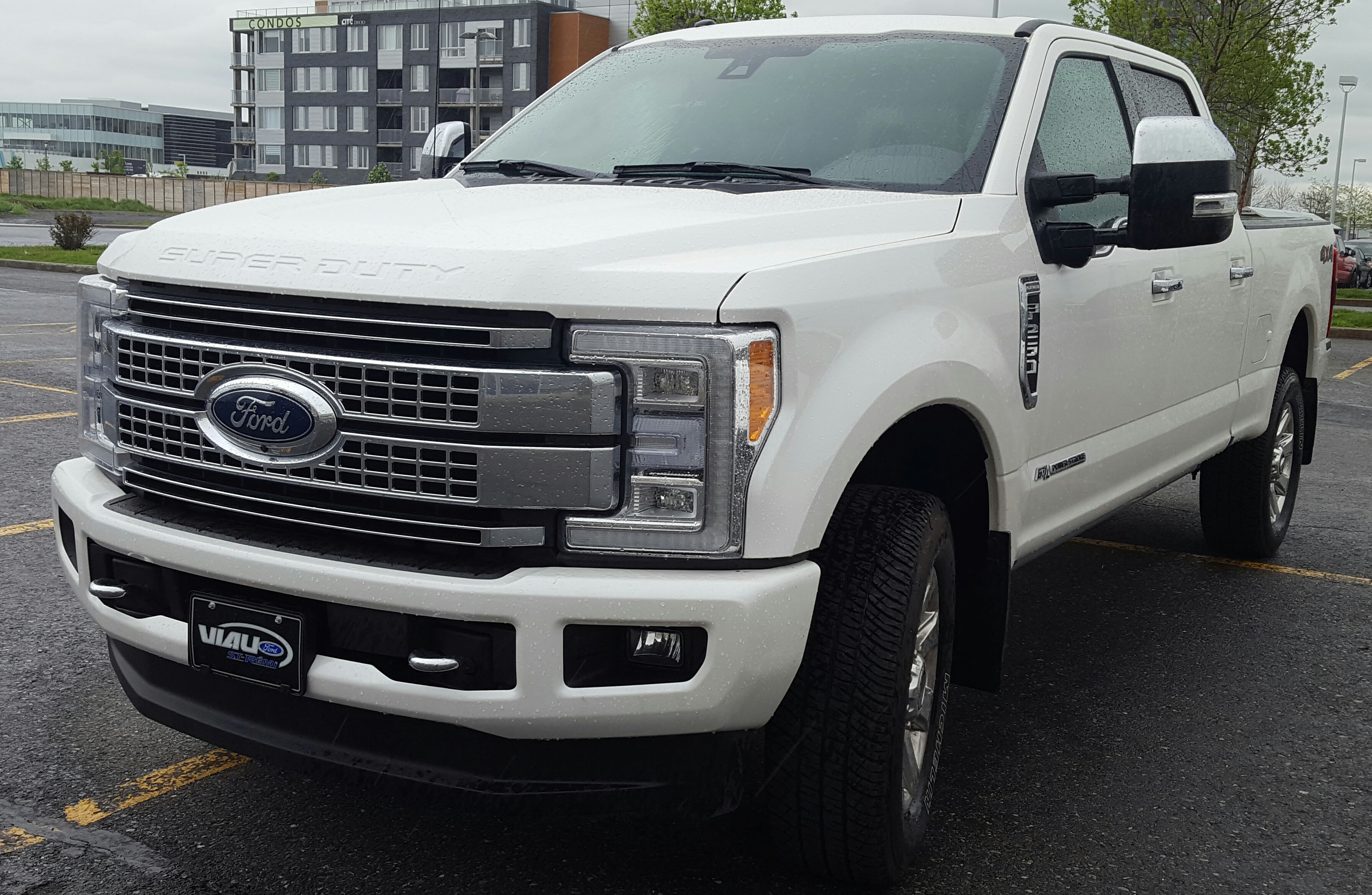
The Ford F-250 is a strong and tough truck that can carry heavy loads and tow trailers. It's built for people who need a reliable vehicle for work or heavy-duty tasks.
A misfire happens when the engine doesn't run smoothly because one part isn't working right. This can make the car feel sluggish and can cause other problems if not fixed.
A coil pack is a part of the car's ignition system that helps start the engine. If it's not working properly, the engine might misfire, which means it doesn't run smoothly.
Compression is the pressure inside the engine's cylinders when the piston moves up. It's important because it helps the engine run efficiently and produce power.
The engine computer is like the brain of the car's engine. It helps control how the engine runs by making sure everything is working together properly.
The timing set is a group of parts that help keep the engine's moving parts working together at the right time. If it's not working correctly, the engine can have problems starting or running smoothly.
A single overhead cam engine has one part that opens and closes the valves above the engine. This makes the engine simpler and lighter than those with two camshafts.
Car
Ford 801
The Ford 801 is a type of tractor made by Ford from the late 1950s to early 1960s. It's used for farming and is known for being strong and reliable.
K-Seal is a product that helps fix leaks in your car's cooling system. You pour it in, and it helps seal up small holes so your car doesn't lose antifreeze.
The heater core is like a mini radiator that helps warm up the inside of your car. If it breaks, you might not get any heat inside, or you could see coolant leaking.
Road Ready Wheels is a company that sells wheels for cars that look like the original ones but usually cost less, making it easier to replace or upgrade your wheels.
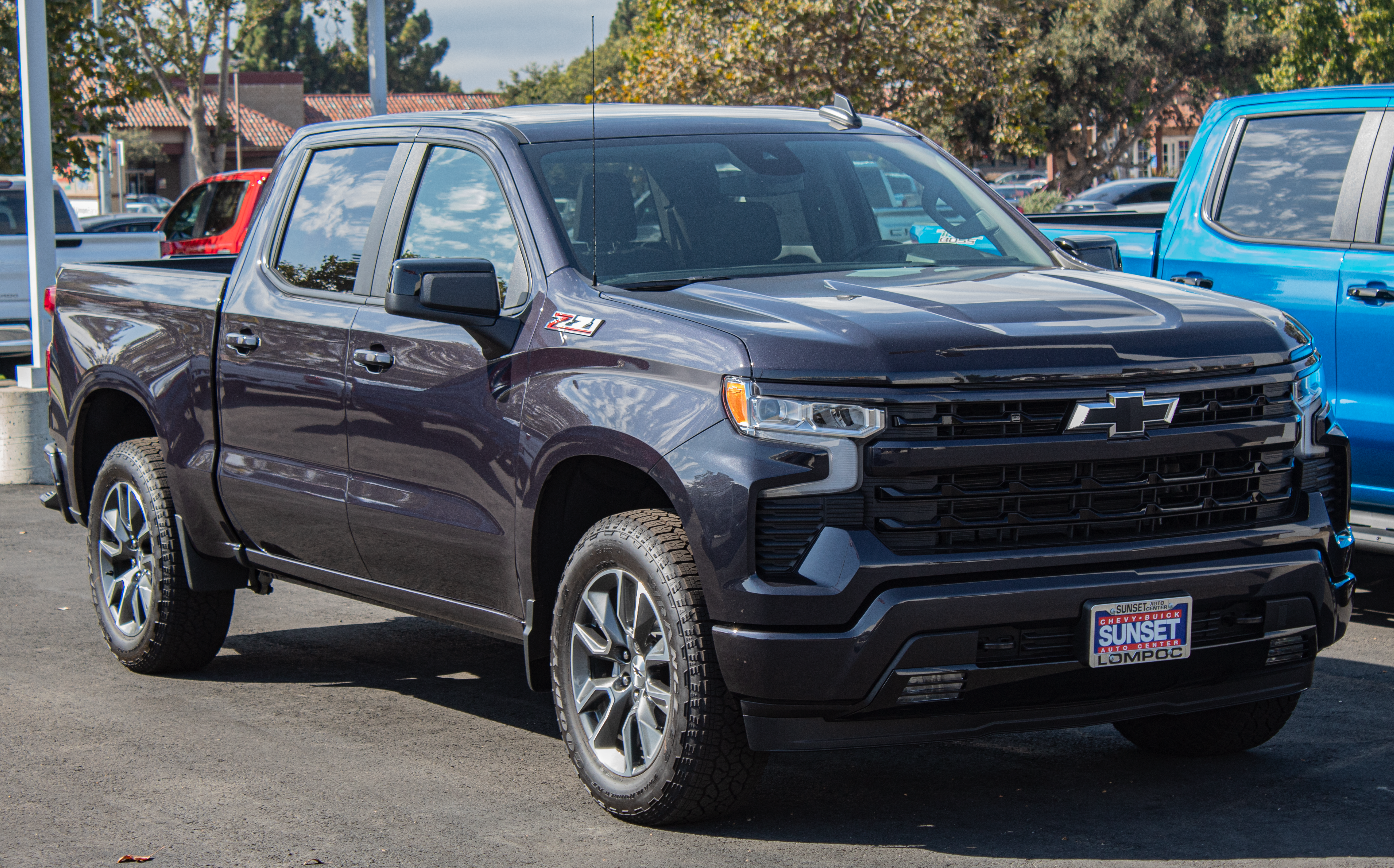
The Chevrolet Impala is a large car that's been around for a long time, famous for being comfortable and having a lot of space inside. People often talk about older models because they have a classic look and feel.
The Jeep Wrangler Robicon is a version of the Jeep Wrangler that is designed for off-road driving, with special features to help it handle rough terrain.
The Chevy Spectrum Turbo is a small car made by Chevrolet in 1987. It had a turbo engine, which means it could go faster than some other cars of its size.
The Toyota Corolla is a small car that many people buy because it's dependable and gets good gas mileage. It's often mentioned because it's a popular choice for everyday use.
The Mitsubishi Starion is a sporty car from the 1980s that has a cool design and can go fast. It's talked about because it was one of the fun cars to drive back in the day.
If coolant mixes with the oil, it means there's a problem in the engine that can cause serious damage. It can lead to parts of the engine getting stuck and not working properly.
If an engine seizes, it means the parts inside are stuck and can't move anymore. This usually happens because the engine got too hot or didn't have enough oil.
The Dodge Omni is a small car that was made in the 1980s and was popular because it was cheap and useful. Some people mention it because it had some problems with the engine that could be tricky.
LIVE
Thanks for joining us on the Under the Hood Show podcast.
We've had a lot of people ask if we are doing the show live on the internet every time.
If you go check and subscribe to our YouTube page and you go like the Facebook page and
get your notifications there, you'll see when we are in our new studio doing the show
live.
We would love to have you do it.
We still do it Thursday mornings from 9 to 11.
And who brings us the podcast?
Berkeley won classics.
Your key to collector car insurance.
In road ready wheels, replica OEM wheels add huge savings.
Use the offer code hoodie for even more.
And by car dash part, over 200 million used parts ready to ship to you fast.
Here is the Under the Hood Show podcast.
Thanks for listening.
This is Under the Hood.
Welcome to the Under the Hood Show.
We are glad to have you with us.
Russ Evans is here to answer your automotive questions.
Hey, thanks for joining us Under the Hood.
Shannon Nordstrom is here to do the same.
Welcome, Hoodies.
Let's tune it in so we can help you tune up.
I'm Chris Carter here to answer your calls at 866-594-4150, 866-594-4150.
Anything you guys want to get to before we start taking some calls?
We got...
I do.
Okay.
I have something completely unrelated to automotive, but very relative to a very current weather
situation as we record the show.
Yes.
I've seen this on Facebook and X.
It's got to be true, right?
Yeah, sure.
Did they issue an exploding tree warning?
No.
Okay.
But it's semi-true.
Okay.
Because...
It can...
People are joking about it?
Yeah, yeah.
But we're talking...
We're going to have 23 degrees below 0, 22 degrees below actual temperature, and somebody
said they issued an exploding tree warning, and I said, that's got to be a joke.
It is.
Well, if it's in a place where you're not...
The trees aren't acclimated, although I don't know if anyone can be to 20 below, it can freeze
and expand and burst the bark of the tree.
I have a tree in my yard that is...
Every single branch and stick on the tree is split open.
Is it something that you got like at a greenhouse that wasn't native to your area?
No.
At some point, got frozen, the same thing, sap was running or...
Too young.
Yeah.
It's like sunscaled, the opposite of sunscaled in the winter.
If you don't wrap your trees, they'll get warm from the sun and then freeze again and
burst open in line.
And the whole thing.
Relating this to automotive, though, that anything that's plastic on your car, including
your outside door handles, you have to be so careful not to be forcing things because
they will break.
If you pull up on the handle and the door doesn't pop open, do not pull on the handle.
Period.
Or it's going to be very expensive and it's your own darn fault and you deserve it.
So when you pull up on that handle and the latch opens, you'll be able to feel it.
Usually the door will do something or you'll feel that it has a drag when you pull it
up so it...
And now it's loose so it's open.
Take your fingers and it's going to hurt and stick them in the top of the door
area by the window and just give it a little pull or go down to Walmart or whatever and
get yourself a can of that spray that you used to melt ice around the glass, down the door
jam anywhere.
Sometimes you can just take your fist too and just kind of give a little bump around
the outside and then it will open.
Whatever it takes to open gently because it will either bend the mechanisms inside
so they're harder to get open or it'll break that handle.
And if you break that handle and you can't get in there, it can get really expensive
but it's going to be inconvenient because you're probably not going to go anywhere.
I guess Russ, I'm going to say it this way.
If you lift it and you're giving firm pressure and it's not coming, don't start yanking on
that thing.
So remember now and as you go, if it's cold, if you have a remote start, use it, set
the thing on high, on hot, on high heat and on high blower and run that thing.
You might have to run it a couple of cycles to get it warm enough inside to open the
door.
But when it happens to me, I just go around the entire seam of the door and I ...
Was that how you got your tongue stuck to the door that time?
Yeah.
Yeah.
Remember that time I was out there under?
I started on the bottom.
Of course.
866.
It's going to be, but it's going to be gross for a few days and it's not just
our area.
Right.
It's already ice covered in Texas down where we were at.
It's crazy.
Hundreds of millions of people affected by this weather.
Is there anything we should or can do if it's coming, as far as our cars is concerned?
Yeah.
Cars are concerned.
When I don't care about plugging a car in that has a plug on it until it's 10 degrees
below zero or more and you don't need it plugged in, you don't need to plug it in
Friday night and let it run to Monday because that's probably going to cost you 20 bucks
in electricity because they're running about 1500 watts or so depending on what it is.
So it's like running a space heater.
If you're going to work Monday morning, you could plug it in Sunday night before you
go to bed.
That would be just as effective as leaving it plugged in for a month.
It's not going to make it any warmer.
But that'll help cut down the load on the engine if you have a really old car.
If you've got a car that's two or three years old and it has a remote start, just
fire it up and let that thing run for the 10 minutes, yes, you can start your car and
drive it immediately.
You don't have to send me all your dozens of emails again and say, oh, you can start.
Of course you can.
That's up to you.
But do you want to wear it out?
It's like, do you want to jump out of bed in the morning and literally the second
you get out of bed without your shoes on nothing, just head out the front door full
speed.
You don't have 30 seconds to warm up.
Get out of bed and run immediately right out the door and there's full power on the street.
It's going to break something probably if it's this cold.
You got to get out of bed.
You walk around a little bit.
You move.
You're good to go.
Maybe you're going to do a couple warm-ups before you go.
The colder it is and the longer you've been sedentary, the more warm-up you
need.
If it's 30 degrees, let the car run 30 seconds.
That's not much.
30 seconds.
Take that long and put your seatbelt on and adjust your radio, right?
Chill a little.
If it's zero degrees, let it run two or three minutes at least.
If it's 20 below zero like we're talking about hitting, fire it up and run it.
Let it run at least five minutes or so.
You got to get some stuff moving.
The parts have a design limit.
They're just not made to run that cold.
866-594-4150.
Let's start in Indiana and talk to Mike.
You're on the end of the Hood Show.
Mike, what can we do for you?
Well, I got a 2016 Dodge Charter and only bought the car with about 50,000 miles on
it.
We noticed the headlights broke down.
So I went to Walmart, bought some new headlights and put them in and it seemed okay for maybe
six months.
Then they started getting dim again and I don't drive it.
My wife does.
I kind of heard about it from her.
So I went to the dealership and I bought OEM lights.
Well, let's take care of it this way.
And it's the same thing.
They actually never got as bright as my Silverado.
And now it's to the point where she has to have the, I think it's the fog lights
that she runs with the headlights and the fog lights are brighter than the headlights.
They're expensive headlights and I don't want to change them over six months.
I don't know if there's something I need to be looking for.
Is there a better alternative?
But it's to the point where it's actually dangerous.
And the charger, it doesn't have, does it have the projector beam lens in it with
the round lens or does it have the regular charger lens, just the halogen bulb?
Yes, the halogen bulb.
But it doesn't have a round projector in there.
It's got a, just like a big, clear glass over the front.
Yeah, there is a, there's a round, round lens inside of it.
Yeah.
Okay.
So that's the projector style.
So you need a good bulb to power that.
And if you try to put in an LED or an HID or something like that that doesn't match
that out, you can put them in, but you have to have the right one to match the housing
because a lot of the standard ones won't reflect the light correctly to power that
projector beam.
And it'll be very dim.
Even some of the aftermarket ones are not built well.
So when you got those factory ones, if they worked, they should not have worked and
then got less efficient in six months.
Maybe two or three years, they'll, they do all had lights dim slightly, but it'd
be a couple of years.
If they're down in six months, I would definitely want to check the voltage at
those lights.
I would get myself a voltmeter and I would, with the lights turned on, I would probe
the back side of the connector where it plugs in and make sure you have battery
voltage with the engine running, the headlights both on low beam.
Check it there.
Let's say your battery is at 13.8 volts.
You should have at least 13.6 at those lights.
If they're really low, you might have a problem with the headlight relays in that
front control module.
The front control modules are problematic on those.
And they do make some kits to brighten up those lights.
If you get on some of the, the Dodge charger forums, you're going to find people
who say, you know, headlight fix and modification fix where they've got like
the four high and high beam.
And they also have a increased voltage for those lights that that are, if they're
only running like, let's say 11 volts, that's way too low.
So they could modify that and fix it.
There's a little relay jumper and a kit that you, that jumps power directly
from the battery over there and then uses the, the power that powers
the headlight now just to activate the relay.
So you're getting a direct feed and you could do that.
But you could look for some brighter lights and it's very important
on that car that, and all cars for everybody out there listening, because
I'm picking on you.
I don't like, you know, guys, no one will look at headlights that are
wrong.
If your headlights are properly aimed, they can be up to 80% more
efficient and appear up to 80% brighter for you as the driver and be 80%
less blinding to oncoming traffic.
If your headlights on low beam are aimed too high, they don't light up the road.
They're lighting up airspace, the darkness and doing nothing.
And you cannot light.
Here's a fun fact we learned from Jeff Gould, Chris.
Remember, you can't light darkness.
If you shine a light through pitch black space, you cannot see the beam.
It will not do anything.
It has to reflect off of something.
So at night, if your headlights are aimed too high, so they don't get the
hotspot of that beam on the exact spot on the road, they're aiming into the
darkness and it's like they're not even turned on.
They appear dim when they're not.
So you need to aim them down.
And the easiest way to do that is park your car on flat level ground.
25 feet from an object, preferably like a garage door.
And if you look at your headlights, every headlight ever made, that's an
OEM quality or even an aftermarket, that's DOT legal, has a tiny little dot on
the outside of it, on the glass, unless it's been sanded off, you know, too
many restorations.
You're like, what is that?
Why is there a tiny little dot there?
Well, the tiny little dot is made for aiming.
You take a tape measure while you're 25 feet away from any object like
that and you a wall and you measure from the ground up.
And let's say it's 28 inches to that dot, then you go out to the wall and
you measure 28 inches up and preferably put a piece of painter's tape.
My wife doesn't like it when I use a black marker.
And then the hotspot of that beam, the high point should be just touching
that and that'll give you the best vision of that car for it.
I'll make a video of it and throw it on YouTube.
But it gives you, it's amazing how much difference that can be.
And I'll aim headlights in cars I drive every couple of years or if I go, wow,
they just don't seem right.
And I'm like, why are they so far off?
They were aimed.
I didn't have a collision driving down the road.
They bounce and they're just cheap plastic and aluminum and they'll,
they'll get out of a line of potholes.
They'll bend them.
They'll be up and down too high.
Um, snow and ice when it hits them will, will bend them.
Hail just people leaning on it, car washes.
So if you adjust them, you'll be amazed.
And you, everybody can do it at home pretty much.
It's a simple thing.
If you've got flat ground and a garage door, I've never done it like that.
I've had people aim them before and they, they used to use an aiming tool.
You don't need it.
You don't, I've just, I was amazed.
Did you see me like watching him, looking at him like, I didn't see,
but I felt it.
I felt it.
We're both staring at us like, is it that easy?
So actually Mike, you might find that your headlights are out of aim and
maybe they're brighter than you think, but they're out of aim.
So if you stand in front of the car and go, well, the headlights look
pretty close to the fog lights as far as brightness.
Why are they just not reflecting?
Something's not right.
They might be out of aim.
Yeah.
There you go.
Mike, I'll check that and I'll, I got a meter.
I'll check the voltage.
I appreciate it.
Thanks very much for the call.
And he's just going to get them fixed in time for the lens, the,
the glass in front to go bad because it's 10 years old.
Yeah, we're assuming he's clean the lens and it's not all gloom and over.
866-594-4150.
That's the number to reach us here at the end of the hood show.
Let's go to Texas and talk to Daniel.
You're on the end of the hood show.
Daniel, what can we do for you?
Hey guys, thanks for taking my call.
I really enjoyed listening to you guys.
You bet.
Thank you.
So I got a couple of issues here.
So first one's on a Ford O3 F250 and it's got the 5.4 liter V6 or V8.
I mean, and we got a misfire that just won't go away.
It's, it comes up with two codes.
One is misfire on the first 1000 rounds of startup.
And then the second one is misfire cylinder one.
And we've changed the coil packs, the spark plugs.
We've changed coil pack on cylinder one like eight times.
We tried moving the coil pack to a different cylinder.
We couldn't get that.
So it wouldn't seem to be the coil pack because it worked on the other cylinder.
So then we we've changed the wiring that goes to the like the plug that goes to the coil pack.
We ran some ejector cleaner to see if that was going to do it.
We couldn't figure out like nothing does anything to it because just come right back.
Any ideas?
I just got to ask on the seventh coil, were you thinking the eighth one was necessary?
Well, OK, so this is kind of spread out.
This is kind of spread out over several years.
OK, that makes more sense because because if you were doing eight in a weekend or
something, I was going to come on guys.
No, no, no.
You would be the part store's nightmare.
Usually after.
Yeah, no, no, after two are usually like, we we.
Yeah, we we had a bunch of problems, but we don't drive the truck much.
So it's like, oh, we need the truck again.
We better try and fix it.
And then, OK, well, that didn't work.
And oh, we need the truck again.
We better try to fix it.
You know, it took several years to do all that.
OK, that makes more sense.
And you would think, I mean, I can see where I would.
I would get in the notion of it just goes bad after a couple of years.
I have to fix it.
It's been sitting again.
Yeah, yeah, the coil on it, Bob.
Well, the problem is if you fix one and then a year later, you put another one
on in the year later, you put another one on the first one you put on could
go bad again or even one that you just put on.
We we put them on and we have some go bad in six months.
Some go bad in six years.
You don't know, you know, on those, if you get a coil that fails on
one of those engines that it's got 100,000 miles, you buy a full set.
You put them on because that's a tune up and then you you run it.
And if you have another problem, then you get them warrantied if you need to
or you replace the full set.
That's the best way to do it without.
But your misfire is continuously on cylinder one.
Yeah, so we did, at one point, get the misfires and other cylinders
and we changed all the coil packs and spark plugs and that all went away.
And so we just have this cylinder one that we just can't get to go away.
Well, if it's got it, if you switch the coil and you switch the spark plug
and it still stays on number one, you can switch the injector at home
without having to buy extra tools and stuff.
And if that doesn't fix it by moving that injector
significantly away from that cylinder with another one, you know, I usually
just swap all of it if you if you're at home and you had no tools
like like test equipment, you take the injector, the coil, the spark plug,
move it to like number three and then put everything on number one
and see what it does.
If it does not move, then you're going to have to get deeper in it
and you're going to have to check compression.
You're going to have to check leak down to find out if there's any
leakage past the valves that when it's sitting there.
And if all that's good, then you've got to check and find out
what's up with the with the timing or the engine computer.
Not firing, you know, in the super duties, not as many problems,
but do you get nervous about that timing set in that F5.4?
Oh, yeah.
Would that do number one?
Yeah, if it's depending on I mean, if the timing is getting
because he also had that Cody misfire, he said in the first
thousand RPM type of thing, right?
Yeah, depends on which engine it is.
If it's over the newer engine, because you're an old three,
you could be either one in an F 250.
I think it might be the older one.
It could be.
I don't know.
I got to remember that how that is.
Which which motor they put it.
Is it a single overhead, a single hard cam motor with
three valves or is it two valves?
Do you happen to know?
I don't actually know that much.
Okay.
How long is this?
When did that?
When's the first coil you'd fixed?
Oh, let's see.
Probably 2014.
Oh, yeah.
Okay.
I'm suspicious that you've got a timing, a timing problem
because of all the things you've switched around and then
you still got the same problem in the same place.
But if you haven't done the injector yet, try moving the
injector, like Russ said, and see if that happens to change
anything.
What was your what was your other question that you had?
Yeah, okay.
So I've got a old Ford 801.
It was made in between 57 and 62, something like that.
Anyway, we don't know exactly when this one was made.
But anyway, it's leaking antifreeze.
And so I was wondering, is that something that can put something
like K-Seal or something like that in to stop the leak?
Or is that going to be a problem?
You sure can.
K-Seal is designed.
It will never clog anything the way it's set up.
They guarantee you won't clog anything.
So it's safe to run in anything.
Of course, there's nothing to really clog in that.
You don't have a heater core or anything.
But yeah, it's safe to do that.
As long as it's got regular antifreeze in it, it hasn't had
bars leak or some other different type of sealer in there.
You can put the K-Seal in it.
They have different kinds of K-Seal HD.
They have ones for different size engines and you just put it in.
Well, there you go.
That I definitely would be going K-Seal unless you can see it
and you know where it's at.
And it's a pretty big leak that you can repair.
Yeah, you have to you have to take care of the physical problem.
Can you just put that aluminum tape on it?
No, no. OK. I really I like that aluminum tape.
I think it's neat.
I'd like to find a problem that that would fix.
I don't have one yet, but.
What's that spray?
Yeah, this. Yeah, spray seal.
Flex seal. Yeah.
There's another one even showing.
I got to get on that.
There's three ideas for it.
The end of the Hood Show podcast is brought to you by exclusive sponsors
like Berkeley One Classics celebrating 50 years,
your key to collector car insurance and by car-part.com
with over 200 million parts.
Find them online at car-part.com and by Road Ready Wheels.
OEM replica wheels at a huge savings.
RoadReadyWheels.com.
Thanks for listening to the Under the Hood Show podcast.
What would your vehicle be without wheels?
Our partner at Road Ready Wheels has wheels, thousands of wheels,
affordable in stock and ready to ship to you.
Replace or upgrade your damage or plain steel factory wheels
with new OEM looking Road Ready Wheels.
Maybe steel is the way to go for you to mount a second set
of winter tires or you just don't like the aluminum look.
RoadReady Wheels has many choices for you.
Go to RoadReadyWheels.com and use their online vehicle
selection tool to help you find the wheels
that fit your vehicle.
Mercedes Cadillac Ford Chevy Chrysler
and many more with the OEM fit and look that you want.
Save 10% at checkout when you use the code hoodie
for being a loyal Under the Hood Show listener.
New OEM wheels can be expensive with some wheels
that cost 500 or more from the dealer.
Many of those from Road Ready Wheels
are about half of that saving you some serious cash.
Use your factory TPMS sensors and caps too.
Go to RoadReadyWheels.com to find out more.
That's RoadReadyWheels.com.
Hey, it's Chris Carter with Russ Evans
and Shannon Nordstrom Under the Hood.
When you need great coverage for your ride,
Berkeley One Classics is here for you.
They'll work with you to help determine
the amount of coverage a vehicle like yours should have
and that coverage is agreed value coverage.
So there's no disagreement
on what your vehicle is covered for.
They also have discounts for car club members.
For 50 years, Berkeley One Classics
has ensured a wide range of vehicles
from sports cars and rare exotic cars
to antique vehicles including cars, trucks, tractors,
military vehicles and motorcycles.
Over 50,000 of them a year.
They give you confidence in your vehicle's protection.
Find Berkeley One Classics on the web
at BerkeleyClassics.com.
Get a free quote and find out firsthand
what they can save you
and how well they can cover your valuable investment.
It takes just a few minutes
using their easy online quote tool.
BerkeleyClassics.com or call 1-800-603-3330.
That's 800-603-3330.
When you need parts for your car,
finding them is half the battle
and we have a great source for you
to find those parts you need at great prices.
If you need parts, whether it be for a brand new car
or going back about 20 years, it doesn't matter,
check out car-part.com.
It's fast and it's easy.
Over 200 million parts strong all across North America.
Over 4,000 recyclers to choose from
giving you the largest selection available.
Whether it's an engine, transmission, doors,
seats or wheels, you can find them on car-part.com.
We even let you know what parts
from other models and years fit your car.
Many recyclers supply pictures of their parts too.
We even have a mobile app.
Search US and Canada
or buy from your local independent recycler.
Whichever you choose, buying recycled
is good for the environment and good for your wallet.
If you're a repair shop,
there is a professional version available for you
at no charge.
That's car-part.com, car-part.com.
Check it out today.
Welcome back everybody.
It's time to get back under the hood
with our motor medics.
866-594-4150.
That's the number to reach us here
at the end of the hood show.
Don't forget, you can watch the show
on our social media channels
and if you join the YouTube channel,
if you subscribe there,
do you want to put anything in there quick?
We're just below a milestone.
Somebody go subscribe now please.
One, two or three of you
put us over a little bit of a hump.
Yeah, we're at 8,999 subscribers right now.
Let's go.
And you get to watch the show.
A lot more downloads, of course,
but we need people to subscribe.
If you do that, if you do subscribe
to the under the hood show YouTube channel
and join the hoodie fan club
at underthehoodshow.com, you could win a hoodie.
Like Bryce Johnson, I think it's Johnson Automotive.
Could be.
North of here.
Oh, it is.
Oh, okay.
No, for fact.
He's up by Sisseton area.
Yeah.
That's it, you know the.
Yeah, I'm just, yes.
Yeah, he's about our age.
That's cool.
Congratulations for everybody here
under the hood and our friends over at Berkeley
won classics celebrating 50 years
of collector car insurance.
Pretty cool.
And Universal Technical Institute.
They're celebrating too.
More campuses opening all the time,
training new people in automotive,
even aircraft mechanics, boat, marine, welding, CNC,
all sorts of great stuff.
Check them out at uti.edu.
866-594-4150.
Let's go to California and talk to Jack.
You're on the under the hood show.
Jack, what can we do for you?
And I just want to tell you guys,
thank you so much for keeping me in your prayer.
And I've been a part of these guys for a while.
And I took all you guys advice.
Now I'm a service tech upper bay technician
at Jiffyloo in California.
Oh, I am.
Oh man, awesome.
That's great.
You get to see all these different fluids
they got to put in everything.
So many different cars.
Yeah, that's awesome.
I'm just so happy to even have a job.
What part of California are you in?
I'm a stop in California.
Okay, well, that is awesome.
But we lift you up and encourage you to keep learning
and keep applying yourself to do the best you can
and you're going to learn more and then you can do more.
Yes, that is accurate correct.
So I just want to tell you guys,
thank you for the motivation.
Well, God bless.
Yeah, thanks very much for the call.
That's cool.
Yeah, we'll take that.
866-594-4150.
Am I safe to assume that you don't know where Stockton is?
Was that?
Well, I know where,
because I didn't like make a big deal about it.
Well, yeah, you just blew right over it.
Like I was, I...
I can look at the map and probably point at it, I think.
Okay.
Because that's what happens.
Test me afterwards.
Because when you asked, I was like, oh yeah, where is it?
And then when he said it, I was like, oh, I can't help
that and you moved right on
and I thought maybe both of us were in on that.
Yeah.
Russ is pretty quiet too.
Yeah, yeah.
Doug, any idea?
All right, I think it's north.
I don't think it's no Cal.
I think it's, I think it's so Cal around Los Angeles.
All right.
Oh, is Jack, are you still there?
Yeah, I am.
Where is it?
Where's Stockton?
Actually, south of Sacramento, south of the capital,
about 20 to 30 minutes away from the capital.
Okay.
So now...
That's what I thought.
Now I should be tuned in
and how close to Roseville is it?
Um, just felt like if I gotta leave right now
at the Roseville, I'll make it, well, it depends on traffic.
It's about 45 to 50 minutes.
It's not that far away.
Okay.
It's no Cal then, Northern Cal.
My daughter and her husband are in that part of the world.
Wow.
Yes, it's not that far away.
But they're not, Stockton didn't click for there.
Yeah.
It's a total fail on my part.
I was not trying to point out as big a failure as it was.
No, I've seen signs to Stockton now
that I think about it, but I just, it didn't click.
I always thought there was a Stockton.
What's the one that like in the rap world around LA is...
Compton.
I was conflating once again.
Okay.
All right.
I was completely conflating once again.
Compton is not Stockton.
Guys, I...
But there is something about Stockton.
I don't know if we have...
What is going on here?
I should know the radio stations,
but I was thinking, producer Doug,
did we have a station in Stockton one time,
like 15 years ago?
Like for a very short time?
Yeah, we did.
Like for like six months,
and then they were like, yeah, they changed formats.
So, Jack, are you listening on YouTube
or are you listening on podcast?
How do you take in the show?
YouTube.
Okay.
Awesome.
Got a really big antenna.
Tell your friends, and we need like three of them
to help us just get over this next time.
And now I want to thank you, Jack.
You've had my favorite call of the day.
Yeah, this is awesome.
Yeah, thanks a lot, Jack.
You know, if you're driving
like the old 64 Impala
with the dual antennas on the back,
if you extend them out all the way,
remember those clips you could pull out like 10 feet?
Yeah.
And with the AM radio,
I bet you could get under the hood
anywhere in the country.
Bet.
866-594-4150.
Let's talk to Dan.
You're on the end of the hood show.
Dan, what can we do for you?
Hey guys, I really enjoy your show.
Thank you, but I've got a 2013 Jeep Wrangler Robocon.
So it's got the Dana 44 locking rear axles.
And ever since this set was new,
and it hasn't gotten any worse,
it's the same, but they're hard to get them to lock.
And if you ever get them to lock,
to get them to unlock is a virtual impossibility.
You literally have to jack up a wheel
and jerk it back and forth.
And that's just really a hassle.
I've watched a few Google things and YouTube things.
Apparently not vintage.
It must have been a real problem.
I've even seen guys drill holes
in the top of the differential cover,
put a plug in there,
then they prime a part with a screwdriver.
But have you guys ever heard of that?
Yeah, they can get pretty sticky.
One thing is the right fluid in there,
the correct type of fluid and weight, also clean fluid.
And if you get a new one and you use it a whole lot,
when you first get it, it'll break in
and it'll work very well.
Most of these, though, they hardly ever get used.
They're built very tight when they're set up
and they just don't lock and unlock.
So the more they're used,
the more they wear, they move freer.
They're too tight.
They're too tight.
Yeah, we've actually got a...
Yeah, so that...
We've got a rear-end company.
We use a couple of them,
one primarily for building rear-ends for us.
We're a distributor for US Power Gen.
And occasionally, somebody'll say,
well, you know what, it kind of binds
when you go around corners a little bit.
It's like, drive it.
Just drive it.
But well, it's brand new.
I just put it in.
It's got 50 miles on it and it's doing this.
Go drive in circles in a parking lot for five minutes.
It'll smooth it right out.
You'd rather have it a little tighter
and wear in properly with the clutches
than too loose and wear out.
But you also don't want a rear-end
that's so tight-ring and pinion-wise
that when it warms up, it burns the thing up, either.
But they have, with these clutches...
If I had one, if I owned that vehicle,
I'd be running it a lot more
just trying to lock and unlock it.
Now, hopefully you don't have to pry it apart
every time to unlock it.
But if you can lock that thing in
and turn it on and off and run it off road a little bit,
it would be the best thing for it.
So, yeah, this Jeep, we just use it once a year.
4,000 miles, we go Jeep and like the Colorado and things.
So it doesn't get used very often.
Is there a fluid you would recommend
that would be better than the original fluid?
Get on the forum and see what people are using in there.
They might be using a red line or a shavers in there,
something that stays a little more viscous
when it's colder out and not being used as much,
but see what they're suggesting,
because those guys, the guys on the forums
are usually really good.
There is a Jeep cult that you'll surface
the best solution or at least two to three to two.
Four year exact year and build out.
Yeah, and color, and color probably too.
I'm one of my white Jeep, I like to use this fluid.
But definitely, and then our partner,
Justice Brothers, makes a metal conditioner.
The heavy duty vehicle from Justice Brothers
would be my choice to go in there,
no matter what fluid you put in there
because it will protect the metal
and make it more reduce the friction.
It'll make it slipperier than nothing in there.
And if you reduce the friction,
it's gonna be easier for that thing to slide around.
And this is about the worst case scenario
for using a vehicle, right?
I mean, once a year, 4,000 miles
and then you're going and ripping it up,
that's, there can't be a worse scenario for a vehicle than that.
I say, is there ever a time where jumping it,
like physically going off a jump?
Yeah, would that help?
Because that would be fun.
I don't know, maybe if the seat is stuck.
Yeah, yeah, there you go.
But I would say, if I were Dan, I'd go,
hey, honey, I have to go more.
I have to go take it up to like an OVH or something
and use it up more often.
It's gonna keep happening.
Exactly, that's good leverage.
Dan, thanks very much for the call.
Good luck.
866-594-4150, that's the number to reach us here
at the Under the Hood Show.
Let's talk to Jim.
You're on the Under the Hood Show.
Jim, what can we do for you?
Hey, I got the Wyres 2015 Chrysler on the driver's side.
Heated seat is acting up.
So I unhooked the wire under the control module
and plugged it back in and it worked for a day or two,
but now it's acting up again.
Any thing else other than having to put up
something new in there?
Toughen up.
What kind of?
Chrysler, that's not the advice he's looking for.
Well, it's a nice vehicle, so we have to fix
the heated seat here, guys.
That's not him toughening up.
Yeah, I'm with you.
Or he doesn't have to toughen up and not fix it.
What model is it?
Chrysler 300.
300, okay.
More than likely it's the seat heater itself
that's failing the resistance in it
and you'll unplug it, plug it back in,
the module can reset, tries to relearn the resistance
and then it works for a little bit,
but ultimately it takes replacing the seat heater itself.
When you sit on it, it bends
and it can change resistance.
It uses the resistance as the measure of temperature as well.
So when it changes resistance, it causes issues.
Some cars have a temp sensor in them,
but most of them like to use the resistance
that way if only part, let's say the corner of the seat
gets too hot and it's gonna catch on fire,
a temp sensor is not gonna measure that
from the center or the other side
or if you're sitting on it with clothes and changes,
so they use the whole thing and say,
hey, if we got a big resistance change in one spot's hot,
it's gonna change resistance, shut it down.
So there are some companies that make some aftermarket seat
heaters to go into those factory ones.
If you're sitting on it with clothes?
No, extra clothes, like a snowmobile suit.
If you're wearing shorts, then your legs
are touching the seat, they're not gonna make it as hot.
It's like if you have a ceramic heated floor
at your house, a lot of times they'll say,
depending on the type of the floor,
they say do not put rugs on top of this.
Just encourage everyone to always
be cool or close it when they're heat seaters.
No, we don't care what you do
in your own car below the window.
Does that help?
Yeah, it's really weird.
Like when I drove it in the town,
it stayed on the hot, stayed on the high side,
and I drove it like eight, 10 miles,
then it went down to the one.
I got hot, and then she drove it,
then it worked fine for the other day.
And today it's really cold out,
and it might take five miles,
it might take 10 miles,
and then all of a sudden the seat is instantly hot.
Yeah, it's just doing weird stuff.
And if it comes back on, it sounds like,
it's pretty sure it sounds like
you got a heating element that's out,
and you can unplug it and measure resistance of it,
and there'll be some resistance charts
you can find online about that.
Is that how you would check that, Russ,
if he was in there and someone was asking,
look it over?
Yeah, we check the resistance.
So what you're saying is I gotta,
the seat needs to come out,
I gotta tear it apart and put a whole new
heating element in there is what you're saying.
And it's surprisingly easy to do
for a person that is semi-mechanically.
On most.
On most.
If you're semi-mechanically inclined
and you're a guy that says,
well, you know, I might put valve cover gaskets
in my car, you could do a seat.
In most cases, look on YouTube first
to see how it's done,
and if you say, oh yeah, that's fine.
But a lot of them just unzip,
have a bunch of hog rings that you bend out
with some needle nose pliers and clump,
and you just take the cover off and put it in.
The seats in my Yukon, I had to redo for,
I put them all on,
but when I put the new covers on,
I was amazed, I swapped the covers on both seats
while they were bolted in the vehicle,
and it took me about 15 minutes per seat
as that was easier than it should have been.
I'm like, wow, okay,
because some of them were,
I did the O3, that was a nightmare,
and they're broken again already, you know,
but it's like the stuff I drive in the summer only,
the seat heaters work great,
but the ones I drive in the winter,
either they don't have heaters or they're broken,
and I don't wanna fix it.
Maybe you just don't notice.
I don't have a choice, I have to fix it.
Yeah.
I get to fix it, so.
Yeah, you do.
No such things as bad weather,
just poor choices including.
Thanks, Jim.
866-594-4150, let's talk to Austin.
You're on the end of the hood show.
Austin, what can we do for you?
Thanks for taking my call.
I am not semi-mechanically inclined,
and I recently purchased a 1987 Chevy Spectrum Turbo,
and my wife's gonna kick me off Marketplace
if I don't get this thing fixed or sold,
but I bought it, I drove it about three,
three to five miles down the road,
and then it quit out on.
Turn your radio down while we laugh.
Three to five miles?
Three seconds break.
Is that after the purchase, driving it away?
Yeah, I drove it, I put it in one and it rolled forward,
and I put it in reverse, and it rolled backwards,
so I figured I'd try to get it home,
and it didn't make it very far.
Boom.
I have got a vision of a Spectrum Turbo.
I have not thought of a Spectrum Turbo.
Is this who I mark?
Forever.
Yeah, I just, this is a, I don't know, not a first,
but it's gotta be right up there
for the Spectrum Turbo questions.
We've never had a Spectrum call on the show.
Oh, we're on the Spectrum here.
Is that a Geo for a while?
No, no.
What was the Geo?
What was the Geo?
That was a Prizm.
That was a Prizm.
That was a Chevy.
The Prizm, then they had the combination there,
but the Spectrum.
The Geo Prizm is very similar.
If you had them parked next to each other,
it's about as similar as a...
Toyota Corolla there.
Oh, to a Spectrum?
What do you call that?
The Pontiac Vibe, right?
No.
The Spectrum looked a lot like the...
They were square.
The one I just said, like the Geo Prizm.
You know, they were small, subcompact cars
with very underpowered small motors.
Yeah, the Spectrum was a mini car, basically.
Yeah, and it was a turbo car back.
So in 87, 84 to 87, when those cars were around,
we had, what do we have?
A Dodge Daytona turbo.
We had a Chevy Spectrum.
We had the Zuzu I-Mark.
We had...
And not all of them were turbos,
so this is the supporting model.
No, I'm talking about turbo cars.
Yeah, exactly.
And then we had the Mitsubishi Starion.
We had the Eagle Conquest.
We had all these tiny...
What do they have in common?
They're all tiny little three or four cylinder turbo cars
with turbos the size of a tennis ball,
trying to get the car to just feel
like a normal V8 car of the day
or a V6 car of the day.
So it was underpowered, and therefore,
the engine took a toll because a lot of cars,
they were inexpensive.
So for people listening, you're like,
oh, I'd like to get my high school kid a cheap car.
Well, less by, I'm a Chevy Spectrum.
And we'll just opt for the turbos.
You know, they're still cheap.
The car was cheap, thought it's powered just fine,
but then the kids go out and they beat on them.
And most of these cars lasted about 60,000 miles.
And then they were done for.
But a lot of them, the radiator fan would quit.
The engine would overheat, crack the cylinder head
or blow the gasket.
And when that would happen,
they'd get coolant in the oil, and they were done.
So this car here, you said it ran fine
on the way home when then...
He says three to five miles.
Okay, so you got that far and it stopped.
So then what happened when it...
Hopefully the guy selling it lived further away.
I don't imagine you...
Met him at a safe zone.
Yeah, met him at a safe zone and it ran.
Where are you from?
Nevermind.
Signed a five-year-old title, and this is all it went.
Three to five miles, did it stop running
or did the transmission stop propelling it?
That would be the, that's what you want,
the transmission.
What happened?
Kind of like what you guys said.
I mean, I was in, I don't know,
second or third gear coming off of a red light
and it just, it just quit.
And I coasted it to the shoulder of the road.
I towed it to my local mechanic
and the guy I bought it from had just recently
changed the oil and when the mechanic pulled the oil,
he thought it looked milky.
So...
Cylinder head cracked or a cylinder head gasket out,
coolant in the oil, caused the bearings to seize.
After the car cooled down, you drove it,
it died because it lost power, you shut it off,
it seized.
At the cheapest you might be able to take it out.
That's a likely scenario.
I'm telling you, that's a likely scenario.
Of any of these cars, anyone that we mentioned,
even a...
Well, because the turbos would build up
so much cylinder temperature.
Ford Escort.
They would crack the heads
and they would put head gaskets out
because that pressure they would put in the cylinders.
You remember the Ford Escort,
the heads would go out on those and the omnis
and when they would go out and get coolant in them,
if they would lock up like that,
they never had piston damage
because those took a lot less oil.
It was the crankshaft, so we'd pull them out.
We'd have the crankshaft polished,
we'd put new bearings in it,
put a head gasket in it,
or have a head welded and fixed or machine it, whatever,
and put it back together.
That was the cheapest that you could possibly go for.
In the worst case, it's catastrophic
and it needs an engine.
But...
Yeah, in the best case you're mechanic,
if you guys are dice rollers,
you could look in there with a bore of scope
and make sure the cylinders aren't scored.
Well, he said he's mechanically sub-enclined,
I think, or something like that.
Exactly.
Okay.
Yeah, they need to...
So, yeah, it does.
Yeah, we're concerned.
We're concerned for you.
And this relation...
Well, my wife's gonna ban me from Facebook Marketplace
unless I sell it, so...
That's a...
Let's fix it.
That is a...
It seems fair.
That's a rough sentence.
It seems fair, though.
Three to five miles.
Would you rather have another penalty
than losing Facebook Marketplace?
No, there's nothing worse than that.
That's what I'm getting at.
Be careful with all sorts of stuff.
We have ad-ex...
We have Facebook Marketplace ad-ex around our business here.
They just...
They can't stop buying and selling stuff.
It's just...
It's really hard.
But I hope that it's not catastrophic
and maybe best case scenario.
I don't like that he just changed the oil.
That is a little suspect.
I just changed the oil.
The tires are good.
It's a great car.
He had to get the milky oil out of it.
That's why he just changed the oil.
Maybe.
Next time, you'll say,
hey, can we hop in this car and go for a 15-minute drive?
I'll give you an extra 20 bucks.
In this case, a five-minute drive would have been good.
The guy would be like,
well, I got to go.
But did he...
Okay, now, we're being mean to you.
Did he bring it in on a trailer to de-drive it there?
He said it was trailer to him
because the turbohead went on it.
So he actually just put a brand new turbo in it, too.
No, but where you met him at?
Was that at his place?
Or did you guys meet?
Seriously, did you meet somewhere?
We're kind of having fun, but I'm serious.
I wouldn't sell it in my own house if that was...
Well, we're actually just down the road.
I met him just south of Sioux Falls in Harrisburg.
So it's not far.
Okay.
Well, it could be.
And it seriously could be from sitting around.
But the turbo thing, you said he just put a turbo on it.
Was the car new to him, too, when he got it?
Yeah, he trailer then he said, yeah.
Oh, because if he just bought it, maybe he just said,
oh, it needs a turbo, so he put a turbo on it.
Maybe the guy who drove it before him,
it was already having bearing issues
because it had coolant in it.
I'm just saying, if he just put a turbo on it,
if that turbo was bad, whoever drove it before,
when the turbo went bad,
it built up a lot of back pressure, possibly,
and got cylinder temperature.
It could be that the head gasket just got knocked out of it.
He changed the oil, put the turbo on it.
And maybe when you drove it, head gasket's out,
Deleuze coolant gets into the cylinder,
doesn't run right, makes it die,
could have taken the bearings out very highly likely,
could have scored cylinders very highly likely.
Maybe it didn't.
And so that's where you look and see,
all right, is this thing really bad?
Is it got a, the mixture is so pureed
that you can tell it's been pretty mixed up.
And how bad is the leak?
You know, there are some things they could check
and there's a, what would you say, percentage-wise,
that it could be rescued to run again?
If it, if you could pull it and put bearings in it,
it's very, it's possible, very possible and very likely.
But if it's got a cracked head,
you finding a head for that
is gonna mean finding a whole engine.
Oh, we have the internet now, you never know.
Others engines out there probably four or 500 bucks,
but find one with a good head.
The 1987 spectrum, one of its notable points
was that it was equivalent to a 1977 Z28 in performance.
That did not, that did not take much.
No, 205 horsepower, 190 or something like that.
That'll do it for another hour of the Under the Hood show.
If you haven't watched the show yet,
you can watch the show on our YouTube channel.
Just go search Under the Hood show on YouTube.
And don't forget,
if you subscribe to our YouTube channel
and join the Hoodie fan club at Underthehoodshow.com,
you could win a hoodie all we use the Hoodie fan club for
is to mail out prizes.
So go sign up at Underthehoodshow.com.
For Russ Evans, Shannon Nordstrom, I'm Chris Carter.
Thanks for joining us on The Under the Hood Show.
With Russ Evans, this is Shannon Nordstrom thanking you
for tuning into The Nordstroms Under the Hood Show.
Have a great day and remember PTLA.
The opinions heard on this program
based on the many years of experience of Russ and Shannon
are offered for entertainment value only
and as a guide to your repair needs.
No claim to repair or cause is given or implied.
Always consult with your own certified technician
and follow all safety procedures
before attempting any repair.
To be a part of the show, call 866-594-4150.
Find out more by visiting Underthehoodshow.com.
Under the Hood is produced by Prairie House Productions.
All content is the property
of Nordstroms Automotive Incorporated
and may not be used without our permission.
Copyright Nordstroms Automotive, Inc.
About this episode
Listeners are treated to a lively discussion about automotive care during extreme cold weather, including tips on how to prevent damage to door handles and the importance of warming up your vehicle. The hosts take calls from listeners facing various car issues, such as dim headlights on a Dodge Charger and persistent misfires on a Ford F250. They also dive into the quirks of a 1987 Chevy Spectrum Turbo, exploring potential engine problems and repair options. The camaraderie and humor among the hosts make for an engaging episode filled with practical advice.
1. How to aim 16 Dodge Charger Headlights and what makes them dim? 2. 03 Ford F250 What causes misfire? 3. Ford 801 Tractor using KSeal 4. Why does Jeep Wrangler Locking diff stick? 5. How to check 15 Chrysler 300 Seat Heaters? 6. Can I fix an 87 Spectrum Turbo engine?