The dealer doc fee is an extra charge that car dealerships add when you buy a car. It's meant to cover the cost of handling all the paperwork for the sale.
Add-ons are extra features or services you can buy when getting a car. They can include things like warranties or special paint jobs that make the car more expensive.
The chip shortage is when there weren't enough tiny computer chips needed for cars, which made it hard for companies to build new vehicles. This meant fewer new cars were available for sale.
New car availability is how many brand new cars are ready to buy at dealerships. If there are fewer cars made, it means there are fewer cars to choose from.
NADA stands for the National Automobile Dealers Association, which helps car dealers in the U.S. by providing support and representing their interests.
The Jeep Grand Cherokee is a popular SUV that can handle rough terrains and also offers a comfortable ride. The mention of a powerful engine means it might be even more fun to drive, which is exciting for fans of fast cars.
Hybrid models are cars that use both a regular engine and an electric motor. This helps them save fuel and produce less pollution compared to traditional cars.
The automobile industry is all about making and selling cars. It includes everyone from the companies that build the cars to the dealerships that sell them to customers.
The BMW M Coupe (E36) is a cool, sporty car that looks different from regular cars because it's a two-door coupe. It’s made for people who love to drive fast and enjoy a thrilling ride.
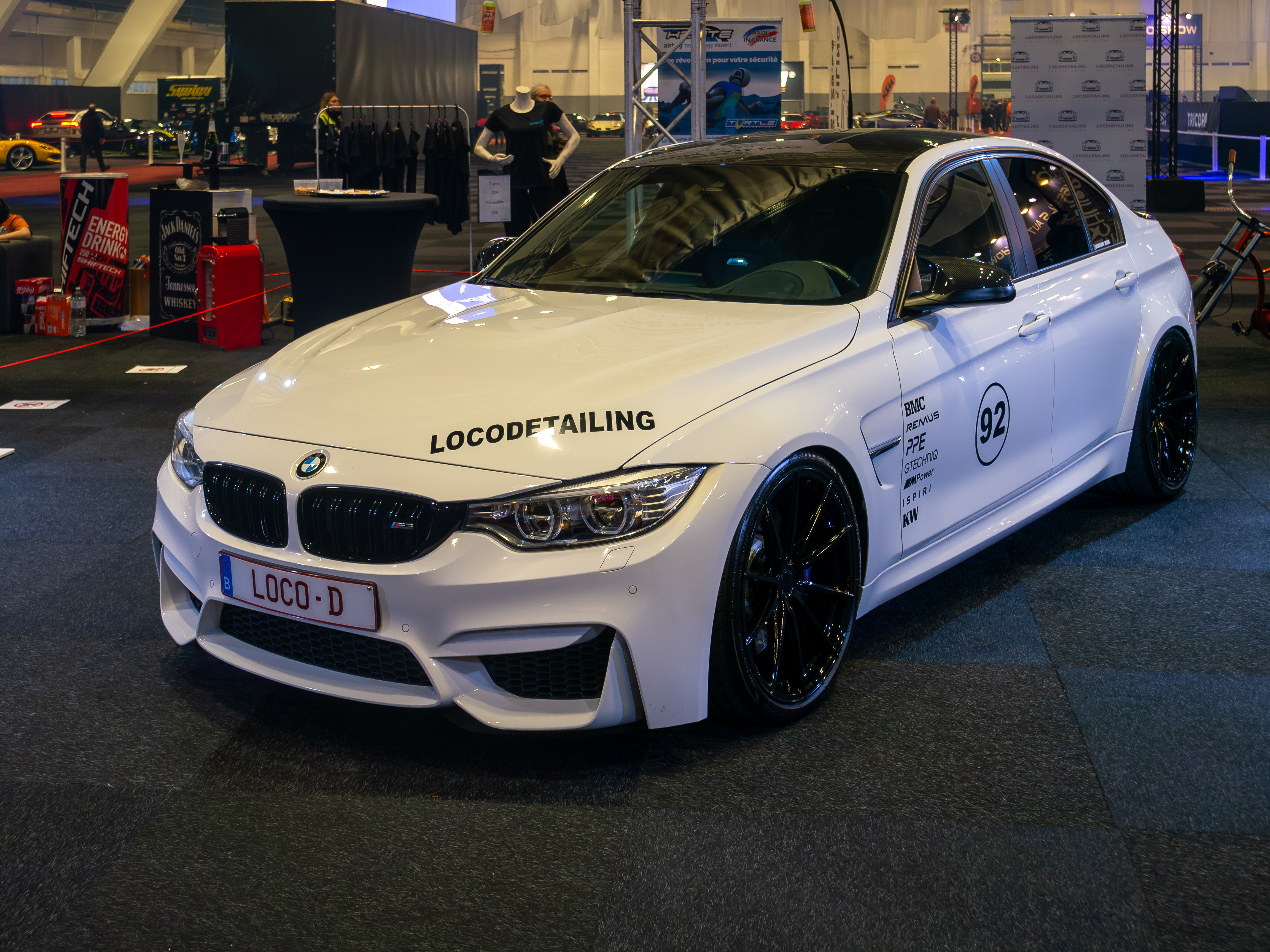
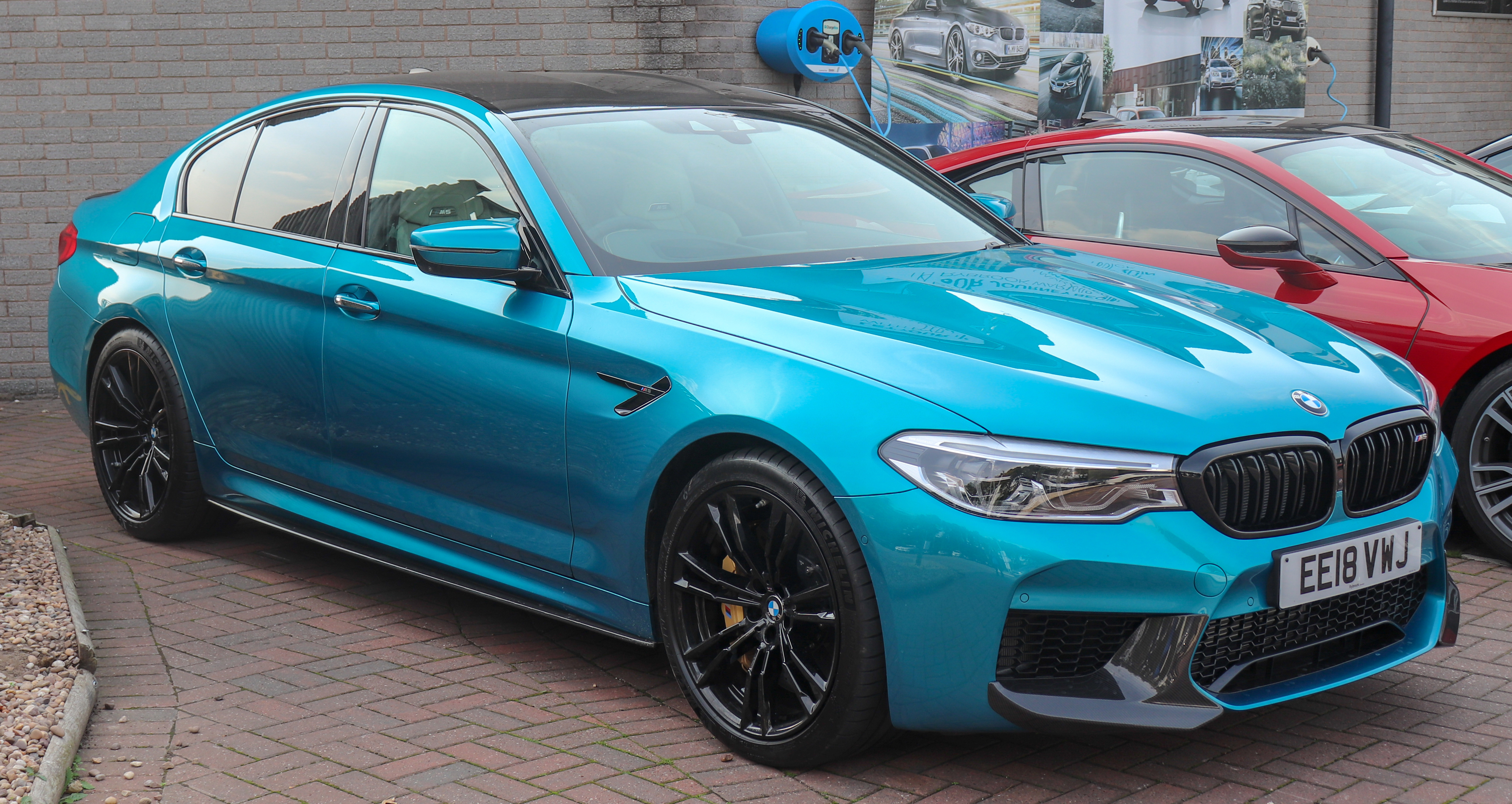
The BMW M3 is a sporty car that is really fun to drive and looks great. It's made by BMW, which is known for making high-quality cars, and the M3 is one of their most exciting models.
Dealer ratings and reviews are feedback from people who have bought cars from a dealership. They help you see if a dealership is good or bad based on what others have experienced.
OTG quotes are the final price you pay for a car, including everything like taxes and fees. It helps you know exactly how much money you need to buy the car.
LIVE
It's noon here in Venture City, New Jersey, and our nation's capital, Washington, D.C.,
and this is Car Eng Live for what day is today? Thursday, February 19th. Happy birthday, Sandy,
and your hosts are me, Ray, here in Venture, and Zach hanging out in front of his bike in D.C.
What is going on today, handsome, and how did we catch him?
We're going to explain a second here. Pop, scoot a little. Yeah, get your- there you go.
Nice and centered. We got to see it perfectly in the center there. We've got folks. Today's show
sponsored by CarEdge.com. If you're looking to get the edge when buying a car, that's what I meant
to say yesterday. Go to CarEdge.com. If you're looking for other types of edges, you got to
look somewhere else. We've got a promotion running right now that $200 off our car buying service
and 20% off CarEdge Pro. For those of you that are unfamiliar, car sites show you fake prices,
but at CarEdge, we'll get you the real one. We provide car buying services. We'll even do dealer
outreach, negotiations. We'll contact dealers, compare offers, and help you get the best deal
without the stress. Six years of building this company, folks, join hundreds of thousands of
others who took advantage of CarEdge during their car buying process. Please take advantage of that
back at CarEdge.com. We are, dad, still in beta, but the dealer ratings and dealer reviews website
is up on CarEdge.com. CarEdge.com slash dealer ratings or Google search, excuse me, CarEdge
dealer ratings. If you go to CarEdge dealer ratings, you can find dealers in your area.
For example, we've got Warsaw of Arlington or Ease, Orzman, Kia, Bethesda, and on each of these pages,
you have to create a free account to view the data. We did that to try and help us not get so much
data scraped by other people. But when you come to this website, if you sign into your account,
you're going to see the dealer doc fee. If they add on to vehicles, as well as what add-ons they
have, all sorts of good information here, please use it. This is CarEdge dealer ratings. Two minutes
of ads out of the way. Let's jump into the big story this morning, dad. General loaders, we caught
them, dad. They are intentionally decreasing their production, providing dealers with less
inventory in anticipation of a sales slowdown. We honestly got the first signal of this from the
Cox Automotive data that came out recently showing the January days supply of inventory by brand.
It is surprising that Chevrolet has the fifth lowest level of inventory, a 60 days supply
of all the major automakers. General Motors, dad, and we're going to read that article in just a
second here, but General Motors is intentionally taking a position of restricting supply because
they know demand is going to go down. Instead of having to increase incentives to sell more cars,
they're just decreasing the amount of cars that they produce to try and hold the line on pricing.
Well, indeed. You know, perhaps, almost, perhaps, keeping their promise during the
chip shortage and during the pandemic when, like most manufacturers, they couldn't produce as many
cars as they wanted to or had intended to, and all the manufacturers said, you know what,
once we do have chips, we're not going to get back to the old days where there's 3.5 million
new cars available every month. And for a short period of time, most of the manufacturers lived
up to that. We saw for many, many months where the average new number of new cars available on a
2 million and then 2.5 million. And then we were at 3 million again a couple times last year.
And the number has gone down for the past couple of months where 2.77 million new vehicles. So,
perhaps General Motors has kept their promise. And by doing that, it allows their dealers to have,
well, a little more leverage when it comes to having to discount their vehicles.
Yeah, I want to be really clear here. One way to frame this is, yes, they've kept their promise.
Another way to frame this is that they're following another automaker's playbook.
We're going to look at the actual numbers here in a second. But everyone in the comments is saying
this GM is following Toyota's strategy, manufactured scarcity of the Toyota playbook.
But it's fine when Toyota does it, following Toyota's lead, I see. To be clear here, folks,
what we are witnessing right now is General Motors, their brands, are carrying 30% to 40%
less inventory than we used to carry. They are intentionally putting 30% to 40% fewer vehicles
on their dealer's lots right now because they expect there to be less demand. And rather than,
this is what's so interesting. If you've been watching all week with us, we talked about it with
Honda yesterday. We talked about it with Subaru the day before that. These automakers are all
taking very different strategies for how they're going to navigate the next couple of years here.
GM's strategy, we're going to produce fewer vehicles and hold pricing power.
Honda's strategy, we're going to decrease incentives and expect their dealers to sell
more cars. There was no inclination from Honda that they're reducing their production.
Subaru's strategy, we're actually going to produce more cars, more expensive ones,
and increase incentives to try and make up tariff costs and volume.
We now have a third option, which is obviously General Motors, and we'll see who wins on the
other side of this. But GM's to be clear here, dad, does not serve consumers. Don't expect
bigger GM deals or Chevy deals or GMC deals because for Cadillac deals, because they're
intentionally not producing as many cars as they could. And that's the difference between GM and
Toyota, where the comments are, well, they're just following Toyota's strategy. Well, yes and no.
Toyota is producing as many vehicles as they possibly can. The number of vehicles that they
produced last year was close to 12 million. The problem for Toyota is that they can't produce
enough to satisfy demand, which is the reason why their day supply for both Toyota and Lexus
is as low as it is. They aren't necessarily doing it intentionally. It's just that their
business is good everywhere. For GM, this is intentional. They could produce more vehicles.
They could see to it that their dealers have more vehicles they are choosing not to. That's
the difference. That's the caught, right? What we've caught GM here doing is intentionally
undersupplying their dealers. It's a business decision. They're intentionally undersupplying
their dealers instead of oversupplying them and then having to do a bunch of incentives,
promotions, stair step programs, things like that. Now, it's very clear that other automakers are
taking a different approach. Again, we'll look here at the Cox Automotive data. Look at the brands
over to the right on this chart. For example, Ford has a 114 days supply. I'm going to zoom
all the way in on it right there. Next to the 98, 114, that's Ford. Again, what Chevrolet's
days supply all the way over here? 60. It's two different strategies that are being put into place
right now. Again, it is very much an intentional decision. That's the caught angle out of this.
GM executives have said they end to keep vehicle supplies between 50 and 60 days.
That's a marked change from before the pandemic. The company cannot stop the cyclical nature of
the auto industry, their CFO said, but by no longer sitting on as much as 120 days of inventory,
they can get rid of the self-induced cyclicality. They are intentionally producing fewer vehicles,
shipping fewer vehicles to dealer partners, going to hold their pricing power as a result of that.
And as consumers, if you're looking for the biggest percentage discount off of MSRP,
don't look for Chevy. Don't look for GMC. Don't look for Cadillac. They are intentionally holding
back inventory from dealer partners. Go to Ford, go to Ram, go to Jeep. Those are going to be the
brands where you see an oversupply of inventory and a totally different playbook. They're going
for a market share playbook, make it up in volume. Chevrolet is going for a pricing power playbook.
We'll see who wins. Yeah, and realistically, the huge difference between
St. Toyota and General Motors here is that one of the things that manufacturers look for is
utilizing as much capacity as they possibly can. You don't want your manufacturing facilities
operating at 40, 50, 60 percent of capacity. You want them operating at 80, 90 percent.
And in Toyota's case, it's probably closer to 95 percent of capacity, because in the long run,
it actually makes each vehicle less expensive because you're driving down the cost by producing
more of them. In General Motors' case, the short term will be that they're going to be
underutilizing their factories, which at some point could lead to a reduction in workforce.
If you're not going to produce up the capacity, then you're not going to need as many people
to stamp those facilities if you're not utilizing them to the full degree. So
it is a completely different set of circumstances as to how they're approaching it.
Toyota's approach is we can't build enough because we've created such demand for our vehicles
that we can't keep up with that demand. And General Motors is realistically looking at it and say,
we can't create the demand for our vehicles, so we can't produce as many of them. It's
ass backwards. That's backwards. Now, Dad, there's even more nuance to this that I think, again,
we recognize those of you that tune into Car Edge Live and those of you that are part of
the Car Edge community, we're in like the 1% of 1% of informed car buyers. There's a bit of
nuance here that everyone needs to be aware of. I'm just going to read this directly from the
article. Tight inventory has sometimes frustrated General Motors dealers, particularly with some
of the automakers' most affordable vehicles. GM executives told dealers at the 2026 NADA,
which is the National Automobile Dealers Association show in Las Vegas, that they were
working to address those worries. Chevrolet, for example, plans to make some configurations of
the tracks and trailblazers, excuse me, subcompact crossovers, which are built in South Korea,
available at ports for dealers to order starting this quarter. GM hopes the program will speed
transport times dealerships. That decision won support from dealers, including Manny Sedano,
Jr., dealer principal at Sedano Automotive Group. Now, look at this quote, Dad.
The problem is you go through the peaks and the values. Values, excuse me, said Sedano,
whose group operates the Chevy store in California. Direct quote. You go through a time where you
have nothing and then all of a sudden you're flooded with inventory and it causes a glut,
so it really destroys the pricing margins when that happens. This is the level of nuance that's
going to go on right now in the auto industry for 2026. That's a dealer principal saying,
we're going to go through peaks and valleys where we have way too much inventory and we're not going
to be able to hold pricing power like we thought we would because we're sitting on so much inventory
and we're going to go through valleys where we don't have any inventory.
The timing of a car purchase, Dad, for a Chevy vehicle, again, I recognize how nuanced this is
and most people are just going to care about their monthly payment. I think there's some
big swings, literally the dealer principal saying it right there, depending on when they get that
shipment of inventory, could change the game. I think what he's saying is that the way that
General Motors is going to approach it, with them importing more vehicles, keeping them at port
as opposed to shipping them to the dealers, will allow the dealers to better manage that inventory
so that the peaks won't be as high and the valleys won't be as low, which will allow the dealers
to make more money because they're not overstocked and it will allow General Motors to not have to
incentivize those sales as heavily as they had in the past because there's just the right amount
of inventory as opposed to excess inventory. This bodes well in essence for General Motors.
It does not bode well for customers who want to buy General Motors vehicles. Those customers that
want to buy a Chevy or a GMC or a Cadillac are going to be forced to pay more because the vehicles
that they're looking at will be scarcer and when you have scarcity, and we saw this during the pandemic,
when there's scarcity but there's demand, well, what happens? The price goes up. Because of the
fear of missing out, people are willing to pay more than they should and it allows both the
dealers and the manufacturers to make more money. Now, Dad, let's do a quick example,
a live experiment with this quickly here. I'm going to go to caredge.com and I'm going to use
the new feature that we have for dealer ratings because what I want to see here is actual inventory
levels nationwide right now. I've just gone for Chevrolet dealers. Again, just to show how that
works, you go to caredge.com for dealer ratings. You can actually change the search here from
Washington DC or use the search up here. Let's just search for Chevrolet. Now, we're looking at all
of the data Car Edge has about dealers, Chevrolet dealers, excuse me, and we'll click on the first
one here, Western Chevrolet of Williamsville. Now, Dad, I'm going to click on shop inventory. That's
going to take me over here quite nicely, which is the inventory for sale at Western Chevrolet of
Williamsville. The first thing I'm going to do is I'm going to sort it by days on market oldest.
I want to get a quick temperature check here of how long these vehicles have been sitting. You
can see they've got this equinox for 207 days. This Silverado EV for 186 days. This is 2025
suburban for 182. This is where you could start to identify maybe some of those gluts of inventory
versus the peaks in the valley. This is the type of research that people should be doing
to help inform their car shopping this time of year, knowing the amount of nuance that we know
about Chevrolets and more importantly, General Motors whole strategy with how they're going to
tackle 2026. Super interesting. If you'd be so kind, you need to favorite that Silverado EV that's
been there for what was it 186 days and probably 186 days from now, check back on their inventory.
My guess is that damn thing's still going to be sitting there. That would be another thing
for people to do is to look at the older vehicles and see how long they're sitting and
then seeing how much longer they're going to sit because either the dealer has been aggressive
and trying to get rid of it or they're not. There's some valuable info there.
All right, Dad, shall we switch gears? I'm a gear switcher, buddy.
Let's put people waiting. We're going to talk about Carvana, but we'll do it at the end of the
show. Instead, I want to turn our attention to Jeep. We've got some new news from Jeep here, Dad.
Jeep hints at the Hemi V8 returning to the Grand Cherokee lineup. I think this is a big deal at
that. This is a really, really big deal. Jeep dropped the Hemi V8 in 2023 and obviously, Dad,
we've got all sorts of data that shows this. Dealer inventory of the hybrid and turbo models,
those vehicles are sitting significantly longer on dealer lots than the V8s ever did.
And so Jeep went very deep in this one direction, which was we're going to get rid of the V8 engines.
We're going to really invest in hybrid models and turbos. And now we're seeing those vehicles
sit and now Jeep looking to bring back the V8. I think this is a good move for Jeep. What do you
think? Well, yeah, because they're going to produce what it is that their customers want,
as opposed to producing what it is that they want to produce that their customers have said,
we don't want. I mean, they have killed their 4xE business. They have said,
we're done with it. We're not going to produce those anymore. And the theory of if you build it
and they will buy it doesn't hold water in many cases. And Jeep is a perfect example of that.
When we did that sales event on Long Island, could not get over the number of 4xE Jeeps that
they had there. It was like weeds were growing up through the wheel wells and everything. It was
crazy because the demand just wasn't there for those vehicles. And those were the vehicles that
not only were they building, but they were oversupplying their dealer body with. So to
hint, and it's a rather strong hint, okay, because you're not denying it. You're just saying, well,
you don't keep your eyes open because something big is about to happen. Okay.
They're showing that at least to a certain degree now, they're paying attention to what the customer
wants. I want to pull up some of these comments, Dad, for once a manufacturer is listening to the
people, 100% a good decision. I mean, this is to be clear, Jeep's been very aggressive over the
past, I'd say even six months, they've reduced prices on their MSRP zero-over-year for modeling
your vehicles. They've actually cut many vehicles from their lineup and now they're moving back in
the direction where they're bringing the things that people want. And again, the inventory data
that we look at paints a very clear picture. Those other powertrain options have sat historically
significantly longer, have a higher market day supply, are not selling as quickly as the V8 used
to. They have the cost factor of having them sit. Okay. I mean, it costs the dealers a lot of money
to have vehicles sit for an extended period of time. So the secret now is, well, to produce
the stuff that will sell quickly. And if your customer base has been screaming for years,
don't throw away with the Hemmys, don't throw away with the V8s, don't try and force Vita's
P-HEVs, plug-in hybrid electric vehicles, then, you know, it's nice that one time,
there's not very many times in the history of automotive manufacturing where the manufacturer
actually paid attention to what the customer wants. And that's been one of my great arguments
over time about the automobile industry, especially at the dealer level. If you walk into a dealership
and you say, well, you need to address the way your customers want to buy cars,
well, the hubris of the dealers is that, well, we know how they want to buy cars. Well, they never
ask their customers. It's just they know better, but they don't know better, which is why most
customers, most people hate car dealerships. Okay, because the car dealers think, well,
we know what the customer wants without ever asking the customer what it is they want. We're
going to dictate to you what you want because we know better. I want to be clear. This is
a decision that's not only what the customer, it's what the dealers want too. In this case,
yes. Yeah, everyone's aligned on this one. Everyone's completely aligned. And I do think
it's a big move from Jeep to ultimately walk back a decision. This was only three years ago that
they pulled this out of the market. Three years in car manufacturing terms might feel like an
eternity, but it is pretty quick for how they've operated. And I think this will further impact
that four by e-sales. If you're a customer out there and you see this hint, you're going to go
rushed by the four by eight. No, you're not. You're going to wait for the V8 option. Yeah.
So I think this is, it's an even bigger decision through that lens because they're kind of shooting
themselves in the foot and they're acknowledging, yeah, we made a mistake. We absolutely made a
mistake. This is going to sound strange, but sometimes when you make a mistake, you need to
admit that you made the mistake. You need to take ownership of that mistake and you need to come
clean and you need to say to your customers, gee, we misread the market. We apologize.
We didn't listen to you enough. Okay. And if you actually come out and say that,
you can earn back their trust perhaps. But if you never say it, you're never going to earn back
that just you have it as much as it hurts your ego to say, I screwed up. It makes you better
and stronger to admit it and move on from it and pledge never to allow that to happen again.
And I don't know why businesses are afraid of that. I don't understand. I've often said this.
I don't understand why it's so hard to do the right thing. Okay. You would think doing the
right thing should be easy, but everybody tries to read into doing the right thing as well.
Is this going to pay off this way? Is it going to pay off that way? Are we going to look full?
Look honest. Just once in your life. Look honest. Do the right thing. I know it's hard,
but do it. Because ultimately, if you start the practice of doing the right thing,
it'll become easier and easier instead of harder and harder. And people will buy into your
organization more if you admit your errors and then correct your errors and do the right thing,
in my opinion. Yes, Dad. I think you're onto something there. Hopefully that's a tenet
that our community sees. The work that we do here at CarEdge. Now, another auto manufacturer
getting some headlines this morning would be BMW. I don't know if you saw this, Dad, but BMW
N's team said they're launching 30 new vehicles in the next 30 months. This is crazy. So we've
seen automakers go up market. That's a strategy, right? For example, you've seen Mercedes-Benz had
the AMGs, and it was the 63s, right? Because it came out the 53s and the 43s, and you can get
AMG badging on anything. M's done it similarly. One way to get people to spend more money is you
put these badges on things. You put a slightly bigger engine. Dad, BMW's M division, I'm going
to scroll down here so we can get to the exact quote, BMW's M division saying, there's CEO saying,
we're coming out with 30 new models. In the next two and a half years, those models will
include gas, plug-in, hybrid, and electric-only powertrains. Oh, and manual transmissions on
life support. It's probably not going to be there that much longer. This is a crazy head
buying, 30 bottles just from BMW M in two and a half years. That is quite the adventure that
they're about to go on, and quite the sales adventure for dealerships as people gravitate
towards these M series vehicles. The sad reality when it comes to manual transmissions, and I see
the comments, there are still a number of people out there that want and prefer a manual transmission
vehicle. There are so few manual transmissions that are available that even the M series,
is they're pretty much saying, we're going to build more M series cars,
but they ain't going to be manuals. The market is just so small that we can't afford to do that.
So someone like you who doesn't know how to drive a manual transmission going forward won't ever
have to worry about it. I do think this is an interesting pricing strategy decision because
you don't green light 30 cars in 30 months and not have that be a reflection of your overarching
strategy. And to be clear, these are M-badged vehicles. These are going to be significantly
more expensive than base model. This is, you remember it was a couple of years ago,
the Autopian did the article based on car edge data about trimflation. Manufacturers'
intentional decision to produce less lower trim level vehicles and produce more higher level
trim level vehicles. That's essentially what this ultimately what I'm seeing here. I haven't
seen any other headlines that say BMW in general is bringing 30 new vehicles to market. No, the
ring 30M vehicles to market. This rings eerily similar to the pricing power conversation we were
just having about General Motors a little bit ago. It's an indication that BMW is going to
say, no, we're going to continue to go upmarket. They have the audience for it. There never seems
to be a shortage of BMW enthusiasts who want the M series. And listen, I remember a few years back
when we were actually doing driving vehicles and we were, and I'll never forget, we took out a,
what was it, an M3 or an M5 competition. And out of all the vehicles we drove, that was like
the least desirable to me. Because if you drove over a pebble, you felt it, okay? It was, I get
that you need feedback with that much feedback. It was like, yeah, it sounds cool. Yeah, it looks
cool. And after about 10 minutes, it's like, okay, put me in a real regular car. I could use some
comfort. So, but, but I get it, there's a huge market for those vehicles and people love them.
And BMW signaling, we're going to make more for them. That's the 100%.
People are willing to pay extra and not a little bit extra, but a lot a bit extra
in order to have those. We've got another big story, which is Caravana. Before we turn our
attention there, again, I want to remind everyone, CarEdge.com is the sponsor of today's program.
It also happens to be the company that my dad and I founded six years ago. We're running our first
promotion of 2026. We have $200 off our car buying service and 20% off CarEdge Pro. Please
go learn more about what we have to offer back at CarEdge.com. Our warranty provider as well as
offering a promotion. And for those of you that have auto insurance or home insurance, use our
insurance portal to also shop that. We really appreciate it. And again, the new product that
we just put into the market, which is still in beta, Google search CarEdge dealer reviews or
CarEdge dealer ratings, spend some time on this website, share your feedback with me here in the
chat. We really appreciate it. And for context, CarEdge Pro is access to our AI negotiator. And
y'all, every single day, this page updates to show you how many negotiations have been started
and how much money has been saved from first outdoor price quote to last outdoor price quote.
Dad, yesterday 313 AI negotiations were started for CarEdge Pro users. And yesterday alone from
first OTD to last OTD, we were able to save people $121,000 for context here, y'all. The agent has
sent over 436,000 messages, almost half a million replies from dealers, really, really, really cool
stuff. Encourage everyone to check out this information back on the new part of the website.
Again, dealer reviews, dealer ratings. You ready to talk about Carvana Pups? I am. So here's the
earnings yesterday after the close. I actually didn't want to lead with this today because I
don't know what the story is for the auto industry. Carvana stock falls. Earnings show growing pains,
but analysts aren't concerned. This is inbearance. Carvana stock is down. Carvana sales grew 40%
year over year for the quarter. They are still what, Dad? 1% of the entire automotive retail
auto industry? The reason we didn't lead with this today is because, yeah, their stock's down. Well,
their stock's also been up. Their stock's also been down. I actually don't know what to make of
the fact that they reported. They actually went that big in the grand scheme of things.
But analysts aren't concerned, okay? That's because analysts have their head in the sea.
I'm sorry. There have been two reports in the last 12 months about some of their accounting
practices. And what some have indicated could be some type of financial fraud.
I don't know if it is or it isn't. What I do know, having spent 43 years in retail automotive,
is that they haven't found the secret sauce, the real secret sauce, that says we can make three
times more per car than every other car operator out there. I am not buying that for anything.
Analysts are buying it. Analysts who maybe really don't know retail automotive are buying that.
But I think at a certain point in time, and this is only my opinion. It is not the opinion of car
edge necessarily. It is Ray Shevsk's opinion. I think over the course of time that we will find out
that there was probably some creative accounting going on between Carvana and their sister company
Drive Time. And we will probably find out at some point in time that there was a pump and dump
plan from the executives at Carvana to pump up the price of the stock while they were busy
dumping their stock so that they could enhance their income. There is no reason to believe
that one company that lost money for the first 10 years of their existence and had the lowest
gross profit per used vehicle sold in the industry suddenly figured out how to make
three times the amount that everybody else was making. So yeah, I understand the analysts are
unconcerned, but they will be at some point, might not be this year, might not be next year,
but at some point when the whole house of cards comes tumbling down, they'll go,
how did we miss the warning sign? Because you chose not to look at them.
And all of that, we did a little preamble and then we're going to do a little closing segment is...
In my opinion, which I thought I made preamble. All this is my personal opinion, so not car
edge. Do not be send in car edge, no letters. No, you send them directly to Ray Shevsk.
Because it was my opinion, my opinion. Yeah, true, which is so interesting because you know what,
could you be right? 100%, could you be totally wrong? Ed Carvana ends up taking 20% market share.
I mean, what's their goal? Their goal is to do 3 million cars sold by like 2030 or something.
I mean, who knows? Who knows? But the reason I didn't lead with it today, Deb?
Yeah. Because the more I think about it, there's actually not that much that we can distill about
the state of the used car market when we just look at 1% of vehicles sold. Now, when we get Carmax's
earnings as well, Carmax has another 1% of vehicles sold. And importantly, Carmax and Carvana make
up actually about 15% of vehicles that consumers sell every year. So they actually buy a lot more
vehicles than they sell. They wholesale a lot of those vehicles too. So there are some indications
for the broader used car market here, but shocker, their stock is volatile. That's the story. Could
it be because of the things you're describing? Who knows? It's really interesting to hear the
conjecture. Now, again, your product we have in market, y'all, are those dealer ratings and reviews.
And I just want to show you, I logged in here so you can see the data. You can find any vehicle,
all right? Or excuse me, any dealership on here. You'll be able to see their dock fee. You'll be
able to see if they add add-ons and how much add-ons. In this particular case, we've got 21
verified OTG quotes from this dealership. So I come on down here and I can see what's actually
going on. There's three conditioning fees. They put tint on vehicles. Use this data to inform
your car shopping. And again, I want to be clear. This is still in beta. See, I might find...
Would it be in beta?
It's still in beta. It's still in beta. So you might find bugs. You might find things.
Email me or share comments, Zach at CarEdge.com. This thing will be out of beta soon, but we need
your input in the meantime. All right, Dad, we'll be back with another episode of CarEdge Live
tomorrow at 12.00, Ken Lutheran, 9.00 AM Pacific. So please, please, please tune in for that.
And yeah, please, please show this with a friend. We appreciate everyone tuning in.
We do indeed. Thank you, everybody. See you all back here tomorrow at noon Eastern.
And well, handsome. I hope you have a great day and maybe work on that haircut.
If you liked the show, please take a moment to rate, review, and subscribe. It really does help
the show to grow. Thank you for listening.
About this episode
General Motors is intentionally reducing vehicle production to manage inventory and maintain pricing power, anticipating a sales slowdown. This strategy contrasts with other automakers like Ford and Honda, who are either increasing production or adjusting incentives. The hosts discuss the implications of GM's approach, including potential impacts on dealer relationships and consumer pricing. They highlight that GM's decision to limit inventory is a calculated move rather than a response to supply chain issues, setting them apart from competitors like Toyota, who face high demand.
Today on CarEdge Live, Ray and Zach discuss the latest on General Motors. Tune in to learn more! Hosted by Simplecast, an AdsWizz company. See https://pcm.adswizz.com
for information about our collection and use of personal data for
advertising.