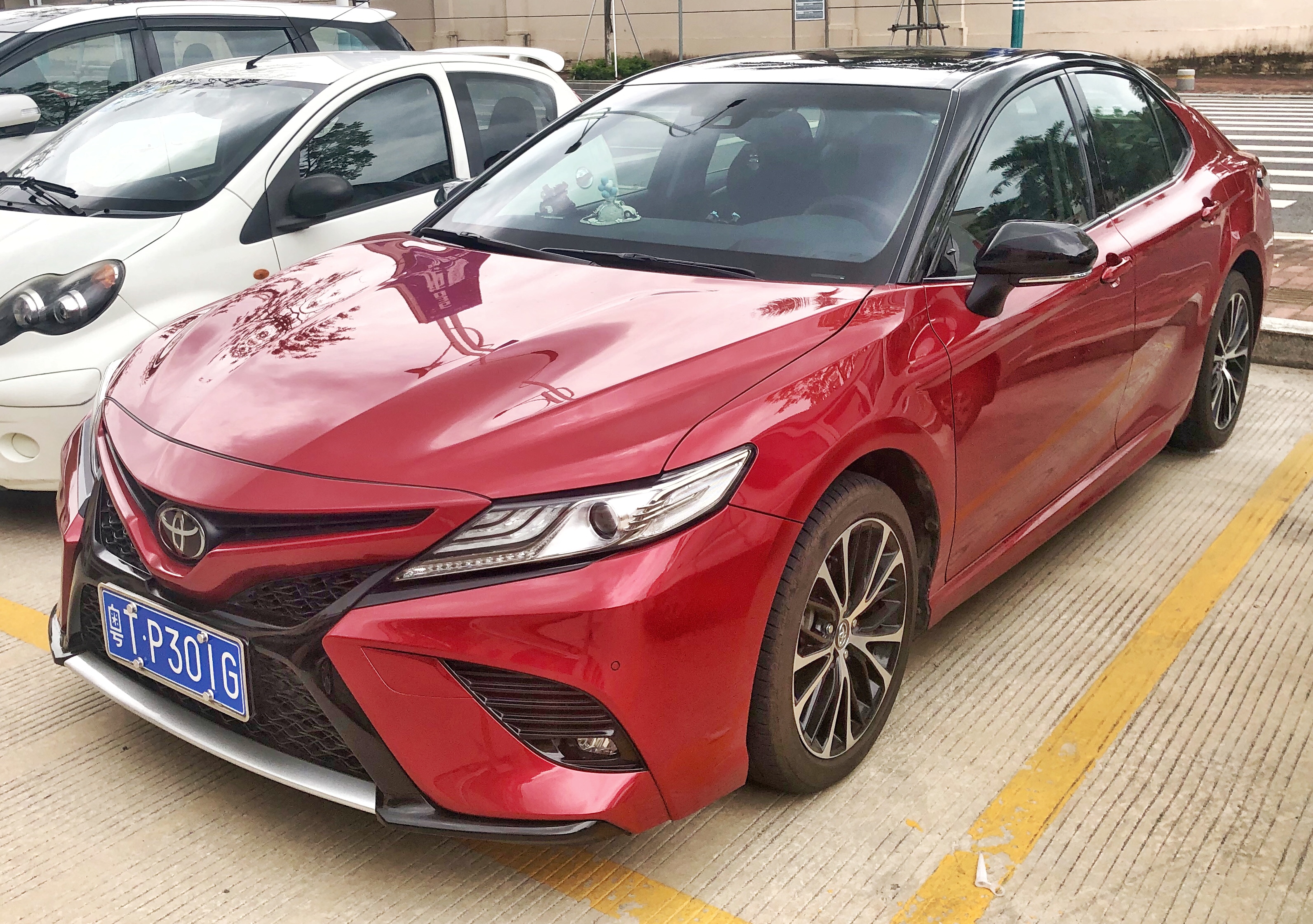
This is a 2007 Toyota Camry SE. The clear plastic over the headlights can turn cloudy with age, and that can make the lights shine less brightly. The fix is usually cleaning or restoring the lens surface.
Headlight lens covers are the clear plastic pieces on your headlights. If they get cloudy, the light has trouble shining through clearly, so you may not see as well at night.
Oxidation is a chemical reaction where the lens surface degrades when exposed to air and sunlight. On headlight lenses, oxidation creates a hazy film that scatters light, making the headlights look cloudy and often feel dimmer.
Fine grit is a type of very smooth sandpaper. In headlight restoration, it’s used to carefully remove the cloudy, damaged top layer so the lens can look clear again.
Term
sealant or that coating
A sealant/coating for new headlamps is a protective layer applied to the lens to slow oxidation and fading. Lens cleaning can temporarily improve clarity, but without the original protective coating, the restored look typically doesn’t last as long.
Headlamp assemblies are the whole front headlight units on your car. If the plastic lens gets cloudy or yellow, replacing the entire headlight can make it look and work better again.
Aftermarket parts are replacement parts made by companies other than the car maker. Sometimes they work just as well and cost less—if they’re the right fit for your car.
The battery provides the power your car needs to start. Very hot weather can wear it out over time, and very cold weather makes it harder for the battery to start the engine.
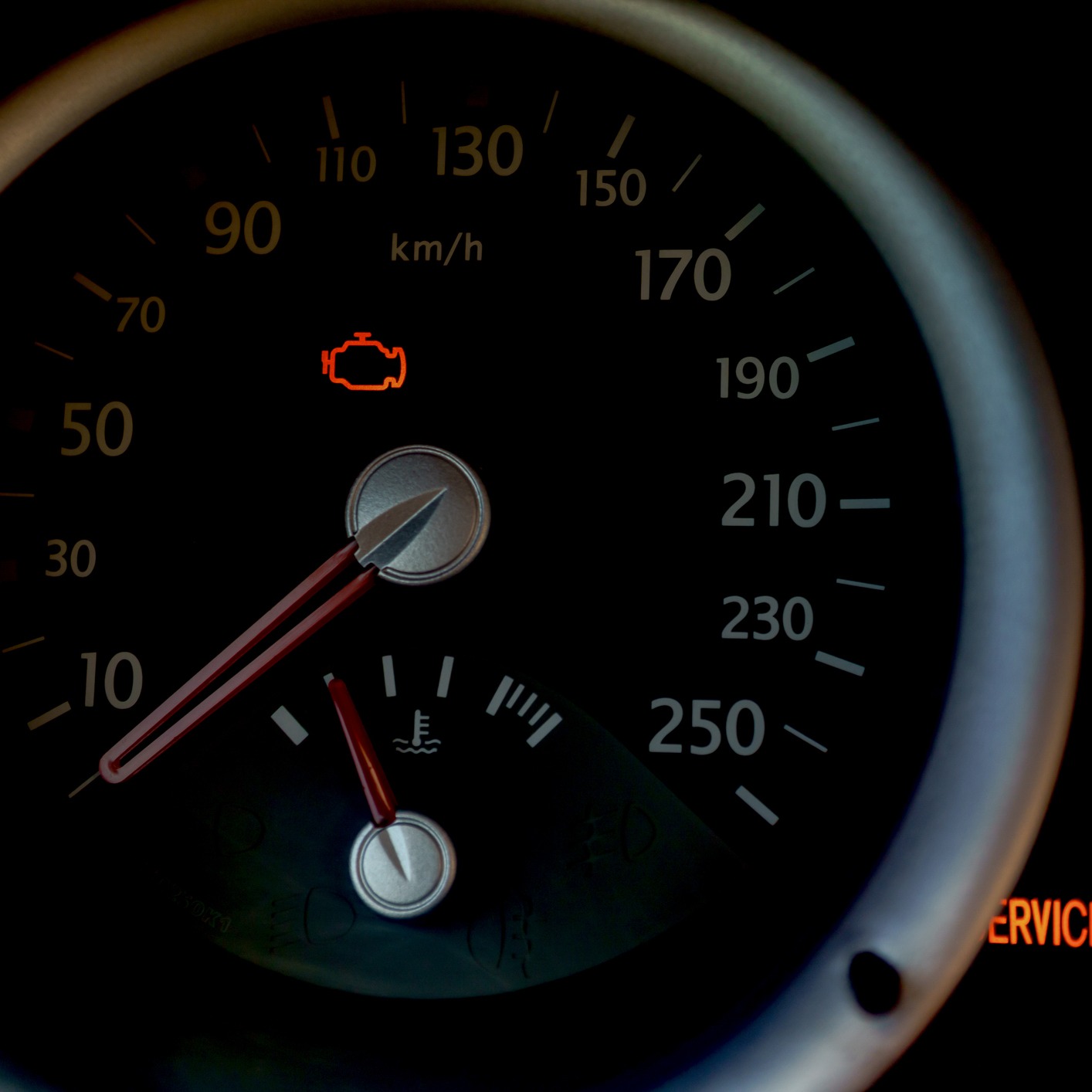
The check engine light means the car’s computer noticed a problem. It doesn’t always mean something is immediately dangerous, but it usually relates to the engine or pollution-control system and should be checked when you can.
The fuel gauge tells you how much gas is in the tank. If it says “empty” when you know you have gas, the sensor that measures fuel level may be acting up.
Tire pressure is how much air is in your tires. Low pressure usually shows up as a tire warning, not the check engine light, because it’s a different system.
This warning is connected to the car’s pollution-control system. It usually means the car detected something that could cause the vehicle to pollute more than it should.
A misfire is when one cylinder doesn’t burn the fuel correctly. That can make the engine run poorly and can also increase pollution, so the car warns you.
Term
transmission is slipping
Transmission slipping means the car isn’t transferring power to the wheels as it should. You might feel the engine rev without the car moving forward normally, and the car may log a warning.
If the check engine light is flashing, it usually means the problem is serious and can cause damage quickly. In that situation, you should stop driving and have the car towed or checked right away.
A dyno is a testing machine that measures how much power your engine makes. It’s used to check performance after work like an engine rebuild or tuning.
Carbureted means the engine uses a carburetor to mix fuel and air. It’s an older style of fuel delivery than fuel injection, and it can change how the engine needs to be set up and broken in.
Break-in oil is used right after an engine is rebuilt to help protect the new parts while they wear in. After the early break-in period, you usually switch to the oil the builder wants you to run long-term.
Oil weight is how thick the oil is. The right thickness helps the engine parts get proper lubrication, and the builder may choose a specific grade based on the engine’s internal clearances.
Tolerances are the tiny gaps between moving engine parts. Those gaps affect how the engine needs to be lubricated, which is why the builder may recommend a specific oil grade.
The oil filter is like a screen for your engine oil. It catches dirt and debris, and since you can’t really see how clogged it is, it’s usually replaced when you change the oil.
The air filter keeps dirt out of the air your engine breathes. If it’s dirty or clogged, the engine can’t get the right amount of clean air, so it may need replacing.
A cabin filter cleans the air that comes into the car’s interior. If it’s hard to reach, it’s usually replaced on a schedule instead of being checked every time.
P0456 is a code that usually means your car thinks there’s a small leak in the emissions system that handles fuel vapors. Common causes include a gas cap that doesn’t seal or a small leak in hoses or valves.
A fault code is a message your car’s computer saves when something isn’t working right. A mechanic reads it to figure out what system is causing the warning light.
An evaporative leak means fuel vapor is escaping from the emissions system instead of being contained. Your car monitors this, and if it detects a leak, it can turn on the engine/emissions warning light.
This system keeps fuel vapors from escaping into the air. Instead, it routes those vapors back into the engine to be burned, and the car checks that it’s working correctly.
A smoke machine is a tool that blows harmless smoke into a system. If there’s a leak, the smoke will come out where the problem is, so the mechanic can pinpoint it quickly.
A purge valve helps move fuel vapors from a charcoal canister into the engine so they can be burned. If it doesn’t work correctly, the car can detect the problem and turn on an emissions light.
The canister (usually a charcoal canister) traps fuel vapors that would otherwise escape. Later, the car pulls those vapors into the engine to burn them.
Term
shut down four of the cylinders
That’s when the car turns off some cylinders to save gas while you’re cruising. If something is wrong with that system, it can cause symptoms that show up during highway driving.
Fuel management is how the car’s computer controls how much fuel the engine uses. It can also control features that shut off cylinders to save fuel when you don’t need full power.
Cloudy headlights usually happen when the clear plastic lens gets hazy over time. Cleaning or restoring the lens can make the lights shine brighter again.
A jump start is when you use another car (or a battery pack) to give your battery enough power to start. If the cables are hooked up wrong, it can blow fuses and cause expensive electrical issues.
Cars have computers that control important systems. If you connect the battery cables wrong, it can send the wrong kind of electricity and potentially damage those computers.
A maxi fuse is a bigger “safety plug” for the car’s electrical system. If something causes too much electricity to flow, the fuse blows to prevent damage.
The negative cable is the battery’s ground wire. Unplugging it can reset some electronics, but if a sensor is still wrong, the problem can come right back.
Door sensors tell the car whether a door is open or closed and sometimes whether it’s locked. If one sensor is wrong, the car may think something is off and set off the alarm.
The body control computer is the car’s main “body electronics” brain. It controls things like door locks and interior lights, and it can also be involved in alarm behavior and battery drain.
A backfire is when the engine makes a loud pop or bang, usually because something about the fuel/air burn happens at the wrong moment. It can be a sign of a problem that may not show up right away on the “check engine” light.
A fuel injector is like a precise fuel nozzle. If it leaks or drips when it’s supposed to be closed, too much fuel can get into the engine at start-up, which can cause popping/backfiring and smoke.
The transmission has different gear “steps.” Those gear ratios help keep the engine turning at a speed where it burns fuel efficiently, which can also reduce exhaust emissions.
The tailpipe is where the car’s exhaust comes out. If emissions are high at idle, it means the car is making more exhaust fumes while you’re stopped and the engine is running.
Start-stop is a feature that turns the engine off when you’re sitting still, like at a red light. When the light changes and you press the gas, it turns back on—helping burn less fuel and make fewer exhaust fumes while you’re waiting.
Fuel economy is how efficiently a vehicle uses fuel, typically expressed as miles per gallon (or similar metrics). The speaker links it to “highway speeds,” implying that steady cruising can produce better efficiency than stop-and-go driving.
Electric vehicles run mainly on electricity stored in a battery. They typically don’t have tailpipe exhaust like gas cars, but how “clean” they are overall depends on where the electricity comes from.
A hybrid car uses two power sources: a gas engine and an electric motor. Because the electric motor can help out, it usually uses less fuel and can produce fewer emissions than a gas-only car.
A leather seat is made of leather, which can be damaged by the wrong cleaning products. If you try something too strong, you can end up with a worse stain or discoloration.
Car upholstery is the material on the inside of the car, like the seats. Stains can be tricky because the wrong cleaner can spread the stain or damage the material.
They talk about packing an emergency kit before traveling, especially in summer. The idea is to have basic supplies like water, a blanket, and first-aid in case you break down or get stuck.
A plug-in hybrid is a hybrid car with a battery you can charge at home. For short trips it can run on electricity, and for longer trips it switches to the gas engine.
A drive cycle is just what your trip is like—distance, speed, and stops. That affects whether a hybrid can use mostly electricity or has to use gas.
LIVE
Okay, we know what that means. 707 on WCCO. I'm Laura Oaks. Thanks for getting up with
us on this 4th of July morning America's 250th birthday this year. That is a big deal. It
is time for our car care show with Nick Stoffel from Lloyd's Automotive in St. Paul. Good
morning, Nick.
Good morning, Laura.
How are you today? What are your plans this weekend?
Well, I'm up north with my two sons. We're going to enjoy the 4th of July weekend and
relax hopefully. We did get some weather this past week, so we have some trees to clear
and clean up, but hopefully it'll be relaxing weekend.
Where is your place up north?
We're actually on the Mississippi smack between McGregor and Jacobson off of Highway 65. So
about two hours and 20 minutes from home.
Oh, that's the perfect distance for getting away, I think. It's not too short of a drive,
but it's not too long of a drive where it takes you all day to get there.
I agree. I think that two hours and change is just about enough time.
Right. Good. So if anybody has a question for Nick, a car care related question, give
us a text, give us a call. The number is the same 651-461-9226, and we already have a
text here, Nick. I have a 2007 Toyota Camry SE. The lens covers for my headlights are getting
cloudy. Do the over the counter products work? And if so, how long do they last before you
have to reapply? We also had a Toyota Camry that had these cloudy headlights, and it used
to really bug me. I guess I didn't even know that there were products that clean them up
like that. What do you think?
Well, there are a lot of products. Personally, some of them can help. How long it really
depends, I suppose. We do a process of cleaning them. We're essentially, we're taking a fine
grit and we're sanding an oxidation off. It takes like 45 minutes per headlamp. So it's
a pretty time-consuming process. You have to have really attention to detail to make
sure you get all that off. Don't burn through the plastic. It's a process, and then we put
some polish on afterwards. And I'd like to say, my opinion would be, it seems like the,
we don't see much of that fading or oxidation until 10, 12 years of age. I think when we
clean them, they're good again for a few years, but we don't have the ability to put that
sealant or that coating that they put on those headlamps when they're new. So it can be done.
It does make them much better. So you can see again, especially at night in poor weather,
but it's not going to give you the same length that they originally did. So it helps, gets you
a few more years. The other option too is sometimes, depending on the make and the model of the
vehicle, you can find replacement headlamp assemblies. Do investigate that because there are
some aftermarket ones that do fit and work just fine, which might save you some money that way
also. Okay, great. If you have a question for Nick Stoffel, car related question, text us,
give us a call 6514619226. Nick, I wanted to ask you a little bit about just what the heat,
the recent heat we've had and the heat that's coming again next week, what it does to things
like tire pressure and our batteries. And if there are anything, is there anything that we can do
to prevent problems along those lines with tires or with batteries going dead or cars overheating or
you know, what heat related tips do you have? Well, what I would say is it's more of the extremes,
whether it's the hot heat of the summer, the deep cold of the winter. Typically, we see a lot of
wear and tear on the batteries throughout the heat, but we don't notice it until we need that
extra capacity, which is in the winter months. So the heat vibrations hard on a battery,
but you don't realize it until it's January and something below zero and the car doesn't start.
You know, outside of just doing good maintenance, taking care of the vehicle,
there's not much you can do. Cars are designed to be driven when it's hot here. Keep in mind,
there's other parts of the country which are much warmer for a longer period of times and the car
survived there also. So the difference that we have is the extreme of like the heat of the summer
and the cold of the winter. So I think we start to see more of the results of those extreme temperatures
and their effects on the vehicles, but you maintain your vehicle, keep a good working order is the
best that we can do. Okay, great. Another texture after a week of not using my car, I started it
to find out that I had a warning basically stating that there was no gas in the car. The gauge was
on empty, but I know that I had gas in the car and the check engine light is on. Is it okay to
drive my car until I can get it fixed next week? Well, I would drive it to the gas station,
first of all, make sure there is fuel in the car. You know, if the gas light is on, the gauge said
that it's a little short of there being something about that sending unit, which is possible,
which could also turn on the check engine light, but being low on fuel alone won't turn the check
engine light on. So I would go to a filling station, fill it up, make it or get a receipt so we
know how much fuel went into there. So next week, if you do still need to bring it in, you can say,
hey, it said it was on E, but it only took three gallons or five gallons, but if it took 15 gallons
depending on the tank capacity, it might have just been very low on fuel. So go fill it up,
get a receipt so you know how much fuel went into the tank, save that receipt in the vent,
you do have to bring it in, you can share that with the folks at the shop. Okay, I hate that
check engine light. It's just, it always, it just causes anxiety. You never know what is wrong and
you feel like you never know if you need to actually bring it in and get it checked out,
or if it's just something minor like your tire pressure is low on a cold winter day.
But I guess we need it, don't we? I mean, that's just a wee thing.
No, we do need it. And technically, it's an emissions light. So this is kind of hard to
sometimes wrap your head around here. But that light will not come on for the tire pressure,
for example, it will not come on if it's a burnt off headlight. It has to be something
emissions related, which could be a misfire. Okay, it could be the gas cap, because the gas cap
emitting fuel vapors is an emission. So you have to kind of think out of the box a little bit here,
if the transmission is slipping, the car is not moving like it should, it's burning excessive
fuel, that's an excessive emission, the light is on. So that light can be as simple as a gas cap as
we've referred to, or can be some sort of misfire that can be damaging. So there's a huge range
of possibilities, and one light to cover all those examples. So what I tell people is,
if the light comes on, it's running perfectly normal, just make an appointment in the near
future, get it checked out, figure out what you want to do once you have that information. If the
light is on, it's running rough, you need to make that a priority. And if the light is ever flashing,
that's telling us something significantly is wrong, you need to stop the vehicle,
like we have it towed into the shop. So there's three kind of guidelines to follow.
That would do me in if the check engine light was actually flashing, that would not be good.
All right. No, that would not be good, you need to have the car towed.
Got it. Okay, so if you have a question for Nick, give us a call, text 6514619226,
it's 715 on CCO, we're going to take a quick break, come back with your questions on CCO.
Good morning, 718 on WCCO, I'm Laura Oaks, we are taking your calls and texts for Nick Stoffel
from Lloyd's Automotive in St. Paul. We have Nick for about 25 more minutes. So let's get him
some more questions. The number is 6514619226. And Nick, we have Jerry on the line from Minnetonka.
Jerry, what's your question? Good morning, Maxie. I recently, I got a street ride, and I recently
had a motor professionally built, like 750 horse on the dyno, it's narrower cam, yeah,
and all the goodies, it's carbureted, two-four bro. It's just got break-in oil in it. What would
you recommend? I'm not a big fan of synthetic, what would you recommend in a motor ride?
Well, I would talk with the builder, first of all, he's likely going to recommend some sort of
synthetic oil. There's a lot of brands out there, Amsoil, Mobile One, Castro, there's a lot of
varieties there, but I would probably talk to that builder, especially if he has a preference on
weight, depending on the tolerances and such, it might be a 530, it might be something heavier or
lighter. So I would refer back to the builder, and like I said, it's suspect it's going to be some
sort of synthetic oil, something like that, you probably won't put a lot of miles on it, obviously,
but I think it's still a good practice to probably change that oil and filter annually
with the heating, cooling, all the condensation we want to keep inside that motor as clean as we
can. So probably a synthetic oil, change it annually, would be my advice.
All right, thank you very much for the call, Jerry. And Nick, you just mentioned the importance of
checking or possibly replacing the filter there. Talk to me a little bit about how we know when a
filter, if it's an air filter, an oil filter, how do we know when those need to be replaced?
Well, most of them will be in the service interval. Obviously, when we do an oil change,
replace an oil filter because you cannot see if it's been that 5,000 miles as we recommended,
that filter is full of debris, so it's time to be done. An air filter, depending on the vehicle,
might be easily accessible, so you can visually look at it, put it back in if it's not needed
replacement. But like a cabin filter, for example, I would probably follow the interval there too,
sometimes you have to take the dash, the glove box out, and there's some disassembly. So anytime
there's time consuming to inspect or visually inspect, you want to follow that interval because
you don't want to take these things in multiple times without replacing them. But for the simple
look, like an air filter, you can pull the cover off, take a look at it, and replace it as necessary.
So I'll follow between following the interval and the visual inspection is probably the best
guideline. Gotcha. Let's go to Don in Andover. Good morning, Don. What's your question?
Question is on the car engine light comes on and you take it in, they always have to do a
dynastic on it to find out the problem. Well, it cost me a little over $200 to have that done to
find out was my radiator or not gas cap. Why is that so expensive on it? It only took about a
half hour to find it problem. Well, so when you access the car's computer system, you retrieve
a fault code. This example is probably P0456 or somewhere in the 450s. And what it tells you is
either a small evaporative leak or a gross evaporative leak. There is cycles that you can test.
You know, you want to test the purge valve, the vet valve, these are all components are part of
that system, as is the gas cap. So you perform a test to see if it can hold from any kind of leak.
If it fails the leak, sometimes at that point in time, you need to
use a smoke machine to introduce a little bit of pressurized smoke to the system to find the
cause of the leak. So I understand is what was just the gas cap. And you could just, you know,
people say, I just want to replace this part. Well, somebody would have came in and said,
hey, we're going to put this part on this gas cap, 20 bucks or 30 bucks or whatever.
And the light comes back on, you're going to be frustrated. So the cost is proving it out,
doing the test, I understand the result was a simple fix. If it would have been a purge
valve or a canister, which is hundreds and hundreds of dollars, it would have been a different
result. So we need to be careful when we test that we just don't assume it's something simple,
because it may very well be, but without doing the test complete, you don't have the complete
answer. So it's a long answer. But sometimes when the result was an easy gas cap, I understand
the frustration, but if there's something much more involved, then you're like, okay, now I can
see what happened here. Thanks for the call, Don. Let's go to Ralph on the line. Ralph,
what's your question for Nick? Yeah, good morning. Enjoy your show. I have a 2026 GMC UConn,
and I keep reading that there's a problem when you're driving on a freeway with a system that
they run four cylinders and that the engine can go to heck after a while. You know anything about
that? I'll hang up and wait for your answer. Thank you. Well, what it is, it's kind of a fuel
management where it does shut down four of the cylinders to try to when you don't need that
extra power because you're at a sustained speed. There are different vintages where they had some
issues with that. Obviously, look online, you can read a lot about it. My advice would be to talk
with the dealership, ask them on this particular vehicle, this particular engine setup. Is that
a common problem? You know, as the cars get newer, as they see problems in the past,
they do make improvements to prevent from those problems continuing to happen. So I can't say
on a brand new vehicle, if that's going to be a problem, I can tell you though, in the early
to 2020s, they were having some issues with the 19s, you know, 18s, they had some problems with some
of those, those setups and those systems, but I can't speak for the newer vehicles. My assumption
would be that they've made some improvements in it so they don't continue to have those same problems.
Thank you, Ralph. We're taking your calls and texts for Nick Stoffel from Lloyd's Automotive
in St. Paul 6514619226. Let's go to Vince in Coon Rapids. Good morning, Vince.
Good morning. I saw before somebody poofed my recommendation, but for the woman with the
cloudy headlights, if you take off, spray it on and wipe it off almost immediately,
it clears them up in seconds instead of when I used the kit, it took me probably an hour
of headlight. This is just spray it on, wipe it off. I got that tip from years back, the Star Tribune
had a car care column in it, and that's where I got that tip from. I had a 97 camera that
went 300 in some miles and was still running when somebody else had it, and had much for good,
still good. Thanks for the tip, Vince. Did you have a question for Nick? No questions. Okay.
Yeah, let's go to the text line, Nick. We have a couple of those as well. Here is a
texter asking, what can happen if you accidentally hook the battery cables to the wrong positive
post? That can be a problem. It happens. People put the cables on backwards or
unfortunate event, you need to jump start the vehicle and you put them on backwards.
Send in the voltage the wrong way. There are fuses that hopefully will protect it. The fuses will
pop and prevent from any damage happening further. If you've done that, obviously,
connect them up properly, see if they're able to start. There's no warning lights, everything's
functioning. You got lucky. I suspect though, if you do it backwards, you're probably going to
pop a fuse or two, which is supposed to happen. You don't want a computer going bad or something
shorting out. You don't have a fuse below, and then you can replace the fuse and they'll be just
fine. On that note, if you are ever jump-starting or connecting the battery, make sure you know
what you're doing. Look online. Do a little bit of research. You don't want to have a costly
repair from something that seems so simple and innocent, but can be very costly and damaging.
How big of a deal is it if you do blow a fuse and have to get it replaced?
Well, a fuse is not a big deal. A lot of times there's a maxi fuse, which is a large capacity.
A fuse probably located near the battery, not very expensive and fairly easy to replace,
but if that doesn't happen, something else gets shorted. It can be a computer. It could be something
that could cost thousands of dollars. Make sure that the positive and the red, which is positive
and the black and the negative, are clearly identified. Don't get them mixed up. If you don't
know, don't do it. Just stop and ask for help because you don't want to have a problem where
you've got to have your vehicle towed and have a costly repair.
Definitely. Another texture has a 2014 Ford F-150. The security alarm goes off every time I unlock
the door. There is a new battery in the key fob. They disconnected the negative cable for 10 minutes
and it still happens. What do you think? Well, I suspect that one of the sensors in one of the
doors isn't working properly, so it doesn't see that there's locked or unlocked or open or closed
and that sequence gets mixed up. It gets mixed up and the car says, I don't like what I see,
so the alarm goes off. So that might be a situation where there's the door or
light come on. Is the dome light on? Is there any clues that we have? Try
opening and closing different doors. See what you notice. Maybe you can narrow it down to
which door it is. A lot of times we'd have to get a wiring schematic. Sometimes you can access the
body control computer. Do a little investigating there too. That's something you probably want
to get looked at because if the computer's not shutting down, that also could mean that the
battery is wearing down when the car is sitting there. I would make sure it's not a draw or drain
on that system. So I would do some homework, take some notes, probably get on somebody's
schedule just to make sure you don't have a bigger problem that's behind the scenes there.
Good idea. It is 728 on CCO. We're taking your car care questions. We are joined by Nick Stoffel
from Lloyd's Automotive in St. Paul and you can reach us by text or phone. The number is the same
6514619226. More after the break. C.O.
And good morning. If you're just waking up on this 4th of July, we are taking your calls
and your texts for Nick Stoffel from Lloyd's Automotive in St. Paul. Another
texture on the line here, Nick, twice in the last two weeks on our 2005 Buickless Sabre.
When we were going to start the car, it made a backfire noise under the hood and a lot of
loose smoke rolled out from under the hood and there was no flame. When we restarted it,
it ran fine and there were no check engine lights. What could that have been?
That's a good question. Obviously backfire and I'm thinking excessive fuel. If somehow the
engine loaded up will call it like there may be field injector leaking or dripping into the
cylinder. You know, we'd have to probably unfortunately see their experience, which is
always the best example. But I'd be cautious there. If that's something that's continuing to
happen, you might have to take it into a shop, leave it to it with them for a day or two to
have them experience that. That backfiring of its own maybe isn't the end of the world,
but if you get enough of it happening, it can create damage that could be very costly. So
that's something that would probably pay close attention to if it continues to happen, get
on somebody's schedule here in the near future to get that thing checked out and assess to see
what's going on. If you have a question for Nick, give us a call or a text 6514619226. We
only have them for about eight or nine more minutes. So let's get you in the line. I have a question
for you, Nick. This has to do with, as I was just kind of researching things a little bit,
the difference in how a car performs in stop and go traffic compared to long highway driving.
I've always heard that the gas mileage is better on a freeway situation rather than the
stop and go all the time within the city. Is that true? Yeah, I think there's a sweet spot
depending on the vehicle at highway speed. I think when they design the vehicles and the
transmission gearing ratios, they kind of take that consideration where we can get the best fuel
economy and they're saying that 60 miles an hour, whatever the average speed limit is,
try to get those RPMs at a spot where the engine's running very efficiently and very clean because
emissions are also part of that equation. So we won't have good fuel economy and good emissions.
And I think they've learned that we can do our best at highway speeds. Around town or at the
stoplight, they say that at a stop or at idle is the excessive amount of emissions that come from
the tailpipe. So that's why a lot of the newest vehicles have that start-stop technology, meaning
you come to a stoplight and the car shuts off, kind of like a golf cart, and then the light turns
green and you depress the gas pedal, it starts up and goes again because we're really trying to
cut back on those emissions, which like I said, they're at their highest point while we're sitting
at idle. So I think the technologies are doing a good job trying to keep the atmosphere clean,
trying to reduce the amount of fuel that we're using, trying to make these cars more efficient
and cleaner. So ER corrected highway speeds, we get our best fuel economy. The start-stop
technology helps with the emissions at the stoplight, and we'll see what comes around with
the next evolution of technology to make things better. Yeah, no kidding. Do you see a day where
maybe we all might be driving hybrids? Yeah, I think a hybrid is a great combination.
Electric vehicles have their niche also, so I don't want to be bashing on electric vehicles.
I just think with the hybrid, you can get a really long extended range on the tank of fuel,
so you don't have to worry about, can I get somewhere, need to charge it. It's good for the,
if you can get a six or 700 mile fuel range on a tank of fuel, that's outstanding.
And then you have the advantage of having the electric assist, so you can extend that in
limited emissions. I think the hybrid vehicle is a big part of the future, especially in our
climate or in our area where we head north, we head north for a two-hour drive. If I don't,
in my cabin, I wouldn't have a place to plug in and charge the electric vehicle,
but with the hybrid, I can get here and back. I don't have to worry about stopping for fuel,
so it's a good technology. I think it's a great path for our future and where we're headed.
Yeah, we purchased a Forester last year, and we had the option of going with the hybrid,
and we didn't because I think we're just still a little leery that the technology isn't quite
there yet or maybe a little unclear of how it worked, but it sounds like all of that's getting
a little more simple. Yeah, I think it's becoming more and more standardized. There always will be
options, obviously. There'll be this traditional combustion gas engine. There's electric vehicles,
obviously. There's a combination, which the hybrid vehicle is, and I think as we go forward,
I think the most common thing will be the hybrid vehicle. Really, it just helps with the fuel
economy, helps with the emissions. It's an overall technology. I think that'll keep improving and
make our cars better. Super. If you have a question for Nick, give us a call or a text 6514619226.
Here's a text question, Nick. How to get a purple shampoo stain out of a leather seat?
I don't know if you're into the car upholstery questions, but there's one for you.
I don't know. There's a lot of detailing centers around town. Some of these
full-service car washes might be a place to stop and ask. They might have a product. I'd just be
very careful. I'd be very nervous about taking another product to put it on there to try to
clean it and make it worse. I'd caution you, check. Ask a lot of questions. Check with the
detailing center. They might have a product that can help absorb that out of there without making it
worse, but be very, very slow on what you try and ask a lot of questions.
Okay, good. A lot of folks on the road this weekend, of course, with the Fourth of July holiday,
and I read that it's a good idea to, before you take a trip like this weekend, to update
your emergency kit that you have in the car. I don't even think we have one these days,
but those are still pretty important. What would you recommend be in an emergency kit for the
summertime? That's a good point. Like you said, most of us probably don't have it in the app.
I don't know if I even have one in the winter. That's not true. Under the backseat of my truck,
I do have a First Aid kit. I bought it at the hardware store, and my truck's not that old,
so the first aid kit's not that old either. The problem with those is that you buy one
and 10 years later, everything in there's expired. A First Aid kit, obviously the winter months,
we like to have a blanket and things that you might need, some water. If you get stranded
stuck, you're on the side of the highway of the road, what would you like to have with you?
Those little extra battery charges that we can have for our cell phones, but same thing,
you got to make sure it's charged. I think before a road trip, it's a good idea to save
a little space in your trunk for a few of those things and just pause and think, what might I
need if I have trouble and have a small duffel bag of a couple of items that can protect you
if you do have an unfortunate situation where you're stuck, that you have a little comfort
features to keep you safe and get help. Another caller on the line, we have Jerry
in Maple Grove. Hi Jerry, what's your question for Nick? You talked a little bit about the
hybrid, but now I understand the hybrids are plug-in hybrids, kind of defeats the purpose of,
what's the difference between the two and can you still get new hybrids without having to
plug them in? Yeah, so some of the features, like a plug-in hybrid, a lot of those actually
just use a traditional outlet. So you don't have to retrofit your garage with a high capacity
charger, plugs into your regular wall outlet. Now, when you plug it in, it sits overnight,
it'll charge the battery, probably gets you 68 miles. So it's not a big range,
but if you're the type of person that you're just on a Sunday morning, you run into the
supermarket, which is two miles away, you go there and back, you've only used that little
bit of charge that you gave the vehicle. So it's just another way of getting this a little extra
few miles for the situations that we don't need that long range. And I think also I was going to
say on that earlier, I think the plug-in hybrid is kind of my favorite technology right now,
because just for that case, I live about two miles from work, and if I'm going to just go from
home to work, I could go back and forth and just use, I would never need the combustion engine for
that drive cycle. Then like for example, I'm up north this week and I'm at 150 miles from home,
I'm going to need some of the larger capacity. So I think all these technologies based on the
situation we're trying to accomplish are amazing. The plug-in hybrid is great for that short trips
at home. Obviously, the gasoline engine helps us for the long distance. You add the hybrid feature
to that, it gives you the extended range. So I think as these technologies emerge and get better,
I think it's amazing what we can do. So I do like the plug-in hybrid very much also.
Great question, Jerry. Thank you. And we are wrapping up our time with Nick Stoffel from
Lloyd's Automotive in St. Paul. Thank you so much for all of your calls and all of your texts this
morning. Everybody's up early on the 4th of July, Nick. I love to see that.
Yeah, it's awesome.
Yeah. Nick will be back with us next week in the 7 o'clock hour. So if you have any more
questions that did not get answered today, please call or text us again next Saturday morning. Thank
you very much, Nick. Have a great rest of the weekend. You too. Have a good 4th of July. Thank
you. It is 7.43 on CCO. We're going to switch from cars to wine, and that's always a great
conversation. Ted Ferrell joins us next on CCO.
About this episode
Nick Stoffel from Lloyd’s Automotive tackles a busy mix of real-world issues: cloudy headlight lens restoration, heat extremes’ impact on batteries, and what to do when the “no gas” message and check-engine light show up. He explains that headlight oxidation can be sanded/polished for a few years, but won’t last like new coatings. For check-engine lights, he breaks down severity (steady vs flashing) and why emissions-related causes vary. Calls also cover oil choice for a fresh 750-hp build, filter replacement intervals, and why diagnostic testing can cost over $200 even when the fix is simple.
Extremes whether hot or cold, it is important to upkeep our battery - we talked about this when it comes specifically to the summer heat, Nick explains what that ‘check engine light’ really means! Also more electric related questions with your vehicle, misfires, hybrid vehicle options and much more! If you have a vehicle problem or question about your car be sure to reach out to Nick and his team at Lloyds - you can find more information at lloydsautomotive.net or give them a call at 651-228-1316.