Premium gasoline is a more expensive type of gas with a higher octane rating. Some cars, like the Corvette mentioned here, are designed to use it, so the owner ends up paying more at the pump.
The Corvette is a high-performance sports car from Chevrolet. In this segment, it’s mentioned because the owner says it needs premium gas, which usually costs more than regular.
Electric vehicles are cars that run on electricity from a battery instead of (or mostly instead of) burning gasoline. The hosts are talking about how many EVs a factory wants to make each year.
The Kia Sportage hybrid is an SUV that uses both a gas engine and an electric motor. That can help improve fuel economy compared with a fully gas version, and here it’s mentioned because it’s being built at a plant that also makes other electrified vehicles.
“Battery vehicles” refers to cars that rely on a battery as the primary energy source for propulsion. In practice, this usually means fully electric vehicles (EVs), where the battery powers electric motors.
They’re talking about whether car sales and car prices show the economy is okay. The idea is that people are still buying cars, including expensive ones.
When a lease is up, it means the lease contract has reached its end date. At that point, the person usually has to decide whether to return the car, buy it, or get a different one.
A three-cylinder engine means the car has three “power units” inside the engine. Fewer cylinders can help it use less gas, which is why it’s often chosen for better mileage.
J.D. Power is a company that does car research and publishes reports that people use when comparing vehicles. The host mentions it because they recently talked to someone connected to that organization.
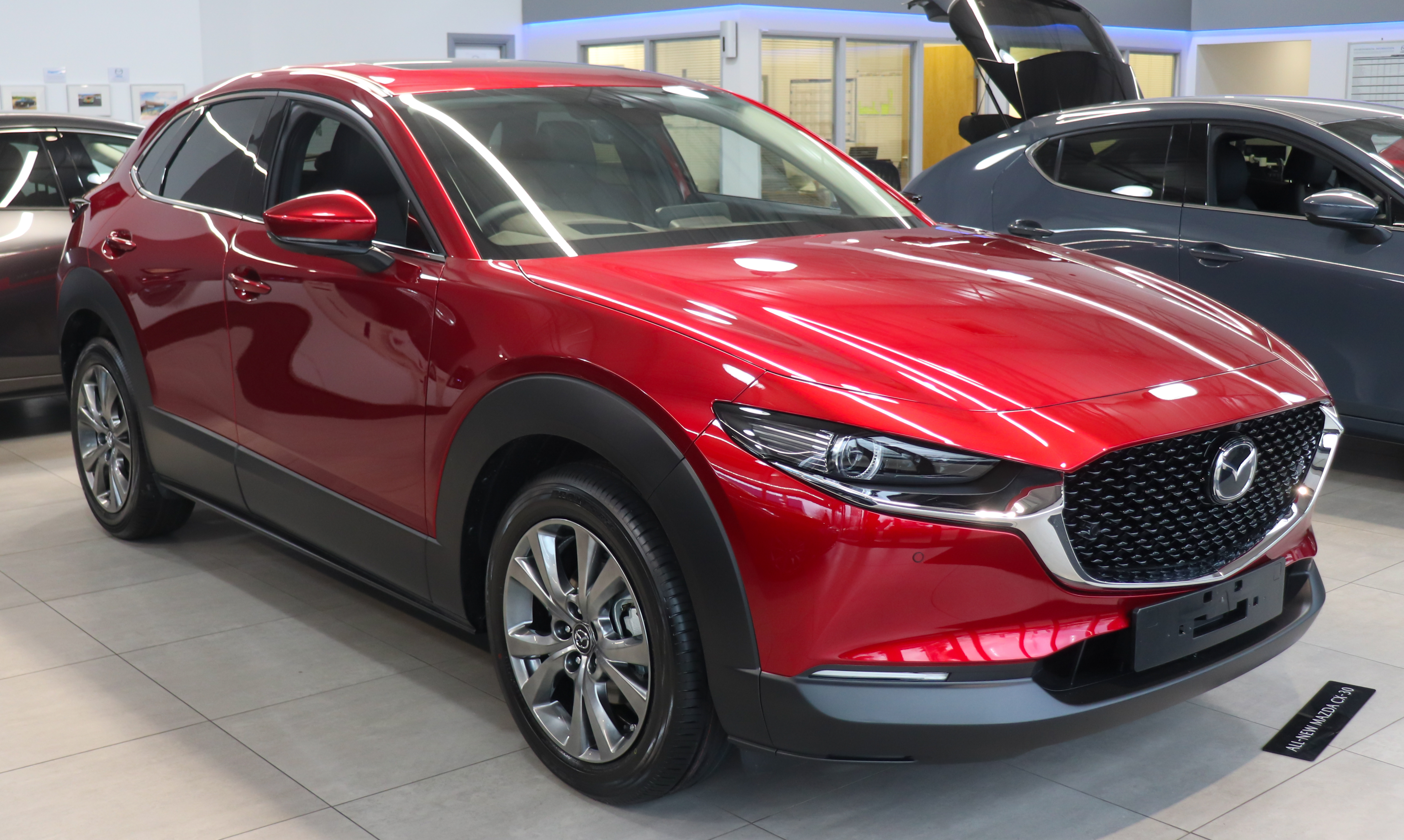
The Mazda CX-30 is a small SUV-style car from Mazda. The host says that, especially with the turbo engine, it feels more like a fun hatchback than a typical SUV.
This means the engine has four cylinders, and a turbo helps it make more power. The turbo basically helps the engine feel quicker without needing a bigger engine.
“Hemi” is a nickname for a specific kind of engine design that Chrysler used, known for making strong power. They’re saying the brand’s big V8-style engine is coming back.
The Jeep Grand Cherokee is a popular Jeep SUV. Here they’re talking about how newer versions may use smaller turbo engines instead of bigger V8s, largely because of rules about fuel economy and emissions.
Emission requirements are rules about how much pollution a car is allowed to put out. The hosts say these rules helped drive the move toward smaller turbo engines.
Fuel economy requirements are rules that pressure car companies to make cars use less gas. In this discussion, that’s why more cars are getting smaller turbo engines instead of bigger ones.
A V8 engine has eight cylinders arranged in a V shape. People often like V8s because they tend to sound and feel powerful, and the host is saying they prefer that over smaller turbo engines.
A normally aspirated six-cylinder engine makes power without a turbo. The host is saying they’re used to that kind of engine feel and don’t want the changes that come with turbo setups.
Turbo lag is the momentary hesitation you can feel when you press the gas and the turbo hasn’t built boost yet. The engine feels like it’s waiting before it really pulls.
A turbo three-cylinder is a small engine with three cylinders that uses a turbo to make more power. They’re comparing it to a bigger V8 to talk about gas usage and driving style.
It’s how the car is built: the main structure is a separate frame, and the body bolts on top. Trucks and big SUVs use it because it’s strong, especially for hauling and rough roads.
Rear drive means the engine sends power to the back wheels. Some vehicles feel more “classic” or balanced with this setup, especially when driving hard or carrying weight.
Immediate torque means the car gives you strong pulling force right away when you hit the gas. Some engines feel more responsive than others because they build that force faster.
The Volvo XC60 is a popular Volvo SUV that’s built for everyday driving. It’s the kind of car people choose for a comfortable ride and modern safety features—here, it’s the car the host is currently driving for the episode.
A “mid-size luxury SUV” is a family-sized SUV that’s meant to feel more premium than a regular SUV. It’s usually bigger than smaller crossovers, but not as large as the biggest luxury SUVs.
A swap meet is a car-themed market where people bring parts and stuff to sell or trade. Instead of scrolling online, you walk around and look for what you need.
Detroit is a major U.S. city that used to be the heart of car manufacturing. The show is talking about how it became famous for building huge numbers of cars.
The Rolls-Royce Merlin is a legendary World War II airplane engine. In this story, a car factory helped build thousands of them for planes like the Spitfire.
This is a company facility where engineers work on new Jeep and truck designs. The hosts are saying the old factory got turned into this kind of engineering site.
Gas prices are down in California, and the crew debates whether the economy is actually fine—pointing to strong auto sales and higher average transaction prices as evidence. Jack shares a trip to Hyundai’s Georgia plant, where Kia Sportage hybrids are being built alongside other vehicles at massive scale. The discussion shifts to what buyers are choosing in both new and used markets, including affordable picks like the Chevy Trax. Car talk continues with Mazda CX-30 impressions and Jeep Grand Cherokee’s new turbo four-cylinder powertrain, plus frustration over turbo/small-engine compromises driven by fuel economy rules.
Gas is “down” in Southern California and it’s still in the high fives per gallon, so we start with the kind of reality check every driver understands. Then we zoom out and ask the bigger question: if the economy is supposedly struggling, why are people still buying so many cars, and why are they paying around $50,000 on average for a new one? We cut through the noise and follow the money, the demand, and the on-the-ground market signals.
We also bring you inside the modern manufacturing machine with a firsthand look at Hyundai and Kia operations in Georgia, including what it means when production targets and EV plans get reshaped by real-world demand. From the Kia Sportage Hybrid story to the sheer logistics of moving thousands of vehicles by rail and truck, we talk about how the auto industry actually works when it’s running at scale, and why that matters to pricing, availability, and what shows up on dealer lots.
Then it gets personal and practical: used car shopping that turns into a sea of options, the hunt for value, and why the Chevy Trax keeps coming up as one of the few genuinely affordable new crossovers that still feels modern. We dig into regional buying patterns, why certain brands are rare in certain states, and the ongoing argument between turbocharged efficiency and the kind of naturally aspirated V8 horsepower that people still crave, especially with Stellantis signaling a return to more muscle.
Finally, we shift into pure car culture with tips on Texas swap meets and a fascinating tour of abandoned Detroit car factories that still hold the fingerprints of the Motor City era. If you like smart market talk, real enthusiast opinions, and stories that connect today’s cars to yesterday’s industry, hit play. Subscribe, share this with a car friend, and leave us a quick review so more listeners can find the show.
---- ----- Want more In Wheel Time car talk any time?
In Wheel Time is now available on Audacy!
Just go to Audacy.com/InWheelTime where ever you are. ----- ----- Be sure to subscribe on your favorite podcast provider for the next episode of In Wheel Time Podcast and check out our live multiplatform broadcast every Saturday, 10a - 12nCT simulcasting on Audacy, YouTube, Facebook, Twitter, Twitch and InWheelTime.com.
In Wheel Time Podcast can be heard on you mobile device from providers such as:
Apple Podcasts, Amazon Music Podcast, Spotify, SiriusXM Podcast, iHeartRadio podcast, TuneIn + Alexa, Podcast Addict, Castro, Castbox, YouTube Podcast and more on your mobile device.
Follow InWheelTime.com for the latest updates!
Twitter: https://twitter.com/InWheelTime
Instagram: https://www.instagram.com/inwheeltime/
https://www.youtube.com/inwheeltime
https://www.Facebook.com/InWheelTime
For more information about In Wheel Time Podcast, email us at