The Ford Mustang Mach-E is an electric SUV that shares its name with the famous Mustang sports car, but it's designed for families and eco-friendly driving.
The Ford Puma is a small SUV that looks sporty and is designed to be practical for everyday use. It has more space than a regular car, which makes it a good choice for people who need a bit more room.
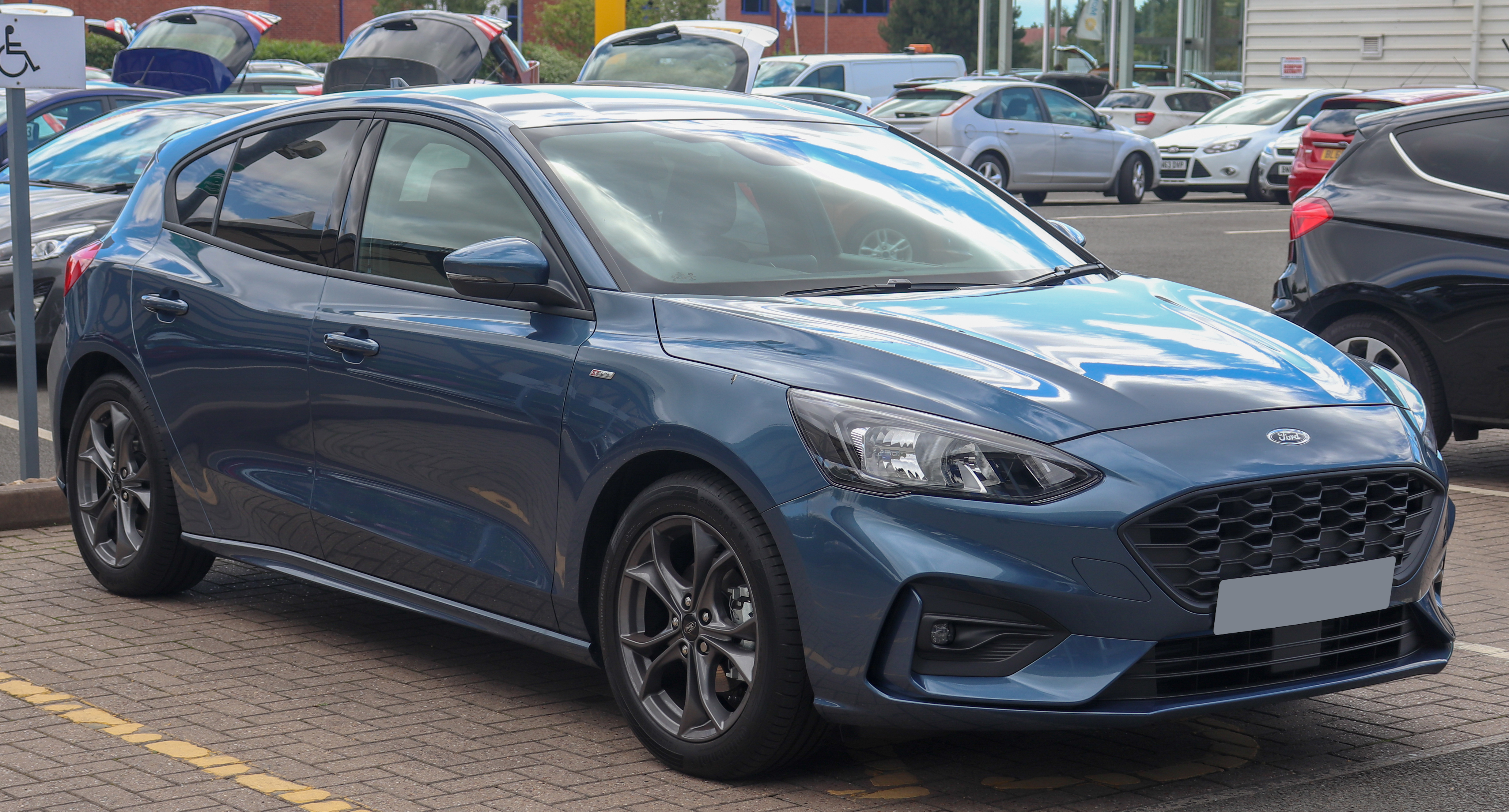
The Ford Focus is a compact car that is known for being fun to drive and having good technology. However, fewer people are buying it now because they prefer larger vehicles like SUVs.
The Tesla Model Y is an electric SUV made by Tesla. It's known for being roomy and having a lot of high-tech features, which makes it a favorite for people looking for electric cars.
Electric vehicles are cars that run on electricity instead of gas. They are getting more popular because they are better for the environment and technology is improving, making them easier to use.
The Volkswagen ID. Buzz is a new electric van that looks like the old VW buses but is made for today's world. It's designed to be eco-friendly and is part of Volkswagen's plan to make more electric cars.
The Renault 5 Turbo is a special version of a small car from the 1980s that was built for racing. It has a cool design and is loved by car fans for its speed and performance.
The Ford Fiesta ST is a sportier version of the regular Fiesta, which is a small car. It's fun to drive and has a lot of features that make it exciting while still being practical for everyday use.
EcoBoost engines are special engines made by Ford that use a turbocharger to help them use less gas while still being powerful. This means you can get good performance without wasting fuel.
A three-cylinder engine is a smaller type of engine that uses three cylinders to create power. It's usually more fuel-efficient and lighter than bigger engines.
The Opel Astra is a small car that many people in Europe drive because it's practical and efficient. It's a good choice for families and is known for being reliable.
Le Mans is a famous car race that lasts for 24 hours. Cars race around a track in France, and it's known for being very tough on the vehicles, making it a big challenge for drivers and teams.
The Ford GT40 is a famous race car from the 1960s that was built by Ford to win long-distance races. It won the 24 Hours of Le Mans four times, which is a big deal in car racing.
WRC is a racing series where cars compete on different types of roads, like dirt and gravel. It's known for its challenging courses and skilled drivers.
The Ford GT is a really fast sports car that Ford made to celebrate its racing history. It looks cool and is built for speed, which is why car enthusiasts often talk about it.
The Ford Focus RS is a sportier version of the regular Focus car, made for people who love to drive fast. It has a powerful engine and handles really well, making it fun on the road.
The Ford Mustang GTD is a super-fast version of the classic Mustang, made for people who want to race and have fun driving. It has special features that make it even better on the track.
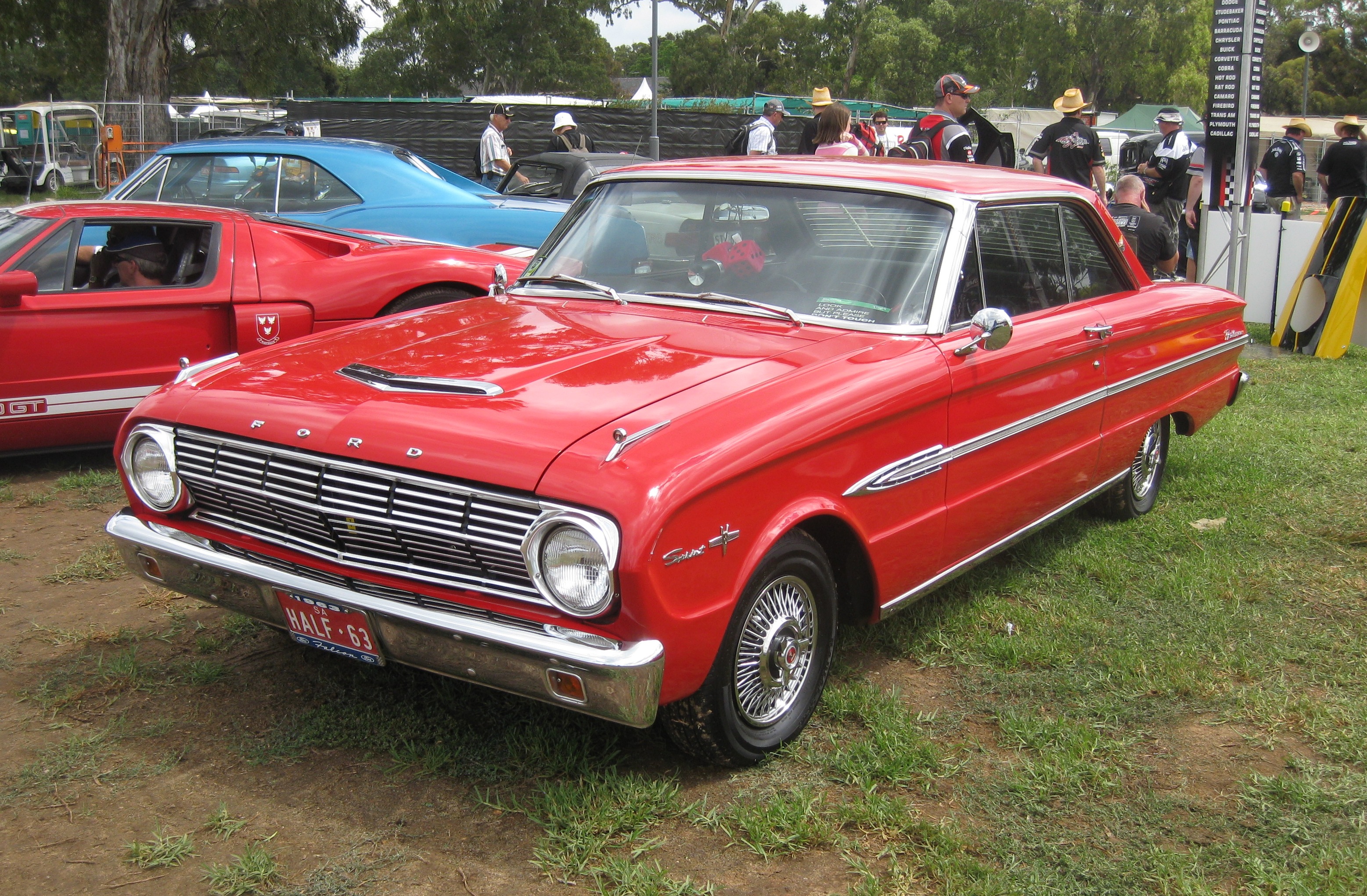
The Ford Falcon is a car that Ford made for many years, and it's known for being reliable and good for families. It's also been used in racing, which makes it interesting to car fans.
The Shelby Cobra is a famous sports car from the 1960s that is really fast and lightweight. It's known for its cool design and has a big place in car history because of its racing success.
LIVE
Welcome back to the intercooler podcast everybody and welcome back after the Christmas break.
Happy New Year.
Yeah.
I hope you had a great one.
2026 is here.
Goodness me.
This is our first episode of the year.
It's going to be a busy year, I think, for us, Andrew.
We're going to be producing a lot of, we hope, good podcast content, both with this show
and the second weekly show that we do, Ask the Intercooler.
We're going to be driving some interesting new cars, some perhaps more interesting older
cars.
Yeah.
I mean, if you listen to our podcast of what, two weeks ago, where we did our entire 2026
preview, there's so much stuff coming up.
Yeah.
It's going to be a very interesting year and we're going to be peddling very, very hard
at the intercooler.
Literally and figuratively.
Exactly.
So as you know, this is the podcast powered by car finance specialist JVR Capital.
This episode 295, we are zooming towards episode 300.
Episode 300.
Oh my goodness me, the time goes so fast.
Gosh.
So we, yes, we're going to have to think about a guest for episode 300.
If you have any ideas, by the way, listeners, viewers.
Who would you like?
Yeah.
Get in touch with us and maybe more importantly, get in touch with them.
Tell them.
Tell them they have to go on.
So for this first episode of the new year, we are talking about Ford.
What on earth is going on with Ford?
It's such an interesting subject, isn't it?
Which will kind of pick apart a bit.
I hope that we get to name some of our favorite Fords.
I think, I hope that we not only look at what Ford is doing now, but also offer some opinions
about what we think Ford should be doing in the future.
I mean, clearly the context of this is that Ford has in Europe at least, and we're not
talking about Ford in North America or elsewhere in the world.
They have completely ripped up their business model, which for as long as I've been in this
business, and actually for a while longer than that, was based on quite a simple but
extremely successful process of just producing a sort of staircase of cars where you have
something which is really good and affordable, and then you just walk up from there.
So somebody who buys or bought a car or had a fiesta as their first car years and years
ago ends up going up through sort of what was sort of focused on Mondeo and onto the
bigger things, and remains a Ford customer for life.
And that was such a successful business model for them, and it worked for decades and
decades and decades, and they've been there completely.
They've been there.
If you look at their model lineup on the UK website, as you say, this is a very Europe
and UK centric topic, but you look at the list of vehicles on their website, almost all
electric crossovers, right?
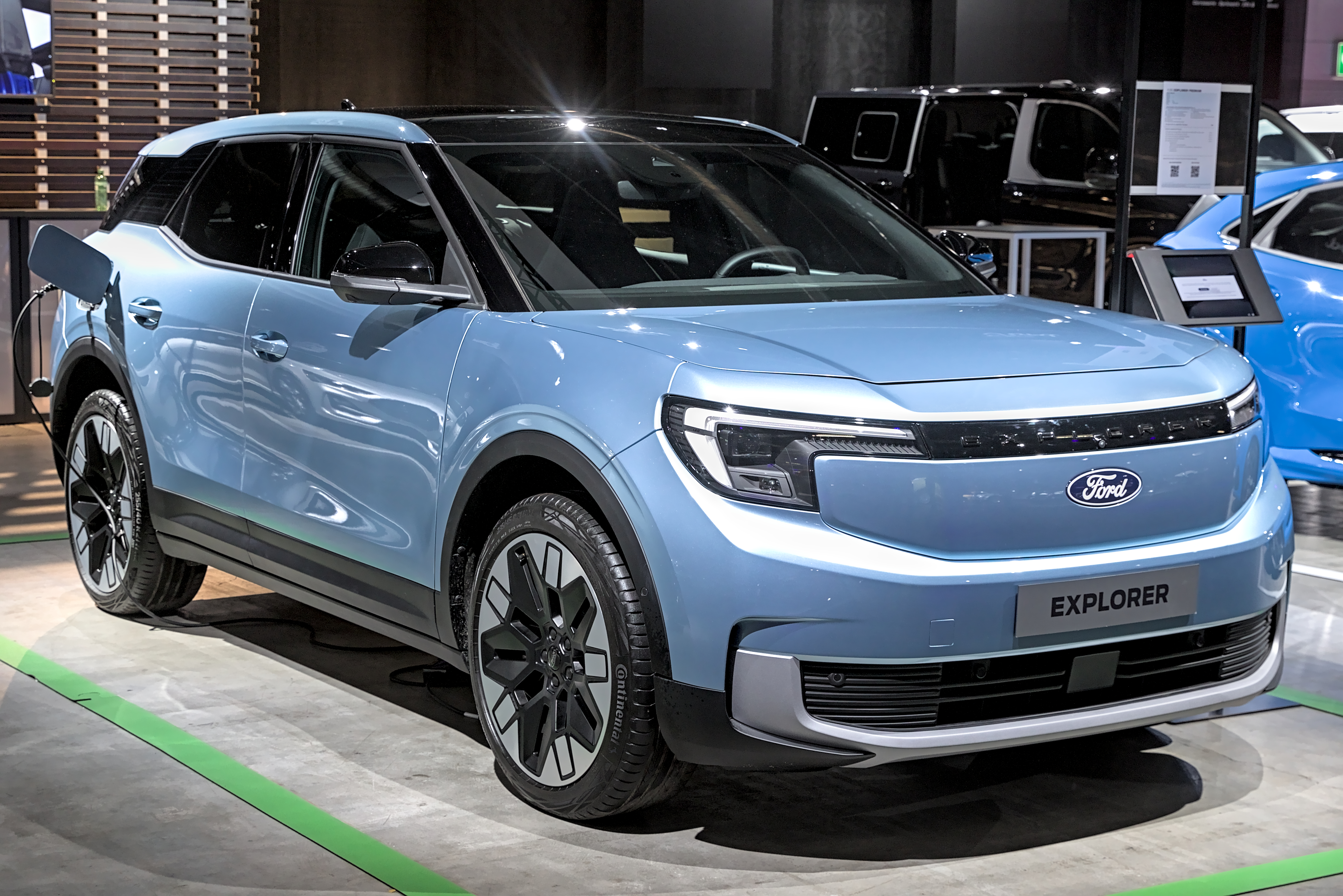
There's the Puma, Cuga, Capri, Explorer, Mustang Mach E.
Okay, so you can get, so the Cuga.
Yeah.
You can get petrol powered one of them, you can get petrol powered Puma, but they are
all SUVs of a kind, apart from the V8 Mustang.
That's it.
That is the only car, car.
Or their vans.
Or the vans, yeah.
That is it.
And it is extraordinary.
So I also looked up the least amount of money you can spend on a Ford now is £26,000.
And that buys you a poverty spec Puma.
And there are no regular hatchbacks, saloons, estates.
So Ford of Europe has become a manufacturer of crossovers.
The Mustang is the only traditional car.
Yeah.
And the volumes of those are so tiny.
In commercial terms, it's an irrelevance.
Do you know what?
It's actually quite a similar picture.
If you do look at the US, lots and lots of SUVs essentially, including some we don't
get, like the Bronco, and then several trucks as well.
Of course, the trucks are huge over there, both in terms of size and sales numbers.
And again, the only car that you can buy in the US is a Mustang.
Is that right?
It's extraordinary.
But that's where we are.
And in terms of petrol performance cars in the UK at the moment, it's the Puma ST and
the Mustang.
That's it.
So I think the temptation here is to stick the boot in and just go, are they totally
bleep mad?
Yeah.
After decades of enormous success with fiestas and focus in particular, why would you give
all that up to make electric crossovers?
And on top of that, you can look at the very clear evidence, the four figure levels of
redundancies, the fact that they're down to a single shift only, that the cars on which
or the back of which this philosophy, this new model has been built, the Explorer and
the Capri have been terrible in the marketplace.
They're not doing anywhere near what was originally intended for them.
And so the temptation is to turn around and go forward.
You have completely staffed up here.
It's not quite as simple as that.
It's not.
Because there were good reasons for the focus and for the fiesta to go, whether there were
similarly good reasons to not replace them is another conversation.
Can we talk about why the fiesta and focus and Mondeo, why they're all culled?
I think the Mondeo is because people is those sort of de-segment saloons.
They've just gone so far out of fashion that people just, you know, I just don't think
the volumes were there to justify the investment required to create a new one of those.
You know, cars like the fiesta and the focus, these are never big margin cars.
They never made much money out of any one of them.
And these cars, the survivor of these cars, I mean, we saw them, we thought these cars
were incredible because they're everywhere.
They're selling millions.
What we didn't know was how much money Ford's making out of each one.
And, you know, it was clearly an increasingly getting to a point where these cars were becoming
financially unviable.
And it's so sad.
It's the same thing which has killed so many of those other, you know, you are a proud
former owner of a VW Up.
Yeah.
Gone.
Yeah.
Gone.
For exactly the same reason.
And that's exactly the kind of car that we need more of now.
Yeah, but it's the legislators, isn't it?
Oh, no, no, no.
You have to meet this emissions standard and that crash safety standard.
Without even thinking about that, again, it's not just the customer has a choice.
The manufacturer has a choice.
It doesn't have to produce completely unprofitable small cars, which cost more to build than
they can possibly imagine selling them for.
Because the option is to just not produce them.
And, you know, car manufacturers will clearly, if forced to go down that road.
So I do understand why Ford felt that it couldn't continue.
Where I have more of a problem is the strategy to abandon those cars altogether.
And if you look at the news recently where the, you know, because, you know, other manufacturers
haven't done that, you look at what Renault have done with the five and the four.
I mean, the Renault five is now the second best selling EV in Europe.
I don't know what the best selling one is, but I mean, it's talk about hitting the ground running.
Is it a Tesla, by the way?
Probably is, isn't it?
Model Y?
Yeah, it must be.
So I think to give all that up to, you know, what Ford should have done clearly in my view
is said, OK, well, this generation of Focus and Fiesta have to go.
We have no choice.
But we're going to develop our own electric or maybe even cars that could be electric
or plug-ins, although as we've seen with the Puma, that's not without its issues.
Instead, they've been forced into a position where actually with all these cars where there
are effectively buying the technology and from their rivals.
You know, if you look at the Explorer and the Capri, I mean, they look like Fords, but
they're Volkswagen ID Fords underneath.
And you look at the big news that the Fiesta is coming back whoopee, but it's on a Renault
platform, as will be the second car, which we think it's going to be a small crossover
as well.
It's not going to be a focus type car.
And if you think from Ford's point of view, if it could have had the choice of paying
another manufacturer, a rival manufacturer to produce these cars, I mean, the new Ford
Fiesta is going to be built in a Renault factory in France and better than not having
any representation in the market.
And my understanding is that it will be very much, you know, they do this with the Capri
and the Explorer.
They may be Volkswagen based underneath, but visually they look completely different.
I don't think the Capri in particular is very good.
But the new Fiesta is not going to look anything like a Renault 5.
If you didn't know, you wouldn't know, I'm sure, certainly from the outside, and I'm
sure they'll be allowed to do their own suspension tune and that sort of thing.
But they are still nevertheless lining their rivals pockets in order to at least have a
representation in the market.
And if you think of the big sellers of the cars they're going to want to sell most of,
it's going to be those cars, isn't it?
It's going to be the Fiesta.
It's going to be the little crossover.
It's going to be the Capri and it's going to be the Explorer.
And what's left with that?
Okay.
So there's the Puma and I'm not sure what the future of that, but the Puma has sold
very well, certainly as a crossover with a petrol engine and as a hybrid.
I don't know what the Puma electric is going to do.
It doesn't deserve to do anything at all in my view.
But I don't know.
They seem to have thrown the baby out with the bathwater, frankly, and I worry for it.
And clearly, I think for these recent announcements, particularly the Renault
announcement, I think they've recognized the fact and are doing what they can in the
timeframe that is available to them.
And I don't think we'll see these cars.
You know, it's not like we're going to see the Renault 5 based new Ford Fiesta this year
or even next.
I think it's a 2028 car.
So it'll still be a long time before Ford is able to present a new face and a new front
to the customer.
And in the meantime, I presume it's going to have to try and, you know, soldier on with
what it's got.
Is it possible that Ford has actually been very, very clever here in allowing its rivals
to spend the billions developing these new architectures, not committing itself very,
very heavily to a certain future, buying in the technology for a few years, a period of
a few years and allowing the market to settle and the regulations to all settle and then
take a view?
Well, it's a very interesting perspective.
And I would, I'd have quite a lot of time with it, except you can't do that by abandoning
the here and now.
You can't just go, well, we'll just sort of muddle along with other people's stuff and
then, you know, in 10 years from now, we'll be quits in.
Well, you may or may not be if you've still got a business.
But, you know, we know, don't we, from, you know, the amount of money that they spent
transforming the Cologne factory, I think it was a billion dollars or something for
Explorer and Capri production.
And we know how that's gone.
And you can't tell me that's clever.
No.
You can't tell me that's gone well for Ford.
It's been a disaster.
Let me give you some context on Ford in the UK and Ford as a global company.
The global company, its market cap is $53 billion.
Tesla is almost 10 times bigger, but we know Tesla is valued like a tech company, not
a traditional car company.
Ford in 2024.
So the last year, last full year that these figures are available currently, four and
a half million cars produced, vehicles produced, $185 billion in revenue, $5 billion in profit
or dollars.
The F series trucks right up there with the best selling vehicles in the world.
Yes.
Close to a million, still the best selling vehicle in the US.
And it's been that way for almost 50 years.
Yes.
It's extraordinary.
In the UK, in 2024, again the most recent figures, 110,000 cars, lowest in decades, less than
half it sold in 2019 in the UK.
Now in part that's because its hatchbacks went out of production and the Explorer and Capri
were not yet on sale.
So the 2025 numbers should be better, but still not like they were before.
But the focus was still around for all 2020.
The focus only died very recently.
Was that towards the end of 2025?
Yeah, absolutely.
So the Fiesta was out of production.
But yeah, I mean those numbers, less than half what Ford in the UK sold in 2019, that's
a problem.
It is a problem and you can't tell me that that's what they intended to have happen.
So I come at this, as I'm sure you do, from someone who has a great history of really
enjoying so many different sorts of Ford's and not just the really high performance
ones.
I've told this story before.
It must have been about five years ago, my older daughter, she was working for a company
and she needed a car so they just produced, provided her with a Fiesta out at the pool.
And this had a one litre EcoBoost engine and 100 horsepower, 99 horsepower and she just
brought it home to Wales for a weekend because she's coming to see us.
And I just went out in it.
And I can do, you know, five years on, I remember this.
You think of all the stuff I've driven the last five years.
And I can just driving this joyous little car with its fizzy little three cylinder engine
causing no problems or offense to anybody at all.
I was totally anonymous and I was aware that I was driving a quality driving machine, a
car that had been developed by people who understood, who got it, who knew.
And another story, another sort of slightly family, my sister-in-law is a nurse up in
Scotland and she's sort of like a district lawyer where she used to go around visiting
people and she had a focus for a long time.
There's no interesting cars at all.
And then one day they said, oh, well, we want that one back or it's got to be sold.
So he's in Newcastle and it was an Astra.
And she was just sort of like, and I tried to get her to explain what it was she missed
about the focus and she just said, I can't tell you in precise terms because I have no
interest in cars.
That's not the way my work.
But I just love the way that it drove.
And that's, of course, enough.
You don't have to know why.
You just don't know what it makes you, how it makes you feel.
And those cars, the Fiestas and the Escorts and the Mondeos, sorry, the Fiestas and the
Focuses and the Mondeos were just cars that were developed by car people.
And it wasn't just car people who benefited.
Everybody does because whether you like cars or not, you like having quality experiences.
And if one car feels remote and disconnected and you don't necessarily feel very confident
and another one, you just feel like you just put on another item of clothing.
You're that connected to it.
Then whether you have any interesting cars or not, that is always going to resonate well
with you.
And that is what I fear Ford is in the process of losing.
Well, listen, that's such an important point.
And I want to come back to this.
This episode is not about the history of Ford, but I just want to do a couple of minutes.
Can it be a bit about the history of Ford?
It can be.
Can we just talk about some of the great ones?
That's what we're going to do.
And the reason for doing that is, why is Ford worth an entire episode?
Well, because Ford is really quite a remarkable company that has contributed a hell of a lot
to society, to the car world and to car lovers like us as well.
From the Model T.
From the Model T.
So we know that Ford basically invented the mass produced car.
Henry Ford did do that.
I think the Model T is the most significant car there has ever been.
Yeah.
In terms of its effect and its ability to provide freedom to people around the world.
I don't think anything gets close to it.
Yeah.
It changed societies.
It changed life forever.
It mobilized millions.
It was the first widely available car.
Henry Ford did invent that.
Not a good man, but an extraordinary entrepreneur and innovator.
Correct.
Absolutely.
So let's pick out some of the highlights.
Some of the, not just the cars, but also the contributions and the racing.
I just want to talk about the 1960s, the winning Le Mans four times with the GT40,
but also introducing the Mustang, democratizing a glamorous high performance car.
The first pony car.
Yeah.
That's a huge deal.
It's a huge deal.
Well, an entire generation of car, an entire kind of car, which still exists.
I've got one parked outside my house at the moment, which wouldn't exist if it wasn't
for the 1964 introduction of the original Mustang.
And it was so popular, wasn't it?
It was unbelievable.
That's what we need again now.
That's what we need.
We need that kind of vision.
And the Mustang didn't just sell to swivel-eyed petrolheads who are just burning it.
The Mustang sold it.
Everybody, because everybody liked the image.
They liked the look.
And they just liked the idea of being in one.
They liked even more the idea of being seen in one.
Yeah.
I have to mention WRC because it's me.
Ford has seven WRC titles across drivers and constructors.
Cosworth, DFV, we do need to mention the most successful engine in motorsport history.
Yeah, absolutely.
I mean, who knows what Formula One would have been in the late 60s and all through the 70s
and into the 80s without it.
155 F1 wins, race wins.
22 F1 championships for the DFV.
But the DFV wasn't just Formula One.
It won everything.
That's right.
And there were lots of different versions of the same engine.
Exactly.
Versions of it won the Indy 500.
Versions of it won Le Mans.
There isn't a major race in the world that the DFV didn't win.
Or its variance.
And this is Ford.
And then I want to pull us into the 1990s because it was during that decade that Ford of Europe
transformed the company's reputation with a couple of cars that just set new standards
for steering, ride, handling.
The Mondeo and the Focus.
The work clearly of many people, but led by...
Having got the most significant point being going from being absolutely the worst in the category
to the best overnight.
And it was Richard Perry Jones who just said, we can't do this.
Let's do this properly.
A huge investment in making cars that really drove properly.
So Jackie Stewart was involved.
Our own Icon, a TI contributor, was a big part of that.
With the Focus, certainly.
Yeah.
And it's so interesting because even today I step into a new Ford expecting class-leading
levels of steering, ride, handling.
They're not there anymore.
That's what I wanted to talk to you about.
So is that gone and is that reputation now gone?
The reputation absolutely has not gone.
And I implore anybody from Ford in the position of influence who may be listening to this
to go back and look at what happened.
Look at where Ford was in the late 80s, early 90s, and then what happened to the company.
And then what happened to the company's fortunes over the years that followed on the back of
what they decided to do with the Mondeo and then the Focus and then the Fiesta.
Because the situation, however bad the situation is now, it is eminently,
forgive the word, turn around a ball.
It really is.
And all they've got to do is think like they thought 30-something years ago and just think,
okay, we've got ourselves into a bit of a hole.
There's no point crying over that.
That's past.
We are where we are.
We need to do something about it.
What does Ford stand for?
Ford is the mass market manufacturer for people who like to drive.
It's not the manufacturer which produces cars, which kind of look okay
and make lots of noise about being great to drive.
But when you get in them and go down the road, you realize there's just like anything else.
That's not what Ford is.
It's not what Ford should ever be.
And if you spend too long doing that, people will just go elsewhere,
will get cheesed off, will become disillusioned with your brand.
I think that they have all the time, even if they started today to turn it around
and to use all the technological advancements that EVs that we've seen about
and spoken about to produce fords that are not just reasonable to look at
and have lots of gadgets in them and crash quite well.
But cars that are genuinely desirable.
Cars that when people get into them and drive them, think to themselves,
this could only be a Ford, this drives like a Ford.
This is it, right?
And you can't necessarily do that by buying in platforms.
No, of course you can't.
You can do some of it because you can set your own suspension and that sort of thing.
And you can put your own clothes on it.
But it's not the same as every single bit on that car being the way you want it to be.
And if there's going to be a new Fiesta and it has to be electric,
what platform would you choose for that in an ideal world?
It would be the Renault 5 platform, wouldn't it?
So a new Fiesta stands every chance of being a brilliant little car.
And that's great.
But it's still not the same as you say, from a clean sheet of paper
defining every single thing about it.
But what they do have, they have an opportunity,
because they have quite rightly picked, absolutely in my view,
the right platform to be doing it.
And it's interesting that they haven't chosen a Volkswagen platform.
Yeah, it is interesting.
Because they're not just into Volkswagen.
It's not just that they put explorers and capris on Volkswagen platforms.
Volkswagen put things like tarans and other stuff and vans on Ford platforms as well.
So they're absolutely, deeply in bed with each other.
But they've decided not to use one of the smaller VW platforms.
And that to me is very interesting.
So they have the best platform.
And we've driven the Renault 5.
We think it's the best compact EV out there at the moment.
But I still think that there is an opportunity.
It's not ideal, because as we said before,
it would be better if it was entirely their own thing
and they could tailor it every single component to Ford values.
But I think that there is an opportunity to create a car
that may not even be better than a Renault 5,
but which feels completely different and feels like a Ford should feel.
I think the technology is there.
I think they've got the time to do it.
And that's what I really hope that when we get to drive the new Fiesta,
we sit down in front of our laptops and we write,
this is a worthy successor to the whatever it was,
the eighth generation Fiesta.
If you were going to do an electric Fiesta,
this is the car that you should have on,
because it's powered by electricity, but it's still fun.
It's still light. It's still light.
It's agile. It's chuckable.
You want to get in and drive it.
Every time the road clears in front of you,
you've got a couple of good corners.
You get a little bit excited and you just think to yourself,
wow, because you're in that kind of car.
In a way, I'm afraid you're not going to do in a Capri.
It's the Explorer.
I quite like the Explorer because A,
they hadn't given it a name up to which it never could stand any chance of living.
But B, because it's a little bit cheaper and it's more practical.
And I actually thought that the Explorer worked quite well,
but I don't want to afford to work quite well.
I want to afford to be outstanding in every regard.
I want to be excited about getting an afford.
And it doesn't have to be expensive.
One of the things that I've been thinking about is,
what's my favorite Ford?
Of all the Fords that I've driven.
And the sort of 2000 Ford Ford GT would definitely be up there.
Yeah.
But so with the last Fiesta ST.
Oh, my goodness me.
Little, you know, sub 20 grand.
I think that Fiesta ST and the Mark 7 before it
are possibly my favorite Fords.
Well, I think there's a good,
I think you can make a really good case for it.
I spent a day on the Route Napoleon in the Mark 7 ST 200.
And it was just utterly joyful.
And I did spend a day in the Mark 8 ST Performance on Dartmoor.
And I was just blown away by that car.
It was such a joy to drive.
Was that a mountain tune one?
Yeah.
It was utterly, utterly brilliant.
I loved it.
And it just, it demonstrated that you don't need a big car.
You don't need a load of power.
You don't need a load of grip.
You don't need something very expensive.
You don't even need very sophisticated rear suspension.
No.
No, you don't.
You just need people who know what they're doing
and who understand what's required.
They're brilliant.
Utterly utter.
That's Ford at its best.
Where are those cars?
Where are they?
I mean, okay.
So just while we're wandering down memory lane,
Mark 1 Focus RS.
Yeah, I've never really driven one properly.
Oh my goodness.
Go on.
They're just outstanding cars.
I mean, absolutely.
I mean, so quick point to point with that quay differential
up front, only 237 horsepower.
Need any more than that.
So light, so much fun.
And just every time you got into them,
there was just this sense of authenticity.
Because you know, you knew that a car like that
could not have been developed by anyone
other than a total petrolhead.
You just knew it.
It wasn't enough that they were,
those engineers were, you know,
knew lots of stuff and were very good at tuning stuff.
They had to have the passion as well.
And they clearly did.
And I just, yeah.
So I mean, there've been three generations of Focus RS.
To me, that first one, I mean,
I actually think they got steadily worse.
Although, you know, the second and the third were still
really into the second one was a bit overpowered
front wheel drive, but it was still good fun.
And the third one of four wheel drive was too heavy
and nothing a bit overrated.
But that first generation Focus RS,
that's what a Ford should be.
Particularly with fast fours and hot hatches,
you should see that there's a Ford,
a new Ford hot hatch coming and just
expect it to be really, really fun.
Have you driven a racing Puma?
No.
No, again, but you know, this was the old Puma,
not the crossover, but the little Coupe thing.
The little fiesta-based Coupe thing.
And they did the racing Puma.
They didn't make very many of them.
153 horsepower from 1.7 liter engine.
Just joyous. Just fun.
Not complicated, not technologically advanced,
not expensive, very simple, very basic, brilliant.
Again, just done by people who knew
what they were doing and cared.
They've done so many brilliant performance cars.
What about the sort of 80s stuff?
I never really know about these, you know,
the Escort, the turbos, the XR, 2Is,
the Cosworth, the Sapphires, this, you know, all that stuff.
Okay, so, oh my God, how long have you got?
So, my favorite of the sort of the XRs,
and it may be because my mate Ben had one,
had one when he let me drive it around the place,
was the original XR2, the Mark I,
so round head lights, pepperpot wheels,
usually white with black,
had the then new P6, Pirelli P6 tire on it.
They were great.
Sierra Cosworths is an unpopular thing to say,
but Sapphires were better than,
so the Sapphires better than, as a road car,
the Sapphires better than the hatchback.
The hatchback was very raw.
I mean, amazing for what it could do for less than 20 grand,
which is what it cost when it was new.
Here was a very practical, spacious Ford,
which did 150 miles an hour, which in 1986,
was just, I mean, just absolutely eye-popping,
not 16, 6.5 seconds or less.
You know, it was kind of the performance
that you'd expect for something costing
at least half as much again,
and it was in this completely practical,
and it looked mad because it had that biplane spoiler
and that sort of thing,
but actually they were quite hardcore things.
They were quite tricky in the wet,
and then the Sapphire came along
with the four-door saloon shape,
and that to me is, I think, a very, very underrated car.
If you've got a sort of turbo-technics one,
which would be mildly boosted to, I don't know,
280, 300 horsepower,
even with the four-wheel drive version
that came along later.
Yeah, really, really good things.
Again, still, you know, very practical,
very usable, but proper driver's cars.
Yeah, anything else you're interested in from that era?
What do I want to know about?
But what about the sort of overrated, you know,
you see, I don't know if this trend has sort of faded now,
but you would see it auction, some sort of escort-turbo thing
selling for a million pounds, not really,
like 80 grand or something.
Yeah, I mean, just crazy, just absolutely crazy.
So, you know, RS16, I'm talking front-drive Escorts here,
not sort of Mark IIs.
Yeah, yeah, RS Turbos.
I don't understand why those cars command so much money,
because we never liked them.
I never liked them when they came out.
I don't think anybody particularly did,
and yet they command bonkers prices these days.
I mean, I'm not saying that all Fords down
were absolutely brilliant all in an hour.
I'm terrible, I wasn't seeing anything of the sort.
I mean, Capris were generally overrated,
largely because they were in the professionals
and people thought they looked cool,
but I think really the only of the mainstream Capris,
I think the only one that was genuinely pretty good
was the last, the 2.8i.
I think that was quite a good car,
but it came and went before I really got into the business.
So, they are capable of, you know,
of not really delivering all the time,
but when they did come up with it,
I'm like, my goodness, you knew about it.
Okay, so a few hits, a few misses,
but one of the curious things about Ford
is that it's a very blue collar,
very mass market, very mainstream car company,
but there are lots of, there are millions,
upon millions of people out there
who feel very strongly about Ford.
As they should.
You know, they have a, they love Ford
and they wouldn't drive anything else.
Yeah, and why is that?
Do you think it's about the racing?
Do you think that underneath it all is underpinned,
underpinning all of this,
is that certainly since the 1960s,
with, as you said, those four Le Mans wins
and then with the DFV,
that there is an authenticity that has underpinned
the Ford brand for the last over 60 years now.
I think that's what it is.
And I think if we're trying to say positive things
about Ford, if you look at what a Ford
are doing now with racing,
with their association with Red Bull,
coming into Formula One, with the new WEC program,
which is coming in 2027,
and various other things,
I'm sure you've got written down over there.
It's interesting isn't it, at a time
when their road car proposition,
certainly from a driving
or an enthusiast driver's point of view,
is the least appealing that I can remember it being.
And it pains me to say that,
but it's what I believe
is a long time since I've been more excited
about what Ford are doing on the track.
Mustang GTD as well.
Yeah.
So, okay.
The other point I wanted to make about Ford
is that there's this amazing elasticity
about the Ford badge,
because it works on a little hatchback.
It works on a commercial truck.
Somehow it works on a supercar as well.
And a Formula One car.
And a Formula One car.
But they could announce a new Ford GT next year,
and collectors would be queuing up
to get their allocation.
What if it were electric?
Probably not.
Possibly not.
But which other brands can
have that kind of stretchiness?
Yeah.
It's really unusual.
And it's because of the racing,
and it's because of all those Mustangs,
and it's because of, you know,
the other Ford GTs that have been produced over the years,
and all of the hatchbacks and the saloons,
the performance cars.
There's, it's just,
the Ford has such a rich history.
And I think that,
I think that has both positive and negative aspects,
because one,
the most important thing is, as I said,
that provides an authenticity,
and that is the word behind,
that underpins the entire brand.
But it also means,
when Ford is not performing at that level,
people like you and I come on podcasts like this,
in a way that we simply wouldn't,
if it wasn't a brand about which we cared deeply.
If this were, forgive me, Vauxhall,
we wouldn't be doing this.
No, no.
Because there isn't that history,
there isn't that authenticity,
there isn't that level of expectation.
And we're not doing this because
we're a bit disappointed with the cars
that Ford are making today.
We're doing this because of all the cars
that Ford made in the past.
And that level of expectation,
and that's the standards that we know
the company is capable of reaching.
And when it doesn't do it,
we as enthusiasts,
and I think fair-minded and certainly
positively motivated enthusiasts,
wanna know why?
So there are two curious things going on
in parallel with Ford at the moment.
One is that, as we've discussed,
the mainstream,
the day-to-day cars at the moment
are pretty underwhelming.
Yes.
There's not a lot to get excited,
there's nothing to get excited by there.
And two, on the performance and racing side,
things are actually going to start
looking up very, very quickly from now on.
Very interesting.
So there is, you've mentioned Ford
coming back to Formula One,
working on the powertrain side with Red Bull.
And that's not a badge,
that's not just for giving Red Bull a load of money.
They are genuinely involved,
I think particularly on the electronics side.
On the electronics side.
So yeah, so the new 2026 regulations,
essentially half the power comes from
the V6 engine,
and half the power comes from motors.
And so Ford is involved in the
electronic side, the motor side,
in a big way.
So back into Formula One,
there is, next year there is
the WEC, the WEC program with the new hypercar.
So Ford, back at the top level of sports car racing,
which is great.
You've mentioned it already, the Mustang GTD.
I mean, they went to town to make a Mustang
a true sort of track car, didn't they?
Yeah, and they got nuts with that.
They put the flipping gearbox in the back.
Yeah, they got absolutely nuts with that car.
So there are some people out there
who care enough to do that sort of thing with it.
And also,
we know that there is a new
Ford racing production road car coming.
And that's literally all we know.
But at least Ford has not decided
to desert that sector of the market entirely.
And at least there is new product coming
that hopefully we can get excited about
when we learn a little bit more about it.
I mean, all this stuff, all this racing stuff
is coming out the head of Jim Farley,
who is the CEO of Ford in the US.
And he's completely car crazy.
I mean, I've been in races with him
where I've been down one end of the Spar six hours
on a Ford Falcon, he's been up the other end
in his own GT40.
I interviewed him once, the first race he ever did
was in a Cobra, which I thought was quite brave.
But he's also the bloke on whose watch
all this stuff has happened.
And I find it...
It's a strange paradox at the moment.
I do find it very strange that the harder
they try in one direction,
the further they go away from what
I think a lot of people, hopefully everybody
or most people, want to Ford to be in the other.
And it is paradoxical.
Of course, some of it is symptomatic
of the transition that the entire industry is in.
But I don't see other manufacturers getting themselves
into quite this sort of situation
where there is no longer,
unless you go and buy a V8 Mustang,
which is, you know, niche to put it mildly,
there are no longer any cars
of the type that Ford has been
most successful selling in the past.
I think that's the thing for Ford, right?
And goodness knows, we're not exactly
boardroom level strategists for car companies,
but I look at it this way.
Ford cannot just produce a load of electric crossovers
and say, it's okay, guys,
because we're also doing all this racing
and we've got these two, you know,
really exciting performance cars.
There needs to be something in the middle.
There needs to be something between the boring crossovers
and between the racing and high performance stuff.
And that, in the middle, should be
normal affordable cars that are brilliant to drive.
Of course. Apps, that is complete.
It needs those three pillars, isn't it?
That is, yes, and I'm afraid
the least important of those pillars is the racing.
It is, yeah.
Because people don't go out and buy Ford Formula One cars.
I mean, it's so interesting that they're coming back
at the top level.
Someone will tell us that I'm wrong,
but this is basically, when has a Ford
last been in a position to win the more outright?
1960s.
Yeah, okay. 40.
And to have a program
and to have a Formula One program,
that's absolutely great.
But the balance you talk about
isn't between road and race.
It's between everyday road cars
and then real
driver's versions of those cars.
And even if it's just the everyday road cars,
it's simply not good enough, even if they did do
some, you know, a new XR3i
or a new, you know, hot Capri or whatever.
The wonderful thing,
the best thing, probably the most
singularly Ford thing
about all those cars they've got rid of,
is you didn't need a Focus RS.
You didn't even need a Fiesta ST.
You go and drive
a hundred horsepower
one litre Fiesta.
Absolutely bog standard
middle of the range Fiesta
and still had a ball in it.
It's not like, well, okay,
all our normal cars are really quite dull,
but we do a few interesting ones as well.
They should all be interesting.
They should all drive like Fords.
Otherwise to me, there's a, you know,
there's a lot of them.
There's a lot of things.
Well, they're just not Fords.
My first car, I didn't own it.
It was my mum's car, but it was the car that I used
when I was 17 and 18
was a Mark 1 Focus
1.6
hatchback.
Hundred horsepower.
Five speed manual.
Even then, as a 17 year old, just past my test,
I knew it was fantastic to drive.
You must have felt really lucky for that
to be the first car you got to knock about in.
It was great. I had such a ball
and not just because you're 17 and you're driving,
but because the car was fantastic to drive
and you could toy with the balance
and it steered beautifully and it was agile.
It was, it was great
and that is what's missing
from Ford right now.
Car companies lose sight of what made them
great in the first place at their peril.
There have been so many examples
of that.
It hasn't been long for Ford
if it becomes a generational thing
that becomes really problematic.
This is a situation
which is eminently correctable
in the short to medium term
and everybody will
flop back and forget
everything that's gone on
in a heartbeat because we all want
Fords to be
like the Fords we remember
and love and cherish and
appreciate.
But I don't think
just carrying on as things are
is a viable way forward
for Ford in Europe.
No, I think something needs to change
and as you say
if it drags on like this for several more years
the damage could be lasting, couldn't it?
Yeah, it could.
I don't want this just to be
perceived as us
putting the boot in because
as I said earlier, we are all Ford fans
we're all Ford enthusiasts
and maybe there is
an underlying strategy
as you suggested
maybe they are having to take a bit of short term pain
because the long term gain
for the cars that we don't know about
is going to make it all worthwhile.
I do so hope that is the case.
I personally think
that come 2028 when we see
these new Renault based
cars
I think that Ford will know very well
what is now expected of them
I think they will try it very hard
with those cars
and I think they will be
very interesting because
for Ford in Europe
they probably are make or break cars
because I mean those
but that's where the volume is
they really are
they are that vital
everybody will forgive
everything that's happened and we will all move on
very quickly
but if you
produce a new Fiesta
it's not like producing a new Capri
when the last Capri was made 40 something years ago
and it's kind of like a name
and people see the professionals on UK Dave
but people don't
really get affected by it
if you produce a new Fiesta
it's got to be a Fiesta
it can't just be
a recycled
badge on an otherwise
pretty undistinguished car
it has to be exceptional
and I think that platform provides the possibility
for that
and I think that they will
I think they will take the opportunity
I hope so
gosh
that was good fun
so Ford I mean
it's really interesting to trot through the history
and look at
it looks like Ford has got itself into a bit of a pickle
at the moment
and to discuss ways in which it might be able to pull itself
out of that but we'll be watching
with real interest
throughout 2026
and
let's see what happens
well listen everyone thanks for tuning into this first episode
of the new year
happy new year to you all
and here's to a fantastic year
and stay with us
just remember to follow the show or subscribe to our YouTube channel
if you're watching
and in return we'll be back with another podcast
next week see you then
About this episode
Ford's drastic shift towards electric crossovers has raised eyebrows among enthusiasts, as the brand abandons its successful hatchbacks and sedans like the Fiesta and Focus. The hosts discuss the implications of this strategy, highlighting the loss of Ford's identity as a driver-focused manufacturer. They reflect on Ford's rich history, from the Model T to the iconic Mustang, and debate whether the company can regain its footing in the market. With new models on the horizon, including a Renault-based Fiesta, the conversation explores the potential for Ford to reclaim its reputation for producing fun, engaging cars.
Dan Prosser and Andrew Frankel attempt to make sense of everything that's going on at Ford. From a model line up made up almost entirely of crossovers and SUVs to tumbling sales figures and unprecedented levels of platform sharing with rivals, Ford is a very different car maker to the one we grew familiar with.
But might there be method in the madness? And can Ford re-establish itself as the market leader both in everyday cars and performance machines?
Find out more about JBR Capital here – https://www.jbrcapital.com
Use coupon code Ti10 to get 10% off your Supernatural Car Care order – https://supernaturalcarcare.com/