The Corvette is a famous two-seat sports car made by Chevrolet. The engine is located behind the seats instead of under the hood, which helps the car balance and turn corners very well.
The Model 3 is a fully electric four-door car made by Tesla. It runs entirely on battery power and is controlled mostly through a large touchscreen in the center of the dashboard.
The Cybertruck is a large, electric pickup truck made by Tesla that looks like a futuristic, angular metal box. It is built with a tough stainless-steel outer shell instead of traditional painted body panels.
The Maverick is a smaller, budget-friendly pickup truck made by Ford. It is designed for everyday driving and light utility, making it easier to park and more fuel-efficient than traditional large trucks.
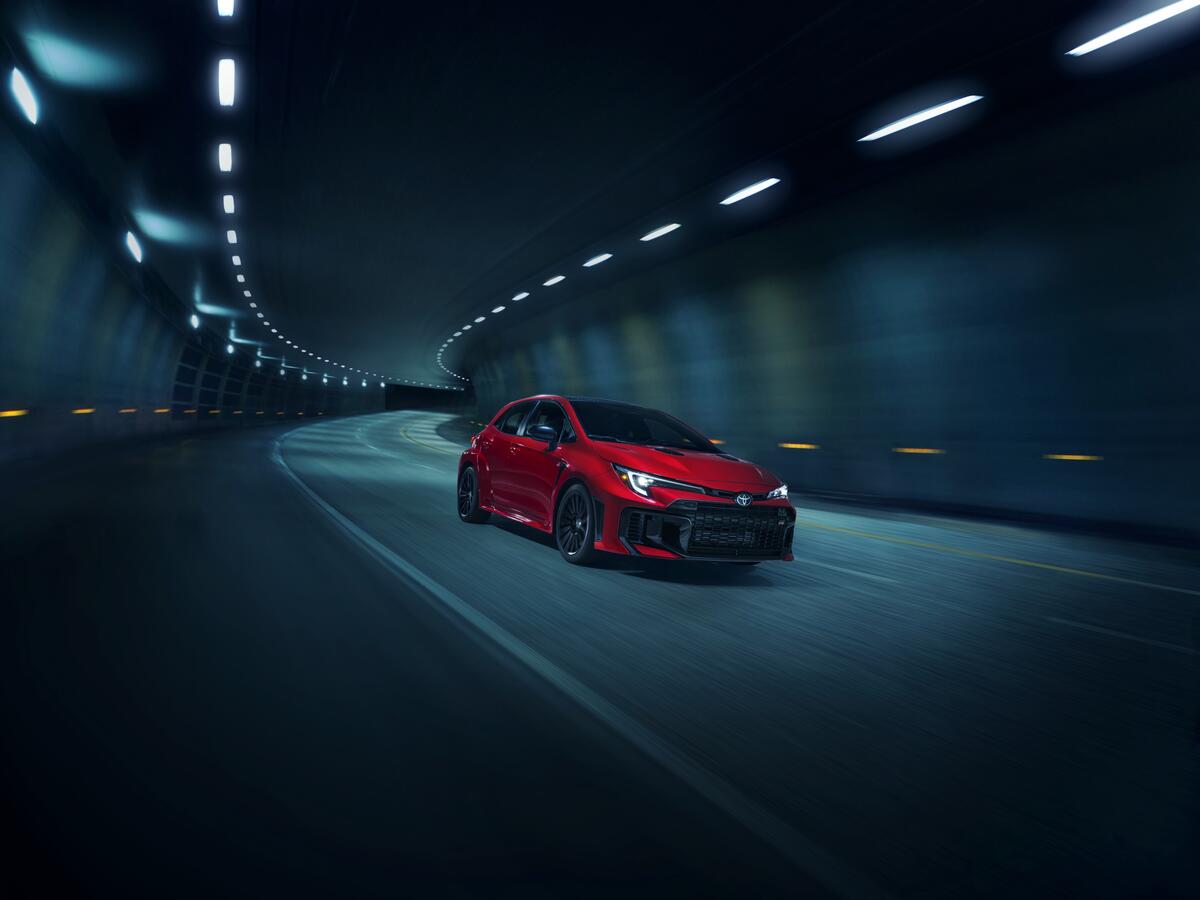
The GR Corolla is a fast, sporty version of the standard Corolla hatchback. It is built for high-speed driving and has all-wheel drive to help it grip the road in all weather conditions.
The MR2 is a classic, small two-seat sports car made by Toyota. It is famous for having its engine placed in the middle of the car, behind the driver, to make it handle corners exceptionally well.
The Mirai is an electric car made by Toyota that runs on hydrogen gas instead of being plugged into an outlet. It can only be refueled at special hydrogen stations, which are very rare.
The Venza is a stylish, comfortable SUV made by Toyota that only comes as a hybrid. It is designed to feel a bit more luxurious and quiet inside than a standard SUV.
The Prius is a highly fuel-efficient hatchback made by Toyota that uses both a gasoline engine and an electric motor. It is famous for getting excellent gas mileage.
The 4Runner is a rugged, truck-based SUV made by Toyota. It is built specifically for driving over rough off-road trails and is known for lasting a very long time.
The GX is a large, luxury SUV made by Lexus, which is Toyota's luxury brand. It is designed to be very comfortable inside while still being tough enough to drive over rough mountain trails.
The Grand Cherokee is a mid-sized SUV made by Jeep. It is designed to be comfortable for daily driving while still being able to handle rough weather and off-road trails.
The Expedition is a very large SUV made by Ford. It has three rows of seats to carry up to eight people and is strong enough to tow heavy trailers or boats.
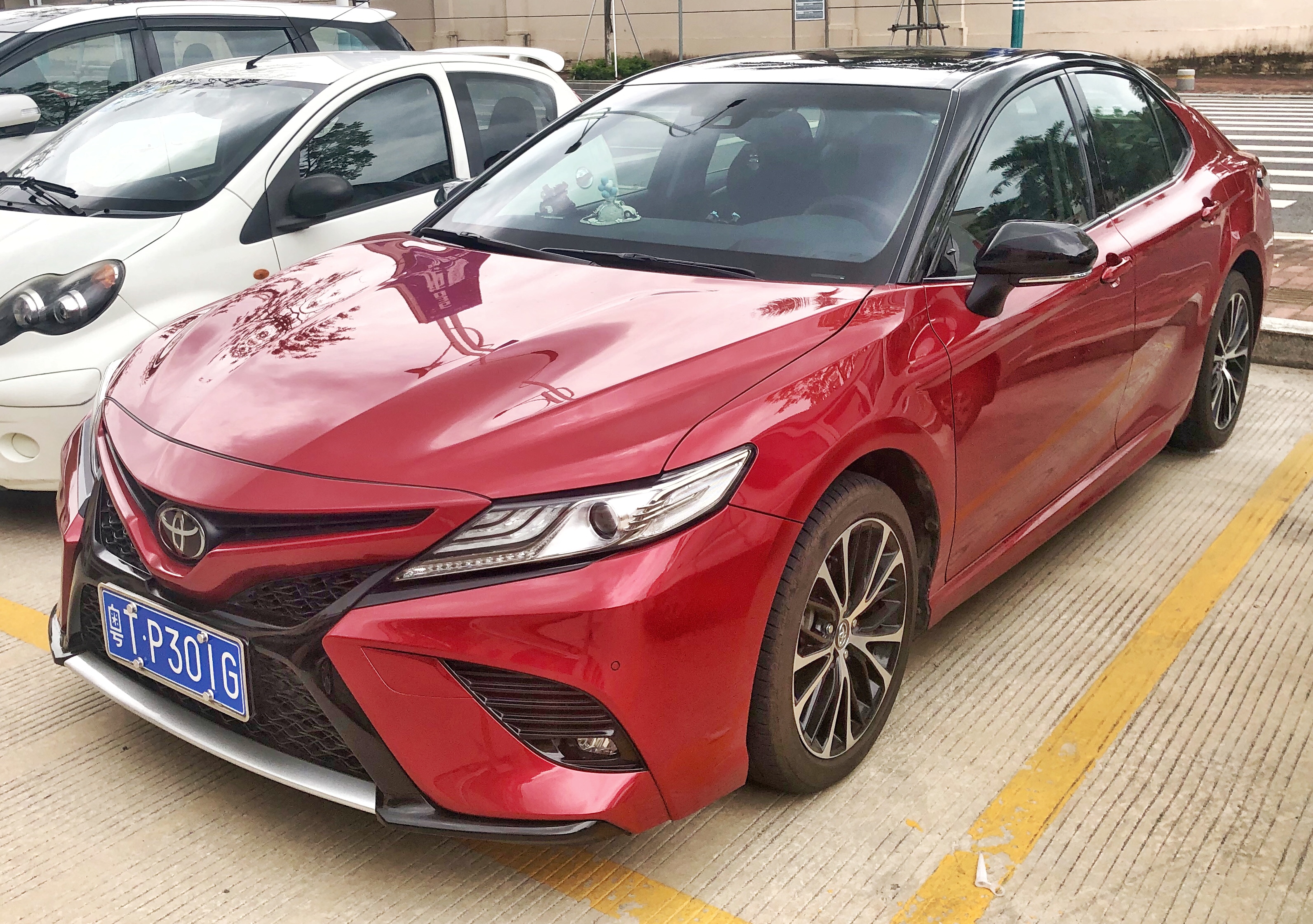
The Crown is a premium, slightly raised four-door car made by Toyota. It is designed to offer a higher seating position and a more luxurious ride than a standard sedan.
The Forester is a family SUV made by Subaru. It comes with all-wheel drive to help drive safely in snow or rain, and it has large windows that make it easy to see out of.
The Grand Highlander is a large family SUV made by Toyota with three rows of seats. It is designed to comfortably fit adults in the very back row and carry lots of luggage.
The Outlander is a small SUV made by Mitsubishi that has a tiny third row of seats for emergencies. It is available as a plug-in hybrid, meaning it can drive short distances on pure electricity before using gasoline.
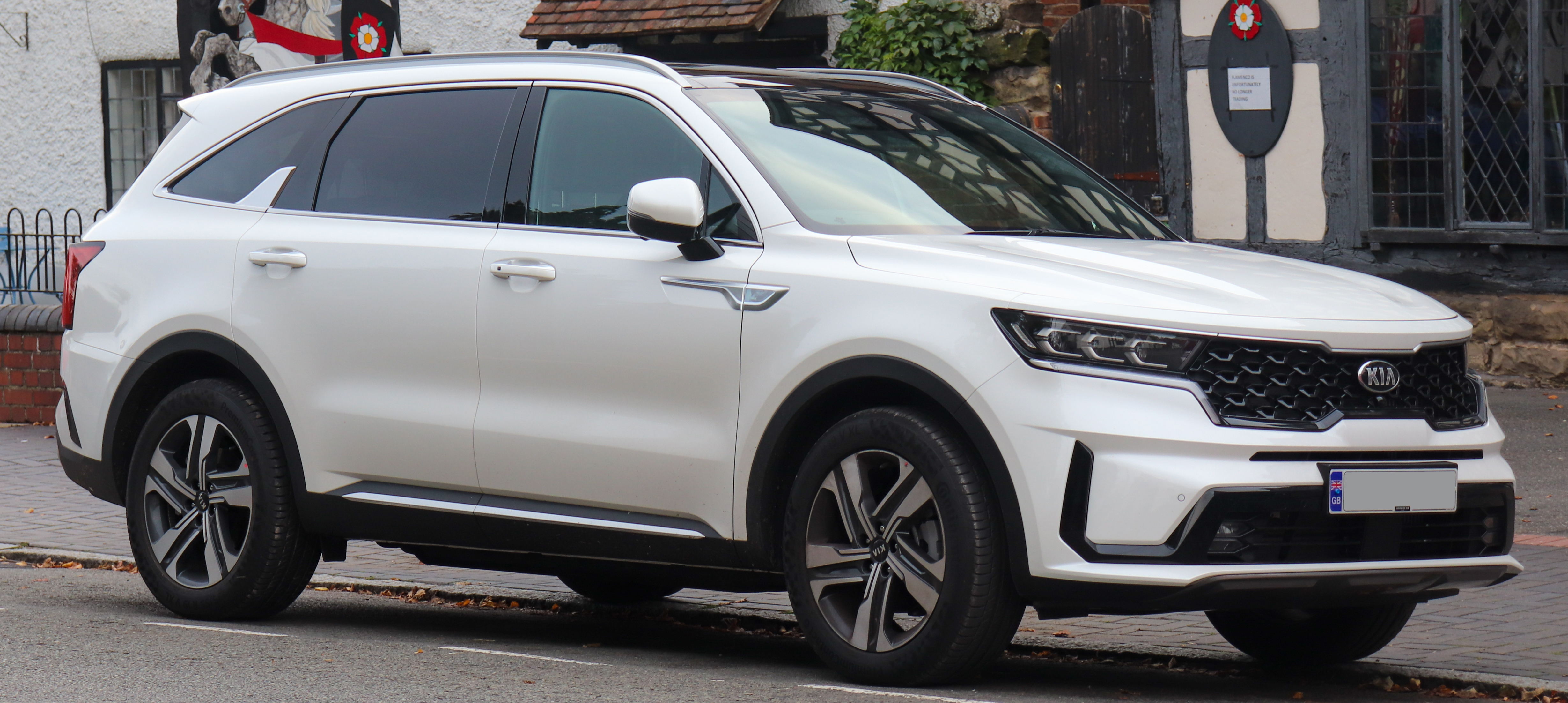
The Sorento is a mid-sized SUV made by Kia that has three rows of seats. It is slightly smaller than most other three-row SUVs, making it easier to drive and park.
The Escape is a small SUV made by Ford. It is designed for everyday driving and is available with a hybrid engine that saves gas.
LIVE
Welcome to another Autobire's Guide podcast. Today it's the Laryngitis edition.
We're going to be talking about what's wrong at Toyota, what hybrids are, why you might want one,
or why you might not want one, and some car buying recommendations and other random news.
But first, since we have a nosy audience, I think we should talk about our shameless plugs.
What's going on that you want to talk about, Travis?
It's graduation season, and so far I've been to three, but one of which was my girlfriend
with her master's. So congratulations to her. And she has an interview today for, I'm not going to
say the big girl job, but a pretty good fit. So fingers crossed.
And is it going to be the temporary one? Because this is only the first of her master's degree
ambitions. Yeah, there's already, so it's a fun choice to make. Either take the job if you get the
offer that you are looking to go to school to make sure you can get, or go to school if you
don't get the job and go from there. So it's sort of a, you know, spoil of riches in that situation.
So I'm hoping we stick with one for a while. What I'm hearing is we're scraping the barrel here
with our podcast toasts and the smart ones off doing something else.
Yeah, yeah. Well, I mean, she's too busy. I mean, that's one of those things, but
some somehow, somehow we'll make it work. Put us all in a room and there's all still only one
master's degree between all of us. I know. Hey, at least we've got some other degrees. That's a
good thing, right? We've checked some of those boxes. Some My shameless plug is I
wrote a thing. Yeah, I know you did. And it's big. And have you figured out the printing issue?
It is officially available on Kindle for three bucks. So trust me, that's where you want to go.
Or you can actually buy yourself a really thick paperback. This is a really early proof print
that ended up wrong. But you know, hey, yeah, so it's a it's a book. I wrote a thing. It has
absolutely nothing to do with cars other than three people own a car in the book. And that's
sort of just a thing that happens occasionally. Yeah, it's a sort of a thing that happens. So,
yeah, run out and buy yourself a lavender tainted house of cards if you so desire.
Now, have have you taken time off of the mountain garden to write this novel? Or is this what you
do in bed when it would be impractical to try and work around the house? I would like to say my
spare time, but maybe there's less sleep going on. You know, 11 year old hanging out another
baby on the way here real soon in like eight weeks. Mainly while she's napping. So yeah,
and that makes and apparently not doing other things because, you know,
things are wheels are coming off the wagon. I don't know which ones have left already.
Hopefully it's on run flats. Let's let's go and and what a way to build in a oh, if that doesn't
make sense, it's because I type that at three o'clock in the morning on low sleep. I'm so sorry,
we'll go ahead and make an edit. Yeah, I will just say I have no idea whether it's any good or not,
which is kind of why it's on the the self publishing platform that that Amazon provides,
because hey, you know, you can find out whether anybody likes it or not. So I don't know.
Oh, it turns out Amazon will put money behind just about anything, not Amazon exactly, but I was
asleep this week and they are funded by or supported by Jeff Bezos. I think it was Bezos
adventures, something right. And they keep mentioning it and it makes sense because that's the name you
want at the top of all your listings, but there's no and by the way, he has pledged this much money
or owns this percentage of company or whatever. So that one kind of remains to be seen. But
I'll tell you what interesting product that is that is ripe for Amazon marketplace accessories.
No, riddle me this one. Have you heard of the site Kiva?
No, it's kind of a cool microfunding site. This should be a shameless plug as well. But
if you want to help people around the world in low income countries, you can provide microlending
and microfinancing through this nonprofit called Kiva and you can lend people money because they
want to buy a cow or a sheep or something or upgrade a restaurant or whatever it is that they
want to do with the funds to try and improve their life. And there is interest theoretically that
comes back from this thing. But if my memory serves on Kiva, you don't get any of that. That is what
helps the microlending contraption actually function. So like you could stop, you know,
yeah, you lend out like 25 bucks and you get to pat yourself on the back. And the reason I'm asking
that is, is this like me saying, I helped fund that sheep somewhere for 20 bucks? Because that's,
I mean, a million bucks to Jeff Bezos is probably like five bucks to me, I guess.
I think the last number I saw said something like, I mean, it was in the billion. Now,
now I don't want to get it wrong. It was either 1.3 billion or 13 billion. It was a large number.
And that's good. And they're taking reservation, they took pre-orders, sorry,
switched around, they took reservations. Now they're taking pre-orders, but a little bit of
money at a time, right, which is a great way to get some funds coming in. But the factory is up and
running. I mean, not producing full models yet, but up and running. And I don't know, they're a
lot closer to production than some of the other vehicles out there, especially in the EV space.
You know, Tello is one that sort of seems to be a direct competitor in this small electric
truck segment, but they do not advertise brand, or you know, funding by Bezos. And they are seemingly
quite a bit farther behind, although they have four doors, not just two.
It's, I tried hunting for this and apparently we don't know how much money he actually put in there.
Right. One article here says 700 million, but Yahoo Finance says it's an undisclosed amount
in their initial series A round, undisclosed amount in the series B round, and another undisclosed
amount in the series C round, and total that's only about a billion dollars of entire funding
there. So it's not possible for him to have put in more than the entire funding. And he's
apparently a minority investor in it. Right. And so I think I was saying that, that again,
it's probably that 1.3 then, but that 1.3 billion they have gathered total, but it seems to be going
the right place. So, and you know, full disclosure and we put it in, in the comments and whatever,
but I did put a pre-order in for this thing because I find it way too fascinating not to be
interested in, but I do not think it's an incredible deal. And I think that's where people are going
to get hung up is starts at 25,000, but that doesn't include your destination. Let's call that around
2000 because that's somewhere in the average of what, what vehicles are right now. So $27,000
gets you a two-door truck that doesn't come with the radio, you know, automatic roll-up windows,
and actually the big one, the big really strange one, you want to adjust your mirrors,
you got to roll that window down old school, reach out and move it by hand. I asked, I said,
I said, is there, is there an, you know, an internal mechanism there? And, and one of the
engineers said, that is probably the one thing I would go back and change, you know, we're happy
with the product as is, and they should be, it seems like they, you know, they've crossed their
teas and dotted their eyes, but mirror adjustment, leaning over to the passenger side with the window
down to go all the way out. That's going to be real pain in the butt. I have to say though,
I think it actually compares okay-ish because it's interesting, they make this comparison to the 1985
Toyota truck, which this is about the size of, it's, it's really only a little bit bigger. Yeah. And
in today's dollars, that 1985 Toyota truck, which was about $6,600 starting, which mind you got you
less than you get in. Yeah, 100%. I would, plus we'll die in one accident, you know. I mean,
it's like those 1985 trucks were really, really super duper basic. Yeah. But apparently the,
the corollary today is about 22 to $24,000. So oddly enough, this, if you have these waxing
poetic moments about the tiny trucks of yesteryear, this kind of it. Yeah. Yeah. It's a, it's, it's a
unique product. And what I am thinking right now, because of course I have spent a little bit of time
on that configurator, it's way too fun to do. And, and it's almost as fun as doing like a,
like a Corvette configurator, because there are so many things you can click. But in theory,
you can actually afford to do it. I'm thinking I might order the blank slate, literally blank slate,
and drive that around for three months, six months, and see what it's like having the
bare bones truck. And that includes for going the radio. I, I'm actually a little sad that the
promised cargo widget is not around, but I guess you could just, I'm sure someone will have a
camper shell or something weird for it, because that would be a really practical small business
delivery vehicle, actually, because I think for a lot of customers, the range is the problem. But
for small businesses doing a lot of in town stuff, as long as your daily mileage isn't over
like 150 miles, which supposedly, again, this is a supposed thing, small fleet information from
board indicates that most fleets do not do high mileage every day. Obviously many fleets do, but
most do not supposedly, especially small businesses. So I actually could be kind of a quirky and
interesting little, a round town delivery vehicle, because the DC charging, that was a bummer, right?
Yeah. And, and, and I'm still a little bit unclear. So, and that's why I'm throwing it out there.
They originally said 120 kilowatts, but that was the number they had when they had the
NMC battery. And now they've moved to an LFP battery. And on the spec sheet, they gave us,
when they're measuring 20 to 80%, they quoted 90 kilowatts. So that could just be them being a
little bit conservative and saying, Hey, you know, that's going to be the average of our curve in that
window. But that would be unusual. So let's say, let's say around 100 kilowatts, it's definitely
lower. This is not going to be a long distance vehicle. And if I replace my model three with it,
I'm going to be moving here in the next couple months. So my daily driving circumstances may
change. But that would be one where I actually have to start thinking about charging more than I
do in my model three, which I've done over 20,000 miles a year in. So that would be just to keep
in mind. I suspect you might be right though, because they quoted 20% to 80% charge times,
not 10 to 80, like most companies do. So they shortened it and they said 30 minutes, which
is a little on the long side for a battery that's really not that big. No, and it's a 65 total,
63 usable. So they're not, they're not holding much back, which is good. And it's a bigger battery
than they started out with, which for people who were interested in the small battery, that's great
news. You just gained 55 miles of rated range for people who wanted that larger battery,
you're now down 35 miles. And I think it's a really important 35. And I'm someone who will wax
poetic about I don't need more battery than I need. And I look at this at 205 and go,
okay, I'm thinking about all my potential, you know, daily and or weekend drives, not the once
or twice a year, because you know, if I think this is a cool product, I would actually go buy it and
rent something, right? Or my girlfriend has another vehicle, and that might end up being my Model 3.
So we can figure that out. But yeah, it is a bit limiting. But they seem to say that it was going
to be an accessory. And they were trying to figure out what do we do with that. And I think in the
best way they saw what Tesla did with the Cybertruck accessory battery and went, maybe that's not the
best idea. No, it wasn't the best idea. It is it is interesting. It's about the same size battery
as the Bolt. So I would say, in a in a rational world, best case scenario, we'd be talking Bolt
like charge speeds, which I think are fine. The problem is it's truck shaped, so it's not going
to be bolt like range figures. No, it's down about 20%. I mean, the bolt comes in, you know, MPGE,
what have you, right, in your opinions on it. But 120 MPGE is what you're looking at for a Bolt,
about 100 for this slate. So yeah, they're not getting high marks on the on the efficiency. But
this is obviously not built as a superficient vehicle. It's a pretty upright boxy little truck.
But I think their components are probably competitive in terms of, you know, we're not we're
not scraping the bottom and saying, oh, this is a clean electric motor. It seems like it's a pretty
pretty well balanced, fairly efficient system. But yeah, it's they've got a ways to go. Q4 is when
they said their first livers are coming out, you know, I think you and I would project that means
December 25. They've got three in a big official delivery thing. That's what a lot of companies
have done. But but it's a really fascinating product. And I asked a lot of questions while I
was there. So that's why our video is a little bit different. I spent too much time talking while I
was there. And I asked about, you know, removing removing this system, the roof, putting on new
back end products. And the biggest question I had is if I want to turn this just like you said
into covered storage, what are my options there? Can I remove the roof put on the SUV body, you
know, window or no window, right? So it's just a squared out delivery van. But keep the divider.
Because right now it seems like that's one of the keys. If you take off, if you remove the truck
component, you lose the divider. And not that you can create your own divider. But I think that's one
of those factory things that they'd probably like to have figured out because people do not want
whatever's in the back rolling around. And that's what I wonder if that if that was what that cargo
thing that they were talking about would have been. Yeah. And again, there's pretty easy ways to
work around it. But that had to have been what they're thinking. And they're going a different
route than Rivian, right? Because they are trying to go directly to the consumer right here, right
now, get it going where Rivian said, Hey, we're building a consumer product, but we're also
leaning on this fleet product. And fleet sells in larger numbers, right? That's in general fleets
for you. Well, yeah. And and it's a very different assembly process, because you don't have nearly
as many bits of bobs need to go in. Anyway, I don't have a lot of fun, but but it is not a
perfect way to go product. And actually, my last little plug, so many people, and I and I love
this so many people like this seems like the framework of automotive. And for folks who don't
know framework builds laptops, it's what I am unsponsored. But you know, I think about it.
It's a modular laptop. And it's one that is, you know, you can replace this component, you can
swap this in and out, it's really easy to do. But it's more expensive than every other laptop with
with the same internals, because it's built in not to the same scale. And because it has to
consider all these other things that are not integrated. But that's exactly it. This is a
modular truck in a way that we don't normally see, you know, Jeep can put a bunch of stuff on it,
but it's not quite the same. Yeah, it's a cool product, Alex. You would have you would have spent
as much time nerding out with it as I did. I'm curious to see if there is a future for this in
like an urban short term rental fleet, like, you know, you're moving apartments in San Francisco,
or LA, or Dallas, or wherever, and you're moving one place to the other in town, you don't have
a truck like this is a reasonably space efficient little truck that you could get into those,
you know, lower apartment garages, situations like that where maybe you're trying to move
bulky items because you could you could put four by things more or less in there. I mean,
I think I hang out the back because it's only a five bed, but they do have the same sort of
bed system as Maverick does. So you can put the two by six in there, raise it just above the
wheel wells, and then have the same, you know, half fold tailgate layout. Yeah. So that with this
sort of semi modifiable platform, I could see a world where maybe a company out
there creates some sort of weird body extension to make it an eight foot bed. It's not completely
unrealistic, right? No, I mean, strange, but not impossible. Yeah. And I got really excited. And
this is again, this is where I have to make sure that I stay professional, but they had a go fast
camper setup exactly like you find in the Rivians, where here's your topper, and then here's your
tent on top. And I went, Oh, my God, you're telling me that limited range understood, but you can
take this little pickup that looks like it's, you know, the 1989 Nissan hardbody I learned to drive in,
and I can put my camper on it. And it's just me and well, I don't have a dog, me and my cat,
and we're going out to the woods, not that far into the woods, but God, I can do anything with
this little truck, except two wheel drive only rear wheel drive. And yeah, I don't know what's
the bigger, the bigger problem for the consumer. Is it that it's two doors? Is it that it's a bit
too expensive? Is it that it's missing creature comforts? Or is it that it's only rear wheel drive?
Yeah, or I'm going to go with probably the two door part, but we must move on because I can't
imagine that many people are actually going to be buying a slate. This moves us along to our main
topic or one of our main topics today, which was diagnosis Toyota. What is wrong with Toyota?
Now, I preface this by saying we got a number of questions actually, the email sort of about this,
like why were we picking on Honda? So let's pick on the biggest car company, or one of the biggest
car companies here in the world, which is Toyota, what are they doing right? What are they doing
wrong? And the reason I picked Toyota first here is because their CEO has admitted, he says that
their sprawling lineup is out of control. So what should they get rid of in the US? What's Toyota
doing right and what are they doing wrong? They've got such a big problem and that they're too big
and they create too many of their own problems. Anything from a GR Corolla to what should be the
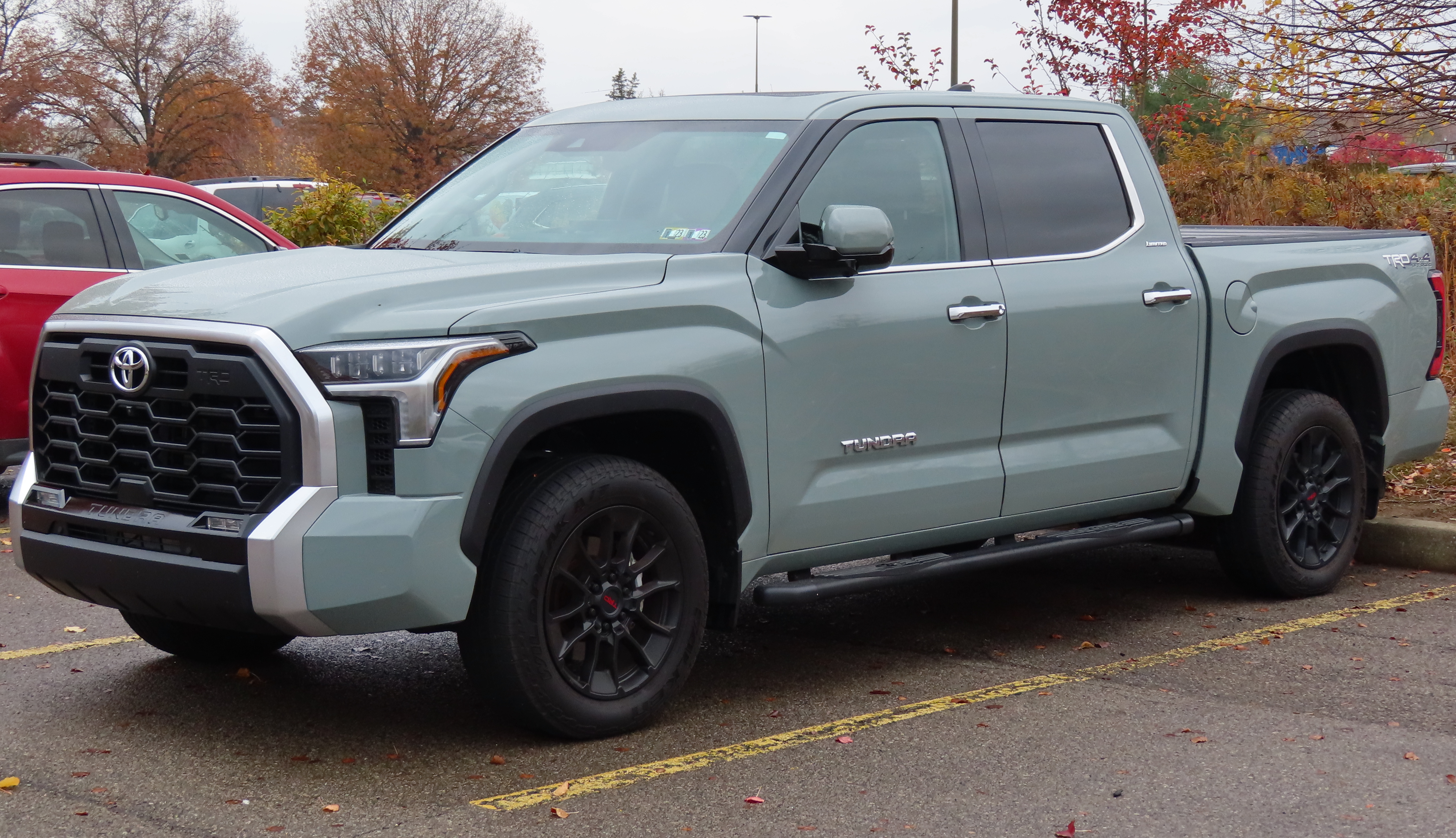
upcoming MR2 and then Tundras and Sequoias and everything in between, you do at some point,
I think have to start shaving it down because if you're a Toyota dealer, how much room do you have
to make on your lot to even just have any representation of each of these models available
for consumers? That is a little bit of a problem if you want especially some of these low selling
models. And let me preface this by saying these are the models that sold under 20,000 units this
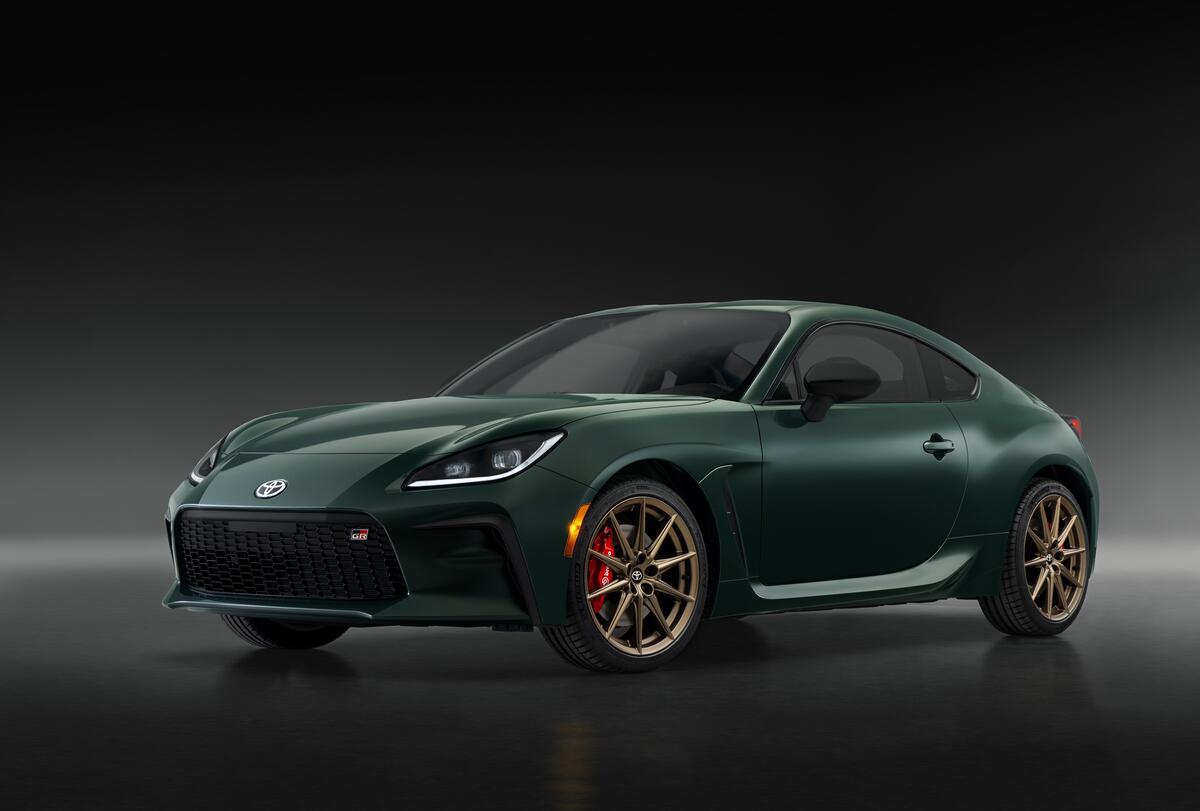
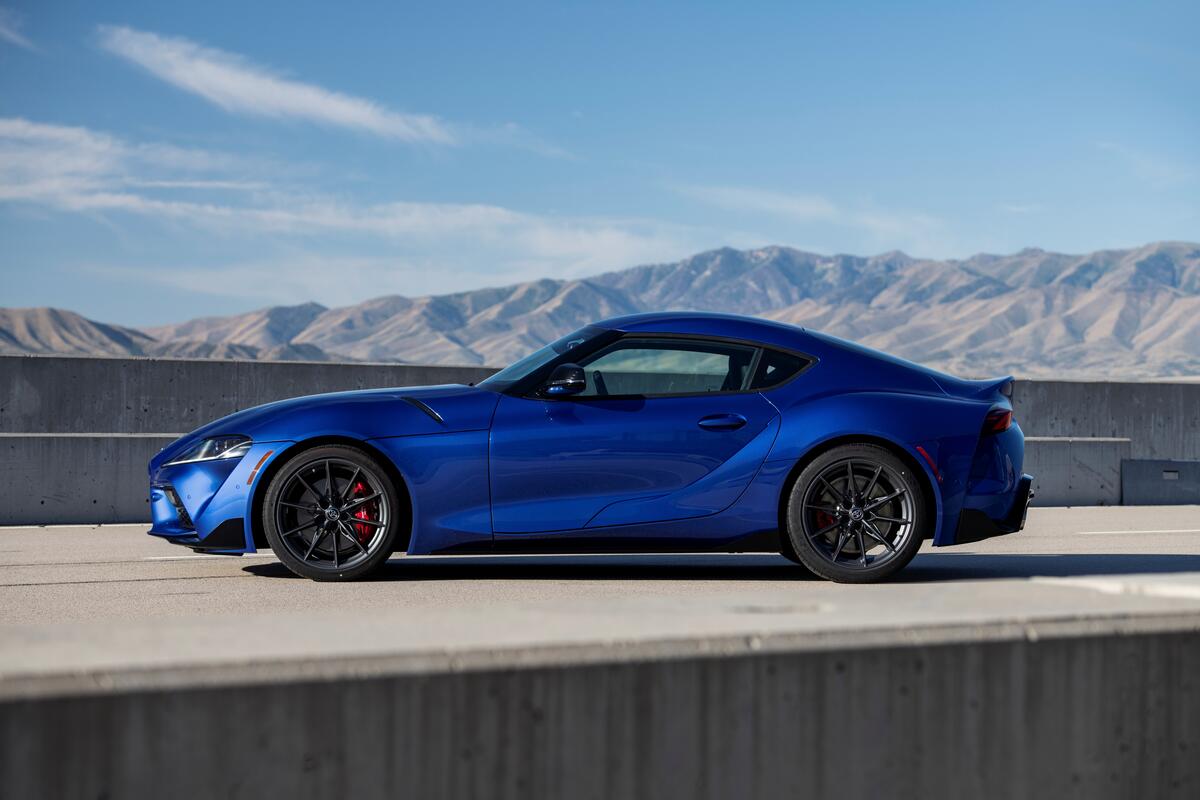
year and some of these are way, way under 20,000, mind you. Supra, very slow seller, GR86, very
slow seller, the Crown lineup, very slow seller as well. Mirai obviously that's never tended to be a
big seller. In the dozens. But the Lexus RC, LS, LC, all very slow sellers always have been really.
The BZ, understandable, Venza is still kicking around. I was surprised they actually sold some
Venzas last year and that's been dead for a while. So they've been hanging out a lot for a real long
time. The Crown, Crown, Sydney is going nowhere quickly. But the Lexus, UZ, RZ, I'm actually,
I think that was supposed to be UX, UX, RZ, LX, all also under 20,000 units a year. Sequoia is only
26,000 units and Prius just 44. Well, I think the first easy one to cut is probably going to be that
Prius and that's because they have other hybrid options. You get the Corolla between the Corolla
and the Camry. The only thing they're missing, I guess, if you wanted to try and cover your bases
is do a Corolla hatchback in the hybrid and then boom, problem solved, Prius can go away
as much as I hate to see it because it's the one who brought us the hybrid in the first place. So I
would hate to see it go but understand if they did. The Mirai, I still think they should keep that one
going just as a proof of concept. I mean, it's not one that was ever going to have a financial
return for them. It's hard for them not to keep it around, I think, in a way. It's hedging your
bets, right? Because especially in this day and age, what fuels the vehicle is still not decided
over the next 10 years and 20 years and beyond and they've already got a system running and they're
doing hydrogen stuff in the larger heavy duty segments. So yeah, why not keep it going? But
I also think the BZ is working its way towards being a little bit more mainstream. I'm not
saying it's there right now, but there was a big upgrade this last year. So maybe that starts to
catch on. I think the RZ, though, could probably drop away. I think the logic behind, I guess,
keeping something like BZ around is because the parts are so common with the other ones. So I
think it's difficult to take a look at BZ in a vacuum because it's related to CHR, it's related
to the Woodland, the Subaru collection, the new Highlander, the Lexus EVs. They're all used in
the same battery components and most of them are using the same motors, et cetera, and a lot of the
same interior parts. So that probably makes more sense to be honest than GR86 and Supra, in a way.
And I think, obviously, GR Corolla was not on this list. So that is probably the performance
model that stays intact. I think it's just fine numbers for GR Corolla. I think it's just wrapped
into Corolla. Okay. And which obviously doesn't share that many components with when you get to
the heart of the thing, but building it is less unique than GR86 for sure. But I think that one
stays and let's bring the MR2 in. But if we get rid of Supra in GR86, which Supra is already gone,
that probably solves that issue. And then obviously the LS is also gone. So they are,
by default, with all some of this down. Yeah, some of this really is collected. But I think
part of this also goes to the question of in a world where somehow or another Toyota has turned
into like 1990s General Motors with this like sprawling portfolio and so many body on frame SUVs,
do we really need Land Cruiser and Lexus GX and LX and Forerunner and Sequoia and
there are a lot of them on that same platform. Or does it make more sense to just do like,
we're just going to do Forerunner and we're going to do a luxury Forerunner and a not luxury Forerunner
that's kind of the part of that I'm a little bit surprised by because that's
one way to think of how Jeep has tackled this conundrum in a way. Mind you, Jeep has a lot of models.
But you know, historically, Grand Cherokee has spanned a pretty broad range of prices. And we
don't quite see that in some of Toyota's vehicles. They want to separate them and segment them. So
you know, Land Cruiser is supposed to be more premium than Forerunner, even though they're very
close to related. Right. I'll admit that I always had a bit of a hard time understanding the having
in the Forerunner line, an SR5 and a Limited because the Limited doesn't feel like it's nice
enough to be called the nice Forerunner. You know what I mean? Like, let's drop the Limited trim
and just call it a full, you know, put that into the Land Cruiser. I almost wonder though,
if this is like, you know, 90s GM, you know what 90s GM had is multiple brands. And obviously,
we lost some of those brands. Is there a weird world where they should bring back Scion or have
another spin off brand? Or is it, hey, let's just let's just cut this thing down and stick to some
of the basics. So, so we've got the Corolla, the Camry, the RAV4, the Forerunner. We can drop the
Land Cruiser all together, Tacoma and Tundra and Sienna and say, here we go. Here's our lineup. And
if you want a Crown or Crown Signia, that's now a Lexus. And it's one model and it's the Lexus Signia,
something like that. I think that probably is the best fit. Or you just spin off into back into Scion
and go, that's where a GR86 lives. Because obviously it's a joint thing with Subaru. Is that where the
Corolla enters. And so Corolla disappears from Toyota all together. It's now Camry and up.
Do you put a Forerunner in the Scion and you leave the Land Cruiser over at Toyota? I don't know.
Yeah, I would go another brand is probably not the answer. That's probably what 90s, well, 90s and
before told us about the American car companies, too many brands. But I think that the Jeep parallel
to some extent forward with like Expedition and some of their vehicles, they've proved that you
can have, especially Grand Cherokee, I think is probably the perfect example of this. They've
proved that you can have this model that starts fairly basic in latitude trim and goes up to the
summit at $70,000, $80,000. And somehow that $70,000 customer doesn't feel cheated. And the other
person still feels okay. In my mind, I think it's that the Land Cruiser and like Forerunner,
especially are too close together. Land Cruiser should have had a front locker. It should have
had doors that came off just to make it unique and different and whatever. Because it's not the real
quote unquote Land Cruiser anyway. And to be perfectly honest, there are some people in the
US like my next door neighbor who has Land Cruiser occupies a special place in his mind and heart
that I think is a little bit unrealistic and rose colored, mind you. But I think Forerunner is
the elephant in the room. So what would seemingly make more sense is just ditch Land Cruiser and
give us more Forerunner models. I mean, just like keep cranking out different Forerunners.
And that's where I will say that if you look at the Jeep parallel, the one thing that Jeep has done
successfully in some other car companies do well now and then is that the interior and the Grand
Cherokee changes substantially between the rubbery base model and the top end one. I mean,
you literally get these weird rubbery dashboard pit bits in the cheap one and you get them all
slathered in leather and snazzier materials and real wood in the top end one. So that's,
I mean, that's the easy way to solve the top end Forerunner is, you know, swap in some better
panels. It also has a high end look on the outside. So I think that's one of the things that carries
it to the top because I don't think the Forerunner has a high end exterior look that you would pay
big dollars for. I think the Land Cruiser gets closer. Maybe that's just my eye. But if you buy a
base model Grand Cherokee, I think there probably is an assumption that it's more expensive than it
is because it does sort of have that luxury look on the outside. So as you build up the interior,
it's more believable. If you had a highly stitched, ultra-screened, you know, feature-laden Forerunner,
I would look on the outside and go, Oh, but it's still just a Forerunner.
But is that because Jeep has been doing this since the nineties? And so now it's in our brains that
Grand Cherokee spans this distance. And it's simply because Toyota hasn't tried.
Maybe, but I do feel like the Land Cruiser, just the bodywork, it feels, it feels more upscale,
it feels more mature. So, I mean, obviously the pricing says it, but if you had a
kitted out Land Cruiser and a kitted out Forerunner that, and I mean like luxury kit,
that ends up being the same price, if you ask you which one's more expensive, I would go Land
Cruiser just because of the way it looks. So can you fetch the same price tag for that
equivalent Forerunner, even if everything's the same, I think.
You could new bumper, grille, new lights.
Maybe.
I just, in my mind, the cost of having a separate Land Cruiser
is maybe part of why they can't justify giving us a V6 or a twin turbo V6 Forerunner,
or a V8 Forerunner, etc. Because there's so much money involved in designing this other
Land Cruiser for us here in the US. Yes, it existed for other world markets anyway,
but they still had to homologate it for the US, which is millions and millions of dollars.
So what else could they have done to Forerunner with that cash in a way,
and would that have been a better use? I don't, that's, that's kind of where my brain is going
with Toad, because obviously profit wise, things are fantastic and volume wise, they're,
they're going gangbusters. But there are these, these edge cases where you can see that they're
already kind of cutting because their CEO has said that things are out of control. So the first
hit, in addition to those Lexus models we already mentioned, was that the plug-in hybrid TX is dead,
and that's, that I think is so sad because that is, I think, my favorite Toyota Lexus hybrid system
currently on sale. But I do think that in the question of what do you cut from Toyota, it's
hard to do because they've done such an incredible job of making all of these models, like the
iterations of another. We can say the GR86 is like the farthest away, right? It has the least
shared components, but it's shared with another brand and the BZ is kind of the same way. So none
of these things are costing them a whole bunch of money on their own, and they're just saying,
hey, let's see how it goes. Like the closest would be that GR Corolla. But everything else is shared
with multiple models or between Toyota and Lexus. So if you start shaving it down, what percentage
of return are you actually shaving down? I think they've built this thing to last if they want to
just keep it all going. Sure, you can take away from it, but I almost argue you could add to it.
You might need another brand to start differentiating something. I mean, I could tell you what I would
cut if I were waving the magic wand over at Toyota. I would kill all future plans for a Supra
and a GR86. I just don't think those make sense for them cash wise. The crown also just needs to die.
There's no seeming reason for it to exist other than the Camry. The Cygnia probably too, or just
call it a Camry wagon. Let's just be honest with ourselves because that's basically what it is.
It's a luxury Camry wagon. Cygnia's problem is that it's a little on the pricey side. I'd kill
a Laughland cruiser and either stick with GX because you can make more money on the Lexus model
with the bells and the whistles and whatever else. I also think that their hybrids are doing
really well for them and they should continue doubling down on them. But I think that their
focus on all these various different hybrid drive trains are wackadoodle. So kill hybrid max in
every front wheel drive thing that it exists in the TX hybrid max shouldn't exist. Grand
Highlander hybrid max, etc. It's not a great hybrid system. It's not overly smooth. It's not
powerful enough to compensate for the craziness. It's pretty heavy. That TX plug-in hybrid system
is actually the one I would probably go with. The RAV4 plug-in hybrid system is also a good
solution. Whether people plug it in or not, you get really fantastic performance and it's very smooth.
And the TX, but the TX is that plug-in hybrid powertrain is not used all across the lineup,
which is also why it's an easy way to cut it down, which is disappointing because again,
that's our favorite TX powertrain, I think. I know it's mine. It was the last V6 powered plug-in
for that or yeah, last V6 powered traditional hybrid for them in the US. Yeah, so I understand,
you look at the numbers, if it's not there, you got to cut it. But by cutting it, that means
they're not having to worry about that powertrain configuration anywhere else. So that's why it
makes sense to me, even if it's a bit disappointing. Prius also seems like an odd duck to me. I think
Prius and Corolla both, one of them should just go. Just pick one, kill off the other.
Because why is Prius here when we have a Corolla hybrid? Why is Prius here if it's trying to be
sporty and trying to be this and trying to be that, but yet Camry is just a better deal all the way
around. That actually is like, that's one of the things that surprised me when we had the Camry hybrid
was why get the Prius? You get a tiny bit of extra storage space, but you don't really get any extra
performance. You barely get a fuel economy improvement that's not going to make a lot of
difference to you on a yearly fuel consumption cost basis. And it doesn't even cost that much more.
Camry is just so good and so well priced and so much more comfortable, etc. Like why does Prius
there? But if you killed off Corolla, the regular Corolla sedan and Prius just became a Corolla,
that actually would be fine with me because it's more practical than a Corolla. I guess the question
would be, can it be as cheap or something? Yeah. Or just the regular Corolla and then you have a more
traditional hat shaped version. I don't know, sometime later. Like you could stick a regular
gasoline engine in the Prius body. It would work in there so you could have your discount Corolla
if you needed one. But I don't even think you need one. And you could also just keep the Corolla
hatchback and make that the new discount Corolla because obviously that doesn't have the hybrid
right now. I think where they lost it on the Prius. I think they need the cheap Corolla because the
hybrid sale split on Corolla is certainly not as aggressive as the others. That's the Camry.
Yeah. More cost conscious. I think where they lost in the Prius is that it's not nearly as practical
as it used to be because it used to be the taxi for every reason in the book that it makes an
incredible taxi. And now I would argue it does not make an incredible taxi. You're going to be
wedging taller people there in the back. There is not nearly as much room for, you know, drives to
and from the airport or a couple people in any other belongings. It's fine, I think, still for
daily use for most people. But again, they sold so many to these fleets where it fit a cause and
now it just doesn't. So I think that's probably where they went a little bit wrong. And everything
went sideways after they dropped the Prius V. I'm going to stand by that one. Yeah. This kind of
goes with Harsh's email to us here, which was asking us to recommend a hybrid compact midsize
sedan or SUV. They're looking for ride comfort, easy to drive, good fuel economy, comfortable seats,
outward visibility, reliable. And it seems like they specifically want something made in Japan.
So that would be kind of like you're looking at RAV4 or RAV4 there.
Yeah. I mean, besides the made in Japan, the first thing I thought of is Forester Hybrid,
because that thing is so comfortable. And they said specifically on bad roads. And that is where
that is built for. And it's better in town than it is on the highway, you know, comparative to
something like the RAV4. But, but yeah, RAV4 or Forester. And, you know, they said, they said
they'd be open to a sedan. But at that point, you know, the SUVs, the crossovers do ride a little
bit nicer. They've got a little more, a little more room for suspension travel. I will say though,
Camry, Camry makes a good argument for itself over RAV4, if you don't need the cargo area,
because it is a bit more comfortable. But the main thing is it's a lot cheaper. That's the big,
big deal. Handle's a little bit better. The tech is a little bit older, not a lot older,
mind you, but basically the same hybrid system. Just sort of look at reasonable amount cheaper.
And because it seems to be less desirable currently, still a very high volume car, but
customers aren't clamoring over themselves to get one like they currently still are for the RAV4.
Better discounts and financing rates. Yeah, kind of hard to go wrong there. Or,
I mean, again, depending on what the budget looks like, the new ES, which is also just the Camry
and Lexus form, that one is quite comfortable. So something to do there as well. Here's something
I will say. My personal problem with Toyota's lineup at the moment is that there are a lot
of vehicles in their lineup, but the core is really Grand Highlander, Camry RAV4, Corolla, etc.
And those do things really well if you fit in them and they fit your needs, but they don't
simply scale those up and down. Let's put it that way. Yeah, so from Corolla to Camry, it's not just
a slightly larger version, right? There's a little more differentiation. RAV4 is not a baby Grand
Highlander. And Corolla is getting really old. Like I love Camry. I think Camry is really well done,
even though it is actually quite old. They just reskinned it a bunch of times, but
size wise, looks wise, it's fine. Corolla is feeling really old now. Yeah, my girlfriend's got a 22
or 23 Corolla and it's the same as the current Corolla and especially compared to the other
Toyota models. Yeah, that's starting to get a little bit long in tooth. Yeah, and has been for
quite some time. And the other thing that strikes me is now that Highlander is going away,
well becoming an EV, which is going away for this shopper because the Twanes do not meet, right?
You step up really far from RAV4 to Grand Highlander. There's nothing acceptable in the middle.
And that's what I think I would love to see Toyota do a better job of, is filling the middle in,
not with these weird things that they've tried, like bringing a crown. Why, let's be honest,
why the hell is there? I cannot tell you why the crown was here. Yeah, whose idea was this? I don't know.
Yeah. The concept seems rational if you think that crown is full-sized, which is what they
initially said it would be. But when it arrived, you're like, well, hang it, it's the same size or
smaller than a Camry, depending on how you want to measure it out. So what's the point? And that's
where I would say, if they could do something like bring us a Lexus LS-sized, actual full-sized sedan
that had a Camry drivetrain and was reliable and gave you 40 miles per gallon, I think there'd
be a solid market for that. Chrysler proved, you know, before they killed the good game they had
going on, that people wanted big sedans. They bought a lot of big square sedans that looked good.
Yeah, some of it was the promise of V8s, but you know, they sold a lot of V6s too. And I would
assume there'd be a solid market for just a big, comfy, actual practical sedan, which they could
do. And also basically a Grand Rav4, like just stretch, take that exact same thing, add cementes,
bigger backseat. So I have my question on the Grand Rav4, because right now, technically between
like the sizes, you'd go Rav4, Crown Signia and Grand Highlander, but Crown Signia has priced
itself out of that actual, you know, direct. Well, and importantly, Crown Signia is not
bigger than Rav4 inside. That's the core problem. In some dimensions, it's actually smaller. So you
haven't actually filled the gap. You've just stuck another competitor on top of a less expensive,
more practical competitor. So that's why that's how I see them. I see Rav4 and Crown Signia stacked
vertically on one another, except that Rav4 is better in just about every way.
So do you turn the Rav4, let's call it, we'll just call it the Grand, the Grand 4, the Grand Rav,
something like that, right? Do you turn it into something that is just larger cargo volume and
passenger space, or do you try to give it a, you know, emergency third row type situation and
further distinguish it? I mean, it doesn't quite reach what Highlander was because Highlander had
a smaller back row, but it was not emergency. We're talking, I'm thinking something like an
Outlander, right? Emergency third row, Sorento, something like that. Do you try to go that direction
or just say it's a larger cargo space for your stuff? Well, we have to un-pick that one a little
bit because Sorento's third row and Highlander's third row are almost exactly the same size,
which is interesting. So, because Sorento is Highlander sized on the inside, slightly smaller
than Highlander on the outside because they just really pushed in the overhangs, so very
narrow overhangs on front and rear. And I think that's going to be the question here is if Highlander
goes away when sales actually finally cease, what do we see customers doing that would have
shop for a Highlander? Do they go to Grand Highlander or is it too big or do they go to Sorento or
something similar? There's not a lot similar because Outlander is too small for the third row. I love
an emergency third row, but I think American sales have shown with that, with the rogue third row,
the former RevForce third row, because it used to have a third row available. The take rate was
just too low, I think for that kind of a thing. It's cool. I like that exists, but I don't think
we need that many of them. I think that will be the question as part of these customers go.
I have a good friend actually that recently, they had a RevForce, they wanted something with a third
row because now they've got three grandchildren and a fourth is on the way. So they're like,
oh, sometimes we're going to end up with the grandkids. Some of them will be in booster seats so
they can go in a small third row. We need something with a third row. And they looked at a Highlander,
but the Highlander hybrid was just too old and now it's going away. So they were like,
it just feels too, too last generation compared to the others.
Right, it could work, but not appealing.
Right. And they were like, the Grand Highlander is too big, doesn't fit in the garage.
RevForce is too small. They didn't want another RevForce. They kept the RevForce and they bought a Serento.
Okay. So I think what we are running into though, is if you do a Grand Rev,
then I think you have oversaturated the space between a Corolla Cross,
RevFor, Grand Rev, Grand Highlander. So in that case, should the RevFor kind of go the way of what
the Jeep Cherokee is doing and just get bigger and say, hey, we're abandoning this,
what, does it still technically come in as a compact crossover? Is that? So just say,
hey, this is our mid-sized crossover and it's on the small size for mid-size and it doesn't have a
third row. It's a little bit more expensive than the outgoing RevForce, but if it's more of your stuff
and just sort of say, hey, we're going to separate from the CRVs and the Foresters,
we're going a little bit bigger. Is that the answer? Yeah, I would assume that maybe the
lost generation of the L's is what we would need. Remember back in the before times where there were
weirdly stretched versions of things, there are still occasionally in this world,
mostly big SUVs where they get bigger and bigger. But I think actually a Rev4L would be a great idea.
Just add six inches to the thing. Don't make it look any different up front or in the back or
anything. Just have a big one and a short one. Just like, which ones do you want? Do you want the
big one, the long one? And kind of same thing with Camry. Just make a big one and a long one and
call that good. I think it only works in this mid-segment. Like we don't need a Grand Highlander L,
I don't assume, or a Corolla L, but in this mid-size group, I think that is a way to maybe
bridge some of these things and then you just ditch the crown and the Cygnia and ditch all
this other fluff that costs more money. Because even though there is obviously a lot of cost
in recrash certifying a lengthened unibody, there is technically less than an entirely new design.
And certainly there are some savings, some non-zero savings in all the interior components that are
identical. The entire stamping up front would be the same. Rear doors are all that need to change.
The hatch and everything in the back could be the same. I just think it's kind of sad that we
don't have that anymore. But this does bring us along to the hybrids where we've had a lot of
questions on hybrids and why are they, what are they? What's your sort of 30,000 foot overview of
where they're good, why people should not be worried about them and what they're for?
So I, and I do get this a lot, I'm around a lot of folks where I live and in my community who are
truck people and they are old school truck people. And so these newfangled, which is not their words,
but I'm going to lean into it, these newfangled technologies, I get made fun of them for my Tesla
and what about these hybrids? They don't all sound like that. But I'm telling them that the only
reason I would tell you to not bother with the hybrid, the reason it would not make any sense to
you is if all you do is highway driving. And that's, that's like a key thing to understand is that a
hybrid is all about utilizing energy gained while speedy, while slowing down, used to help you speed
up. And if you were at constant rate travel, then that's not going to be a huge benefit. Now,
obviously, they're still good on the highway. You just don't get the same enormous benefit. And that's
why that's why that city number and whether combined number is so much higher than gasoline
counterparts because they get to recoup the energy. And I said, by the way, you know, they go,
wow, that's electric. And I go, it's, it's not electric in the current, you know, concept of what
an electric vehicle is. And I'll even tell them, Hey, if you do a ton of city driving, that's when
you should look at a plug in hybrid, because that's just going to save you money and have none of the
restrictions that you consider of an EV about where I can go and when I can do it. So if you drive
around town a lot, hybrid, more power, quicker off the line in most cases, yes, it costs more. But
all the numbers say you're going to save that money in a couple of years and chances are you're
going to keep that vehicle for a couple of years. And then it's just free money and I think a better
driving experience. Yeah, some of this is really going to depend on, as you said, exactly what
your driving cycle is, but, but also on the comparison. So it is a little tricky to say they
don't necessarily save you money on the highway because that depends on the hybrid system.
If you're looking at, at a Honda Accord, for instance, hybrid versus the base engine on the
highway, especially 75, 80 miles an hour, like people in Texas will be driving, the hybrid system
is not going to be saving you an enormous amount because of the design of that hybrid system.
But going from a Nissan Altima to a Camry hybrid, that will still save you a reasonable amount on
the highway because of the design of those hybrid systems. So it's a big, it depends. But it is
worth noting that obviously stop and go slow and go driving. That's where you're going to see the
biggest benefit. So in your typical commuting environment, quote unquote, that's where you're
going to see the big change. And that mainly has to do with how hybrids actually save fuel, which
let's let's unpack here because I think this is a little bit poorly understood. Let's put that way.
The single biggest factor in modern hybrids, this is not all hybrids, mind you, but most modern
hybrids, the single biggest factor of why they get better fuel economy is not the battery,
it's not the regenerative braking, it's the combustion cycle. They operate on the more
efficient Atkinson cycle. And that's, that's something that again is also confusing because
you can look at, you look at a product, I mean, I was going to say Camry, for example, but that
doesn't still apply. But if it says it runs on a four cylinder, two and a half liter engine
in the internal combustion option, and the hybrid also has a two and a half liter internal
combustion, you go, it's the same engine. It might have a lot of the same components, but it's
running on a different cycle and that is making the world of difference. And here's, here's the
key difference. So in a normal auto cycle engine, you have a compression and a power stroke that are
roughly the same effectively. So there's no way to change that, that mechanical difference. So
effectively same amount of stroke there, but it would be more efficient if your power stroke
in the engine was longer than the compression stroke, because less energy is wasted in the
compression. The way you can do this in a modern engine easily rather than the original Atkinson
cycle engines, which had some very eccentric mechanical stuff. Now that we have variable
valve timing and variable valve lift and duration, you just leave the intake valve open. So that's
what happens in a Prius, for instance, or Camry or a RAV4 is that when, when the compression stroke
begins, the intake valve is still open. So it actually is pushing air back out the valve. And
that has the effect of changing that relationship between the compression and the power stroke.
That results in a, in about 30 to 45% of most hybrids fuel economy improvement over the non-hybrid
in that same vehicle design is generally just changing the power stroke, the power stroke
and compression stroke relationship there. The trick is the Atkinson cycle results in less power
and a whole lot less torque. Right. And that's, that's, that's the first question that, you know,
probably not all of our listeners, but some people are going to say, well, then why don't they just
do that for every engine? The answer is you wouldn't want that engine if it was just being powered
in this way. But in some manufacturers with something, and some manufacturers do have modes
where their engines can enter and exit a pseudo Atkinson cycle, very similar to this, like the,
the Lexus five liter V8 was able to do that, for instance. Right. And that's, that's going to be
in the fuel saving measures, but the fuel saving measures mean you're still down on power. Right.
And so your everyday driving, that's not what you want. So how can, so if you operate this way
all the time, how do you fill in the gaps for where you do want some of that performance?
And so that's, that's where electric motors come in, because electric motors give you
a lot of torque. So if you have an electric motor on board and an Atkinson cycle engine,
you can combine the two and make up for that lost torque. And then everything else just sort of gets
added on to this. It's a piling on effect because the core savings here is actually the mechanical
savings, combustion cycle savings with the Atkinson engine, then the ability to use that across a
broad variety of operational modes is, is thereby the motor. And now that you have a motor, well,
you might as well do regenerative braking. So in the city cycle, this can result in a 20 to 40%
improvement in stop and go traffic on the open highway though, it's zero. In fact, in the EPA
highway cycle, it's basically zero. Regen braking is not doing you much good at all.
But because you also have that motor there, you can then expand the start stop window. Why are you
running your engine at the stoplight when you can have an electric air conditioning compressor?
Well, you can have an electric air conditioning compressor because you got the big battery
for the motor and the regen braking. And then after that, it's kind of diminishing returns,
arrow tweaks, low rolling resistance tires, the lack of electrical pumps and belts and things
like that is actually very small in hybrids. Plus changes in the transmission, right? I mean,
one of the things people hate, hate, hate is a CVT because it's a rubber band. It's a whatever.
Yeah, but we're, you know, again, the CVT is one of the things that that manufacturers call it
these days, which is probably not actually great for their marketing. Yeah, I've always wondered
why they insist on that. It seems really bad. Is it is a new name too scary? I don't know. I'll
tell you what I told the folks at Slate. I find so many things interesting in the automotive world,
but I don't have to worry about it. I just get to talk about it. So I can't tell you what is or
isn't fast, but, but it still gives you ability. I think I had the, I think they had the ability
to try, but they didn't take the off ramp because they, they really focused heavily on that hybrid
synergy drive branding. And if you noticed, it's, it's not really there anymore.
Right. We also get rid of prime, you know, for their plug-ins. So we're, yeah, I mean, they're
trying new stuff out and, and goal zero has, or was it, uh, no, it's not goal zero. That's a battery
brand. They had, um, beyond zero. Yeah. And that's, that's, that's sort of disappeared a little bit.
You know, we're not seeing as much of that. God's because all of their hybrids are fucking literally
before zero guys. Yeah. Oh my God. Like you're sticking a beyond zero logo on something that
is literally before you got to zero. Right. And, and then you gotta drive it to get to zero.
I got to be careful with this, but it's also like organizations saying we're anti-racist and I go,
Oh boy, like, are you trying to do a good thing? Totally. But you got to know what these like words
and concepts mean before you start throwing them out there. So I will backtrack from that. It's
one of those things though that, that because you have this new type of power output, then you're
able to change the transmission design because you don't need what you conventionally needed. You
don't need as much in the RPM range. You, you don't need to drop gears in the same way because you
have more torque that you can pull out of, you know, out of thin air in a sense. And so it's a
comprehensive system that is enabled by each of these individual components, which is why you see,
I'm going to make up a number, but while you'll see 28 miles per gallon in the city on an internal
combustion model and then 40 miles per gallon in the city on the hybrid, because these things
stack up to the nth degree. And it's really that you get to enjoy them because people hate
start, stop. Why? Because it's weird. It's clunky. It's, it's intrusive into the driving experience.
And because the air conditioning turns off if you're in the south.
Right. And it doesn't, and the start, stop doesn't last for that long if you are trying to crank
the AC and it will give you some because that 12 volt battery does not want to operate that,
that system for very long. And so now it's, now it's on and off and on and off. You go,
why did I even bother doing it? I get it. But that's why that's, that's one of the, the reasons I like
hybrid driving better than a lot of internal combustion, just because it feels like a luxury
driving experience in how smooth and quiet and, you know, efficient is nice, but, but
work on demand, that's not sort of thing. And we should talk about the transmission changes,
because this is theoretically 5 to 10% of the efficiency improvement. And with some hybrids,
this includes highway efficiency improvements, but it's all enabled by the electric motor and other
components still hanging out here. So the easiest ones to explain are the regular automatic
transmissions, the six speed designs, especially that we see out there. So you notice that with,
with Toyota's hybrid max system, they're using a six speed, the Hyundai and Kia systems, they're
using a six speed. Why are these manufacturers not using 89 10s? It's mainly because the
electric motors are around. So you can, you can simplify the transmission, you can remove one
gear set typically. So typically an eight speed automatic would have an extra gear set versus
a six speed. So you can delete that part. You can also either remove or dramatically shrink the
torque converter. It's not needed anymore. Since you have the electric motor to help smooth things
out on starts, you can change the way the oil pumps and things like that work inside the transmission,
due to the electric motor being around and being able to help. So that, that all is there. But the
more complicated one, of course, is the, the hopefully becoming more popular Toyota hybrid
system. And, and even though we've explained this before, it's not really designed by Toyota,
pace technologies and a whole bunch of other companies have had their hands and all these
patents, et cetera. Ford co-developed their system simultaneously to Toyotas and there was a big
argument, et cetera. But essentially Ford is not buying a Toyota hybrid system. They are buying
components from Denso and Isen, et cetera, but, but they're not paying to license Toyota's hybrid
system. They did theirs on their own. They sued each other and settled at a court, yada, yada, yada.
Cherokee, yeah, Cherokee, Maverick, other Ford hybrids out there, the Toyota hybrids, and probably
other hybrids coming soon because now we have this blue Nexus partnership widget. They're all
using this planetary power split system, which is really, really novel. And this is where I think
a lot of people are scared about hybrids because they've heard about this or that or whatever.
Hybrids from Toyota, this, this core hybrid system design is mechanically incredibly reliable.
And this is where people will be like, oh, but the Chrysler Pacifica, well,
Pacificas didn't grenade themselves rolling down the road. They've had electrical issues
due to electrical components, but the actual transmission itself is still highly reliable
in those vehicles at any rate. And that's because it has one single planetary gear set. There,
there's no, there's no reverse gear because you simply spin the motor backwards. And the way
the mechanical system interacts with the two motor generator units and the motor allows it to do a
number of really novel things. So it can torque multiply at low speeds so that way you get the
torque you expect to accelerate. And it can also create a near zero electrical transmission state
in highway driving. And this is why there's so much more efficient than a Honda hybrid system
at 75 or 80 miles an hour. Again, speed limits that a decent portion of America sees if you
live in Texas, a lot of roadways there were really high speed limits. At any rate, at the sort of
the mechanical point where MG1 in a traditional Toyota hybrid system is at near mechanical
zero speed RPM speed, you get essentially no power flowing through the electrical sides of this
transmission, making it incredibly efficient. Whereas if you're looking at a serial hybrid,
and this is my concern with the Nissan setup, the Nissan system, you're always going to be
seeing power flowing through that setup. The Honda setup is geared to try and eliminate some of that,
but it's only at lower speeds. Still very mechanically simple though. And then circling
back to the reliability thing, I'll just say, you know, actual battery issues are incredibly rare.
It, it to me feels like the modern upgrade that you got when you started turbo charging,
right? It allows you to use and stress and and lift the engine differently. Would you have
and again, this is just this is for for folks who have these general questions, would you have more
concern or interest in a in a turbo engine that's got 220 horsepower and 40 miles per gallon or a
hybrid system that's 220 horsepower and 40 miles per gallon and it's is there one that you feel
more comfortable with in the in the long term? I don't know if it would matter to me necessarily
if they got equal fuel economy and equal performance. I don't know if I care about how they got there.
I would say if in this magical world, they both existed and and we're talking about longevity,
dependability, reliability, that kind of thing that I would probably choose a Toyota hybrid system
over a Toyota turbo regular automatic with otherwise identical price tags and identical
performance and fuel economy because of the mechanical simplicity. There's also the reality,
this is a question we get a lot, but what's the cost of the battery pack? It applies to EVs
and hybrids and plug here's the reality. When your car has 200, 300,000 miles on
it, I don't know anybody out there on a regular gasoline car that's going to go and put a new
transmission in there or a new engine in there. You're going to go buy a new turbo. You might just
say, oh, or you go buy a rebuilt one. You buy a rebuilt turbo, you buy a rebuilt engine, you buy
a rebuilt transmission or you have someone rebuild it for you. That's basically what we see with
batteries. For instance, we do have a good track record on Ford Escape hybrids from the dawn of
time back when the original boxy one. Their company is out there where a friend of ours actually
did this recently. I was surprised how easy it was for about 1100 bucks. They came to him to his
driveway, swapped out the battery pack in 30 minutes and away he was driving for about 1100 bucks with
a remanufactured, sorry, no, that was not remanufactured. That was just a retested used battery pack.
Because what else are you going to do with all these other battery packs out there from that
exact same car? There's been this whole thing about, oh, they're going to repurpose these
batteries for storage systems here or storage systems there that was claimed back in the original
hybrids. Recycling some portion of them is more logical with especially those old nickel metal
hydride packs. Nobody wants them anymore. You're pulling all these different configurations and
trying to find ways that you can rehouse them and put battery controllers on them. For applications,
they weren't originally intended. Yeah. But the easy answer for, and that's a whole different
environmental question and conversation, but for the car side, if you get a Camry now or a decent
number of Toyota still use nickel metal hydride batteries, especially, the future life for those
batteries is hanging out waiting for another car after this car gets totaled or whatever happens to
it or it just becomes inconsequential because that's the other thing that people don't realize is,
yeah, the battery is going to age and your 15 year old battery is not going to be spring chicken
anymore. But what's going to happen is over time, you're just going to notice that your fuel economy
is going to drop. It's still going to be better than if you didn't have a hybrid. It's not going to
drop away and all of a sudden it doesn't work. I mean, and that's the reality. You're engine
will be working a little bit harder because it's recharging the battery more often. Whatever that
is, but that happens in every vehicle. You do not get the same efficiency and you're going to have
costs that come up and whatever. And I think comparatively, the money you save, if you are the
person who goes, I'm going to hold on to this for 25 years, fantastic, good for you, you know you're
going to have maintenance costs, right? You know you're going to replace suspension components that
most people won't. You know you're going through multiple sets of tires and, you know, steering
racks, like things that wear out, right? But the amount of money you will save in your fuel, the
cost that is the fully consumable every day, you are flushing it every time you get in your car,
that is so much lower. And it's a world where, you know, we look at the overall cost of a vehicle
and you say, oh, the hybrid upgrade is $4,000. And I go, yeah, but you're going to make that money
back. And it's not, it might take you four or five years, depending on like how much you drive and
that's how much your gas costs and whatever it is. Either way, that's money saved and you still have
a better vehicle. So if you can budget for it, do it. And anyone who's got a 200,000 mile vehicle
and is looking at any major repair, the only reason financially I think you would is because
you either don't have the money right now to, you know, let's say a $1,500 battery. Well,
a $1,500 battery is a lot cheaper than a $2,000 new car. And that $2,000 car that you got is
going to have, God only knows what else going on. You at least know what you're working with. So,
yes, you need a new battery, but did you just put your tires on it? Do you know that all your
maintenance is up to date? Are you going to be good for the next 50,000 miles? Probably worth
$1,500. Rather than rolling the dice on what else could be out there.
And that is the tricky reality is that almost without exception. And again, not without except,
not zero exceptions, but almost without exception. The cheapest car to own is the car you already
own. So, you know, you've got a 200,000 mile Jeep camera. I don't care what it is. It could be,
it could be a Ugo. You know, put a new engine in it, put a new transmission in it. That is
generally speaking going to be a lot more cost effective per mile. If you then continue driving
it until that dies, then buying another car. So, you know, it's like you got a grand Cherokee out
there and your engine's dead and you need a new rebuilt engine or a new rebuilt transmission.
Well, that transmission, including installation is not going to be as expensive long-term.
If you kept that Jeep another 100,000 miles or 150,000 miles until that engine,
right, do the maintenance, et cetera. And that is the one flaw in this is that, you know,
people start treating their old car badly and then they start complaining about it. So, it's
like, you care less about it. This is torn. That's ripped. And that's totally valid. You know, you
want a nice new thing. I completely understand that. But if we're simply doing this whole,
I did X to save money, that's a tricky one, including fuel because, you know, you have to
spend an awful lot on gas to compensate for the entire cost of a new vehicle. I just encourage
people to be more honest with themselves about why they want the new vehicle. Or do a little bit
more math. Yeah. Yeah. So, I've got a truck and I just filled it up. And in my use case,
I've been getting 13 miles per gallon on my last tank. And that sucks. And I go, ooh,
if I want to save money, I could buy a new truck. That's not going to save me a single penny. It's
going to save me at the pump. But now I'm selling my truck, which I've already put a bunch of money
into, probably $6,000, maybe $7,000 if I just round up. And there's regular maintenance that I
have to do. Otherwise, the truck is good. You know, if a couple hundred bucks comes here or there,
fine. But anytime I buy a new vehicle, if I want to buy something that's more efficient, I need
at least, you know, 10 years newer. And I need to get into V6 or a V8. And now I'm going to have
whatever else comes with that. I'll get some money for selling the truck, but basically whatever I
put into it. And now, now I've got either a car payment, or I just flush a bunch of cash. So I
hope down the line, I get my money back in gas savings. If I want a new truck, I want a new
truck. And I can say here are some reasons I want a new truck, but I'm not going to save any money
if I get rid of this and replace it. I think of this, some of this is just sort of a,
you're trying to convince yourself that your, your desire is grounded in some,
something other than a desire to have a new thing. No, no, no, there's logic behind it.
Yeah. There's logic behind it. Sure. Tell your spouse that that'll, that'll work maybe sometimes.
But really you're, you're, you're just trying to fool yourself. And with that out of the way,
we must end our episode. Indeed. We'll catch you next time. See you everybody later.
Original notes
This week we diagnose Toyota's identity crisis — after the CEO admitted the lineup is "out of control," we go model by model through what should stay, what should die (Crown, Land Cruiser, Supra, GR86, the plug-in hybrid), and where Toyota needs more options in the middle of its SUV range. Plus, first impressions from spending real time with the new Slate electric truck, including configurator surprises and who it might actually make sense for.
Toyota lineup, Toyota CEO comments, Land Cruiser, 4Runner, Crown Signia, Lexus, GR86, Supra, Prius, Corolla, Camry Hybrid, RAV4 Hybrid, Slate electric truck, Slate truck review, hybrid explainer, Atkinson cycle, regenerative braking, hybrid transmission, hybrid reliability, hybrid battery replacement cost, used car vs new car, car buying advice
0:00 Intro: the laryngitis edition
0:20 Shameless plugs: the new novel and Kiva microlending
7:23 Slate electric truck: first impressions
17:34 Diagnosing what's wrong with Toyota's lineup
29:12 What we'd cut from Toyota's lineup
34:38 Listener Q&A: best hybrid SUV pick
46:33 How hybrids actually save fuel (Atkinson cycle)
55:19 Hybrid transmission changes explained
59:34 Hybrid reliability and battery replacement costs
1:04:22 Why your current car is the cheapest car you own