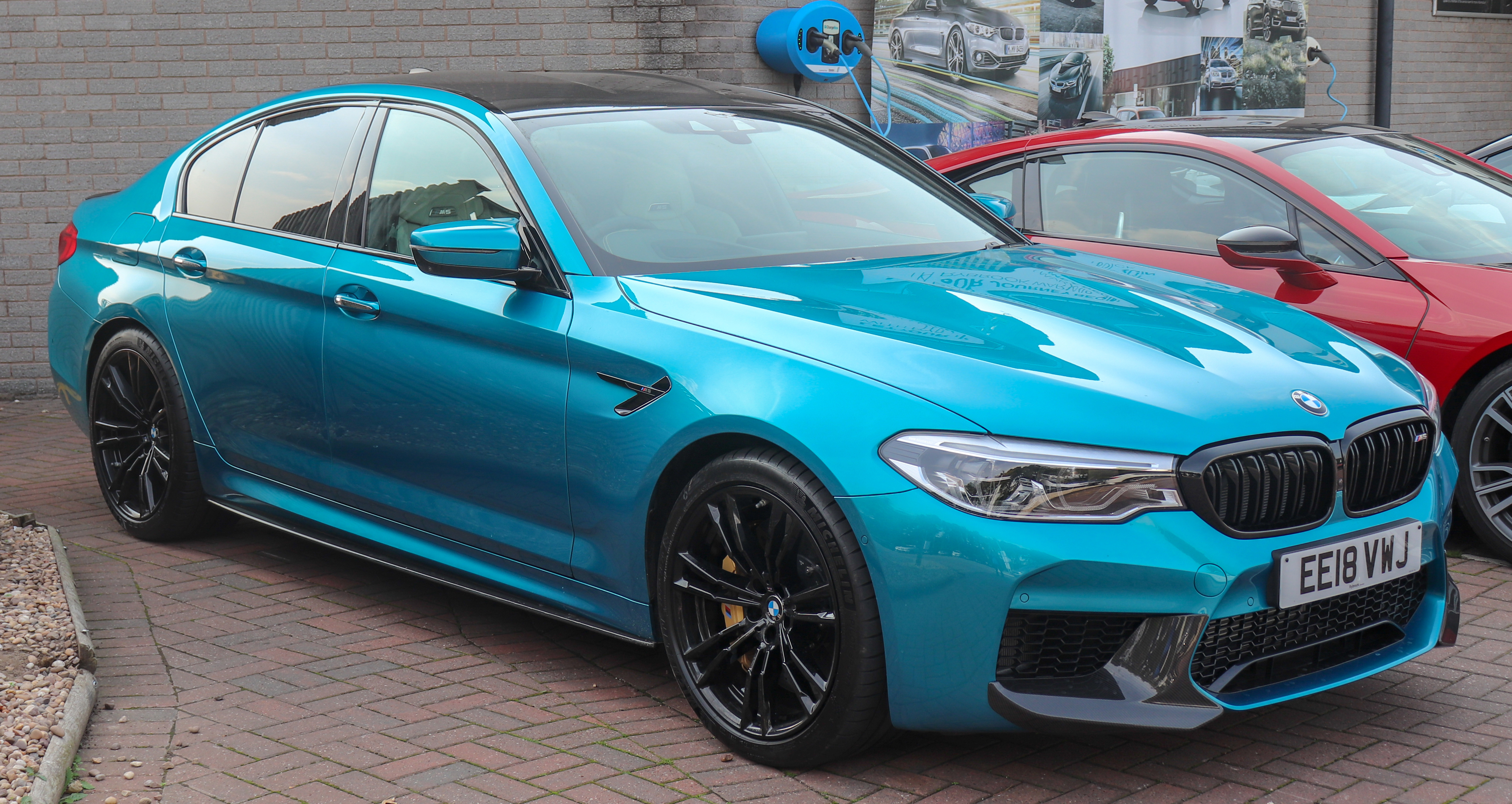
The BMW E34 is a model of the 5 Series, which is a line of luxury cars made by BMW. This generation was made during the late 1980s and early 1990s and is appreciated for its style and performance.
The Dodge Journey is a type of family-friendly vehicle called an SUV, which means it has a lot of space inside for people and their stuff. It's designed to be comfortable and practical, making it a good choice for families or anyone who needs extra room for activities like road trips.
A low-displacement engine is one that has a smaller size, meaning it uses less fuel and produces less power. It's often more efficient and better for the environment.
The idea that 'more is better' means people often think that having bigger or more powerful cars is always a good thing, even if smaller cars can do the job just as well or better.
'Run what you brung' means you can race or compete with any car you already own, without needing a fancy or new one. It's about making the most of what you have.
The German highway, called the Autobahn, is a type of road in Germany where there are often no speed limits. This means you can drive really fast if you want to, which is different from most highways in other places.
Air suspension is a system that uses air bags instead of metal springs to support the car. This makes the ride smoother and can adjust the height of the car for better driving on different surfaces.
Locking differentials help both wheels on the same axle move together, which is great for driving on rough or slippery surfaces. This means you can get better grip when you need it most.
Land Rover is a brand that makes luxury SUVs that are great for off-roading. They have special features that help them drive on tough surfaces, making them popular for adventure seekers.
The G-Class, or G-Wagon, is a fancy SUV from Mercedes-Benz that can handle tough off-road conditions. It has special features that help it drive well on rough terrain while still being comfortable inside.
The Porsche Cayenne GTS is a sporty version of a luxury SUV. It has a powerful engine and is designed for both on-road and off-road driving, making it a versatile vehicle.
A light bulb in a car helps you see at night and lets other drivers see you. Sometimes these bulbs burn out and need to be replaced to keep everything working properly.
A two liter engine means the engine can hold two liters of air and fuel in its cylinders. It's a common way to describe how big or powerful an engine is.
Oxygen loss happens when you're at high altitudes, where there's less oxygen in the air. This can make engines less powerful because they need oxygen to burn fuel and run.
An in-line six engine means that the engine has six cylinders lined up in a row. This setup helps the engine run smoothly and is often found in performance cars.
The M20B20 engine is a type of engine made by BMW. It's a six-cylinder engine that was used in some older BMW models, including the E30. It's known for being reliable but not very powerful.
The BMW E30 is a model of the BMW 3 Series, which is a compact car known for its sporty performance and handling. It was made in the 1980s and early 90s and is still loved by many car fans today.
Fuel quality is how good or bad the fuel is that you put in your car. If the fuel is not good, it can make your car run poorly or even damage the engine.
Engine technology is about how a car's engine is built and works. Older engines are usually simpler and can handle lower quality fuel better than newer ones.
Diesel cars are vehicles that run on a special type of fuel called diesel. They can be more efficient than regular cars, but they can have problems if the fuel quality is bad.
Car
MAN Crafter
The MAN Crafter is a big van made for carrying things. It's built to be strong and can use diesel fuel, which helps it go farther on less fuel.
Emergency mode is what happens when a car detects a problem and slows down to protect itself. It helps keep the car from getting worse damage by not letting it go too fast.
The ignition system is what helps start the engine by lighting the fuel inside it. If there's a problem with this system, the car might not start or run well.
The Paris Dakar rally is a famous off-road race that started in Paris and ended in Dakar, Senegal. It's known for being very tough and has cars and motorcycles racing through difficult landscapes.
LIVE
Actually, extortion was never really an issue. In my case, it happens. I heard it from other people,
especially in Kazakhstan and stuff like that. But again, I think my car is a great diplomat,
because these old BMWs, they see the car, they're happy, because you know, it's also the generation
of cars who when you, when the Soviet Union fell apart. So back in the early 90s, like the guys
that made some money, they tried to get exactly this car. So it's almost a bit part of like the
national heritage to some extent. Emmanuel, man, thank you so much for meeting me in your E34 for
this podcast. Thanks so much for the invitation, Chris. I kind of, you know, I surfed around on
your Instagram and I've kind of, you know, looked at the summary you sent over to me and I followed
your whole journey on social, which was really fantastic. And there's one thing that I think
that I really want to ask you, because this is something I'm always wondering too, is why do
you think people think they need a six-figure truck that's lifted 30 inches, 40 inches off
the ground with enormous tires to do what you did in a 30-year-old low-displacement,
six-cylinder BMW? Why do you think that is that people feel like they need that?
Yeah, it's a very good question. But I think it's part of human nature. We think more is better
by default. So people just get more and more. And they forget that less is more sometimes.
And that's, I think, the thing. I mean, I meet all these huge UFOs driving around the world,
weighing 10, 12, 15 tons, having four to six wheels. And that's got different problems than me,
right? I mean, they have to decide which road to take, which road will actually carry that truck.
If they get stuck, nobody will pull them out. So yeah, I mean, more is more, but more is not
necessarily better here, I think. And that's basically what I try to prove also a bit with this
tour, that you can just take the old trusty car that stands in front of your house that you know,
I mean, I own it for a while already. And you can do amazing stuff with it. And now I'm already
beginning with basically the conclusion of the entire journey. But this is freedom. You don't
save money for your entire life, sell your flat, buy a truck for, I don't know, $800,000,
go on to a trip and have maybe very high expectations of everything. I don't know if
that's freedom. I think the freedom is rather you take your car, which you have anyway,
and even amazing time with it. And if something happens, you fix it. I mean,
it's a simple, simple old car, you know. Yeah, I think the old, the American way of saying it is
run what you brung. You know, it's kind of like showing up to the racetrack and you run the car
that you have. That's what you use. And that's, and that's the, that's the way it goes. Yeah,
it's interesting that you're able to take a car and do what you did. I think most people would
assume that it's irresponsible or dangerous or you're guaranteed to break down, you'll never
get out alive. How did you, did you, did you have any fear of that going in that you wouldn't
be able to make it and that the car wouldn't make it? Or did you have a lot of confidence?
Well, yeah, I mean, from the beginning, it was always a bit of a question. Okay,
let's see how far we'll make it. I never promised myself, I never promised anybody,
I will definitely make it all the way up to Tajikistan, onto the Pamir Highway,
on almost 5000 meters of a sea level. I knew it's a test. I didn't know what the outcome will be.
I guess it makes adventure also adventurous and worthwhile. But yeah, I couldn't guarantee it
beforehand. And of course, it's a risk taking a car that's not made for these things. And I have
to say, like in retrospect, it worked just absolutely fine. But I didn't know that in the
beginning. So it's something, of course, you have to keep in mind when you go on such a journey.
I mean, also the reaction of the people along the way, they were looking at me like, how the
hell did you end up here? I mean, it's absolutely like, you know, this car just didn't fit in the
surrounding. And that kind of also, you know, makes it everything even more fun, you know,
if you have something that fits into the surrounding, it's less interesting, you know,
something is missing. And then if you take this old BMW sedan, which was made for the
German highway or German country roads and drive it somewhere through the world where,
well, it doesn't really belong, it's fun. It's absolutely great. You can also see it in the
look of people's faces. Yeah, that they're also enjoying seeing these old cars driving around the
planet. Tell me about this car. What is this thing? Where did you get it? How did you find it?
And how did you decide this was going to be the car you were going to take?
Yeah, so this car I bought about seven years ago. It's actually my first car. I didn't have a car
for quite a while. I used to travel a lot on my bicycle. And yeah, seven years ago, I bought this
car for 650 euros. So not exactly a lot of money. It was not in a really good condition. It was
standing for over 10 years in a garage. I spent an entire summer fixing it myself. And no, I'm not
a mechanic. I take a lot of time to do it because it's not my profession. And since seven years,
the car, which is Teodor, I'll refer to him as Teodor from now on, actually became a family member.
And that's, I think, also something which is quite important that you have a car that you
can trust, that you know, like buying a car and just setting off directly. Yeah, it might not
be the best idea because you don't know which problems might occur. You don't know what...
It's like meeting a girl and getting married in like a week.
Exactly. You got to give us a hug. You got to get to know her a little bit. You don't want to make
a mistake. Exactly. You know where the problems might be, you know, already get through all these
problems, some stuff that might break, and not exactly venture into the big adventure
directly at the beginning. That's a good metaphor, exactly. Yeah, and why this car? I mean, I had
another car, it was a SUV, four by four differential locks, a lot of stuff that can break air suspension.
And I decided, nope, I'm not taking this car. I'm taking the old simple car. Okay, I lifted...
Hold on. All that stuff that you just mentioned is designed specifically to do what you went to do,
right? The air suspension, the locking differentials. Sounds like a G-Wagon or a Land Rover or
something like that. Those things are made to do what you did. Yeah, yeah, they're made to do that,
but I don't trust them. You know, it was also not a new car. It was from 2008, the other one.
And there's so much more that can break. And I'm sure that if I would have done these 33,000
kilometers in the last half year with the... It was a Porsche Cayenne GTS, that would have had many,
many problems that I didn't have on this journey with my old Sturdy BMW.
Right. So what inspired this trip? Was there a moment that you thought, I need to go do this?
Was it the destination of the Pamir Highway? Why did you decide to venture out on this journey?
Yeah, it actually goes back quite far. 11 years ago, I cycled the Pamir Highway.
It was a quite long tour starting in Turkey, going free around Turkmenistan,
Uzbekistan, Tajikistan to Kyrgyzstan back then. It was still... I was studying back then,
so it took a lot of time in my semester break to go on big adventures. And the Pamir Highway,
I have to say, on the bicycle was a place that I kind of hated me for going to because it was
very tough. It was very cold. I was there in September 2014. It was very, very, very tough
to survive, basically. And I thought I would never get back there. I was really, you know,
at the edge of my power. I was cold for days on end. And that was one of those experiences
that are really awesome in retrospect. In the moment, it's a bit too much. But then if you
think back on this experience, you're like, damn, that was beautiful up there. And damn,
I mean, you know, being so close to the edge of not managing something and fighting your way
through, that's quite a special feeling. So some of the dream came up to get back up there,
face again, you know, the elements, the altitude, the cold, the burning sun. And yeah, I mean,
cycling once is okay. I don't think cycling a second time would be quite the same thing.
So I decided, hey, actually, doing this with a car is on its own way, maybe even bigger
challenge because, you know, bike is quite overseaable, what can go wrong. But the car is
a bit more complex, even an old BMW. So it sounded like quite a challenge. And the spring
I quit my job. And I decided, hey, if I don't do it now, I'll never do it. So it was actually
quite spontaneous. I mean, I think the planning of this trip took about six weeks or so.
From the first idea, that'd be kind of awesome. But really, like, no, it might be a bit too crazy
until saying, hey, I'll give it a try. Let's go. So how much of it was planned versus improvised?
Yeah, so my general direction was a Pamir highway in Tajikistan, which was also almost
the easternmost point of my tour. The route there is kind of predefined, because I mean,
first to drive through Eastern Europe, for the Balkan countries, cross Turkey. After that,
theoretically, one could pass free Iran and Turkmenistan, but the visa situation is basically
not possible right now. So the only alternative was going through Russia after a pass crossing
Georgia because Azerbaijan has closed borders. So the route there was actually kind of predefined by
by politics and geography and oceans in the way or seas.
Yeah, after that, Kazakhstan, Uzbekistan to Tajikistan, all the other countries I wanted
to see again, it's basically, I think, a part of the world that's also a bit under the radar.
Many people don't really are aware that it's a very beautiful place up there.
And then I knew that I'd probably go back through Russia because I didn't want to cross
so many borders on the way back. And I still wanted to see the Altai mountains. So I ended
up still driving a bit further northeast towards the Mongolian border. But that was also a bit
along the way. I mean, it also depended a bit how is the car holding up, how am I holding up,
how is the time schedule getting along. So at this vague, you know, vague destination,
Pamir Highway, which I think was also the right approach, because if you're on a tour, which was
in the end, like almost 30,000 kilometers, you cannot plan everything. I mean, I could have
written a book with all the steps that I want to do. And it just doesn't make sense. So I think
it's quite good to have a general destination, but then plan along the way, which also takes time.
But that's the only way how you can tackle that without, you know, completely
losing yourself in detail. And then maybe just running behind your plan, which was also not
really fun. Yeah, I can stress you out, you know, if you have too much of a plan and it
doesn't go to plan, then, you know, you're, I think it's, it's good to prepare to not have a plan
and be able to, and be able to encounter the unknown in a comfortable way. If you give yourself
too much of a plan, you're going to, you'll be in trouble, you know, because you'll, you'll break
the plan and it'll stress you out. Exactly. I mean, the only thing you actually need is time,
because if you have the plan, not to have a plan, you of course need a bit of extra time in case,
you know, something comes up, and then that's quite good and you can roll.
What was the thought of all of your friends and family and stuff like this before you left on
this journey? You may have to roll up your window. It's, it's pretty loud. I'll close it again. Here
we go. Um, yeah, I think they were a bit, uh, actually they're used to it for me. I mean, I
was always doing interesting trips that was a bit different magnitude now with the car as well.
But I've always traveled a lot. I've, uh, yeah, enjoyed the luxury to be able to travel a lot
all my life already. There goes Emmanuel again. He's off on another adventure. Exactly. Something
like that. Like, okay, this time with a car. Okay. Well, he'll make it somehow. So I think
they're safe. Even my parents, I mean, they're pretty relaxed and all that. I think they know
that they can trust my, my intuition and my also, yeah, uh, experience with traveling that I won't
get myself into stupid situations. Um, so it was quite fine. I think like the reception there,
nobody was too surprised. Um, and everybody was quite supportive.
What was the contrast? I mean, obviously you saw the, the Pamir Highway, which was like a,
you know, that's kind of like the crown for you. Like you wanted to be there. You wanted to see
that and do that. What was the difference between what you imagined and what it actually was when
you saw it for the first time when you were on that bike? Like, what was that contrast? Did it
fulfill you in the way that you thought it would? Yeah, I mean, the first time I was there in 2014,
I would say it wasn't that popular. So there was also not so much information about this region.
And I think the Pamir Highway, something, I mean, let's go a few steps back. Basically,
the Pamir Highway is part of the Old Silk Road. Um, so it's a very, very old trading route,
which goes over the Pamir Mountain. It's been used for thousands of years, thousands of years,
people have been using this route. Exactly. Yeah, exactly. And it's like, you know, just
the outskirts of the Himalayas. So yeah, it's pretty high. Um, and highway is also quite a funny
name for that, because if you think about a highway, you think Tormac, two lanes, four lanes,
you know, beautiful open roads. Um, but they're like, if you're lucky, there might be a little
bit of Tormac in between, which is mostly even more bumpy than all the other bumpy tracks that
you have most of the time. It's a lot of just gravel road or stones and winding through the
mountains, often single track. Um, it basically goes along the Afghan border. There's only a
river separating you from Afghanistan. Uh, then really goes high up to 4,655 meters.
I'm not quite sure much that is in feet, but it is really high. Um, until reaching basically the
Chinese border and going along the Chinese border for a while. And the beautiful thing there is,
you know, it's, it's on high altitude for a long time. So on the bike, I actually spent a week on
over 4,000 meters or around 4,000 meters, which is just quite a challenge because, you know,
you get out of breath quickly. You do notice that the oxygen level is low. Um, and that was not only
a challenge on the bike, but also for the car, because not only humans run out of breath up
there, but also engines. Uh, I noticed at some point that I think I had maybe 40% less power than
normally, just because you don't have the right mix that have oxygen and fuel. I mean, at least
Toyota or BMW is modern enough to have a bit of electronics to still adjust something. But,
yeah, at some point there wasn't a lot of power left. So to answer your question,
the difference between expectation and what, what I saw there, I think the first time I was there,
I didn't have so many expectations because yeah, it was a bit of a ride into the unknown. I knew
it would be something crazy. Um, and I also don't like to look at the stuff before going there in
too much detail because it's kind of nice to, you know, leave some space for surprise and
for this real, you know, first, first impression without having like looked at everything on
Google Street View, which doesn't exist there. But I mean, I guess you get the idea. Um,
I know the second time with the car, it was a whole different experience. The weather was not
so cold, which made it a bit more relaxed to be honest. Um, but I was actually surprised how bad
the road was. I didn't really notice that with a bike because with a bike, you can always go
around all the potholes and stones and boulders and whatever, but with the car, you have to go
over it, right? So, uh, it was a challenge. Yeah. What, what, what broke first? Obviously,
things broke. I mean, that's inevitable. You're, it's entropic when you use something, you know,
that is going to degrade. It's something's going to break. Something's going to happen anytime
you use something that's going to happen. So what broke first? What was the, the inevitable?
Yeah, the first thing was a light bulb in the back. And that was the only thing that broke
from a real light for the first, I think 17,000 kilometers. So that's kind of for to imagine,
I know. Um, people are making fun of me because, you know, some people think old BMWs break down
all the time, but that's rather something about the owners than about the course. Um,
and the first real breakdown was in Tajikistan, of course, on the Pamir Highway, the absolute end
of the world. You have to imagine, like, you know, the next bigger town or the next city, that's not
like five hours away. It's not 10 hours away. It's not two days away. It's like three, four days away
of right because the rotors are so bad, you're crawling along. So up there, my radiator exploded,
um, which was a bit my fault because, uh, the radiator was, uh, yeah, same age as the car.
36 years old, uh, should have changed before setting off, I guess.
Um, you stopped over at the dealer and got a new one. Yeah.
Exactly. Just, you know, rang up BMW. No, I didn't, but that's not an option there.
Unfortunately. Uh, so, yeah, I mean, the, the solution there was, you know,
the radiator consists of many different lines that, you know, leave the cool and fluent
fluid for the radiator. I cut the one in question that was broken and managed to seal the ends,
so to say, one line less going for the radiator. Did you just fold it over or how did you,
how did you, yeah, I folded it over with some pliers, squeeze it really tight. I mean,
aluminum, so it's quite bendable. And then I still sealed it with some two-component glue.
Um, and it worked luckily. It was, uh, yeah, I mean, yeah, so it was a lie on others a lot,
like other people on the side of the road or like in these small villages. Did,
did you get some help along the way? Uh, yeah. Well, there's not a lot of help. So in the terms
of radiator, I was lucky that it happened close to Moorghup, which is like a settlement in the
Pamir Mountains, one of the bigger ones. Uh, so I had to roll back about 40 kilometers to the,
to the town because I thought, like, before I fix it in the end of the world, I'll
go somewhere where I can at least buy some of your antifreeze. Um, and there is some guy who was
also driving trucks once a while, was also hanging out and he found some glue, for example,
the two-component glue and was helping a little bit. Um, but I think if you're there,
it's quite good if you don't rely on people around you too much, because first the knowledge
about cars isn't the same. Like they're quite good at fixing stuff out of nothing, but I mean,
it's not what we're used to from the US or from Europe, you know, real professional mechanics.
Um, and normally not even one of those less professional mechanics is around. I mean,
you have to think on the Pamir Highway, you drive an entire day and you encounter maybe three or
four cars. Uh, so it's not a lot of traffic. So what are the odds that you, you meet somebody
who can actually help you? That's the part towards, towards Kyrgyzstan. Earlier there are
trucks going towards China. There's a bit more traffic, but in the end also where this
breakdown happened, it's not exactly busy. So better be prepared, better be, uh, yeah, able to
at least kind of fix your car on your own, uh, have some tools with you. Um, because if you lie
on others, it'll be, yeah, it'll be difficult. You'll be waiting for days probably for somebody
to pass by who might have some skills to help you. Talk to me about your living arrangements a
little bit, you know, shelter, food, taking care of yourself. I mean, obviously we're not staying
at the, the Hilton on the Pamir Highway. So how did you take care of yourself? Yeah, I know Hilton.
Uh, I think I'm kind of lucky that I used to cycle a lot. So I, I can, you know, range myself
without too many things and I'm quite good at parking light and that also motivated me now to
actually keep my rear bench. You can see the bit in the background, maybe pretty clean.
I don't have any stuff lying around there. I'm living out of my boot
and my boot is organized in boxes because, you know, a boot can get very messy if you just throw
things inside. So three boxes, a big box, which is for the car. It, uh, yeah, it holds a big toolbox,
extra jerry can, some small spare parts, some ropes, some cables, all these things that you might need.
Um, then there are two other boxes. Uh, one of the boxes is, uh, my kitchen. So I have a small
petrol powered stove, which is super convenient because it runs on the same fuel as the car.
I don't have to find, you know, different gas standards. They're changing in every country and
at some point then now there's nothing. So petrol is really convenient. It is pump it and
pressurizes like that. So it's really good. Some food and then there's another box with
like technical equipment, laptop drone, like all these things. Um, and some bags with some
clothes laying on top. So it's quite simple. And then, uh, you just sort like the rooftop tent on
the roof is actually quite a game changer because, uh, yeah, it has a lot of space. It's comfortable.
It has a mattress inside. You can sit up in it. It's a really, it's quite a big room actually,
quite a different feeling than sleeping in a regular tent. Um, and it also feels safer because
you're not lying on the ground, but you're actually on top of the car. Um, so I always felt
very safe and comfortable sleeping up there. Something I can definitely recommend, um,
especially if you not necessarily buy a hard case tent, but a soft case tent that quite light
and easy to use. Uh, it's, it is a game changer on such a road trip, not to sleep on the ground
somewhere. What was the favorite spot that you camped out? Is there a memorable spot that was
just perfect? Uh, it's, it's hard to answer because there are different categories of perfect spots.
I mean, right now in Portugal and at these amazing spots at the seaside, including perfect
sunsets, that's of course hard to beat if you're somewhere no other core, no other person around,
just at the sea cooking your food. The sun is setting in the background. You fall asleep with
the sound of the waves. I mean, that's absolutely beautiful. But I think one of the most memorable
spots was again in Tajikistan. We're talking a lot about Tajikistan because it's crazy up there.
Um, I challenged myself, uh, and I think you showed the photo just a moment ago to have a camp
right next to, uh, yeah, the highest pass on the entire route next to the Akbatal Pass, which is
over 4,600 meters high. That's also this photo that you're just showing was made.
Um, so we slept over 4,600 meters. My brother was also there in an extra tent, um, and some
French guy on a foldable bike. So it was kind of interesting to meet all these people up there at
the end of the world. Um, it was pretty cold about minus two degrees at night. And I think it might
have been also one of the warmest nights, uh, and the entire season because it was, uh, yeah, the end
of June. Um, yeah, so that was quite memorable. I mean, just this altitude and the night skies,
I mean, the Milky Way is so close and reachable, almost utter silence, like the silence up there
is deafening. You don't hear anything. Uh, it is quite a special, special experience.
Is there not a lot of living things either? It just seems like a barren wasteland. It looks,
looks like another planet. It's just like stone and sky. It's stone and sky. It seems like all it is.
Yeah. I mean, in the Soviet time, uh, the Soviet Union was, uh,
putting some focus on, uh, moving people there because they wanted to populate the area a little
bit. Um, so basically investments were made. There are some small settlements that since then
degraded quite a lot. Like the infrastructure that used to be there isn't there anymore. You
can still see the Soviet bus stops, but they haven't seen a bus for many, many years. For example,
you see power lines without cables. Um, yeah, you know why they weren't trying to populate this
area? Do you know the, I don't know if you know the history of it or not. I don't.
Of like, why are they trying to get people to go live in these places where there's no
resources? Like, what is the point of that? Yeah. I mean, I think one was strategic.
The, I think Mughrab used to be a military point in Soviet times. Um, not so far from the Chinese
border. Um, I'm not sure about resources, but I guess there might have been something. Uh,
but I'm also not quite aware of that. Uh, I guess there might also be some, some, uh, reasons for
like logistics. I mean, it's maybe strategic, you know, just in terms of travel routes or, uh,
yeah, I mean, it's a pummy highway after all those old silk road. And right now the Chinese are
building a new silk road somewhere there. So that might have been also motivation back then.
Um, but yeah, it's very scarce. I mean, almost nothing grows there. People heat the ovens with
yuck shit, like the shit from yucks, because there are no trees you can, you know, put into the
oven. Um, there are also some colds, but people have to buy that. So yeah, it basically shows
how little stuff grows up there. I mean, you also don't see goats, cows or sheep. It's just
too cold, too rough climate for anything to survive. Basically. What can you say about the
people that live there in these places? Um, I'm always impressed how welcoming and friendly they
are. Um, it's, it's, it's really beautiful to see very, very friendly and open towards guests.
I mean, it's also a Muslim part of the world, which was socialized in the Soviet times. So
basically the Muslim background, I think, facilitates this very warm welcome towards foreigners.
It's part of the, the culture there. Um, at the same time, because it was part of the Soviet Union
in Tajikistan, Uzbekistan, Kazakhstan and Kyrgyzstan. Uh, culturally, we are not that far away and
that's the difference to Afghanistan. Afghanistan is also one of those countries, but was never
Soviet. So they are also in terms of their mentality and their cultural background, very
different, maybe a bit harder for us to access. Um, but the other countries used to be Soviet.
They speak quite okay Russian. I speak a bit Russian, so it makes it easier to communicate.
And we share some history. I mean, you know, they will know, like probably
some of the same authors of classical literature as we do, for example. So it gives a bit of common
ground. Um, but you do notice that they live a very poor and very simple life, especially Tajikistan.
It's a country that didn't really develop a lot since the fall of the Soviet Union.
Very, very poor. Kyrgyzstan, for example, is pretty doing pretty well in comparison. So you
see very big differences between, between the countries in this, in this region. Um, no.
Did the people seem to care that they were poor? Did they know any better or are they,
are they so far removed from like Western culture that they don't even realize it?
Um, yeah. I mean, I think in the times of internet and even the Pamir region by now has
internet here and there. I think they do understand that it could be different. I think they also
know how it was in the Soviet times when there was actually something that the government was
providing for them, for example buses. And now they're much more disconnected from the rest of
the world, especially in the east of Tajikistan. It's kind of interesting because the people
living there are not Tajik, but Kyrgyz. They speak the Kyrgyz language, they feel Kyrgyz,
they have Kyrgyz names. Um, but the border to Kyrgyzstan was actually closed for, for the people
living there for many, many years. So that to orientate themselves towards Tajikistan, which was
well, the capital is a few days a week, a week right away. It's far. Um, they don't speak the
same language. So they're very, very closed off from the west of the world up there in the mountains.
Um, yeah. Would you have, would you have gone into Afghanistan? I know you got really close,
but you know, one of my questions was, did you ever feel unsafe or feel danger being that close
to Afghanistan as like someone from the United States that's so far removed from that region?
My natural instinct is to be like, don't go there. The Taliban, they'll take you and put you
in a hole somewhere. You know, that's, that's the instinct of just, that's what you get from
the media as you get constant, you know, fear mongering. Did, did it ever feel that way or did
you ever feel anything like that? That's a very good question. And no, I absolutely did not. Um,
I actually also considered to go there, but you know, Afghanistan, the worlds are completely
disastrously bad and it was extremely hot. So I didn't, but I didn't go there because of infrastructure
and because of climate, not so much because of the situation because I also met actually many
people that just came from Afghanistan, especially people on motorbikes from Europe. And right now,
I mean, it sounds strange, but it's actually not too, too hard to travel for Afghanistan because
the Taliban is basically looking out for the tourists because they don't want any bad headlines
about their country. So it can happen that if you check into a hotel that some Taliban guy will
be also checking into the hotel, just have a bit of an eye on you on one hand to protect you, maybe
on the other hand, maybe also to, you know, yeah, see what the foreigner is doing there.
What's this guy up to? What's he doing?
But everybody, go ahead. Sorry.
I mean, everybody I talked to was there, said that they actually felt very safe. I think the only
thing is a bit in Afghanistan right now, people are extremely poor. And if people are extremely
poor and extremely hungry, well, who blames them if they're not nice things at some point, just to
survive or make their family survive. So it's something you have to keep a bit in mind. But
apart of that, what I heard, yeah, I mean, strange times, but definitely overlandable.
So, you know, when I look at some of these places, they look extremely lonely, right?
They look extremely lonely and desolate. Did you, how did you, and we're driving 10, 8,
10 hours a day, you're crawling along, you're going slow, there's no one around.
How did you deal with the inevitable loneliness in boredom? Because it's, it's inevitable.
You're going to be bored and you're going to be lonely.
Well, actually, I was never bored. On the entire trip, I dare say,
maybe at the border at some point, if you sit for eight hours at the border waiting for some
officers. But, you know, that's the nice thing about overlanding, you know, you cross so many
countries, if it gets boring, you'll sit in the car and drive and then something will be different.
And the landscape changes, the people change. So it's another ending, you know,
basically flow of different impressions, which, yeah, it's pretty amazing.
Of course, sometimes.
That's a unique sentiment, though. That's a unique sentiment. You know, I got in,
so I don't know if you've traveled in the United States much, I assume you might have.
And if you've ever been in the state of Nebraska, it is well known to be very flat,
very boring. And there's really not much to look at. But I would argue that there's a case
to be made for some of those places allowing you to think a little bit. You know, I think
it's a luxury to be able to be in places where you can think and observe and look and see the
world around you as it evolves and changes. Is that kind of what you're talking about?
Is it just being able to look and see and experience?
Exactly. I mean, if you mentioned Nebraska, I guess Kazakhstan might be a bit comparable in
terms of the emptiness and monotosity of the landscape. I mean, it's a big step. There's
if you drive a car, it's also kind of nice that you're occupied with something,
but your mind, you know, you can think thoughts like normally, if in everyday life, you will
always do something, you'll always find something to do, you'll be on your phone,
you'll meet people, you'll go working. But while driving, you're kind of stuck in the car, but
you also have still some freedom to go follow up on your thoughts. So I think it's actually kind
of a nice experience to have nothing to do in between and driving is one good opportunity to
do that. And of course, you can turn on a podcast at some point or so if you need a bit of other
things happening around while crossing Kazakhstan. But yeah, I think it's a pretty nice way to also
get in touch with yourself, reflect over yourself, your life, everything happening around you.
And yeah, I stay with my point, I never get bored.
That's, that's a very unique perspective, man. And I think it's something that most people can't
tolerate. They go through their day, they wake up in the morning, they're on their phone, then
they're on, then they're working, and then they're watching TV at night, and then they're on their
phone again, and then they go to bed. There's no time in the day of which they are able to just
do nothing. Yeah, just be with yourself and be in your own thoughts. Absolutely. I think it's a
real problem in our society. But also, if you think about traveling, you know, many people
that drive somewhere in order to arrive somewhere. So the path from the place where you start and
your destination is only like means of transport. And I think in my case, it was much more know the
path between the place where I start and my destination, that's like the trip, and that's
what the trip is about. So I think we should also try to learn to appreciate the journey more,
not only the destination.
That's a different language. Exactly. That's a thing. The path is the goal. Yeah.
Yeah. What's your favorite memory, or if you had to take one thing away to retell about your
journey, what's your favorite story to tell when you think back on it?
That's again, a hard question, because you know, there are, again, different categories. There'll
be a favorite story about nature. There'll be a favorite story about driving. There'll be a favorite
story about interactions with people. Let's do a couple of those and let's do it. Let's do people.
Like, tell me about your favorite interactions with people.
Okay, so I think, actually, one of my favorite ones was in Russia and the Altai Mountains. And
you have to know the Altai Mountains. It's the region where Russia meets with Mongolia and Kazakhstan.
So it's pretty forest, quite remote region, beautiful mountains, and also quite a popular
tourist destination for Russians. I love the nature and the mountains. So I drove to some
small river bed and parked my car next to the river to camp there. And just about five minutes
after me, Segenko arrived, which I didn't quite expect because it was a secluded spot at the river,
with a Russian family from Krasnoyarsk, which is a bit further north, but also quite forest.
And, yeah, they were just, you know, I don't know, the kid I think was about 11 years old and
mother and father, just a very joyful little bunch of guys that spoke absolutely no German
English or whatever, just Russian, of course. And I speak not really great Russian, but I ended
up camping with them for, I think, two and a half days. And it was such a warm, welcoming,
like, friendly atmosphere with them, especially if you think all this shit that's happening
in the world currently, it was just, you know, a parallel reality. You come there, it's a warm,
friendly welcome, nobody cares about politics. And you just, you know, agree on the fact, hey,
we are people and politics are politics. And we just have a great time. And, yeah, I felt very,
very warmly welcomed there, which is nice, especially in our days. I mean, also, I was a bit,
you know, pooh, I respect about visiting Russia right now. And I also want to make it very clear
that I say some positive things about Russia. It's not political. It's only like some, you know,
experiences I had along the way with certain people, it doesn't say that I think it's okay,
what's going on. But then, you know, this big, you know, difference between expectation and
reality inside this country when you just meet normal people. I mean, the guy was just talking
about he was professional truck driver driving Kamaz through the Siberian forest pulling logs out
of the woods. So it is a super simple guy who has probably absolutely zero contact to any other
European. And yeah, I mean, changing topic a bit here, I got quite a lot of hate and criticism
of social media for actually visiting Russia, saying you cannot go there. It's like supporting
the regime. And I think no, it's opposite. It's about, you know, talking to people and maybe
finding similarities instead of only focusing on differences, which will probably make everything
only worse. And I think that worked pretty well, you know, I think if we focus on stuff that we
have in common, and maybe also show that propaganda is not necessarily correct, but people also in
Europe are normal people, we can, you know, maybe get rid of some walls between between our cultures
and politics and governments. Yeah, in the end, it's, it's interesting, you know, you hear of
another group of people. And you know, you make a stereotype or you make a judgment call about
this group of people. But when you meet someone as an individual, it's interesting how much
different the interaction goes than, you know, just paraphrasing an entire group.
Exactly, exactly. I mean, of course, many people believe the propaganda. I mean,
they're surrounded by it. Many don't speak any other language. It's part of it. But I didn't feel
that anybody had a level of hate towards me as European with my German license plates. I mean,
I was pretty obviously not from not from Russia driving through this country. I was pretty obviously
from Germany with all the flags on the back of the car. And yeah, I mean, I drove almost 7,000
kilometers through this country at zero negative interactions or reactions from people around me.
That was quite impressive, because I think if a Russian would cross Germany right now,
I'm not sure if everybody would have been so nice to him.
Yeah, did you do you have a favorite memory with the car? You have a story to tell about,
you know, something that happened with the car that you that brought you closer to that that
part of your family? Well, yeah, I think crossing the primary highway once again was quite a quite
a strong experience with this car, because you know, it's just crossing a part of the world
for which this car was not made for and you somehow endure this this challenge together.
You notice how the engine's power is really decreasing at some at some point because of all
the oxygen loss up there. You've got it. It's a two liter too, right? It's the small displacement
in line six. Did I read that's a two liter? Exactly, exactly. And also the pre phase lift.
So it's the M20B20 engine. It's an old engine generation.
I had an E30 with that engine once. It was an E30 touring from England that had been imported here.
It was slow, man. It was slow. There's no question. I cannot imagine that car at I think it's 14,000
or 15,000 feet. It must gosh, I can't imagine how absolutely slow it would be.
Yeah, it is 129 horsepower on sea level. Up there, I guess it had probably 17.
When it was new, when it was new, it had 109. Actually, believe it or not, it still reaches
official top speed. So I guess taking good care of the car, yeah, paid off. So I think it still has
most of the sources left. But yeah, it was a challenge. It's not the most powerful engine
that's absolutely right. And I think the biggest challenge was at some point that the first gear
just wasn't slow enough. So if there was a big incline, you had to go up with a bit of speed to
have a certain amount of RPM to actually have some power. But then if the road is really bad,
you don't want to have a lot of speed because you'll destroy the car. So that was, you know,
a trade of like, okay, will I make it or will I make it so fast that I might break something?
Yeah, but I mean, to get back to your question, I mean, you know, just getting through all these
off road packages, off road, yeah, stretches on the route, I think that really brought us closer
together. Because I mean, it started also already in Georgia, then in Kazakhstan,
Uzbekistan, there was a bit of off road, Tajikistan a lot. You know,
seeing this road thing like damn, it's impossible to drive it with a car and then you just drive
in it was like damn, it actually works and it feels good. It doesn't even feel so bad what I'm
doing here. Yeah, that I think brought us closer together. And also that was always, you know,
I'm not trying to shred the car over like routes where it doesn't belong, like the health of the
car is the most important thing because I rely on the car without the car, I'm stuck somewhere
far, far, far away from home. So it was a challenge, but the challenge was not only to cross
things, but to cross things without destroying Toyota, because it would hurt me as well, I guess.
Did people give you a hard time that you were destroying the car? Like, why are you doing this?
You're ruining the car? No, actually not. I mean, I think it's maybe also a bit because of the
approach I have also most social media that the car is usually quite central. I portray the car
as the main actor on the entire tour. So I think people do realize that I take good care of the car.
So yeah, I think most people are surprised, but I didn't get any negative.
One thing I want to touch on, and this is I think a unique thing with, I mean, I'm sure people do
this in other hobbies and other exploits as well. But you talk a lot about your relationship with
the car, and then it's family and that you take care of it and everything that how do you explain
that feeling and that sentiment to someone who doesn't understand what you're talking about?
I do. I get it. I have cars too. You know, I love cars, and I'm very special to meant to
are very close to many of them. How do you explain that to someone?
But I think step number one is that if a car is a name, it turns into a person to some extent,
and you can have a relationship with the person having a relationship with the thing is a bit
strange. But since my car is called Teodor, I rather see him as like a faithful good friend.
Because, you know, if you experience adventures with people, it brings you also closer together,
and having adventures with good friends is always, you know, a nice thing to share, memory.
So yeah, I think giving a car a name, having adventures together, you'll somehow
connect on a different level. It sounds a bit strange, I guess, for non-car people, but
I think enduring things together, like bringing it closer. Yeah.
How did you feel when he's turned around and started to come home? When you were halfway,
and you knew you were on your way back, did it change your sentiment of how you were feeling
about the trip? Did it, you know, kind of change the destination where the destination was,
maybe it was getting there, you know, and being there. And then once you're on your way home,
it always, for me anyway, seems to just change the dimension a little bit. It just changes how
it feels when you're finally on your way home. Yeah, but actually, I think it filled me with pride.
Not so much for myself, but rather for Teodor, because like, well, we made it so far. And then
driving home was also a cup of a piece of cake, because we drove through Russia,
which is Tormac all the way. So there were not so many obstacles along the way anymore. So I
think it was a bit like a feeling of victory, to some extent, to head home. And I also knew,
you know, if I come home and I want to continue again, so it wasn't the sad feeling of, oh no,
the adventure is over. So yeah, it was a good victorious feeling. I'm thinking for some reason
just popped into my mind of how much of a picky eater I am. It's difficult for me to eat in new
places. Did you run into issues with food or getting food? Or did you just have to eat the
local food? And if you're hungry, you eat it? If it doesn't matter if you like it or not? Or how did
that, you know, how did you sustain, you know, eating? I mean, first time I'm lucky that I'm
not the picky eater, absolutely everything. It backfired once a little bit and Russia and
Tatarstan, it was a Muslim former invited us and told me, yeah, the guest, he gets the best part
of the sheep and it's the brain. So I had to eat the sheep brain, which was actually better than
expected. But yeah, what does that taste like, man? What is like? Have you, have you seen Indiana
Jones, the movie? Yeah, of course. You know, where they take the little thing and they got the little
monkey heads in the temple of doom and they open it up and it's the monkey brain and everybody's
like, Oh my God, that's the dessert and they all freak out and pass out and everything like that.
It was the same situation. Actually, the worst part of the consistency, I think it's strange. It's
yeah, it's hard to describe in words. I think you should just try.
I don't judge. But you were polite, right? You were polite and you, you ate it and
you're in the place where these people are poor, right? So you, they give you what they consider
the best part, you know, you feel bad not to eat it. And it was served on a plate, but it was,
you know, half the skull. So it was the skull cut open in the middle basically and the brain
looking out. So it was very authentic. Let's put it this way. But I mean, that was an exception
because most of the time I actually cook myself. I'm quite self sustaining because especially
if you're in remote regions of the world, like, you don't know if there'll be some roadside restaurant
where you wanted. And also, you know, if you, if you camp, I normally try to find a place to camp
before it gets dark. So I don't really have the opportunity to go to or go out for dinner if,
if there might be a place to eat, because I want to have a camp already by the time.
So it's much more convenient just to cook. And my food was actually almost
quite basic and quite, quite efficient. I usually add some type of grain like quinoa or
lentils or pasta. And I would mix that with a lot of tuna, tuna and oil that has power.
And it's very good to be transported in the car, some tomato sauce. Unfortunately, not a lot of
cheese because cheese is quite rare in Asia and Russia, then again, a lot of cheese. But stuff
like that, you know, you can just cook quickly over your small scope.
There's gotta be like yak cheese around, right? Like, there's gotta be like yak cheese and goat cheese.
Yeah, I didn't see yak cheese, but a lot of yak butter, which is surprisingly not very tasty. It
tastes a bit like, I don't know, butter stuff from olive oil or like sunflower oil. So it's not
very, very tasty. But yeah, there's, I think, well, I also had some yak meat, actually, that was
pretty good. But I didn't find any yak cheese. I think cheese is not so much culture there. What
they have is like, they call it cheese, but it's like small white balls. And it's a bit like
chalk from the consistency. So it's almost like dried powder, and it's extremely salty.
And it's some cheese like product, which is, yeah, I don't know.
But I would have a rough time out there. Yeah.
I was like, Oh, man, have this have this chalk ball that kind of is like cheese, but not really,
I'd be I would probably lose. I would be dead not from exposure, but from starvation.
But what was the what was the economy like? Like, how did you pay for things? Because
you went through like 1315 different countries, a lot of different countries.
How did you deal with all the exchange and the money? And how did you pay for things?
Yeah, it's pretty easy. I mean, good thing is, in almost all countries, my visa card works,
except for Russia. Russia has again, a small challenge here, because I had to bring a lot
of cash with me, which is also not the best feeling to carry a lot of cash for a month of
travels. But apart of that, you know, in the capitals, you'll always find an ATM that works.
I think Uzbekistan was one of the more challenging countries, because many ATMs were impure of some
reason. But if you take yourself a bit of time, you just get some cash from the ATM,
and you're quite fine. Then you always have some euros or some dollars that you can exchange worst
case. That's not too bad. Then talking about expenses themselves, I really enjoyed the fuel
prices along the way. In Eastern Europe, it's like about a euro 20 per liter, a euro 30,
depending on the countries. Some countries are more expensive, but you skip them, don't get fuel
there. And then starting in Turkey, Georgia, you pay about a euro, so about a dollar per liter,
which is for Germans, quite cheap, because in Germany, you pay about one euro 60, one euro
70. And then Kazakhstan is as great, it's 35 cents a liter. Was it cheaper because it was
10% water? It says we're like, I cannot believe I'm putting this gas in my car.
I cannot believe I'm putting this in here. Yeah, actually, it was fine, I think. Kazakhstan is not
too bad, because Kazakhstan, they produce it most in Kazakhstan, and the reputation is okay.
Also, I think it helps have a very old car, which is 36 years old, which has very simple
engine technology, not too many sensors that will go crazy if the fuel doesn't have the best quality.
I think the more challenging fuel quality was in Tajikistan and Uzbekistan, because they rely
mostly on fuel from Turkmenistan, which doesn't have such a good reputation.
But the water and the fuel is rather on diesel cars. So most diesel cars are made
big problems, but my car doesn't run on diesel, so that was quite fine.
I would think that diesel would be the way to go. That would be my answer, because that diesel
would be what you'd want to do, because you could just be like, oh, let me put this yak
butter in my engine, and it's probably going to run. Yeah, it's true. The thing is, the diesel
cars are not very popular there. I think diesel only gets, almost only gets used by trucks,
which I guess have quite robust engines. Yeah, so I met actually many overlanders,
especially with modern diesel cars that had massive problems. Like one example,
some guys I met in Kazakhstan, they had an MAN, but crafter size, so basically a van from MAN.
And on the Pamir Highway, they got some error code, and the car went into emergency mode,
only went 10 kilometers per hour on 4,000 meters. So they crossed the entire Pamir Highway with
10 kilometers per hour. Up a little bit slower, I think. Yeah, exactly. I mean, it must be sort
of pressing, but that's only the beginning, because entire Kyrgyzstan, that's the next country,
doesn't have a dealership that can delete this mistake. So they still crossed 1,000 kilometers
of Kyrgyzstan with 10 kilometers per hour. So did they look at your car and go, do you want to
trade? Yeah, something like that. Yeah. And I mean, that car was one of the smaller ones. It's not
a huge thing, but it was still, I guess, 150,000 bucks or so. So they drove over 1,000 kilometers
with 10 kilometers per hour just to get into Kazakhstan, where the workshop told them that we
cannot help you, go somewhere else. And then they found some guys that bought some strange
device from Taiwan with a similar car, and they could just delete the error, and the car just
drove. Nothing was broken. It was only some error in the system, because, you know, high altitude,
bad fuel, the mission will be strange if that, since I would say something is wrong with the car.
All the trouble that carverators give me, I'm always like, you know what, if, well, this is
kind of funny, because my, I have an old Porsche and it broke down on one of the rallies that we
just did. And I probably could have fixed it had I had the time to sit and mess with it. But
I love the simplicity of that stuff. Yeah, you know, it's all like, it's right there. It's all
right there. It's apparent, it's mechanical, you can fix it, you've got a screwdriver, you can
usually, you can usually figure it out. Where the only issue then arises is with the ignition system.
You know, the ignition can cause problems, but the fuel system, you're probably going to be fine.
You just need to bring a bunch of fuel filters with you for that, you know, whatever.
Oh yeah, I did that. Absolutely. You need that. And it's also accessible. It's so easy to fix that
if you see a new car, you open the hood and it's like, you don't even see where the parts are.
You have to take everything apart just to access the most simple thing. And with the old stuff,
it's anything other than the radiator go bad. Anything else? Did anything else break?
Yeah, I think the only thing worth mentioning was a wheel bearing in the back.
It broke in Russia. And when driving slow, in order to say some not very healthy sound,
like, I don't know, popcorn or so, like some crispy sounds in the back, which didn't sound
very healthy. So I jacked up the car on the side where the sounds came up. I could just wiggle
the wheel for an inch or so. So it was a lot of movement, not like right and left. So it wasn't
good. But it was still turning. And you know, in the back, the wheel bearing is not very accessible
because a powertrain goes through and it's pressed actually into the axle. So you cannot
change it on the roadside. It's actually you need some heavy machinery to get it out. It's
pressed into it. And so I started to go about 100 kilometers to your Katerinburg, which was a bigger,
next bigger city or town to get to fix there. And I think actually I drove really like a few
kilometers like that without noticing before because when I went a bit faster, like my consumption
was a bit higher because I guess there was a bit more wear. But part of that, like I only
noticed it when going slow. So I guess I drove at least 300 kilometers with a completely broken
wheel bearing. But that was fixed. How did you fix it? Like what was the what was the solution?
You find a shop that just how did you get a bearing? You have to admit, I have a cheat code,
which is my Instagram reach. It's very easy to find help anywhere, especially like in Russia,
there's a quite big community. So basically a good friend of mine that I know from
many years ago in St. Petersburg, he found a shop that had the part and I just had to
pick it up basically there. And some guy from the local community organized me workshop that
had actually time, which wasn't that easy because the Katerinburg apparently is a city in Russia
with not enough workshops and most of them booked out for weeks and I needed one the next day. So
that worked quite fine. It was also very cheap. They changed both sides in the back for like
80 bucks, which was six hours of work. So I'm not complaining. Yeah, really good. And I mean,
again, a wheel bearing was probably 300,000 kilometers old, like the car, the one that broke.
So they worked for a long time, right? So it's, it's, it's pretty nice. And since we talk about
wheel bearings in Kazakhstan, my car was checked up in one wheel bearing the front, like it was
still fine, I think, but it wasn't optimal. So they decided to just change it for free. So I said,
okay, go ahead guys. And in the front, it's quite easy. So they put the Chinese wheel bearing into
it. And yeah, in St. Petersburg, so about 9,000 kilometers later, this one was broken already.
It was an absolutely new wheel bearing from China that just held for 9,000 kilometers,
it was on the right side. And on the left side, I still have my 320,000 kilometer original BMW
wheel bearing. German wheel bearing. Yeah, exactly. So I do notice like in these regions,
you don't get German parts by Chinese ones. And they can be good, but in many cases,
they're not. So yeah, it's a challenge sometimes that.
What was the, what was the, what was kind of like the downside of the trip? What was the part that
was just not good? There had to have been some parts that gave you contrast for those, you know,
you want the good experiences to like camping with that couple and, and stuff like that. And
finally getting to the highway, but there had to have been like something that was just a
major bummer too. Is anything the worst? Yeah, I mean, of course, I think one thing that separated
me a bit from other travelers is some people leave on a big trip because they hate their home,
they hate everybody, I don't know, in their home country, they don't have a nice home,
let's put it this way. And I like my home. So of course, you know, if you go on a big journey
like this, it's also sacrificed to some extent, you cannot have everything at once in life.
But I think the other bombers were rather detailed, it's like not finding a good place to camp and
just, you know, venturing around in the dark from one place to the other, nothing is suitable,
then there are many mosquitoes, maybe like these small details or like long border crossings 40
degrees to sit in the car, no AC for hours. And the cars 50 degrees just waiting to cross the border,
like stuff like that. When it's end of the border crossing, your head is turning and
think like them, I got a hit stroke. That's part of it sometimes, you know, it's of course not
always easy along the way, it's it's part of it. Yeah. With the border crossings are, you know,
when I talk to people that do these kind of things, it seems like it's always kind of the
major bomber. Did you have to, did you have to extort anyone or did you get extorted,
or did you have to pay anyone off or there were any fun border crossing stories or was
all around that fun? Well, actually, extortion was never really an issue in my case,
it happens. I heard it from other people, especially in Kazakhstan and stuff like that. But
again, I think my car is a great diplomat, because these old BMWs, they see the car,
they're happy, because you know, it's offered the generation of cars, when you when the Soviet
Union fell apart. So back in the early 90s, like the guys that made some money, they tried to get
exactly this car. So it's almost a bit part of like the national heritage to some extent.
And I think that saved me a lot of trouble, like people just in a regular camp where they got
stopped by the police and got arrested. Sometimes I almost never get stopped. And if I did, it took
like three minutes. They just assume you don't have any money, man. Maybe, no, actually, I think,
no, every European there, they think that he has money, like it's for them, you know,
It wasn't so much about money, it was whether like, I got many sympathy points, so that rather
stop me and invite me over for tea, then ask for bribes. But if you talk about the border
crossing themselves, I mean, within Europe, it's of course, super relaxed. I mean, okay, for example,
Serbia is not part of Schengen region. So there's a border crossing, they will have a look at
everything, but it's a big deal. Then when entering Turkey, they'll already start opening a bit more
boxes, you have to unload some stuff, they will look maybe for legally imported alcohol or something
like that. Georgia is quite relaxed. And then they're actually only borders that really take a lot
of time is entering Russia. One reason is, of course, that they check everything. I was smuggling
a drone, which was a bit risky, maybe, but it worked fine. And then you also have to import the car
temporarily, which means that you have to fill out many documents. And they're kind of funny,
because these documents have open questions, but the only except one specific answer. And if you
write it wrong, you cannot cross it out and rewrite it, but you have to fill out the document
again, and wait again for an hour on the line to actually hand it in. So it's quite time consuming.
I think when I entered from Georgia to Russia, I took about six hours, and that was pretty good.
Like most other people I talked to, they took like eight up to 10 hours at this border. So you have
to have some time for that. And then while exiting Russia towards Kazakhstan, so the next border was
also interesting because I heard some not so nice stories about video interviews where you get
interviewed by some agent about politics, it gets filmed, and you have to basically make sure not to
make them too angry. And I think it's kind of scary that they ask these questions while exiting the
country. I mean, if they do that while entering, like, okay, worst case, I say, you cannot come in,
but what happens if they don't like your answers when exiting? You can't leave. Yeah, I don't know,
you go to the Gulag or so, I have no clue. Okay, I didn't hear that happening as well, but I think
it's just, you know, at least we can still go there. Let's put it this way. And I guess while
exiting Russia, I was waiting for this interview who didn't show up. So I was just standing there
for three hours, one of my mosquitoes without a passport because I just kept it. And nothing was
happening. I was done with with the toll with everything with the with the order guards and
whatever. I was just waiting to get my passport back, just standing there for three hours together
with some other Europeans that stood there even longer than me. And then you feel kind of small,
you know, like, somehow, you know, you don't have your passport, you stand in no man's land
between Russia and Kazakhstan, you're like, okay. But everybody was friendly. I mean, they made
some jokes like saying, yeah, you're waiting here now because of your sanctions, but in a friendly
manner, let's put it this way. But you don't have so much power in this moment. So did you bring
any keepsakes home? Did you bring any objects? Obviously, your car is very important to you.
So you understand the value of objects as representation of love and joy that we do with
things. I love things. I love objects behind me here that you can't see. There's all kinds of
little objects and keepsakes and things that I've brought home from trips and stuff. Do you
did you keep anything? Is there any object that you have that you took home?
Not really, actually. I mean, yeah, the beauty of the packing of my cars, I have everything I need.
But also, I don't have anything that I don't need. So basically, since I packed and organized it
quite well upon departure, I didn't really have to buy anything along the way.
No, like little widgets or like little antiques or anything from local, you know, local stores,
anything, nothing, no tools, like I would, you would have to, there's no way you could
get me to come home from this trip without bringing a bunch of weird stuff.
I think I have to get inspired by you there. It's actually kind of a nice idea.
No, I mean, I bought a hat and that's actually kind of funny because I bought this hat
in an Afghan market in Tajikistan. There are some markets where once a week,
the Afghan people can go without a visa and sell their stuff. So it's actually a hat I bought
from an Afghan guy. And the Afghan guys, they look like Afghan guys, as you'd imagine them,
like the stereotype is completely right. They've got these strange vests, the big
beards, these ropes, like you can see it's from Afghanistan. But that's, you know, again,
something that you kind of need. If you get a sunburn on your neck, you won't have a big hat,
I didn't have one. So I bought it there. Then I got a few small presents like postcard where somebody
painted my car. So that's lying at the back of the car and can Richard give me a second,
I'll show it to you. Like there's some small souvenirs of here since you have so detailed.
So for example, that's kind of cute, isn't it? From Riga. So one of my followers,
we're going to have a small corn meat and made this hand-painted small postcard.
I love it. Oh, then the guys in St. Petersburg, where it is incredible and
creates the customized t-shirt with my car on it. So it's rather random stuff like that that people
give me along the way. I'm like, okay, I cannot say no to that. In Portugal, I was invited to the
Le Mans race. So that's still my entry ticket. That was also kind of cool. So keep stuff like that.
Better try not buying things because, you know, once you start doing that,
yeah, it's open end, you know, where you just stop. So I know, I know, I have a problem.
But yeah, also in most of these countries, there's not so much on the way you can pick up. I mean,
maybe a stone that looks nice, but there's just nothing. I mean, also antiques in Tajikistan,
Uzbekistan, if you go to the mountains, there's not a lot. Everything is used or
disposed of and or burned, I imagine. I don't know. There's this is not much. I mean,
a few things that there are being used. I mean, nothing lies around.
That's a very Western concept of being able to enjoy the antiques of nice things that other
people at some time have discarded. Yeah. Being able to be able to use that is that's a true luxury
I've ever even really, really thought of that. So where do you want to go next? You know, what's
you know, where to man? What do you want to see?
Yeah, I mean, I came back to Germany was like, actually, the trip should not stop here. I want
to go on. And then it was actually pretty random decision. But I thought like, okay, I mean, there's
this Paris Dakar rally, which is, you know, kind of legendary. So I decided Dakar and Sinigala
is just a good destination by default. And I've never been to Africa with a car.
So decided, okay, I'll still, you know, enjoy a bit of Western Europe after all these a bit
more challenging countries, but actually end of the week, I will cross over to Morocco with the
ship and then work myself up. You haven't stopped. The journey is still going. You said you were at
the end, but it's honest. It's not, it's not, it's not. We have to do a certain second episode at
some point. It's actually only the beginning of the second big, big thing coming up because yeah,
end of the week, I crossed to Morocco, and then I will head along the Western African coast
through Mauritania, which will be a challenge. I think it'll be before the most dangerous country
on my entire route. Well, for a lot of reasons, I mean, there's nothing there, man. Nothing. You
thought there was nothing in Tajikistan. There's no, that is the definition of nowhere. It's a
whole different type of desert. I mean, I'll be basically crossing the Sahara, which I think is
also, you know, it's a nice idea. I like, you know, a trip is kind of cool if it's a nice idea
behind it. It's not like I'll drive to Rome. Okay, you drive to Rome, you see Rome, but no,
you cross the Pamir Mountains, you cross the Sahara, you cross Siberia. I mean, that's a story
to tell. That's a real experience because again, the biggest that's here, it's about the path,
not the destination. So I think that's why Dakar is quite a nice goal because when I see that stuff,
when I see like the Sahara or I see like these mountains and stuff like that, I think of the
time. I think about time a lot. Anybody that listens to podcasts, I know I talk about time
all the time. I see these mountains and I see those have been here for millions of years,
right? And they've been moving slowly in one direction or another and all this sand that's
in the Sahara desert used to be a stone. And I think of just this little BMW going,
just like for this, just this little micro moment, just the smallest moment ever that it appears and
disappears, like just this enormous time lapse of time that it was just there for this blip.
Absolutely. And you really feel the time if you're in this big, open, endless, unforgiving
places like the roof of the world in Tajikistan or the Sahara. Yeah, like that gives you a
perspective. You feel very small and not very important in the big world.
Yeah, these big monolithic things, humans build all these big monoliths and we build these
monuments to ourselves, right? They're monuments to our own humanity and they're enormous and
megalomaniacal and big. They're just nothing compared to these places that you've seen and been.
Yeah, I mean nature builds the best monuments and that's so nice. I mean, that's why also driving
through endless nature makes it so interesting and worthwhile. Now let's turn on the light,
give me a sec. You have to cut this, I guess. I'm sorry, but it's all good. Up here in Portugal,
the sun goes down very suddenly and very quickly. But I'm prepared, so it should be fine.
I've only really got one more question for you at any rate. If someone's listening to this
and they're thinking about doing their own trip, what would you tell to inspire them?
What words could you give them to inspire them to take their own journey?
Yeah, so I think the main message here is, you know, a journey should be about freedom.
So, I mean, on the technical perspective, don't overdo it. I mean, that's basically also again
the beginning of the podcast here. Don't buy a UFO for, I don't know, hundreds of thousands of
dollars that weighs 10 tons. Keep it simple because if you have less, it's less potential problems,
right? And it'll be more fun because you're also less worried along the way. And the second thing
is, don't wait for it because it is never the right time to do such a trip. I mean,
such a trip, you know, you're gone for four months, six months. It is a long time. It's not easy.
Like, there'll be never the time where you say, now it's the day I have to do it. So just do it
because the time won't come knocking at your door saying, like, hey, Chris, it's time for you to
go on a big trip now. You just have to do it at some point. And also, it's not so hard. Like,
I'm not a special guy. I just drive an old car. I'm enjoying my life. Everybody can do it. Like,
if you have some time, of course. So yeah, don't have too much respect for it. Go for it.
Enjoy your time out there. Don't overdo it with the equipment. And yeah, don't wait for it.
All right, man, that's been, it's been my pleasure having you on the podcast to hear your stories.
It's been good. I'll be following along as you drive across Mauritania. And I imagine when you
get to South Africa, you will be shipping your car to Ushuaia and coming up South America
across the Darien Gap, across Mexico. And when you come to the United States, I'll come see you.
How does that sound? That sounds great. Thank you so much for your time, Chris. Thanks for
your invitation. Take care. Take good care. Bye-bye.
About this episode
Exploring the journey of driving a 30-year-old BMW E34 through challenging terrains, this episode features Emmanuel, who shares his adventures across the Pamir Highway and beyond. He discusses the philosophy of 'less is more' in overlanding, emphasizing the joy of using an old car for exploration rather than relying on modern, expensive vehicles. Emmanuel reflects on the relationships formed with locals, the beauty of remote landscapes, and the lessons learned about freedom and adventure. His stories highlight the unexpected joys and challenges of long-distance travel in a classic car.
Forget safari-spec Defenders and tactical fridge setups. Emanuel drove 30,000 km across some of the harshest, most remote terrain on Earth... in a BMW E34.In this episode, Kris Clewell sits down inside Emanuel's trusty “Theodore” to unpack what real freedom means, how to survive the Pamir Highway with a radiator held together by pliers, and why you don’t need a $200,000 overland rig to live a big adventure.👉 FOLLOW Emanuel's journey: https://www.instagram.com/e34xpeditionsSupport Overcrest and get cool stuff:https://www.overcrestproductions.com/driversclub