
Why ADAS Calibrations Are Being Ignored in Auto Repair Shops [THA 484]
About this episode
Shops aren’t ignoring ADAS calibration because they don’t care—they’re getting squeezed by cost, logistics, and incentives. The hosts connect front-end work to sensor angle changes (“radar, LiDAR”) and argue camera-equipped vehicles require calibration. They explain why short, localized training can “crash and burn,” and why flat-rate pay can push technicians to chase the “completed button” instead of the full procedure. Customers also struggle to tell capability apart from marketing, while remote/mobile work shifts who does the technical heavy lifting.
Recorded live at the 2026 TST Big Event, host Carm Capriato sits down with shop owners and industry trainers Keith and Liz Perkins for a candid conversation about the evolving future of automotive repair. From the growing demand for private, hands-on training to the dangerous misconceptions surrounding vehicle calibrations, Keith and Liz share hard-earned insights from the front lines of the industry. They also pull back the curtain on how they successfully balance multiple businesses, a family farm, and life as entrepreneurial partners, all while staying deeply committed to technician development and industry advancement.
What You’ll Learn:
- Why more shop owners are bringing trainers directly into their facilities for personalized, hands-on education
- How the flat-rate pay system can unintentionally discourage accurate diagnostics and proper repairs
- The critical importance of vehicle calibrations and why skipping them creates major safety concerns
- A real-world story of how Keith and Liz challenged a dealership that failed to properly calibrate a vehicle after repairs
- How Keith’s mobile diagnostics team operates as the “Navy SEALs” of the automotive industry, tackling the most complex repair challenges
- The productivity systems, AI tools, and organizational habits that Keith and Liz use to manage multiple businesses and family responsibilities
- Their perspective on partnership, marriage, and entrepreneurship, including why success is rarely a perfect 50/50 split
- Updates from the NASTF board, including a new mobile app designed to simplify D1 security processes
This episode is a powerful reminder that professionalism in the automotive industry extends far beyond fixing vehicles. It requires continuous education, accountability, clear communication, and a commitment to doing the job correctly, even when it’s difficult or inconvenient. Keith and Liz Perkins demonstrate how technical excellence, strong systems, and true partnership can create lasting impact both inside and outside the shop.
TST Big Event: https://tstseminars.org/
Liz and Keith Perkins, Previous episode HERE.
L1 Automotive: https://www.l1diagnostics.com/
L1 Automotive Training: https://l1training.com/
Thanks to our Partner, NAPA TRACS NAPA TRACS will move your shop into the SMS fast lane with onsite training and six days a week of support and local representation. Find NAPA TRACS on the Web at http://napatracs.com/ Thanks to our Partner, Today's Class Optimize training with Today's Class: In just 5 minutes daily, boost knowledge retention and improve team performance. Find Today's Class on the web at https://www.todaysclass.com/ Thanks to our Partner, KUKUI Stop juggling multiple marketing tools. KUKUI’s integrated platform delivers 4x better website conversions, automated follow-up, and real-time ROI tracking. Get industry-leading customer support with KUKUI at https://www.kukui.com/ Thanks to our Partner, Pit Crew Loyalty You’re probably tired of chasing new customers who never return. We understand. Pit Crew Loyalty ends the one-and-done cycle, turning first visits into lasting, reliable revenue at https://www.pitcrewloyalty.com/ Connect with the Podcast: ...comebacks
"the need to get it right, fix it right, reduce comebacks, and not take five hours to diagnose something that could have been done in 45."
“Comebacks” are repeat visits where the same vehicle returns because the original repair didn’t fully fix the issue. They’re costly for shops and usually point to misdiagnosis, incomplete repairs, or missed related causes.
diagnose
"not take five hours to diagnose something that could have been done in 45. ... then you're covering it up."
To diagnose a car problem means figuring out what’s really causing the issue. If you guess, you can end up replacing the wrong parts and the problem comes back.
In auto repair, “diagnose” means systematically identifying the root cause of a problem (often using scan tools, measurements, and test procedures) rather than guessing. Good diagnosis reduces comebacks because the repair addresses the actual failure.
flat rate
"The industry is set up where most technicians are flat rate. So they're incentivized financially to put more parts and spend more time on the car if they can bill for it."
Flat rate means the mechanic gets paid a set amount for a repair, even if it takes longer or shorter than expected. Because of that, some shops may be tempted to do extra work that they can charge for.
“Flat rate” is a pay system where technicians are paid a fixed amount for a specific repair job, regardless of how long it actually takes. That can push shops to spend more time and replace more parts if they can bill additional line items.

Chevrolet Trax
"...nity today to learn more. We'll prove to you that Trax is the single best shop management system in the ..."
The Chevrolet Trax is a small SUV meant for regular daily driving. In the podcast snippet, “Trax” sounds like it’s being mentioned in a business or software context, not as a description of the car. If you’re looking at the vehicle, it’s typically chosen for practicality and size.
The Chevrolet Trax is a compact crossover SUV designed for everyday driving with easier parking and lower running costs than larger vehicles. The podcast context mentions “Trax” alongside “shop management system,” which suggests the name is being used in a business/software context rather than describing the vehicle itself. It may still come up because the Trax name is widely recognized and can be used as a reference point in marketing or discussion.
radar
"whatever you're doing to the vehicle that could very possibly change the angle of radar, LiDAR."
Radar is the car’s sensor that “sees” using radio waves. If the radar is aimed differently after repairs, the car may need recalibration so it measures distances correctly.
Radar is a sensor technology that uses radio waves to detect objects and measure their distance and relative motion. For ADAS, radar mounting position and aiming matter—if the angle changes after repairs, the system may need recalibration to interpret distances correctly.
LiDAR
"whatever you're doing to the vehicle that could very possibly change the angle of radar, LiDAR."
LiDAR is a sensor that uses lasers to build a 3D picture of what’s around the car. If the laser unit’s angle changes after repairs, the car may need recalibration to “read” the world correctly.
LiDAR (Light Detection and Ranging) uses laser light to map the environment in 3D by measuring how long the light takes to return. Because LiDAR’s position and aiming are critical, changes to the vehicle’s front end can require recalibration so ADAS functions interpret the scene accurately.
service advisor
"And I'm thinking, well, if I was a service advisor and I was looking and somebody was wondering why now that I have to have this recalibration..."
A service advisor is the shop’s customer-facing role that explains recommended repairs, schedules work, and communicates with technicians. In ADAS calibration discussions, the advisor’s job includes translating why recalibration is necessary after certain repairs so the customer understands the risk and rationale.
recalibration
"wondering why now that I have to have this recalibration, why is it those graphics so purposefully explain to the customer the rationale or the why behind it?"
Recalibration means resetting the car’s sensors so they work correctly again. After certain repairs, the sensors may no longer be aimed right, so the car needs recalibration to keep its safety features accurate.
Recalibration is the process of re-aligning or re-setting a system’s sensors and software parameters so they match the vehicle’s current physical setup. For ADAS, recalibration is often required after work that can change sensor angles or mounting points, such as front-end repairs or towing-related adjustments.
ASCs
"ASCs are great, but it's a base level, right? Everyone can go on Amazon."
ASCs are shops or service centers that have the training and tools to do certain specialized work. The host argues that customers may not recognize the difference between shops that can do it well versus those that can’t.
ASCs here refers to aftermarket or authorized service channels/centers that provide training and/or calibration capability for ADAS-related work. The host’s point is that “ASC” status is a baseline credential, so it doesn’t clearly differentiate one shop from another to the average customer.
sublet
"I've never had to sublet to another shop,"
Sublet means the shop sends the work out to another specialist shop. That can happen when the original shop doesn’t have the right equipment or training to do a particular job.
Sublet (in a repair-shop context) means outsourcing a job to another shop or specialist when the original shop can’t perform the work in-house. The episode uses it to illustrate how shops may rely on others for specialized tasks like ADAS calibration rather than doing everything themselves.
L1 diagnostics
"Okay, I could call or the right contact and just [2226.6s] be like, yeah, I can call L1 diagnostics because mobile is growing. Am I right? Yeah. Yeah."
“Diagnostics” means using tools to find out what’s wrong with the car. “L1” sounds like a basic level of troubleshooting—figuring out the problem using standard computer checks.
“L1 diagnostics” appears to refer to a diagnostic service tier or level of troubleshooting used by a provider. In practice, it usually means using scan tools and guided checks to identify faults and confirm repairs, rather than deeper engineering-level analysis.
remote providers
"We're going to see the gravy of the remote, like Rich and I talked about with you. The [2237.1s] gravy of the remote work or the mobile work is going to go to remote providers to separate [2242.7s] those, someone who can remotely log in and do that."
Remote providers are people who help with car computer work without being in the same garage. They can connect to the system and guide or run parts of the diagnostic/calibration process.
Remote providers are companies that support vehicle diagnostics or calibration work from off-site by having someone log in and run procedures. This can be used to coordinate software steps, data capture, or guided calibration tasks without the vehicle being physically at the provider’s shop.
mobile work
"We're going to see the gravy of the remote, like Rich and I talked about with you. The [2237.1s] gravy of the remote work or the mobile work is going to go to remote providers to separate [2242.7s] those, someone who can remotely log in and do that."
Mobile work in auto repair means service performed at the customer’s location instead of at a fixed shop. In the context of high-tech vehicles, it often refers to bringing diagnostic/calibration equipment to the car so certain tasks can be completed without towing.
ADAS calibrations
"All right. Let's go back to ADAS, the word negligence that you said. I really, I'm trying to drive a point to the industry. I had a great friend in Buffalo just bought a flat, in-ground ADAS."
ADAS calibration is like setting up the car’s safety cameras and sensors to see correctly. If it isn’t done right, the car’s lane/braking helpers can act wrong or warn you unnecessarily.
ADAS calibration is the process of aligning and verifying the sensors (often cameras and radar) so the vehicle’s driver-assist functions read the road correctly. If calibration is skipped or done incorrectly, the car can misinterpret lane position or distances, which can lead to warnings or reduced assist performance.
in-ground ADAS
"I had a great friend in Buffalo just bought a flat, in-ground ADAS. I just saw some pictures of it. I'm going to go over to a shop and take a look at"
An in-ground ADAS setup is a special calibration area built into the floor. It helps keep the car and measuring targets level, which matters because the calibration needs to be very precise.
An in-ground ADAS setup is a calibration bay or platform built into the shop floor, designed to provide a stable, precisely leveled reference surface. Because ADAS targets and measurement geometry are sensitive, shops often need a very flat, level area to get accurate calibration results.
flat ground
"This whole, you've got to have left and right and up and down and flat ground really scare people off."
For ADAS calibration, the shop floor needs to be extremely level and consistent because the calibration process assumes known geometry. If the surface isn’t flat (or the vehicle sits unevenly), the system can be calibrated with incorrect reference angles.
alignment
"Then you shouldn't do an alignment on any of those vehicles. But the guy down the road is doing them, and so again, at the end of the day, it's you are either a person of integrity or not."
A wheel alignment adjusts how your tires sit and point. It helps the car drive straight and wear tires evenly, and it can also affect the car’s safety sensor accuracy.
An alignment adjusts the suspension angles (like camber, caster, and toe) so the tires track straight and wear evenly. The transcript frames alignment as a job shops may avoid or do incompletely when ADAS calibration is also required afterward.
eight-awson
"Unless it's an alignment and it requires an eight-awson, we just don't believe in that. That's fine. It's you turning a blind eye to you know better."
The transcript’s “eight-awson” sounds like a misheard technical step that the shop is supposed to do. The point being made is that skipping it can lead to the car’s safety systems not working correctly.
“Eight-awson” appears to be a mis-transcription of a specialized calibration/alignment-related term, likely referring to a required calibration step or equipment name. In context, the speaker argues that shops should not skip the required procedure after alignment work because it affects ADAS accuracy.
windshield
"Same thing with a windshield. We were at a doctor's office one day. It just had an ice storm, which is kind of rare in Oklahoma, but the lady was on the phone like in the background..."
A windshield can be part of the ADAS calibration workflow because many modern systems use a camera mounted behind or near the glass. Replacing the windshield often requires recalibrating the camera so lane-keeping and collision warnings stay accurate.
Safe Flight
"I was like, we do. We kind of giggled. I'm like, yeah, we do that. Okay. I'm going to give Safe Flight a couple of high fives. About a year ago, they were saying, and if your vehicle needs calibration, we can do that too."
Safe Flight is mentioned as a company that helps shops calibrate the camera/sensor systems used for driver-assistance features. The point is that their materials can help explain to customers why calibration matters.
Safe Flight is referenced as a company that provides ADAS calibration services for vehicles with camera-based systems. The host suggests shops can use Safe Flight’s process and documentation to support why calibration is required after certain repairs.
calibration targets
"the most recent commercials are showing, if you will, the charts, the targets, the targets sitting up in front of the camera."
Calibration targets are like reference charts the shop uses to line up your car’s camera system. They help the technician make sure the car’s safety tech is “aimed” correctly.
Calibration targets are reference patterns or charts used during ADAS calibration to align the camera’s field of view with the vehicle and the road geometry. The technician uses them to verify the system’s measurements match the intended setup.
Keith Birkins chart
"Or that's what your car needs. Or look, I want to show you my Keith Birkins chart. Yeah. And here's what it means a thousand feet down the road if we don't do this thing right."
The “chart” is a visual tool the shop uses to help explain what the car’s safety systems are doing and why calibration matters. It’s meant to make the explanation easier for customers to understand.
A “chart” in this context appears to be a visual reference used to explain ADAS calibration requirements and what can go wrong if calibration is incorrect. The host frames it as a way to communicate the real-world impact to customers.
adaptive cruise
"and do all this lane keeping, all this adaptive cruise thing going on the way you originally intended"
Adaptive cruise control is cruise control that automatically slows down or speeds up to keep a safe distance from the car in front. If the sensors aren’t calibrated right, it can misjudge that distance.
Adaptive cruise control automatically adjusts your speed to maintain a set following distance from the car ahead. It typically relies on radar and/or camera inputs, so calibration affects how accurately it detects distance and speed changes.
lane keeping
"we want to make sure that those engineers that designed this vehicle to go down the road and do all this lane keeping, all this adaptive cruise thing going on"
Lane keeping is the feature that helps your car stay in its lane by watching the lane lines. If the sensors aren’t set correctly, it may not track the lanes properly.
Lane keeping is an ADAS function that uses sensors to detect lane markings and helps steer the car to stay within the lane. It depends heavily on accurate camera/radar calibration, because the system is measuring lane position in real time.
360 round view
"…replacing the front camera in her grill for the 360 round view. We went to go pick the car up after repair."
The 360 round-view is the camera view that shows what’s around the car from above. If a camera gets replaced, it may need re-aiming so the picture matches the real car position.
A 360-degree surround-view system uses multiple cameras around the car to generate a bird’s-eye image. Because the cameras must be positioned precisely, replacing a camera (or related hardware) often requires calibration so the stitched image lines up correctly.
front camera
"…replacing the front camera in her grill for the 360 round view."
A front camera is one of the car’s “eyes.” If it’s replaced, the car needs to re-check where it’s pointing so the camera view and safety features line up correctly.
A front camera is a sensor used for driver-assistance and/or surround-view systems. When a front camera is replaced—especially one tied to a multi-camera 360-degree setup—its position and alignment must be calibrated so the system’s image and guidance are accurate.
advanced parking
"…they're parking at us, but her car has advanced parking. We can drive down a parking garage,"
Advanced parking is the car’s parking help that can steer or guide you into a spot. It relies on the car’s sensors/cameras working correctly, so calibration matters.
Advanced parking refers to automated or semi-automated parking functions that use sensors/cameras to guide the vehicle into a space. These systems often depend on correctly calibrated cameras and sensors to judge distances and alignments.
automatic parking button
"turn on the push the automatic parking button, and it will look for an empty space... it'll back the car into a parking space."
That button turns on the car’s self-parking feature. It uses sensors and cameras to guide the steering, so if the camera isn’t set up correctly, the parking guidance can be wrong.
The automatic parking button activates an automated parking assist routine that steers the car into a space. These systems rely heavily on accurate camera/sensor positioning, which is why camera alignment and calibration matter after camera replacement.
reverse
"The camera, when we put the reverse on the front camera, the one you replaced, it's pointed different."
Here, “reverse” is when the car turns on the camera view used for backing up and parking. If the camera is aimed wrong, the view and parking guidance can look crooked.
In this context, “reverse” is when the vehicle switches to the front/rear camera view used for parking and low-speed maneuvers. The transcript implies the camera behavior changes when reverse is selected, so camera aiming/alignment affects what the driver sees and how the parking assist functions.
programming function
"service manager told us that happens during the programming, which it doesn't. There's a separate programming function to turn the camera."
A programming function is the software/vehicle-configuration step performed in the car’s diagnostic system (often via a scan tool) to recognize or configure a component. The transcript distinguishes programming from calibration, arguing that programming alone doesn’t fix camera aim/alignment.
Ford
"I will go find a position statement. It's on Ford Crash Parts.com... Google search Ford Ados Job Aid."
Ford is the car brand being referenced. The speaker is saying you can look up Ford’s instructions to see what the correct camera/ADAS procedure is.
Ford is the vehicle brand referenced for the official service documentation used to support the correct procedure. The transcript points listeners to Ford’s “job aid” resources for the ADAS/camera-related work.
job aid
"Google search Ford Crash Parts.com... There's a job aid that shows every"
A job aid is like an official checklist for how to do a repair the right way. Here it’s being used to show what Ford says should be done after camera work.
A job aid is a step-by-step reference document (often provided by the manufacturer) that outlines the correct procedure for a repair or calibration. In this segment, the job aid is used to argue that the shop’s “not required” claim conflicts with the manufacturer’s instructions.
calibration period
"it requires calibration. Every single Ford vehicle that ever gets an alignment for any reason requires a camera calibration period end of discussion."
A calibration period is the required “setup time” the car needs after certain work so its safety sensors work correctly. The hosts are saying Ford expects this to be done every time the conditions are met.
A calibration period refers to the required time window and procedure for the ADAS system to learn/verify sensor alignment after a triggering event (like an alignment or sensor replacement). The point in the segment is that the procedure is mandatory when the vehicle has the relevant camera.
factory scan tool
"Ford's factory scan tool has this awesome function where it records everything that anyone does on that car using the factory Ford tool."
A factory scan tool is the official diagnostic computer the dealer uses to talk to the car. It can show what steps were taken, so you can tell if the required calibration was really completed.
A factory scan tool is the manufacturer’s diagnostic interface used to communicate with the car’s control modules. In this segment, it’s described as recording what technicians do in the system, which helps verify whether required calibration steps were actually performed.
technician ID
"So I could see what technician ID did not do their job properly."
Technician ID is like a log-in name that ties actions in the car’s system to a specific person. Here it’s used to figure out who skipped the calibration.
Technician ID is an identifier used in dealership diagnostic systems to attribute actions to a specific technician. In the segment, it’s used to show who did—or didn’t—perform the required calibration steps.
Blind Spot Marking
"okay, well, are you familiar with Blind Spot Marking? Are you familiar with Radar Cruise? Are you familiar with Lane Depart?"
Blind Spot Marking is an ADAS feature that detects vehicles in your blind spot and then visually marks that area (often on the mirror or in the display). It’s meant to reduce lane-change mistakes by giving a clear cue before you move over.
Lane Depart
"Are you familiar with Blind Spot Marking? Are you familiar with Radar Cruise? Are you familiar with Lane Depart? All these like, oh, actually, yeah, if my car has that,"
Lane Depart helps prevent you from unintentionally leaving your lane. If the car senses you’re drifting, it warns you (and sometimes helps correct it).
Lane Depart (often called lane departure warning/assist) is an ADAS feature that monitors lane position and alerts the driver when the car is drifting out of the lane. Some systems can also provide steering or braking assistance depending on the vehicle.

Chevrolet Tahoe
"Yeah, my friend, she came to me and she says, I just got this brand new Tahoe. And she's like, I named her Karen."
The Chevrolet Tahoe is a big family SUV. The story uses it to show how ADAS safety alerts can annoy some people at first, but they may still be helpful.
The Chevrolet Tahoe is a full-size SUV that commonly comes equipped with ADAS features like lane departure warnings and blind-spot monitoring. In this segment, it’s used as an example of how drivers experience ADAS alerts (like beeps) in everyday use.
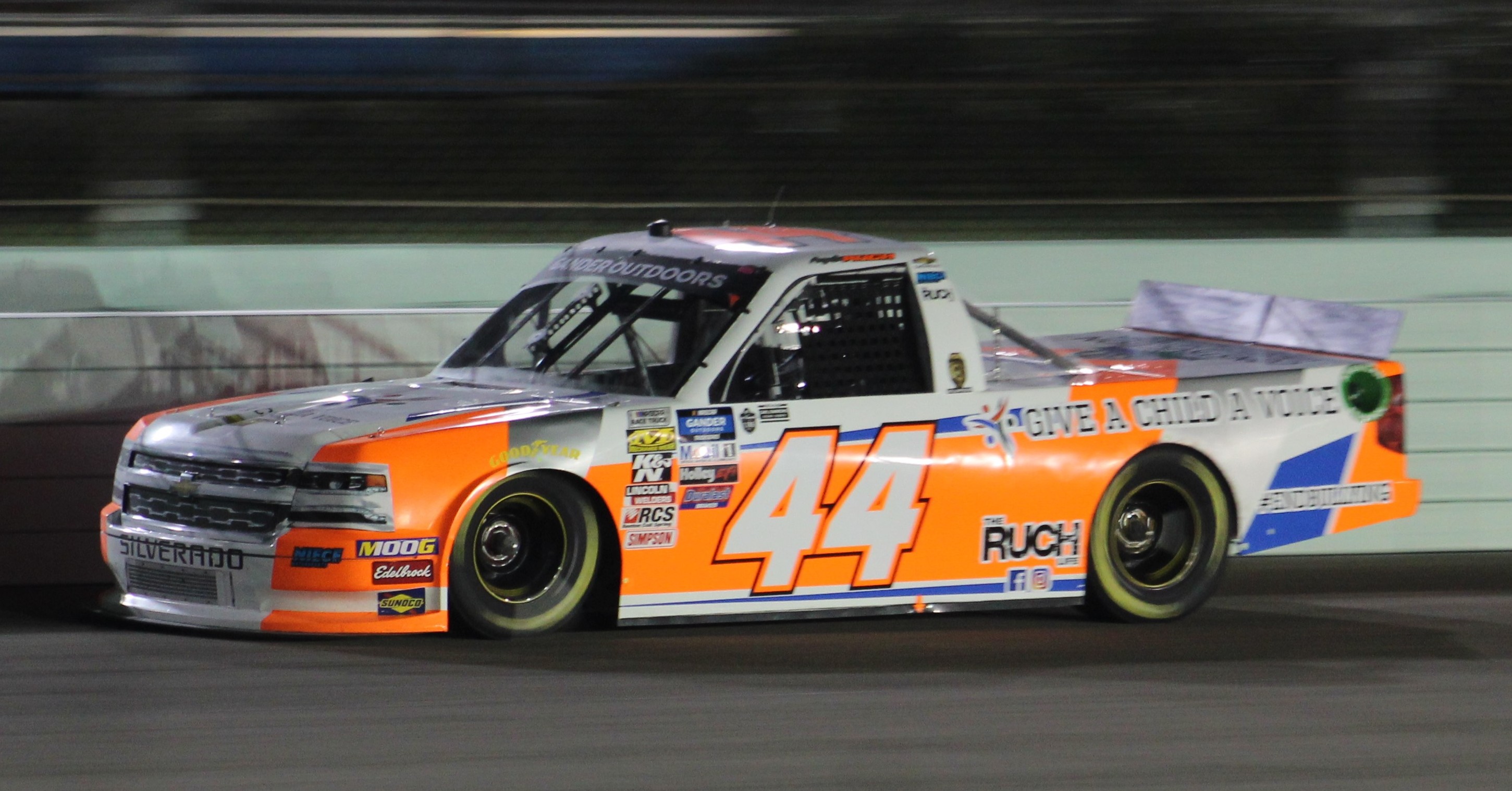
Chevrolet Silverado
"...e's going to end up paying $190,000 for this 2016 Silverado, but it's lifted and got big wheels. So that's th..."
The Chevrolet Silverado is a large pickup truck made for work and towing. The example mentioned is a 2016 model that has been changed with a lift and bigger wheels, which can change how it drives and what it costs to own. People often discuss trucks like this because upgrades can affect maintenance and performance.
The Chevrolet Silverado is a full-size pickup truck known for hauling capability and strong towing performance. In the podcast context, it’s discussed as a specific used 2016 example that’s been customized with a lift and larger wheels, which can affect ride quality, clearance, and overall cost. It’s the kind of vehicle people often talk about because modifications and ownership costs can vary a lot from stock trucks.
Request an Explanation
Heard something you'd like explained? We'll add it to this episode.
Sign in to request explanations for terms you heard.
Want to learn more?
Browse our glossary for plain-English explanations of automotive terms, jargon, and concepts.
Help improve this episode
See something that's not quite right? Our annotations are AI-generated and can sometimes miss the mark. Click the flag icon on any annotation to suggest a correction.