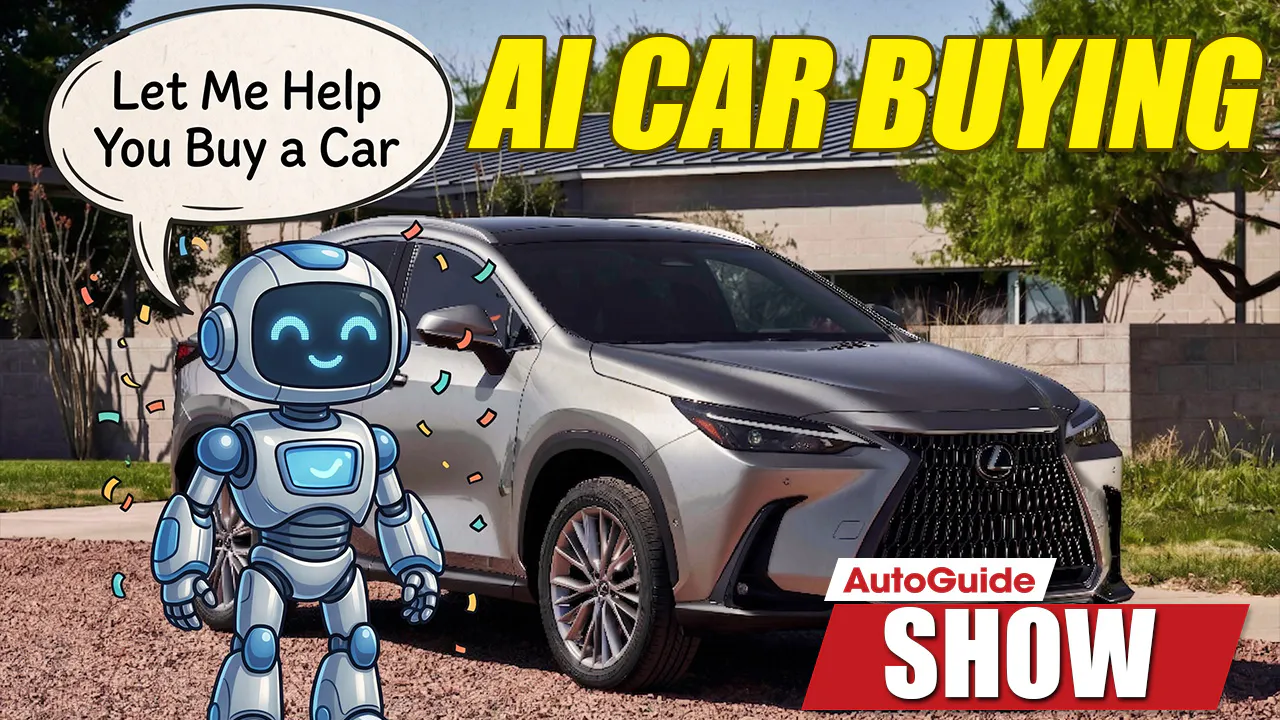
Large language models are AI programs that can read and write text like a chatbot. They can help compare cars, but they can also guess or misunderstand what you really want unless you guide them carefully.
Generative AI is the kind of AI that creates new answers or text. It can be useful for brainstorming car options, but it can also make mistakes that sound believable.
A prompt is the message you type into the AI to tell it what you want. If your prompt is vague, the AI may suggest the wrong kind of car; if it’s specific, you’ll usually get better answers.
The Chevrolet Corvette C8 is a sports car with the engine in the middle of the car. It’s not the kind of car you’d pick if you need a 3-row SUV for a family of five.
“Agentic” means the AI tries to do tasks more like a helper—taking steps and checking things—rather than just answering instantly. The host is saying that better AI car advice should include verification, not just guesses.
The Toyota Grand Highlander is a big family SUV from Toyota. In this episode, it’s mentioned as an example of a specific car that AI systems might recommend when you ask about “the best” or “most reliable.”
The host is saying you shouldn’t treat AI like Google. If you ask it a vague question like “best car,” it may give a confident answer that isn’t actually well-supported.
The Toyota Highlander is a bigger SUV that can fit more people, usually with three rows of seats. It’s made for family trips and everyday driving when you need extra space. The podcast brings it up as part of the group of vehicles people compare for that kind of use.
The Hyundai Palisade is a large family SUV. The host uses it to show that AI can guess at reliability for a newer version, even though real-world reliability data may not exist yet.
The Toyota Land Cruiser is a rugged Toyota SUV that many people associate with long-term durability. In this segment, the host explains that AI may cite it as reliable, but newer hybrid updates still need real reliability evidence.
Reliability data is information about how often a car breaks or needs repairs after people have owned it for a while. The host’s point is that brand-new versions don’t have that history yet, so AI guesses are risky.
The Lexus GX is a Lexus SUV. Here it’s used to show that AI can confidently quote reliability ratings, but you should verify those claims with the original source.
The Cadillac XT6 is a luxury SUV with room for more than two rows of seats, aimed at family use. The podcast mentions it because it was discontinued, so it may be harder to find and you may be shopping leftover stock. That can change what deals and options are available.
Primary sources are the original, most trustworthy documents or data. The host is saying that for car research, you should go straight to the best original information instead of trusting an AI’s summary.
A paywall is a restriction that blocks access to content unless you subscribe or pay. The host argues that if trusted sources like Consumer Reports are behind a paywall, they may not be included in what AI systems were trained on, which can make AI less accurate for car-shopping research.
It’s like the kids’ game where a message changes as it gets passed along. The host’s point is that AI can repeat secondhand claims and the details can drift away from the original source.
A hybrid uses two kinds of power, usually a gas engine and an electric motor, to help it use less fuel. Some hybrids need to be plugged in, but many do not—so it’s important to know which kind you’re looking at.
A “three-row” car has three rows of seats, so it can carry more people than a typical two-row car. It’s a big deal if you need space for a family or passengers.
Term
specs
“Specs” are the official technical details for a car—like what it’s equipped with and key measurements. The host says AI might get those basics right, but you still shouldn’t rely on it for everything.
The Toyota Hilux is a pickup truck, meaning it has an open cargo bed for hauling things. The podcast mentions it while talking about diesel options, which are often chosen for strong pulling power and efficiency. It’s brought up as a practical truck choice.
Concept
long list that you then make a short list
They’re recommending you don’t rely on one recommendation. Instead, start with many options, then narrow them down based on what actually works for you.
“Visibility” is how well you can see the road and key areas (like mirrors, blind spots, and the hood/road edges) from the driver’s seat. The host highlights that different people notice different visibility issues during real driving, which is why a test drive can reveal problems that specs and AI can’t.
Term
steering wheel blocked the speedometer
They’re describing a situation where the steering wheel is positioned so it blocks the speedometer. That’s the kind of problem you only notice when you’re actually sitting in the driver’s seat.
“Seating position” refers to how the driver sits relative to the pedals, steering wheel, and controls, including seat height and fore/aft position. The host emphasizes that multiple test drivers can report very different comfort and posture outcomes, which is why driving the car matters more than AI recommendations.
A cup holder is a built-in storage feature meant to secure drinks during driving. In family-focused vehicles, small details like cup-holder reach and placement can matter because they determine whether kids can use them independently.
Topic
using in-person experience vs online aggregation
The segment argues that for big purchases like a family vehicle, hands-on inspection and test-fitting matters more than relying on aggregated online opinions. It also suggests that even if AI can summarize sources, it may still miss the specific feature that becomes a deal-breaker for your situation.
A fold-down center armrest is a padded armrest between seats that can be lowered for support. In the rear seat, it can also act as a leaning surface for passengers and may include integrated storage or cup holders, making it a practical usability feature rather than just comfort.
An AI agent is a kind of computer program that searches the internet and tries to help you decide something. The host’s point is that it might not catch the tiny, personal details that you only notice when you’re actually in the car.
“Model year” is which version of the car you’re looking at (like 2024 vs 2025). Features and measurements can change, so you should verify the specs match the exact year you’d buy.
They’re saying you shouldn’t trust AI blindly—you should double-check what it says using the car maker’s official information. Think of it like verifying the details before you buy.
They mean a tire meant for off-roading that’s priced to be a better deal. The goal is to get strong off-road traction without paying for the most expensive tire.
Bridgestone K03 is a known off-road tire model. They’re using it as a reference point to say the cheaper tire is trying to deliver similar off-road performance.
The Ford Bronco is an SUV designed for driving on rough roads and trails. It’s meant for off-roading, not just regular city streets. The podcast brings it up because it’s the kind of vehicle people take to places like Moab for tougher driving.
Sasquatch is an off-road package for the Ford Bronco. It usually includes trail-ready upgrades like bigger tires and suspension changes, so it sets the starting point for the tire test.
If the steering wheel shakes, it can be because the tires aren’t rolling smoothly. That can come from tire balance, wear, or how the tread hits the road.
A warranty is the manufacturer’s guarantee that if something goes wrong within a set period, they’ll help cover it. It’s usually listed as time and mileage limits.
The Ironhead Thrasher RT-RTT-01 is a specific off-road tire. The discussion is about whether it grips well on dirt, sand, and rocks and whether the tread holds up.
The Mini Cooper is a small car that’s meant to be efficient. Here, the host is saying it’s currently the best mpg you can get in that small-car size category (for gas cars).
A “two liter” engine means the engine is about 2.0 liters in size. Bigger or smaller engines can affect how much fuel the car uses, and that’s what the host is connecting to mpg here.
The Toyota Prius is a hybrid car that’s famous for getting excellent gas mileage. The host is saying it’s still one of the best options, including versions with all-wheel drive and a plug-in hybrid version.
All-wheel drive (AWD) sends power to both the front and rear axles, improving traction when conditions are slippery. The host notes that when you choose AWD on the Prius, the fuel-economy numbers drop a bit.
The host is talking about a plug-in hybrid—one you can charge at home like an electric car. Because it uses both electricity and gas, the fuel economy is reported in a special way called “miles per gallon equivalent.”
The Hyundai Elantra is another compact car option. The host is basically saying it can cost less than the Civic while still giving you a lot of the same day-to-day features.
The Toyota Corolla is a compact car the host recommends. They mention it can be had with all-wheel drive and that its hybrid system is well-established.
LIVE
Hello and welcome to the AutoGuide show.
This week we speak to Consumer Reports about whether AI can help you buy a car.
In the product review it is another value-orientated off-road tire.
And in the mailbag we have a question about what a good fuel-efficient car is to buy.
We'll be back in one second.
All right, welcome back. We have a special guest today.
Keith, if you could just introduce yourself and what you do.
Sure. I'm Keith Barry and I'm a Senior Onos Reporter at Consumer Reports.
We test vehicles and write about all sorts of things related to cars, car buying and car safety.
And I'm coming to you from Connecticut, USA right near our test track where we purchase and test cars.
Yeah, I mean Consumer Reports is one of the go-to places for vehicle recommendations.
I'm sure because of your role. That gets asked even more.
I mean, I can't imagine the amount of times I get asked what car should I buy with.
Absolutely. Zero other parameters around it.
So we're here to talk to you.
This week, two people, you know, and one answer ended up being, you know,
they ended up being completely different than what I thought based on what I was told.
Yeah, yeah, I get that all the time.
What's your favorite car? Yeah.
So, but what we're talking about has to do with our advice isn't always taken.
I mean, it never, never really ever was, but there's a new world out there and it's sort of the buzzword
of 2026 and that's AI. So you actually tested out how good is AI at recommending cars compared
to people who actually, you know, drive them.
Yeah. So just to be clear, I didn't, you know, go in and have Claude code something for me.
You know, I looked at some of the data on how most people are using AI.
So just so people who are listening or watching don't, you know,
get apoplectic that I was, I was not using it to its full potential.
I basically use the chatbot, the large language models, and I spoke to them in natural language
and I asked the same questions. And, you know, I asked, what's the most reliable 3-row SUV?
I asked questions, I asked them to compare different vehicles once they gave me recommendations.
And I used the big, the big guns, chat GPT, Claude and Gemini for that, you know,
this, these generative AI that I made prompts for. And, you know, at first, and I think everyone
who creates stuff for a living got kind of nervous and is nervous right now.
I mean, I have to say very personally, you know, around, you know, AI creating things.
When I, when I see the output, my first thought is just a little bit of panic thinking, oh,
geez, I couldn't do that that fast. And then I read it and I say, oh, but I,
but I actually have the right answer. And I think the first thing to kind of,
to point out is that it got, for the most part, it got to places that the average consumer would
be able to make a decision based on. But it really did make some, I would say, kind of
concerning errors along the way that could lead someone who maybe doesn't have expertise in this
field astray. Yeah. I'm happy you made the point about you weren't, people will complain,
you weren't using it to its full potential, but I don't think consumers are either. I don't,
I would be surprised if it's more than a single digit of people who use AI,
really understand how to use it to its full potential. I mean, there's, there's a lot of
untapped, but on the flip side, some folks will be like, oh, it's completely untrustworthy.
Like it's not going to say I need a family car for five people and it's going to say C8 Corvette,
like, no, no, unless you come back to it and, and, and try to, yeah, but no, yeah.
Yeah. So what sort of initial questions were you asking and how far off the track, like how far
down the asking process did it start to get off track or did it maybe come back around to where
you're trying to get to? I mean, I'd say that eventually all roads led to a Grand Highlander
hybrid. So it eventually things sort of converged. I would say, you know, and, and what's, what's
great is we have, you know, it's, it's, it's wonderful. One of the great things about consumer
reports. So we're a nonprofit. So we're actually a little isolated from some of the issues that,
that, that happen in the immediate landscape. And we still have, you know, fact checkers who
work on every issue of our magazine and on most of the stories we do, who make sure that, that
we're correct. And the fact checkers also worked on our internal AI policy. So I worked with our
fact checkers, but I also worked with our chief data officer and the folks behind our own chat bot,
which is called Ask CR. So I got kind of both sides of this, the folks who are the be skeptical,
check every source and the folks who are actually trying to make this work in a more
agentic way to use the, the buzzword. And, you know, that we all kind of came to a consensus
the same way that, that the tools did around the Grand Highlander hybrid, that, yeah, it,
you know, I, I think what happened first was I put in the information, you know, I put in what
I was looking for, and I kept it very simple. And the first thing I learned is that you don't
want to use it like a search engine. It's not something you ask what's, you'll get the same
bad answer if you ask one of us, what's the best car because best is subjective. And, you know,
what's the most reliable? That's a little closer. So, you know, the first round it said, you know,
chat GPT said, for example, the Toyota Grand Highlander, the Hyundai Palisade and the Toyota
Land Cruiser, which is an interesting one because it's historically been very reliable. But, you
that kind of, and then I looked at some of the photos that made this great look and chart.
And the photo was at the last generation Palisade. We don't have reliability data for the new Palisade.
No one can possibly know because we can infer based on the brand, but we don't know how the,
you know, new hybrid system, all of those things are new. And then I dug into where the sourcing
came from. And, you know, on one of them, it gave me the Lexus GX and it said that consumer reports
gave it 100 out of 100 for reliability. And I said, you know, I've been here for almost a decade,
and I don't remember that. So let's click on that and see. And it brought me to actually a really
good article that was written by Autoblog that quoted consumer reports that didn't say that it
got 100 out of 100 and said that it was, you know, a reliable used SUV and generally said,
you know, positive things about it. So right there, I'm starting to, you know, it looks like
it's extremely authoritative. And the answers it gives and the charts it make, they look,
you know, really impressive. But then if you click on where this, and it shows sourcing,
but what you can't do is just allow the fact that a source is there to be evidence that the
source is correct. So when you actually click on those, you start to learn more. If this is how
you, you know, it's like when I was, you know, Wikipedia came around when I was, when I was in
college, and I'd go to Wikipedia, but I would read all this, you know, I'd read all the footnotes,
and then I'd actually learn what was, what was going on and learn more. And if JetTPT is where
you start, that's great, but it can't be with especially not with a $50,000 purchase or you end.
Yeah, the information as you've mentioned said, it's only going to be as accurate and good as
the sources it's getting it from. And although it lists the main sources, I'm sure it's getting
information from other sources and a database. And I mean, it's the internet, how much of what's
on the internet is exaggerated, not true, factually wasn't checked. So until these AI programs know,
like only trust these sites, which I don't even know if that's ever going to be a thing,
you got to take everything with a grain of salt. And Wikipedia is a great example. I mean,
I too remember when it first came out and anyone could make edits. Oh yeah.
I mean, even still, you still have to have some sort of history now within Wikipedia to do it.
And the accuracy has gotten so much better. But yeah, first it was just a free-for-all. And I
remember being, I was out of school, but I remember people younger than me saying like,
we cannot quote or use Wikipedia when we're doing more because it's, and it's the same thing now with
the AI. I mean, they can write your story for you too, but you still can't use it for reference
because who knows where it's pulling from, even if it says so. Yeah. And what it does is it tries to
put what the next, what the next part of the sentence should be based on what's already out
there. So it's kind of like when I first started writing about cars, I read a lot of Dan Neal.
So I wrote a little like Dan Neal, not nearly as good, but you know, everyone imitates what
they've read. And it's just, it's just sort of how it works. And these large language models,
they read the entire internet and then they sort of imitate. But sometimes that means that they are,
they are, you know, so actually, you know, Lexus should take this as some feedback because it said,
you know, one source Gemini said that we should, that we should look at the Lexus TX350 hybrid
with the smaller hybrid engine, which doesn't exist in the United States. And maybe,
you know, maybe they should, they should bring it out. Also the 2026 Cadillac XT6,
which is, which was discontinued in 25 that said, look at the 2026 model, maybe GM should,
should hire Gemini as a product planner because it's auto completing it. But you're right,
it did pull it from some, in this case, the way I got around this, as I said, okay, go to,
go to primary sources only. And then it got a lot better. But even then, it pulled from this
website called Shape Plain Clothing, which is- Car site? Yeah, definitely. And Shape Plain Clothing,
I couldn't find anything online other than the fact that it had a database of Toyota pricing data.
And so I went to a LinkedIn page that was affiliated with it and it advertised itself as a
church, a clothing retailer, a crypto exchange, a pawn shop, and also zombie response training.
And I know, you know, when I'm going to buy a new car, obviously that's where I'm going to get my
pricing data from. The other issue is that places like Consumer Reports, as we see more sort of
trusted sources being behind behind a paywall, they're not necessarily going to be, you know,
incorporated into the large language models source data. And instead, we'll get this game of telephone
where it's this person said that that Consumer Reports said.
And at that point, it's just kind of like asking a friend of yours who knows about cars,
and they'll say, I don't know, my friend's cousin had a Hyundai and they had problems with it or
they had a Hyundai and it was great. And that's eventually where it kind of gets down to,
especially if it's pulling from things like Reddit threads or forums where
everyone has a problem in a forum. You can take the most reliable car in the world and everyone
has a problem with it. It's like any consumer site, right? No one ever takes the time to post
about how good an experience was. But if it's a bad one, you'll get it on there. And it's funny
you mentioned Reddit because it's going to say someone should make an AI program that only
references Reddit and see what kind of stories you get because you're right. It's, it's, it is,
it's third party words and people be like, well, Consumer Reports said it was amazing,
100 out of 100. And that's why it gets that. Now they'll be like, oh, you can't trust Consumer
Reports. Now it's like it's, it's, I know they've built some logic into it to try to go for certain
sources, but even if you're trying to do basic research and you feed actual info into it and
say only source this, if you really read sometimes things pop up and you know, that's right, or it
makes sense, but it wasn't in that material. And you're like, you're still not listening to,
to what it's saying. So it sounds like AI is a great, the first step is I think what's really
useful if you're not knowledgeable at cars at all, because you're saying like, I want a hybrid
three row and you don't even maybe know the names. If you just say like, what are some hybrid
three rows? At least it'll give you some places to then go ahead and know what a hybrid is. You
might just say, I want to a car that saves me money on gas. And then it might even say,
Oh, did you know there's, there's this thing called a hybrid and I'm still, it's hard for people like
us to, to, to believe this. But in the year 2026, I'm still encountering people sort of in general
in the, in the world to say, dude, do you have to plug that in? And it's, no, it's not electric,
it's a, it's not a plug in hybrid, you know, and, and that's where it's super helpful is if you,
if you don't know anything about a subject, it can get you, it can point you in the right direction.
Absolutely. Yeah. I hear the hybrid thing all the time too. When I say hybrid, I've had people
who have had conversations with us about hybrids for years. And then they suddenly throw that out
like, Oh, you don't have to plug this one in. It's like, no, hybrids, you don't plug it in.
That's a plug in hybrid. And they're like, Oh, I think you plug them all in. So yeah, I know,
I get it. And yeah, say, I need to see six people and be efficient, and then it can give you some
places. But then they need to trust now go to the manufacturer sites, but then people like,
Oh, I don't trust their sites. Well, they're going to at least have the specs correct, ignore all
the marketing stuff and just read the numbers and then go from there. Shout out to the TX350,
we get in Canada. So I guess these AIs are reading our websites up here. The 350. Oh,
actually, there was a, there was another one that read from something in Australia. And I'm
thinking this is not, this is a different, different vehicle. Yeah. So yeah.
Yeah, get yourself a diesel forster or something. Yeah, or a Hilux or something, you know, whatever.
So it sounds like it's not ready to fully replace the entire chain, but there's
some initial usefulness to it. But it's, it's important advice, I think, for consumers that
they need to be aware of that, like, there's no magic solution, even with people where you
can just go up and someone's going to tell you, this is exactly what you want. Like, I still think
you need a long list that you then make a short list. And then I always say to people, like,
don't listen to me, you need to drive the cars. And as much as I personally don't like going to
dealerships, I never hide that fact I've worked for them and around them. You know, there's good,
there's bad, but that's, you need to drive the vehicles because there's things when you get
behind a wheel that you no one may have ever mentioned. And it could be the small little thing,
but it's a deal breaker. And you're like, you know what, no, moving on.
Yeah, I was just in a car the other day and I, the way that the, the side of the door
dug into the side of my arm, and it didn't bother anyone else who driven the car. And that's why
when we, you know, we buy these cars and test them and we get 30 people in them. And you'll
read the notes and one person will say, you know, the most interesting part is how you feel in the
car. And one person will say the steering wheel blocked the speedometer. I couldn't see this.
The visibility was terrible. My leg rubbed up against that. And then three other people will say,
great posture, wonderful seating position, loved it. And that's, you know, these are these things
that you really, you're totally right. You have to experience it for yourself. And that's something,
you know, this can help you with the very, very beginning can also help you with the end. You
mentioned you hate dealerships. Dealerships are essentially salespeople at car, car salespeople
essentially are doing these, these word tracks where you say something to them and they predict
what you're going to say. And then they spit something out, which is, which is, you know,
kind of like pre-program lines that they have. And that's exactly what you're going to get.
If you're, if you start talking about how do I talk to a salesperson with chat, chat, chat,
you're probably going to get some, some good advice on how to respond to some of those word
tracks because they're out there. These are proven sales techniques. And, and, and there's a reason
why they do them. Yeah, I previous role I had at a previous life, I was a trainer for dealerships
for an OEM and bad OEM. Yeah. And that OEM really emphasized product knowledge and knowledgeable
staff. And, and you could tell like to this day, if I go into their dealerships, it's like,
you know what you're talking about. And I can talk to you about it. I mean, me specifically,
like us, we're very, very different level than most people, but I know what they're saying
is what it really is. And you, and there's some other OEMs where I know it's more about the
programs and incentives and the plans and you go in and there's objections. Yes. Yeah. And they're
just feeding stuff to you like you're not doing any service because yeah, you may not trick a consumer
but convince them into a vehicle, but for the wrong reasons. And then they're going to come back
and make your service department headache because there's all these things they think it should
or shouldn't do. And it doesn't. So that's a whole different topic. But back to the, the experience
and yeah, like chat GTP can take, as he said, they could go to forums and Reddit to get user
experience. But it's tough because everyone's individual and people don't even know sometimes
what is a preference or not. Like if you ask me, what are the things look for in a vehicle?
I will never mention some of the ones that recently have really become aware of like
there's a certain brand that if you set their digital dash up and you want audio,
it'll never tell you what's playing on the audio. It'll say the audio is on, but you never see
track or song listing and it drives me nuts. And I'm like, what's the point of me even having
this here? Like it's just such a small thing, but it would be something if I was on the fence
between two vehicles, that one, I'd be like, no, you know, this one, just a little thing like that.
You never know, might be the one that really pushes you over 100%. I have my best friends
shopping for new three row SUV. And for him, it is, can the kids in the second row get their own
cups out of the cup holder? Or is it too far a reach for them? And does he have to wait for
their arms to grow a little longer? And otherwise it's him turning around and getting the cup and
handing it to his, you know, to his sons. And it's just kind of, it's funny. And he's as probably
as knowledgeable as I am about cars, but all of a sudden it's become the cup holder is the thing.
I mean, this guy's owned everything, but now it's, he's cup holder man. And, and these are
these things you can only experience in person. I feel his pain. I have a 10 year old and those
cup holders that are built on the back of the center console are the worst because yeah,
I can reach them, but my son can't. So it needs to be, and he's kind of spoiled with all of these
cars are bringing home. So to him, it's like, if I bring something home that doesn't have a
fold down center armrest in the back seat, this is the worst car ever. It doesn't matter what
it is, but it's no center armrest that folds down that he can lean on when I'm driving. So
yeah, you never know what little feature could be the, the whole difference in a car.
And that may be the thing that, you know, if you ask, if you ask an AI agent to search one of these,
to search Reddit, to search forums, that may be the thing that pops up that maybe if I wrote the,
the road test review from all of our notes, maybe that didn't make it into ours. But that's
something that might be, that might be helpful. But, you know, that aggregation, I think the best
way to do it for a purchase this big is still to, you know, get out of those platforms as much as
you can. If you start finding sources that keep popping up again and again, whether it's AutoGuy,
whether it's Consumer Reports, whether it's some of the other big names out there,
you know, go to those places and make your own decisions. Don't, you know, these are, these,
these systems are not smarter than we are. They're just better at organizing and predicting
language. And still, you know what you want, and you need to know what you want when you go out
to purchase. So yeah, it's a powerful tool. But it's not to be all and all.
Just before I let you go, so you did this on so many different platforms in different ways.
Are there specific prompts that maybe help consumers that do want to use it just for the
initial process? Like, do you ask it to only reference certain sites or only from a manufacturer's
dealership? Like other things you can feed it so it does kind of filter out the noise?
Absolutely. And I, a lot of this was with the help of our fact checking team who've been working on
these prompts themselves sometimes. And, and the more specific you are, the more that you tell it,
you know, go to this website, go to that website, use primary sources. You know, if you, the longer
the prompts you write, the better it is going to be, the more specific the prompt you write. I'm
looking for a three row SUV that has cup holders between the, you know, in a fold down, you know,
seat that has this much leg room. The more specific you get, the better the answers are. So just
asking the best, just asking the, you know, the most reliable, the most fuel efficient. If you're
comparing three things, or if you're saying, you know, if you're comparing the cargo space between
one and another, you can say going to the manufacturer websites, which one of these
can fit, you know, the measurements of your bike or some other measurement you have. And that's,
that's where they can be pretty quick. But again, don't just buy the car based on it. Actually,
then click on the source on the manufacturer website and make sure that it's pulling from
the right model year. Because that's, that's one that I saw again and again, it would pull 2024s
or it would pull, you know, especially in the cusp of the model year. So then go to the manufacturer
website and double check it. You have to become a fact checker now. If someone says something,
you check it and you make sure, you know, if one of these tools says something,
you check it and you make sure that it's, it's correct. And that's, that's the only way to,
to, to make sure that you're not spending a lot of money based on, you know, hallucination.
Yeah. And like we said, make sure you go try it because 43 inches of leg room versus 39 might
not be four inches difference in real world. I mean, we experience that all the time where
you see numbers and you get in here like, how's this right? I mean, sometimes
one I can think of is Mazda three. I'm always surprised to sedan how much space is in the
back for how little the numbers are, but I get back there. I'm six feet tall. I'm like, oh,
I fit fine. And then there's cars and how old Prius. I'm ever in the last gen Prius as a,
as a, you know, for a taxi or something. I'm like, this is incredible, but it's narrow.
So that's another one, depending upon who's sitting back there, it could be different.
Yep. Well, thank you so much. I definitely want to have you on. There's so many other topics
we could cover, but today it was just this one. So, you know, bottom line, use AI sparingly to
help you start your process, but then you really need to do the work yourself, especially like
you said, when you're spending this kind of money, it's the second biggest purchase people make. So,
take your time and get exactly what you want because you don't want to have remorse in like
six months that you went the wrong way. Yeah. And, and, and, you know, Gemini isn't going to buy it
back from you. Yeah. Gemini's buyback promise. I don't think we've seen that anytime soon.
Doesn't work like that. No. All right. Well, thank you very much and have a good week.
You too. Thanks for having me.
All right. So now it is time for the product review. And this week's product is the Ironhead
Thrasher RT-RT-D01 Tire. It is another pretty hardcore off-road value tire. So one of those
tires that's trying to give you full out sort of Bridgestone K03 off-road performance for a
fraction of the price. Now, to test these, we did go pretty hardcore off-roading. They were
equipped to Ford Broncos down in Moab and we actually did the Ford off-road, Ford Bronco
off-road, I think that's what it's called, class, using these tires instead of the stock ones.
And lucky for me, I had recently driven a Bronco Heritage, which has the Sasquatch,
those the same size tires. Now, I didn't do any off-roading with it, but I could compare the
road noise to these Ironheads and I found road noise and vibrations in the steering wheel were
pretty good between the two. Now off-road again, I can't really make a direct comparison. We were
in a lot of sand and dirt and silt and a lot of rock crawling. Our instructor who does this all
the time actually took us on a slightly more hardcore trail than they would normally with
people who aren't experienced because we'd all done off-roading before. And he was actually quite
impressed with what the tires were doing. He liked how little slip there was on some of the
slipperier obstacles, some of the more sheared-off rub-down rocks. We weren't chunking any rubber
off of the tread blocks in the sand. They dug through and true. Yeah, he said overall he was
really impressed with how it works. Now, the question is how are they long-term and we don't know
because it was just one afternoon driving them. They do have a sizable warranty. I'm just going
to take a quick peek here to see what it is. I believe it's, yeah, 45,000 miles, 60 months.
So it's quite a bit of use on these tires that's guaranteed and they stand behind.
And as I said, they are priced quite affordably and they look cool. They have a really nice sort
of tread block pattern and design. And those who have older off-road vehicles that maybe want to
attack some trails or just drive up some mountains near their place and they don't want to spend a
lot of money because their vehicle may not last much longer, this is a good viable solution. So
again, they are called the Ironhead Thrasher RT-RTT-01 off-road tire. We'll take a quick break
and we'll be back with the mailbag. So this week, we got an email from a reader who's looking for
a small, affordable, but very fuel efficient vehicle, which I'm sure a lot of people are looking for
right now because of the current fuel prices. Now, this reader specifically wants a car. They
don't want an SUV. So we actually made an article many years ago I did about the best fuel efficient
vehicles by segment and this letter prompted me to update the list. So when it comes to really
small cars like the subcompacts, it's a bit surprising because most of them are gone. Well,
they're pretty much all gone. So the Versa and the Mirage, they were discontinued recently and
they're not going to be around for the 26th model year. So the most fuel efficient car of that size
right now is the Mini Cooper. It's not crazy efficient. It's 28 miles per gallon in the city of
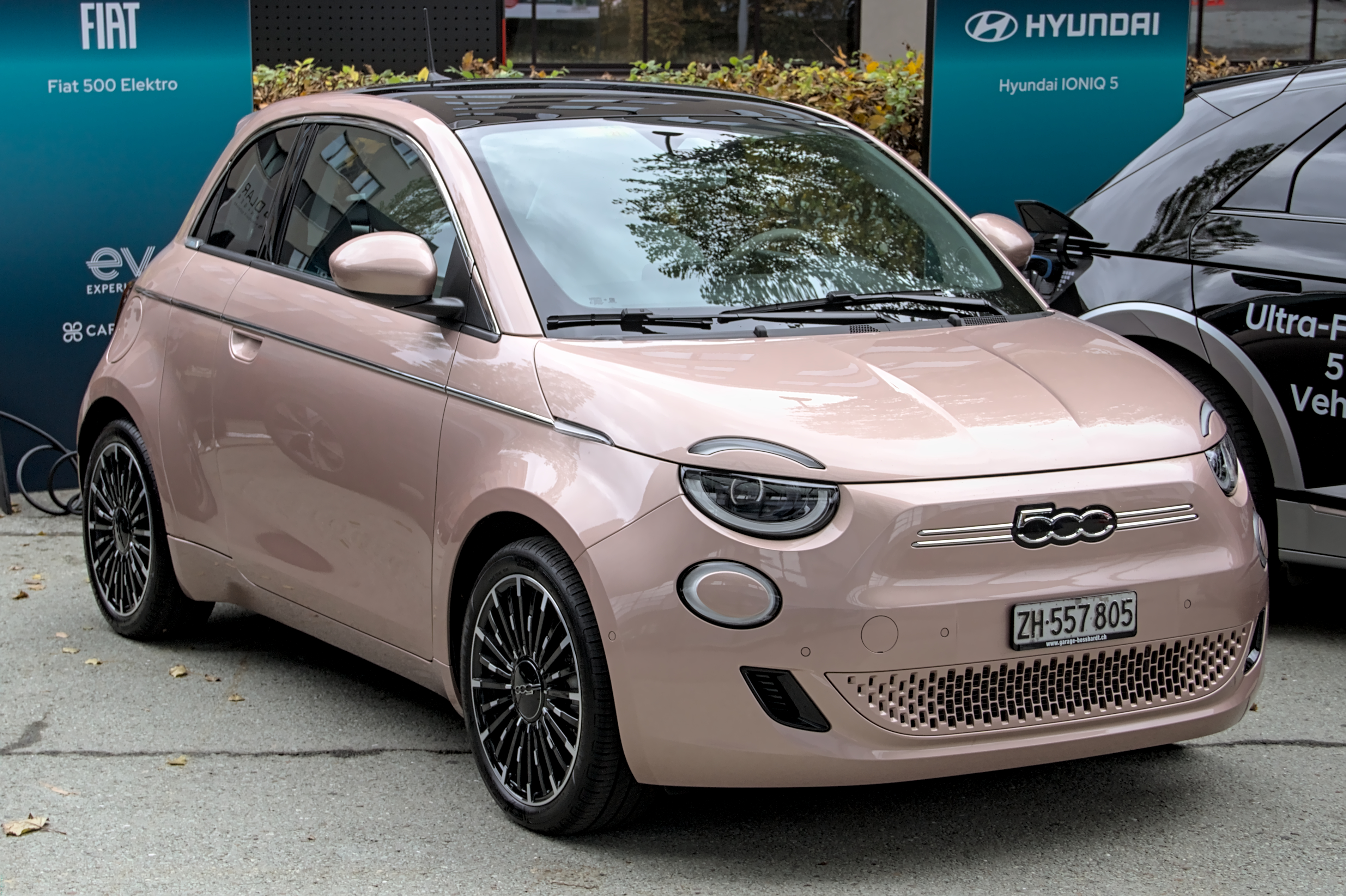
39 on a highway, but there isn't much else in that class. Now there's a Fiat 500e, but that's
fully electric and we're talking fuel efficiency, specifically not vehicles that are fully electric.
Now, if you're willing to spend a little more money and go up a size, then you can get some
pretty efficient offerings like the Civic, for instance, in its entry level with its two liter
engine, 32 miles per gallon city 41 highway. So it's better than the Mini and yet you can take
four or five adults in it. And it's pretty well loaded for the price. And it's a very good car,
even an entry form. If you're willing to spend a little bit more money and go to a hybrid,
of course, there's the new Prius, which we've talked about on the show multiple times of
how great it is. And we're talking 57 miles per gallon city 56 highway. And you can get all wheel
drive and those numbers drop a little bit. But it is such a fantastic vehicle. I mean, the Prius
has such a huge reputation in history for being a great hybrid. But the looks, the driving feel
and the extra power has really polished the Prius now into an all around car. And there's also,
of course, the plug inversion for a bit more money that gets 127 miles per gallon equivalent,
which is the highest for any plug and hybrid car on the market right now. Now, of course,
you can get into other hybrids in higher classes. And there's actually some great plug and hybrid
luxury cars. But this reader specifically was asking for small cars. So I mean,
my recommendations more or less stay the same. If you want just gas, the Civic and the Elantra,
and even the Corolla, all great choices, hybrids, all three of those have hybrids, and they're all
pretty equal. There's pros and cons to them. The Civic hybrid, we have ranked as the best all
around. But the Elantra, even though the numbers are down, is less money. And it gives you basically
almost everything the Civic has. So it's a great option. And then the Corolla, you can get all wheel
drive as an option. And it's Corolla, it's to this hybrid system, it's been around forever,
and it's fantastic. And then there's the Prius, which already talked about. So those are sort of
the points I'd say right now, where you get a good combination of value, efficiency, and a
fully livable car that should last you for a long time. So that wraps it up for another episode of
The Auto Guide Show. Again, I'm Mike, and I will see you next week.
About this episode
Consumer Reports joins The AutoGuide Show to dig into whether AI can help you buy a car. The hosts explain how they used chatbots and natural-language prompts, but warn that AI can confidently steer you wrong—especially when reliability data is missing for new models or when it invents/misquotes details. They recommend using primary sources, verifying the correct model year, and still driving to catch real-world ergonomics and family-specific deal-breakers.
This week Mike talks to Consumer Reports about the pros and cons of letting AI help you with your next vehicle purchasing decision. We break down at which point AI can be helpful and where it will lead consumers astray.
Later, Mike reviews the Ironhead Thrasher R/T RTD01 Tire - an off-road warrior for those on a budget. Finally, in the mailbag, we answer the question of what are the best fuel efficient cars currently on sale today.
Learn more about your ad choices. Visit megaphone.fm/adchoices