Jay from Banks Power walks through how the brand blends marketing with deep engineering—and why it’s obsessed with verified data instead of hype. He shares his path from radio and truck-building to Banks, then zooms out on diesel performance culture: the shift from “delete and chase power” to emissions-compliant, longevity-focused upgrades. Key example: the 6.7L Cummins grid heater failure and Banks’ Monster Ram solution, including optional extra heating elements. The discussion also tackles dyno credibility, OEM-level testing, and why Banks often costs slightly more for measurable results.
Banks Power joins us to talk about their philosophy on truck upgrades,
the diesel market, and saving 6.7L Cummins from grid heater nut
failures. Jay Tilles, Banks Marketing Director, podcast host, and radio
legend, joined us for this in-depth look at performance.
*20% off HOT SHOT'S SECRET with code: DIESELPOD20*
https://www.hotshotsecret.com/shop/
Learn more about your ad choices. Visit megaphone.fm/adchoices
"Sure. Today, I'm marketing director at Banks Power. I oversee all things marketing, from video content to ad placement, help out with new product development."
Banks Power is a company that makes aftermarket upgrades for diesel trucks. They build performance parts and also work on new products based on what people want.
Banks Power is an aftermarket performance company best known for diesel upgrades. In the context of this episode, the host is describing how they market and develop products for diesel trucks.
"Prior to that, I ran a car stereo installation company out of my parents garage. So it's been cars and trucks my whole life and or 12 volt, you know, in the audio systems."
Most cars use a 12-volt electrical system. That’s the power level that runs things like the audio system and other accessories.
“12 volt” refers to the electrical system voltage used in most vehicles for powering accessories like audio equipment, lights, and charging circuits. Automotive audio and electronics are designed around this standard.
"So I went to the, the attorney at CBS radio and convinced them to do it."
They’re talking about CBS Radio as the company that had to approve the promotion. Big media brands usually have rules about using their name and logos.
CBS Radio is referenced as the organization the speaker had to convince to allow the truck branding/call letters. In practice, radio networks and stations control brand usage and promotional rights, which often come with legal and insurance requirements.
"And she said the same thing, we'll trust you, but you need to carry $4 million of liability insurance on your own."
Liability insurance helps pay if you accidentally hurt someone or damage their property and you’re found responsible. Big events usually require more coverage because there’s more risk.
Liability insurance is coverage that protects you if you’re legally responsible for injuries or property damage to others. For large promotional events or branded vehicles, insurers often require high limits because the risk exposure is significant.
"I got to know him over the next few years of building this SEMA what turned into a SEMA truck."
SEMA (Specialty Equipment Market Association) is a major U.S. trade show where builders bring highly modified vehicles to showcase aftermarket parts and engineering. Calling it a “SEMA truck” implies the build evolved into a show-worthy, performance/tech-focused project.
"...there was a banks turbo charged diesel pickup available through dealerships one year prior to the Cummins turbo diesel available in a pickup truck..."
A turbo diesel is a diesel engine equipped with a turbocharger to increase airflow and power. The transcript frames Banks’ system as an early example of turbo-diesel pickups being sold through dealerships before later mainstream offerings.
"Now look, here we are today, everything has a turbo on but back then it was all about supercharging."
A turbo is a device that uses the engine’s exhaust to spin a fan that pushes extra air into the engine. More air usually means more power.
A turbocharger uses exhaust gas to spin a turbine, forcing more air into the engine for more power. It’s a form of forced induction, and it became widespread on both gasoline and diesel engines.
"...there's the tube bending shop across the street, CNC, there's the whole thing..."
CNC is a computer-controlled machine that cuts parts very precisely. It helps make components that fit correctly and consistently.
CNC stands for Computer Numerical Control, a machining method where computers control cutting tools to produce precise parts. In engine and fabrication contexts, CNC is commonly used for tight-tolerance components and repeatable manufacturing.
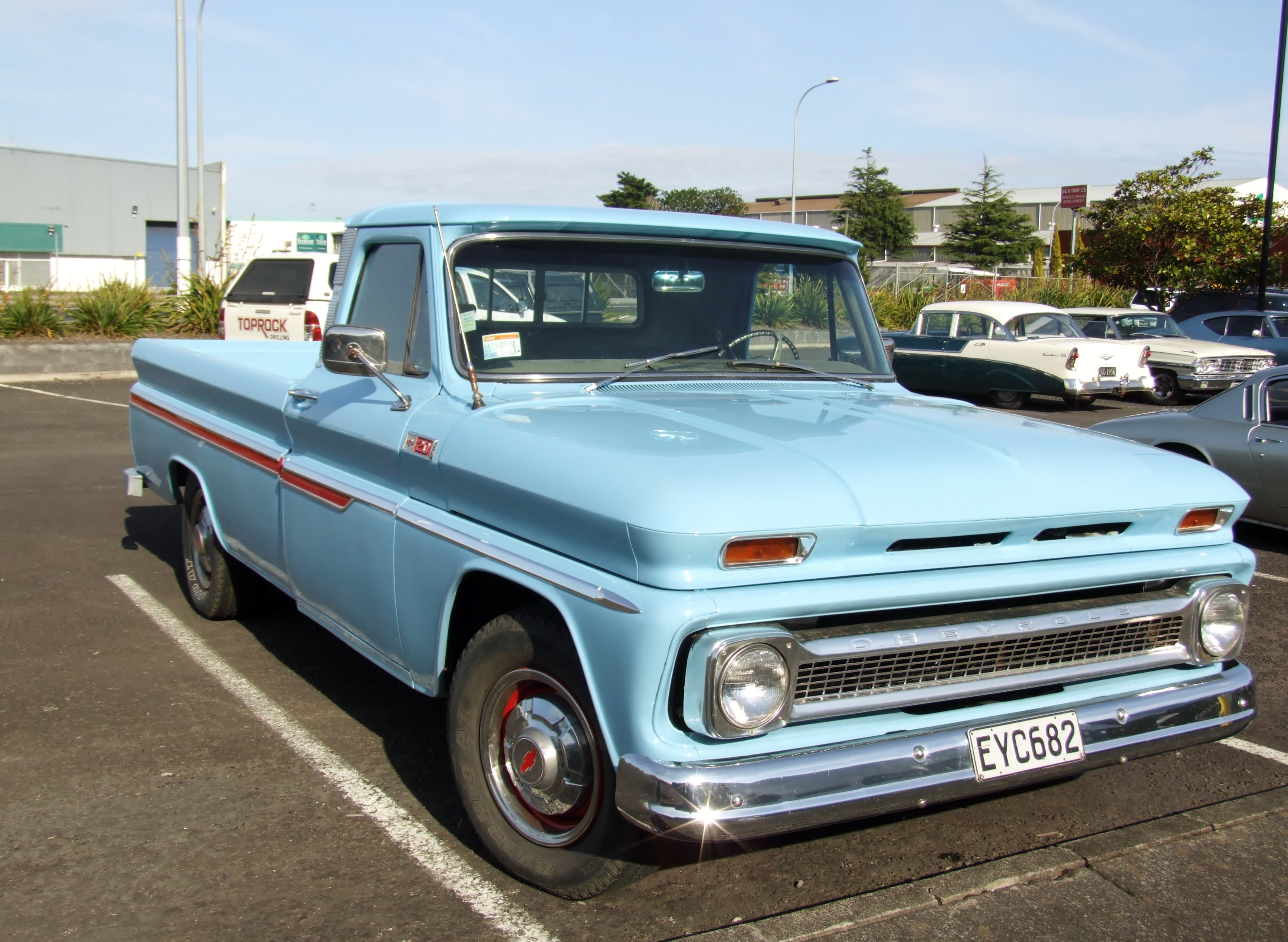
"...I'm looking at the shop floor and I'm looking at lockjaw, by the way. Lockjaw is our 1966 Chevy C20 on airbags with a supercharged Duramax in it."
A 1966 Chevy C20 is an older Chevrolet pickup truck. The point here is that people take classic trucks and modernize them with newer diesel performance upgrades.
The Chevrolet C20 is a classic heavy-duty pickup platform from the 1960s. In this episode, the host uses a 1966 C20 as an example of a modern diesel build, showing how older trucks are being updated with today’s performance parts.
"...I can compare it to OEM, compare it to another company's product that might be in that same segment."
OEM means the parts that came from the factory. The speaker is saying you can compare aftermarket products against what the car originally used.
OEM stands for Original Equipment Manufacturer, meaning the factory-produced parts and specifications. The episode contrasts OEM components with aftermarket products to discuss how consumers can compare performance claims.
"...I caught one today about a cold air intake system. And that's a whole, you could do a whole show on cold air intakes..."
A cold air intake is a modification that changes how the engine gets air. People debate whether it truly adds big power or just changes sound/feel.
A cold air intake is an aftermarket intake system designed to improve airflow to the engine, often with the goal of increasing power and throttle response. The episode notes it’s a common topic of debate in diesel performance.
"...they may not have what they think is the data to sell their products. So whether they make it up, or they embellish, or they put a dyno run from last September with one from this January on..."
A dyno run is when a car or engine is tested on a machine that measures power. If the test isn’t done the same way each time, the numbers can be misleading.
A dyno run is a test where a vehicle or engine is loaded and measured on a dynamometer. It’s used to produce power/torque curves, but results can vary a lot if conditions aren’t controlled.
"...it should be on the same day or the next day at the same ambient temperature with the same conditions..."
Ambient temperature affects engine performance and dyno readings because air density changes. That’s why dyno tests should be done at the same temperature (or corrected) to compare results accurately.
"That's what he's looking for. And that's who we, that's who we service. We also, we also will make high horsepower parts occasionally for bragging rights or for to set a record or whatever we've done that Gail has done that, but that's not the market we serve."
The episode frames diesel performance as serving practical needs like towing long distances reliably. That shifts the goal from dyno/YouTube spectacle toward drivability, thermal management, and component life under sustained load.
"I don't like the audience that they've built, you know, for like, it's fun to blow up engines. I'm more of a Gail Banks student that you shouldn't blow up the engine."
“Blow up” means the engine fails badly—sometimes instantly. It usually happens when the truck is pushed harder than the engine can safely handle.
“Blow up engines” is slang for catastrophic engine failure, often caused by pushing fueling/boost beyond what internal components can safely handle. The speaker contrasts entertainment-focused testing with a more conservative, limit-aware approach.
"It's called a grid heater because the coil heater looks like a grid when you look at it... And it is sandwiched between the intake elbow, post turbo, post intercooler."
A grid heater is a heating element in the intake system that warms the air when it’s cold outside. On these engines, it helps prevent hard cold starts by preheating the air before it goes into the cylinders. The episode is also about how this heater can be part of a bigger failure problem.
A grid heater is an air intake heater used on cold-start diesel applications. On the Cummins 6.7 discussed here, it’s described as a coil heater shaped like a grid and located in the intake path between the intake elbow and the intake manifold. The heater’s purpose is to preheat incoming air so the engine isn’t shocked by very cold conditions.
"...and its job is to preheat the air on cold winter days so you don't shock the engine and you get"
In winter, the air entering the engine is very cold. Preheating that air helps the engine burn fuel more reliably and reduces the stress of cold starts. That’s why the grid heater is there.
Preheating the intake air is a cold-weather strategy to improve combustion consistency and reduce stress during start-up. The speaker connects this directly to the grid heater’s job: warming the air so the engine isn’t “shocked” by cold temperatures. This is the functional reason the heater exists in the first place.
"because you have glow plugs. If you have a 25 or 26 Ram, you also have glow plugs."
Glow plugs are electrically heated elements used to warm a diesel engine’s combustion chambers for easier starting, especially in cold weather. They help ignite the fuel more reliably until the engine reaches operating temperature.
"after we had launched the Monster Ram Gen 2, which is the 50 state compliant monster that you're referring to."
“50 state compliant” means the modification or emissions-related product is legal to use across all U.S. states under emissions regulations. For diesel performance parts, this usually implies the system is designed to meet federal and state requirements.
Term
engine ate the bolt
"I want to get one of your Monster Rams because it removes, it replaces the grid heater and my engine ate the bolt and blah, blah, blah."
This phrase means a bolt or part broke off and got into the engine. When that happens, it can cause serious damage very quickly.
“Engine ate the bolt” is a dramatic way to describe catastrophic internal damage caused by a fastener entering the engine (often from a failed component). In diesel contexts, this can happen when a heated element or related hardware breaks loose and is ingested.
"So I called this guy Brad and he owns Protect Diesel in Kamloops, Canada. I said, how common is this?"
Protect Diesel is a shop that works on diesel trucks. The host is citing them to show the problem is happening in the real world, not just online.
Protect Diesel is referenced as a diesel repair shop in Kamloops, Canada. The speaker uses it as a real-world source for how often the grid-heater-related issue shows up in their work.
"response, to remove airflow restrictions, slow down your turbo shaft speed, EGT, like all the
[2204.5s] things that the benefits that it has performance wise, the side, the big side bonus is that"
EGT means how hot the exhaust gases get. If EGT is too high for too long, it can cause damage, so lowering it is usually a good thing.
EGT stands for exhaust gas temperature. Lowering EGT generally means the engine is producing less heat in the exhaust, which can improve durability and reduce the risk of damage.
"And when over many, many heat cycles with cold, hot, cold, hot, cold, hot,
[2242.6s] cold, and with a 30 Hertz vibration at idle, which is a pretty, you know, you know what a"
Heat cycles are when the engine repeatedly heats up and cools down. That expansion and contraction can loosen parts and make failures more likely.
Heat cycles are repeated transitions between cold and hot operating temperatures. Components expand and contract during these cycles, which can loosen fasteners and degrade mounts over time.
"...for those people who still need cold start capabilities, we include now up to four heating elements..."
A cold start is when you try to start the car in freezing weather. Diesels can be harder to start then, so heaters warm the air to make ignition easier.
Cold starts are engine starts performed at low ambient temperatures, where diesel ignition becomes harder due to reduced air and component temperatures. Intake air heating is a common strategy to improve ignition reliability and reduce stress on the engine during cranking. The segment focuses on adding more heating elements to handle colder regions like Alberta and Alaska.
"...we now offer the dual heat capable monster ram. So you can thread two of the 750 watt coil heaters..."
“Dual heat capable” means the intake can use two heaters instead of one. That gives the engine more help starting when it’s very cold.
A “dual heat capable” Monster Ram setup means the intake system can accept two separate heating elements for increased cold-start heat. In the segment, the speaker specifies threading two 750-watt coil heaters to boost total heating capacity. This is aimed at colder regions where one heater may not be enough.
"...we have an inline billet heating device with two more. So you can have 3000 total watts of, of heating for your extreme cold starts."
“3000 total watts” refers to the combined electrical heating output available from multiple heating elements in the intake system. The speaker frames this as support for “extreme cold starts,” where more heat can improve ignition reliability. It’s essentially a capacity claim: more wattage equals more heat energy delivered to the intake air.
"Well, I think a lot of the, a lot of the topic requests or conversations I have are focused around preventative maintenance. And I also talk with engine builders and know what an engine costs."
Preventative maintenance means taking care of the vehicle before something breaks. Instead of waiting for a failure, you do the right service and fixes early to avoid big repair bills later.
Preventative maintenance is proactive servicing done before failures occur, based on expected wear and operating conditions. In diesel performance discussions, it often includes monitoring fluids, addressing leaks early, and upgrading wear-prone components to reduce downtime and expensive repairs.
"when I saw that the same thing goes for like the differential covers and the engine oil pans and just all those could be entire podcasts by themselves..."
A differential cover is the protective housing over the gears that help the wheels turn. Better covers can help prevent leaks and damage, which matters for long-term reliability.
Differential covers are the housings that protect the differential gears and help contain lubricant. Upgrading them can be about durability, sealing, and preventing leaks—especially relevant when discussing preventative maintenance and OE-quality solutions.
"...the differential covers and the engine oil pans and just all those could be entire podcasts by themselves..."
The oil pan holds the engine oil. If it leaks or gets damaged, the engine can lose lubrication, so it’s a key part for reliability.
An engine oil pan is the reservoir that holds engine oil and protects it from road debris while also helping maintain oil pressure and lubrication. The speaker groups oil pans with differential covers as examples of components where OE-quality preventative upgrades can reduce failure risk.
"I think where Gale comes from with his endurance racing history is more akin to like F1 racing and trying to shave off a hundredth of a second. And that and to shave off a hundredth of a second requires absolute precision engineering and maybe a ton of money to do that."
Formula 1 (F1) is known for extreme precision engineering and small performance gains that can decide races. The speaker compares diesel performance engineering to that level of precision—where tiny improvements and tight tolerances matter.
"...he was the Volvo hired Gale Banks in the 70s to turbocharge their first what would become their first turbo sedan."
Turbocharging uses exhaust energy to spin a turbine that forces more air into the engine. That allows more fuel to be burned efficiently, increasing power—while also requiring careful engineering to manage heat and stress for long-term reliability.
"And so he's been doing OE level. And even before that, you know, with with marine applications or whatnot, but he's he he taught at General Motors."
“OE level engineering” means designing aftermarket solutions to match original equipment standards for fit, durability, and performance consistency. In this discussion, it’s presented as the key difference between hype-driven upgrades and systems built for long service life.
"...but he's he he taught at General Motors. He's like there. So he's got a very long history of OE level engineering."
General Motors (GM) is a major automaker with large-scale powertrain engineering resources. The speaker mentions Banks teaching at GM to reinforce that his background is rooted in mainstream OEM engineering practices.
"And I think in the future... It’s the only way to pass emissions. And once this administration is gone... the engines are going to get bigger. It's the only way to produce less emissions and still make the power you got you have to go bigger."
Emissions are the dirty stuff an engine puts into the air. Laws limit it, so truck makers have to redesign or tune the engine to meet the rules.
“Emissions” refers to regulated pollutants produced by an engine, such as nitrogen oxides (NOx) and particulate matter (soot). Diesel trucks have to meet tightening emissions rules, which often drives changes in engine calibration and hardware.
"...I can stop by the engine dyno room and check it out I can jump on the phone and talk with a shop somewhere..."
An “engine dyno room” is where engines are tested on a dynamometer, which measures output like horsepower and torque under controlled conditions. Dyno testing is crucial for validating tuning changes, diagnosing issues, and comparing results across different configurations.
"There's a freaking Whipple three liter supercharger on the track is amazing in it. And it's ungodly loud."
A supercharger is a device that forces more air into the engine. More air usually means more power.
A supercharger is a forced-induction device that increases engine power by compressing intake air before it enters the engine. Because it’s mechanically driven (typically by a belt), it can provide strong boost across a wide range of engine speeds.
Select text to request an explanation
Jay, welcome to the D-Spodcast. I'm really looking forward to chatting with you today.
I've followed you for a long time, both with banks and in the podcast world, so it's great
to be able to finally connect.
I am sorry you've wasted so much time. So much of your precious time focused on a knucklehead
like me.
It's great to finally have you on the podcast. There's some products we're going to talk
about. Also, I look forward to talking about banks and the brand in general. But for those
that don't know you, tell us a bit about what you do at banks and a little bit of your background
in automotive.
Sure. Today, I'm marketing director at Banks Power. I oversee all things marketing, from
video content to ad placement, help out with new product development. I've got my ears
to the, well, my eyes on social media all the time. So I'm always aware of what's going
on in the marketplace, whether it's good or bad. And I bring that to the engineers here
and they say, that's a great idea and we can make it or that's not such a good idea.
And I have the pleasure of working with Gail Banks, a living legend every single day, seven
days a week.
I mean, he's here seven days a week and I try to, I'm here sex. But yeah, I've learned
an incredible amount from Gail, which I'm sure we'll talk about in this podcast. My
backstory, I've always been into cars and trucks. The first thing, I guess I should
say who I was before this, I hosted the Truck Show podcast. So I'm all like, I'm a truck
guy through and through, prior to hosting the Truck Show podcast, I worked at a radio
station in Los Angeles called KROQ, the world famous K-Rock on alternative rock station
and I produced the Kevin and Bean morning show. Prior to that, I ran a car stereo installation
company out of my parents garage. So it's been cars and trucks my whole life and or
12 volt, you know, in the audio systems. And I still do that today. I'm ripping apart a
mini Cooper of all things and putting a full audio control sound system in it. But that's
for another, that's for some European car book podcast. That's not for today. But yeah,
so we're we're here. I've been at banks for just shy of eight years. And it's been incredible,
truly incredible. I have I've learned I was at radio. And we I had a cockamamie idea to build
a show truck if you've ever every town has their big radio station, whether it's country,
rock, whatever, hip hop. And they all have the same Chevy van. And it's got the call letters. And
they take that Chevy van to the opening of the 711 or to the to the baseball game and they hand
out free t shirts and stickers and whatever, they all have that same van. I thought that was,
that's so lame. We have that same, we have the same Chevy van, right? The Express 2500 or
whatever. Now some of them sprinters, but I wanted something different. And I was a truck guy and
the radio station. And it should be something massive that we can take to supercross and
Monster Jam and not look foolish. So I went out and bought my own 2007 and a half Duramax
duly. So an LMM, I went to the radio station management. And I said, Here's what I want to
build. And they said, Well, we can't afford that. I said, No, no, I'll get it all sponsored. You
just have to let me run the call letters on the side of the truck. And surprisingly enough, the
program director said, Yes, he trusted me to do this. And he knew I was a car guy, and I
represented the brand well. So I went to the, the attorney at CBS radio and convinced them to do
it. And she said the same thing, we'll trust you, but you need to carry $4 million of liability
insurance on your own. And I said, Oh, so ouch. Luckily, I was the voice of AIS, the auto
insurance specialist. So I worked out a deal with them to, to, we worked a deal where I was
doing more of the commercials that were paying me a little more. And I could reinvest that into my
insurance. And we were able to build this truck. Reason I tell you this long story is this is how
I meet Gail Banks. I'm backstage at a comedy show, a big comedy show at the Shrine Auditorium in
Los Angeles, big place. And big Leo, Brian suits, who was hosting mornings on another station was
backstage. And he knew that I was in the cars. And we were just making small talk having to be
here. And he goes, ah, lightning, lightning was my nickname for many years. He says lightning,
what are you working on these days? You're always toying with cars and trucks. I said, you're
not going to care. You're just wasting your own breath. And he says, No, no, no, I'm interested.
What are you working on? I go, Okay, I'm building a big giant monster truck, a lifted dually,
by the way, this is what is a diesel. I go, of course it's diesel. It's a big truck. And so you
should meet my friend. And I go, you don't have any friends and automotive people in radio are not
into cars and trucks. They might drive a nice Mercedes, but that's because they're a sales
person have to pick up clients. And he says, No, you should meet one of my friends. And I go,
all right, I'll take the bait. Who do you know? And he goes, Gail Banks, I said,
you don't know Gail Banks. There's not a chance in a million years you know Gail Banks. And he
goes, No, I do. I have, I have dinner with him every Wednesday night at Musso and Franks in
Hollywood. And I go, that's not a this is jiving. It's all it's all BS. But I called him on it.
So right, I'd love to join you. I found myself the next Wednesday night at Musso and Franks,
a legendary restaurant on Hollywood Boulevard, sitting with Gail Banks and Brian and some of
their friends. And here's me pitching Gail on sponsoring my truck that I'm building with the
radio station. I find out that Gail is a radio fan, that he's a talk show radio fan from back
all the way to the 50s. So he says, I'm in, let's do it. I was, I was blown away. And I got to know
him over the next few years of building this SEMA what turned into a SEMA truck. And I fell in love
with what he was doing here. I fell in love with the engineering teams, with even the emissions
guys, like the, I was just, I was enamored by the tech, everything. And radio started to go down
hill as people know, right, it became Spotify and YouTube and all these things. And the writing was
on the wall. And Gail made me an offer I could not refuse. So I came over here, I jumped out of
radio. And people were skeptical. They said, why, why radio? I mean, like, how do you make the
transition between radio and automotive performance parts? That doesn't make any sense.
And PR is PR. Being passionate about something is being passionate about something. Here I am
today, blabbing at you guys. And I love it. I couldn't love it more. I'm just a pig in slop.
What was it? I'm really curious. What was it like, like that first week or first couple weeks at
banks when all of a sudden there's that huge catalog, there's all that experience. There's 6265,
737, IDIs, there's power structures, there's all these different platforms. Was it overwhelming
at first? Jumping into I mean, here, I'm reaching over into my case over here, I'm looking for a
catalog. So there was hundreds of post it notes on my catalog right here, my banks catalog, we no
more longer make catalogs. Some companies do and I admire that. But we don't. I lived in this
catalog. I didn't know what was what. And I still don't know a lot of those, you know, the IDI versus,
I mean, I'm just not, I didn't eat, sleep and breathe diesel. In my childhood, it was something
that was newer to me and I had to learn. But Gail threw me in. Like, I thought that it would take me
years to learn it. But on day one, I was in engineering meetings. I was in like every meeting,
I was in HR meetings. And I thought I would often ask myself, should I be in this meeting? Like,
am I qualified to know this? Yep, absolutely. Just get him in there. He'll learn it. He'll
absorb it. And so I did. And he just fast tracked it. I had no choice. I was gonna if I was going
to market this, and I didn't start off as marketing director, by the way, there was there was a
marketing director who's still here, by the way, we kind of switched positions a few years ago.
I was the brand manager. So as the brand manager, I was going to create video, I would be I would
be in charge of events and such. And I would look after the brand. And I would promote. That's
what I that's I was the promotions guys, you can tell I'm loud and obnoxious. And that's what I was
going to be for the company. But as things evolved, I took on more of a marketing role. And the gentleman
who Billy who's still here, who's day he sits back here in another office, he was so focused on the
website. And so much of our business now is done, a direct to consumer on bakespower.com,
that he needed to focus his attention on that. And so we flip flopped in. And I came into the
marketing director position, I've been here for a few years doing this. And to answer your question,
no, I'm still learning about some of the legacy product. And it's, I'll never know all of it.
And I luckily there's a great team here, some have been here for 2030 years, and they know that
product backwards and forward. So I just I can really just pick up my phone and within 15 seconds,
I'm I've got an answer for the customer or for the distributor, whoever it is.
That's so cool. My story with banks is totally different. Is it was 2005. And I used to watch
Stacy David and trucks on I think it was Spike TV. Now, did you watch Stacy or his hair?
Both.
And I still I love them to this day, and so watch it. But I didn't have a diesel truck,
but he had this episode. And it was the Bank Sidewinder all terrain trucks. And I think,
I think I saw the Duramax first, and then maybe the Cummins. But for those people that didn't
see it, it was, you know, they're bright red, either 60 powerstruck 59 common rail or LLY Duramax,
I believe it was could have been LBZ. But it had all these banks products on it. And I remember
sitting there as somebody who didn't own a diesel truck and seeing 450 500 horsepower 1000 foot
pounds of torque and how it was all put together. And that was the first time in the industry,
I connected with something and it made me say, I want that one day. That's what I want to do.
And to kind of fast forward it a little bit. Being in the industry myself, like in a sales
capacity for four years at that time, you know, the industry, for a long time, it really focused on
deletes and getting rid of emissions stuff. And I remember being working in this industry and
banks didn't, they set up the product line and focused on emissions on performance and doing
things a certain way. And people in the industry, you know, might make comments about it or say,
oh, it's, you know, it's not for you, it's for the older guys, and we're going to go pursue this
quick easy money. Fast forward a little bit farther. I've got a lot of opinions on that,
I'm happy to share. Yeah, I'd love to just kind of provide the overview of, of how I have seen it
grow, you know, past that, I think once seven figure EPA find started to come in, once people
started to go to federal prison for some of this stuff, the industry turned and it wanted to be where
banks power had been the whole time. And that was the moment where I said,
I need to really pay attention. This is something powerful. And, you know, in my spare time, I would
look back at some of Gail's old videos and things he had done, but I don't think diesel
performance would exist without Gail banks. So it's been interesting from the outside looking
in and seeing it over a 15, you know, 20 year period. Yeah. What it looks like.
So when Gail started in the early 80s, right, he was contacted, he had set land speed records,
and Pontiac reached out to him. And they said, we have a new Pontiac Firebird coming out,
we're going to skip a year, but the next year we want you to help us market the next year that's
coming out, we want you to go setting land speed record at the Bonneville Salt Flats.
The car is waiting for you. If you, if you accept the car is waiting for you at our
desert proving ground in New Mexico. And we're also going to give you a pickup truck and a
suburban. And it's got our new naturally aspirated 6.2 liter diesels in them. So Gail and Bob
Robb, the engineer who recently retired after 40 some odd years here, drove down there, picked up
the car, drove the trucks back, and we're pulling out their hair because they were so ungodly
slow. So he said, this is not going to work for us. And he and Bob over the next couple
weekends took one of their turbo systems from a big block turbo or something at that time. And
gas application and retrofitted it onto these pickup trucks flash forward a few years later.
You could go into any GMC dealership in the country. There was like 2,500 of them at that time.
And buy your brand new pickup truck with a 6.2 or suburban with a Gail banks
Sidewinder turbo system. You can buy the turbo system over the counter at any of 600 Gail banks
dealers. The price is $1,995. And if you're considering a new suburban, the conversion is
a factory option available at 2,500 GMC truck dealers. Now that is one year prior to Cummins,
sorry, Dodge releasing the Cummins power plant with a turbo system. So there was a banks turbo
charged diesel pickup available through dealerships one year prior to the Cummins turbo diesel
available in a pickup truck. That was that's significant. And that was the turning point for
him. And he was doing all gas performance prior to that he was the god of turbos back then he was
poked fun at guys called him like Gail Banks's hairdryer. You got those hairdryers from Gail
Banks. They didn't understand turbos. Now look, here we are today, everything has a turbo on but
back then it was all about supercharging. And Gail did a lot of supercharging back then on his
marine applications. He did anything was he was all about forced induction. But the the turbos
were a game changer. He was in California. This had to happen in California, right? We had even
back then carb California Air Resource Board, he didn't have a choice. Yeah, even back then you
could the fines were so steep. And people said, Well, like, Gail, you know, he's he's he's chosen
this route. No, no, no, he would have had to have moved. Now, you know, you've discussed this topic
at nauseam, all of your guests discussed it, you had Corey Willison and the whole thing. I and
it. Deletes have always been illegal. And they're still illegal. They just weren't
policed in certain states, right? If you live in Texas, Utah, or wherever it is Idaho, it's
still illegal. Now, I'm not saying that I think it should be illegal. I'm just saying it is. And
and for that. And people just assumed that it was some kind of a choice that Gail made that Oh,
well, he could do it. He just doesn't want to like no, he's in California. And he employs a lot of
people that have families. So that is it is what it is. And he wasn't gonna risk it. Now,
he has made plenty of race parts that required the deletion of of emissions equipment to go racing.
So it was it's a it's a it's a constant conscious decision to stay in business is what that is.
What it really did is it really pushed diesel performance
in a very unique way, which we're going to get to here with some of the products. But it,
you know, in my mind, there was just a lull with diesel performance overall for for a while there
where you weren't seeing a lot of companies or a lot of innovation. It was like this kind of gave
up because I don't think they had necessarily the engineering power to be able to go through and
say, we're going to give you lower EGTs or horsepower, more tour cooling, address this this
stuff. And so I think that's what's really unique about this conversation and chatting with you
in the position that you're in is I think you're kind of at the convergence of so many different
departments of engineering, what people are saying out there at truck shows or on social media,
feedback that you're getting. And that's why I was really excited to have you on the podcast to be
able to look. I was in a meeting Patrick earlier today, only a couple hours ago where I'm in a
meeting and we're looking at competitive inline tuners. You know, we make their there's flash
tuning, there's inline tuning, see which will about both platforms, both methods of tuning your
your truck, but we were looking at some competitors are in the market and looking at
we put them on the dyno, we instrument them. And we know everything that's happening about that,
that the competitive tuner. We know, we know all the components on their board, we know their
how they're doing what they're doing. And that's how we compete. And we're on an OEM level when
you come to banks, if you guys are in the LA area, you know, hit me up, I'll give you a tour,
like we give tours every day. And when people walk through, they go, Oh, I get it, there's five
engine dyno cells, the chassis dyno, there's engine building rooms, there's fabrication cells,
there's, there's the tube bending shop across the street, CNC, there's the whole thing, like it is,
there's engineers everywhere. And these are degree engineers everywhere. It's not a guy in a corrugated
steel building out in the Ozarks, you know, coming up with some, you know, some part, it's,
there's a lot of engineering, nothing against the Ozarks or corrugated steel buildings. But
you know, I'm saying like, it's just, this is an OEM, we have, we have built 29,000 banks D866T
engines for the Army's Joint Light Tactical Vehicle Program. That's the JLTV, it replaced the
Humvee. All 29,000 JLTVs have banks engines in them. We are General Motors' largest customer
for Duramax engines outside of GM itself. And those engines are built for us with our parts
injected into them on the line at D-Max in Moreno, Ohio, and now at the New Brookville plant.
Then what the tools can't fit, those engines come to us for final assembly and test. And it's
kind of like Mercedes AMG, one man, one engine, they go all the way through the system. And every
engine receives a dyno test, and then they get shipped off to, it was Oshkosh, now it's AM General.
And, but anyway, my point is that it's an, it's an OE level engineering effort on every part we
make. And when we're looking at a tuner earlier today, oh my god, it's just, I don't want to say
what it was, because this might be a little premature, but we were just wrapping our head
around it's a major company that we all know in the diesel space. And we thought, are they still
doing it like this? Like it's 1994? Like what are they doing here? Why are they, and then also
people are still buying it. So it's both, it's just, it's, it's not that it's poorly engineered,
it's just, it's maybe lazy engineering. And Gail just doesn't do that. He just doesn't,
he's, every part we make is like the last one we're ever gonna make, we're gonna go out big,
and we're gonna, we're gonna win. And, and so consequently, we're late a lot. People know that,
right? We're late. And we're typically a little more expensive, not a lot more. There's a, there's
a fallacy that we're tremendously more expensive. That's not, that's not the case. We're not. We're
generally 10 to 20% more than, than the competitor. But it's no difference than, you know, a citizen
watch for a, for a Rolex, a high end citizen or an entry level Rolex or something, where, where
costs more, but you know, to get to that next level, you got to pay for it. And it's up to the
consumer to decide if, if that, if it's worth it, you know, do they, you know, do they want to buy
something that's, anyway, that's a whole nother topic. I'm sorry, I'm changing topics left and
right. But I think, you know, you talk about me being at the convergence of all these things.
Yes. Yeah, I'm at, I'm at, it's a wonderful seat right here in this office. I get to look over,
I'm on the second story and out to my right, there's a window and I'm looking at the shop
floor and I'm looking at lockjaw, by the way. Lockjaw is our 1966 Chevy C20 on airbags with a
supercharged Duramax in it. You know, that's, that's out my window. And it's a wonderful spot.
I love it. I really have a lot of fun here. The data in, in the videos that I've seen Gale do or in
the literature or the website information, it impacts so, so much. Like, and for me,
because I've been around it for a long time, I've worked in this industry, I'm gonna continue to work
in it, you know, probably till I retire. And I know when I get facts or figures or like a flowchart
or whatever it might be for the given product, I know it's gone through a process and it's tested
and that's so, I think rare and diesel or maybe even an automotive in general, I'm not sure, to be
able to see those cold hard numbers. And so I know when I buy this product, this is what it's rated
to do and I can compare it to OEM, compare it to another company's product that might be in that
same segment. I love that as a consumer because I know what I'm buying is worth it. It's gone through
the process. It has a name on it that means something. And that's so rare in this space.
Thank you. That is, that's, that's, that's Gale, that's, that's his DNA, that's who he is. And
the fastest way to commit suicide on the internet is to lie about your gains. Because
dinos used only 15 grand. You can go buy a used dynojet for 15 grand and, and be in business
as a performance shop and make your own tunes or whatever you do. But like for 15 grand, you could
outgail banks if he's lied about his dyno numbers or his flow or whatever. He knows that. He knows
that. So the numbers are not embellished. The numbers are conservative. If it says adds 15 horsepower,
adds 125 horsepower, you will get that unless you've done something wrong. And you've tested it
incorrectly. But we, we, every, every performance part is tested on the same day at the same ambient
temperature on the same conditions. You know, like, and it's all there. And, and it's not just for
the consumer. It's for us. It's for Gale, because he loves data. He loves it. He's passionate about
it. And he can find anything that is incongruent on a spreadsheet. He will find, he'll look at a row
and instantly go, that one doesn't end in a zero. There's something wrong. Or that, why does everything,
it's incredible, his mind. And the data at the end of the day speaks the truth.
And like I said, if there are a lot of companies, I caught one today about a cold air intake system.
And that's a whole, you could do a whole show on cold air intakes, because what a debate that is,
right? Oh, yeah. This company, who we all know, like, if you're in diesel, you definitely know
this company. They straight up made these numbers up straight up. There's not a chance in a million
years that they're factual. And not only did they screw them up, they put the, the horsepower
and the torque backwards. So it's just they're, they're, I think, the staff from a lot of
performance parts companies is thin. There's maybe one or two marketing people. They're in a hurry.
They have lives. They're doing the best they can. They're not engineers. They're marketing people.
And they interface with the engineers. I don't know their circumstances. I haven't worked at
those companies, but they just got to do what they got to do. And they may not have what they think
is the data to sell their products. So whether they make it up, or they embellish, or they put a
dyno run from last September with one from this January on, and they just line them up and they,
no, if you're going to dyno stuff, it should be on the same day or the next day at the same ambient
temperature with the same conditions and yada, yada, yada. Like they're just, they're just throwing
stuff together because they think, well, if we put up a dyno chart, anyone will believe it.
It's a dyno chart. Everyone believes dyno charts. Okay, what's, is there an SA correction factors?
No correction factors that observe horsepower. Is it not like all these things? And Gale's like,
this all matters. This all matters to a consumer that's educated. Now, if you're not educated,
you're just going to buy whatever you're going to buy, you know, you're going to believe any,
any, any, any label on any bolt on part. But the thing with the diesel market is that a lot of
guys like you are, they know they've been around it enough or they, or just cut right to the core
of a diesel owner. You spent minimum of $8,000 more for that engine. Why? You had a reason. And
that reason is that it could be many reasons for many different people. But the bottom line,
that is a, that was a cognizant decision you made about spending more. And for that,
you now are invested in that engine and you want to know more about it. You take better care of it
than somebody who just bought a gasser, generally speaking, just very generally speaking, we find
that diesel enthusiasts are more in tune with their vehicle and thus more educated. Would you agree?
Oh, 100%. Okay. Like the cost of a diesel truck, you know, like spending $8,000 more,
at least for the engine, or spending $80,000, $90,000 for the truck and you're building a
business or supporting your family with it, and just how easy it can be to destroy an engine or
a transmission or something like that and how expensive it is. The diesel enthusiast wants to
know. They want to know what, when they buy something, put on their truck. That's an interesting
thing here. That's an interesting thing. So Gail Banks won countless endurance races,
both on boats way back, 70s, 80s. He's gone faster than everyone else on Bonneville Salt Flats. He's,
he, he wins defense engine contractors, contracts, not because he's building more horsepower into
the engine. It's about longevity. The engines have to last. The parts he makes, the cold air
intakes, the boost tubes, the monster exhaust, the monster ram, the tuning, everything, it has to
help the engines longevity. It has to benefit the engine. Yes, we would love it to make more power,
but the one thing he will not sacrifice is the life of the engine. And he, it's the,
like, he uses this phrase like, if you invite me over for dinner, on the way out the door, I'm not
going to break your China, right? So if you invite us into your vehicle, we're not going to violate
it by hurting it. And I think what happens oftentimes is that you have the diesel enthusiast
community, which love to see engines blow up. They love to see the dyno cell and the engine go
flying into pieces and the crank hit the floor and all that stuff. Or they love to watch big
horsepower, you know, on YouTube videos and a, you know, in a fricking something goes into the
audience 50 feet away and some molten piece of part. And that gets conflated like into
the, the regular bolt on market. And the hardcore diesel guys start talking smack about companies
like us as if they're like, if you don't make big horsepower parts, you're lame.
What do you know about diesel? If all you're doing is making bolt on parts that maybe slow down the
turbo shaft speed a little bit or increase manifold air density a little bit or whatever,
like they can't wrap their head around it. If it doesn't make 200 or 300 extra horsepower,
why would you bother? And like, you need to separate the sport from a guy who has a wife
dog and two kids and a camper and any, any, any needs to tow from California to Utah or Texas to
Maine reliably. That's what, that's what he's looking for. And that's who we, that's who we
service. We also, we also will make high horsepower parts occasionally for bragging rights or for
to set a record or whatever we've done that Gail has done that, but that's not the market we serve.
But we, but we get a lot of times people come at us from through the lens of you don't make big,
you don't make big power, you know, like, okay, well, that's not what we're doing here.
That's not who we're servicing. And they can't wrap their head around it. So they dismiss us or
they, or they, you know, they rag on us on the groups. And I'm on all the Facebook groups that
I'm happy to say hi to you, you know, you'll see me in all the, all the Ford Ramgm groups.
And I have a passion for telling this story. And I love it. And I've been a UCC and I'm a big fan
of the competitors and the guys that might talk smack about us. I like them. Like I'm literally
fans of their products. Even if they're talking smack, maybe about us, I go, I like what they're
doing. I don't always like how they test. I don't like the audience that they've built, you know,
for like, it's fun to blow up engines. I'm more of a Gail Banks student that you shouldn't blow up
the engine. You should try to see how far you can push it without it blowing up. You might
depending on what the test is, you might need to know where the limit is, you know,
where the head studs give away and things like that, right? But those are select,
right? And few and far between. But so yeah, where were we?
That's a huge, that's been a huge evolution for me. I came into it wanting that power.
And I spent prior to doing this podcast just chasing that number. But over the years I have
learned that that's less. I'm just taking a guess. Probably less than 1% of all diesel
trucks on the road are are aiming for 600, 700 plus. Yeah, but dude, they're not those guys are
loud. They freaking they all carry a bullhorn in their back pocket. And man, they're not afraid
to use it. They're all these guys who are after big power. They're very and look, I love I love
them. Like if you're lit, if you're listening to podcasts, I think what you're doing is rad.
Like I like it. I like the sport. I truly do. I admire the guys that making monumental power.
And I don't care if the engine blows up, I like it too. I love seeing shrapnel,
but it's just it's not what it's not what we do here. It's and we're not claiming big power.
When we make something that does make 100 horsepower, you can bet it makes 100 horsepower.
You know, we encourage you to call us out and put it on your dyno or your buddy's dyno, please do.
That's where we're very confident about our numbers when we post them. But we make a lot
of parts that don't necessarily add a ton of power, which I'm sure we'll talk about in a
few minutes. But the I think you're also maturing, right? As you when you're younger,
you're like, I need big power. I want to go fast or one of these things. But now you have a great,
you know, your beard is gray or gray like mine. And you know, you got a family and
do you need to go 140, you know, in a pickup truck? So priorities change, things happen. And so we're,
again, we're not for everyone, the banks parts aren't for everyone. But believe it or not,
we're actually for the larger audience, right? We're for the common guy, again,
that's got the dog, the two kids, the wife and the trailer.
One of the products that I was really excited about when it came out was the
six seven Cummins intake manifold that fixes the grid heater issue with that nut that can fall
into the intake plan. I actually saw a video, it was Gail Banks and Dave from Dave Auto Center.
And they had a six seven Cummins engine, they pulled out of a truck and they were both
diagnosing what happened and you could see the carnage that took place. But as someone who would
potentially purchase a six seven RAM, that scares the heck out of me. And it's existed for such a
long time. So for anyone who isn't familiar with that or what banks power does to fix that,
tell us a little bit of the background of the problem and then how you guys address it with
a complete solution. Sure, sure. So with the introduction of the Cummins six point seven
in 2007 and a half, all the way to 2024, those engines all share a common part and that is the
grid heater, the air intake heater. It's called a grid heater because the coil heater looks like
a grid when you look at it. And it would remind you of a large heating element from a hairdryer
or something. And it is sandwiched between the intake elbow, post turbo, post intercooler.
It makes a big 180 bend close to it and it goes down into the intake manifold. The air goes into
the intake manifold. The grid heater is sandwiched between the intake elbow and the intake manifold
and its job is to preheat the air on cold winter days so you don't shock the engine and you get
an easier cold start. Now the Ford and GM guys, you don't have to worry about this because you have
glow plugs. If you have a 25 or 26 Ram, you also have glow plugs. But if you have a 2007 and a
half to 2024 Ram six, seven, you have the dreaded grid heater and something happened about 2013 ish.
There started to be some reports about potential failures, but you know, there's no real I mean,
there's internet, but people aren't really sharing how they do now. And then there was a guy named
oh boy, shoot, I'm going to forget his name now, but a gentleman that does some Ram
content on YouTube in 2019 had reported about it says, I think these things are going to start
failing over time. And it still wasn't many reports of it around 2020 or so after we had launched the
Monster Ram Gen 2, which is the 50 state compliant monster that you're referring to.
We got a call from one of our customers up in Canada and it said, hey, Jay, you,
my truck's up on the lift, the engine is down. I want to get one of your Monster Rams because it
removes, it replaces the grid heater and my engine ate the bolt and blah, blah, blah. So anyway,
can you send me one? I said, excuse me, what stop? What happened? I thought that I thought that was
a wives tale. That doesn't actually happen. I just saw someone on YouTube talking about it.
He goes, he says, no, I think this is like a thing. I said, okay, well, I'm not really
familiar with this. Can you, I mean, can you put me in touch with your, the shop that's working
on your truck? So I called this guy Brad and he owns Protect Diesel in Kamloops, Canada.
I said, how common is this? He goes, oh yeah, we see one every couple of months. I said,
what for this, for this, that's not possible. Why are people not talking about it? And he says,
we're diesel mechanics. We don't, we're not on social media. We're not sharing this stuff.
We, and these trucks are largely out of warranty when it happens. So it doesn't get reported back
to Ram. It's not, you know, it's not, it's not, it's just people, I don't know. It's like a silent
killer, right? And people aren't sharing it. I said, well, that's interesting. And I kind of
filed it away. But then I heard about another one. And I heard about another one. And so we did a
video about like, hey, if you, if you bought our monster Ram for performance reasons, throttle
response, to remove airflow restrictions, slow down your turbo shaft speed, EGT, like all the
things that the benefits that it has performance wise, the side, the big side bonus is that
you now get rid of your grid heater that could fail. And people started talking about it. Now,
why does the grid heater fail? Because we missed a big important part here. So what happens is,
is that the grid heater assembly is held into this plate with some nuts and bolts.
There are insulation washers that hold these nuts and bolts together, these threaded fasteners.
And when over many, many heat cycles with cold, hot, cold, hot, cold, hot,
cold, and with a 30 Hertz vibration at idle, which is a pretty, you know, you know what a
bass note is like a subwoofer and a hip hop song, you know, at 30, that's your truck is idling at
30 Hertz at idle. And it's, it's all vibrating and getting hot, cold, hot, cold, hot, cold. Over
time, this vertical bolt that holds in the, the bus bar that's carrying 220 amps of power to the
grid heater, the nut on the bottom, which is facing into your intake manifold, it loosens
half a thread at first, just barely, but it's enough to create an arc across from the, from the,
the, from the bolt to the plate, which is grounded. So it, you're now having this small
bolt carry 220 amps and it's jiggling around. And the more it jiggles around, the more it arcs,
and the more it arcs, the hotter it gets. And eventually it deforms and it falls off the, off
the bottom of the grid heater, like a stalactite would fall off the top of a cave. And it falls
straight down into the intake manifold. And of course the engine is at a five degree rake backwards.
So over time, it makes its way down to cylinder six and it's just small enough because it's
melted into a smaller piece now. It's made, it's just not small enough to fit under the intake
valve and fall into cylinder six. And in some cases on Dave's video that you probably saw,
it was cylinder five, which is rare, but it happens and it gets, it gets eaten up between
the head of the piston and the head and it makes a mess and it destroys, it turns a $30,000
engine into a, you know, a paperweight. And the monster ram
eliminates all of it. It can't fail because it's no longer there. We give you a high flow
billet intake plate that is just wide open. And so for those people who still need cold start
capabilities, we include now up to four heating elements. It comes with one, a 750 watt coil
heating element that was found in many Duramax trucks and it's super tried and true, very, very,
very reliable. And that coil heater sits vertically in the top of the monster ram for again those
cold starts. If you're up in Alberta, Canada, you're in Alaska, wherever you need more cold
start heat, we now offer the dual heat capable monster ram. So you can thread two of the 750 watt
coil heaters. If you need even more heat, we have an inline billet heating device
with two more. So you can have 3000 total watts of, of heating for your extreme cold starts.
And that goes on to the, the inlet side between the boost tube or the throttle body
and the inlet of the monster ram. So we've, we've, we've given you the performance. You can feel
good. It's sleep at night that you're not going to eat the bolt, right? And it's not going to
have catastrophic engine damage because your grid heater has failed. And it's just, it's,
it's just a win on, on all aspects. Now there are those that say, well, it's only a really small
portion. This is all manufactured by banks, right? I'm sure that's something that you see in the
comments. Like, oh, this is, this doesn't really happen. So you got a hundred, 1.6 million rams
on the road, 1.6 million pickups and chassis cabs with a 6.7. Let's say only 2% fail.
Just tiny percent, just 2% will fail and have catastrophic engine damage. That's 32,000 trucks.
I don't want to be one of, one of 32,000. No, I don't either. So a lot of guys
like, it's a small percentage. You're absolutely right. It is a small percentage,
but 32,000 is a lot of trucks. You know, and I've documented, I have a folder in my computer of
hundreds that have failed and I'm just one dude who, you know, collecting. I'm not, there are,
there are over 3,000 diesel shops, diesel mechanics in the US, not including Canada.
And these, these things are, they're happening a lot. And so I'm not trying to put the fear of
God, like there are guys, you know, with 200, 300, 400,000 miles on their Ram six,
sevens that they look, these, the grid heaters are beautiful. And there's no issue. Okay,
awesome. Good for you. But you don't know if you're going to lose that lottery, you know,
or you're going to, it's Russian roulette, right? And do you want to, do you want to play that game?
And there are also other people that say, well, there's a cold weather thing.
Okay, most of the failures that I've seen are in South California where it rarely gets below 50.
And the reason for that, the reason for the failures happening on the Southwest to Texas,
Florida, whatever, is because the grid heaters activated at 66 degrees Fahrenheit. So it's turning
on in all 50 states. Now it does turn on more and longer, the colder it gets for every 10 degrees
colder, it stays on 10 seconds longer. But the cycle, the hot, cold, high, cold cycle,
hot, cold, hot, cold cycle is happening in all 50 states. Like I said, 66 degrees. I'm not aware
of a state, even Hawaii gets down to 66 degrees occasionally. So this, the people in warm weather
states are, they're having the issue just as much as again, Alberta, Canada.
Well, I think a lot of the, a lot of the topic requests or conversations I have are focused
around preventative maintenance. And I also talk with engine builders and know what an engine costs.
And if I compare the cost and the performance gain of the intake side of an engine,
to me it's cheap. Like it's just cheap insurance. It's something to invest in to protect that.
But I think the other side of it where I got really excited is you talked about OEM quality.
And we talked about the diesel engines built for the Army and a lot of other things that
Banks Power has been involved with. But to have a solution that is of OE quality is also,
it's at home run with, with, with somebody who's looking for maintenance,
preventative maintenance and doesn't want to spend a ton of money. So I was really excited
when I saw that the same thing goes for like the differential covers and the engine oil pans and
just all those could be entire podcasts by themselves and really get into the,
the engineering details of it. But I think it's such a breath of fresh air. And this has been
the whole conversation. It's a lot of times like diesel performance to me. It was built,
it was built on somebody having an idea, making it, selling some of them through forums and they
build a website. And it wasn't that high precision manufacturing accountability testing.
It just wasn't like that. And I always saw the future of the aftermarket.
If it could be more like an OEM product, that's where we could really see people modifying their
trucks, feeling more comfortable doing it, keeping them on the road longer. And that's what I'm
really taking away from this conversation, you know, that we've talked about so much. It's just
you know, I see some of the difference with the diesel performance market is
it's brute force, put a bigger turbo on it, put something bigger, bigger, bigger, bigger, bigger,
right? I think where Gale comes from with his endurance racing history is more akin to like
F1 racing and trying to shave off a hundredth of a second. And that and to shave off a hundredth
of a second requires absolute precision engineering and maybe a ton of money to do that.
But that's where they're living that those engineers are living a hundredth of a second,
right? And it's the difference of winning and losing. Or the tolerances,
sloppy tolerance is not that engine's not going to last that long. It might make really big power
for a short amount of time. But it's not going to endure on a battlefield. It's not going to endure
on a truck that is like a hot shotter who's pulling 30,000 pounds of cars of Teslas across
the country, you know, and with his with his Ramers Duramax or Ford, and he's got a lot of
weight and he's doing it every single day's toe and stuff back and forth. He needs something that
will last. And yeah, Gale and the team here, they take a lot of pride in making something that is
absolutely OE level. And Gale has, you know, we were talking the other day about
we're getting into the Tacoma market. I know it's diesel podcast Tacomas gas, whatever. But
he was the Volvo hired Gale Banks in the 70s to turbocharge their first what would become their
first turbo sedan. And so he's been doing OE level. And even before that, you know, with
with marine applications or whatnot, but he's he he taught at General Motors. He's like there.
So he's got a very long history of OE level engineering. So thank you for bringing that
up. I appreciate it. And he would I think he would that would tickle him. Yeah, it's it's
really powerful. And I think in the future, I mean, there's there's so many rumors that are
going around with what the next engines that are going to come in these trucks might entail
are they going to bigger displacement? You know, there's things happening on the transmission side
that are really cool. These trucks are making more power, they're getting more efficient,
more efficient power. But people are keeping them longer, I think. And by the way,
they are going to get bigger. It's the only way to pass emissions. And once this administration
is gone, the people are going to try and roll back what Trump is already trying to roll back.
So I obviously I'm not an in political insider, but by all accounts, the engines are going to
get bigger. It's the only way to produce less emissions and still make the power you got you
have to go bigger. So I don't we're not going to go smaller. I can't I can't imagine that. And so
yeah, and I'm also working on that I've been, as you can imagine, we're very interested to see
what the OEs are going to do next, you know, how big is the next dermax going to be. And
you know, Ram is going to stick with the six seven for a little while longer, because they've
got the new block and the side draft intake manifold and whatnot. Ford has also said that
they're going to stick for a little while in in this platform. And they're making big power and
they probably got some some room to go too. I was going to ask you kind of a fun question is
where we're kind of wrapping it up here. Do you ever walk into the office and think
I have one of the coolest jobs ever like I can walk over and talk to gale banks I can stop
by the engine dyno room and check it out I can jump on the phone and talk with
a shop somewhere and they could tell me how we helped solve the problem I can
interact with truck owners, you know, other people in the industry and just
have it all right there. That's got to be really cool.
So yes, it is sometimes it's tough smelling the roses. You know, I'm not going to lie because
you're in the middle of it. And we're doing the best we can to produce content educational
content. We're trying to like, we're, I mean, at the end of the day, we make parts and we sell
parts and we have to do that. But yes, absolutely. I am I mean, I again, I told you why I ended
up here. This is I fell in love with what gale had built here. And it was it was here before me
and it will be here after me. I'm just I'm just I'm just a member. I'm just a passenger on this
train. And I'm and I'm trying to look out the windows quite literally look out the windows
and go this is awesome. You know, there's a supercharged Duramax pickup truck outside. There's
a freaking Whipple three liter supercharger on the track is amazing in it. And it's ungodly loud.
It's it's incredible. And and the stuff we make and and to stand next to Gale when he's got the
hood of a truck open and there's sensors everywhere. There's 30 plus sensors that we installed and
they're all snaked across going into modules and we're data logging and all that. And just
just to stand there and take it and go, this is really cool. If you're if you're a geek and you
like this stuff, you like engineering and again, I'm not an engineer. Obviously, you've listened
to podcast, you tell them I'm not an engineer. But I have so much respect for it and I get to
be surrounded. So yeah, I'm, you said before, I'm a pig in slop here. I just I love it and I can't
get enough. It's just sometimes I'm, you know, we're so busy. We're so we're, you know, engineers
out my window trying to innovate. And us in here trying to bring content you watch our videos,
hopefully. And we're trying to bring those we enjoy making them. And it's is an awesome spot.
Like I said, if you guys are in the LA area, Greater LA area, you might be familiar with the
Rose Parade that happens in Pasadena. We're like 15 minutes from where that happens in the city
called Azusa. And, and you're, and like I said, I give tours, you know, once or twice a week.
And I think people, they come out, they leave the building with a kind of an
appreciation of like, Oh, wow, I didn't I didn't expect this.
Yeah, I've got, I spent about 10 years in San Diego. I loved it there. And I've been looking to
take a trip back. And it's kind of planning out when I do it. And one of the stops that I had
was going to be at banks because I wanted to, I wanted it to come full circle from being that,
you know, guy straight out of college that would watch Stacy David on Saturday mornings do cool
stuff with trucks and that bank, Sidewinder, you know, all terrain lineup that I saw to being
able to, you know, walk through the halls and see it and see those products. So I've really
appreciated your time today, Jay. I appreciate what you've done in the industry with content
creation, the podcast work that you did, the videos, the education, all that sort of stuff.
I'm a big fan of the education, the data, validating that data, and then providing products for us to
keep our trucks on the road longer and at that OE quality level that we talked about. That's huge
for me. It's huge for a lot of people who listen. That's what they want. So fantastic to chat with
you. Yeah, yeah, I will say this, to put a button on the conversation. We have a couple
video series coming out, one in particular that everyone's going to love. Like it is,
we did a series called Killing Aduramax. And it's in that vein. I don't want to say what it
is yet, but it's going to be awesome. And I just bought the engine and it's going to be really,
really fun. And I think it's not just, Gail is so entertaining to watch when he's
analyzing a situation. He can bring it to life in ways that I can't or would never be able to.
He can articulate engineering concepts in ways that I could only dream of. And in this new series
we'll be entertaining for anyone, whether they own this vehicle or not, or this engine.
And that'll launch in about a month's time or so. So yeah, we're all the socials are just at banks
power. I definitely subscribe and I appreciate all the content and your time today. I'm sure a
busy day chatting with me. It was really cool. I appreciate the insight into banks power. And
hopefully we can chat again in the future. There's so many products we could go through and
talk about, but it was great to have you on today. We need to talk about electronics and data,
like the iDash, tunnel monster, Derringer, and all the new tuners we're working on. So yeah,
anytime you want to chat, I'm up for it. Thank you guys for listening. Really appreciate it. And
thank you, Patrick.
Request an explanation for:
1 cars
1 cars featured
Request an Explanation
Heard something you'd like explained? We'll add it to this episode.
Sign in to request explanations for terms you heard.
Want to learn more?
Browse our glossary for plain-English explanations of automotive terms, jargon, and concepts.
See something that's not quite right? Our annotations are AI-generated and can sometimes miss the mark.
Click the flag icon on any annotation to suggest a correction.