The Daewoo Statesman is a car model made by Daewoo. In the podcast, it’s mentioned mainly because of the name “Statesman,” not because of specific car features. The conversation uses it as part of a story or joke.
Concept
$30,000
The episode emphasizes the prototype’s $30,000 cost as a barrier to adoption. For listeners, this highlights how early automotive technology was initially a luxury/experimental product rather than a mass-market item.
A speedway is a track built for racing cars. The story is that it initially brought visitors, but later the land was worth more for homes and businesses.
A five-way intersection is where a bunch of roads all meet at once. It can feel chaotic because you have to figure out who goes first from many directions.
Traffic lights tell cars when to go and when to stop. The point being made is that the intersection works differently when there aren’t any lights telling you what to do.
Car air fresheners are products you spray or activate to make the inside of your car smell better. Some are designed to reach more areas than just the surface you spray.
Recirculating air means the HVAC system pulls air from inside the cabin instead of bringing in outside air. The host suggests using recirculation so the scent treatment stays in the cabin and spreads through the vents.
The tire sidewall is the part of the tire on the side. It helps the tire stay strong and it’s also where a lot of the tire’s design and markings show up.
A two-way speaker box is an intercom-style system that lets a customer and staff communicate while the customer stays in their car. The episode credits Harry Snyder with inventing this in his garage, enabling the first drive-through operation.
Commuting is the daily trip between home and work (or appointments). The segment uses commuting time to explain why LA feels difficult for drivers and why transit may not be practical for everyone.
A Toyota Camry is a common, everyday car. It’s the kind of car people usually pick for reliability and comfort, and it’s mentioned here as the wife’s car.
Hot Wheels is a famous toy car brand. They sometimes make special limited collector items, and this segment is talking about a gold-themed version of that.
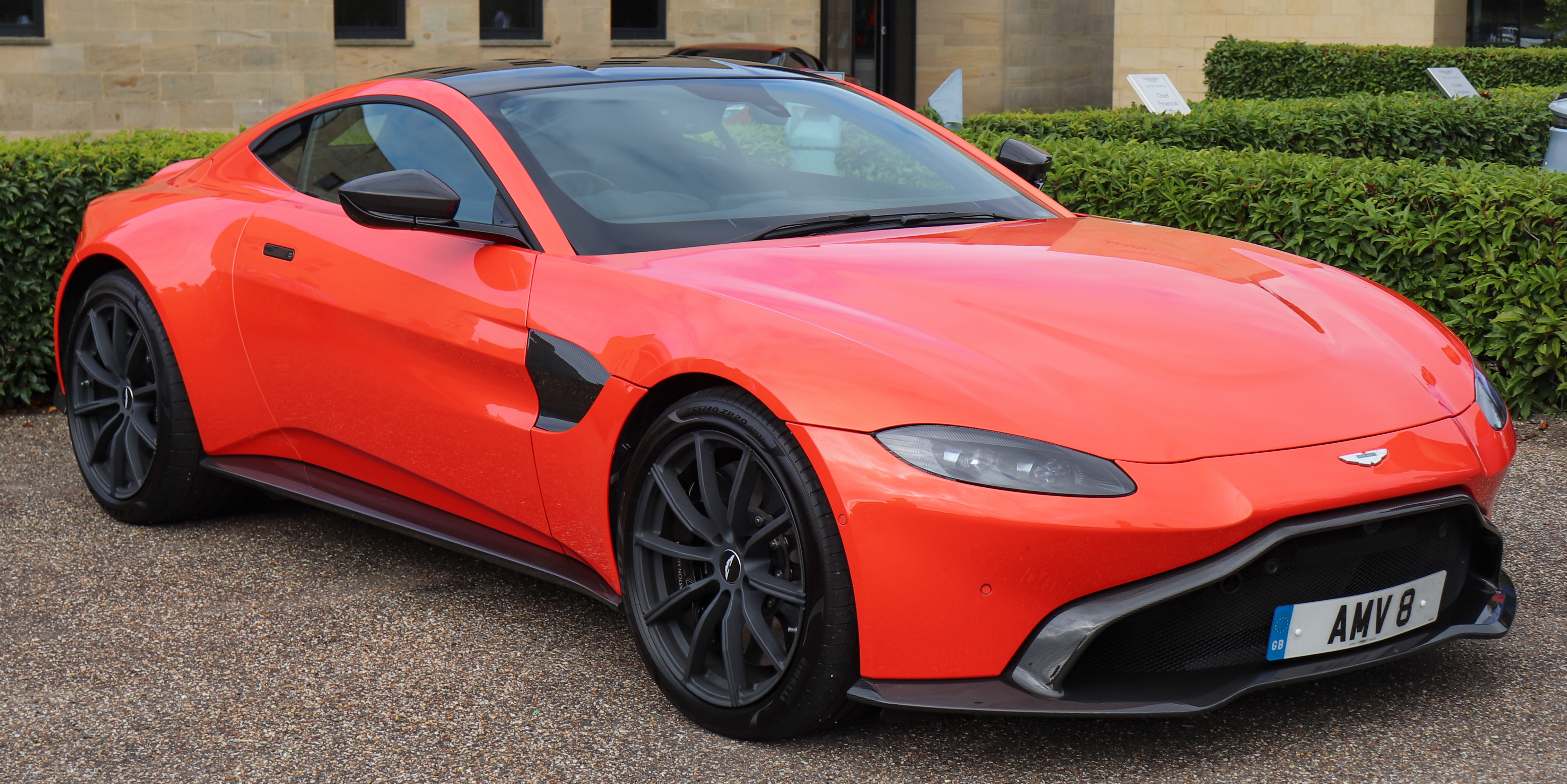
The Aston Martin Vantage S is a high-end sports car from Aston Martin. In this episode, they’re talking about it and showing off how good it looks in a specific paint color.
PCH is the Pacific Coast Highway—one of California’s most well-known coastal drives. The point here is that it’s not treated like the standard freeway system roads.
LIVE
Alright, welcome to Spikes Car Radio. It's going to be a fun show. You know, as you know,
Los Angeles is the car capital of America. And no one knows more about Los Angeles than
yesterday. No one. I thought Zuckerman knew a lot. But really, Evan love it. Who's Evan
love it? Everybody knows who Evan love it is here in LA. And I think in California, he's
loves to talk about the culture of Los Angeles in his segments and show and podcast LA in a minute.
And what he's done that's genius is he's put it in snackable form. Here he is. Hi, Evan. It's
nice to meet you. I'm a fan of yours, by the way. Thank you for having me man. Your content really
enriches the city that I love. I think I'm saying what 22 years ago, 23 years ago, I'm double you.
Yeah, really? What do you mean? 44. 44 years. 44 years. You're an elderly man at this point.
I am an elderly statesman. It's not something I would brag about. But I wanted to have you on
to just kind of have a nice loosey goosey episode where we talk about the history of cars in LA.
And why don't we start with the first car? Alright. Tell us what you know, when you did a video
about the first car, is it the first car in LA or is it the very first car? It can't be the first
first gasoline powered automobile in Los Angeles, Erie and Sturgis. They conceived it in 1895.
There it is. There you go. They had $30,000 of investment, which in 1895 money was phenomenal.
Wow. An outlandish sum, actually, right? And what's the name of the company? Well,
Erie and Sturgis were the two gentlemen's last names. Erie Sturgis. Yes. And I believe it was
Erie was from New York. He was a former minor, made his fortune in mining, came out to Los Angeles,
lived in the community of Boyle Heights, which great history. It was actually a Jewish community
at the time. That's where the original canters was first located. Absolutely. Not in 1895,
but eventually Boyle Heights. But they saw the automobile patented by Mr. Benz. Was it Carl Benz?
Is that correct? And they said, you know, we're going to build our own. And they put... So these
guys were going to rip off Mercedes. $30,000 into it. And this is again, keep in mind Los Angeles
was a dusty Pueblo. This was actually the heart of the Wild West. I didn't know that.
Maybe 10,000 people at that time. By 1895, it was closer about 50,000, but still pretty tiny.
And again, I was thinking the Wild West is like Tombstone, Arizona, you know, places like that.
But LA was murder capital of the world. It was vigilante justice lynchings going on all the
time. We're just coming off the Chinese massacre, all that kind of stuff. So Los Angeles was just
becoming a city and not even close to being a metropolis yet, but it was developing. And
Erie and Sturgis saw the horses in the wagons. They were like, you know,
this is the type of town that would benefit from having some sort of automobile or motor vehicle,
I should say, at that time, motorless carriage. They called it at the time. So they put $30,000
into it, built an engine that was fireproof via asbestos. The tires were one inch thick.
I want to say pneumatic rubber. Yeah, we're looking at them right now. And they were believed
to be puncture proof. So they put this thing together waited till 2am one night, I believe is
May 30th. And this was 1897. It took them two years to build it. So they rolled it out at 2am
because they didn't want to wake any of the horses. They didn't want to disturb the horses
or wake any of the people. And they rolled it out on Broadway in Fifth and drove it about one mile.
At no point did it break the speed limit. There was a speed limit for bicycles and wagons at the
time, believe it or not. That was eight miles. No, it was eight miles an hour. So at no point did
it break the speed limit. It was loud. It was boisterous. But it was a ride that the LA Times
reported on and said, you know what, there will probably be a factor factory for these motorless
carriages here in the future, which they were right about. But what did not end up happening was the
Erie Sturgis model gained any traction, no pun intended, because that thing was put out to
Pasteur and it was rediscovered in 1902 in a Beacons storage unit and sold for $147
and unpaid storage fees. Really? Yeah. The Erie and Sturgis kill each other. That would be very
L.A. Erie and Sturgis. You know what? But what happens? So they've got this car, they steal
Mercedes idea. It kind of works. Kind of works. And then they just, they don't, they didn't have a
plan after that. It didn't catch on. It didn't. Again, $30,000. Who's going to be able to afford one?
You're not mass producing it. So one car was $30,000. So all the, what do you call it? Not
NDA. What's the word? The startup. The startup capital and all that. The tooling. Yeah. So cost
30,000. So they definitely did not have a plan to mass market these things. This was before Henry
Ford and the assembly line and all that. And I think that, you know, there are a footnote to
history now, but also trailblazers. And then at that point, you know, I don't know the aftermath
if they went their separate ways or what ended up happening. But I know the car was discovered
five years later. Go to Hillary. It's the Sturgis Motorcycle Festival. There's Lake Erie.
And I've never heard of these guys, but I think those are, those are probably
unreliable. It was also charming to hear that the car overheated and broke down a couple of times.
And it's kind of the first, you like car breakdown in LA, Zeckerman. We've all had these breakdowns.
It's one of the first ones. If I'm not mistaken, let's take a quick detour to Johnny Lieberman's
Instagram page. Cause I think he drove the very first car that was the Mercedes car. Am I wrong
about that? He drove a replica of it. Yeah, but it's of that first car, right? We could see it move.
Okay. What is this? There we go. Let's see. That's the, yeah, that's the, this is the Mercedes car
that you were, that they knocked off in production till 1893. Yeah. A bicycle with an,
bicycle wheels with an engine, pulling six, eight horsepower single cylinder. Erie's and Sturgis,
they actually made it better. There's a four wheeler at least. Yeah. You know,
so they were, they were trying to advance the, the science and the art of it.
We should make Johnny drive this all the time. You know, if you can't capitalize, what are you
going to do? I'd rather see that tattooed on his face. Wow. Convert it into a wheelchair for him.
There he goes. That is the opposite of driving a cool car though. And well, you know, it's so
opposite that it actually is cool though. You know, like the, I think so. I think so. I'm not so
sure. I'm just not so sure. It's definitely a story though, at the very least. No. What do you
know about this, this Beverly Hills racing history? Do you know it much? Yeah. You know, I reported
on the Beverly Hills Speedway. Beverly Hills Speedway is the reason why Beverly Hills became
Beverly Hills. They had built the Beverly Hills hotel in the middle of Lyman bean fields prior
to that. Probably, I want to say 1913. Right. It was just an outpost, little vacation and look,
it's a regal. It's a gorgeous, gorgeous building, but nobody was going to Beverly Hills. It's on the
outskirts of town again, because you didn't really have cars. You did have trains. Los Angeles was
the mass transit capital of the world, but they weren't going through Beverly Hills because
Beverly Hills was basically just the hotel at that point. So there's a lot of land. They built the
Speedway and this was when LA was the capital of auto racing and it was a huge, tremendous
track that drew people from all over, not just LA, but all over the United States would come to
watch the races. And that was the first true tourist attraction in Beverly Hills. No way.
Yeah. And then people started staying at the Beverly Hills hotel, realizing what a great
hotel it was. And then Beverly Hills Pick Fair came next, you know, Douglas Fairbanks,
Mary Pickford. They built their, what was it, Pick Fair States and sort of put Beverly Hills
on the map as elite living, estate living, the pool. This was before people had pools, really.
So, you know, they had photographic spreads in the LA Times and in the magazines of the time.
And people got their first look at celebrity culture and associated that with Beverly Hills,
which was mostly known for the Beverly Hills Speedway. But lo and behold, Hollywood sort of
took over oil discovery in Los Angeles, changed the complexion of the city. And then people realized,
hey, this land is worth much more as a residential slash commercial than it is as a Speedway.
So the Speedway sort of disappeared. But yeah, that was the real first tourist draw to Beverly
Hills. And it put Beverly Hills on the map. It's more, it's more than a Speedway, though. It was a
wooden board track. And there it is right up there. That wouldn't, that's Beverly Hills. Yeah.
That's so crazy. So you're saying the Beverly Hills Hotel was the first hotel in Beverly Hills.
The first draw at all. And the weird move is we want to get more people here. So we're going
to build a giant racetrack. But that's bizarre. But think about this, right? Because who would go
to auto races at the time? You had to have money. You had to be well-heeled in society and all this
kind of stuff. So it was that draw where you want to get money into your town. And, you know, that
was the way, it was such a novelty, right? You're talking beginning of the 20th century
that auto racing wasn't ubiquitous. It was really a novelty and people wanted to see this. And these
are the fastest cars in the world, which to this day, you know, faster and faster is a huge draw.
Who doesn't want to see that? So yeah, this is Beverly Hills. This looks like towards the end
of the Speedway a little bit because you see a lot of development going up around it. Still,
still a lot of fields in agriculture. But you know, you could kind of tell that it's getting
encroached. This was going on in Newport, too, Zuckerman. We were talking about Audrain and their
history with racing and the Vanderbilt and the Astors. There were these just new things that
were just invented and these people are like, let's race these in Newport. And there were these
just races on public streets where these rich guys were just taking these new types of vehicles
and just blasting them around. And, you know, you could just buy the win with the fastest new thing,
the very beginning of it. Very cool. But isn't that by where Santa Monica and Wilshire Cross
Yes, it's Wilshire Boulevard, South Beverly Drive, Olympic and Lasky Drive.
If I'm not mistaken, including the three quarters of what is now Beverly Hills.
Yeah, it is. That's right. It was massive in the complex of mass. I want to say 90,000 people
at its largest. Amazing. It was the biggest event that they had there. I mean, it's like the Super Bowl,
man. So yeah, people were coming from all around. And that's how Beverly Hills started. And it's so
funny because you go to Beverly Hills now, you got Rodale Drive and all this kind of stuff,
and you're like a speedway. It seems like such a juxtaposition. I think about it.
I think about it all the time when I'm on a street like Sunset, which kind of defies logic,
you know, when you're driving from Hollywood to the ocean, you're like,
why wasn't that a straight line? Okay, it's funny. You bring that up. And I'm glad you brought that
up because the streets of Beverly Hills are meant to reflect the nature of a track. And they're
intentionally that track. They're intentionally not flat. They're undulating sort of hills,
curves like that, because they wanted it as they developed the city to be sort of reminiscent of
the speedway. Really? Yeah, that's exactly why. Like the Beverly Hills, when you go through, shoot,
what's that intersection? The five-way. Oh, the five-way. Oh, right. The nightmare
intersection. I call that the Ho Chi Minh City intersection. That intersection in Ho Chi Minh
city is like that. Except there's no stop signs. You just mesh, you go through, and it works.
Good. That's Beverly, that's Beverly Cannon. So that intersection where five roads meet,
yeah, and everybody stops and you just close your eyes and go, I guess I'm going. Yeah,
that is based on this. It's not based on, but they're all sort of influenced on it. And that's
how like the streets were designed with that in mind, where pay homage to the speedway and
everything. That's why you don't have a lot of streets, please. You could pull that up on the
Google Maps and show everybody. It's one of the weirdest intersections. Every time I'm there,
I'm like, how did this happen? All that. Most notorious intersection. Look at that thing.
There you go. Does that come in every time you're in it, right? You go. I call it to be
muted triangle, really, an intersection. At least while I'm in it, I go, why did this happen?
This was the best plan? Most notorious intersection in Los Angeles. But here's the thing,
there's surprisingly few accidents, right? Yeah. Because people just stop. They actually don't go.
And you have enough time. It's like so massive in the middle that you have enough time to, I guess,
see when somebody's coming from who knows what direction. Yeah. Do a Ho Chi Minh City intersection
and see where it comes up. There's all sorts of great videos of this. The first day you're there,
you just lose your mind because people are just blasting into an intersection with no traffic
lights. How are you getting around in Ho Chi Minh City, by the way? On motorcycles. There you go.
It's just, it's like, you see that? It's really cool. And it, it works. You know,
everybody just goes. That works. Look at that. That's what you want right there. Everybody just
goes and it meshes somehow. Yeah, no choice but to figure it out. Because you, you have,
it's like the Beverly Hills one. You pay maximum attention. You give it full focus.
And everybody's kind of cool. You know what this reminds me of is leaving Dodger Stadium.
After a long game right there. Because you're like,
how is there not more swapping pain in that parking lot? Oh yeah. No, you're exactly right.
Swapping pain. All right, let's do an ad. We're going to talk about our friends at
McGuire's and what's new for 2026. McGuire's luxury collection, whole car, air, freshners.
Look, I've got them all right here in front of you. Has your car lost its fresh smell?
These premium car air fresheners instantly fight odors while leaving behind a long lasting,
refreshing scent. They are simple to use aerosols that penetrate the complete interior by moving
through the ventilation system across the headliner and in between all other hard to reach places.
You know what we're doing with this? You light it off like a hand grenade inside.
That's what you do. You close the windows. You turn on the vent. You turn on the recirculating air.
It gets in. Then you roll the windows out and your car smells like island volcano or
Dubai. That's right. Your car smells like Dubai. The new luxury collection uses ultra premium
ingredient source from the best global fragrance houses in the world. These carefully curated
scents will transform your drive from a chore to a retreat. Select scents available at advanced
auto parts, O'Reilly auto parts, Amazon and more. Island volcano stargazer tropical forest and
Dubai sands. Those are the ones we have right here. We're each taking one of those home. Johnny
is going to, of course, take Dubai sands. Today's show is also sponsored by our friends at Vredestine
Tires. Vredestine is top of mind right now in the Ferrisdon family because guess what?
Erica Ferrisdon, who was featured in today's show for smashing two cars
after smashing the car a month ago, needs two new back tires. So I called up my friends at
Vredestine and I said, hey, I've got the original tires on there from this new Model Y we have.
That's really noisy. They said, we're going to send you over some hyper tracks and they brought
the car over, put on some new hyper track tires. We ABed the test. James and I, James Ferrisdon,
my son, the big Model Y way quieter with the new Vredestine hyper track. That's all you need to
know. You want to learn more about Vredestine. Their brand is about heritage, European performance
and design, those four things. And of course, Giorgetto Giorgiaro did some of the design work
and he's one of the most famous car automotive designers in the world. Designed sidewalls
of the very tires. They're now on my Tesla Model Y. Demand a bit of tire, demand Vredestine. Check
them out at vredestine.com. All right, we're back. All right, let's talk about more really driving
history. Where should we go now? What do you want to talk about? Can we talk about the transition
from Los Angeles being the mass transit capital world to being the car capital world?
I think that's the most astounding stat of Los Angeles because right now one of the biggest
narratives is we need more public transit. We're building the K line. We're building the people
mover at LAX. You know, how are we going to get people from here that were spending billions,
van eyes, the whole Sepulveda Pass project was supposed to go through the Sepulveda Pass.
Was it going to be a monorail? Is it going to be underground? Is it going to be light rail?
And then lo and behold, after years and EIRs and discussions amongst city council and mayors
and leaders above that, they ended up moving it to van eyes Boulevard, which wasn't even one of
there were six options. There was a public comment time for public comment and blah,
blah, blah. And then they ended up moving it to van eyes Boulevard, which wasn't even one of the
options. But my point is it's can I curse on show? Sure. It's a clusterfuck, right? Yeah.
And mass transit, people love it. People advocate for it. But if you ever get around the thing that
I laugh at, and I don't want to laugh, I'm not laughing at anybody, but in Los Angeles, when
you need to get somewhere, right? It'll be and you'd go to the maps, the drive off 55 minutes.
But then you look at the mass transit, it's like an hour 48. Yeah. They're like, well,
good. So it's really difficult and to implement something that would be an effective mass
transit system in Los Angeles, I say is near impossible. It would take 100 years from now
and look at the investment billions upon billions upon billions. But the thing is Los Angeles
through the 1920s was the mass transit capital of the world, not Paris, not New York,
no, not San Francisco, anywhere else. There were 1500 train depots or railways stops more than
the subway stops in New York right now. There were miles and miles of tracks everywhere cities
developed. A lot of the cities in Los Angeles developed around these mass transit stops because
it was developing and building the trains went hand in hand as the city was growing, whether it was
Gardena and Watts to Luca Lake, Lancashire, which became North Hollywood. The list goes kind of
on and on of cities that really developed because they built tracks and they built trains. And it
was this beautiful, yeah, the red lines, yeah, the red cars, yeah, the yellow lines and mass transit
really defined Los Angeles. So then what happened, right? We know about what Who Framed Roger Rabbit,
you know, that kind of put it in a neat box. It was a conspiracy. And that's sort of true
because you had national car lines, which was this private organization made up of folks from
Goodyear, Firestone, Penzoil, I want to say, you know, and they ended up buying all the rail lines
and then eventually putting them out to pasture in 1953, 1963. So people look at it as a conspiracy,
but here's the thing. I look at it as something different when you and you guys, this is your
life. This is the world here. When you're in your car, man, you have autonomy. You have the joy of
especially Los Angeles. You have mountains like we get to, yes, we're in traffic. There's no other
major metropolis in the United States that has mountains running through the city. Tell me about
Denver. No, that's outside the Rockies. Tell me about Albuquerque. No, tell me about any city you
do not have. It's a beautiful thing. And of course, you have the beaches, you have the canyons,
you have Mulholland Drive. It's a great place to drive. And Los Angeles is, I remember Shaquille
O'Neal said, you know, he's a big motorcycle, you know, he rises his motorcycle. He said there's
nowhere riding his bike that's better than Los Angeles because our roads, because our views.
And this is the thing is that people really do enjoy driving. It is a pleasure. It is a joy.
And Los Angeles was the pioneer of freeways, right? Imagine that where you're making the
evolution from gravel and dirt to, you know, kind of poorly maintained two-way lanes to these beautiful,
smooth freeways that could take you anywhere while you're looking at this beautiful scenery and this
endless coastline and the beaches. And you know what else you had that kind of turned
view? This is going to sound like a funny conflagration. That's the wrong word. A funny,
funny association is you had the drive through and you had fast food. And I think that that's an
underrated aspect as impetus as to why people really embrace the car and fast food.
In its modern sense, Los Angeles is the biggest exporter of fast food, you know, McDonald's,
Taco Bell, Wienerschnitzel, Del Taco, In-N-Out, Fat Burger, Tommy's. I can't believe you included
Wienerschnitzel in that one. Wienerschnitzel sells more hot dogs anywhere in the world. Really?
They sell the most hot dogs of any entity in the world. I've never seen anyone go into a Wienerschnitzel.
One of the saddest days of my life was the one day I ate at the Wienerschnitzel on Torrance
Boulevard when I had $5 in my pocket. Yeah. I don't want to pour it on Wienerschnitzel because
I like to support LA Business today. I have a good origin story, but here's what's funny. I did
an episode on Wienerschnitzel and I was with this guy, Hungry in LA, Eddie, great guy. He's a food
videographer. He does Dodger Stadium. He does Wolfgate Pocket. He's like, real deal. And he's
like, I've never actually been to a Wienerschnitzel. LA, born and raised and he's never been to.
But here's the thing is Harry and Esther Snyder, 1948 in Baldwin Park, they have their hamburger
stand called In and Out. And they knew that, you know, they saw the freeways developing. They saw
people driving. He's like, people are going to want to eat in their cars while they're driving.
People thought they were nuts. You know, they had car hops like Bob's Big Boy is a pioneer in the car.
And that was a big thing. The googie diners and getting together and all that kind of stuff.
And people are like, yeah, people like eating in their cars, but they like sitting and parking.
How can you eat while you're driving? He's like, no, man. He's like, people love driving.
And they want to keep driving. They want to keep going. Give them a, give them a box in a lap mat
and like, let them eat while they're driving. So Harry Snyder was a tinkerer and he invented,
he invented the two way speaker box in his garage, which became the first drive through
in and out in 1948. And think about that. You're like, okay, drive through, but that facilitates
driving. And it's like, you can eat the pleasure of eating with the pleasure of driving. Think about,
look, I love a drive through, man, like eating in the car. So I think there's something really
attractive about it. It was the, it's, it's freedom, right? At the end of the day, it's kind of like
it comes down to the freedom. So I think that, you know, with the, we were the pioneer freeways,
pioneer of fast food, the beautiful coastline, the mountain, the canyons, the beaches and Los
Angeles people in LA just love to drive. And why would you drive? I mean, why would you take
public transit if you can drive? I want to be on my own schedule. I want to have my own climate
control. I want to pick my nose. I want to fart. I want to turn on the radio. I want to listen
to music, roll the window up, roll the window down, sink. So I mean, my fear was always like,
you know, being in New York and using public transit, which, which I like was going underground
in LA, like in an earthquake zone, going into a tunnel was just like, I'm not, I'm not doing that.
It's so funny. And, and, and, you know, my kids used, uh, when they couldn't drive, they would use
the buses. Yeah. I think like mass transit in small, like, uh, small lines, like when it's on
the West side, when they would go from school or Santa Monica back to Brentwood, you know,
it's very, it's very useful, but I, I totally get what you're saying. And that's the difference LA,
LA, San Francisco, San Francisco is a more successful mass transit system,
but it's so much smaller. And this was the funny thing to go to LA 28. I remember in
France in the Paris Olympics, they were the LA folks were trying to say, we're going to have a
no car Olympics. Sure. And man, I was cracking because you're talking the difference between
Paris with it is, I think LA is, is six to 10 parishes. I forget the exact number,
but you're talking about going from Long Beach to the IE to the Valley to exposition park. And
you're going to, and again, I don't want to be an anti-mass transit guy. Like you said, we took the,
we take the life of my, my, uh, brother and sister in law live in West Adams. So when they
were season ticket holders to LAFC, it's a straight shot over to X. And it's great when
you're on the train, it works. It's good, right. This is great. But let me get in my daily life
when I'm driving from Silmar to San Pedro, to Boyle Heights, to Mission Hills, back to Studio
City. How am I going to take mass transit? So it's not realistic and commuting. And one last
comment, I used to live in Valley Village and commuted to El Segundo and it was an hour 10
there, hour and a half back, terrible nightmare traffic, blah, blah, blah. So I was like, you
know what, I'm going to see if taking the train works, you know, because you could read, you
could catch up on work, you could take a nap. It was two hours and 20 minutes to take the train.
I just don't want to invest four hours a day. And it's not anti-mass transit. It's just that
Los Angeles is so geographically huge that it just doesn't make sense. There was a funny thread
about tell me you live in LA without telling me you live in LA or tips for if you've lived there.
I'm about to move there. And someone wrote, we don't, we don't measure a trip in miles. We measure
it in minutes. It doesn't matter where you're going. It's a minute. Yeah, I've got to go.
I've got to go visit Suckerman in town. That's going to be 45 minutes. Well, tell me,
he's only three miles away. But on any given day, that minute changes. Is it really elsewhere?
You're talking miles? Is that the truth? Because I've lived in Seattle and DC, but
but do you really just say like, oh, that's 10 miles away? Because it really is minutes. No,
in Palm Beach, when you get to La Quinta or Palm Springs or something, you're driving miles.
That's where I really feel miles when I go, when I go to La Quinta and I'm like, oh man,
it's 10 miles away. That feels like forever for some reason. We're very, we're all in LA very
oriented to how long is that going to take us in the car? And what time are we going to go? When
are we going to go? What day of the week? And so it's a very, it's something that's very thought
of by everybody. And everybody says, and here's something, I have a lot of appointments at my
office as a lawyer, and people will always show up late and they'll say, oh, the traffic was bad.
I want to say, oh, traffic, I never heard of that. I mean, what is it? Okay, why didn't you leave
at the right time? That's a, that's the thing that people don't get anywhere on time. And we'll blame
it on the traffic when we all know there's going to be traffic. We have information now. We have
ways. We have predictable data and apps to tell us when to leave. But I think you're right, because
I saw something recently that's like, it was on threads and threads. I don't even want to get
into that. I'm on all the platforms or whatever. It threads a weird, weird culture over there. But
the point is, I like somebody put out, somebody put out this thing that was like, why is everybody
in Los Angeles 15 minutes late everywhere? I don't get it. I don't understand. But I think it's
built in. I think that's great. And my wife is prompt and her family is.
Hey, you can be prompt. It's not hard. I'm, I'm propped, but oh, there's LA.
I think that in LA, it's part of the culture because you have a built in excuse. You can
always, even if I'm staring at Google maps, seeing that your, your route is green or whatever,
you could say, I'll try. I think it was trying. I will. The one or two times I've been late,
I will confess to the, there was an accident lie.
Okay. There was an accident on the freeway. It was terrible.
Can I, can I interject just cause you brought it back since I was thinking about this on the way
over. I have a somewhat of a reputation as a terrible driver, really, which may or may not
be deserved. Well, I'm often multitasking. I try to stay off the phone, but this goes back
before I, I just want to start, I just want to tell it to an excess cause I've never told these
publicly. Please. If we want a confession. Okay. First and foremost, when I lived in Seattle,
Afor mentioned, I was in Seattle one year. This is right after we, uh, I think when we took out,
was it Saddam? What year? No, it's cause Saddam was in the 90s. So it had to be
some sort of a post nine, 11 Afghan mission. I, I time magazine. This is really like before the
internet, not before the internet, but before cell phones for sure. So I was excited to read
this time magazine, true story. And I'm driving through Seattle and I'm, I have the wheel and I'm
reading the magazine, like holding one of these guys, like reading the magazine because I just
wanted to get to the story. Anyway, I ended up rear-ending a car. No, surprising. Gets out of
the car as a nun. So I rear ended a nun. Couldn't even make it. I was a reading a magazine as I was
terrible, terrible, but that's not even the worst. The worst one. How did she take it? She was nice.
She was very nice about it. Yeah. And I didn't tell her. What kind of car does an underdrive?
It was like some Honda sent very generic, you know, church or was it hers? She was,
that's a good question. I don't even remember. It's just 2002. So my, my memory doesn't often
go, go into detail that far back, but an even worse one was my wife and I lived in this apartment.
It's our first place. We had stack parking down below. She had a, what the heck Toyota?
What was her car? Toyota Camry and I had a Jeep Liberty at the time. So we had to switch cars,
right? And I was like, I'll do it. I'll switch both cars. You stay here. You chill. We were probably
in a fight, to be honest with you at the time. We had a very tumultuous earlier in our relationship.
So I was probably like, fuck you. I'll fucking do it. It was probably like that. But anyway,
so I, but, but in the, in the revision and stuff, it's chivalrous. So I was like,
don't worry honey, I'll do it. No. So, so I back out my car, right? Cause you gotta back out.
And then I'm going to switch them, right? Or I back out her car, right? Cause I was going to get
mine. So I back out her car, put it in park, walk over to my car, start reversing my car,
my Jeep. And I see her car coming at me and I'm like, I'm like, oh shit. I didn't put it in park.
Like I must have like put it in drive. So I get out of my Jeep, like in a huff and go run to her
car. But I didn't put my Jeep in park either. I left it in reverse. So both cars are rolling
at each other and both cars. And again, it was like five miles an hour or whatever. But I crashed
both of our cars in a parking lot. Did you blame her? I probably definitely fought with
her. There's nothing worse than that. Yeah, that's kudos to Bad Drive. But be safe. Seriously,
don't mold it out. No, my wife just did that to some cars. You're just now reminding me that of
that story. I told you, Zuckerman, right? I was this friend of mine's wife crashed the
her fender at the leaving the Whole Foods, I guess. And I thought, I saw the car and I go,
let me help. You know, I've got, I've got Anthony Lainer over at Exotic Car. He's,
he's going to be great. He's going to help you out. And I left, you know, after I texted Anthony,
I was thinking, God, I'm glad this is my wife. And I texted Chris and I'm like,
hi, your wife crashed the car, my friend. 10 hours later, my wife, I come downstairs
from a meditation, relaxed, nice 10, 20 minute meditation like this. I'm at peace with the
world. She's like this, I'll pay for it. I said, what? Pay for what? She goes, I got a little
accident at the Whole Foods. This same spot, the same fucking supermarket, 10 hours later,
she crashed into a Porsche. No. Took two cars out, hit that car in the same spot. So I had not,
so this person that I'm helping, now I have two of those that I have to pay for. Oh my God.
Same market, huh? Same market. What are your thoughts? I was like, wow. It's like impressive
that the world is doing that to me. Really cool. Is there some part of me that was thinking
about this that I can activate to get a billion dollars somehow that I can just will, because I
will bat into happening. How can I will this into happening? All right, let's pause for an ad. Let's
talk about our friends at Racetech. Over 20 years ago, Racetech was invented to cost effective,
durable, truly do-it-yourself modular flooring system engineered for the garage. Racetech's
multi-patented design allows for easy do-it-yourself installation without all the hassles and mess
of toxic epoxy coatings, transforming your garage in just hours, not days. How do I know that? We've
done two of our garages on this show. We did Suckerman's Place. We did My Hanger, which was a
very big job. And it was done all in the same day. And it looks great. It's great. It's a shot here
of this M2 with this beautiful floor. We love Racetech. 20 styles to choose from to transform
that ugly garage into the coolest garage on the block. Self-draining design allows for liquids
to flow freely to drains. That means old Land Rovers, old British things flow right out the
door with your Racetech. And I will add, don't stain my cheap floor that I had in for so many
years for 20 years at Santa Monica Airport. It was just filled with stains. No more. Every time
I open that hanger door, everything looks great because Racetech is amazing. They manufacture
24-7 ship most orders within 48 hours. Check them out. Shop at racetech.com. Use code SPIKE356,
SPIKE356 for an exclusive 15% off and free shipping. Today's show is also sponsored by our
friends at getacregold.com, Acre Gold. Oh, and there it is, the Hot Wheels Gold. I have one.
This is so exciting that I have one of these. When they said, did you get your Hot Wheels Gold,
I went, what? But now I understand what that is. And I can take this and put it in my little
gold collection that I have for Get Acre Gold. Check out getacregold.com slash bike911. That's
a destination site. Don't come out of pocket for expensive gold all at once. Instead, subscribe
to gold for as little as $30 a month. Here's how it works. Pay in every month until your gold
stash reaches the price of Acre Gold bars, then Acre discreetly ships directly to your home.
It comes wrapped up and you go, what is this? And then you open it up and there's gold inside.
That's so nobody steals it. Acre Gold also has $50, $100 and $250 per month options for larger
gold bars. And Acre is backed by the same team who funded Liquid Death, Canned Water. And remember,
gold is up over 60% in the past year. Gold is up. Just released, the extremely limited
Hot Wheels Collection, only 3,500 bars made and moving fast. Available now through subscription
or buy it now. Once they're claimed their history during the month of April, enter the Speed Club
Racing Sweepstakes. When you visit getacregold.com, there are 11 grams of 24 karat gold in Hot Wheels
Collector Packaging. I have one of them officially licensed by Mattel and up for grabs. That's
really cool. Every entry unlocks free insider access to exclusive deals, awesome content and
future giveaways. No purchase necessary. So you can just jump in and maybe you'll get one of these
Hot Wheels Gold. Anyway, go to getacregold.com slash spike911 to check it out. And maybe you
will also be the lucky gold holder of a Hot Wheels Collector Packaging Gold piece. I'd rather
have that than the Hot Wheels. I'll tell you that right now. All right, I want to hear about,
let's talk about this Aston Martin because I know people are thinking about it. It's in the
background. Let's give it a shot. Then I want to hear some more stories. Yeah, let's go. And here
we have it. Last week, our friend Matt Farah was talking about it. He said, get the Aston Martin
Vantage S. And here it is in beautiful plasma blue. Look at how good that looks on camera,
Zuckerman. This is one of the best blues I've ever seen. It's this blue is not as good in person as
it is on camera. It just glows like it really does. It's unbelievable. And it's one of those
colors that just makes you want to drive it. 670 horsepower V8, eight speed auto, five drive modes
with only three that really matter. Sport, Sport Plus, and of course, track weighs 3,900 pounds.
This car is a front engine, two door, two passenger sports car. Can we talk about that horsepower
again? What, 670? Yeah. Which I think is exactly a thousand times more powerful than that Mercedes
that Lieberman was driving at the beginning of the show. Yeah, yeah, I know, you're exactly right.
So I guess these cars, you know, 248,000 as tested. And it's only 5,000 more for the S.
But you know, Matt Farah said that when Aston Martin puts an S after the model name,
Zuckerman, it's resorted that they figured it out finally, which is why I asked for the car
because I wanted to see if they had done that. And CarPlay Ultra is in this. Do you know what
CarPlay Ultra does? I have no idea and I don't want to know. I love CarPlay in my car. So you
plug it in, CarPlay Ultra is essentially, this is going to take longer to set up. So you plug it
in, it starts spinning, it's going, setting up CarPlay Ultra and then like five minutes go by.
But eventually what happens as far as I can tell is you get the automotive, the vehicle settings
integrated into the CarPlay, which you don't know what that means. I don't care. So when you put up
CarPlay on a regular car, you've got Waze, you've got Spotify, you've got your messages and you've
got other stuff. And then usually there's an icon that will say something like Aston Martin. You
press that and that sends you to the car settings on your screen. But for the manufacturer settings,
not for the CarPlay Apple interface, this you've got the vehicle settings integrated into CarPlay,
which actually does work and makes it easier. That's the Ultra. I'm not sure it deserves an
Ultra. I don't understand anything you said. I just want to put, I just want to start the car
and drive. I want to have no interface other than my hands. That's it. At one point the
monitor did just go out for five minutes and I didn't have any of that stuff and it's upsetting
to me. I need to know where the police are when I'm driving vehicles like that. So I need Waze
up and I need to roll calls and I need to roll messages. So it is helpful. Look at the cockpit.
I mean, there's not much to say about this except for the car is very well sorted. If you, I think
we're thinking about buying something that's not a Porsche 911, this is a nice 911 fighter.
Very quick, about three seconds to 60, very fast, very beautiful. I was reading Car and Driver's
comment section about this just to see what people said about it. One commenter said something
really funny. He said, and I thought this was good. Good way of describing the car and I'm
sorry I didn't write your name down, but no heavy electric motors, no fake engine sounds,
no three screens straight across the dash, not a crossover, not styled by Picasso. At least
someone is making awesome cars and that really sums it up, sums up this car. I know I like a car,
Sacramento, you know I like a car when this is the only thing I'm driving all week long.
I don't drive any of our stuff. I don't drive any of the stuff in my driveway. I've just been in
this car throwing my racket bag in the back. I've just been throwing my groceries in it,
but throwing my one kid at a time or throwing the wife in it and driving and just loving it,
just loving it. Show those wheels, go around to the side there. Wheels are a little big,
21 inch wheels on it. The car is hot. 3900 pounds comes off spelt these days. Yeah,
it's light, it's beautiful. You took a look inside, it's got a little hatch you can open up on the
back without much room or a little truncate. It's not a hatch. You press that thing there. Yeah,
look at that. It opens the door and then off to the lower left. It's got yellow piping there.
Didn't even notice that. Fantastic sound system. Well done Cameron, you're getting good. Now watch.
Then you got a little truncate right there. Just lift right where the wing is, you'll be fine.
Tear it off. There you go. That's it. There you go. There's a little strut support back there.
Fantastic. You can put the Waymo guy in there. The people put me in. Do you see the guy in the
back of the Waymo? No. This mom was ordering a car for her daughter and it came with a guy in the
back. And he goes, what are you doing here? She goes, what are you doing here? And he goes,
the people put me in here. What people? Why are you in it? Huh? They just put me in here. Who
puts you in? The what? The people. The daughter couldn't get in the car and go anywhere. Still
not explained by Waymo. Is that a true story? True story. Yeah, yeah. Where was this?
Somewhere in Los Angeles. Wow. I missed that. It's pretty cool. Anyway,
that's the S.D. Martin Vantage S. It is a terrific car. Would I buy this over 9-11? Sure. Why not?
And I'd also buy a 9-11, but this is really good. Again, that vanquish that we picked
his car the year last year has really got me excited about Aston as a brand again.
And what I used to feel when I drove these things, which was anti-ergonomic stress.
Right. Wherever you reached, everything was wrong. Very English. The window switches,
you pushed them down to lower the window and it would go up and you go,
they fixed all that and they've made a nice car now. And I applaud them. Well done, Aston Martin.
Now's a good time to talk about Jim Farley, the president and CEO of Ford. He's got a brand new
podcast, not brand new, a new season, season four. And of course, he's got the greatest
guests in all of podcasting. Brian Cranston from Breaking Bad fame, Daniel Ricardo. Now,
Malcolm in the middle reboot fame as well. Chris Hoy, racing driver and Olympic cyclist
in past guests include Jimmy Fallon. I mean, he's got everybody on this podcast. It's
last week where he told a story about driving the Pope around. Fantastic story.
And the Vatican, they gave him a Ford Explorer that was made in Chicago. The Pope was made in
Chicago. Did you see the White Sox approve the Pope hat giveaway? They did. Absolutely. So,
shouldn't that be the other way around? Shouldn't the Pope have to approve that? One more thing.
Who's doing it? The White Sox? The White Sox, yeah. They're going to give away
Pope hats. Correct. With the insignia on it. I didn't get into full detail on it.
Or the hanging. I just saw the approval. That's fantastic. The White Sox tweeted it, yeah.
Well, Jim Farley and driver Jim Farley should get the Pope on. That's the ultimate guest, Jim.
Get the Pope on. Because he was already telling great stories about the Pope, like who's having
trouble driving because of all the rings he had. He's like, these vestments take a half hour to
put on. And then he had to sit down and drive the car. There were a lot of good driving details
about the Pope. My vestments are in a ball at the end of the bed. I just throw them on.
Anyway, to listen to drive with Jim Farley, our friend, just search for drive with Jim Farley
in your podcast app. That's drive with Jim Farley. He's not just the CEO of Ford. He is also a
race car driver. And now he's a podcaster with a very successful podcast entering season four.
There it is. Fantastic. All right. Let's get into some more of these stories. Yeah. With so many of
them, we're not going to be able to hit all of them. We'll do one or two in the Patriot segment.
What should we go to? Peterson Museum. Yeah, let's talk about the Peterson Museum. Because,
you know, my entry point for the Peterson Museum is Bruce Meyer, right? And then the events they
have in the parking lot. We just did one with your 356. But I don't really know how the Peterson
started or why it started. So, I mean, Robert Peterson, founder of Hot Rod Magazine, Motor Trend,
obviously the consummate car guy. Peterson Publishing. In a partnership, believe it or not,
with the Natural History Museum. I didn't know that. So it was actually, and I don't know the
detail, but there was a public-private partnership with the Natural History Museum in 1994 that
why not celebrate car culture in the in the epicenter of car culture? And so the museum opened
in 1994. It got refurbished. I want to say in 2015 is when it had that new facade. There it is right
there. Which is supposedly inspired by Googie architecture. You guys familiar with Googie
architecture? Of course. I'm nodding, but I'm not. I see it a little. Of course. I see the Googie.
The old diners with the big glass windows. The angles like pans is my favorite part.
So that's like a Googie diner. Okay. There used to be one called Corkies in Sherman Oaks Van
Eyes. The ships. There you go. You get it. It was classic. And it was a very polarizing type of
architecture in the 60s, 50s, 60s. But now it's beloved in retrospect. Anyways, inspired by that.
Although I think it's a different. It doesn't really scream. It doesn't scream Googie to me.
No, there's a space. I'll tell you what. Tell you this an interesting story. You know why they
picked this building? So that used to be a Japanese department store in the early 1960s.
That closed down and became an Orbox in 1960. Oh, Orbox. 69. If you know that. And that closed.
But they picked this space specifically because there were no windows. So and it was a big,
large space. Obviously in a fake car. So you didn't have the deterioration of natural light and
everything. So it was the perfect space for that. But you know, it kind of looks like a department
store inside. They haven't changed that. It's, I mean, you say that now that's exactly. I always
wondered like, what, what does this feel like? This feels a little odd in here. That layout.
Like that with the different departments. Yeah. Yeah. I had been there as an Orbox across the
street was May Company, right? Wow. That's slightly before my time. Zuckerman's been here for 80 years.
But across the street. Now is that Johnny's cafeteria, right? Or Carrot Cafe, the little
restaurant that they always keep filming at. But what about the vault? Yes. What do you got?
We got to talk about them. I just took my son there for the first time. All the fans. So downstairs,
the Peterson Auto Museum, and now open to the public. You can buy a ticket for a tour of the
vault down there. Many treasures. It really looks like just like a parking garage where
they're storing stuff that's not on display. But they call it the vault to make it special.
That's branding. That's what we did there. We branded it. And when I was there, what did I see?
Oh, Magnum PIs 308 Ferrari. Dude, Saddam Hussein's old cars down there. Saddam makes it twice into
the show this episode. You have a little bit of an obsession with Saddam Hussein. He was found in a
hole. But Ayrton Senna, there was an Ayrton Senna. My son was just going nuts over here. How old is
your son? 12. So he's really any kind of car. We're supposed to go to an F1 race this year. I
don't know what he wants to go to Mexico City on his birthday. Well, Vague's where his dad wants to
go where I want to go. But did you go to the Mexico City one? We were talking about that.
My partner went there and he said it's very important to understand how to do that particular
race the right way. You need an inside tip. Otherwise, there's lots of walking, lots of
suffering, lots of doing it. You can easily do it the wrong way. I'll tell you this. We were in
Mexico City in 2019. And again, we know LA traffic. I've never seen traffic like Mexico City. That's
all I'm saying. Hour 47 to go seven miles, which is we're like, is it always like this? And they
were like, yes, that's just how it is. That was the worst traffic that I've ever been in.
But he's half Mexican. My wife's Mexican. So he wants to celebrate, which is also his birthday
November 1. So it's like this confluence of factors. It'll be his 13th, which is significant
birthday. That'd be great. Let's go to Mexico City. Yeah, you got to do it. Yeah. So I was
watching, speaking of driving and crowds, I was watching Coachella last night. First of all,
I watched two episodes of The Boys with Seth Rogen that he produces. He's not in it.
Fantastic this year. Really good. But after two episodes, you're like, I can't watch any more
like bodies explode in blood and guts. So I go to the Coachella feed on YouTube. And they've got
all the different stages. And I'm like, boy, this is great. And by the way, threads, I had been
scanning threads and it said Coachella way better in your living room. And I went, oh, it's in my
living room. And see, I went, it influenced me. And Sabrina Carpenter's up there. This beautiful
blonde girl is up there saying, and I know she's very famous and very successful. And I'm like,
I'm going to watch her and figure out why she's so big and she's so great. And Will Ferrell was
in a bit with her, Susan Sarandon. Oh, wow. She had this amazing set. Does this incredible
performance where she's kind of walking through a movie, almost like a Super Bowl, a big Super
Bowl performance. But it's like impressive as hell. The songs, they're not my type of songs, but
I recognized a few of them. She finishes this performance. By the way, everybody's just jammed
in there. Sardines. Talk about like, you know, you got to go to the bathroom, you got to walk
a mile through people. And lose your spot. Yeah, there's no way for us to survive in a situation
like that. Anyway, she gets out. This is how she ends the show. Here, check this out. It was very
carculture performance. This is her, and her last song gets into this old, what is that,
Thunderbird. And I'm watching is going, she's just doing the drive we do. She's just,
do you make that face when you drive? No, she, she, she for the next two or three minutes is drives
out of the concert, playing a song and just grooving it. But it reminded me of what we do,
which is on the weekends, we put a song on the radio and we just drive in LA and really kind
of nails it. And then I started going, well, is that a real Thunderbird? What the hell am I
looking at there? And so Cameron and I, before the show, we're like, go back to the beginning.
I think this is a converted golf cart. Yeah. Go back, like you watch your hand right here.
She does a little turn like that because there's no way they're letting crazy Sabrina Carpenter
drive next to all those people, right? Simplify it. Yeah. But she had a whole drive in theater there.
I know I sound like I'm, I'm fangirling over Sabrina Carpenter. I'm really not. I have nothing
but respect for her and her performance, but the, but it's what we're talking about. LA is the car
capital of, of the world and her show kind of embodied that they had seven or eight of these
cars there. And at different times during the show, they were parts of the performance and not
parts of the performance. Where'd she go? I guess I don't know. Go back to LA. You go to a shower
and then, you know, the last, wherever she goes. The last time I went to Coachella, Madonna was
one of the headliners and Madonna's exit was a helicopter. Oh yeah. So I wonder what's, what's
the better, you know, it's definitely more LA. When we were, when we, when, when I was following
the Stones a little bit with a friend of mine who knew them, I was always fascinated with the exit,
like Dodger Stadium, the second to last on core plays, they go right out the door into the car
and this, just get out of there. Everything's just a quick get me the hell out of there really
quick. Yeah. Yeah. It's, it's pretty cool. Um, all right, let's do one more of these.
And then we got to go. We have to say goodbye after this. I'm going to let you pick. Let's see.
Which one do I want to know about? You guys want to know about the, why we say the LA?
No, we've caught shit about that before. What do you mean?
Like the PCH. That is not the PCH. That one runs me the wrong way.
That one runs me the wrong way. I don't say the PCH. Okay. Tell it well.
That's the valley, not the valley. Dude, so listen. So apparently everywhere else, you say,
I'm going to take I-95 or I'm going to take 40 or whatever your freeway, your highway is.
LA were undeniably saying, I'm going to, and you've seen the skit, the Californians,
Fred Armisen and all this stuff. I'm taking the 10 to the 405, the 101, all this kind of stuff.
So why do we say that? And people come from out of town. They're always like, why do you say that?
So LA of course was, was where freeways first developed, right? And when they first came up,
it was named after their destination. San Diego freeway ended up, ended in San Diego.
So you said the San Diego freeway, Ventura freeway and Ventura was the Ventura freeway.
But when Eisenhower passed the Interstate Highway Act and tried to codify all the freeways,
you know, and map all the freeways throughout the whole country, you wanted a numerical system.
It made it orderly. It made it make sense. North, south freeways were odd. East, west were even
stuff like that. You've seen that map with all that kind of stuff. But people in Los Angeles
were already accustomed to saying the San Diego freeway, the Ventura freeway, the Hollywood freeway.
So when we adopted the numbers, it just sub numbers for the names and the is what it became.
So why is it incorrect for us to say that? It's not incorrect. It's absolutely correct. The only
one I have an issue with is PCH, because that's the Pacific Coast. And that, that pre, that was a
predecessor. Do you know what that was originally called? Well, that would have to go through the
range. Great. Yeah. It had to go through. It had to go through. Stay out guns. Stay out guns.
Roosevelt Highway. Roosevelt Highway was the original name of PCH. The PCH was called Roosevelt
Highway. It's not PCH. So PCH is the only one it's not that we don't put the bell in front of us.
It was not part of the freeway system. It never was. So I might still say the Harbor freeway
as a kind of a flash, but I might say the Pasadena freeway. You say you can't say that.
You just can't say the PCH. Correct. That's the one we can't say anymore. But now I got
this. Why did you start this? Why did I start LA? What was going so wrong in your life that
LA in a minute became the priority? It's a good question. You know why, man? Because
my entire life and I was, I'm a native of the San Fernando Valley, especially so it's even
exacerbated because that people always said LA has no history and no culture.
And then to add insult to injury to me, people would say the valley is a wasteland. Why would I
come to the valley? The valley sucks. So all of it all yours. But yet at the same time, we got
Hollywood and Beverly Hills and the beaches and everybody loves all that stuff. But I'm driving
around doing normal stuff with normal people and I'm like, wait, this is historic. What's the story
behind this building? All this stuff had history before that. And then to me, I've always been
impressed and conscious of like, and again, this is kind of cliche, but it's the truth,
the diversity. My homeroom class in junior high and now they're called middle schools,
but it's almost junior high. You know, it's where I had a Kenyan person, Armenian person, Jewish
people, Korean, you know, and that's like the Los Angeles story. And you're like, wait a minute,
this is a melting pot for the world. I'm not gonna say more greater than New York, but there's more
than 200 languages spoken here. We have more Thai people than outside of Thailand, more Mexicans
than any city outside of Mexico, more Cambodians, more Australians, more Ugandans, more Eritreans.
So all of these like different ethnicities all come to Los Angeles. Why? Because there is this
big history and there is this big culture and Los Angeles doesn't celebrate that necessarily.
You know, I went to Pittsburgh of all places and by the way, Pittsburgh, great city, great city.
And every building has a plaque. Oh, 1884 and like U.S. deal and all that. We like our history.
I'm a plaque-reading kind of guy, right? I will stop my life. Are you seriously gonna stop it?
Yes, I am gonna stop it. But like, so the thing is in Los Angeles, we don't do that. We bulldoze
our history. It's our future. We build a city of the future, city of tomorrow. But I just love
the origin of all those kind of things like, how did we become this great world city that everybody
in the world wants to come from? And the stories are right there. You just need to look for them.
And I'm also a little bit of a nerd, a lot of a nerd. And then LA in a minute.
You know, it's only been since what? 2022? 2022. I feel like he's been around for 15 years.
What's up LA? Anyway, I like I said in the beginning, Evan, you really enrich my experience
and you just described it very well. You know, you were curious yourself and now you're putting
it out to the world here. And it really does make my daily enjoyment of the city. I already love
even better. Thank you for coming on. Thank you. It's a pleasure to meet you. Appreciate it. We're
going to bring you into the Spikes Car Radio family as an expert, I can tell. We're going to be able
to use this guy. Let's see this guy. Yeah, we're sure into it. And if you want to catch up with him,
he's got a podcast, which I'm guessing we can find it anywhere, anywhere on YouTube, Spotify,
follow him on YouTube, follow him on Instagram. And I promise you, you will learn something.
That's our show. If you're a Patreon subscriber, stick around. We're going to
we'll talk about how you got Fred Armisen on your show and I can't get him on my show.
We'll see you next week, Spikes Car Radio.
About this episode
Los Angeles as the “car capital” gets a history lesson with Evan Loveit, blending early automotive lore, racing landmarks, and why LA’s geography and culture keep people behind the wheel. They trace a late-1800s LA gasoline prototype (Erie & Sturgis), explain how the Beverly Hills Speedway helped shape the city, and debate LA’s shift from mass transit to freeways—plus the role of drive-through food and autonomy. The chat also covers the Peterson Museum, an Aston Martin Vantage S review, and LA’s freeway naming quirks.
Spike and Zuckerman sit down with Evan from LA in a Minute to dig into the surprisingly rich automotive history of Los Angeles, from the first gas-powered car tested at 2 a.m. on Broadway in 1897 to how a racing speedway literally built Beverly Hills. Plus, Spike reviews the Aston Martin Vantage S, Evan confesses to rear-ending a nun, and the crew debates why Angelenos can't stop saying "the" before freeway numbers.
______________________________________________
🫧 Meguiar's - 125 Years of Passion
Premium products to clean, restore, and protect your vehicle
https://meguiarsdirect.com/collections/new
🛞 Vredestein - Car, SUV, Van, and Light Truck Tires
Demand a better tire. Demand Vredestein.
https://vredestein.com
🛠️ RaceDeck - Transform Your Garage
Get 15% off plus free shipping with code SPIKE356
https://RaceDeck.com
🪙 Acre Gold - Gold Investment Has Never Been Easier
Visit https://GetAcreGold.com/SPIKE911 to start building your gold stash!
📻 Listen to DRIVE with Jim Farley
Check out the new season of the Ford CEO's car podcast!
https://lnk.to/drivewithjimfarleyPS!spikescarradio
GRAB SOME SCR MERCH:
https://spikescarradio.com
GET MORE SCR ON PATREON:
https://www.patreon.com/spikescarradio
______________________________________________
Evan Lovett, the creator of 'LA in a Minute,' brings a level of LA history nerd energy that even Spike didn't see coming. They trace the city's car culture all the way back to 1897, when two guys, Erie and Sturgis, built a Karl Benz-inspired four-wheeler in Boyle Heights and snuck it out at 2 a.m. to avoid spooking horses. From there: the Beverly Hills Speedway (yes, that's why Beverly Hills is Beverly Hills), the golden age of LA mass transit that somehow nobody remembers, In-N-Out inventing the two-way speaker box in 1948, and why Angelenos measure every trip in minutes, not miles.
Spike also reviews the Aston Martin Vantage S: 670hp, plasma blue, CarPlay Ultra, and apparently better than a Porsche in at least one dimension. Evan delivers a confession about rear-ending a nun while reading a magazine. And the crew gives the Petersen Automotive Museum its flowers, including the vault that holds Magnum P.I.'s Ferrari and an Ayrton Senna F1 car.
If you live in LA, drive through LA, or have ever wondered why everyone says "the 405", this one's for you.
_____________________________________________
📧 To advertise with Spike’s Car Radio, contact Neon Tiger Media:
[email protected]
🌐 or visit:
https://scrpod.com/sponsor
Produced by
Skyview Entertainment
&
Q6 Media
https://q6.media
______________________________________________
Timestamps:
00:00 - Introducing Evan from LA in a Minute
01:10 - The first car in LA
07:13 - The secret history of Beverly Hills racing
16:49 - How LA became the world's car capitol
27:04 - LA traffic
28:36 - Bad drivers
36:24 - Aston Martin Vantage S review
44:45 - The secrets of the Petersen Museum
49:17 - Coachella
54:15 - The mess of LA highways
Learn more about your ad choices. Visit podcastchoices.com/adchoices