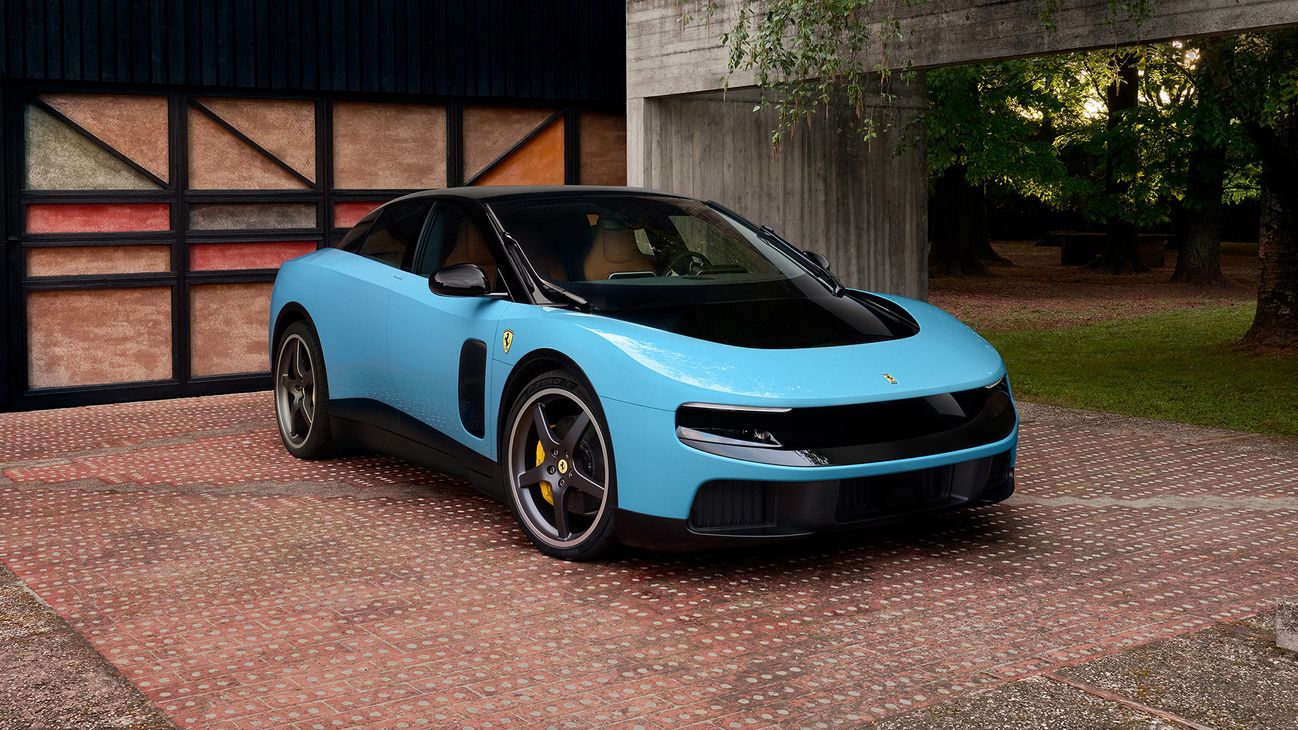
I’m not sure which exact car the podcast means by “Ferrari Luce” based on the snippet alone. If you can share more details—like the year or what it looks like—I can explain what that specific car is and what it’s for.
Gunther Works is a company that specializes in modifying Porsche 911s. They build special versions that can be very powerful and have distinctive styling.
“Slant nose” refers to a Porsche 911 front-end conversion where the nose profile is reshaped with a more sloped, wedge-like look. It’s a recognizable styling cue often associated with certain 911 race/track-inspired builds and aftermarket bodywork.
Some cars have different driving modes. “Comfort mode” is supposed to make the car feel smoother and easier to drive. Here, the point is that even in comfort mode, the car still feels very intense and not relaxing.
Acceleration just means how fast the car speeds up when you press the gas. The host is saying this car’s acceleration is so strong it doesn’t feel relaxing or easy.
“Track ready” means the car is built to be driven hard on a race track. It usually has upgrades or tuning that help it handle high speeds and repeated hard braking better than a typical street car.
“Peeling out” means the driver spins the tires while accelerating, usually making smoke. It’s a dramatic way to show how much power the car has and how easily the tires can lose grip.
A seagull is a type of bird, not a car. The podcast line sounds like someone is clarifying what they meant. If there’s a car model with a similar name, share the details and I’ll explain the car.
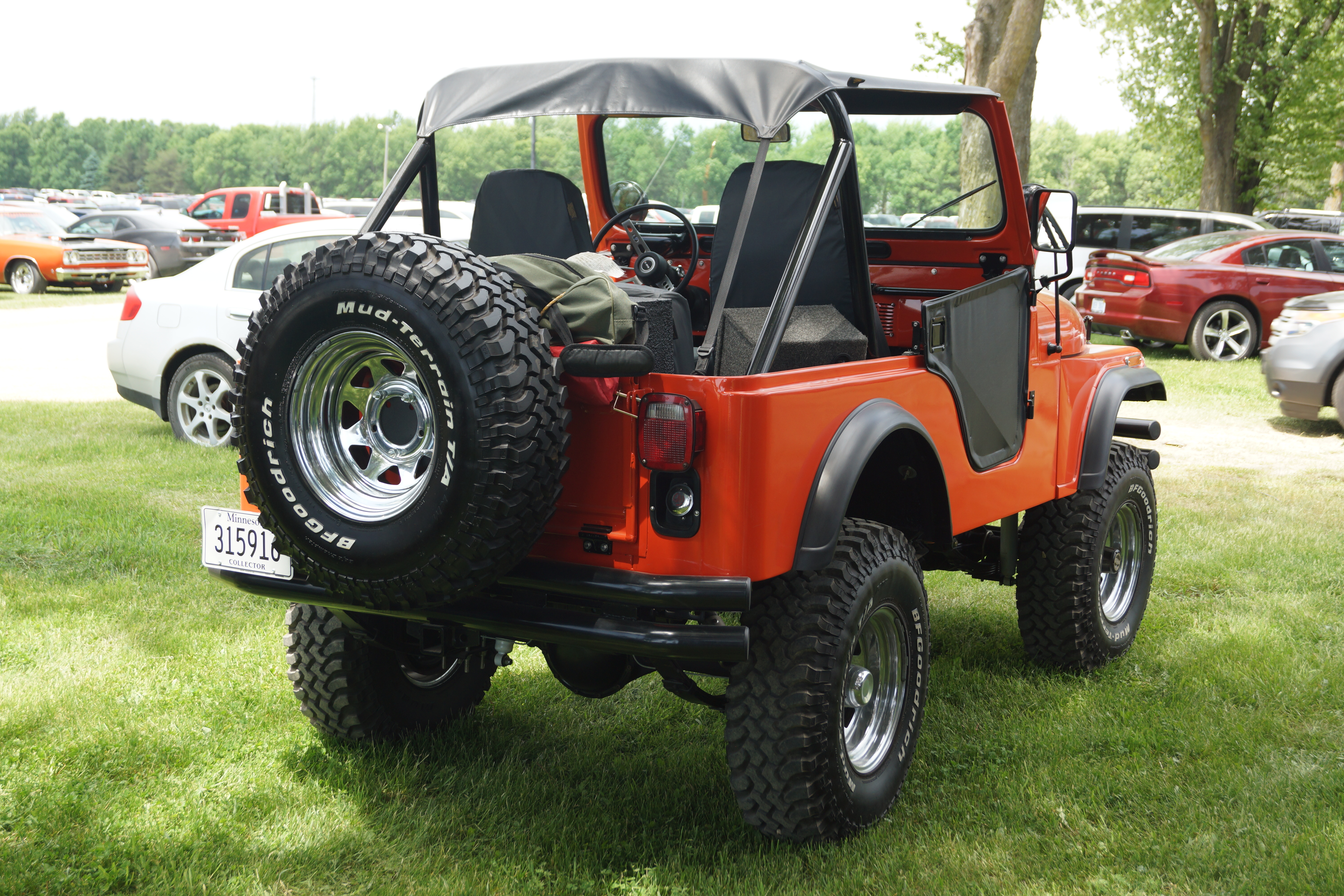
A Jeep CJ5 is an older, tough off-road Jeep. It’s the kind of car people often customize with simple bolt-on parts—like the bumper the speaker mentions.
“Numbers matching” means the big parts in the car are the original ones that came with it. People care because it can make the car feel more authentic and can matter for value.
DuPont Registry is a website where people list and sell nicer cars, often for collectors. The speaker is saying he found his first Porsche through that kind of marketplace.
They’re saying that back then, before the internet, car fans didn’t have easy ways to connect. So it felt lonely and embarrassing to admit you were into cars.
The Volkswagen Rabbit is a compact car model from Volkswagen. In this story, it’s used as an example of how the shape of a car can affect how the air flows around it.
Ground effects are car-shaping tricks under the body that help press the car down onto the road. That extra “stick” helps the car handle better, especially when you’re going faster.
The Porsche 356 is an early Porsche sports car. People love it because it’s light and feels very “connected” to the road—more about driving than gadgets.
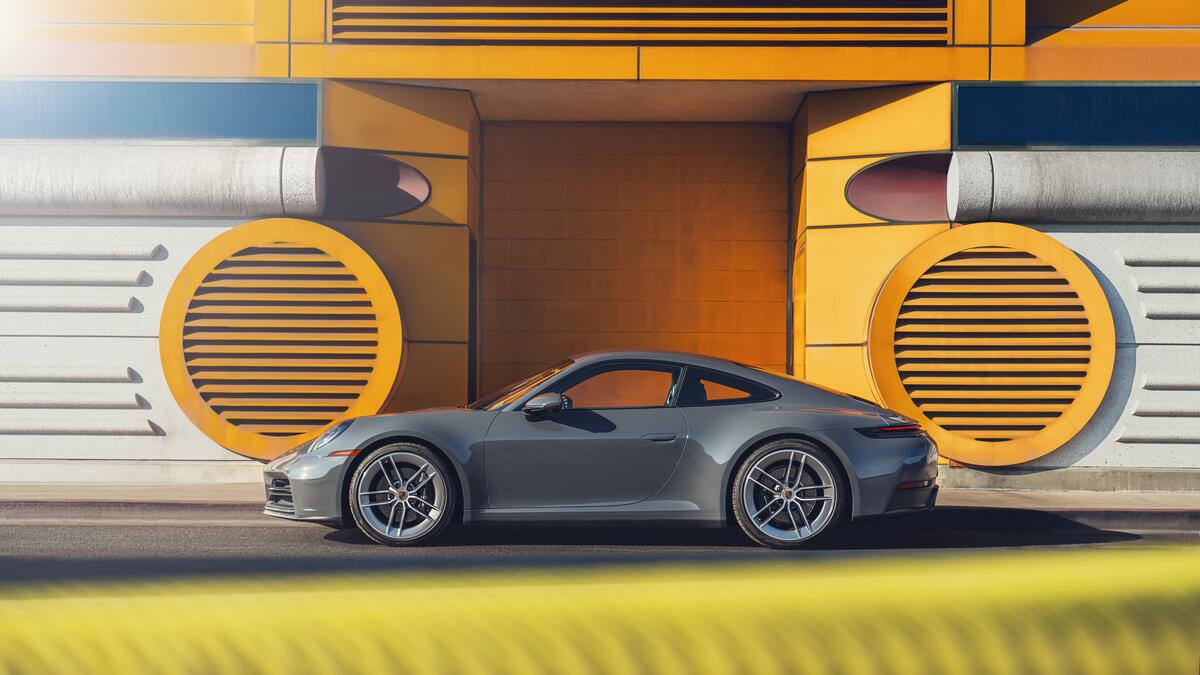
The Porsche 911 is Porsche’s iconic sports car. It’s famous for its rear-engine layout and for feeling like a serious car to drive, not just something flashy.
Power steering helps you turn the wheel with less effort. Without it, parking and slow-speed driving take more strength, but the steering can feel more “raw.”
The Porsche Cayman is a Porsche sports car with the engine mounted in the middle of the car. In this story, people bought one for a low price and then worked on it to get it running right.
“Engine blown” means the engine is badly damaged and may not run properly. The story is that they thought the car had a totally failed engine, but it turned out to be something else.
Knocking is a bad-sounding rattle or ping from the engine. It often means something isn’t right—either the fuel/combustion is off or there’s a mechanical issue inside the engine.
Exhaust headers are the part of the exhaust that first collects the engine’s exhaust gases. Changing them can change the sound and sometimes how the engine runs. Here, they’re talking about installing cheap headers and being surprised they sounded good.
Timu is mentioned as the place he bought cheap exhaust headers from. The host’s takeaway is that the bargain parts still worked well enough to sound great.
The Toyota Prius is a car that uses both a gas engine and an electric motor to help it use less fuel. In the podcast, it sounds like the speaker is saying that if you like it, you may feel really good about how it drives and saves gas. It’s a common choice for people who want practical transportation.
They’re talking about “gatekeeping,” which means some groups act like you have to meet certain rules to belong. In car communities, that can look like people judging you for not knowing enough or for liking the “wrong” brand.
The Ford Mustang is a sports car made by Ford. The podcast is mentioning it because some people really like Mustangs and identify with that model. It’s a well-known car that many enthusiasts talk about.
They’re describing people who strongly pick one brand—like “I’m a Dodge guy”—and then look down on other brands. That kind of rivalry can make conversations less friendly.
Pebble Beach is a famous place in California where there’s a big, high-end car event. People go to see rare cars and sometimes get chances to drive or experience them during the weekend.
A restomod is an older car that gets fixed up, but with newer parts added so it drives better and feels more modern. It usually keeps the classic style, but improves the driving experience.
PCH is short for the Pacific Coast Highway in California. It’s a scenic road along the ocean, and people like to drive it because the views and curves make the drive more fun.
An “outlaw segment” is a special section at a car show for cars that don’t fit the usual strict rules. It’s basically the show saying, “we’ll celebrate the modified/creative stuff too.”
Term
crushed
“Crushed” means the car got badly smashed by something outside it—here, a landslide. With a car this old and expensive, that kind of damage can affect the frame and make it much harder to repair properly.
Here, “salvage” means taking something damaged but still useful and saving it instead of throwing it away. The point is to reuse parts and avoid buying brand-new stuff.
Tactile switches are buttons that you can feel when you press them. In a car, that can be helpful because you can use them without taking your eyes off the road.
A flagship is the most important model a brand puts out—usually the one meant to represent the brand at its best. The host is saying people didn’t expect this new Ferrari to be the top model.
Car
Ferrari Testarosa
The Ferrari Testarosa is a famous old-school Ferrari supercar with a very recognizable look. Here, they’re talking about whether a new version should keep the original styling or change it to feel more modern and different.
“Allocations” here means limited opportunities to buy a scarce car. If a brand only makes a small number, dealers get a limited number of slots to offer to customers.
“Press cards” are basically media credentials. They help journalists get access to car events and information that regular customers don’t get.
LIVE
Welcome back to Talk Talk Nation. I'm your host Joe Weber, and I'm sitting with one of the best in the business, Mr. Spike Ferreston.
Yes.
Is that how I pronounce your name?
You should have asked that before we started.
But yeah, you got it right. You did well.
Cool.
Yeah.
Spike, thank you so much for letting us film you in your garage. I know this has been kind of a hectic morning.
You did my show. Yeah, you guys were great.
Thank you.
You were fantastic. No one was here. We had a good time, right?
It was great. I had a lot of fun. I'd like, it's been a while since I've commented on like, topical stuff.
So it's cool to be like, what do you think of the Ferrari Luce?
Yeah, yeah. Oh boy.
A load a little bit.
Yeah, good. Glad. Yeah, that was fun.
Yeah. Well, like I said, Spike's Car Radio is like, probably the podcast that I listen to the most relating to cars.
You've kind of set the standard for like topical stuff and, you know, fun, irreverent banter.
Oh, it's nice to hear.
A lot of that.
I'm glad somebody's listening.
A ton of people listen to it, probably.
That's cool.
But I want to talk about your background because you didn't initially, you weren't, you know, into cars, car media initially.
No, not at all.
But, you know, it was weird.
At one point I was really obsessed with cars in my 30s and I asked my mom, I go, you know, how did I get here?
Yeah.
You know, is this a relatively new phenomena?
And she said, no, since the age of two.
Oh.
I go, really?
And she sent me a picture of some, you know, little album.
She kept her journal and it said, obsessed with cars.
And then there were, you know, three and four drawing cars.
And it was, you know, it was just reassuring to see that this wasn't just some new thing that happened.
Yeah.
You know what I mean?
That it was just, it's kind of the way everybody is, I think, that it was just something, I see it happen all the time.
Like now I'm driving, I might be driving a cool press car, like a Gunther Works recently.
And I go by a school or a playground or something and there's a kid and you see him grab his mom like that.
And look, and you see that little light turn on, you know, and you go, there's one of our tribe.
That's one of those people.
I've seen that with my kid right now.
He's almost two.
His first word was car.
I was like, I'm not going to force my hobbies onto him.
I'm going to let him discover stuff.
And first thing he did was start spinning wheels and then his first word was car and now he's just obsessed with them.
Good news, bad news.
Two, it may not last.
Yeah.
My son, you're reminding me, my son's second word was Ferrara.
Ferrara.
And then, you know, whenever I was alone with him, I was like, oh, this is going to be really fun and really upsetting to my wife.
And then this is a Porsche.
Porsche.
And I started having him do the Alfa Romeo.
And he was just like, you got to stop because he was doing, it was mama and then right into Ferrari, Porsche and Alfa Romeo.
It was so fun.
But now he flies and he plays lacrosse and he likes to DJ.
What do you mean by he flies?
He's a pilot.
He started flying.
Well, he's on his way to becoming one.
He started flying when he was 13.
Whoa.
Everything kind of changed.
Like, you know, the car track and the flying pilot track were the same.
So, you know, I would have said the same thing.
The older pilot said, which is if they're still obsessed at 12, then it's a lifelong thing.
Yeah.
And the car thing kind of faded.
I mean, he likes BMWs and he works on the show and stuff.
But the pilot thing was just like, you know, just intensified at 12.
So getting back to two years old, you won't know.
And you can't, by the way, you can't force them to.
Oh, for sure.
It won't matter.
They'll just become kind of immune to it and go, okay.
Yeah.
Whatever got their works.
Yeah.
Whatever.
Yeah.
Well, then it's like, it's like Hogwarts schools.
Like your toddler gets into planes, cars, or dinosaurs.
Yeah.
Or Pokemons.
Pokemon.
Yeah.
Or things like that.
You mentioned Gunther Works.
Yeah.
You drive the, what, 1,100 horsepower.
I just drove the F-26.
That's the silver one that's modeled after the.
The slant nose, which is wild, you know.
How was it?
It's wild.
I mean, it's really, it's, you know, they're beautiful creations.
Yeah.
They're making 26 of them.
They're ungodly fast.
I mean, Peter called me up and said, you know, no one's driving it in comfort mode.
Yeah.
And then I drove it in comfort mode and I went, Peter, there's nothing comfortable.
Comfort mode.
There's just like death near death, you know, acceleration.
Yeah.
He goes, ha, ha, ha.
It just laughs.
But they're wonderful and they're a specific kind of buyer and there's a car for everyone,
really.
And that car is for the people who like to have something that feels like a track ready
car that's blindingly fast, uniquely kind of styled on the exterior bespoke all around.
Yeah.
But not exactly right for the street.
I don't think it's at home on the street.
Yeah.
I drove the turbo, the orange one.
Yeah.
And I was scared shitless.
He was like, Peter actually drove me around in it and was like, you know, peeling out
in third gear going in 65.
And I'm like, like, who needs more power than that?
It's just a specific kind of guy.
And a few years ago we picked what the skunk works.
I think a car that he built, the one that Peter crashed in at Willow as our car of the
year.
It was, you know, it's an amazing car.
And it really was fun.
And it was thrilling.
And it was different.
It was unique.
I mean, you know, all of these cars have specific buyers that can tell you about why they buy
them or not.
But when you get in, even the singers, you get into these big dollar cars that most of
us can't afford.
And I'll put myself in that category.
You know, it's fun for a week.
And then you get to the stuff you can drive and like in a Ford.
You know what I mean?
Yeah.
Is that a bird?
Probably.
A cat?
Seagulls.
Oh, OK.
That makes sense.
On the roof.
Zuckerman throws his chicken bones up there.
How is it sharing a garage with Zuckerman?
Like you guys are selling cars out of here as well, right?
This, you know, the show, some of our cars are here together.
We have plan Z.
We own cars together.
But this is primarily Zuckerman space.
I just took that little corner where there used to be a couch and put the studio there
so we could look over our shoulders at cars.
But so I was very laid back like I am, you know, the reason people ask us all the time,
how do you share cars between years?
We forget that we've even done it frequently and and that's it.
The only rule I think we have is if you're driving it and you get up, you just go fix
it and then put it back and wherever in my hangar, his hangar or other places with
gas in it.
And I was surprised to find out that you don't have any like written agreement with him.
You just kind of it's verbal.
If he dies, I'm going to lose a lot of money and he could die any minute.
Yeah, there's no there's no paper trail.
That's real trust or stupidity.
If you know anything about lawyers, they, you know, they're the last ones to have
wills or any sort of contracts.
They make everybody else do it and then they don't do it at all.
But yeah, when I worked with a bunch of nurses, like I said, I worked at the old folks home.
Yeah, there's a bunch of nurses and all of them smoked.
And I was like, aren't you the ones that tell us not to smoke?
Yes, exactly.
Right. Yeah, no, I know.
Yeah, that's interesting.
I should do a podcast about that about nurses or working in a nursing home.
I had a fascinating job when I was doing comedy.
I wrote a pilot for an animated series called Golden Years, right, where it was
about this old folks home, but it was mostly about the staff that was working behind the scenes.
And I really wanted to do something with that.
But on the subject of comedy, it can be difficult to sell that.
Yes. Why?
Because nobody wants to hear from old folks.
Well, that's the whole thing is you think it's going to be about the old folks,
but it's really about the staff.
No, I think you get in the right movie, you know, just make it yourself.
Yeah, that's true.
Just the only way to get stuff made now is just make it yourself.
Yeah. And then just to put it on, there's got to be a way.
There's got to be a way to animate it cheaply and shoot a couple of scenes
like the South Park guys did.
Yeah, you know, cardboard or whatever.
Fiverr, I'll just hire someone on Fiverr.
There you go. Yeah.
But I wanted to talk about comedy because obviously you came up through
comedy and you wrote on Seinfeld for years.
But initially you started at, you told me, Berkeley School of Music.
Yes, I didn't know that at all. That's crazy.
By the way, it was Patrick Long that crashed, not Peter.
I don't know why I was thinking about Peter, but it was Patrick Long.
I just want to correct that for everybody.
How did you transfer from Berkeley to writing comedy?
And what were you studying at Berkeley, by the way?
Music, production and engineering.
Yes. The study of setting these up and then doing this.
Yeah, your Sennheisers and your...
There's some people who love doing that.
For me, it was a cop out because I was terrified of becoming a music teacher.
Not that there's anything wrong about that,
but I had my eyes set on worldwide guitar fame.
I thought I was Jimi Hendrix or the new Jimi Hendrix.
And I wasn't. I clearly wasn't.
So here I am at Berkeley College of Music.
I'm diving into MP&E, I'm writing, I'm film scoring and none of it.
It's starting to not feel right because none of it was my primary focus.
At the same time, I was bartending to kind of put myself through college.
Yeah. Back when you could...
Back when you could bartend to put yourself through college, ladies and gentlemen.
Not anymore.
I just got that college bill for my high school senior.
But you could, in theory, do this and pay off.
It's insane.
You're whatever it is, your tuition.
Anyway, I was obsessed with David Letterman
and they had hired a new hostess to come in.
And she was wearing the Letterman Varsity Jacket in Boston.
And I said,
can I have the jacket?
She said no.
And I said, how about an internship at Letterman?
She goes, I'll see if I can work that out.
And she did.
That's awesome.
And she got me an internship.
And I went back to Berkeley and went to the head of MP&E.
And I said, look, this falls way outside of the category of what I study here.
But I'm going to do this.
Can you say that I'm going to get college tuition for it?
Because they need to...
Oh, you were trying to get credit for...
College credit.
Can you say they're going to get college credit?
Because otherwise they can't get the insurance that covers me as an intern, blah, blah, blah.
He did that.
And I never went back.
That's awesome.
I started bartending, I think, Mondays and Tuesdays, double shifts.
And then I would get on Big Apple Air for 29 bucks student flight cost
and fly from Boston to New York.
I would sleep on my friend's Brooklyn floor in a sleeping bag.
And I would stay and work for free for Saturday Night Live.
And then fly back.
Take the train back at three in the morning from Port Authority Saturday Night after the party.
That's something you can only do when you're 21 years old.
Yeah.
And I loved every second of it.
I knew I was exactly where I needed to be when I was at 30 Rock and around that show.
I was just like, this is the only place I want to be.
I just knew it was for me.
That's awesome.
That's awesome going from a program that you're viewing as a cop out,
something you don't really want to commit to, to knowing exactly what you want to do.
Yeah.
Well, it was really David Letterman's show that was the beacon, the lighthouse, you know.
So you were on, you were saying SNL?
Yeah.
But here is something you probably don't know.
The graphic department of 30 Rock handled those two shows.
So I went to work for the guy who ran graphics for those two shows.
That's cool.
You know, this is, you know, pre-internet.
So if there's a joke about, I don't know, Richard Nixon in a weekend update or in Dave's monologue
and some, I was the guy that went to AP, which is right around 30 Rock, the, or UPI,
and went through file drawers and looked for the right shot of Richard Nixon looking confused
from old photos.
And I go, huh, I take that.
I'd run back to the graphics department.
They would shoot it with like this, the paint box.
And they would turn it into the graphic that would be over the shoulder for the joke.
That's crazy.
After the writers approved it.
That was how we did things.
Wow.
Yeah.
It was insane.
Really crazy.
Amazingly fun job.
But every once in a while you'd run into things like I need to, I remember there was like,
I need a picture of Snoopy, you know, with the football doing something.
And I'm like, how am I going to get that?
You know, and you go to bookstores, you can't find it.
I went to the public library and I found all the Snoopy books and I just tore the page
and put it in my jacket and ran back and I went, ah, but it was fun.
It was so fun.
That's awesome.
So you mentioned what Associated Press had their own box of licensed photos or something.
Yeah, yeah, yeah.
That they use for news.
And so when you would take a photo out and shoot it, then you had to pay royalties for
Associated Press.
Frequently, we didn't do any of that stuff.
I didn't handle the money.
Okay.
You don't have to deal with that.
The guy I worked for handled all that stuff.
But yeah, you'd have to go, all right, well, you know, there was a state of the union address
the week before.
They're going to have a file of pictures now in this giant drawer.
Okay.
Are there any close-ups of the president doing this or, you know, talking afterwards?
So you'd go flip, flip.
So that's your foot in the door.
That's my foot in the door.
Yeah.
I was doing that.
And going to McDonald's for the graphic department and also getting Bud Tall for the graphic department.
Around four o'clock every day.
I'm not kidding.
Yeah.
This whatever you asked me, that's what I did.
I was a gopher.
Yeah.
Yeah, I was a gopher.
But because of that, because you're doing so many different things for them, they probably
trust you and give you more responsibility eventually down the line.
Well, you know, when they use the picture that you found, you get pretty excited.
Yeah.
You're like, oh man, I just affected Saturday Night Live.
I contributed in some way and that, that was the beginning of my insanity.
Then I was like, who's, I thought all of this stuff was improvised.
Yeah.
I thought David, we can update this guy was, I really thought that.
And I go like, no, there's a team of writers.
And I go, what do they get paid?
They write these things?
I think I could do that.
So I started, you know, I would go home at night after work and I would write pages of
jokes and then present them to whomever on whichever show and stuff started getting done.
Stuff started getting in the show.
So you were never looking at it from like, I have to do comedy to get into writing.
You were like, I think I can do that.
I'm going to try to do that.
And then you just kind of impose your will on them.
It was really about the intern staff on the original late night with David Letterman.
Yeah.
If I'm in college, why can't I be one of those?
And it was the pursuit of that that kind of went sideways into Saturday Night Live,
if that makes sense.
Yeah.
And then bounced back to Letterman intern and then went from Letterman intern to Letterman
writer.
That's awesome.
Yeah.
That's a cool arc.
But it was just this feeling that I think I belong there.
Yeah.
Because I know I'm not, I don't belong in music anymore.
And I didn't really pay attention in school.
So I'm not, I can't get a real job.
I'll die if I'm in an office, but I feel at home with these people.
Yeah.
What are you talking to?
What was his name?
Paul, the band leader.
Paul Schaefer.
Paul Schaefer.
No, I know Paul, but what do you mean talking?
I mean, when you're like, you weren't trying to work that angle as well where you're like,
if your guitarist gets sick, let me sub in for you.
No, I was never that good that I wanted to do that.
No, I was always talking to the writers.
Yeah.
Like I had zeroed in on all of the great writers for SNL and Letterman.
And I was just like, I just want to be like you guys, the Steve O'Donnells and those folks,
the people who invented the top 10 list and George Meyer on SNL and Jack Handy.
Jack Handy.
Great guys like that.
And like, how do you, how can I learn about how, you know, and Dana Carvey too, you brought
up Dana Carvey.
Like, Dana would be like, can you get footage of George Bush?
I want to do an impression of George Bush.
And I go, okay.
And he goes, sit down.
Let's work on this.
And I work on it.
That's so cool.
And I, just to be clear, what I did was just press play and stop.
Yeah.
And he would go, okay, I'm going to exaggerate this.
I'm going to try that.
And it was fascinating like seeing him build a character.
Yeah.
You know, so, you know, that's like experiential stuff that you can't teach.
That's comedy college.
Yeah.
Those two shows.
That's what it was.
Have you always considered yourself a funny person?
No.
Not even now.
Seriously.
No, not at all.
Not even when you're bartending, you're like honing your chops.
No.
Trying to pick up women or anything.
No.
I think about God like, oh man, I had so much going on back then.
I really wish I had tried to pick up women.
I really don't you wish you could go back and go, oh, wow.
Yeah.
God, I'm writing for these shows and when someone's saying they wanted to set me up
with a model that's on the cover of this and I said, no, I don't go on blind dates.
I go, oh my, but I was wholly obsessed with the business itself.
Yeah.
Like we were, I remember my friend, John Fortenberry.
He was, he wanted to be a director.
I wanted to be a writer.
We were just trying to find ways to have all nighters at Broadway video.
Lauren Michaels company, just so we could say, yeah, we just did an all nighter.
Yeah.
You know, we just wanted so badly to be part of this great thing that we would just pretty
much live there.
We hear about those after parties, the SNL after parties.
Are they at the door as crazy as they sound?
No, they're all cool.
Yeah.
There were some fun moments, you know, here and there, you know, you know, it's where
I saw Lauren dance funny that inspired the little kicks, you know, and, you know, you'd
have your moments with Madonna or someone.
Yeah.
I remember some of the interns were smoking weed with Cypress Hill.
That's pretty cool.
Pulled out a joint that was this long.
They're like, okay, guys, well, you're in a restaurant.
Have fun.
But they were all, you know, it was a place for everybody to kind of relax and let their
hair down.
And I worked the door that first year, which, you know, the power went right to my head.
Who I'm letting in and who I'm not letting in.
That's so funny.
Yeah.
Yeah.
And then the president of the network famously came out of that first party at three in the
morning, drunk and then right over the hood of his town car slid like this and got into
the car.
And I went, who is that?
They said, that's the president of the network and getting and driving away.
No, it was a town car, but he ran out screaming with a girl having fun drunk and then, you
know, did that TJ Hooker slide over the hood and got in and I was like, who's that?
And they said the president of NBC, Brandon Tartikoff.
And I went, I am in the right place.
If that's what's going on at this company, that's the ceiling right there.
Just the whole culture of what's going on before General Electric buys NBC and ruins
the whole vibe and its current state.
So during this time you're in New York, you're probably not thinking about cars, right?
No, I was.
You were?
Yeah.
Yeah.
Yeah.
No, absolutely.
I couldn't afford a car, but when I went to work for David Letterman, it was like, you
know, part of the deal we had when we moved from 30 Rock to CBS to Ed Sullivan was we
got cheap parking at the Sheridan across the street.
So you actually did have a car in New York?
Well, yeah, I had a CJ5.
Oh, nice.
When I had a little extra money, I had a Jeep CJ5.
I put on, you know, kind of like the fabricated bumper you guys showed me.
Yeah, I took a two by four and I bolted that to the front of the CJ5 and then I put fishing
pole holders, three of them on the passenger side, 12 and three, and I would drive
out to Long Island and go fishing.
Oh, that's awesome.
So I'd have my, I'd put my pole holders on it, I'd get out onto the beach and I'd chase
bluefish and striped bass, which was fun.
Yeah.
And then I'd come back, I'd park the car Sunday night and Monday morning I'd wake up and everything
would be stolen out of the car again, the radio and the cheap speakers and I'd start
over.
Oh my God.
I'd work all week and then get a new radio and put it in and then head back out.
Was it a soft top?
Yeah, yeah.
Oh, so you were.
I bought it from a fireman, a Brooklyn fireman, I remember.
You were not having fun in the winters then?
No, it didn't matter.
You know, I had been driving a motorcycle in Boston in the middle of winter, a ZX600,
you know, Kawasaki Ninja.
So this was an upgrade, but this was the Jeep that I then put, let's see, I had that
parking spot at the Sheridan.
No, this predates that.
So I didn't, we didn't have the Sheridan thing.
This is NBC 30 Rock Years and I needed a place to park it because people kept stealing everything
that was in it because it didn't lock and it had a soft top and it had rips.
So I put it in this really cheap parking lot on the West End Highway and I would come out
to grab it on a Friday and I'd find used condoms in it and I'd go, what the is going
on here?
And I went to the to the guy at the booth and he goes, you know, your car doesn't lock
and there are hookers here and they're using it for sex.
Oh, God, I went, what I'm I'm paying you, dude.
Is that the security guard?
The security guard, he said, take it up with consumer affairs.
Now, that's literally in Seinfeld, that whole story is in Seinfeld with George.
It's the same exact thing.
But, you know, I was kind of entertained by the whole thing.
And after that, because I had a spot, it was when I bought my first Porsche.
Oh, nice.
And what was that?
I had a 74 9-11 in sepia brown horrible color, 200 plus thousand miles, lots of rust.
Wow.
I bought it the back of DuPont registry, I think, for 5800 dollars.
Not bad, not bad.
And I loved it.
And when I got that car, you know, you know, I drive it, we drive it everywhere.
We load it up with people on a Friday night, drive it downtown, have a good time, beat on it.
But it it solidified me as kind of a Porsche guy.
And it was David Letterman's direction.
He was like, you're a Porsche guy, whether you like it or not.
And before this, you had hated Porsches.
Yeah, I bought, you know, again, I'm a dumb kid living in New York with no overhead
and rent is super cheap, right?
I think my rent was 30400 dollars.
So now I'm making some actual money at Letterman.
So I I'm just going to take this and buy a car.
So I went to some place on 34th Street and I bought a Maserati by turbo.
Total piece of shit that would break down every weekend's new sets of problems.
So it was that car, I think, a few thousand dollars that got me this 74 site
unseen, I just shipped that car down to Georgia and said, send me that 911
And I'm sure I got ripped off, right?
I'm paying like 4000 plus that car.
I got hosed, but I didn't care.
I just love this car.
Yeah. Before you were telling me, like when you were growing up, you hated Porsches.
You ever wanted a Porsche?
But it was David Letterman who convinced you to drive one or just to buy one?
He let me drive his cars.
It's this funny thing, like it was a very lonely time for car guys in the 80s in the 90s.
And by that, I mean, nobody knew that there were other guys that like cars.
There's no internet. There was no internet.
It was embarrassing.
Like, oh, I'm a car guy.
I know it's dumb, but I'm a car.
So, you know, you when I walked into Letterman, they go, Spikes a car guy,
which I really wasn't.
I just liked them.
I didn't know much about them, kind of like now.
Yeah. But you know a lot about he heard.
He I know about the experience of driving them and I communicate that to kind of people
like me, but Dave was like, you like cars, you like this, you know, so I'd go up
and I'd be bringing monologue jokes and he'd say, hey, look, do you see the back
of auto week? And I'd go, no, because there's a Volkswagen rabbit with ground
effects on it. And I'm like, you know, it's the air, it's the way it moves.
So, you know, he kind of recognized, you know, you become like their car
friend, you know, I was writing for Leno at the time, language.
Same thing, Jerry is the same thing.
And Dave was kind of the same thing.
And Dave said, you know, I'd been hired for four weeks and we were out for the
Emmys and I wasn't nominated, but he's like, come to Santa Monica Airport
and drive this stuff.
And I drove a Dino that day.
I drove a 356 for the first time.
I drove an 88, 9, 11.
And, you know, he said, you're a 9, 11 guy.
And I was like, I think you're right.
I don't like the type of people who drive these cars.
And he goes, well, you know, you've got that wrong.
They're focused driving experience.
Some of these cars don't have power brakes, power steering, any of this stuff.
And sometimes they don't even have a radio, but you'll like the way
it feels wrapped around you.
And he was right.
Did you.
So when you after driving that first 9, 11 and then buying your first 9, 11,
yeah, do you feel like it was a let down or what you were like, OK,
this is meant to know I always felt at home right away.
That's awesome.
Yeah, no, I, you know, my only concern was I think the current concerns
is these goddamn things are expensive now.
Yeah.
And they weren't so bad back then.
They really weren't.
It wasn't a big deal.
This wasn't quite the rock bottom, but this was getting close to it.
Yeah, there were many places for you to go for a few thousand dollars,
which is not like it is right now.
No, you're I mean, you had you had Ralph Barbosa and Luis on a while ago.
Yeah, homies of the channel, Formula Bean guys.
But they bought Cayman.
Yeah, I love that story.
Two grand or something, three grand and they fixed it by just like thrashing the
show driving it.
Right.
They thought he bought it with the engine blown.
It was knocking.
And yeah, it's knocking.
And he just went out and he thought he'd race this thing till it stopped.
And instead it cleared up like it cleared its throat.
And then it was so funny.
So whatever was blocking it, those guys are coming back on.
But I think that car eventually did break.
But I just saw a story where he drove it again and it started spewing smoke.
Yeah, yeah.
But he got a good couple of years out of it.
Yeah.
Yeah, three grand.
He also just put like a Timu exhaust headers on it and seems like a bad idea.
That's what he thought.
He was like, you know, you look at exhaust headers for this car and they're a couple
thousand dollars.
And he was like, I'm just going to buy these $80 ones from China.
And he put them on and they actually sounded amazing.
Yeah, it worked.
So that's amazing.
Yeah, I like those guys a lot.
They're super cool.
Ralph was just such a blast to have on.
Yeah, yeah.
So fun.
And just he's one of those people where he makes you mad with how funny funny he is.
Yeah, everything he says is so sparse and funny and perfect.
You're like, God damn it.
Like you find it interesting, the comedy world and our world.
Yeah.
What is that?
I have a theory, but let's hear your theory.
I think.
OK, so every rock star or sports guy wants to be a comedian, and I think every
comedian wants to be a rock star or a sports star.
They they they it's true.
And I think a lot of it comes down to competitiveness.
Comedians are so competitive.
It's insane.
That's kind of what drove me out of it was like, oh, just go to the car world
because the the bar is way lower to be funny.
If you talk to car guys, if you talk to car guys that are, you know, the funniest
guy in their group, they they have a big head and they think they're funny.
But you take them out of the car group.
Yeah, they're not funny at all.
And so I was like, OK, I can like I don't know that much about cars, but I can
write jokes and do my research and like get into it.
And I think that's what, you know, my early years at doughnut, I was able to
stand out because I was the funniest.
I couldn't talk about specific chassis codes or whatever.
But I could do my research and find my way into it.
The bar is lower.
The bar is lower in the car world.
Why comedy and cars?
That's an interesting theory.
I think you're right about some of it.
You write about, I think like everybody I've met who's in comedy wants
to be a rock star or sports.
That's exactly right.
It's really interesting.
But I think cars are fun and I think comedy people are fun.
I think it's like could be that simple, right?
It's it's all kind of fun experts and you get to kind of like we're talking
about before like the Hogwarts school, you get to pick your school and then
like rib on the other schools.
And there's like inherent comedy in that as well.
And I don't know, just, yeah, I feel like a lot of people want to be
Jeremy Clarkson as well.
Yeah, he's funny.
Yeah, he writes really well.
And I think, you know, the car community, like you said, is it's much
more welcoming than the entertainment community.
I goes back to the Smothers Brothers when I was talking to Dickie Smothers.
He said, part of the reason he was into cars is because they were
getting all these notes on laughing and, you know, they were going to get
canceled and there were jokes about the war and they couldn't do this anymore.
They were problems at CBS, kind of like now the problems at CBS.
Yeah, but they would go out into the parking lot with the crew and, you know,
start looking at cars and then they said they wanted to race and the guy said,
let us help you do that.
Yeah, let's bring you out to Willow.
Let's help.
And they couldn't believe how welcoming the car community was.
I find that to be true today.
Yeah, I don't care what you drive.
If you're into it, you're, you know, driving a Prius and you're like, fantastic.
You know, you're, you're part of our tribe.
Checking all state first could save you hundreds on car insurance.
Not checking your fuel levels before driving off the grid on your road trip.
Not good.
You're out of gas and you're stuck on the side of the road.
Great way to start off the trip.
Yeah.
Checking first is a good idea.
So check all state first for an auto quote.
It could save you hundreds and for fast, reliable help when you need it.
Add an all state roadside plan today.
You're in good hands with all state potential savings.
Very subject to terms and availability insurance by all state North American
insurance company, Northbrook, Illinois, roadside assistance by all state
Motor Club, Incorporated, an all state affiliate.
I think it's become more inclusive.
I've on this show, I've talked about how gate keep things can be, especially
when you get into the more niche communities.
Who's the worst?
Well, I'm sitting in a Porsche.
I'm sitting surrounded by people are the worst.
I think they used to be the worst.
Really?
I think the the.
OK, let's go through.
Have you met the Mustang guys?
No, I mean, Nolan is a Mustang guy, but he's so nice.
What gates are they controlling?
Well, I'm just talking about like getting into what I want to know what I can control.
Because like I said, I like to work in the door at the SNL parties.
What can I control here?
Well, the way that you talk about Porsches and your specific knowledge
about everything, I can't hang like that.
I'm not saying that's gatekeeping, right?
I'm saying the experience, though, that I'm saying that people where you're
like, oh, that's a cool car and they'll be like, yeah, but this is better.
And it's like, OK, right, right.
I don't have to compare every little thing.
And like, if you're if you're putting yourself in the, you know, I'm a Dodge guy,
I hate Chevy's or I'm a Chevy guy, I hate Dodges.
I think that's lame and limiting.
Right. And there's stuff to appreciate about every car company,
maybe not every car, but especially every company does something cool.
Yeah. And I think it's limiting to be like, you know, what about Lamborghini guys?
Lamborghini guys. Yeah, I think I think.
I'm just joking.
I don't we could go through.
You know who the worst is?
Who? The Ferrari guys.
The Ferrari guys. I think the Ferrari guys are the worst.
Yeah. And I know.
Yeah, you know, have you ever gone to Pebble?
See if you can talk your way into the Ferrari party.
There's no way.
When you look around that room, you'll go, oh, yeah, I know what Spike was talking about.
Yeah, it's like 90 year old guys who have their orgasm face stuck to their face like this.
With 17 year old strippers from like Alabama.
That's that's bad.
There is a weird but the cars are cool.
I like them. Yeah.
Don't stop letting me drive them, please.
There is a weirdly like kind of bigger community
than I thought for supercars down in Alabama and Mississippi.
Yeah. And it's not an entitlement of Alabama.
No, no, no, it's an entitlement of the guys who go into the ship joints
and go, I'll take one of those with this orgasm face.
Just a peeled back face, hairplugs.
I saw it. I saw it with my own eyes.
I OK. What's that?
I I'm new to Pebble Beach.
I've only gone twice. Yeah. That's enough.
I have slummed it up both years.
Like we're we're on a pretty strict budget. Right.
We get only it's expensive for everybody, by the way.
Eventually, everybody stops going because of the expense.
What I like the most was I got to draw like this is insane.
And I got to drive it, but I got to drive the tribute, the roof.
Oh, yeah, yeah, yeah.
Almost Resto Mod one, but it's not really Resto Mod.
It was amazing.
Yeah, one of the best experiences of my life. Yeah.
I couldn't even really put it into words.
We don't do reviews on this channel.
Did you drive it through the woods and we went to a little bit.
It was like we went through past the quail, which is always like traffic.
All right. And then we went on PCH for a little bit
and we got to open it up just enough to be like, oh, my God,
this is amazing. It's great.
But one of the coolest things was like all the teenagers that camp out there.
Yeah, yeah, yeah.
They're like zooming in and and, you know, it's kind of unassuming.
Like if you didn't know what roof was, you wouldn't know what this car was.
Yeah, you might just think it's a singer or a Resto Mod or whatever.
A bubble just came out of my mouth.
It's amazing. I was crazy. I was enjoying it.
But we drive past.
It's frothing at the mouth.
Every single one of them turn around and like zoom in.
Yeah.
And I was like, oh, man, this is cool that like this new generation knows what roof is
and enough to appreciate this new crazy.
Yeah, I'm not going back this year, but last year was like pinnacle craziness.
Yeah, kids coming out of the woods like deer.
Yes, being spooked and car shows going on in weird places.
Yeah, we we had our spotter kids are all over the place.
But then I saw these tick tocks of people being like
broccoli had teenagers are ruining car week.
And it's like they're not the ones ruining it.
Yeah, I would say the money grabs are the ones ruining it.
Would can you name anything specific without pissing anyone thing?
Anyone off? Well, yeah, it's not hard.
Everybody knows it.
Like, you know, all the hotels don't want to let you self park anymore.
They want you to valet because they want to take that money.
That means you get stuck on the outer street
waiting to come into your own hotel.
Yeah, you know, it's stuff like that.
Then there's a bunch of not just the Lamborghini guys,
but a bunch of people hooning around in a place that the,
you know, the people that live their year around don't want that.
It's over managed.
The police shut down so many roads that you can't get anywhere.
You know, it's kind of it's so successful now
that too many people kind of cram into the peninsula
and you can't quite enjoy it.
So it's Disneyland on a day where there are too many people there.
And you're waiting in line for a really long time.
So it's not the concor or the events that are really at fault.
It's just that it's and I don't know how to solve this.
I just know how to complain about it, but they got a you got to stop people.
You could cut it in half and it would be just fine.
Like by comparison, a drain concor, which is shortly after
still has a ton of people, a bunch of great events, and it's very low key and quiet.
And people aren't trying to grab you at every parking lot,
every sandwich and the rest of it going, oh, cheeseburgers are a hundred dollars
this weekend. You want to store your car for the weekend?
That's 4000 dollars up a table. It's like insane.
You know, and at some point you just like,
I don't want to be a part of this anymore. Yeah.
So, you know, I these days, I say, go to Audrey.
You'll see great stuff.
You'll have great events.
You can walk to a lot of it and it's all very relaxed.
That makes car spotter kids who aren't really a problem, aren't there?
But, you know, I don't mind them.
They're just enthusiastic about cars, photos and stuff.
That's my angle is like, that's the new generation.
Why shouldn't they be excited about it?
Exactly.
Because the people run these concours are always like,
how do we get the next generation involved?
And then they come.
They always go the same thing.
Let's have driving simulators and no, they're already here, man.
That's them. Let them in.
Why don't you have a modified car?
Why don't you have something 10000 or less modified or something?
You know, you see the success lemons is having.
Why don't you bring that into your event somehow and recognize these folks?
Is that's going to happen?
Anyways, so Rod Emory, for example, like he was telling the story
about how outlaw nine eleven's outlaw Porsches,
not only were they not allowed at the concours for Porsche events,
they would park them way in the back of the parking lots.
But now eventually they had a, you know, an outlaw segment at Pebble Beach.
You know, they finally made their way in.
So, you know, it's a good example of where this stuff is going, you know.
Yeah. I don't, you know, I don't.
Position myself to be like a Pebble Beach expert.
But I definitely felt underdressed.
I felt kind of unwelcomed, even though everyone knew doughnut media.
Yeah, yeah.
But that's the experience for everybody.
OK, yeah, yeah, you you're you're not welcome there because
I felt that way at Villadeste.
I had someone I know. I don't even know what that is.
Villadeste is a show in Italy that's like Pebble Beach.
Oh, wow. A different level.
Even luxury, but it's real old money, old European money.
And people are like, the guy literally said, what are you doing here?
Just like that. And I went, I know, right?
He had one of those names, a Rockefeller name, one of those names.
Sure. That's just the vibe of those places.
But I think I'll drain is the most approachable.
I don't think you'll feel that when you go there.
It's like the Northeast and, you know, it's just other car fans.
And it's mostly working class. So that's OK. That's cool.
Yeah, we we wanted to.
Disrupt Pebble Beach.
Yeah, one of our video ideas
by dragging our crashed Porsche.
I don't know if you know this, but we we bought the cheapest Porsche
you can buy and bring a trailer. Yeah, 850 dollars.
It was what was I think 79 SC.
I don't really know. That's a good deal.
But it was crushed from a landslide.
I get it. Yeah.
So we talked to Magnus and he was like, oh, there's always a way to bring.
There's always with us a wheel. There's a way I think it's beyond.
But we wanted to drag that up there and and you fix it then, Magnus.
I don't want to deal with this. Yeah.
He did. I I really like my conversation with Magnus was really
illuminating because he doesn't buy anything new.
You know, he restores everything.
And that kind of made me reconsider what I do, you know, with clothes and stuff
and furniture and yeah, just there's so much waste in this world.
And if I can just salvage something and not buy something new,
then I I'm going to start doing that.
You know, I don't know if you feel the same way sound idea.
Yeah, you like all these old cars. I like old cars.
There's no question in there.
I just this is free form.
The funny thing about these old cars is you trick yourself into believing
that these are yours, but they're not.
They will outlive you and they will continue moving forward.
And it's like a parrot.
We take that seriously, like me and Zuckerman and Jerry.
We take that whole idea seriously, like what can we do to this?
So as it moves forward through time, we at least didn't hurt the history
of where it was. And, you know, I think it's so dumb, the caretaker phrase.
But, you know, you know, what we did it with the Zagato 356, you know,
Zagato built it, it wasn't right.
We put some money in it, we made it perfect.
And then, you know, we showed it around.
And now, you know, my pitch to Zuckerman was on this plan Z was
because there was that disappointment when it was delivered
and the guys at Zagato didn't do the mechanical stuff right.
I said, if we get it right, it lives on forever.
Don't forget that.
So we can be the guys that actually put this beautiful creation,
get it right so it can drive right.
And then we'll be part of that history moving forward.
That's a cool philosophy.
I like that idea, yeah.
You're like stewards instead of owners.
That's so dumb, too.
Stewards is a dumb word. Stewards.
You know anybody named Stewart? I know a guy named Stewart.
I know a guy named Stewart.
He's 69
Yeah. Yeah.
There are some good stewards.
Yeah.
S-T-U-A-R-T.
Yeah.
But I mean, sitting in this garage is humbling because
I feel like this is.
This is what getting hurt buys you at Costco.
This is all lawsuit money.
This is what happens when you're in an Uber and they crash.
Yeah.
He takes the human misery and he turns it into profit,
not just for the person, but for himself.
Yeah. It's impressive.
He's helping people.
I can. He's definitely helping people.
Oh, yeah. He helps people all the time, all the time.
Going back to where you made your money.
Yes.
Seinfeld.
Were we there?
So you went from SNL to Seinfeld.
Yep.
How did that happen?
Oh, wait, did I?
No, I went from SNL as the receptionist.
Yes.
The guy who answered the phones to Letterman for five years
and from Letterman then on to Seinfeld.
How did you cut your teeth at Letterman, though?
Was it was an intimidating jumping into that writer's room?
Oh, totally. Yeah. Yeah.
But but, you know, it was the older writers
to kind of help you out and take you under the rank.
Tom Gamble, Max Prost, George Meyer, all those guys.
Was there no like competitive, like standoffishness with them?
With writers?
Yeah.
Well, once I get into the rooms, they were very competitive.
But but only in that you were trying not to get fired, you know.
So you had these quarterly contracts,
which were 13 weeks long and it stipulated
that at nine weeks they could fire you.
Oh, wow.
And then you would ride out the rest of it.
So you were always competitive with I was competitive with myself.
I wanted to make sure I was delivering.
So that never that clause was never triggered.
And I don't think I relaxed for about three years and thought,
all right, I don't think I'm getting fired.
How is that for your blood pressure?
It's good. It's motivational fear.
I like fear. It motivates me a lot. Yeah, I use it now.
Not in this interview, but I I like for some reason,
I'm very good at conjuring up a worst case scenario for myself.
And I'll be living in a shopping cart on the street outside the door here.
Instead of inside here talking with you.
Poverty is my biggest motivator.
I think it's a lot of people's right now, thanks to our government.
But it can be turned into a power to motivate you to get things done.
Yeah, wake up and, you know, do the work and, you know, try,
you know, don't walk around, you know. Yeah.
And and so, you know, that that was always how I thought.
And, you know, if I'm looking back at now, 35 plus years in entertainment,
I've never not felt that way.
It's a big motivator.
And occasionally it works out and it's great.
It's kind of like racing.
You're like, wow, that thing exploded.
The Super Nazi. Wow, we're talking about it today. Yeah.
But I was like, I'll show you a big bag of shit that never got me
that I really love, too.
That's kind of the way this career works.
Yeah, that's an episode I wrote.
That's awesome, because I was going, you know, going to the place
when I was at Letterman, I came in and I told Larry and Jerry the story.
And they were like, that's an episode.
And I went, OK, that wasn't a bitch, but great.
And here we are.
So, you know, again, like if you're creative, you just want to create.
And you never know what's going to pop.
So just keep making things.
That's awesome. That's great words to live by.
What's your hottest take?
Well, people are a little upset with the Ferrari Luce take that I guess that I had,
which was pretty simple, like, you know, it's really expensive.
But I think it's going to work.
And I'll tell you why, because it's not the only car they sell.
And I don't know why people are so upset, but I understand that it looks
more like an iPhone than less like a Ferrari.
I think it's kind of irrelevant.
I think it's going to do well.
And furthermore, I kind of like the way iPhones work.
And I'm kind of excited to see how that interior works.
Like the way the key goes down.
I like the tactile switches and the rest of it.
And I think that the car will work because the guy who's going to buy it
has six Ferraris already, and he's going to go, sure, get me one of those
so I can drive around in it.
And I don't think any of us really expected it to be the flagship of Ferrari.
Right. I mean, it's pretty crazy.
They're going to put a manual gearbox in the, you know, in their latest
what car, the C12. Is that the car?
Yeah, the Cylindri Cylindri Cylindri.
Right. They're talking about doing that.
It's all the new cool stuff that they're doing that we're all excited about.
The new Testerosa. That's another hot take.
I think it looks really cool.
I like it. People hate it.
And they're like, I can't believe you think that looks cool.
And I go, I don't. I think it looks exotic.
And I want it to be different.
And I want it to have, you know, a provocative look like that.
Well, there's there's very little room to improve the original Testerosa.
So why would you try to make it look exactly the same?
Yeah, yeah. And it looks a little like it.
But but again, it's like it's all it's all that stuff.
Like I really don't understand the pushback on the Luce.
Like maybe it's that people are, you know, I was accused of losing,
you know, they're going to take away my allocations.
I'm like, I don't have any.
I don't have a Ferrari.
They don't send you Ferrari press cards.
Yeah, they do.
But our show is built on, we're going to say whatever we want.
So I generally, I don't like to complain that much.
So I'll say no to manufacturers and go, if you give me that,
or if I drive it and I'm like, oh, boy, sometimes just to be fair, I go,
take this back. It's not right yet.
Yeah, you don't want me to say what I'm going to have to say about.
So you're you're like, if you have enough criticisms,
you just won't even post a review of it.
I don't review so much as I tell people like what it's like to drive it around
LA for a week for better or for worse.
And we don't pull punches ever, you know, and no one's ever pushed back on that.
And what I wouldn't do is take something I know I'm going to hate
and then have to really destroy it because a lot of people work really hard on it
or the company, you know what I mean?
I just feel bad about ruining a car like that,
but I won't take it and lie about it for the benefit of that company.
Yeah, that's why I could never, you know,
Jeremy Clarkson did it very elegantly.
Yeah, sometimes where it was funny enough
that what even if he was tearing a car apart, you were like, OK,
yeah, that's really funny.
Yeah, yeah, I like that, too.
But a lot of people try to do that and it just comes off like really.
You're going to know how to write. Yeah. Yeah.
That's where it all circles back to like car guys thinking they're funny
and it just not coming off as well as they thought.
Yeah, sometimes they act, you know,
someone told me the other day they felt there's a good portion
of the car community that might be on the spectrum.
Oh, I believe that.
And that when you get something wrong, no matter how small it is,
that infuriates them, which is why I always go out of my way to go.
I'm not a journalist, automotive journalist, I'm an enthusiast.
And I'm having people on the show to learn more about cars.
Yeah. And that's why Johnny Lieberman is there.
And he makes mistakes, too.
But he's one of our experts or you guys come on and, you know,
you're you're laying very well and you can educate me about it.
That's always been our point of view on the show.
And we can tell you about collecting, about buying and selling.
I can tell you what it's like when you try to put your wife in a Gunther Works.
You have 26 for dinner and what car she picks instead.
Yeah. And and and some of the ups and downs of buying and collecting
or buying at auction and just our experience, right?
That's all we're communicating.
It's really our experience with this stuff.
That's awesome. Yeah.
I think I think going about it from like I can learn from my guest's point of view.
Yeah. It's how I try to approach everything because I'm, you know,
I think the most relatable thing is people being vulnerable how much
they don't know and being honest and authentic about it.
Be expected to know everything. I know.
Other than Jay Leno, how can you be expected to know everything?
And I think that's what what being on the internet too much can produce.
Yeah. Yeah.
You know, if you have Google at your hands, of course, you know everything.
But if you're having a conversation with someone at a car meet or something,
it's better just make a friend, you know, just like. Yes.
Talk about what you don't know and let them educate you.
And then there's this old anecdote from
apparently someone hated Benjamin Franklin so much
that they were like political enemies or something.
And the way that Benjamin Franklin got him to like him, Benjamin,
was he asked him for help and he asked him for information about something.
And that got the guy to get his guards down.
Yeah. Now I'm important. Yeah.
And I think a good trick.
Posing yourself as an expert on something makes you unapproachable
in a lot of ways. I think so.
So I'm happy that you let me in here and let me ramble
and had me on your show as well.
I'm at no means an expert on anything.
That's very clear.
Joking. Just joking.
Well, Spike, thank you much.
Thank you so much for being on Talk Talk Nation.
This has been a really fun conversation.
Thanks for suggesting the collab.
I'm a fan of donuts, so this is exciting.
We're pretty much neighbors.
We're like a 20 minute drive.
So if you ever want to come drive our cars and
drive our broken Subaru's for a week or something, absolutely.
Please don't be a stranger.
Come by the office.
Do something with us to we could collab on something.
And you can show no one how to write a sign for the episode.
Yeah, let's do it. Yeah. All right.
Check out Spike's car radio.
And if you want, buy one of these cars behind me.
Everything for sale or if you ask Zuckerman, he would say yes.
But not everything's for sale.
We do have a dealership now.
Morris Solomon's purveyors find automobiles
and we're putting up a website and we're going to pick five cars.
Some will be ours.
Others will be cars we just find and we're going to put them up.
Help people sell cars.
We don't know where that's going to go, but we're excited about it.
Great. We'll check that out.
And is there anything else you want to plug?
Nope. Cool. That's it.
We'll check out Spike's car radio and check out
Talk Talk Nation every two weeks.
I'm your host, Joe Weber, and it's been a pleasure.
See you next time.
About this episode
Spike Feresten’s car obsession gets traced back to childhood—his kid’s first word was “car,” and the fascination later shifted toward aviation. The hosts then swap stories from the Porsche world: a Gunther Works-built F-26 with “1,100 horsepower,” a tracky Porsche that feels “there's nothing comfortable” even in comfort mode, and how gatekeeping shows up at events like Pebble Beach. Between car culture and comedy, they also talk about shared-car logistics, cheap parts, and why niche communities can get weird.
This week, Joe sits down with Spike Feresten of Spike's Car Radio to talk about his rise in automotive entertainment, his years at SNL and David Letterman and why he was mad when he drove a Porsche for the first time.