
Why the CEO of a company matters and how a major auto giant evolved since 1956
My Car Guru Podcast · Sep 17, 2025
Annotations will appear as you listen
0:00
24:07

Car
Ford Fairlane

Car
Ford GT40

Car
Ford Taurus

Car
Mercury Sable

Car
Honda Accord

Car
Toyota Camry
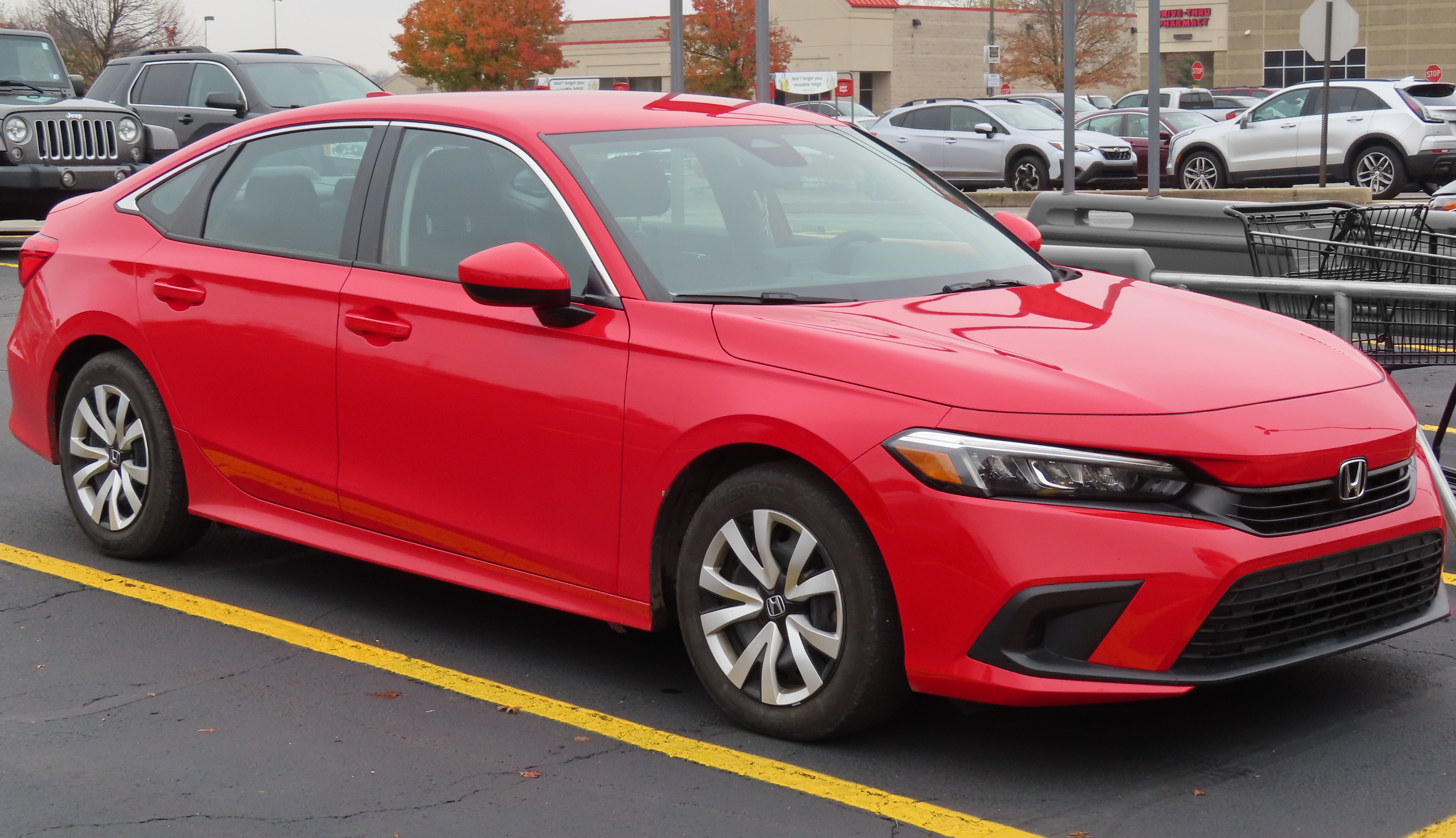
Car
Honda Civic

Car
Toyota Corolla
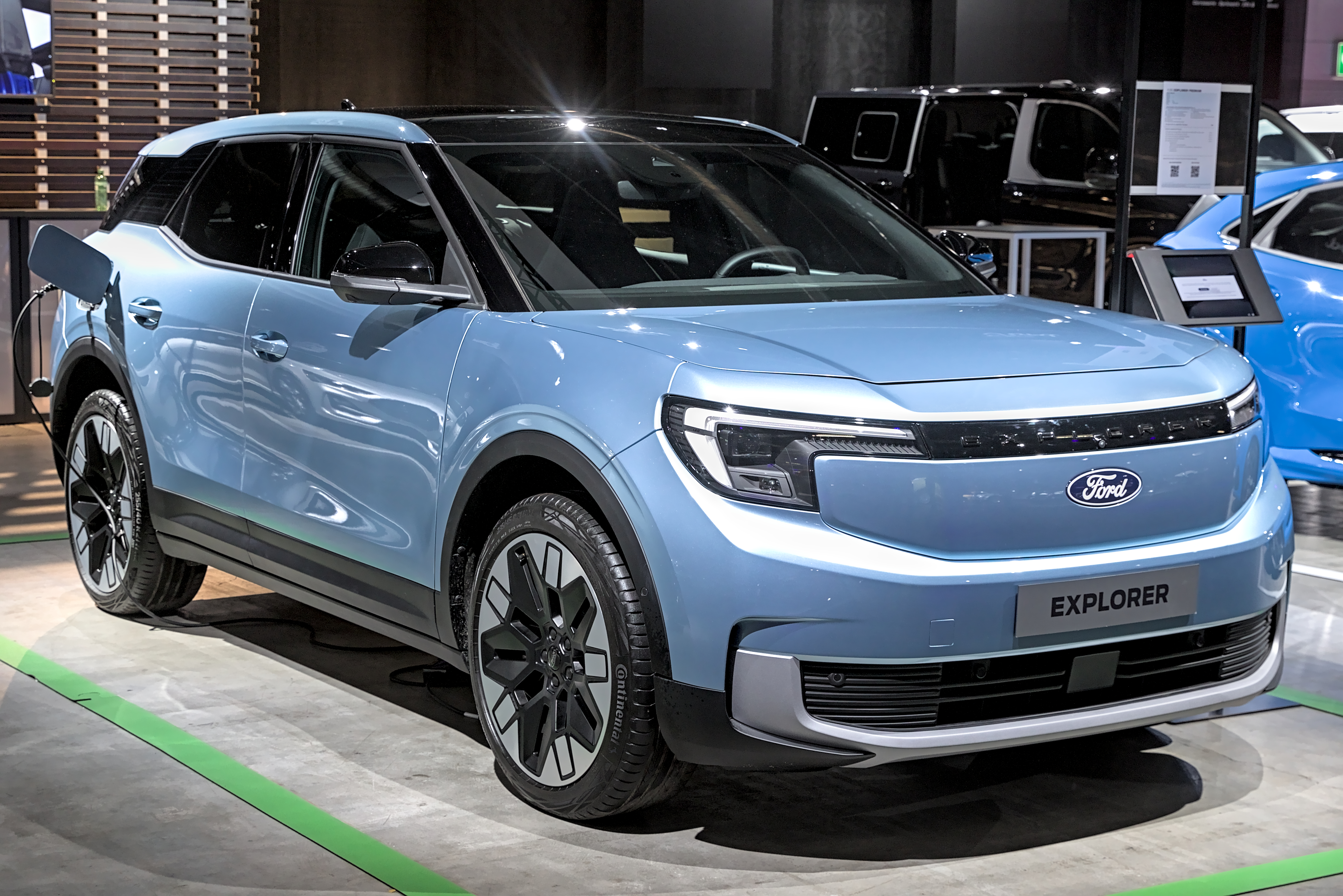
Car
Ford Explorer

Car
Ford Excursion
LIVE
Hey folks, Lenny Lawson here, the car guru.
I have been online for the last hour and a half trying to accomplish one simple task and that's
to get a refund on the airline tickets that I didn't get to use and my wife didn't get
to use to go to Las Vegas last week.
Well, it was the eighth.
We're supposed to leave on the ninth and come back on the 11th.
It was the Ford National Convention where Ford was going to tell us all about their future
plans, hopefully most of which will be good.
But we didn't get to go and I was having a lot of pain in my left leg.
Now I had hip surgery, hip replacement surgery there and for some reason I did great for
about 35 days.
And then on day 36 it just started hurting.
Well, I went to the doctor and everything's fine but was still hurting pretty badly the
day before the trip so I had to cancel it.
So that's what I did.
But thankfully I had purchased, well, hopefully, thankfully, I had purchased trip insurance
and so I don't know, I really don't know what's going to happen.
I started to get frustrated with the way this thing was progressing but I knew what
the motive was behind all of these little twists and turns.
They were trying to get me to give up.
They picked the wrong person because I wasn't giving up.
Here's what they did to try to make me give up.
Number one, I was on a clock and I finally read the fine print about that.
If you delay too long, they'll kick you out.
And I got kicked out twice.
And I'd gotten about halfway through and it was to the point where they were wanting
the documentation.
Well, I didn't have the documentation right with me and I had to pull it from
different folders and print out a couple forms, the doctor's excuse and the
Expedia itinerary, which is gone now.
I just had a couple emails that showed us so thankfully I was able to find that.
Pulled all the documents together, started submitting it and I got to
this one page and there's no place to proceed.
You know, you fill in all the information.
There should be an arrow, right?
Or next, you know, something.
I looked all over the page.
I couldn't find it anywhere.
Finally, I looked way, it scrolled way down to the bottom.
And in mouse type, I mean, that is like the fine print that car dealers use.
There it was, continue.
I mean, it wasn't even close to the size of the other fonts, you know,
on the screen.
It was teeny weeny.
So I clicked continue and I found you.
I will not be defeated.
And so that got me to the next page and then I had to continue again.
Oh, yeah, I knew where to look.
I continued.
Finally, I have a claim number and they emailed it to me.
And so it's sitting there and they have anywhere from seven to,
what was it, 10 to 15 days to respond to my claim.
I guarantee they denied.
There will be something that I said that will give them a reason to deny the claim.
I mean, it's $1,216.72.
I want it back.
It wasn't my fault.
And that's why I bought insurance, trip insurance.
So we'll see what happens.
Okay, so I know that you go through this when you're trying to file a claim.
Isn't it funny how insurance companies work, health insurance companies,
physical damage insurance, homeowner's insurance?
You know, some, they act pretty helpful and make the claims process easy.
Makes you want to stay with that company.
You know, that's one of the true tests of a warranty company or
an extended service contract company that you could buy at a car dealership
or buy one of those online or maybe from a TV commercial.
And, you know, they're great.
They sound great.
Sometimes the ones on the TV and the solicitations that you get in the mail,
they sound pretty cheap.
But, you know, when you get to the claims process, that's when you're
wishing that you had gone through maybe a manufacturer extended service contract.
So if you buy a Toyota or a Ford or a Chevrolet or whatever brand you're
buying, buy the one that is offered by the manufacturer.
Because, you know, the same people that are going to be providing you the
warranty services as far as your vehicle is concerned, that same company is
paying the claim.
You don't have to go through a third party.
For example, if you buy a Ford warranty, then you can go to any Ford dealer
and they'll honor it.
If you go and buy some aftermarket warranty, some of them are fine,
but there are a lot of dealers that just won't honor it.
And you'll have to go through a few extra steps.
So just find out, you know, if you're out there buying a car and they offer
to sell you a, they'll call it an extended warranty, but it's not.
It's an extended service contract does basically the same thing.
It, it will take care of covered repairs.
Just make sure you know what's covered by an exclusionary policy, one
that, that states what is not covered rather than states, everything
that is covered because you're liable to miss something, you know, if,
if you have to try to, unless you know what every part on a vehicle is
called, you better buy something that, that states what's not covered.
And then you know what you have, but ask them in the finance office,
is this the factory backed service contract?
Or is this backed by some insurance company or, you know, by you or,
or whatever.
And hopefully they'll tell you, they may squirm a little because
that particular dealership, you know, it could be a Toyota dealer that
doesn't offer the Toyota warranty because they can make more money
offering an off-brand warranty.
So just ask them.
And if, if they say, well, we don't offer those, then you can go
to another Toyota dealer that does offer them and you can buy a
warranty from them.
You don't have to buy an extended service contract from the dealer
where you're buying a car.
You can go to any dealer and buy it.
Matter of fact, you can shop around for them before you buy anything.
Let's say you buy the car in a couple of days later and you say,
yeah, you know, I think I do want that extended service contract.
You call that dealer, get a price from him, call another dealer,
get another price from them.
I guarantee those two prices will be different.
One will be lower and that's what you're looking for, right?
To save money.
Okay, I'll be back in just a minute.
We're going to talk about, a little bit about the Ford Motor
Company and it's not, I'm not pushing Fords.
It's a historical review that I think is worthy of observation.
I'll be back in just a minute.
Okay, I'm back talking about Ford.
Saw some disturbing news.
When I became a Ford dealer in 2005, I was invited to Dearborn
Michigan, flew up there, went through an orientation.
It was fantastic.
I was a General Motors guy and a Mazda guy at the time.
And I didn't, you know, Ford was the competition for me for my
entire life, but then all of a sudden I own a Ford dealership.
So as my mom used to say, it's a poor jockey that doesn't
praise his own horse.
So I was riding the Ford horse and I needed to praise it.
And so I went to Dearborn.
They put me up at the Dearborn Inn, which was owned by, well
still is owned by the Ford Motor Company.
I got to spend time there in the Ford World Headquarters and
in another training center where they did a lot of the
educational part.
We went to the Henry Ford Museum.
We toured a couple assembly plants.
And we even went to Henry Ford's house, which is called
Fairlane, and had dinner.
I went to his bedroom, went up the stairs, walked into
this room, and there's the bed that Henry Ford died in.
You know, there is no Mr. General Motors.
I mean, there was a guy, a couple guys that put that
together, William Durant and several others, but nobody
celebrates their home, I don't think.
I mean, Ford is just a part of America.
It's different.
And so we went to the World Headquarters there on
Michigan Avenue.
It was built in 1956 when I was born.
And a lot of people have passed through that place since
then, and I just wanted to talk about some of them.
And I thought it was kind of interesting to reflect on
all the people that have been in leadership roles as the
CEO of the Ford Motor Company since 1956.
Do you know who the CEO was in 1956?
Well, he had been the CEO since 1947.
And lasted until 1979, and he was Henry Ford II, which was
Henry Ford's actual grandson.
That's also in 1956 when Ford went from being 100% family
owned to a publicly traded company.
That happened in 1956.
So Henry Ford II led the revival of Ford
after World War II.
He did transform it from a family run business
into a more of a modern public corporation.
But Ford still owned controlling stock.
They didn't own the majority of the stock.
They just owned something called the preferred stock,
which allows them to trump any decision made by the
stockholders in total.
And Henry was an innovator for sure.
He brought all kinds of new efficiency and modern
management practices.
Under his leadership, Ford performed significant work
on motorsports.
Now, all through the late 50s, especially, and a lot of
people were getting killed in cars.
They just didn't have the safety that would come
later on.
And a lot of race car drivers and just the general
public were dying left and right because the cars
were heavy.
The cars were fast, faster than people's ability to
drive them, and really faster than the cars were
capable of safely managing through the handling
and the braking.
So a lot of people died.
And Ford decided we're not going to do racing.
And the government said that they pretty much
mandated it, that racing of automobiles was going
to be prohibited.
But that didn't last, and they realized that
racing was a great way to promote the company
and to get people to go to races on Saturday
and buy cars on Monday.
Under his leadership, Ford performed significant work
on the GT40 project to challenge Ferrari and
Wyn Le Mans, which they won first, second, and
third in 1966.
He reorganized the company, especially in Europe,
and they merged the operations of their British
operations and their German operations.
And it was then called Ford of Europe.
Now the second president, after Henry Ford the
second, was a guy named Philip Caldwell.
He was the CEO from 1979 to 1985.
He was the first non-Ford family member to be
the CEO of the Ford Motor Company.
He oversaw and approved the development and the
launch of some pretty popular cars, namely
the Ford Taurus and the Mercury Sable.
You know, it was a pretty radical design at the time.
I remember as a Chevy dealer, we laughed at it.
We didn't laugh for long because at one point in time
the Ford Taurus was the best-selling vehicle
or the best-selling car in the country.
Yes, it outsold the Toyota Camry and the Honda Accord.
Wasn't even close.
And Mr. Caldwell emphasized quality, reliability,
improved labor relations, job security.
He created a profit sharing plan for all Ford employees.
He guided Ford through some pretty tough recessions,
rising fuel prices, foreign competition,
and the Ford Motor Company was very profitable
under Philip Caldwell.
Guy named Donald Peterson was next from 1985 to 1990.
You know, wasn't there a long time,
but he did push for change in the corporate culture.
You know, these auto companies,
they had gotten really arrogant over time.
And during this time period,
they were getting their rear ends kicked by Honda and Toyota.
You know, Honda came out with the Accord
and the Civic Toyota with the Corolla and the Camry.
And Peterson's job was to match the quality.
He didn't succeed.
He was pretty much, he gave up at that point
and a guy named Harold Polling,
or they called him Red, was his nickname Red Polling,
he was the CEO for a very short time.
He came in, he was a financial guy,
and he was there from 1990 to 1993.
He did help Ford steer through two back-to-back recessions
and he had a background in European operations
and was also instrumental in returning
Ford's North American operations to better profitability,
which kind of turned out to be a blessing and a curse
because of the next guy to come along.
His name was Jacques Nasser.
Now, he was the CEO from 99 to 2001.
Now, what he focused on was something
that almost pushed the Ford Motor Company
into a similar bankruptcy that General Motors
and the Chrysler Corporation faced.
He focused on diversification beyond making cars
into services, finance,
and something called the Premier Automotive Group,
where he started buying other automakers,
Volvo, Jaguar, Land Rover.
They already owned Mazda
and he tried to turn Ford into a conglomerate
that would rival General Motors.
He dealt with some pretty high-profile situations.
You may remember when the Firestone Tire debacle happened
with the rollover situation that they were having
with Ford Explorers, mostly in hotter climates,
Texas, Florida, but they were having blowouts
of Firestone Tires and then the vehicles would roll over
and a lot of, well, I don't know how many people
exactly died, but it sure blew up in the press
and Ford attacked Firestone, Firestone attacked Ford
and that was so ironic because Harvey Firestone
and Henry Ford were like best friends.
Well, Thomas Edison was thrown into the crowd.
They were called the Vagabonds
and they used to travel all over the country
on these big excursions.
I've talked about them in the past,
but yeah, they were big buds and Firestone and Ford
were kind of connected at the hip,
but this broke them apart and caused a great divide
between those two companies.
But then came William Clay Ford Jr.
And Bill Ford was the CEO from 2001 to 2006.
He oversaw the company during a transitional period.
He was the first Ford to come back in and get involved
or the Ford family member to come back
and get involved in the company.
He had been involved.
He was the chairman of the board at the time
and decided to take over the company.
But under his leadership, there was an emphasis
on refreshes which the Ford Motor Company
desperately needed to refresh some of their products
and also global coordination.
But he proceeded the Great Recession era
and laid some groundwork for later restructuring
that Alan Mulally, who was the next CEO,
would come and be able to take advantage of.
Now, Alan Mulally, I don't know if you've ever heard of him,
but he saved the Ford Motor Company.
And he created a scenario where Ford was able
to survive without taking any government bailout money.
He was the CEO from 2006 to 2014.
I actually remember a trip to meet him.
It was not just me, but the entire Ford dealer body
flew to Dearborn, Michigan and went to the,
I don't remember what it's called,
where the Lions play football, Detroit Stadium, I guess.
But we went and the entire floor of that stadium
and a lot of the stands were covered
with Ford dealers and Ford representatives
and they were there to hear Alan Mulally
lay out his plan for saving the Ford Motor Company
and to fire everybody up.
So he came in and one of the first things
that happened with Alan Mulally is he went
to Ford World Headquarters.
He was actually driving a Lexus
when he showed up at the company and they said
he had a parking pass or they sent him a parking pass
that would get him to the main parking garage
which resides underneath the Ford World Headquarters.
He goes in and he drives in and he starts looking around
and he didn't see any Fords.
He saw Land Rovers, Jaguars, Volvos, Mazdas,
but no Ford products.
He goes upstairs and starts observing things
going on up there and he said,
you know, this is very interesting about this company.
Nobody's wearing name tags.
Every time somebody sees me they run in the other direction
and they don't sell the Ford Taurus anymore.
What happened to the Taurus?
And the executives that were there said,
well, we gave up on it.
What'd you do that for?
Why didn't you just redesign it?
I mean, it was the best selling car
in the country for many years.
So it was that and it was so many other things
that he looked at that thought
that the company needed changing.
Now, how did he avoid the government buyouts
and survive the Great Recession in 2008 and 2009?
Well, he created this thing called the Way Forward.
It was a restructuring plan
and he did a lot of cost cuts.
He closed plants, he renegotiated labor contracts.
He focused on quality.
He borrowed heavily.
He mortgaged everything, including the Ford logo.
He sold off and spun off all of those other companies
that Jack Nasser had acquired, Jaguar, Land Rover, Volvo,
even Aston Martin, all of them were shed.
And he resurrected Lincoln.
So he changed the company for the better.
But the lessons didn't stick very long.
I mean, he did have a protege
and his name was Mark Fields.
He was the next CEO.
When I first ran into Mark Fields,
he was the CEO or the North American CEO of Mazda
and he did a great job.
But he had jumped to Ford,
which Ford at one time owned 30% of Mazda.
But Mark Fields was the CEO from 2014 to 2017.
And he was pushed out.
He was forced out because Ford and the board
wanted to bring in an outsider.
They thought it was time to bring in a fresh perspective
and not hire somebody that was from the automobile world.
So they hired a guy named Jim Hackett.
And he lasted from 2017 to 2020.
He was actually the CEO of another company called Steelcase
and they made furniture.
He had retired from Steelcase
and the Ford family went after him
because of his lack of automotive experience.
They thought he could bring a new perspective.
Well, he did.
And I think everybody realized pretty quickly
that he was not the answer.
But there was another person lurking in the shadows
that was the answer.
And I'll tell you who that is or was in just a minute.
Okay, so who was this person in the shadows,
this employee that had been with the company
for some time.
He had come from Toyota,
had a long career with him.
And everybody thought that eventually
he would be the head of Toyota in North America.
But Ford was able to prime away
and it was primarily because of his family background
with the Ford Motor Company.
This gentleman's name is James D. Farley Jr., Jim Farley.
You may remember Chris Farley,
who was famous from Saturday Night Live and Tommy Boy.
It's his first cousin.
So Jim Farley was in charge of another transformation
of the Ford Motor Company around electric vehicles.
Connected vehicles, which that means
that we're all connected to the internet
as we drive down the road, whether we like it or not.
He has delivered stronger profitability.
He has turned Ford into more of a tech enabled company.
Under his leadership, Ford invested heavily in EVs.
That's where they built the big plant,
the Blue Oval City out in Stanton, Tennessee.
And it was a bad guess because look what's happened
since Trump got elected, EVs.
Well, really it was before Trump got elected.
They were trying to cram EVs down people's throats
and we just weren't ready for it.
The infrastructure wasn't there
and the technology wasn't there
in order to just create something of value.
People don't wanna buy a car
that's gonna depreciate in half in the first year.
And basically be unsellable at what would be the middle age
of the typical internal combustion engine vehicle
at 100,000 miles.
People look at an EV as being done.
And who wants to buy a $25,000 battery?
There's so many obstacles to EV adoption
that the politicians and the people that were pushing them
just didn't see the light
until the sales started going down.
And people stopped paying premiums to buy Teslas
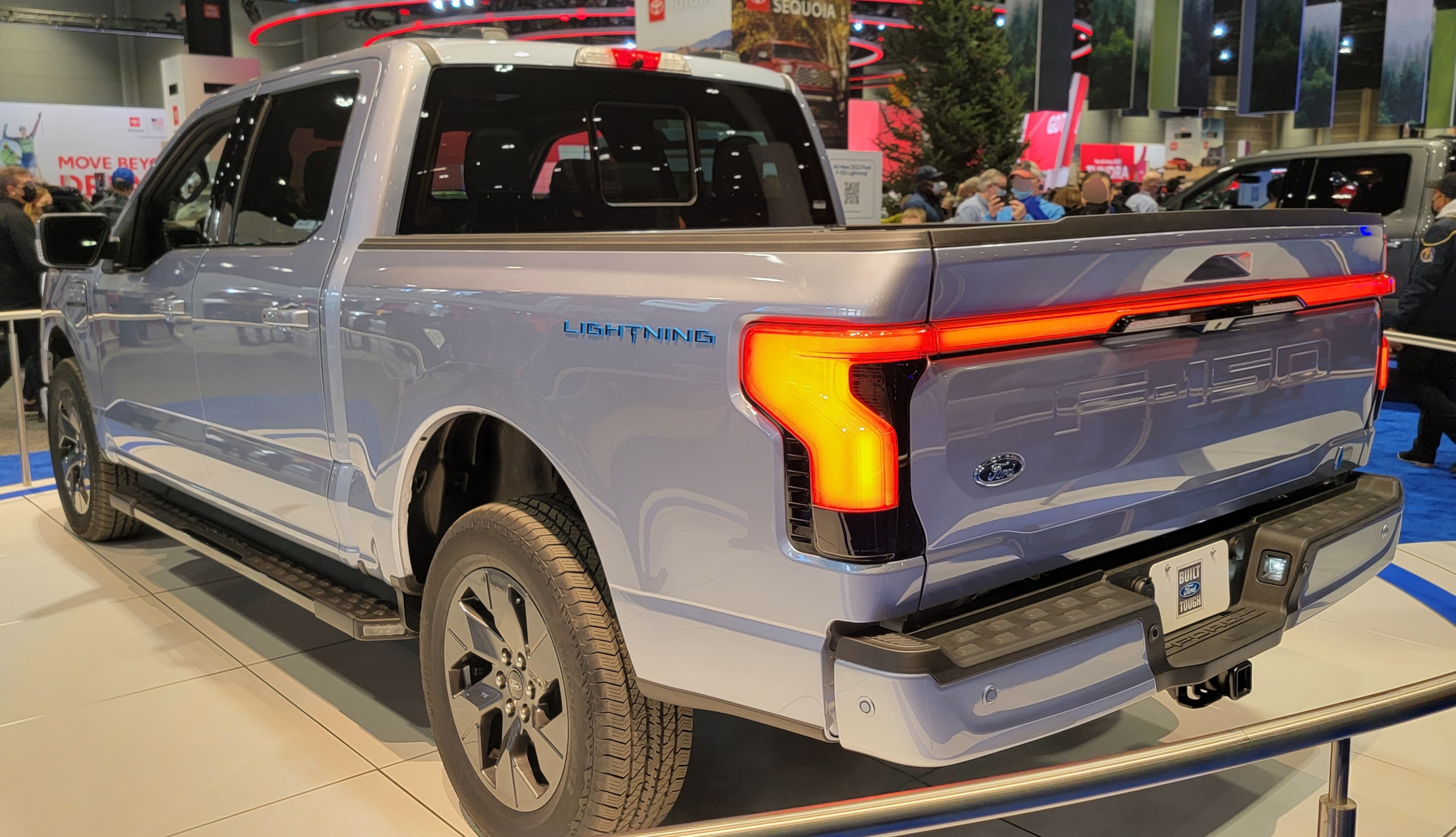
and to buy Ford Lightning trucks.
I mean, we had people during the pandemic
when the Ford Lightning first came out,
people were paying $30,000 and $40,000
over Windows sticker out in California
for Ford Lightning pickup trucks.
Now you can hardly give them away.
There just aren't the buyers.
I think everybody that wanted one got one.
So that's who we have now.
He's modified his position.
I wish I could have seen him speak in Las Vegas,
but for obvious reasons I couldn't.
But from what I understand,
folks are gonna be happy with what Ford's doing.
New products and products that are more affordable.
They're doing what they can to drive down the cost
and not just of EVs,
but of internal combustion engine vehicles as well.
So we'll see what happens.
Well, thanks for listening
to this edition of My Car Guru.
If you have any questions,
don't hesitate to send me a text 423-552-2020
or an email to Lenny Lawson, 2020 at gmail.com
and I'll see you next time.
About this episode
Lenny Lawson shares his personal experience with airline refund frustrations before diving into a historical overview of the Ford Motor Company since 1956. He highlights the evolution of leadership, starting with Henry Ford II and discussing key figures like Philip Caldwell and Alan Mulally, who played pivotal roles in shaping the company. The episode reflects on Ford's challenges and successes, particularly in adapting to market demands and the shift towards electric vehicles under current CEO Jim Farley. Insights into warranty options and the importance of factory-backed service contracts are also discussed.
Original notes
Email Lennie at [email protected]
My Car Guru Podcast
My Car Guru...Lennie Lawson
0:00
24:07