The Ford Model A is a classic car made by Ford that many people loved in the 1920s and 1930s. It was known for being a good, reliable car that many families could afford.
A jump box is a small, portable battery that helps start a car when its battery is dead. You connect it to the car's battery, and it gives it the power needed to start the engine.
The 1966 Ford Mustang K code is a special version of the Mustang that has a powerful engine, making it more exciting to drive. It's a popular choice for collectors because of its performance and classic style.
The 1974 Ford Bronco is an older SUV that is built for tough terrain and outdoor adventures. It's known for being strong and reliable, making it a favorite among off-road fans.
A carburetor helps your car's engine get the right mix of air and fuel to run. If it's not working, the engine can have problems like not starting or running poorly.
Lifters are parts inside an engine that help the valves open and close. Sometimes they can get stuck, which can cause strange noises and problems when driving.
The Chevrolet Corvair Corsa is a classic car from the 1960s that has its engine in the back instead of the front. It's known for being sporty and different from most cars of its time.
An electronic fuel pump helps move fuel from the gas tank to the engine. It's important to install it in the right place to work properly and avoid issues.
Life cycles for batteries mean how many times you can charge and use them before they start to lose their ability to hold a charge. More life cycles mean the battery lasts longer.
Volatile means that something can change quickly and might become dangerous. In batteries, it means they can catch fire or explode if not handled properly.
A total loss means that a car is so damaged in an accident that it costs more to fix than the car is worth. This is more common with electric cars because they have complicated parts.
Cars today have computers that help control different parts of the car, like the engine and safety features. Having fewer computers can make the car easier to fix and more reliable.
Crash standards are rules that cars have to follow to keep people safe in accidents. These rules have changed a lot over time, making cars much safer than they used to be.
Crumple zones are parts of a car that are meant to crumple or bend in a crash. This helps keep people inside the car safer by absorbing some of the crash's force.
The Nissan Armada is a large SUV that can fit a lot of people and their stuff. It's great for families and has cool features like a system that helps it drive itself on the highway. This makes long trips easier and more comfortable.
The King Ranch package is a special version of the Ford F-150 that has nicer materials and features, making it more luxurious. It’s named after a famous ranch in Texas.
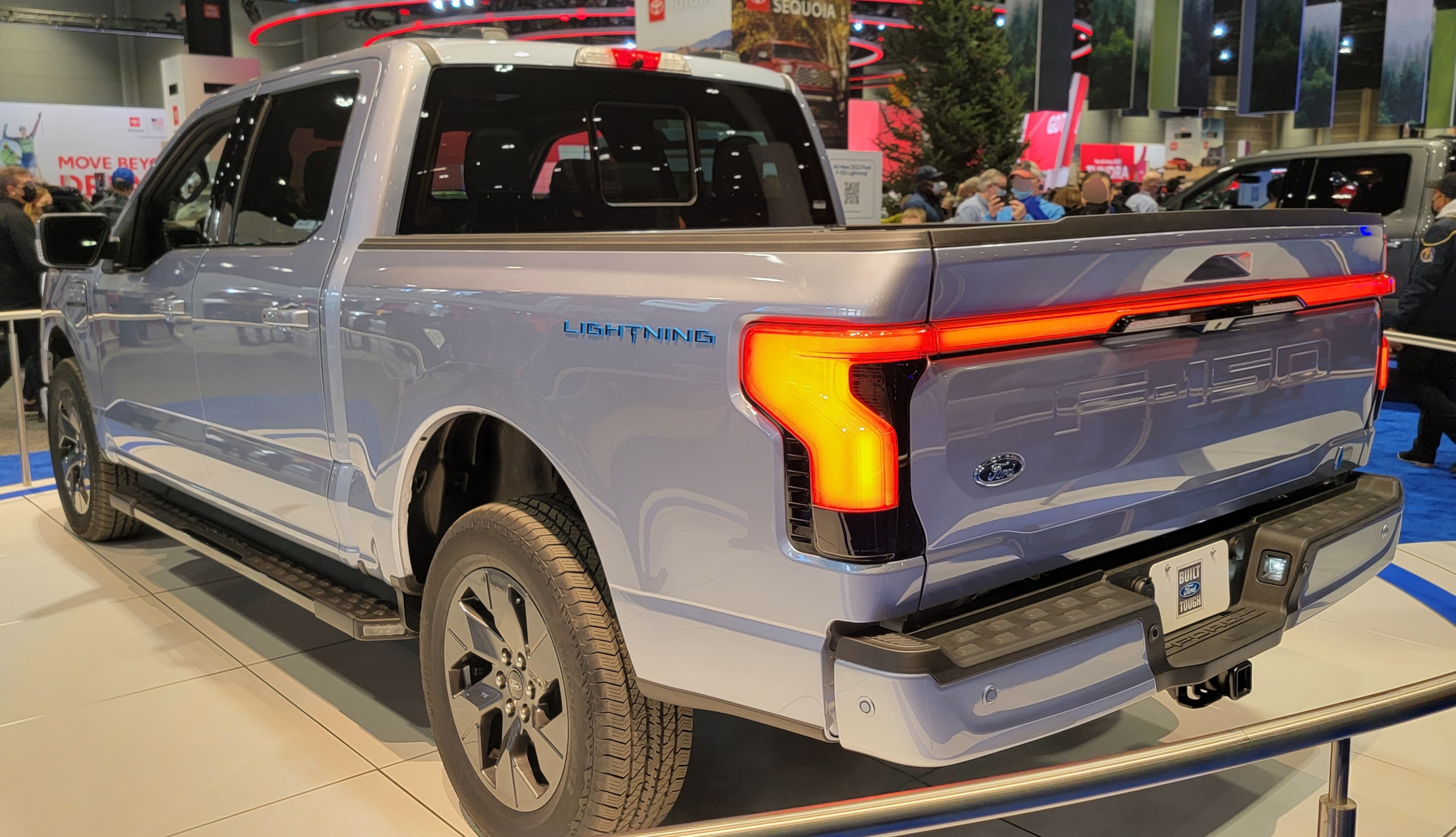
The Ford F-150 is a big truck that people use for work and play. It's really popular because it's tough and can carry a lot of stuff. The King Ranch and Platinum versions are the fancy versions with extra features and comfort.
The STX is a sportier version of the Ford F-150 that looks different and has some extra features, making it more appealing to some buyers.
LIVE
You know, if you go three for six from the three point line, not bad shooting 50% from
three point land, that's pretty good.
If you go three for six on a baseball field batting batting 500, that's real good.
But I went three for six yesterday on six of my old cars.
And that means that three of them laid down on me.
One might be serious and three of them did just fine.
This is Lenny Lawson, the car guru.
And yes, even to me, bleep happens.
And it happened yesterday, big time.
So it's time to exercise the old cars.
So I keep three cars in my Ford showroom, one in the Nissan showroom.
The rest at the house or in a storage building that I have.
And so it was time to exercise the ones in the showroom.
So we opened up the doors in the front of the Ford dealership.
We pushed the Model A out into the sunshine.
And we, of course, it wouldn't turn over.
Batteries dead.
I should have disconnected it or put it on a battery tender, but I didn't.
And so we used a jump box to jump it off and boom, there it went.
And so the technician that helps me with these things,
we went on a nice little ride around the neighborhood and it just did fine.
He said, this thing's really cool.
I said, yeah, it really is.
I love it.
So we drove four or five miles in the Model A, parked it.
I left it running to give a chance for the battery to recharge.
That's on a 12 volt system.
Back in 1930, they used six volt battery systems,
but this one was converted for convenience.
It just does better, starts faster.
So I was pleased.
Then it was time to get the 1934 Model 40 fatten out of the showroom,
pushed it out, hooked up the jump box.
It's a 12 volt jump box.
It's a six volt battery system.
You're not supposed to do that.
I did it anyway.
Now, I mean, it makes that starter go quickly.
And it just fired right up.
Very pleased.
Took it on the same route, brought it back.
No problems, no issues.
Got the 1966 Mustang K code out.
And I had disconnected that battery, hooked it back up,
got in there and pumped it two or three times and boom, it starts right up.
Took it on a long test drive too.
So at this point, I'm batting a thousand, okay?
Then I said, okay, it's time to go get my Ford Bronco.
It had been in storage in 1974 Bronco.
It had been in storage up at another location and it had been there too long.
So we fired it up or attempted to and it was blowing smoke out the tailpipe.
It was missing really badly.
I said, what is wrong with this thing?
It's never run like this before.
So we popped the hood, pulled the breather cover off, looked in,
and it's just squirting fuel all over the place through the accelerator pump.
And just not happy.
What do we have to do about that?
We have to take the carburetor off and rebuild it.
And that should take care of that problem, but it's disabled.
Then I jumped in my 57 Chevy.
Time to drive it down the road.
It starts missing the minute we fired up and there's a ticking noise underneath the engine.
Tick, tick, tick, tick, tick, tick.
And sometimes if you rev them up, sometimes the lifters will unstick.
But I revved it up, nothing happened, drove it down the road, still sticking,
took it to the house, still sticking, called a repair shop that has worked on this thing before.
And I said, can you fit me in?
He said, yeah, we'll fit you in.
So probably, I'm hoping it's something simple.
Simple would be probably $500.
Complex $3,500.
So I'm not excited about hearing about that.
See, I have problems just like you do.
What was the other?
Oh, yeah.
My favorite car in the world, 1965 Corvair Corsa, rear engine.
It was a successful car for a while, but Ralph Nader and the Mustang killed it.
They built them from 1960 to 1969, I believe.
And so mine's a 65 convertible, red, pretty car, four-speed manual.
And I fired up, pulled it out to raise the hood.
I just want to make sure nothing's leaking.
It's not leaking.
It looks like a fire hose of gasoline is spewing all over the engine.
I had had this gentleman, and I like this gentleman.
He's a nice guy.
He's elderly.
And I told him I wanted an electronic fuel pump put on my Corvair because it was just kind of erratic as far as starting.
And these aftermarket fuel pumps that they put on those things just do not hold up.
They're made in China.
And so he put it on there.
I got it back and I knew something was wrong when I opened up the hood, which is in the back and saw that the fuel pump that he installed,
the electronic fuel pump, was installed in the rear.
The gas tank's in the front.
You're not supposed to install those in the rear.
You're supposed to put them in the front so that it doesn't have quite as much pressure in it by the time it gets to the carburetors.
And it was just overwhelming the carburetors in that car.
So now what do I do?
I take all that off.
The same guy that I took the 57 to, I said, can you fit me in?
He said, yeah, we'll fit you in.
You know, it'd be nice if that happened to you right when your car breaks down.
You could call somebody and say, will you fit me in?
And they say yes.
They don't say, well, we'll try to schedule it maybe three weeks from now.
Can you borrow somebody's car?
No, that's not what you want to hear.
You know, a lot of the reason that these people say, yeah, we'll fit you in is because they know me and because we have a relationship.
And they, when I have a problem, they work on my cars and they don't mind doing it.
And they won't necessarily put me in front of somebody, but they'll make it real convenient for me to get in there.
And that's a very important thing.
So bat in 500.
Maybe we get the other three running by the time we start doing the second Saturday cars and coffee again.
That's going to fire up in April.
I wanted to do it in March, but I got shot down.
We have this cars and coffee event.
What is that?
That is a informal car gathering.
It's not really a car show.
I mean, if you drive by and you see a bunch of cars all lined up really neatly and hoods are up and people are milling around, what's the first thing you think?
Car show.
But this is different because I provide coffee and if the weather is cool, I get the solo stove out, start a little fire and people can warm up around it.
We have whole wheat doughnuts.
Not really, but we do have doughnuts, but they're all glazed and they're not healthy, but people don't care.
You know, it's spring.
We've all got a spring in our steps, but people are walking around the cars and just, you know, it's very, like I said, informal starts about 730 ends about 1130 and everybody goes on their way to enjoy their Saturday.
That's my kind of car show.
And that's what second Saturday cars and coffee is.
So be looking for that.
Guess which Saturday it'll be on in any month in April, May, June, July, August and September.
The second Saturday.
That's why I called it that.
Okay, I'm going to take my first break.
I'll be back in just a moment.
Well, I thought they would back off of all of this EV stuff.
They meaning the Ford Motor Company, which I'm a Ford dealer and an Nissan dealer, but none of the manufacturers are backing off and I kind of get it.
You would think that the $12.9 billion right off that the Ford Motor Company had to endure would have been enough.
Let's just forget about the EV thing, but no, they are doubling down.
They are converting a huge plant in Louisville, Kentucky to build EVs.
They are building a new plant up in Michigan to build a different kind of EV battery.
One that is cheaper to build, one that is more stable, that would be good.
I don't like riding around on top of a bomb, a potential bomb.
So they say they're fixing that.
I think it's lithium iron phosphate, something like that.
It's not as dense as the other batteries, but it's a whole lot cheaper to make.
Well, last longer and have more life cycles, which is important.
As you charge batteries, you can see it in your iPhone, the more you use it, the less the capacity of the battery.
Gosh, you keep an EV for three or four years and it will only charge at 75%.
Well, that's not good.
So these batteries are supposed to be better than that.
What I thought was the most interesting aspect of these new EVs, and I think this will change the way vehicles are built in general,
is they are using this technology called giga casting.
And I think it was invented by Tesla.
It may have been invented by somebody else, but Tesla uses it to build their vehicles, their EVs.
And basically, the entire structure of the car, or the vast majority of it, that used to be made up of, well, on a normal car,
would be made up of 100 to 150 individual pieces that had to be welded together.
The Tesla chassis is made of two pieces, and it is a molded aluminum, very strong and very light.
And because of the way they put these things together, it will shave off 40% of the weight of the chassis.
And really, when it comes to EVs, really a gasoline-powered vehicle as well, there are several things you have to overcome.
One is weight, the other is wind resistance.
And they're doing things that will completely change how the car looks and goes through the air.
Well, I say that, and so many of the changes are so subtle, I don't know that the average person, unless they're a real car nut like me, would even notice them.
But if you can lower the coefficient of drag, that's what the measurement is for the force of air against the body of a car.
If you can reduce that, then the car will get better gas mileage, or the EV will get better range.
If you can reduce the weight, same thing.
And then, if you can improve the efficiency of the battery, the electric motors aren't an issue.
They've got that pretty much perfected. It's not the motor, it's the battery.
Batteries are heavy, and batteries are volatile under certain conditions, especially in a crash.
And because of the complexity of EVs, just about any type of collision that happens is going to total the vehicle.
Because the battery itself is part of the structure of the vehicle.
I think what's going to happen long term is that batteries will be quickly interchangeable in a vehicle.
You might have to take four, six, maybe eight bolts out to get the whole battery system down, unplug a couple of things, put a new one in.
And it won't cost $18,000. It'll be more like $3,000 or $4,000.
They'll get there eventually. They'll be solid state batteries as well.
They will be about the size of a suitcase, a big suitcase, instead of stretching all the way, I mean side to side of the vehicle and all the way from the engine compartment to the trunk.
That's how big the batteries are now.
That's not functional long term.
And the cost to replace these things is off the charts, even way more than rebuilding an engine, an internal combustion engine.
So if they can solve that and make them charge faster to where you can pull up to a charging station, plug it in, and in five to ten minutes max, you get a full charge.
And it doesn't destroy the battery if you do that a lot.
A lot of challenges. But right now the big challenge to the EV industry is the loss of the federal tax credit.
And if the Democrats get back in power, that's coming back because they want to stay on the global warming bandwagon.
It's just a part of their DNA.
I'll tell you one thing that I hope improves and that is less complexity in vehicles.
Because when my technicians take apart an instrument panel or take an engine out of a vehicle to rebuild the motor, it just makes me respect them all the more.
I cannot believe that these guys can do what they do.
And, you know, it's training.
I mean, they get a lot of training online.
Sometimes we have to send them to schools for off-site training so they can actually get some good hands-on training on these new systems.
But one of the things that Ford is trying to do, and I applaud them for this, is to go from 15 different computers that are designed to run the major systems on the car to four.
And house them all in the same box that will be, I don't know where they'll store it, probably somewhere under the instrument panel.
It reduces the wiring harness.
It reduces the number of potential electrical failures.
And this type of stuff, I think AI is going to play a big role in it, helping humans design better systems and consolidate things.
Because it is, well, the complexity costs us money, folks.
If they can simplify it, they can do it at a reduced cost.
I mean, the same thing happened in the computer industry, right?
I mean, do you remember what computers used to cost?
My first laptop was almost $7,000.
It was so expensive, in fact, that I had to lease it.
I'll never forget, my payments were $265 a month on my laptop.
Now you can buy a laptop for $250 or less.
But dog-gonic cars are just so much more complicated.
A car gets hot, really hot, under the hood.
And it also gets hot out there in the sun when you're not in it and the air conditioning is not running.
And all of those sensitive computers have to be able to withstand 100 plus degree temperatures or 150 degree temperature inside of a vehicle and not melt and continue to work.
And so it's a little bit more strenuous, you know, on these systems.
And then vehicles have to meet all of these crash standards and hold up and allow the occupants to survive crashes that 50 years ago, they didn't stand a chance.
You know, if two cars met each other, going 30 miles an hour each, and it was an offset frontal collision, almost a head-on, they weren't going to survive it.
Well, number one, because they didn't have seatbelts on.
Number two, the seatbelts were just lap belts.
They weren't, they didn't have shoulder harnesses.
There were no airbags.
There were no crumple zones, which are designed to fold the car up like an accordion and absorb most of the impact before it gets to the passenger.
So does it kind of make you think that, gosh, maybe there is a justification for these vehicles being so expensive?
Nah.
You know, I think that the price of a new vehicle is about 30 to 40% higher than it needs to be, just because of all the complicated stuff that the marketing people have insisted put into vehicles.
I could live with a much simpler vehicle.
I've gotten spoiled, just like you have.
I mean, I'm driving to Knoxville yesterday, and I got my heated seat on, my heated steering wheel.
My wife and I are listening to some book on Audible.
I hit the cruise control button.
This Nissan Armada that I'm driving will drive itself.
Now, I can program it not to where it just works like a regular cruise control, but I just wanted to see what it was like.
And so I hit the button and took my hands off the steering wheel and it drove, oh, I probably went 30 miles.
I had to touch the steering wheel several times because, well, one time I got scared, well, not scared, just concerned because I was beside an 18, well, I was between two 18-wheelers.
And I just didn't trust the computer.
But I guess my point is, do we need all that stuff?
No, we don't need it.
And it makes cars more expensive.
But you know, I guess the way that automakers look at it, if they put it on the car or make it available and the public orders it like crazy, that means they want it.
And that also means that they're willing to pay for it.
I mean, if I could get nothing but F-150s with the King Ranch package or Platinum Edition, which are the top of the lines, if I could get nothing but those for the F-150s that I haven't stopped, I'd sell them all in probably two weeks.
But because we can't get them, they're hard to get.
It seems like all Ford wants to build now are XLTs and STXs.
I mean, they're great, but they don't have all the goodies, you know, the stuff that people are used to and the things that they want.
And so the King Ranch has come in, they're gone the next day.
Platinum's come in, gone in two days.
STX comes in, it's still sitting here 90 days later.
You people have expensive tastes.
I'll be back in just one minute.
I think a lot of my radio show listeners and podcast listeners are getting it because I'm shipping out anywhere from 6 to 10 MyCarGuru guidebooks every day.
And that's okay.
That means that folks are listening and they understand the value of having a guidebook that they can stick in their glovebox, that they can read and memorize maybe, quote verbatim to that lion salesperson.
Or when they walk into the dealership and they see that addendum sticker beside the factory window sticker, they just turn right around and get back in their car and go somewhere else.
They're learning that from the show and they want that kind of courage, printed courage from the MyCarGuru guidebook.
You can get yours too.
Just send me a text message, your email address, 2-423-552-2020 and I will send you a PDF version real quickly within 24 hours.
If you need a printed version, if you are still using a flip phone, watch Andy Griffith reruns and eat salt-rising bread, then you can call the dealership 423-639-5151 and tell our operators say, hey, I need a copy of the MyCarGuru guidebook and here's my name and address and I will print it out for you and mail it to you.
It's 32 pages long.
And I'll tell you who needs this the most.
It's young people who have never bought a car.
It's folks who have no experience negotiating.
Don't really know what they're going to be facing.
You know, it's a shame that they just can't go out and look at cars and be left alone.
Be able to look and enjoy themselves without somebody coming out and trying to get their social security number and date of birth.
But these young people are just nice.
Well, some of them are.
They're nice.
They don't want to hurt anybody's feelings.
They say, okay, 721-43 and next thing you know, they're pulling their credit.
They've got no credit and so they're trying to put them into a car and they had no intention to buy a car.
You have to have defense against that.
You have to have printed courage of the MyCarGuru guidebook.
What's it cost?
Nothing.
It's free.
So 423-552-2020, email address 423-639-5151, name and address, and that's what it takes to get it.
Well, thanks for listening to this edition of MyCarGuru and I'll see you next time.
About this episode
Lenny Lawson shares his recent experiences with his collection of classic cars, detailing the ups and downs of maintaining them. From reviving a 1930 Model A to troubleshooting issues with a 1974 Ford Bronco and a 1965 Corvair Corsa, he reflects on the joys and challenges of owning vintage vehicles. The episode also dives into the evolving landscape of electric vehicles, discussing Ford's commitment to EVs despite financial setbacks, advancements in battery technology, and the potential for reduced vehicle complexity in the future.