The Bathurst 12-hour is a long car race that takes place in Australia. It lasts for 12 hours and features different types of racing cars, making it a big event for motorsport fans.
Formula Ford is a type of car racing that helps new drivers learn how to race. It's a simpler and less expensive way for people to get started in motorsports.
Car
Ralt
Ralt makes racing cars that are used in various racing competitions. They are known for being fast and designed for serious racers.
The H pattern is how the gear stick is arranged in cars with manual transmissions. It looks like an 'H' and helps drivers know where to shift gears while driving.
Heel and toe is a way of using your foot to press the brake and gas pedals at the same time when shifting gears. This helps keep the car stable and smooth during fast driving.
Downforce is the force that pushes a car down onto the ground, helping it grip the road better, especially when going fast. It helps the car handle turns more safely.
Formula One is a top-level car racing series where teams compete in high-speed races on special tracks. It's known for its advanced technology and fast cars.
An H-Patton gearbox is a type of manual transmission that has a specific pattern for shifting gears, shaped like the letter 'H'. It's used in many performance cars to help drivers change gears easily.
A Honda V10 is a type of engine with ten cylinders arranged in a V shape, made by Honda. It was used in their racing cars and is known for being very powerful and fast.
Mid-80s turbo Williams cars are racing cars made by the Williams team in Formula 1 during the 1980s. They used turbo engines, which made them very fast and powerful.
The New Zealand Grand Prix is a famous car race that takes place in New Zealand. It has been happening for many years and includes many different types of cars and drivers.
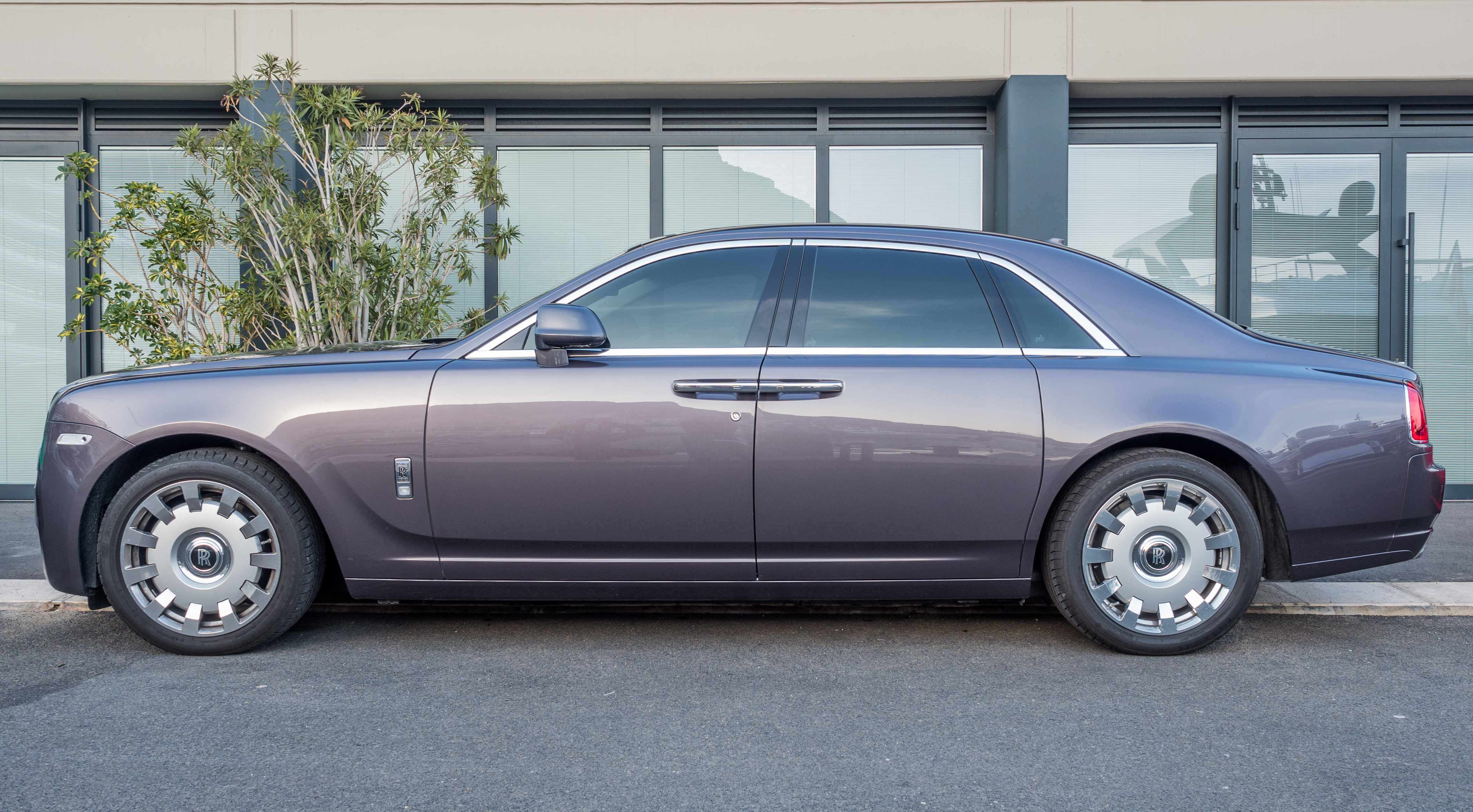
The Rolls-Royce Ghost is a very fancy car that people buy if they want to show off their wealth. It's known for being super comfortable and having a lot of special features that make it stand out from regular cars.
The Bathurst 1000 is a famous car race in Australia that takes place on a special track. It's a long race, and many people watch it because it's very exciting and challenging for the drivers.
Car
Cooper Climax
The Cooper Climax is a type of race car that was used in competitions during the 1950s. It was known for being fast and had a special engine that helped it perform well in races.
The Ford Festiva is a very small and affordable car that is great for saving money on gas. It’s simple and easy to drive, making it a good choice for people who want a no-frills vehicle.
Car
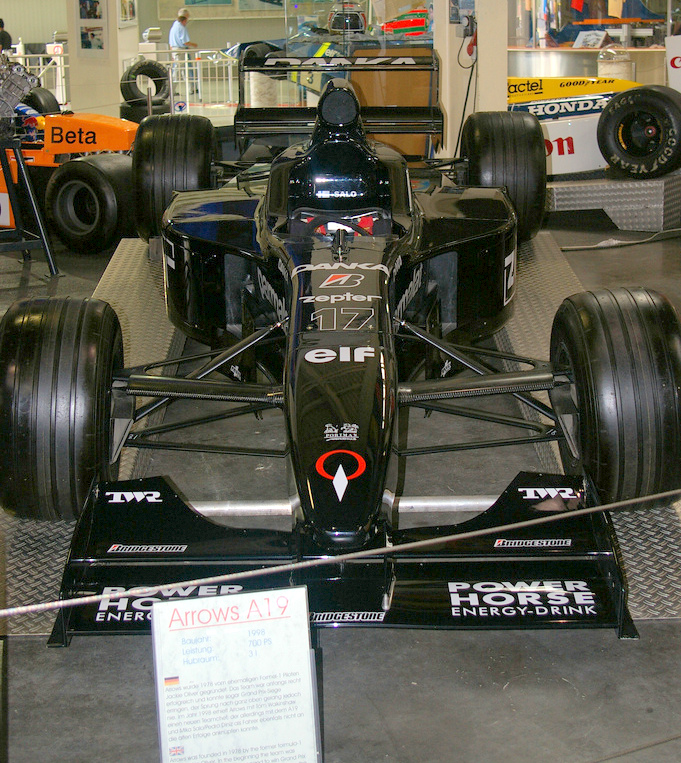
Arrows A19
The Arrows A19 is a race car from the 1996 Formula One season. It was built by the Arrows team and used by drivers in high-speed races.
The Volkswagen Rabbit is a small car that is easy to drive and great for everyday use. It’s known for being reliable and fun to drive, making it a popular choice for many people.
Car
Van Diemen
Van Diemen makes racing cars that are used in Formula Ford competitions. They are designed for new drivers to learn how to race effectively.
The Chevrolet Sonic is a small, budget-friendly car that’s easy to park and good on gas. It’s a great option for people who want a reliable vehicle without spending too much money.
Formula Four is a type of car racing where drivers use small, fast cars without roofs. It's a way for new drivers to learn and compete before moving on to bigger races.
Phillip Island is a well-known racetrack in Australia where many car and motorcycle races take place. It's famous for its tricky turns and beautiful scenery.
LIVE
MUSIC
A Listener production.
I'm automotive commentator and journalist Greg Rust,
and this is Rusty's Garage.
For this episode, I'm in Taupo, Taupo, as us Aussies sometimes call it,
where Supercars has one of its New Zealand rounds each year.
It is a great place.
You've got to come and visit at some stage if you haven't.
That's not me being a tourism ambassador.
It's a huge 600-square-kilometre lake
that is perfect for all sorts of water sports.
You can ski a mountain nearby during winter.
There's skydiving, bungee and lots of fantastic sights to take in.
It's a bit of an adventure playground, really.
It's also home to one of Tony Quinn's race tracks,
Taupo International Motorsport Park,
where I'm working on the coverage of the third round
of this summer's Next Gen NZ Championship,
the premier Kiwi circuit racing series.
My colleague and friend, Rihanna Crean,
who works on the Supercars TV broadcast, as most of you know,
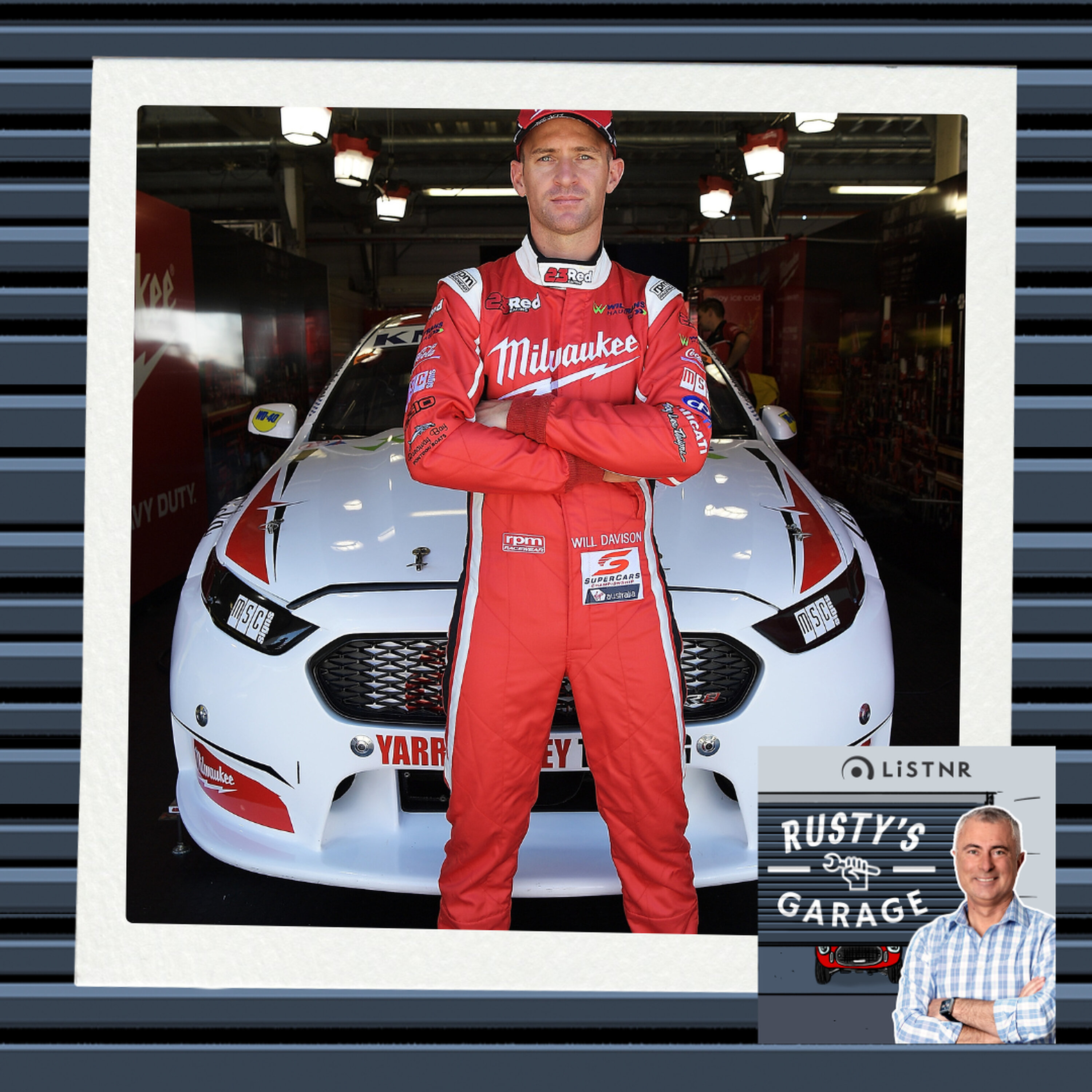
is here along with her husband, Will Davison.
Ri is doing a ripper job, as she always does in the broadcasts.
At night, we've all had the chance to kind of sit around
and talk motorsport while we've been on the road.
So after Hampton Downs last week,
I thought I've got to get the mics and the recorder out
and chat about Will's career.
He's just finished his second stint with Dick Johnson Racing
and is set for a bit of a change of pace
into a co-driver role at Grove Racing this year
that will also see him tackle some GT or sports car races
for the squad, including the Bathurst 12-hour.
Now, I'm not sure why,
but we've never actually done a feature ep with Will until now.
But I'm so pleased that we did.
He's in great form and in a great frame of mind,
as you'll hear, almost philosophical at times,
with a wonderful photographic memory for things
way back in the early part of his career.
We talk about the rich racing history in his family
or the lineage around racing
and the deep appreciation that he has for it.
He knows it and understands it in some detail.
His time in Formula Ford,
racing in Europe against some big names.
Supercars, of course,
including stints with the gun outfits in Pit Lane
and some smaller squads too.
There are Bathurst wins
and some against the odds moments or results
that he recalls with great satisfaction
because he sort of did it when the chips were down,
almost using it as a motivator.
You get a sense that he's starting to enjoy
the purity of driving again
and that is certainly evident over the summer here.
I seem to recall Rihanna ringing me a few years ago,
having listened to the candid pod chat
that I'd had with their friend Will Power,
the IndyCar champion and Indy500 winner,
who you can find in our garage library, that's for later.
This chat is every bit as good as Will Power's.
It is hard to play favourites with these interviews,
but you'll quickly come to understand why I feel this way
when you listen to this app.
It is one of our very best, like Power's.
I found it captivating during the record
and I hope it's the same for you
as you listen along to the Convo.
We've not done one.
I...
Have we even done...
We might have done a short cast.
Have we done a long... We certainly haven't done a long form one.
Yeah, I think a short one.
Yeah, maybe a short one at some point.
Maybe here for the supercars.
Yeah, that sounds right. That could be right.
Anyway, here we are.
Lakeside, Topor.
Here for a summer of racing.
Rihanna, your wife, is doing an amazing job made in the broadcast.
I think she does a stellar job, but you...
I joked with you, I know, in the coverage,
but you did bring a helmet and a race suit.
And it has turned into here, at least...
We don't know if it's going to be a race tomorrow,
but it's at least turned into a drive so far of a single-seater again.
And that's great, isn't it?
It is. Hey, Rusty. No, it is.
It's awesome to chat to you.
It's awesome to be here and in a really different frame of mind,
which I'm glad I'm in.
I mean, I'm sort of in semi-holiday mode,
but we're getting into race season again, obviously.
So this is uncharted territory for me for 20 years,
something I suppose I've feared for many years
as to where's my head going to be at, you know,
when it's all said and done.
Yeah, I do feel good.
I mean, season hasn't started yet, but bit by bit,
I think once you close the chapter,
it was all a little bit unexpected,
not quite the way I wanted things to go down,
but I quickly, you know, realised it, accepted it.
And I'm still, yeah, it's all new to me, but bit by bit,
you know, I'm starting to feel good, like a weight off my shoulders in a way.
I'm here for my wife, I'm here being dad.
And we're still sort of coming out of holiday mode.
It's normally about now, it's like, right, you light the jets,
you start prepping for the year.
So that's different.
But I'm here at a great series with great people in the land over here,
which does motorsport so well.
So it's really refreshing, I feel like a fan again.
And that's something I really want to get back to.
And I've always wondered when I pull the shoot and I'm not full time,
will I get that young kid enthusiasm back?
Because I haven't felt it in a while, like I love driving and racing,
but it's just being like blinkers on, immense pressure.
And I haven't felt myself.
And I mean, that's worried me because I'm a student of this game
and I love it. I love it.
I want to feel like a kid again.
And I'm already feeling that energy and love for the sport
in other ways coming back.
So I love that. That's cool.
I love that. I'm so pleased to hear you say that.
We can talk groves and other stuff later,
but the essence of what you've just covered, the fact.
I mean, your family has such a rich history around motor racing.
I would hate to think that after the grind of 20 plus years
that that had impacted you.
I'm so pleased that you feel like a race fan again.
That's that's bloody awesome.
And my little a little pump up.
I have had the chance in recent days when we're off here to see you
a little bit as a dad and as someone who's got, you know,
a teenage daughter. Dad falls out in the lake.
Mine is a terrible dad. Yours is not.
But but, you know, to see you in in kind of dad mode
and both of you as parents has been a joy, mate.
You're clearly you're locking a bit of time on that side too, are you?
Yeah, I am like it puts everything in perspective being a dad.
And it's probably come at a great time in my life where, you know,
I still get very serious, like the last couple of years
with him around at the races, trying to separate that.
But what it's meant is when you have a tough time in racing,
coming home and if you bring that energy home, I haven't liked that.
In the past, you can come home and be grumpy and angry and, you know,
get back to the grind, but doesn't doesn't sit well with me.
If I come back in that sort of a frame of mind,
because I feel selfish, you know, and I'm happy to have been selfish
for 20 odd years as a racing driver, but bringing negative energy home.
And I figured at times this year, I have done that.
Yeah, I don't rate that at all because my son is so much more important.
You know, family is so much more important than I shouldn't say driving in circles
because I know how important motorsport is and how much it means to me.
But ultimately, that's what it is.
So I've given it my heart and soul and I'm happy to,
you know, realize that there's a lot more important stuff in life
and try and find that balance, which is what this next phase will be for me.
Respect, mate. Respect.
Still with the ultimate love of it, which is great, but
seemingly with your head in the right place, which I think is just mega.
Can I come to the fact that the early part of your career
has a single-seater component and the last 20 plus has been kind of super cars.
You getting to drive that Ralt this weekend
and I saw the smile on your face when you got out of that car yesterday
and you even have a few little battle scars to show for it too.
There's a little bruise on your right leg there and at a mark on your right hand,
I think from the gear shifting and so on, so good to get behind the wheel
of an Atlantic car. Yeah, it is.
It was it was fantastic, particularly as unexpected.
I mean, I mean, any true race driver will always travel with helmet.
But I had to dust off some 2020 race gear, which did make me giggle a little bit.
And also, I'm probably not as trim as 2020 trying to fit it on.
But yeah, it was it was it was cool to be here and I'm here for my wife.
I honestly am. This is all about her and her work.
And I'm trying my hardest to not get in the way.
I like I'm really here to be dad and support her.
And even at the track, you know, there's obviously a lot of enthusiasts
that want to chat to me and I'm trying to do a few laps in this Atlantic.
But I'm also trying to mind my little boy
and I don't want to, you know, let that interfere with Rihanna's work
and what I'm here for, but truly appreciative for it.
You know, the next gen team has just been amazingly accommodating to me
when I was honestly just want to be in the background.
But I'm loving it, you know, building new relationships.
And yeah, that Atlantic car, I honestly strapped into it.
And because I'm so underdone with it, like I've had no real preparation.
I've just squeezed into Murph's seat
and they just pushed me down to the dummy grid
and I've never felt so underprepared in my life.
And when they strapped me in, it was it was it was a weird feeling
because I consider myself still an open wheeler driver,
but it's been a long time and the sensation of being strapped in.
Although I did all that Minardi two seater stuff, it was a bit.
Yeah, it was it was a really bizarre feeling, just go and H pattern.
And I was actually second guessing myself for a moment,
feeling really out of my comfort zone.
I mean, I've got two corners in and sweet thing, sweet thing.
Yeah, a magic little car, super nimble, the way it produces its downforce.
But when it snaps into a slide, you know, all of a sudden it let go.
And, you know, I just had it, you know, it felt pretty comfortable
straight away, getting up through the box, you know, straight away,
looking at the analog gauges.
I mean, I haven't done that in a while, but I was looking at that 9,092.
It was it was all coming back to me with ease
and just banging it down through the little H pattern,
hearing the engine note on the hill and toe.
It was it was a great little car.
And then I started leaning on the downforce a bit more at the end.
And, you know, I was like, oh, I could get used to this.
This is cool. I mean, it's a fast open wheeler, but it's
it's not like anything I've driven in a while.
Like it's raw.
It's it's very raw.
And I see some of those kids getting around today
in the Toyota series.
It'd be a different game, putting them, throwing them all in Atlantic cars
because you're working hard and that all pick it up.
But there's a lot more,
lot more, you know, mental work going on, just just generally
getting through the gearbox and whatnot to just flick and paddle.
Well, I mean, that's a great point, you might, because it's there's been
a generational change.
You know, many of the top names that we now see and love in Formula One
have never really other than getting the chance to drive
maybe something historic in the Williams, McLaren, whatever,
you know, museums or heritage.
I mean, they don't get the chance to do that now.
We discussed this yesterday, didn't we, Rusty?
And I listen, please.
I'm in the middle here.
Like I'm a middle ground and 82, baby, where I love the old school.
But I've also been around the sport so long
where I appreciate the talent and skill of the kids of today in Formula One
and through which not a lot of people do.
You know, I'm caught in the middle where everyone's like, not like the old days,
you know, you know, they've got it easy these days.
Even the supercar guys are the Formula One guys in a way, yes.
But the skill of these kids now through simulation, through training,
the level, the depth, the way they're driving technically is unbelievable.
All of them.
Yes, the cars are easier.
So that means it's easier to get within three or four tenths,
but still to get that last, you know, tenth to is very difficult.
But I think it's much easier to get within half a second of the pace
than it was many years ago.
I mean, a touring car, a Formula One car,
if you were within a second and a half, 20 years ago or 25 years ago,
that was like probably a tenth and a half today as the cars were brutal.
But the fields were, you know, much greater spread out.
So I am in the middle of that and I like to accommodate how good the kids are today,
but also getting back to what we were just saying, seeing these legends of today
jump in these beautiful museum pieces and trying to listen to them
get through the H-Patton gearbox.
It makes my blood boil.
There's no heel and toe.
There's dogs clashing.
They don't even shift up the gears.
You don't even hear the beautiful, you know, Honda V10 incentives car
or, you know, whatever it may well be, you're here running around,
you know, mid-80s turbo Williams cars.
They're just in two gears and they're just not even shifting gears.
And I can't watch it.
You're even wincing now.
I think it was even the clerk at Monaco in one of the Villeneuve
all out of Ferrari's and he was actually pushing pretty hard.
But every downshift I tried to watch it.
I'm like, this will be good.
It was compression locks everywhere.
It was it was it was horrible, to be honest.
So when I got in yesterday, I'm like, no, I'm going to be an old school racer.
I'm going to make sure I'm blipping nice and I'm getting down
through this H-Batten box beautifully.
So I think I managed to do that.
You when you're not away at race meetings, a glued
Saturday night, qualifying Sunday night, you know, if one race
year is passionate about that, watching that stuff as ever.
Yeah, I still am with a little man that's in bed early.
And also I stick to my Queensland now around our life
where we're early risers, early training.
But the beauty of today's telecast is, you know, you can
you can watch it, you know, on a rerun the next morning.
And I make sure that if we get up at five a.m.
go training, Rihanna's straight on her phone.
I'm like, do not.
And I will not pick up that phone because I'll be home at seven a.m.
And breakfast, no spoilers, you know, I love it.
I'm I'm just first thing the next morning.
I won't sit up and sit up till midnight watching these days,
but I'll be up even if it's four, five and watching it without
knowing the results. I love that.
Also, when I was at Channel 10, many, many years ago, I can
recall Mark Howard doing this story on, you know, the kind of
lineage of the Davison family in motor racing and it and it
tapped into a World War Two Spitfire pilot and then the
Grand Prix racing or international racing that followed the
lines of the family tree and who did what and so on.
Are you, you know, are you equally as as proud and as
passionate of that stuff too?
Yeah, it's been interesting, even here this weekend, obviously
spending a lot of time with Tony Quinn and even someone I met
today that just recently been over to Goodwood and all of a
sudden when he's been to Goodwood, we're discussing some of
his tales and just a lot of people probably not quite.
Yeah, recognizing obviously my grandfather Lex, you know, I was
at Pookie the other day and, you know, in the few weeks before
he passed in the 1965 New Zealand Grand Prix, which we're over
here celebrating, watching some of the vision of the telecast
that you're a part of Rusty for this weekend.
I watched today as part of the, you know, the stream and the
vision on Sky over here, you know, the wonderful tribute to
the New Zealand Grand Prix through the decades and there's
that remarkable vision at Pukakawi and there's I think a
particular shot over and over, which is of the 65 start and
Lex is on the front row with Jim Clark and Graham Hill.
That was only a few weeks before he passed, but I suppose
it's led me to not only when I was here on my own playing my
own, playing my own little tribute to Pukakawi going out
there on my own.
So while you went, that while you went, you went and I mean,
I know you took photos and socials and stuff.
Yeah, I did it every year anyway.
Like I used to annoy my teams on track walk because I'd be
stopped at turn one midway through and I'm like, she's to
hook hard left here somewhere and it was all the support pits
and that road's all still there making out the old circuit and
I used to bring up a shot of Lex who's running second behind
Graham Hill and I literally find the identical spot of this
photo and I'd be like trying to mirror up buildings and trees
and landscape.
I was obsessed with all that stuff, grandstand in the
background and I do the same wherever I can with old circuits.
So that's why I get sad to see bit by bit, you know, ghosts of
the past or the ghost will always be there, but circuits of
the past slowly disappearing, which is why I also appreciate
the history when it is there and you sense a lot of that over
here actually in general.
But yeah, so there was that side of things with Lex and yeah,
more and more as I get older, I appreciate that, but then, you
know, obviously Tony Gaye is my step-grandfather after Lex
passed, you know, married my grandmother some 10 years later
and Lex and Tony were actually great mates, you know, Tony
bought out, he did Australia's first Formula One Grand Prix in
the Eskari Ferrari and he ended up selling that to Lex in
Australia who won the Australian Grand Prix in 58 in the
Eskari Ferrari, which was Tony's car, which you know, Tony got
from Enzo, that's another story which Tony actually told me
eye to eye the day he was trying to qualify for the Italian
Grand Prix, but I believe the story is probably a bit out of
whack, but the engine configs, Enzo would never let sort of
customers have the exact, you know, configuration.
So this particular Ferrari and you know, you could see where the
engine was modified, the cylinders or whatnot, which Tony
told me at 90 years of age when we eventually got this car back
to Australia because it sits in the Wheatcroft Museum now in
Donington, but the owners only many decades later realized it was
a car that won the Australian Grand Prix and had this story back
in Australia, so it came back in 2012, I believe, and I was with
Tony who was pointing out still world marks and modifications
that he knew of, but it was this story where he was trying to
draft a Scari at Monza and Tony's had a big lose or something
at a turn one and nearly wiped him out and he tells this story
where he had a Scari coming up to him with a cup of tea thinking
he was about to tear his head off, but Tony talks, you know, by
the needle, I was sitting there at you know, 6,850 RPM, they didn't
have speed back then, it was all RPM and trying to get this
extra speed.
So vivid, mate, so vivid.
Photographic memory of Tony, guys, but yeah, so that Ferrari,
you know, he sold to Lex and but then Tony's story, obviously
one of the three founders of Goodwood.
So his relationship there, which again, I don't know the story
too well, but it was effectively, you know, after World War,
where, you know, he was a Spitfire to pilot three DFCs in
Australia and incredible, you know, his World War antics far
outweigh his Formula One racing antics, but you know, it was
effectively said, you know, this would be a great place for a
motor race.
And it was whatever the link was with the Lord March or his
father or was Tony's mate, I don't know the exact link button.
That's how Goodwood was formed.
So Tony is interned at Goodwood in the in the Memorial Garden,
the Tony Gays building, and I believe Bruce McLaren's there.
And we've I've never had the chance to go.
You must.
And my dad went last year for the first time and took up the
offer and just couldn't one believe how well he was treated.
He felt very uncomfortable, just the Lord March and whatnot.
But more just, you know, we adore Tony as our step-grandfather.
I grew up with him in Australia and but that just the the
enormous respect and the stories and tales that he has on the
other side of the world, you know, grown men in tears that know
if he's World War antics and racing antics and just dad was
just blown away by just him being connected to Tony as his step-father.
Just how well he was looked after at Goodwood.
That is awesome.
So sharing these stories out here and it's something I want to do.
These are things I haven't been able to do for years is get over there.
And these are all things that are on the on the bucket list now.
But sharing these old school stories, I feel proud or more than
anything now, because probably a lot of people just don't know.
Don't join the dots.
And there's so many more stories I could talk about.
I'm so pleased that you've even just touched on that and you spoke about it.
So, so passionately.
Thank you.
It leads me to your dad and his own kind of racing career.
And he's still, you know, when he gets the chance to jump
behind the wheel of something, he's still as gung-ho as ever made.
Oh, incredible.
He's so competitive.
He's texting me all day today and even yesterday, you know, it's how'd you go?
How was it?
What are your times compared to Murph?
I'm like, I don't even know.
He's getting through the gearbox, like, but he loves it.
He's, you know, I think he's just, you know, just loving the connection
with me being in an Atlantic car, the car that he was so passionate about
in his day, you know, he's already just through a few tales that I'm sharing with him.
You know, I can see his envious of, I think, the way the Kiwis are doing
things over here, thinks we should be doing it better in Australia.
That's nothing new.
I mean, I think we were taking it to another level here.
But I think the culture, the attitude, the passion in general, I think our
supercar drivers feel it when we race here.
And, you know, from years back, you know, the way that the drivers,
they breed over here, going back to Scott Dixon, all the young
fellas that come through.
Obviously, we've got the supercar legends in Murph and Scotty Mac and Shane.
But, you know, the open wheel stars just forever, you know, Mitch Evans,
Marcus Armstrong, I mean, they're just everywhere.
Brendan Hartley, sorry, if I've missed anyone, but they're doing a very good
job over here for such a small country and you feel it here.
It's just pure, everyone's pushing in the same direction.
This series, this summer series over here, there's a lot we could learn back home.
And I love it.
It's really refreshing.
And I think dad's in capturing that now.
And that's because, you know, Ekiri Australia was Lex's dream before he was killed.
It was the team he ran under.
And I've seen, as of recently, just some of the plans and the budgets Lex had in
place for 65 or 66, where he had on order two Grand Prix cars, the budget,
there was sponsorship from Repco.
I've seen what it costs for the transporter, two Grand Prix cars, to bring in a
protégé to run the New Zealand Grand Prix, Australian Grand Prix.
And then there was two other, let's call them touring cars, where he was going
to turn the team into what he called touring car saloon racing, which was
now the Bathurst 1000, the 500, and the whole budget was together.
And in the space of two weeks, you know, Lex lost his life at Sandown and his young
protégé, their next door neighbor in Melbourne, Rocky Tresais, who'd been
driving Lex's Formula Two car, Cooper Climax, was killed at Longford two weeks
later when, you know, two of dad's brothers were there, mechanicking the car,
Lex's crew chief, and it was kind of a tribute to Lex to go there and do it
because he'd won two.
And then in an instant, Ekiri Australia was gone.
And obviously the sons, you know, John and Chris and my dad, you know, they've
always been passionate about it.
But, you know, my dad and Chris in the historic scene have brought this on in
a bit of a fun way.
But they're passionate.
They've tried to help some kids get over to the Walter Hayes Trophy, the
Formula Ford Festival, and they're big on, you know, trying to help, you know,
the next generation and do it the right way in Formula Ford.
So there's, yeah, there's some really interesting tales on that front and
what Lex was wanting to do.
And I think, you know, he sees a bit of that going on here in New Zealand and
what we could do better on that front.
That's deeply ingrained this stuff in you.
What, what age did you start latching onto that?
What was it, something around your dad and his racing?
Did you, when did you become aware of, of, you know, how, um, what the family
had done, you know, either in Australia or even in the UK?
When did you realise the significance of all of that?
I mean, I was new.
I mean, I suppose when you're young and naive and, um, you know, in your own
world, which you are as a racing driver for many years, you, you're just
focused on race wins and Grand Prix and trophies.
You get a bit older as a human, you develop, and I suppose you appreciate
more and more the man, you know, instead of just the myth.
Yes.
Um, and I just so, I mean, I had an amazing relationship with all my
grandparents and my family.
But gosh, like all of us, what you'd wish to have die and Tony back again now,
but they lived great lives, full lives.
I, I, I swore to myself, I'd always milk every moment, every conversation,
but it's not enough.
You grow another decade or 15 years and, um, yeah, but fortunately that lives
on through, through my dad, but I see him at 70 years of age now doing the same
thing, you know, you get deeper, you get more sentimental, you want to know
more because you don't want it to ever go.
You don't want any of this information.
You want it to go through decades and generations.
Um, so there's a lot more I want to know, you know, um, but, you know, there
were seven kids and, um, yeah, it's, yeah, there's some amazing stuff there.
But, you know, yeah, I don't, I don't know how to answer that actually.
Dad's doing some racing now.
He's, he's doing well.
He loves it too competitive, but you know, it's, I think now is more
than ever, I think it's a time as a family to really harness all this stuff
and make sure it lives on.
But it's not just the memories.
What I think you've just latched onto in that incredible story of the team
and, and then, you know, a protege and touring cars and whatever else.
You clearly kept some things as well.
I don't know what you looked at, whether it was like a, like a ledger
or a, or a balance sheet or something rather, but you've obviously got stuff
where you go, wow, he's the, he's the budget for what they were actually
planning.
Yeah, a dad dug that out somewhere.
Actually very, very recently, let's say in the last 12 months, um, it was
fascinating.
I mean, with that, we've got the tele, um, so the, um, what am I saying?
The telescript or the telegram, telegram, goodness me.
So trustee, the telegram from Enzo Ferrari, when Lex won the
Australian Grand Prix in 58, uh, that's framed.
I've seen that.
Um, I mean, there's some remarkable stuff, uh, across the family.
Um, John's got a lot of it, um, a lot of it.
And I'm intrigued by it now.
I nearly want to ring John.
I mean, he's down in Flinders these days.
Um, you know, I'm close with his son, James, who's over in the States.
Okay.
Um, but I, you know, I do believe, I often asked, you know, where's this of Lex's
and where's that?
Like some orbit stuff, even like we're, we're, and it, I believe John's
got an incredible, um, Lex collection down at his house, which I'd love to see.
So I believe a lot of it's been stored and looked after incredibly well.
Dad's got some remarkable stuff at, you know, at his property, his farm, um, you
know, some of the old trophies and, um, you know, even parts of the, you know, the
Ferrari symbol from his old trailer, um, which actually at Longford, you see a
shot of Lex's Ferrari with the trailer and the big Ferrari signage.
I believe John's got one.
I think dad's got the other.
Um, but I mean, there's, yeah, there's a, there's a massive amount of stuff around,
but seeing some of his old cars still getting around, um, you know,
is his Cooper from the 61 Australian Grand Prix.
I know Alex race drove that in a demo at Albert Park a few years back.
Um, yeah, these little, little old alpha, which was his car all of his life,
which I actually in my lifetime was still in the family.
Um, but now that's, you know, proudly driven by a guy in the
historics, which is still play pays an enormous tribute to Lex.
So, um, I've sat in that.
And obviously the Ferrari that he won the Grand Prix in is in Donnington.
God, I wish we kept that in the family.
Ascari, two-time world championship winning Ferrari, but Lex, why'd you sell that?
Even from his businesses, you know, I learned more and more about, um, you know,
in Melbourne in those times, the estate he owned.
And I mean, it was a small city back then and some of the land, you know,
in the city around Flinders Street and Fed Square.
And, you know, you hear all these stories that, um, you know, how things
would have been different, but everyone's got those stories.
But it's, it's, it's remarkable.
At what point as a young kind of maybe primary school kid or whatever,
when does the lights switch go on?
Dad, I want to go racing.
Were you a good school student or were you just this obsessed kid with motorsport?
Yeah, I think I was just an obsessed, always an obsessed kid with motorsport.
But I think I believe it, I was an obsessed kid.
I've always loved stats, numbers, helmets, whether it's the footy
with my grandparents at the G, see touring car racing, Formula One racing.
You're a great mate of Aaron Noonan's.
This makes sense to me.
Yeah, I could, I could reel off, you know, the
Charles Impress by Ronan Murphy, the other day we were going through
some bizarre stories from the early nineties and all these things.
I thought I was only silly enough to know he's like that.
He's very like that.
Very good.
But I go through, we're looking at the Swift, I think Caleb Natoa was driving
and it was Berto's 91 New Zealand Grand Prix winning car.
But I'm like, that's the 96 arrows of Riccardo Rossi and maybe
Yospa Stafford anyway, and it was, I don't think anyone even knew that.
But then I start reeling off all the helmets and drivers.
I mean, I knew everyone through that era as a kid.
But, yeah, I mean, I, my brother went go-karting.
I gave it a go, super fast.
And I don't really recall this, but I stopped after a year.
I used to get too nervous.
Unless I could see my dad in the middle of the track, he still says it to this day.
Like I'd be going around going as fast as anyone, but unless you kind of wound
yourself up into a bit of nerves or something.
Badly, yeah, but dad said, unless I could see him in the middle of the track
with the stopwatch, I'd like to have a meltdown and get scared.
So I stopped for a few years and I started doing some other.
I loved mother sports, but then about 11 or 10 or 11, 12 years of age,
I came back to it and I used to walk around the house and dad's helmets
and suits and sit in front of the Grand Prix watching center, you know,
what, you know, in his helmet.
And then I just, I actually remember this night and I, it was a switch.
And he didn't believe me.
He said, well, you got to prove it to me, you know.
And I remember we bought a little rookie cart and went testing at Geelong.
It was the first day with my brother.
And from that day on, I've got a photo of that day.
But I just, it was like, it was just another person.
And I went and raced on my peas from the back of the grid, open meetings.
I won like every meeting, the peas you have to start last.
I was going from like 15th to first and I was just driving over people.
Like I was just carved through the field.
And from that moment on, I just never, ever looked back.
It was a Jamie Winkup have been dominating rookies for years.
Because I remember years back at the Eastern Lines Cart Club,
Winkup was in rookies and I knew him and that was sort of the families.
We grew up with the Lowndes, Frank Lowndes.
He had a, he's a mechanical shop in the same street as dad's business.
And Craig was just finishing in carts.
That's how we actually got invited to our first ever cart race at Whittlesey.
Okay.
And I'm there as a kid in Dad's jacadalo.
At the last corner at Whittlesey and Lowndes, he come up, I think with his mullet
and his LaRouche suit, the LaRouche Formula One suit,
which I still to this day go, Lowndes, you're in a LaRouche F1 suit.
And he was, so then he went to Formula Ford and I'm watching this,
this guy on you in Formula Ford and I thought he was a Formula One driver.
And then, yeah, we knew the Winkups and that's sort of how we progressed.
But ended up, Winkup was dominating everything.
But by, you know, my fourth, fifth event, it was me and Jamie one, two
at all the big events in my first rookie season.
And it was like, yeah, it was, yeah, from that moment on, it was,
it was all on, it was all on all we did.
That could have become a, I mean, you were kids, but it could have become a rivalry.
Instead, it became a good friendship, a really, really good friendship
to the point where I think you know, correct me if I get this wrong,
but he leased the Formula Ford that you had had success in the year before.
And he competed in that with equal success as well.
Didn't he? He wanted it back.
You've kept it, haven't you?
That's right. It's nearly ready to.
It's nearly fully restored.
Mick Ritters had it for a little while and, you know, we've got such incredible
stories with Mick and that journey, which is another story.
But, yeah, the Winkup and I all the way through Carts.
We, we were, we were, we were rivals for sure, but really good mates.
We had some big incidents, big run-ins in Carts, but really good mates.
And then actually, I suppose, best mates from probably 15, 16.
And then the step to Formula Ford came.
We actually debuted on the same day at the same track, the Island Magic,
1999, November, the same day, but he didn't race.
He rode his car off over Luke Heitz, which was the red rabbit, the 94 van
demon. I think it was the X, Steven Richards championship winning car.
And I was in the 95 van demon, which was the Garth Tander championship winning
car, which was Alex's car from 1998.
Sonic, well-prepared, call it whatever, you know, what I figured as you go
through in life, we'll tell our story.
Like it's the right way.
I mean, I respectfully tell stuff as I remember it.
And everyone's got, it's amazing how you start, I listen to a Will Power podcast
or you listen to a Jamie Winkup podcast and, you know, you hear about your
championship battle and it's sort of similar.
But everyone's got it.
But through their eyes, through their eyes, through their eyes.
And, you know, in class, there's no right or wrong.
As you get older, you start realising that's not how it is.
You take things personally.
It's not. But let's just say I didn't do in karting.
We didn't spend really any money.
It was, you know, my dad, my brother, we did, you know, sort of basic, you know,
we did work hard, we drove around the country, did clubman style racing,
all the nationals, open meetings, won a lot of stuff.
But I never went into the CIK, sticky tires, big budget karting stuff.
Instead, you know, we had a great time karting, but kept it very modest.
Went into Formula Four early and was quick from day one.
And I suppose Michael Ritter can verify this, my dad.
But I took to it like a duck to water.
We had dune buggies on the farm at 12, 13 and manual.
And I mean, I'd be 12 hour days at Tony Guy's Dice property in the Gamby.
But I mean, I was just gone.
I mean, crazy stuff, the tracks I would make.
And I think it prepared me for Formula Ford so well, because I spent four or five
years as a 13, 14 year old, just going sideways and jumping.
And I used to love that dune buggy.
But took to Formula Ford really well.
I think I had a great car and my easy like my, my, my start to my motor sport career.
I think I was incredibly spoiled and I've learnt even as years have gone on
with flashy budgets and flashy garages and shiny garage walls, very few do it
as well as one person that started my whole career at Sonic Road Racing with
Michael Ritter and the time and energy and effort into preparing those race cars.
And that's just how it begun for me.
And listen, I, I think I was very good in Formula Ford.
I dominated everything I ever did.
But I also, I think I had amazing support behind me around you.
But anyway, to my story, that first year or so with WingCup, imagine he just,
he was just one everything in GoCuts and we're all mates.
But, you know, effectively, I, I sort of smoked him in that first year.
I was just winning and he was, maybe his car was no good.
I remember talking stories with him.
He's like, yeah, I'm flat through turn one at Phillip Island.
And I'm like, I'm not, but I'm like a second and a half quicker.
And I'm sort of thinking, what's the setup in your thing?
I'm thinking like the GoCuts, too soft, it's bogging down.
And I remember, you know, but I didn't really know much different.
But, you know, you know, I sort of just progressed very quick and won.
The year I won the national series of Will Power, we battled it out.
Jamie was third that year and they progressed into a McGale, the Luke Yielden
championship winning car, so good equipment, modern equipment.
They ran it themselves and I was Jamie's biggest fan.
I always knew what a star he was.
Absolute freak at everything he's ever done, just now being proven.
Proven, yes.
But even back then I'm, I'm winning, I'm beating him a long way.
But I'm like, hmm, this is interesting.
Sure enough, I went to Europe.
They said, we're going to lease your car, the Davidson car, ran it under Ritter,
dominated the O2 series, which was cool.
I'll stoke for him.
I'm glad I didn't have to race him in the same car.
And actually, it would have been great because I back myself in Formula Ford
any day of the week against anyone in the world anyway.
GT, I think, would have been probably too tight.
I think he wanted to get it back at some stage.
Jamie's had a crack at trying to get it back.
But the little footnote to this story around Sonic and Rick and Garth's said
to him the other day, your little boy, who's just had a run at Wanneroo.
Yes. In the 91 Van Diemen.
And did you see that photo Garth put up?
I did.
Garth actually said to me, I actually think it's the same chassis,
like the same school car.
I said, it's the same 91.
He said, I think it's the same car, which I love that.
Yeah. Although that is fantastic.
And then I actually said, we're going to get a little boy in our 95 for a run,
you know, just nostalgic stuff.
And then in terms of the nostalgia, you are restoring it.
I mean, it's had it for a while.
But but you're putting it back to exactly the way that it was.
Is that right?
Yeah. And the beauty is it didn't really
race much after Winkup.
OK, so it was a beautiful car.
Winkup 102 in it.
So two championships.
Michael Trimble ran it in 03.
Yes. He did win a round of the National Series.
He's pretty hard on himself.
Trimby is always like, I just ruined any bit of history that car had.
I think he tore a few corners off it.
Still did a good job.
He was competitive, but never, ever, ever, ever driven since.
OK.
So, yeah, it's it's got a pretty, pretty, pretty amazing pedigree.
But Micks, I think Micks got so much pride in that car.
I remember when we got it in a box,
I remember the night the container arrived from the UK.
And just, you know, the build of that was was, yeah,
we're so excited.
And it was his first national title.
And so I think he's, you know,
he didn't want to let anyone else touch that car.
What's become apparent to me here in this this half hour of 40 minutes
in the first part of the pod here?
Sorry, man, I've no problem.
No, no, no, I love it.
I love the the the detail, the passion made and that you have this.
All these stories embedded in there, I think,
and it's so vivid in the way you recount them, which is excellent.
It's weird because I literally can't remember what I had for dinner last night,
you know, but but this stuff you remember in such detail, mate,
which is which is impressive.
Where I'm going with with this is that has life made you a bit more not philosophical?
That's not the right word for it.
But do you know what I mean?
Like do you you here's an example in the pod that you did with Noons,
which is which is pre-pandemic.
It's an excellent chat, as is always the case with him.
But you you spoke about will power and racing against him.
And in the very early days of his career,
and you were almost like kind of blinkers off.
Others might have been a bit worried that he was either
bit too aggressive or ragged or something or other.
But you were like, no, no, no, this kid's got it.
He's quick.
Or you made an observation about him around his talent, even very early on.
I thought there was, you know, even for your young age at that stage, obviously,
that was pretty impressive.
Yeah.
And I think I had it stored in the memory break for a long time.
You'd never dare say it until you get further on in life.
And you do become a little bit more philosophical.
I think, you know, I think in reflection now,
my my biggest weakness is actually being my biggest strength.
But I don't care.
Like people think I'm too honest.
Like there's all these head games in our sport.
And there's a point you've got to play it.
There's a point where also once your helmet's on, you're in your car.
No matter what you say or do, you just just get on.
Like I've just always been like happy to be open, honest, hard on myself, talk.
You know, just be open and honest.
And I've got more philosophical over time.
I think only because I think the sports kicked me down a lot and grounded me a lot.
I've always been incredibly hard on myself.
But there's a point where you only like that in motor racing or in all things in life.
Like if you and really hard on myself in everything else in life,
the motorsport thing was something I used to be so confident in, like to the point where
you want to see when you're dominating early or
you know, times in supercars, you see young guys now that are winning.
Yeah, you feel on top of the world and you think you are on top of the world.
No one can touch you.
It's a great feeling.
But I've been kicked down a lot as well.
I'm pretty thick skinned.
I suppose I like to hold my morals in high regard.
But sometimes I've, you know, my strength is I'm quite headstrong
because I just I don't sugarcoat.
I sort of, you know, I talk myself down or I state the facts.
You know, I'm happy to be hard on myself, be up front
and look at things from all angles, from other people's shoes.
Because you find yourself sometimes me, me, me.
Yes. And then there's a point where you're like,
hang on, like you you've got to look at things differently.
And I suppose I've tried to confront that more and more,
which can look like a weakness because you can't say that,
you know, you're showing your vulnerability.
But I'm like, I can, why can't I?
You're probably all thinking the same.
You're just not saying it.
Yes. So I've found over time, if I'm open
and honest to engineers or whatnot about your weaknesses,
you actually, if you're just all accepted, it's actually a good thing.
But others judge you on it straight away.
So you're like, OK, which if you're young, what you do is you come in
and just always act, which is a key to life.
Always act like you know what you're doing, even if you don't.
But there's a point where that that carries you so far.
And I have been like that in my life.
Don't get me wrong.
There's a point where that's that's that's that's all bullshit.
It actually takes you down the wrong path.
If you find the right person that believes in you and you get on the right role,
just being completely open and honest and saying, I'm not good here
and I'm not good there and I need help there, it's actually not a bad thing.
You could still be winning the race, but people just go, oh,
he's got no confidence.
And then they just run with it and you notice the guy with no confidence.
So, you know, I think I've always used that it's a weakness, probably,
but as well at times, a strength, that's a strength.
And I've been out at a channel a lot of stuff mentally and be really headstrong,
which is probably why I'm a bit of a, you know, a bit of a weird story
because I've been written off like hopeless.
And then I've just been then I've just come and dominated races
and won the pole position award at 40 years of a couple of years ago
with nine poles and in 2012.
So I've had like incredible runs in the sport and then real lows.
And that that's hurt me a lot.
Trust me, over the years, some of my bad years, you're trying.
How do you bounce from that?
Well, I think I have, but it's still it's taken a toll on me.
Has it?
But I think I've used every time it's happened.
I've I've used that as a strength because I've always bounced back.
That's why I'm a bit gutted.
Oh, it's been cut short now because this year's been one of them
where it's just you're too old.
Maybe I am, but I I've had rounds this year
when everything clicked, I was driving as well as ever.
And there was a lot of stuff that I went through in my last year,
which totally motorsport 101 incompetence,
where I'm on the receiving end of it, where it's made me look horrible.
And that's happened a lot of amazing drivers
that have had their career cut very early.
That's just motorsport.
But it happened to me this year, last year, and I haven't finally
and I just had to accept it.
I don't have the chance to right the wrong.
And I've just had to accept that.
You know, turn a page, mate.
It's a new chapter.
You're with a new outfit.
You're going to get to tick some of these.
I can still in that front.
But in terms of full time, it's the one I've always been at.
Even when I lost my drive 2020, I didn't lose it.
23 red pulled out when I just got back to, I think, the form of my career.
And I didn't think I'd ever get back there.
I made a decision many years ago, you know, when I left FPR,
I was challenging for the championship year straight winning races.
I was in peak negotiating power.
I made my decision to go to Betty and Erebus, which again,
could say certain things, hindsight, I regret, but I don't regret other things.
I made great relationships there, experienced some wonderful things
as well in that chapter, dug myself back to a single car outfit, techno.
Probably no one quite appreciates that that was six full time people.
We had good hardware, but very low budget.
But I got myself back top five in the championship, one Bathurst, one races.
But then single car life again, trying to stay in the sport.
Got filled Monday with single cars.
I said, let's get back to Tickford, found myself back in that fold.
I'm like, wow, full circle, but you're the fourth customer car.
I'm like, no, I've got good people here.
I know this and 19 were pretty strong again, some really amazing races
where I was getting back to my best.
And 2020, we started the year as the top four dog.
Everything was clicking for me, taken away from me.
But I was always going to make wrong that right.
And, you know, I was able to get back into the Shell V-Power racing team
in the Gen 2 car, get back to some pretty amazing form in 22 again.
So anyway, I'm proud of the way I've always bounced back from my bad times,
my weaknesses, how hard I've been on myself, how much I then refocus
to prove people wrong and get back.
And that's what I'm actually proud of is my roller coaster ride.
It must take great satisfaction in that, mate, when you come out of those tough times
and you've earned that success again through this hard fought determination.
And it must, I assume, just resomented for you.
Yeah, I knew that.
I knew that I could do that.
Or, you know what I mean, does that make sense?
Yeah, and I liked this one.
I'm actually with my new chapter and I want to think I've got a lot to offer
because I'm very deep in the way I think things overthink.
I'm a big overthinker, overanalyzer, but they're going to strengthen
a weakness because at times that's put me in good stead.
And I think I've got so much info that maybe a lot of people don't look into so much.
Is some of the detail and some of the things that go on.
But maybe some people won't acknowledge it's actually right there in front of you.
Sometimes some of the really simple stuff that's done wrong and is overlooked.
But you can pass that on to young kids about to go through it all now.
Maybe things I'd do different again, but some things to not take personally
because there's a lot of things that can make you look really bad
and they can destroy you and it nearly did many times in my career.
But I got through them and that's what I'm not a champion.
I failed.
Rubbish you won bathists and things like that.
I've done great things.
I got very close.
I know, you know, circumstances.
I was at many times driving at the level to be the champion.
But, you know, I've got weaknesses, too.
I know that I was so hard on myself as a driver, even when I knew I'd won.
And then I sucked. Oh, God, how hard I was on myself.
And I still to the last day, just no, no confidence.
But then I'd come back and because I'd use that that feeling of having no confidence
and being so hard on myself to focus so hard.
So then when things clicked, I got in the right car, I was so focused
and I get to this level that was even I recognise it sometimes was so good.
Like even 2022 had eight poles and I'm still it's not appreciated
because we had a lot of stuff ups that year in terms of not the car speed.
Just pit stop errors and I lost like three wins just in pits and mechanical things.
But I was driving so well that year and even me, who's harder myself.
Like I had like four qualifying lap records, not by a tenth.
Some of them, but like three, four tenths of a second over the whole field.
The car was just phenomenal.
I was so glad at 40 years of age.
I say to Rich Harris still to this day, I'm so glad at 40 or 41, 40.
I was able to just feel that once more and prove to myself again.
That, you know, when things are right, that that's where I can be.
Maybe why couldn't I get there more often?
Maybe that's on me.
But I know when things were right, the level I could get to and I'm proud of that.
You should be that this is not the place to, you know, necessarily share
what you might want to impart for a young racer.
But there's a little takeaway here for young racers that are listening.
And I think if I was to try and sum up what you just so beautifully talked about,
that is spend your energy wisely in the right places.
And is that kind of part of the advice that you might offer to some of these people?
Yeah, exactly.
As I think I was telling someone this morning about it.
Yeah, I've wasted a lot of energy.
It's hard not to in motorsport because all energy, good and bad is.
Can be used well because it means you care.
Yes. And means you care and.
Negative energy is very unhealthy.
But as long as you put, if you have it for a brief moment,
as long as you make sure you put it on paper, what's negative and why
and what you're going to do to fix it.
And that might then lead to a solution.
Right. Is that ring this person, speak about this, get help on that.
And then put it to bed.
And that's, but if you keep.
Dwelling on negative energy, it makes you a negative person.
Yes. And it just deflates you, completely deflates you.
You've got to let some things go.
And then you start as you get more successful.
And I was chatting to Maddie Payne about it today.
I said, you know, you're at that point now, the kids come in full of everything.
Enthusiasm, energy, yes to everything.
You're just so glad to be there.
And then there's a point you start being successful, start winning a bit.
You win a Bathurst.
Next thing the demands get higher and higher, the expectations
over get higher and higher.
And then you can start resenting doing stuff.
That's where you've got to be careful.
You've got to be good with your time management.
You've got to start not let it make you negative.
And I've seen so many young guys, young teammates that I've met them
when they were young, they came in, it was all energy, no pressure.
The underdog, everyone's telling them how good they are as a young kid.
Three or four years later, yeah, you see them start sort of demanding this,
demanding that. I'm not doing that. It's a natural.
I've been there, but then you can start getting caught up
in that negative energy at race weekends.
And so that's where you sort of need, need good management
and apply yourself in the right areas, not letting certain things get you down.
And yeah, everyone will go through it.
Every sportsman I see in Formula One, you know, kids at mid 20s, late 20s,
they get successful. You see the dive in results.
People just say it's age. It's not.
It's it's sort of burnout.
And then if you can then find a way around that, you can be competitive
for many more years. It's just having that energy in the right areas.
Great stuff, mate. I'm thoroughly enjoying this.
Let's pause here. We're going to have dinner for tonight.
We'll do a part two after tomorrow's racing here in Topol
because we talk willpower before I'd love to tap into a little bit of that.
I'd love to talk F3 and more in the UK where people like Lewis Hamilton
and many other great names were a part of your your journey, mate.
We haven't even really tapped into supercars.
And importantly, I want to know about how excited you are around Grove
and the potential to do maybe a little bit of international stuff with them
and things that might still to be ticked up on that bucket list.
But thank you. This first part's been amazing. Thank you.
Awesome. Thanks, Rusty.
That part two is all done and already in our Rusty's Garage library,
head over and fire it up whenever you're ready.
I promise that you will love it just as much as this first installment.
About this episode
Will Davison shares insights from his extensive racing career, reflecting on his family’s rich motorsport history and his transition to a co-driver role at Grove Racing. He discusses the emotional journey of stepping back from full-time racing, the joy of reconnecting with the sport, and his experiences driving a single-seater again. The conversation delves into the evolution of racing, the challenges faced by modern drivers, and the importance of maintaining a balance between personal life and the demands of racing. Davison's candidness about his struggles and triumphs adds depth to this engaging discussion.
The family’s rich racing history which Will has an acute appreciation for.
A WWII story of bravery & survival generations before him & its link with Motorsport.
Racing karts & taking a break for a while before getting back in ‘boots n all’ with a renewed commitment & impressive speed that set him up for a full time career.
Forming lifelong friendships with Jamie Whincup in Formula Ford & recognizing Will Power’s talent early on.
Plus getting back in a single seater in New Zealand & his impressions of the Formula Atlantic.
As well as the chance to decompress & enjoy some perspective ahead of a season of change for Will in 2026.
This conversation is beautifully philosophical at times but you’ll come to appreciate Davison’s ability to harness the tough stuff in our sport & use it as a powerful motivator.
And why he’s loving family life too.
Head to Rusty's Facebook, Twitter or Instagram and give us your feedback and let us know who you want to hear from on Rusty's Garage