Traditionally, we do an intro, welcome everybody back, thank you, blah, blah, blah, the traditional
podcast stuff, and then we introduce our guests, talk about automotive news.
Yeah, you know, I think actually the news-wise, like, our guests today are probably the best
piece of news we could talk about.
So, thank you.
You guys are a very low bar for what good news is there, don't want people to see us as bad
news.
You guys are making news, we don't get news makers on the show quite as much, so, yeah,
the Savage Geese Fellows have paid us a visit here, that's how you love to be called.
The Geese Fellows is one of my favorite.
We just fly in and leave our debris everywhere.
Debris.
That sounds like you're of a significant, like, British lineage, the Geese Fellows, you
know?
But, yeah, thank you guys, seriously, we've been trying to make this happen for some weeks
now and it's overdue and, yeah, appreciate you joining us for this.
Yeah, of course.
Are you grabbing us?
Yeah, thanks to your viewers and listeners for putting up with us for the next hour,
so hopefully we bring some value to your lives.
Yeah, our thanks and our condolences.
I think you're definitely going to bring value because of the four of us, you guys
are the only two who have driven the cars we're going to talk about, we wanted to...
The Murano Cross Cab, right?
That's what we're going to be talking about.
Yes, exactly, the Murano Cross Cab.
The highlight of your year, I'm sure, of the videos that have come out in the
last month.
You're apparently very big fans of Cowl Shake, but the Mustang GTD, the Corvette
Zero One, the Zero One and the Porsche 911 GT3 RS.
You actually did a quite extensive test on them.
It's been out for a week and a half or so, but lots of effort, took a long time to
set up, so wanted to talk about it with you and kind of see what you...
You thought, I mean, the results are in the video, so everybody should go watch
the video.
We're not going to scoop you.
Don't worry.
It's well done.
But yeah, I mean, just kind of three very rarefied cars.
I'll be curious to see, I'm sure somebody will try to copy this.
Yeah, we will not be the last to do this test, almost guaranteed.
I'm excited to see what some of the other outlets get result wise as well.
Different tracks, different conditions lead to different times.
Obviously, the ring times are a little different than what we produce, though we are,
to my knowledge, at least as of now, the only outlet to get the same driver, who was
a pro, Rick Casey Jr., to run all three cars at the same time under the same testing conditions.
So we tried to make sure this was as fair as possible.
I will tell you, these lap times are probably not representative of what a normal person
will do at a track day.
Plus seeing that...
10.
Yeah, plus 10.
Yes.
It's not even just the driving part.
The engineers are there, the people who created these cars, were there setting them up to make
sure they ran optimal lap times.
Multimatic had like five or six people there setting up a car.
It was on warmers.
For a single time it went out, they're like, oh, is this perfect?
Yeah.
GM was there with blowers on the motor to keep it as cool as possible for optimal
lap times.
Straight out of one.
Yeah, straight out of like, actual, you know.
They're like, oh yeah, people will do this for their own car.
I'm like, yeah, no.
No, they won't.
It's a bit of an unfair advantage.
But I mean, if they're all doing that, then it doesn't matter.
Except for Porsche.
Porsche had two dudes, Kyle and Frank.
Yeah, yeah.
It's going to be fine.
It's going to be fine.
It's a wild inverse of the expectation when Porsche shows up with the least amount of like
red tape to get the car on track.
That's a very interesting theme for what you guys found with the 911 GT3 RS.
So like that car was kind of an outlier compared to the other two in the group.
Yeah.
So I mean, I want to make some, Jack kind of talked about this and we haven't really said
this as much, but I think we found this and we didn't really bring it up in the video
is that you're going to take somebody that's probably really adept at driving, not race
car driving, and you're going to get massively different results.
And I think that's something super important.
And I think it's indicative of having Porsche there with two people because they knew the
car was just going to work.
It was just a matter of swapping tires, making sure, you know, suspension settings digitally
were all good.
And it was just go out and drive as fast as you can.
And the consistency between Britt, I and Jack was just the same with that car.
Like we were slower than Britt, but we did turn out our own individual times equally.
Whereas on the polar opposite, it was much harder to do that in the ZR1.
But Britt achieved the time that Jack and I would not be able to touch unless we spun
our entire life driving, racing and doing all this and it was not, that's not going
to be possible for most people.
So if you want to have the most, you know, accurate time and build your driving skill,
that's why we really both like the GT3 RS, it's an approachable car.
It has just the right amount of power for the chassis and it's, again, it's consistent
and that's a huge part when you're track driving.
It's lesser in an issue on the street, obviously, because everybody wants like 5,000 horsepower.
You know, I think to eight tenths, probably the ZR1 is going to be faster than the other
two cars for a regular person just because of the speed.
It's that last like nine or 10 tenths where that car, I own a C8 Z06.
So I'm more familiar with that platform than Mark is.
So I have a higher level of comfort and I was, that's probably the biggest gap
I've had off Britt.
So without warmers on the car, I ran three 125 ones on that car, which is so
ballistically fast, that's unbelievably fast as what like two seconds with me.
The car is just very fast.
Yeah, that's two seconds off his time, roughly two and a half, two and a half,
almost three, which is like one of the bigger gaps.
Normally, like I just ran a regular C8 against Britain.
Britt can pull a lap time instantaneously as a driver, but after a full
session and a regular C8 that we're doing a series on, he was only only he was
two seconds quicker than me.
So in a, you know, in a zero in a zero one is a difficult car to drive.
And I think for most people, if you're going to go 10 tenths, the GTD and
the three RS are probably more approachable to be fair as well.
The three RS, I mean, people are like, why is it in the test?
Why, why wasn't a GT2 RS in the test?
Well, the GT2 RS is six years old already.
Yeah, it is not the direct competitor for at least Ford specifically.
The GTD was benched against the GT3 RS, right?
The high arrow, high down force, high mechanical grip, track focused car.
And then obviously, GM sort of doesn't, I guess they're direct competitors,
GTD in that it's the big American supercar.
But their sort of bedfellows are like mid-engine, twin-turbo V8 supercars
at this point.
Well, the other thing to, this is the last thing I'm going to say about this
is like testing parameters that we didn't really bring up.
When we do these tests, Brit gets the treatment.
You know, all these cars are specifically ready to go with coolers, warmers,
and he gets to go out on fresh tires whenever we get to our drive.
The cars are just like, you know, the tires are completely done.
They're just like sitting there and idle for 20 minutes.
I don't know what our actual times would be if we did like
a back-to-back on fresh tires.
Brit is still going to be a lot faster.
He's going to be faster.
We've never got to experience these cars like in the perfect optimal conditions.
Brit got to do that for the sake of the test.
So, you know, like our lap times are still going to be slower.
Are they going to be three seconds, two seconds?
Even if they were one second, the chance of us getting us that close
right is just not going to happen.
What's remarkable about getting a pro to do this versus like some
of the other big magazine tests where it's a journalist is a pro driver.
I mean, they do this to get paid.
And he is on boil after the second lap.
Yeah, he basically has an out and then all of his lap times
are almost within a second of one another, half a second.
If you looked at the raw data off of GT3RS, you know, he ran
immediately a faster time than he did the first time he ran a 3RS work,
which set the lap record at a lot of that point.
And then we just started to click off faster and faster
and faster lap times all within, you know, half a second.
But that window between having fresh tires on on warmers
and the cooling aspect of the forced induction cars,
the brands really wanted those laps to be set.
The fast lap had to be set within the first four laps.
If you got outside that four lap window,
you were having degradation and falling off.
So he had to essentially, most his fast laps
were his warm up out lap on the second start.
So really his first real lap was his fastest lap.
And that's how tight that window is before you start
to see a decline.
And while we talked about this with the Chevy engineers,
they designed the entire car system holistically from cooling,
brakes, engine, you know, thermal management of everything
to only fall off within two seconds.
All these subsystems would only vary
about two seconds between them.
So you wouldn't have a gearbox issue like with temperature
or pulling back shift speed versus thermal pulling timing.
They all had to work together within a two second window
to keep consistency of the car.
Things they learned from C7 Z06 with huge overheating issues.
Yeah.
I mean that car, talking about the Z01,
when you guys get to experience one for real on a racetrack,
on the street it's pointless.
Honestly, all of these cars are equally pointless on the street.
The thermal capacity, like the engine side of the Z01
is probably the most impressive internal combustion
drivetrain I've seen.
Like flat out laps and 70 degree weather,
the highest oil temp I think I saw was like 215.
That's crazy.
Yeah, it's nuts.
Now, obviously if you get out on a hot day,
well actually Autobahn, if it was really hot out there,
if we were to code 100 degrees,
then maybe it's not 225 and 100 degree weather.
Yeah, but those cars weren't running like back to back to back
for like they did have cool down sections
in between the next groups coming out.
Which I would, you're not gonna see above like 250.
I think it's seeing 250 oil temperature.
Bogey number, it pulls power, it shuts it down at 240.
Oh really?
Yeah, 246 is bogey number.
Okay, so you, yeah.
So even so, it brings up an interesting point
because you guys just chatted with Todd and Paul
from Everyday Driver who I love
and I've been writing for them for almost 10 years now,
which is crazy.
But the bench racer, the person that buys this car
is probably gonna go to the track
and they're probably gonna be like a foot down
for the straights and then slam on the brakes
and coast and put down for the straight.
Yeah, they're gonna put down on the straight,
the first straight, scare the hell out of themselves.
Yeah.
Their thermal management will need to be very different
from what you guys see and what Brit sees
and in the same capacity, seeing consistent lap times
the way the GT3 RS pumps out
is a very different experience
from what you can sustain on a day on the track
than a car that, you know, again,
like the C7ZR, ZR1 or Z06 just says, I'm done, you know?
The philosophies are really interesting
and it's almost like the classic test, right?
The Mustang is an upstart, the Porsche is light,
always has less power, kind of does the most
with the least, right?
And its layout inverts everything
and then the Corvette, it's our supercar, right?
So it's just, it's the most power,
it's the most audacious,
although the GTD might be getting there
with just what that car is.
But it was really interesting the different flavors
and the Porsche really took the philosophy,
the kind of purity philosophy, right?
Like the best part is no part.
It's a thousand pounds lighter than everything.
It was maybe down on brute force,
but it was faster in the corners
where the other cars were slow.
Like it was faster, they were slow.
And so that was really interesting to me
and I think that's maybe a key to its sort of consistency
where it just, it doesn't have a lot of the things
to contend with that those other, the other two do.
But it was also interesting if you wanted to touch
on the amount you could set the Porsche up.
I caught that kind of as a comment,
but I don't think you really expanded too much on it
in the video, like just the way you could really dial
that car in compared to the other two.
I think you guys brought it up.
If somebody's going out to actually do track days,
one of the most important things to do,
especially when you're going to be spending $3,000
on a set of tires for most of these cars now or more,
you, you know, I mean, that's the joke of it
and the weight, right?
I mean, it's like you're just burning money.
So obviously, if you're going to be doing that,
the clear thing is, all right,
you wanna have the per track capability
of adjusting out alignment, not just like adjusting tow
because once you get into aero cars
having the correct alignment from Caster and Camber
is far more critical in like Autobahn.
I mean, this is, I'm not saying anything nobody knows,
but I did, we set up the S2000s for this like comparison,
not a comparison, like a story with the three of them
and I ran the front left and the front rear
completely destroyed them.
And when I did the alignment, you know,
you look at the sheet, you're like, oh, cool,
it's all even and you know,
it shouldn't have been even, right?
Like the left side should have had more camber in it,
but this is, that's the important thing
if you're going to a track that's, you know,
clockwise versus counterclockwise,
you have that flexibility with the Porsche
and the damper configurability,
despite the dampers compared to like the GTD,
the GTD's got probably some of the most
sophisticated damper system of any street car
aside from like something McLaren
and you have the small window of what they allowed
in their electronic programming versus the GT3RS
where you're having compression rebound
and it makes a massive difference
along with bar adjustment
because the bar adjustment's like you're fine tuning, right?
Like I just want a little bit more push
or I want it to be, you know, a little less bound up
in the front end, it gives you that flexibility
and that's something very special
that's totally understated in a car like that,
at least a track day car.
So that was one of the reasons why it won big points
at least with us when you're talking about that.
As a pure driving tool to be clear,
the 01 and the GTD give you full alignment
capability, they don't allow you
to adjust compression rebound or diff calibration
for coast and lock.
I will say for the average owner of a GT3RS,
they're not gonna know what the hell
any of that stuff is doing.
Probably not.
Particularly when they're driving.
So that's the counter argument.
None of the cars have any of the cars.
Well, that becomes a counter argument too
is like for someone like Brett
or your ultimate track day bro
or someone who drives a lot,
probably more than us,
I think that gives you even more capability
of using the 3RS as a pure driving tool.
I will fight to the death and say
that it is not as fun, fun,
meaning like the part of you that's 12 years old
and still likes matchbox cars on the carpet.
That might die factor.
Yeah, or just like the theater part.
Like the GT3RS sounds great,
but the GTD is comedy and the 01 is terror.
That is the missing part of the 3RS,
but as a driving tool,
the fact that you can do all of that.
Well, it's all the systems together, right?
And that's what I was talking about
with the alignment part.
The alignment part's really important,
but it's only as good as your fine tune adjustment
of those individual settings
where the Corvette and the GTD are very much locked in
on their controls engineers deciding for you
how it's going to be.
And the Corvette is very, very,
their control systems are probably some of the best
in the industry for a car of that power.
But at the end of the day, it's really,
you go and race one or race two,
it's like you just have to trust that that's what they did.
You know, like this setup is optimal for every track.
They did.
No, no, no, it works.
GM does very well with PTM.
But does that make it less fun though?
Cause I think you guys also mentioned like
you immediately feel the most comfortable in the GT3RS.
And while the 01 is the fastest with the systems on,
it's kind of like that like that aerospace thing, right?
Where they make an unflyable plane
and let the computer sort it out.
And that's almost what it sounds like the 01 is like
that car would be such a handful without the systems.
I think it depends on the track,
which is the interesting part about this.
Like at a really big track,
like a road America that doesn't have a lot of tight
decreasing turns, the 01 would be tremendous, right?
You have, or like a Coda,
like the fear element wasn't there
and it didn't feel like a handful to drive.
It just felt like a teleportation device
where you're just like, you know, going between straights.
Yeah, yeah.
I'm here and I'm there.
Yeah, we're auto, and there's a lot of fun in that
where if you were in a high downforce,
like the three RS is going to feel slow.
Yeah.
Like a Coda back to back.
You'll just have a lot of time thinking about,
oh, I'm going through this sweeper at 30 miles an hour
or 20 miles an hour slower than these other cars.
It's second and a half slower than the zero.
How long is Autobahn?
So two or two miles.
It's over 2.1 or 2.2.
Around South, they have a full circuit.
Some articles quoted this.
They're like, it's a three mile, that's the full track.
We use South for our consistent leaderboard.
That's really what people do anyway for testing.
All their, most of their testing race car tests
are on South usually, so.
So fun is subjective is what I'm going to say.
It depends on your personality type.
He and I like different things in cars.
Yeah, I think I had this discussion with Chris Barber
who is one of the Corvette engineers.
And, you know, we were talking about the brake stuff
because this was a big argument between us.
And this is becoming increasingly big argument
along with vehicle weight.
And this is, this is my personal problem
with all these modern cars is
the weight keeps going up and they can't mitigate it.
So they're just keeping, they keep adding more
and more power along with adding more power
requires bigger brake systems,
more electronics to mitigate all the weight
and to keep people safe.
So it's just this constant add and add and add.
And I complained about it with the GTD engineers.
I complained about it with Corvette.
And at the end of the day with the Corvette engineer,
there's this philosophy difference
because what they really want is their core customers
are older.
Their core customers that can afford
$150,000 Corvette are, or are weight.
$200,000 or $500,000.
I don't want to mean like, in general,
they're going to be older.
So they need this safety net that only the electronics
can provide at this amount of horsepower.
So what you sacrifice is from zero to 80%
or 90% driving, the car is completely in control,
completely safe.
But what you lose is that last,
I would say 15% of feel and driver engagement
because the car starts to do everything for you.
Everything is completely relegated
to the electronic realm.
And while they argue you can turn everything off,
which you can, it's not about turning it off.
It's about what you're feeling at that last 10%,
which is you don't feel what's going on in the brakes.
You don't feel anything coming back to you
through the steering and the chassis
is much more numbed out than the other cars.
And that's my issue with these performance cars
is they've been kind of watered down
because of their target demographic of buyer needs it
to be and there's less pureness
in the driving feedback, which is really lost.
And that's why we constantly talk about like modern SIM
companies are doing a better job at delivering like feedback
through steering wheels and pedals digitally
than the car manufacturers are doing now
because they are so focused on giving you feedback
to feel something.
Now the car companies are struggling
because they've removed those feedback loops
from drivers in these high performance cars.
And that was my big thing with Corvette
is I don't feel what's going on with the car.
I'm hitting the gas in the straight.
I am absolutely flying.
But at the end of the straight,
I'm like there's no feedback to me
when I'm stopping or turning.
Other than the G-Force.
Other than the G-Force, but it's not an orange.
Yeah.
So that's the best way I can explain it
with electronics and everything.
It's not a bad thing, but it's a bad thing
when it starts to take the driver
out of the loop of the car.
Yeah.
It's been coming for a while too, right?
Like that was the criticism of the GTR
back when that dropped.
I think it's funny because if you drive a GTR now,
it feels almost like a more analog car.
Yeah.
All of these systems are mechanical.
I'll say it's not at a counterpoint,
but it's sort of an addendum to what Mark said.
You know, the chassis feel of the VAT
versus the other two cars comes down to,
even though it's a ZTK, ZR1,
their clientele is not a GT customer
where if you buy a GT3 RS
and you talk to like a York Bergmeister
or an AP, Andreas Breininger,
they're like, yeah, I don't give a shit
how it drives on the street.
Like it has to be streetable,
but you're driving it to the racetrack.
You're not gonna try to GT this car.
So they're running spherical bushings everywhere,
no NVH material, lightweight glass,
where, and all of that NVH that exists
in the GT3 RS on the street
gets translated as feel on the racetrack,
where one of the things that's either cool
or bad about the ZR1 is that
because there is a layer of isolation,
you can still actually use the car as a car.
What the hell are you gonna do
with a 1,064 horsepower car on the street?
You're not sure.
But you can still use it as an actual car on the street.
The brake thing, I wanna be clear
that the problem is in the car doesn't stop.
It stops phenomenally well
and I imagine that the 10-piston Alcon setup
will stop even better that they move to for 26s.
We drove a 25.
The issue, and it's a systems issue
from controls across all modern manufacturers.
GM just happens to be using
a electronic brake booster in all of their cars,
specifically in the C8,
because they wanna use the same brake booster
in cars like ZR1X and E-Ray that have Regen
and as in their regular vehicles
from a manufacturing perspective and a supply issue.
Yeah, it makes-
EBB, which is an electronic brake booster,
in their case they use Bosch,
Ford uses Continental,
so does BMW.
The feedback loop,
while there's still a physical connection
between the pedal and the master
if something bad happened,
the actual feedback loop in the pedal,
like in a racing sim, is digitally controlled.
The idea is that when you go to apply the brakes,
just like you do in an M car
or a new S650 Mustang or really everything now,
even regular 911s, non-GT cars,
that feedback loop is all digital.
It's just, this is what it's gonna feel like
every single time.
And then when you get feedback,
vibration through the car or pad buildup,
it's through the chassis, it's not through the pedal.
It's a problem, like Bentley,
I had a long call with Bentley
who uses the system, they're like,
yeah, we don't know what the fuck to do.
Like there is no feedback in the pedal.
I'm surprised that's an issue for Bentley,
like their customers don't strike these people's care.
It's, because they're using it in their super GT,
super large cars, okay, yeah.
But you don't feel,
the main problem is you don't feel
when you're about to get into ABS,
which you're going to get into in high horsepower,
high downforce, very sticky track-based cars.
It's an issue in Z06, but it's not a big of an issue
because you're not carrying 20 miles an hour faster
in the straightaway and you're not generating
500 more pounds of downforce or whatever it makes.
Becomes the issue gauging basically when you're in ABS,
which is what he was running into.
When you're in it, your distance has just increased.
Well, you don't know what's going on
because the pedal feels the same every single time,
right, like you could be on ice, you could be on dry
and the pedal always feels nice and firm
because it's all, it's fake, right?
So the best way to put it is if you've been driving a car
with ABS, when you come down a straight,
like we did with bumpy payment and you're like full on,
the car's not stopping and you don't hear
and you don't, you don't hear the ABS pump.
You don't feel it through the pedal.
So you're like, why isn't this stopping
and my foot's into the firewall on, you know,
the pedal and it just feels like you're in ice mode.
So there's-
Yeah, historically we have relied on our senses
to tell us what braking means.
And if you lose some of those senses,
assuming that you have already, you know,
experienced the same parameters in different cars
or past situations, if you don't have those same senses,
suddenly your shit moment becomes a problem.
Yeah, and I think that's really what we're trying
to get at here with these cars
and trying to explain to people that haven't driven them
that there's a cost to continually making these cars
faster and faster.
And the cost is there's a lot more complication in weight
and electronic systems to make it safe
for those people that are buying it.
And the cost really becomes, we're in a generation of cars
that all of them are so fast that most people can't even
get to those last like two or three tents
and that we see it in EVs,
we see it in these ultra expensive cars now.
And I feel like it's going to this extreme level
of the diminishing returns of do you need this much
and how much are you willing to sacrifice
in terms of delivering an experience back to a driver?
Because if I can get on a Sim
and have a better brake puddle
than a thousand horsepower, $200,000 car,
I think we're going in the wrong direction.
And this is just a discussion,
it's not about right or wrong,
but I'd like to see some revision of,
let's think about trying to deliver a little less power,
find some better balance.
That's what Porsche is doing currently with the new GT3.
Right, you can, people are gonna argue that the GT3 RS
is far less far more digital
than the previous generation cars too.
And again, even they're struggling with this
and internally they've told us too,
like we don't know how we're gonna manage
the next generation of these cars
with all the requirements that they have to meet,
a mission sound especially,
they have to nerf the whole car
to try to get it within, to fit in all of these boxes.
And it's frustrating.
I can feel their frustration because I'm frustrated.
So, but as an engineer,
that's also interesting for them
because I spoke to at the Turbo launch
with the 911 Turbo 992.2, I was just at the launch for it.
I spent a lot of time with the Lee Chassis guy
for all of regular Series 911s and Model Linehead.
Really, both very, very cool people
and they have amazing careers.
Like imagine being in charge of every modern 911,
non-GT car and how they drive, that is your job.
You have a very cool job and you're very good at it.
They would all be air cool.
I don't think so.
And you talk to these guys and there's the two sides.
There's like, I wish I could build whatever the hell I wanted.
Like I could in their mind 20 years ago,
but they also like the challenge part.
So, like the brake feel and the regular Series 911s,
even 911 Turbo, they're using the same EBB system.
So they don't have a lot of,
they have no brake feel, just like the brake feel,
like it doesn't translate it through the pedal.
Synthetic, it's all synthetic.
They want you to know you're slowing down by the Gs,
which to be fair, you do know you're slowing down
or not slowing down based on the G-forces going through.
Most people probably like, go ahead, Dan.
And she's like, how do you modulate?
Because that isn't all senses thing.
Like, it's...
You don't.
Yeah.
I mean, your body just gets used to it
as you drive the car.
And I think there's a layer of linearity
to all of the pedals and like,
even the Corvette, someone who drives one,
it's a linear pedal.
It's just the feedback loop coming back
when you're at threshold becomes an issue.
And you do know you're slowing down well or not
based on the Gs, your body's feeling.
Porsche's work around it,
I assume it's the same work around that GM is doing
with the Tempest and Alcans on the 26s,
is the car gets into ABS less often.
You don't have to feel ABS
if your car never gets into ABS.
Which is sort of a roundabout way to fix a problem.
The joy that the GTD has,
I mean, Porsche doesn't have this problem
in their GT cars for now because it's vacuum-based.
It's a regular braking system.
You know when you're in ABS, you know when you're not.
I'll be curious how they do it for their future GT cars
that don't use the four-liter
because the four-liter is an older engine.
It's architected to have a vacuum-based braking system.
It's what, 15 years old now?
Yeah, we're a regular, the 36,
which is probably what they're gonna use
or a derivative of it in their new
high horsepower variant.
Was never architected for a vacuum-based system.
I know talking to them, they're like,
we don't know how the fuck we're gonna do this.
So there's that part of it,
so we'll be curious to see what they do.
But the Mustang's joy, because the S650,
I think it's a mix of body structure
and the fact that they tuned it really well.
Well, it's also a different brake booster supplier.
And that has a lot to do with the actual hardware
that they're choosing.
You can only do so much with controls
if the hardware's not gonna support
what your intended goal is.
So Ford has really, in this case,
for a brake booster setup,
their supplier is, they're integrated far better
and you feel stuff into jack's point.
Because of the body structure,
there is ABS pump, like noise,
and feedback through the car.
You may not feel it through the pedal,
but it's transmitting something.
So you were asking, like, feedback loop,
how do you approximate it?
Certain cars, because this Corvette's so isolated out,
all of that's gone, right?
Like you don't, it's like swiping a slider
for temperature on a car.
You kind of can do it,
but it's a different temperature every time you slide it.
That's what it's like with your foot.
You're like, okay, I'm pretty sure
it's gonna be any ABS,
so I'm gonna get to this point.
And then you're gonna approximate it every time.
Or with the GTD, you're like,
okay, I can kind of feel the pump through the car.
I know I'm an ABS, so I can lift out a little bit.
You know?
It's a must, right?
It goes back to that feel part.
Yeah.
Yeah, so, okay.
So I wanna tie all of this together
because we've been talking about nuances of everything.
We jumped right into this.
Nuances of everything for a while now.
But the crux of this whole comparison test
is that the numbers and your respective
personal preference finishing order are almost inverse.
You know, consider them opposite
for all intents and purposes.
And it really just perpetuates that idea that,
you know, like us, the four of us having this conversation
are not the traditional mass market buyers for these cars.
You know, the automakers, their ultimate goal
is to make money.
And the way for them to make money
is to improve the times and have bigger numbers
and sell faster cars.
But the people who are deep in the enthusiast side
of the world, it's not that we don't give a shit about it
because obviously we do.
We track lap times and, you know,
we quote stats up and down.
But, you know, the experience,
the actual, I'm not sitting by a computer.
Yeah, exactly.
And that's, yeah, that's Todd and Paul's whole thing.
You can't drive a spec sheet, you know?
But, and I did want to talk about
how your order of preference is very dissimilar
to the track times, but.
And dissimilar from one another.
Also, yeah, yeah, for sure.
I think you guys, I think we've already
really hit on our philosophies of why I think,
you know, like to have GT3RS at the top
is because you have a company
that has absolutely perfected this formula
of they, you know, the track day car
that borrow so much from Motorsports pedigree.
Like this car is really kind of a one-to-one,
as much as you can be for a street car.
And the people that are behind it,
this is their life's work.
And I'm not saying that it isn't GTD or Corvette,
but Corvette really is in its first generation
of trying this formula.
And they've gotten unbelievable,
their amount of, what they've been able to do.
The first little clutch,
first mid-engine generation car, blah, blah, blah.
But you feel it.
You feel those cycles of learning in the GT3RS.
And I think the people that want that
really appreciate the mechanical almost
as much as you can make a perfect car in that regard
in having a naturally aspirated engine,
which is largely devoid of like it's gone, right?
So aside from the Z06 to that level
at a price point like this.
So it's a special experience
because they're doing something
that nobody else is really doing anymore.
And you know, when we did the LFA thing,
like, well, why is this gone?
You know, we would have loved to have
a naturally aspirated V8 to, you know,
some of the V10, you know, something like that.
You know, where all these Honda, you know,
affordable engines and look at all the four cylinders
that are out there now, they're just so nerfed
and everything's turbocharged.
So that GT3RS is like, ah, yes.
There's still something like this left
where you feel like you're driving the car,
even though it's doing a lot for you.
That's why it's so special.
It's not because it's gonna spend the fastest lap time
or it's gonna blow your passengers away
and make them car sick every time they get into it.
And everybody that got into the 3RS
that we put into it that is kind of likes cars,
but is not that extreme, they immediately feel
they have full control of this car.
Confidence, visibility, directness of the car is so sharp
where the other two cars are always like this question mark.
This question mark, I can't really feel the car around me.
It's bigger, it's more just imposing
and it's not really necessarily a bad way
but the 3RS just gives you so much confidence
in all of that.
It's the car my wife liked the most.
I mean, she's done track days, she's driven the,
she did the Spring Mountain School in a Z06
and she's a perfectly adequate track day driver
and she immediately got into the 3RS,
she's even on the street, she's like, oh, this makes sense.
She's driven a lot of Porsche's,
but like, oh, this just makes sense.
I think that's probably, he and I disagree on,
I love Porsche's or I grew up watching them.
And I'm not a Porsche person, you know,
like this is kind of right.
So it's funny that we disagree, yeah.
He could talk about this for hours and hours
about Porsche's, I just don't care, you know, but.
So it is funny that we're reversing that regards.
For me, it's the GTD, like I think the,
as a unique experience, like I think about these cars,
none of them are race cars, the likelihood,
you're gonna see, you know, zero ones in grid life
and at SCCA events because they're gonna come down
in price or be sticker and you know,
the funny part about the zero one is,
it's a testament to that company that they can build.
I guarantee you, it's gonna be the fastest car
at like lightning lot this year
and probably be one of the fastest cars they've ever tested.
Until the zero one.
Probably the fastest car they've ever tested.
I know for me, when I ran a car at Kota
in lead follow with Brian Wallace,
I ran a 217 around Kota,
which is faster than a P1 driven by
an actual like professional race car driver.
Guarantee you, it's gonna be one
of the fastest cars ever made.
100%.
That said, you know, outside of that,
none of these cars are real race cars.
You're driving them because you wanna have a good time
and if you drive like a 488 or like a modern
mid-engine twin turbo V8 super car thing,
the experience is not maybe as good
but it's similar to what you get in like a zero one.
That mid-engine twin turbo V8 thing
is becoming more commonplace.
Like it's a more, I hate to say common
but it's an experience you can replicate.
You drive a GT3 RS, perfection as far as what he said,
it's a perfect driving tool.
You drive a regular GT3, you get a lot of that experience.
You drive an older GT3, you get a lot of that experience.
You drive a regular 911, you get some of that experience.
There ain't nothing like a GTD.
You know what, I'm gonna kind of like,
this is something we didn't talk about in the test
and we didn't bring it up.
And there's a really harsh reality
to all three of these cars, the real world part of it.
I drove all of them back to back
before they went on the street,
back to back on the same route.
You go out in the ZR1,
you are not getting traction in that car ever.
I think you are gonna just absolutely roast
in first, second, and third gear.
There is no way you're getting traction in that car
unless you're in like a hundred degree temperature
until you get those cars.
Is it boost by gear?
Or is it?
It is, yeah.
They do limit it.
First gear is limited and I think,
second might be.
They're limited in first, yeah, have fun after that.
They have to.
Second might be, but third, fourth, and fifth,
you get full power.
But you're always fighting for traction in that car.
You know, we're talking about race track stuff
in optimal conditions, of course, that's great.
But on the street, that power is not completely usable.
The GTD had the similar problem,
although it was much better
because of the way that they control like boost
and the way that the power comes on,
but you're always fighting for traction in the rear
on cold tires.
And then the X factor is the GTD,
you get in it and after you're off the track
and you look at what that car delivers,
it's got a $50,000 Mustang interior
and you can't get away from it.
It feels like, it feels everything feels like.
It looks like 30,000, whatever.
It looks, yeah.
It's an extra GT.
It's gonna be nice.
You're trying to be kind, yeah.
It's not good.
It's not good.
It's got a plaque, doesn't have a plaque somewhere.
It's got a plaque.
Yeah, I mean, hey, if you pay like $14,000,
you get bits of titanium in the interior space.
Well, wee.
That's the thing, that's the thing.
You're driving these things on the street
and the things that they're designed on paper
to deliver, they have a hard time delivering
and the GTD struggles is,
even though that's my second favorite car
because of the engine and the suspension,
on the street, it just, I got it in.
I'm like, man.
I think it's the most presence on the street.
It's got the most presence on the outside
but when you're sitting on the inside,
like, barely.
It's just, why does a Raptor is from what I had.
But I think part of that, to me though,
lends to, it's not the interior part,
that part's disappointing.
The actual driving part,
there's, again, there's nothing else like it.
There are lots of Porsche shows
and there are lots of mid-engine supercars.
Yep.
Which is why we both put the GTD higher than the ZR1.
To me, it was number one.
Just because you drive that car
and it feels like a Trans Am car, right?
It's enormous.
It's wide.
You have unlimited mechanical grip.
You have unlimited aero grip,
the most out of the group
and what other big supercharged V8
that's front engine exists?
Nothing.
That, nothing sounds like it.
It really is.
It's an engineering tour de force.
I think it was meant to do a couple of things.
It's inspiration is the GT3 race program.
So it's similar to the GT3 RS in that sense.
And like you said,
Farley was like we are going to go head to head with Porsche
with the Mustang.
And it achieves that.
I think it was meant to show like, yeah, we're Ford
and we race.
It went hand in hand with a relaunch of Ford Performance
which they just renamed themselves for racing.
And F1 next year for Ford.
Yeah.
They really, really want to make sure
that every weekend somewhere around the world
there's a Ford racing and the Mustang
is kind of their flagship platform for it.
Race on Sunday, sell on Monday.
Yeah.
I mean, sort of, but to just show like we can do this.
And that car like,
I know Multimatic had a heavy hand in it,
but it really does show a lot of what they can do
and just the thought and attention to detail
and that the Aero I think is the most amazing part
of the GTD, which is kind of the story that gets,
I think maybe lost a little bit
because you're talking about the dry sump supercharged
for Yate and the push, rod, rear suspension.
All very impressive.
But the Aero on that car is, they put so much time.
Yeah, it's crazy.
Yeah.
Well, they had a discussion, which I don't want to get to
because I don't know how much we can talk about it,
but there was a discussion about the engine on the GTD
because they wanted it to be more like GT3, right?
They wanted a naturally aspirated engine,
not a supercharged engine, right?
And the argument was, you know, a power thing.
It wasn't about like what the better engine was
because clearly on the surface, you know what that means.
Having a big supercharged V8 is going to be much heavier
than a naturally aspirated GT3.
But make a lot more power.
But make a lot more power.
So on the marketing side, do you want the bigger number
or do you want the lighter weight, like higher revving?
Do you want a number lower than a Z06?
So probably their motorsports V8 is maybe capable
of 600, 620, without a restrictor,
reliably with a warranty.
You're still below a Z06 max.
Yeah, but that was our discussion is like
when we talked about this,
because we talked to Ford originally
about the GTD before the comparison,
and I knew nothing about this car.
I just didn't care when I saw the price tag.
We got in there and we talked to our Ford rep
and when he told us that the car was reutilizing
the S650, like body and white,
I'm like, dude, what are we doing here?
Why would they do this?
And it goes back to, it's nothing against the engineers.
It's the amount of money they have budget allocated
to redo it.
If they wanted a new interior, like we were complaining about,
it would require a brand new body and white.
And they told us, you're talking about a million dollar car
to redevelop the body and white for a one off for this car.
And that's why it wasn't, that's a big consideration.
And this is the one car that didn't matter as much
if it made money or not, right?
The ZR1 is a profit center, technically.
Not as much as a regular Stingray
in the grand scheme of a P&L statement,
but it has to make money.
It's not an advertising car.
It has to make money on a P&L statement.
And the GT3 RS makes Porsche a lot of time.
Oh, you get break down.
It's the highest profits of any automaker.
Let me ask you guys a question.
This is a philosophical question then
because the GTD, if you could technically,
because this choice really on paper,
because that's what they're fighting about,
what's the best car on paper really,
the GTD failed their mission, right?
If you're doing a bench racing argument, it failed.
Yeah, it's the slowest car by like three seconds.
Do you take, what's worse, to fail and give it all that power
or to charge more money for the right body and weight
with the lighter engine and have a completely...
But it's a million dollar car.
They're gonna sell every single one of them regardless.
Like it's half dozen or one, you know, six, eight.
But it no longer looks like a Mustang.
No, no, it'll look like a Mustang.
Oh yeah, they'll have the pony.
Yeah, let's just say it looked the same on the outside,
but they solved the weight issue of the body and weight
and having a lighter engine in it.
What's the better outcome to do what you want for more money
or to have a car that's losing because of the weight?
Yeah, well, I mean, that's the conendrum, right?
That's what engineers are in N2-2 is like,
well, we have two choices and we could make the case
for each, what is the better way to go?
I mean, the link back to flat rock,
how every GTD starts off as a body and weight at flat rock
and it goes then to multi-matic weight,
it does get sliced and diced,
but there's a direct link back to every other Mustang.
Just like that 9-11 kind of link
with all the special ones, like that there's value there.
They could make the interior a little nicer.
Could is a nice way to play.
Using the same body and weight
and the same hard points and everything,
but it's true.
It's like, well, look, we gave you all of this
because we have the same crappy hard door panels
that everybody else gets in their rental.
It is a balance and if you don't put that supercharged V8 in,
you're immediately explaining why your car is inferior, right?
And I know it's the slowest in your test or whatever,
but like the bench racing, the paper numbers,
they're a lot closer, they're a lot better.
Anytime you're charging more for less
and you have to explain why your car is superior,
you're sort of in that, like you're behind people.
I agree with you, Dan.
I think you're in between a rock and a hard place, right?
No pun intended.
Yeah, yeah.
But if you're dropping 1,200 pounds off your car,
you're no longer having the power to weight argument.
Although the number may not look peak,
you're negating the fact that
you're not having to deal with so much mass.
Yeah, yeah, yeah.
There's a lot of thermal management that goes into it
and keeping the numbers consistent.
Superchargers to interface, shit.
But there's also like the factor of like unabashed
fan, you know, the person that will buy something
with a logo on it or a brand name on it,
regardless of how fast it is or what the times are, you know.
And again, they exist to sell cars and make money,
you know, they're not trying to appease us.
It needed to be properly bombastic
and I think they achieved that goal for sure.
I would say that's actually why we really like it.
Despite all of that, I just said,
the counterpoint is this is the best thing
about that car is the screaming supercharger.
It doesn't give a shit.
And it looked like you guys were having a ton of fun
and it just kind of tossed it around.
And it drives, despite how digital the car is,
I think the controls team there,
they have figured out how to get Steve and his team
and everybody else that works on it,
like Greg, the chief engineer.
They have perfected the tools they have for that car.
It is some of the best steering E-pass
as of the GT3 RS.
Yeah, we told Steve Thompson
who does the V-Dine stuff.
To me, other than the 3 RS,
it's the best car I've ever driven on track.
We're just sitting here arguing about weight
and the slower time.
It is by far one of the best to drive on track
you'll ever get because everything works
so well as an experience.
But you feel like that's the best part about it.
You feel like you're going fast
and you feel like you're breaking every record
when you're driving that car.
And I think that's the magic of it.
And it's one of the easiest cars
I've ever power slid in my entire life.
Like those power slides are the top of third entry.
Like you're carrying wheel speed,
triple digit wheel speed.
I'd like to try that.
Maybe they can open the door.
That was a $700 power slide
every time you go into a corner.
The most expensive power slide of my life is ZR-1.
We need three of them.
They gave me a brand new set of Pilot 4S's to do them.
And I spun the second one.
I did a perfect first, a really good third
and the fourth attempt to get just for coverage shots
chunked the tires.
So it went from brand new to no more tires in four slides.
And I've never seen them.
Damn.
So, yeah.
We should.
Like legitimately, that's got to be
one of the most expensive cars to try to power slide.
You will bankrupt yourself
if you turn into a Formula Drift car
in about two seconds.
People will buy them on cars and bids in 10 years
for like 70 grand are gonna be for a real awakening.
People are gonna die if you get that car
when they're like 70 grand.
It's not gonna be, yeah.
Date code 2026.
Oh, you are in trouble.
But we should, we should touch on this though.
Like everybody's gonna have something to say
about your finished product, right?
About your test and sort of the results
or your impressions, but it's easy again
to kind of sit across the internet and take shots.
Like the amount of effort
that goes into that finished product,
I think that's lost on a lot of people.
Even just a simple car review with some pictures
takes way more effort than most people realize.
So like what actually goes into it?
How many people did you have?
Supporting you with other logistics?
How many days and hours did it take?
Between, between OEM, OEM support camera,
Brit and everybody that's involved for that,
for the three car shoot.
How many people do you think touched the fire across?
I wanna put this out there before we say that
because I wanna acknowledge the fact
that this is not possible without all of those
engineers that made these cars possible.
Like we get to arm share a quarterback,
their products that they spent their life making,
like we had something to do with it.
This way I'm not.
That's what Dan and I are doing
every time we record a show
when we keep talking about this stuff.
My opinion is something everybody should listen to.
We're not more important than the cars.
We're not more important than the engineers.
They know way more than we would ever know.
We're just, I'm super grateful
that we even get to be in the same room
to understand why they did the things they did
and how much work that went into them.
So like on the back end, yeah,
we have to do a lot of work to make these videos,
to make it happen, to get these people together.
But it's not four years of development
like these guys are working on a car for.
Right, basically we're just shitposting their work.
You know, at the end of the day, like,
oh, why did they do this?
Like, dude, get out of here, we're nobody.
So like, I don't wanna be so self-serious.
Like we've deserved this.
It was a lot of work to do
and that's why it came together
because this is kind of what we've gotten good at doing.
But again, I'm so grateful
that they even gave us the opportunity to do it
and they spent their time.
So on their end, Jack, talk about your development part.
To add to that, we're not just saying this.
They are some of the most impressive people
we've met doing this.
All the people that come out
to support us on our big projects,
I'm always so grateful that I get to learn
from someone 40 times smarter than me.
And if I get to learn one thing
in the couple of days I'm with them,
it's a humbling experience.
And a lot of these people are super nice,
they're funny, they have great family.
They're fun people.
On the back end,
as you know what it's like to deal with PR folks,
we're really lucky in that we've built
really strong relationships with a lot of the PR teams.
Like the guys at Corfet are some of my outside of work
are some of my favorite people.
The guys at Ford are great.
And the people at Porsche are genuinely some of my friends
that I talk to all the time.
And Porsche immediately said yes.
They said yes like a year ago.
They're like, oh, you wanna do this?
We'll get a GT3 RS, scrolled away.
Let us know when.
Those are like the US team
is a small flat organization
that run by people who love cars.
And we've been our first big project
that sort of greenlit this was like two years ago.
So we did our first GT3 versus Z06.
That took a lot of convincing and a lot of negotiating
and like, hey, we promise we won't totally fuck this up.
We didn't.
But you got lucky.
So everything else has been a lot easier.
Cause it's the same guys then like Kyle,
the technician engineer or whatever you wanna call him
PR guy who supported that test,
supported this test two years later.
Literally I joke that I have a punch card
with him every single time I see him.
Hey, welcome back.
Yeah.
You gotta have the engineers
set lap times against each other
and something with like a control, you know?
Yeah.
Like a Murano cross cab.
We should have them all drive the Murano.
Yeah.
If you don't roll it and land on your dome, you won.
Yeah.
So that was easy, not easy,
but it took a lot of work over the years,
but this request was easy.
GM because we basically, once we did the zero one,
we got really, really early access.
We did a mini documentary on zero one.
That was, the engineer said yes,
then it took some convincing internally at PR
and senior leadership because it's their flagship
gonna go to head to head with the other big boy
in town, Ford.
Ford probably took the longest to say yes,
just because it's a newest car.
But honestly from start to finish with the big three,
it took about nine months to get this all organized.
Damn.
Yeah.
And then, you know, honestly this only happens
because we're like you guys an independent outlet
because we have sponsors, so Bridgestone
and in this video's case, Amsoil,
they basically help fund our production
and unlike like a top gear or a car driver
or a Haggerty or something,
I can't spend $40,000 on a shoot and lose money.
We didn't spend $40,000, you know what I mean?
It has to at least break even for this to work.
And so dealing with that part of it
and our crew is tiny.
It is Mark who does all the editing.
Me who does some of the filming
and sort of the business bullshit in the background.
Deb was our contractor.
She's Andy the lab.
She's a content creator.
Very, if you like dogs, she's two great dogs.
A great person.
She helped us shoot a lot of the coverage shots.
We have a PA, his name is Chris Brown,
just like that Chris Brown,
that looks nothing like that Chris Brown
and can't sing unfortunately or fortunately.
And then we have Brad, that is our entire crew.
And then of course we have Audubon
who we've partnered with over the years at this point.
And for those who don't know,
it's a country club style track in Joliet, Illinois.
And they are one of the best facilities possible
to be partnered with.
Cause they're their staff,
corner workers, track managers,
you know, the events team there
helps us use a track, do it safely
and help coordinate with like food
and everything else for the engineers.
Basically we turn this into a press event
whenever we do one of these shoots
that we are hosting for manufacturer
with the help of Audubon and everybody else.
They get to come and look at other people's cars
in these instances and hands on
that they might not otherwise.
So the shoot was three days.
The planning was nine months.
And then the edit was like two weeks.
Ah yeah, some like that.
Two weeks?
That's pretty fast.
For like an hour long show.
I chain him to the radiator in his basement
and I just hit him at it.
He got it done, you know?
Yeah, he got it done too.
That's a lot, because what was the amount of,
I mean, you guys with a small crew,
typically you're probably pretty economical
with like your ratio and stuff,
the amount of sort of keepers you have to take.
But that's still a lot of footage.
Like a multi-cam shoot you had.
How many hours of footage do you think we have?
How much did you have to sift through log
and kind of choose?
Like that's a ton.
I've been there.
This one, there's a lot just,
you know, typically I can't afford to have,
like this is what I told Jack.
We did, I forgot what comparison test we did before this.
It was like two before and I just told Jack
we can't do this again.
Like I'm not even kidding you.
The amount of cost versus return from ad revenue.
Because Jack thinks about it from the planning
and he doesn't really count his own time
of how much this stuff takes.
But when we get out there
and you're burning a week's worth of headcount
for him just dedicating to this,
you're burning two weeks of my time
and then I have to like,
if I pay Chris to come out and help.
Yeah, Chris and Brett and every dad and everything.
And then so we're basing,
you're basically taking four plus headcount like full time
and you're gonna get ad revenue back
on some of these videos
and maybe if you're lucky $2,000.
It's just, all you do is lose money.
All you do is burn money and that's on me, right?
Like the stress comes back on me.
This is not working because oh, it's cool.
You know, we get to go to the track
and make these big videos.
It's not cool when you're like, I'm gonna be bankrupt.
So we've had to really go back
and look at it.
Or psychologically corrupt after the stress comes through.
That's the typical concern of anybody
going to the track for any reason.
And this is the car thing, right?
Like people like, oh, look at all the cars
you get to drive.
I'm like, yeah, there's a cost to this, you know?
And while we're not getting paid by the brands
or whatever, we've had to get a lot more,
I've had to get more smart about how we do this.
And in this case, you know, the sponsorship stuff,
it has to be there.
If we want to make these big videos,
and I was gonna do this all myself with the filming.
And I made the decision early on,
I'm like, I gotta have Deb out.
And this is not something that Deb usually does, right?
Like she's done IMSA coverage and stuff like that,
but she's like, well, how can I help?
I'm like, I just need you with a gimbal
recording everything.
You know, try to just get everything.
Yeah, she didn't dangle out of the cars,
but she went like, you know,
help get footage of people working on vehicles.
When we dino the cars at your W,
she was, and she basically shot all the footage there
because by that point, we were toast.
Well, yeah, on two days,
like filming everything plus audio capture
and then coverage, it's like, it's a lot for one person.
So she supplemented it.
And then by the time we had all the footage
from these three days, now it's on me.
I don't get to farm that out because there's no way,
you're gonna farm somebody out economically
to do what we did.
And while, yes, this is not like a Hollywood production
and you could argue everybody's like,
well, look at like Haggerty's kind of the benchmark
with those guys.
You have the budget to have all these people
doing these individual tasks,
and I can't afford to do that.
So I have to get better at not only doing it more quickly,
but making it look like it's better than it is.
But also not going, I mean, I understand why Matt
wants it successful, but not doing car wow
where it's like two go pros.
Right, it can't be shit out.
It can't take three months of production
like Haggerty or two months of production.
I had to get this edited in a week and a half.
And this project had to be done in under three weeks.
So did you go in then with a narrative and a structure
where you like obviously you don't have a outcome?
It's not fully scripted.
In the car, it's not scripted at all.
But you know, you know, like we're shooting this segment,
we're shooting that segment, we're gonna plug it in here
and here and here.
And it does change, right?
Like you can't go into some of these
and know what you're gonna walk into.
You know, you can have an idea of like,
as you guys know, like, okay,
I know we're gonna do this stuff,
but not until we meet all these engineers
and we come up with the problems or we talk to Brit.
Like, you don't really know how to formulate it.
So at the end, it's really in the editing
to understand here's what we have,
now what do we do to cover it?
And that's really hard when you're on a tight timeline
like this.
And the other concern is how many other people
are gonna bandwagon and try to copycat
the stuff that we've been working on for nine months?
Right.
So it's like, I would like to take, you know.
Right, I don't wanna just throw it all away
because somebody beat us to it
after all of this planning.
So that's the rat race we're in, you know,
at the end of the day.
I mean, everybody struggles with this in media.
And I don't ever care about being first,
but this is one where like,
well, the amount of work, yeah.
Yeah, it's a, yeah, anyway.
Moving on to, sorry.
Yeah, moving on to two different topics,
just being talking as in of time.
So please, if you're listening to this,
go watch the GTD-013RS video on loop,
just for, just loop it for like the next 50 months,
just loop it.
You'll make sure I can feed my dog.
VPNs.
And then, yeah.
It's a good time.
It's worth watching.
It goes quick.
It doesn't feel like an hour, which is cool.
We have two other things that are coming out.
We have an S2000 piece,
which we can talk to you guys about in the future.
Where Mark forced me to go to Japan with him
two years ago to interview some Japanese engineers
who didn't like us very much.
When we did the NSX documentary,
I was like, who are you?
I'm like, I don't know.
Like, all right, let's,
let me drag you to your nursing home
to film this about some car you worked on 30 years ago.
Literally 30 years ago at this point.
So it's our 30th anniversary piece.
That's Mark's baby.
Like this, this audio or whatever.
Some year's anniversary piece.
It's got a four cylinder mark.
I don't care.
AP-1 or AP-2?
Which are we?
We can talk about that.
I think the answer is yes, from the pictures.
It's AP-1, AP-2, and then CR all together.
But the AP-1 is the King Motorsports car.
Mugen car.
That it has the original prototype engine
from when they were trying to figure out
what they were gonna do between AP-1 and AP-2.
So it's got like the black car in that picture
has like a special engine in it,
which to be fair, feels very much like.
We just, cheater car.
I'm an asshole.
So we just drove the Zero-1 like two days before
for this comparison.
We're driving all three of these
back to back on the same track.
And I'm like, I'm literally driving 50 miles an hour slower
in this same section of the track.
I thought I was in the Zero-1
40 miles an hour and I'm like.
20% of the horsepower, maybe?
If you combine all three of those cars together,
it still makes less power than the GTD made.
So it works.
Okay, so the Zero-1 dyno is 1,000
and the S2000 dyno is what, like 170?
210.
210.
Yeah, so.
That's pretty good for the, that's not bad.
That's two liter engine.
Come on.
It's not bad.
Okay.
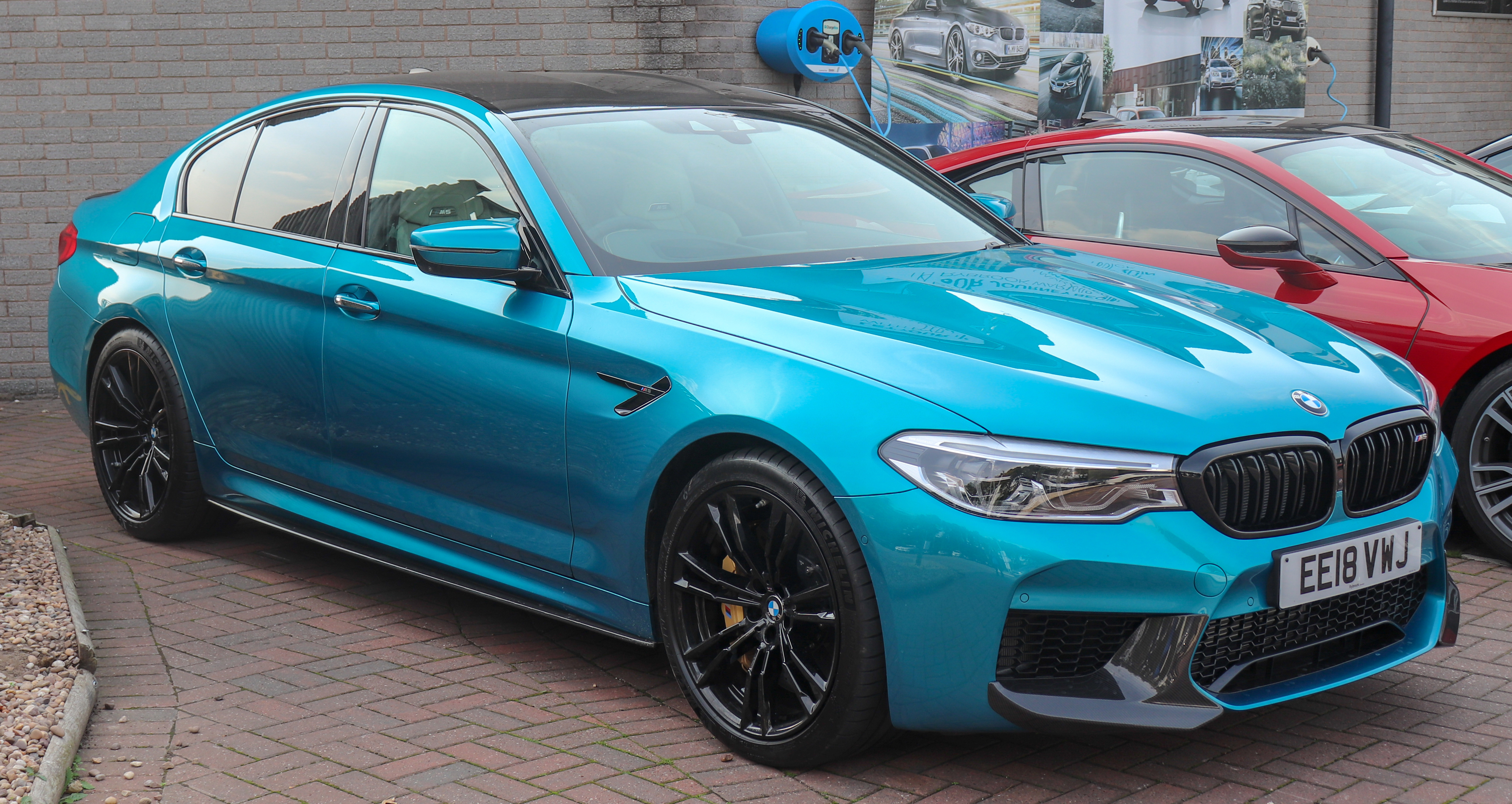
So we also have an M5 piece
coming out next Friday.
We set a lap time with Brit.
I think we're probably one of the first outlets
actually set a real lap time with an M5.
He sets it in the sedan, with a green sedan thing.
It's surprisingly quick, which doesn't surprise you
if you've driven the car, it's a rocket ship.
It is.
We have our problems with it
and I'm sure you do as well.
Yeah, we should reconnect about this.
There's nuances.
So what are your thoughts
without spoiling your article?
Do you love all things M5?
No.
I mean, you can't make a blanket statement like that
with any car that's current.
I think a lot of the-
That's so beautiful.
That's how you get the clicks.
No, I think a lot of the overall mass hatred
that came out immediately
upon the first wave of reviews
was largely to be controversial
because underneath, like as far as a car
that you can use every single day
for basically everything goes, it's pretty great.
You mean people who are never gonna buy one
have shit to say about it?
Yes, yes, I mean that.
I mean that.
I didn't track it.
My back road time with it was pretty limited.
But it was a good time when you put it
in rear wheel drive, you know?
I haven't loved an M5 since the E39
but I did very much enjoy the 60 with the V10.
I just didn't like the S20.
The last one was great.
I took a, we'll say, I didn't drive the last one.
Yeah, so.
I had a 2022 M5 comp for a week.
That was a fucking awesome car.
Yeah.
Statement is a blast.
Better than touring.
So yeah.
We should-
I like the purity.
Put this-
Yeah, but anyway.
Back up on the conversation.
We'll talk about that.
We'll come back.
Definitely come back next time.
We'll give you guys another bite at the apple.
You can tell us about your videos
because they're great.
You get to do the things that we all wish we could do.
So that's exciting.
Lose our minds slowly in real time
trying to put together projects.
Yeah, yeah.
People like watching that though.
That's good media, you know?
So okay, so I know we're on clock.
I have one closing question for you guys.
For both of you, one car,
you haven't driven yet that you would like to,
whether on camera or off.
Oscar Meyer, Wienermobile.
That is the-
Fuck, yeah.
That could happen.
That could happen.
The Wienermobile.
That's high on my list.
Are you-
Dan, do you know something that I don't know
that that could happen?
We were trying to do this a couple of years ago
and then the girl that set everything up
got fired or something.
That's true.
We were supposed to do a video on the Wienermobile
and she's like, oh, she's no longer with us.
So we lost out.
Yeah.
You could probably do a comparison test
because like LL Bean has a boot.
That's like a truck like that too.
They're all F-250s or something anyway.
So it's like-
I don't want to know.
I just want to experience the magic
of driving on a giant hot dog.
The idea was to have the planners,
Peanut Truck versus the Wienermobile.
That was like the Joe comparison.
Right?
So which is better?
I don't have the energy to chase such a prestigious.
That's my only dream car.
Nuts versus Wieners.
That's my dream.
Track test.
That's good.
That's good.
Yeah.
What about you, Martin?
I think there's just,
if I had to put one above the other
and it's basically a similar philosophy as the T-50.
The Wienermobile and the T-50 are about the same.
That's such a douche answer
because it's like so stereotype of like some car person.
Yeah, it's not about the price.
It's just, I want to see if they were able
to replicate like an old car experience in a new car.
You know, that's really my main interest.
I mean, as a serious side,
probably that or like a T-33
because I think we're getting them,
that would be, not work, the US is getting them.
I think that would be a very, very cool experience.
My sort of grail car, I would love to do,
because we do these long form deep dives on the 4GT.
Like I actually get to experience the 0405 on track,
get to experience the second gen of it
and sort of see where they took it in their final.
Didn't the Rattle House do that with the two?
I don't actually know.
I know they did a Z06 and 4GT
and then they did the original 4GT.
That car was like on original tires
and they drove it in the wet or the cold.
Like I'd actually want to talk to the people
responsible for it.
A friend of mine bumped into one of the lead engineers
at the tail of the dragon and the 4GT club.
I'm going to screw up the story a bit,
but this guy bought the car when they weren't worth a lot
even though he worked on it.
He saved, he saved, he saved.
This one, the cars are back to like a hundred thousand.
They were like 150.
Sticker, right?
They're about, and you could buy one for 120
if you just walked in.
It was, I think he paid like under a hundred for it,
but he worked on the car.
So the guy, the guy who sold him the car
gave him a sweetheart deal
because he was largely responsible for it.
And I think this guy now is like 60 or 70,000 miles
on his 4GT.
He drives it.
That's good for him, man.
He drives it.
That's what they're for.
I'm talking to somebody like that
who worked on the car.
I think would be cool.
I mean, there's the douche factor
of like the Texas 2K associated with it,
but like a bunch of people that never worked
on a supercar before at Ford came together
to build something.
I would love to drive that flat out on a racetrack.
But other than that, I mean, a couple of the crazy
million dollar cars and the Wiener Mobile.
That's sort of where I'm at.
That's a good answer.
Make the Wiener Mobile happy.
It's up to you guys.
You guys can organize all of this.
We will make you a master Wiener nut.
Wiener on the line, Ron.
Let's go.
Come on.
Absolutely.
You let us know, talk to your sponsors.
And if they're looking to sponsor somebody else,
we're here.
And I'll put together a proposal for the Wiener Mobile
versus the Planners Peanut's car.
And we could do it at Lime Rock
because I think they would be absolutely terrible
at that track.
Why don't we meet in the middle?
We can meet in the middle in like a Walmart parking lot.
Okay.
All right.
Autocross and Pittsburgh.
Yeah.
Nothing says Wiener Mobile like an Autocross and Pittsburgh.
Pittsburgh's real hilly.
It might be a good time.
Case in point.
Yeah.
So, all right.
Well, again, I know we're on the clock, guys.
So, Mark Jack.
I appreciate it, gentlemen.
Thank you for everything.
And we'll talk to you guys probably if you'll have us
back sometime in the near future.
Yeah.
Thank you for your patience, too, with us rambling.
I know sometimes we get on a roll
and I don't want to make it seem like we're trying
to cut you off.
I just think we get in our heads.
So I apologize if we just went on too long.
We're all nervous.
We're all in the same thing together, you know?
The deeper we can go on this stuff, the better.
So thank you again for your time.
And for whatever logistical nonsense
is happening on both sides.
And yeah, you're welcome back whenever you want.
Take care.
Appreciate it, guys.
Thanks.
Good talking to you.
About this episode
A deep dive into a head-to-head track comparison of three high-performance cars: the Corvette ZR1, Mustang GTD, and Porsche 911 GT3 RS. The discussion covers the unique engineering philosophies, driving experiences, and technical challenges of each car, including thermal management, electronic aids, and chassis feel. The hosts highlight the GT3 RS's approachable precision, the GTD's raw power and aero, and the ZR1's sheer speed but challenging drivability. They also explore the complexities behind producing such content, the role of OEM support, and the evolving nature of driver feedback in modern supercars.
Dan and Ross chat with Jack and Mark from Savagegeese about their comparison test of the ultra-high performance Corvette ZR1, Mustang GTD, and 911 GT3RS