Year-end car deals are sales events that happen at the end of the year where you can find lower prices on cars. Dealers want to sell their remaining cars before new models come in, so they offer special deals to attract buyers.
Nissan is a car company from Japan that makes many types of vehicles, including cars and trucks. They are known for their affordable models and have been a popular choice for many drivers.
0% financing means you can borrow money to buy a car without having to pay any extra interest. This makes the car cheaper in the long run because you only pay the price of the car without added costs.
An amortization schedule is like a plan that shows how much you pay on a loan each month. It breaks down how much goes towards paying off the loan and how much goes towards interest.
Tire rotation means changing the position of your tires on your car so they wear evenly. This helps the tires last longer and keeps your car safe to drive.
Alignment is about making sure your car's wheels are pointing in the right direction. Good alignment helps your car drive straight and can make your tires last longer.
This device uses lasers to check if a car's wheels are lined up properly. It helps mechanics know if they need to fix anything to keep the car safe to drive.
The engine block is the big metal part of a car's engine where the cylinders are located. It's important because it holds everything together and helps the engine work.
Power per liter tells you how much power an engine makes for every liter of its size. Higher numbers mean the engine is more powerful for its size, which is usually better for performance.
The crankshaft is a part of the engine that helps turn the power from the engine into movement for the car. It needs to be very strong because it deals with a lot of force and heat.
Bearings are small parts that help other moving parts in the engine move smoothly without rubbing too much against each other. They help keep everything running well and prevent damage.
Fuel economy is a way to measure how far a car can go on a certain amount of fuel. Better fuel economy means the car uses less gas to travel the same distance, which saves money and is better for the environment.
Emissions are the gases and pollutants that cars release into the air when they burn fuel. Lowering emissions is important for keeping the air clean and protecting the environment.
Direct fuel injection means that fuel goes straight into the engine's combustion chamber instead of mixing with air first. This helps the engine run better and use less fuel.
An intercooler cools the hot air that comes from the turbocharger before it goes into the engine. This helps the engine run better and makes it more powerful.
Defective engines are engines that don't work properly because of mistakes made when they were built. Hyundai had many of these engines, which caused problems for car owners.
The Toyota Camry is a popular car that many people choose because it's dependable and gets good gas mileage. It's a comfortable car for everyday driving, and people often talk about it because it's been around for a long time and many families use it. Sometimes, discussions include details like what kind of oil to use for the engine.
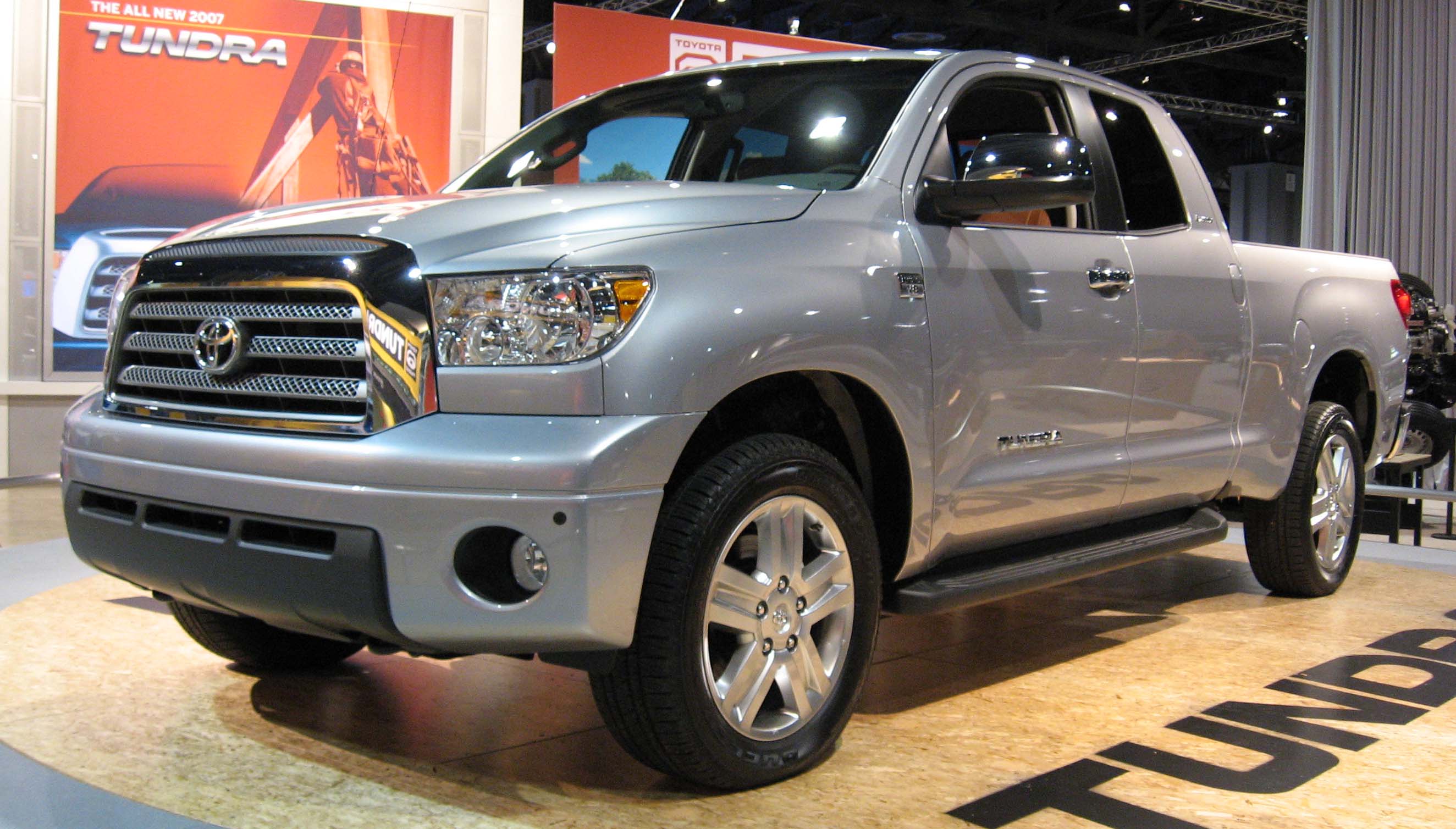
The Toyota Tundra is a big truck that people often use for heavy jobs or outdoor activities. It's known for being tough and able to carry or tow a lot of weight, which makes it a favorite for those who need a reliable vehicle for work or play. People talk about it because it's built to last and can handle rough conditions.
LIVE
Well, we are running out of year and you are running out of time for a year-end car deal.
But do me a favor, please, please do not go out and buy a car in a hurry thinking that
you are going to save a tremendous amount of money by buying it before the year-end because
you are really not because there will be deals in January and in February and in March and
so on and so forth.
Hey folks, this is Lenny Lawson, the car guru and I am trying to give you the best possible
advice that I can give you at this year-end.
If you are in the market, you have already been doing some research and you have gotten
to this point then, yeah, there is going to be some special rate financing on certain vehicles.
I know on Nissan right now we have a 0% for 60 months which is very attractive but you
have to give up a $4,000 rebate to get it.
So folks, remember you have got to do the math, oh that is zero, we have got to do zero.
No you don't.
What if you can get a pretty good rate and still get the $4,000 rebate and if you plan
on trading in maybe three years from now, then it would really not make any sense to
take the zero, it could end up costing you more money.
You just got to, you know what an amortization schedule is, you have got to do that.
If you don't know what it is, just Google amortization schedule and it will show you
what you will pay out and what your balance will be in different months between the time
you finance the car or truck and the time that the vehicle is totally paid off.
So you can go out and look at 36 months and see what your payoff will be based on the
amount financed and the interest rate and you can compare that to financing it at 0%
versus 3.9 and if you finance $4,000 less because it has a rebate on it and you take
the 3.9 then maybe your balance will be better, maybe it will be less, you just got to do
the math or let the amortization schedule do it for you.
Okay, what else are we talking today?
Oh, you know, this weekend I was looking at my truck lovingly but I noticed my front
tires were wearing on the outside edges and then I looked at my rear tires because I rotate
my tires every 5,000 miles and I've got 15,000, well almost 16,000 miles on now.
I looked at the edges of my rear tires.
They're getting thinner also and then I looked at the inside edge of the tires.
They're getting thin as well.
The middle part's not.
What have I done?
Well I hate to admit this but apparently my pressures were down.
I checked my air pressure, 6 pounds less than they should be.
Now why didn't my tire pressure warning light come on?
I don't know.
I don't know whether it was a defect or just too cold for that.
I don't know but they should have come on and warned me that my tire pressures were low
and I wouldn't have thought that they would have lost 6 pounds.
Well I'll take that back because I'm just about due for an oil change.
See your tires can lose about, well it depends on the tire size and tire brands and so forth
but typically they'll lose about 2 pounds a month and so my last oil change was about
90 days ago so 6 pounds.
That's why you need to check your air pressures at least every other month and if you can't
do it somebody will do it for you, surely.
So just in case though I wanted to check my alignment.
Now about 2 years ago I made a big investment.
I bought a Hunter computer alignment system, a new lift and a laser scanner that when you
drive into my service drive there's 48 different laser beams that are hitting your front tires
and it tells my service advisors that you might have an alignment issue.
So what does that cost, Lenny?
Nothing.
It cost me a bunch but it doesn't cost my customers anything.
They just can drive right through, well right into my shop, get scanned and they know whether
they need an alignment.
Well my truck got scanned and said nope you don't need an alignment but just to be a
hundred percent sure and for kicks and giggles I asked my alignment guy put this on the machine
and just let's double check our scanner and he did and it's accurate.
So I guess the moral of this story is if you don't want to pay for an alignment check which
can cost anywhere from $49 to $79 somewhere in that neighborhood then all you have to
do is drive down the gateway and honk your horn and they'll raise the doors and you just
drive in and your alignment will be checked.
That's pretty cool, isn't it?
Now if it needs an alignment you pull a little bit further, they'll pull it on a rack and
do a four wheel alignment on your vehicle and you definitely want to have that done
if there is an alignment condition because you can wear out your tires prematurely and
none of us like premature tire wear.
I certainly don't so I'm going to monitor my tire pressures and make sure that they
stay where they're supposed to.
I'll probably put, I think it's got hand-cook tires on it and I've never really liked that.
I just don't like if somebody says what kind of tires you have, I don't like saying the
word hand-cook and maybe that's not how you say it but that's how it's spelled and they
may be decent tires, they're quiet so I don't hear a tire noise when I'm driving down the
road but if I replace them, I told you what I'm replacing them with, Michelin, my favorites.
Okay so after this break we're going to talk about why are all these engines failing in
vehicles.
I've done a little research and I'm going to pass that on to you.
Yes, there are a lot of companies, General Motors, Summit Ford, a lot at Toyota, Summit
Honda, a bunch at Hyundai.
Engines are failing and they're failing while they're under warranty and after the manufacturer's
warranty runs out so we'll do that here in just uno momento.
That's Spanish for one minute.
Okay, here we are talking about why are all the engine recalls, why are all these engines
failing, why are they using oil, what's causing these very expensive problems to occur, and
who are they occurring with, well you're getting ready to find out.
So the auto industry basically they've had a decades long push for cleaner, more efficient
engines and it's had a consequence.
Today's motors are far less tolerant of manufacturing imperfections than the older engines were.
Have you ever heard that older technology is sometimes better than new technology?
Boy I have.
So basically this explains why more than five million engines from five different automakers
are currently under recall or federal investigation and it's costing them a lot of money and
it's costing them a lot as far as reputation is concerned.
So what's happening is that because of improper machining of connecting rods and crankshafts,
tiny metal particles called, get this name, SWARF, S-W-A-R-F.
So if a piece of metal was referred to as a piece of metal, a microscopic piece of metal,
they don't call it microscopic piece of metal, they call it SWARF.
So I had to get to the bottom of this.
It is an old term.
It's been around since they've been honing out engine blocks or cylinders out of engine
blocks.
So it's nothing new.
The name isn't new, but the problem is becoming much more prevalent.
Automotive news asks engine engineers and other experts what's causing the failures.
And here was the consensus.
Today's cleaner running engines that are delivering record amounts of power per liter and running
at hotter temperatures are creating higher in-cylinder pressures.
That places greater loads on critical parts such as bearings and crankshafts, which are
separated only by a film of oil thinner than a human hair.
So if you take two engines, and they're the same exact engines, and in one you put thin
oil, the other one you put thick oil, which one's going to run more efficiently?
That's right.
The one with thin oil because there's less resistance to all the spinning and the reciprocal
motion and the rotational motion that's going on inside that engine.
So the automakers have been under a great deal of pressure to get better fuel economy
and have lower emissions.
And because the consumers want it, they got to have power.
I mean, who wants to drive a vehicle with a three-cylinder engine that has 89 horsepower?
Nobody.
Well, how about a three-cylinder engine that has 325 horsepower?
Because we have them.
Well, how did they get there?
Well, three primary ways.
Direct fuel injection, squirts the fuel directly into the cylinder.
No more carburetors.
No more throttle body injection.
No, that still went through an intake that sat on top of the engine or beside the engine.
No, they wanted to get that fuel directly into that cylinder.
And then they have multi-valves, which they have two intake valves and two exhaust valves
per cylinder, which lets more air in and more air out.
And then finally, turbocharging, which forces air into the combustion chamber.
Cooler air, if it has an intercooler built into the system.
And that just makes the engine have more power.
And so they have smaller engines, and they're requiring more out of those smaller engines,
and they're looking for even more ways to increase efficiency.
So what they do, they introduced zero-weight oil.
And in order for that to work, the engines had to be produced at very close tolerances.
And what's happening in the manufacturing process, they're getting a lot of swarf,
tiny little particles that act like sandpaper if they get into the wrong places.
Like between the connecting rod and the bearings.
What is a connecting rod?
Well, at the top side, it's connected to the piston that goes up and down inside the engine.
So that's basically what a connecting rod does.
But the connecting rod itself is connected to something called the crankshaft,
which spins and rotates in the heart of the engine.
So it's spinning round and round while the piston and the connecting rod are going up and down.
And there are bearings, which is, it's a piece of metal, really smooth and curved.
And you've got two of them, and they complete a circle.
And that's basically what allows the connecting rod to spin on the crankshaft.
Well, those bearings are failing because of the swarf that's left in the engine
during the manufacturing process.
They're just not getting them clean enough.
And they're leaving this residue that didn't used to be a problem
because the older engines weren't made to such close tolerances,
and they used heavier weight oil.
And so there was a thicker barrier of oil between the metal parts than there is now.
And so when you have a thinner barrier and you have these little particles,
it's like I say, it's like sandpaper and the engines are failing.
So who's having a problem with this?
I started to say General Motors, obviously.
Toyota is expecting a bill of about $300 million to $500 million to replace
102,000 V6 twin turbo engines installed in Toyota pickups and SUVs and Lexus SUVs.
On November 6, Toyota added 127,000 engines made in 2022 through 2024 to the recall.
And their excuse, debris in the block that could cause the engines to seize.
Swarf.
Hyundai, now they've had the biggest problem, is spending an estimated $5 billion
to replace engines and settle lawsuits and pay fines related to more than 3.3 million
potentially defective engines.
The Korean automaker extended the engine warranty up to 15 years or 150,000 miles,
but a lot of those people that are driving those cars, they bought them secondhand.
Now, is Hyundai going to replace their engines too because they're not the original owner?
I mean, that's on Hyundai to figure out.
That could be scary.
You know, you really need to think about buying a used Hyundai, especially if it's in
a certain within certain model years.
Honda is dealing with nearly 250,000 V6 engines from the 2023 model year that could have again
improperly machined crankshafts that cause the bearings to wear out and the connecting rods
to seize.
NHTSA, National Highway Traffic Safety Administration, added 1.4 million engines
to its investigation after receiving complaints from 414 Honda owners.
Ford has had some issues as well.
More than 700,000 vehicles are being recalled.
Really, the cost is unknown at this point.
So what's contributing to this is the drive for thinner oils, and that's been driven by
greenhouse gas emissions and better fuel economy requirements.
And as I said, the spinning metal parts inside the engine are not supposed to touch.
They are highly stressed components such as connecting rods and crankshafts and piston rings
and cylinder walls, and they're all separated by a very thin film of oil.
And the thinner that film is, the more susceptible the engine is to failure if they didn't get
all the different swarph and other pieces of metal out of it.
So automakers have reduced the clearance between rods and crankshafts and other components in
order to be able to use this thinner oil.
And as I said, the downside is that the cushion between these moving parts is smaller,
and tiny bits of metal or other debris get between the moving metal parts,
and it acts just like sandpaper.
Just to give you an example, 2010 Toyota Camry V6 used 5W30 motor oil,
and today's V6 Camry requires, get this, 0W16 weight.
That's not much weight.
When you pour that out and you see what it is, what it feels like, it's thin.
It's more like WD40 than oil.
So that old style Toyota oil, it reduced fuel economy because it required more of the engine's
power to circulate it under pressure through the small passages in the block
to the rods and the heads to lubricate the moving parts.
Toyota and GM have both cited metal shavings in their engines as one reason why some have seized.
The shavings grind down the thin metal bearings between the connecting rods and the crankshaft.
I already said that.
The recalled GM engines that pass inspection are getting thicker oil.
They're putting 0W40 instead of the 0W20.
What does all that 0W20 and 40 and all that mean?
Well, it's called viscosity, and I'll talk about that here in just a minute.
Okay, I am back.
Let's clear up this viscosity thing.
So obviously, it is a measure of how thick or thin an oil is.
And it also, really more precise definition, would be how resistant it is to flowing.
So think of it this way.
Low viscosity equals thin oil and flows easily like water.
High viscosity equals thick, and it flows more like honey, which I like honey,
but I don't want my oil to be like honey when it's really cold outside.
So a low viscosity number like the zero part, 0W, the W stands for winter,
stands for cold.
So it tells you how the oil is going to flow when it's cold.
The second number tells you how it's going to flow when it's at normal operating temperatures.
So 5W30, 5W means winter, that's how it flows in cold temperatures,
the lower the number, the better cold flow.
The 30 is how thick the oil is at normal operating temperature.
You know, you would think that when it gets hot, the oil would get thinner,
but it does the opposite.
It gets thicker when hot.
So there's 020, that's the thinnest right now, or 016, like they're using in that Toyota,
very thin, great for cold starts, and better fuel economy.
10W40 is thicker, better for older engines, or high heat.
And then 1540 is common in diesel and heavy duty applications.
But oil thins when hot and thickens when it's cold.
Multi-grade oils are engineered to act like thin oil when cold,
and act like thicker oil when hot.
So the oil is intelligent.
Well, I wouldn't go that far.
So the automakers, they choose viscosity based on the engine design,
the tolerances, the operating temperatures, the fuel economy targets,
longevity, wear protection.
If you use the wrong viscosity, if you just decide to change it yourself,
you could have increased wear in your engine, reduced oil pressure,
poor fuel economy, and possible warranty issues.
So I guess my tip here would be not to go messing with your oil viscosity.
Until you clear it with the dealer.
Make sure that they are giving you some type of a guidance
based on a technical service bulletin that they've received.
You know, if some mechanic says,
yeah, just go ahead and change the oil viscosity.
Now, no, thank you.
I don't want to avoid my warranty.
You give me some kind of proof that the manufacturer will take care of me
if something happens after I change this.
For example, with the GM vehicles, if there are no obvious signs of failure,
like, well, how do they tell if there are signs of failure?
They pull the oil pan off and they look for metal.
You know, usually there are some metallic, I'm sorry, some magnets in the oil pan.
Matter of fact, many drain plugs are magnetized.
So if there's any metal floating around in the engine,
then, you know, those magnets will capture it in the oil pan
before it goes back up to the engine.
Because the oil circulates, you know, it runs through the engine,
goes all the way to the top to lubricate the valves and the rocker arms
and the push rods and all that stuff.
And then it just, gravity takes it down to the bottom of the engine,
it's circulated through, gets down to the oil pan,
then there's a pump down there that sucks it all up
and pushes it back to the top of the engine.
And it flows back down through the engine again.
It's all under pressure.
That's why oil pressure is important.
If oil pressure goes down, the oil doesn't flow through the engine properly.
Now, most cars, they don't have oil pressure gauges.
If yours does, then you need to pay attention to that.
But trust the dealership.
I know that's hard sometimes.
But you just have to trust the dealership before you trust the quick lube place.
They change a lot of oil, but they also break a lot of rules when it comes to
what the manufacturer requires.
And it's not an issue as long as your vehicle runs perfectly
and you never have an engine failure.
But if you do and you're under warranty or you're just out of warranty
and you haven't darkened the door of the dealership to have any service done,
you can forget about getting a repair paid for by the manufacturer
if you're beyond the warranty period in time or miles.
Yeah, but it costs more to have the oil changed at the dealership.
No, it doesn't.
It does not.
If you shop the prices, you will see that the dealership doesn't charge anymore.
They use the same oil that the manufacturer recommends.
They use factory oil filters.
And plus they use multi-point inspections, which is a lot more than what the fast lube places will do.
And the reason is because the fast lube places don't have time.
It's fast food for cars.
Going to dealership is like, I don't know, going to a nicer restaurant.
The food's better.
They're not in a big hurry.
They want you to enjoy the experience.
Just slow down.
Everything doesn't have to be fast.
When it comes to my car, I'd rather it not be fast.
I want them to take their time, check everything, make sure I'm safe,
make sure my car is serviced properly.
If I have an issue, I know where to go to get it resolved.
So I hope I've educated you a little bit.
Maybe you didn't know about an engine problem.
Engines failing left and right.
I bet you did if you owned a Hyundai or a Toyota Tundra.
You know, these are things that people need to know.
Well, thanks for listening to this edition of My Car Guru.
If you need me, 423-552-2020, that's my cell phone.
Send me your email address and I'll send you a copy of the My Car Guru guidebook,
and it will help you make better decisions when it comes to your car life.
Well, thanks for listening and I'll see you next time.
About this episode
Year-end car deals are approaching, but rushing to buy may not yield the best savings. Lenny Lawson emphasizes the importance of understanding financing options and calculating costs effectively. He also shares personal experiences with tire wear and the significance of regular maintenance checks. The episode delves into the alarming trend of engine failures across major automakers, attributed to 'swarf'—tiny metal particles from manufacturing imperfections. This issue, exacerbated by the push for cleaner, more efficient engines, is leading to costly recalls and repairs for brands like Toyota, Hyundai, and Honda.