Certified pre-owned (CPO) is a used car that’s been checked and approved through a program. Usually it comes with extra warranty coverage compared to a regular used car.
An extended warranty is extra protection that kicks in after the original warranty ends. It can help pay for certain repairs if something breaks while you own the car.
The Toyota RAV4 is a compact SUV, meaning it’s smaller than a full-size family SUV but still practical. It’s commonly used as an example in comparisons because many people consider it. When you see it in a table, it’s usually to show how one SUV stacks up against others.
Total cost of ownership means the full cost of having the car for a certain time. It includes not only the price you pay, but also other costs like fees and the car’s value loss.
This is about keeping a car for a long time. If you own it long enough, the warranty won’t help anymore, so you should expect more maintenance costs to come out of your own pocket.
CPO means “certified pre-owned.” It’s a used car that’s been checked and backed by the car brand, usually with some warranty coverage so you’re less exposed to surprise repairs.
A factory warranty is the official coverage from the car brand. If you keep the car longer than the warranty period, you may have to pay for more repairs yourself.
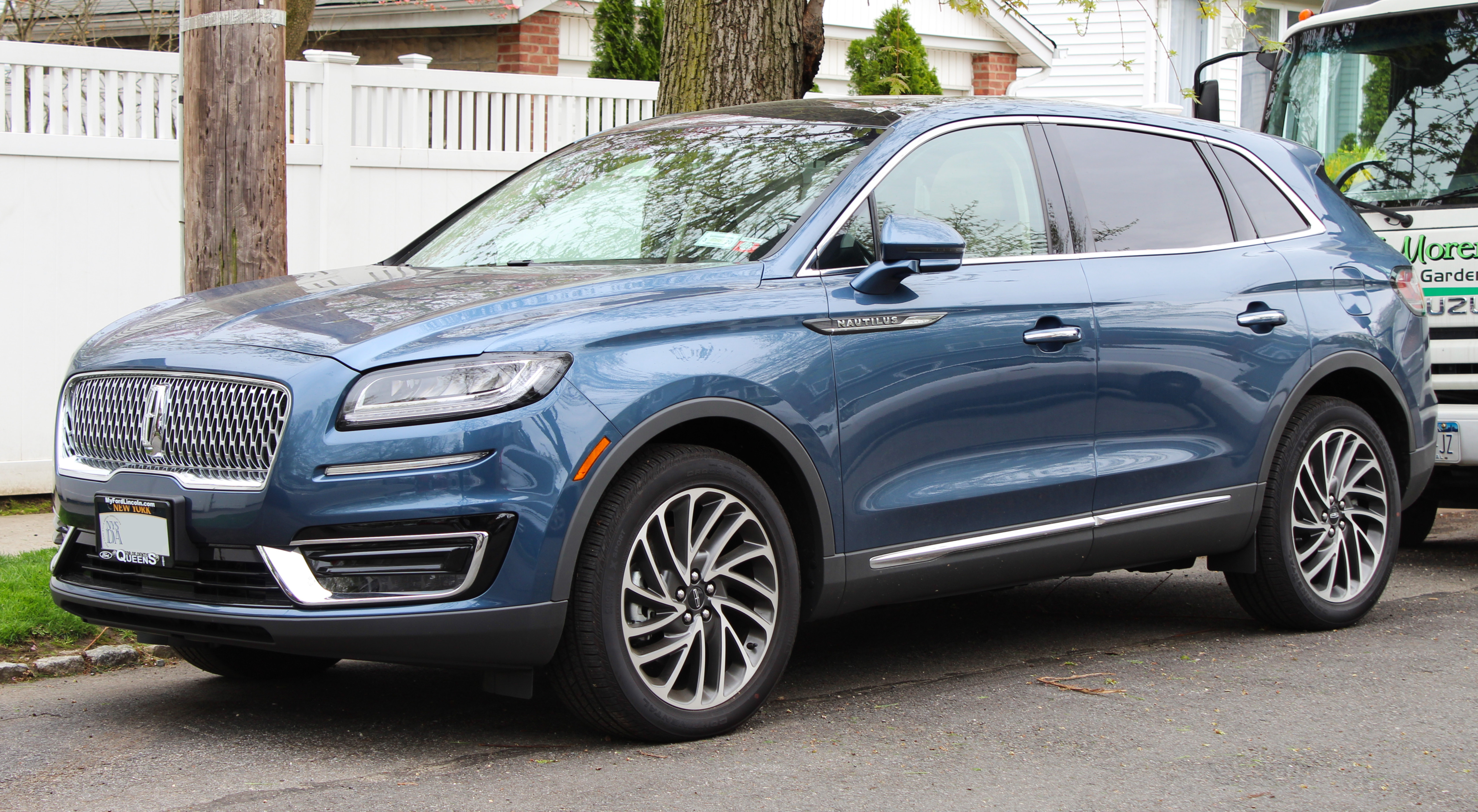
Lincoln is Ford Motor Company’s luxury brand, and the segment focuses on how Lincoln vehicles compare to other luxury options. The discussion centers on reliability concerns tied to shared powertrains, plus resale and technology execution.
Powertrain is the “moving parts” of the car—what generates power and sends it to the wheels. The host is saying Lincoln uses some of the same basic mechanical setups as Ford.
This means the car doesn’t hold its resale price as well as other brands. If you sell it later, you may get less money back than you would with competing models.
This is a specific Lincoln SUV model (the 2024 Nautilus). The point being made is that it can lose a lot of value early, which affects what it really costs you over time.
A depreciation curve is just a way of showing how quickly a car’s price drops after you buy it. The faster it drops, the more it can cost you when you sell or trade it later.
Cost of ownership is the “total cost” of having a car, not just the price you pay. It adds up what you’ll likely spend over several years, including what the car is worth later.
Brand
minis
MINI is a small-car brand. The host is saying they personally never had problems with their MINIs, even though the data might suggest they could be more expensive to own than other cars.
“Data-driven” means making decisions using facts and numbers, like resale value and price history. The host is saying you should also consider how you feel about the car, not just the numbers.
A 1964 Lincoln Continental is a big, older luxury car. Since it’s so long, parking it—especially parallel parking—can be tougher than with a smaller car.
Parallel parking is when you park your car next to the curb between two cars. It’s hard because you have to line up your car carefully in a tight space.
A manual transmission means you shift gears yourself, usually with a clutch pedal. When you’re learning, it’s easy to stall the engine until your timing gets smooth.
“Three on the tree” means the gear lever is on the steering column, not the floor. You shift three forward gears that way, which can be confusing if you’ve never driven one.
The 1999 Nissan Maxima is a late-90s sedan that was popular as a regular everyday car. It’s the kind of car many people learn to drive in because it’s straightforward compared to older big cars.
This is a Ram 2500 Tradesman, a work-focused heavy-duty pickup. The interesting part here is that the hosts are saying it’s a 2024 truck that’s still sitting unsold, so they’re talking about what kind of price cut you might realistically get.
“Days on the market” means how long the car has been advertised for sale. If it’s been sitting there a long time, it can be a sign the price may be negotiable.
“Titled as new” means the truck is still considered a new car on paper, not a used car. Even so, if it’s been sitting for a long time, you may be able to negotiate a better deal.
A “pre-owned truck” is a used vehicle that has already been sold or registered before. The hosts are contrasting its typical pricing versus a unit that’s still titled as new, to estimate what discount might be possible.
If a car “sits on the market,” it means it’s been sitting at dealerships for a long time without selling. That can sometimes mean the price is too high or buyers aren’t interested, which may open the door for a better deal.
The Ford Edge is a mid-size SUV meant for daily driving and family use. It’s the kind of car where the final price can depend on trim and any current discounts. People may discuss it when comparing what different buyers end up paying.
“Incentives” are discounts or special financing offers that make a car cost less than the sticker price. They’re usually paid by the car maker (or sometimes the finance company) and can vary over time.
The Dodge Ram is a large pickup truck made for work and towing. People talk about it a lot when there are sales deals because the price can change with incentives and dealership discounts. It’s usually considered when someone needs a truck for hauling or towing.
A “model year” is the version of the car tied to a specific production/marketing year. So a truck can be unsold for a long time even if it’s still considered “new,” and that can affect pricing.
A lease is like renting a car for a fixed time with monthly payments. The important part here is that even if the car company disappears, you still usually have to keep paying the company that financed the lease.
Price disclosure is the dealership’s breakdown of how they show the car’s price. It can list the base price, add fees, and then show discounts or incentives to get to the final “today’s price.”
This is a discount program offered to military members. The host is saying the dealership lists it as one of the reasons the price can drop from the “before incentives” number.
“Low jack” is an anti-theft recovery system. If your car is stolen, it can help authorities track it down so it’s easier to recover.
Term
traceable theft protection
This is an extra anti-theft option meant to help identify your car or its parts if something happens. The idea is that it’s easier to track and prove ownership.
A package discount is a bundled pricing reduction when you buy multiple add-ons together. Dealers often use it to make optional protection and accessory items look cheaper than purchasing each one separately.
These are extra costs added to the car price by the dealer. They can include paperwork and other charges that you have to pay in addition to the sticker price.
An “AI Negotiator” is a tool that helps handle the back-and-forth with car dealers. Here, it contacts the dealer for you so the dealer doesn’t have your personal contact info.
The “Out the Door” price is the full total you pay to buy the car. It includes the car price plus things like taxes and dealer fees, so it’s easier to compare deals.
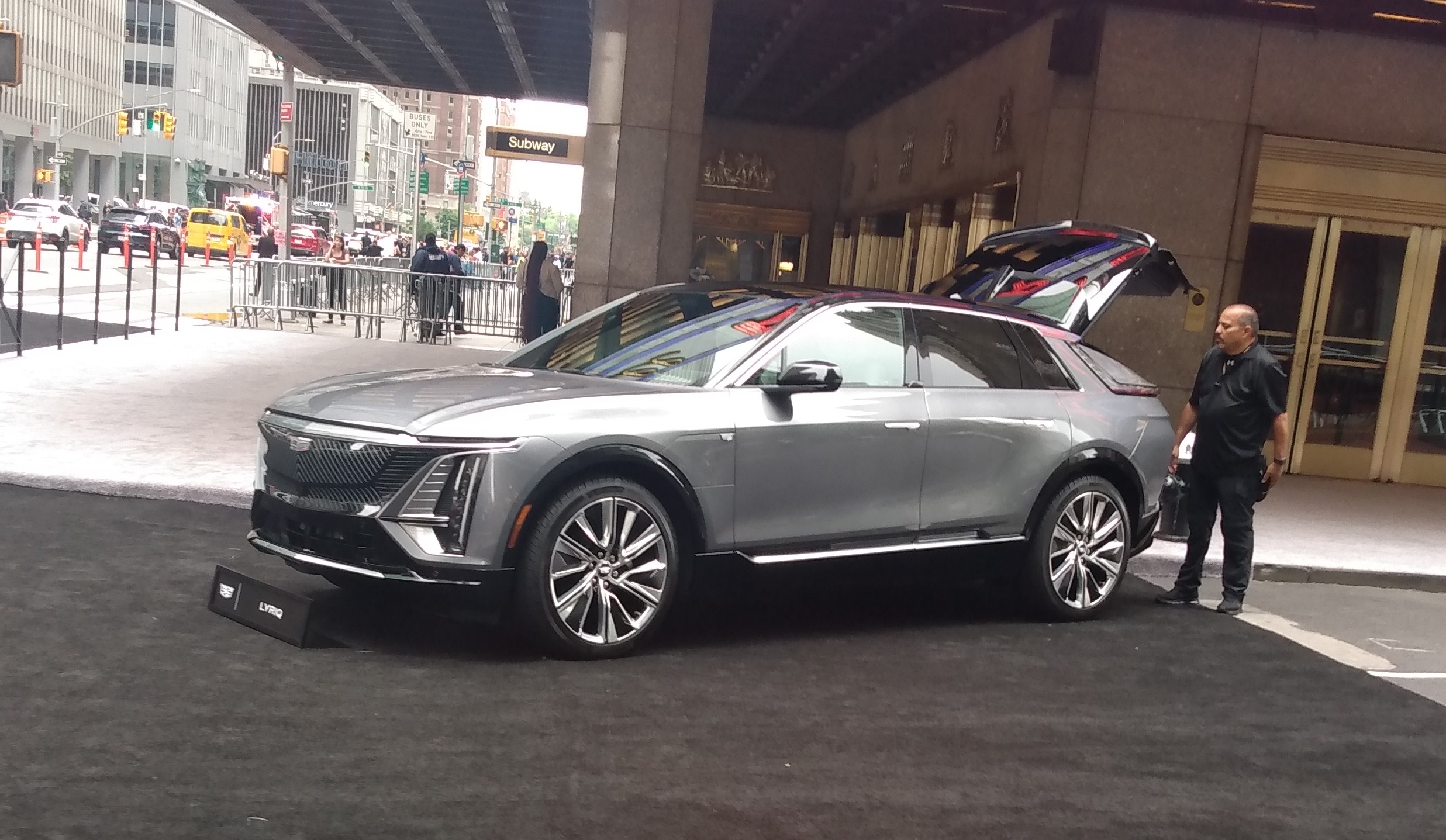
The Cadillac Lyriq is a luxury SUV that runs on electricity instead of gasoline. The podcast mentions it because the host was interested in it for a potential purchase. EVs like this are usually discussed in terms of how they fit your needs and what it’s like to own them.
LIVE
It's noon here in Ventner City, New Jersey, and our nation's capital, Washington, D.C.
And this is Q&A with Zach and Ray at Courage Live Today for Friday, June 26th with your host,
me, Ray, right here in my living room in Ventner City, and Zach hanging out his
metal-filled office in Washington, D.C. How the hell are you today, handsome?
You're fantastic. Happy Friday, everyone. Thanks so much for taking the time to join us
for your car questions answered live with my former car dealer, Dad Papashevska.
Folks, before we kick things off, today's show is brought to you by CarEdge.com. So for those of
you that are unfamiliar, it's year six going on, year seven of my dad and I spending all of our
waking hours working on CarEdge. This is a labor of love here at CarEdge. We have so much fun
helping tens of thousands of people every single month buy their new and used vehicles.
Check out CarEdge.com to learn more. And in particular, I encourage everyone to book a free
consultation with our awesome team. We've got great folks on the team, Justice Annie,
Tina, Mitch, and Tony are standing by and want to help you out. So please book a time to talk to us
as well. It's Friday, Dad. So you know what that means. That means we are going to be answering
car questions. So we will start here. So many people have sent very kind emails with Friday live
show as the subjects. So thank you for that. So we'll start there with some of the emails that
I've received and, Dad, we will also address as many questions as we can in the chat. So please
put questions in the chat and we will come to those as well. How does that sound? Perfect. All
right. We're going to start here. I'm going to do my best to not show personal information. So bear
with me for one moment. You're ready to go. I believe I am. Let's start here with Greg's question.
Excuse me, Dad. Hey, Ray and Zach, my last vehicle purchase was in 2019 and I've been
considering adding a new car, but I'm discouraged by how the car market has been recently. My question
is, what is the best way to purchase and retain a vehicle? Is it better to buy, new, lease, or
purchase a certified pre-owned vehicle specifically? Would it make more sense to buy a three-year-old
CPO vehicle, keep it for two to three years, and then repeat this cycle? Dad, what is your take
on this? What is the best way to approach buying or leasing a new car if you haven't been in the
market since 2019? Well, obviously, the first thing that Greg's going to be hit with is sticker
shock, and we have discussed that the other day. The more important answer is how long you intend
on keeping a car and how many miles you intend on driving it. If you keep a car two or three years
and you don't necessarily put a lot of miles on it, and you want to save a few dollars, it seems
to me that like a three-year-old certified pre-owned vehicle, and when we talk about certified
pre-owned vehicles, we are talking about manufacturer certified pre-owned vehicles,
as opposed to independent certified pre-owned vehicles. You pick up the extended warranty
that the manufacturer provides for that certified pre-owned, and if you're only going to keep it
two or three years and not necessarily put a lot of miles on it, then you're going to save, I would
think, a considerable amount of money over that time because you were saving some of the initial
depreciation by buying a three-year-old vehicle. You'll be under warranty in most cases the whole
time, and ultimately you should save some money by doing it that way if you find yourself not
needing an absolutely brand new vehicle. Yeah, I think you're spot on. There's definitely an
opportunity here to save some money in that way. I went ahead, Dad, and we're going to put you head
to head here with Ask Car Edge and then jump to our next question. Ask Car Edge is just in the top
of our navigation back at caredge.com. I copy and paste this question in and look at this, Dad.
long-term. The current approach, you can see here, pay MSRP or close to it, absorb the steepest
depreciation in years one to three, et cetera, et cetera. I'm going to scroll all the way down.
We've got a nice little comparison table right here. Here's your RAV4 example with a rough
illustration. Obviously, the RAV4 is a little bit of a tricky one to think about right now,
but buy new and keep for nine years, cost you almost 40 grand. You're going to have that
depreciation. You're going to have the one-time expenses with taxes and fees.
Your nine-year total cost of ownership, $27,500. You've got the CPO vehicle that you're going
to flip every three years. It's going to cost you around $28,500. Then leasing, three-year contract,
three-year repetition, it's going to cost you a lot more. It depends a little bit what you want
as a car shopper. Do you want to have something new every three years? Obviously, I like how it
says this. It's directional. It's not a precise quote. I think it depends a little bit on what
your strategy is, what you're trying to do. The really important thing there is that if you,
for instance, you buy it and you keep that vehicle for nine years, well, there are going to be some
maintenance costs associated with a nine-year-old vehicle that aren't going to be covered under
any type of factory warranty, where if you get a CPO vehicle and you're only keeping it for
two to three years at a time, you're going to be under a factory-type warranty the whole time
you have it. I think ultimately, the CPO makes the most sense. Ultimately, that should save you
the most money. Yeah. I think you're on to something there, Dad. I think you absolutely-
I don't know that I am because that damn-ask-carage guy is pretty damn smart.
Every once in a while, it gets things right. Let's jump to the next question here. This one's
going to come from Taylon. You ready for this, Dad? I'm not sure, but we'll give it a go.
All right. We'll pull it up on the screen. Hello, Zach. Greetings from New Jersey. That's
where my dad is right now. We absolutely love that. I've been listening to you and Pops for years,
and I genuinely appreciate the information you both share. Always helpful, always insightful,
and always delivered with a great sense of humor. I learned something new from every show,
so thank you for everything that you do. I know this may be an unpopular opinion,
but I've been a Lincoln fan for over 20 years. I've owned five different Lincolns,
and I've never had any major issues beyond the usual battery replacements every few years.
I really love the redesign of the 2024 Nautilus. It's only been out for two years,
but I feel like it's a big step forward for the brand. If I plan on keeping one for over six
years, would you recommend purchasing it? I didn't turn it off. I always have it on
Do Not Disturb. I do. I plan on keeping one for over six years. Would you recommend purchasing
it? What's your overall opinion on the Lincoln brand? Before Dad gets to answer this one,
we're going to see what Ask Car Edge has to say. You ready for this, Dad? Yes.
All right. I popped this over in Ask Car Edge, and we have got a lot of interesting information.
Let's look at the case for Lincoln, Ford's reliability back going under the hand Lincoln
shares powertrains with Ford. That's a concern to stay at least. Honest concern,
resale value lags, Lexus, brand uncertainty, technology execution has been uneven. Here's
what a 2024 Lincoln Nautilus specifically is going to be worth in six years. Look at this.
This is super interesting. Here's the depreciation curve for a Lincoln Nautilus. It looks like after
that first year, it's losing over 21.5% of its value. That's something to keep in mind. Look
at this, the six-year cost of ownership for a Lincoln Nautilus, $85,126. This is some really
interesting information, especially as it compares to Toyota options or even the Lexus option here,
which is totally different to Dad. What is your take on Lincoln, especially as we look at this
data that shows that it's going to be pretty expensive as compared to some of the other options out
there? He likes Lincoln's. They've served him well. He's never had any issues or maybe he's had
issues and he doesn't realize he's had issues. I don't know, but it seems to me that if he has
had nothing but good experiences with the five Lincolns that he's had and apparently he maintains
his vehicles in such a way that he doesn't typically run into any problems with them,
and he likes the look of the Nautilus, how do you tell that person go find something else?
His experience, his personal experience, I think is more valuable than some of the data that we
can use. I think the data that we come up with is very valuable and could be a determining factor
as to what you buy if you've never had an experience or five times the experience with
the brand that he's had. People called me crazy because I liked my minis.
I never had any issues with my minis. I might be the only person in America that never had them,
but if you were to do the same chart, I would find out that those minis I was driving were way
more expensive to own and drive than other things. Yes, the raw data says you shouldn't do it.
Your practical experience says I should. From Demo, I like the 26 Nautilus,
but the resale value is awful. That is exactly what we just looked at here. It's so fascinating.
I'm like Mr. Data Driven and I can show you charts and analysis and everything here that shows you
why buying a new Lincoln Nautilus or even a two-year-old Lincoln Nautilus is going to be
really, really expensive, especially relative to its competition or to its peers,
and why the depreciation is so severe. We can look at the data all day long,
and then you've got my dad saying, if you like it, go buy it. If you know what you're
getting into financially, go for it. The example here with the data, it's pretty clear and Demo
hit the nail on the head. The resale value is going to be really, really, really rough on that.
You can see here, Igor, Deb, look at this, buying three-year-old Nautilus's half their original MSRP.
So if he buys a 2024 and he saves 40% off of the original MSRP,
how bad can it be? There's only 60% left to lose. I like the Data Driven stuff, but
we're human beings. It's not just data that helps inform our decision-making. Part of it's emotional.
I believe we all have an EQ, don't we? An emotional quotient. And so you can't just
look at the dry data and take all the emotions out of it to make a decision. I'm sorry.
Come to our next question from Alberto again. We're doing Friday question and answer, please.
Oh, also, Dad, I know you asked me the other day what I thought of your new glasses and I
didn't even realize you had new glasses, but Demo. These are my old ones. I put the old ones on today,
but they are very snazzy. We're answering questions today, folks. Again,
put your questions in the chat. We're going to turn to that in just a second, but we have
another one in the email inbox. This is from Alberto. Pops, Isaac and Ray. I love watching
your videos and seeing what the two of you are doing for the carbine community. Thank you.
Pops, any advice on how to get started in a career in auto sales? What do you think of
that first question? And don't say don't. It's a... Any advice?
It's the first time in his whole life he's been out of words. He can't come up with words.
There is a philosophical alignment that has to be found. You don't want to have a first job
in auto sales and a dealership that is unscrupulous. It is hard to break habits that are learned
in bad situations. So, the best advice I can give you is talk to the managers
in any of the dealerships that you're thinking of working at. Ask them some hypotheticals.
If a customer buys a car on a Thursday and on Monday they come back and there's an issue with
this or that, how would you handle it? And if the response doesn't philosophically align with
how you would want to handle that customer, that might not be the right store for you.
That's why I was... I wasn't really speechless. I was trying to think of you need... There needs to
be a philosophical alignment so that you get the proper training and you can... I'm done there.
Ray and Zach, what were your first cars, each of you, learned to drive? You first, Dad?
I learned to drive on a 1964 Lincoln Continental and I took my driving test
on a 1964 Lincoln Continental. And let me tell you, when they ask you to a parallel park, a boat,
that's a lot harder in parallel park than a small car. But yes, and then that's what I learned to
drive on. And then I remember that was in the summer when I got my driver's license and that
following year in high school, I had to take driver's education because that was mandatory back then.
And at that time, we had Fords that were manual transmission vehicles, three on the tree as it
was called. And I had never driven a manual transmission vehicle and they just assumed that
I had because I had a driver's license. And my driver's ed teacher and myself nearly died
at the intersection of Woodland Avenue and Baltimore Pike when I stalled out trying to go
across the Baltimore Pike. But after that, I really did learn how to drive a stick.
My first car that I learned to drive was a 1999 Nissan Maxima. There you go.
Pops, how did you get into auto sales? I was getting married and I needed a job, damn it.
I saw an ad that, well, you can get a free demo and we'll train you. And so I answered it. And
I just think realistically that it was ultimately a great fit for my personality and the fact that
I like to be somewhat entertaining. And so it gave me a platform to be able to do that.
Absolutely. Let's come to the chat, Dad. Thanks everyone who sent those emails. We had plenty
more, but we want to address some here in the chat as well. The first one I want to do is from
Turbo Diesel. What's a realistic discount on this VIN? You ready? Let's go to AskCarEdge and let's
see what it can come up with. How's that sound? He's taking a sip. I'm taking that as a yes,
so I'm coming over here. Yes, no, that sounds great because I can't decode that VIN in my head
and know what the hell it is. All right, so I just took a screenshot of that comment. Let's see,
can you please help answer this? Drumroll, please. All right, so let's see. What's a
realistic discount on this VIN first? Let's figure out what the heck this vehicle is.
Yeah, that would help. Yeah, let's see. Let's see. Was it made in Mexico? Sorry, is that Mexico?
Hmm, we'll find out here. Could be a Volkswagen, could be a Mazda, could be
other Toyota's made down there. That's things working on it. Maybe I've stumped it. All right,
let me do the manual while this thing's going, so let's come over here to the car surge and
let me grab that VIN. You ready to read it out to me, Dad? Yes, three. C is in Charles, six. U is
in Ulysses, R is in Ray, five. H is in Harry, J is in John, five. R is in Ray, G is in George,
207548 All right, here we go. So what we're looking at here,
that's car edge is still working on it. Nothing's putting in overtime over there.
What we're looking at here is a 2024 Ram 2500 tradesman, 831 days on the market.
What are you immediately thinking here, realistic discount on a vehicle like this that is still
titled as new? What's going through your head? The hell's wrong with that vehicle. What the
hell's wrong with that dealer for not having sold it before? Off the top of my head,
I'm going to say that if you were to take that same vehicle as a pre-owned truck,
what would it be worth with low miles or what would they be asking for it with low miles? It
might be really, really surprising as to how much they would still be trying to get for it.
So I'm going to guess between a final payout money and everything that they received on that
truck. I would think that you should be able to buy it in the mid 40s, 45 to $49,000 somewhere in that
range. Interesting. Okay. So that's one number you should absolutely start at. Finally,
got this thing to give me an answer, dad. We've got the analysis just like we're looking at here.
Over on the website, yeah, this is a truck that's been sitting there for over two years.
It's in the 100th percentile of vehicles that have been sitting on the market. And you can see
here, Askar Edge saying, shoot for 54.5, but you're saying go way, way, way below that.
You could have put that there. Probably at some point in time in 2024 between incentives from
Ram and at the dealership, you probably could have gotten 15 to 20% off. Now, if it's a $60,000
truck and you could have gotten 15% off back then or 20% off, then you should be able to get
at least that and perhaps a tad more today. Yes, it's still new, but it's two model years,
almost three model years old. Okay. So he tried 40 and they left at him. Yeah. Well,
I think 40 is a little light. I didn't say 40. I said mid 40s to 49 grand. Steve's saying,
I'm sure someone has offered 54.5 and that's why it's still sitting there. There is an
interesting dichotomy here. When a vehicle's been sitting for over two years, the dealer
might not necessarily even want to get rid of it at that point. It doesn't necessarily make sense
to us, but that could be something that's going on here. Yeah, we should contact that dealer and
ask them, what are they waiting for? All right. All right. You want to do that? Let's do it.
I will have our AI negotiator reach out to the dealership. Give me one second here.
Drum roll please. Yes, negotiate this deal for me. Yeah, let's see what it does. Get in the van.
Yeah, yeah, yeah. It's got all the leverage. I know, know.
I have AI negotiator, I think. Give me a second. I'm pretty sure you're the founder of the damn
company. Yeah, I thought I had AI negotiator. Dang, I'm getting upsold. Holy mackerel,
even they don't know who the hell you are. All right. Well, there you go, folks. Even
the CEO gets upsold here on the show. I will get us an outreach going to that dealership.
I'll do it after today's show, and we can look back at it on Monday. Let's come here,
Pops, from John Walters, 8131. Appreciate this, John. When I was in the Air Force,
I purchased the 1988 Mazda B21, lower custom paint topper and all $10,000 brand new. How
do dealers today justify selling these trucks at $70,000 plus?
They don't have to because there's enough people out there willing to buy them.
So that's the justification. As long as there's a market and consumers ultimately are the ones
that define what the market is, if there are enough people that are out there that are willing to buy
$70,000 plus trucks, dealers don't have to justify it. The better question is how new
customers justify spending $70,000 plus for a truck. What's the mindset that allows someone to
say that I think it makes total sense to be spending $70,000, $75,000 for a pickup truck?
The times they have shared change. Let's come here as well from ARC Photographer. Thanks for
this, ARC Photographer. Thank you. What happens to lease if the manufacturer goes out of business
thinking Nissan if they keep struggling? This is an interesting question. What happens if you
lease a car and the manufacturer goes under? Well, it's not the manufacturer that leased you the car.
It's the lender that leased you the car. In the case of Nissan, it might be Nissan Acceptance,
Motorist Acceptance Corporation, NEMAC, but it's the lender. So the manufacturer can go out of
business. It doesn't matter. It's the lender that holds that lease. As long as they're in
business, you're still going to have to deal with them and make your payments.
All right. I want to turn our attention to something that I posted on social media earlier,
and then we'll come back and answer some questions. Dad, I was doing some research earlier today,
and this was the most insane pricing section I have ever seen for anything, not even just car stuff
online. This is a vehicle detail page from a particular Mazda dealership,
and look at the price disclosure that's going on here. We have a retail price,
then we have total savings. Wait, wait, wait. Including typical fees and charges.
What does that mean? Then we've got total savings, today's price, including typical fees and charges
again. Then we have retail, then we have use save, then we have price before incentives,
then we have military appreciation incentive program, then we have customer cash, then we have
today's price again, including typical charges, fees and charges. Then we have total savings,
again. Then we have conditional incentives, which are military appreciation incentive
program, Mazda US College graduate incentive program, and then AO mobility program vehicles
for change donation, bonus cash support. Then we have optional enhancements, low jack,
paint and interior protection, traceable theft protection, and then we have a package discount,
then we have the typical fees and charges of $999, and then we took our dad.
If you're actually interested in the car, the two calls to action here are value of your trade
and calculate your payment, neither of which I clicked on those, neither of which allowed me
to get in touch with the dealership. This is the craziest merchandising of anything I've ever seen
online. Steve, this isn't an invoice. This is like the online advertisement of a car for sale.
Isn't this absurd? What do you make of this? I make of it that the FTC needs to send that
particular deal or a letter. That is so far from what the FTC is asking for is that they
want it to be clear and transparent what the customer has to pay for a vehicle, that this
makes no sense at all. It is like three-card Monty without the cards, and just a guy named Monty.
This is pure insanity. It indicates to me that, yes, I understand that somebody has to have
money to own a dealership, but it indicates to me that this is not a serious person that has this
dealership. I will guarantee that the owner of that dealership would not want to be treated the
way he's trying to treat his customers in making this as long-winded and as opaque as he possibly
can. There is some sense of transparency here because everything's listed, but it's so confusing.
No clue what's going on there. No, that's pure insanity.
Yeah, I completely agree. One of the craziest things I've seen in a long time that I thought
you would absolutely get a kick out of it. We've got here another question for our Friday
day questions answered from etubcseg. I think he should try and try and buy that 2024.
Yeah, don't worry about buying a 2026, buy a 2024. I plan on buying a 2026 Ram 2500,
limited in September, using your concierge service. Any deals upcoming for the service,
send me an email etubcsegzacatcaredge.com, and I'll hook you up with a promo code,
so thank you for choosing CarEdge and obviously excited to help you out.
I'm glad I know you. Yeah, man. Someone's got to be in the know.
All right, here's the deal. We're going to kick off this negotiation actually on that 2024. We
should be all set here, so let's give it another try and negotiate this deal for me. Again, what
we're talking about here, folks, is we've got a member of our community wanting to buy this 2024
Ram 2500 tradesman. They made an offer to the dealership of $40,000 as CarEdge is saying
shoot for 54.5 pops is saying shoot for in the mid-40s. We've got an negotiation that was just
kicked off, so tune in on Monday and we'll do an update here on what's happening. For those of
you that are unfamiliar, give me a second here. I'm going to click on my deal overview. When you
use CarEdge AI Negotiator, you will be having your AI agent reach out to dealers on your behalf,
so the contact information of you stays hidden and ultimately the dealer receives the information
of the CarEdge agent, which is an email address that we create and a phone number that we create,
and you can come in here and you can then see the quotes that you've received for that vehicle,
so you can see here for this particular vehicle, we had a Cadillac lyric that I expressed some
interest in. I've got the Out the Door price right over here. I can counter offer. I can say,
I'm not interested. I can say, hey, I want to move forward and accept that offer just as well,
so take a peek back at caredge.com. You can even see the full transcript of what the agent was
saying with the dealership as well. There's so much good, rich info there. Nicely done, young man.
Thank you, Pops. All right, let's call it a show for today. We're back on Monday with more CarEdge
Live. We appreciate everyone that tunes in, and please, please, please keep sending your questions,
just title them Friday Live, Friday Show, and we'll be sure to make sure that we
bring up at least three to five of them next Friday when we're live.
Yes, Q&A with Zach and Array.
Yeah. All right, Pops. Enjoy the afternoon. Enjoy the upcoming weekend. I love you.
You too. I love you too, handsome. Bye.
If you liked the show, please take a moment to rate, review, and subscribe. It really does
help the show to grow. Thank you for listening.
About this episode
A live Q&A kicks off with a listener asking the best way to purchase and retain a vehicle—new, lease, or certified pre-owned—and whether to repeat a CPO cycle. The hosts break down manufacturer CPO versus independent programs, warranty coverage, and depreciation using a Toyota RAV4 example and a six-year Lincoln Nautilus cost figure. The discussion then shifts to negotiation tactics, including VIN-based deal analysis, realistic discounts for long-sitting inventory, and how CarEdge’s AI Negotiator and “Out the Door” pricing work.
Today on CarEdge Live, Ray and Zach answer your questions LIVE! Tune in for a Friday car buying Q&A with Ray and Zach. Hosted by Simplecast, an AdsWizz company. See https://pcm.adswizz.com
for information about our collection and use of personal data for
advertising.