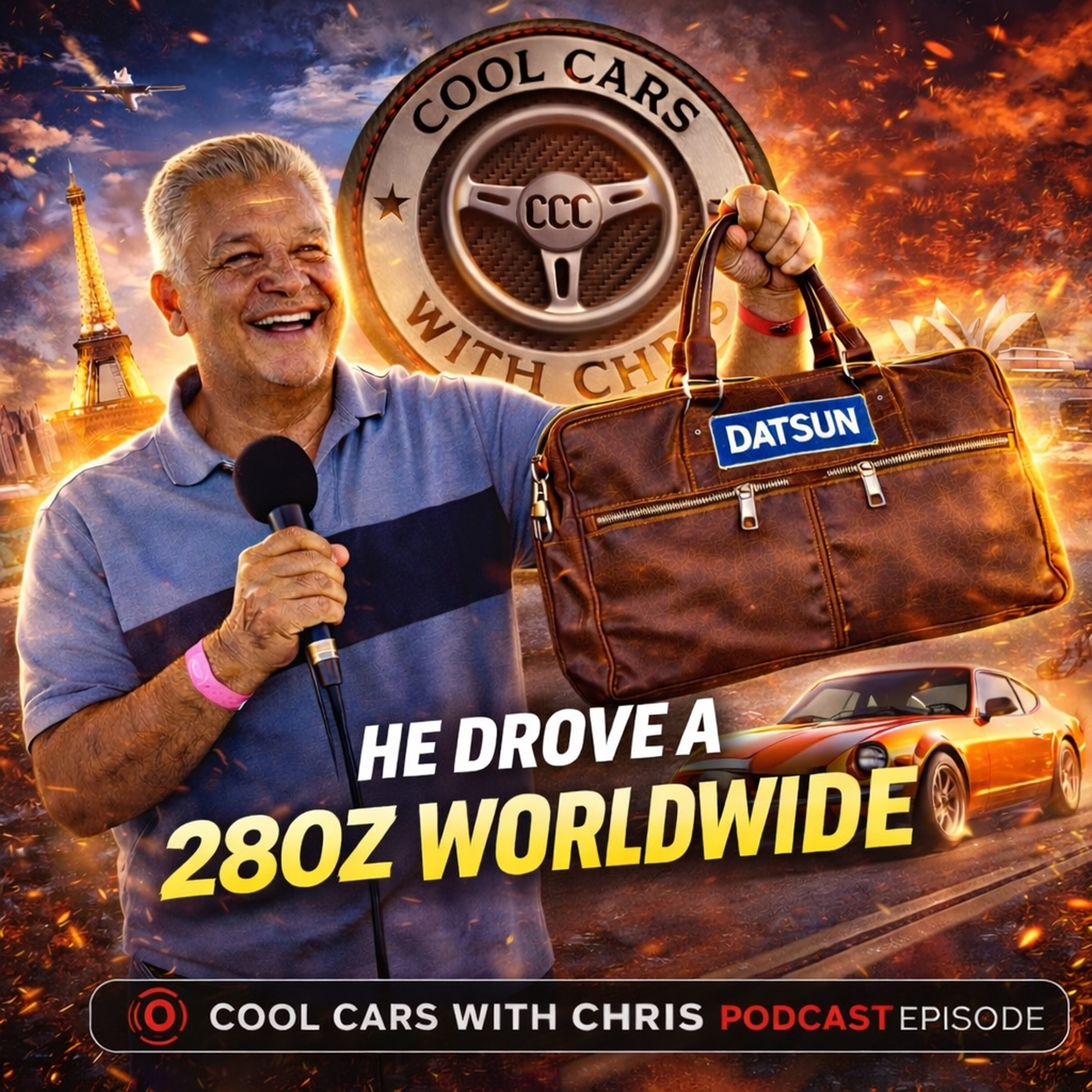
The Nissan 280Z is a classic sports car in the Z family. Manuel talks about using his 280Z for big trips, which shows how these cars can be more than just weekend toys.
The Autobahn is Germany’s highway system. Manuel’s story matters because it’s a place where cars can be pushed harder for longer stretches than typical roads.
A stick shift boot is the cover around the gear shifter. It helps protect the shifter and it’s also a place where custom leather can make the interior look nicer.
A tool bag is where you keep your tools so they’re easy to grab when you need them. The speaker is saying that if you travel a lot, having one makes life easier.
They’re emphasizing that it’s made from actual leather, not a cheaper imitation. Real leather usually feels better and can last longer if it’s cared for.
A “Z Club” is a group of people who all share the same interest in the Z-car. They help each other find parts, share builds, and spread recommendations.
An “everyday driver” means the car is used regularly, like a normal commuter car. For a classic Z, that usually means it’s been maintained and made dependable. So it’s not only for looking at—it’s actually being driven.
Restoring a classic car typically means returning it to a factory-correct or at least “as-new” condition through body, mechanical, and interior work. For Z-cars, restoration can include sourcing hard-to-find parts and deciding how original to keep the car versus upgrading for modern reliability. The guest’s timeline (“finished restoring like three years ago”) suggests a multi-year project.
The Datsun 260Z is an earlier Z-car in the same family, and the guest says they’re building a 1974 260Z. These builds often involve sourcing correct trim and mechanical parts, then upgrading reliability and drivability while keeping the car’s classic character. The “almost done” status suggests an ongoing restoration project rather than a finished, stock car.
VIN stands for Vehicle Identification Number, a unique code assigned to each car. It can be used to look up factory information like trim and sometimes drivetrain details, which helps restorers confirm what the car originally came with.
The Datsun 280Z is an old-school sports car that a lot of people love restoring. Here, they’re talking about how to keep the car looking and feeling original, but still make it nicer to drive.
A four-speed means the car has four forward gears. The speaker is saying many of these older cars started with a four-speed, but they prefer a five-speed.
The 280ZX is the later Z-car generation, and its five-speed gearbox is being used as an upgrade path. The speaker claims the original cars were typically four-speed and that the fifth gear in the 280ZX setup is stronger, making it a desirable swap.
Aftermarket parts are replacement or upgrade parts made by other brands. They can be helpful when OEM parts are hard to find, but they may change the car from stock.
This is the restoration philosophy of preserving factory-correct appearance and components rather than turning the car into a modernized custom. It often guides choices like repainting back to original colors, using period-appropriate parts, and limiting non-original upgrades.
A supply chain drop-off refers to disruptions that reduce availability of parts, which can lead to higher prices and longer wait times. The speaker connects this to classic-car parts being harder to find and “everything skyrocketed.”
They mention Tijuana as the place where the materials are made and sold. In a car context, that usually means the leather or upholstery is coming from a specific supplier.
Tandy Leather is a store where you can buy leather and leather-making supplies. People use it when they’re doing custom leather work, like upgrading seats or interior panels.
LIVE
Hey, what's happening? How are you doing today? Thank you so much for being here. I am Chris and
this is the world famous. You guessed it. Cool cars with Chris. Welcome to it. And on today's
fantastic episode, we are going back over to Willow Springs because in these next series of
episodes, there are going to be interviews we conducted right there at the track live at Willow
Springs. And if you are listening to this on an audio podcast, that is fantastic. Thank you so
much. But this will be in video form if you want to see everything that's happening, especially
in this episode right here because today we have Manuel Gutierrez and he is coming on the show to
show off his amazing craftsmanship with his vintage style leather bags he makes, especially for
Nissan and Dotsons and things of that sort. He came on the show showcasing his handbags,
made of leather. These things look amazing. They feel amazing. And of course, it wouldn't be a true
Z community without talking about Z cars. And Manuel had a 280Z. He took a thing all over the world,
which is pretty crazy to do. Think about this. You've got a 280Z and it travels with you everywhere,
including to Germany. And he actually took that car on, yes, the Autobahn. And he'll tell you
what that experience was like going to head to head against cars like likes of Mercedes,
BMW, things like that, Porsche, things like that. So here's that story. And he got a really cool epic
picture of his car next to the Eiffel Tower. I mean, who can do that? That sounds amazing.
We have all that and more on this episode. Let's go.
All right. All right. Okay. We're at Willow Springs and we're with Manuel. And
you have been in the car business for a while. You are making cool little handbags.
Yes. And they for, okay, bring your microphone up to your mouth.
Yes, we can hear you. Okay. Yeah. Yeah, you're making cool handbags. Are they all made out of
leather? They're all leather, original and deer leather, lambskin. This is my deer skin.
I started making these when I retired. I trouble a lot my Z. So you need an overnight bag. And I
I'll make my overnight bag. And this is the way I got started. And with the leftover bags or left
over leather, I started making the stick shift boots, not the vinyl that you get from the dealer
ship and leather brake handles. And this is from the original, the Jackie tool bag out of vinyl.
I go, you know what? Let's make another leather. That's actually really cool.
If you're going to travel like I travel, you need a tool bag. Wow, this looks great.
Wow, they feel good too. They feel actually real. It's all real leather, real leather, real 100%
leather. Everything has a liner in there too. No way. I'm going to have to commission you for
some in-car stuff. I'll give you the logo and everything and just, just stamp it on there.
I can make the logos. I made a helmet back for Jeff that he's a president and he wanted a special
logo from his club. And I did that too. Also for one of another guy in Los Angeles, I believe it's
just Gonzales. Anyway, I have so many customers. Yeah, can't think right now, but I can make the
logo logo. Just give me a logo. I'll take, well, have you had any issues with like, we make logos?
Have you had any issues like copyright and things like that? You know what? I live in San Diego and
shout out San Diego. Yeah, here you go. Yeah. And I just go to Mexico. So there you go.
See what it is. And I get my friend, he's got the laser, he's got the logo machine,
and I just need a good quality picture. And then we transfer from his computer to his machine,
and he does all the programming and, oh yeah, it's very simple. This looks great. This is
good stuff. This is actually really good stuff here. Yeah, fair lady. I mean, sometimes I can't
keep with all the Z models. So I just make it simple. Just make it simple. And remind us again,
when did you kind of start really kind of doing this and making it kind of a thing at that point?
After I retired like 2001, well, I was on my retirement. I couldn't afford a real travel bag,
so I go, I'll make it, and then I'll start putting logos. Yeah, there we go. That's nice. That's
how I just started and caught on. People wanted it and word of mouth and all the Z Clubs and
you build it and they'll come. Yeah. What was your first car that you, like your first fun car?
Not like anybody car, like your first fun car. My first car was a 280Z 1976. I joined the military
and I took it with me to Hawaii for six years. Spain for four, they shipped it. Or you guys,
your military or your tax dollars did. And then back to California and then I got orders back
to Germany and that's where I retired out of it. I had that car for over 20 years. Wow. So when
you're overseas, did the car go with you to stay here? No, my car goes with me. Oh, really? Yes.
I made a deal with my wife. I'd buy her a family car, but that's it. And you still have it today?
No, unfortunately, except parts of it. You know, my last duty statue was in Germany
and the snow and salt or whatever. Yeah, I stayed up too much and it was just too far
gone, but I enjoyed it. I mean, I took it to Portugal, Italy, Belgium. Wow. And over there,
it's all regular drive. We drive on the right side of the road over there, right? Yours is like
Japan or whatever. Yeah. And it's England, but I never took it to England. So right hand drive
and Africa, I never went that far. Okay, okay. So when you were out, it was basically like driving
here for the most part, but everything's in kilometers though, right? Yes, but you know,
you could do it. It's pretty simple. I don't remember the math formula. I think I might have
stayed with her. But anyway, yeah, and if you go when you're Z, don't race on the Autobahn.
Don't. Have you taken the Autobahn? Yes, in my Z. And I thought I was a cool, fast car.
That in Germany, it was Mercedes. Oh my God. They would leave me those things,
unfortunately, just they're made for that thing. Well, I'm doing 150. My car was in miles per hour
and that guy passed me up like I was standing still. Wow. That's crazy. But the coolest thing
though is that I don't think a lot of people can say like their car has really been like a world
traveler like that. That's pretty cool. It's almost like a passport stamp. You get stamps for
your car as you run around. Oh, well, you know what I did? I took it. I parked for the taxis
where you're not supposed to. And I have a cool picture of me and my car under the Eiffel Tower.
Oh, wow. What color was it, by the way? It's white. White. Okay. Nice. Nice. You got the white car
too. Yeah, in the gloves there, but that's just for ostracizing. So what's the currency?
What's your key? Right now I have a 78 that I finished restoring like three years ago. It's
my everyday driver. It's back in the tent right back there and I'm building a 74,
260Z that I'm almost done with. Oh, nice. Nice. Well, when you build that a Z, like what's the
first thing, like first modification that you try to do? I go back to the original paint.
Okay, the paint job. I'd like to go back to the interior. What was the color originally? Because
people changed colors and I'll scratch it, find out what the original color was, or take the seats
out, you'll look it. Now, back then, those days, do they have like, I don't know, now modern cars,
they have like the little like serial number or whatever. You can find the code and they had
or yes, so you're going to find out through the VIN, but I don't get that in that. I don't need to
get that detail to find out. If it was a four-speed, five-speed automatic, it's all in the bar. You
can figure it out by the wire. And what about mechanical though? Like what's your first thing
you do mechanical wise? Well, I like to keep it original, but I do like five-speed, so I put a
five-speed in. Okay, okay. And they're usually four speeds originally? Yes, and very, the old ones
came with the very weak five-speed, or to me it was. The fifth gear wasn't very strong, so I like to
keep the like 280zx five-speed to make the desire. And there's a lot of aftermarket,
you know, commissions you can buy for these? There's a lot of aftermarket, but I try to
keep my car as original as I can. Yeah, sometimes you just can't. I have mirrors, you can't, but I
go, yeah, it's a 40 mirrors. Are you, are you having, are you seeing that like any supply chain drop
off with like with certain parts and things like things that are just a little bit harder to find
now, or you can find it just about anything, but you're gonna pay a lot. Everything skyrocketed,
and I usually get my parts through a more sport. Anyway, there you go. Nice. Every source of that
parts. Well, your cell, how much are these handbags, by the way, you're selling for?
When I, me and my friend Jeff, he sells these on the internet, I think we have 70 bucks, but
here today, 40, or if I'm with somebody at home, word of mouth, 40, I'm not shipping it,
you're there, I get it. Yeah, yeah, and I don't have to deal with all the shipping,
or handling it, if I did, I usually, yeah, that were, at least made in Tijuana. Are these actually
made in Tijuana, or they made, yes, they're all fabric, they're all etched in Tijuana,
and sold in Tijuana, and I just have to buy the leather. Okay, here, or if I get a good deal,
but normally I like good quality leather, so I go to Tandy Leather, San Diego, and I,
oh, they're nice. That's great stuff, man. Well, I appreciate you stopping by today,
showing, thank you, I'll never make, showing your bags, and here for Will Springs, and all
Japan's Toyota, man, thank you so much. It's a great shoot. Thank you, Chris.
About this episode
Manuel Gutierrez stops by Willow Springs to talk about his leather craftsmanship and his legendary 280Z travel story. After retiring in 2001, he started making 100% leather overnight bags, tool bags, shift boots, and brake-handle covers—using leftover leather and adding custom logos for Z clubs and customers. He also shares how his 1976 280Z went with him through military postings, including Germany and a run on the Autobahn where Mercedes and BMWs easily passed him. He’s now restoring a 78 and building a 74 260Z, aiming to keep them original while upgrading to a stronger 5-speed.
In this episode of Cool Cars with Chris, recorded live at Willow Springs Raceway, Chris sits down with Manuel Gutierrez—a lifelong car enthusiast, Datsun Z owner, and skilled leather craftsman.
Manuel shares the incredible story of his 1976 Datsun 280Z, a car that quite literally traveled the world with him during his military career. From Hawaii to Spain to Germany, this classic Z became more than just a car—it became a passport to unforgettable experiences.
Hear what it was like driving a vintage 280Z on the legendary Autobahn, going up against high-performance European cars like Mercedes and BMW, and capturing a once-in-a-lifetime photo of his Z near the Eiffel Tower.
But this episode isn’t just about cars.
After retiring, Manuel turned necessity into creativity—building his own travel bag, which sparked a passion for crafting custom leather car accessories. Today, he creates handmade leather bags, shift boots, brake handle covers, and tool kits designed specifically for Nissan and Datsun enthusiasts.
Chris and Manuel also dive into:
The culture and community behind classic Nissan Z cars
Restoring Datsun 240Z, 260Z, and 280Z models
Keeping builds original vs. modern upgrades
Popular modifications like 5-speed transmission swaps
The rising cost of classic car parts and sourcing challenges
Custom automotive craftsmanship and personalization
Whether you're into classic car restoration, JDM legends, or unique automotive craftsmanship, this episode delivers real stories, practical insight, and passion from the heart of the Z community.
00:00 🚗 Intro – Cool Cars with Chris Podcast 00:08 📍 Live from Willow Springs Raceway 00:32 👋 Meet Manuel Gutierrez & His Leather Craftsmanship 01:48 👜 Handmade Leather Bags, Shift Boots & Car Accessories 02:32 🔧 How Retirement Sparked a Custom Leather Business 03:19 🏁 Custom Logos, Z Community & Client Builds 04:22 🚘 First Car Story – 1976 Datsun 280Z 04:56 🌍 Traveling the World with a Z (Hawaii, Spain, Germany) 05:55 ⚡ Driving a 280Z on the Autobahn Experience 06:38 📸 Eiffel Tower Story with a Classic Z Car 06:56 🔥 Current Builds – 280Z Daily Driver & 260Z Project 07:12 🎨 Restoration Tips – Keeping Classic Cars Original 08:01 ⚙️ Performance Upgrades – 5-Speed Swaps & Transmissions 08:33 💸 Rising Costs of Classic Car Parts & Sourcing 08:58 💼 Selling Handmade Leather Goods & Pricing 09:22 🧵 How the Products Are Made (San Diego + Tijuana) 09:50 👋 Outro & Wrap-Up