A pre-purchase inspection is when a mechanic checks a used car before you buy it. It’s meant to find problems early so you don’t get stuck with costly repairs.
It means you keep driving even though something is wrong, but you do it carefully so you can get home or to a mechanic. You usually drive slower and avoid stressing the car so you don’t cause more damage.
The starter is the part that gets the engine turning over. If it fails, the engine won’t start, and you usually can’t just drive normally—you may need help getting it home.
Concept
abandoned car
An “abandoned car” is a car that looks like it’s been left behind. If it’s in the wrong place, it can cause police to get involved.
The Seat Cordoba is a small car. In the episode, it was driven up a ramp and came back with serious damage, described as the car being at extreme angles. The takeaway is that small cars can get badly hurt if they’re loaded or ramped in a way they weren’t meant for.
The 1997 Thunderbird is the specific car they’re working on. They’re saying it’s hard to get underneath it to fix the starter because there isn’t much space.
Percussive maintenance is the informal practice of tapping or striking a component (often a starter or relay) to temporarily restore electrical contact. It’s sometimes used as a roadside “get-you-home” trick when a part is failing intermittently, but it’s not a real fix.
The solenoid is like a heavy-duty electrical switch for the starter. If it’s bad, the starter may not engage the engine properly, so the car won’t start.
Sometimes a transmission can push fluid out through a vent when something’s wrong inside or it’s getting too hot. If that hot fluid hits the exhaust, it can smoke or even catch fire, which can make it look like a totally different engine problem.
The head gasket is a sealing layer inside the engine that helps keep coolant and combustion gases in the right places. If it fails, the engine can start overheating or leak fluids, and it can cause scary-looking smoke.
“Limp it” means driving carefully in a way that’s meant to get you home without causing more damage. With a transmission problem, it usually means going easier so it doesn’t overheat.
“10 speeds” means the automatic transmission has ten different gear ratios. The host is saying those particular 10-speed transmissions have a known issue that may need fixing.
TH350 refers to the Turbo-Hydramatic 350, a classic three-speed automatic transmission used in many GM vehicles. It’s known in the enthusiast world for being common and relatively straightforward, but like any automatic, it can still fail in ways that overheat and vent fluid onto hot exhaust.
A 10-speed transmission is an automatic gear box with ten different gear settings. It can make the car shift more smoothly and keep the engine in the right “sweet spot,” but it’s also more complex than fewer-speed setups.
A service bulletin is like an official “how to fix this known problem” note from the car maker. Shops use it when a certain issue keeps happening and the factory has a specific repair method.
“Known issues” means the problem isn’t a one-off mystery—it’s something people have seen before. Usually, shops know what to look for and how to fix it because it’s happened to other cars too.
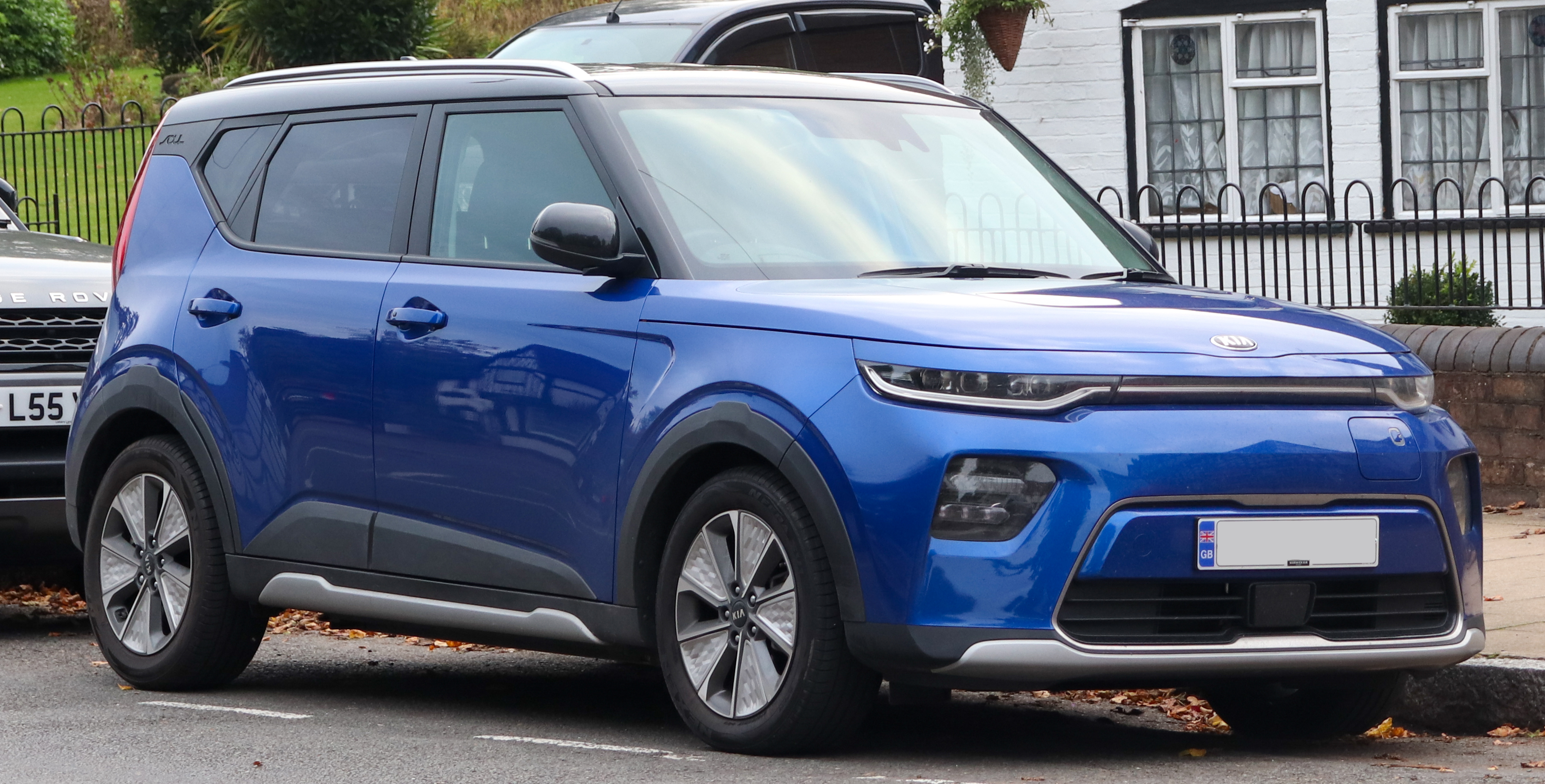
The Kia Soul is a small car with a tall, boxy shape that’s meant to be practical and easy to live with. The podcast is talking about how the older versions feel more “right” to the speaker than newer ones. It’s basically a comment on the car’s personality and design changes over time.
Transmission problems mean the car’s shifting/gear system isn’t working right. If the transmission is acting up, it can make it hard—or risky—to drive home.
“Limping” a car home means driving it only as far as needed despite a developing mechanical problem, usually to avoid towing. The key is monitoring warning signs (like oil pressure) and avoiding actions that could turn a manageable failure into a catastrophic one.
“51 Chevy” means a 1951 Chevrolet. They’re using it as an example of what to check when a classic car starts acting up and you’re trying to get it home safely.
Oil pressure tells you whether the engine is getting enough lubrication. If oil pressure is still good, it’s a sign the engine may be safe to keep running for a short trip.
“Dropped a cylinder” means the engine is no longer firing properly in one cylinder, causing misfire and rough running. It’s a serious sign during a limp-home situation because continued driving can worsen damage or quickly make the engine unreliable.
They’re basically deciding whether it’s safe to keep driving by thinking through the risks and watching the car’s gauges. If the situation is getting worse, the safer move is to stop or change plans.
Transmission temp is how hot the transmission fluid is getting. Too much heat can hurt the transmission, so watching the gauge helps you decide whether it’s safe to keep driving.
The radiator helps keep the engine from overheating by cooling the hot coolant. More airflow through it means the engine can stay cooler, especially in traffic or at low speeds.
Idling means the engine is on while the truck is stopped. The host is saying it ran hotter when it wasn’t moving, because the radiator didn’t get enough cooling airflow.
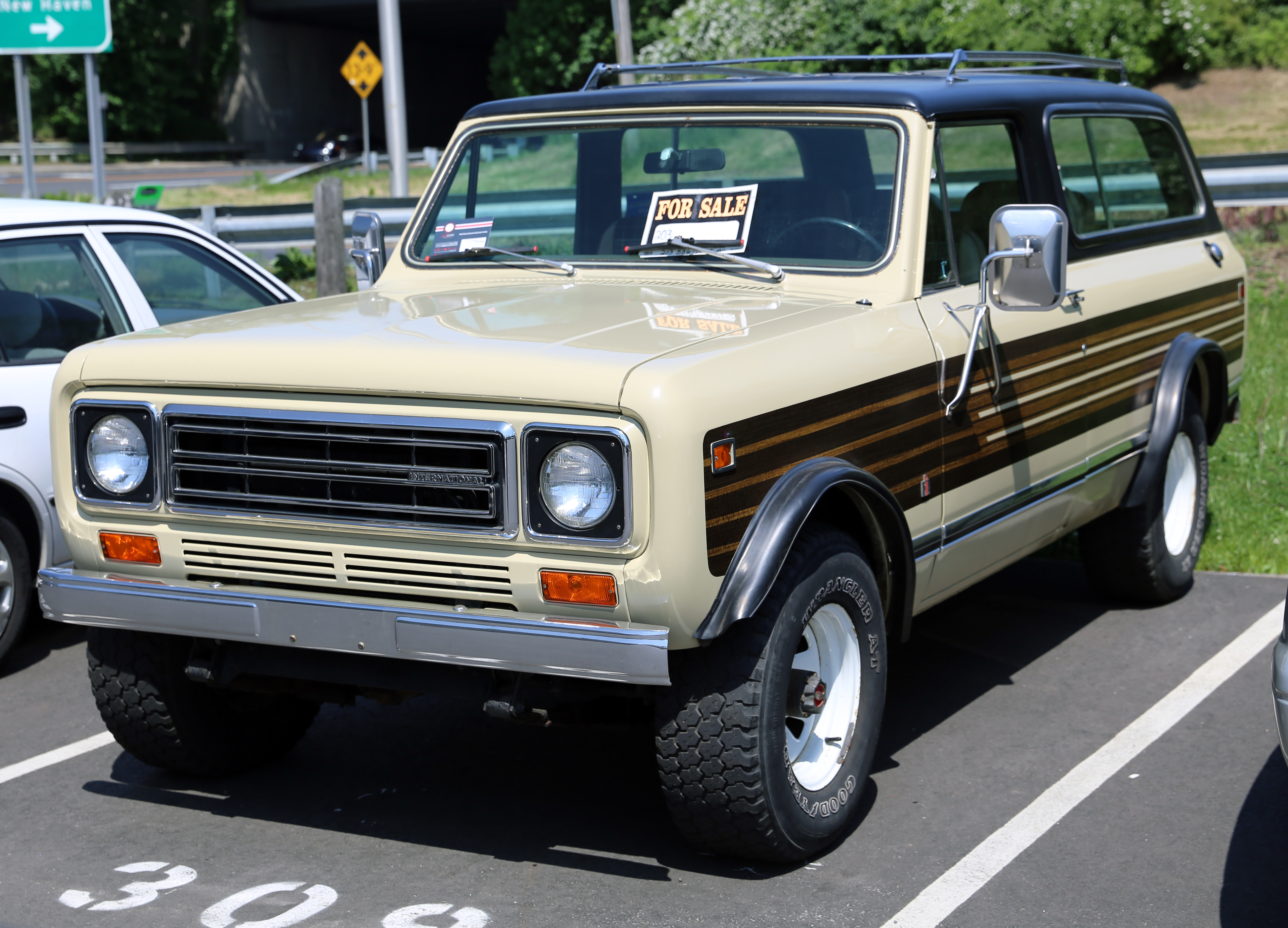
The International Harvester Scout is an older American 4x4. Here it’s mentioned because the brakes failed, and they still had to drive it carefully to get help or reach safety.
The Dodge Power Wagon is a tougher, off-road-focused version of a Dodge pickup truck. The podcast says that when they first got theirs, it had some problems. The point is that even rugged trucks can need attention when they’re new to the owner.
A gas tank is where your car stores fuel. If the tank is damaged or corroded, it can leak fuel and you can run out of gas unexpectedly.
Concept
running out of gas
Running out of gas means there isn’t enough fuel for the engine to keep going. If fuel is leaking, you can go from “fine” to “empty” pretty fast.
Term
coasted
Coasting is when you’re just rolling forward without pushing the gas. If the engine isn’t getting fuel, coasting may be how you get to the side of the road or a parking lot.
The alternator is what keeps the battery charged while the engine is running. If it breaks, the battery slowly dies, so the headlights get weak and the car can’t start.
Car
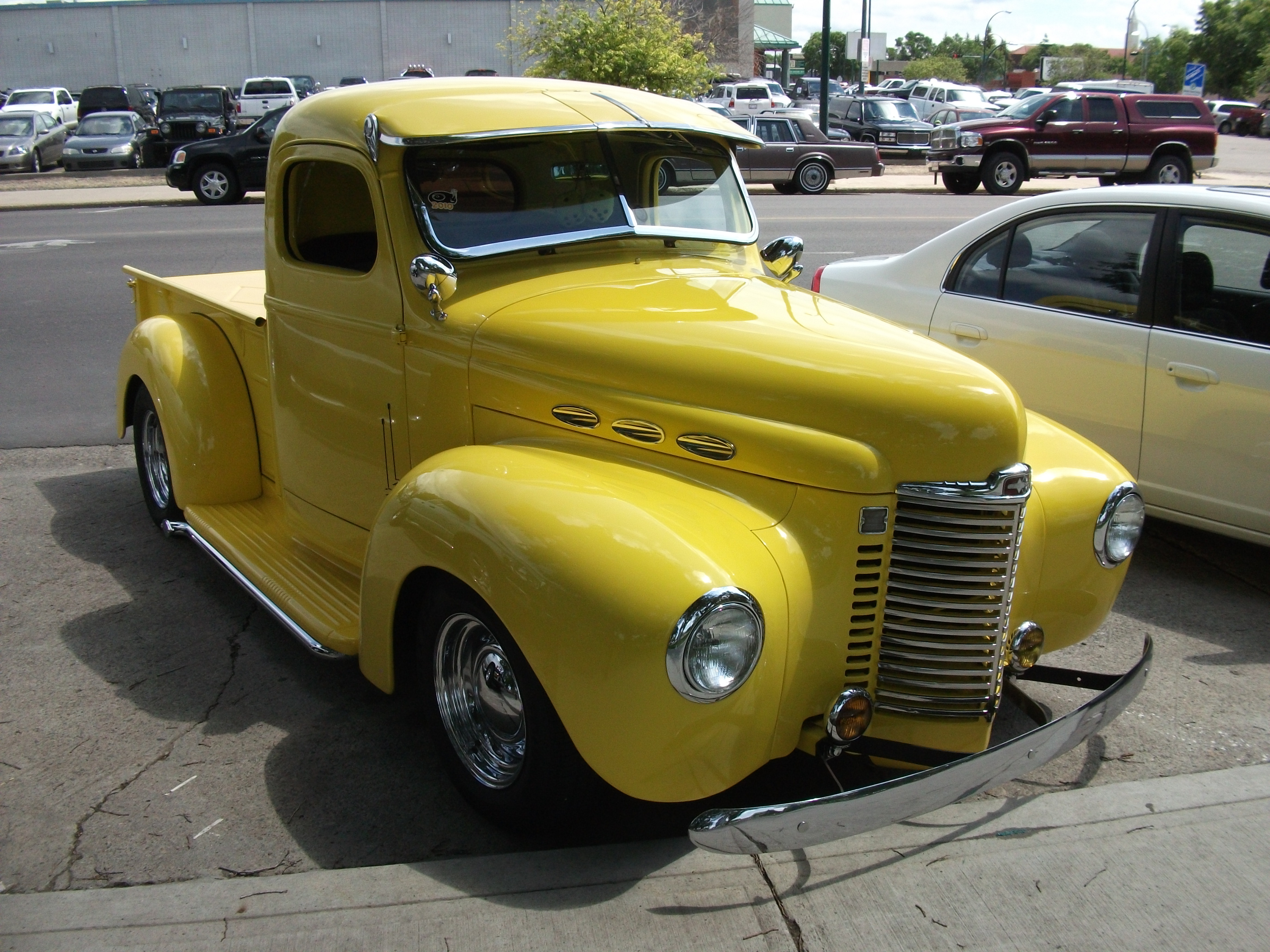
International pickup
They’re talking about a 1974 International pickup where the alternator failed. When that happens, the battery runs down fast, so the lights get dim and the truck may not start again.
The battery is the car’s stored power. When the alternator fails, the battery has to run everything, and eventually it can’t provide enough power to start the engine.
Push-starting means you get the car rolling and let the wheels turn the engine to start it. It’s a common trick when the battery is dead and the starter can’t crank the engine.
A generator is an older type of charging system that makes electricity for the truck. They replaced it with a one-wire alternator setup to get better charging.
Part
Dibber switch
They replaced a headlight-related switch so the headlights would work consistently. The switch likely controlled when the headlights were allowed to turn on.
AAA is a membership that helps you if your car breaks down—like towing or roadside fixes. Some people don’t carry tools because they expect AAA to handle it.
Low Earth Orbit satellites are satellites that are closer to Earth than many others. They can help your phone or device connect even when normal cell service doesn’t reach.
Ratchet straps are strong straps with a ratcheting handle that you tighten to hold things in place. People use them on trailers to keep loads from moving around.
Concept
PM
PM means preventive maintenance. It’s the routine scheduled work you do to prevent problems before they cause a breakdown.
Radials are a common type of tire construction. People often switch to them because they can last longer and handle road use better than older tire types.
Bearing buddies are grease-filled caps installed on trailer wheel bearings to help keep them lubricated and reduce contamination. They can also help manage pressure changes around the bearing, which is why trailer owners often use them to fight premature bearing wear.
The Chevrolet Corvette is a sports car built for speed and handling. It’s not designed to be treated like a heavy-duty tow vehicle. The podcast is basically saying that if you’re towing something, don’t expect the Corvette to handle it the way a truck would.
Limp mode is when a car “gets cautious” and limits what it can do. It usually happens when the car senses a problem, so you can drive it carefully to get it fixed.
A U-joint is a small joint in the driveshaft that lets the power keep going even when the wheels move up and down. If it goes bad, the car can start shaking or making noise and may not drive smoothly.
A driveshaft is the part that sends power from the transmission to the wheels. If it’s damaged, it can vibrate or fail, so it’s not something you want to “jury-rig” for long.
The oil light is a warning that the engine oil isn’t circulating or pressurizing correctly. If you ignore it, the engine can overheat and get badly damaged because it won’t be lubricated.
Oil starvation means the engine isn’t getting enough oil to keep everything lubricated. Without lubrication, parts can wear or seize fast, leading to major engine damage.
“Blowing the motor” means the engine got so damaged that it can’t run normally anymore. In this case, it sounds like the engine didn’t have enough oil to protect and lubricate its moving parts.
The oil cap seals the opening where you add engine oil. If it isn’t put back on, oil can leak out while driving, and the engine may not get enough lubrication.
Electric cars can only go so far on a full charge. That means you often have to plan where you’ll recharge before you leave.
Concept
electric mandates are starting to go away
They’re talking about laws that push automakers toward electric cars. If those rules change, companies may sell more hybrid versions instead of only fully electric ones.
Electric cars use electricity stored in a battery to move the car, not gasoline. The point here is that they can work really well when your daily driving is predictable and you have charging options.
Range anxiety is the stress of wondering if your electric car has enough battery to get where you’re going. It usually shows up when charging stations are scarce or your trip is longer than you’re used to.
A power grid is the whole system that brings electricity to your neighborhood. If lots of people try to use a lot of electricity at once (like charging cars), it can overload the system and cause problems.
Instead of one electric motor doing all the work, a four-motor setup uses multiple motors. That can help the car launch quickly and grip better because power can be sent where it’s needed.
A warranty is the manufacturer’s coverage for repairs. If you change things in a way the company doesn’t approve, they may refuse to pay for related problems.
This is the kind of electricity many homes use for appliances. Using 220–240 volts for charging can let the EV charge faster than using a lower-voltage outlet.
“Void warranties” means the warranty won’t cover the problem anymore. If you do something the manufacturer doesn’t allow—especially with charging equipment—they can deny coverage.
A Snap-on dealer sells Snap-on tools, which are aimed at professional mechanics and trades. Here, they’re comparing the price of a replacement part/tool from that dealer versus a cheaper option.
“Unsafe to drive” means the vehicle condition is risky enough that you shouldn’t drive it. In this case, the front suspension is damaged, which can make steering and handling unreliable.
The front suspension is what connects the front wheels to the vehicle and helps them stay planted on the road. If it’s damaged, the car can handle unpredictably and be unsafe to drive.
An engine swap means taking the old engine out and putting in a different one. It’s more than just bolting it in—you also have to connect the fuel, wiring, and other parts so the car can run.
A horizontally opposed engine is one where the cylinders sit on opposite sides of the engine. The pistons move opposite ways, and that layout can change how the engine fits and works in a swap.
Term
nail head
“Nail head” is a nickname for a specific kind of Buick V8 from the 1950s. They’re using it to say which engine style they mean for the swap.
This is a Buick from 1971 that was built to be a bit more performance-focused than a regular Buick. Here, they’re using its engine to power another project car.
The Dodge Charger is a larger car that’s built to be fast. People often modify them, including changing or upgrading the engine. In the podcast, it’s mentioned because a 5.7 Hemi engine can be installed into them as part of a build.
A “panel wagon” is an older wagon-style vehicle meant more for hauling than for visibility. The host is saying it might be a good project, but it could be hard to see out of.
A “barn find” is a car that’s been sitting unused for years and gets discovered later. It can be exciting, but it may need a lot of work to get running again.
A “trailer queen” is a car people mostly show off. It’s often not driven much, so they load it onto a trailer to take it to events.
Concept
weekend racers
“Weekend racers” refers to cars built or set up primarily for occasional track or autocross-style events rather than daily commuting. It signals a build that prioritizes event readiness and driving feel over long-term comfort or convenience.
A “parts car” is a car you keep mainly to take pieces off it for another project. It might not be running, but it has parts worth saving.
LIVE
Welcome back to B Squad. Tonight we've got Jim and Gail and Muddy and Daniel with us.
I'm flying with them tonight, so it should be a good show. And we are talking limping your car
home. And there are no shortage of stories on when you should and should not do it. So,
is it fair to say that everybody here has some experience in that arena?
Oh yeah. More often than I'd like to think about. Occasionally? Not often, but occasionally, yeah.
I would like to not jinx myself with the couple big cruises we have coming up,
so I'm going to say that no, they always come home in good condition.
If you would like stickers for your toolbox, your car, or any other place, send us your mailing
address and we will send you some stickers for free because everybody loves free stuff.
B Squad is, at its core, a roundtable discussion of the four of us who are admittedly rank amateurs
in the car world, trying to figure our way into hot rodding.
Four states, three time zones, two sets of brothers, once a week of a meet and bolt of hot rod.
For B Squad Hot Rod, this is Lefty, this is Train, this is Hollywood, and this is Woodchuck,
because A Squad has a TV show. Legal disclaimer, if you try anything we talk about, that's your fault,
not ours. Okay, I figured that this would be a fair topic because I recently had to make the
decision on whether to limp my daily driver home. It sounds like Muddy's got a story from
even more recently than mine, so Muddy, why don't you start about having to limp a car home?
Okay, so yesterday I took my kids to a party in the Thunderchicken. My wife was there in the truck,
setting it up for a friend of ours, I parked in my friend's yard. I'm in the yard like everybody
else. The starter went out on the Thunderbird. I can't get it to start, so she sends me home
in the truck and gets a ride home from her friend. Today, I'm just sitting around the house and
suddenly my daughter calls me freaking out. Apparently, the county sheriff called her looking
for her mother because the car is registered to her mother, and it's an abandoned car in the woods.
It's not in the woods, it's in my friend's yard, but it's by the woods. So the police department is
all out ready to go searching for a dead body out there, all because of a stupid $30 starter.
I'm a little upset with the police department at the moment. I have to go get the car tomorrow
after work. I'm going to drag it home on my neighbor's trailer. In order to borrow his trailer,
I helped him get his 51 shoebox timed and running right today, but I'm really, really,
really mad at the police department at the moment because they stared my daughter and
she's just stayed away. What's she going to do? I'm totally taking this orange cone here.
Why did they call your daughter? Because they couldn't get ahold of my wife because she was at work.
Why didn't they call me? I have no clue. Why didn't they call the homeowner? No clue,
but they called my daughter instead. Okay, that just seems odd to me.
Me too. Yeah, especially if they're looking for a body in the woods.
Well, to be fair, my daughter is going to school to be a forensic investigator and she's about
to graduate into a police department there in Oklahoma, so maybe she could help, just not today.
There's no way they would know that.
No, there's not, but I'm trying to justify it in my mind and that's the only thing I can come up
with. I mean, actually, it sounds like your daughter will be more than qualified to hide a body
in the woods to me. I've met her boyfriend. I hope it happens. I didn't say that out loud.
We just got put on another list. It's already on every list there is. I don't know.
Now, in all fairness, this doesn't actually sound like a situation where you have a choice to drive
the car home or limp at home, though. Oh, no. The last time I had to limp one home was when I ramped
the Cordoba and came home with 45-degree angles higher. But that's been a couple years.
Okay, but here, that's a valid point. What was the thought process that led you to decide it was
okay to limp at home? Not a lot of choice because I was downtown and I was only about two miles from
the house. I wasn't going to pay a tow bill to get it home, not for two miles. So like a half tank
of gas and a full helping of pure hope? There was a lot of hope and my daughter was all excited
about the other daughter being all excited about being airborne and really wanting me to do it again.
I love her. Classic.
See, I don't think that one qualified, though, buddy. I'm sorry. You know, dead starter, it won't
start. No choice. I know. I was going to crawl under it and try to get under there with the
screwdriver and start it, but I didn't take any tools with me and the car is only three inches
off the ground and I'm a fat boy, so there was no problem. Yeah, the logistics of that,
having seen you and the Thunder chicken, which for the listeners out there, you know, all three of them,
buddy is the biggest person in the whole group and I mean by a lot.
I'm not the fattest. I'm just I'm the tallest and I'm fat.
I didn't say fattest. Settle down. I said biggest.
Point is, yeah, there was no fitting under there.
Two door. Is it 90s or late 80s? It's 97. 97 Thunderbird, which looks like every other compact
from the late 90s. Yeah, there's no room underneath. I'm a small guy and I don't think I could fit under
there. See, I'm probably the smallest person in the group and I couldn't. You definitely are tiny.
That is a thing. Yeah, all in scary, small and scary. So it's like a rabid swallow.
That was the one question I had. Did you try percussive maintenance on the starter?
I kicked the tire and yelled and screamed and said words that my sons shouldn't hear.
Well, again, can't reach it. I'm seeing you're thinking, you know, it's the 97's for Thunderbird.
That has to steal me, Solenoid. You don't even have to get underneath with a screwdriver.
You know, this one actually has the mount to this. Oh, it does. Yeah, it's the first year
where they mounted to the starter. Yeah, hammered it. I got all excited thinking it was going to
be an easy fix. Two bolts and, you know, change some wires and nope. See, my question is what
friend of yours didn't have a jack handy. I think you need to reevaluate your friend's list.
This is, well, I can't explain this woman in details. It makes sense, but I can't explain
her husband as being a lot like my daughter's boyfriend. Oh, and it's important to note that
there are two kinds of friends. There are the friends where they're the ones who have tools
and they're the friends that you're the people they call when they have car problems. And
if you broke down the second kind house, it doesn't help. They got nothing. That's exactly what happened.
Steve, you said you had a recent one. What do you got?
So we were driving back on a work trip for my wife. It was an eight hour trip about halfway
in between. My transmission decides to spew fluid out the top vent and onto the exhaust and it
looked like I blew a head gasket as I was traveling down the interstate, which was all
sorts of interesting. We limped it into a shop in Casper and I'm going to give this guy a giant
shout out. Big Al's car repair, I think? Big Al. So right off the interstate, technically south of
Casper, but it's actually East. I-25 kind of turns right at Casper. But I took it in there. It's like
late Thursday afternoon. I'm going, hey, dude, do you have time to look at this and see if
I can make it home or if I need to make other plans? He drops everything he's doing, looks at
it for like two and a half hours, adds some fluid to it and says, I don't know what's wrong. I think
you can limp it the rest of the way home. And we're looking at five-ish hour drive. But he's like,
yeah, I hope you make it, dude. And he charged me for one hour of labor and the fluid he put in it.
And I said, hey, dude, you looked at it for two hours, at least charge me for two hours of labor.
You literally dropped everything you were doing. And he said, no, it's fine. And then a week later,
he called me and he's like, hey, did you make it home? Just wondering how it turned out. So
yeah, one man shop, big shout out to Big Al. Thank you for that one. So yeah, those four 10 speeds,
they've got known problems and it's headed into the shop at the end of the month to get that fixed.
But I had a bed full of 2x4s. My wife, who was really not happy inside and a bunch of groceries,
and it's like, I don't want to have to try to change cars right now.
So a lot of that same desperation and hope, I think, went into my decision to limp it home. And
it actually did fairly well. It just was not happy if the transmission got over about 200 degrees.
It started acting really poorly. So that exact same scenario happened to my best friend in a
square body Chevy, 305 TH350. And it burped out all the transmission, well, not all, but enough
of the transmission fluid onto the hot exhaust that it burned the truck to the ground. And he
was out in the middle of the woods and just had to sit and watch it burn. Oh, ouch. Yeah, we're
really thankful. It did not do that. Yeah, car fire is bad. I did happen to put out a car fire
earlier this week, but that's an entirely different story. If we have time, we'll get that
to that tonight. All I can think is that there needs to be an option for a 10 star review for
places like Big Al's, Transmission and Casper, Wyoming, because those places are amazing. And
you just, you don't find them near often enough. I agree. 100%. And I said, Hey, any time you want
to come on and just talk cars. And that's open invitation to advertise you to all of our three
listeners for helping us out, because that's the kind of car people we need. And just giving
a word of mouth is a huge thing for businesses like that, except for when everybody goes in and
expects the exact same treatments you've got. It directly depends on how you treat them,
how they treat you. On a service call, I have two prices. I have the, okay, you're a good person.
This is the price. And I have, Oh God, I got to deal with you. This is the price. All of a sudden,
I'm terrified when I get the bill for you coming up to service my doors, buddy. Well, we know you're
got the family with you. This is your daily driver. It's the one you buy because it's supposed to be
reliable. That pit in the stomach feeling is just terrible. Yep. And Jim told me something important
and I heard it from several other sources. And that's, you don't work on your daily driver because
that's what you want to do. You got better things to spend your time in and effort on. Go have the
shop look at it and let them deal with it. So that's what I decided to do. Of course, all that's
post-limping at home. And of course, what they said at the shop directly influenced on whether
that truck was staying around or not. Because it's also having the infamous cam phaser problem that
Ford has neglected to fix for well over a decade. Well, yeah, I know. They circle their problems.
That's why this is pretty global. Yeah. That's the solution on that truck is I will dump a bunch
of money in the bed and take it into the shop. And I love the shop here. Don't get me wrong.
And they're fair, but it's going to take a bunch of money. And I'm going to do that,
take in the shop and they're going to make the money and the problems disappear and
everybody's going to win out of that deal, I think. I can spend the time working on something I
enjoy working on. Right. Like the first, what, 300 episodes of this show you guys were constantly
talking about involuntary maintenance. Yep.
Maybe that needs to be the title of this episode, involuntary maintenance on the go.
I did voluntary maintenance today. Does that count? No, not at all.
Counts is doing more than I did, which is why you're really on a squad.
Jim and Gail, that's actually one of the primary reasons I initially invited you to
come beyond the podcast is you guys have helped out more than your fair share of people get
home in their cars who have failed. And a lot of times it was cars that weren't in the best
shape to begin with, but usually of the broke college student ownership variety.
And don't get me wrong, I was there too. In fact, the car I was driving while I was a
broke college student, Jim, you found for me. It ran. still runs. It needs a little
TLC, but those Toyota trucks are not bad, especially the ones out of the 80s.
We just have that tendency to, well, we have the tools and we have the trailer.
So if people are broke down nearby, they'll call us instead of calling a tow truck,
or they'll call and say, hey, this is happening. What do you think?
The number of cars I have troubleshot by phone is somewhat crazy, I think. It shouldn't...
It's hard to do unless you can see and hear it yourself. So when answering questions, it's like,
okay, you got to better than even odds that this is going to be your problem.
But you can't ever be sure. And I always hate the idea that I might be leading someone down the
wrong road because I'm not there looking at it. But when you're doing it over the phone,
that's about the best you can do sometimes. The reason I laugh is it's a game to me to hear
his side of the conversation and guess who he's talking to about what car.
And I'll tell you about 80% accuracy. Well, honestly, I think that just speaks to the
caliber of people that Mad View and her are is because from my own personal experience,
not too long ago at the last FEMA, when all the flights got jacked up and had major catastrophe
going on with my sister, where I need to get home super fast. In a heartbeat, I had absolutely no
doubt in the back of my mind that, hey, I need to get back home now. And I can't get flights
because they were canceling everything because of the shutdown or whatever. You know, take the
war wagon, bring it back when you're done. You know, it would have been that simple because
that's the kind of people you are. And I for one just want to say I see it and appreciate it very
much. It's what you do. I mean, everybody, our culture is always that way. You're going to be
the next person to help somebody because somewhere down the road, you're going to need it. And it
always worked out that way. I've just a culture I've always been happy to be part of.
But you and Big Jim and Cheyenne Wyoming. Big Al. I don't know if it's the same
people, but Big Al also has a towing company. And so I recognize Big Al's towing. See, I recognize
Big Al from happy days because Big Al and Fonzie bought Arnold's, which I'm showing my age there.
There's also a Big Al's in Cheyenne and it's an exhaust shop. So, you know, it's like
there's a lot of people named Al who decide to dope in card shops.
I guess so. Yeah. And I don't know if he does towing, but it is literally a one-man shop. I asked
him about it. And he's like, no, it's just me. And he's just sitting there off the interstate
by some truck stops and has a fair amount of business and treats all of his customers right.
I tell you what, so. Well, and I think, you know, your situation is a perfect example of that.
I mean, we're car people, we work on our own stuff, but a 10-speed transmission with known issues
that you don't have access to service bulletins on and how to properly repair it is beyond that
scope of an average B-squatter, you know? Yeah. Oh, it's beyond us too. I mean,
that's when we would take you to shop in a heartbeat. Yep, for sure. And then drop it off and then go
buy a not Ford. Just saying. Exactly. I have. Yeah, I was looking at future daily drivers.
He's happy photos. Yeah, none of them were born after I was.
Yeah, that's the way it should be. I am a firm believer that the car culture,
not the car culture, the car industry died around 1980 and anything newer than that just
doesn't have a soul. I mean, maybe not, but you know, the truck I just drove back from the lake
has 327,000 miles on it, but it's still going. Yeah, but it's a dodge. It's going to last forever.
Well, I mean, it's true. Tell the body rough, soft, because that is still a thing.
Yep. So getting back to trying to limp cars home, Mav, Gail, what are kind of some of the
things that you would look for? Because I'm looking back on what I did, transmission problems.
I knew my engine would make it, but that's one more thing that was kind of going wrong.
And there's a stretch there of, I guess, and well, we didn't go the real desolate route, but
there's a whole lot of nothing in that five hours. You didn't go through hell's half acre, huh?
Yeah. And when I mean nothing, I'm not just not large cities. We're talking Tulane Road and
Sagebrush for a long, long way and then a small town that consists of one street. So the street in
the bar, Gail actually has, Gail with the 51 Chevy is probably one of the best examples. No,
let her tell this story because it's really what you look for if you're going to decide to limp
something home. So I took the 51 Chevy to the gas station. It was low on gas. I don't remember.
I don't think we'd even worked on it. I just, I drove it to the gas station to get gas.
As I am pulling out of the gas station, there is a loud bang and I picked up a nasty vibration.
I am four miles from home. Oil pressure's still good. I can accelerate
because I was doing 30 and I made it up to 50. I'm on a 55 road, so I haven't dropped a cylinder
because I do still have oil pressure. I checked it probably 20 times in five miles.
I wasn't leaving a trail behind me. Whatever I'd broken, I'd hurt broken. I wasn't going to get
any worse. It's a 216 inline six. I could get another one if I have to. I didn't have a spare
for that time. But the whole time I'm doing the math, how much worse am I making? Am I causing,
how far do I have to go? Can I get there yet? I'm meanwhile also going through my options
if I'm going to have to trailer it, but I'm on a 55 road and I don't really want to leave it on the
side of the road. Get somebody in with the trailer, get it hauled home. So I drove it the
rest of the way home. It turns out that I broke, well, I didn't break. I was driving the car when
it broke. It's an old car. It's a 70-year-old car. It's after one of the four vanes off of the fan.
So the fan was now three instead of four vanes, which is where my vibration came from. Got it
drove it home, no problem. Still had a real pressure because so I'm doing the math on this
the whole time going, well, how much worse am I going to make it? How much more expensive is
it going to be if I drive it home? Am I actually putting anybody else at risk? No, because I'm not.
I mean, if I had total brake failure, I would not drive it home because not only am I putting
myself at risk at that point, I'm putting everybody else at risk. So I was doing the math on,
I guess the question is, is it going to make it? How much worse is it going to be? How expensive
is it going to be if I keep driving it? Am I putting myself or everybody else at risk?
And it's all a big matrix about that. It did turn out that I tore up the bearings in the
water pump, so we replaced the fan. I was going to ask you how your temperature was going.
Temperature was fine, actually. It was in the normal range, but it doesn't have a fan trout.
It didn't come with a fan trout. So it was still had apparently plenty of cooling.
Yeah, I was checking all of my gauges, but it was really the oil pressure I was obsessed with
while I was driving it home. And then we did eventually find the dent in the hood from the
bottom because it hit the hood. I thought it hit the inner fin. Oh, but it hit the hood.
So yeah, we ended up replacing a what $35 water pump. The fan actually cost more than the water
pump. But yeah, at least for me, it wasn't a one-time thing. I've made the decision. I'm doing
it. I kept looking at it and kept reevaluating the situation the whole time to see if I needed to
change my plan. And I'm sure you were doing the same thing when you were driving, Steve, where
you're going, is it getting worse? Well, you were watching your transmission temp and you knew
as long as you kept it under 200, it seemed to be okay. Yeah, so you were reevaluating it as you
went to. Yeah, I think that's a huge part of the matrix you want to keep in mind and not get locked
into, okay, I'm living at home, so I need to make it all the way home. But I definitely had a feeling
of I'm in the last major city before I get home. So it's kind of a not a complete point of no return,
but a point of you're about to make life very much more difficult if you're wrong on this one.
And I thankfully did not pay for what looking back is a questionable decision.
I don't know if I'd do the same thing again. What I would have done, picked it
up from the shop knowing that probably it would make it. And I would have driven it around town
for 15 miles or so, decided if it seemed to be okay, and then probably made the call and gone home
to driven it home. So that was one of the things I did. My wife was navigating for me. And she's
like, well, if you don't want to take the interstate, you know, jump off here and we can go around,
we can go through Casper and do all that. And I'm like, no, I want to jump on the interstate and I
want to do 80 or whatever it was. Maybe it's 70. Yeah, whatever the speed limit was there.
I'm like, because that's as hard as we're going to push this truck. And if it breaks then,
then we know. And we're still here in the last major city. And it handled that just fine.
It did not appreciate idling. The temperature climbed very quickly when I was actually driving
through the city. But as long as I had air moving through the radiator, it seemed to be much,
much more happy. The other thing that has greatly changed the attitude both directions
is the advent of cell phones. I remember being out, there's actually with my father
years and years ago, and we were out in the hills. And he lost the brakes on his international
harvester scout. And we made the decision to drive it in. But it's not like we had a cell phone
or somebody to come get us. The only other choice would be it would have been to walk in.
And, you know, you can go a long way with downshifting and no brakes. But would we have made
that same decision if we had a cell phone and a friend with a trailer who could have just buzzed
out and got us. And the other end of the other reason that I say cell phones change it is now,
you knew, you know, when you let us know, and Travis know that you were having car problems
even when you were in Casper. And if you had really run into problems, I would have thrown
the trailer on the truck and come up and gotten you. But you still had a way to contact people.
So that I think that weighs into the equation a lot to the advent of communication.
I think you're 100% right. And other than the other route home being more desolate.
The other thing I was thinking of was there's a stretch in there for depending on the day 50 to
70 miles that there is no cell phone service. And again, nobody's out there either. In that 50 or
70 miles, I would expect to pass, especially that time of night, 10 to 15 cars going the other
direction, like nobody out there, right? So yeah, that that is a huge factor nowadays. I guess I'm
old enough that I started driving without a cell phone, right? I kind of grew up in that time that
cell phones were just coming onto the scene. And they were expensive enough that teenagers didn't
have them. And if you did, you were not allowed to take them, you know, to class or, or anywhere
like that. So yeah, it is definitely changed, changed that matrix helped a lot of people out,
I think. Yeah, yeah, it does definitely make a difference in decision making.
I was just sitting here listening to your matrix. And I realized,
evidently, I am definitely always been the most irresponsible one of the group because my answer
has always been, is it still moving? And that is as far ahead as I think.
Oh, I, I guess I'm sorry, I don't go ahead. Oh, I was another example of the, the Dodge
truck, my power wagon, when we first got it, we had, it had some issues with gas tanks. And we
thought we had the metal one was completely rotted and we thought we got the plastic one working.
And it did for a while. I drove it to work, I drove it most of the way home, we stopped at
Taco Bell, and I ran out of gas in the Taco Bell, actually pulling into the Taco Bell parking lot
I coasted the last 50 feet. Because I drove 40 miles on 14 gallons of gas because most of it
ran out. Did I look at this and go, well, I know how fast it's leaking, did we call a friend and
go bring us five gallons of gas? Yep. We picked him up on the side of the road a couple of times.
It's like, hey, we know what the problem is. Can you bring us five gallons or even two gallons
of gas and I can get to a gas station, fill the gas tank back up and drive it home. Yeah,
it's that it's going to catch fire while you're doing that really low actually gas and movies
the stock gas is really hard to just set on fire that kind of a way of, oh, was it still moving
Yes, it's a lot. Yeah. Daniel's statement made me think of one way back when I was still a teenager.
I had a 74 international pickup and the alternator went out in the middle of the night and I'm
cruising home and the headlights are starting to fade really bad. But I'm in town so there's plenty
of lights around so I don't need them. And I'm again a mile and a half from the house, you know,
I'm going to make it and life is good and suddenly the blue lights come on behind me
driving with no headlights that get pulled over and of course the car won't start after that
because the battery is now completely dead. So I got to ride home in the back of a cop car and
go home the next back the next day with a new alternator and swap it out. I may or may not
have allegedly driven home the 37 with no headlights. It was dusk when we started. It wasn't
really dusk by the time we made it home. I can neither confirm nor deny but I can't say she
pissed a lot of people off. That was probably not a good choice honestly. I probably should not
do that but I actually at the time I thought I was going to get home was still dusk not actually
as long as you can still see who cares, right? Yeah, I couldn't. They were driving no allegedly
driving behind me. The 37 is tall enough that they just rode close behind me and shown their
headlights under my truck so I think where I was going. Yeah, yeah, it was. Nothing happened. It
went fine but yeah, probably wasn't the better choice. That was right after you popped the
clutch on that, right? To get it started. Oh yeah, we push started it. Yeah. Yeah, we did. Yeah,
and to do that with a ton and a half truck. Yeah, kudos to you, Gail.
And I say that because Jim and I only had to push it. I think we had to do it twice.
You almost got it on the first time and I think we had to push it a little bit further
and yeah, you had it up and going. Well, the motor on that thing runs really well
and when we got that one home we replaced the alternator with the one wire alternator,
the generator with the one wire alternator. And replace the Dibber switch so they actually
had headlights all the time. So I've got a very similar story. My uncle and I got stuck and this
was decades and decades ago, really kind of before that cell phone time, stuck in Joe's Colorado.
And if you haven't heard of Joe's Colorado, that's because nobody else has either except for
probably the two listeners I know of that kind of live in that desolate area of Colorado.
But we were coming back from a hunting trip and lost an alternator in a Toyota pickup,
not unlike the one I have. And we limped it into Joe's and it died literally in front of the bar
that was still, or liquor store actually, that was still open, thankfully, because it was like
20 degrees below zero. And yeah, we really lucked out on that one. We were driving home and we
passed three cars, had to turn the headlights back on for those cars, but other than that,
we were driving in the dark. I can say that for sure, because the statute of limitations is
way beyond that. And the driver has passed away. So yeah,
so can confirm that one. Good luck. Good luck trying to nail somebody with that one. But
yeah, and to Jim's point, cell phones have really changed that, right? If we didn't have
somewhere to stop and call somebody that was actually headed the other way to stop and
pick up an alternator and bring it to us, that would have been a rough night.
That would have been a really rough night. Have we had problems out on trips and
lost an alternator and replaced it in a parking lot? Sure. But I don't count that as
choosing to limp the car whole. Yeah, I had to do that. Get outside of Pittsburgh, Pennsylvania.
We were coming back from Niagara Falls, and my daughter blew the alternator in her car,
and I ended up having to replace it on the side of the road. So yeah, that's an easy fix at least.
One of the most impressive ones we ever had for that, we were on our way to her folks for
Thanksgiving, and on Thanksgiving Day, lost the alternator. The Napa in Lincoln, Nebraska,
had the alternator, but they were open. They had the alternator, and we would go in,
get whatever tool we needed, and just keep a running total. At the end, we brought in the
tools so that they could charge us all for them. They're like, I will just take the tools back,
and they were just awesome again. Another one of those, they didn't have to do that,
because we would have bought the tools as well as the alternator.
Honestly, I think they were amused. We were changing it in the parking lot, but they were cool about it.
So Jim, that brings up a question that I have that you would be the perfect person to ask this to,
because what tools should the average person carry to keep themselves from getting into
these situations? Tools won't keep you from getting in the situation. It gives you the ability to,
yes, okay. All right, Muddy, I got to give you a little bit of crap, because I think the last
episode we did on this, you were actually on. Yeah, probably, but my memory is as short as a
certain anatomical part of mine that we won't mention. Okay, basic rent set, pliers, ice grips,
basic screwdrivers. As weird as it sounds across a wrench, I hate them. I held them
not rounder 2000s for a reason, but I still have one there on the off chance I need it.
I always carry some wire, black tape, zip ties, weight cut wire. What do you need to have?
Just basics. Now, what can you have? A lot more than that. And it's a matter of
how comfortable you feel working on something. The other thing is always make sure you have
a good jack in your vehicle. Good Lord, a number of people who don't anymore is ridiculous.
Right. I mean, you've got to have one of those to bang a starter with a hammer to get out of your
friend's yard so they're not looking for your dead body. How many times have you guys had to stop
on the side of the road and change somebody's tire for them because they didn't have one?
Well, and by that same respect, if you have a lousy jack, then they do know where to find
the body. It'll be right under the car when the jack falls over on you.
Oh, yeah. There was a story about that where the guy lost his legs from it.
But what do you need to have and what should you have? The other thing is we have another friend
whose answer is that's why you have tools and I have AAA. He knows he doesn't really know how
to work on a lot on cars. So he just has AAA and doesn't go places where they won't service him.
I will say one of the evolutions of that is now that so many cell phones just hook up to the
low earth orbit satellites now. It makes it so much so those dead zones are going away. I mean,
you can get a hold of somebody for pretty much anywhere on this planet now. And before it was
the phone at the bar, thank God, they're open. And then it was cell phone that, well, I can at
least get to the next tower hopefully and get help. And now it's like anywhere you are. You can
send them a text message. Hey, I'm here. Send help, you know. Yep. Exactly. 100%.
The downside is people can get a hold of you almost anywhere.
And if you're the friend with the tools and the trailer, you can't escape at all now.
Yeah. Phones have power buttons, just saying. The only thing worse than being the friend with
the phone and the trailer is being the friend with the phone and the trailer and a lift.
Myself, don't get a trailer.
One point where that Jim mentioned, and you kind of touched on it, Daniel, but the other
side of it is not only being able to communicate out, but having somebody that can come help you.
I recently helped a guy who essentially needed pulled out of a ditch. And that's as far as
I can go into that story, but it's enough for what we're doing. And he said, well, let me just do
it through my insurance. I pay for a plan that I've got roadside assistance. And he did that.
And we waited 45 minutes and they still hadn't found anybody to come help him.
I then made a phone call to the local places and they were out there in that same 45 minutes
and yanked him right out of the ditch. So there's something to be said, especially when you're
a little bit further from civilization than normal, about knowing who to call, not just that you
can call. Because the big nationwide services, if they don't have somebody listed,
they may just say there's nobody around you. Yeah, we've ran into that more than a few times with
crews out on the road. You can definitely run into an issue and timeframe of getting somebody out
there. It can be a thing, it absolutely can. Yeah, sometimes you have to be your own dispatcher and
just kind of find who's local and call them directly rather than letting the big AAA or
your insurance try to find somebody for you. Thank you. I was thinking about Jim's list.
And the other thing that we don't 100% have in EdCard but a whole lot of them is ratchet
straps. We tend to use them for more things than just tying downloads. They make little bitty winches
if you need them to be. You can put them around trees if you've got another winch, a real winch.
They have a lot of uses that are not obvious and we frequently carry ratchet straps and
certainly the trucks of all cars. Yeah, I think for myself, I really don't run into as many vehicle
issues. It's trailers that are the bane of my existence. So I don't know how, but we seem to
smoke tires on trailers, I blow them out, wheel bearings go bad. And I'd love to say it's just
lack of maintenance. But I mean, we PM our stuff. I PM my trailers and all that kind of stuff.
But ratchet straps, I mean, they're the greatest thing ever when you lose a wheel on a trailer.
I mean, they put spare wheels on trailers. It's fine. Just keep going. It's fine. It's fine.
Ratchet strap had the axle up and let's go. I mean, they make pretty decent battery holdouts.
Okay. Yeah, they have a ton of uses. And yeah, most of them they weren't designed.
So I was going through tires like crazy on one of my trailers. And then I switched to radials
and oh my God, what a difference I made. Yep. I'm with that theory. I just had the same problem.
I had to swap out the hub because it was so bad. I was burning through tires there about every two
months on a trailer and bearing buddies are your friend. Oh, no. Somehow they get blown off the wheels
too. Man, I don't know. I'm yeah. We do put so many miles on stuff. It's just
you don't drive a trailer like it's a Corvette. You'll be fine. Okay. It's hooked behind a ramp.
Of course, we're going to drive it like it's a Corvette, man.
Because it's not puking out transmission fluid. Let's go. I actually got a call once from a
customer of mine who thought there was something wrong with one of my employees because he wasn't
doing 10 over the speed limit when he saw them. Now, can we talk about my personal lip mode hatred?
I don't mean. Okay. Now, there's a difference between lipping your car home and your car
going into limp mode. For sure. Daniel, I got to hear this. Go for it, man.
So I'm a firm believer if it runs, send it, right? I mean, ultimately, it blows up whatever.
Just replace the shit, move on or replace the vehicle, move on if it comes down to it,
or if you're in a pinch, figure out a replacement vehicle, ABC, and then D is just set the damn
thing on fire and we'll replace it from the insurance, which ties into my most recent
trailer story actually. Of course, not on purpose, allegedly.
Hey, they can't prove anything when there's nothing left.
Oh, California, I'm just going to say that. Trigong, California, which is the bane of my
systems, you know, I would much rather be in the middle of y'all's God country,
I suspect, like I guys up there right now too, that, you know, the nearest gas station is 100
miles away and for anybody who's never visited their part of the world, that can be a thing.
Gas tanks never go below a half full in that part of the country, just for anybody who
decides to go out there and check it out. But the most annoying thing to me is if something
fails on a vehicle, you can generally band-aid it together. Lord knows we've held all kinds of
driveshafts together with ratchet straps. Works really well, shockingly enough, when the U-joint
goes bad. I mean, we've drugged stuff down the road for quite a ways with another vehicle with
ratchet straps. We're not going to say that's what they're designed for, but it'll absolutely work.
And in a pinch, you know, if you got three trucks, you know, you're a strap to the front truck and
the back truck and you know, you kind of got this little, you know, train of hillbilly,
you know, recklessness going on, right? Yeah, I mean, it can be a thing.
I mean, if you don't occasionally hear the straps talking to you going,
oh, you're really doing anything. I'm just saying. But the five far most annoying thing to me
is that OEMs take these vehicles and it started quite a while ago where something that
truthfully is pretty minor and they will force you to only be able to do 30 mile an hour,
which is five times more dangerous than whatever you're about to blow up. It's like
limp mode and limping at home should not, you know, limp mode shouldn't exist. If I want to
just send it with the hopes that I'm not going to send parts flying out of the engine, I should be
able to. I shouldn't have to argue with a damn computer that, no, I just want to go. I know
you're saying there's a problem. I don't care. Let's just send it. And then what you're saying is
you're the reason that you can't jam a car into reverse because people like you make them make
safety features. But I accept the consequences of it. It's like, you know, I realize I'm rolling
the dice. I might blow up something and it's going to get more expensive. But ultimately,
I'm willing to accept that. I should be able to. You know, the touch screen ought to come up or
the computer come up and go, you know, flash your lights three times if you realize that this is a
bad idea but want to do it anyhow. Because ultimately, man, I think in America you should
be able to make some dumb choices when you want to. And I evidently, listen to y'all, I'm clearly
the one that makes the dumbest, send it choices out of the whole crew because I'm just that person.
And I, you know, it's made me so quiet this episode because I've been sitting here kind of
reevaluating my life choices so far. And I realize I'm probably the most irresponsible person out
of all of you by far. That's actually a big accomplishment. Well, I was thinking this wasn't
a surprise to me, but okay. And it's a low bar to start with. Yeah. Okay. So on that subject,
have you guys seen that for I think it's 2027 on is supposed to have now a cars are supposed to be
produced with a reader that if you get in and you're not in a state in which to drive, the car
is supposed to not start for you. What? I have seen that. Yeah. I have not, but I have known a bunch
of alcoholics who got busted and had to do the breathing. I'm assuming. So this one here, like
if you get in and you look panicked, it won't start. So there's a herd, there's a tornado nearby
and you jump into your car to get away. Oh, you can't go anywhere because you have to stop and
breathe slower before we're going to let you start the car. The car won't start when the
monster is coming at you. I mean, that's when you're the most panicked. That's when you needed to
start. Exactly. Yeah. No, I can't believe that it actually like got passed without people going,
you know, this is a really stupid idea. Who's brilliant? When was this one? It's always going
to be a stupid idea. Do we get to take bets on how long it's going to last? Because they just
stopped or at least some manufacturers just stopped doing the car turns off automatically at
stop lights. Thank God. My bet is four years for what it's worth. We can do a betting pool.
You are optimistic, Bailey. I was going to give it 15.
I don't think it's actually going to make it to fourth. I think somebody will die. I think it's
going to take the lawsuit because somebody was injured and somebody else is trying to drive them
to the hospital or they're trying to drive themselves to the hospital and the vehicle won't
start. Somebody dies, they get sued and it goes away. Four years is my bet. I know that's harsh,
but that's what I think. I would love to say that we as a society are smarter than that,
but I think you're dead on. I just think the time frame's a little short and it's going to take more
than a few, unfortunately. Yeah, hopefully not. There's a lot of people complaining already and
they haven't even started selling them yet. I'm hoping it'll go away before it actually becomes
a requirement. There's a few people I wouldn't mind seeing pausing that lawsuit. I've already
mentioned him at least twice in this episode. Hashtag girl dad.
I'm going to flash, but I was still thinking about Daniel and him talking about just then,
and him being irresponsible. I don't actually think that that's what it is. I think that you
have a different tolerance for what it's going to cost if it breaks. I can see that. It's actually
still a component of the same matrix, but the willingness to suck it up when it goes from
being a couple hundred dollar repair to a $2,000 repair. That's more than I paid for the car,
so no, not fix anything. I really like the idea of being able to turn that off because
let's face it, a lot of people who drive cars don't know what a transmission does,
and there's just not that knowledge there of how a car works or is this going to be okay or is
going to be a problem. Having that safety feature to keep those people in between the rails
makes sense, but the ability to turn it off would be really, really nice.
It doesn't matter. They'll ignore it. Gail talks about a time in high school when
she drove into a friend's house and the car was overheating by the time she got to the friend's
house. She knew the distance. She knew she could make it, so she let the car cool off,
check the water, and drove home. Her dad was like, well, why did you drive it home? You had a whole
nine yards. A few weeks later, her dad's boss's daughter was driving home from college and the
oil light came on, and so she decided she could just check it when she got home and blew the motor.
So even if you give these people warning lights, it's not going to matter.
Okay, back to the idiot boyfriend.
Decided to ignore the oil light, and then it got really low, so he decided to put oil in my
daughter's car. He decided that he did not need to put the oil cap back on and then drove it from
Oklahoma City to Tulsa and blew the motor up, because all the oil just flew out through the hole.
Yeah, so, yeah, they're very low here for stupid, unfortunately, so there's duct tape.
But yeah, there is a point to knowing what it's doing or understanding how it functions and
making decisions based on that. That is that. Yeah, the only problem I have with Daniel's plan
is he said flash his headlights three times. I don't want to see Daniel flashing his headlights at
anybody. Jesus, Daniel, I'm glad I didn't make it to Vegas.
There's some stories that you just don't want to hear. I believe I've been around, Daniel.
All right, so if I'm on the same page as everybody else, it's a matrix between desperation, hope,
understanding the problem and how far away you are from home. Is that about something up?
Nope. And cost analysis, yeah. Nope, none of that matters. Just send it.
Yeah, Daniel's equation has to equal like one and on the left side, it's like just send it worth
15 points. Just overrides everything else. No, really, what it is, it's a zero sum game, right?
I mean, it's a simple math equation. Either you make it or you don't. If you make it, awesome.
If you don't, well, you're still in the same boat, you started out it.
But that's when sometimes the matrix does that you're not. Because we really do live in an area
where there is a two-hour stretch of road where there's no cell service. That changes.
You're not in the same boat you are anymore if you don't have any way to recover because you
can't call a record. Well, I get it. really do. In all fairness, I live in not quite
as remote, but very, very comparable area west of me, right? When we're going over the great
barren desert, our part of the country. But ultimate for me, I think it's risk aversion.
I think that's where it really comes down. That's the piece of the matrix that is in here,
is you have this risk aversion multiplier. And if you're super risk adverse, you're going to
analyze it and look at your oil gauge. And if you're just like, yeah, I don't care about risk,
send it. I'm very lucky in that every time I've ever had to truly limp something home,
it's always been within a couple miles of home. And the car, the entire price of the car wasn't
worth the bill. So I'm taking it home. Yeah, it definitely changes the equation when you can
walk back to the house. It might take you half an hour an hour, but that's helpful.
I think you're exactly right on the risk aversion, Daniel. My mother-in-law will not
let me borrow her car because she doesn't trust it, because it has over 100,000 miles on it.
It or you?
No, the car.
No, I'm just checking here. You're with your history of cars. I'm making sure whether she
doesn't trust the car or Steve. I can borrow the SUV, but I can't borrow the car to take it
out of town because it has 100,000 miles on it. It works perfectly fine. It is a well maintained
daily driver, but almost nothing wrong with it other than it's got quote-unquote high mileage.
And that's just the risk aversion.
Okay, so your mother-in-law is probably what, 10 years older than me, early 60s?
Somewhere around there. Yeah, I'm not going to outer, but you're...
So I'm going to point this out. When she was learning to drive, 100,000 miles was when you
got rid of a car, because that was too much. It was over, nowadays 100,000 miles is a good
broken-in car. I mean, you just got it broken in, you do some routine maintenance to it,
and you go another 100,000. Not a problem. So I can see her viewpoint on that because what she
grew up driving is once it gets to that point, you don't trust it any further than your driveway.
Yep, and that's very... I guess I was just kind of trying to illustrate Daniel's point,
and that risk aversion is a thing. Right, she's not willing to go out of town
in a car that works, in theory, perfectly fine.
Meanwhile, us idiots are driving thousands of miles in cars that
shouldn't be allowed on the road.
See headlights underneath the vehicle.
We're on a dirt road and not on a major highway by that point. Just say, okay.
Okay, can I bring up something that may or may not get me kicked off the podcast?
Oh, let's see. I want to see you get kicked off.
Okay, so I have a confession. My confession is I am very... No, no, no, man, this is 2026, dude.
That's all good. I am very seriously looking at buying one of the Jeep Wagonier electrics.
Okay.
So my question is, in my brain, as I've been thinking about buying one of these, is
if I get one, you think because you have a limited range, you have to plan ahead a little bit,
me being the full send it, run it till it blows up, person would change or not.
I think you just have to add something additional to your carry with you.
A diesel generator? Yes, a diesel generator. Yep.
Okay, Daniel, I get that because I'm kind of leaning toward the new scout when it comes out.
It's electric. I really like the look of it and I'm kind of excited for it to come out.
So I get it, but yeah, I would carry a small generator in the back, but it wouldn't matter
where I went with that. Was it hybrid or electric? I'm sorry.
Well, it depends. You can get full electric or you can get,
they went with a hybrid now that the electric mandates are starting to go away, so I'm kind
of into the idea. So Daniel, to answer your question, do I think that it would change your
attitude, for lack of a better term there? I think it would on that car, but I don't see that being
your only vehicle. You have too much, too many work vehicles and things like that,
where an electric just ain't going to do it. And those ones you're-
Well, doesn't every car you have have a generator in it anyway because of the work you do?
Well, yeah, that's a whole other scenario. That's a whole other scenario. But the fact is,
would your attitude change on that one? Everyone I know who's gotten an electric car,
yes, it has. And I did electric cars for me because they don't work for my lifestyle,
but for people who it works for them, great, go for it. There are things I think electric cars are
a perfect vehicle for. School buses, which have a limited range every day, you know they're going
to make the same 50 mile loop every day. Mail trucks, where they're going to make the same
30 mile loop every day, and you know what they're going to do. Sure, daily drivers, you've got to
play in a little more. So, do I think that it's going to change how you look at yourself in that
car? Yes, range anxiety. I want to have a camera in the car with you the first time you're facing it,
and I don't want to be in the car. I just want to watch the recording.
As I leave it on the side of the road and get a different vehicle.
I'm going to go one step further than Jim and say, I want to put that recording on YouTube.
Let's think about this for a minute, guys. We're talking about putting Daniel's face on YouTube.
He has a valid point, he does. Well, I just thought it was going to be more about me to
bleep out some words. You know, I think this is the first time I haven't dropped an F ball
this deep into an episode. I think that I, the guy who usually doesn't cuss ever,
is the one guilty of it this time for the most. That's all I'm talking about, the daughter's
boyfriend. In my mind, we're not quite at the age of electric cars yet. We are at the age of
hybrids right now. I think that's where we're at. But I think electric cars are going to continue
to evolve, and charging is going to continue to evolve. But right now, you know, in our area,
there's maybe 10 chargers in town. Yeah, I have a neighbor with one. And I remember years ago,
Stacy David did an episode of Gears where he was talking about electric cars. And the thing he was
saying at the time that gets stuck with me is the power grid in most cities isn't good enough for a
lot of people to have them. Like, if more than one person on your block has one, it could cause
problems with the power plants. So it was just an issue. Of course, that was a while back, you know.
The upgrades may have come through. But for some reason, that just stuck with me. And I can't,
you know, I can't justify me buying an electric at the moment because I have a neighbor that has
one and it just scares the crap out of me to overload the power grid and cause a blackout in
my neighborhood. Honestly, Daniel, I think you would probably really enjoy it. You have other
vehicles. If you need to go somewhere where charging is going to be an issue or range is going
to be an issue, you have other vehicles you could drive. And so you're more in what I consider a
reasonable target audience for a hybrid or not hybrid, pardon me, if an all electric than some
other people who really want one as their only car or only vehicle. Then you have issues if you
want to go, you know, on a 2000-month trip. And, you know, I don't know, I haven't looked at the
Jeeps, but potentially it has spectacular performance. Some of them too. Yeah, they're
stupid fast. I will say they are ridiculously quick. I mean, but they're all four motor drives. So
they are pretty ridiculous. Yeah, I could see you enjoying that. And, you know, hopefully it
doesn't have a limp mode. It has just catch fire mode. No, I'm pretty sure all the electric cars
when you get down to a certain level go into an economy mode. My only question is, I'm wondering
how I can, we're going to say go and decrease charging time. Yeah, that's the terminology
I'm going to use because I got a feeling it's going to void the hell out of a warranty.
I mean, most of them are 220-volt house power. You can charge them in a reasonable amount of
time, but I'm sitting here going, well, you know, if I've got 700 amps of 480, I ought to be able to
fill that battery quick, quick. Did you say you have flammable things in your shop because you
may want to fix that. Okay, void warranties with caution. That's all I'm going to say.
Yeah, you know, there's a disclaimer in here. In this podcast, I'm positive for a reason.
Don't listen to the idiot redneck from Kansas on charging your hybrid or your electric vehicle.
You're the same guy who tries to defibrillate people with jumper cables, aren't you?
It works.
And no, we don't use jumper cables. We're not hillbillies. We use our welders.
Keep cranking it up and up. It's fine.
So this is one that we'll amuse the rest of you here. Next weekend, Gail is signed up for the
weekend welder course to go learn how to do welding better than Jim, which is just fine.
I'm not sure why that would be amusing. I think it's awesome.
Speaking of classes, Daniel has been nice and kind enough to sign me and my youngest son up
for diving classes. So kind of excited about that.
It doesn't actually, doesn't look like you've done any of the book work yet. Ha!
I've been a little busy.
Yeah, you gotta go change a starter.
And look for a body. Oh, you gotta like take a, you gotta dress like a mannequin up and stuff it
in the woods now. So when they go by to check to see if it's gone, they see some feet sticking up
out of the bushes or something. You have got to do it. I'm just saying. Just make sure it's
got a Thunderbird shirt on so they can link it to the right car.
Oh, that is just, that is just epic. Okay. Oh, I would have said that in about three minutes
when she comes out that door. One tip, Muddy, with the book work for the diving class. Remember,
you're trying to enter a environment that is hazardous to life.
Human life. Yeah. Oh, so you mean marriage, gotcha.
Yeah, just saying you might want to do your homework. That's all.
Also, the environment of hazardous to human life is walking into a snap-on truck.
That depends on how close the wife is. That would be true. I was gonna say that's like
opinion on tools, although I generally don't think snap-ons are worth the dollars,
although we've largely covered the fact that by them used to trade them when they weren't cast.
Right. But in this case, I didn't have much choice. I bought, I've broken four extensions in
the last two weeks from DeWalt at $8 a piece. So I went to the snap-on dealer and he sold me one
for $30, which is cheaper than the four. And he promises me if I can break it, he'll replace it.
Yeah, I'll take that one. And like I posted in the group chat the other day, I had a customer
tell me that only a rich man can afford to buy cheap tools. Man, that just depends if you have
crews that go out to California and get robbed as often as we do. Now I'm worried about the
little girl I sent to work for you. Man, oh man. Don't give me, don't just, yeah, yeah, just yeah.
With 24 hour hired security to keep an eye on job site. Gotta love California. No, no, you really
don't. No, I don't think it's a requirement. They just, in a fenced work area that has one entry point
and somehow they nailed this for 20, somewhat $1,000 and stuff. Wow. Ouch. Sorry, dude.
So, yeah. Yay, California. Yeah, it's California. You can't even shoot back, so.
Well, you can. You just need to leave immediately. That's a good reason that this job's done. We're out.
Just don't forget to leave a Thunderbird behind with bodies.
The new calling card. Yeah, that's the California state police calling.
You know, we can probably set that up.
So, Steve, would you mind if I orange cone the entire conversation for a minute?
At this point, it's probably a good idea. Go for it. So, we had the New Year's resolution show.
Yes, sir. Goals. Goals, yes. Goals. New Year's goals. New Year's Gold Show. One of mine was to
put a new windshield into the War Rig. On further examination of the War Rig, it has some problems
that is going to make it a very unsafe to drive moving forward. Oh, he tells me this after I
drove it to Vegas. This is after that. We lent it to another guy and the front suspension's messed
up and it's to fix it is going to be more than the value of the vehicle, to be honest with you.
So, we're going to pull the motor and stuff out of it, use them in something else.
Hold on. Just one quick second. I mean, it's a ram. All of them have unsafe front suspensions.
Not where the wheels point to the 45 degrees.
So, I'm going to see, even starting this late, if folks will let me change that
resolution or that goal. Oh, okay. That's never been done before.
Well, I'm not quite halfway through the year, but I will change the goal to something that
still involves safety, a safe thing. And that is changing the engine in the 55 Buick and making it
run. I think a ram 318, that could be fun. No, 360, 364. Okay. Okay. But here's the thing. I think
in order to karmically balance it, we have to have an offset, right? It's kind of like,
you know, whatever your superpower is, right, that you pick, there's some sort of an offset
that goes against it. Okay. That's fair. So, I think changing it to that goal makes sense,
but what would the offset be, crew? I'm starting five months into the year.
That's not an offset for you. Try again. I liked it. You don't have to wait for the weather to
be good enough to change it. I was going to say, I have personally been part of changing an engine
in a weekend. And you had the handicap of me being there, and it still happened. So,
see, I think the offset is that he's got to put Subaru badges on the front and back.
And that's not a horizontally opposed engine. It's a nail head.
I think it should be. I did see the best Subaru badge I've seen in a long time. Subaru, Japanese
for it's going to need head gaskets. I figured it would say something like Subaru. I'm straight,
I promise. No, it's Subaru. My food order is wrong. See, we live north of Colorado. We don't see those
things. I think the offset, I'm thinking about this. I think you should be able to do the project,
but only if Gail can answer me one question. What is MAV's absolute most hatred type of music?
MAV can answer that. It's rap. You can stop with a C in front of it.
You should have to listen to nothing but rap music. I think that's the only way to make the karma
balance. During the engine change, let's make it fair on him. No way, because I'm going to have to
help and I don't like rap either. Well, I mean, I just think there should be a little pain involved.
I'm sorry. So that's the offset. If he's listening to rap, he doesn't get any help from Gail.
There's the offset. I love it. My voting hand is up. I vote. Yes. Yeah, I'll go for it as long as
there's something that makes it amusing to the rest of this. You want me to record the cussing
as I'm putting this motor in? I actually think the trade-off should be that they get to help us
hunt for whatever the vehicle is. We're going to put the other engine in. Why don't you put it in
the one you just brought home, the 54 International? Because we have an engine for it already.
Nice. We have a 1971 Buick GS engine. This isn't last year.
Gail will find a new project to put it in in no time. Well, the bad thing is, so we're five months
in. I haven't started on any of my goals yet. I was about to add to how I remember doing it.
I ain't saying a word. We're just going to pretend like I'm doing stuff.
I've done lots of stuff just under the project. Yeah, that's a good way to put it.
You can gather in parts. It's gotten me motivated because I feel like I'm winning this year.
Muddy, you are winning because starting in February, my project's kind of got thrown out the
window. You're forgetting. It doesn't matter if you complete them or not. It's how you voted.
Oh, I know. I'm just thinking of what you guys, how your vote was and how I'm sitting with it.
Well, that's why we make everybody vote yes on themselves.
Even if they're delusional.
Hey, Steve's on the podcast. Be nice.
He's the podcast. Here we kid. The rest of us are just here for comedic relief and knowledge
from the two A-squatters. I view it like this. We're C-squad because the main hosts aren't on
tonight. Okay, so people are cool. I'm going to put the engine in one way or the other,
but I don't want it to everybody.
Since I am the podcast executive decision, we have a quorum here. I think if the vote is
yes, then you're good to go. I think it should go out in the group chat so that the people who aren't
on the show can vote too. That's fair. Then they can record their votes as to how likely they are.
They think I'll get it done, but it's basically for safety. I don't want to put that other truck
back out there. We're looking around for something to drop that motor into.
I suggested another RAM truck. I suggested a charger because you can drop a 5.7 Hemi into
them real easy. Then I started looking and discovered they're not all that expensive.
This may have been a bad thing.
I hadn't actually considered putting it in the IH. The panel wagon is not a terrible idea,
except I think it's too blind. It'd be a congenial fit with the frame you've got.
I'm going to have to hop off here, but I do want to prove one thing before I go.
My beautiful wife is not dead in the woods.
I'm going to have to hop off and drive her home, but I will talk to you all later.
I think we've kind of crashed this to a close anyway, unless there are any final thoughts.
During this company's suck, that's my final thought.
That's fair. You tried to do a sort of a sum up, I don't know, 20 minutes ago,
and we veered off like you do. That's my fault.
I can't tell you how proud I am. I'm not the one that threw 12 orange cones up tonight. Yes.
Yeah. If you do not enjoy listening to hosts get wildly off topic,
but still kind of stay in the car realm, then this is not the podcast for you.
And we're okay with that, but we're B Squad. Come have fun with us. Come enjoy our idiocy.
And if you have any complaints, please send them in the form of a poem to train.
Email goes to train, right? Yep.
Train at bsquadhotrod.com, and he will say whatever you put in that email verbatim.
If he gets back on the podcast, we have to diss him.
Oh, yeah. Yes, we do. All right. With that, we still want to see the pictures of your projects,
whether they're trailer queens, barn finds, or weekend racers. For B Squad Hot Rod, this is Steve.
And Gail. And Daniel. And Mav. Because A Squad can leave a car in somebody's front yard and not get
hunt down by the police. Their own front yard. Not immediately assumed that it's abandoned.
That's a good point. Oh, I can thank you. He definitely was in a class year neighborhood
than I live. Because in my redneck world, nobody would bat an eye about people being
abandoned by the wood blind. Welcome to Kansas. I was going to say, every so often,
a new car just appears abandoned in my yard. So maybe because I have a project problem.
But I do not have a car problem. I have a storage problem.
No comment from the guy with no concrete in the shop.
Thank you for listening to B Squad. See all you Hot Rod heroes next week.
If you want to help us out, subscribe and review us on your podcast app of choice.
Don't find us on social media. We're on Facebook and Twitter at B Squad Hot Rod.
Also, emails go to hosts at bsquadhotrod.com.
We are looking for some interviews. If you have a completed project, if you're in the
middle of a project or if you've just started, we want to hear about it. We want to hear about
your B Squad moves. We want to hear about what went well. And most of all, we would love to have you
on the show. If you want to set that up, drop us an email. Hosts at bsquadhotrod.com,
h-o-s-t-s at bsquadhotrod.com.
About this episode
“Involuntary maintenance” is the theme as the hosts trade roadside stories and practical decision-making: when it’s smart to limp a car home, what to watch on gauges, and when to call for help. From a dead starter on a 1997 Thunderbird to transmission fluid on a hot exhaust, they compare risks, temps, and overheating behavior. The crew also covers alternator failures, fuel-tank issues, and why local recovery can beat big dispatch services—then closes with advice to outsource tricky repairs and invites project photos.