
0336 - Involuntary Maintenance On The Go
About this episode
“Involuntary maintenance” is the theme as the hosts trade roadside stories and practical decision-making: when it’s smart to limp a car home, what to watch on gauges, and when to call for help. From a dead starter on a 1997 Thunderbird to transmission fluid on a hot exhaust, they compare risks, temps, and overheating behavior. The crew also covers alternator failures, fuel-tank issues, and why local recovery can beat big dispatch services—then closes with advice to outsource tricky repairs and invites project photos.
Episode 0336 - Involuntary Maintenance On The Go
When do you limp your car home vs when do you find another way home? We answer that while ducking and dodging orange cones...as per usual.
Show Notes:
Big Al's - Website
https://bigalsrepair.wixsite.com/bigals
Thanks for listening, downloading and subscribing. For questions, comments or complaints please e-mail us at:
Watch more B Squad Here: B Squad YouTube
And if you really want to help us out give us a review in your podcast app.
pre-purchase inspection
A pre-purchase inspection is when a mechanic checks a used car before you buy it. It’s meant to find problems early so you don’t get stuck with costly repairs.
A pre-purchase inspection (PPI) is a professional inspection done before buying a used car to uncover hidden problems. It helps you avoid expensive surprises after you’ve already paid.
limping your car home
"And we are talking limping your car home. And there are no shortage of stories on when you should and should not do it."
It means you keep driving even though something is wrong, but you do it carefully so you can get home or to a mechanic. You usually drive slower and avoid stressing the car so you don’t cause more damage.
“Limping your car home” means driving a vehicle with a serious problem that’s bad enough to prevent normal operation, usually at reduced speed and with limited systems. The goal is to get to a safe place (home or a shop) while minimizing the risk of making the failure worse.
starter
"The starter went out on the Thunderbird. I can't get it to start, so she sends me home in the truck ... all because of a stupid $30 starter."
The starter is the part that gets the engine turning over. If it fails, the engine won’t start, and you usually can’t just drive normally—you may need help getting it home.
The starter is the electric motor that cranks the engine when you turn the key or press the start button. If the starter fails, the engine won’t spin up, so the car may be completely unable to start and you may need a tow or a “limp” only if the car can be restarted by other means.
abandoned car
"Apparently, the county sheriff called her looking for her mother because the car is registered to her mother, and it's an abandoned car in the woods."
An “abandoned car” is a car that looks like it’s been left behind. If it’s in the wrong place, it can cause police to get involved.
An “abandoned car” is a vehicle that appears left unattended or not in use, which can trigger law-enforcement attention and searches. In the episode, the car’s registration and location led to a mistaken emergency response.

Seat Cordoba
"...time I had to limp one home was when I ramped the Cordoba and came home with 45-degree angles higher. But t..."
The Seat Cordoba is a small car. In the episode, it was driven up a ramp and came back with serious damage, described as the car being at extreme angles. The takeaway is that small cars can get badly hurt if they’re loaded or ramped in a way they weren’t meant for.
The Seat Cordoba is a compact car that’s often discussed in the context of older, smaller vehicles and how they handle rough situations. In the podcast, it’s mentioned because the car was ramped and ended up with severe body damage—described as extreme angles—suggesting major structural or suspension impact. That makes it a vivid example of how a small car can be badly affected by aggressive loading or driving over ramps.

1997 Thunderbird
"“Two door. Is it 90s or late 80s? It's 97. 97 Thunderbird… there's no room underneath. I'm a small guy and I don't think I could fit under there.”"
The 1997 Thunderbird is the specific car they’re working on. They’re saying it’s hard to get underneath it to fix the starter because there isn’t much space.
The 1997 Thunderbird is a late-1990s Ford personal-luxury coupe that’s being discussed here specifically because the starter is hard to access. The hosts talk about how little ground clearance and tight underbody space make a typical “reach under and work” approach impractical.
percussive maintenance
"“That was the one question I had. Did you try percussive maintenance on the starter?”"
Percussive maintenance is the informal practice of tapping or striking a component (often a starter or relay) to temporarily restore electrical contact. It’s sometimes used as a roadside “get-you-home” trick when a part is failing intermittently, but it’s not a real fix.
solenoid
"“That has to steal me, Solenoid. You don't even have to get underneath with a screwdriver.”"
The solenoid is like a heavy-duty electrical switch for the starter. If it’s bad, the starter may not engage the engine properly, so the car won’t start.
A starter solenoid is an electrically controlled switch on the starter assembly that engages the starter motor and drives the pinion into the flywheel. If the solenoid fails, the starter may click or not engage even if the rest of the starting system is otherwise okay.
spew fluid out the top vent
"My transmission decides to spew fluid out the top vent and onto the exhaust and it looked like I blew a head gasket as I was traveling down the interstate"
Sometimes a transmission can push fluid out through a vent when something’s wrong inside or it’s getting too hot. If that hot fluid hits the exhaust, it can smoke or even catch fire, which can make it look like a totally different engine problem.
When a transmission “spews fluid,” it usually means fluid is escaping from a vent or seal due to overpressure, overheating, or an internal failure. Because the fluid can land on hot exhaust components, it can create smoke and flames that look like a different problem (like a head gasket) at first glance.
head gasket
"it looked like I blew a head gasket as I was traveling down the interstate"
The head gasket is a sealing layer inside the engine that helps keep coolant and combustion gases in the right places. If it fails, the engine can start overheating or leak fluids, and it can cause scary-looking smoke.
A head gasket is the seal between an engine’s cylinder head and the engine block. If it fails, combustion gases and/or coolant can leak, often causing overheating, smoke, or “mystery” symptoms that can be hard to diagnose—especially when other fluids are also burning.
limp it the rest of the way home
"adds some fluid to it and says, I don't know what's wrong. I think you can limp it the rest of the way home."
“Limp it” means driving carefully in a way that’s meant to get you home without causing more damage. With a transmission problem, it usually means going easier so it doesn’t overheat.
“Limp mode” (or “limp it”) is driving with reduced capability to avoid making a failing system worse. In transmission issues, it typically means keeping speeds and load low so the fluid stays cooler and the unit doesn’t overheat or fail catastrophically.
10 speeds
"So yeah, those four 10 speeds, they've got known problems and it's headed into the shop at the end of the month to get that fixed."
“10 speeds” means the automatic transmission has ten different gear ratios. The host is saying those particular 10-speed transmissions have a known issue that may need fixing.
“10 speeds” refers to a 10-forward-gear automatic transmission, which uses more gear ratios to keep the engine in a more efficient range. The speaker says these specific 10-speed units have “known problems,” implying a recurring failure mode that can require shop repair.
200 degrees
"It just was not happy if the transmission got over about 200 degrees. It started acting really poorly."
Transmissions hate overheating. When the fluid gets too hot, it can stop working right, which can cause rough behavior or bad shifting.
Transmission temperature is a key factor in how well an automatic transmission works. When the fluid gets too hot (here, “over about 200 degrees”), it can thin out and the transmission’s control strategy may start acting up, leading to poor shifting or other abnormal behavior.
TH350
"So that exact same scenario happened to my best friend in a square body Chevy, 305 TH350."
TH350 refers to the Turbo-Hydramatic 350, a classic three-speed automatic transmission used in many GM vehicles. It’s known in the enthusiast world for being common and relatively straightforward, but like any automatic, it can still fail in ways that overheat and vent fluid onto hot exhaust.
daily driver
"Well, we know you're got the family with you. This is your daily driver. It's the one you buy because it's supposed to be reliable."
A “daily driver” is the car you use all the time to get around. People usually mean it’s the one they need to work reliably, not a project car.
A “daily driver” is the car you rely on for everyday transportation. In enthusiast talk, it often implies you want it to be dependable enough that you can’t constantly be fixing it.
cam phaser problem
"Of course, what they said at the shop directly influenced on whether that truck was staying around or not. Because it's also having the infamous cam phaser problem that Ford has neglected to fix for well over a decade."
Cam phasers help control the timing of the engine’s valves. When they start failing, the engine can run poorly and the fix can be costly.
A “cam phaser” is part of the engine’s variable valve timing system that adjusts when the camshaft opens the valves. When cam phasers fail or act up, it can cause rough running, warning lights, and sometimes expensive repairs—so it’s a known, model-specific headache when it’s common.
Ford
"Because it's also having the infamous cam phaser problem that Ford has neglected to fix for well over a decade. Well, yeah, I know."
Ford is the car brand mentioned. The speakers are saying Ford has had a recurring problem with cam phasers for a long time.
Ford is the automaker being blamed here for a long-running cam phaser issue. In this context, “Ford” functions as the brand associated with a specific, widely discussed reliability problem.
10-speed transmission
"we're car people, we work on our own stuff, but a 10-speed transmission with known issues that you don't have access to service bulletins on and how to properly repair it is beyond that scope of an average B-squatter"
A 10-speed transmission is an automatic gear box with ten different gear settings. It can make the car shift more smoothly and keep the engine in the right “sweet spot,” but it’s also more complex than fewer-speed setups.
A 10-speed transmission is an automatic gearbox with ten forward gear ratios. More gears can help keep the engine in a better efficiency or power band, but it can also mean more complexity and more ways for specific shift or control issues to show up.
service bulletins
"we're car people, we work on our own stuff, but a 10-speed transmission with known issues that you don't have access to service bulletins on and how to properly repair it is beyond that scope of an average B-squatter"
A service bulletin is like an official “how to fix this known problem” note from the car maker. Shops use it when a certain issue keeps happening and the factory has a specific repair method.
Service bulletins are internal manufacturer documents that describe known problems and the recommended repair procedures. They’re often used by dealerships and professional shops to fix issues that may not be obvious from the standard repair manual.
known issues
"we're car people, we work on our own stuff, but a 10-speed transmission with known issues that you don't have access to service bulletins on and how to properly repair it is beyond that scope of an average B-squatter"
“Known issues” means the problem isn’t a one-off mystery—it’s something people have seen before. Usually, shops know what to look for and how to fix it because it’s happened to other cars too.
“Known issues” refers to problems that have been identified through field reports, warranty claims, or manufacturer testing. In practice, it often means there’s a repeatable failure mode and an established diagnostic/repair approach—sometimes documented in service bulletins.
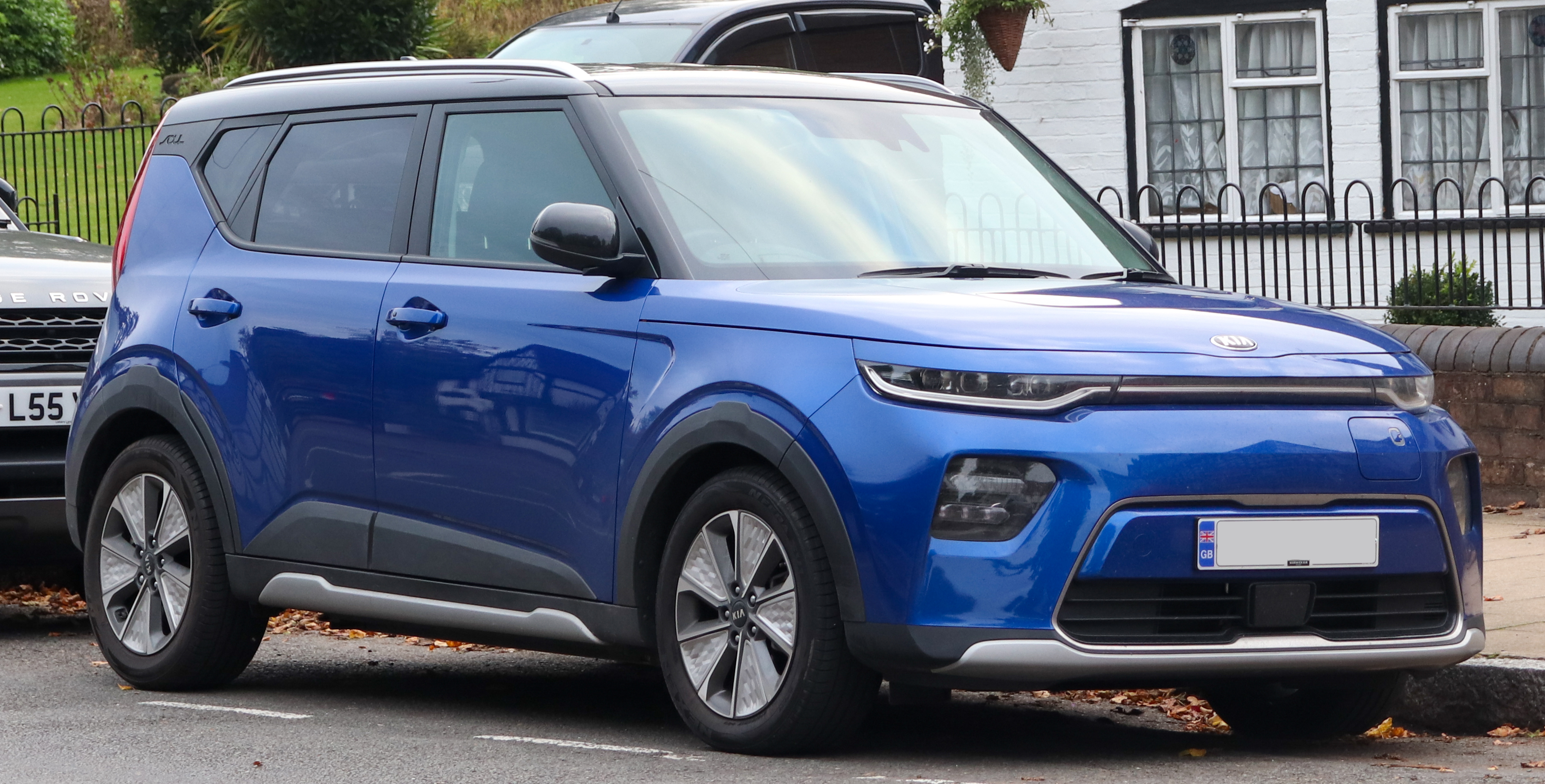
Kia Soul
"... and anything newer than that just doesn't have a soul. I mean, maybe not, but you know, the truck I jus..."
The Kia Soul is a small car with a tall, boxy shape that’s meant to be practical and easy to live with. The podcast is talking about how the older versions feel more “right” to the speaker than newer ones. It’s basically a comment on the car’s personality and design changes over time.
The Kia Soul is a compact, boxy-shaped crossover-style vehicle known for its easy entry, practical interior space, and distinctive styling. The podcast references it in a “newer vs older” way, suggesting that the earlier versions are more memorable or appealing to the speaker. It’s mentioned as a specific example of a vehicle with a particular character.
transmission problems
"Because I'm looking back on what I did, transmission problems. I knew my engine would make it, but that's one more thing that was kind of going wrong."
Transmission problems mean the car’s shifting/gear system isn’t working right. If the transmission is acting up, it can make it hard—or risky—to drive home.
Transmission problems are issues in the gearbox that can prevent the car from shifting correctly or can cause drivability problems under load. When you’re trying to limp a car home, transmission behavior is a key clue because it affects whether the car can keep moving without making the failure worse.
limp cars home
"Well, I mean, I mean, getting back to trying to limp cars home, Mav, Gail, what are kind of some of the things that you would look for?"
“Limping” a car home means driving it only as far as needed despite a developing mechanical problem, usually to avoid towing. The key is monitoring warning signs (like oil pressure) and avoiding actions that could turn a manageable failure into a catastrophic one.

51 Chevy
"So the street in the bar, Gail actually has, Gail with the 51 Chevy is probably one of the best examples. No, let her tell this story because it's really what you look for if you're going to decide to limp something home."
“51 Chevy” means a 1951 Chevrolet. They’re using it as an example of what to check when a classic car starts acting up and you’re trying to get it home safely.
The “51 Chevy” refers to a 1951 Chevrolet, a classic American car from the early postwar era. In this story it’s important because the hosts are using it as a real example of how to diagnose and manage a breakdown while trying to limp home.
oil pressure
"Oil pressure's still good. I can accelerate because I was doing 30 and I made it up to 50. I'm on a 55 road, so I haven't dropped a cylinder because I do still have oil pressure."
Oil pressure tells you whether the engine is getting enough lubrication. If oil pressure is still good, it’s a sign the engine may be safe to keep running for a short trip.
Oil pressure is the measurable pressure of engine oil as it circulates through the engine’s bearings and moving parts. In a breakdown, checking oil pressure helps you judge whether the engine is still being lubricated well enough to keep running without causing major damage.
dropped a cylinder
"I'm on a 55 road, so I haven't dropped a cylinder because I do still have oil pressure."
“Dropped a cylinder” means the engine is no longer firing properly in one cylinder, causing misfire and rough running. It’s a serious sign during a limp-home situation because continued driving can worsen damage or quickly make the engine unreliable.
inline six
"It's a 216 inline six. I could get another one if I have to."
An inline six is an engine with six cylinders lined up in a row. If something goes wrong, it can cause noticeable shaking or loss of power.
An inline six is an engine configuration where six cylinders are arranged in a single straight line. The layout matters for troubleshooting because cylinder-specific issues (like losing one cylinder) can show up as rough running, vibration, or power loss.
fan
"It's after one of the four vanes off of the fan. So the fan was now three instead of four vanes, which is where my vibration came from."
The fan helps keep the engine cool by pushing air through the radiator. If a blade is damaged, it can shake the car and may not cool as well.
The fan is the engine-cooling airflow device that helps move air through the radiator. If a fan blade is damaged (like going from four vanes to three), it can cause vibration and also reduce cooling effectiveness.
driving with a damaged cooling system (risk-based decision making)
"How much worse am I going to make it? How much more expensive is it going to be if I drive it home? ... you were watching your transmission temp and you knew as long as you kept it under 200, it seemed to be okay."
They’re basically deciding whether it’s safe to keep driving by thinking through the risks and watching the car’s gauges. If the situation is getting worse, the safer move is to stop or change plans.
The hosts describe a risk-based approach to limping a car home: they weigh how much the failure could worsen, how expensive it might become, and whether continuing to drive increases danger to themselves or others. They also use gauge monitoring (oil pressure, temperature, transmission temp) as inputs to decide whether to change the plan.
water pump
"It did turn out that I tore up the bearings in the water pump, so we replaced the fan. ... we ended up replacing a what $35 water pump."
The water pump moves coolant around the engine so it doesn’t overheat. If the pump’s bearings get worn out, it can fail and you’ll need to replace it.
The water pump circulates coolant through the engine and radiator to control temperature. If bearings in the water pump get damaged, it can lead to overheating risk and requires replacement.
temperature was fine
"I was going to ask you how your temperature was going. Temperature was fine, actually. It was in the normal range..."
Engine temperature is how hot the engine is running. If it stays in the normal range, it’s less likely to overheat and cause damage.
Engine temperature refers to how hot the engine is running, usually monitored via a temperature gauge. Staying in the normal range helps avoid overheating, which can damage components.
transmission temp
"where you're going, is it getting worse? Well, you were watching your transmission temp and you knew as long as you kept it under 200, it seemed to be okay."
Transmission temp is how hot the transmission fluid is getting. Too much heat can hurt the transmission, so watching the gauge helps you decide whether it’s safe to keep driving.
Transmission temperature is the heat level of the transmission fluid and internal components. Excess heat can degrade fluid and increase wear, so keeping it under a threshold (like 200) helps protect the transmission during a compromised drive.
radiator
"But as long as I had air moving through the radiator, it seemed to be much, much more happy."
The radiator helps keep the engine from overheating by cooling the hot coolant. More airflow through it means the engine can stay cooler, especially in traffic or at low speeds.
The radiator is the heat exchanger that removes heat from engine coolant. When the host says it was “much more happy” with air moving through the radiator, they’re describing how airflow helps prevent overheating.
idling
"It did not appreciate idling. The temperature climbed very quickly when I was actually driving through the city."
Idling means the engine is on while the truck is stopped. The host is saying it ran hotter when it wasn’t moving, because the radiator didn’t get enough cooling airflow.
Idling is when the engine is running but the vehicle isn’t moving. Some cooling systems don’t shed heat well at idle, so engine temperature can rise quickly unless airflow is moving through the radiator.
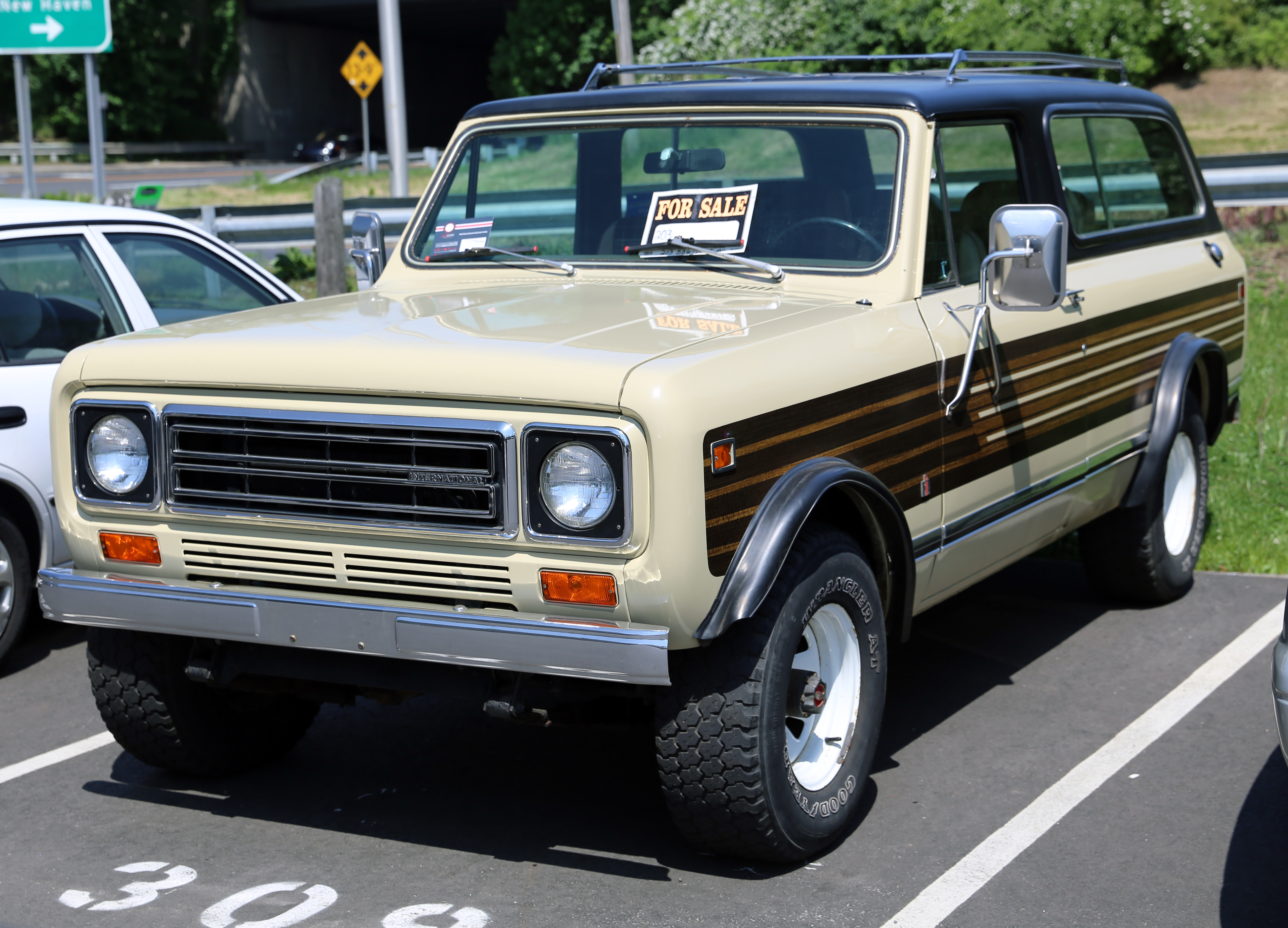
International Harvester Scout
"And he lost the brakes on his international harvester scout. And we made the decision to drive it in."
The International Harvester Scout is an older American 4x4. Here it’s mentioned because the brakes failed, and they still had to drive it carefully to get help or reach safety.
The International Harvester Scout is a classic American off-road SUV/pickup-style 4x4 from International Harvester. In this story, it’s notable because the host describes losing the brakes and having to drive it anyway, which highlights how older trucks could be driven to limp home when a major system fails.
downshifting
"The only other choice would be it would have been to walk in. And, you know, you can go a long way with downshifting and no brakes."
Downshifting is when you shift into a lower gear. It can slow the car using the engine, which can help if the brakes aren’t working well.
Downshifting means selecting a lower gear to increase engine braking and control speed. The host mentions downshifting as a way to manage without brakes, which is a real “limp-home” technique when braking is compromised.

Dodge Power Wagon
"...I was another example of the, the Dodge truck, my power wagon, when we first got it, we had, it had some issues..."
The Dodge Power Wagon is a tougher, off-road-focused version of a Dodge pickup truck. The podcast says that when they first got theirs, it had some problems. The point is that even rugged trucks can need attention when they’re new to the owner.
The Dodge Power Wagon is a heavy-duty truck variant built for off-road capability and rugged use. In the podcast, it’s brought up as an example of a Dodge truck that had issues when it was first acquired. That makes it relevant to discussions about real-world ownership and the kinds of problems that can show up early in a truck’s life.
gas tanks
"when we first got it, we had, it had some issues with gas tanks. And we thought we had the metal one was completely rotted and we thought we got the plastic one working."
A gas tank is where your car stores fuel. If the tank is damaged or corroded, it can leak fuel and you can run out of gas unexpectedly.
“Gas tanks” are the fuel storage containers in a vehicle. When they corrode or fail, fuel can leak out, which can lead to running out of gas even if the gauge initially looked fine.
running out of gas
"we stopped at Taco Bell, and I ran out of gas in the Taco Bell, actually pulling into the Taco Bell parking lot I coasted the last 50 feet."
Running out of gas means there isn’t enough fuel for the engine to keep going. If fuel is leaking, you can go from “fine” to “empty” pretty fast.
Running out of gas happens when the fuel level drops to the point that the engine can’t keep getting fuel. With a leak, the problem can worsen quickly, so the driver may coast to a stop and then need emergency fuel delivery.
coasted
"I ran out of gas in the Taco Bell, actually pulling into the Taco Bell parking lot I coasted the last 50 feet."
Coasting is when you’re just rolling forward without pushing the gas. If the engine isn’t getting fuel, coasting may be how you get to the side of the road or a parking lot.
Coasting is when the vehicle is moving without actively providing engine power (for example, after the engine can’t get enough fuel). In a fuel-leak scenario, coasting can be the only option to reach a safer spot.
alternator
"I had a 74 international pickup and the alternator went out in the middle of the night and I'm [1805.3s] cruising home and the headlights are starting to fade really bad."
The alternator is what keeps the battery charged while the engine is running. If it breaks, the battery slowly dies, so the headlights get weak and the car can’t start.
An alternator is the engine-driven generator that powers a car’s electrical system and recharges the battery while you drive. If the alternator fails, the battery becomes the only power source, so lights dim and the car may eventually refuse to restart.
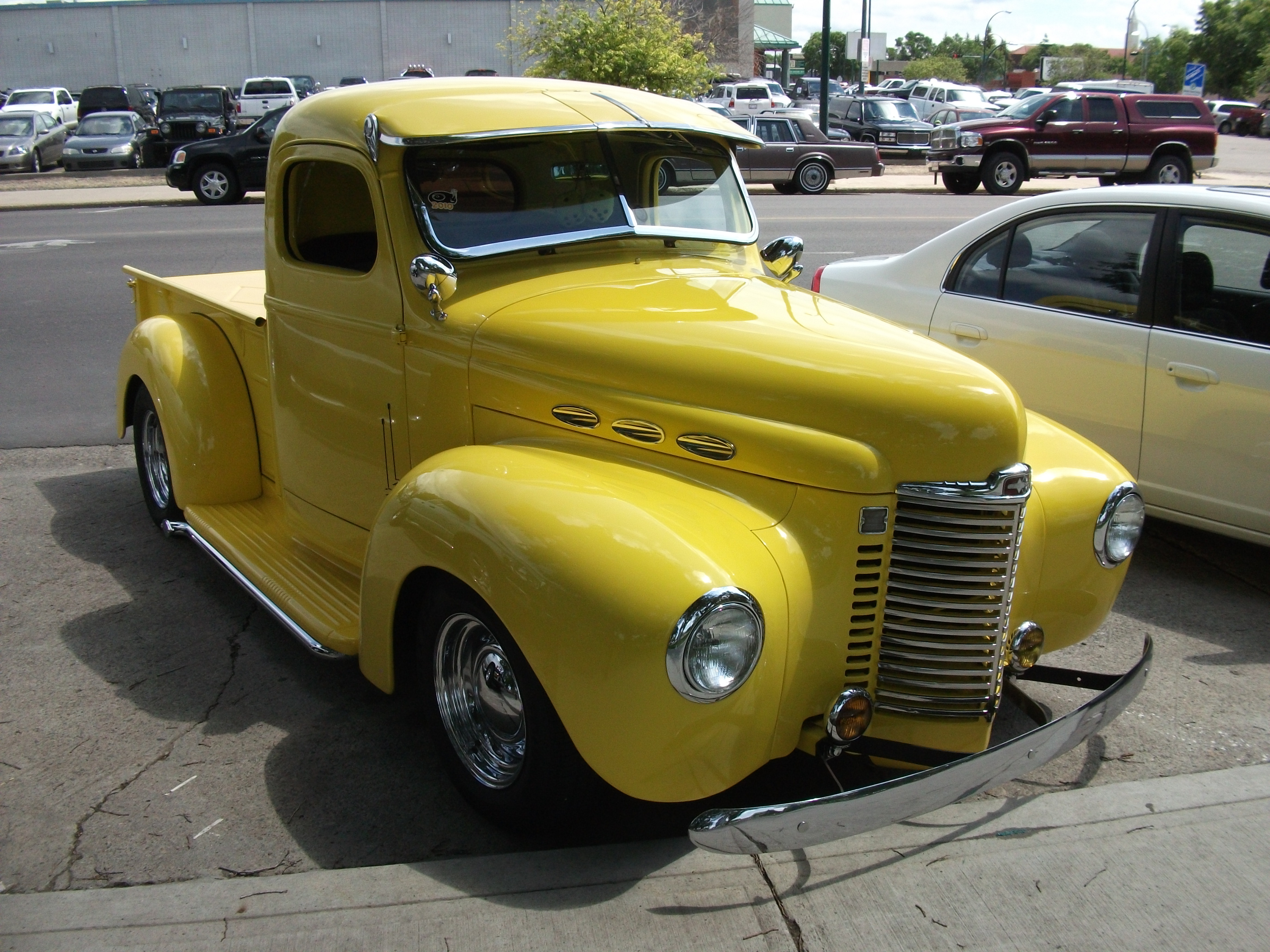
International pickup
"I had a 74 international pickup and the alternator went out in the middle of the night and I'm [1805.3s] cruising home and the headlights are starting to fade really bad."
They’re talking about a 1974 International pickup where the alternator failed. When that happens, the battery runs down fast, so the lights get dim and the truck may not start again.
The speaker mentions a 1974 International pickup, and the story is centered on an alternator failure that causes the electrical system to lose power. In older trucks like this, once the alternator quits, the battery can drain quickly—so headlights fade and the engine may not restart.
battery
"driving with no headlights that get pulled over and of course the car won't start after that [1828.5s] because the battery is now completely dead."
The battery is the car’s stored power. When the alternator fails, the battery has to run everything, and eventually it can’t provide enough power to start the engine.
The battery stores electrical energy for starting the engine and for powering systems when the alternator isn’t producing power. In this story, once the alternator is out, the battery drains to the point where the truck won’t start.
push-starting
"That was right after you popped the [1895.9s] clutch on that, right? To get it started. Oh yeah, we push started it."
Push-starting means you get the car rolling and let the wheels turn the engine to start it. It’s a common trick when the battery is dead and the starter can’t crank the engine.
Push-starting (also called bump-starting) is starting an engine by rolling the vehicle and using the drivetrain to turn the engine over. It only works on cars with a manual transmission (or certain setups), and it’s often used when the battery is too weak to crank the starter.
generator
"we replaced the alternator with the one wire alternator, [1931.4s] the generator with the one wire alternator."
A generator is an older type of charging system that makes electricity for the truck. They replaced it with a one-wire alternator setup to get better charging.
In older vehicles, a generator can refer to the original charging system component that produces electricity for the battery and electrical loads. The speaker contrasts it with an alternator upgrade, implying the charging system was modernized to improve reliability.
Dibber switch
"And replace the Dibber switch so they actually [1938.6s] had headlights all the time."
They replaced a headlight-related switch so the headlights would work consistently. The switch likely controlled when the headlights were allowed to turn on.
The speaker mentions replacing a “Dibber switch” so the truck “had headlights all the time.” That implies the switch controls headlight operation (or a headlight circuit), and the replacement fixed an electrical issue that was intermittently turning headlights off.
jack
"The other thing is always make sure you have a good jack in your vehicle. Good Lord, a number of people who don't anymore is ridiculous. Right. I mean, you've got to have one of those to bang a starter with a hammer to get out of your friend's yard so they're not looking for your dead body."
A jack is the tool that lifts the car up so you can get the tire off. If the jack is bad or tips over, it can be really dangerous.
A jack is the lifting tool used to raise a car so you can change a tire or do roadside repairs. Using a weak or unstable jack can be dangerous because the car can shift or fall while you’re working underneath or near it.
AAA
"whose answer is that's why you have tools and I have AAA. He knows he doesn't really know how to work on a lot on cars. So he just has AAA and doesn't go places where they won't service him."
AAA is a membership that helps you if your car breaks down—like towing or roadside fixes. Some people don’t carry tools because they expect AAA to handle it.
AAA is a roadside-assistance membership service that can provide towing, battery service, and help when you’re stranded. The point in the discussion is that some people skip DIY tools and instead rely on professional assistance.
low earth orbit satellites
"I will say one of the evolutions of that is now that so many cell phones just hook up to the low earth orbit satellites now. It makes it so much so those dead zones are going away. I mean,"
Low Earth Orbit satellites are satellites that are closer to Earth than many others. They can help your phone or device connect even when normal cell service doesn’t reach.
Low Earth Orbit (LEO) satellites are satellites that orbit relatively close to Earth, enabling more direct coverage for satellite communications. The discussion suggests that LEO-based connectivity can reduce “dead zones,” making it easier to call for help when you’re stranded.
ratchet straps
"They have a lot of uses that are not obvious and we frequently carry ratchet straps and certainly the trucks of all cars. Yeah, I think for myself, I really don't run into as many vehicle issues."
Ratchet straps are strong straps with a ratcheting handle that you tighten to hold things in place. People use them on trailers to keep loads from moving around.
Ratchet straps are tie-downs that use a ratcheting mechanism to tighten webbing and secure cargo or equipment. On trailers, they’re often used to prevent shifting and can be used as improvised recovery/retention tools when you need to secure something quickly.
PM
"But I mean, we PM our stuff. I PM my trailers and all that kind of stuff."
PM means preventive maintenance. It’s the routine scheduled work you do to prevent problems before they cause a breakdown.
In maintenance talk, PM usually means preventive maintenance—scheduled work intended to catch problems early and avoid breakdowns. For trailers, that can include checking bearings, tires, and other wear items on a regular schedule.
radials
"And then I switched to radials and oh my God, what a difference I made. Yep. I'm with that theory."
Radials are a common type of tire construction. People often switch to them because they can last longer and handle road use better than older tire types.
Radials are a tire construction type where the internal cords are arranged radially across the tire. Many trailer owners switch to radial tires because they typically run cooler and can wear more evenly than older bias-ply designs under highway loads.
bearing buddies
"I was burning through tires about every two months on a trailer and bearing buddies are your friend. Oh, no. Somehow they get blown off the wheels too."
Bearing buddies are grease-filled caps installed on trailer wheel bearings to help keep them lubricated and reduce contamination. They can also help manage pressure changes around the bearing, which is why trailer owners often use them to fight premature bearing wear.

Chevrolet Corvette
".... It's just you don't drive a trailer like it's a Corvette. You'll be fine. Okay. It's hooked behind a ramp...."
The Chevrolet Corvette is a sports car built for speed and handling. It’s not designed to be treated like a heavy-duty tow vehicle. The podcast is basically saying that if you’re towing something, don’t expect the Corvette to handle it the way a truck would.
The Chevrolet Corvette is a performance sports car known for its low, aerodynamic design and strong engine options. It often comes up in conversations about driving feel and handling, especially when people compare how different vehicles behave under load or in unusual towing setups. In this context, it’s referenced as a benchmark for how you “shouldn’t” treat a vehicle when towing or hauling something behind it.
limp mode
"Now, can we talk about my personal lip mode hatred? ... there's a difference between lipping your car home and your car going into limp mode."
Limp mode is when a car “gets cautious” and limits what it can do. It usually happens when the car senses a problem, so you can drive it carefully to get it fixed.
Limp mode is a protective driving strategy where the car limits power and sometimes changes how it shifts or controls the engine. It’s triggered by a detected fault so the vehicle can be driven to a safe location or repair shop without causing further damage.
U-joint
"…held all kinds of driveshafts together with ratchet straps. Works really well… when the U-joint goes bad."
A U-joint is a small joint in the driveshaft that lets the power keep going even when the wheels move up and down. If it goes bad, the car can start shaking or making noise and may not drive smoothly.
A U-joint (universal joint) is a hinge inside the driveshaft that allows it to transmit torque while the suspension moves and the shaft angles change. When a U-joint fails, it can cause vibration, noise, and loss of drivetrain reliability.
driveshafts
"Lord knows we've held all kinds of driveshafts together with ratchet straps… We've drugged stuff down the road for quite a ways with another vehicle with ratchet straps."
A driveshaft is the part that sends power from the transmission to the wheels. If it’s damaged, it can vibrate or fail, so it’s not something you want to “jury-rig” for long.
A driveshaft is the rotating shaft that transfers power from the transmission to the differential/axles on many rear-wheel-drive and four-wheel-drive vehicles. Because it spins at high speed, damage or misalignment can be dangerous, which is why temporary fixes are risky.
overheating
"Gail talks about a time in high school when she drove into a friend's house and the car was overheating by the time she got to the friend's house. She knew the distance. She knew she could make it, so she let the car cool off,"
Overheating is when the engine gets too hot. Cars have a cooling system to prevent this, and if it fails, the engine can be damaged.
Overheating means the engine temperature is rising beyond its normal operating range, usually because cooling isn’t removing heat effectively. If it continues, it can cause serious damage like warped components or a failed head gasket.
oil light
"A few weeks later, her dad's boss's daughter was driving home from college and the oil light came on, and so she decided she could just check it when she got home and blew the motor."
The oil light is a warning that the engine oil isn’t circulating or pressurizing correctly. If you ignore it, the engine can overheat and get badly damaged because it won’t be lubricated.
The oil light is a dashboard warning that the engine’s oil pressure is too low. Low oil pressure means the engine isn’t getting proper lubrication, which can quickly lead to severe internal damage.
oil starvation
"Decided to ignore the oil light, and then it got really low... and then drove it from Oklahoma City to Tulsa and blew the motor up, because all the oil just flew out through the hole."
Oil starvation means the engine isn’t getting enough oil to keep everything lubricated. Without lubrication, parts can wear or seize fast, leading to major engine damage.
Oil starvation is when an engine doesn’t have enough oil circulating to lubricate critical moving parts. It can happen from low oil level, leaks, or ignoring the oil-pressure warning, and it can quickly destroy bearings and other internal components.
blown motor
"and so she decided she could just check it when she got home and blew the motor. ... and then drove it from Oklahoma City to Tulsa and blew the motor up, because all the oil just flew out through the hole."
“Blowing the motor” means the engine got so damaged that it can’t run normally anymore. In this case, it sounds like the engine didn’t have enough oil to protect and lubricate its moving parts.
“Blowing the motor” is slang for catastrophic engine failure, usually from oil starvation or overheating. In this story, ignoring the oil warning and running with too little oil leads to metal-on-metal damage inside the engine.
oil cap
"he decided to put oil in my daughter's car. He decided that he did not need to put the oil cap back on and then drove it from Oklahoma City to Tulsa and blew the motor up, because all the oil just flew out through the hole."
The oil cap seals the opening where you add engine oil. If it isn’t put back on, oil can leak out while driving, and the engine may not get enough lubrication.
The oil cap is the cover on the engine’s oil fill opening. If it’s left off, oil can spill out (especially during driving), which can rapidly drop oil level and pressure and cause engine damage.
limited range
"So my question is, in my brain, as I've been thinking about buying one of these, is if I get one, you think because you have a limited range, you have to plan ahead a little bit,"
Electric cars can only go so far on a full charge. That means you often have to plan where you’ll recharge before you leave.
“Limited range” is the practical distance an EV can drive on a full charge. It affects trip planning because you may need to schedule charging stops rather than just drive until fuel is convenient.
electric mandates are starting to go away
"Well, it depends. You can get full electric or you can get, they went with a hybrid now that the electric mandates are starting to go away, so I'm kind of into the idea."
They’re talking about laws that push automakers toward electric cars. If those rules change, companies may sell more hybrid versions instead of only fully electric ones.
The speaker is referencing shifting government policy around EV requirements (“electric mandates”). When those rules loosen, automakers may offer more hybrid options instead of pushing exclusively for full-electric drivetrains.
full electric
"Well, it depends. You can get full electric or you can get, they went with a hybrid now that the electric mandates are starting to go away,"
“Full electric” means the car runs on electricity from a battery. You usually have to charge it, and how far it can go on one charge matters.
“Full electric” means the vehicle is powered entirely by an electric motor and battery, with no gasoline engine for propulsion. That typically makes charging availability and battery range central to everyday use.
hybrid
"they went with a hybrid now that the electric mandates are starting to go away, so I'm kind of into the idea."
A hybrid uses two power sources: an electric system and a gas engine. That can make longer trips easier because you don’t rely only on charging.
A hybrid uses both an electric system and an internal-combustion engine to move the car. Compared with full EVs, hybrids can reduce “range anxiety” because the engine can extend driving capability when charging isn’t convenient.
electric cars
"Everyone I know who's gotten an electric car, yes, it has. And I did electric cars for me because they don't work for my lifestyle,"
Electric cars use electricity stored in a battery to move the car, not gasoline. The point here is that they can work really well when your daily driving is predictable and you have charging options.
Electric cars run on electric motors powered by a battery pack instead of a gasoline engine. In this segment, the hosts frame EVs as a better fit for predictable, repeatable driving routes where battery range and charging access are manageable.
range anxiety
"So, do I think that it's going to change how you look at yourself in that car? Yes, range anxiety. I want to have a camera in the car with you the first time you're facing it,"
Range anxiety is the stress of wondering if your electric car has enough battery to get where you’re going. It usually shows up when charging stations are scarce or your trip is longer than you’re used to.
Range anxiety is the worry that an electric car won’t have enough battery charge to reach the destination or a charging station. It’s especially common for drivers who don’t yet have a predictable charging routine or who drive longer routes than their local charger network supports.
charging
"But I think electric cars are going to continue to evolve, and charging is going to continue to evolve. But right now, you know, in our area, there's maybe 10 chargers in town."
Charging is how you refill an electric car’s battery using a plug-in station. If there aren’t many chargers nearby, it can make EV life harder.
Charging refers to replenishing an electric vehicle’s battery by plugging into a charging station or home charger. The discussion highlights that charging infrastructure (how many chargers exist and how they’re distributed) affects how practical EV ownership feels day-to-day.
power grid
"saying at the time that gets stuck with me is the power grid in most cities isn't good enough for a lot of people to have them. Like, if more than one person on your block has one, it could cause problems with the power plants."
A power grid is the whole system that brings electricity to your neighborhood. If lots of people try to use a lot of electricity at once (like charging cars), it can overload the system and cause problems.
The power grid is the network that generates, transmits, and distributes electricity to homes and businesses. When many people charge electric vehicles at the same time, local demand can stress the grid and increase the risk of outages if infrastructure isn’t upgraded.
blackout
"it just scares the crap out of me to overload the power grid and cause a blackout in my neighborhood."
A blackout means the power goes out. The concern here is that charging many EVs at once could strain the local electricity supply.
A blackout is a loss of electrical power over an area. EV charging is usually managed safely, but heavy simultaneous charging can contribute to grid stress, which is why some people worry about neighborhood outages.
four motor drives
"I will say they are ridiculously quick. I mean, but they're all four motor drives. So they are pretty ridiculous."
Instead of one electric motor doing all the work, a four-motor setup uses multiple motors. That can help the car launch quickly and grip better because power can be sent where it’s needed.
“Four motor drives” means the vehicle uses an electric motor at (or effectively controlling) each wheel or axle, rather than a single motor. This can improve traction and acceleration because torque can be distributed very precisely.
economy mode
"No, I'm pretty sure all the electric cars when you get down to a certain level go into an economy mode."
Economy mode is a setting that helps the car use less energy. On an EV, it’s often used to stretch the remaining battery range.
Economy mode is a driving setting that reduces energy use by limiting power output and optimizing how systems run. For EVs, it’s commonly used to extend range when the battery is low or when the driver wants more efficiency.
warranty
"because I got a feeling it's going to void the hell out of a warranty. I mean, most of them are 220-volt house power."
A warranty is the manufacturer’s coverage for repairs. If you change things in a way the company doesn’t approve, they may refuse to pay for related problems.
A warranty is the manufacturer’s promise to cover certain repairs if something fails within specified terms. Modifying charging equipment or using non-approved electrical setups can sometimes lead to denied coverage.
220-volt house power
"I mean, most of them are 220-volt house power. You can charge them in a reasonable amount of time, but I'm sitting here going, well, you know, if I've got 700 amps of 480, I ought to be able to fill that battery quick, quick."
This is the kind of electricity many homes use for appliances. Using 220–240 volts for charging can let the EV charge faster than using a lower-voltage outlet.
Most home EV charging uses standard household electrical service, commonly 220–240 volts in many regions. Higher voltage charging can deliver more power to the charger, which generally reduces charging time compared with lower-voltage setups.
void warranties
"Did you say you have flammable things in your shop because you may want to fix that. Okay, void warranties with caution. That's all I'm going to say."
“Void warranties” means the warranty won’t cover the problem anymore. If you do something the manufacturer doesn’t allow—especially with charging equipment—they can deny coverage.
“Void warranties” means losing warranty coverage because the manufacturer believes the issue is related to an unauthorized modification or misuse. In EV charging contexts, this can come up if someone uses improper wiring, non-approved chargers, or unsafe electrical setups.
extensions
"I bought, I've broken four extensions in the last two weeks from DeWalt at $8 a piece."
“Extensions” are add-on tool pieces that help you reach bolts or nuts in tight spots. The speaker is saying they broke several of these pieces.
In tool talk, “extensions” usually means extension pieces used to reach fasteners that are recessed or hard to access. They’re commonly used with sockets or ratchets, and they can fail if overloaded or misused.
DeWalt
"I bought, I've broken four extensions in the last two weeks from DeWalt at $8 a piece."
DeWalt is a well-known tool brand. The speaker is saying they bought DeWalt extensions, but they kept breaking them.
DeWalt is a power-tool brand commonly used by contractors and DIYers. In the segment, it’s referenced as the cheaper source of extension pieces that the speaker says they keep breaking.
snap-on dealer
"So I went to the snap-on dealer and he sold me one for $30, which is cheaper than the four. And he promises me if I can break it, he'll replace it."
A Snap-on dealer sells Snap-on tools, which are aimed at professional mechanics and trades. Here, they’re comparing the price of a replacement part/tool from that dealer versus a cheaper option.
A Snap-on dealer is a brand-authorized reseller for Snap-on tools, typically selling higher-end professional tool lines to tradespeople. In this context, it’s part of a cost comparison versus cheaper tools.
unsafe to drive
"On further examination of the War Rig, it has some problems that is going to make it a very unsafe to drive moving forward."
“Unsafe to drive” means the vehicle condition is risky enough that you shouldn’t drive it. In this case, the front suspension is damaged, which can make steering and handling unreliable.
“Unsafe to drive” here is about a vehicle condition that makes normal operation risky—specifically, a damaged front suspension that can affect steering and wheel alignment. When suspension geometry is off, the vehicle may not track straight or may lose stability.
front suspension
"Oh, he tells me this after I drove it to Vegas. This is after that. We lent it to another guy and the front suspension's messed up and it's to fix it is going to be more than the value of the vehicle, to be honest with you."
The front suspension is what connects the front wheels to the vehicle and helps them stay planted on the road. If it’s damaged, the car can handle unpredictably and be unsafe to drive.
The front suspension is the system that locates the front wheels and controls ride, steering feel, and tire contact with the road. If it’s “messed up,” it can cause poor alignment, unpredictable handling, and unsafe driving conditions.
engine swap
"And that is changing the engine in the 55 Buick and making it run. I think a ram 318, that could be fun. ... I have personally been part of changing an engine in a weekend."
An engine swap means taking the old engine out and putting in a different one. It’s more than just bolting it in—you also have to connect the fuel, wiring, and other parts so the car can run.
An engine swap is replacing one engine with a different engine (or a different version of the same engine) so the car can run again. It usually involves matching engine mounts, wiring, fuel/air plumbing, and drivetrain connections so everything works together.
horizontally opposed engine
"And that's not an horizontally opposed engine. It's a nail head."
A horizontally opposed engine is one where the cylinders sit on opposite sides of the engine. The pistons move opposite ways, and that layout can change how the engine fits and works in a swap.
A horizontally opposed (boxer) engine has cylinders arranged left and right, with pistons moving in opposite directions. The speaker contrasts this with a “nail head,” implying the engine layout affects how the swap/project should be planned.
nail head
"And that's not an horizontally opposed engine. It's a nail head."
“Nail head” is a nickname for a specific kind of Buick V8 from the 1950s. They’re using it to say which engine style they mean for the swap.
"Nail head" is a nickname for Buick’s V8 engines from the 1950s, known for distinctive valve/rocker hardware. In this context, it’s used to identify the engine family/layout being discussed for the 55 Buick project.

1971 Buick GS
"Nice. We have a 1971 Buick GS engine. This isn't last year."
This is a Buick from 1971 that was built to be a bit more performance-focused than a regular Buick. Here, they’re using its engine to power another project car.
The Buick GS is a performance-oriented model line from Buick, and the 1971 GS is from the early-1970s muscle-car era. In this segment, the hosts are talking about using a 1971 Buick GS engine as a donor powerplant for an engine swap project.

Dodge Charger
"...nto. I suggested another RAM truck. I suggested a charger because you can drop a 5.7 Hemi into them real ea..."
The Dodge Charger is a larger car that’s built to be fast. People often modify them, including changing or upgrading the engine. In the podcast, it’s mentioned because a 5.7 Hemi engine can be installed into them as part of a build.
The Dodge Charger is a full-size performance sedan (or muscle-car style car) that’s commonly discussed for its powertrain options and upgrade potential. The podcast mentions dropping a 5.7 Hemi into one, which points to how popular these cars are for engine swaps and customization. It’s brought up as a practical platform when someone is thinking about building or modifying a car.
5.7 Hemi
"I suggested another RAM truck. I suggested a charger because you can drop a 5.7 Hemi into them real easy."
A “5.7 Hemi” is a V8 engine (about 5.7 liters). People like it for swaps because it’s popular and parts are easier to find.
A “5.7 Hemi” is a 5.7-liter V8 engine from Chrysler/Dodge/Jeep’s HEMI family, known for its hemispherical combustion-chamber shape. In swap talk, it’s often chosen because it’s a common, well-supported engine with lots of aftermarket parts.
panel wagon
"The panel wagon is not a terrible idea, except I think it's too blind. It'd be a congenial fit with the frame you've got."
A “panel wagon” is an older wagon-style vehicle meant more for hauling than for visibility. The host is saying it might be a good project, but it could be hard to see out of.
A “panel wagon” is a body style associated with older station-wagon or commercial/utility vehicles that have enclosed cargo space (often with minimal rear glass). The host is weighing it as a project fit but worries about visibility (“too blind”).
frame
"It'd be a congenial fit with the frame you've got. I'm going to have to hop off here, but I do want to prove one thing before I go."
The “frame” is the main metal structure underneath the car that everything bolts to. If the frame works, the build is much easier and safer.
In hot-rod and swap planning, “frame” refers to the vehicle’s structural chassis that carries the drivetrain and body. The host says the engine/body idea would fit well with the frame they already have, which is a key constraint in custom builds.
barn finds
"All right. With that, we still want to see the pictures of your projects, whether they're trailer queens, barn finds, or weekend racers."
A “barn find” is a car that’s been sitting unused for years and gets discovered later. It can be exciting, but it may need a lot of work to get running again.
“Barn finds” are cars that have been stored for a long time—often in barns or garages—before being rediscovered. They’re a common enthusiast category because they can be cheap entry points, but they often need significant restoration work.
trailer queens
"All right. With that, we still want to see the pictures of your projects, whether they're trailer queens, barn finds, or weekend racers."
A “trailer queen” is a car people mostly show off. It’s often not driven much, so they load it onto a trailer to take it to events.
“Trailer queen” describes a car that’s mostly kept for show and is transported by trailer rather than driven regularly. It usually implies the car isn’t reliable enough—or isn’t intended—for frequent street use.
weekend racers
"All right. With that, we still want to see the pictures of your projects, whether they're trailer queens, barn finds, or weekend racers."
“Weekend racers” refers to cars built or set up primarily for occasional track or autocross-style events rather than daily commuting. It signals a build that prioritizes event readiness and driving feel over long-term comfort or convenience.
parts car
"Because A Squad can leave a car in somebody's front yard and not get hunt down by the police. Their own front yard. Not immediately assumed that it's abandoned."
A “parts car” is a car you keep mainly to take pieces off it for another project. It might not be running, but it has parts worth saving.
A “parts car” is a vehicle kept mainly to harvest usable components for another build. The host’s joke contrasts leaving a car in someone’s yard versus having it assumed abandoned—both relate to how enthusiasts treat cars as sources of parts.
Request an Explanation
Heard something you'd like explained? We'll add it to this episode.
Sign in to request explanations for terms you heard.
Want to learn more?
Browse our glossary for plain-English explanations of automotive terms, jargon, and concepts.
Help improve this episode
See something that's not quite right? Our annotations are AI-generated and can sometimes miss the mark. Click the flag icon on any annotation to suggest a correction.