
0337 - Dream Project on a Budget
About this episode
Budget “dream truck” planning takes center stage, with the hosts talking through how to source parts cheaply, estimate real costs (including fuel/travel), and avoid mid-build scope creep. They compare International swap ideas—engine/transmission fitment, mounting layouts, and steering-column clearance—while also debating practical build sequencing and the pain of redoing work. The conversation widens into fuel-system choices, troubleshooting, and why drivability and parts availability matter as much as horsepower.
Episode 0337 - Dream Project on a Budget
This week we talk about building a project car, but with a reasonable budget. Or at least that was the plan. Orange cones abound in this fun discussion about how things should vs actually do work.
No Show Notes This Week
five-speed manual
"The bed that I'm looking at is off of a 50 through 56 international pickup and the motor is a 70s 345 international motor with a five-speed manual behind it."
A five-speed manual is a gearbox where the driver selects gears using a clutch and shift lever. In swap planning, the transmission matters because it affects how the drivetrain mounts to the frame and how the engine and driveshaft line up.
separate transmission mount and motor mount
"And the way that that motor mounts, because it's early 70s, is from the front, like a 50s car does. So that it has the separate transmission mount and motor mount, but there's no central motor mounts like on a Chevy."
They’re saying the engine and the transmission are held up by different mounting points. When you swap parts, you need the right mounts so everything sits correctly and doesn’t cause problems.
This describes a drivetrain mounting layout where the engine and transmission are supported by different mounts. That matters for older truck swaps because you may need the correct crossmember and mount locations to avoid vibration and to keep the driveline aligned.
motor mounts
"And the way that that motor mounts, because it's early 70s, is from the front, like a 50s car does."
Motor mounts are the parts that hold the engine to the truck. When you change engines, the mounts are a big deal because they affect fitment and alignment.
Motor mounts are the brackets and rubber/isolator points that attach the engine to the vehicle’s frame or crossmember. For a swap, mount design determines whether the engine can be installed without major fabrication and whether the driveline geometry stays correct.
inline six
"Yeah, so it would bolt right in to where the old inline six is."
An inline six is an engine with six cylinders lined up in a row. It was a common setup in older trucks. The idea here is to replace that engine with a different one that can bolt in the same spot.
An inline six is an engine with six cylinders arranged in a single straight line. In older trucks, it’s often the original powerplant, so swapping it out changes the engine bay layout and mounts. The host is talking about fitting a different engine where the inline-six used to sit.
louvers
"I keep envisioning this with no hood, no louvers on the side because, well, A, it doesn't have them."
Louvers are slatted vents in the body. They can help let hot air escape from the engine area while still looking cool. The host is saying they might not add them because the original parts don’t include them.
Louvers are slatted openings in body panels that help vent hot air while still partially blocking direct airflow. On trucks, side louvers are often associated with engine compartment heat management and styling. The host is imagining a version with no louvers because the base parts don’t have them.
hood
"I keep envisioning this with no hood, no louvers on the side because, well, A, it doesn't have them."
The hood is the cover over the engine. In a custom truck, whether you keep it or remove it changes how the engine looks and how air flows. The host wants the engine more visible, so they’re imagining no hood.
The hood is the hinged panel that covers the engine bay. In custom builds, deciding whether to use a hood (or to delete it for a more exposed-engine look) affects safety, airflow, and how the engine is displayed. The host is envisioning a design with “no hood” to show the engine.
V8
"the whole point is to have that international V8 sticking out of an old international because of that script valve cover that it's got."
A V8 is an engine with eight cylinders arranged in two sides that make a V shape. It usually takes more space than a six-cylinder engine. The host is aiming to put a V8 into an older truck so it looks and sounds more dramatic.
A V8 is an engine with eight cylinders arranged in two banks that form a “V” shape. It’s physically larger than many older six-cylinder engines, which is why swaps often require hood/clearance and mounting changes. Here, the host is planning an “international V8” swap into an older International truck.
script valve cover
"the whole point is to have that international V8 sticking out of an old international because of that script valve cover that it's got."
A valve cover is a part on top of the engine that helps protect the valvetrain area. Some valve covers have decorative lettering on them. The host likes the look of the branded lettering because it makes the engine stand out.
A valve cover is the cover over the top of the engine’s cylinder head(s), and it often carries branding. “Script valve cover” refers to valve covers with a stylized, cursive-style logo or lettering. The host is using that visual detail as part of the build’s “show it off” theme.
front clip
"The front clip is a 47 Dodge pickup."
A front clip is the front section of a vehicle—its nose parts like the grille area and fenders. Hot rodders swap these to change the look and fitment without starting from scratch. The host is planning to use a Dodge front end on their International-based build.
A front clip is a swap of the front-end structure and sheetmetal (often including the radiator support area, fenders, grille, and related mounting points). In hot rods, using a front clip from another vehicle can dramatically change the look and sometimes make fabrication easier. Here, the host is using a 1947 Dodge pickup front clip on an International-based cab.
panel wagon body
"And it is a panel wagon body. [503.7s] Right."
A “panel wagon body” is a type of older wagon body shape with more flat, panel-like sides. The builder is talking about the kind of body they’re using for their project.
A “panel wagon body” describes a wagon-style body with a mostly flat, panel-like exterior—often associated with older commercial or utility vehicles. In hot-rod and custom builds, people use these body styles for their proportions and the way they package interior space and cargo.
Tremac transmission
"I didn't set out going, I need 800 horsepower and a Tremac transmission. [522.7s] I want something that will comfortably cruise on the interstate all day."
They’re talking about a performance transmission brand. The idea is that the transmission has to handle the engine’s power and also make the car comfortable to drive at highway speeds.
A “Tremac transmission” is a transmission brand/model reference (likely “Tremec,” a well-known performance manual-transmission maker). In hot-rodding, choosing a transmission is about matching gear ratios and strength to the engine’s torque and the driving goals (cruising vs. hard acceleration).
interstate
"I want something that will comfortably cruise on the interstate all day. [527.5s] Get itself out of the out of traffic if I need to."
They mean highway driving. They want the car to be able to cruise comfortably for a long time without feeling stressed.
“Interstate” here is shorthand for sustained highway driving, which influences build choices like engine size, gearing, and cooling. The speaker’s goal is an engine/transmission combo that can cruise steadily for long stretches.

R series international trucks
"Now I will tell you, I've built five of those R series international trucks. Every one of them has had a V8 in it when I finished with it."
They’re referring to International’s R-series trucks and saying they’ve built several of them. The big idea is that they put a V8 engine into these trucks to make them stronger for a custom project.
The speaker is talking about International Harvester’s R-series trucks as a platform for a custom build. They mention building five of them and finishing each with a V8 swap, which is a common hot-rod approach to make an older truck feel more powerful and modern.
steering column
"there's a clearance issue with that steering column on, you know, obviously on the driver's side. ... But a Chevy 350 will butt up right against that steering column."
The steering column is the part that connects your steering wheel to the steering system. When you swap an engine, the new engine can hit it, so you may need to check clearance before committing.
The steering column is the shaft and linkage that transmit steering wheel movement to the steering mechanism. In engine swaps, its location can create clearance problems with certain engines, headers, or exhaust routing—exactly what the speaker is flagging here.
Ford 300 inline six
"But I've always thought that if I did it again, the perfect motor for that would be a Ford 300 inline six. Just because it takes up the same amount of space as the Silver Diamond 220 that came in it."
They’re suggesting a Ford 300 inline-six engine for the truck. Their point is that it should fit in the same space as the original engine, and with the right parts it can feel strong—especially in low-end pull.
The Ford 300 inline-six is an engine swap candidate the speaker considers for the International R-series truck. They’re choosing it because it fits the available space similarly to the original “Silver Diamond 220,” and they claim it can be made to perform like a Ford 302 while producing more torque.
torque
"you can get speed parts for it that make it just as good as any 302 out there, but with more torque."
Torque is the engine’s pulling power—the force that helps the truck get moving and haul without bogging down. More torque usually means better low-speed grunt.
Torque is the engine’s twisting force, and it’s what strongly influences how quickly a vehicle accelerates from low speeds and how easily it pulls under load. The speaker contrasts torque output versus a Ford 302, arguing the inline-six route could feel as capable while delivering “more torque.”

302
"you can get speed parts for it that make it just as good as any 302 out there, but with more torque."
“302” is shorthand for a Ford V8 engine that’s commonly used as a performance reference. They’re saying the other engine could be made to match that kind of performance, but with more torque.
“302” refers to the Ford 302 V8 engine family, a popular small-block swap and performance baseline. The speaker is using it as a comparison point for how well the Ford 300 inline-six could be made to perform with aftermarket “speed parts.”
Chevy 350
"But a Chevy 350 will butt up right against that steering column. And you have to kind of sledgehammer modify the steering column in some spots."
They’re talking about the popular Chevy 350 V8 swap. In this particular truck, it may interfere with the steering column, so you might have to cut/modify the column to get it to fit.
The Chevy 350 (a small-block V8) is another common engine swap the speaker warns about for steering-column clearance. They say it can “butt up right against” the steering column in this specific truck setup, requiring heavy modification to the steering column to make it fit.
frame rail
"We checked frame rail to be honest, but I don't think we checked for the clearance on the steering column."
Frame rails are the main metal “backbone” beams under a truck. They checked those, but they didn’t check whether the steering column would collide with the engine, which is an important difference.
Frame rails are the main longitudinal structural members of a body-on-frame vehicle. The speaker says they checked the frame rail, but didn’t check steering-column clearance—highlighting that structural fitment checks don’t automatically guarantee clearance for all components.
headers
"It depends on the headers for use or the exhaust we choose to use. But isn't the, you know, it was the valve covers that were hitting."
Headers are special exhaust parts that replace the factory exhaust manifolds. They can change where the exhaust sits, which can cause fitment problems with other parts.
Headers are aftermarket exhaust manifolds that route exhaust gases from the engine into the exhaust system. The speaker suggests the choice of headers/exhaust can affect clearance and interference points, including what ends up hitting valve covers.
valve covers
"It depends on the headers for use or the exhaust we choose to use. But isn't the, you know, it was the valve covers that were hitting."
Valve covers are the top covers on the engine that protect the valve area. They’re saying the valve covers were actually getting hit, which helps you pinpoint the clearance problem.
Valve covers are the housings that sit on top of the cylinder head(s) and protect the valvetrain area. The speaker implies that in their fitment issue, the valve covers were the parts making contact—useful for diagnosing where interference is happening during an exhaust/engine swap.
351 Windsor
"And if I'm not wrong on this... isn't the Ford 302 351 Windsor, isn't that the narrowest V8 you can get?"
“351 Windsor” is another Ford V8 engine size (351 cubic inches). People compare it to the 302 because it’s a bigger version, and that can make engine-bay fitment harder in older cars.
“351 Windsor” is a Ford small-block V8 family member (351 cubic inches) built in the Windsor engine plant. It’s often compared to the 302 because they’re related engines, but the 351 is typically physically larger, which can affect how tight the engine bay packaging is.
fuel injection system
"My neighbor just built a 302 for his shoebox Ford, and he's having the devil's own time with that stupid fight tech fuel injection system."
Fuel injection is how the engine gets gasoline. Instead of a carburetor, it uses sensors and computer control to deliver the right amount of fuel, which can be tricky to set up on older engines.
A fuel injection system meters fuel into the engine using electronically controlled valves and sensors instead of a carburetor. On older V8 swaps, the specific injection setup matters because it affects drivability, tuning, and how hard the install is.

73 Duster
"Yeah, that's what happens. I get into it and then I see something cooler. I built a Duster one year, a 73 Duster. Put a 383 big block in it with the 727 torque flight."
A “Duster” is a Dodge car from the early 1970s. Here, the host is saying he built a 1973 Duster into a custom hot rod with a much bigger engine and upgraded brakes.
The “Duster” is a Dodge compact from the 1970s, and a “73 Duster” specifically points to the 1973 model year. In this story, the host describes turning it into a big-power hot rod by swapping in a large V8 and multiple drivetrain/brake components.

Dacia Duster
"...nto it and then I see something cooler. I built a Duster one year, a 73 Duster. Put a 383 big block in it ..."
The Dacia Duster is an SUV made by Dacia. In the podcast, the speaker talks about building one and putting a much larger V8 engine into it. That’s an example of how people customize these cars for a hot-rod style project.
The Dacia Duster is a compact SUV that’s known for being practical and relatively affordable compared to many other SUVs. In the podcast, it’s specifically tied to a personal build story: the speaker mentions building a 1973 Duster and swapping in a 383 big-block V8. That kind of project highlights how the Duster name can be used in enthusiast circles for custom hot-rod style builds.
383 big block
"I get into it and then I see something cooler. I built a Duster one year, a 73 Duster. Put a 383 big block in it with the 727 torque flight. And I put a Lincoln Continental disc brake rear end under it."
A “383 big block” is a large V8 engine (about 383 cubic inches). It’s the kind of engine swap people do when they want the car to feel much faster and stronger.
“383 big block” refers to a 383 cubic-inch V8 engine in the “big block” family, known for making strong torque. In muscle-car hot-rodding, swapping in a big-block is a common way to dramatically increase acceleration and overall punch.
disc brake rear end
"And I put a 383 big block in it with the 727 torque flight. And I put a Lincoln Continental disc brake rear end under it. And then changed the front to disc brakes off of a Valara. And that was a screaming machine."
A “disc brake rear end” means the back of the car uses disc brakes. People upgrade to disc brakes because they usually stop better and feel more consistent than drum brakes.
A “disc brake rear end” means the rear axle assembly is equipped with disc brakes instead of drum brakes. Disc brakes generally provide stronger, more consistent stopping—especially when braking repeatedly—so hot rodders often swap them in for better control.

Lincoln Continental
"And I put a 383 big block in it with the 727 torque flight. And I put a Lincoln Continental disc brake rear end under it. And then changed the front to disc brakes off of a Valara. And that was a screaming machine."
A Lincoln Continental is a big luxury car. In this build, the host used parts from a Continental—specifically the rear end with disc brakes—to upgrade his hot rod’s braking.
The Lincoln Continental is a full-size luxury car, and here the host is using a Continental rear-end as a donor for a disc-brake setup. That’s an example of “parts swapping” where you adapt components from a different vehicle to solve a performance or brake upgrade goal.
nine inch Ford
"So I think it was a nine inch Ford, but I'm not particularly sure that I remember for sure because 30 years is a long time. But that happens to me a lot. It's like, okay, this is great."
A “nine inch Ford” is a popular rear axle used in hot rods. People like it because it’s tough and there are lots of parts available to set it up for more power.
The “nine inch Ford” refers to Ford’s classic rear axle design, commonly swapped into hot rods because it’s strong and widely supported with aftermarket gears and parts. It’s a go-to upgrade when builders want a durable rear end that can handle higher power.
project car
"To harken back to a previous episode on what constitutes a project car, the question becomes... Somebody's never going to let that go. I think it was Lefty whose view was that anything that when you go to make a change, it becomes a project car again. Well, at some level, a project car in my mind, a project car by its very definition is something that you're changing."
A “project car” is a car you’re working on and changing over time. The host’s point is that if you keep modifying it, it stays a project—even if you already had one plan and then changed your mind.
A “project car” is a vehicle that’s actively being changed or improved over time rather than kept as-is. In this discussion, the host argues that once you start making changes—like modifications—it effectively becomes a project again, even if it was already a running project.

72 Dodge power wagon
"I've got a 72 Dodge power wagon that the initial goal was to get it running. That took a camshaft and some other work and it runs and it's good. And I drove it that way for, I don't know, a year or two. Now I put fuel injection on it because I wanted to."
This is a classic Dodge truck (a Power Wagon) from 1972. The host is talking about how they first got it running, then later changed the fuel system by adding fuel injection because they wanted to.
The Dodge Power Wagon is a classic Dodge truck known for its rugged, off-road-capable roots. In this segment, the host describes a 1972 Dodge Power Wagon build where the initial goal was getting it running, then later adding fuel injection for personal preference.
camshaft
"That took a camshaft and some other work and it runs and it's good."
The camshaft is part of the engine that times the opening and closing of the valves. Swapping it can change how the engine runs and where it feels strongest.
A camshaft controls when engine valves open and close. Changing or installing a camshaft is a common way to alter engine behavior (like how it makes power across the RPM range) and it often goes along with other engine work.
buying used parts
"You're buying used parts for 500 and I don't know if you're reselling them for 400 or 500 or what. But the only thing you actually lose out of it is the time and effort."
They’re talking about saving money by using parts that someone else already owned. You might not lose much money overall, but you usually spend more time hunting for the right parts and making them work.
The speaker is describing a budget-build strategy: buying used parts and accepting that the financial “loss” is mainly the resale gap. In practice, the tradeoff is time and effort—finding parts, verifying condition, and doing the work to make them fit and function.
carburetor
"And that's kind of where I'm at on like the changing the carburetor to fuel injection thing. I've already got it running on this. Now I got to do it again."
A carburetor is an older way of mixing gasoline and air so the engine can burn it. Swapping to fuel injection means using a newer system that meters fuel more precisely.
A carburetor is the older-style device that mixes fuel and air before it enters the engine. When someone talks about “changing the carburetor to fuel injection,” they mean replacing that mixing system with a modern electronically controlled fuel-injection setup.

Model A pickup
"I have a picture of it somewhere of a Model A pickup with a 4302 with like zoomy headers on it that I had. I just, I didn't fit in the Model A pickup."
A Model A pickup is an old Ford from the 1930s that people often modify into hot rods. The host is saying his version had a V8 and loud, exposed exhaust headers, but he couldn’t fit comfortably in it.
The Ford Model A is a classic 1930s-era pickup platform that hot rodders often use as a base because it’s simple and easy to modify. In this segment, the host mentions having one with a V8 swap (a 4302) and “zoomy headers,” which is a common hot-rod style aimed at sound and airflow.
numbers matching
"We have a friend who has a 65 Mustang, all original, numbers matching, all nine yards."
“Numbers matching” means the car still has its original major parts, like the engine, identified by the same numbers it left the factory with. Collectors like it because it’s more original and often worth more.
“Numbers matching” means the major components (commonly the engine and transmission) are the original ones that came with the car, identified by matching serial or casting numbers. It’s a big deal for collectors because it preserves originality and typically supports higher value versus swapped parts.

65 Mustang
"We have a friend who has a 65 Mustang, all original, numbers matching, all nine yards. And she's at the point where she wants to take the four speed manual out of it and put an automatic in it so that she can drive it."
A 1965 Ford Mustang is a classic American muscle car. The host is talking about whether to keep it completely original or change parts so it’s more comfortable/easy to drive.
The Ford Mustang (here, a 1965) is one of the most iconic American muscle cars, and it’s especially popular for both preservation and restomodding. The host brings up a specific dilemma: keeping it “all original” and numbers-matching versus swapping driveline parts to make it easier to drive.
four speed manual
"And she's at the point where she wants to take the four speed manual out of it and put an automatic in it so that she can drive it."
A four-speed manual is a car where you shift gears yourself using a clutch. An automatic is usually easier because you don’t have to do the shifting.
A “four-speed manual” is a gearbox with four forward gears operated by a clutch and a gear lever. Swapping from a manual to an automatic changes how the car drives day-to-day—automatic is typically easier in traffic and for relaxed cruising.
three speed
"It's a three speed or a four speed or whatever it is. I absolutely love a three speed."
A “three-speed” transmission has three forward gears. That usually means the gaps between gears are bigger, so the car can feel more “steppy” when you accelerate.
A “three-speed” refers to a transmission with three forward gear ratios. Fewer gears can mean larger jumps between ratios, which affects how the engine feels during acceleration and cruising.
ACEs four barrel kit
"So I bought the, I think it's just the standard ACEs four barrel kit."
A four-barrel setup is a fuel/air system upgrade that can let the engine breathe more when you ask for power. It usually needs proper tuning so it runs well in everyday driving, not just at wide-open throttle.
A “four-barrel” kit refers to an intake/carburetion setup using a four-barrel carburetor (or four-barrel-style throttle body) to feed the engine. More airflow potential can improve power, but it also changes drivability and tuning needs.
blower
"I got to put a blower on it where, you know, we got to go full hog... I thought about putting a blower on a 345..."
A blower is a device that forces more air into the engine. More air usually means the engine can burn more fuel and make more power.
In this context, a blower is a forced-induction device that increases engine airflow to make more power. It’s typically driven by the engine (mechanically), so it can boost power quickly as RPM rises.
low compression engine
"I thought about putting a blower on a 345, but because it's, you know, it's a very low compression engine."
Compression is how much the engine squeezes the air/fuel before it ignites. Lower compression can be safer when you add a blower because boosted engines can otherwise get too “hot” inside and knock.
A low compression engine has a smaller compression ratio, meaning the air-fuel mixture is compressed less before ignition. That can help reduce the risk of detonation when adding boost (like a blower), because boosted engines tend to create higher cylinder pressures.
intake
"But all I could think of the whole time was, where the hell am I going to find an intake for a 345 or the blower?"
The intake is how air gets into the engine. If you add a blower, the intake has to be set up to work with it, or the engine won’t get the airflow you want.
An intake is the air path from the air filter/throttle into the engine’s cylinders, including the intake manifold and related plumbing. With a blower, the intake has to be matched to the supercharger and airflow needs, otherwise you can’t get the boost you’re expecting.
3D printers
"I prototyped it for him out of on the 3D on our large 3D printers for to put a pass or no."
3D printing (additive manufacturing) can be used to prototype custom automotive parts like intake components, brackets, or ducting before committing to metal fabrication. Prototyping helps validate fitment and airflow routing, reducing the chance of wasting money on the wrong parts.
bad ground
"The one time it wouldn't, we discovered that we had a bad ground. Well, it tells you all over in the instructions to make sure you have good connections."
A bad ground is when the car’s electrical connection to the chassis isn’t solid. That can cause sensors and electronics to act up because they don’t get a reliable electrical reference.
A bad ground is a poor electrical connection between a component and the vehicle’s chassis/ground point. Many ignition, fuel, and sensor systems rely on a solid ground; a weak ground can cause intermittent faults, weird running, or sensors to behave incorrectly.
exhaust leak
"Everything points to potentially an exhaust leak in upstream of the O2 sensor and giving it bad data."
An exhaust leak means the exhaust system isn’t sealed. If the leak is before the O2 sensor, it can mess up what the sensor measures, which can make the engine run wrong.
An exhaust leak is a gap or failure in the exhaust system where exhaust gases escape before they should. If it’s upstream of an O2 sensor, outside air can get pulled in or exhaust flow can be distorted, causing the O2 sensor to report incorrect mixture information.
fuel delivery issue
"So we've been fighting with the timing for a while. Now he thinks it's a fuel delivery issue. So I'm buying a, he helped me get the Thunderbird home."
A “fuel delivery issue” means the engine isn’t getting enough gas to keep running. The car might start, but then it dies because the fuel supply can’t keep up.
A “fuel delivery issue” means the engine isn’t getting the right amount of fuel (or not at the right pressure/flow) to keep running. Common causes include weak fuel pump output, clogged filters, or problems with carburetion/fuel metering.
clicker fuel pumps
"So I'm buying a, he helped me get the Thunderbird home. So I'm going to go buy him a, one of those little clicker fuel pumps. It sounds like a prime."
A “clicker fuel pump” is a small electric gas pump. It’s often used as a quick test to see if the engine runs once it’s getting fuel properly.
A “clicker fuel pump” is a small, often portable electric fuel pump used to supply fuel during diagnosis. Mechanics use these to quickly test whether the engine will run when fuel delivery is temporarily corrected.
snipers
"Otherwise he's going to use that carburetor that I've got and see what more happens with it. So I don't have any experience with snipers, with Hollies. I think they're expensive."
“Snipers” here probably means an aftermarket fuel-injection kit. It replaces the carburetor with electronics that can make starting and running smoother.
“Snipers” likely refers to Holley Sniper EFI systems—an aftermarket electronic fuel-injection setup designed to replace a carburetor. EFI can improve cold starts and drivability, so comparing “snipers” vs carburetion is a common budget-friendly troubleshooting path.
Hollies
"So I don't have any experience with snipers, with Hollies. I think they're expensive. That's maybe why I don't know anyone who's ever installed one."
“Hollies” usually means Holley carburetors. A carburetor controls how much fuel goes into the engine, so changing it can help figure out what’s causing the stalling.
“Hollies” is a common enthusiast shorthand for Holley carburetors. Holley makes many carburetor models, and swapping carburetors is a typical way to isolate whether the problem is fuel/air metering versus something upstream like fuel delivery.
cold starts
"I'm not calling ACEs. I'm cruising the internet and cold starts fine. "
“Cold starts” means starting the engine when it’s been sitting and is cold. If it starts fine when cold but then dies later, the issue is often something that only shows up once the engine is running.
“Cold starts” refers to how an engine behaves when it’s started from a cold soak (engine and fuel system are at ambient temperature). If cold starts are fine but it dies after idling, that points more toward fuel delivery under heat/idle conditions or an ignition/timing change as the engine warms.
O2 sensor
"The one consistent thing between all of them. I remember the third thing I looked up and all of those say it's potentially, you know, an O2 sensor problem."
The O2 sensor is a sensor that checks what’s coming out of the exhaust. If it’s wrong, the car’s computer can’t properly mix fuel and air, which can cause hard starting and backfires.
An O2 sensor (oxygen sensor) measures how much oxygen is in the engine’s exhaust. The engine computer uses that reading to adjust the air-fuel mixture; if the sensor is faulty, you can get poor cold starts, backfiring, and unstable running.
fuel pressure
"Check the fuel, what the fuel pressure needs to be at the fuel injection before you put it on. That may be the entire problem."
Fuel pressure is how strongly the fuel pump pushes gas to the engine. If it’s not at the right level, the engine can get the wrong amount of fuel and start poorly or backfire.
Fuel pressure is the amount of pressure the fuel system uses to deliver gasoline to the injectors (or carburetor). If the pressure is too low, the engine may not start or may run lean; if it’s too high, it can run rich and cause misfires or backfires.
fuel return line
"What is this fuel return line of which you speak? That's the thing that gave me another mile and a half to go and out of my truck. That's what that thing is. Most fuel injections also do need a return line."
Some fuel systems have a “return” hose. It sends extra fuel back to the tank so the engine doesn’t get too much pressure or heat in the fuel lines.
A fuel return line is a plumbing line that sends excess fuel back to the tank (or a return point) instead of letting it build pressure in the system. Many fuel-injection setups use a return line to keep fuel pressure stable and prevent overheating or over-pressurizing the injectors.
345
"I mean, that's the only thing he's putting on the old internationals and he's getting those up to with a load running that on a 345. He's the two barrel ACEs."
“345” is probably the engine size (345 cubic inches) in the truck. They’re saying the ACEs setup works well even with that bigger engine when the truck is hauling.
“345” likely refers to an engine displacement (345 cubic inches) used in some older International Harvester trucks. The speaker ties the ACEs carb setup to fuel economy while running that 345 engine under load.
two barrel ACEs
"He's the two barrel ACEs. He's getting, I think he said 17 miles to the gallon out of them, hauling a trailer. So yeah, it's definitely worth looking into."
A “two-barrel” carburetor has two openings for air and fuel. When you press the pedal harder, it can open more for extra power, and that can also change how efficiently the engine uses gas.
A “two-barrel” carburetor has two throttle bores (two air/fuel passages) that open as you demand more power. In this segment, the speaker connects the “two barrel ACEs” to real-world fuel economy while hauling a trailer, implying the carb choice affects both performance and mileage.
distributor
"The ACEs I bought also included the distributor with the controls for the distributor. So the timing is controlled by the ACEs environment. So that isn't my issue."
The distributor is part of the ignition system that sends the spark to the right spark plug at the right time. Here, the host says their ACEs setup includes a distributor/controls that help manage timing.
A distributor is an ignition component used on many older engines to route high voltage from the ignition coil to the correct spark plug. In this segment, the speaker says the ACEs purchase included a distributor with controls, and that the timing is controlled by the ACEs setup, affecting how the engine runs.
timing
"So the timing is controlled by the ACEs environment. So that isn't my issue. And maybe that's helping it run. Because you said timing was one of the things you were hunting."
Timing is when the engine’s spark happens during each cycle. If it’s off, the engine can run poorly; if it’s right, it can run smoother and use fuel better.
Ignition timing is when the spark occurs relative to the engine’s position and speed. The speaker is troubleshooting running issues and mentions that timing was one of the things they were “hunting,” but in their case the ACEs-controlled distributor setup may be influencing it.
holly
"But the truth is, I think I would just rebuild the holly that comes on it. And a little tube arrow, I'd be fine with that because I'm not trying to scorch the roads."
Holley is a company that makes performance carburetors. Rebuilding a Holley carb means taking it apart and fixing/refreshing it so it works like it should.
“Holley” (spoken as “holly”) is a well-known aftermarket brand that makes carburetors and related fuel-system parts for hot rods and performance builds. Rebuilding a Holley carb is a common budget approach when you want good drivability without switching to fuel injection.
tube arrow
"But the truth is, I think I would just rebuild the holly that comes on it. And a little tube arrow, I'd be fine with that because I'm not trying to scorch the roads."
“Tube arrow” doesn’t clearly match a common car part name, but it sounds like the host is talking about an add-on for the truck. They’re saying they’d be okay with it since they’re not trying to push extreme performance.
“Tube arrow” is likely a mishearing/mistranscription of a performance exhaust or intake-related part name (the phrase doesn’t match a standard automotive term on its own). It’s mentioned as something the host would be “fine with,” implying it’s a supporting modification for the truck’s look/sound rather than a full performance push.
10 miles per gallon
"Okay. So one of the goals. One of the goals was to get the truck up to getting 10 miles per gallon. Okay."
MPG tells you how many miles you can drive on one gallon of gas. The goal here is to improve the truck’s fuel economy to about 10 MPG.
“Miles per gallon” (MPG) is a measure of fuel economy—how far the vehicle can travel on one gallon of fuel. The host is using it as a concrete target for how efficient their budget build should be.
fuel leak
"No, and we discovered a fuel leak, not a terrible one, but a fuel leak. So that probably wasn't helping the mileage either."
A fuel leak is when gas is escaping from the car instead of staying in the fuel system. It can make the car run worse and it’s also a fire risk, so it should be fixed.
A fuel leak means gasoline (or other fuel) is escaping somewhere in the fuel system, such as hoses, fittings, the fuel pump, or the fuel rail. Even a small leak can reduce how efficiently the engine runs and can also create a safety hazard due to flammable vapors.
411 gears on both ends
"So we're looking at 411 gears on both ends. So yeah, you're not exactly going to be getting highway mileage in that."
“411 gears” refers to a 4.11:1 final-drive gear ratio, meaning the driveshaft turns 4.11 times for each rotation of the wheels. A higher numerical ratio like 4.11 typically improves acceleration and towing feel, but it also raises engine RPM at highway speed—so you generally won’t get great highway mileage.
lifter clatter
"Well, you could drive at 75 if you really want to, but it's the original engine and it has a lot of lifter clatter. And so anything over about 65, it sounds terrible."
Lifter clatter is a loud tapping noise from inside the engine near the valves. It usually means the parts that help open the valves aren’t working as quietly as they should, and it can get worse when you drive faster.
Lifter clatter is a tapping noise from the engine’s valve lifters (the components that translate camshaft motion to the valves). It often indicates worn lifters, improper oiling, or hydraulic lifters not pumping up correctly, which can worsen engine smoothness and sound especially at higher RPM.

360
"You probably told me, but is that the 318 or the 360? 360. Nice."
The “360” is the engine size (a V8) in the truck. The speaker is saying it’s the bigger 360 instead of the smaller 318, and that choice influences how the truck feels and sounds.
A “360” here refers to a 360 cubic-inch V8 engine, which is a common displacement used in classic Dodge trucks. The host is comparing it to a smaller 318 and noting the 360 is the one in the truck, which affects how it drives and how it sounds at speed.
318
"Well, I've heard your opinion on the 318. So I'm curious what your opinion on the 360 is. About the same. I actually like the 318s better."
“318” is the name people use for a V8 engine size—318 cubic inches. The speaker is comparing it to a bigger engine to see if it actually feels faster and whether it uses more gas.
“318” here refers to the Chrysler 318 V8 engine displacement (318 cubic inches). In this discussion, the host is comparing the 318 to the larger 360, focusing on how the swap changes power and fuel economy.

BMW 318S
"About the same. I actually like the 318s better. For those people who've never heard it be..."
The BMW 3 Series is a car line made by BMW that’s meant to feel sporty but still work for daily driving. The podcast mentions the 318 specifically, meaning a smaller engine version within the 3 Series. People bring it up because different versions can feel different to drive.
The BMW 3 Series is a compact executive car line known for balancing everyday usability with sporty driving dynamics. In the podcast, it’s mentioned in the context of specific engine choices—particularly the 318—showing how enthusiasts compare different variants within the same model family. That makes it a common topic when people talk about what configuration they prefer and why.

Subaru 360
"crap, but they run like crap forever. So 360s are about the same way. They just don't get as go..."
The Subaru 360 is a very small, older car made by Subaru. It was designed to be simple and economical rather than fast. The podcast mentions it because people say they can keep running for a long time.
The Subaru 360 is a small, early Japanese kei-class car known for its compact size and simple, lightweight design. It’s often discussed as a quirky, historically important microcar, and in this episode it’s referenced in the context of how they “run” and how long they can last. The speaker’s point is that these cars can keep going, even if they aren’t fast or refined.
independent rear suspension
"And I can't ever wrap my head around that part because, you know, I was thinking when I was looking at this truck, I'm thinking, you know, I have that independent rear suspension in the back with disc brakes on it. Well, yeah, but then I've got to change the front suspension."
Independent rear suspension means the two rear wheels don’t have to move together. That usually helps the car keep better contact with the road and ride more smoothly.
Independent rear suspension (IRS) means each rear wheel can move up and down somewhat independently, improving ride quality and traction compared with a solid rear axle. When someone says they have IRS “in the back,” they’re highlighting that the rear end is already modern and capable, which affects what they’ll need to change up front to match.
front suspension
"Well, yeah, but then I've got to change the front suspension. And then I've got, you know, and so I really have to rein it in because I want the best of the best. I want what you want with a Mustang."
The front suspension is what connects the front wheels to the car and helps the wheels move over bumps. If you upgrade the back, you may need to upgrade the front so the car drives the way you want.
Front suspension is the set of components that controls how the front wheels move and how the car handles bumps, steering, and braking forces. In a modernization project, changing the rear setup (like IRS and disc brakes) often forces you to consider the front suspension too so the whole chassis behaves as a matched system.
factory specs
"So I've tried very hard to stay, not factory, but within factory specs for all the parts, right?"
Staying within factory specs means keeping the build aligned with the car’s original engineering tolerances and fitment expectations. For a budget project, that reduces the chance that one upgrade (like suspension or fuel components) will cause clearance or compatibility problems with another.
bolt on suspension kit
"That's why I went with a bolt on suspension kit is because I knew it was going to work with what I had and not get in the way of something else I'm doing."
A bolt-on suspension kit is a set of suspension parts that you can install using the car’s existing mounting locations. It’s popular for DIY projects because it usually avoids cutting and welding.
A bolt-on suspension kit is an aftermarket suspension upgrade designed to attach using existing mounting points, rather than requiring custom fabrication. In this project, it’s chosen because it should work with the rest of the build without interfering with other parts (like the fuel tank).
later Mustang gas tank
"For the gas tank, I got a later Mustang gas tank, so a next generation, because it was a 22 gallon instead of a 16 gallon."
They’re swapping in a newer Mustang fuel tank. The key reason is it holds more gas (22 gallons instead of 16), which helps match the needs of the engine they plan to install.
A later-generation Mustang gas tank is a fuel tank from a newer Mustang that the builder swaps in to support the rest of the conversion. Here it’s specifically chosen for capacity (22 gallons vs 16 gallons), which matters because the engine they’re installing is expected to use more fuel.
Scope Creep
"Now in practice, Scope Creep is my friend. Yeah, he hangs around my shop a lot."
Scope creep means your project keeps growing. In a car build, it’s when you think you’re done, then you notice something isn’t right and you want to change more parts.
Scope creep is when a project’s goals expand over time—often after you start testing and realize you want to improve additional parts. In car builds, it’s common to add “one more change” once the car isn’t quite behaving the way you want.
ADD
"[2390.0s] It may be a personality thing, in which case, sorry Muddy, I got nothing for you. [2395.6s] Yeah, that ADD thing, especially when it comes to automotive. [2399.7s] Well, and... [2401.7s] ADD is you just buy a new project."
Here, “ADD” isn’t the medical condition—it’s slang for always wanting a new project. The point is that some people keep starting over instead of finishing what they already have.
In this hot-rod context, “ADD” is shorthand for a hobby pattern: buying a new project before finishing or fully enjoying the current one. The host contrasts that with the idea of getting one build running and continuing to work through it.
lugs spin left instead of right
"Gail, you're absolutely right. If you got somebody who can look over your shoulder and go, oh, yeah, don't forget on those cars, those lugs spin left instead of right, you know, that can be a huge help."
Wheel bolts (lugs) usually loosen one way and tighten the other. On some cars, a few of the lugs use a “left-hand thread,” so you have to turn them the opposite direction to loosen or tighten them.
Some vehicles use left-hand-thread wheel lugs, meaning they loosen and tighten in the opposite direction from the usual right-hand-thread hardware. The speaker is emphasizing that knowing the correct thread direction can prevent you from fighting the lug or damaging it while trying to remove it.
trepidation on a couple of the steps with the aces
"I think part of it, you know, I had trepidation on a couple of the steps with the aces because I didn't want to tear up a tousand dollars worth of new parts."
They’re basically saying they were worried about messing up during the install. If you make a mistake, you might have to buy brand-new parts again, which gets expensive fast.
This is about the risk of doing installation steps on a budget build—especially when parts are expensive. The speaker’s concern is that a mistake could force them to replace new components rather than reusing existing ones.

Lamborghini Kuntosh
"Yeah, that's fair. Mine would be a Kuntosh, but yeah, fair. I want a either pre or post war ..."
The Lamborghini Countach is a very rare, high-end sports car made by Lamborghini. It’s known for its bold, unusual look. People mention it because it’s an iconic supercar.
The Lamborghini Countach is a legendary Italian supercar famous for its sharp styling and dramatic presence. It’s frequently discussed in enthusiast circles because it represents a specific era of exotic car design and has become an icon. In this episode, it’s brought up as a “dream” type of car in the conversation.

S10 chassis
"And I think in a perfect world, I'd have it set on a S10 chassis or some mid 90s, half ton chassis"
An S-10 chassis means using the frame and underpinnings from a Chevy S-10 pickup. Hot-rodders do this because parts are easier to find and the car can be made to drive more like a modern vehicle.
An “S10 chassis” usually means using the Chevrolet S-10 pickup platform as the foundation for a custom build. It’s a common hot-rod swap because it’s relatively easy to find parts for, and it provides a modern-enough frame/suspension layout to make an older truck driveable.
steering components
"to where I could find parts for things that were out like ball bearings, steering components, things like that."
Steering components are the parts that connect your steering wheel to the front wheels. If they wear out, the steering can feel sloppy or make noise, and replacing them can be important for safe driving.
“Steering components” is a catch-all for the parts that connect the steering wheel to the front wheels, such as linkages, joints, and related hardware. When these wear out, steering can feel loose, noisy, or imprecise—so having parts availability matters for a daily-driver build.
ball bearings
"to where I could find parts for things that were out like ball bearings, steering components, things like that."
Ball bearings are small metal parts that help moving parts slide smoothly with less friction. They’re used in many mechanical systems, including some steering and suspension parts.
Ball bearings are rolling-element bearings that use small steel balls to reduce friction between moving parts. In a chassis or steering context, they’re often involved in components that need smooth, low-friction motion.
46 Dodge panel wagon
"It would still be somewhere under 50,000. I would love a 46 Dodge panel wagon with modern running gear."
This is a 1946 Dodge wagon. People like these as project cars because the body style is classic, and they can be upgraded with newer mechanical parts to drive better.
A “46 Dodge panel wagon” points to a 1946 Dodge wagon/body style. These pre-war/post-war-era Mopar wagons are popular project cars because their classic shapes lend themselves to hot-rod builds, often with modern running gear for drivability.
modern running gear
"I would love a 46 Dodge panel wagon with modern running gear."
Modern running gear means putting newer mechanical parts under an older car. It’s done so the car drives more like a modern vehicle and is easier to maintain.
“Modern running gear” means updating the mechanical underpinnings—typically the drivetrain and suspension/brakes—to newer designs. The goal is to keep the classic body while improving everyday drivability, parts availability, and how the car behaves compared to original 1940s-era hardware.
driving on easy mode
"And it's a driving on easy mode, but with the look of a 47 Dodge [3209.8s] panel wagon, since those aren't readily available, [3214.1s] semi working on building my own."
They mean the car is set up to be easy to live with—easy to drive and not constantly breaking. It’s about making the project practical, not just cool.
“Driving on easy mode” is a DIY-hot-rod concept meaning the car is simple to operate and forgiving in everyday use. Here it’s tied to using modern, serviceable components so the build can be driven anywhere without constant troubleshooting.

Tesla Semi
"...anel wagon, since those aren't readily available, semi working on building my own. One thing that makes ..."
The Tesla Semi is a large electric truck designed to move freight. Instead of using diesel, it runs on electricity stored in batteries. The podcast brings it up because it’s part of the conversation about semi trucks and building projects.
The Tesla Semi is an electric heavy-duty semi truck intended for long-haul freight. It’s discussed because it represents a shift from diesel trucking to battery-electric power, which changes how fleets plan charging and operations. In this episode, it’s mentioned alongside the idea of building or modifying a semi, suggesting interest in the concept and the technology.
fixing on easy mode
"I really like is the driving on easy mode. [3219.7s] And the other half of that for me is fixing on easy mode. [3223.6s] Right."
They mean the car should be easy to repair when something goes wrong. The goal is that you can diagnose it and replace parts without needing super expensive tools.
“Fixing on easy mode” describes a build philosophy where repairs are straightforward and don’t require rare parts or expensive specialty tools. In this segment, it’s contrasted with needing high-end electronic diagnostic equipment, emphasizing quick, parts-store-level troubleshooting.
electronic diagnostic equipment
"Right. [3224.1s] I don't need $40,000 of electronic diagnostic equipment to, [3228.6s] to make it run right."
That phrase means the computerized tools mechanics use to find problems in a car. They’re saying they don’t want to rely on expensive computer gear to get the car running.
“Electronic diagnostic equipment” refers to tools like scan tools used to read fault codes from a car’s onboard computer. The speaker’s point is that they want a build that can be troubleshot and repaired without needing expensive, specialized tech.
O'Reilly's
"I want to be able to, well, this sounds terrible. [3231.3s] I want to be able to break down in the middle of Nebraska, [3233.8s] go to an O'Reilly's and get the part I need to fix it."
O’Reilly’s is a store where you can buy car parts. The speaker is saying they want to be able to stop somewhere like that and get what they need to fix the car.
O’Reilly’s is an automotive parts retailer, commonly used by DIYers and professional shops to quickly source replacement components. The mention supports the theme of building a car that can be repaired on the road with widely available parts.
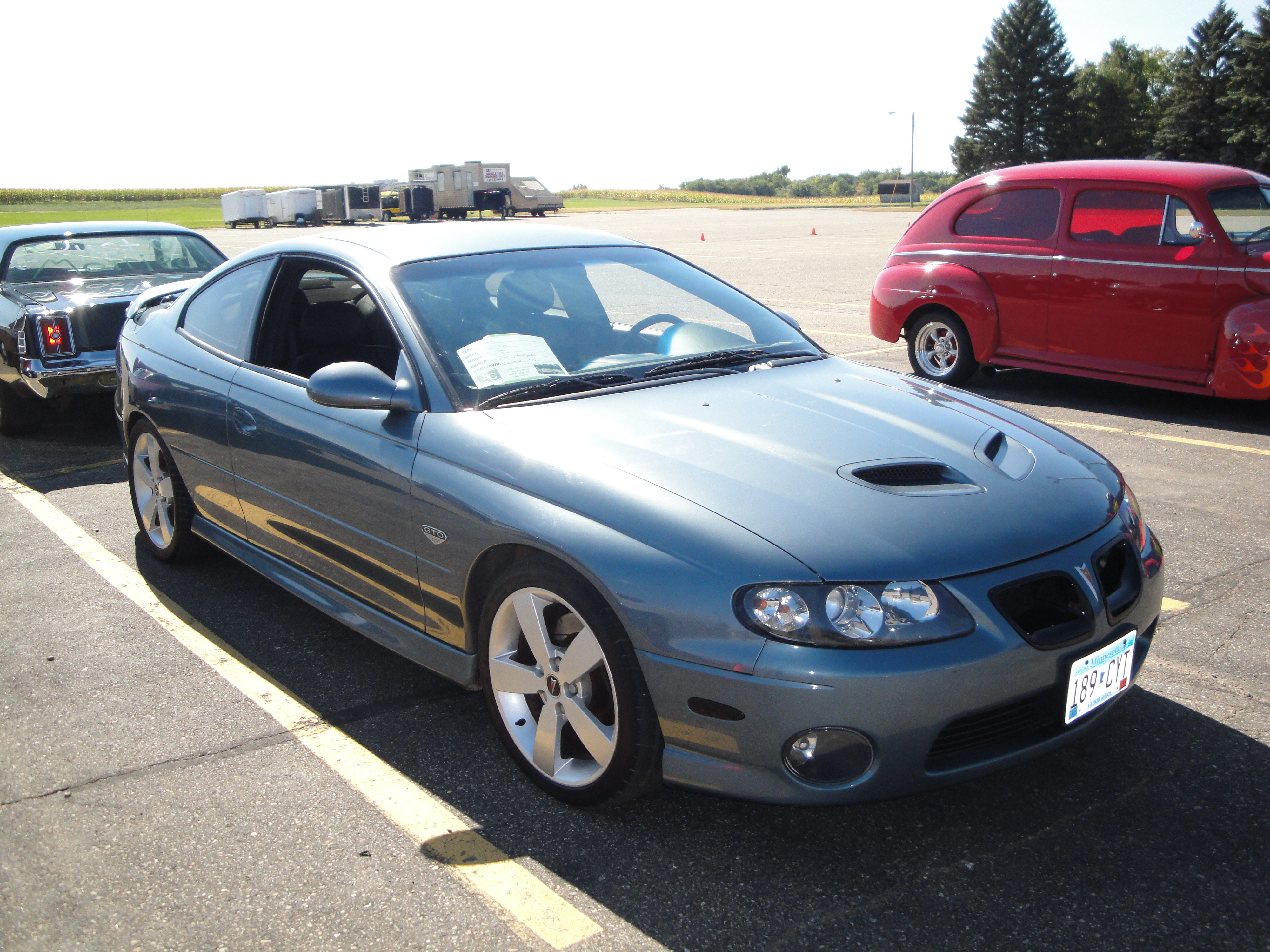
70 GTO
"I'd have the 70 GTO I used to have back, but that does not even come close to matching on an affordable budget anymore."
A “70 GTO” is a Pontiac muscle car from 1970. People love it because it was built to be powerful, but today it can be expensive to buy and maintain.
The Pontiac GTO is a classic muscle car, and the “70 GTO” refers to the 1970 model year. It’s especially remembered for its big-engine lineup and its role in the late-60s/early-70s muscle-car era, which is why it’s a common “dream car” target—even though prices can make it hard to buy on a budget.
four speed automatic
"The eight engine, at least a four speed automatic so you can go down the highway real nice."
A “four speed automatic” is an automatic gearbox with four gears. It’s a straightforward setup that can make highway driving feel relaxed.
A “four speed automatic” is a traditional automatic transmission with four forward gears. For older trucks and muscle-era builds, it’s often chosen because it’s simple, durable, and can keep the engine in a comfortable RPM range for highway cruising.

Chevrolet C10
"... I was going to go back further than that, I'd go C10, C10 with a 350 V8 because the 350 you can find e..."
The Chevrolet C10 is an older style pickup truck. People like it because it’s a solid base for upgrades and engine swaps. The podcast specifically mentions choosing a C10 with a 350 V8.
The Chevrolet C10 is a classic full-size pickup truck, commonly associated with the 1960s and 1970s and a huge aftermarket for restoration and customization. It’s a popular platform for enthusiasts because it can be built with modern or classic V8 setups and used as a street truck or hot rod. In the podcast, it’s mentioned as a direction the speaker would go—specifically a C10 with a 350 V8.

350 V8
"If I was going back further than that, I'd go C10, C10 with a 350 V8 because the 350 you can find everywhere."
A “350 V8” is a Chevy V8 engine (the small-block 350). It’s popular for swaps because parts are common and you can build it in lots of different ways.
The “350 V8” is Chevrolet’s small-block 350 cubic-inch V8 engine, a hugely common swap and parts source in the hot-rod world. Because it’s so widely produced, replacement parts and performance upgrades are easier to find and often cheaper than for rarer engines.
LS
"You know, everybody will say, oh, you should LS go, go LS. They're the new 350s."
“LS” is a type of Chevy V8 engine family. People recommend it for swaps because it’s a modern engine that’s easier to make powerful and easier to find parts for.
“LS” refers to the GM LS-series V8 engines, which became a go-to modern swap because they’re compact, efficient, and make strong power with good aftermarket support. When people say “LS go,” they usually mean swapping an LS engine into an older car or truck to get modern reliability and performance.
oil pressure sending in it
"You know, this is where the oil pressure sending in it is, [3346.1s] where the thermostat is."
That’s a sensor that checks how much oil pressure the engine has. It tells the dashboard so you’ll know if the engine isn’t getting enough oil.
An oil pressure sending unit (sensor) measures engine oil pressure and sends that information to the car’s gauge or warning light. It’s part of the engine’s monitoring system, so you can tell if oil pressure is too low for safe lubrication.
thermostat
"You know, this is where the oil pressure sending in it is, [3346.1s] where the thermostat is."
The thermostat helps control engine temperature by deciding when coolant should start flowing to the radiator. If it fails, the engine can run too hot or too cold.
A thermostat is a coolant control valve that regulates engine temperature by controlling when coolant flows to the radiator. If it sticks open or closed, the engine can run too cool or overheat, which affects wear and drivability.

Chevrolet Corvette
"changes, your life changes. You know, a Corvette does, you know, I've had a Corvette. It did not w..."
The Chevrolet Corvette is a sports car from Chevrolet. It’s designed to be fast and fun to drive. The podcast mentions it because someone has owned one and is talking about what it was like.
The Chevrolet Corvette is a performance sports car built by Chevrolet, typically known for its strong driving feel and its place as a long-time American performance icon. It’s discussed often because owners and enthusiasts have personal experiences with how it behaves day to day and how it changes their expectations of performance. In the podcast context, it’s referenced as a car the speaker has owned and remembers for how it performed.
250 horsepower
"It's about 250 horsepower. Well, I think a lot can be said for staying in your comfort"
Horsepower is a number that tells you how much power the engine makes. Here they’re saying the goal is around 250 hp, not a super high-power build.
Horsepower is a measure of an engine’s power output—how much work it can do over time. In this context, the host is emphasizing that the build target is modest (around 250 hp), which often helps keep parts and tuning simpler for a budget project.
push rod V8
"But yes, I can assemble a push rod V8. It's, you know, it's, once you've done it once, it's kind of the same"
A pushrod V8 is a type of V8 engine where the camshaft uses rods to open the valves. It’s a simpler, older-style design that many DIY builders find easier to work on.
A pushrod V8 is an overhead-valve (OHV) V8 engine design where camshaft action is transmitted to the valves using pushrods and rocker arms. This layout is common in many classic and budget-friendly V8 builds because it’s mechanically straightforward compared with overhead-cam designs.
clear coat
"And one of the things I still want to do is clear coat the 37. And it occurred to me that although I bought wipe on clear coat, it can be spray on clear coat."
Clear coat is the shiny, transparent layer you put on top of the color paint. It helps protect the paint and makes it look deeper and glossier.
Clear coat is the transparent top layer applied over base paint to protect it from UV rays, minor scratches, and weathering. On hot rods, it’s also what gives the paint its final gloss and depth, so technique matters a lot.
takeoff panels
"Um, the actual thought at this point is to practice on the takeoff panels for Thursday that already have a ton of rust on them and that are getting replaced."
Takeoff panels are old body parts that were taken off a car. They’re using them as practice pieces before working on the new replacement panels.
“Takeoff panels” are used body panels removed from a vehicle during repairs or restoration. The host suggests practicing on these rusted takeoff panels (instead of the replacement panels) to dial in the finish before installing the new parts.
Request an Explanation
Heard something you'd like explained? We'll add it to this episode.
Sign in to request explanations for terms you heard.
Want to learn more?
Browse our glossary for plain-English explanations of automotive terms, jargon, and concepts.
Help improve this episode
See something that's not quite right? Our annotations are AI-generated and can sometimes miss the mark. Click the flag icon on any annotation to suggest a correction.