A five-speed manual is a gearbox where the driver selects gears using a clutch and shift lever. In swap planning, the transmission matters because it affects how the drivetrain mounts to the frame and how the engine and driveshaft line up.
They’re saying the engine and the transmission are held up by different mounting points. When you swap parts, you need the right mounts so everything sits correctly and doesn’t cause problems.
Motor mounts are the parts that hold the engine to the truck. When you change engines, the mounts are a big deal because they affect fitment and alignment.
An inline six is an engine with six cylinders lined up in a row. It was a common setup in older trucks. The idea here is to replace that engine with a different one that can bolt in the same spot.
Louvers are slatted vents in the body. They can help let hot air escape from the engine area while still looking cool. The host is saying they might not add them because the original parts don’t include them.
The hood is the cover over the engine. In a custom truck, whether you keep it or remove it changes how the engine looks and how air flows. The host wants the engine more visible, so they’re imagining no hood.
A V8 is an engine with eight cylinders arranged in two sides that make a V shape. It usually takes more space than a six-cylinder engine. The host is aiming to put a V8 into an older truck so it looks and sounds more dramatic.
A valve cover is a part on top of the engine that helps protect the valvetrain area. Some valve covers have decorative lettering on them. The host likes the look of the branded lettering because it makes the engine stand out.
A front clip is the front section of a vehicle—its nose parts like the grille area and fenders. Hot rodders swap these to change the look and fitment without starting from scratch. The host is planning to use a Dodge front end on their International-based build.
A “panel wagon body” is a type of older wagon body shape with more flat, panel-like sides. The builder is talking about the kind of body they’re using for their project.
Term
Tremac transmission
They’re talking about a performance transmission brand. The idea is that the transmission has to handle the engine’s power and also make the car comfortable to drive at highway speeds.
They mean highway driving. They want the car to be able to cruise comfortably for a long time without feeling stressed.
Car
R series international trucks
They’re referring to International’s R-series trucks and saying they’ve built several of them. The big idea is that they put a V8 engine into these trucks to make them stronger for a custom project.
The steering column is the part that connects your steering wheel to the steering system. When you swap an engine, the new engine can hit it, so you may need to check clearance before committing.
Car
Ford 300 inline six
They’re suggesting a Ford 300 inline-six engine for the truck. Their point is that it should fit in the same space as the original engine, and with the right parts it can feel strong—especially in low-end pull.
Torque is the engine’s pulling power—the force that helps the truck get moving and haul without bogging down. More torque usually means better low-speed grunt.
Car
302
“302” is shorthand for a Ford V8 engine that’s commonly used as a performance reference. They’re saying the other engine could be made to match that kind of performance, but with more torque.
Car
Chevy 350
They’re talking about the popular Chevy 350 V8 swap. In this particular truck, it may interfere with the steering column, so you might have to cut/modify the column to get it to fit.
Frame rails are the main metal “backbone” beams under a truck. They checked those, but they didn’t check whether the steering column would collide with the engine, which is an important difference.
Headers are special exhaust parts that replace the factory exhaust manifolds. They can change where the exhaust sits, which can cause fitment problems with other parts.
Valve covers are the top covers on the engine that protect the valve area. They’re saying the valve covers were actually getting hit, which helps you pinpoint the clearance problem.
“351 Windsor” is another Ford V8 engine size (351 cubic inches). People compare it to the 302 because it’s a bigger version, and that can make engine-bay fitment harder in older cars.
Fuel injection is how the engine gets gasoline. Instead of a carburetor, it uses sensors and computer control to deliver the right amount of fuel, which can be tricky to set up on older engines.
Car
73 Duster
A “Duster” is a Dodge car from the early 1970s. Here, the host is saying he built a 1973 Duster into a custom hot rod with a much bigger engine and upgraded brakes.
The Dacia Duster is an SUV made by Dacia. In the podcast, the speaker talks about building one and putting a much larger V8 engine into it. That’s an example of how people customize these cars for a hot-rod style project.
A “383 big block” is a large V8 engine (about 383 cubic inches). It’s the kind of engine swap people do when they want the car to feel much faster and stronger.
A “disc brake rear end” means the back of the car uses disc brakes. People upgrade to disc brakes because they usually stop better and feel more consistent than drum brakes.
A Lincoln Continental is a big luxury car. In this build, the host used parts from a Continental—specifically the rear end with disc brakes—to upgrade his hot rod’s braking.
A “nine inch Ford” is a popular rear axle used in hot rods. People like it because it’s tough and there are lots of parts available to set it up for more power.
A “project car” is a car you’re working on and changing over time. The host’s point is that if you keep modifying it, it stays a project—even if you already had one plan and then changed your mind.
This is a classic Dodge truck (a Power Wagon) from 1972. The host is talking about how they first got it running, then later changed the fuel system by adding fuel injection because they wanted to.
The camshaft is part of the engine that times the opening and closing of the valves. Swapping it can change how the engine runs and where it feels strongest.
They’re talking about saving money by using parts that someone else already owned. You might not lose much money overall, but you usually spend more time hunting for the right parts and making them work.
A carburetor is an older way of mixing gasoline and air so the engine can burn it. Swapping to fuel injection means using a newer system that meters fuel more precisely.
A Model A pickup is an old Ford from the 1930s that people often modify into hot rods. The host is saying his version had a V8 and loud, exposed exhaust headers, but he couldn’t fit comfortably in it.
“Numbers matching” means the car still has its original major parts, like the engine, identified by the same numbers it left the factory with. Collectors like it because it’s more original and often worth more.
A 1965 Ford Mustang is a classic American muscle car. The host is talking about whether to keep it completely original or change parts so it’s more comfortable/easy to drive.
A “three-speed” transmission has three forward gears. That usually means the gaps between gears are bigger, so the car can feel more “steppy” when you accelerate.
Term
ACEs four barrel kit
A four-barrel setup is a fuel/air system upgrade that can let the engine breathe more when you ask for power. It usually needs proper tuning so it runs well in everyday driving, not just at wide-open throttle.
Compression is how much the engine squeezes the air/fuel before it ignites. Lower compression can be safer when you add a blower because boosted engines can otherwise get too “hot” inside and knock.
The intake is how air gets into the engine. If you add a blower, the intake has to be set up to work with it, or the engine won’t get the airflow you want.
3D printing (additive manufacturing) can be used to prototype custom automotive parts like intake components, brackets, or ducting before committing to metal fabrication. Prototyping helps validate fitment and airflow routing, reducing the chance of wasting money on the wrong parts.
A bad ground is when the car’s electrical connection to the chassis isn’t solid. That can cause sensors and electronics to act up because they don’t get a reliable electrical reference.
An exhaust leak means the exhaust system isn’t sealed. If the leak is before the O2 sensor, it can mess up what the sensor measures, which can make the engine run wrong.
A “fuel delivery issue” means the engine isn’t getting enough gas to keep running. The car might start, but then it dies because the fuel supply can’t keep up.
A “clicker fuel pump” is a small electric gas pump. It’s often used as a quick test to see if the engine runs once it’s getting fuel properly.
Term
snipers
“Snipers” here probably means an aftermarket fuel-injection kit. It replaces the carburetor with electronics that can make starting and running smoother.
“Hollies” usually means Holley carburetors. A carburetor controls how much fuel goes into the engine, so changing it can help figure out what’s causing the stalling.
“Cold starts” means starting the engine when it’s been sitting and is cold. If it starts fine when cold but then dies later, the issue is often something that only shows up once the engine is running.
The O2 sensor is a sensor that checks what’s coming out of the exhaust. If it’s wrong, the car’s computer can’t properly mix fuel and air, which can cause hard starting and backfires.
Fuel pressure is how strongly the fuel pump pushes gas to the engine. If it’s not at the right level, the engine can get the wrong amount of fuel and start poorly or backfire.
Some fuel systems have a “return” hose. It sends extra fuel back to the tank so the engine doesn’t get too much pressure or heat in the fuel lines.
Term
345
“345” is probably the engine size (345 cubic inches) in the truck. They’re saying the ACEs setup works well even with that bigger engine when the truck is hauling.
A “two-barrel” carburetor has two openings for air and fuel. When you press the pedal harder, it can open more for extra power, and that can also change how efficiently the engine uses gas.
The distributor is part of the ignition system that sends the spark to the right spark plug at the right time. Here, the host says their ACEs setup includes a distributor/controls that help manage timing.
Timing is when the engine’s spark happens during each cycle. If it’s off, the engine can run poorly; if it’s right, it can run smoother and use fuel better.
Holley is a company that makes performance carburetors. Rebuilding a Holley carb means taking it apart and fixing/refreshing it so it works like it should.
Term
tube arrow
“Tube arrow” doesn’t clearly match a common car part name, but it sounds like the host is talking about an add-on for the truck. They’re saying they’d be okay with it since they’re not trying to push extreme performance.
A fuel leak is when gas is escaping from the car instead of staying in the fuel system. It can make the car run worse and it’s also a fire risk, so it should be fixed.
“411 gears” refers to a 4.11:1 final-drive gear ratio, meaning the driveshaft turns 4.11 times for each rotation of the wheels. A higher numerical ratio like 4.11 typically improves acceleration and towing feel, but it also raises engine RPM at highway speed—so you generally won’t get great highway mileage.
Lifter clatter is a loud tapping noise from inside the engine near the valves. It usually means the parts that help open the valves aren’t working as quietly as they should, and it can get worse when you drive faster.
The “360” is the engine size (a V8) in the truck. The speaker is saying it’s the bigger 360 instead of the smaller 318, and that choice influences how the truck feels and sounds.
Term
318
“318” is the name people use for a V8 engine size—318 cubic inches. The speaker is comparing it to a bigger engine to see if it actually feels faster and whether it uses more gas.
The BMW 3 Series is a car line made by BMW that’s meant to feel sporty but still work for daily driving. The podcast mentions the 318 specifically, meaning a smaller engine version within the 3 Series. People bring it up because different versions can feel different to drive.
The Subaru 360 is a very small, older car made by Subaru. It was designed to be simple and economical rather than fast. The podcast mentions it because people say they can keep running for a long time.
Independent rear suspension means the two rear wheels don’t have to move together. That usually helps the car keep better contact with the road and ride more smoothly.
The front suspension is what connects the front wheels to the car and helps the wheels move over bumps. If you upgrade the back, you may need to upgrade the front so the car drives the way you want.
Staying within factory specs means keeping the build aligned with the car’s original engineering tolerances and fitment expectations. For a budget project, that reduces the chance that one upgrade (like suspension or fuel components) will cause clearance or compatibility problems with another.
A bolt-on suspension kit is a set of suspension parts that you can install using the car’s existing mounting locations. It’s popular for DIY projects because it usually avoids cutting and welding.
They’re swapping in a newer Mustang fuel tank. The key reason is it holds more gas (22 gallons instead of 16), which helps match the needs of the engine they plan to install.
Scope creep means your project keeps growing. In a car build, it’s when you think you’re done, then you notice something isn’t right and you want to change more parts.
Here, “ADD” isn’t the medical condition—it’s slang for always wanting a new project. The point is that some people keep starting over instead of finishing what they already have.
Wheel bolts (lugs) usually loosen one way and tighten the other. On some cars, a few of the lugs use a “left-hand thread,” so you have to turn them the opposite direction to loosen or tighten them.
Concept
trepidation on a couple of the steps with the aces
They’re basically saying they were worried about messing up during the install. If you make a mistake, you might have to buy brand-new parts again, which gets expensive fast.
The Lamborghini Countach is a very rare, high-end sports car made by Lamborghini. It’s known for its bold, unusual look. People mention it because it’s an iconic supercar.
An S-10 chassis means using the frame and underpinnings from a Chevy S-10 pickup. Hot-rodders do this because parts are easier to find and the car can be made to drive more like a modern vehicle.
Steering components are the parts that connect your steering wheel to the front wheels. If they wear out, the steering can feel sloppy or make noise, and replacing them can be important for safe driving.
Ball bearings are small metal parts that help moving parts slide smoothly with less friction. They’re used in many mechanical systems, including some steering and suspension parts.
Car
46 Dodge panel wagon
This is a 1946 Dodge wagon. People like these as project cars because the body style is classic, and they can be upgraded with newer mechanical parts to drive better.
Modern running gear means putting newer mechanical parts under an older car. It’s done so the car drives more like a modern vehicle and is easier to maintain.
The Tesla Semi is a large electric truck designed to move freight. Instead of using diesel, it runs on electricity stored in batteries. The podcast brings it up because it’s part of the conversation about semi trucks and building projects.
They mean the car should be easy to repair when something goes wrong. The goal is that you can diagnose it and replace parts without needing super expensive tools.
That phrase means the computerized tools mechanics use to find problems in a car. They’re saying they don’t want to rely on expensive computer gear to get the car running.
O’Reilly’s is a store where you can buy car parts. The speaker is saying they want to be able to stop somewhere like that and get what they need to fix the car.
The Chevrolet C10 is an older style pickup truck. People like it because it’s a solid base for upgrades and engine swaps. The podcast specifically mentions choosing a C10 with a 350 V8.
Car
350 V8
A “350 V8” is a Chevy V8 engine (the small-block 350). It’s popular for swaps because parts are common and you can build it in lots of different ways.
“LS” is a type of Chevy V8 engine family. People recommend it for swaps because it’s a modern engine that’s easier to make powerful and easier to find parts for.
The thermostat helps control engine temperature by deciding when coolant should start flowing to the radiator. If it fails, the engine can run too hot or too cold.
The Chevrolet Corvette is a sports car from Chevrolet. It’s designed to be fast and fun to drive. The podcast mentions it because someone has owned one and is talking about what it was like.
A pushrod V8 is a type of V8 engine where the camshaft uses rods to open the valves. It’s a simpler, older-style design that many DIY builders find easier to work on.
Takeoff panels are old body parts that were taken off a car. They’re using them as practice pieces before working on the new replacement panels.
LIVE
Welcome back. We've got some fun tonight. What we're going to do is we are going to talk about your project that you've been planning, your quote unquote dream car, but on a reasonable budget.
Muddy brought this topic to us here, so we're going to let him explain it, but first we are going to play that music for you.
Episode 337. This is worth what you paid for it.
If you would like stickers for your toolbox, your car, or any other place, send us your mailing address and we will send you some stickers for free because everybody loves free stuff.
B Squad is, at its core, a roundtable discussion of the four of us who are admittedly rank amateurs in the car world, trying to figure our way into hot rodding.
Four states, three time zones, two sets of brothers, once a week of a meet and bolt of hot rod.
For B Squad Hot Rod, this is Lefty, this is Train, this is Hollywood, and this is Woodchuck, because A Squad has a TV show.
Legal disclaimer, if you try anything we talk about, that's your fault, not ours.
Alright Muddy, tell us what you're thinking on this thought experiment.
Okay, now every time I've ever bought a car, I have this bad habit of, okay, I like it, let's build it this way, and then I start working on it, and then something better comes along idea-wise.
And I'm like, oh, okay, I'm going to scrap everything I've already done and start fresh with this new way, which is the exact wrong way to build a car.
It has to be the wrong way to build a car, otherwise I would have finished more of them by now.
The other option, which is the smarter option, is to sit down in the beginning, and I'm going to tell you what I'm thinking right now, because I'm eyeballing this truck in Texas and this truck bed trailer in Oklahoma and this motor in Missouri, right?
These parts are everywhere, but I could get out of this thing for $2,000 with a running truck, you know?
So my thoughts on this are, there's a cab, frame, front clip, everything, except the bed and rear end in Texas.
Okay, pull the motor out of that, go to Missouri, buy the motor I want, put it in for $300, and then go to Oklahoma and buy the bed and rear end for $200.
So I'm at $1,000 and I've got every major component I need except the drive line.
That's the smart way to do it, because I've mapped it out in my head, this is what I want, this is what I want, this is what I want, let's put it together and build it.
My problem is, I will do that, and then I'll be like, you know, I really didn't want such a slow motor and such a cool car, let's pull this motor out and drop in this expensive motor.
And that's what I'm thinking, how do we keep that from creeping into our heads and stop just wasting money and staying focused on what we need to do to build it the right way?
Now, I'm saying this because I know me, and I've listened to Steve talk about the Mustang, so I know he's just as bad as I am.
So we need Jim and Gail, who both claim that they're just as bad as we are, but we all know better, to tell us how to stop doing stupid shit like that and stay focused on what we need to do to build these cars with the least amount of money possible and just stop bouncing around from idea to idea.
How do we stay focused? That's what I want to know.
Okay, I'm going to start here simply. Your $1,000 for all the parts with the current price of fuel means it's going to be about four grand.
By the time you get all the parts.
So you're aware of that.
We are in the midst of a little bit of a gas war going on.
And it's the upward version, not the downward version.
Oh yeah, it was $4 a gallon to fill up this morning.
Actually, it came down 9 cents a gallon here today. I'm kind of happy about that.
So in answer to your question, you say that ours don't segue to other plans in the midst of things.
I'll point out I have a 55 Buick that I've now had three engines for, none of them gone in, because I keep changing the plan as to what I'm going to do with it.
That's not necessarily a bad thing as long as you're aware of it and have use for the parts that you're not using at that point.
The overall value, the goal is, it depends on your goal.
Is your goal just to have a running car that you can get from point A to point B and go pick up groceries and go get your home delivered Walmart.
Then you may as well just go buy a two-year-old car somewhere.
If your goal is to have an enjoying time building the car and then having something that's special to you at the end, does it really matter if your plan changes four times?
I guess is my point.
I'm going to add something here too.
I rarely do customizations.
The vast majority of the time the cars that I'm buying are essentially restorations.
So there isn't the, am I going to change this motor, am I going to go to something bigger, am I going to change this now?
I know what my parts list is going in because I'm not building a hot room.
I'm not building a custom.
I'm restoring a stock vehicle.
And that's a factor that makes a difference on what you're purchasing.
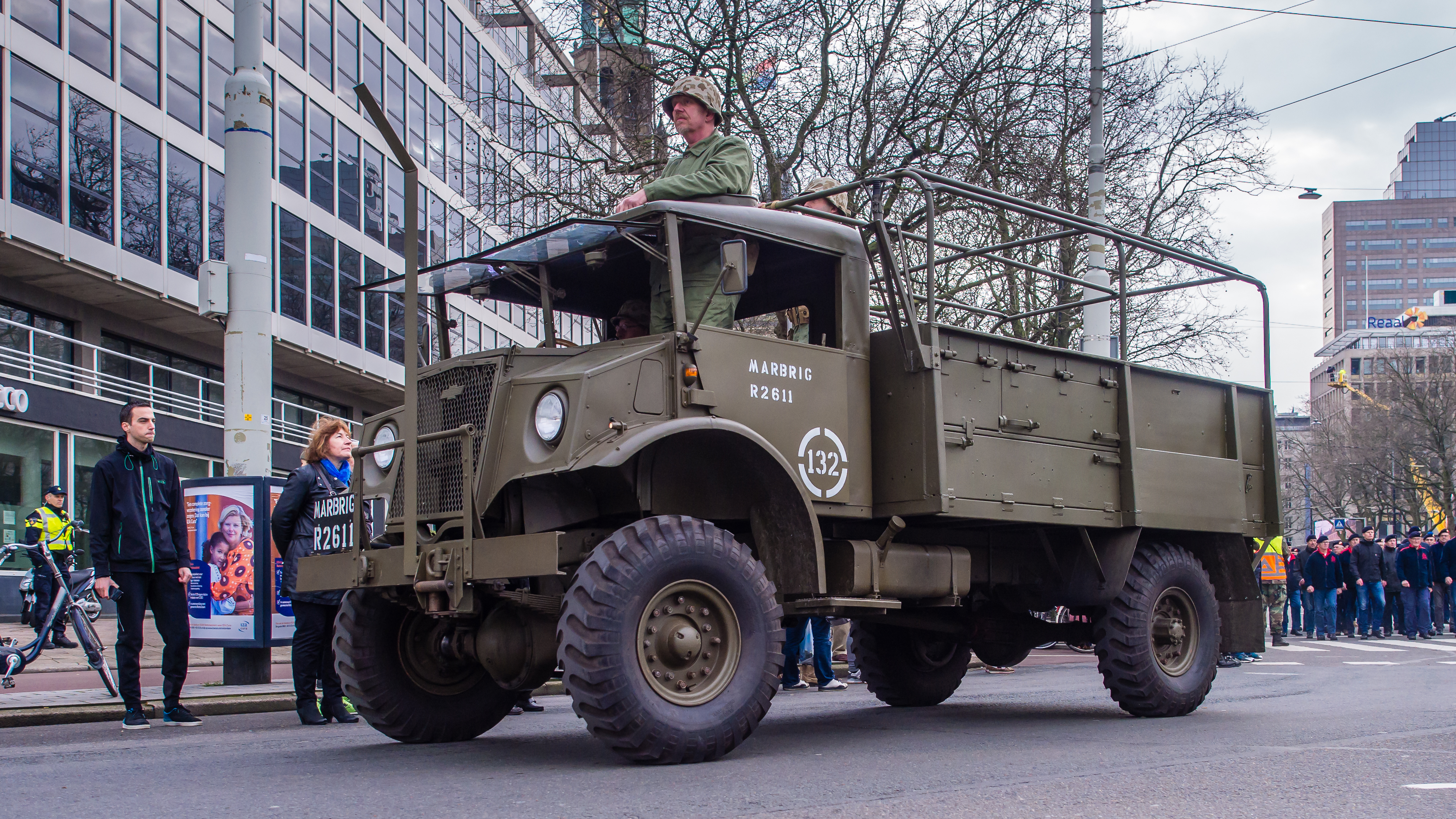
Well, in this case, it's a 36 international pickup.
The bed that I'm looking at is off of a 50 through 56 international pickup and the motor is a 70s 345 international motor with a five-speed manual behind it.
And the way that that motor mounts, because it's early 70s, is from the front, like a 50s car does.
So that it has the separate transmission mount and motor mount, but there's no central motor mounts like on a Chevy.
It mounts at the front like...
It has a place.
Yeah, so it would bolt right in to where the old inline six is.
So that's why I'm thinking that's such a good mix of parts right there, you know?
And I keep envisioning this with no hood, no louvers on the side because, well, A, it doesn't have them.
And I don't know if I'd ever find them.
But B, the whole point is to have that international V8 sticking out of an old international because of that script valve cover that it's got.
This says international.
I just think that would be cool on an old truck where you could see the motor going down the road.
And that's why I'm leaning that way with it.
And plus, again, I found a running one for $300 with transmission.
Which is an amazing deal.
So with my previous comment about the fact that most of the time what I do is restorations.
I should say gathering parts, maybe a little past the gathering parts, but not entirely, on what's probably going to be the first full scale custom I've ever done.
And, you know, I've talked a little bit about the fact that the body is the body cab and body is a 54 or 110 international.
The front clip is a 47 Dodge pickup.
Right. Which to me, the R series international, which ran from 53 to 55 is the absolute most beautiful vehicle ever built.
I hate the hood.
I love it.
I'm doing a different front clip.
Well, see, that's my favorite grill international ever did.
But I understand your reasoning because, and this is a quote from you, I believe.
The, let's see, how did you put it?
The picnic table.
Fenders never did it for me.
I think how you put it.
Very true.
Whether they were on Ford Chevy's or internationals, I've never liked the big flat wide fenders on a pickup truck.
And it is a panel wagon body.
Right.
It's a travel ball.
Yeah, I'm near enough.
I have that R 110 body.
I have the 47 front clip.
I have a motor for it.
I didn't have a real firm view on what I wanted for a motor.
I didn't set out going, I need 800 horsepower and a Tremac transmission.
I want something that will comfortably cruise on the interstate all day.
Get itself out of the out of traffic if I need to.
But I don't need a huge motor.
I don't care.
I just want a decent motor and something that'll run down the interstate.
Right.
As Matt was talking about, one of the motor that's going to go in it is one of the Buick motors he's bought for the 55.
So we never got rid of it.
We have the engine and transmission.
So we're going to reuse that part even though the plan has changed on the Buick.
So we never resold it.
We never got rid of it.
We've hung on to it for, it's only been about a year actually.
So that's what's going to end up going in it.
So we're reusing that part as compared to we've sold it off or at a loss or whatever.
But I have been thinking this through.
This is like I said, pretty much the first custom.
And I have been thinking about it pretty seriously as I have been acquiring parts.
I don't know.
I haven't really, I haven't changed my mind since I've started buying actual parts for it.
I changed my mind several times before I started purchasing.
Maybe that's part of where you have to make that decision.
I don't know.
Now I will tell you, I've built five of those R series international trucks.
Every one of them has had a V8 in it when I finished with it.
And there's a clearance issue with that steering column on, you know, obviously on the driver's side.
But I've always thought that if I did it again, the perfect motor for that would be a Ford 300 inline six.
Just because it takes up the same amount of space as the Silver Diamond 220 that came in it.
And, you know, you can get speed parts for it that make it just as good as any 302 out there, but with more torque.
So that would be the way I would go if I was doing it again, but you already have the motor.
So as long as it's not too wide, you should be fine.
But a Chevy 350 will butt up right against that steering column.
And you have to kind of sledgehammer modify the steering column in some spots.
So just a heads up warning on that.
We checked frame rail to be honest, but I don't think we checked for the clearance on the steering column.
So that could be important.
It depends on the headers for use or the exhaust we choose to use.
But isn't the, you know, it was the valve covers that were hitting.
So isn't the Buick wider than the Chevy?
No, it's not.
Okay.
I don't believe so anyway.
And we could be wrong.
I'm a ways away from actually starting to put in a motor.
So I'm a ways away from starting on it yet.
I get some other goals I got to accomplish first.
Yeah.
And if I'm not wrong on this, and I usually am wrong on stuff like this, isn't the Ford 302 351 Windsor, isn't that the narrowest V8 you can get?
I thought for sure it was.
I don't know.
I never look at Ford motors.
Unfortunately, I have one.
But it's wider than the 302.
My neighbor just built a 302 for his shoebox Ford, and he's having the devil's own time with that stupid fight tech fuel injection system.
So I'm loaning him an 850 car, which I think is way too much for a 302.
His mechanic says it's perfect for it.
So we'll see what happens.
His mechanic needs his head examined.
I agree.
Rolling back.
How do you plan out your project?
Never considered that the steering column might hit.
So that's an interesting question and probably something to look at.
But at least I didn't buy the motor before we thought about that.
I already had it hanging around.
I was going to say in stuff, but that would be an overstatement.
Or an understatement with your collection.
Motors take up a lot of space to store.
I am finding that out.
Yeah.
But I guess my question becomes, it sounds like you're planning it out, building it and then changing your mind.
Yeah, that's what happens.
I get into it and then I see something cooler.
I built a Duster one year, a 73 Duster.
Put a 383 big block in it with the 727 torque flight.
And I put a Lincoln Continental disc brake rear end under it.
And then changed the front to disc brakes off of a Valara.
And that was a screaming machine.
The problem was that it sat like one of those hot wheels that you jack up on the back with the back end all the way up.
And I didn't like it, but I'd already spent all that time and money doing it.
So I had to change it to something else.
And this was almost 30 years ago, my daughter was a baby.
So I don't remember what I changed it to.
But I'd spent all that money on that Lincoln rear end and I was so mad at myself for it.
But I changed it because I didn't like the way it worked out and I came up with a cooler option.
So I think it was a nine inch Ford, but I'm not particularly sure that I remember for sure because 30 years is a long time.
But that happens to me a lot.
It's like, okay, this is great.
Oh, look, it isn't what I thought it was.
Here's another option.
Let's go spend another $300 here and undo all the work I've just spent two months doing.
I regret the work way more than I regret the cost of the parts.
To harken back to a previous episode on what constitutes a project car, the question becomes...
Somebody's never going to let that go.
I think it was Lefty whose view was that anything that when you go to make a change, it becomes a project car again.
Well, at some level, a project car in my mind, a project car by its very definition is something that you're changing.
You're doing modifications.
Well, maybe not modifications too, but it's not going to just be what it was to start with.
And is it then a problem other than maybe cost?
Is it then a problem to have changed your mind and decided to make a modification to an existing project?
I've got a 72 Dodge power wagon that the initial goal was to get it running.
That took a camshaft and some other work and it runs and it's good.
And I drove it that way for, I don't know, a year or two.
Now I put fuel injection on it because I wanted to.
That's really what it comes down to as much as anything else.
I had a little bit of problems with the carburetor, but not a lot.
And so I put fuel injection on it for no reason other than because I wanted to.
So to me, that's not a problem.
I will admit I had problems with the fact that I bought a carburetor for it and now I was buying fuel injection for it,
but we're going to reuse the carburetor on another project.
So reusing the parts makes it less of an issue to me.
I think most other people, or if you're limited on space for storage, you make the change and then sell the old parts.
And you're mostly buying used parts to start with.
So it's not like you're buying a fuel injection for $1,000 and selling it for 500.
You're buying used parts for 500 and I don't know if you're reselling them for 400 or 500 or what.
But the only thing you actually lose out of it is the time and effort.
And if you got enjoyability out of it, if you enjoyed what you did and working on the car and ended up with something you liked,
I don't see where it's a problem.
I always have a problem doing something the second time, though.
Doing it the first time on a car, I enjoy beyond belief.
But doing it the second time, it just drives me crazy.
Like one year I made custom door cards for 53 international pickup.
Driver's side, beautiful, loved every second of it, spent all this time making it absolutely perfect.
Dreaded the passenger side for two months because I just didn't want to do it again.
And that's kind of where I'm at on like the changing the carburetor to fuel injection thing.
I've already got it running on this.
Now I got to do it again.
You know.
I could see that.
I guess part of the question, I mean, it sounds like for the current project you're scoping.
You've put a lot of thought into it.
Is it then something based on your previous experience?
Is it something that even though you've scoped this all out and know what you think you want,
you're going to change your mind after you build it?
No, this would be the final project, I think.
I think this would be the last one I did because it's the one that I've been building to all these years.
I've been learning every project I've ever done.
I've learned more and on it.
And I've always had in mind building something from the mid 30s with a V8.
And I almost did it once before and I have a picture of it somewhere of a Model A pickup with a 4302 with like zoomy headers on it that I had.
I just, I didn't fit in the Model A pickup.
I am way too big for that.
I had to take the steering wheel out every time I got in it.
So that wasn't the perfect one, but I learned a lot on it.
Eventually, this will be, like I said, this is the final project.
When I finally do it, I think it's the last one I'll do because I want to build it so perfect it's going to take me the rest of my life.
If that makes sense.
Well, it does, but I'll admit my taste has changed over the years is your taste going to change 10 years from now and you decide you need to modify it because it's no longer what you wanted 10 years before.
And that's a probability.
It's not a problem in my mind, but your goal of scoping it out the right the first time, or at least that's how I'm reading what your goal is here.
That's a problem.
I mean, we all get older, we change our taste changes, we change what we want.
I joke about that blue BMW I bought because it's driving on easy mode.
There's days I take it because I don't have to think about it.
I don't have to work at it.
I don't have to do anything.
It's driving on easy mode and that's fun and it's good.
But I also have stuff that's not driving on easy mode and I like them when I got them.
But does that mean when I'm 15 years older, I'm still going to want to drive that stuff that isn't as easy to drive?
I don't know.
So do you include the ability to change what you want as being an acceptable reason for modifications?
We have a friend who has a 65 Mustang, all original, numbers matching, all nine yards.
And she's at the point where she wants to take the four speed manual out of it and put an automatic in it so that she can drive it.
I think I remember this story because Steve was trying to get the four speed at one point.
Well, I thought I had an automatic to give her.
And then I got really confused on what the third pedal was for.
Well, I didn't even pay attention to the pedals.
I started pulling it apart and I'm going, there's something going into the torque converter.
Here, what could this possibly be?
And as I ran through the options in my mind, I'm like, yeah, or maybe it's a clutch and that comes from the clutch pedal.
And I look inside the car and go, I'm an idiot.
There is not an automatic in here.
It's a three speed or a four speed or whatever it is.
I absolutely love a three speed.
That's my favorite manual transmission ever.
Just that jump between first and second just makes me so happy.
You should try one in a Humvee would not recommend.
That that long throw between first and second is not my thing.
I want something in between because I want more control over my speed.
I'm a control freak when it comes to that stuff.
So that's me if I can orange cone this a little bit.
You know, never.
Yeah, that doesn't happen.
One thought for you on if you've already bought the parts.
And I had to deal with this with the Mustang I'm building mostly because I didn't know what I wanted, right?
I wanted to know how it was going to perform with the setup before I bought it.
And obviously the setup's not even there, let alone how would I know how it would perform.
So I bought the, I think it's just the standard ACEs four barrel kit.
And my theory was I'm going to throw this on.
If I don't like it, I will deal with it later rather than seeing the next shiny object and going there before it goes in.
So I guess my advice is once you've bought the parts, if it's reasonable, put them in first and see how you like it.
May not be exactly what you want or now, but it might be.
You might go, no, no, this works really well, actually.
Or you can say, hey, I need 50% more power.
This thing's got to come off.
I got to put a blower on it where, you know, we got to go full hog, maybe even more than what I wanted to change it from initially.
Yeah, I thought about that.
I thought about putting a blower on a 345, but because it's, you know, it's a very low compression engine.
So that wouldn't be that big a problem.
But all I could think of the whole time was, where the hell am I going to find an intake for a 345 or the blower?
Yeah, design it and build it.
We just did.
I just helped Travis do one.
I prototyped it for him out of on the 3D on our large 3D printers for to put a pass or no.
I remember which supercharger he got on a.
Yeah.
Roots blower basically on the 300 inline six.
He's putting in a Ford.
Nice.
Yep.
But the point is, if you have the parts, put them together, see if they work and see if you like it, even if you know you want something else.
Because then you have a baseline of, okay, this does this.
Do I need more?
Do I need less?
Whatever it takes.
Well, I will tell you this from the research I've done, and it's fairly extensive on those systems.
The aces is the one that people seem to like the most.
I have heard that spy tech is very difficult to get running.
It is.
I've been fighting with one for a week now.
I was going to say, I don't have any firsthand experience on that.
Having never installed one before.
I've helped me with the electrical, but I did the majority of the work myself on the aces and it runs.
It doesn't run as well as I want.
But it starts and runs.
Absolutely gets down the road.
The one time it wouldn't, we discovered that we had a bad ground.
Well, it tells you all over in the instructions to make sure you have good connections.
Fair enough.
All right.
Now I have a backfiring problem.
Everything points to potentially an exhaust leak in upstream of the O2 sensor and giving it bad data.
Okay.
That's next up in the near future to try and sort of.
But even though it's not running as well as I want, it's running.
And I think that cuts itself to something.
I mean, it's at least running.
I don't know.
It's from what you were talking about with your neighbors.
It doesn't sound like his spy tech is running.
No, it is not.
We can get it to start.
We can get it to idle for about two minutes and then it just dies.
No matter, you know, we think it's a timing issue.
So we've been fighting with the timing for a while.
Now he thinks it's a fuel delivery issue.
So I'm buying a, he helped me get the Thunderbird home.
So I'm going to go buy him a, one of those little clicker fuel pumps.
It sounds like a prime.
It sounds like it runs on prime and then dies.
So I'm going to buy him that so that he can see if it runs on that.
Otherwise he's going to use that carburetor that I've got and see what more happens with it.
So I don't have any experience with snipers, with Hollies.
I think you got to, everything I know is that ACEs for the price point,
ACEs seems to be the one to go with.
There's a lot of information out there.
It started and ran.
Don't get me wrong.
But the troubleshooting I've been doing now to try and get it to run better.
I'm not calling ACEs.
I'm cruising the internet and cold starts fine.
Hot starts bad.
Okay.
Here's how to change your fuel levels and the 160 and 190 temp range to improve that.
See if it works.
You know, here's three things that could be causing your cold,
your heart start problem and three things that could be causing your backfire problem.
The one consistent thing between all of them.
I remember the third thing I looked up and all of those say it's potentially, you know, an O2 sensor problem.
Okay.
There's a lot of information out there.
I haven't Googled the other ones.
So I don't know if that same level of just general internet information is out there for other ones.
For your neighbors, honest to God, I would say get on Google and see what says.
I'd find something useful.
I'm also going to make a suggestion there on getting a clicky-clack fuel pump.
Most fuel injections do not run on the standard seven to 10 pound fuel pumps that are the clicky-clack fuel pumps.
Check the fuel, what the fuel pressure needs to be at the fuel injection before you put it on.
That may be the entire problem.
If it's only running on a seven pound pump and it needs 35 psi, that would be your problem, your whole problem.
That could be worth looking into, but he's looking at the fuel pump to run the carburetor, not the carburetor run on seven psi, yeah.
I think he's actually going to have to put a regulator in the line because I think it's going to give too much fuel to the carburetor.
We were talking about not getting the carburetor running, but talking about trying to get the fuel injection running.
You don't want to run a carburetor at 80 pounds.
That could be fun to watch for about 10 seconds.
Your fuel return line better be big.
What is this fuel return line of which you speak?
That's the thing that gave me another mile and a half to go and out of my truck.
That's what that thing is.
Most fuel injections also do need a return line.
Right.
The main thing I know about the ACEs is that Dan Hayes at the binder Boneyard swears by him.
I mean, that's the only thing he's putting on the old internationals and he's getting those up to with a load running that on a 345.
He's the two barrel ACEs.
He's getting, I think he said 17 miles to the gallon out of them, hauling a trailer.
So yeah, it's definitely worth looking into.
I'll admit, I did it for Christmas and my birthday.
The ACEs I bought also included the distributor with the controls for the distributor.
So the timing is controlled by the ACEs environment.
So that isn't my issue.
And maybe that's helping it run.
Because you said timing was one of the things you were hunting.
Don't know.
I can't say that I have a lot of experience.
They're both reading different.
So it's kind of weird.
So we're trusting the better, the one we think is the better one.
Yeah.
And I don't know.
I'm sure that there is comparison studies out there on what, you know, which ones are better.
I just don't have any experience with anything but the ACEs.
So it will at least get you home.
It will get you home.
And for people that are doing performance and tuning them and stuff like that,
it seems like the snipers are still the best way to go for that.
If you just want to run, you know, the ACEs are, you know, two thirds the cost.
Right.
And in the case of what I'm talking about building, I think the, if I went fuel injection,
I think ACEs would be the way to go.
But the truth is, I think I would just rebuild the holly that comes on it.
And a little tube arrow, I'd be fine with that because I'm not trying to scorch the roads.
I'm just trying to have a cool looking truck that I particularly enjoy driving.
Yeah.
I don't have a particularly good justification for why I was putting fuel injection on this truck.
I really don't.
I wanted to play with it.
At $4 a gallon, that extra mile and a half a gallon you just said you got is justification enough.
No, no, no.
That was the return line.
Okay.
So one of the goals.
One of the goals was to get the truck up to getting 10 miles per gallon.
Okay.
It used to get sticks.
I would put a fuel return line on and then it was getting eight and a half.
Yes.
And I figured ACEs would get me over 10.
I'm back down to sticks.
But I also know it's not running right.
It's running, but it's not running right.
So that is part of what we are sorting through.
No, and we discovered a fuel leak, not a terrible one, but a fuel leak.
So that probably wasn't helping the mileage either.
So, yeah.
No, so far I haven't gotten that, gotten it up over to the 10 that I wanted.
This is your W100, isn't it?
You're talking about?
200, yeah.
It's a three quarter ton.
200.
So we're looking at 411 gears on both ends.
So yeah, you're not exactly going to be getting highway mileage in that.
No, no.
It can't reasonably...
Well, you could drive at 75 if you really want to, but it's the original engine and
it has a lot of lifter clatter.
And so anything over about 65, it sounds terrible.
You probably told me, but is that the 318 or the 360?
360.
Nice.
Yeah.
It's my snow truck.
Well, I've heard your opinion on the 318.
So I'm curious what your opinion on the 360 is.
About the same.
I actually like the 318s better.
For those people who've never heard it before, my opinion of Dodge 318s is they run like
crap, but they run like crap forever.
So 360s are about the same way.
They just don't get as good a gas mileage.
Yeah.
I have the 360 in the power wagon in the 72 Dodge.
I have the 360 in a 97 Dodge truck as well.
And I don't know if it's just my expectations or what, but I really feel like the 360 is
an underpowered motor.
The 318, going from a 318 to a 360, I don't really feel like I get any improvement in
performance.
I just get worse gas mileage.
And so I'm just not...
I have no problem with the 360.
It runs fine.
I just don't think it buys me anything over a 318.
Well, years ago, an episode of Horsepower TV broke out the big three.
It was the Chevy 350, the Ford 351, and the Chrysler 360.
And the 360, even though it had the most cubes, was the weakest of the three by far when it
came to horsepower and torque.
The 318 actually was a better comparison to the 350 and the 351.
Yeah.
I believe that.
I really would.
Now, don't get me wrong.
It's not worth changing out the motor for nothing.
It's there at runs.
It's fine.
I'm not going to make the effort to change it to a 318 just to get a 318, because it's
going to get me, what, a mile per gallon.
And I'd still have to get the motor.
So not that 318s are hard to come by.
Although it has occurred to me, I could put a 57 Hemi in it, but not easily, but I could.
Hey, at least you're willing.
That's more than train.
Train hates horsepower.
I have enough zero or a very low horsepower vehicles to work that out of my system.
And for those who don't remember, as far as this podcast goes, hate mail goes to train at
EsquadHotRide.com.
We need some hate mail.
We have not had some for quite a while.
Yeah.
And remember, hate mail is red verbatim.
Yes.
Yes.
We make train read that.
And he has read all sorts of interesting things, including nursery rhymes.
Okay.
Muddy, question for you.
You kind of started this with your rows of indecision, right?
Right.
And to confirm the problem here, it seems like you find something new and shiny and
want to do that instead of the path you are already going down.
But do I have that about right?
Absolutely.
Correct.
Okay.
Because it occurred to me how a squad deals with this.
They just buy another project.
Well, yeah.
I mean, that's how I do it too, but I'm not a squad.
And here's the difference, right?
Because I've been thinking about this while you and Gail were talking.
A squad sits there, they get their car finished, obviously in a week with editing and
all the, you know, the TV magic and the mechanics that come in after hours and help them out.
Yeah.
But they get their project done, you know, relatively quickly.
And then they go on to a new project.
And that's when they say something like, well, I've always wanted to play with this.
So I'm doing this on this project.
And they do it and they get it done.
And then they go play with something else.
Our problem is, A, we're not finishing projects that fast.
We're at all in some people's cases.
We're not talking about that right now.
You can't prove anything.
So I think that may be at the heart of where we're at.
It seems like it's a natural thing to go, ooh, this is the new shiny, let's go play with it.
But we get stuck in a middle ground where we're already in the middle of something.
And we have to play with it with what we have rather than the next project coming up to where we can go.
Okay.
We did a carburetor on the last one.
Let's throw a fuel injection on this one and see how that works out because I want to see how it works out.
You know, in some cases, it makes perfect sense when technology changes.
Like, you know, going from an eight track to a cassette tape player to a CD Bluetooth radio.
That makes sense.
You know, it's just a natural evolution of technology and it's a quick, easy change.
But, you know, sometimes classic is cool and you need to stay that way.
And I can't ever wrap my head around that part because, you know, I was thinking when I was looking at this truck,
I'm thinking, you know, I have that independent rear suspension in the back with disc brakes on it.
Well, yeah, but then I've got to change the front suspension.
And then I've got, you know, and so I really have to rein it in because I want the best of the best.
I want what you want with a Mustang.
The best of the it ever was.
But I want that on a poor man's budget.
And I quickly ran into, I need to stick with what I have bought.
And I kind of, I'm going back to this, but for a different reason with the Mustang, because it fits and it's ready to go, right?
Trying to change something or start customizing things.
Then you're kind of, you've pigeoned hold of yourself and you can't, you can't get out of that very easily,
especially if you don't have skills like Daniels, right?
Welding, machining and all the equipment to do it on the fly.
So I've tried very hard to stay, not factory, but within factory specs for all the parts, right?
The kits that will bolt on for the Mustang, because I know that they won't get in the way of something else that I'm putting in, like the gas tank.
That's why I went with a bolt on suspension kit is because I knew it was going to work with what I had and not get in the way of the other stuff I'm doing.
For the gas tank, I got a later Mustang gas tank, so a next generation, because it was a 22 gallon instead of a 16 gallon.
And the engine I'm putting in there is going to need it.
So I gave up some trunk space, but I knew those were going to work because they fit that factory chassis.
So that's kind of why I've stuck with, I've got this, it's going to work.
And let's put it on, let's see how it goes.
And we talked a lot about projects and when it'll be complete with a project, right?
That was one of our very recent episodes.
There's no such thing.
Yeah, that was kind of the...
Yes, but okay.
There's always something else you want to do to it.
It's because you think you're finished doesn't mean you are.
Yeah, but the point is, if you put it all together and you're going, it's just not cornering the way I want it to, you know, then you can go back in and change those specific parts.
I guess I am just a huge fan of, in theory, I'm a huge fan of get the things you need to do, install it, see how it goes from there.
Now in practice, Scope Creep is my friend.
Yeah, he hangs around my shop a lot.
Well, and I think Muddy's response to your comment there, where he says it's never done.
And my viewpoint is, there is a point when it's done, or it's at least done for a while.
Maybe where he and I come out differently on, I just don't feel the need to go back in and change it to the next newest shiny thing.
And maybe that's really where the fundamental difference lies.
It may be a personality thing, in which case, sorry Muddy, I got nothing for you.
Yeah, that ADD thing, especially when it comes to automotive.
Well, and...
ADD is you just buy a new project.
Okay, sorry, go on.
Tell that to my wife.
Well, the thing is, first thing to do is get it running.
Because your vehicle is no fun if it's just sitting there, you know, in the corner of a shop and you're never driving it and stuff like that.
The other thing is you can't troubleshoot anything on it if it's just sitting in the corner.
It's got to be running, it's got to be, you know, you've got to be doing something on it.
You know, the old code of, you know, your project won't work unless you do.
It's very true.
Now, there's that reasonable expectation.
You know, unfortunately, you know, watching a lot of them that were on Discovery TV and the hot rod TV and motor trends for years, you know.
Yes, we did this in a week.
No, the normal person is not going to do it in a week.
They might put an engine in in a week, but they're not going to put the entire car together in a week.
And installing ACE's fuel injection is a week, not two hours, which is, you know, what they make it look like.
Right.
Yeah, it might be a two-hour job for somebody who's done it a couple of dozen times before, right?
And that's what they do.
They're sitting in the shop and they're like, yeah, we upgrade fuel systems.
We got two texts that that's what they do all day long.
But I've come to realize that I look at the the instructions and they say, yeah, it should be a four-hour job.
And I just translate that into weeks for me.
It's going to take me four weeks to do, right?
Because I got to go find the tool and I got to go do this and I'm going to get called out of the shop to go do something.
And that's just the speed at which I work.
Matt and Kaylee are much faster than that, you know, four-hour job in the instruction manual for them might be close to four hours or maybe six or maybe eight.
But I know for me, it's going to take days and like full days of working on it and I can't string those together.
Well, and sometimes one of the things we run into is when something doesn't work right or you're reading the instructions and 90% of the instructions are really good.
And then one thing they like give you it's a six-step process and they give you one line and you're like, what the heck?
How is this supposed to work?
Just move the cross member. No big deal.
Yeah, exactly.
I run into that when I'm building furniture that lives by, it's good by furniture and I have to be the one to put it together.
And invariably, one thing gets put together upside down or backwards every time.
And it's because the instructions suck at that point and then I have to start over.
So I get it.
It's going to be the same thing with something technical.
I usually don't deal with things that are so technical.
I haven't done them before when it comes to cars because I'm very particular in what I will do because you all jump in and learn something new.
But I'm not going to try and rewire the whole thing without somebody who's done it standing there because I don't want to burn it down.
Somebody did that.
Who was?
Oh, yeah, that was trained.
We benefit from having somebody else to bounce the ideas off of.
Have somebody else look at it and go, what the heck?
Does that even make any logical sense?
And so we benefit from having somebody else who could look at it.
Both of you guys, apparently your neighbor might be useful.
Yeah.
In case anybody's curious, Joe's Class 6 on YouTube.
But yeah, he's a good guy.
He comes down and helps me whenever I need it.
And I go help him whenever he needs it.
And, you know, Steve's got John.
So we've all got hours.
John's an hour or so away.
John is not right there.
But yeah.
He's also a phone call away, though.
So, you know, call him and say, I'm having this problem.
And then camera phones are a thing.
So assuming somebody could learn to use a camera, Steve.
John just needs some help with technology.
That's all I got to say.
It's rough with him.
But yeah, phone calls are a thing.
And I know, Jim, you said several people, you know,
call you on a regular basis.
One of them's talking currently about, hey, I'm having this problem.
I've tried X, Y and Z.
I don't know where to go from here.
And usually, usually it doesn't even have to get to a camera
or anything of that nature.
You have the answer.
It blows me away how many times you've done that for me.
It's like, yeah, it's probably this or maybe this and this,
but check that first.
So yeah, the phone call, the phone calls a huge help.
But Gail, you're absolutely right.
If you got somebody who can look over your shoulder and go, oh,
yeah, don't forget on those cars, those lugs spin left instead
of right, you know, that can be a huge help.
I still find it amazing.
I can get those off.
Boy, my brain cannot handle getting those back on.
Ah, yeah.
That's right.
The R110 I have has three wheels that are left hand thread.
Yeah, that's not stuck.
No, it's not.
It only came with the ones on the driver's side.
The first day I learned that was I nearly broke my arm trying
to get those off with a four way.
And I'll be honest with you, Steve, an answer to your earlier
comment that, you know, I can probably shoot some things by
phone and stuff like that.
That just means I've made more mistakes because you learn by
making the mistake.
And I had the very good fortune of having people as I was getting
into the car culture who were good visors to me too.
So it's just I'm in grade.
I hate to put it that way, but you know, it really kind of is.
You just and be willing to take a shot at it, you know, you
know, what's worse is going to happen.
One of the ones I follow semi, I wouldn't say regularly, but
I enjoy watching is the guys who do paint.
And their whole idea is if you mess up, it's just paint.
You don't overthink it.
It's just don't overthink it.
It's just paint.
I wasn't afraid to rip a truck completely apart over the weekend
and drive it back to school Monday.
But as I got older, I don't know what happened, but I've gotten
more and more cowardly as I got older on getting in there and
destroying something.
You've learned the consequences.
Yeah.
It's the same thing I was just saying.
You made the mistakes and now you're like, OK, I don't want to do
that again.
You know, yeah, and we all do it.
It's not, you know, I laugh because, you know, people say how
you change over the years in high school.
I drove a 74 international three quarter ton.
And now I'm looking at buying another international.
So obviously I haven't.
I think part of it, you know, I had trepidation on a couple of
the steps with the aces because I didn't want to tear up a
thousand dollars worth of new parts.
I had a very real moment before we actually hooked up the power
and powered it on for the first time and checked everything
again because I didn't want to blow up expensive new parts.
I get it.
I can see that a thousand dollars hurts anybody's budget.
Yeah.
Especially you guys who go buy two cars for that budget.
Only on Thursdays.
Yeah, Thursday was cheaper.
On that gale real quick, what?
Because I have the same thing.
I'm like, man, I got approval to buy this.
But if I screw it up, I'm never going to get approval from the
chief financial officer again on on getting one of these.
But I start looking at it going.
It's nice.
It's pretty and it's pristine in the box, but it's not doing
what I need it to do.
So either I got to make it do what it needs to do.
Or I should probably just send it back because, you know,
just having the box there isn't doing anybody any good.
Yeah.
And that's that's what gets me kind of over the.
Okay, go ahead and double check it.
But at some point you just got to grip it and rip it and and
then I always see.
I don't know if it was fry burger.
Anyway, it was one of the TV personalities.
They had a shirt that said I void warranties.
And, you know, they were doing cool custom stuff and it was
like, yeah, if you're going to play outside the box, you got to,
you know, take those chances, make the cuts, you know,
void the warranties and, you know, also take responsibility
for doing it.
You know, don't expect them to replace the part after you say,
yeah, I cut in half because I thought it was going to work,
but it didn't.
So can you send me a new one?
Yeah.
But it's like, you know, if you're going to do cool stuff,
you got to break the normal stuff.
And that's that's always helped me in those situations.
Yeah.
And I'm trying to improve my skill set to the point where I'm a
little more comfortable than I know what I'm doing.
So I think my odds of breaking it are lower.
Yeah, there's a lot to be said for mitigating risk, right?
Yeah.
It seems like things work out for two groups.
One group, which like total newbies don't know what they don't
know.
And they're like, yeah, we're just doing it because and for some
reason they seem to make it work more times than not.
You get it in the middle and it's like, I'm trying to do this
custom thing and I broke it like four times and
I can't get it.
Or you've got the people who, you know, they've done it 20 times
and they're like, yeah, you can push it exactly this far.
Don't don't go past that.
You know, and they usually make it work.
So it's, I just kind of found that it's almost a reverse
bell curve of how things work out.
And somehow I always end up right in the middle of that where
it's like, I'm not the newbie who gets lucky and gets it to
work and I'm not the experienced guy who's done it 10,000
times so it never works.
It's interesting, but you're right.
It really does tend to work that way.
I guess I'm trying to move to the, maybe not have done it 10
times, but at least have enough understanding and knowledge to
be able to understand how to do it, right?
You know the rules, you can break the rules, right?
Yeah, exactly.
But okay, so I'm going to orange cone this sort of.
So the way I initially read Muddy's thought on this for
tonight was what would be your ideal car?
And for Muddy right now, we know that it would be a, you know,
international harvester truck with a V8 engine and, you know,
the things he pointed out earlier that he would want in it.
So let's go a little further.
Steve, what would be your ideal?
My ideal project that I don't currently have.
My project car, ideal car.
Doesn't have to be a project.
Okay.
Ideal car.
And we are sticking within some sort of reasonable budget.
Some sort of reasonable budget.
Yes, you cannot choose a Bugatti with your personal mechanic.
Yeah.
Yeah, that's fair.
Mine would be a Kuntosh, but yeah, fair.
I want a either pre or post war era pickup.
And it'd be reliable enough to be my daily driver.
I'm kind of over new vehicles.
There's a lot of technology and a lot of stupidity that have
kind of congealed into these new cars.
So recently I've had my eye on a 55 Studebaker,
but I'm not completely sold.
I'm looking for one that looks the way I want it to.
And I think in a perfect world, I'd have it set on a S10 chassis
or some mid 90s, half ton chassis to where I could find parts
for things that were out like ball bearings, steering components,
things like that.
Okay.
That makes sense.
Okay.
Gail, what about you?
Okay.
It's important to note that I've been scoping a project for,
you know, five or six months.
If it was completely, well, it's not price no object.
It would still be somewhere under 50,000.
I would love a 46 Dodge panel wagon with modern running gear.
And by modern running gear, I mean, you know,
kind of like what Steve was talking about,
drop it on an S10 frame so that with,
I'm not staying too front end, so it handles well,
so that you can drive it anywhere and parts would be readily available.
And it's a driving on easy mode, but with the look of a 47 Dodge
panel wagon, since those aren't readily available,
semi working on building my own.
One thing that makes sense as well.
I really like is the driving on easy mode.
And the other half of that for me is fixing on easy mode.
Right.
I don't need $40,000 of electronic diagnostic equipment to,
to make it run right.
I want to be able to, well, this sounds terrible.
I want to be able to break down in the middle of Nebraska,
go to an O'Reilly's and get the part I need to fix it.
Not have to special order.
Yeah.
Perfectly said.
Yep.
We're on the same train there.
All right, Jim, what you got?
All right, if I was to have my, my ultimate, I'd have, I mean,
you guys have all heard me say this before,
I'd have the 70 GTO I used to have back,
but that does not even come close to matching on an affordable
budget anymore.
You just can't do it.
So if I was to have something today that was just a vehicle to
drive the, you know, I would just have a good time with whole nine
yards.
And it would be a, I do a pickup, but I want a regular cab.
I don't want the extended cab on the pickup, regular cab pickup.
Don't even care if it's short bit or long bed.
I actually kind of like the look of a long bed better,
but the performance of a short bed better.
So I'm, I'm, I'm even, don't even care about that.
The eight engine, at least a four speed automatic so you can go
down the highway real nice.
It is driving on easy mode.
I don't, if it was a five speed manual, I'd go with the two,
but I'm going to say a four speed automatic and at a minimum.
And, you know, I've looked at it and if I was going to go with
something say built in the last 10 years, to be honest with you,
I would go with a Dodge two wheel drive pickup.
If I was going to go back further than that, I'd go C10,
C10 with a 350 V8 because the 350 you can find everywhere.
You know, everybody will say, oh, you should LS go, go LS.
They're the new 350s.
I'm like, yeah, but I know the old 350s.
I don't even have to think about them when I go and look at them.
I know, oh, this goes here, this goes here.
You know, this is where the oil pressure sending in it is,
where the thermostat is.
You know, I don't even have to think about them when I go look
at them.
So I would go with that kind of a thing.
That being, having said that, what I realized is when I looked
at this question from Muddy, that over the years, my tastes have
changed.
What I wanted 20 years ago, 30 years ago, even 40 years ago is
different than what I would have today.
And I think that's one, it's, you know, familiarity.
Once you get to the point of, oh, yeah, I've done that.
Going back to Muddy's thing of, you know, he gets bored at one
thing and then wants to work on something else.
That's part of it.
But I also think it's the fact that, you know, your taste
changes, your life changes.
You know, a Corvette does, you know, I've had a Corvette.
It did not work in our lifestyle.
Did I like driving it?
Oh, hell yeah.
Do I think it's a good idea for Gail and I as a home use car?
Nope, I don't.
So that wouldn't be on my list right now.
So that's just my thoughts on it.
But like I said, that's what I was thinking when Muddy posted the
question.
I'm afraid I wasn't as clear about that as I should have been.
No, it just gave us two questions to discuss.
Question for you, Jim.
Is this a daily driver or is it going to be for a specific
purpose?
What's that?
The truck.
Oh, so, you know, technically we're retired.
So they're all daily drivers for a special purpose.
For, you know, a daily driver for a gas mileage mobile.
Yeah, I've got a little car that I drive.
But and with the price of gas right now, there's not a lot of
people that want to V8 is there as their daily driver.
But I'm not opposed to it either.
I don't mind daily driving Thursday, the C10 I've got.
It's fine.
I'll drive it daily, drive it.
No problems.
It is important to note that it's been lightly modified.
It does not handle like an original C10.
It was 10 of 350 or 305?
350.
It's a 350.
It's just a little 250 horse, but horse one.
It's not a big boy.
It's not, you know, pushing 600 horses or anything.
It's about 250 horsepower.
Well, I think a lot can be said for staying in your comfort
zone, especially if you want something that if it breaks down,
you can fix it without a whole lot of headache, right?
I don't know that I've watched you assemble one in your sleep,
but if you told me you could.
I'm willing to believe you.
I can't do it in my sleep.
I do have to pay attention to it.
But yes, I can assemble a push rod V8.
It's, you know, it's, once you've done it once, it's kind of the same
for doing it on any other one.
There may be a couple little, little specific differences
engine to engine.
But really, once you've done it once, it's the same procedure.
Now that being said, I don't do paint.
I don't do body work, you know.
Yeah, we're, we're kind of missing that specialty in our group,
aren't we?
Well, I've been, I've been playing with it more and more.
I did some on the 40 Chevy Gales 40.
I think you saw the results of that.
There's no holes in the fenders anymore.
So, you know, it's improving.
But again, it's that you got to do it a hundred times before it
becomes second nature to you.
Yep.
And I haven't done it a hundred times.
Yeah.
And, and even, uh, I know both you and I have gone through Kevin
Tate's, um, paint you Cation, you, uh, so his online paint classes,
which are excellent.
Uh, but he says more than once in there, hey, this is not a
replacement for getting out and painting.
This is just kind of to, to get you up to a point where you know
what's going on.
So I've been toying with this idea, Steve, I know you have been
listening to episodes while I was doing other things and you were
talking about practicing painting.
And I, one of the things I still want to do is clear coat the 37.
And it occurred to me that although I bought wipe on clear coat,
it can be spray on clear coat.
And I am not a hundred percent convinced yet, but I'm joined with
the idea of practicing doing painting with clear coat because
if you screw it up, you can only screw it up so much.
You can end up with runs.
Yes.
And you'd have to polish those out and repaint, but at least it
won't be like totally horrible, right?
That's my theory.
There might be a, I might be completely wrong there.
But since I was starting with the concept of doing wipe on, I'm
like, how much worse could it be if I sprayed it on?
I, I think that would probably be a real good idea for two reasons.
Uh, one, I believe, and I am speaking from a deep pool of ignorance.
So.
Yeah, me too.
Hate mail goes to train on this one.
Uh, but I have heard from people who are not nearly as ignorant as I,
that the most difficult type of paint to spray is the,
the base clear all in one.
Because if you screw up on that, you have screwed up your entire
paint job and you're going to start all over.
Um, if, if you use a different base and a different clear coat
and, and are able to do that, if you screw up one step, you kind of,
you know, buff it out, scratch it out, whatever that step calls for.
Um, and then you can cover that up and then go on to the next step.
So I, I think you're, you're right on with that one.
Uh, the other thing is clear coats, really easy to practice on
before you start praying, spraying on the car, right?
Um, anything from, uh, furniture to cardboard, you can spray
some of that on and, and get a fairly good idea of, Hey, did I spray too
much? Did I spray too little? Um, and without a whole lot of expenditure,
you can, you can kind of see if you're close enough to put it on the car
or if you want to, uh, practice a little more.
Or you can just practice on one of those 10,000 cars you've got sitting in
your field. Um, the actual thought at this point is to practice on the
takeoff panels for Thursday that already have a ton of rust on them
and that are getting replaced. So, you know, don't practice on the
replacement panels. Practice on the takeoff.
There, then you can sell those as, uh, what would you call them?
Um, souvenir side.
Custom art from the famous podcasters. That's what you sell it as.
Yeah. Uh, pre patina panels.
There you go.
Clear coated for protection. It's simple bolt on procedure to make your
C 10 look old.
Yeah. There you go.
I will point out most C 10s really don't need that.
Come factor in salt.
Yes, it does.
What was my comment? It got there the honest way? Yeah.
You joke about that, uh, but there was an old saying back to international
because that's what I know the best. Um, the internationals came from the factory
rusted and there was a reason for that in that they all bought their
metal from the same people, but they were in outside storage, uh,
basically giant carports and they had the rolls of steel and the further
into it you got the more expensive the metal was because it was
furthest from the weather and international being cheap bought the
stuff on the edge because it was the cheapest metal, but it was already
resting from the elements before it went to the factory.
One of those little trivia things you learn when you hang around that
community way too much.
And here I was just being facetious when I said factory is installed rust.
I didn't know it was an actual thing. Yeah.
It's a little scary, but it makes sense.
International harvester in Vegas.
All right. Do we have any closing thoughts on this?
Cause I think we've, uh, we've rounded the corner and we're kind of,
kind of got this, uh, subject wrapped up.
Well, the only thing I can think of is what Gail said well ago,
which is basically it's a personality flaw that I can't stay on trap.
It's a flaw. It's only a flaw because you choose to view it as a,
I think it's just a choice.
I like your, I like your description better.
It's not how I do it, but it doesn't mean it's wrong.
It's just a different choice.
I think she's telling you not to make bad choices, muddy.
Her and Liz should just get together and whip on me or something.
Uh, no, I'm just poking at you a little bit.
Uh, yeah, I, I see it as a completely human thing, right?
We, we see something better. We see something shinier.
We want to go play with that. It's, it's normal. Um, I guess it's,
how much is, uh, is your wallet willing to take on that end?
Sadly, not much because I don't have your CFO Steve.
Well, there, there are definitely limits. Let, let, let me tell you that.
So, but I mean, that's, that's the quandary that all car guys fight with.
Right. Like Jim was saying, everybody wants to drive the Bugatti.
There are very, very few of us that can afford to actually do that.
Uh, I'm certainly not one. Um, but, you know, when it comes down to it,
do you bruh buy the brand new super Cobra jets engine to stick in your project?
You know, that's going to run you 30, 35, $40,000,
or do you get a used Coyote, um, for, you know, less than a 20th of that.
Um, and I know I do and buy a $300 motor.
Yeah. And I know I straight into Ford there, Jim.
So, uh, you'll, you'll have to excuse me, but that turns out I'm kind of a Ford guy.
And Ford keeps trying to fix that for you, but they're getting closer.
I'll tell you what, we don't have to do anything but sit and watch you drive them.
No, push them. No, no, no, no, no.
After his last trip back from here, all we have to do is sit back and watch.
No, I mean, that's, we don't drive our forwards. We push our forwards.
I did it today. I know it well.
Yeah. Yeah. Guilty as charged.
I mean, don't get me wrong.
You know, we ran into problems with, uh, the car we're about to take on the,
on the cruises and, uh, the heater core started leaking.
So, you know, we spent a day.
Okay. Let me change that.
Gail spent a day under the dash taking it apart and putting in the new heater core
and cause he kind of fits better than I do.
And I worked on other things while she did it. And, you know, it happens.
You guys are coming my way. Gail, you can fit under my dash and help me with my brakes.
Why do you need to get under your dash to fix your brakes?
I don't fit.
Why do you need to be under your dash to fix your brakes?
The power assist. I got to take it out and I can't reach the bolts because I'm too big
to get up on there and get them.
Oh, okay.
I thought, I thought you had children for such things.
I have children, but getting them away from the computer long enough to hold a wrench
is proving to be impossible.
I see.
So, we recently did some work on the Comet and look for that special tool.
Sometimes there's a special tool to get in there.
And any more with the advent of the Internet, they're not stupid, expensive or hard to get anymore.
To change the front spring purchase on the Comet, we found a tool that compresses the shock
without having to use one of the hook type spring or compresses the spring
without having to use the hook type spring compressors that might or might not stay in place.
Oh, the exploded 2000s.
This thing was slick.
It went right into place of where the shock absorber goes, cranked it up.
I mean, we had to sit there with the lever arm a little to get it moved around the base pocket,
but it was way safer.
It was way easier.
There may be some special tool out there to get those bolts out
without having to crawl all the way under the dash.
Or you do it the way I've done it a long time ago in Thunderbird that we had,
and that was, I just pulled the front seat.
It's four bolts.
It was easy.
It didn't have power seats, though.
I think your T-bird has power seats.
I had power seats.
It's not the Thunderbird that I'm having that problem with.
It's the Cordoba.
Oh, okay.
No.
Same thing.
It's only four bolts, because that's the bucket.
Front seat's right.
Yeah.
Yeah.
Just pull the seat.
I didn't get back to the, I've already pulled the seats once.
I don't want to do it again.
I think I'm usually not the hard part.
It's getting it back in.
Right.
Well, I mean, brakes aren't that important.
I mean, you did it a thousand miles without them, you know.
At least had one brake that might have worked on the way there without the power assist.
I have the master cylinder pulled off, so I have no brakes at the moment.
Yeah.
Check it.
I don't know on that one.
Not sure.
It's not quite specific enough to need a specialty tool, but it's possible.
No, but somewhere.
No, that's just, I'm sure I could do it with a couple of wobble joints and enough extensions.
But I just don't like laying that way.
It hurts my back.
You get under there, you know.
Yep.
Yes, I do.
And there's always the alternate plan of, you know, do you fix it with an ATM card?
Yeah.
Yeah, I thought about doing that too.
But who do I trust?
These are brakes.
These are something I need to, you know, I don't trust a lot of people because that's my life.
A brake shop?
I know that sounds silly and all, but, you know, I'm sure there's brake shops there.
There is.
One note on that, the first time I did brakes, and I mean, I got a manual, opened it up and
said, okay, I guess I'm learning how to do this.
And my question was the same way.
How do I trust myself to know I did it right?
And the answer was, that's what brake tests are for.
You know, take your car out to any safe spots and get it going five miles an hour and slam
on your brakes.
And if that works, and only if that works, do it again at 2530.
I had the advantage of learning to do brakes with adult supervision, so it wasn't so bad.
I think the first thing I ever worked on as a kid, I used to work on loosely because I
had hand tools, was the rear drums on a 62 Chevy pickup.
So that's, you know, that's my, I remember learning that as a kid.
The main thing I learned was don't take both apart at the same time.
Yes.
Yeah.
Always keep the other one so you have something to look at and go, how does this go back together?
The other good one with Gail on brakes was she learned to do drum brakes and did nothing
with drum brakes.
And then about two years later, she did a set of disc brakes and she was like, that's it.
I'm done.
Yeah.
This is way easy.
No more drum brakes for me.
I thought everybody went to disc brakes because they brake better.
No, it's just they're easier to change.
Okay.
Yeah, it was funny.
I got new front tires on the Comet and the tire shop pulls off the two front tires and they
go, this is old enough that it's got drums on all four wheels.
Yeah.
Yeah, you could still have 14 inch rims on that one.
Yeah, it's 14.
Yep.
I'm like, yeah, drum brakes were a thing.
They really do work for us.
All right.
Do you guys know what else we need that we haven't gotten in a long time?
Eight mail for train.
Pictures of, yeah.
Pictures of listener rides.
We do want to see those pictures.
It's not just a saying that we've memorized to say at the end of the show, send us your pictures.
If you do, you'll probably be featured as episode art on one of these episodes here.
We love to show off our listeners projects, whether they're running or not.
And if you get really ambitious, you can come on and tell us all about working on your project and
trials and tribulations and definitely bring a B Squad move to go along with that because we will ask.
And you can help us make fun of Steve.
Well, I mean, that's not hard, but yeah, you're welcome to.
Not obligatory.
It's just for fun.
So send us those pictures for B Squad Hot Rod.
This is Steve.
And Gail.
And Gail.
And Muddy, because A Squad actually knows how to finish a project on schedule and without changing their mind 700 times.
701.
Wait, 23
Thank you for listening to B Squad.
See all you Hot Rod heroes next week.
If you want to help us out, subscribe and review us on your podcast app of choice.
Don't find us on social media.
We're on Facebook and Twitter at B Squad Hot Rod.
Also, emails go to host at bsquadhotrod.com.
We are looking for some interviews.
If you have a completed project, if you're in the middle of a project or if you've just started, we want to hear about it.
We want to hear about your B Squad moves.
We want to hear about what went well.
And most of all, we would love to have you on the show.
If you want to set that up, drop us an email.
Hosts at bsquadhotrod.com.
H-O-S-T-S at bsquadhotrod.com.
About this episode
Budget “dream truck” planning takes center stage, with the hosts talking through how to source parts cheaply, estimate real costs (including fuel/travel), and avoid mid-build scope creep. They compare International swap ideas—engine/transmission fitment, mounting layouts, and steering-column clearance—while also debating practical build sequencing and the pain of redoing work. The conversation widens into fuel-system choices, troubleshooting, and why drivability and parts availability matter as much as horsepower.
This week we talk about building a project car, but with a reasonable budget. Or at least that was the plan. Orange cones abound in this fun discussion about how things should vs actually do work.