Power steering helps you turn the wheel with less effort. If a truck doesn’t have it, steering feels much heavier, especially when you’re stopped or going slowly.
Aftermarket parts are things added to a car after it leaves the factory. Here, they’re talking about adding air conditioning after the truck was already built.
The clutch is the pedal you use to connect and disconnect the engine from the transmission. “Clutch movement” means how you let the pedal back up—smoothly and at the right moment—so the car starts moving without stalling.
With a stick shift, you’re controlling two things at once: the gas (throttle) and the clutch pedal. The “balance” is getting them timed so the car moves smoothly instead of jerking or stalling.
When you let out the clutch, there’s a moment where the car finally starts to pull forward. “Where it grabs” is finding that exact moment so you can take off smoothly.
The Nissan Stanza is an older Nissan sedan that could be had with a manual transmission. Here it’s the car the speaker learned to drive a stick in, so it’s a real-world example of practicing clutch control.
They’re saying the Nissan Maxima from that era had a similar boxy look. It’s just being used as a comparison to help picture what the Stanza looked like.
To “stall” is when the engine shuts off. With a manual car, it usually happens when you release the clutch too fast or don’t give enough gas while starting.
A manual transmission is a car where you choose the gears yourself. You use the clutch pedal and the shifter, so you have to learn the timing to make it smooth.
The shifter is the stick you move to pick the gear in a manual car. If you’re used to driving manual, you might accidentally reach for it when you get into an automatic.
A “hot rod” is a vehicle that’s set up to feel fast and fun. Here, the host is saying the pickup drove more like a performance car because of the engine and stick shift.
A VQ engine is Nissan’s V6 engine design. The host is saying the truck had one installed, and that’s a big reason it had surprisingly strong power for a pickup.
“Four liter” means the engine is roughly 4.0 liters in size. Bigger displacement often helps an engine make more power, which is part of why the truck felt fast.
“King cab” is a pickup body style designation used by some manufacturers for an extended-cab layout—typically with smaller rear seating than a full crew cab. The host contrasts King cab with other cab sizes to explain the truck’s overall size and why it felt more like a compact hot rod than a big full-size truck.
The Ford F-150 is a popular pickup truck. Here, the host is saying that the VQ-powered truck he bought had more horsepower than the F-150’s V8 options at the time, which made it feel like a “hot rod.”
The Ford F-100 is an older Ford pickup truck model. It’s smaller than the newer F-150 trucks people are used to today. The podcast brings it up while comparing older truck options and what was available back then.
“VQ platform” here basically means the Nissan V6 engine family and how it performs. The host is saying that engine made strong power, which is why they liked it so much.
Gearing ratio is how the car’s gears change the engine’s power to the wheels. Different ratios can make the car feel like it pulls harder or wants to keep going in first gear.
The Nissan 350Z is a sports coupe from the Z lineup. The podcast talks about how the shifter feels, saying it’s “notchy,” which usually means it has a more defined, mechanical feel. It’s mentioned because people often remember the 350Z for how it drives.
“Notchy” means the gear lever feels like it has distinct steps. When you move it into gear, it doesn’t feel smooth—it feels more like it clicks into place.
Valet is when a worker parks your car for you. Here, they’re saying you might want to avoid giving your manual car to someone who can’t drive it.
Term
engine and exhaust sound
They’re talking about the noises you hear when the engine starts and when the car drives away. Car people often pay attention to those sounds because they can tell you how the car is running.
An exhaust bay is a workshop spot where mechanics work on the car’s exhaust system. They’re saying they could hear the car start while it was being worked on.
“Rev” means how fast the engine is spinning. When you’re learning a stick shift, watching for RPM changes helps you know when the clutch is starting to take hold.
Term
audible
Here “audible” means you can hear something. The car makes sounds that can tell you when the clutch is starting to take hold so you can move smoothly.
On a stick shift, the clutch pedal connects the engine to the wheels. When the clutch starts “grabbing,” the car begins to move because power is finally transferring to the drivetrain.
Clutch engagement is how the clutch connects the engine to the wheels when you let the pedal out. A good engagement feels smooth and predictable, while a worn clutch can feel jerky or unpredictable.
Term
driving classes
Driving classes are lessons with an instructor to help you learn how to drive safely. If you’re learning a manual, they can teach you how to use the clutch and shift gears.
Term
driving with one of us
This means the learner practices driving while someone more experienced is there to supervise. It’s the real-world practice part of learning to drive.
Term
parking lot thing
It sounds like practicing driving in an empty parking lot. It’s where new drivers learn basic control before dealing with real traffic.
It’s an automatic gearbox that uses two clutches instead of one. Because it’s always ready with the next gear, it can shift faster than a typical manual.
This just means the automatic gearbox has seven different gear ratios. More gears can help the car stay in the right engine speed for smoother driving and efficiency.
The Hyundai Veloster is a small hatchback. Some versions were sold with a manual transmission, which is why it comes up in a discussion about whether manual cars are going away.
The Hyundai Elantra is a popular compact car (a sedan). Some versions have been available with a manual transmission, which is why it’s mentioned in a stick-shift discussion.
Simulated gear shifts are fake gear changes made by the car’s computer. They’re meant to copy the feeling of shifting in a gas car, even though the EV doesn’t work the same way.
The red line is the engine’s maximum safe speed range, where the car warns you not to exceed it. In an EV with simulated “rev” behavior, the red line becomes a digital cue to mimic when you’d normally hit the top of the rev range in a gas car.
Downshift resistance is the feeling that the car doesn’t want you to shift into a gear that would be wrong. The host says the EV tries to mimic that protective feel when you downshift.
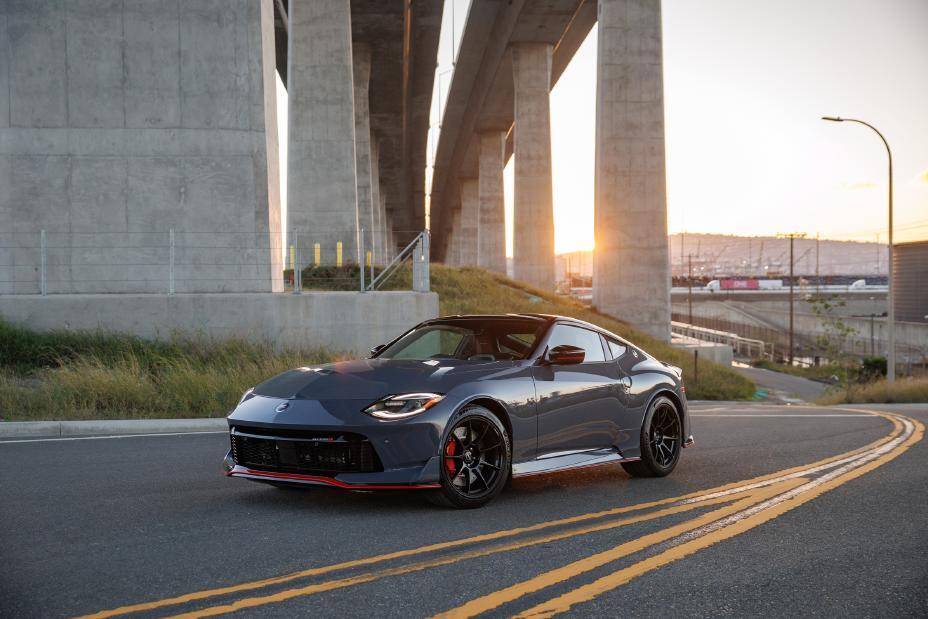
“Z” in this context means Nissan’s Z-series sports cars. The podcast is talking about what kinds of Z cars you can find at dealerships nearby. It’s mentioned because people often shop for specific versions, like certain transmission types.
Turbo tech means the engine uses a turbocharger to push extra air in. That can make the car feel stronger in a different way than older naturally aspirated engines.
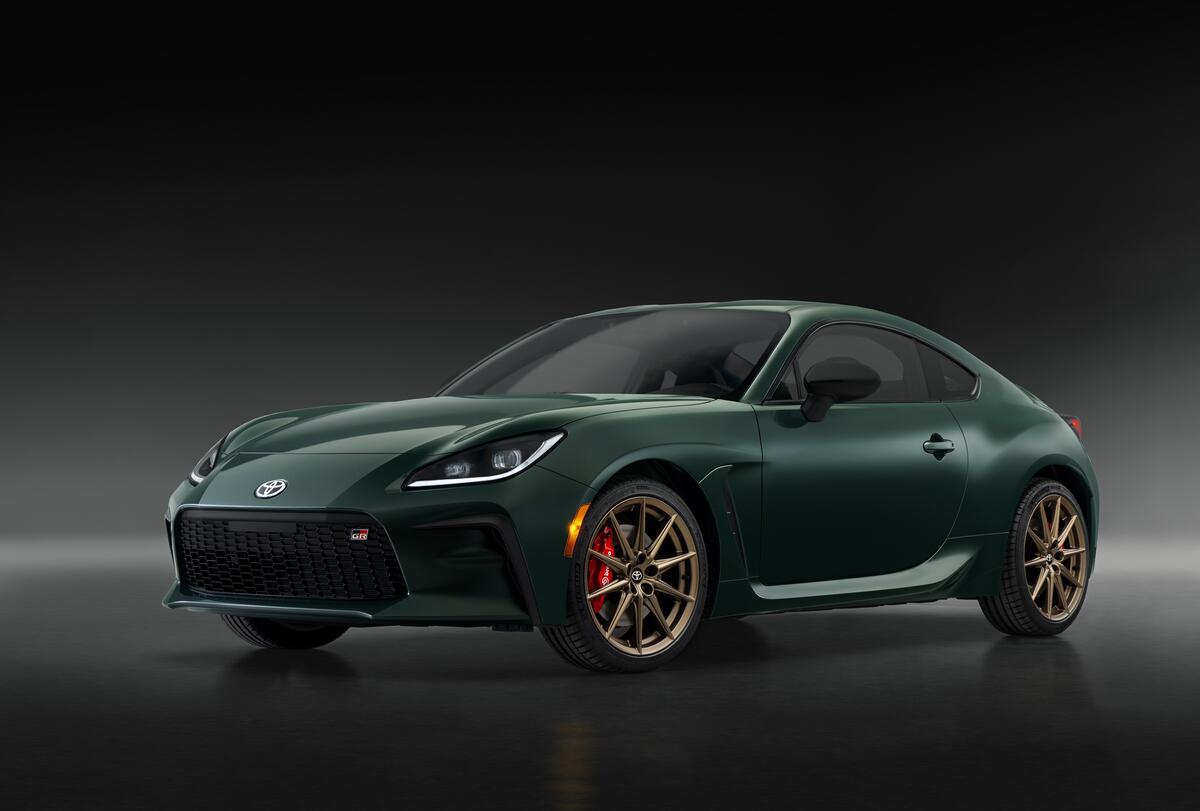
The Toyota GT 86 is a small sports car that many people like specifically because it can be had with a manual transmission. It’s also rear-wheel drive, which helps make it fun to drive.
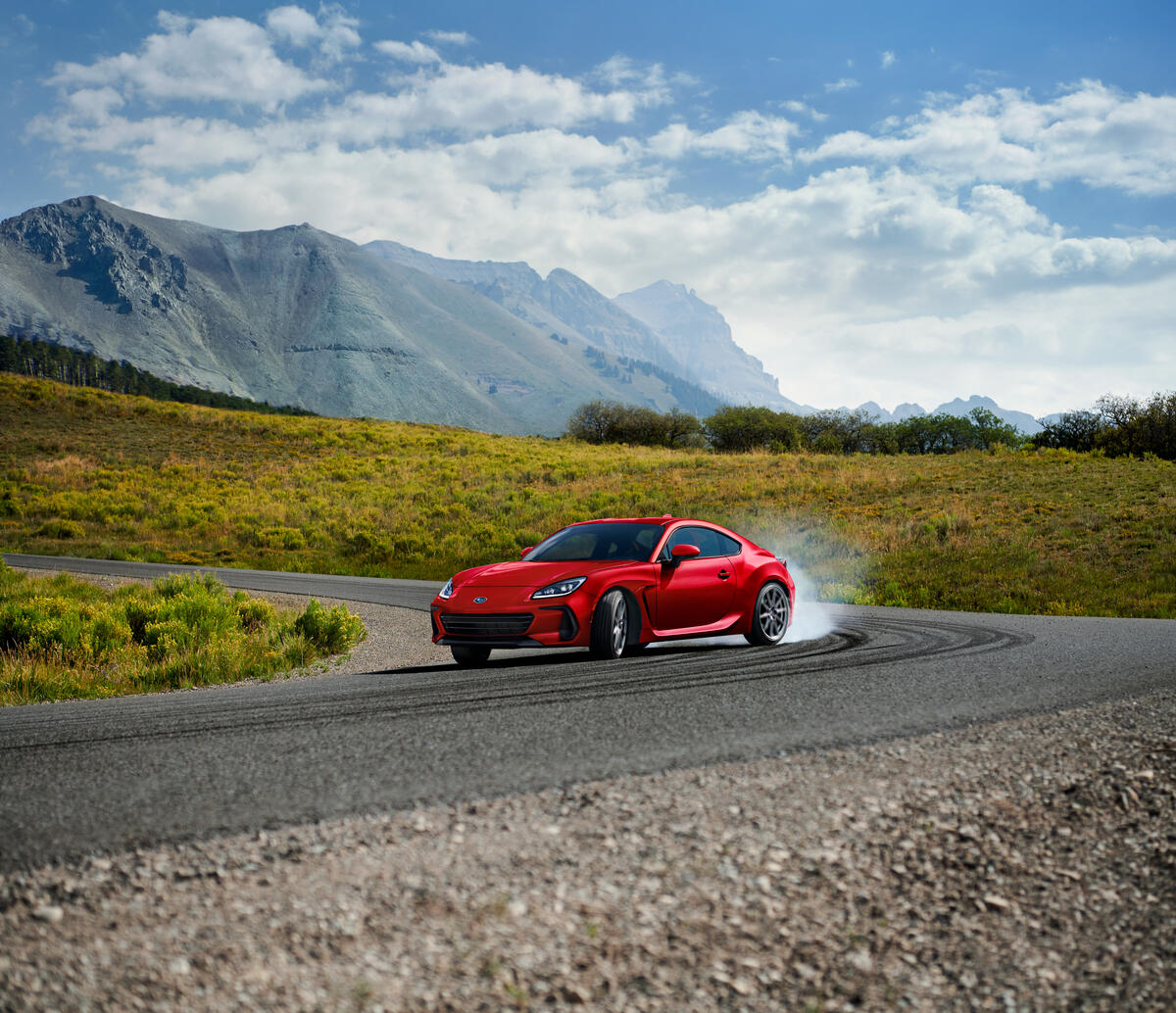
The Subaru BRZ is a small sports car that’s known for being rear-wheel drive and available with a manual. The speaker is basically saying it’s one of the cars people look at if they want a stick shift.
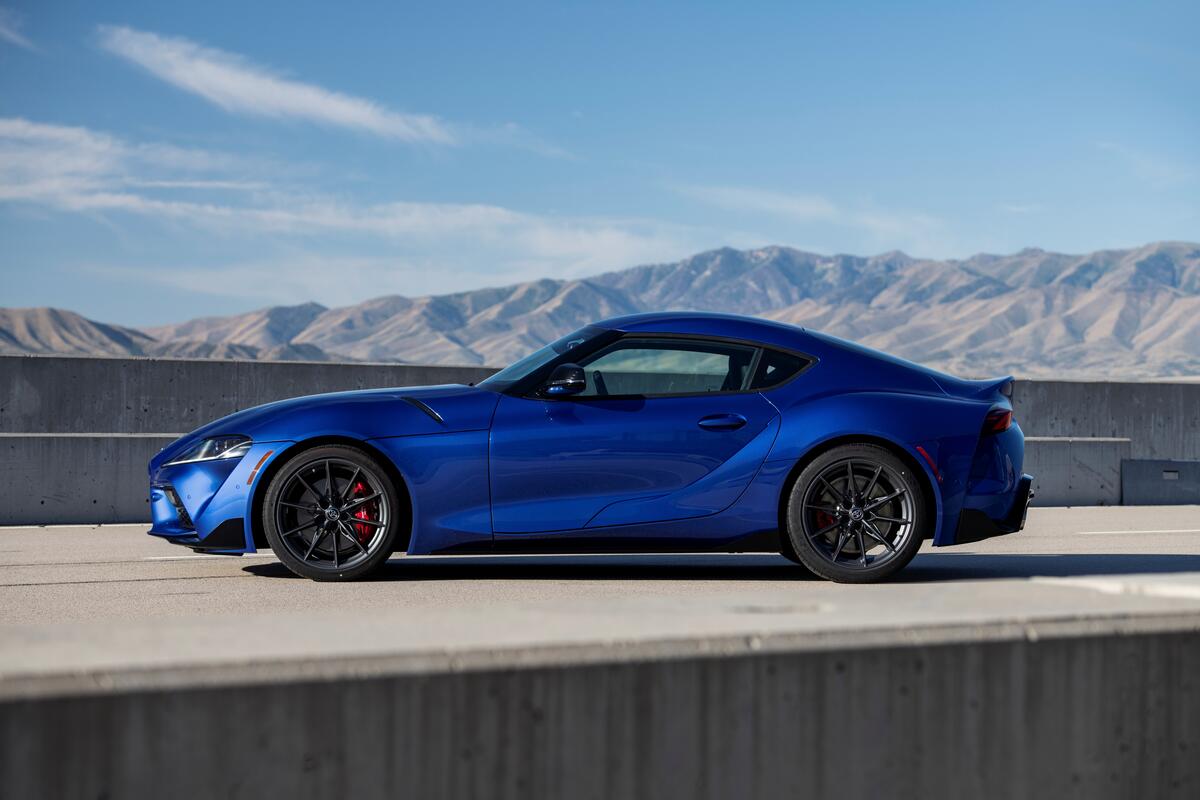
The Toyota Supra is a well-known performance sports car. The point here is that you can get it with an automatic, but the speaker is wondering how common manual versions are when you shop locally.
The Ford Mustang GTD is a high-performance version of the Mustang. The podcast talks about it in terms of whether it was available with an automatic transmission in certain years. It comes up because transmission choice matters to people who want a specific driving feel.
A “10-speed” transmission is an automatic gearbox with ten gear ratios. More gears can help the engine run more efficiently, which can mean better gas mileage.
Dual-clutch automatics use two clutches to switch gears quickly. That can make the car feel more responsive than some older automatic transmissions.
Term
rim hang
“Rim hang” is a way people describe a weird delay during an automatic shift. The car can feel like it’s stuck between gears for a moment before it finishes the shift.
Term
skip gears
“Skip gears” means the transmission can jump over a gear instead of going step-by-step. That can help the car shift faster and keep the engine in the right range.
The Toyota Corolla is a compact car meant for everyday use. In the podcast, it’s mentioned because some people associate certain older Corolla models with racing and driving shows. That’s why the name comes up even though most Corollas are regular commuter cars.
An “automatic version” is a car that shifts gears by itself. The episode is saying that because most people buy automatics, there are fewer manual cars available.
A “manual version” is a car you drive with a stick shift. You choose the gears yourself, and the episode is saying those cars are getting harder to find.
“Special ordering” means you don’t just pick what’s already sitting at the dealership—you request the exact setup you want. Here, it’s how you might get a manual when there aren’t many available.
“Wide body fenders” are aftermarket parts that make the car’s front or rear look wider around the wheels. They’re often used to fit wider tires, and the host says the paint didn’t match on the example they saw.
“Cut slit vents” are narrow openings cut into body panels for a vented look. The host is describing a custom styling detail on the modified car they considered.
“Registration” is the legal process of recording a vehicle with the state so it can be driven on public roads. When moving cars between states, registration requirements often include proof of compliance with local emissions rules.
The Pontiac Solstice is a small two-seat roadster that you could get with a stick shift. The host brings it up because it’s a fun manual car that many people forget about when they think “cheap stick-shift roadster.”
Car
Miata
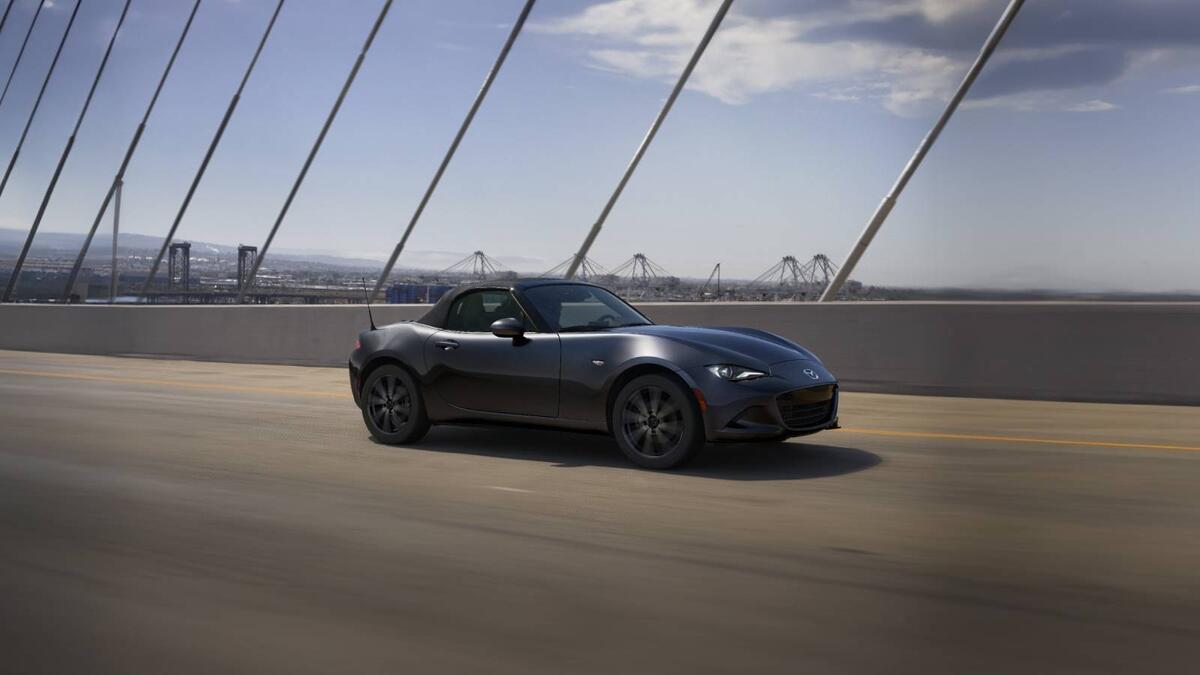
The Mazda Miata is a famous small roadster known for being fun to drive, especially with a manual transmission. Here, the host is basically saying that some lesser-known cars (like the Solstice/Sky) feel like what the Miata “should have been,” and they also mention the Miata RF hardtop version as a dream car.
Pop-up headlights are headlights that pop up from the front of the car when you turn them on, and then go back down. The host mentions them to describe how the Miata’s look changed over time.
The Miata is a small, light Mazda roadster. Because it’s light, it feels nimble and handles well, but some people say it doesn’t have as much power as bigger cars.
Power to weight compares engine power to how heavy the car is. A lighter car with similar power usually feels faster because there’s less weight to push around.
WS6 is a performance version of the Firebird. The host is basically saying these are strong, powerful cars that can be a good value—especially if you want a manual.
The Nissan Z is a sports car that’s famous for being fun to drive, especially with a manual transmission. Here, the host is pointing out that the Z was offered with a six-speed gearbox, which helps it feel more “connected” when you’re shifting.
A “six-speed” means the car has six different gear ratios you can shift through. Having more gears can help the engine stay in the right RPM range, and it can make highway driving feel less strained.
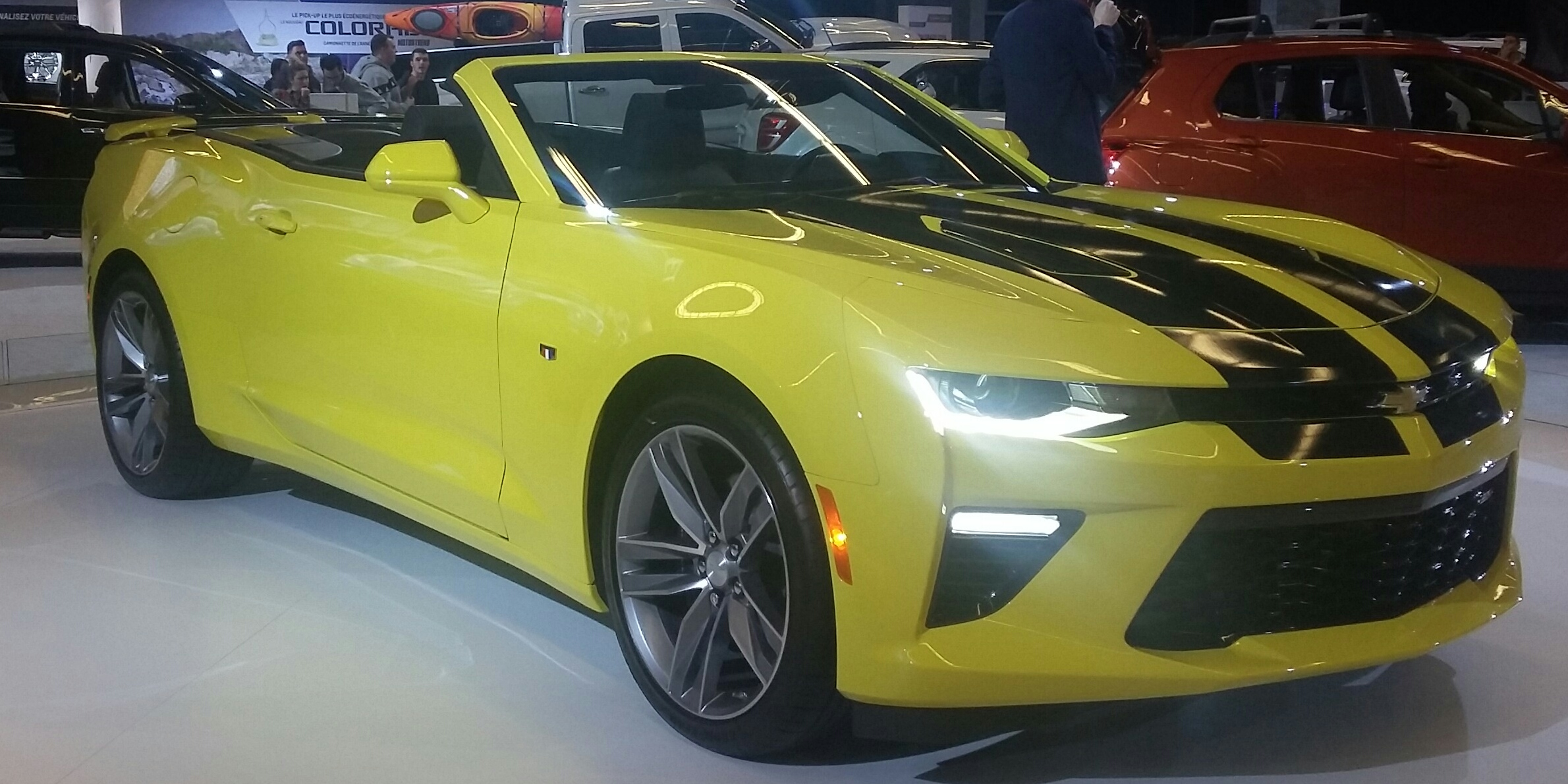
The Camaro is a popular American sports car/muscle car from Chevrolet. The host is comparing its driving feel to the Nissan Z and saying it has its own personality—just a bit more “subtle” than some other options.
“T-tops” are roof panels you can remove to let more air in. They’re a classic feature on some sports cars, giving you an open-air feel without fully converting to a convertible.
A “four-speed automatic” is a car that shifts automatically using four forward gears. Older four-speed automatics can feel like they keep the engine revving more on the highway than newer multi-gear automatics.
The Ford Maverick is a Ford vehicle. The host’s point is that the one they drove had a three-speed automatic, and that affects how the car feels—especially how it behaves when you’re cruising.
A “three-speed automatic” means the car only has three forward gears. That can make the engine spin faster at highway speeds because there aren’t as many gears to keep it in the sweet spot.
The Ford Ranger is a pickup truck. Here it’s mentioned because the example Ranger didn’t have a tachometer, so the driver had to shift by listening to the engine and watching speed.
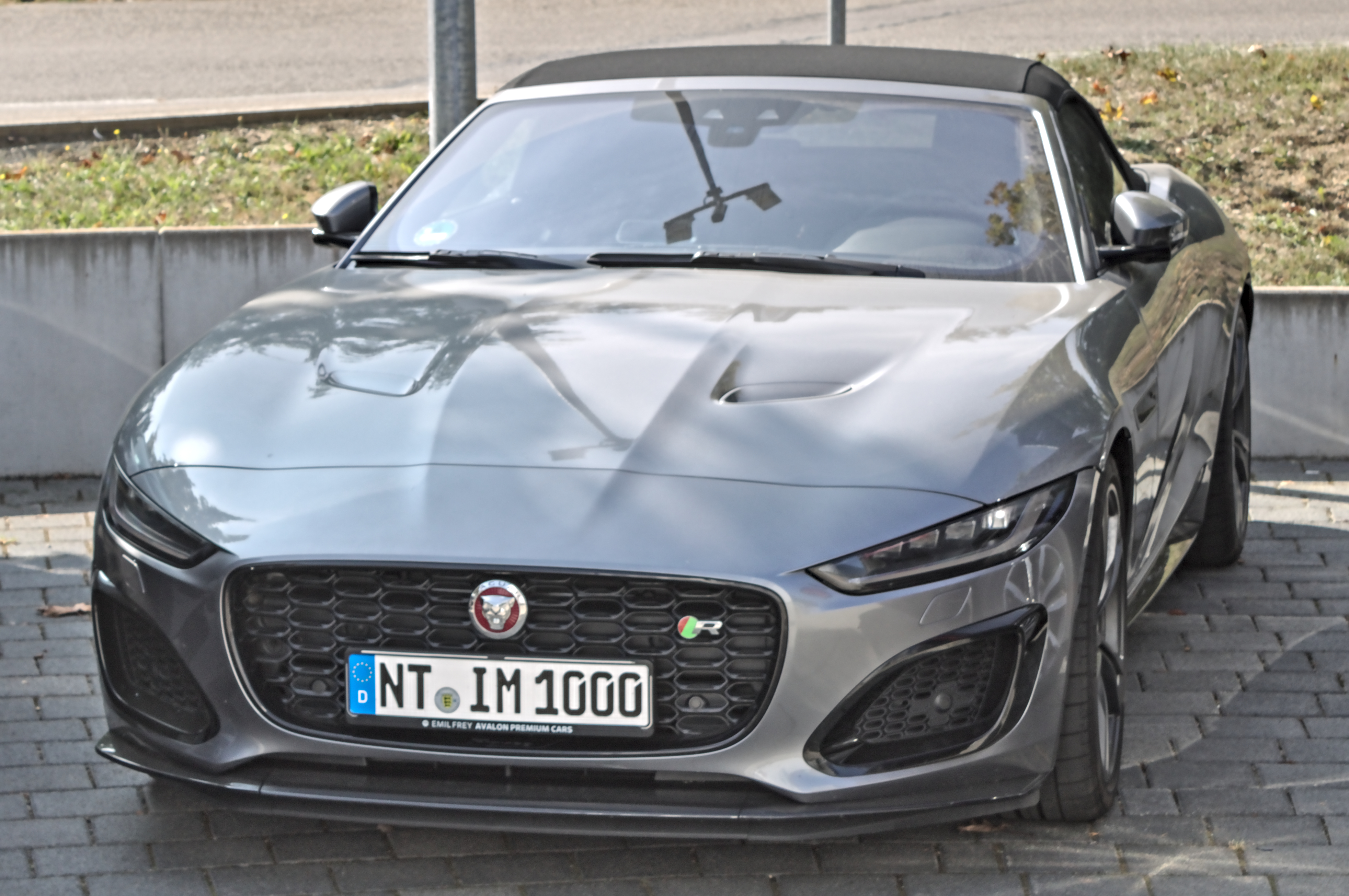
The Jaguar F-Type is a sports car. Here it’s brought up as one of the stick-shift cars you can still buy, and the host specifically mentions V6 versions (including convertibles) that can be cheaper than many other Jaguars.
Apple CarPlay lets you connect your iPhone to your car so you can use certain apps on the car’s screen. It’s mainly for things like maps, music, and calls without grabbing your phone.
Automatic parallel parking is a feature that helps the car park between two cars. You still have to follow the prompts, but the car does much of the steering work.
Traction control helps prevent the wheels from spinning when you accelerate on slippery pavement. It can automatically reduce power so the car doesn’t lose control.
The Dodge Viper is a loud, old-school sports car famous for a huge engine and a very direct driving experience. The host is saying the Viper (especially early ones) feels unique compared to other cars.
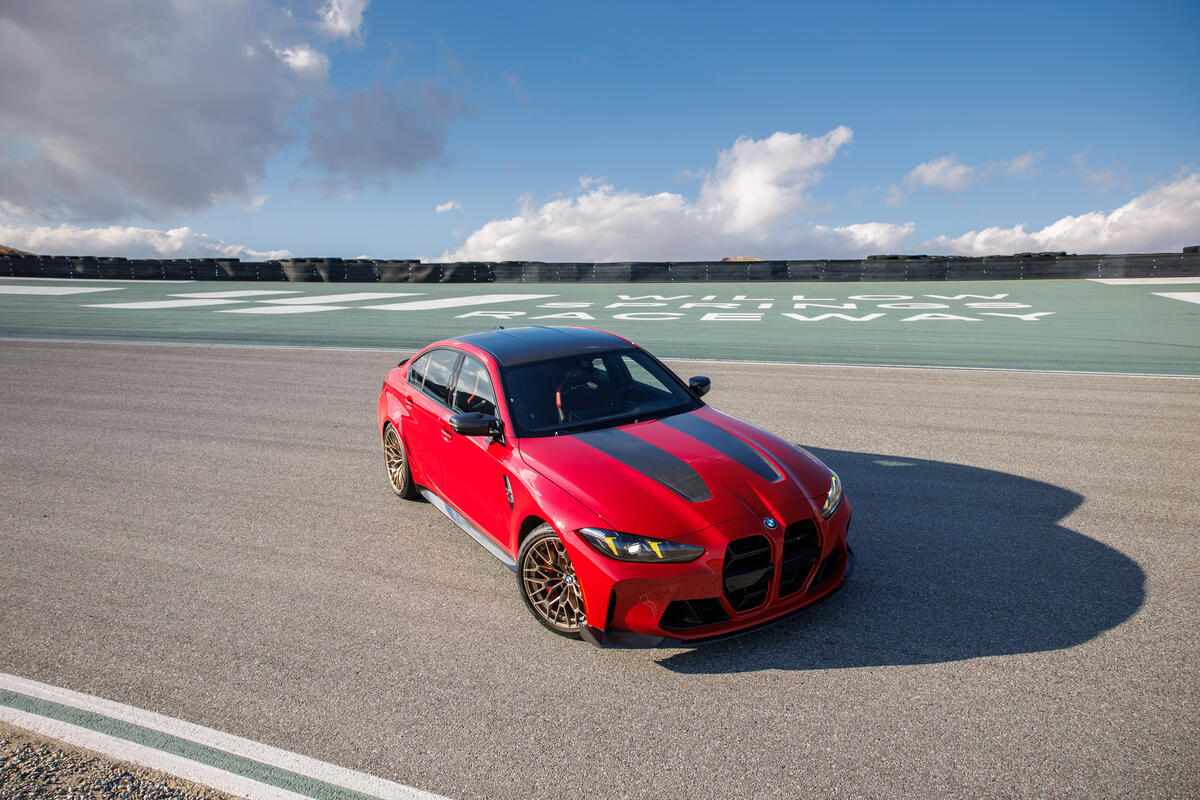
They’re talking about BMW’s performance 3 Series, often known as the M3. The discussion is about why the convertible versions don’t always get the same respect as the hardtop versions.
They mean a car with a normal fixed roof and a manual gearbox. They’re saying some people think that’s the only real “serious” enthusiast setup compared with a convertible.
LIVE
Hey, what's happening? Welcome to cool cars with Chris. The coolest show about the coolest
cars or the coolest world, the coolest universe ever. I got courage. How you do with anybody?
All of the cools go for every cool, everything. Well, you got to, you got to feed the algorithm
with cool talk. That's how it kind of works. It's how you get your, your, your show, you
know, um, to the number one of the charts, you got to mention its name like over and
over again. So that it kind of, you know, like, I guess kind of triggers the algorithm
to kind of like, you know, feed your show to those people. I mean, I'm thinking, I'm just
trying to sit that ball in here, man. I'm trying everything.
We talk about it all the time. It's like the, all of the algorithm business and, and just how
you get things out there and certain things that blow up and certain things that don't,
you know, it's, it's still, I think it's still a mystery. And, and, you know, you just, the more
you put stuff out there, the more you potentially get something to hook. So yeah, I think I used
to have this saying I always do when I was early in the podcasting career, even when I had
a podcastic audio, one thing I always would tell people would be, I believe in the ABP rule. Now,
the ABP rule is always be posting. Because if you don't post, I mean, you're hoping for the
algorithm or something to kind of catch a wave. And sometimes that happens, but not always in
posting takes seconds. So who cares, you know, whatever, you know, literally, like maybe a
minute or two for something special and write down, you know, but, but it doesn't hurt. I'm
saying, you know, feed the beast. I guess is it work? Yeah. One guy, one guy, you know, you know,
you see a lot was, you know, just, if you got to be like this is just like posting ghost. It's like,
Oh, that's one thing you don't want to, you want to post something and then never, like people do
is they call it posting ghosting. I guess when people post like crap out themselves, usually
it's like selfies and things like that, but they never ever comment or like on anybody else's post
at all. And that bugs me that it's like such narcissist behavior. It totally bugs me. Who do
you think you are? You know, like, like you're too cool for school here. You can't like, like
somebody else's post. Like it, like it takes, it's, it's easier to like something than to post
something. You know, it takes less effort and less time two way street. Well, usually it is with
any kind of relationship or communication. I think that like, but some people think they're too big
for their britches and they have to like, well, I'm just Mr. So and so. So I'm going to like post
and ghost and piss off and, you know, and my fans are going to love me anyways, because I'm famous
or whatever. And now I might work for like a famous person, you know, that comes on. I bet you
most famous people when they post on like Instagram or whatever, they just dump whatever. And then
they take off and they get millions of likes and comments. You know, it could be stupid
of stuff ever, but because they're famous, you know, that's, that's what they got going for them.
But, you know,
But how much more cool is it? You know, because I see it, you know, here and there where, you know,
somebody large following that you see when you actually see them reply to comments and
engaging like, you know, that, that right there shows. Okay. Like, you know, this,
this means something more to you than, you know, just the monetary or just the, just the fame. It's
like you actually are passionate about something enough to engage, you know,
It's like, it's like when I get like, um, I post something like a reel or whatever,
and somebody shares that to their story, I always like it. Cause you get the notifications that so
and so like shared it to their story, whether you're following them or not, whether they're
a private account or not, you can still at least like like, like they're, you know,
they're post of your story. I always do that, you know, and I know people do that when I post
stuff of their stuff. I see that sometimes, you know, and I kind of, I kind of like that.
It's, it's, it's like a small thing to do, but it kind of means a little more than just posting
and go, okay, stand up. He'll do that. Yeah. Yeah. So the cool cars with Chris and
speaking of cool cars, you know, I think that it's a dying age. It's a dying thing in cars
is the manual transmission. Yeah. And I grew up only driving manual transmissions. In fact,
the first year, your first, yeah. Wow. Okay. I never even learned how to drive. It's funny.
I took the test and the automatic for the DMV because I figured it'd be easier to like,
you know, even though I failed that it didn't matter, but, but I think that like,
like I was given my first vehicle was my parents had an old hand-me-down
Mitch beachy mighty max pickup truck. Now it looks like either a Nissan combination,
Nissan Toyota pickup truck. This is before like the Tacomas and the frontiers and range. Well,
Ranger was around back then, but this was like, it was a 1986 or 87. And my dad bought it brand new
for literally like $5,000, like brand new brand. Yeah. Brand new for the back then,
still like a feet. It was, it was, I think it would cost less than the Toyota's. Toyota's wanted
more for their, for their, maybe Nissan wanted more too, but he jumped on the Mitchy beachy
because it was like, you know, a pickup truck, the advertised had the same kind of stuff,
you know, and it was, um, you know, $5,000 or whatever it was. And so I just looked these
up too. I was looking up over here. These are actually cool looking trucks. I kind of like
that look. Yeah. And even today though, like, like it might even sell today for $5,000 on the used
market. Yeah. So it was silver. It had so many miles, but dad drove that thing to death before I
got it. It was a five speed manual, no power steering, by the way. It had a custom AC that
was installed after the fact. By the way, when you have to after, after market your air conditioning,
you know, it's like a bare bones like vehicle. It had nothing and then add like the name of a
bumper. It had no bumper either. I remember that. And it had, um, like a tape deck radio. I think
he even had that was like an aftermarket thing. My dad bought like a SWAT meat for like $5 or
whatever. Like super like aftermarket junk. Anyways, I had that. That was a vehicle I had,
like when I got my license when I was 16. So I was a five speed. I had to learn how to drive it.
And, um, I think I did okay driving the thing, figuring it out, but it was tricky figuring it
out. But I think for me driving a stick shift, the first like vehicle that I guess you would
consider learning how to operate a clutch was probably like a garden tractor. We have one of
those like ride along tractors and it had like a shifter on it, but there was no gas pedal. So you
shift it in the first and then you'd like let the clutch out slowly, but you put it in the second
and do the process all over again. It would do the same thing. It would take off a little faster
and third and minimum third. I don't think it was a fourth, but that's kind of, I got the idea
of figuring out how to use a clutch. Yeah. Yeah. It's, it's, yeah, it's funny you mentioned that
cause that, uh, we get into it, but that's like, I've started to kind of, you know, when people
ask me about it, like what's the kind of the trick is like, you really kind of understand
the clutch movement, you know, that, that like takes care of most of it. Like once you get
comfortable, you understand like the balance between throttle and clutch and, and how to
accelerate faster and different things like that. But on the front end, it's like, if you
really understand the clutch of the particular car you're driving and like where it grabs and
how, you know, how fast or slow you need to let it out when it starts to grab, like that's,
that's the biggest part of the battle. I feel like, um, I remember just because you were sharing
early stories, my, um, I, I didn't learn first on a, on a manual. I kind of wish I did, but, um,
my, I had been driving for like probably six or seven months, like when my learners permit
and my aunt, she had a, um, a Nissan stanza. If you remember those, they were, it was like
the eight late eighties boxy. I'm thinking of like the Toyota Crescetta. I'm thinking of,
it was, it was pretty similar to that. Or if you remember like the maximas of that generation,
they were also like really boxy. I actually really love the look of those, but, uh, the stanza was
like, you know, like really like the, the, the, the real compact tier of that car. Um, not a lot
of features, everything like that, but it was, but it was a manual. And, um, I remember she was
like, you know, you, you want to learn how to drive. You're like, you're always playing these
games and everything, you know, you really want to learn. And I'm like, all right, like I'm down,
let's do it. And so she, you know, took me around the corner probably two or three times,
like with her in the car, kind of coaching me through it, you know, let me stall it out.
And then literally the third time around she, she was like, okay, park on the side of road.
She got out the car and said, all right, you go for it and, and learn. And I'm, I'm on public roads,
like learning how to drive manual. And the first time taking off, I'm just nervous, palm sweaty.
You weren't on a hill, were you? No, no, we luckily, you know, it was pretty flat,
a pretty flat area where we were, but, but I was still like, I had to negotiate,
like, you know, making a turn onto the main street and make the loop and come back around the
neighborhood. But after, after two or three times doing it on my own, it was down. It was, I would,
I would call her like, you know, every few weeks, like, Hey, can I, you know, because I didn't have
a manual car at the time, like I was, I would learn and then go back to driving an automatic again.
But it was, you know, I would call her up, Hey, can I, can I practice some more in the car? And,
you know, after a while, it was like, it was, it was second nature, you know, it's, it's,
crazy how you can go from just not, you know, not using your left foot for pretty much anything.
Right. Right. Or you, or you only drive a manual and then you go into an automatic and you like
reach for the clutch. What do I do with my left foot? I would, because at work we had
automatic trucks and then we switched to manuals and then back to automatics and we had a few of
me, it was kind of a back and forth. We're on automatics right now, but we had manuals before.
And then like, you get used to driving one and then you try to drive the other, you either reach
for the clutch or reach for the shifter or there's no shifter because it's not automatic or whatever
and stuff like that. So it does kind of throw you off sometimes when you go back and forth.
Your muscle memory kind of kicks in a lot, I think too. And I remember when the first time I had,
I had only really owned manual transmission vehicles most of my life, which is kind of weird
to think about because they really don't exist much anymore. And so my first truck was the,
the Mitsubishi and then I bought my own truck, which was a Ford Ranger splash. That was a manual
five speed. And then I got the Mercury Cougar, which was the coupe. Like there was a five speed.
And then I got my Nissan frontier pickup truck and that was a six speed with a VQ engine in there.
That's pretty cool. Yeah. And that's one thing on the guy, the guy, when I bought it, you know,
the guy was telling me, you know, careful. It's like a hot rod, you know,
because it has a VQ VQ engine in there, the VQ out of the Z. What's it? Four liter version
and the six speed, you know, and as a truck, it's not really big. It was just a king cab,
which wasn't like the extra cab, the big one. It's like mid size ish, you know, it was like
F 150 size, which is kind of funny. It was real well drive though. Well, yeah, it's a pickup truck.
Yeah. So it was, it wasn't the Mexican GTR four wheel, four wheel drive kind of deal. No, no,
no, but the funny thing is, is that it, when I bought it, it had 200, I remember it was exactly
265 horsepower. Wow. And in a truck, like a smaller compact truck in a stick shift, I was like,
hell yeah, that's like, that's like a little hot rod, you know, and that's why the guy told me,
I went to the salesman told me, like, it's like a hot rod, be careful because it had
265 horsepower in a, in a smaller truck. And might I remind you that the Ford F
150 at the time in their V eight didn't have that kind of power. And so that's why I was like,
wow. And that's why I got kind of drawn to that. And that's why I kind of fell in love with the
VQ platform because even back then it was making, it was cranking great numbers, like V eight kind
of numbers out of a V six. And so, but that was also a stick shift, you know? And so I drove that,
but my first like automatic that I actually bought and owned was my last Ford F 150 pickup truck,
because they don't make those in the stick. And so I don't think they do. And so yeah, it was,
I mean, I don't, I don't think they do. I don't think you can get a new F 150 in a stick shift.
I don't think it's possible. And so that was my first, who really is getting them at the,
you know, this day and age anyway, even if they did offer it, well, it probably be total based
work truck, you know, like kind of deal. That's, that's the only thing I can think of, even though
like our, our, my work, we had this old like shop truck. It must have been like the nineties or
something. Those little GMC shop truck, like full size truck, but like just a regular cab, not like
King cab or crew cabs, a regular plane cab, but it was like a full size, like the 1500 size or
whatever, but it was a stick shift. And so, but it had a weird gearing ratio. I remember because
it felt like it was very highly geared. So when you put it in first, it felt like it was wanting
to keep on going before you shifted. If that makes sense. It didn't want to feel like a lot of torque
at the low end. I don't know, but, um, but yeah, like there's more Revy than it was. Yeah. I don't
think it had an RPM gauge either. I think it was just regular. It was so basic. It just had the
speedometer kind of deal. And, um, but yeah, the, the F one 50 was my very first like automatic
that I, that I owned and it's weird. It took a little while for me to get used to that
because also he's driving stick shifts. I also size the vehicle too, because before
they didn't go from a smaller truck to an F one 50. Uh, it was a little getting used to the
size of the vehicle and parking and backing and things like that. Like it's a little trickier
to do, but, but then I realized why drive big trucks for work. It should be okay, but
it was, um, it was kind of new experience, you know, it was an adjustment in the opposite
direction. I feel like then a lot of people, like a lot of people start automatics and then
they get into this world of, of manual and, and they get used to that, but you know, you're,
you're, you're, you're car do's is true and true manual all the way up until now.
Like still in the game with the Z and that's right. I shop for a manual. I did not want to get
a, an automatic. My last C the, the Z I had before I, it was funny because I, I skipped,
you know, I went, had the, had the Nissan with the stick shift and then I went to the automatic
F one 50 for years. And then I think I had the truck for about five or seven years, maybe
oh wait, six, 17, about eight years, maybe 78 years. And then I get into the Z
stick shift and I thought like, well, it's been a while since I've driven a stick shift
seven years or so, like in a car. So maybe, but it, but it literally like, it was like riding a bike.
It just like came back like it was no big deal. And then I was, we've been around town and I was
like, Oh my gosh. This is like, okay, I get it. You know, and the same thing with the last one
I just bought, like it's been probably a hot minute. Well, let's see. I sold the other Z probably in
22, 23, we're 20, 26 to me with three years later, whatever. But it's still like, even if you have
that gap, a time gap like that, it's still like no big deal, you know, getting back on the thing.
You usually remember, I mean, not all clutch took the same, not all shifters are the same.
I remember I drove that 350 Z. It was very notchy and very like, like it feel like it,
I guess notchiness is really the word I can think of when I put it into gear. The clutch felt fine
from when I remember driving it and everything was just super notchy to get into gear. I've never
driven your car yet. Wink, wink. I would love to, you know, I'm down. I'm down that I'm on this
kick and let the teacher be able to drive manual drive your car. That's like the car like sin
for cars is like, you can't let anybody just drive your car. I give it other than valet. But
okay. So who do you know those are the people you avoid driving your car? Well, dude, I'll check
this out. So I was going to the airport one time and the Uber driver was said he worked valet at
the casino. I just asked the guy, I thought about this cause like, I have a stick shift, right?
And I'm thinking like, like there's some times I'm taking the car, you're taking your car to the
shop and they can't find anyone to drive it around the building because, you know, right?
So I'll be thinking like, I mean, you gotta be able to like drive a stick shift to work valet,
right? He says, yeah, it's kind of required. I would think, but that's the thing too. I was like
wondering like how many people actually could drive a stick shift probably can't even drive work valet.
They probably don't see a lot of six shift either though. They probably see like one for 100 cars,
maybe. Yeah. I mean, I worked valet for like about a year or so when I was in college and
yeah, it was, it was definitely far and few between when you did get a manual. I worked
at a hotel like over mission B or mission Bay area. Like you're a roller. I don't encourage sort of,
but yeah, I wish, but they, I mean, most of the time you're getting like families on vacation.
Oh yeah. The mini van, you know, mini van, that she means like, you know, there was a,
there was one time though, there was a guy who came with like a super souped up Mustang. I don't
remember what year it was and it was a stick shift, but it was modified. And so it had a really
heavy clutch and we, and he had had it, they kind of had it parked. They didn't park it in the garage.
They just parked it further back in the driveway so that, you know, folks wouldn't, you know,
have to go around it. And obviously like the guy came up and I was so excited to get behind a wheel.
I was like, all right, I'll bring it up for you. I was not prepared for just again,
how grabby the clutch was and like, you know, how have you let it out to do the jumpy thing?
I literally did the jump thing right up until we got, you know, got to him and then it stalled
out right there. And I went, he was so cool about it, but it was definitely a really embarrassing
deal for me for sure. For sure, man. For sure. Like that's the thing I was kind of wondering
about these valet guys, if they can drive a stick or not, you know, and I don't think I've taken
the Zeta valet, not to think about it. I don't think I have. Have you taken your car to valet?
So there was one time where I had to, because it was one work, work event that I had to go to
in San Diego. It was right by Peco park and they like, their garage is kind of offsite,
their parking is offsite from the hotel. So yeah, that, that was the one time where they've, you
know, valed and it was cool. Like getting a chance to like, cause I, you could hear them
like start up the car from far away. It's cool. I went to one of my truck, I take my truck to
like wherever or valet or wherever and that kind of stuff. They take off with it and they hear the
sound of the engine and the exhaust and all that. Like, it sounds pretty cool. It's like standing
back here and have it, have it take off and stuff. I took the Zeta to the shop. I remember a couple
of times I had that battery issue and they pulled it into the shop and I could hear it and, and
even when they pulled it out of the exhaust bay and doing the exhaust work on it,
could hear it there and that kind of, it's kind of a, it's almost like an out of, out of body
experience. For a car person, it is like, I remember when I got the exhaust done on, on both
when I got, when I had the 3NZX and when I did it on the M, it was like just to hear it when it
started up was like, you know, yeah, you just feel like it's just an extension. You're seeing,
you're seeing yourself from the outside, but it's your car and yeah, it's, it's a, it's a special
thing for car guys when they get a new exhaust. So you said that you let people drive your car
in the stick shift. Do they, now first off, do these people know how to drive a stick shift?
So the two, the two that I've had recently, they have no prior experience of manual driving.
You are brave, man. Courage is the only, call me courage for real. You gotta, you gotta put
it to the test at some point, but yeah. So you were teaching people how to drive a stick
in your stick was the one to do it on? Yes, sir. Yep. And I, I tell people like it's a lot of
times it's, you know, cause the clutch in the end is pretty light. Like it's, you know, at the end
of the day, like some of the base stuff is, it's still a small compact car. And so it has a pretty
light clutch. I figured it would be. It's yeah. Like disease clutch was a little bit different.
It was definitely a lot. The, my 3NZX's clutch was a lot more linear. And so, you know, it was,
in a sense it was easier because you just kind of gradually as you let out, you knew like the car
was going to gradually lurch forward with the end. It's like, I always like describe it as like,
there's a lot, a lot of nothing until you get to a certain, a lot of nothing where you can
like kind of just go back and forth from the clutch and you're not getting any movement.
But then there's a point where it starts to grab and the, the revs actually kind of bump up a
little bit because it's, it's trying, trying to avoid stalling, but really it'll, it's a good
indicator of when the clutch is going to grab. And so it's been actually a really, you know,
cool car to teach people on because there's like little indicators to teach people to like, okay,
this is where you should start kind of letting the clutch out slowly and let it coast. And one
thing that makes, gives me so much peace of mind when I'm teaching people is that now I tell people
don't use the throttle at all on the first, like when you're first getting used to it.
So if you let the clutch out, it won't stall on you.
So you have to do it pretty slowly. Like if you, if you just went straight out, obviously you're
just, you're going to buck and you're going to stall. But what I usually tell them is like,
you know, let it up slowly. And then like I said, they'll kind of hear that audible
where the revs start to come up. And I tell them that means that the clutch is grabbing.
So now slowly let it out. And if you let it out slow enough, the car will get its own momentum
going. You don't have to use any throttle and that'll get you moving. And I say, once you're
completely off the, off the clutch, then you can start to use the throttle and just, and usually
we'll just go in like circles around a parking lot or something like that. And so for me, like
it's peace of mind, because you're not getting a situation where somebody's going to burn your
clutch because they don't know how to feather the throttle, but not like, you know, keep the,
keep the clutch down. So it seems to be a pretty good success rate of, of not breaking my car,
teaching people how to drive man. This got me thinking that courage himself over here,
he just started his own business, his own learn how to drive. Go got teaching kids how to drive
cars normally. This got to be one for stick shifts. I'm sure they're probably particularly for that.
There probably is, if you Google it, I'm sure there is people that do offer this service.
Um, I would think you have to have, I mean, for me, if I wasn't do this, I would have to have
like not like a cool car. It'd be like whatever I could find in a stick shift. In fact, I was
looking like Mazda's Mazda threes are available in stick shift. I don't know how good they are.
For fiesta had a stick shift, I think something of those range, maybe, you know,
an old four focuses, like if there, if you can find them a stick shift and make sure the
clutch is like a decent shape for the most part, because they're going to be beat up,
probably teach it out, but it's stuff like that. But if you can find something like that,
or even an old like Nissan or Toyota pickup truck or something like that, if those are available,
something like that, just to teach people how to drive a stick shift. I think when you got
the video game thing, cause the guy bought my car, said he was learning on a video game.
But I don't think you quite the same feel. You don't get the same kind of clutch engagement
in the field of the clutch. You don't get, you don't get that, that feedback from the shifter
in the, in the clutch, when it comes out and using a throttle, you don't get that on a video
game. Cause I don't think you do. Most is one of those fancy simulators, but the real,
the real Sims can kind of start to mimic it, but you, it's still nothing replaces real life for
sure. Right. Right. It's like, it's like learning how to like play the guitar, like using the guitar
hero guitar hero. Right. It's like, I put the guitar, let's push the buttons or whatever.
And I think it's not quite the same, but okay. Yeah. So a little spoiler. I do have a, my next
video is actually going to be, you know, my, my, if you don't know how to drive manual, watch this
like, there you go. That's how you got to do it, but keep an eye out for that.
But I think seriously, you might be on something. If you can do this and find a car that's like
in a stick, you have to, you got to get a clutch and whatever you got to do the thing.
And I don't want that to be worth charging. I mean, my son is going through driving classes
right now. And for a two hour session, I just paid a hundred and 75 dollars.
Oh, okay. And this is full on like driving, like with somebody, like the car, I guess,
had the brake pedal on the passenger side or whatever. And it probably has driver training,
written all over the thing and all that kind of stuff. And, but most of them are like six lessons
for four to 500 bucks. If you want to, if you want to do individual lessons, they charge a little
bit more. We just did the individual lessons because he's required to get like a minimum
two hour lesson before he even can drive with one of us. I didn't know that. I thought he
could drive right away, but I guess not. And so, but I was going to be thinking about, like you
said, with it was teaching people how to drive a stick shift that maybe it could be nice little
side hustle. Maybe some there. Yeah. No, you'd be, and yeah, you had a cheap car that you,
you know, weren't that worried about, you know, burning the clutch and if you book like, if you
book like say handful of people, it pays for itself, pays for the car.
And eventually, yeah, you know, that means you with the time constraint. My biggest thing is
like having to, like having to drive to people and do all of that and pick them up, whatever.
Yeah. And all of that. But if you get somebody that's wild, yeah.
Yeah. I would have some rules though. Like you have had your license for a while. Like you're
not like a brand new driver. That's, that's a good point. Yeah. Your own insurance and whatever
and blah, blah, blah, whatever and stuff. And you probably do the parking lot thing
like you're doing or whatever. Like lesson one is like 200 bucks and you got to circle
the parking lot a bunch of times or whatever. I just figure, figure that out and then hills
and that kind of stuff, whatever. Because I think the thing is to the fact that like,
there isn't as many cars that are stick shifts. There are some out there, but not as many
like as a brand new car. Right. And it's funny is that the stick shifts back when I was younger,
we're like the like cheapy version of the car was the stick shift. You know, if you,
the luxury version was the automatic, you know, that key with pickup trucks,
I automatically were the option. Like your manual was like the stand. Like a lot of times
they call it standard because that was like, this is standard equipment automatic was what
you were paying extra for it. And it's crazy now that like it's, at least for enthusiasts,
like it's the reverse. It's like, you know, if a car offers a manual, like that's, they'll pay
a premium for the manual versus the automatic. But I wonder as you get older, because I'm
getting older now, I'm thinking that like, if you get older, I wonder if going automatic
makes more sense from like a usability standpoint, you know, like traffic and like just,
just put it in D and just like, or it was around and not to like think about it and stuff. I know
you're going to daily your car versus like just a fun special type of car, you know?
Yeah. I definitely think it depends. Like, you know, if you live in like say LA and you're
commuting every day, like, you know, and you're, I mean, really not even commuting. Like if you
just need to go anywhere in LA every day, like, you know, that, that tends to, you know, lean
towards, yeah, like if you're, if you are starting to get older and, you know, again, it does get
taxing, especially again, if you don't, if maybe if you had a car with more like a heavier clutch
where you're like getting to work out every time you drive it around, like start to kind of,
you know, look towards, you know, the automatics. And now, I mean, we have like these dual clutch,
you know, transmissions that. Well, the automatic, they're automatic though.
They're automatic still, but they, I mean, they, they shift faster than any manual can. Like,
you know, again, I know that doesn't, that's not the main reason why people buy it.
You can hold the gear. You can hold gears. Yeah. You can shift down, shift up, shift and hold the
gear. Hell, even my truck can do that. My truck, my truck doesn't have a dual clutch transmission,
but it's got a plus and minus. And I can literally, my other, my other truck did the same thing.
In fact, when I first got the other truck, since I came off a stick shift, I was so used to having
a stick shift. I literally will like pretend I had a stick shift in my other truck. I like even
like mimic like shifting and I will like push the buttons up and down plus for like shifting,
you know, you know, I'm like one of the only people, because the M has that too. It has the,
the, the rev match downshift and I drive my car. It actually has a rev mid rev matching
downshifts too. And so I drive it like that all the time. And I tell people all the time,
I'm probably one of the only people that like drives, drives this car like that. But, you know,
because yeah, like just having a little bit more of that engagement, even in and of itself,
just adds to a drive and stuff like that. It does. And I think that if you can get all that,
that automatic, like, you know, with the paddle shifters and all that kind of stuff. And I can
see why people just, just get the automatic. Even the Z version of my car has a seven speed
automatic, which sounds nuts. Why do they have seven gears? I don't know. But I'll talk about a nine
and 10, 10, 10. Yeah. The new one, I think the new one is nine, I believe. And so if you're
paddle shifting through that, you're just like, shift, shift.
And I mean, whatever, I guess, you know, it's like the fact, old meme of the
fast and furious shift knob. It's like a 20 years. Yeah. The movies are constantly shifting
and every, every scene they're moving back and forth. And so, but, but I don't know, man. I mean,
I guess, I guess I'd have to like get in an, an automatic with paddle shifters and system like
that. And I don't know, man. I mean, but knowing your background, man, I could see,
I could see, I kind of understand why like it's kind of in your blood because you, you know,
again, you've, you've run the gambit pretty much having every car that you've had been
a manual. Like I didn't know that. And so I can, can see it, you know, and it was,
for me, I hadn't had one for probably about five or six years.
So how did you learn how to drive a stick shift? Like when did that happen for you? And how did
like, how did that happen? Yeah, that was a, yeah, that was, was this. Yeah.
I was like 17 or so. So was your first car that you, you drove as your daily with a stick
shift with the Z? Yep. The Z was the first. Yeah. Okay. So the Z was your first, your first
stick shift. Okay. Now, now you bought that car. Were you looking for stick shifts or just
happen to have a stick shift? That's a good question. I was, I definitely was probably on that
kick, you know, of wanting a manual, but I was, it was, I was very, I learned how to drive one
though. So you were like, okay, I get it now. Yeah. Cause at that time, like there was a big
gap. Like when I moved here to San Diego, when I went to school, like I didn't have a car and
I was, you know, I was, I was riding around on, but I had this like red and yellow,
like mustard colored bike that I was like riding around and catching buses and stuff.
And I, there was a certain point where I was like, this ain't it. Like I need, I need something.
I need a car. I think you live in California for the most part, even in the major cities,
like especially LA or whatever. I mean, you can do public transportation, you can do the
systems and the whatever, all that kind of stuff. But I just think there's something to
having a vehicle, like freedom, you know, to go wherever you want, not requiring a bus schedule or
catch this link here to this station there and jump this and jump that kind of stuff.
And there's something, something to it. And I think it's why people have cars, you know,
for the most part. Otherwise, you know, I mean, get around and it's something about the freedom
of it all too. Because I think if you're relying on the bus system or whatever, you're kind of like
to their system, you're kind of relying on their rules and, you know, their schedule.
I mean, I'm going to sound real crazy here, but I even feel the same way about plane travel,
to be totally honest. There's certain instances where you have to, like there's, you know,
if you're going out of state, I mean, honestly, well, there's even a situation where you can't,
you can drive that, like going to Arizona or something. I'll drive five hours to go to Arizona
or something like that. It's like, because with, with flying, like it really is that too, where
it's like, you got to be on their schedule. Oh yeah. Yeah. And they're stuck in an airport.
Yeah. You're stuck in an airport forever because they're experiencing delays. And,
and when you're in the air, you're totally in somebody else's hands in terms of, you know,
that deal. Being in the air is like so, so easy on airplanes. I heard being in the air is like,
it's like, they use a fraction of like their like power or gas or whatever they use when they're
at their cruise altitude. Right. It's like just, it's just, it's like nothing. But when they're
like landing and taking off when they use all the, that's why I see a lot of the issues with
plane accidents are usually during takeoff and landing. Whether they're just flying it,
just, just cruising the air for news, just flying for nothing. It's like no big deal or whatever.
This is a bird. Yeah. You're just a bird flying. That's it pretty much. But, but dude,
like I love stick shifts. And I know that there are not a lot of companies like offering stick
shifts for vehicles, but do you know which companies like today, 2026 are actually offering
stick shifts as an option, at least in their fleet at all or anything? Yeah. Oh yeah. There's,
there's some and, and, you know, we'll maybe get to something because I think personally,
you just got to go to the older cars. Like, you know, you just, you got to go blast to the past.
But yeah, of course. But like, if you want to like buy something new today, because people
want new cars, you know, they want the reliability and they want something new, I guess. So if you
want to buy a new car today with a stick shift, what are your options? Yeah. No, I mean, you're,
they're dwindling a lot, but, you know, there's, you know, maybe even go in tiers, but, you know,
obviously, like I said, the end cars, they, they offer that really we only have one in car now,
but there's no more Veloster. And there's no more Veloster. And what else did you guys have?
I say you guys, I guess you're confused. Yeah. No, yeah. Yeah. These guys, but yeah, actually
really in terms of, in terms of manual cars that they offered, it was only the Veloster and, and
the, and the Elantra and, well, what's that automatic? I mean, what's that electric version of
end? The Ionix. Okay. That doesn't count. Right. Cause it's not like a, but it does have,
I mean, it has paddle shifters, but it does have, even though it's electric, it does have those
simulated gear shifts of like having like a red line that you can bounce off of. And, but even
though your red line is actually digital though, it's like a digital, no, it's all fake. It's like,
you know, it's, it's, it's such a gimmick, but you know, a lot of people have said,
like they've taken those on track because they, they, it's, it's really, it's said to be one of
like the most engaging performance EVs out there, which you probably think that that's an oxymoron
to even say. I'm sure it is. I mean, I remember seeing when the Ford Mach E
like was being announced and came out, they made like a race version of it. Did you see it? It was
1,200 or 1,500 horsepower or some nuts. And there's smoke in the tires.
Like, you could hear like the, you can hear the motors, like when they wind up.
Oh yeah. Yeah. Yeah. Yeah. And they, so they've had some, I mean, they've done a lot of, you know,
track, track events and, and track testing with the ironics and the, some reviewers have said
that like after two or three laps of like using the fake simulated gears and like hearing the,
because it goes through the rev range, just like a, like a regular car does,
they started to forget. Yeah. They started to forget that it was an EV because it's so cohesive
and it like operates the same way. It even like when you downshift, say, if you were like going
full speed and you start downshifting and before you should, like it'll actually start to give you
that resistance that it does if you go into the wrong gear in a manual car. So technology
requires to go back in time to like old technology. Yes. We're using that. We're using an effort to
take us back, which is like an iPhone, trying to mimic a rotary phone or whatever. So, but,
but we do got a few though. Like, you know, I mean, you know, on your camp, you know,
forward, obviously, you know, we still got the Mustang, like that's still in production.
But you know what's funny? What's the dealership? I didn't see a lot of them available that
were sticking. Well, maybe I did. I'm trying to think. I mean, maybe the dark horse might have
been one, but even some of those base GTs and, you know, but a lot of times these dealership,
that's why you don't see a lot of dealerships. They order what they have in inventory.
Yeah. They order the automatic. They know the cell. And so, especially with the Zs, I was looking for
I'm sorry. It's not called 370 anymore. That's called regular Z. I was looking for Zs and
all automatics. If you look, if you look online for Z cars in the area at the local dealerships,
then yeah, they got them, but they're all automatic. Pretty hard to find. Yeah. Especially
because they did, they, you know, for a while, they didn't have, you know, they didn't have one and,
you know, where it was only on like the base model was the, was the manual and then they had
the automatic. They, they just now have started to do those. I think the Nismo is still automatic only.
No, I thought they came out with the, they announced it, but I don't know if it's like
actually like, you can buy one. I have no idea, you know, and I've heard some bad,
that's like bad things. I've heard some like, like people are starting to like lean more towards
the 370 because of the organic field to the engine and the whole car versus like the more
modern like turbo tech of the new one. Yeah. But to each their own. So you got the, one of the
big ones though, the Yada's and BRZ GT 86, whatever those, those are like in terms of
performance cars with the manual, like rear wheel drive, like those ticks, so many, even the
Supras, like they, I'm sure you can get anything in automatic, but I haven't, I haven't, you can
get automatic. Yeah. You can get automatic GT 86. I have to look that up and wonder if like,
how many are available in automatic more because the car like that, I would think now from a
dealership standpoint, they want to sell cars. They don't care, right? But I just wonder if they,
because they have to order those for their inventory to sell them. So I wonder if they're
ordering more sticks in those cars, especially like the Miata's, I can't imagine an automatic Miata.
Automatic Miata is not something that I'm sure it exists though. It's something that people buy,
but I don't, mean, like I said, you get automatic and anything. I remember a long
time ago when I first heard the Mustang, one of them, one of the years the Mustang GT came out
and they had an automatic version. I think they always had it, but I remember hearing about it
and a friend of mine was saying he wanted to get one in automatic and I was like, slap them silly.
I was like, what are you talking about? Automatic and a Mustang. You're nuts. You know, you're talking
crazy. Oh, just be, you know, it's, you know, it's cruiser. It's fun. It's a V8, whatever and all
the stuff, but I'm like, get a different car, man. I don't know, man. Like I've always had
stick shifts. So I'm like, I just couldn't, I just couldn't fathom how he told that to the wrong
person. I just couldn't fathom having like an automatic in like a cool car, you know,
but this is back then, but now sitting out with the dual clutch transmissions and the,
or even like the auto, because in the Mustang now with that 10 speed that they have in there,
which I believe, and again, we talked about this where it's like, take everything I say
with a grain of salt. This is cool cars or Chris. I don't, you, you, I don't endorse all of what,
what comes out of my mouth, but, but I think it was able to begin the episode. Yeah. Yeah.
Just put that like up when I start saying anything, but I think GM and Ford actually had some co
development in that 10 speed that they use and they use in the Mustang and then they were using
it in the, in the Camaro too as well. And my truck has it too. Yeah. But they're like, you know,
after a certain point, like when you, I'm sure, you know, like as you shift past like six gear,
like it's all like the ratios are so tight between it. They are. They move so quickly because I
mind I can tell you what gear you're in, you know, and it just like you're cruising along and it's
like, it goes, and then it kind of goes up and then all of a sudden it just goes by through
like the middle, middle range and next year you're like in 10th gear and you're just cruising at like
40 or whatever, you know, it is. So it's like, it kind of goes through. It's probably more for like
towing and fuel economy. That's probably why I got, it's funny. Speaking of fuel economy,
my truck got literally one mile better per gallon versus my last 5.0 V eight and this one,
like one mile per gallon. And I think it has to do with a 10 speed. That 10 speed gave it one more
mile per gallon than before or whatever. But that helps. But no, I mean, it's the one thing I was
going to say about that is they, they, they shift so like they've really been able to tune
automatic, like not even dual clutch automatics, but just regular torque converter automatics.
They've really started to be able to tune those because obviously you remember old automatic,
especially old GM automatics where you would shift, you know, it would just take days for it to go
safe from like second to third. Like you would, you would get that rim hang of as it's shifting
through gears kind of thing. Are you talking like a three speed automatic like way back in the
day? No, I mean, I mean, even, even like, even with my car, even with the M, when I drive it in,
like when I'm just in drive and not doing like the up shifts and down shifts, like there's a way
that like, you know, older automatics, how they, how they change gear that was like a lot different
from like newer automatics that, that literally have like the 10 speed, the nine speed, they have
to go through them quicker because they have so many gears to get through. You know, it's like,
it's like we need to get to the 10th gear right away because we're cruising on the highway now,
but we're going to go through all the gears really quick. I don't, you know, I don't,
I don't know if it's skip gears or not. I haven't really paid that close attention. It might,
but I don't think it does. I don't think it's probably just a real like, you know, quick,
you know, snap through and, you know, I, at the end of the day though, yeah, like I said,
I think they had their place and, and they're definitely different than what they were before.
But I mean, just, you know, for the enjoyment for, you know, again, as a car enthusiast and,
and honestly, I'm seeing like people that aren't even car enthusiasts, the guy that I
taught John, like he's, he's not really in the cars that much. Like he watches Initial D and
he likes to AE86 and stuff like that. But he's not, you know, he's not like that in the cars,
but I could just tell how excited he got, you know, after he got it and like figured out,
you know, how to go through the gears. Like I'm telling you, like I'll probably start running
into him now. Like he's like talking cars with me. He already said, Hey, can I go to the next
cars and coffee with you? Like I, I see this as a gateway to, you know, get some more car
enthusiasts in the middle. You'll be shopping for, for Toyota 86's. Yeah. You know,
yeah. I heard them clutch the Miata is incredibly easy to use. I've heard a lot of people say that.
I've never, I haven't driven one in a long time. I was looking to buy one. I did a few test drives
back a long time ago. And I don't remember much different about it. Like it just felt like a
normal like stick shift car to me, you know, back then I didn't feel odd or anything,
but I heard they've probably been improved since then. And they're like really easy to use. Like
they say, like of all the stick shifts, like that one's like super, super easy to use and drive.
It's so effortless. You just shift it. Like it's nothing or whatever. So, but so far as newer cars,
you got the, the Newsy, the Miata's, the Toyota 86 is the Mustangs, Camaro's gone.
You can get into the higher power, the more expensive stuff. You'd still get,
you can get BMW's, them cars with manuals. How about AMG, Mercedes?
That, I don't think so. Like I, because the AMG, like the GTs, like there's sports cards and so I
don't think you can get, you can't get those in the manual. Those are automatic only.
None of the like sports sedans, the AMGs, I don't think you can get manuals either. So
I think that they've kind of gone the wayside when it comes to Audi.
You think Audi's got the automatic probably?
Yeah. I mean, I, I mean, maybe some of the RS stuff potentially, but most of the time,
like you said, like, you know, you go into a dealer, like to, if you were to see a,
you know, see any of those specced as a manual, that's like a unicorn amongst what they're probably
ordering. So, right. That's what comes down to I think is that dealers need to sell cars.
Obviously, that's their business. And they know that like, if, if nine out of 10 people
are going to buy the automatic version of said car, chances are they're going to order more
automatics. Yeah. Just, just the numbers game alone, you know, and then so if you wanted to buy
a manual version of say like the Z, you probably have to go through like special ordering or something.
Maybe pay a surcharge or upchar or whatever they charge, you know, or something just to get the
basic, it's going to be the base car or whatever kind of thing to get the, get the benefit of
like newer car and, and manual. Like, you know, you're, you're probably paying a premium, but
you're, I mean, your, your choices are definitely, like I said, they're, they're dwindling for sure.
And I mean, there's still, you're seeing now that there's just a lot of push of like companies
really realizing that they, they can charge premiums now because people will pay for them.
Well, it's the plan. You know, I mean, it's, it's, it's like with my car, like when I bought
my car, there was only like two in the area in the San Diego area that were stick shift.
Yeah. One was kind of clapped out and I was like, I don't know. And it was the first gen. It was
a 09. It was like first generation, three 70, right? Yeah. Higher miles, a little, little less
dollar wise stick shift. But I had like these weird fender grill aftermarket fenders that
paint didn't match on the front, you know, I'm talking about how the front fenders, how they
take them off and make input kind of wide body fenders, but not really that wide body.
But I had like these weird grill fence by like the tire kind of thing.
Oh, they kind of doing the, the flared fender kind of thing where it's like,
but I had, I had like these like cut slit vents, like grill, like gills kind of like in the,
in there on top of it. But the thing is the color didn't match, a paint didn't match.
And I think the back didn't match either or something like that too. But it was like,
you got that one or mine. And so it's, so like, like, it was like, those are the only two choices
in town in stick. Now plenty of automatics, plenty of automatics and mine was, was like one of two.
I mean, there's a few, like I want to go really far north. Maybe I could find something or even
out of state, but I didn't want to go out of state because the smog and the registration and all
that headache, like I didn't want to deal with that. And so I wanted something in California
that's been smogged and improved and all that stuff. And I want to go very far together. So I
don't want to drive to like freaking Sacramento or whatever. So just imagine going all the way
to Sacramento and like find out the cars and piece of junk or whatever, like it's come back or
whatever. And so I go and travel very far for, I want to find something local. And luckily I did,
you know, and I think it was the better of the two for sale, at least here in town. And so
that being said, I saw a lot of automatics for sale. And because it was in the guy that the
dealership I bought it from, like he knew, he knew there wasn't many in town. He knew that a stick
shift Z and a stick shift was very rare. People highly desirable, I guess, so to speak, that
he, he could, he'd want to wiggle on the price, you know, he didn't want to come down the price
because he told me he knew, knew that, that he didn't find somebody. Yeah. Well,
but that being said, though, I had a hard time selling my Z, which is kind of weird. It was a
stick shift and it wasn't good condition, a little miles for the most part. And, and yeah,
I had a few low ballers, but it was, didn't sell it as fast as I thought I was going
to sell. And I don't know if I was asking too much, but I was asking what everybody else was
asking for theirs for the most part. Like I just looked up what other ones you're selling for.
You know, I guess you never really know until you try to sell it yourself. Yeah.
You know, when it comes to houses, anything, you know, the last house trying to sell a thing,
it's same thing. You know, I think it's worth all this money because you compare it to everybody
else's thing or car or house or whatever. And then you don't really know until you try selling
it yourself and you find out, but, but I kind of wonder about that with being like a stick shift,
like vehicles being stick shift and like the Z and different things. And, and I wonder,
I wonder how desirable they really are, you know? Yeah. No, I mean, it's, you know, I, and I want
to hit you with a few of these, like I said, I know there's a lot of new car buyers out there,
but I want to hit you with a few cars on the, on the use list that, you know, would be cool.
Like, you know, not really breaking the bank super expensive options for folks to like want
something sporty that, you know, is on the use market that you can get, you can roll your own
gears kind of deal. Row in the boat, row the gears, row in the boat, gears. Yeah.
If you're in a row and boat, you roll your gears too in your car and just keep it on going. But
there was a few cars. I was, I was, I'm kind of poaching this a little bit because there was a
list of some cars that folks, there's some folks talked about, but there were three that like
stuck out to me that I was like, okay, like these are pretty cool that I feel like folks,
you know, probably would be under a lot of folks radar in terms of like, oh yeah,
that really did come with a manual and it offered something kind of unique.
The one biggest one that like drew me for a loop that I kind of forgot about. Do you remember
like the Pontiac solstice in the, in the Saturn skies? I just saw it when I did double take.
I'm like, oh yeah, it's a Mia. Oh, that ain't no Miata. Yeah. Yeah. And that was, it was cool
because yeah, those, those were like super popular back then in a sense, like they didn't sell as
well as like in my nowhere near as well. I thought they were super slick looking. I thought like,
this is where Miata needs to be. Like, like this is like what Miata needs to do. Cause I think back
then, I don't think, I think back then the Miata still had that bubbly, like I don't, I think they
got rid of the pop of headlights, but they still had like that bubble front end. I think because
yeah, early 2000s, like, you know, mid 2000s. Yeah. I think that was after, yeah, after the
pop-up. So it was like, it was like the, the NB maybe or something like that.
Yeah. I don't know the trash models, but I do know that like, yeah, early the first gen had the
pop of headlights for a while. Then they kind of went away from that. And then they got this new,
like kind of slick chiseled, like very, very sporty, the newer one looks very, very,
I still really want like a, the let the last gen like Miata, like the RF, the one with the hard top
removable, uh, convertible. That's like still, that's actually like a dream car mind just cause
it's like dream car for courage. Hey, we're the set of a go fund me on this channel right now.
Yeah. Dream car. But yeah, I've thrown out a few of those, which one of them is actually on this
list too. What if it works? If I put out a go fund me for like a cool car, like a show, cool car.
I mean, I kind of already have one, but be another one. We need a, yeah, we did have a,
have a cool car, like an actual cool cars with Chris ride that, you know,
so you don't have to put all the miles on the Z. You can have a different one. But, uh, but no,
that one, that one kind of stuck out to me because it was, it offered a lot of, you know,
wasn't as dynamically, you know, sound as like the Miata, like it probably didn't handle as well,
but it had way more power than the Miata because everybody always says about Miata's that they're
great. They handle well, but they're just sort of underpowered. But, you know, they're so light
though. They're like, well, the first gens were the new one, newer ones might have like all kinds
of like safety crap on them and stuff, you know, I did see a comparison that they haven't deviated
too far from their recipe steel though. Okay. In comparison, like they size wise and different
things like weight wise and all that. Yeah. Yeah. I could do some digging on that, but
because the weight ratio really makes a difference because you got a hundred horsepower pushing
around 2000 pounds versus a hundred horsepower pushing around 50 pounds or 150 or whatever it is.
So, well, power to weight becomes a thing. Yeah. Right. So what are cars,
do we think are kind of cool that come in a stick, you could buy in a stick shift?
Yeah. Well, I've, I've talked about this. My opinion is very well known on the, uh, on the
fourth gen F body Camaros and the fire birds, but the, the later gen, you know, Camaros and then
the WS six fire birds, uh, or trans Am's those cars are a lot of power for, for the money. Like,
and they come in six speeds, I believe six speeds. Yeah. Five speeds, I believe. Yeah.
66 speeds didn't come around to like a 2000s. It seems like. Yeah. I'm double checking that,
but I do think it was a five speed Mustang was a five speed thing back in the day.
They didn't come with a stick. You've got even with the Jacobs car, his Mustang,
I was looking at specs on that and it did say it offered in an automatic or a five speed.
So that wasn't a five, but that was Ford. So I don't know if they're all playing the same
game, but I just remember when the Z came out, it was in a six speed. It was kind of unique. I
didn't really heard about a six speed before until I kind of jumped into the Nissan world, but
no. And so the, uh, the WS six actually had a six speed as well. So, okay. Okay. And, you know,
put out like about between somewhere between 330, 350 horsepower smokes, man,
you can get them for like 15, 20 grand. Like that's a lot, a lot of car for that. Yeah.
Yeah. Uh-huh. Like you can, my favorite, because I still personally, I like the,
I liked the Camaro because I felt like it was a lot more subtle. It was still very different
from anything that GM made in the past, very different from anything they made after it.
It's really its own unique thing, but it's, I just like it just because it's a little
bit more subtle, but even those, like the Z 28 SS was like a one year 96 model that had like 305
horsepower or something like that. The rear wheel drive manual, you had T tops, and those you can
definitely get for, you know, so even like around 10 to 12 grand, like for a really good one and
a lot of car for the money and in a six ship. Yeah. Cause you, I'd say you don't really want to get
an automatic and nose either. They, they had four speed automatics and four speed automatics. Yeah.
They were, they were something for sure. Four speed automatics. I mean, we drove, I drove my,
my dad inherited a Ford Maverick, the car, not the truck. Yeah. And it had a three speed automatic
and that thing. So you're going one to two and two kind of feels like it's power gear.
And then three, it's kind of like cruising on the freeway. Just like dry. Yeah. Like you,
but it's not like, it's not like low, it doesn't cruise at a lower RPM. It's almost like,
it's almost like if you probably be in fourth gear in your car, but like on the freeway.
Oh, so you are actually turning pretty high. Yeah. I think so.
But it didn't have a tax. I didn't know. I'm just hearing the engine. That was so, I,
you mentioned that earlier too. And I was, I had never really experienced that until like,
I mean, and now it's been a little while, but I hadn't really experienced a car that like didn't
have a tachometer until like years after I had like been driving a whole bunch of different cars.
Okay. I was like, I never even knew that was the thing. Like the baseball, my Ford Ranger had no
tack either. And I would just, I would just run that engine out. I hear it running here, revving.
Oh, now it's time to shift. I should probably shift. Yeah. That's, that's all I had really.
And then you can, you can play with it. And that's the thing about driving a stick ship for a
while and get muscle memory and get used to driving that version. You kind of know the shift
points. You kind of know, I also was kind of eyeballing the, um, the speedometer. That's all
you really have to go off of. And the same thing with that Mitsubishi, I drove the same deal.
It had no tack, just the speedometer. So you had to like really, so for me, I didn't really know
like, I didn't really learn how to shift at shift points based on the RPM. It was kind of like
hearing it and seeing what speed you're at. It's kind of, I was kind of judging my shift points,
what I used to, um, you know, learn how to drive a stick shift. So I can see it have an attack
really would help. Cause you can, I can see the RPM is going up, down, um, that sort
of thing. So what other cars are kind of cool that, that coming to stick shifts you can buy today.
Yeah. So this one is actually, when you say it out loud, a lot of people really don't feel like,
oh, this is like, you know, oh, this is way out there, way out of a lot of people's budget.
But do you remember, you remember the Jaguar F types, right? Yeah. So like the V six versions
of those actually, you can get pretty cheap and they came in a manual. They, you could get a,
you know, and they're, they're, you know, quoted to be one of like the price talking here about,
about 20 to 30 grand, give or take, which I mean, you're getting, you're getting a Jaguar,
like first of all, but, you know, you're, you'd get a convertible and like, you know, and,
you know, still has decent tech, like, you know, not probably like you, not modern tech,
like you still, you're giving away some stuff. If you want to do Apple CarPlay,
you can add that in there. I mean, I did that in the Mustang. You can do that kind of stuff,
backup camera, you can add that in there. I mean, other than like Apple Car, like, okay,
if you're going to add quote, tech to a car that was pretty basic, what would you do?
The Apple CarPlay? What else would you do? That's really it. Like if you got Apple CarPlay and,
you know, maybe you can up in a backup camera. Yeah. Like those are the two things really that
I care about. Like, air conditioning and like the power windows, but hopefully, yeah. Yeah,
but there's some bare bones. Yeah. Right. You got nothing, nothing. Then yeah,
you deal with what you have, but, but I'm saying like, like you pretty much add that to almost
any kind of car really, but when you start to get into like the fancier BMWs or the fancier
Mercedes, they've got some tech that'll blow your mind. You know, like it's, it's, it's ridiculous.
You know, and I'm so funny side-changing here. I saw this video on Instagram. This guy was bragging
about his Tesla, right? And he says, Tesla is the greatest car ever. It's so amazing because
my Tesla can do this. And he's like, hands off the wheel and it's like, it's like doing the automatic
parallel parking or whatever kind of thing. Like most kind of cars can do that these days.
It's like parking itself or whatever. And it got me thinking like, like if you don't want to drive,
just order an Uber. Yeah. No, yeah. If your goal is to like make this like effortless as possible
and not drive, then yeah. Yeah. I mean, that's like your goal, you know, like, like bragging about
not driving. It's like, you know, but that's hilarious. But, but anyways, the other cars you
got that are like, you know, not, not crazy money, but like decent money you can pick up. I mean,
talking about 38 Ferrari, maybe, you know, I don't know, but yeah, yeah, 308 for our vipers. Actually,
I wasn't even thinking about talking about vipers, but you can get a viper in the 30s right now,
like 30s, 40s for like earlier gym vipers. We saw two of them that one day, remember?
Yeah. And it was kind of crazy to see them. And I was sitting inside that one and it's super,
super tight in there. It's like super. I don't know if I've had to see, I should have put the
seat back, but I think I had it, whatever the guy had it. And like, I don't have, I don't have
had much room to put the seat back either ways. It felt like it was pretty much back. It was pretty
much back. Yeah. Back to the wall. And I'm telling you, like those things, the earlier ones for sure,
like even though they had like, I believe they had AC, but I've heard that like even with AC that
it was like, you know, stripped down like the, with the exhaust running off to the side,
like you get all that heat ends up kind of making this way into the cabin too.
Oh yeah. And you bring your ankle, you can step off the thing.
If you do it wrong. Yeah.
I heard those don't have traction control either. I heard they're pretty.
No, it's, it's just.
They are widow makers if there is a widow maker.
Yeah. That's the car you're going to buy. I do a Dodge Viper. That was kind of like my dream car
for a long time, like posters and, you know, that kind of stuff, you know, when they're kind of a
new thing. And I think for me back then, I think it was, it was like, you didn't hear about a V10
that much, you know, that was the lore. That Yeah. And you heard about, you know,
and I found out later that, that Shelby was behind designing it and building it.
And it was like, it's supposed to be like, it's supposed to be originally like a Shelby
product, but I guess somehow the dodge, I don't know how the story all goes, goes down. But,
but yeah, so there's a straight up like nuts, you know, crazy, you know,
it's just something that, yeah, it's just like, there's nothing that just like compares to the
experience of, you know, really any Viper, but definitely like the early, the early gym Vipers
were some totally different, but. So what about BMW? Anything in BMW range?
Yeah. So you got like the, and I, this was one thing that actually was talked about. There was,
there was BMWs in general and like the M cars aren't underrated in the sense where like people
don't know about them in terms of being great, you know, cars, but you speak of this brand
before being what being, what like, I never, I've never seen them use a turn signal.
That is true. Yeah. Oh my goodness. Don't get me started. That's my biggest pet peeve ever is like
people just with the absolute confidence. It's like, I found this BMW at 300,000 miles and
pristine turn signals. Yeah. They're gonna use once. Yeah. But the one thing on that front though
is that the, is that the M cars, particularly like the M threes and stuff like that, they,
the convertibles usually get overshadowed because enthusiast tend to think that, oh, well, those
aren't like the performance ones. Like if I'm going to get an M three, I got to get, you know,
the hard top manual, you know, something I was thinking like something you can race with.
Can you really race with a convertible? Well, that's, that's the thing though. It's like,
you know, that, that's kind of the reason why it ended up on that list was because
a lot of people to be totally honest are probably not going to really take it to the track like
that. Well, yeah, or any really cool car for the most part, like, I don't know, other than you
and your, your, uh, Lanter and, but I don't know how they'll actually like take their,
they say they do, I mean, up, you know, or whatever, but. And if you live in California,
to be honest, like I'm on the same kick too, is that like, you know, people always talk about
convertibles with like, you know, oh, they're less structurally rigid than like their, their
coop counterparts. I thought they were, had to do something under the, under more
suspension or more, they do. Yeah. And a lot of cars, like, I mean, now it's, it's, it's really
negligible unless you really, really are hard track driving a car. You with, with certain dynamics
of cars, like with a convertible, there's certain, you know, and even like, if you hit
really hard bumps a lot of times, like you could, you kind of can see like some shakes,
some cowl shake, they call it, where it's like just flex that a convertible has that a, that a
car with roof doesn't, but I mean, living in California, like I just feel like everybody
loves just like being able to go cruise in their sports car with the top down. Obviously having
a manual was a, yeah. I call it convertible mode when I, I open all the windows and
open the top and everything get down to the thing. And it's like call it convertible mode,
whatever. And so, I mean, I love it. I always drive the windows down to my Z all the time.
Like I don't, I, the one time I roll them up and like I'm on the freeway or something or whatever.
It rains. Well, of course it's draining or it's super cold outside, but even then I probably
won't take my Z anyways. And then I just like, I like the, the feeling of having the exposed,
like exposure, I guess, of being in, in like, not saying convertible, but just being like
out and about. It feels like, like you're riding a bike or you're just like on a motorcycle or
something. It's just, you're out in the world, you know, right? You're not like in this little
shell that's like closed off from everything and everyone. And so having convertible totally
exposes you by the way, when you're out there and you get sunburn out there and the convertibles,
trust me, I took, we took one to LA top down the entire way and think about it. You're like,
you know, all fried or whatever. Yeah. The one thing actually I didn't, I didn't really experience
until the first time I drove a convertible for a while was that like you, you think kind of having
like the top off and having the windows down and everything being on the freeway, like you get a
lot of breeze and you, you know, you, you'd be comfortable, but like to your point is like,
one, you realize when you're on like anywhere near highway speeds, it's just a mess. Like,
you know, every, everything's the wind buffeting and everything is going around. And unless you
have one of those really like, you know, like decked out like the, the, the Mercedes and things
like that to have like the, the wind scarfs and stuff like that to help buff at the air.
A lot of other convertibles don't have that stuff, but the other thing is, is like, you really,
you'd still have to like use your AC and stuff like that, especially if it's like a warm day.
What are you talking about? It's like use your AC in the house, the windows open.
Well, I'm that guy. I'm fortunate. Wow. That's kind of, kind of productive right there.
I even told you when I had my Z with the T tops, I would, I would drive around at night with the
T tops off with the heater on. I would do that too. Driver on the heater on the windows down,
cruising around, you know, bumping music. I get that. I've done that back in the day,
you know, I get that part, you know, whatever. But, but so he said M threes convertibles,
stick shift. What are the, what do you keep those up for? Like you want to buy one today?
And like a decent one. You, so I know, you know, we don't get, get into all the chassis,
chassis codes and stuff, but you're probably like the E 36s and like the E 46s, the like
early 2000s ones, you can probably even get like the one that everybody loves, the E 90 generation
convertibles, the one with the, with the V eight, you can get those like as a convertible, you'll,
you know, you can get that for a better price than you would the coupes.
For probably, yeah, like around 20 to 30 grand, like probably closer to 40 for like a nice one,
but no way. I mean, that's a lot of car for 40 grand. Like for what I paid for, like my
end, like, you know, I could be driving around and you get your end for like 36. It was, it was
MSRP was 37 when I got it. Yeah. So I heard those are like, like as far as like performance cars,
like in its class, it's gotta be the cheapest cheaper than the Acura Honda,
right? Yeah. It undercustom a lot. And then, you know, there's the argument that it's like,
you know, it's not as good as those in certain areas, but the Delta. Yeah. Yeah. That the name
is one thing, but the Delta, the people said like the Delta difference is not, it doesn't justify
going from 37, 38 to 50 for a type R. So now definitely the type are 50 grand.
You're, you're not getting out of, you're not getting in a type R. You know, if you throw taxes
in there, you're not getting in a type R for anything under 50. Like it's, it's those, those
things are expensive. And your opinion though, which one's faster though? I mean, I mean, you
can be biased. I know I get it, but I'm saying, yeah, they're, they're so, I mean, it really is
like a driver type drive. They like, when they say like a driver's race type deal, like it just
depends on the exact scenario and like all of the things, but they, they're, they're even,
like, you know, they, you, the, the thing about the end that was just such a, such a
big value out to me is that it had so many things already done stock that I would have had to do.
Well, it's like me and my truck, my truck was the same way too. I'm on my truck had the tires,
the wheels, the lift, the exhaust, you know, um, all that stuff that I was out. I'm like,
wow. And everything I want to do to the truck already, you know, on it already done. Yeah,
brand new. That was my, that was my, you really like saving grace with that car was because
like, I mean, first thing I see everybody do when they get a type R, they got to get exhausts. Like,
you know, and they, they got to pay the premium for the valve exhaust, which I mean, for the end
to have a valve exhaust stock like that is, is, and have, you know, different drive modes and
all of that stuff. Like it was, it was just such a, it was no brainer when it came down to the
comparison. I still love the, the Acura type S, the Integra type S. I just love the way those look,
like they just look a lot more aggressive. They probably like tech wise, they probably have some
interior wise, they're definitely better in terms of interior quality.
But that's the thing. What draws me into a car is the engine is the power,
speed is manual is the tech. Unfortunately, I think a lot of times it's, it's the, you know,
the gizmos is the gadget. It's like, this one charges your phone and makes phone calls and
whatever it makes coffee for you or whatever it does. But, but I think, I think if you're a
cool, if you're like, if you like cars, it's like when I got into cars, it was like,
like the engine, the stick shifts and that kind of stuff. Like as far as like all the
bells and whistles is concerned, like that, that didn't, it doesn't mean nothing to me.
Like what about like my Z for example, although it was like one of the only two Zs in town that
had a stick shift, like my car is the base model. It is the, it is the bare bones base model.
I mean, it has all the features you want. You know, I mean, there's a few features I wish
it had like the sync rev and the, you know, it's a couple of things like that. But other than that,
like, is that a deal breaker? You know, so like,
there's the nice to haves and then there's the, you know, the necessity, like a lot of times,
like we, we were in this day and age, like, you know, I'd say like necessity wise, like, I mean,
again, we like manuals. So that's like on our side of things. But, you know, you would most
likely want to have power windows. Like you wouldn't necessarily want to have everything
comes with that these days. It's like, yeah, you could, there's, there's some stuff where you
could really go like real bare bones and say, give me the crank. I want arm workouts when I'm
like, you know, rolling down my windows. And so I thought I saw some of some, some vehicle,
I forget what vehicle it was, but they did offer crank windows. Yeah. I don't know if it was a
bare bones F 150 or bare bones, like Maverick or Toyota or something. Maybe I don't know what it
was, but it was something. It was like a truck-ish kind of vehicle. They had like a bare bones,
like nothing. You could get like crank windows or whatever kind of thing. And so I had those
forever. Once I got to power windows, like, my gosh, we're missing the whole life. You know,
this is amazing, you know, kind of thing. This is like, this is what life, so this was about.
Oh my gosh, you know, reach over and crank the window down on a hot day and then at the like
park and rolling back up and that's like, push a button and have it done for you. Oh my gosh,
it's so amazing. But, you know,
But I don't need a button to, to open my glove compartment. It's like a, like a separate button,
like within, actually not even now, like some cars have it within the screen, within, like, it's
like you have to go into a box app. Yeah. You got to like go into the infotainment screen and like
hang on, I got to update my glove box app for registration. Yeah.
Yeah. The whole, the whole car needs to update before I could even access this. Like, you know,
right? It's stuff like that. Like, I mean, again, heated and cool seats, like, you know,
I mean, on a cold day, I did the heater thing, but it gets hot so quickly. You're like, okay,
I'm over already. You know, and I don't, I don't like, I don't know, man. I mean,
some people are super sold on that stuff. Like that is their whole thing. That's what makes,
that's probably why Mercedes Benz sells cars is for that stuff. You know, I mean, yeah.
Is that the wrong with it? Like, I mean, it's, it's just really kind of identifying,
like what camp are you in? Like, is it, you know, is it really about the features or is it
about the, about more of the driving experience, which if it's more of the driving experience,
I feel like, you know, we're on the same page where there's certain things that is nice to have,
but they're not going to be deal breakers to consider that car if, if it doesn't have all
of the latest tech and, you know, all of like the infotainment integration and all of those things,
like those are just pluses on top of what would already make you interested in the car, which
again, you know, to your point, the Z is just, it's like, it's this focus, it really is like a
focus, like analog sports car that, you know, again, like we talked about is it, it was kind of
looked down upon, like, you know, at least the three seventies because, oh, like it just hasn't
been updated in so long and it doesn't have this, that. But now people are just
realizing, like you're saying they're, they're blocking more to the three seventies over the
newsies is you, you're not getting the same experience from the newsies because they kept
that analog recipe for so long. And now people realize, and if you're really in the cars and
you're really, you know, you really enjoy driving, that's more of what you're looking for, to be honest.
And well, it's also a classic touch too. And you still get fairly like, I mean, you get airbags
and fairly modern types of type stuff or whatever. It's not like you're jumping into like a Z 31
or something. You know, I did see one today, by the way. Yeah, someone today down my mission
beach. And, um, but, but yeah, so, so, I mean, I love my car. It is clunky. It's not perfect.
It's not smooth. It's not all the bills and whistles. It's not like an easy car to drive,
you know, and that kind of stuff, but, but, but it's a fun car to drive. And when you get going,
rolling through the gears and you're using the clutch and, you know, you can hold the gear longer
and you can shift it. And it's just a fun, mechanical feel to drive in the Z that you
can't get in an automatic. Who knows what, you know, and actually one thing on that too is that,
you know, cause I, cause the Z was actually on that list too, that, that they were sharing of
like being one of those, one of those cars that they were actually referring to the 350s because
a lot of times people, you know, they, they have this rep with 350s. And a lot of times they,
you know, people are like, I don't want to deal with that. Cause it's like, you know, it's got
this reputation now, but they, they definitely are bargains in terms of what you can get.
You can find ones that clapped out. Yeah. Yeah. The three seventies, I think,
still fall in that category too. But I started to think like, oh yeah, but there's like the
other Z's and things like that. But the, the big thing that I think makes the 350 and the 370
great choices is that on top of being just great, still focused sports cars, they,
it's not that hard to keep those cars running and maintain versus like pretty reliable engine
for the most part. Yeah. Versus like the three hundredths, hundredths ZX's and,
you know, Z 31 or 32 or beyond that, that was like 260, 280. Yeah. Like there, I mean, you know,
that you're getting into around with the two sixties and eighties where they're just really old
cars in general, but like the Z, the Z 32, Z 31s, the, even though they're great cars and I love
them, like, especially if you got a twin turbo, like Z 32, that car is not an easy car to keep
running. If you don't, if, if certain things start to slip and a maintenance schedule and you
start having issues, it is not easy to keep those cars on the road as much as I love them. And,
and, and that was, I think the thing that made it, made people more gravitate to the 350s and
370s is that those, again, the VQs have been really, really honed in over those years.
But you can damage those too. You can like, I see them like, you know, not oil changed at all.
I've seen, but you have to do a lot. Like you have to do a lot to really, you know,
and then they got their issues and no cars, perfect. They got their issues, you know,
and that kind of thing. You'd be aware of these issues and make sure you're on top of checking
oil and like I'm religiously, I'm checking all the fluids, you know, every single time I get in
the car. I'm checking the oil. break with the break oil, where the break fluid
sits is where the clutch fluid and the break got that blinker fluid. Yes. My blinker fluid is low
because the guy cut off told me it was low with his middle finger. That middle finger means
Adam, that means your blinker blue is low. That's the universal side for blinker fluid low.
Get it. But, but no, like I always check all the fluids and I get it. I mean,
the car relatively has fairly low-ish miles compared to others that I've seen for sale.
Like I was looking at like a disease. I don't know. I was on a kick. I was looking at 370s and
and I saw some, I know there was one I saw for sale and I told another guy who I worked with
who interested in buying one and I told him it's for sale. And this is a stick shift too, by the way.
It's an Imperial beach. I saw it down there and, and instead of advertising the NISMO, when you
look at the pictures, it's not a NISMO. I mean, you know what NISMOs look like. It's not a NISMO.
And so, but it's advertised stick shift. It's got a stick shift. I think it was an 11. I
had higher miles, like about 140 or whatever. But when I see like 370s with like in the 140,
150 range of miles, I haven't seen anything for sale though. That's had like closer to 200 range.
I'm sure they exist. People have them, but it was funny. I did see one. It was a, a 19 or 20
370Z in the Smeckel area. Shout out. And, but it had like way high miles on it had like,
I'm going to say like 130 or something on it. And I'm like, but at, yeah, 2018 or 19, I think it
was a 19, I think it was a 19, 19 or 20. But anyways, yeah, I'm like, gosh, maybe because they live
in Smeckel, they got to meet the San Diego or LA every day with a thing. That could be a possibility.
I think it was an automatic, which might make that drive a little easier than shifting through
traffic. But I was kind of thinking that people do use these cars for like commuting or whatever
or two. They don't use it just for fun stuff, you know, so it is possible.
But it is usable to an extent. Yeah. Well, it's possible to get like a lot of miles on these
cars. I guess with any car really, it is possible to get a lot of miles on anything.
But I just like something like that, like the Z, like what about my other Z had low miles ish,
you know, this one average is about 12,000 a year, which is, I mean, it's not low, it's
probably average. But if you live like we're in Smeckel or if it's commute anywhere,
you're probably doing closer to 15,000 a year, I would think on average, maybe more.
So it's probably the lower end from that standpoint. But I don't know, man, like,
like I try to keep miles low in the car, but I just drive the thing every chance I get.
I try to drive the thing probably because I like rolling the gears and going through the thing and
just that feeling you get when you drive the thing and you're revving it and you're getting on the
freeway and you're just going for it. Man, it's great. Great times, man. Well, courage. I know
it's late and I know that this has been fantastic. Where can everybody find your amazing YouTube
channel? Yeah, we'll look out for that. That how to drive stick video coming up pretty soon. But
the driven dad on YouTube, on Instagram, check it out. I'll put links in the show notes for sure.
For sure. Yeah. Yeah. So and you can find everything here at coolcarswithchris.com
links in the down below in the show notes down below or however they do it, you know,
it goes and you be safe and don't pop that clutch, cry that clutch. Clutch jobs are expensive. I've
done it myself or pay for it myself, I should say. And don't drink and drive and be safe,
be legal and we'll catch you on the very next episode. Don't you go anywhere.
About this episode
Manual transmissions may be “a dying thing,” but the hosts dig into why the stick-shift experience still matters: clutch feel, engagement points, and the muscle memory that makes switching to automatics feel awkward. They share how they learned—stalling, finding “where it grabs,” and using RPM cues—plus real-world buying realities like manuals being “a unicorn” at dealerships. The episode also weighs practical alternatives (Miata/86, F-body value, even EV simulated gears) and reminds listeners that clutch care and maintenance are part of ownership.
Are manual transmissions disappearing—or are they becoming more desirable than ever?
Chris is joined by Courage from The Driven Dad for a full conversation about learning to drive stick, teaching beginners how to use a clutch and why manual cars create a driving experience that even the fastest modern automatic cannot completely replace.
Chris shares stories from learning in a bare-bones Mitsubishi Mighty Max, owning manual Ford, Mercury and Nissan vehicles, and returning to a six-speed Nissan Z after years of driving an automatic truck. Courage explains how he teaches first-time manual drivers, including a simple clutch-control exercise that can help beginners get moving without immediately burning up the clutch.
They also discuss why manuals went from being the inexpensive “standard” transmission to a rare enthusiast option, whether driving stick still makes sense in heavy traffic and how modern paddle-shift, dual-clutch and 10-speed automatic transmissions have changed the argument.
Later, Chris and Courage explore some of the new and used manual cars enthusiasts should consider, including the Nissan Z, Mazda Miata, Toyota GR86, Ford Mustang, Pontiac Solstice, Saturn Sky, Camaro, Firebird, Jaguar F-Type, BMW M3, Dodge Viper, Hyundai Elantra N, Nissan 350Z and Nissan 370Z.
The conversation wraps up with a bigger question: Do drivers really need more screens, apps and electronic features—or do they need a car that is simply fun to drive?
In this episode:
• How Chris and Courage learned to drive manual • The secret to understanding clutch engagement • Teaching a beginner without destroying your clutch • Why fewer people know how to drive stick • Could manual-driving lessons become a side hustle? • Manual versus automatic transmissions in daily traffic • New cars that still offer a manual transmission • Affordable used performance cars with stick shifts • Why modern automatics are faster but sometimes less engaging • The appeal of analog sports cars • Why the 350Z and 370Z remain popular enthusiast choices • Driving experience versus technology and luxury features
Follow for More
Love cars, horsepower, road trips and real automotive conversations? Follow Cool Cars with Chris and Courage for new podcast episodes, YouTube videos, car reviews, event coverage and behind-the-scenes content.
00:00 Welcome and social media talk 03:51 Are manual transmissions dying? 04:12 Learning to drive stick 10:01 Chris’s history with manual cars 16:00 Valet drivers and stick shifts 19:31 Teaching beginners to drive manual 22:12 Manual-driving lessons as a side hustle 26:05 Manual versus automatic transmissions 33:08 New cars still available with manuals 39:06 Modern automatics and paddle shifters 44:51 Finding and selling a manual Nissan Z 48:12 Affordable used manual sports cars 57:34 Technology versus driving experience 1:05:32 Elantra N and modern enthusiast cars 1:12:54 Are the 350Z and 370Z still good buys? 1:17:46 The Driven Dad and closing thoughts