They’re talking about what it’s like to start learning about EVs and then eventually getting comfortable with owning and driving one. It’s basically the “getting into electric cars” phase.
Rear-wheel drive means the rear wheels are the ones that get the power. It can make the car feel different when you accelerate, especially on slippery or uneven roads.
“Coupe style” means the car’s roofline is lower and the shape looks more sporty than a tall SUV. It’s mostly about the body shape and how it looks and feels.
The Polestar 5 is Polestar’s big, high-end electric car. It’s meant to feel like a serious sports/grand tourer, and they’re talking about how people have reacted to it and when customers will start getting their cars.
Pre-production cars are early vehicles built before full-scale manufacturing starts, used for validation, marketing, and real-world testing. They may not be identical to the final production specification, but they’re close enough to assess fit, finish, and overall behavior.
Left-hand drive just means the steering wheel is on the left side of the car. The host is saying they brought a nearly finished (not final) car with that setup to test it and show it in Australia.
It’s a big car show in Australia. Automakers bring new cars there to show them to the public and media, and this is where they displayed the Polestar 5.
Perth is a major city in Western Australia. They’re listing it as part of the places they took the Polestar 5 to show people.
Term
$200,000
They’re saying the Polestar 5 costs around $200,000. That price is meant to show it’s a high-end car competing with other expensive performance models.
They mean the Polestar 5 is being compared to very expensive, very fast cars. The point is that it’s trying to compete for the same kind of buyer as top-tier performance vehicles.
Polestar 2 is Polestar’s main electric car. They’re saying it’ll get updates next year, which is important because EVs can improve over time with both hardware and software changes.
A “two-month bubble” here means a short-lived spike in EV sales that may not reflect longer-term demand. The host is questioning whether recent strong numbers are sustainable or just a temporary surge driven by timing, incentives, or supply effects.
They’re talking about the physical places where you go to look at the cars. Polestar is saying those locations need well-trained staff so buyers feel confident—especially when switching to electric for the first time.
Service points are the places you take the car for maintenance and repairs. They’re important because EVs still need servicing, and you want a nearby place that can handle it.
Volvo is a car brand that’s helping with service. That means if you own a Volvo or a related car in their network, there’s a place to get it maintained and fixed properly.
A “handover experience” is the structured process where a dealership or delivery center gives the customer the car and walks them through how to use it. Here, Polestar emphasizes doing this in a “carefully set up” quiet space so customers leave with a full understanding.
Polestar 4 is an electric car from Polestar that’s designed to look sporty while still being usable day to day. Here, the speaker says Polestar is planning an updated version and a more practical wagon-style variant.
In automotive terms, a wagon is a body style with an extended roofline and a rear cargo area that’s integrated into the passenger compartment. It’s often chosen for practicality—more usable space than a hatchback or sedan—while still offering a car-like driving feel.
An SUV is a taller, more upright vehicle type that usually feels easier to get in and out of and often has more clearance for rough roads. Here, they’re saying the new Polestar 4 variant will still feel a bit like an SUV.
The Ford Falcon is a car model that was sold for many years, including wagon versions. In the podcast, it’s mentioned as part of the older lineup people used before SUVs became more common. The point is mainly about how vehicle preferences changed.
The Melbourne Motor Show is a big car event in Australia where brands bring out new cars and concepts. They’re using it as an example that wagons may be coming back.
Term
V-Fax
“V-Fax” sounds like a specific internal system or information channel for EV-related stuff. The segment doesn’t explain what it is, so the safest takeaway is that it’s not a common public car term.
Tesla is one of the biggest electric-car brands. In this conversation, they’re using Tesla’s sales/market numbers as a comparison point for other EV makers.
FCAI is an automotive industry group in Australia. Here, they’re involved in policy and in collecting/publishing industry data that other organizations use.
NVES is a government policy about making new vehicles more efficient and lower-emissions. In this segment, they’re saying Polestar supports it and wants EV discounts to keep going.
An electric vehicle discount is a government incentive that reduces the effective cost of buying an EV, typically to accelerate adoption. Here it’s described as being applied to EV sales and as a policy Polestar wants to keep, which influences how the brand aligns with industry groups.
Vehicle-to-home means your electric car can send power to your house. So instead of only charging the car, the car can also help power your home when needed.
BYD dealerships are where you go for BYD car sales and service. In this story, they were involved in confirming the charging upgrade and getting the right people to approve it.
Charging network compatibility means your EV can actually use the public charging stations you find. Even if a charger is there, some cars can have trouble starting it depending on the network’s system.
The Hyundai Tucson is a popular SUV model. Here it’s just the previous car the speaker had before moving to an electric vehicle for daily driving.
Term
Zappy 2 system
Zappy 2 is a system that helps manage how your EV and home energy setup work together. The speaker used it to better coordinate charging and power at home.
Micro inverters are devices that turn solar power into electricity you can use at home. Instead of one big inverter for the whole system, they’re used with individual panels.
Home backup means having power for your house when the grid goes down. In this case, the speaker wants to use the EV’s battery (and their home battery setup) to keep essentials running.
Warranty backup is basically whether the company will stand behind the car if you use it in a certain way. The speaker didn’t want to lose warranty coverage while trying something new.
Void warranty means the warranty might not apply anymore. The speaker is concerned that using the EV for backup power could cause the company to deny warranty coverage.
Here, “trials” means pilot projects where people test new EV energy features in the real world. The hosts are saying these tests take a long time before the technology becomes common.
Solar is the panels that generate electricity. The point here is that the EV charging plan is being considered together with solar power and home battery storage.
RevCharge is a company that makes EV charging/energy equipment. Here, they’re being discussed as the provider of a charger used in trials and quoted for the listener’s setup.
The Halo Charger is the particular charging box being quoted. It’s the piece of equipment that would let the EV work with the home energy system, not just charge normally.
The Dodge Charger is a sporty car that’s built for fast driving. The podcast mentions a special “Halo Charger,” which is a standout version with a particular setup. They’re bringing it up because it’s a notable example of what can be done with that model.
Bi-directional charging means the car can not only take power in to charge, but also send power back out to your house or the electricity network. It turns the car into a backup power source, not just a battery that gets filled.
The Quasar is Warbox’s specific charger model. They mention it because it’s bidirectional and helps set expectations for what these chargers might cost.
A kilowatt-hour (kWh) tells you how much energy a battery can store. Higher kWh usually means the battery can run your home for longer before it needs recharging.
“10-year repayment” means how many years it takes for the money you save to catch up to what you spent. If it’s 10 years, you’d expect the system to “pay for itself” by then.
Concept
long-term ongoing costs
They’re talking about the costs you keep paying after you buy the car. Here, they connect those ongoing costs to the EV’s big battery and how that impacts day-to-day driving.
Car
BYD Evo
They’re talking about a BYD EV model called the Evo. The big selling point is more driving range, so you don’t have to stop as often on longer trips.
They’re comparing BYD’s Ato3 with a “standard range” battery to a longer-range version. With the standard range, you have to stop more often and sometimes stay overnight on longer trips.
They’re using a BMW 330D as a benchmark for how many stops you need on a trip. They say it’s a turbo diesel and it meant fewer stops than the EV they were comparing.
A turbo diesel is a diesel engine with a turbocharger that helps it make more power. They mention it because their BMW 330D needed fewer stops than the EV.
Vehicle-to-grid means your EV could potentially share electricity back to the grid. They’re hoping the rules/approval will allow that for their vehicles.
Here, “SWAT” isn’t the police/military acronym. The hosts say it means “sell what’s available today,” basically: offer what they already have instead of promising future stuff.
OBD stands for “onboard diagnostics.” It’s how a car reports problems and data, and there’s usually a plug-in port under the steering wheel where you can read it with a scanner.
Better Root Planner is an app for planning EV trips. In this segment, they say it can use data from your car (via an OBD adapter) to make the route guidance more accurate.
It’s the EV’s guess about how many kilometers you can drive before the battery is empty. They’re talking about how close that guess is compared to what you really get.
iCar Pro is a small device you plug into the car that helps an app get more accurate driving/battery information. That can make route planning and range estimates more reliable.
Pairing here means connecting your phone to the device wirelessly so the app can read data. They’re worried that if the device isn’t secure, it may broadcast all the time.
Onboard navigation is the navigation system built into the car. They’re saying some cars don’t give you the same helpful route/range info unless you use their built-in navigation.
An EV route planner is the part of your navigation that figures out the best way to drive to your destination. It also tries to plan charging stops so you don’t run out of battery.
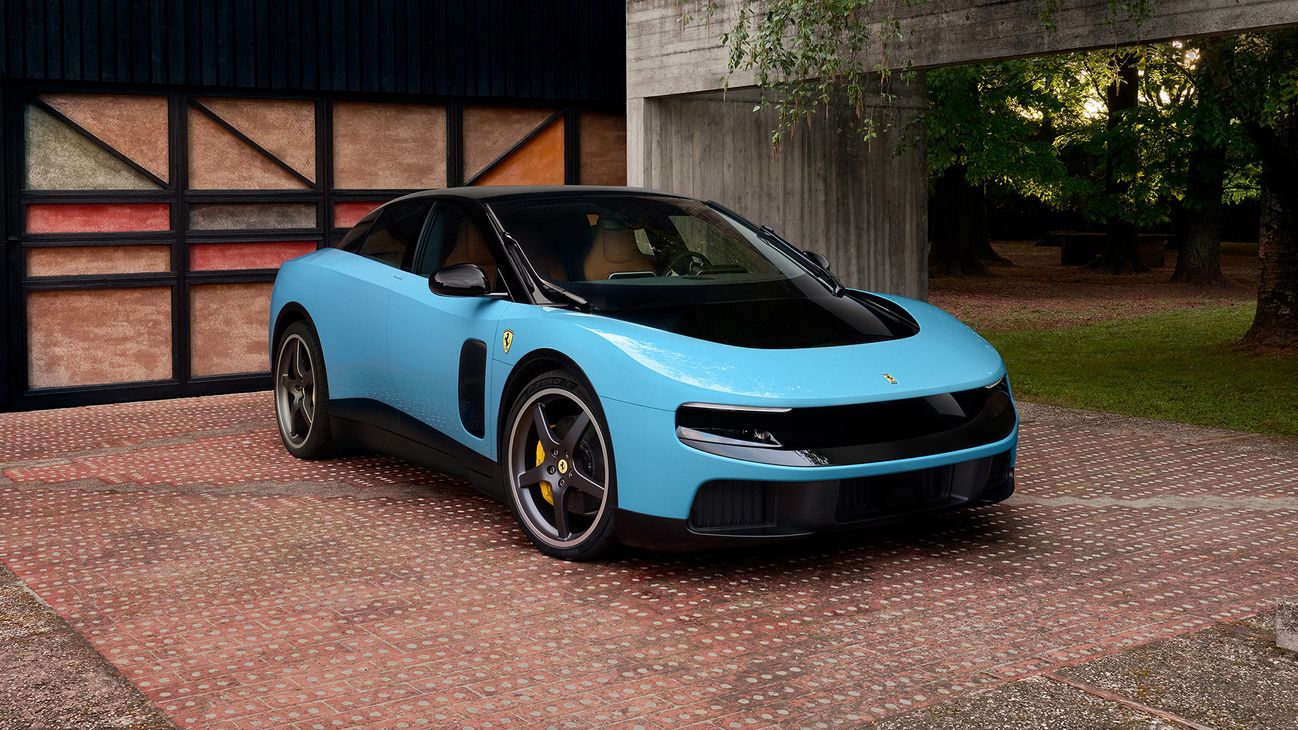
The Ferrari Luce is a new car model from Ferrari that was revealed in the podcast. The hosts mention it as a major announcement, so it’s likely something people will pay attention to. The discussion is mainly about the fact that it’s been officially revealed.
“Overengineered” means the car is built with more effort and sturdiness than the minimum required. The host thinks that extra engineering will make the driving experience feel top-tier.
A charging door is the little flap that covers where you plug the car in. Some cars have doors that open in a more clever way than others.
Term
rear hinges
They’re talking about how the door is attached and how it swings open. The hinge location (toward the back) changes how the door feels and looks when you open it.
The Porsche Taycan is Porsche’s electric performance car. The host is using it as a comparison point for what they’d want to buy if the Ferrari EV were priced similarly.
The infotainment system is the main screen in the car that handles things like maps, music, and phone features. You use it to control a lot of the car’s “tech” without touching the engine or driving controls.
That means the car can drive with an electric motor at (or for) each wheel instead of just one motor turning everything. It can help the car grip better and make the driving feel more controlled.
The instrument cluster is the screen(s) the driver looks at for speed, range, and other driving info. In newer cars it’s frequently digital instead of traditional gauges.
It sounds like the car uses a sensor to listen to the motor’s vibrations, then turns that into sound you can hear in the cabin. Instead of making up a fake engine noise, it’s trying to translate what the motor is already doing.
In an EV, the electric motor is the main power unit that uses electricity to spin the wheels. Here, they’re talking about using the motor’s vibrations as the source for the sound you hear.
V8 and V12 are types of gas engines with different numbers of cylinders. They’re used here just to say the EV won’t sound like a typical V8 or V12.
LIVE
This is Two Blokes Talking Electric Cars, with Trevor Long and Stephen Fennig, thanks
to NRMA Insurance and UNIDAN.
Great heavy company, Two Blokes Talking Electric Cars and NRMA Insurance, helping Australians
protect what matters most for 100 years and many more to come and all we ask is that you
give them a chance.
So when your renewal comes up for your insurance, get a quote and hopefully there's a better
deal out there for you.
Frankly, you should be doing that regardless, but you need to make sure NRMA Insurance is
one of the people you call to get that quote and UNIDAN Smart Dashcams.
If you've got a car, you should have a dashcam.
You should have a record of what happens around you because it's peace of mind.
Not just for the silly things that you want to tell your wife happen, but if something
unfortunate happens and you've got a record of it then.
So the ultimate peace of mind, Stephen, with the UNIDAN Smart Dashcam.
Absolutely.
Good to see you, mate.
Yeah, great to be here.
Big, busy show today.
Of course.
We don't mark around.
We talk to a lot of people on this show.
Very important people as well.
Very important people.
And you are important to us.
So if you have a question about electric cars and you're sitting on your big screen TV
watching us on YouTube or you're going for a walk listening on Spotify, it doesn't matter.
Send us a text message 0477657657.
Send us a text about your electric car questions, your journey or your experience.
We'd love to talk to you as we do with hundreds of people on the show.
But first, Stephen, this week, the managing director of Polestar Australia is joining us
on the line, Scott Maynard.
Welcome to the show, my friend.
Good morning, guys.
Thank you for having me on.
Mate, absolute pleasure.
Polestar is a brand we've had a little bit to do with.
We've driven, I think, at least two of your models, maybe three.
And just we get a lot of very positive feedback about the Polestar brand.
People love that they've bought a Polestar.
Is it an overwhelmingly positive experience compared to the many years of automotive experience
you have in your experience?
Yeah, I have been around for a little while.
I've been fortunate to work for a couple of brands.
This is a positive experience.
It's really lovely to work inside a brand where everyone in the brand, working for the
brand, is very passionate about not just the cars, but the cause that it represents
as well.
The position the Polestar takes on sustainability.
It's positioning as a performance luxury brand.
It's very serious business inside Polestar, and I really enjoy it.
I've got to tell you a little story, Scott.
When I first drove my first Polestar, I was lucky enough.
I don't know why, but I had the car a couple of months before it actually came out to officially.
They don't know why either.
That was an accident.
I had people stopping me in the middle of the road, literally, like, stop the car.
I wanted, what is this car?
Yeah.
That said, that was the interest in it, and it just looked so different and stood out.
So that's obviously an advantage for the brand if you can have that kind of appeal.
Styling is quite minimalistic, and it doesn't scream Polestar.
I still have that today.
I drive a Polestar 3, and on occasions, I walk back to my car to find two or three curious
onlookers staring at it, and they say the same thing.
What is that exactly?
Oh, it's a Polestar.
They're understated, and I think that goes over really, really nicely.
For people listening who are at the start of their electric car journey, and we should
acknowledge there's plenty of people listening who either own a Polestar, have driven a Polestar,
maybe test drove a Polestar, and bought something else.
It doesn't matter.
You may be familiar with it, but for people that are, because we'd have a lot of people
joining us that are new to the concept of electric car, because for all the reasons
that we'll talk about soon, it's become a really hot topic.
Talk me through the model range, because it's actually, with greatest respect, it's
touch confusing, because your two into your three becomes an SUV, then you go on a kind
of sports car stop, like it's the numbering.
I don't know that the numbering works for me, but talk us through the range and how you
position the range.
Let me make it really easy for you.
It's very, very simple.
The cars are numbered quite simply in the order that they came out.
Well, that makes sense.
That's logical.
Yeah, but there's a, but stick with me.
There's a twist at the end.
Okay, okay.
Yep.
So we started the whole thing with Polestar 2, which has been a really fantastic car and
it's had some really great updates.
We switched that car from front wheel drive to rear wheel drive partway through its life
cycle and did it successfully as well.
So Polestar 2 is a smaller car.
It's like a coupe, really practical and has served us well.
We backed that up with the Polestar 3.
Polestar 3 tops the range as a luxury SUV.
It's the largest car and that runs single motor or dual motor models, really spacious,
really roomy and its styling is fantastic.
Shortly after three, we launched Polestar 4.
Polestar 4 is also similar in size to Polestar 3, but it's a lower slung coupe style car.
That's the car that is famous for not having a rear window.
Yeah, no rear window.
Well, we drove that, Scott.
Sorry to interrupt, Scott.
We drove that and loved it.
The only thing we picked up on, you can't give a thank you wave in the car, mate.
No.
Yeah, there's no rear window.
No, that's not true.
You got to wind down your window and give a wave.
You can wind down the window and give a wave.
Well, you just do the hazard lights quickly and just let people know that you're grateful.
It does block that right out.
But the camera system and the screen that we use inside, the high difference,
yeah, it works really, really well.
So we've got that.
That's selling well.
That's the hottest selling product we have right now.
Yeah, we're selling a lot of the positive.
Which perspective is an $80,000, $90,000 car, right?
It is, yeah.
So most of the range sneaks under the luxury car tax threshold.
There is a super high performance dual motor car that pops above that,
and we saw a few of those as well.
But it's a great value package.
Just recently, we put on sale the sports car.
It's a Grand Tourer.
It's a Ford or Coupe.
It's a Polestar 5.
And we've been doing some launch events with Polestar 5 around the country.
We flew a left-hand drive pre-production car to Australia.
We had that on our stand at the Melbourne International Motor Show just a little while ago.
And we've recently been running that car around Adelaide, Perth, Brisbane,
and now back here it's sitting.
What's the reception mood like?
It's been great.
It's been a really, really pleasing reaction to Polestar 5.
It's not a cheap car.
It's a $200,000 sports car.
But it really is taking it up to super car rivals in terms of its performance.
It's fit and finished.
It's polished.
It's extraordinary styling.
And so we've been really excited to see the public reaction to Polestar 5.
We will get our first cars here a little bit later in the year, in the second half.
And we're starting to take some orders on it now, which is really pleasing.
And so that sits at the top of our range.
So Scott, I take it that the other models will still be available.
So the three, the four, and the five.
So there's a choice for customers, you know?
So even though the numbers are going up, they're not being...
They're still available.
It's not like an iPhone.
We're the 16s, the long-gone is out there, out does the other one.
No.
Yeah.
No, all the models are still on sale.
Okay.
There'll be some enhancements and changes and all the sorts of things that car companies do
will continue to happen in the future.
And then off into the future, we'll see some changes to Polestar 2 next year.
And then shortly after that, we'll see a new SUV.
And we'll be calling that Polestar 7.
We skipped to 7 because there is a two-door coupe badge Polestar 6,
which is still on the drawing board.
We're not going to release that just yet.
Wow, you're going to release a number.
It's like windows going to 10 from 8.
Skipping numbers, but that's completely fine.
Let's talk numbers.
We've obviously reported over the last few months some pretty extraordinary sales figures
for the industry, record EV penetration through the sales.
I'm assuming that's been part of the Polestar story as well.
My question for today is, is it still happening?
Because or was it a two-month bubble?
Because obviously fuel prices are receding back to where they were,
but I assume that people have gone,
I now know how volatile fuel prices can be.
I'm getting out.
Yes, you've got it exactly right.
The customers that we spoke to during that initial six-week period,
were customers that were now aware that Australia only ever holds about 30 days of fuel in reserve.
And so any disruption to the supply that replenishes that puts at risk
our ability to be able to buy fuel on a day-to-day basis.
And so the moment the government released a four-step plan that had the word ration in it,
we saw a run for the door.
And that really did create a frenzy of activity right across the EV industry,
as you point out, and Polestar certainly got its share of that,
which was pretty exciting.
The customers we spoke to over that period, they wanted a car right now, right or wrong.
It has settled from there, but it's settled to a level that is higher than it was before,
and that's really pleasing to see.
It feels like that there is now a broader understanding of the benefits for an electric car.
There is a greater appreciation of the flexibility that an electric vehicle brings
and independence to be able to charge and run your car.
People have done a bit more research and realized that there's cost benefits to it as well.
And so I think we're now starting to see just a gentle rise or a sustained level of interest
that's higher than it was before that peak period.
We've rolled off the peak.
That was expected.
We wouldn't have seen it continue like that.
But last month, we saw electric vehicles take up 16% of the total new car market.
We've not seen a number like that before.
We've seen electric vehicle sales double in the first part of 2026,
as compared to the same period last year.
And so that's good news.
It will now be interesting to see just where it now settles to and what it runs like.
But it's looking good.
Okay.
Scott, you've been in the car game for quite a while.
So I want to know, how does a brand, especially in a very competitive EV market,
how does a brand, how do you get your edge over your competitors?
And you, of course, can look back on your experience with your with,
I think you work with Audi for a while.
How does Polestar in this instance, how do you stand out from the crowd?
Yeah, that's not an easy thing to do.
Manufacturers need to be able to demonstrate some form of legacy, a little bit of history.
They need to be able to demonstrate a car is a complicated thing.
And so not everyone can knock one of these things together and make it last.
And so Polestar works hard to demonstrate some history that goes back to the 90s,
a history in motorsport, a history that aligns with development in step with Volvo,
an established brand with a long history.
So we draw on that.
Like a DNA trace, essentially.
You're kind of doing your family tree for people.
That's it, yeah.
Face the family tree, run the family tree back and you'll see that we are sweetest through and
and that there's a there's a whole whole heap of Volvo in there as well.
We've done the motorsport thing.
We employ engineers that know how to make a car handle.
We employ people that know how to make a car last and make a car look good.
I was lucky enough to travel to Sweden and spend some time in the design studio there.
And that's that's not an easy place to get into.
It's a bit like a dagger in that.
And speaking with the designers, just talking about some of the designs that are prevalent
in electric cars now and ours do seem to stand out.
Why is that?
And they said, well, we take a lot longer to design a car than a lot of brands
delivering vehicles to market in Australia at the moment.
We take that time to stand back from the car and ensure that it's going to look good from
every angle in every light condition for 20 years.
And that that takes a bit of time.
But I think that that's appreciated by the market where there's a lot of,
you know, semi disposable product being sold and we're building cars that the last
drive well, high quality.
But but getting that message out is is the challenge for us.
And we've just got to keep pushing that one of the key bits of feedback we get from
everyday people, real consumers, owners of cars, purchases of cars, things like that
is is the experience at the dealership before and after buying.
I don't think that we've had any negative comments about Polestar at all.
In fact, as I do a little search of our AI assistant who knows all of our transcripts,
there's a lot of positivity around Polestar in real terms.
How important and how do you handle the dealership experience for buyers,
people that are walking in off the street to both understand if they're educated or not
and whether or not they need to be handled differently from a sales perspective.
And then what are you telling them about the next five years of owning this car?
How are they going to be supported and where are they going to be supported and where are
parts and servicing? How do you handle that whole experience?
Yeah, so it's a really carefully put together relationship that we have with retailers.
And when Polestar first started, Polestar insisted on running every one of its showrooms,
we call them spaces. We insisted on running every one of them ourselves,
because for exactly the reasons that you talk about, the car could be brilliant.
But if the person talking to you about it does not pull across confidence,
is not able to explain the vehicle well, isn't able to help you with the questions that you
would probably have if you're transitioning to electric car for the first time,
then all the work done on product is going to go to waste.
So we have to be really careful about the partners that we choose.
We choose dealer groups that already represent luxury brands.
We are a bit particular about how we train.
And we also make sure that there's a lot of support there.
In terms of the conversation we have with our customers,
yes, that's also carefully procured with a lot of training that goes into it.
We don't have showrooms on every street corner. We've got 12 across Australia.
There's a couple more in the wings, but we've got a good representation across the broader
country, but we're not absolutely everywhere. However, we've got almost 20 service points.
So we've got a great representation of service, and that's where that partnership with Volvo
comes into play. You can take the false start of pretty much any Volvo service department,
and they'll know exactly what to do with the car so that it's well supported.
Because we do value that five-year journey. The worst thing we could do is sell everyone
in Australia one car. We need to be able to do this on a model that encourages people to refer
their friends to come back to us again. So it's a relationship that we need to build.
Because we're five years young and we still have a containable customer base,
we can get quite personal with every one of our customers, which is really lovely.
Interesting. You should mention the getting personal with customers. I can remember a few
weeks ago we had a caller who described buying an electric car like buying an iPhone.
Just jump on the website, spec it up, and then go from there. So obviously you want to embrace
having that reach to customers, but also at the same time, you still want to make it like a
distant relationship. You still want to have that personal touch, as you just mentioned.
Yes. So you can jump online right now. You can spec up a Polestar, hit buy, put down your money,
and you'll own a car. It's still possible to do it that way. If the overwhelming preference of a
purchaser is to do it semi-remotely. However, the vast majority of our customers will come
and visit one of our centers and speak with our teams, go through the product and drive it,
and see it in a space. And no matter how it's purchased, we will still do a proper handover
experience in, again, a very carefully set up handover space, which is nice and quiet.
We can step the customers through the product and make sure that they leave
with a full understanding of it. So we can offer buy it, but it's not a big personal.
That's what you want. So the big question is 23457 I'm assuming
there's not going to be one then. The pipeline for the future, the seven sounds exciting. What
else can you tell us about what people can expect from Polestar as you grow in Australia,
both globally and here in Australia? Yeah, well, there's a bit to come. So
we, our global CEO, Michael Laussela, made a fairly strategic announcement a couple of months ago.
Well, I wasn't even there to go now recently. And he spoke about an updated version of Polestar 4.
We'll get to keep the coop that currently is our best selling car. There'll be a new variant of
that, a vehicle that's perhaps a bit more practical, perhaps a little bit more styled on a wagon or
or an SUV style of vehicle. We're looking forward to bringing that to market. That will come
hopefully at the end of this year, it may roll into early next year.
A Polestar 4 wagon would absolutely go nuts. Yeah. Wouldn't it? We're excited about that.
I mean, isn't it funny though? Because again, you've got a long history in motoring, but
we went as a society. Australia was a wagon country for a long time. You're Commodore and
Falcon wagons and things like that. And then we went SUV. But there's a couple, there's a couple
in the premium market, BMW and such. But I think BYD at the Melbourne Motor Show had a wagon that
was a hybrid. You know, I feel like feel like there might be a move back there. So it feels like
you're you're seeing trend and picking up on it. I'd love to see it. And I mean, Europe's really
big on wagons. It now seems to be returning just as you said, to the Australian scene,
we're starting to see more people opt for for wagon style cars. So we're going to meet that.
The four will be, it'll still be a little SUV-ish. It'll still be riding a little bit higher.
It's a nice size car. So again, I was really lucky to see that when I was over in the design
studio, spending time with them there. And it looks fantastic. So we can't wait to be able to
release images and then have the car join the range here at the end of this year in the beginning
and next. That will be really, really cool. We'll get get seven that we talked about, which is a
compact SUV that will be built in Europe. And that will come to us. And then there'll be a
couple of other little, you know, limited editions and little tweaks and changes that we make through
that to that period as well. Before we then get into some new stuff should be a bit further out.
This may be a completely random thing to ask at this point, given where we've been talking about.
Why are you not in V-Fax? It's a very internal thing for the world. But for people trying to
report on the market, we've got to take numbers from V-Fax, which is 99% of car companies. And
then we've got to look at Tesla and Polestar numbers. Is that a political thing about the
FCAI's views on the new vehicle emissions scheme? Or is it just easier or cheaper? Or is it the
fact that, frankly, journalists don't need to know through one source? You can tell them,
what does it matter? No, I'd love you to know. And I'm really, I'm so sorry for making your life
that little bit more difficult. It's not a ploy to make you to go to two different sources.
Our data is published through the Electric Vehicle Council, and you will note that they
published first before the FCAI. And yes, it did get a little bit political there. There was a
period of time, particularly while we were developing the new vehicle efficiency scheme,
that there was a fair bit of legacy industry pushback against NVES. FCAI's member base requires
that the FCAI represent their cause. Well, that wasn't our cause. Polestar is a brand
that believes in the NVES and pushes hard to continue the electric vehicle discount that's
been generously applied by government to electric vehicle sales. And so to be subscribing into an
organisation that actively works against that cause didn't make sense for Polestar at the time.
And so the decision was made to step out of the FCAI. That meant that our figures were no longer
supplied to VFAX, given that it sits inside the FCAI. Fair enough. And that's the right place to be.
Awesome stuff. People love the brand owners, love the cars. And that's the most important thing,
isn't it? Just to know that people are driving around with a smile on their face,
and they're probably at a barbecue, talking to their marquee mate who doesn't love electric cars,
and they'll say, listen, come for a drive. Let me show you, because there's nothing better than just
showing them what it's like. Yeah, I still get to talk to customers a lot. I really enjoy it.
And I did have a customer say that he and his family were really proud to buy a Polestar. He
said there's a lot of people that will go to a barbecue and say, oh, I bought an electric car.
He said, but Polestar is a brand that you go to a barbecue and say, I bought a Polestar.
And people know where that is. They know it's an electric car. And I like that. I thought that was
a really lovely way of summing it up. Fair enough. Scott Maynard, managing director of Polestar,
Australia mate. Thank you for your time. Thanks, Scott. Thank you so much. I love your show.
It was really good to be on. It was a lot of fun. Thank you guys. Appreciate that. Very good,
mate. We appreciate it. And we'll take your calls after this on two Blake story electric cars.
Oh, goodness me. We get a bit of exercise. If that's exercise, you've got problems,
my friend. That's much exercise I've had for a while. Yeah, that's more than I've done too. But
anyway, great to chat with with Polestar boss there. And we'll we'll bring him any more
manufacturers over the weeks and months ahead because if they want to talk, we'll have them on
the show. It's as simple as that. Slutting us with the enquiries. They want to be on the show.
You know, there's this to a degree. There's different levels of interest. Let's just say.
No, but we do. I do have these conversations with the with the people in the car brands and
they're it's sometimes just hard to arrange. Well, we're very strict in our timing. We only
record on a certain day of certain weeks. We know this. It is what it is. Anyway, we also love taking
your calls. Oh, four, double 7657657 Send us a text. Save it
in your phone as the two blocks and we'll get your message and we'll get you on the show. Trev's
on the line. Good day, Trev. How you doing, mate? They're all good. Thank you for good. Tell us
where you're at in the world. You've you've got an EV and you're thinking past the world of just
general electric cars. You're thinking about vehicle to home. You're thinking about how else
you can use that big battery in the driveway? Absolutely. Journey has been purchased a BYD
Ato3 in May 23. Since then, we've done about 44,000 kilometres on it. I did the Tesla
charge upgrade and thanks to you guys for pushing that one through.
Oh, right, because it wasn't yours. Yours was an early model, not compatible with the Tesla
charges. It cost me a lot of aggravation trying to get people inside after your
podcast that day. It took me a lot of phone calls to get BYD dealerships and parts people to agree
that, oh, yes, that is a thing. What did you end up paying? It was a few hundred dollars, wasn't it?
Yeah, it's about three just over 300 dollars. And the only only person after after
about six phone calls that knew anything about it was a great crew down in BYD Dandy North.
They were really helpful. Nice. And so just broadly on the on the EV front,
great decision. You're happy with aside from the dramas of the charging
network compatibility, it's turned out to be a great decision to go EV a couple of years ago?
Absolutely, more than happy. I think at the time we had a diesel Hyundai Tucson that was
end of lease. And this was to be my wife's car, to drive to and from work for probably the last
nine, 10 months of her working career. And it worked out perfectly. Once we've done all of the
the charging in stores, we put a Zappy 2 system in. We also always also had
a solar in phase solar micro micro inverters, micro inverters, and a Tesla Powerwall 2.
You're kidding me. That sounds pretty good. Can I ask what was the back in 2023? What was the
motivation to go EV? Were you seeing them on the road and thinking, oh, I want to get amongst that?
Was it like a cost saving thing? Or was it just wanting the latest and greatest? What was the
main motivation? It came down to looking towards the time where I won't call it retirement because
haven't done that. Where our income streams were reduced and we were looking to minimize our
outgoings during that period. So having an EV for everyday use was just a no brainer,
as far as we were concerned. The whole hybrid thing. At the time, I felt it was like being
half pregnant. You shouldn't do that. It seems about right. I think it's an analogy that's been
used before on this show, but obviously that initial income change moving to where you're at
now has evolved over a few years. So now you're thinking how else can you use the battery? Is
that where you're at? Absolutely. It was always a goal to use the car as a vehicle to home backup.
However, the lack of warranty backup and all that sort of thing from BYD was the thing that
stopped me because I didn't want to void warranty on a new technology.
All of that. So I think now it's getting to the point where I think it's ask forgiveness,
not permission. I feel very similar on that. I mean, I know it's a huge risk to take, but
also with BYD, they're one of the few that has been engaging in this space with some of the
trials going on, aren't they? So there's a little bit of you know, at least they know what's going
on. It's not going to be some surprise to them if you tell them you've been doing it.
Yes. And that was the thing that there was a trial done. I'm not sure if it's even still underway
with, I just think it was origin energy. There's about three or four different trials going on,
and let's remember, bloody trials always take forever. You think it'd take two months to work
on it, it takes years. Bloody years. So yeah, the trials are definitely real. I still think we're
all a while away from this becoming a thing, mainstream feature of it. We will look back
on the first time we talked about this, which is now a year ago, as being ages and ages ago
when it finally is real. But my question for you, Trevor, is how much are you prepared to invest in
this? Because you've got a battery already, you've got solar already, you're going to have to replace
the Zappy with something that does this. That's going to be a big cost. So where do you see that
paying off? Yes, I think, again, working towards minimizing outgoings. It's not about how long
it takes to pay this off and make it worthwhile. It's immediate cost reduction in monthly outgoings.
So on that basis, I did get a quote from a company called RevCharge, you may know them.
I've heard of it. And they were part of the one of the trials.
No, I think it was in New South Wales, this particular one, and they're quoting the Halo
Charger as part of their setup. How much? Tell us the price, son. Well, the bottom line was
seven and a half grand, so $7,000. That's, by the way, that's come down. When I first started
researching this maybe three years ago, it was about a $10 grand, because Warbox have one called
the Quasar, bi-directional. It's about $10 grand, right? By the time it becomes reality,
it's probably going to be $3,000 or $4,000 by then. You mentioned you have to obviously
get rid of the Zappy, but do you have to get rid of your other battery? No, no,
you can keep the battery, couldn't you? That's just additional storage. Was that part of their
quote to you, was to plummet in so that it would charge either the battery or the home or the grid?
Yeah. The installation would not take away the Tesla Powerwall, because as a comparison, I had a,
I've got a quote on an additional Tesla Powerwall 3, because they recently announced that you can
add a Powerwall 3 to your Powerwall 2 system. That I think ended up being about the
18 grand to do that, which was too much. Or take out both Powerwall 2 and putting two Powerwall
3's, and that was about, oh no, that was the Sieg Energy system, sorry, that was about $22 or
something like that. But having said that, so even if you were to buy that charger today,
that's way cheaper than having your battery rearrangement. Correct. Yeah, wow. Absolutely.
Have you in that configuration, how much battery storage do you have with the Tesla's?
The Tesla Powerwall's 13 and a half kilowatts. See, it's funny because it really is, as you say,
it's about deciding your outgoings. And look, I look at it, and I'm probably in the next six months,
I'll buy the bullet, and it will be a stupid amount of money, more than the solar and everything
cost. But the way I look at it is, the system I'm looking at is huge, so it'd be a 48,
probably kilowatt hour battery or 40 kilowatt hour battery, and bi-directional charging
with Sieg Energy. But for me, on my numbers, it's about a 10-year repayment. And I go,
oh look, if I can afford it up front, I like the idea of the minimal payments ongoing and the
long, longer-term benefits. And that's kind of where you're at when you're in our age, and you
start to think that when you get to retirement, how do I reduce my overhits? He looked at me when
you said that. But isn't it funny? Look, Trev, I don't know how old you are, mate, but you know,
Steven's in his early 50s. I was being nice for the first 58 years old.
All right, well, I'm about to turn 50, and you know, retirement's 15.
Yeah, young blokes.
Yeah, 15 on his way. But you do go, okay, well, you see all these calculators about
retirement and how much you need to live and stuff, and you go, well, if I could completely
and I've done this with my mum, I look at her expenses on the pension, and you go,
if you had no power bills, it'd be a whole lot easier and stuff like that. So that's the
kind of thought in your mind, isn't it? It's reducing those long-term ongoing costs and that
having that huge battery sitting in your car is going to be a big part of that.
Absolutely. Absolutely. That's what we're looking for.
We just have to hope the government and you know, the authorities really start pushing
this and regulating it, mate. That's really all we have to hope for.
Yeah. So I think it's now we're looking at the next model, and as we're sort of looking at the
BYD Evo, the Ato3 Evo, and that sort of solves that vehicle would solve another problem where we
found on trips that the Ato3 standard range which we currently have is a little bit short on range.
You have to stop a little too often and we did a comparison where we did a NUSA trip one year
from Melbourne in the electric and it worked really well, no problems.
We found we had to stop multiple times. We'd stay overnight a couple of times because you can't get
as far in one day. And then the following year, our second vehicle is BMW 330D. So it's a turbo
diesel and we found less stops. It actually cost us less money to drive to NUSA because we're not
buying 25 bucks worth of coffee and lunch every time. Stop because it's not just the cost of the
accommodation. Yeah. Power and fuel are not the only costs, right? If you put in accommodation.
True that. And the one thing you don't want to do is you don't want to quote
your own time or what's your time worth per hour. Yeah, a lot. So it's a realistic comparison. So
you're right, adding range with the EVO will be a huge benefit to you. Now that you know,
like you've got everything else in place, now that you know what you need and the beautiful thing is
cars today by default have more range. We're just getting that in the industry apart from the smaller
cars made for the city. So the EVO is perfect for, because I think it positions BYD really well to
go. We've got the Ato1 and 2 which are pretty much city cars and then the Ato3 becomes your,
you know, you need range, you need space and then everything else in the lineup. So
mate, it's a good little lineup that they've got going on. So it sounds like you'll end up
being a BYD man and hopefully you can get some sort of sign off for vehicle to grid. So just
finally, are you going to look at that quote and go, I'm going to bite the bullet and just
do it and hope for the best? Well, I'm hoping you use your considerable influence on BYD and get
some early gin on what they're going to do in Australia with the EVO. It's a fair question,
it's a fair question. You can't get a lot of information out of BYD because they work on the
SWAT principle and sell what's available today. No, it's not what it normally stands for, no.
I thought it meant some tactical thing. No, isn't it? No, no, well that's in the army.
It's there's also a SWAT in business too. I can't remember what it stands for. Correct.
What's it stand for, Trev? So SWAT in the EV world is sell what's available today. I love that.
Correct. Oh, that's great. Nice how you've coined that. That's well played, Trev. Well played.
Well, we will take that on note and talk to Trevor with some brains, mate. That's great.
And just one last point, listening to your podcast from last week, you talked about the
Better Root Planner software. Just a quick addition to that is if you get yourself a
Bluetooth connected OBD interface, I use an iCar Pro. You get the dynamic feedback from the car
to the software and it gives you more of what you call the Tesla experiences.
Trev, have you hacked us? Have you hacked our rundown for this show? Because literally
I was going to talk about this. So let's just quickly talk about it because
it's fascinating. We brought it up a couple of weeks ago and it's an unbelievable root planner.
So for people that don't know, an OBD is the onboard diagnostics port. It's a little port
normally under the under the steering wheel where a mechanic will come in, plug in and they'll get
the error messages from the car. It gives them data. But also you can get things like
loggers. So you plug it in and it logs trips. So if you've got a log book, you can use that.
But the one that you're talking about, and I've had a look on Amazon, there's one called OBD Link.
There's a bunch on the AR, BP, or the Better Root Planner website. Basically, you spend the
money on this little box. You pair it to your phone and then this little box is constantly
transmitting information about your efficiency. So how much battery you're using and therefore
how much range you've got, what the range prediction of the car is versus the app. And then it's using
that real information to give you the Tesla like experience. Mate, I am ready to click the button.
So tell me, Trev, what am I buying? Because I'm currently on Amazon and the one I'm looking at
is 240 bucks. Yeah, I don't think I've paid that much. There's some time back now, but I've got the
iCar Pro. The reason I've been a bit careful is because the Better Root Planning website goes
into great detail about there being issues with some models, and it's not yours thankfully.
The VGate iCar Pro also works well fine, has been tested, but it does say there is no security. So
what they're concerned about is these devices, if left running, are constantly emitting a pair
with me, so you come up to your car with a mobile phone and pair with it and get your data,
do I care? Probably not. So you might have to pay a little bit more for one that has security.
You're saying to me, if I buy this thing, plug it into the car, it will then give me this great
Root Planning information and you almost swear by it, Trev? Yeah, it works so well on long trips.
The map's a little bit clunky, I have to say, but in comparison to Google Maps.
You've got to pay a subscription as well to get the car fight working.
Yeah, subscription is pricey, it's over $7 a month, so I only subscribe if I'm going to do a trip.
But the thing that the addition that you should, if you're concerned about security,
the addition you should purchase is there's a extension cable for an OBD port that's got a
switch in it and you turn the switch off and it just turns the power off and you don't have to be
fiddling under the dash to turn the thing on or off. The thing that I want from this kind of,
the thing that I would love if I drove a Tesla is the assurance that if it says I'm going to get
there with 10%, I'm going to get there with 10%, but I don't believe any car I own or drive. If the
calculation is it's got 300km range, I assume 200km and sometimes you're lucky it's got 300km,
right? Is the accuracy of that percentage calculation, do you see accuracy with it?
It's better because at least then you're, it's putting it into the map and you know how far
you're going, because unless you're using the onboard navigation of BYD, you don't get that
feedback. So this a better route planner is much better for all the different charge points and
all that sort of thing available on your route. So at least you get the feedback and it's more
accurate. I wouldn't, I probably can't comment that it's 100% accurate, so it's certainly a lot
more information than you would normally. You're thinking maybe a car company might take this over
and make it part of their vehicle. No, because if you use the in-car maps in a lot of cars,
it does work like a Tesla, but none of us want to use that because Waze and Google are just better.
So I think that's essentially the point. So anyway, fascinating. I really appreciate that,
mate, because we kind of blown away by a better route planner and how good it looks. So the ability
to you know now really upgrade it like this is mind-blowing. I'm going to give it a go on my
next long trip trip. So thanks for the input, mate, and thanks to everyone else who suggested
the same thing after that episode a couple of weeks ago, mate. Good to hear from you, mate. Keep
us in the loop on how you go with the BYD and we'll keep asking those questions for you, mate.
Thank you, sir. Have a good day. Cheers, no worries at all. Good on you, mate. That's excellent. So
there you go. I mean, yeah, like hacked our rundown and went, yeah, got ahead of me there.
No, there's been a lot of feedback about that. Yeah, it just sounds like a really good system.
Yeah. And I'm more to the basics of it is you get better. You can predict and also plan,
say you want to have, you know, you want to have 15% battery left when you arrive. Yeah,
it'll help you facilitate that. I have noticed in a few cars now and you'll notice it in the key
you're about to take away. It gives you range and then most and least. So it gives you what it
thinks it's going to be. And then it says, but it could be as much as, you know, 700 or could be as
little as 300, which is, it's a better thing for you because it means the car's going, listen,
if you flog this thing, it's going to be 250. But if you take your time and you drive around the
city, it's going to be 400, you know, that kind of stuff. So I like that. The other, the other news
about a week ago was the Ferrari electric car. Ladies and gentlemen, it's been revealed, the
Luce. Yeah, the Ferrari Luce. Now, there's a, there she was, the internet hates this car.
Yeah, I've had mixed reactions to my comments have been one, the one that struck mine,
one of them described it as a twisted sand shoe. Okay, that's whatever that means.
The best meme I saw was the car on its roof with a cable underneath.
The Apple magic mouse. But the reality is, and I was at the Ferrari factory last year,
saw the kind of underpinning of this, this thing is going to be, I call it right now,
it'll be the best driving electric car on the planet because it's overengineered to be so.
It'll be solidly. It's also going to be a million dollars, which is, so you can, you'll be right
to get one. But it's funny watching videos of it because there's a guy, he goes, look at the
charging door. It's amazing. It goes, and it goes inside the car. And I'm like, Porsche does that,
mate. What are you talking about? Like it's, some of it's not new, but the interior, it's Johnny
Ive all, all over. So many people have said to me, this is what Apple's car would have looked like
if they released one with Johnny Ive because it does. It is the design is so, is really minimal
and beautiful and typical Johnny Ive. I, I like the doors, the, what do you call that?
They call them rear hinges, but opening in the same direction. Yes. So it's a five-seater as
well. Yes. The first ever Ferrari five-seater car. Four door. Did you expect it to be a four-door car?
Yes. When we saw it, it was in camouflage. It looked like a, it looked more like a hatchback,
kind of a small SUV size because they had fake, still pretty slick look, fake coverage on it.
I like it. I don't know. There's a lot of people who don't like it. Personally, if this was a,
so if this was priced the same as a Porsche Taycan, it would, it would be my new first love.
Cause if, if I win Powerball, I will buy a Porsche Taycan. I love that car. I think it's amazing.
If I win 60 million, I'll probably save up and keep a bit for the Ferrari, but just, just in
terms of comparing it, I do, like it. I like the look of it a lot because I'm not looking
at it as a Ferrari and going, you've ruined the design. It's an EV. Of course. I'm looking at it as
a sports car EV and going, this is unbelievable. I can't believe they've done it.
Just happens to have the prancing horse on the front. Like something as simple as,
if you see in the infotainment system, the mill has a handle so you can just swivel it to the right
and the passenger gets to see it, which is genius because it means they don't need to build it for
the left or right hand drive. It just works for either. Works for either way. But it's also
really cool to go, Hey, can you just set the map for me to the next destination or whatever?
Yeah, it's those little things though that matter. And I do love to 102.5.
Yeah, that's pretty a motor on each wheel. Yeah, that is pretty good. And the interior looks really
good. It looks pretty compact. Do you think the interior reminds you of like the seventies or eighties
that that kind of the way it stitched horizontally on the rear seats? I just, it just felt classic
to me. The instrument cluster looks like, you know, it's like an iPhone and then there's an iPad
next year. There's a sort of same shape as a phone. I can't wait to sit in it and just feel the
buttons because Johnny, I've been involved in the field. Absolutely. They're not buttons,
they're switches, but I bet you they feel amazing to touch. Well, you know, you're going to go that
far. You might as well go all the way. Well, you know, it's interesting because I think I might
have mentioned this on the FGM podcast a couple of weeks ago, but there's a guy in New Zealand called
Grant Baker. I think on Instagram is Grant K Baker. He's, I don't know if he's in property or the
motoring industry. I can't quite remember, but he's very, very wealthy. He owns a lot of Ferraris
and he shows videos of them. He orders a new one. He shows you the whole process.
So you video, you watch as he videos his Ferraris. Yes. But like crazy amount of them
and the process. And he was asked in the comments, would you buy one? He said, wouldn't rule it out.
And so that's, that's, that to me is a grand life from an absolute collector. He got absolutely
pummeled by saying that. He's like, well, you're a suck up. You're just doing it to stay on their
list and all that kind of stuff. But you know, Ferrari though, come on, as a purist,
everyone's heads will turn when the reviews come out. Cause they'll review this not just on the
road, but on the track. And I am so confident that this thing will feel amazing. And the thing that
we haven't seen yet is the sound. Well, because is that, is it transmitted into the cabin? Is
that right? So what, what they've done is they've built essentially a microphone into the chassis
of the electric motor that turns the sound of the vibration into the sound you hear in the car.
Like an engine sound. The way it was described to me, no, not like an engine. The way it was
described to me, think of an electric guitar. The way an electric guitar has sensors that pick up
the vibration of the string and turn it into something else, right? As opposed to an acoustic
guitar. That's the way this pickup will work on the vibrations of the electric motor. So
it's genuine sounds from the electric motor. Okay. Turn into something not like a different,
it will not sound like a V8 or a V12. No, it will sound like it's probably the most authentic
electric car. It's more than five meters long. The pictures, they make it look small. Yes. It's
five more than five meters long. Yes. And two meters wide. Yeah. Yeah. Solid car. Anyway,
let it get to test drive this year. I'm sure down the track, it'll be in the driveway.
You think so? Hi, Ryan. Is that if you're Ryan Ferrari? Yes. G'day, Ryan. You're like, you're
Ryan. Look, I can't wait to see it. There's no doubt. But it's a 2027 car for Australia.
They're better. It'll be fascinating. The reception will be after a car this year.
This will be all around Hollywood. I would have got this if it was this year. This will be all
over Hollywood like Priests in the 90s. What color would you get? I like the blue.
Yeah, I don't mind the blue. Yellow looks like two. I don't think you buy the red,
because I think that is an insult to Ferrari. Maybe. I reckon yellow or blue.
All right. Two bikes talking electric cars. We appreciate you listening,
downloading, watching, and hope that you share it with your friends and anyone that's on the
electric car journey. More from us next week. Thanks to the great people at NRMA Insurance
and Uniden Smart Dashcams. Steven, I'll still log in next week. I will turn up for you, mate.
Oh, will you? Yeah. Oh, thanks, mate.
About this episode
Polestar’s managing director Scott Maynard joins the discussion on brand positioning, pricing, and what’s next for the lineup. The hosts compare Polestar 2/3/4 variants, talk Polestar 5 launch timing and supercar-level performance, and weigh whether EV sales momentum is real or just a “two-month bubble.” They also dig into EV demand drivers like fuel-ration fears, plus Polestar’s retail and service approach—“spaces,” trained partners, and structured handovers. Later, the show shifts to EV tech: bidirectional charging, OBD-based route planning, and even cabin sound synthesis.
Polestar Australia Managing Director Scott Maynard joins the two blokes to talk about the brand's position in Australia.
How reputation matters, a look at customer service and after sales service and the future roadmap including the epic Polestar 5 and is the Polestar 4 getting a Wagon variant?
Plus we talk Vehicle to Grid with a BYD owner keen to take advantage.
Also, A better route planner - making it even better.
AND the all-electric Ferrari - hit or miss?
Be part of the show, whatever your question, send us a text thanks to Vodafone on 0477 657 657