
123 - Polestar Boss on sales and the future
About this episode
Polestar’s managing director Scott Maynard joins the discussion on brand positioning, pricing, and what’s next for the lineup. The hosts compare Polestar 2/3/4 variants, talk Polestar 5 launch timing and supercar-level performance, and weigh whether EV sales momentum is real or just a “two-month bubble.” They also dig into EV demand drivers like fuel-ration fears, plus Polestar’s retail and service approach—“spaces,” trained partners, and structured handovers. Later, the show shifts to EV tech: bidirectional charging, OBD-based route planning, and even cabin sound synthesis.

Polestar 3
"I still have that today. [174.3s] I drive a Polestar 3, and on occasions, I walk back to my car to find two or three curious onlookers staring at it, and they say the same thing."
The Polestar 3 is an all-electric SUV from Polestar. The point here is that its design is different enough that people notice it and ask what it is.
The Polestar 3 is Polestar’s electric SUV, built around a modern EV platform and designed to stand out with a distinctive, minimal look. In this segment, the host uses it as an example of how the car’s styling draws attention from strangers.
electric car journey
"For people listening who are at the start of their electric car journey, and we should acknowledge there's plenty of people listening who either own a Polestar, have driven a Polestar, [195.1s] maybe test drove a Polestar, and bought something else."
They’re talking about what it’s like to start learning about EVs and then eventually getting comfortable with owning and driving one. It’s basically the “getting into electric cars” phase.
“Electric car journey” is a listener-friendly way to describe the process of moving from being new to EVs toward owning or regularly driving one. It typically includes learning about charging, range expectations, and choosing the right EV for your needs.
rear wheel drive
"We switched that car from front wheel drive to rear wheel drive partway through its life cycle and did it successfully as well."
Rear-wheel drive means the rear wheels are the ones that get the power. It can make the car feel different when you accelerate, especially on slippery or uneven roads.
Rear-wheel drive (RWD) means the electric motors send power to the rear wheels. Compared with FWD, it often gives a different balance of traction and steering response, especially when accelerating hard.
front wheel drive
"We switched that car from front wheel drive to rear wheel drive partway through its life cycle and did it successfully as well."
Front-wheel drive means the front wheels are the ones that get the power. It can change how the car steers and how it grips the road.
Front-wheel drive (FWD) means the electric motors send power to the front wheels. That layout typically affects traction and steering feel, and it can change packaging and how the car balances weight and grip.
single motor
"It's the largest car and that runs single motor or dual motor models, really spacious, really roomy and its styling is fantastic."
A single-motor electric car uses one electric motor to move the vehicle. It’s a simpler setup than having two motors.
A single-motor EV uses one electric motor to drive the wheels. With only one motor, the car’s power delivery and torque distribution are simpler than in a dual-motor setup.
dual motor
"It's the largest car and that runs single motor or dual motor models, really spacious, really roomy and its styling is fantastic."
A dual-motor electric car has two electric motors. That usually helps the car accelerate harder and manage traction better than a one-motor setup.
A dual-motor EV uses two electric motors, typically allowing independent control of front and rear (or left/right) torque. That can improve acceleration and traction and enables more advanced driving modes.
coupe style
"Polestar 4 is also similar in size to Polestar 3, but it's a lower slung coupe style car."
“Coupe style” means the car’s roofline is lower and the shape looks more sporty than a tall SUV. It’s mostly about the body shape and how it looks and feels.
A “coupe” style refers to a body shape with a lower roofline and a more sloping rear profile than a typical SUV. In EV marketing, it usually signals a sportier look and often a different aerodynamic and packaging trade-off versus a taller crossover.
Grand Tourer
"It's a Grand Tourer. It's a Ford or Coupe. It's a Polestar 5."
A grand tourer, or GT, is a car meant for long trips. It’s usually comfortable for cruising but still has enough power and handling to feel sporty.
A grand tourer (GT) is a car type designed for comfortable long-distance driving while still offering sporty performance. The term usually implies a focus on refinement, high-speed cruising, and a more “all-day” driving experience than a pure track-focused sports car.

Polestar 5
"It's a Ford or Coupe. It's a Polestar 5. And we've been doing some launch events with Polestar 5 around the country."
The Polestar 5 is Polestar’s big, high-end electric car. It’s meant to feel like a serious sports/grand tourer, and they’re talking about how people have reacted to it and when customers will start getting their cars.
Polestar 5 is Polestar’s flagship grand tourer, positioned as a high-performance electric sports car aimed at supercar rivals. In this segment, the host discusses launch events, public reception, and starting to take orders, framing it as the top model in the range.
pre-production
"We flew a left-hand drive pre-production car to Australia. We had that on our stand at the Melbourne International Motor Show just a little while ago."
Pre-production cars are early vehicles built before full-scale manufacturing starts, used for validation, marketing, and real-world testing. They may not be identical to the final production specification, but they’re close enough to assess fit, finish, and overall behavior.
left-hand drive
"We flew a left-hand drive pre-production car to Australia. We had that on our stand at the Melbourne International Motor Show just a little while ago."
Left-hand drive just means the steering wheel is on the left side of the car. The host is saying they brought a nearly finished (not final) car with that setup to test it and show it in Australia.
Left-hand drive means the steering wheel is on the left side of the car, which is the standard configuration for most countries like the UK and the US. The speaker mentions flying a left-hand drive pre-production car to Australia to run events and gather feedback for that market.
Melbourne International Motor Show
"We had that on our stand at the Melbourne International Motor Show just a little while ago. And we've recently been running that car around Adelaide, Perth, Brisbane,"
It’s a big car show in Australia. Automakers bring new cars there to show them to the public and media, and this is where they displayed the Polestar 5.
The Melbourne International Motor Show is a major Australian auto event where automakers display new vehicles and concepts. The segment uses it to describe where Polestar 5 was shown publicly as part of its launch activity.
Adelaide
"And we've recently been running that car around Adelaide, Perth, Brisbane, and now back here it's sitting."
Adelaide is a city in Australia. They’re mentioning it as one of the places they drove/showed the Polestar 5 during launch events.
Adelaide is a city in South Australia, referenced here as one of the stops for Polestar 5’s launch tour. The host is using these locations to emphasize how widely they’re showing the car before deliveries.
Brisbane
"And we've recently been running that car around Adelaide, Perth, Brisbane, and now back here it's sitting."
Brisbane is a big city in Australia. They’re saying they took the Polestar 5 there as part of the launch tour.
Brisbane is the capital of Queensland, named as one of the cities where Polestar 5 was driven around during launch. The mention supports the idea of a broad, multi-city rollout before customer deliveries.
Perth
"And we've recently been running that car around Adelaide, Perth, Brisbane, and now back here it's sitting."
Perth is a major city in Western Australia. They’re listing it as part of the places they took the Polestar 5 to show people.
Perth is the capital city of Western Australia, mentioned as another stop on the Polestar 5 launch tour. It highlights the brand’s effort to reach customers across different regions.
$200,000
"It's been a really, really pleasing reaction to Polestar 5. It's not a cheap car. It's a $200,000 sports car."
They’re saying the Polestar 5 costs around $200,000. That price is meant to show it’s a high-end car competing with other expensive performance models.
The $200,000 figure is used as a pricing anchor to frame the Polestar 5 as a premium, high-cost vehicle rather than an entry-level EV. It helps listeners understand the competitive set and why the car is being positioned against supercars.
super car rivals
"It's not a cheap car. It's a $200,000 sports car. But it really is taking it up to super car rivals in terms of its performance."
They mean the Polestar 5 is being compared to very expensive, very fast cars. The point is that it’s trying to compete for the same kind of buyer as top-tier performance vehicles.
“Supercar rivals” refers to other extremely high-performance, high-price cars that compete for the same buyer attention and performance expectations. Here, it’s used to position the Polestar 5 as a serious contender rather than a mainstream EV.

Polestar 2
"And then off into the future, we'll see some changes to Polestar 2 next year."
Polestar 2 is Polestar’s main electric car. They’re saying it’ll get updates next year, which is important because EVs can improve over time with both hardware and software changes.
Polestar 2 is Polestar’s main mass-market electric liftback, built around an EV powertrain and software-driven features. In this segment, the host discusses planned updates to Polestar 2 next year, which matters because EVs often evolve via hardware refreshes and software changes rather than only new model generations.

7 Polestar 7
"...t, we'll see a new SUV. And we'll be calling that Polestar 7. We skipped to 7 because there is a two-door coup..."

Polestar 6
"We skipped to 7 because there is a two-door coupe badge Polestar 6, which is still on the drawing board. We're not going to release that just yet."
Polestar 6 is a planned two-door coupe that they haven’t decided to release yet. They’re basically saying it’s still in the planning stage.
Polestar 6 is referenced as a two-door coupe badge that’s still “on the drawing board,” meaning it’s not yet ready for release. This is relevant because it shows how Polestar is sequencing its model strategy—prioritizing some vehicles now while keeping others in concept/planning status.
EV penetration
"We've obviously reported over the last few months some pretty extraordinary sales figures for the industry, record EV penetration through the sales."
EV penetration means how much of the car market is buying electric cars. Higher penetration means EVs are becoming a bigger part of new-car sales.
EV penetration is the share of total vehicle sales (or the market) that are electric vehicles. When the hosts mention “record EV penetration,” they’re pointing to how quickly EVs are capturing a larger portion of new-car demand.
two-month bubble
"My question for today is, is it still happening? Because or was it a two-month bubble?"
A “two-month bubble” here means a short-lived spike in EV sales that may not reflect longer-term demand. The host is questioning whether recent strong numbers are sustainable or just a temporary surge driven by timing, incentives, or supply effects.
dealership experience for EV buyers
"How important and how do you handle the dealership experience for buyers... How are they going to be supported and where are they going to be supported and where are parts and servicing?"
They’re talking about how Polestar makes sure people have a good experience when buying an EV and know they’ll be supported afterward.
This segment is about how Polestar handles the buyer journey through trained retail partners and controlled showroom operations. The discussion connects sales confidence, EV education, and long-term ownership support like parts and servicing.
showrooms
"when Polestar first started, Polestar insisted on running every one of its showrooms, [827.3s] we call them spaces."
They’re talking about the physical places where you go to look at the cars. Polestar is saying those locations need well-trained staff so buyers feel confident—especially when switching to electric for the first time.
In this context, “showrooms” refers to physical retail locations where customers can see and talk about the cars. Polestar uses a branded approach (“spaces”) and emphasizes that the people staffing these locations must be trained to explain EV-specific questions confidently.
service points
"However, we've got almost 20 service points. "
Service points are the places you take the car for maintenance and repairs. They’re important because EVs still need servicing, and you want a nearby place that can handle it.
“Service points” are locations where EV owners can get maintenance and repairs. The speaker is using the number of service points as a practical measure of how broadly the brand can support owners with servicing and parts.
Volvo
"So we've got a great representation of service, and that's where that partnership with Volvo comes into play. You can take the false start of pretty much any Volvo service department, and they'll know exactly what to do with the car so that it's well supported."
Volvo is a car brand that’s helping with service. That means if you own a Volvo or a related car in their network, there’s a place to get it maintained and fixed properly.
Volvo is partnering with Polestar to support service operations. In this context, “service” means the after-sales care—how the car is maintained and repaired—so Volvo’s service departments can help Polestar cars be “well supported.”
spec up
"Yes. So you can jump online right now. You can spec up a Polestar, hit buy, put down your money, and you'll own a car."
“Spec up” just means choosing the options for the car you want (the configuration) before you buy it.
“Spec up” means configuring a car’s options and configuration—like choosing the trim/features—before purchase. In the transcript, it’s part of the online buying flow for a Polestar.
hand over
"And no matter how it's purchased, we will still do a proper handover experience in, again, a very carefully set up handover space, which is nice and quiet. We can step the customers through the product and make sure that they leave with a full understanding of it."
A “handover experience” is the structured process where a dealership or delivery center gives the customer the car and walks them through how to use it. Here, Polestar emphasizes doing this in a “carefully set up” quiet space so customers leave with a full understanding.

Polestar 4
"he spoke about an updated version of Polestar 4. We'll get to keep the coop that currently is our best selling car. There'll be a new variant of a vehicle that's perhaps a bit more practical..."
Polestar 4 is an electric car from Polestar that’s designed to look sporty while still being usable day to day. Here, the speaker says Polestar is planning an updated version and a more practical wagon-style variant.
The Polestar 4 is Polestar’s electric crossover-coupe, known for its sleek, fastback-style body and performance-oriented EV packaging. In this segment, the CEO is talking about an updated version and a new wagon/utility-leaning variant to broaden practicality and appeal.
wagon
"There'll be a new variant of a vehicle that's perhaps a bit more practical, perhaps a little bit more styled on a wagon or or an SUV style of vehicle. ... Europe's really big on wagons."
In automotive terms, a wagon is a body style with an extended roofline and a rear cargo area that’s integrated into the passenger compartment. It’s often chosen for practicality—more usable space than a hatchback or sedan—while still offering a car-like driving feel.
SUV
"perhaps a little bit more styled on a wagon or an SUV style of vehicle. ... It'll still be a little SUV-ish. It'll still be riding a little bit higher."
An SUV is a taller, more upright vehicle type that usually feels easier to get in and out of and often has more clearance for rough roads. Here, they’re saying the new Polestar 4 variant will still feel a bit like an SUV.
An SUV (sport utility vehicle) is a body style built around a taller seating position and a more upright cabin, typically with greater ground clearance than a car. In this segment, the speaker contrasts the wagon idea with an SUV-like stance for the updated Polestar 4.
BMW
"But there's a couple, there's a couple in the premium market, BMW and such. But I think BYD at the Melbourne Motor Show had a wagon..."
BMW is a well-known premium car brand from Germany. They’re mentioned as an example of a company that has wagon options in the higher-end market.
BMW is a German luxury automaker that competes heavily in the premium wagon and SUV segments. The speaker name-drops BMW as an example of brands that still offer wagon-style vehicles in the premium market.

Ford Falcon
"...gon country for a long time. You're Commodore and Falcon wagons and things like that. And then we went SUV..."
The Ford Falcon is a car model that was sold for many years, including wagon versions. In the podcast, it’s mentioned as part of the older lineup people used before SUVs became more common. The point is mainly about how vehicle preferences changed.
The Ford Falcon is a long-running model line that was especially popular in wagon and sedan forms, and it’s often remembered as a practical family and workhorse car. The podcast references Falcon wagons alongside other Australian-market favorites, then notes a shift toward SUVs. That kind of historical comparison is why it comes up in a discussion about how people’s needs and vehicle choices have changed over time.
Melbourne Motor Show
"But there's a couple in the premium market, BMW and such. But I think BYD at the Melbourne Motor Show had a wagon that was a hybrid."
The Melbourne Motor Show is a big car event in Australia where brands bring out new cars and concepts. They’re using it as an example that wagons may be coming back.
The Melbourne Motor Show is a major Australian auto event where automakers showcase new vehicles and concepts. The speaker references it to point out that a hybrid wagon concept from BYD at the show suggests a renewed interest in wagons.
V-Fax
"This may be a completely random thing to ask at this point, given where we've been talking about. Why are you not in V-Fax? It's a very internal thing for the world. But for people trying to"
“V-Fax” sounds like a specific internal system or information channel for EV-related stuff. The segment doesn’t explain what it is, so the safest takeaway is that it’s not a common public car term.
“V-Fax” appears to be a reference to an internal or industry system for EV information, but the transcript doesn’t provide enough context to confirm what it stands for. Because the meaning isn’t clear from the excerpt, it’s best treated as an acronym/system name rather than a standard automotive term.
Tesla
"And then we've got to look at Tesla and Polestar numbers. Is that a political thing about the FCAI's views on the new vehicle emissions scheme?"
Tesla is one of the biggest electric-car brands. In this conversation, they’re using Tesla’s sales/market numbers as a comparison point for other EV makers.
Tesla is a major EV brand used as a benchmark for market performance and sales trends. The discussion here treats Tesla’s numbers as a key reference point alongside Polestar when interpreting the EV market.
FCAI
"Is that a political thing about the FCAI's views on the new vehicle emissions scheme? ... Our data is published through the Electric Vehicle Council ... particularly while we were developing the new vehicle efficiency scheme ... FCAI's member base requires that the FCAI represent their cause."
FCAI is an automotive industry group in Australia. Here, they’re involved in policy and in collecting/publishing industry data that other organizations use.
FCAI refers to the Federal Chamber of Automotive Industries, an Australian industry body that represents automakers and influences policy discussions. In the segment, they’re described as having a position on an emissions scheme and as being the umbrella under which certain EV sales figures are supplied.
Electric Vehicle Council
"Our data is published through the Electric Vehicle Council, and you will note that they published first before the FCAI."
The Electric Vehicle Council is an organization focused on electric cars. Here, they’re the group that publishes the EV data the host’s team uses.
The Electric Vehicle Council is an EV industry organization that publishes data and commentary relevant to electric vehicle adoption. In this segment, the host says their data is published through the Council and that it appeared before the FCAI’s publication, contributing to the “political” timing discussion.
NVES
"there was a fair bit of legacy industry pushback against NVES. FCAI's member base requires that the FCAI represent their cause. Well, that wasn't our cause. Polestar is a brand that believes in the NVES..."
NVES is a government policy about making new vehicles more efficient and lower-emissions. In this segment, they’re saying Polestar supports it and wants EV discounts to keep going.
NVES stands for the new vehicle efficiency scheme, a policy framework that affects how vehicle efficiency and emissions are regulated and incentivized. The segment frames NVES as something Polestar supports, linking it to the continuation of government EV discounts.
electric vehicle discount
"Polestar is a brand that believes in the NVES and pushes hard to continue the electric vehicle discount that's been generously applied by government to electric vehicle sales."
An electric vehicle discount is a government incentive that reduces the effective cost of buying an EV, typically to accelerate adoption. Here it’s described as being applied to EV sales and as a policy Polestar wants to keep, which influences how the brand aligns with industry groups.
Scott Maynard
"Fair enough. Scott Maynard, managing director of Polestar, Australia mate. Thank you for your time."
Scott Maynard is a top executive at Polestar. Here, he’s the guest being interviewed about EV sales and what comes next.
Scott Maynard is the managing director of Polestar. In this episode segment, he’s being interviewed about Polestar’s sales and the EV market’s direction.
vehicle to home
"You've you've got an EV and you're thinking past the world of just general electric cars. You're thinking about vehicle to home. You're thinking about how else you can use that big battery in the driveway?"
Vehicle-to-home means your electric car can send power to your house. So instead of only charging the car, the car can also help power your home when needed.
Vehicle-to-home (V2H) is a system where an EV can supply electricity to a home, typically using the car’s battery through an inverter and compatible charging equipment. It turns the EV into a backup power source and can support time-of-use energy strategies.
BYD dealerships
"It took me a lot of phone calls to get BYD dealerships and parts people to agree that, oh, yes, that is a thing."
BYD dealerships are where you go for BYD car sales and service. In this story, they were involved in confirming the charging upgrade and getting the right people to approve it.
BYD dealerships are the retail/service points for BYD vehicles that can coordinate parts and approvals for EV charging and compatibility issues. Here, the caller had to get dealerships and “parts people” to agree that the charging upgrade was a real option.
charging network compatibility
"great decision. You're happy with aside from the dramas of the charging network compatibility, it's turned out to be a great decision to go EV a couple of years ago?"
Charging network compatibility means your EV can actually use the public charging stations you find. Even if a charger is there, some cars can have trouble starting it depending on the network’s system.
Charging network compatibility is whether your EV can reliably use the chargers on the networks you have access to. Different networks use different authentication/payment systems and sometimes different connector or software requirements, which can cause “it won’t start charging” problems even when the physical charger exists.

Hyundai Tucson
"Absolutely, more than happy. I think at the time we had a diesel Hyundai Tucson that was end of lease. And this was to be my wife's car, to drive to and from work..."
The Hyundai Tucson is a popular SUV model. Here it’s just the previous car the speaker had before moving to an electric vehicle for daily driving.
The Hyundai Tucson is a mainstream compact SUV from Hyundai. In this segment it’s mentioned as the speaker’s diesel Tucson that was nearing the end of its lease before switching to an EV for everyday commuting.
Zappy 2 system
"Once we've done all of the charging in stores, we put a Zappy 2 system in. We also always also had a solar in phase solar micro micro inverters..."
Zappy 2 is a system that helps manage how your EV and home energy setup work together. The speaker used it to better coordinate charging and power at home.
The Zappy 2 system is an EV-to-home energy integration device or controller used to coordinate charging and/or power flow between the EV, home energy system, and solar/battery setup. The speaker says they installed it after doing the charging in-store, as part of their broader home-energy plan.
micro inverters
"We also always also had a solar in phase solar micro micro inverters, micro inverters, and a Tesla Powerwall 2."
Micro inverters are devices that turn solar power into electricity you can use at home. Instead of one big inverter for the whole system, they’re used with individual panels.
Micro inverters are small power electronics installed on individual solar panels to convert DC electricity from the panels into usable AC power. Using micro inverters can improve performance and monitoring because each panel can be managed more independently than with a single central inverter.
home backup
"So now you're thinking how else can you use the battery? Is that where you're at? Absolutely. It was always a goal to use the car as a vehicle to home backup."
Home backup means having power for your house when the grid goes down. In this case, the speaker wants to use the EV’s battery (and their home battery setup) to keep essentials running.
Home backup refers to using an EV (and/or home battery system) to supply electricity to the house during outages or when grid power is unavailable. The speaker frames it as a goal—using the EV’s battery as part of their household energy resilience plan.
warranty backup
"However, the lack of warranty backup and all that sort of thing from BYD was the thing that stopped me because I didn't want to void warranty on a new technology."
Warranty backup is basically whether the company will stand behind the car if you use it in a certain way. The speaker didn’t want to lose warranty coverage while trying something new.
Warranty backup here means the manufacturer’s willingness to support and cover issues related to using the EV in a specific way (like backup/home power use). The speaker says BYD’s lack of that support was a deciding factor because they didn’t want to risk voiding warranty on a new technology.
void warranty
"However, the lack of warranty backup and all that sort of thing from BYD was the thing that stopped me because I didn't want to void warranty on a new technology."
Void warranty means the warranty might not apply anymore. The speaker is concerned that using the EV for backup power could cause the company to deny warranty coverage.
Voiding a warranty means losing the manufacturer’s coverage if you do something that the warranty terms don’t allow. In this segment, the speaker is worried that using the EV for home backup could be treated as outside approved use, which could jeopardize warranty claims.
trials
"There's about three or four different trials going on, and let's remember, bloody trials always take forever."
Here, “trials” means pilot projects where people test new EV energy features in the real world. The hosts are saying these tests take a long time before the technology becomes common.
In this context, “trials” refers to real-world pilot programs testing EV charging and energy-export setups before they become widely available. The hosts emphasize that these programs take a long time, which affects when the tech becomes mainstream.
solar
"Because you've got a battery already, you've got solar already, you're going to have to replace the Zappy with something that does this."
Solar is the panels that generate electricity. The point here is that the EV charging plan is being considered together with solar power and home battery storage.
Solar is part of the energy system being discussed: the EV charging setup is being planned alongside existing solar generation and battery storage. That matters because bidirectional charging can shift when energy is used or exported depending on solar availability.
RevCharge
"So on that basis, I did get a quote from a company called RevCharge, you may know them."
RevCharge is a company that makes EV charging/energy equipment. Here, they’re being discussed as the provider of a charger used in trials and quoted for the listener’s setup.
RevCharge is mentioned as the company providing a quote for an EV energy setup. In this context, they’re tied to a specific charger model used in trials, implying they supply hardware for bidirectional/managed charging.
Halo Charger
"and they're quoting the Halo Charger as part of their setup. How much? Tell us the price, son."
The Halo Charger is the particular charging box being quoted. It’s the piece of equipment that would let the EV work with the home energy system, not just charge normally.
The “Halo Charger” is the specific charger model RevCharge is quoting as part of their setup. The discussion frames it as the hardware needed to enable the bidirectional/managed energy behavior they’re considering.

Dodge Charger
"...this particular one, and they're quoting the Halo Charger as part of their setup. How much? Tell us the pri..."
The Dodge Charger is a sporty car that’s built for fast driving. The podcast mentions a special “Halo Charger,” which is a standout version with a particular setup. They’re bringing it up because it’s a notable example of what can be done with that model.
The Dodge Charger is a performance-focused American muscle car, known for its bold styling and strong acceleration. In an EV-focused podcast context, it’s being discussed as a specific “Halo Charger” build or setup, likely because it represents a high-profile, standout version rather than a typical daily model. That makes it interesting to talk about how the platform is being adapted or showcased.
Warbox
"it was about a $10 grand, because Warbox have one called the Quasar, bi-directional."
Warbox is another company making EV charging hardware. In the conversation, they’re mentioned to compare charger models and pricing.
Warbox is referenced as another company offering a bidirectional charger. It’s used as a comparison point for pricing and the expected cost trajectory as the technology becomes more widely available.
bi-directional
"because Warbox have one called the Quasar, bi-directional. It's about $10 grand, right?"
Bi-directional charging means the car can not only take power in to charge, but also send power back out to your house or the electricity network. It turns the car into a backup power source, not just a battery that gets filled.
“Bi-directional” charging means the charger can send electricity both ways: from the grid to the vehicle (charging) and from the vehicle/battery back to the home or grid (export). That’s what enables vehicle-to-home and vehicle-to-grid style energy use, not just charging.
Quasar
"because Warbox have one called the Quasar, bi-directional. It's about $10 grand, right?"
The Quasar is Warbox’s specific charger model. They mention it because it’s bidirectional and helps set expectations for what these chargers might cost.
The “Quasar” is Warbox’s bidirectional charger model mentioned in the segment. The host uses it to anchor a rough price range and to suggest that costs may drop as the technology matures.
Powerwall 2
"because they recently announced that you can add a Powerwall 3 to your Powerwall 2 system."
Powerwall 2 is an older Tesla home battery. The host is saying you can combine the newer Powerwall 3 with an existing Powerwall 2 system.
Powerwall 2 is an earlier generation of Tesla’s home battery system. In this discussion, the key point is compatibility—adding a newer Powerwall 3 to an existing Powerwall 2 setup.
Sieg Energy
"Or take out both Powerwall 2 and putting two Powerwall 3's, and that was about, oh no, that was the Sieg Energy system, sorry, that was about $22 or something like that."
Sieg Energy is the company mentioned as providing the energy system. Here, they’re associated with the battery setup and how the charging works.
Sieg Energy is referenced here as the provider of an energy storage/charging setup. In this context, it’s tied to the quoted system price and the bi-directional charging configuration.
outgoings
"it's funny because it really is, as you say, it's about deciding your outgoings."
Here, “outgoings” just means your ongoing costs, like your electricity bills. The idea is that a home battery can help lower what you pay each month.
In this EV/home-energy context, “outgoings” means your ongoing electricity-related costs—what you pay for power over time. The host frames battery storage as a way to reduce those recurring bills.
kilowatt hour
"it's about a 48, probably kilowatt hour battery or 40 kilowatt hour battery, and bi-directional charging"
A kilowatt-hour (kWh) tells you how much energy a battery can store. Higher kWh usually means the battery can run your home for longer before it needs recharging.
A kilowatt-hour (kWh) is a unit of energy storage capacity for batteries. When someone says “a 48 kilowatt hour battery,” they’re describing how much electricity the battery can store, not how fast it can deliver power.
10-year repayment
"it's about a 10-year repayment. And I go, oh look, if I can afford it up front, I like the idea of the minimal payments ongoing"
“10-year repayment” means how many years it takes for the money you save to catch up to what you spent. If it’s 10 years, you’d expect the system to “pay for itself” by then.
“10-year repayment” is a payback-period concept: how long it takes for the savings (or avoided costs) from a battery system to equal the upfront purchase and installation cost. It’s a common way to judge whether home energy upgrades are financially worthwhile.
long-term ongoing costs
"kind of thought in your mind, isn't it? It's reducing those long-term ongoing costs and that having that huge battery sitting in your car is going to be a big part of that."
They’re talking about the costs you keep paying after you buy the car. Here, they connect those ongoing costs to the EV’s big battery and how that impacts day-to-day driving.
The speaker is framing EV ownership around long-term ongoing costs rather than just the purchase price. In this context, the “huge battery” is treated as a major factor because it affects charging needs and how expensive it is to keep the car running over time.

BYD Evo
"Yeah. So I think it's now we're looking at the next model, and as we're sort of looking at the BYD Evo, the Ato3 Evo, and that sort of solves that vehicle would solve another problem where we"
They’re talking about a BYD EV model called the Evo. The big selling point is more driving range, so you don’t have to stop as often on longer trips.
BYD Evo is being discussed as the next Polestar boss/EV fleet’s model in BYD’s lineup. The key point here is that the higher-range “Evo” version is meant to reduce how often drivers must stop on longer trips.

Atto Ato3 Evo
"... and as we're sort of looking at the BYD Evo, the Ato3 Evo, and that sort of solves that vehicle would solve..."
Ato3 standard range
"and that sort of solves that vehicle would solve another problem where we found on trips that the Ato3 standard range which we currently have is a little bit short on range."
They’re comparing BYD’s Ato3 with a “standard range” battery to a longer-range version. With the standard range, you have to stop more often and sometimes stay overnight on longer trips.
The speaker contrasts BYD’s Ato3 “standard range” version with a higher-range Evo variant. The “standard range” is described as too short for day trips, forcing more frequent stops and even overnight stays.

BMW 330D
"And then the following year, our second vehicle is BMW 330D. So it's a turbo diesel and we found less stops."
They’re using a BMW 330D as a benchmark for how many stops you need on a trip. They say it’s a turbo diesel and it meant fewer stops than the EV they were comparing.
BMW 330D is used as a comparison vehicle for trip planning and total cost. The speaker notes it’s a turbo diesel, and they claim it required fewer stops than the EV on the same kind of route.
turbo diesel
"And then the following year, our second vehicle is BMW 330D. So it's a turbo diesel and we found less stops."
A turbo diesel is a diesel engine with a turbocharger that helps it make more power. They mention it because their BMW 330D needed fewer stops than the EV.
A turbo diesel is a diesel engine that uses a turbocharger to increase air intake, improving power and efficiency. Here, it’s part of the BMW 330D comparison, where the speaker claims it reduced the number of stops needed on the trip.
vehicle-to-grid
"So it sounds like you'll end up being a BYD man and hopefully you can get some sort of sign off for vehicle to grid. So just"
Vehicle-to-grid means your EV could potentially share electricity back to the grid. They’re hoping the rules/approval will allow that for their vehicles.
Vehicle-to-grid (V2G) is the idea that an EV can send electricity back to the power grid, not just draw power from it. The speaker is hoping for “sign off” so their EVs can participate in that kind of energy flow.
SWAT principle
"You can't get a lot of information out of BYD because they work on the SWAT principle and sell what's available today. No, it's not what it normally stands for, no. I thought it meant some tactical thing..."
Here, “SWAT” isn’t the police/military acronym. The hosts say it means “sell what’s available today,” basically: offer what they already have instead of promising future stuff.
In this EV context, “SWAT” is defined as “sell what’s available today.” The hosts use it to describe BYD’s approach: focusing on what they can offer immediately rather than sharing long-range plans or detailed future information.
OBD
"And just one last point, listening to your podcast from last week, you talked about the Better Root Planner software. Just a quick addition to that is if you get yourself a Bluetooth connected OBD interface... So for people that don't know, an OBD is the onboard diagnostics port. It's a little port normally under the under the steering wheel where a mechanic will come in, plug in and they'll get the error messages from the car."
OBD stands for “onboard diagnostics.” It’s how a car reports problems and data, and there’s usually a plug-in port under the steering wheel where you can read it with a scanner.
OBD (onboard diagnostics) is the car’s built-in system for reporting faults and vehicle data. The hosts explain that the OBD port is typically under the steering wheel, where a device can read error codes and other logged information.
Better Root Planner
"listening to your podcast from last week, you talked about the Better Root Planner software. Just a quick addition to that is if you get yourself a Bluetooth connected OBD interface... So let's just quickly talk about it because it's fascinating. We brought it up a couple of weeks ago..."
Better Root Planner is an app for planning EV trips. In this segment, they say it can use data from your car (via an OBD adapter) to make the route guidance more accurate.
Better Root Planner is the name of an EV route-planning software mentioned as providing an “unbelievable” experience. The hosts connect it to OBD data so it can use live vehicle efficiency/battery-use information rather than only estimates.
range prediction
"how much range you've got, what the range prediction of the car is versus the app. And then it's using [2229.9s] that real information to give you the Tesla like experience."
It’s the EV’s guess about how many kilometers you can drive before the battery is empty. They’re talking about how close that guess is compared to what you really get.
Range prediction is the estimate of how far an EV can drive before the battery runs out. In this segment, they compare what the car/app predicts to what the driver actually experiences on the road.
iCar Pro
"there's some time back now, but I've got the [2245.9s] iCar Pro. The reason I've been a bit careful is because the Better Root Planning website goes [2256.6s] into great detail about there being issues with some models"
iCar Pro is a small device you plug into the car that helps an app get more accurate driving/battery information. That can make route planning and range estimates more reliable.
iCar Pro is an OBD-connected device used to feed real driving/vehicle data into EV route planning. In the segment, they discuss model compatibility, security concerns, and how it improves trip planning versus relying only on the car’s own estimates.
Better Root Planning website
"I've got the [2245.9s] iCar Pro. The reason I've been a bit careful is because the Better Root Planning website goes [2256.6s] into great detail about there being issues with some models"
They mention a website that checks and explains problems with some EV add-on devices. It’s used to help them choose a safer option.
Better Root Planning is referenced as a website that publishes detailed information about which OBD/routing devices and models have known issues. The hosts use it to decide which hardware to trust.
pair
"are constantly emitting a pair [2274.6s] with me, so you come up to your car with a mobile phone and pair with it and get your data,"
Pairing here means connecting your phone to the device wirelessly so the app can read data. They’re worried that if the device isn’t secure, it may broadcast all the time.
To “pair” in this context means establishing a wireless connection between a phone and the OBD device so the app can exchange data. The concern raised is that insecure devices may broadcast continuously and be easier to connect to.
subscription
"You've got to pay a subscription as well to get the car fight working. [2305.7s] Yeah, subscription is pricey, it's over $7 a month, so I only subscribe if I'm going to do a trip."
They’re talking about a paid monthly service you need to use certain features. In this case, you only pay for it when you’re going on a long drive.
A subscription here refers to a paid service required to unlock connected-navigation or “car-to-app” functionality. They note it’s expensive and only worth paying when you’re planning a trip.
onboard navigation
"It's better because at least then you're, it's putting it into the map and you know how far [2374.9s] you're going, because unless you're using the onboard navigation of BYD, you don't get that"
Onboard navigation is the navigation system built into the car. They’re saying some cars don’t give you the same helpful route/range info unless you use their built-in navigation.
Onboard navigation is the built-in navigation system inside the car. They contrast it with using an external route-planning setup, noting that some cars (like BYD in the quote) may not provide the same range/route context unless you use the car’s own navigation.
charge points
"So this a better route planner is much better for all the different charge points and [2388.7s] all that sort of thing available on your route."
Charge points are the places where you can plug your EV in to charge. A good EV navigation system knows which ones are available on your trip.
Charge points are the individual EV charging locations (and often the specific connectors) you can plug into along your route. The hosts are emphasizing that a better EV route planner understands which charge points are available and can route you accordingly.
route planner
"feedback. So this a better route planner is much better for all the different charge points and [2388.7s] all that sort of thing available on your route."
An EV route planner is the part of your navigation that figures out the best way to drive to your destination. It also tries to plan charging stops so you don’t run out of battery.
A route planner is the navigation feature that chooses which roads to take and, for EVs, also accounts for charging stops. In this segment it’s described as being better at handling different charging points and giving more accurate guidance than typical in-car navigation.
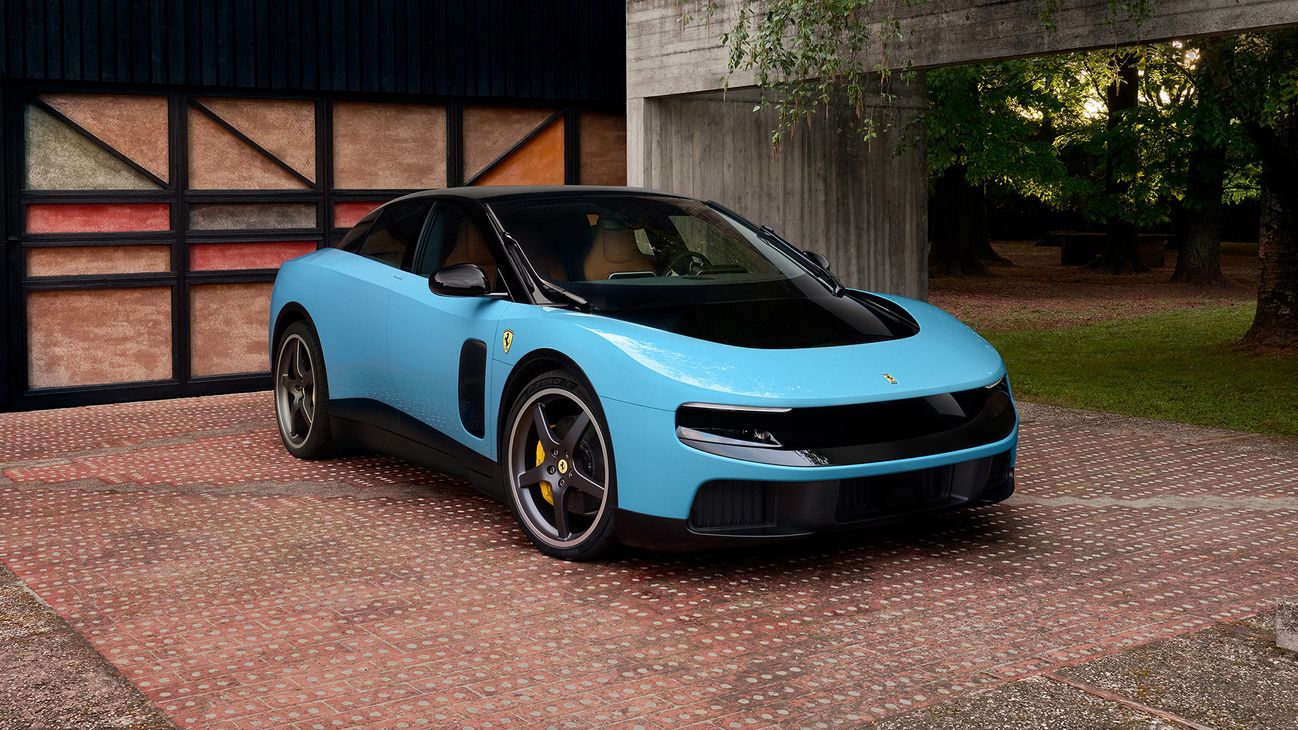
Ferrari Luce
"...ar. Ladies and gentlemen, it's been revealed, the Luce. Yeah, the Ferrari Luce. Now, there's a, there sh..."
The Ferrari Luce is a new car model from Ferrari that was revealed in the podcast. The hosts mention it as a major announcement, so it’s likely something people will pay attention to. The discussion is mainly about the fact that it’s been officially revealed.
The Ferrari Luce is a newly revealed Ferrari model that the podcast highlights by name, indicating it’s a significant announcement. It’s discussed as part of the episode’s news or reveal segment, which is why it stands out even in a conversation about electric cars. The key point is that it’s an important new addition from Ferrari that listeners will want to know about.
overengineered
"I call it right now, it'll be the best driving electric car on the planet because it's overengineered to be so."
“Overengineered” means the car is built with more effort and sturdiness than the minimum required. The host thinks that extra engineering will make the driving experience feel top-tier.
“Overengineered” means the vehicle is designed with extra complexity, strength, or engineering margin beyond what’s strictly necessary. In this segment, the speaker argues that this approach will make the EV feel exceptionally well-built and “best driving” because the systems are built to be robust.
charging door
"there's a guy, he goes, look at the charging door. It's amazing. It goes, and it goes inside the car."
A charging door is the little flap that covers where you plug the car in. Some cars have doors that open in a more clever way than others.
A charging door is the exterior cover that protects the car’s charging port. The speaker is impressed by a mechanism where the charging door moves inward as part of the charging-port access process.
rear hinges
"They call them rear hinges, but opening in the same direction."
They’re talking about how the door is attached and how it swings open. The hinge location (toward the back) changes how the door feels and looks when you open it.
“Rear hinges” here refers to a door-hinge layout where the hinge point is toward the rear of the door. The speaker also notes the door opens in the same direction, describing a specific kind of hinge/door-opening design detail.

Porsche Taycan
"Personally, if this was a, so if this was priced the same as a Porsche Taycan, it would, it would be my new first love."
The Porsche Taycan is Porsche’s electric performance car. The host is using it as a comparison point for what they’d want to buy if the Ferrari EV were priced similarly.
The Porsche Taycan is Porsche’s electric sports-sedan/fastback that’s known for its performance and EV packaging. In this segment, it’s used as a benchmark for pricing and desirability when comparing the speaker’s interest in the upcoming Ferrari EV.
infotainment system
"if you see in the infotainment system, the mill has a handle so you can just swivel it to the right"
The infotainment system is the main screen in the car that handles things like maps, music, and phone features. You use it to control a lot of the car’s “tech” without touching the engine or driving controls.
An infotainment system is the car’s combined screen-and-software setup for things like navigation, media, and phone connectivity. It’s where you interact with the car’s functions through touchscreens or controls.
motor on each wheel
"Yeah, that's pretty a motor on each wheel. Yeah, that is pretty good. And the interior looks really"
That means the car can drive with an electric motor at (or for) each wheel instead of just one motor turning everything. It can help the car grip better and make the driving feel more controlled.
“Motor on each wheel” describes an EV layout where each axle—or sometimes each individual wheel—has its own electric motor. This can improve traction and allow more precise torque control for handling and stability.
instrument cluster
"The instrument cluster looks like, you know, it's like an iPhone and then there's an iPad next year."
The instrument cluster is the screen(s) the driver looks at for speed, range, and other driving info. In newer cars it’s frequently digital instead of traditional gauges.
The instrument cluster is the driver-facing display behind or in front of the steering wheel that shows key driving information. In modern EVs it’s often digital, with layouts that can resemble smartphone-style UI.
microphone into the chassis
"that right? So what, what they've done is they've built essentially a microphone into the chassis of the electric motor that turns the sound of the vibration into the sound you hear in the car."
It sounds like the car uses a sensor to listen to the motor’s vibrations, then turns that into sound you can hear in the cabin. Instead of making up a fake engine noise, it’s trying to translate what the motor is already doing.
They’re describing an EV sound-generation approach where a sensor (like a microphone) picks up vibration from the drivetrain area and converts it into an audible sound inside the cabin. The goal is to make the motor’s vibration feel more “real” and intentional rather than just silent or artificial.
electric motor
"of the electric motor that turns the sound of the vibration into the sound you hear in the car. Like an engine sound."
In an EV, the electric motor is the main power unit that uses electricity to spin the wheels. Here, they’re talking about using the motor’s vibrations as the source for the sound you hear.
An electric motor is the propulsion unit in an EV that converts electrical energy into rotational motion. In this segment, the motor’s vibrations are being captured and translated into cabin sound.
V8 or a V12
"it will not sound like a V8 or a V12. No, it will sound like it's probably the most authentic electric car."
V8 and V12 are types of gas engines with different numbers of cylinders. They’re used here just to say the EV won’t sound like a typical V8 or V12.
V8 and V12 refer to internal-combustion engine cylinder layouts where cylinders are arranged in a “V” shape. The host is contrasting the EV’s generated sound with the familiar sound character of those gasoline engines.
Request an Explanation
Heard something you'd like explained? We'll add it to this episode.
Sign in to request explanations for terms you heard.
Want to learn more?
Browse our glossary for plain-English explanations of automotive terms, jargon, and concepts.
Help improve this episode
See something that's not quite right? Our annotations are AI-generated and can sometimes miss the mark. Click the flag icon on any annotation to suggest a correction.