#143 - Will Ronny take the Ineos through Gunshot at Cape York?
About this episode
Fuel range anxiety, remote-trip logistics, and Cape York planning drive most of the chat, with the hosts swapping stories about nearly running dry on the Nullarbor and other long-haul close calls. They then dig into whether Ronny would tackle Gunshot at Cape York, weighing vehicle setup, courage, and recovery tactics. The back half broadens into modern 4WD reliability, the Ineos, and worries that newer tech could be harder to fix in the bush.
On todays episode we talk road trip music and being influenced by our parents music taste, Ronny's planned trip to Cape York (is he tackling Gunshot?) and how difficult it's getting to repair a vehicle by yourself if you break down in the middle of nowhere.
The 4WD Podcast powered by Tyrepower. Recorded at BackChat Studios built by grounded.
Music by The Southern River Band.
Tough Dog Making Tracks Across the World!
Hosted on Acast. See acast.com/privacy for more information.
Ineos
"Will Ronny take the Ineos through Gunshot at Cape York?"
Ineos is the company behind a rugged off-road 4x4 called the Grenadier. They’re asking whether someone can drive it through a very difficult track at Cape York.
Ineos is a car brand best known for building the Grenadier, a rugged 4x4 designed for off-road use. In this episode, the hosts are talking about taking an Ineos vehicle through a tough route at Cape York.
tough dog
"Yeah, and then with tyres you need a bit of suspension so we've got a tough dog in there. That's correct. So we're cruising along here, guys."
Tough Dog is a company that sells off-road suspension parts, like shocks. If you run tougher tyres, you usually need suspension that can handle the extra bumps and movement.
Tough Dog is an aftermarket suspension brand that makes off-road shocks and suspension components. The host mentions it in the context of needing suspension to work with off-road tyres, which is typical when fitting larger or more aggressive tyres.
Runch Sheets
"[279.7s] Which speaking of Runch Sheets today, we don't have one. [281.7s] No, we don't. [282.6s] It's a..."
“Runch Sheets” sounds like the hosts’ nickname for their episode notes. It’s basically their plan for what they want to talk about.
“Runch Sheets” appears to be the hosts’ informal name for their prepared rundown/notes for the episode. It’s not a standard automotive term, but it signals the show’s structure (planned talking points).
forward driving
"[324.8s] Because I think it's a real topic at the moment is [328.2s] the travel, camping, traveling, forward driving. [332.5s] Obviously fuel, come down a little bit, albeit."
They’re talking about how you drive when you’re on a long trip—especially in a 4WD—so the vehicle stays under control and you can keep going. It’s more about trip driving habits than a specific off-road trick.
“Forward driving” here is being used as a driving approach for travel and camping—staying focused on how you drive on long trips rather than just technical off-road maneuvers. In 4WD talk, it often implies planning for traction, fuel use, and vehicle control over extended distances.
fuel prices
"[339.1s] Like, these were still quite pricey. [340.4s] Still higher than what we've been used to. [342.0s] But petrol's come down a fair bit. [358.5s] I don't want to get used to these fuel prices."
They’re discussing how expensive petrol is right now. That matters for 4WD trips because it changes how much it costs to drive to places for camping and travel.
“Fuel prices” refers to the cost of petrol at the pump, which directly affects trip planning for 4WD owners. When fuel gets expensive, people often change how they travel—routes, speeds, and how often they stop.
diesel
"[368.5s] Exactly. [369.0s] $3.30 a liter for diesel. [370.3s] Yeah, all of a sudden."
Diesel is a type of fuel. Some cars and especially many off-road and work vehicles use diesel instead of regular petrol.
Diesel is a fuel used in many 4x4s and trucks. It’s different from petrol (gasoline) in how it’s burned and typically how engines are designed to use it.
towing your caravan
"I think it's a bit different for those who tow. But I think if you're towing your caravan, you're going to want to stop somewhere anyway."
A caravan is a trailer you pull behind your car. When you tow it, the car works harder, uses more fuel, and you have to plan stops more carefully—especially far from towns.
Towing a caravan means pulling a trailer behind your vehicle, which changes how the vehicle accelerates, brakes, and handles. It also increases fuel use and can affect whether you can safely reach the next fuel stop in remote areas.
drive and go
"It's not really like a drive and go, drive and go. But I think the serious traveller is still going to go in the outback."
“Drive and go” is basically the idea that you can just keep driving without planning. In the outback, you usually can’t—fuel stops are farther apart, so you have to plan ahead.
“Drive and go” describes a casual travel style where you don’t plan fuel stops closely. In remote touring, towing, or outback driving, that approach often doesn’t work because fuel range and access to stations are limited.
outback
"But I think the serious traveller is still going to go in the outback. They're just going to be a bit more conscious."
The outback is Australia’s very remote countryside. Because towns and fuel stations are far apart, you have to plan your trip and fuel stops carefully.
The outback is Australia’s remote interior, where distances between towns and fuel stops can be very large. That makes trip planning—especially for towing and fuel range—much more critical than in city driving.
fuel light
"Well, I think the fuel light comes on. They're driving a little bit further. ... Like, fuel light will come on."
The fuel light comes on when your tank is getting low. It’s a warning, not a guarantee—you might not have as far to go as you think, especially if you’re towing or driving hard.
The fuel light is a dashboard warning that the fuel level has dropped to a low threshold. Relying on it to judge remaining range is risky because the actual distance you can travel depends on driving conditions, load (like towing), and vehicle efficiency.
testing the limits of my vehicle
"I definitely am testing the limits of my vehicle a little bit more. Like, fuel light will come on."
They mean they’re seeing how far they can drive before they have to refuel. In remote areas, that can be dangerous because if you misjudge it, you could end up stuck.
“Testing the limits” here refers to pushing how far the vehicle can go before needing fuel, often by driving until the fuel warning light comes on. In remote travel, this is about managing range and risk—running out of fuel can strand you far from help.

Toyota Prado
"[460.2s] I've only gone to just over half each time. [461.8s] What's your tank size at the moment? [463.5s] The Prado takes 110."
The Toyota Prado is a 4x4 SUV. They mention it has a 110-liter fuel tank, which helps you figure out how far you can drive before needing fuel.
The Toyota Prado is a popular Australian 4x4 SUV known for long-distance touring and off-road capability. In this segment, they’re talking about its fuel tank capacity (110 liters), which matters for planning range on remote routes like Cape York.
zero kilometers of range left
"[503.6s] It's when it hit zero k's. [505.7s] So on the... [506.3s] It was an Audi, I think, so it came up with this, [508.3s] like, zero kilometers of range left."
“Range” is the car’s guess for how far you can drive before you run out of fuel. When it says zero range left, the car is basically saying you’re at the end of what it thinks you can go.
“Range” is the estimated distance the car thinks it can still travel based on current fuel level and recent driving. When it shows “zero kilometers of range left,” the estimate has dropped to the point where the car expects you may not get much farther before running out.
fuel range estimate
"[506.3s] It was an Audi, I think, so it came up with this, [508.3s] like, zero kilometers of range left. [510.1s] So as soon as it hit zero, they clicked the odometer over [513.1s] and figured out how far they drove on zero."
The car estimates how far you can go on the fuel left. That estimate is based on recent driving and can be off—sometimes you can still drive farther than the warning suggests.
A fuel range estimate is the car’s calculated prediction of remaining distance based on fuel level and driving conditions. It can be conservative or optimistic depending on how the car was driven recently, which is why challenges like this can produce surprising results.
odometer
"[510.1s] So as soon as it hit zero, they clicked the odometer over [513.1s] and figured out how far they drove on zero. [517.1s] They went..."
The odometer is the car’s distance counter. They reset it so they could see exactly how many kilometers the car drove after the warning hit.
The odometer measures total distance traveled and is displayed as a running mileage figure. In the segment, they “clicked the odometer over” to measure the distance driven starting from the moment the range estimate hit zero.
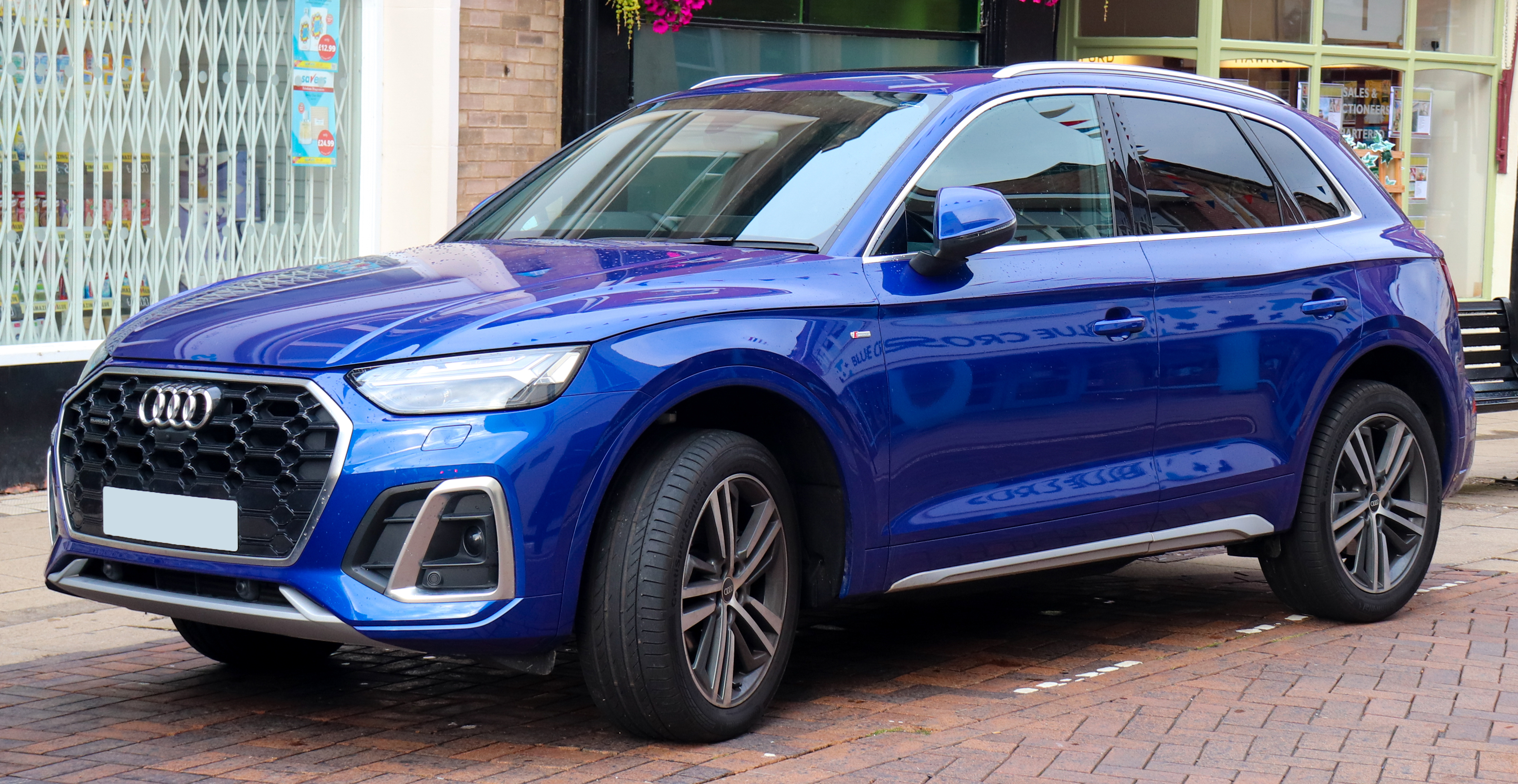
Audi Q5
"[533.3s] What were they driving? [536.4s] It was like... [536.4s] It was an Audi Q5 or 3 or something like that."
An Audi Q5 is a luxury SUV. The hosts are just saying someone was driving something like an Audi Q5 during an earlier event.
The Audi Q5 is a compact luxury SUV from Audi. In this segment it’s mentioned as an example of what someone was driving during a past off-road-related situation.
Nullarbor
"I had it big time on the Nullarbor in the Ranger years ago, where I was like, fuel light, come on. We were in South Australia."
The Nullarbor is a very remote part of Australia with long gaps between towns. It’s the kind of place where you have to plan fuel stops carefully.
The Nullarbor is a long, remote stretch of road in Australia, commonly associated with big distances between towns and limited services. It’s a classic place where fuel planning and range anxiety come up for travelers.
Kimber
"Oh, yeah. Yeah, so I was west of Kimber, and I wasn't going to make Kimber to fill up, but there's a few little places in between"
They’re talking about getting to a town/area called Kimberley. The point is they weren’t sure they’d make it there to get fuel.
“Kimber” appears to refer to Kimberley, a region in northern Western Australia known for remote driving and long distances between towns. The speaker is discussing whether they could reach a town to refuel.
roadside bowser
"Made it to the one I was planning on making, and it was like a roadside bowser out the front of like a general store cafe sort of stole makeup that was well and truly shut hours ago."
A “roadside bowser” is just a fuel pump by the road, usually at a small shop or roadhouse. When you’re far from big towns, these are important for refueling.
A “roadside bowser” is a fuel pump (often at a small roadside store or roadhouse) where you can refuel. In remote travel, these stops can be the difference between making it to the next town or being stuck.

Toyota Hilux
"And Chris was driving his Hilux. Torbz was there. I was there."
They’re talking about a Toyota Hilux pickup. It’s being used for a remote drive, which is exactly what these trucks are known for.
The Toyota Hilux is a rugged pickup commonly used for 4WD touring and remote travel. In this segment, it’s the vehicle Chris is driving during the trip, highlighting its suitability for long, off-road routes.
fuel range planning
"So Chris goes, you reckon we'll have enough fuel to actually get across here [691.5s] to actually get across here [692.6s] because we can't fill up here."
They’re trying to figure out if they’ll run out of fuel before they can refuel. It’s about estimating how far the car can go with what’s left in the tank.
They’re discussing whether they have enough fuel to complete the crossing because they can’t refuel at their planned point. This is essentially range planning: estimating how far the vehicle can go based on current fuel and expected consumption.
turning off headlights and air con to save fuel
"And we got to a point where he had to drive with his lights turned off, air con turned off, sitting next to me, straight roads, of course, to try and make it."
They shut off things like the lights and the air conditioner to use less electricity. Less electrical load can help the car go farther when fuel is tight.
The driver turns off non-essential electrical loads—headlights and air conditioning—to reduce power draw and improve efficiency. On long, fuel-critical off-road runs, small energy savings can help stretch range.
optimal speed to conserve fuel
"And we slowed right down as well to about 80 [735.2s] because that's optimal speed for to keep going."
They’re driving slower because there’s a speed where the car uses fuel most efficiently. Going faster usually makes the car burn more fuel.
They slow down to around 80 because it’s described as the optimal speed for keeping going. Fuel economy often improves at certain speeds because aerodynamic drag rises quickly as speed increases.
servo
"But the servo was also going to close in about half an hour. So we literally just made it in."
A “servo” just means a gas station. They’re saying they had to get there before it shut so they could refuel.
In Australia, a “servo” is a fuel station (short for service station). In this context, they’re racing the clock to reach fuel before the station closes.
fuel shortages
"But still fuel shortages like 600 sites nationwide are experiencing or lacking at least one type of fuel. Diesel are unleaded."
Fuel shortages mean some places can’t get enough gas/diesel to keep pumps stocked. The episode is talking about how widespread it is and which fuel types are affected.
Fuel shortages mean there isn’t enough supply of certain fuels to meet demand in some areas. Here, they’re describing shortages affecting hundreds of sites across Australia, including specific fuel types.
unleaded
"Diesel are unleaded. So that is 600 across Australia."
Unleaded is the common type of petrol used in most cars. The key point here is that shortages can be for unleaded specifically, not just “fuel” in general.
Unleaded (unleaded gasoline) is petrol that doesn’t contain lead additives. It’s the common fuel for most gasoline engines, and shortages can be specific to unleaded versus diesel.
long range tank
"[848.2s] Because if they skip that one [839.1s] because they can make the next, [840.2s] they might not have fuel. [840.9s] Is that a tip as well? [842.8s] Or is that something you would say be smart and? [845.7s] You probably have to because I think everyone's doing it. [847.9s] Yeah. [848.2s] And if you don't, that's when you can get caught out. [851.4s] But a long range tank is not a bad idea, [854.1s] but geez, it'll hurt the pocket when you fill it up."
A long range tank just means you have more fuel capacity than usual. It helps you travel farther in places where you might not find fuel easily.
A long range tank is an auxiliary fuel tank (or larger-than-stock tank) that increases how far you can drive before refueling. It’s especially useful in remote areas where fuel stations may be spaced far apart or temporarily unavailable.
driving side by side
"[931.7s] Why were you driving side by side and he wasn't behind you? [934.6s] So you could use my lights. [935.6s] See. [936.8s] And then he wouldn't be in the dust because the dust would also affect him. [940.3s] Yeah."
“Driving side by side” describes a convoy tactic where two vehicles travel next to each other rather than in a single file. The goal is often communication and visibility—e.g., one vehicle can use its lights so the other driver can see better, while also reducing how much dust affects the trailing vehicle.
dust
"[934.6s] So you could use my lights. [935.6s] See. [936.8s] And then he wouldn't be in the dust because the dust would also affect him. [940.3s] Yeah. [941.0s] Yeah."
“Dust” here refers to the airborne grit kicked up by vehicles on unpaved tracks. Driving behind someone can reduce visibility and traction because dust obscures the road and can coat surfaces.
siphon fuel
"we would then pull over and siphon fuel out of one of the other tanks. Yeah."
Siphoning fuel is moving petrol/diesel from one tank or container to another using a hose. People do it on long off-road trips when they need extra fuel to reach the next stop.
Siphoning fuel means transferring fuel from one container or tank to another using a hose and gravity (or suction). In remote 4WD travel, it’s a practical way to keep going when you don’t have enough fuel in the vehicle you’re driving.
spare fuel hose
"I'd have to make something up with the spare fuel hose. It would take forever."
A spare fuel hose is an extra hose you bring so you can move fuel if you run low. It helps you top up or share fuel when you’re far from help.
A spare fuel hose is an extra hose carried to help transfer fuel between containers or tanks. It’s especially relevant in remote travel where you might need to top up quickly or move fuel to another vehicle.
failsafe allowance
"So lucky I had my failsafe allowance. But mine was counting down."
A failsafe allowance is extra fuel you keep as a backup. It’s there so if you use more fuel than expected, you still have enough to get to the next stop.
A failsafe allowance is extra fuel margin you plan to keep in reserve in case your estimates are wrong. It’s a safety buffer used in remote travel so you don’t run out before reaching the next reliable fuel point.
jerrycan
"Because Chris took my third jerrycan. That's right. So I lost 100 litres from that as well."
A jerrycan is a portable container for fuel that you keep in the vehicle. It’s used on trips where you might not find fuel when you need it.
A jerrycan is a portable fuel container (often plastic or metal) used to carry extra gasoline or diesel. In off-road and remote touring, jerrycans are common because fuel stations can be far apart and fuel planning can be critical.
100 litres
"Because Chris took my third jerrycan. That's right. So I lost 100 litres from that as well."
They’re saying they effectively lost 100 litres of fuel because of the missing jerrycan. On long trips, that kind of loss can be the difference between making it to the next place to refuel or not.
The speaker quantifies the fuel impact as 100 litres, highlighting how quickly range can be affected when fuel containers are moved or removed. In remote 4WD travel, losing even one jerrycan can materially change whether you can reach the next fuel opportunity.
sub-tank
"I rolled in with, yeah, because the sub-tank [1094.2s] and the other tank, both lights on."
A sub-tank is a smaller extra fuel tank. It’s used to give you more driving range, especially when you’re far from fuel.
A sub-tank is an auxiliary fuel tank used alongside the main tank. In off-road vehicles it helps extend range and can be managed by switching which tank feeds the engine.
flicking between the tanks
"[1117.2s] I was flicking between the tanks as well, constantly. [1120.9s] I'd say that."
That means switching which fuel tank the truck is using. People do it to balance fuel and make sure they don’t run out of fuel in one tank.
“Flicking between the tanks” refers to switching the fuel supply from one tank to another. Drivers do this to manage fuel levels, avoid running a tank dry, and keep the vehicle’s fuel system operating correctly.
Cape York
"So I'm pretty sure we're going to the Cape to the tip, but we are doing other things along the way. Also planned to shoot another modified in Queensland."
Cape York is a very remote part of northern Australia. Driving there usually means rough roads and conditions that test off-road vehicles.
Cape York is the remote, rugged northern tip of Queensland, Australia, known for challenging dirt roads, river crossings, and variable weather. It’s a common destination for 4x4 trips and is often used as a benchmark for how capable a vehicle setup really is.
modified
"Also planned to shoot another modified in Queensland."
“Modified” means the car has been changed from how it left the factory. For off-road trips, that usually means upgrades to handle rough terrain better.
In this context, “modified” refers to a vehicle that’s been changed from factory spec for off-road use—commonly things like suspension upgrades, tires, protection (like bash plates), and sometimes drivetrain or cooling improvements. The hosts are planning to film another modified vehicle in Queensland.
peak Kate York time
"[1286.3s] especially in from now until October. [1290.5s] Like that's your peak Kate York time. [1293.1s] And if you're right, if you're not at Fraser Isle"
They’re saying there’s a time of year when Cape York is most busy. When everyone goes at once, crossings and popular spots get crowded.
“Peak” here means the busiest season window for Cape York travel, when many people are on the tracks at the same time. That concentration increases crowding at popular viewpoints and crossings.

Ineos through Gunshot at Cape York
"Because what kind of thing are you going to have in the on the grenadier though? ... So they're putting the car at risk."
They’re talking about driving an Ineos 4x4 called the Grenadier on a tough off-road route called “Gunshot” on Cape York. It’s the kind of trail where you’re crawling over rough ground and you need the car to handle mud and ruts.
The hosts are discussing taking an Ineos Grenadier off-road through “Gunshot” on Cape York. The Grenadier is Ineos’s purpose-built 4x4 designed for rugged, low-speed terrain where traction and durability matter more than road manners.
tracks
"Like, you know, to be honest, the chicken tracks at Kate York around gunshot apparently aren't exactly that simple either. Well, yeah, they're tracks compared to gunshot though."
Here, “tracks” means the ruts left by other vehicles. They can either help you follow a line or make it harder if the ruts are deep or uneven.
In off-roading, “tracks” usually refers to rutted wheel paths created by previous vehicles. Track geometry matters because it can guide the tires (helpful) or force the vehicle into awkward angles (riskier), especially when entering steep or narrow sections.
nosing right down into it
"Yeah, but like nosing right down into it and you're forcing, you're forcing all that shit inside."
This means driving the front of the car down into a tough spot. Going in deeper usually makes it harder to keep traction and can increase the chance of getting bogged down.
“Nosing right down into it” describes driving the vehicle deeper into a difficult section (like a steep, muddy, or rutted entry). The deeper you go, the more likely you are to encounter resistance, reduced traction, and higher risk of getting stuck or forcing mud/water into places it shouldn’t be.
mud
"once, once you've been full driving for quite some time and you've had your experiences with mud, it's the last freaking thing you want to do."
Mud is slippery and can also be thick enough that the tires lose grip. Off-road, that can make it easy to get stuck and harder to pull yourself out.
Mud is a traction-limiting surface that can turn tires into “slip-and-sink” rather than grip-and-go. In off-road driving, mud also increases the chance of getting bogged down, overheating components, and packing debris into drivetrain and underbody areas.
4WD
"Podcast: The 4WD Podcast. Episode: #143 - Will Ronny take the Ineos through Gunshot at Cape York? [1374.5s] It kind of is. [1375.5s] That was my thought as well."
4WD means the car can drive all four wheels at the same time. That helps it grip better when the ground is rough, sandy, or slippery.
“4WD” stands for four-wheel drive, meaning power is sent to all four wheels to improve traction on loose, uneven, or slippery terrain. On tracks like Cape York’s crossings, 4WD helps maintain grip so the vehicle can keep moving when surfaces are unpredictable.
playing with the break
"[1419.0s] Like how would you, you just drive through it? [1421.2s] Do you, you don't really have much options to do anything like you just have to go. [1425.1s] You're, you're basically playing with the, with the break as far as you can. [1429.9s] And then the car's just going to slide."
They’re saying you have to manage your speed with the brakes very gently. If you brake too aggressively on slippery ground, the car can lose grip and start sliding.
The speaker describes using the brakes very carefully—“playing with the break”—to control speed and stability while descending. On loose or uneven terrain, braking too hard can cause loss of traction and sliding, so the goal is controlled deceleration while keeping the vehicle composed.
steering dead straight
"[1429.9s] And then the car's just going to slide. [1432.0s] So you've got to have that steering dead straight and then down you go. [1436.8s] Yeah."
They’re saying to keep the car pointed straight down the obstacle. When the ground is slippery, turning the steering can make the car slide sideways.
“Steering dead straight” means keeping the wheels aligned with the direction of travel during the descent. When the surface is loose and the car is prone to sliding, any steering input can increase sideways movement and make the slide harder to control.
grenadier
"You can't be like, I just watched there's a wagon, grenadier wagon just going through. ... Grenadier, I reckon like might have, the wagon might have gone through."
They’re talking about the Ineos Grenadier, a 4x4 made for rough off-road tracks. The discussion is about whether it can handle a particularly sketchy part of the route.
“Grenadier” refers to the Ineos Grenadier, a modern off-road 4x4 designed for rugged trails. In this segment, it’s mentioned in the context of attempting the “Gunshot” section, where traction and approach angles matter.
strap to your car
"... the smart thing to do there would be the car behind would have a strap to your car. ... And then you would tend to move forward."
They’re talking about using a tow/recovery strap to help pull a stuck 4x4 out. The point is that the cars behind should be ready to help, not just drive past.
A recovery “strap” is used to tow or recover a stuck vehicle during off-road driving. The speaker’s idea is that if an obstacle is mandatory, the following car should be set up to assist—so the group can keep moving rather than leaving the stuck vehicle unsupported.
convoy
"The big pile up, blah, blah, blah. ... I don't know if I want to be involved in that convoy at all, to be honest."
A “convoy” just means a group of cars driving together. On rough tracks, the order matters because if the last car gets stuck, it may not get help in time.
A “convoy” is a group of vehicles traveling together on the same route. In off-road contexts, convoy spacing and sequencing matter because the last vehicle may be left without support if something goes wrong.
recovery point
"And because they haven't got a recovery point set up ready, there's nothing to pull off. The ones I see all the time are the ones where like they go in and then they slide..."
A recovery point is a strong place you can hook a rope or winch to so you can pull a stuck vehicle out. If you don’t have one ready, you may not be able to pull the car safely at all.
A recovery point is a designated place on a vehicle (or a fixed anchor) where you can attach a recovery strap or winch cable to pull the vehicle out safely. Without a recovery point set up, it’s much harder to extract a stuck or overturned 4x4.
recovery strap
"And because they haven't got a recovery point set up ready, there's nothing to pull off. The ones I see all the time are the ones where like they go in and then they slide..."
A recovery strap is a strong strap used to tow or pull a stuck car out. It’s made for off-road recovery so it can take big forces without failing.
A recovery strap is a heavy-duty strap used to connect a stuck vehicle to another vehicle or a winch for controlled pulling. It’s designed to handle large loads and reduce shock compared with using chains or inappropriate hardware.
roof rack
"hit the, hit the bottom, and then the roof rack just slides off with them. Oh yeah, yeah, yeah. By those ones, I'm on the side."
A roof rack is the frame on top of a car for carrying luggage or gear. On rough tracks, it can get knocked loose and fall off, especially if the vehicle flips or hits the ground hard.
A roof rack is an external mounting system on top of a vehicle used to carry gear. In off-road situations, impacts and rollover forces can unseat it, and a loose rack can slide off or shift the vehicle’s center of gravity.
fully flipped
"By those ones, I'm on the side. Fully flipped as well. Yeah, on their leads."
“Fully flipped” means the vehicle has rolled over completely. It’s dangerous and makes getting the car back upright and out much harder.
“Fully flipped” means the vehicle has rolled over completely, typically ending on its roof or side. This is a high-risk outcome in off-road driving because it can damage the vehicle, trap occupants, and complicate recovery.
shock load
"When you jam the brakes, you're giving an extra shock load, [1570.4s] which is, you know, every reaction has an equal reaction, [1573.7s] you know, opposite action."
Shock load just means a sudden jolt of force. If you brake really hard, that jolt travels through the car and can make it harder to control, especially on rough or steep terrain.
A shock load is a sudden, high force applied to a vehicle or its drivetrain. When you “jam the brakes,” the rapid deceleration can spike loads through the suspension, axles, and tires, making the vehicle more likely to lose traction or destabilize.
flick in reverse
"So the only way to counteract that is to quickly flick in reverse [1582.0s] because then you're forcing the wheels to do that. [1584.3s] Group back down and yeah."
“Flicking” into reverse means quickly switching to reverse to change how the wheels are being pushed. People use it as a quick trick to help the car regain control when it gets out of shape.
“Flicking” into reverse is a driving technique used to quickly change the direction of torque at the wheels. The idea is to counteract the vehicle’s destabilizing behavior by forcing the drivetrain to load the wheels differently, helping regain control during a tricky maneuver.
top heavy
"I think I'm too top heavy. [1596.9s] I feel, I feel a lot of people, [1598.6s] my gut feels that I'm too top heavy."
“Top heavy” means the car feels like it has more weight up high. On rough ground or steep angles, that can make it easier for the vehicle to tip or feel like it’s about to roll.
“Top heavy” describes a vehicle’s tendency to feel unstable because a lot of its mass is higher up (like with a roof rack, suspension lift, or tall body). On steep or uneven terrain, being top heavy increases the risk of tipping or losing balance during maneuvers.
wheelbase
"[1625.1s] It's a bit of weight. [1625.6s] Depends on the steepness too, right? [1627.6s] Because if it's like a full on drop, [1630.6s] a certain wheelbase is more prone to going like that."
Wheelbase is the length of the truck from front wheels to rear wheels. Longer wheelbase can change how the vehicle sits on a steep slope, which affects whether you can keep moving without getting hung up.
Wheelbase is the distance between a vehicle’s front and rear axles. In off-road situations, a longer wheelbase changes how the truck’s wheels contact the ground over obstacles and can affect how easily the vehicle tips or drags parts during steep descents.
dual cab
"[1630.6s] a certain wheelbase is more prone to going like that. [1634.1s] Whereas a dual cab, it's longer. [1638.0s] Yeah. [1638.7s] The back wheels are still going to be up for a while."
Dual cab means a pickup with extra seats in the back (a longer cab). That extra length can affect how the truck sits on steep ground and whether it’s more likely to scrape or get stuck.
Dual cab is an Australian term for a pickup/ute body style with two full rows of seats (four doors) and a rear passenger area. Because it’s longer than some cab configurations, it can change off-road geometry like approach/departure behavior and how the vehicle hangs up over drops.
rear bar
"[1638.7s] The back wheels are still going to be up for a while. [1641.4s] Yeah, you'll just drag back down your rear bar really, won't you? [1644.0s] Just the departure angle, [1646.8s] have an effect on that, like with the longer wheelbase."
“Rear bar” means the back bumper/protection area. When you go over a steep drop, that back part can hit the ground first and make you scrape or get stuck.
“Rear bar” here likely refers to the rear bumper or rear protection bar (often an aftermarket off-road bar). On steep terrain, the rear bar can be the first part to contact the ground, causing scraping or getting the vehicle stuck.
departure angle
"[1641.4s] Yeah, you'll just drag back down your rear bar really, won't you? [1644.0s] Just the departure angle, [1646.8s] have an effect on that, like with the longer wheelbase. [1650.0s] You could get stuck that way too."
Departure angle is how steep a hill or drop you can drive off without the front of the vehicle scraping the ground. If your departure angle is too small for the obstacle, you can get hung up.
Departure angle is the steepest angle a vehicle can leave a ramp or drop-off without the front (or underside) hitting the ground. It’s a key off-road geometry measurement, and it directly influences whether you’ll scrape or get stuck when descending or climbing out of ruts and ledges.
getting stuck
"[1646.8s] have an effect on that, like with the longer wheelbase. [1650.0s] You could get stuck that way too."
“Getting stuck” means the vehicle can’t keep moving because it’s either not gripping enough or it’s hitting the ground underneath. Steep terrain can make this more likely.
In off-roading, “getting stuck” usually means the vehicle loses traction and/or its body or undercarriage contacts the ground in a way that prevents forward motion. The discussion ties this to vehicle geometry (like departure angle) and wheelbase during steep drops.
bull bar
"You could be, you can have the bull bar on the ground and the arson on the ground."
A bull bar is a strong metal guard on the front of a 4x4. It helps protect the front end if you hit something on rough tracks.
A bull bar is a heavy-duty front protection bar (often steel) mounted to a vehicle’s bumper area to help protect against impacts with rocks, branches, or other obstacles. In off-road videos, it can also be a visual reference for how low the vehicle is getting during a descent.
spinning wheels
"And you're just spinning wheels. Basically, from the videos I've seen, most cars hit the bottom."
Spinning wheels means the tires are turning, but the car isn’t actually going anywhere. It usually happens when the ground is too slippery or soft for grip.
“Spinning wheels” happens when the tires lose traction and rotate without moving the vehicle forward. In off-road conditions, it often indicates the vehicle is on low-grip surfaces where engine power can’t be converted into forward motion.
hit the bottom
"Basically, from the videos I've seen, most cars hit the bottom. Some can like push out and drive through a lot, just winches out..."
“Hit the bottom” means the underside of the car scrapes or touches the ground. That can make it harder to move and can sometimes cause damage.
“Hit the bottom” refers to the vehicle’s undercarriage contacting the ground during a deep dip, rut, or obstacle. This can cause loss of traction, getting stuck, or damage if the vehicle bottoms out.
winches
"Some can like push out and drive through a lot, just winches out and just jump on the wind."
A winch is like a powered rope that can pull your car out when it’s stuck. It’s commonly used off-road when the wheels can’t get traction.
A winch is a motorized cable-retrieval device used to pull a vehicle out of a stuck situation. In deep ruts or when wheels lose traction, winching can be the difference between getting free and remaining immobilized.

Volkswagen Tiguan
"Sorry, mate. We can't all have a fleet or a bloody Tiguan to drive around. To offend you."
They mention the Volkswagen Tiguan as the kind of regular SUV people might drive around. It’s not the same as a serious off-road 4x4 when things get really rough.
The Volkswagen Tiguan is being used as an example of a normal, everyday SUV that most people would have as a backup vehicle. In contrast to a purpose-built 4x4, it’s not typically meant for extreme off-road recovery situations.

Ford Falcon
"To offend you. Didn't a guy do it on a Falcon? Yeah, I don't know."
The Ford Falcon is a car model that was made for everyday driving. In the podcast, it’s mentioned because someone is asking whether a particular thing happened using a Falcon. The discussion doesn’t focus on how it works—just on whether that story involved this car.
The Ford Falcon is a passenger car that’s been part of Australia’s automotive history, and it occasionally comes up in casual conversation because of its presence on the road and in local culture. In this podcast snippet, it’s mentioned more as a question about a specific story or incident involving someone and a Falcon. That’s why it’s likely being referenced as a conversation point rather than a detailed technical topic.
Nolan's crossing
"And I'm just really interested to see this Nolan's crossing, [1814.1s] because it has this something weird happens to the sand. [1818.6s] And what do you mean? [1819.4s] A lot of cars flow, don't they? [1821.8s] Well, yeah. [1821.8s] Once you drive through Nolan's, you've got to wait a while before the next car goes."
Nolan’s Crossing is a famous spot on the Cape York trip where you have to cross a river. The sand and water can be tough, and cars often have to wait for a gap before going through.
Nolan’s Crossing is a well-known river crossing on the Cape York route in Australia. It’s famous among 4WD travelers because the sand and water conditions can make it tricky, and traffic can be staged so drivers wait their turn after crossing.
drive through Nolan's
"Well, yeah. [1821.8s] Once you drive through Nolan's, you've got to wait a while before the next car goes."
The phrase refers to the practical reality of staged river-crossing logistics: after one vehicle goes through, others may need to wait to avoid getting stuck or interfering with recovery/traffic flow. On remote routes, these “queue” periods are part of planning for sand and water crossings.
spin your wheels
"you've got to keep going, you've got to spin your wheels. And some say, no, you've just got to take it easy."
If the tires start spinning but the car doesn’t move, it’s usually because the ground is too soft for grip. Spinning too much can dig you in and make it harder to get out.
“Spin your wheels” describes a situation where a vehicle’s tires lose traction in soft sand or mud and keep rotating without moving the car forward. It’s often debated because excessive wheelspin can dig the vehicle deeper, making recovery harder.
wait for it to settle
"And John, I reckon you've just got to wait for it to settle, then go. So that makes sense."
Sometimes when you drive into sand, you stir it up and it gets slippery. Waiting a bit lets the sand calm down so the tires can grip better.
“Wait for it to settle” refers to letting disturbed sand or water calm down before attempting the crossing. In soft terrain, moving first can churn the surface and reduce traction, so waiting can improve tire bite and reduce the chance of getting stuck.
one car at a time
"But regardless of what happens, it'll be one car at a time. Strap on front, strap on back, ready to go."
Going one vehicle at a time helps keep the track from getting wrecked by tire ruts. That way the next driver has a better chance of getting through.
“One car at a time” is a strategy for soft-surface crossings to avoid multiple vehicles churning the same track. Spacing vehicles can preserve traction and reduce the likelihood that the second vehicle gets stuck in ruts created by the first.
flood your car
"Because you don't want to flood your car. And you want to be ready for recovery."
“Flood your car” means water gets into places it shouldn’t. That can cause the engine to fail or damage electronics, especially if water reaches the air intake or wiring.
“Flood your car” means getting water into areas where it shouldn’t go, such as the engine bay, intake, or electrical components. In deep crossings, water ingestion can cause stalling, damage sensors, and create expensive electrical or mechanical failures.
strap on front, strap on back
"it'll be one car at a time. Strap on front, strap on back, ready to go. Because you don't want to flood your car."
They’re talking about getting tow/recovery straps ready on both the front and back of the vehicle. That way, if something goes wrong, you can recover or move the car quickly.
“Strap on front, strap on back” indicates preparing recovery/towing attachments on both ends of the vehicle. Having straps positioned front and rear reduces delays if the vehicle needs to be winched, towed, or repositioned during the crossing.
drowning cars
"Speaking of drowning cars. Oh, yeah. What have you done?"
“Drowning” means the car got submerged in water. Water can get into places it shouldn’t, which can break the car or cause problems later.
“Drowning” a car in off-road context means submerging it in water, often deep enough to let water enter critical areas like the air intake or electrical systems. This can cause immediate damage or lead to corrosion and later failures.
river crossing
"[1993.1s] No, no, no ones. [1994.8s] Yeah. [1995.6s] Look, I think the most hectic river crossing I've seen was from Victoria. [2001.3s] That high country one that you were in, eh?"
A river crossing is just driving a 4x4 through a river. It can get risky fast because water can enter places you don’t want it to, so people talk about how intense or hectic it was.
A river crossing is when a vehicle drives through flowing or standing water, which can quickly become dangerous if water reaches critical areas like the air intake or electrical components. Off-road drivers often plan crossings carefully to manage depth, speed, and traction.
wheels that are spinning enough and the front is gripping
"[2013.0s] floating and then he's gone downstream or upstream a little bit, but then the wheels [2017.5s] that are spinning enough and the front is gripping and it pulls him back and he gets out of it."
It sounds like the car got stuck because the tires weren’t gripping. Once the front tires found traction again, the car could move and get itself out.
This describes traction recovery during a water crossing. When the front tires regain grip, they can pull the vehicle back out, while spinning wheels alone can leave the car stuck in mud/water.
sealed the front of a tub
"[2050.3s] Because I hadn't sealed the, you know, the front of a tub when I N70, [2054.6s] those fins are open."
They mean they didn’t properly waterproof the front of their vehicle before driving through water. If the front isn’t sealed, water can get into the cabin/engine area.
“Sealed the front of a tub” refers to waterproofing a vehicle’s body/engine bay area so water can’t enter during deep water crossings. In practice, this often involves sealing gaps and openings to prevent water ingress.
fins are open
"[2054.6s] those fins are open. [2055.9s] Yeah. [2056.5s] Even though I had mine bloody coated with that stuff, they didn't, they didn't get that part."
They’re saying some openings/vents weren’t covered or closed, so water could get in. Coating helps, but it doesn’t fully block water if the openings are exposed.
“Fins” here likely refers to openings or grille/vent areas that can allow water to enter if they aren’t closed off during a crossing. Even with protective coatings, open vents can still let water in.
water crossing
"[2081.0s] And I always wondered, if I ever get stuck not moving, this is not your car. [2084.9s] Yeah. [2085.4s] You're going to flood the car? [2086.2s] Yeah. ... [2112.0s] Getting it across. [2113.3s] Getting it across, you've got a story of a crossing, not a story of a drowning."
A water crossing is when you drive through water to cross a track or river. The key is that stopping can be dangerous, and water can get into the car or make it drift.
A “water crossing” is driving through water to get across a river/creek/track, where depth, flow, and vehicle sealing determine how much water enters the vehicle. The discussion highlights the trade-off between keeping water out (sealed) versus avoiding buoyancy and loss of control, and the importance of getting the car across rather than stopping.
flood the car
"[2084.9s] Yeah. [2085.4s] You're going to flood the car? [2086.2s] Yeah. [2086.5s] Well, especially when I pulled the drawers out, it was just, I just tied things down to the tub."
Flooding is when water gets into the car—sometimes through openings or gaps. Once water gets in, it can ruin parts and make the car unreliable.
“Flood the car” means water enters the vehicle’s interior or critical underbody areas, often when water rises faster than the car can seal itself. In off-road situations, this can quickly damage electronics, electrics, and interior components.
floating away
"[2105.3s] What's better, sealed or unsealed? [2108.1s] Definitely driving, floating away. [2109.9s] Getting the car across. [2111.2s] Yeah, as long as the car gets across."
They mean the car can start to float and drift if water gets in a way that traps air. It’s dangerous because you might not be able to steer or keep moving safely.
“Floating away” describes a vehicle becoming buoyant and drifting when water enters and traps air inside. This can happen if the vehicle is sealed enough to trap air, but it’s risky because you can lose control and traction while crossing.
48 volt
"With electric vehicles, I feel like you're going to have to have some kind of degree or like even hybrids to be able to fix a 48 volt Prado, Hilux, whatever."
“48 volt” means the car uses a higher-voltage electrical system than the usual 12-volt setup. The concern is that working on it may require more knowledge and tools, especially far from help.
A “48 volt” system refers to a mild-hybrid electrical architecture where the car uses a 48V battery and power network to run certain components and assist the engine. The hosts are arguing that higher-voltage/modern electrical systems can make repairs more complex in remote areas.
limp mode
"Yeah, because a lot of cars that have that blue, if that messes up, the car's not going to go anywhere, go into limp mode."
“Limp mode” is when the car detects a problem and then deliberately limits what it can do. The idea is to keep you safe and let you drive slowly to get help, but it can feel like the car won’t go anywhere.
“Limp mode” is a protective driving mode where the car limits power and certain functions after detecting a fault. It’s designed to help you get to safety or a workshop, but it can make the vehicle effectively unusable for off-road travel if the fault triggers.
scan tool
"We can turn this off. Or just someone make a scan tool and just call it off-road use only."
A scan tool is a gadget that connects to the car and tells you what error codes it’s seeing. It can help you figure out what’s wrong instead of guessing.
A scan tool is a diagnostic device that plugs into a vehicle’s onboard computer to read fault codes and live data. Off-road users may carry one to identify what’s wrong and whether the issue is something they can clear or work around.
off-road use only
"Or just someone make a scan tool and just call it off-road use only."
“Off-road use only” means turning off certain car safety/traction settings meant for regular roads. It can help the car behave better on dirt or rocks, but it also removes some protections.
“Off-road use only” here implies disabling or overriding vehicle logic intended for normal driving, such as traction/stability interventions or other protections. The idea is to allow more control and wheel behavior suited to loose surfaces, but it should be used carefully because it reduces safety/assist functions.
limp at home
"Like what, at what point do you think you won't be able to fix that and limp at home out there?"
If something important goes wrong, many cars switch to a “limp” mode. It limits how the car behaves so you can still drive slowly to get help.
“Limp mode” (described here as “limp at home”) is a protective strategy where the car restricts power and certain functions after a fault. The goal is to let you drive slowly enough to reach a safe place or a repair shop.
computer fault
"I think just like any, any car the same age. They could just, you know, it could just be like a computer fault or something."
A computer fault means the car’s electronics detected a problem. Sometimes it’s something minor you can reset or diagnose, but it can also cause the car to act differently to protect itself.
A “computer fault” refers to a problem detected by the vehicle’s electronic control units (ECUs), such as a sensor reading out of range or a system not responding as expected. These faults can sometimes be cleared or worked around, but they can also trigger reduced-power behavior.
basic
"Like you don't even have to have your foot in a break to start it, which, you know, which I love about it because that tells you it's still very basic."
They’re saying the vehicle feels “basic,” meaning it relies less on complicated electronics. That can be good in remote places because there are fewer things that can go wrong.
The speaker is contrasting “basic” vehicle behavior with more complex systems, implying fewer electronic dependencies. In practical terms, a simpler setup can be easier to troubleshoot and may be less likely to strand you due to a single sensor or software issue.
collision system
"If the collision system goes off, it's not going to affect it. If a DPF does something, I'm not sure what that will do."
A collision system is safety tech that watches for crashes or near-crashes. If it thinks a collision is happening, it may warn you or automatically help. The speaker is saying it probably won’t affect the vehicle’s ability to keep going.
A collision system refers to vehicle safety technology that detects an impact or imminent collision and can trigger protective actions (such as alerts, braking assist, or other safety responses). The speaker is implying that if it activates, it won’t interfere with the vehicle’s ability to continue operating.
DPF
"If a DPF does something, I'm not sure what that will do. So that's probably my only concern. If a DPF fails and it goes into limp mode, then I might be screwed."
DPF means a filter that catches dirty soot from a diesel engine. Over time it has to clean itself, and if it can’t, the car may go into a protective mode. In a remote place, that can leave you stuck or unable to keep moving.
DPF stands for diesel particulate filter. It traps soot (particulate matter) from a diesel engine and periodically burns it off through a regeneration process. If the DPF clogs or fails, the vehicle may limit power to protect the engine, which can be dangerous in remote areas.
emission laws
"So it's just with the emission laws and stuff that they're not really going to help you out in the middle of nowhere."
Emission laws are rules about how much pollution a vehicle is allowed to make. To meet them, diesel cars often use extra systems that clean exhaust, and those systems can be harder to manage when you’re driving far from services.
Emission laws are government regulations that require vehicles to meet limits on pollutants like soot and nitrogen oxides. In practice, they can force manufacturers to use aftertreatment systems (like DPFs) and specific operating strategies, which may not be ideal for long trips in remote areas where the vehicle can’t regenerate properly.
four wheel drive
"It's hard to say, but I do know that when it's in four wheel drive, definitely in low range, it's switched off that that system doesn't come in. Oh, really?"
Four-wheel drive means the car sends power to all four wheels to help it grip on slippery or rough surfaces. Here, they’re saying the car’s electronics act differently when 4WD is engaged, especially in low range.
Four-wheel drive (4WD) is a drivetrain mode where power is sent to both the front and rear axles for better traction. In this segment, the speaker notes that when the vehicle is in 4WD (and especially low range), the 48V system behavior changes—suggesting the car manages electrical functions differently depending on drivetrain mode.
low range
"It's hard to say, but I do know that when it's in four wheel drive, definitely in low range, it's switched off that that system doesn't come in. Oh, really?"
Low range is a “slow and strong” gear setting used for crawling over rocks, mud, or steep trails. In this discussion, they’re saying that when low range is selected, the car turns off the 48V system.
Low range is a low-gear setting in many 4WD transmissions that multiplies torque for slow-speed control on tough terrain. The speaker claims that in low range, the vehicle switches off the 48V system, implying the drivetrain mode can override or disable certain electrical functions.
limp it high
"But yes, you, you can fix it. It's possible, but you still need to be a mechanic to a degree. Bit easier for the punter though to kind of put something together to at least limp it high."
“Limp it high” is slang for driving a failing vehicle in a reduced-power or reduced-function mode to reach safety or a workshop. It usually implies the car can still move, but with limited performance and possibly warning lights.
wheel bearings
"They just put the apprentice on it and the wheel bearings are all right. [2624.3s] Yep. So did you repack the wheel bearings?"
Wheel bearings are small parts that help your wheels rotate smoothly. If they wear out, the car can start making noise or feel shaky, and it can get more expensive to fix later.
Wheel bearings are the components that let a wheel spin smoothly while supporting the vehicle’s weight. When they wear out, you can get noise, vibration, and increased rolling resistance, and they can become unsafe if ignored.
V8
"What, um, we'd like there, we'd try to know no longer making V8 cars, right? [2644.7s] If someone wants a V8, what's kind of the max kilometers that you're looking at on a V8 that's used?"
A V8 is an engine with eight cylinders. People like them because they usually feel strong and smooth, but they can cost more to service than smaller engines.
A V8 is an engine with eight cylinders arranged in a “V” shape, typically producing strong power and smooth torque. In the context of used 4WDs, V8s are often sought for towing and long-distance drivability, but they can be more expensive to maintain.
recon
"Just restore the engine. [2665.0s] Put a bit of time and effort into restoring the engine and you'll be, okay. [2696.1s] But with the engine, I reckon just, just recon it."
“Recon” means the engine has been rebuilt and put back into good working order. It costs more than skipping repairs, but it can make a high-mileage car feel right again—especially if it’s your dream vehicle.
“Recon” (reconditioned) means the engine has been rebuilt or restored to a like-new operating condition, usually by replacing worn internal parts and machining/inspecting components. It can be a practical way to keep a desired V8 when a replacement engine would be too costly or hard to source.
driveline
"But also understand that the driveline also has that. [2677.4s] So if it hasn't had a bush life, the driveline's probably fine."
The driveline is everything that carries power from the engine to the wheels. If parts of it wear out, the car may feel rough or not drive right, so it’s smart to get it checked.
The driveline is the set of components that transfer power from the engine to the wheels—commonly including the transmission, transfer case (in 4WD), driveshafts, and differentials. Wear in the driveline can cause drivability issues, and it’s often something buyers want inspected on high-mileage vehicles.
solid axle
"[2774.3s] Oh yeah. Solid axle, got everything you need. All the hard running gear. [2778.5s] Like, kid it up from the, from the get go. Like you've got everything you put in,"
A solid axle means the two wheels on an axle are linked together as one unit. Off-road trucks use it because it helps the tires stay on the ground when the road gets rough.
A solid axle is a suspension setup where the left and right wheels are connected by a single rigid axle beam. It’s common on traditional off-road 4x4s because it can keep wheel contact over rough terrain.
Request an Explanation
Heard something you'd like explained? We'll add it to this episode.
Sign in to request explanations for terms you heard.
Want to learn more?
Browse our glossary for plain-English explanations of automotive terms, jargon, and concepts.
Help improve this episode
See something that's not quite right? Our annotations are AI-generated and can sometimes miss the mark. Click the flag icon on any annotation to suggest a correction.