Ineos is the company behind a rugged off-road 4x4 called the Grenadier. They’re asking whether someone can drive it through a very difficult track at Cape York.
Tough Dog is a company that sells off-road suspension parts, like shocks. If you run tougher tyres, you usually need suspension that can handle the extra bumps and movement.
Topic
Runch Sheets
“Runch Sheets” sounds like the hosts’ nickname for their episode notes. It’s basically their plan for what they want to talk about.
Concept
forward driving
They’re talking about how you drive when you’re on a long trip—especially in a 4WD—so the vehicle stays under control and you can keep going. It’s more about trip driving habits than a specific off-road trick.
They’re discussing how expensive petrol is right now. That matters for 4WD trips because it changes how much it costs to drive to places for camping and travel.
A caravan is a trailer you pull behind your car. When you tow it, the car works harder, uses more fuel, and you have to plan stops more carefully—especially far from towns.
Concept
drive and go
“Drive and go” is basically the idea that you can just keep driving without planning. In the outback, you usually can’t—fuel stops are farther apart, so you have to plan ahead.
The outback is Australia’s very remote countryside. Because towns and fuel stations are far apart, you have to plan your trip and fuel stops carefully.
The fuel light comes on when your tank is getting low. It’s a warning, not a guarantee—you might not have as far to go as you think, especially if you’re towing or driving hard.
They mean they’re seeing how far they can drive before they have to refuel. In remote areas, that can be dangerous because if you misjudge it, you could end up stuck.
“Range” is the car’s guess for how far you can drive before you run out of fuel. When it says zero range left, the car is basically saying you’re at the end of what it thinks you can go.
The car estimates how far you can go on the fuel left. That estimate is based on recent driving and can be off—sometimes you can still drive farther than the warning suggests.
A “roadside bowser” is just a fuel pump by the road, usually at a small shop or roadhouse. When you’re far from big towns, these are important for refueling.
They’re trying to figure out if they’ll run out of fuel before they can refuel. It’s about estimating how far the car can go with what’s left in the tank.
They shut off things like the lights and the air conditioner to use less electricity. Less electrical load can help the car go farther when fuel is tight.
Fuel shortages mean some places can’t get enough gas/diesel to keep pumps stocked. The episode is talking about how widespread it is and which fuel types are affected.
Unleaded is the common type of petrol used in most cars. The key point here is that shortages can be for unleaded specifically, not just “fuel” in general.
“Driving side by side” describes a convoy tactic where two vehicles travel next to each other rather than in a single file. The goal is often communication and visibility—e.g., one vehicle can use its lights so the other driver can see better, while also reducing how much dust affects the trailing vehicle.
“Dust” here refers to the airborne grit kicked up by vehicles on unpaved tracks. Driving behind someone can reduce visibility and traction because dust obscures the road and can coat surfaces.
Siphoning fuel is moving petrol/diesel from one tank or container to another using a hose. People do it on long off-road trips when they need extra fuel to reach the next stop.
A failsafe allowance is extra fuel you keep as a backup. It’s there so if you use more fuel than expected, you still have enough to get to the next stop.
A jerrycan is a portable container for fuel that you keep in the vehicle. It’s used on trips where you might not find fuel when you need it.
Term
100 litres
They’re saying they effectively lost 100 litres of fuel because of the missing jerrycan. On long trips, that kind of loss can be the difference between making it to the next place to refuel or not.
“Modified” means the car has been changed from how it left the factory. For off-road trips, that usually means upgrades to handle rough terrain better.
Concept
peak Kate York time
They’re saying there’s a time of year when Cape York is most busy. When everyone goes at once, crossings and popular spots get crowded.
They’re talking about driving an Ineos 4x4 called the Grenadier on a tough off-road route called “Gunshot” on Cape York. It’s the kind of trail where you’re crawling over rough ground and you need the car to handle mud and ruts.
This means driving the front of the car down into a tough spot. Going in deeper usually makes it harder to keep traction and can increase the chance of getting bogged down.
They’re saying you have to manage your speed with the brakes very gently. If you brake too aggressively on slippery ground, the car can lose grip and start sliding.
They’re talking about the Ineos Grenadier, a 4x4 made for rough off-road tracks. The discussion is about whether it can handle a particularly sketchy part of the route.
They’re talking about using a tow/recovery strap to help pull a stuck 4x4 out. The point is that the cars behind should be ready to help, not just drive past.
A “convoy” just means a group of cars driving together. On rough tracks, the order matters because if the last car gets stuck, it may not get help in time.
A recovery point is a strong place you can hook a rope or winch to so you can pull a stuck vehicle out. If you don’t have one ready, you may not be able to pull the car safely at all.
Term
recovery strap
A recovery strap is a strong strap used to tow or pull a stuck car out. It’s made for off-road recovery so it can take big forces without failing.
A roof rack is the frame on top of a car for carrying luggage or gear. On rough tracks, it can get knocked loose and fall off, especially if the vehicle flips or hits the ground hard.
Shock load just means a sudden jolt of force. If you brake really hard, that jolt travels through the car and can make it harder to control, especially on rough or steep terrain.
“Flicking” into reverse means quickly switching to reverse to change how the wheels are being pushed. People use it as a quick trick to help the car regain control when it gets out of shape.
“Top heavy” means the car feels like it has more weight up high. On rough ground or steep angles, that can make it easier for the vehicle to tip or feel like it’s about to roll.
Wheelbase is the length of the truck from front wheels to rear wheels. Longer wheelbase can change how the vehicle sits on a steep slope, which affects whether you can keep moving without getting hung up.
Dual cab means a pickup with extra seats in the back (a longer cab). That extra length can affect how the truck sits on steep ground and whether it’s more likely to scrape or get stuck.
“Rear bar” means the back bumper/protection area. When you go over a steep drop, that back part can hit the ground first and make you scrape or get stuck.
Departure angle is how steep a hill or drop you can drive off without the front of the vehicle scraping the ground. If your departure angle is too small for the obstacle, you can get hung up.
“Getting stuck” means the vehicle can’t keep moving because it’s either not gripping enough or it’s hitting the ground underneath. Steep terrain can make this more likely.
Spinning wheels means the tires are turning, but the car isn’t actually going anywhere. It usually happens when the ground is too slippery or soft for grip.
They mention the Volkswagen Tiguan as the kind of regular SUV people might drive around. It’s not the same as a serious off-road 4x4 when things get really rough.
The Ford Falcon is a car model that was made for everyday driving. In the podcast, it’s mentioned because someone is asking whether a particular thing happened using a Falcon. The discussion doesn’t focus on how it works—just on whether that story involved this car.
Nolan’s Crossing is a famous spot on the Cape York trip where you have to cross a river. The sand and water can be tough, and cars often have to wait for a gap before going through.
Concept
drive through Nolan's
The phrase refers to the practical reality of staged river-crossing logistics: after one vehicle goes through, others may need to wait to avoid getting stuck or interfering with recovery/traffic flow. On remote routes, these “queue” periods are part of planning for sand and water crossings.
If the tires start spinning but the car doesn’t move, it’s usually because the ground is too soft for grip. Spinning too much can dig you in and make it harder to get out.
“Flood your car” means water gets into places it shouldn’t. That can cause the engine to fail or damage electronics, especially if water reaches the air intake or wiring.
They’re talking about getting tow/recovery straps ready on both the front and back of the vehicle. That way, if something goes wrong, you can recover or move the car quickly.
A river crossing is just driving a 4x4 through a river. It can get risky fast because water can enter places you don’t want it to, so people talk about how intense or hectic it was.
They mean they didn’t properly waterproof the front of their vehicle before driving through water. If the front isn’t sealed, water can get into the cabin/engine area.
Term
fins are open
They’re saying some openings/vents weren’t covered or closed, so water could get in. Coating helps, but it doesn’t fully block water if the openings are exposed.
A water crossing is when you drive through water to cross a track or river. The key is that stopping can be dangerous, and water can get into the car or make it drift.
They mean the car can start to float and drift if water gets in a way that traps air. It’s dangerous because you might not be able to steer or keep moving safely.
“48 volt” means the car uses a higher-voltage electrical system than the usual 12-volt setup. The concern is that working on it may require more knowledge and tools, especially far from help.
“Limp mode” is when the car detects a problem and then deliberately limits what it can do. The idea is to keep you safe and let you drive slowly to get help, but it can feel like the car won’t go anywhere.
A scan tool is a gadget that connects to the car and tells you what error codes it’s seeing. It can help you figure out what’s wrong instead of guessing.
Term
off-road use only
“Off-road use only” means turning off certain car safety/traction settings meant for regular roads. It can help the car behave better on dirt or rocks, but it also removes some protections.
A computer fault means the car’s electronics detected a problem. Sometimes it’s something minor you can reset or diagnose, but it can also cause the car to act differently to protect itself.
Term
basic
They’re saying the vehicle feels “basic,” meaning it relies less on complicated electronics. That can be good in remote places because there are fewer things that can go wrong.
Term
collision system
A collision system is safety tech that watches for crashes or near-crashes. If it thinks a collision is happening, it may warn you or automatically help. The speaker is saying it probably won’t affect the vehicle’s ability to keep going.
DPF means a filter that catches dirty soot from a diesel engine. Over time it has to clean itself, and if it can’t, the car may go into a protective mode. In a remote place, that can leave you stuck or unable to keep moving.
Emission laws are rules about how much pollution a vehicle is allowed to make. To meet them, diesel cars often use extra systems that clean exhaust, and those systems can be harder to manage when you’re driving far from services.
Four-wheel drive means the car sends power to all four wheels to help it grip on slippery or rough surfaces. Here, they’re saying the car’s electronics act differently when 4WD is engaged, especially in low range.
Low range is a “slow and strong” gear setting used for crawling over rocks, mud, or steep trails. In this discussion, they’re saying that when low range is selected, the car turns off the 48V system.
“Limp it high” is slang for driving a failing vehicle in a reduced-power or reduced-function mode to reach safety or a workshop. It usually implies the car can still move, but with limited performance and possibly warning lights.
Wheel bearings are small parts that help your wheels rotate smoothly. If they wear out, the car can start making noise or feel shaky, and it can get more expensive to fix later.
A V8 is an engine with eight cylinders. People like them because they usually feel strong and smooth, but they can cost more to service than smaller engines.
“Recon” means the engine has been rebuilt and put back into good working order. It costs more than skipping repairs, but it can make a high-mileage car feel right again—especially if it’s your dream vehicle.
The driveline is everything that carries power from the engine to the wheels. If parts of it wear out, the car may feel rough or not drive right, so it’s smart to get it checked.
A solid axle means the two wheels on an axle are linked together as one unit. Off-road trucks use it because it helps the tires stay on the ground when the road gets rough.
LIVE
Relax and let Kroger Delivery handle your grocery shopping this week.
We start with only the freshest items.
Then carefully pack your order in our refrigerated trucks.
And our cool trucks keep your food fresh right to your door.
Fresh groceries your way with Kroger Delivery.
Get free delivery during online deal days plus $30 off your first online order.
Kroger, fresh for everyone.
ACAS powers the world's best podcast.
Here's a show that we recommend.
Hello, hello, it's Brooke DeVard from Naked Beauty.
Join me each week for unfiltered discussion about beauty trends, self-care journeys, wellness tips,
and the products we absolutely love and cannot get enough of.
If you are a skincare obsessive and you spend 20 plus minutes on your skincare routine,
this podcast is for you.
Or if you're a newbie at the beginning of your skincare journey, you'll love this podcast as well
because we go so much deeper than beauty.
I talk to incredible and inspiring people from across industries about their relationship with beauty.
You'll also hear from skincare experts.
We break down lots of myths in the beauty industry.
If this sounds like your thing, search for Naked Beauty on your podcast app and listen along.
I hope you'll join us.
All righty then.
Righto, righto.
At least we did a start of Salty's one and I was just like...
Start like Ace Ventura.
All righty then.
Can I ask you a few questions?
Have you seen that?
You're starting.
All righty then.
Welcome back to the full drive podcast.
We were let in there with Let It Ride.
Some Reuben.
Right.
Yep, some Reuben.
Who are the studios built by?
The G-Spot.
Grounded.
Grounded.
Yeah, grounded.
That's the one.
Yep, I grounded.
Sponsors.
Spot or power by type L.
Correct.
Keeps the things rolling, right?
Yeah, somewhat.
Yeah, and then with tyres you need a bit of suspension so we've got a tough dog in there.
That's correct.
So we're cruising along here, guys.
Mate, we are fine.
We're going so well.
We are fine.
What an intro.
Where can you find some merch?
Well, you can find the merch when you take your car.
It's got the tire power wheels and the tough dog suspension to the full drive podcast website.
www.thefulldrivepodcast.com.au.
Yep, mate.
Yeah, some of that.
Swap, go finger.
What a start.
What a start.
Well, I'm still waiting for patches by the way, but you know.
No, we are still waiting on patches.
And I keep saying this every single time.
They're underway.
And I'm still waiting.
It's just a long process for some reason.
I'm still waiting on a jumper.
It's just hanging up behind Ronnie.
It's hanging up behind Ronnie.
It's an extra small one.
No, it's actually a large.
I've been in the gym.
Yeah, it's true.
Or is it a large?
Yeah, it is.
It's a large, but I think that might be too small for you.
Because like you said, you've been in the gym.
I have.
I've been working hard.
I've been working hard.
Looking strong.
Mate.
Looking strong.
You know, else has been in the gym.
Chris Hemsworth.
Chris Hemsworth.
Oh, I've only just got back to the gym.
Mate.
Is it not?
It's nice to see Chris in a t-shirt.
It is nice to see him in a t-shirt.
When he walked in, I was like, it's casual.
It's quite, you look, there's something about you.
I forgot.
Right now, again.
Yeah, I was trying to put my finger on what it was,
and I was like, something about Ronnie has changed.
He's.
It's a.
He doesn't have a collar on.
Oh, that's what it was.
Yeah, I do.
I didn't want to tell you, but I'm sure it would be nice.
All three of us in screen.
On screen, on camera?
On screen, on camera.
You got a little bit lonely over the back there.
Yeah, I was feeling a little bit left out,
and I just wanted to come over and sit next to one of you.
And then you happened to just sit next to me.
So I was kind of hoping Ronnie was going to sit next to me.
Well, I can't actually see you from where you sit.
When Ronnie and I are chatting like this,
and I want to get something from you,
I can't see you through there.
So you don't know if you're waiting or not?
I don't know if there's a queue that I'm missing,
or if Jaden wants in or wants out or is asleep.
Like sometimes he does.
Usually asleep.
Apparently you can see him, but sometimes that's like,
when I've got the Runch Sheet and I need to know something
that's not...
Which speaking of Runch Sheets today, we don't have one.
No, we don't.
It's a...
We've just gone in with like...
We've both got the laptops open.
There's not really much point.
We have some stuff and we're like, you know what?
We've got a lot of shoots.
Let's just go off a cuff here and have fun with it.
Because we're just all three of us together sitting there.
Oh, you're doing it my style.
Yeah.
Just sit there and...
You're doing a lot on board, boys.
Doing it Ronnie.
I feel like this might be a bit more your speed.
This is it.
I've kept my laptop open though,
just in case I need a quick fire.
You're going to have to steer us.
Yeah, there's going to be a Google search here at some stage.
Should we start with a Tough Dog Tip?
Right Runch Sheets.
Right Runch Sheets.
Usually Tough Dog Tip.
Tough Dog Tip of the Week.
Get a Runch Sheet.
To keep things going.
I'd love a Tough Dog Tip around your thoughts, Ronnie.
And this might evolve into a bit more of a conversation.
Because I think it's a real topic at the moment is
the travel, camping, traveling, forward driving.
Obviously fuel, come down a little bit, albeit.
Yeah, I did notice that this week that it come down.
It's softer.
Like, these were still quite pricey.
Still higher than what we've been used to.
But petrol's come down a fair bit.
That feels a bit more...
I feel like we're a bit more used to it now.
Yeah.
A lot of people that were talking.
That scares me though.
What's that?
Like getting used to the fuel prices.
Do you remember when COVID happened and like the prices went up
and then they've kind of stayed around that price?
And you just kind of get used to it?
I don't want to get used to these fuel prices.
That's the thing that scares me.
Because you just get used to it.
You keep paying the same amount.
Well, when you're being exposed to just $3.30.
Exactly.
$3.30 a liter for diesel.
Yeah, all of a sudden.
$2.50 is like, how good?
I'll fill up now.
Eight weeks ago, or maybe three months ago, that was...
Might make it manageable now.
To at least start heading out.
But I still think people are going to hold back
for like big things, you know?
So Tough Dog Tip around how do you...
We spoke about it a little bit last week with Salty,
but like how do you still go and do what you love?
Because if you've got the time to go and do it,
you want to spend it.
Yeah, yeah, of course.
Doing your camp and all that.
Of course, yeah.
What I might love doing.
I still think you could still go to places,
but you'd probably just be hanging around a little bit more.
Yeah.
I think it's a bit different for those who tow.
But I think if you're towing your caravan,
you're going to want to stop somewhere anyway.
It's not really like a drive and go, drive and go.
But I think the serious traveller is still going to go
in the outback.
They're just going to be a bit more conscious.
Might be a bit more risque on the fuel levels.
Well, I think the fuel light comes on.
They're driving a little bit further.
Oh, sorry.
Is that right?
Yeah, I thought you meant for...
I definitely am testing the limits of my vehicle
a little bit more.
Like, fuel light will come on.
I'll drive to work and I'll go,
you know, I'll probably be able to make it home.
Drive back, do the same thing the next day.
Yeah.
It's a risky game.
I'll ask you both a question.
How have either of you filled up a full tank
since the fuel prices have raised?
You have?
No, I haven't.
What did it sting you?
I'll just wait till I'm quite low
and then I'll just, I'll just fill it up.
Yeah.
I don't look.
I just...
I haven't.
You haven't?
No, I haven't.
I've only gone to just over half each time.
What's your tank size at the moment?
The Prado takes 110.
Yeah, okay.
But when I came back from overseas,
I came back to...
See, I sent the NT1 over East.
I came back to two cars with two full tanks.
Right.
Which were...
One was pre-filled at, like, before the...
Yeah.
...the shit happened, the other one was filled during.
But the thing, you know, you just got to fill it up anyway.
Yeah, yeah, yeah.
I was watching Operation Dry Tank, Hamish and Andy.
Oh, that's a good one.
Stink from years and years ago.
They got into a car, into Andy's car,
and they started filming as the fuel light came on, I believe.
Yeah, to see how long they could go.
Until it hit zero.
Yeah.
No, it was...
It's when it hit zero k's.
So on the...
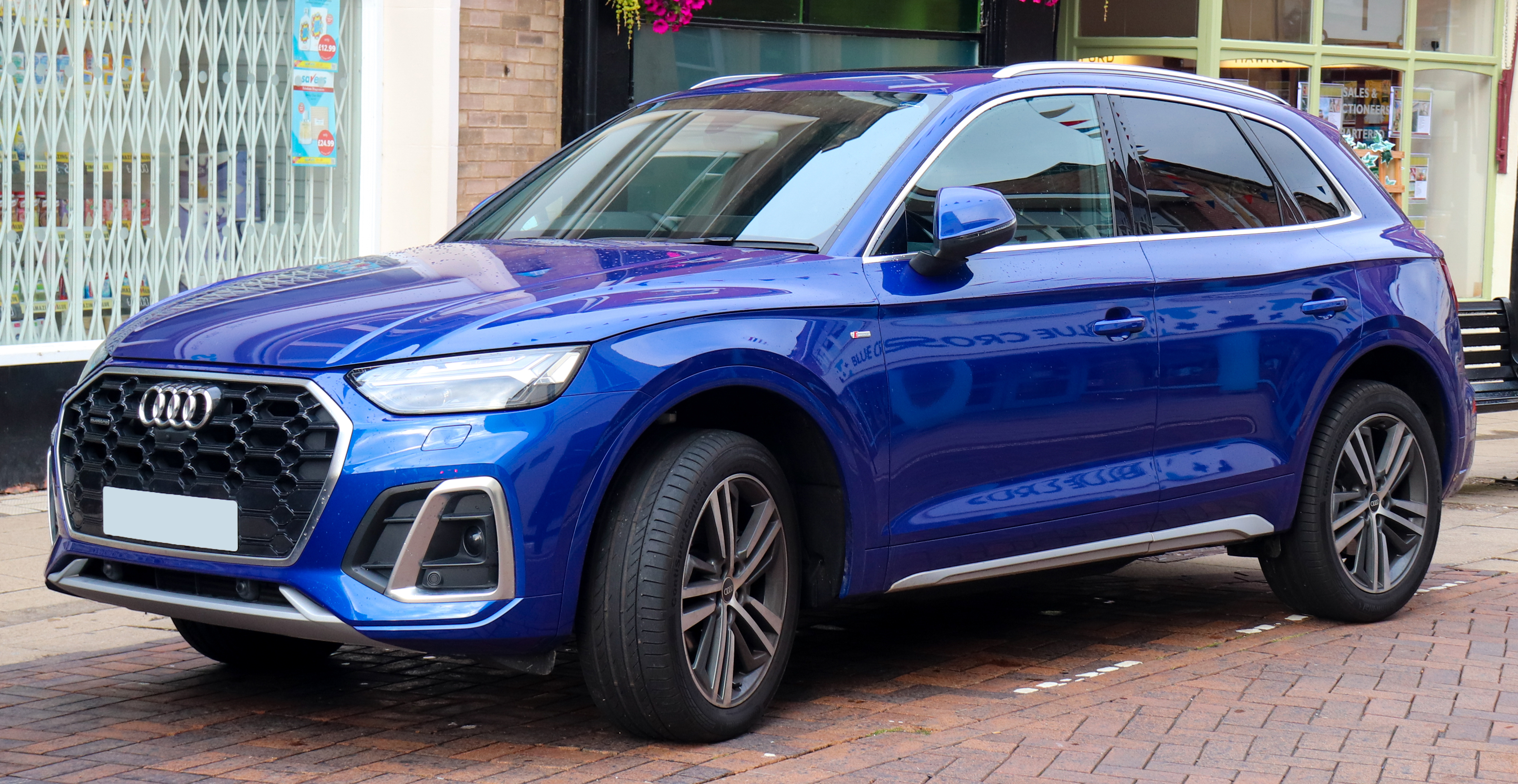
It was an Audi, I think, so it came up with this,
like, zero kilometers of range left.
So as soon as it hit zero, they clicked the odometer over
and figured out how far they drove on zero.
They went...
They did, like, 114 kilometers or something like that.
Like, it was a wild amount.
Yeah.
Um...
And it's a funny watch,
because Hamish and Andy make everything funny.
Yeah, they're funny.
They called it Operation Dry Tank, and they actually...
So I'm not telling...
I wouldn't recommend trying that out, people, but...
What were they driving?
What were they driving?
It was like...
It was an Audi Q5 or 3 or something like that.
Like, yeah, it was...
And I don't know how old...
Like, it was...
This was a while ago Operation Dry Tank.
Does it say how many years ago that was?
Because I do...
No, hang on.
Yeah, because I do know with a Toyota, Land Cruiser,
once that fuel light comes on,
you generally have 100km still.
Really?
In the tank.
Yeah, it's like 20 litres or something left.
I mean, I haven't been travelling too far lately.
Like, I could test that out,
because the fuel light comes on,
and then as soon as the fuel light comes on,
I'm sort of like, within the day or two,
I'm going to go and fill it up just to make sure.
But I'll...
Like, sometimes I only travel 30km a day.
Why don't we test that one day?
The anxiety still comes in, though.
Oh, 100%.
I had it big time on the Nullarbor in the Ranger years ago,
where I was like, fuel light, come on.
We were in South Australia.
I can't remember exactly where we were.
Do you remember when we were on our trip back,
and we saw Sam Isles with his truck and his cars on the way back?
Oh, yeah.
Yeah, so I was west of Kimber,
and I wasn't going to make Kimber to fill up,
but there's a few little places in between
where I was like, oh, we'll make it there.
Made it to the one I was planning on making,
and it was like a roadside bowser out the front
of like a general store cafe sort of stole makeup
that was well and truly shut hours ago.
I think I know who to blame.
And I was like, oh, Loz, we might be in a little bit of strife here.
Anyway, I don't know.
We must have been getting a little bit closer
because it's a bit more civilisation
because I ended up making it,
but it was within my range on my car,
because the Ranger had that went down to
under like 10.
Like it was that close,
but then I'm assuming potentially you've got 100 more.
Potentially you've got more.
But when it does count down though,
that's generally pretty accurate.
Yeah, okay.
Yeah, right.
Yeah, because you've got a fuel light.
When a fuel light comes on, then you have so much.
Yeah.
But they probably do allow a bit of discrepancy
for those numbers,
but there was a time going across Sanstone Road,
you know, when we took to,
but we took it all away from Menzies.
Menzies Bowser was closed back then.
It's open now 24 hour one.
And we're there.
And Chris was driving his Hilux.
Torbz was there.
I was there.
So Chris goes, you reckon we'll have enough fuel
to actually get across here
because we can't fill up here.
I said, I was just thinking about how much fuel I had.
Didn't think about how much fuel he had.
And I was like, yeah, we'll be fine.
We'll be fine.
We get about halfway down the road.
And then he goes to the radio and says,
I don't think I've got enough, man.
And then something clicked.
It was like, oh, shit.
I didn't even think about his car.
So I was pretty quick to apologize.
I said, oh man, so sorry, man.
Like we'll just have to be like, how much you got?
And we got to a point where he had to drive
with his lights turned off, air con turned off,
sitting next to me, straight roads, of course,
to try and make it.
And we slowed right down as well to about 80
because that's optimal speed for to keep going.
And we were trying to get the paints fine.
Now, two other things were happening at the same time.
It was like his count had started to go down quite rapidly
because, yeah, a lot of mods on the car.
But the servo was also going to close in about half an hour.
So we literally just made it in.
And he said he had one litre left on that dial.
And he said he never put that much fuel in his
Prada ever before in his life.
Yeah.
So he was so relieved.
Then just a 30k drive up the road to the property
that we had access to and chilled out.
Yeah, it would have been a nice feeling to get there.
The other thing around this is,
so when I was doing that and went low,
like obviously everywhere had fuel,
but now in these places, I've just searched it up
as of early April.
So this is a little bit out of date
because we're the end of April right now.
But still fuel shortages like 600 sites nationwide
are experiencing or lacking at least one type of fuel.
Diesel are unleaded.
So that is 600 across Australia.
And I'm assuming Victoria and New South Wales
are the heaviest hit apparently.
WA, I think because of the remoteness of some of our.
Yeah, well, Victoria is because of the refineries.
Yeah, so specific locations,
reporting outages.
This is April 5 to 7.
Ampoll Foodery, Broome, Shell Ready, Margaret River.
This is just in WA because that's where we are.
Multiple united and BP sites lacking.
Jeez.
What you're probably finding is a contributing factor
is people don't want to risk it,
so they'll fill up at every place now.
Yeah.
Because if they skip that one
because they can make the next,
they might not have fuel.
Is that a tip as well?
Or is that something you would say be smart and?
You probably have to because I think everyone's doing it.
Yeah.
And if you don't, that's when you can get caught out.
But a long range tank is not a bad idea,
but geez, it'll hurt the pocket when you fill it up.
Yeah.
We all sort of look after ourselves in these situations,
don't we?
Yeah, you come a bit selfish.
You kind of, you don't blame anyone because.
Well, the priority is on you first.
Yeah.
You put yourself first.
You're not exactly driving down the road thinking,
I wonder if that guy's got fuel.
I wonder if she's got fuel.
And I'll let her fill up this time.
You know, like it's sort of, it's, yeah.
Bit different around the city though.
Like I don't, I don't feel the need to stock up on fuel at home.
No.
You know, so when I get close to empty, I'll just fill it up.
Yeah.
You know, if, if there's like on the news,
they're like saying go and fill your car up
or don't do any panic buying.
Well, you're sending everyone out to a panic buy.
Last thing I want to do is line up with all these people.
So I'm just going to stay home, whatever.
Yeah.
You know, I've got enough fuel.
You know.
Yeah.
Yeah.
I've been doing the same thing.
Like I hate seeing the lines at the fuel stations and you go, oh my God.
I'm not waiting for you.
It's not on Tuesdays and it's a tiny bit cheaper.
I'd rather pay.
I'd rather pay.
The way the line.
It must be nice.
Must be nice.
Water's still more expensive.
I agree with you.
Still, I don't know.
I don't know how the hell that works.
Still spins my mind because that's a thing.
Water is still more expensive.
I have a question for you on the Prado.
Why were you driving side by side and he wasn't behind you?
So you could use my lights.
See.
And then he wouldn't be in the dust because the dust would also affect him.
Yeah.
Okay.
Yeah.
And our plan was as soon as you started having flutters,
we would then pull over and siphon fuel out of one of the other tanks.
Yeah.
But they didn't pay any arse.
Yeah.
So I didn't really have the equipment with me.
I'd have to make something up with the spare fuel hose.
It would take forever.
And then we wouldn't get to the servo in time.
So we'd probably just get enough in his car just to get by.
And we'd have to wait anyway.
So yeah.
Is that the closest you've experienced you've had with like running out of fuel on a trip?
No, it's been a few times.
Coming into Quinnawaragi, I was really low.
Yeah.
It surprised me.
I'd done 100Ks more than what I thought and I'd used 100Ks more fuel than what I thought.
So lucky I had my failsafe allowance.
But mine was counting down.
I had like six Ks left when I pulled in.
And Chris was very...
Yeah.
Because Chris took my third jerrycan.
That's right.
So I lost 100 litres from that as well.
Yeah.
Yeah.
And then it's been a few times across the air highway actually.
Oh really?
Yeah.
I was just trying to...
Yeah.
I thought I'd make it.
You know, I did make it.
But see Travis...
I was travelling with Travis.
Johnna was in the car as well.
Johnna had pranked Travis the whole way.
So Travis wasn't...
You know, he was a bit cagey in what we're doing and you don't prank him.
Because he'll prank you twice as hard.
And here I am needing fuel.
And he's like, oh, well that'll cost you.
Well, what should we say about 80 bucks a jerrycan?
You know, he's just been cheeky.
But I'm like, I'm not giving in to him.
You know, you had this game, tip for tatgun.
And it got to the point where I was like, I was shitting myself.
I was like, I actually need that jerry.
So we had got real serious.
So he pulls in and he pulls in.
He's waiting for me.
He's like, come on.
We could see him.
We're getting closer.
I look at Johnna and I said, fuck it.
I put my foot down and sped past him and gave him the bird.
I told Johnna to give him a bird.
He gets back in his car.
He gets on the radio.
Mate, if you fucking run out now, I'm not stopping.
No, that's it.
And I knew that he would actually do that.
But he'll come back.
Maybe, I don't know.
We're not sure.
He will make me wait for at least an hour.
Because he likes to play these games.
Well, I mean, you drove past him,
giving him the finger and everything.
Yeah, I was asking for it.
Both of you is playing the game.
Cut that moment.
Yeah, cut that.
Cut that.
I rolled in with, yeah, because the sub-tank
and the other tank, both lights on.
Well, you only get a light on one of them.
The other, both needles down.
Yeah, I probably, it turned out I still had like,
probably 10 litres in each tank left.
Oh, so yeah, you're okay.
Pretty confident given the finger when you drove past.
No, I was not confident.
I'm pretty nervous.
Yeah.
You're giving the finger to son.
Oh, I don't know.
Could be dangerous here.
A guilty finger.
Yeah, it's a guilty finger.
I was flicking between the tanks as well, constantly.
I'd say that.
Can you cut that?
Cut that.
She could be like the Kit Kat out there, the big finger.
The Kit Kat big finger.
Yeah, you haven't seen that one.
No, I don't think I've seen that one.
Oh, well, I was like, you're all, you would.
You'd beat that.
Just beat it.
No, I don't think so.
Kate, you're all coming up.
Yes.
Yes.
Have you guessed how many people visit Kate York every year?
Poor, about 10% of what visits Fraser Island,
so still about 100,000 people.
It's not far off.
100,000.
60,000 people visit Kate York every year.
Wow.
It's a real tourist spot.
Like that kind of...
Well, I don't know if that...
I'm assuming not 60,000 people get to the tip of Kate York,
but the area in itself.
Surely you're going to the tip.
Like you're not going to Kate York and not going to the tip.
You're not.
Well, I'm doing more than a tip.
I'm going all the way up to the tip.
Oh, the full shaft.
All right.
Oh, God.
Well, it all depends on what the plans are.
So I'm just waiting to hear back from Isaac as well,
because we're...
That's right.
Yeah, planning a trip with Isaac,
and we'll take both the greened ears.
Yep.
Which will be cool, because he's like that blue.
Yeah, lovely colour that color.
So it's you and Isaac on the trip.
Yeah, and possibly the True North.
Possibly the True North boys.
Possibly the True North boys.
There might be a few days where there might not be
that much recording that want to take me fishing and stuff.
Yep.
And yeah, Rafa as well.
I was going to say, Rafa, he's here in the area.
Yeah, he's here in the area.
He's got to be there.
So yeah, that's the plan.
So I'm pretty sure we're going to the Cape to the tip,
but we are doing other things along the way.
Also planned to shoot another modified in Queensland.
Oh, nice.
So head over to Jotto's, turning up a few cars.
Yep.
You haven't done a modified since mine, right?
No, I haven't.
Yeah.
Just blew up the internet.
I'm not going to say anything on it, but yeah, I know.
It's difficult to line up two cars.
Yeah.
And you've got to find, yeah.
Because you don't want the two cars to be modified, aren't you?
Yeah.
I know where you can get a real nice 2026 Hilux from.
Oh, yeah.
Oh, yeah.
Well, we're actually, I'm actually doing two,
I think we're doing two Hiluxes over in.
Oh, beautiful.
Over in Queensland.
Yeah.
Okay.
You can forward to Kate York.
Oh, yeah, I am.
I am.
Yeah.
Yeah.
How many times have you done Kate?
I don't actually look at me.
Yeah, no, no.
How many times have you done Kate?
I think you are.
I think you are.
Have you done it before?
You've done it before, haven't you?
No.
No.
No.
It's the WK York.
I just, Kate York, it almost, I feel because there are so many people there,
especially in from now until October.
Like that's your peak Kate York time.
And if you're right, if you're not at Fraser Isle
and everyone's in Kate York.
Like it's sort of, it's just, it's so popular through these months that
I've heard of sometimes, you know, 30 people standing there watching.
They just put those crossings.
Yeah.
Put the deck chairs up and we'll just watch cars fly down gunshot
and get across no one's and all that.
And like all part of the experience.
No, I'm sure it's a great vibe out there the whole time,
but I'll be shitting myself the whole time.
To be honest, I'll probably wouldn't mind standing there watching
a few cars come down and go out.
I'd be front row.
Would you do a gunshot?
I don't know.
I, it depends on what happens when we get there.
Because what kind of thing are you going to have in the on the grenadier though?
It'll be a half, but part of, part of me says it's stupid to do it
because I know you don't have to.
So they're putting the car at risk.
Like, you know, to be honest, the chicken tracks at
Kate York around gunshot apparently aren't exactly that simple either.
Well, yeah, they're tracks compared to gunshot though.
Yeah, but like nosing right down into it and you're forcing,
you're forcing all that shit inside.
Like, you know, once, once you've been
full driving for quite some time and you've had your experiences with mud,
it's the last freaking thing you want to do.
Yeah.
And having the car all the way up in Queensland as well.
But then there's the other part of me going, well,
it's almost like the rider passage.
It kind of is.
That was my thought as well.
It's, it's that, but yeah, but there's, there's other things,
you know, there's, there's like that dodgy bridge.
That's pretty cool.
It's pretty solid though.
I've seen some heavy cars go over that.
I think everyone has, everyone's seen stuff from Kate York.
Kate York's got a lot going for it.
Palm Creek is the one at the moment that I reckon.
Yeah.
Like, well, each year though, they wash away and it almost becomes a new hole.
And I think even the position of those, what are the cliffs?
Yeah, the drop.
And it would change all the time.
So some, some years gunshots probably not that bad.
And other years, it's probably terrible.
Yeah.
What would your tactic be with going through gunshot?
Like how would you, you just drive through it?
Do you, you don't really have much options to do anything like you just have to go.
You're, you're basically playing with the, with the break as far as you can.
And then the car's just going to slide.
So you've got to have that steering dead straight and then down you go.
Yeah.
It's all about the entry, isn't it?
Yeah.
You can't be like, I just watched there's a wagon, grenadier wagon just going through.
That, yeah.
It looks sketchy in any car.
Yeah, it does.
I would, if you were to do it, I'm not saying do it, but do it.
But if I'm not saying, I'm not saying do it.
But like, if I've seen a quarter master go down there.
Oh, would it be the gun route?
Would it be the first quarter master to do gunshot?
Oh, I'm sure there's been a grenadier gunshot and that was the only one that come off.
Grenadier, I reckon like might have, the wagon might have gone through.
So quarter master, like those are expensive vehicles.
I don't know if you're putting that through and there's not many of them.
No, no, that's right.
And, and the thing is, if that was like an obstacle that you absolutely have to do to get
somewhere, the smart thing to do there would be the car behind would have a strap to your car.
And then you would tend to move forward.
Yep.
It's just when the last car goes down, he's on his own.
The big pile up, blah, blah, blah.
Yeah, I'm not doing the last car.
I don't know if I want to be involved in that convoy at all, to be honest.
No.
Oh, I'll be a passenger.
Oh, um, you could possibly get stuck.
I've seen some of it.
They go bonk and then they're stuck.
Yeah, then they're stuck.
And because they haven't got a recovery point set up ready,
there's nothing to pull off.
The ones I see all the time are the ones where like they go in and then they slide,
hit the, hit the bottom, and then the roof rack just slides off with them.
Oh yeah, yeah, yeah.
By those ones, I'm on the side.
Fully flipped as well.
Yeah, on their leads.
Why do you see roof racks come off at all the time?
Yeah.
And I don't know.
I always look at it and I think, how the hell do you tackle this?
Like you just have to go, don't you?
I don't think there's a lot of skill in doing gunshot.
It's just how you got the courage.
No, but like there's obviously like,
There'll be a little bit.
There's got to be something in it, right?
You can't just drive into it and just go, oh yeah, it's going to be fine.
You have to have a thing, right?
So the car, the flipped one or two things or maybe both things happen there.
So you may have seen some times when a car goes up a hill or something
and they jam the brakes or something.
When you jam the brakes, you're giving an extra shock load,
which is, you know, every reaction has an equal reaction,
you know, opposite action.
So you jam the brakes, it's going to go like that.
Yeah.
And that gives it that extra bit.
Yeah.
So the only way to counteract that is to quickly flick in reverse
because then you're forcing the wheels to do that.
Group back down and yeah.
So in theory, that should work,
but you're not going to be able to do that real quick.
Yeah.
Are you doing gunshot if you're rolling?
If I, no.
You're not?
No.
I think I'm too top heavy.
I feel, I feel a lot of people,
my gut feels that I'm too top heavy.
I can't do it in the 76.
Did he?
Roof top on top?
I don't remember if he had a roof top top on top.
Roof top on top sounds weird, doesn't it?
Roof top on top of a roof top?
Yeah.
I don't know if he did or not, but he did it.
He did it.
He went down it.
Maybe my, maybe my,
yours, I don't know.
I feel like my angle might be.
Big tent on top.
Yeah.
They change all the time.
It's a bit of weight.
Depends on the steepness too, right?
Because if it's like a full on drop,
a certain wheelbase is more prone to going like that.
Whereas a dual cab, it's longer.
Yeah.
The back wheels are still going to be up for a while.
Yeah, you'll just drag back down your rear bar really, won't you?
Just the departure angle,
have an effect on that, like with the longer wheelbase.
You could get stuck that way too.
So let's say you go down and then you slowly go forward.
You could be, you can have the bull bar on the ground
and the arson on the ground.
And you're just spinning wheels.
Basically, from the videos I've seen,
most cars hit the bottom.
Some can like push out and drive through a lot,
just winches out and just jump on the wind.
Yeah, see, for me, it's like my car, I need my car.
I don't have a backup car.
I don't have anything else.
Like my car is pretty much my life.
So if that's 6,000 cars, you're right.
Yeah, exactly.
Your car is your life.
It made it is.
It is.
We're talking about, it is.
Sorry, mate.
We can't all have a fleet or a bloody Tiguan to drive around.
To offend you.
Didn't a guy do it on a Falcon?
Yeah, I don't know.
You're better off driving as hard as you can off the top
for just landing on the bottom.
Surf on it.
I might be on to something there.
I actually think that's a great idea.
So like a lot of dropping.
Yeah.
The right hander or left hander?
We'll just get a little down ramp at the bottom.
That build up something.
Yeah.
Smart thing to do would be like to put all your max tracks down the bottom
and stack them like that.
That gives you that little bit of a ramp.
Yeah.
Smart thing to do would actually just be to not do it, I think.
Yeah, I'm probably not doing it.
I already did it.
Would you do it?
No, I probably not.
No?
No, probably not.
Yeah, I don't think I'd do it either.
I honestly don't think I'm...
Yeah, I'd check it out already.
I think you might come in mine after you've watched
a few young people do it.
Yeah.
No, that's a good point.
I think if you're out there, I might have a look at it and go,
nah, go on.
Imagine that.
Then there's peer pressure as well.
Yeah.
My arms are made of rubber, so easily twisted.
Take me soft.
There you are.
I'm moving forward to you going to Cape York because I just dare.
I don't think that's going to...
Cape York feels a long way away from me.
Is it not distance?
Yes.
But also, if I'm ever to get there, it's not happening any time soon.
You know what I mean?
Maybe if you go back to Victoria for a visit or something,
you can just head up to Queensland.
Yeah, it's right next door.
So close, yeah.
Yeah, tell me.
Yeah.
One side of the country.
Just basically there, hop, skipping a jump.
Apart from trucking the car over, it would actually be as much effort
for a WA person to go all the way up there to drive across Australia's longer
shortcut, which would be Perth to Cairns.
Yeah.
And then drive up to the Cape and then do that.
It would take the same length as doing the canning.
Yeah.
So the preparation and everything is probably going to be pretty equal and all that,
except for...
It's full on.
Except for you're probably not going to feel like a remote.
Yep.
Fruit or katsu will.
Yeah.
So what's your preparation for Cape York?
How much have you done so far and what have you got to do?
Just what I packed in the car, really.
Just that's it?
Yeah, that's it.
And I'm just really interested to see this Nolan's crossing,
because it has this something weird happens to the sand.
And what do you mean?
A lot of cars flow, don't they?
Well, yeah.
Once you drive through Nolan's, you've got to wait a while before the next car goes.
Oh, to let everything settle?
Yeah, because I think, you know, like water and sand, it just has this effect.
So on this particular crossing, a lot of people will go in next and then I just sink.
Right.
And there's been so many different people saying,
you've got to keep going, you've got to spin your wheels.
And some say, no, you've just got to take it easy.
And John, I reckon you've just got to wait for it to settle, then go.
So that makes sense.
That's what I'm really interested to see how that goes.
Are you going to test it?
Like going straight after another car, spinning, non-spinning, waiting?
Yeah, I'll give it a crack.
It sounds like I'm probably going to get a chance to watch a few people go first.
I'd just go first if I was you.
But from the other side, people go second.
But I feel like I understand like the sand quite a bit.
So I'm just intrigued to see.
I want to walk it to see what it feels like and then go from there.
But regardless of what happens, it'll be one car at a time.
Strap on front, strap on back, ready to go.
Because you don't want to flood your car.
And you want to be ready for recovery.
That's the same thing with gunshot.
If it is done, there'll be a recovery point.
There'll be something on the front recovery point.
Like a strap ready to go.
The back, I'm probably not going to bother because that's easy to get to if you need to.
Because I'll be sticking right up.
Just right at the top.
You'll be like, yeah.
You're going to be like that van we saw on the gun barrel.
You know, that was straight up.
That's going to be your car.
Mate, we have to put it on.
That's how it got there.
Speaking of drowning cars.
Oh, yeah.
What have you done?
Did you see the all for adventure blokes?
Yeah, yeah, yeah.
They, I don't know what it was, but I saw a really quick clip yesterday.
I haven't watched any long form of this.
They drowned an 80 series.
They drowned it.
Yeah, bless me.
They got, they, yeah, I thought you'd be cut by this because you love your 80s,
but it was like driven for me.
I don't know.
It was in the middle of it.
They said it like the voiceover was, they got it a bit wrong.
Started filling up.
They were trying to like scramble to get to it to be able to drag it out somehow.
Yeah, okay.
Anyway, it just started falling like the water just came rushing in through the
window after a while.
And all of a sudden, it's just Jesus.
If you want to go see it, you go check out all for adventure on YouTube and it's just
one of the shorts that they've got there.
And then like that is a floating 80 series.
And now it's gone.
Yeah.
Yeah.
Now it's gone.
One of the most I think we'll be able to play that now,
but just because it's, it's their content.
We know.
But I just saw, I was going to have a look.
Speaking of drowning.
It's not my laptop.
Yeah.
No, no, no ones.
Yeah.
Look, I think the most hectic river crossing I've seen was from Victoria.
That high country one that you were in, eh?
Well, no, the one I've seen on YouTube.
Oh, sorry.
It's just the guys who's uploaded it.
He's taking, I think it's a hundred series he's taken across and the back ends just started
floating and then he's gone downstream or upstream a little bit, but then the wheels
that are spinning enough and the front is gripping and it pulls him back and he gets out of it.
That was a wicked job getting the car back out.
Wasn't your, wasn't your one of your tougher river crossings in high country?
That was the trippy, right?
Yeah, the trippy, it did quite a few there, but it weren't, they weren't that bad.
Oh, I think the one where it was just you by yourself.
No, no.
Yeah, I got stuck trying to exit.
It's just stuck trying to exit.
That's what I'm thinking of.
But it wasn't underwater.
It wasn't in the water.
No.
The one that was underwater was, well, everything in the tub was underwater.
That was, that was my N70.
Yeah.
Because I hadn't sealed the, you know, the front of a tub when I N70,
those fins are open.
Yeah.
Even though I had mine bloody coated with that stuff, they didn't, they didn't get that part.
No, that must have like taped them so you still had a drain point.
So not only does the water go through there, it can also come in the back.
Yeah.
But when you keep going, it's okay.
But all that filled up, all the mud underneath the car came in, all my drawers were muddy.
The fridge was underwater.
It's just, yeah.
The Ranger had that too.
And I always wondered, if I ever get stuck not moving, this is not your car.
Yeah.
You're going to flood the car?
Yeah.
Well, especially when I pulled the drawers out, it was just, I just tied things down to the tub.
So it's like, yeah, just sitting in there.
All of a sudden my barbecue is full of water.
However though, had they been sealed, I might have been floating.
And that might have put me in strife.
Yeah, true.
Yeah.
What's better, sealed or unsealed?
Definitely driving, floating away.
Getting the car across.
Yeah, as long as the car gets across.
Getting it across.
Getting it across, you've got a story of a crossing, not a story of a drowning.
Yeah.
All right.
Texans enjoy more ways to save at Kroger, like low prices in every aisle.
And when you download the Kroger app, you can clip and save more with digital coupons every week.
Plus, you can earn fuel points to save up to $1 per gallon at the pump.
At Kroger, you can enjoy Texas-sized savings and more rewards every time you shop.
So it's always easy to save big every day with savings and rewards.
Kroger, Texas proud since 1955.
Savings may vary by state.
Fuel restrictions apply.
See site for details.
Do you keep hearing podcast ads like this one, for example,
but always wonder how you actually get involved with them for your own brand or organization?
Well, it's easier than you think.
We're Acast, and we give you the platform to do it all yourself.
Browse thousands of popular podcasts.
Choose the shows that match your perfect audience.
Set your budget and launch.
And if you want a hand, our podcast specialists are there to help you launch with confidence.
This is podcast advertising without barriers.
Get started at acast.com slash advertise.
You had something you wanted to ask you on here.
Yeah, I was good.
Do you remember what that was?
Yeah, I do.
Okay.
It's good about you.
Thank you.
And it was just off the back of our talk on electric vehicles and all of that kind of like
the kind of hybrids and all that.
Yeah.
There's an interesting thought that was just, you've got cars like the 80 series,
the 100 series, the 70 series and patrols, GUs, GQs and all that kind of stuff,
where you can kind of have the knowledge to be able to fix the car if something goes wrong,
like whether it's replacing parts or whatever.
With electric vehicles, I feel like you're going to have to have some kind of degree or like even
hybrids to be able to fix a 48 volt Prado, Hilux, whatever.
Like, do you think that in the future or in the next few years,
it's going to be more and more difficult to repair cars that are broken down in the outback?
Kind of a percent.
You think it's like going to be a lost art?
I think, I think someone like with AI these days, someone should be able to make some,
just some crazy arse scandal that should be able to sort some problems out.
Because I think a lot of it will be software issues or it'll be a way to override the software
because a lot of things that might go wrong in a car, you could then override it so you could get out.
Maybe they could Geo, make it like a Geo sensor.
So you can turn your blue off if it, you know.
It's messing up your car.
Yeah, because a lot of cars that have that blue, if that messes up,
the car's not going to go anywhere, go into limp mode.
That's not going to help you in the middle of nowhere.
And there should be some kind of safety net there where you should be able to override these things
if you are at this region.
You know?
So like the car would kind of be tracking your location and
if you're away from civilization, away from a city or a town or something,
then it'll go okay, you need to get out.
We can turn this off.
Or just someone make a scan tool and just call it off-road use only.
Yeah, okay.
Yeah, so you can then override all this shit so you just keep going.
How do you think, how do you feel about the Ineos?
If you, if the Ineos were to break down out there, how, for the boys.
Sorry, Scott, it's just out the window just showing us he's a quietest lineup.
You've got 17 boards.
Head coach.
How do you think the, how do you feel like the Ineos would go if the Ineos were to break down?
Like what, at what point do you think you won't be able to fix that and limp at home out there?
I think just like any, any car the same age.
They could just, you know, it could just be like a computer fault or something.
You just don't know.
76, similar, like the same kind of.
76 a bit more basic.
Like you don't even have to have your foot in a break to start it, which, you know,
which, which I love about it because that tells you it's still very basic.
If the collision system goes off, it's not going to affect it.
If a DPF does something, I'm not sure what that will do.
So that's probably my only concern.
If a DPF fails and it goes into limp mode, then I might be screwed.
But it doesn't have that blue.
So it's just with the emission laws and stuff that they're not really going to
help you out in the middle of nowhere.
Yeah.
So it might actually take for someone, unfortunately,
it usually takes something drastic to happen before drastic measures are taken
so that, hey, this whole family died out in the middle of the outback because our blue failed.
Now give us an exemption when we're traveling to disable it.
Yeah.
Yeah, fix that.
Yeah.
You hope it doesn't have to come to that.
No, yeah.
Of course.
No, no, no.
Yeah, yeah, but usually it's what it's what it would take for something like that to come in.
Yeah.
Yeah, because yeah, it's not people being stupid.
They hurt themselves horribly because they're being stupid.
And now all of a sudden everyone has to do something different.
Yeah.
Is the is the Prado kind of a bit more because it's got the 48 volt system in it and it's a
bit more electrics and all that kind of stuff around that.
Is that going to be a harder thing to kind of get started if something on the 48 volt system fails?
Yeah.
I'm not sure what happens if the 48 volt system fails.
It's something I've been keen to try out like,
like remove a wire or something just to just to glitch it out and see what happens.
It's hard to say, but I do know that when it's in four wheel drive,
definitely in low range, it's switched off that that system doesn't come in.
Oh, really?
Okay.
Yeah.
Okay.
Yeah.
Because then that way you can switch it off through driving through water crossing stuff,
but it's still on and four wheel drive and it was it's designed so it can still work through water,
but still it's adding more bits to something is just going to increase the chance of it failing.
It's like, you know, a plane's probably never going to crash.
But if you go on a plane every day of the week,
yeah, your percentage of crashing, you're just you're just increasing your chance, you know.
Yeah.
Okay.
That's an interesting thought.
Yeah.
It's like if you surf by yourself every single day,
then there's a, then you've got a slightly higher chance of getting eaten by a shark
rather than the lottery person.
Yeah.
It's like, it's like the bad lottery, the one you don't want to win.
So do you think like more, more of the modern vehicles, the modern forward drives and that
kind of thing, and this is a few as well, Dago, don't, don't feel like it's not for you.
Do you feel like the modern forward drives are going to be kind of left behind a bit from people
who are tackling harder forward driving outback style stuff?
Like they're going to continue to hold up like an 80 series, a hundred series, an older GQ,
GU, like a DMACS or any of those older vehicles that don't have as much modern equipment in it?
A hundred percent.
I don't think they'll be going for like the really old ones because they're getting pretty old now.
I mean, some, some might, but you've got to spend a lot of money to get them to that point.
I think people are going to focus on like 200 series Lankers with 250,000 Ks on it,
or a Hilux with 250,000 Ks on it, you know, maybe before the DPF era or the 70 series or,
or the latest GU wagon that, you know, the last series of that maybe.
I think people will go for those kind of cars because they've been around for quite a while.
They're not that sophisticated. They still have computers and stuff, but they're not,
they're not that sophisticated, you know, and people know the faults that they have.
It's probably more, they're probably more like your engine and stuff you've got to worry about,
but it doesn't mean that mechanical cars aren't going to have a problem.
But yes, you, you can fix it. It's possible, but you still need to be a mechanic to a degree.
Bit easier for the punter though to kind of put something together to at least limp it high.
Right. But let's be honest. If you have a car like that,
you will know the engine anyway, because you're going to be working on it yourself.
Yeah. Because to pay a mechanic to do that will be quite expensive.
Yeah, that's true. You know, people, people try and exercise the cap,
price servicing and things where they don't actually do anything to your car.
They just put the apprentice on it and the wheel bearings are all right.
Yep. So did you repack the wheel bearings? Oh, no, no, no, no.
It looks good, mate. It looks good. Yeah, yeah.
Yeah, it looks pretty good. Just so you had my part.
Did the eye test.
Yeah. Okay. What, and this is just a little bit off of what we're talking about there.
What, um, we'd like there, we'd try to know no longer making V8 cars, right?
If someone wants a V8, what's kind of the max kilometers that you're looking at on a V8 that's
used? Look, I don't think you can rule anything out really. You could even keep,
it's even like with a GU bag and it could be, it could have like a stupid amount of K's on it.
Just, just restore it. Just, just restore the engine.
Put a bit of time and effort into restoring the engine and you'll be, okay.
You might find one that's got like 750,000 K's on it. No one's going to want that.
But also understand that the driveline also has that.
So if it hasn't had a bush life, the driveline's probably fine.
Just, you know, just get it checked over and maybe expect something to go wrong at some stage,
but a driveline, you can generally, you know, hopefully it's not something vital that breaks.
You can still limp home, front wheel drive, rear wheel drive, whatever. Yeah, yeah, yeah.
But with the engine, I reckon just, just recon it. Yeah, okay. Yeah, it costs more, but
at least you got the V8. Yeah, and it's recon. Like if it's your dream car.
Yeah. Yeah, okay. No, it's interesting. If you're talking to a few,
a few of my mates who, you know, 70 series are kind of their dream car, the V8,
70 series, like whether it's a wagon or a ute or whatever. And they're just kind of like,
oh, well, I've missed the chance to, to get the V8 now because they're discontinued and like,
I don't want to get a used one just because it might be, you don't know what's happened to it.
Like you don't know what's going on. It could be too many K's.
Most of them have never seen the bloody dirt road, mate.
Yeah, well, that's the other thing as well, right? So a lot of them haven't,
I've just been looked after really well, but yeah, I think there's,
some of my mates have just got a bit of a thing where they're like, nah, I don't know. I might just,
the dream car has now moved from a 70 series V8 to a, an Inios or something just because like,
Inios is a coming in now and they, they seem to be the next big thing off the V8 series.
V8 76 is 77, 78.
What do they do? Would they think about like 300 series patrols?
Yeah, I don't know. I think you'd have to, I think the Inios's have just kind of overtaken that
a little bit. I don't know. At least with them, like, at least with some of my mates,
the Inios's have kind of taken over as being the next, the next car, like off of the V.
Oh yeah. Solid axle, got everything you need. All the hard running gear.
Like, kid it up from the, from the get go. Like you've got everything you put in,
like what, you replace tires, maybe give it a lift or,
Yeah, I know what you're saying there. It does come ready to go.
It comes with everything. And all your dudes, like,
if unless you're putting something heavy on it, you just change the springs out.
That's all I did on the, on the one I borrowed. Just change the springs out, you know,
because it wasn't my car, but I was allowed to modify it. And of course,
I didn't want to sink a lot of money into it because I'm not going, it's not mine.
So that's why that exercise with the springs, I gave it a 40 mil lift and it made a world
of difference. Because they do look low from stock.
Yeah, they do.
That's the springs that they do.
But even when it did look low from stock, we took it out.
I can't remember that day that we took it out to,
Yeah.
Just down the hills and it was, it looks low, like it looks like you're going to be
scraping the bottom undercarriage, but you don't, I didn't touch a thing.
Mm. Different story of the quarter master, because it's so much longer.
Yeah. And we weren't loaded up at all or anything like that.
But it was pretty impressive off the shop floor.
Yeah.
We'll just lift them back wheels that day.
Do you remember when you almost rolled my car?
Um, yeah, when I tried to roll your car.
You went in the ranger at some stage and almost rolled my car.
Well, I was trying to roll it to just see how, yeah, just see what it was like.
And then you wouldn't let me for some reason.
Obviously it's a wicked car because it didn't roll.
Even though you were doing everything you could do.
Roll it.
Danger ranger.
Danger ranger.
Yeah, wouldn't roll.
Tried to roll it, wouldn't roll.
Tried to roll it, wouldn't roll.
Best car ever.
Yeah, one of the best cars ever.
I sold it.
Didn't you have like an issue with the ranger?
No issues with the ranger.
Yeah, there are a few issues.
Yeah.
You know, the ranger out of most of the vehicles at the moment,
like there was that period it had most, most of the engine problems.
Yes.
The, the, you know, the three point two had problems.
Yeah.
The two litre bi-turbo had problems.
They have a few issues.
There wasn't.
There's a, actually, right after we drove the grounded Hilux,
I saw there was a few recalls on.
Oh, on the Hilux.
On the 2026.
Yes.
Hilux.
Yeah, there was a bit of that.
In 90s, yeah.
Yeah.
What was that for?
Do you remember what that was for?
I didn't look into it because I didn't think it would matter.
But yeah, probably does.
I probably could give you an explanation.
No, there was, there was a recall of some sort.
Yeah.
No, I actually did see that.
And I thought hopefully nothing,
nothing wrong with our grounded Hilux.
Actually, there wasn't.
No, no, it drove fine.
I want to get to around the fire pit.
And speaking of fire pits,
fire season is all good again, isn't it?
Woohoo.
Finally.
How good is the smell every now and then just in the mornings
when they're, oh no, they're doing some probably burn-offs
in Perth, back at Hills and that.
But like, just that smell coming, coming through,
just nice when you wake up in the morning.
And it's a bit chillier.
It is.
I haven't noticed the smell.
Haven't?
No.
Unless it's like choking the atmosphere.
Yeah, yeah, yeah.
That's a few tons.
Yo, it was foggy this morning though.
What did you have this morning?
Mate, how was the fog?
It was in the clouds.
Yeah.
And then it turned into the most beautiful morning of all time
and then it just rained on the way here.
You guys see the sunset last night?
That was unreal.
Yes.
Oh, yeah.
I was near your way last night.
Were you?
It was nice out there.
No, it was not there.
Okay.
But it was nice.
I was along the coast.
It was a lot nicer.
Oh.
A lot nicer on the coast.
What were you doing along the coast?
No, I was just, just on the coast, mate.
What were you doing?
Just going for a drive.
Just having a nice morning.
I was there this morning.
It was beautiful down there this morning.
Yeah.
Absolutely.
What were you doing down there?
I was getting a coffee.
Yeah, me too, last night actually.
Hey, yeah, I just thought of something here.
So, you know, people like to go for long walks along the beach.
It's quite nice.
Yeah.
I try and do that as many Sunday mornings as I can.
But WA, we like to go for long drives along the beach.
We do.
It is my favourite thing to do at the moment actually.
I am constantly there.
Especially when, like, the young fella needs to nap.
Let's get in the car.
Let's go do a coast run.
And it's all good.
I love it down there at the moment.
Yeah.
Can't get enough of it.
Your boy loves the sound of your car though, right?
He loves the V8.
Loves it.
Lauren's car cracks it constantly.
My car.
Just best time ever.
Yeah.
Have you, how did your kids like your V8?
Like your 79?
Loved it.
Loved it when they were young?
Yeah.
Yeah.
Yeah.
And yeah, like, she still loves the V8 now.
Yeah.
She loves it.
She's, you know, yeah, what was I going to say?
Yeah, it's a bloody nice sound.
There's another thing that also calms babies down,
which I found out.
I thought it was just a myth.
You play old school Metallica.
I'm not kidding.
It actually works.
That is something that I have been trying to figure out
is what songs...
You know, our little fellow is not...
He's not a massive winger or crier
or like he's pretty good a lot of the time.
There's a song called The Happy Song though
that we play in the car,
which was on for quite a lot of this morning
because when we left the beach...
The Happy Song?
Yeah, The Happy Song.
It's...
It's my favorite song.
It's...
Is it?
Yeah.
Is it one of your like, happy, happy, happy, happy, happy?
No, it's quite catchy.
It is quite catchy, but it's fun.
So that I'm constantly looking for songs
that like make him happy.
Well, The Happy Song seems to be the one.
The Happy Song does that
because it's built for kids.
Yeah.
Like it's built for babies.
Built for happiness.
And toddlers and whatever.
But like I'm looking for adult songs
that do the same fix.
So Metallica apparently.
Metallica?
For Whom the Bell Tolls?
So who is that?
For Whom the Bell Tolls?
That's on the Rod Lightning album.
Oh, okay.
That's another song.
Rod Lightning himself is pretty good.
And then you've got a black album
that's got a few good ones there tonight.
Well, I've found that downtown
by Macklemore works really well.
If you haven't listened to downtown
by Macklemore in a little while,
go and have a listen to that.
Yeah, okay.
Because that is a fun song.
Well, this is a little bit off topic
from the full drive pod,
but like our mates at Pass The Ox had a guy
called Dr. Billy Garvey on.
Dr. Billy Garvey.
And he's like a trial,
like he, I don't know what he does,
but he's like a trial therapist
and psychologist and stuff.
And he had some really interesting
thoughts and stuff around young kids
playing music and like what,
like just tips and tricks around that.
But it's a really good episode.
Is he all for that?
Yeah, all for it.
Yeah, I love it.
I think TB was saying that he just plays
like hard rap and stuff in the car
with his kids and like hard rap.
I don't know if that's good or not,
but they like it.
Yeah, yeah, all that.
Like I'm all for like just giving a ranger.
Like, oh, I want like my little bloke
to be into music like I am when he's older.
So I'm like, start him now when he's...
Give that episode a listen
and just see if you come back and go,
you know what, I might just,
Solly loves TB to send me that hard rap.
I know I am aware of the sort of music
that TB loves.
Yeah.
And he loves all ranges of music.
He does.
But like he does dive quite hard
into that sort of stuff.
And some of it I'm not a fan of.
It's not for everyone.
Yeah.
But maybe that's what,
maybe that's what the Duggins and the Brassus
can have in common is.
The kids love hard rap.
Maybe that's just the thing.
How old this guy's kids though?
Oh.
Billy, are you like three or four now?
Yeah.
And then Benson be two?
Yeah.
Young, young.
Yeah.
Because apparently you guys might have heard this one,
but the music you listen to when you were like early teens,
sticks with you for life.
Early teens.
Yeah, right.
Has it done that for you guys?
To a degree.
Yeah, for sure.
Kind of.
If I hear music that I listen to as a teenager,
like an early teenager,
that I'll get nostalgic and it'll throw you back to that.
I think that it connects me to different parts.
Yeah, it connects me to different parts.
But I don't,
I don't know if I listen to the same music
I listened to when I was a teenager.
Yeah.
Maybe we're still,
maybe we're, with all due respect,
running a little bit younger,
still figuring that out potentially.
Yeah.
Well, I have the whole,
all the way through pretty much.
That's been your,
oh, okay.
So you-
The same music the whole time?
Well, no, I've listened to a lot of different music,
apart from country.
That's the only thing I don't listen to.
Yeah, no, that's fair, don't you?
When the rest of the world's just loving it,
I'm just loving that, not for me.
But-
You're a massive country guy.
You know, like I saw that in Metallica before,
like that was my first,
my first CD was probably Guns N' Roses, actually.
Oh yeah.
Use Your Illusion 2.
I bought Use Your Illusion 1.
I also bought Metallica then.
But I still listen to that music now,
that I did then.
Yeah.
And I have the whole way through,
but obviously, you know,
listens to everything, apart from country.
But what I find funny is Sienna,
because she's been subjected to my music,
she, all she wants to-
Subjected to me.
Yeah, well, all she wants to listen to is,
is, you know, Chili Peppers, Metallica.
Yeah, she's not a big fan of Guns N' Roses.
I haven't played that all that much.
Alison Chains, she loves that.
Yeah, okay.
I was about to mention that exact thing.
I am definitely a product of what my dad loved listening to.
So, same thing, Chili's.
Interesting.
The police, like, or like everything he's-
I remember his CDs more than I would remember my first CDs.
Yeah, right.
Yeah.
That's fair, okay.
And even first songs on like the iPod,
because that was probably more the style
when it was coming through.
But that, I'm definitely a product
of my dad's music big time.
I wonder if it's because,
I wonder if it's because you had,
like, your dad would have more access to CDs
and things like that.
So, I don't have that for my parents,
because they might have had a tape deck
or listened to radio or something.
Yeah, yeah, yeah.
I don't think I listened to that much music
as I would have, because I had access to CDs.
Yeah.
That was a big thing, man, when I was 13.
CDs, I was like, holy shit, what's this?
Yeah, yeah, yeah, yeah.
Yeah, that was, like, dad had a full,
and we had a, he had like a decent player as well back then.
It was bulky as all shit.
Yeah.
But like, for us, it was awesome,
because like, you'd throw it in,
but I remember loving all the stuff that dad loved.
And even mum to a degree,
but mum didn't get as much of a say on music.
She wasn't as into it as dad.
So that is still, yeah, and even,
because now with Soli, obviously,
going through all that again and music,
and dad's actually, like, dad's a jukebox.
He basically remembers any song he's ever listened to,
and he can sing the words to it,
and sings quite well.
So then I always grew up with dad singing
all the songs that he loved, and he sung them well.
And so like, he'd do on the same thing with Soli,
but I'm like, this is gonna be the impact
that my music has on Soli, I'm assuming.
So it's like, not that dad had a real niche music.
Jesus, what podcast are we on again here?
All right, this is past yours.
But anyway, I was like, it's cool seeing that,
because then mum and dad are telling me now,
like, what I loved as a kid.
And like, Neil Diamond and all that sort of stuff,
I was just into, like, I just, for some reason,
Neil Diamond was what I loved as a baby,
just make me happy.
So it's all these like, cool having Soli now
to reflect on all the things that I sort of grew up with,
and how that's kind of like, you know,
made me, and my music sort of sphere.
But it's very heavily influenced by dad,
which is obviously what Sienna's getting through you.
Yeah, yeah, that's just, yeah, super interesting.
So Soli must be triggering your dad's memories of all this.
Oh, dad, yeah.
Dad, like I said, is a genuine jukebox.
I don't know how he does it.
He's so good with his, like, recall on songs and words and,
yeah, music's just obviously been a big part of his life.
So he's, he's loved it.
Sounds like the bloke to take to a quiz night, pub.
Yeah, well, yeah, for the music section,
he is very, very handy to have around.
Very handy to have around.
That's interesting.
I remember a lot of road trip music and songs playing,
like, whenever we got in the car as a family.
But it was, I think it was pretty much mum.
Oh, really?
I think mum controlled the ox in the car.
You would have had so many, like,
you were doing big trips from Newman.
Yeah, like Newman to, yeah.
It's been a long time.
Newman to a bit of a band, he let Ningaloo a lot,
like, every year during Easter.
We would do that.
He needed lots of mode and ready to go.
Well, yeah, we, we had in the back of the 100 series,
a, like, little DVD player underneath the seats.
So we had screens on the back of the,
on back of the headrest that my brother and I would watch.
I would sort of stir you up for having that,
usually, because I'd be like,
geez, that must be nice.
Like, but living out there,
I could 100% understand how parents probably want that
in the back of the car for their kids.
Well, I think we'd be, oh, sorry kids,
we're going to jump in the car and do a 12 hour drive
down. Oh yeah, we would.
I remember, there's one, there's one memory I've got.
We had a big Mastiff dog, like massive dog,
not probably not as big as yours,
but like a massive Mastiff, probably like 60 kilos or something.
And I remember we tried to take him on a trip once
and put him in the back of the car,
like in the actual, in the rear,
and he was chill, like he was okay,
but he was like antsy a bit.
And then we go to pull out of the driveway.
My brother and me in the, in the middle seats,
I'm on the left, brother's on the right,
mum and dad in the front.
And then as soon as we pull out of the driveway,
the dog jumps over the seats and just is on top of me,
on top of my brother, just,
and we just burst into tears
because we're young kids at this point.
Burst into tears, we've got this massive dog on top of us
who's just like trying his best to get out of the car.
Oh, he's freaking out.
He's freaking out.
Like, or he wanted to be around people.
Like he wanted to be around us, like actually with us.
So he feels safer.
Rather than being in the back.
And we had to, we had to leave him at home.
But yeah, I've, I've that memory,
which is a bit different to music and stuff.
But yeah.
Yeah, I remember some music playing there.
Yeah.
He let the dog out.
I think mum had.
Yeah.
We had a lot of like.
What was your mum into?
Abba.
Abba, yeah, right.
I remember waking up on weekends.
That's good.
Like Abba blasted through the house.
And you're like, okay, mum's cleaning the house now.
Like this is her, this is her cleaning song.
Like you just have Abba blasting.
Yeah.
Um, electric light orchestra.
Oh, yeah.
Bit of that.
Yeah.
I remember a lot of that.
And then, yeah, everything,
pretty much everything that you've mentioned as well.
Yeah.
Yeah.
It's funny.
His mum was like, mum loved.
I remember songs more for mum, like particular songs.
The Vanessa Amorossi song.
Oh, no.
I can't remember it, but it's, it's a, it's a good one.
Ronan Keating song that, um.
Trying.
Like absolutely everybody.
Absolutely everybody.
That was like, that was the song for mum.
And then anything from the chicks.
Which were the Dixie Chicks before,
but now the chicks that they were, um.
Absolutely everybody.
Oh my God.
No, no, no, no, no.
Absolutely everybody in the whole world.
Oh, that just takes me back.
That was terrible.
It's like fingernails on chalkboard.
Yeah.
It's sorry, mate.
That's just my song.
Hopefully mum doesn't listen to me.
It's good song mum.
I'm on it.
You should definitely do it.
These guys just don't like it.
Yeah, cool.
Most of us listen to a lot of pink.
I remember mum got into pink.
And then at one point, um.
Pink still keep going.
I'll tell you.
Slumdog Millionaire came out.
You remember the movie?
Yeah.
That came out and there was Jai Ho.
Oh, that was a song.
Mum loved that.
Really?
Yeah.
Oh, I loved it.
Like, did we just touch hands?
Mum's loved that.
She's very much into pop.
Anyway, road trip songs I think is actually.
It's a big thing.
It's a big topic.
We've covered a little one thing with it.
Yeah, I love telling that music.
What's your road trip sound set up?
Like, are you pure music?
Do you go music, audiobooks?
Do you go music, audiobooks, podcasts?
Do you go silence sometimes?
Yeah.
I'm big on music and then an audiobook.
And then maybe a podcast or something here or there.
On a road trip?
Just music and podcast.
I love going back to music.
Music and podcast for me.
No audio.
No audiobooks?
Ronnie?
So.
Ronnie's is UHF.
Ronnie drives in complete silence.
I do sometimes.
I do.
So half my drive will probably be in silence.
The other half would be music, then podcast.
Yeah.
And then I'll go through,
I might go through like two hour straighter podcasts.
Yeah.
And then I've just got to jump out.
Like, I still feel interested, but my brain's like.
I understand.
Mate, that's enough.
Yeah.
That's enough.
And then I'll go to music and then my ears are like,
mate, that's enough.
So, so then I'll back off.
That.
And then after a little while, music back in.
It's hard though, when you're not solo.
Because podcasting.
Yeah, it is.
Like Lauren and I have very different podcast interests.
Ryan and I, we didn't play podcasts because.
Like, I don't know.
Ryan, I don't know each other that well.
Like, I'm not going to make him sit through.
I forced my dad to sit through everything I wanted to.
Yeah.
That's pretty very.
That's a little bit different.
But you're a captain of the vessel.
You sort of captain of the vessel.
And you would probably know where your dad's sort of.
Yeah.
I don't think he liked any of it.
Okay.
That's fine.
I bet you he didn't say one thing about that.
He didn't.
He would have just gone, this is fine.
My dad wouldn't have liked my music either.
Yeah.
Oh, actually some of you might.
See, whereas my dad.
We'd be like, we'd be in orchestra.
Like we would just be singing our lungs out the whole time.
You guys are all the same.
Jewettes.
But then he, the thing with my dad is once he gets control of the music.
And Lauren will tell you this too.
I'm the captain now.
He doesn't give it back.
He's like, oh, yeah, this one.
And then you know, oh, yeah, this one's like, hang on,
we're going around the circle.
He's like, no, no, one more, one more.
This one.
You, um, have you told him about Spotify Jam?
Never used it.
What's that?
Spotify Jam.
So you can have, you know, you're playing Spotify through the car on your own thing.
You can start a jam and then anyone else who's got Spotify can join your jam.
And they can add songs into the queue and they can.
Yeah.
So it's like a collaborative thing.
So, so not one person gets the ox.
Everyone gets the ox.
That's cool.
Why should I mind that?
It's a good feature.
Yeah.
Man, I mean, you can use it at home a bit.
Like you have music playing and just like join queues and stuff.
Yeah.
Can you set rules on it?
What, what, what do you mean?
Yeah.
Like you can allow people to queue up two or three or.
I don't know if you can set rules on it.
You just kind of queue.
Yeah.
But like you can get someone to, like say you're driving, you can get the passenger to kind of like.
You queue up everything you want.
They queue up everything they want.
Another person queue up everything they want.
And you can get someone to just go in and reorganize the queue.
So it goes like your song, my song, Ronnie's song, your song, my song, Ronnie's song, whatever.
That must be so good because when I travel with someone who's got a completely different
taste in music and we just go through one person's bloody Spotify, whatever it is you're using.
For a couple of hours or something you don't like.
Well, you drive somewhere yourself two weeks later and you're like, what's this song doing here?
I'm only putting on in a jam.
If it's us three, I'm only putting country music on.
So he has to sit through one in three.
Yeah.
One in three is just.
One in three country songs.
Yeah, I might do a country song.
Let's get to around the fire because this is this is going way too long on past the ox topics.
You got really sucked into music there.
But I think it's such an important topic with forward driving and stuff.
I actually enjoyed that probably the most.
It's actually been in my notes to talk about for so many episodes to bring it up.
And I've just not put it in.
No, I'm listening still.
So it doesn't matter.
I'm just having a convo.
Well, I think we're going to finish on something here.
What's one song that cannot not be played?
That has to be played.
Texans enjoy more ways to save at Kroger like low prices in every aisle.
And when you download the Kroger app, you can clip and save more with digital coupons every week.
Plus, you can earn fuel points to save up to $1 per gallon at the pump.
At Kroger, you can enjoy Texas-sized savings and more rewards every time you shop.
So it's always easy to save big every day with savings and rewards.
Kroger, Texas proud since 1955.
Savings may vary by state.
Fuel restrictions apply.
See site for details.
Here's a tip for you.
There's a podcast out there with fans waiting to be your next customer.
They tune in every week.
They trust the host.
And that host wants to talk about brands like yours in their own words to their audience.
The problem is, you just haven't been introduced yet.
We're a cast where that introduction happens.
As the world's largest podcast marketplace, we let you browse shows, see who's listening,
and book Hostread sponsorships or run your own ads all from one platform.
Transparent pricing.
Real-time data.
Complete control.
Start advertising on podcasts by visiting accast.com slash advertise.
Oh, every road trip, a song that has to be played.
Yeah, yeah, yeah.
You don't have to pick the one, but there must be a whole bunch that just go one of those.
Anything that's Aussie indie surf rock, like anything ocean alley.
I think I'll play on a road trip.
I feel like that kind of stuff fits the vibe.
But I don't know if I have one song that gets played every single road trip.
But yeah, ocean alley song would be high up there.
Mine's quite specific.
If I'm going on a big road trip or...
King Stingray Yellow.
That was a trip.
That was like a theme song for my brother and I on our trip.
But I need to play either John Williamson or Slim Dusty.
And one of the songs about hitting the road.
So if it's on the Nullabore, have to have Saddle the Nullabore at the top of the list.
Because as soon as you hit the Nullabore, you've got to play that song.
Or Lights on the Hill by Slim Dusty or something like that.
Because it's talking about trucks coming over.
I love those road trip specific songs.
John Williamson and Slim Dusty.
Because as soon as I hit the Australia, the Bush the Outback, they're singing about it.
So I kind of like...
I don't know, that takes me there.
I'm going to appreciate that.
I can get that.
I can get around that.
Rather than love ocean alley, love a bit of country, love a bit of surf rock, love whatever it is.
Old school.
But then I'll always have John Slim in the mix.
Yeah, it just depends on what I'm listening to at the time of the road trip.
Before we go.
What are you?
I have to say I'm very similar to...
It has to be something like, give you a road trip vibes.
And I find that Chili Peppers gives you that.
Yeah.
So yeah, that's a good one.
Which one in particular have you got on in mind?
Well, I'm just going to say Road Trip.
Road Trip.
Because it's...
Road Trip.
I hate it.
Road Trip.
Road Trip.
That's a good song.
But that's a good song.
I think from that Blood Sugar Sex Magic, most of those songs get played.
And then Californication, that album.
Yep.
That was big for...
Yeah, so one of the...
I'm talking about it again.
No, here we go.
No, no, let's finish.
No, let's finish.
Go on, go on, go on.
Come on, wrap it up.
Wrap it up.
No, it's another nostalgic...
It doesn't need to be said.
Just wrap it up.
It doesn't need to be.
Stadium Arcadium, one and two CD obviously.
That was like one of the first times that...
That was, I think that was about a 2008 album.
And so I was roughly 12, 11, 12.
And I remember that being like almost my first big, like, I love music.
Yeah, okay.
I love this album.
I love listening from start to finish.
Dad loved it.
My cousin loved it, who was much older than me.
We were building a house at the time, so I was spending so much time around
Dad and this cousin and my uncle and they all just...
This was just on repeat while they're on site in the car.
And I just remember the love on the stadium Arcadium.
That says a lot because it's not many bands.
You can take a whole album and listen through the whole thing.
Yeah, I used to just love it.
But that used to be the thing.
I had to do that for probably a lot,
a lot more years than you guys would have had to.
We started taking our pick here.
You still like doing it though, going through the whole album and going like,
yeah, okay, you have to listen to it from start to finish.
I think when someone, because now it's so known when someone releases an album,
like you get notifications on Spotify about people you listen to quite a lot
coming, you know, so Zach Bryant's recent album.
It's like, bang, hit that start and just let it play.
Yeah, okay.
And then...
Wouldn't be able to do that.
It's the only time I've done it.
Like, if a new album comes out of the artist that I like,
then listen to the whole thing.
Yeah.
Otherwise, I wouldn't go back and listen to the whole album of stadium Arcadium, you know.
Yeah, that's fair.
Kings of Leon Pyro, actually.
That's good tune.
Kings of Leon Pyro.
When I'm going down south.
Heading down south, Kings of Leon.
Yeah.
Heading down south, heading down south.
So around the fire.
It would be some ribbon.
Oh, let it ride, please.
Oh, let it rides in there constantly.
She always listened to the four-wheel drive podcast when...
Yeah, you actually have to turn that song off before you put the other ones on.
Yeah.
I feel like we're going to cop a fair bit of flak for this last 10 minutes.
Maybe.
Maybe.
Let us know.
If you hated it, let us know.
Don't let us know.
Just...
No, let it go.
Just let Doug go and know.
Just go on this and do a nostalgic song and then you'll understand what it's all about.
Yeah, actually, tell us what your songs are.
What your road trips.
You might get a lot of people wondering why I don't like Country or something.
Yeah, we'll get into that.
Well, you might find out there might be a lot of people who don't like.
They don't like Country.
Yeah.
I mean, it's dropped off a bit.
I reckon.
Anyway, hit play.
Hi, Ronnie.
My name is Mark Cortink.
I live in Sydney and I lead lots of trips in the big high country.
I'm kind of a big high country specialist.
I lead trips for my club, the four-wheel drive club in Sydney, AWDC.
I saw your video on your trip to the high country, which looked...
funny and fun and a bit traumatic in ways.
I was wondering if you ever want to do a solid high country trip east to west or west to east
and see all the high points.
I'd be happy to talk to you about where to go or even come along with you and show you.
To do it sort of minimally, you'd probably need a week and a bit to do it well,
two weeks and to do it really thoroughly, three weeks.
So if you want to talk to me about high country trips and where to go or anything like that,
send me an email on Cortink.
Probably won't read out the email on this one.
Every other Sydney month for a trip to the high country.
I didn't realise that was a personal message for you.
Yeah, but I'll say, see me at the Sydney show this year and then talk to me about it there.
It's probably the best.
There you go.
Sydney show.
When's the Sydney show?
September.
September.
It's the first one, eh?
Offerings.
Yeah, oh yeah.
It is, yeah, photo.
Shit, sorry guys, I've got to mention the name.
It's Mark.
I was watching.
I did have a very deep voice on my original voice message that you guys listened to.
But thanks again, cheers to you.
That might be part two of a part one and two message.
Jayden, just wondering how prepared are you for these around the question?
Oh, like pretty, pretty prepared.
Okay.
Pretty, pretty prepared.
He says it.
I've listened to none of them.
The music's around him.
Hey guys.
Just a returning listener for a message of those since several shows ago about budgeting
or a control or a Land Cruiser for $50,000.
You guys were very cooperative and the good news I've finally picked up a card.
It's a 2011 Toyota Land Cruiser 200 series.
Fully kitted out with bar works, bodies, big snorkel, almost a brand new engine.
ARV air compressor inside, lock trance lock up kit,
running out of things of what to remember, but it's an absolute beast.
And I had to buy it because it was too good to be true and it just came over the $50,000
so it was a gem and I had to pick it up.
I have sent some photos in with an email.
I've got to pop those up.
But thanks for the advice and the adventures begin with my country trips,
beach trips and more interstate travel, which I'm really looking forward to.
Thanks once again.
Really enjoy the show and hopefully get over the burn one day and be able to pop in and
follow you guys.
That's cool.
I love that.
It'll be cool for, I didn't catch his name at the start.
Mark.
It'll be cool for Mark to give us some progress photos later.
And then if you could put them aside and then once you've accumulated a few,
and I encourage anyone to do that who's gone out and bought a once loved car by someone else,
and then they've found a bargain for about $50,000 and they've gone and used it
because I think it'll be quite impactful later on to show people that
this is what you can do for $50,000.
That's got everything on it.
It's kind of mind blowing that he's found one for $50,000 with all the fruit.
There's a lot of stuff on that.
That's huge.
That's what most people are spending like say on a tourer.
They'll be spending around that, especially if it's like a 70 or something,
you know, because it doesn't have anything on it.
He's done very well to find that.
Huge.
That is huge.
Is that, are those the photos?
Those are the photos there.
Yeah.
Bring those up.
Oh yeah.
Yeah, nice.
Look at that.
Yeah.
Scraps.
Oh yeah.
Yeah.
Unreal.
That is cool.
Yeah, it's a nice looking car.
It looks clean too.
It looks really clean.
$50,000.
That is, yeah, it's pretty good.
It's a good steal.
That's, like you said,
it's not too good to be true, but it can understand why I thought it was.
Yeah.
That's the thing I found when I was like, when I bought my 76, I was like,
oh, okay, this is a nice car.
And my gut was telling me like, yeah, this is like, get this, get this.
Yeah.
I don't know.
With that kind of stuff, I just went gut feel when it comes to like buying a car.
I was like, yep, this is what I want.
He was a little bit over your budget.
Like he was saying this is a little bit over $50,000.
Like his budget was $50,000.
You kind of just go gut feel.
And you go, yeah, I know this is going to be the car that I want.
Like, yeah.
How often do you get it wrong with a gut feel?
I don't remember any situation that I've gotten wrong with a gut feel unless I went against my gut
feel.
Yeah.
Yeah.
I think, I think it's a good point.
Like it's really pick up a lot more than what you think.
And to be honest, we will always probably be a little bit more negatively wired to those
decisions as well.
So like if it actually becomes the right one, I can guarantee your brain
has told you every reason why it shouldn't be.
Yeah.
So.
Because if you're picking up cues on people's faces, you just don't even realise it.
Yeah.
And that's why you're feeling funny.
Something you're not right about this.
Gut feel is always, yeah.
So important.
Gut feel.
Oh, no.
Jaden, you are professional.
If you think I have time to sit here and listen to six voice messages that are a minute and a
Yeah.
Sorry, mate.
No, it's part of the job.
I should be doing it.
Hey, fellas.
I know Ronnie hates BYD shark drivers, but just wanted to give a shout out to Tubby's
tire power, got a set of ROH Lotus rims and Kuma AT-52s service and price was outstanding.
Had the vehicle service that the dealer and wheel alignment was just way off.
So I took it back to tire power and they sorted out for free.
Mrs. just bought me a four-wheel drive podcast shirt.
So looking forward to rocking that as well.
Keep up the good work.
Oh, yes.
Yes, love that.
That's Chris.
Chris, that might be the best voice message we've received.
Chris, please note that I do not hate you.
And I do not hate your car.
We actually love Chris.
Oh, we love Chris.
We love Chris.
We even love that he drives a BYD.
Could be my favourite car.
Tubby's tire power serving Kira Wee and surrounding areas.
That's unreal.
And he's got his phone with a four-wheel drive podcast.
He must have a...
His wife is obviously a star too, if that's...
Oh, yeah.
You know, that's a sort of guess that she's providing to us.
That's awesome.
I love hearing that from tire power.
Yep.
No one there doing good stuff.
That's all the voice messages.
Yep.
Cool.
We're done.
We probably went way too long on music.
How long we've been going?
Quite a while.
That was like reverse hate mail.
You know, like reverse.
Yeah, that's nice.
That's a bit of a reverse.
That's a positive mail.
Actually, there's one more.
Okay.
One more.
It's from Jack.
He says,
Hi, team.
Please ask Ardahl to share his new dust caps on the Prado.
Saw it harked up.
Suits it.
When is it going for sale?
It looks mint.
You're going to have to take a photo of it.
Dust caps.
You haven't seen them?
No.
Oh, well, I bought...
Are we revealing something?
Before you know what they are.
No, no, no.
Before, you can try and guess what they are.
I bought these online to prank.
I think it was Harry who was going to prank.
Yeah, it was Harry.
Because that's who I put them on his car.
So Jono and I, we line his car with these pink.
They're a bit long and they got two round things on them.
Dust caps on his car.
Okay.
So Alex is in my office for half the week.
You know, he obviously knows Harry as well.
At some point in time,
Harry's handed them to Alex because Harry's in the US now.
And they ended up on my car.
There's only two now, so there's two dicks missing.
So there's two dicks on my car.
And I walked, I walked out and I was like,
I was like, that, that's funny.
Who the hell put those?
It must be Alex.
So I sat, I got in the car and then I got a text message from Harry.
And then I texted Harry back.
I said, I know you're tampering with my car, dude.
And he go, he can't, he texts me back.
He goes, mate, um, you know, haha, I'm, I'm in, I'm in Canada.
How can I tamper with your car?
I said, well, you got someone to tamper with my car.
I know who you got to put them on because they were on your car.
And I've left them on there.
They're just there.
They're just a feature of the product here.
Yeah, yeah.
Oh, nice.
Yeah, great.
So we're going to have to look upstairs.
They're on the passenger side.
So it's where it's where Steph has to get out of the car.
It's where the kids have to get out of the car.
Great.
Oh, I'm looking forward to this model.
Great.
I'm not looking forward to it.
I probably won't buy any myself.
Ah, it's all right.
We'll get it for you, mate.
So you've been spotted.
I probably should have kept it as a secret and then just put it on, on, on your
one on issue hook.
I need to look at my dust caps on the car now.
I'm going to be doing a one for the car before I jump in.
Yeah, yeah, very good.
That's it guys.
That's it.
Let's wrap up there.
Four drive podcast.
Thanks for listening.
Thanks for listening to pass the ox as well for a little bit there.
Yeah, thank you for listening to our music podcast as a test.
You might be starting something new.
Appreciate it.
Tile power.
Tough dog.
Get it cross like Chris by a full drive podcast, t-shirt, jumper, whatever you want.
And obviously get around the socials.
We'll see you next time.
Yeah.
Catch you later.
Thanks guys.
Ciao.
To save big every day with savings and rewards.
Broker, Texas proud since 1955.
Savings may vary by state.
Fuel restrictions apply.
See site for details.
ACAST powers the world's best podcast.
Here's a show that we recommend.
I'm Dr. Judy Ho, clinical and forensic neuropsychologist,
tenured professor, published author, and your new host of Savvy Psychologist.
I've built my career by putting psychology to work in private practice,
the courtroom, the classroom, and in the public eye.
Everything you loved about Savvy Psychologist is still here.
An evidence-based approach, a sympathetic ear, and zero judgment.
We're going to share everyday mental health tips to keep you going.
Dig into the cultural moments everyone is talking about,
and deep dive into true crime through a forensic psychology lens.
Search Savvy Psychologist on Apple Podcasts, Spotify,
or wherever you're listening, and hit follow and subscribe.
About this episode
Fuel range anxiety, remote-trip logistics, and Cape York planning drive most of the chat, with the hosts swapping stories about nearly running dry on the Nullarbor and other long-haul close calls. They then dig into whether Ronny would tackle Gunshot at Cape York, weighing vehicle setup, courage, and recovery tactics. The back half broadens into modern 4WD reliability, the Ineos, and worries that newer tech could be harder to fix in the bush.
On todays episode we talk road trip music and being influenced by our parents music taste, Ronny's planned trip to Cape York (is he tackling Gunshot?) and how difficult it's getting to repair a vehicle by yourself if you break down in the middle of nowhere.
The 4WD Podcast powered by Tyrepower. Recorded at BackChat Studios built by grounded.