I think a lot of where I've excelled at the piston engine tuning is because I start my, the
first car I tuned was a rotary.
Everything's easy when you've come from the Rotary world.
So, like, I came from the world where if you make it knock, you might as well just buy
them a new engine, you know what I mean, like...
Welcome to the HPA Tune In podcast, I'm Andre, your host and in this episode we're joined
by Sean Christensen from Tune by Sean.
Now Sean specialises in a fairly unique type of tuning which is remote tuning.
And so much as he doesn't have the car in front of him, the car could be on the
other side of the US or for that matter, the other side of the world, it doesn't
matter.
He's remoting in, he's accessing the data and then he's making tuning changes
without sometimes even ever seeing the car and I think a lot of people would
assume that it's going to be difficult if not impossible to get great results by
doing this.
Sean's developed his techniques over a fairly long career and he's very particular
with the way he goes about this, particularly to the point where he will
make sure that the car's driving, and since you're doing everything properly
on the road before it ever goes near a dyno, then there'll be the dyno
tuning session and then following this, another road or track tuning session
just to clean up and make sure everything that was happening on the dyno
track, one of the advantages of doing this is that you basically iron out all
of the bugs and this makes or at least should make the dyno session go much
smoother and particularly when dyno sessions are quite expensive, if you
can avoid having to come back to the dyno later because something wasn't
quite right, it's really going to save you a lot of time and hence a lot of
money.
We find out from Sean how he got his start and how he learned both
mechanical and tuning skills and how he actually started tuning on his
own car which was an FD RX7, definitely a tricky engine to learn how to tune on.
Before we jump into our chat, for those who are new to the TuneIn podcast,
High Performance Academy is an online training school, we specialise in teaching
people how to build performance engines, how to tune EFI, how to construct
wiring harnesses, we also cover topics on fabrication, 3D modelling and CAD,
race driver education and data logging just to name a few.
You can find all of our courses at hpacademy.com forward slash courses.
All of these courses are delivered in high definition video modules that you
can watch from anywhere in the world provided you've got an internet
connection, this means you can learn from the comfort of your own place
and you can learn at your own pace.
All of our courses also come with a 60 day no questions asked,
money back guarantee so if you purchase them for any reason at all,
decide it wasn't quite what you expected, no problem, let us know,
we'll give you a full refund.
And for podcast listeners, you can also use the coupon code podcast75,
that will get you $75 off the purchase of your very first HPA course.
We'll put the coupon code in the show notes to make it nice and easy for you to find.
Lastly, if you like free stuff, then I've got a great deal for you.
We are constantly partnering with some of the biggest names in the
aftermarket performance industry to give away some great prizes.
You can always find our latest prize at hpacademy.com forward slash give away.
It might be an aftermarket ECU or dash, it could be some engine components
or engine building tools or just about anything in between.
They are great prizes and we will ship them free of charge to your door
if you're the winner.
There's no tricks here, no purchase required to get your name into the draw.
Alright enough with our introduction, let's get into our interview now.
Alright, welcome to the podcast, Sean.
Thanks for joining us today.
And as always, let's start by finding out a little bit about your background
and specifically how you developed a passion for cars.
Yes, so my family itself has had some cars.
My dad and his brother and sister, my grandfather would had built them cars
back in the late 70s and 80s, literally for their own high school cars.
Now you'd say, oh, my father taught me a bunch of stuff,
but not really, not so much at all.
It like skipped him and then came to me.
And so I always have been fascinated with taking things apart.
I think that's what I enjoy more than putting them back together.
I'd say that's kind of a comment, right?
As I don't know, sort of being general here, younger guys like pulling things apart
but they're getting them back together, that's the tricky part.
Not often that that happens.
Well, at least not often they go back together and work like they should anyway.
And so I had always had a fascination with doing that type of stuff,
whether it be Legos or RC cars.
I never actually had an RC car that was working longer than the first day or two
before I took it apart.
Then plastic welded it into different things
and then it became this monstrosity that really kind of worked but didn't work.
And that's kind of my early childhood
and I never had any access to other than riding in my father's F100 truck
that my grandfather had built for him.
And so I was always obviously interested in it
but we never worked on it or did any of that type of stuff.
And so fast forward through life, I was actually more into video games
and I finally got a job that I could make enough money to buy a car.
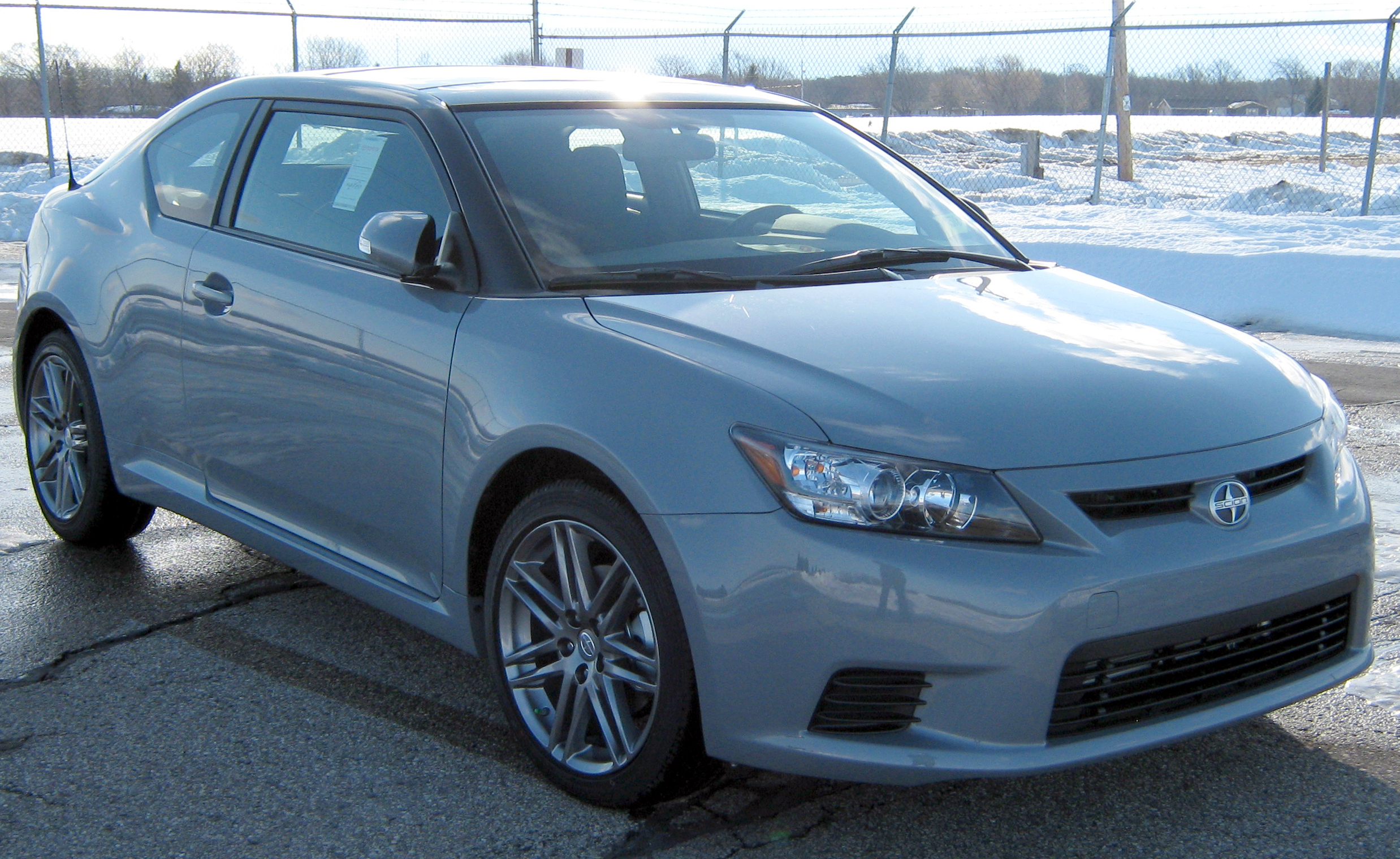
And so my first car was actually a Scion TC
and it was just a daily driver and that I had to take the work every day
but I saw it as something I could put exhaust on, put an intake on.
And after a few of the projects, I was like,
huh, I can barely get this thing back together in time to get to work
and now if I break it or do something wrong,
I'm completely just out of a car to drive to work every day.
So you're learning that project cars and daily drivers don't often go hand in hand?
Yes, correct. I learned that from her.
It's sort of a limitation when your project has to start Friday after work
and be complete by Sunday night so you can drive to work again on Monday morning.
Exactly. And so I learned very quick that I probably shouldn't be doing a full turbo kit
and then I will say the other real trigger of me going to the next path
that I'll explain is I saw how much the turbo kit back, you know,
this would have been in 2010 or 2009 somewhere in there
and the turbo kit was like $7,000.
Well, the car after having it for a year or two was only worth that much money
and I was like, well, this doesn't make any sense at all.
It's a bit hard to justify.
It was at the time for the amount I made that just, it didn't make any sense.
And so...
However, I would say when has that ever stopped people from modifying cars?
The financial common sense is not generally the main driver
behind why we do the things that we do.
This is true and I know it very well
but I just saw it as like, you know, front-wheel drive car.
You know, it already had issues with the clutch and the transmission
which obviously was probably mainly for me learning how to do...
It was my first stick shift.
So, you know, all of these things together, I just felt like, all right,
well, I should just have a car that gets me from point A to point B
and then I'm going to spend who knows how much money
on whatever I can afford on the next project.
And I looked at, at the time, Mark 4 Supras were $1920K.
You can pick up a six-speed, you know, that's like...
Simpler times.
That's how much they were at the time
and I could pick up a 300ZX for, you know, $12,000
or any of the numerous amount of cars that people pay way too much money for.
Nowadays, they were pretty affordable when I was looking.
And at the end of the day, my budget was $9,000
and I actually picked up a FDR7, a red one,
touring with leather interior for $9,000.
That is, that is an insane deal.
Those cars these days, I mean, I don't know what you'd be paying for them
in the US, but I mean, here a tidy FDR7
in standard condition would probably be sort of
around about $80,000 New Zealand dollars,
maybe if you could find one.
They're pretty rare on the ground even at that price point.
Right.
And so, it didn't even get to test drive it.
It was actually technically not drivable
only because the gentleman was an older guy
and over the winter, he had, it had cracked the radiator
and he went to go check on it and slipped and fell
and actually broke his arm.
And so he couldn't fix it.
And I just took his, you know, I didn't really,
as crazy as the sound,
I didn't care if the car didn't run at the time
when I was buying it.
I just wanted to have it to work on it.
And so, thankfully though,
this is not the advice that I would give my future customers
at all about is I just fixed what I thought was what he told
me was wrong with it and started driving it.
And it had a power FC and I actually, all I had to do
is change out the radiator, which he gave me.
And then I also, he had a front mount, not front mount,
but the FMIC intercooler,
which is a slightly better upgrade from the factory one.
And I just did what I could and my means were PVC piping
for intercooler piping and just,
it got me through the entire summer.
I got to have so much fun with my friends
and it was, it actually worked fantastic for all summer long.
I think it's probably fair to say that
that's the deal of the century
and that's almost never how cheap used rotary deals go.
I'm interested though, getting into this,
were you sort of determined that you wanted a rotary engine
because they come let's say with some general reliability headaches,
they're not exactly known for being the most reliable vehicles
on the planet, so did you know what you were getting yourself in for?
Was the rotary on the top of your wish list
or is this just the first project that sort of ticked
all the boxes that you tripped over?
I'm gonna have to say ignorance is bliss
because I had no clue what I bought
and neither did my friends
and I honestly was just looking at cars
and I had originally, like I said,
I looked at a Mark IV Supras,
I thought maybe I could maybe scrounge up enough money to get that
but it's what came into my hands first
and I may be a little bit more of an impulse person
and that perspective and I just, I bought it
and it didn't matter what it was,
it didn't matter if it could have had anything in it
and I would have bought it at the time
and it just looked cool and I wanted it.
So there was no analytical decisions,
there was no looking back at it,
like is this was something that I should do?
This was just, yep, that looks cool, I'm gonna buy it.
You're very fortunate that it's worked out.
Alright, it's come with a Power FC
which already has a bit of a leg up in terms of tuneability.
Obviously with those FDRX7s with the sequential turbo,
twin turbo setup, you're quite limited in terms of ECU
or aftermarket ECU support until you decide to ditch the twins
and go with a single.
Power FC is probably one of the few options there.
Is this sort of a segue into you starting to learn how to tune
and it sounds like at this point in your sort of adventures
with cars you've been entirely self-taught?
That's correct, yes, completely self-taught in that regards.
Obviously I have, until recently I've always been a question asker,
I'm not afraid to ask questions,
I don't care if I look stupid,
it's just to me even if I ask a question
that is someone would deem dumb or stupid
or any of those type of things,
I simply just use those responses
and ideally I get let's say 5, 10 of them
and usually out of those you kind of have to decide
what's face value,
what's actually someone giving you the correct advice
and that's kind of a lot of what as we talk through today
I think you're going to realize that's how I continue to still do things
just in different ways.
And so with that being said,
I didn't really play with the Power FC as much
other than I had the commander
and I knew that if I adjusted my idle
I had to recalibrate the TPS.
You know, when I say recalibrate the TPS
I don't mean doing it in the software.
I mean, literally moving the TPS with a multimeter
until it's actually where it's supposed to be
so that the idle doesn't hunt and things like that
which at the end of the day
I find that path
allowed me to get a lot more of the basics of things
be familiar with the basic things
than just trying to go right towards the meat and potatoes
if that makes any sense.
Yep, yep, it does.
I actually think that that particular setup
lasted about a full summer.
So I got I think I bought it in the spring
and I did all these stuff and I drove it all summer long
and I think it would have been probably around October
or maybe slightly more into September,
you know late September, October
the rear charge pipe broke on the twin turbos
and I actually pretty much put the car away for the winter
because I was like, I don't know how to fix this.
My friends didn't know how to fix this
and I didn't really super have very many resources
other than you know, going on the forums
and asking questions
and I kind of had a decision to make
and at the time my friends
they had mostly Honda Civics.
I think that's all they had.
Civics and Tigras, they were a Honda group
and it was a relatively small town
and they're all just like, you know
why don't you get a 1J or why don't you know
because they've seen 1J swapped R7s.
I started looking into that, seeing how much money
I would have to spend to do it
and obviously I was still working at a telephone company.
I started working at a telephone company when I was 19.
So I would have been around 22, 23 around this age
when I had this R7.
So at this point, did you actually know
what the issue with the engine
was, this broken charge pipe
or to the best of your knowledge
maybe the entire engine was just toast.
I knew the engine was good
but I just didn't know what was wrong
and that was like I said, completely ignorant.
I mean, not gonna beat around the bush.
I just didn't know what I was doing.
No, it just seems like a very extreme
sort of path to take
even contemplating an engine swap.
It's a hell of a lot of money
and a hell of a lot of work
that obviously in the case of a broken charge pipe
is absolutely not necessary.
But also, no disrespect, obviously you're young,
you're finding your way, you're learning the whole time.
So we don't come into this knowing everything.
Obviously no one does.
Right, and so I posted up the engine up for sale
on Craigslist
and I think I was asking at the time
like $2,800 for the entire engine
that twin turbo kit,
essentially everything related to the engine.
I had a couple calls, no real things
and then all of a sudden one day a guy calls me up
and he's like, I'm really interested in buying your motor.
I also have an RX7.
You know, it just seems like it's a good deal,
honestly too good of a deal,
but just why are you getting rid of it?
And I was like, well, this broke
and I honestly just don't have any resources.
You know, I don't have any learning resources
and I really want to just have a running car
and he's like, you can't sell it.
No, that's not a reason to sell it.
You can't sell it.
I mean, he's right.
I know.
And this individual I'll say his name is Ryan Yost
and actually we're still really good friends to this day
and I still call him my Craigslist friend.
And so what he had said is Elliott
from Turblown, Turbosource just moved into Minnesota
and he's a rotary guy and works on rotaries
and he seems like a good resource.
Maybe you should reach out to him
at that moment of reaching out to Elliott.
Elliott kind of went through everything with me
and he actually set me down this path
of doing a single turbo R7 rotary 13B
and he sold me all of the essentially I told him
I was like, he's like, Elliott,
I am going to work my ass off
but I can't afford to buy this full conversion kit
all at once.
I got to buy it in chunks, you know, turbo manifold
and the turbo and so on and so forth.
And he's like, you know what?
That's perfectly fine.
And he actually, I don't know what it was
or how we spoke, but he was like, you know,
if you just want to like keep the car here
and come and work on it at my shop from time to time,
I'll help you do that.
And so at that point in time, I started buying parts
and you know, it'd be like I bought a manifold from Elliott.
I bought a TDX 61, which is like a Garrett.
It's like a 58 millimeter turbo
with like a 61 millimeter hot side or something.
I don't remember exactly what it is, but.
Just to get a sense of this, we're still talking
this is around 2010, is that about right?
Yeah, yep, correct, yep.
And also I'd note here, we actually should get Elliott
on the podcast, we ended up talking to him many years ago
and we're running one of his turbo kits on our FDRX7
and yeah, the product he makes is absolutely top notch.
Can't say enough good things about that turbo kit.
Yeah, and not taking any credit away from Elliott,
but we, him and I together, we helped.
I mean, I essentially helped him develop some
of those parts through just a modulation of our ideas
and you know, I was there when we did the first cast manifold
and essentially created the, you know, different parts
of the kit and or refined it to go from, you know,
handmade lines to have a manufacturer locally make us
a batch of that type of stuff.
That was a lot of the things that I did.
But anyways, to go back to what I was saying is
the next engine management system Elliott actually set me
up with was actually HellTank.
I believe it was a Sport 1000.
I wired up the whole car myself just by reading diagrams
and I'd never done any of that before just asking Elliott,
how can I do this?
And I just did it.
I used my own resources on the internet
and now I could never get that first harness to work.
We could not get the car to start on the Sport 1000
and I kind of went, I don't know how long of a timeframe
it was.
It might have been like a half a summer or something a little
bit longer than you'd like, but not a crazy amount of time.
And at that point in time, Elliott was actually talking
with Adeptronic Andy Wyatt, who is the older was the owner
of Adeptronic engine management systems.
And Elliott's like, here, how about this?
I just got this select 440 ECU with a flying lead.
Why don't I just buy or trade you your HellTank Sport 1000
with the loom for this Adeptronic?
And then you work with Andy to wire up the car.
And so at that point in time, I had actually gotten that
and it was right around where I had about a week or two
of paid vacation with where I was working.
And I always have this memory because at the time
I was, I drank alcohol, I drank beer and I thought
it would be fun to buy a couple cases of beer and take the week
off and at my mom's house where the car was and sit in her
basement and build this wiring harness.
And I will never forget her going, are you okay?
Because you've got this beer and you're just sitting
in the basement.
Like I don't really know what you're doing.
And I'm like, mom, I'm perfectly fine.
I'm just having a good time building this harness.
And this is what I want to do.
Proving yet again that there is nothing that we can't
achieve with a bit of time in a case of beer.
Exactly, exactly.
And so I built that harness during my vacation
and I don't know if it was that week or it was at least
the very following week.
Me and my friends put the last touches on the car
and actually with some remote help from Andy,
I got the car started.
It never ran before.
That was the first time it ever ran
and was with Andy's help.
Do you know where the sort of problem was
with that first harness?
I mean, I'm guessing that the issue wasn't in the
Haltech Sport 1000.
I'm guessing it must have been a harness related issue.
So do you have an idea of what you did differently
or where the problems lay?
I actually really think it was more of a combination of both.
Even though Elliott had done a couple of Haltechs,
I don't think he actually had set them up at the time.
And I think that both of us were, you know,
novice enough that we just didn't really know
what we were doing.
And I think the support structure,
whether I just didn't know where to reach out
to support at the time, I'm sure there was support.
It just, it didn't click.
So I'm not sure that necessarily,
I'm sure there was some wiring problems, 100%.
But it could have just been a simple configuration error.
Maybe your trigger setup wasn't correct
for the 13B engine.
So hence it's never going to start up.
Correct, correct.
And so we never actually figured that out.
I never knew what happened with that harness,
never got any information on that.
It would have been nice to kind of know.
So that was like my first successful ECU install
was on my own car, my own harness.
And through doing that, you know, Elliott tuned the car
and I had some great success.
I had, I don't know if it was on the TDX kit,
but I had done a couple,
it was right around when PowerCruise came to the US here.
And I know you're familiar with PowerCruise.
It's an Australian based, originally based event.
Well, it came to America, it came to the track
that's local to me.
And I had kind of had the bug at that point in time.
So I was working 60, 80 hours a week to pay for this
RX7, I would call addiction.
And I'll just say my wage at the time was I think like 35,000.
I grossed for the year 60
because that's how much overtime I worked
in order to pay for that stuff.
And I didn't have a girlfriend, didn't have a family,
just a single guy that all he did was spend all his money
on his RX7 and a case of beer of a time or two.
And so through that time, Elliott had stumbled on the EFR
and he's like, Hey, Sean, I want you to try this EFR turbo.
I don't know how it's going to work.
And like, he's like, I also got this, this
because it's internally waste gated.
I've got this new manifold I want you to try.
And it was his original,
I'm pretty sure I had the first one running
of his shorty manifold design in the welded version,
one of the first.
And we went to the dyno the first day
and he did the first pull
and it was like a half pull, 4,000 ish RPMs
and he looked up and he just his jaw dropped
because it made like 26 or 27 pounds of boost
at like 3,200, 3,500 RPMs
and he was like, I've never seen this ever before
and it was just like, that's where a lot of Elliott's success
was is that from that dyno graph of my car
and then I went to power crews that year
and literally walked 6,700 horsepower like a GTR
like it was like 600 horsepower GTR in my RX7
bus links on it
and multitude other cars that made more horsepower
than the FD, but obviously FD was light.
This thing spooled super fast
and I made a whole video on that
and that's through doing that video
and doing all the stuff that I did.
You know, I had forum posts.
I had a whole forum build on RX7 Club and everything
that essentially Elliott was like, hey,
do you want to work for me?
And I was like, yeah, that sounds awesome.
I was burnt out at the telephone company.
He asked me but then hire me for another year and a half.
I think there's something like that.
So what were you doing for Elliott at this point?
Is this mechanical?
Are you moving into tuning at this point?
Yeah, so when I started working for Elliott,
transitioning from the telephone company,
I was just essentially his shop guy
that does whatever he tells me to do.
I'm pretty sure my initial memories were
taking a motor that he had disassembled
and cleaning it with gasoline at the time.
Like I was just the shop dude
like doing the things that he asked me to do
and then obviously helping individuals
with their Adoptronic ECUs.
And I had, you know, at the beginning,
we just simply, Elliott did all the tuning
at the very beginning and then like kind of,
let's say two or three years afterwards,
I started like setting up the cars for Elliott,
getting them ready, getting them so they idle
and all this type of stuff,
just doing all the things that take the most time.
I ended up doing all of that stuff.
Elliott would always do the final tune.
We'd get the car prepped to make sure everything's ready
and then he'd go do the final tune.
Now, going through this process,
and this is the same process that I saw
that a lot of tuners did
because I had my friends take their cars
to different tuners, it wasn't just an Elliott thing
where you brought your car to the dyno,
you paid for the day
and if you got to the dyno
and your car didn't make it through the day,
you paid again.
Like you paid for the next day to rent it.
And seeing that happen over and over and over again
through my friends,
through our own customers at the time,
I was like, I don't like this model.
Like I didn't like it.
It didn't sit well with me.
And so as this time progressed,
I started doing a lot more tuning.
Elliott actually started doing some remote tuning
and what I found
or what I saw from a worker standpoint
is that there just wasn't enough time
for him to do his turbo kit stuff,
fabricating and do actually handhold individuals
from their remote tuning.
And so I actually...
Fierce, just a bit, put too much going on
to be able to do justice
to all of those parts of the business.
Yep. And so as time grew on,
I started doing more and more of the remote tuning
for Elliott and I really liked doing it
because in my opinion,
it was no different than what I did
for the telephone company.
Most of it was literally just getting the customer
to do the certain procedures
to get their internet to work
was the same like overall concept
as getting their car to run.
Obviously different bits,
but the structure of accomplishing that
was exactly the same.
If you're a fan of the podcast
and you're interested in topics like engine tuning,
automotive wiring, performance engine building,
3D modeling in CAD
or anything else in the high performance industry,
I have something that you might be interested in.
Introducing the High Performance Academy VIP Package.
This package of courses gives you lifetime access
to all of HPA's online training for one price.
These courses cover everything
from tuning and reflashing, petrol and diesel engines
through to motorsport wiring, engine building,
fabrication, design, car setup and plenty more.
Right now, you can get $500 off
the High Performance Academy's VIP Package
using the code podcast500 at checkout.
Becoming a VIP means you'll never pay for another course again.
You'll get instant access to all 40 plus courses
we currently offer plus every new course
we ever release in the future.
Want to define maps or tune with WinOLS?
Curious about Canbus devices?
Or how CAD can help make your dream build a reality?
These in-depth topics as well as many others
each have their own dedicated course
and they're going to help you master
whatever it is you want to learn.
And as a VIP member, you're not just getting the courses,
you'll also join HPA's online community
with lifetime access to our member forums
and member's webinar lessons.
Again, the code is podcast500 for that $500 discount.
Just head over to hpacademy.com
to check out the full VIP package
and everything it contains.
Alright, let's get back to the episode.
Are you sort of saying here that you'd have customers remote
and they're struggling to get their car running
so it's a process of going through from start to finish
with the configuration to set up the sensors
making sure that everything's configured correctly
and once that's done in theory then the engine will run?
Precisely, exactly.
And it was just keeping those,
I guess some people might not think it basic
but it is very, very basic things that need to happen
in order for the engine to run.
And as long as you are able to be walked through that process
effectively, I would say nine times out of 10,
the car is going to start
unless there's some sort of mechanical problem
or, you know, sensor, that type of stuff.
Usually that is the problem,
that is the reason why it won't start, I should say.
I guess there's a big difference though
between that sort of hand holding and remote work
to actually get the car configured there
so you can figure it in the engine running for the first time.
That's quite different to actual full tune
where we're doing wide open throttle, full power tuning remotely.
So you're doing that sort of work alongside
or is it just at this stage sort of configuration
and getting the engine running?
In the beginning of the remote tuning
a lot of it was just getting it running.
Like let's say I helped dealers,
I helped all sorts of walks of life of individuals
most of the time just get the car started,
get the base map running
and so that they could bring it to the tuner.
Now over time that did evolve into doing full tunes
and there are trials and tribulations to that.
You know, me at the time,
I wasn't a business partner of Elliott,
I was just an employee doing what was being told by an employee
from their employer.
And so a lot of it was,
there was a lot of learning experience for me
and obviously there was mentoring and things like that
but a lot of it was just here you go, get the job done.
You've seen me do it many times.
Here's my base map, you know, have at it.
And you know, I would say maybe that first year
of actually doing full remote tunes
I was actually having a lot of success
a lot more success than failure.
Was there failures, 100% there was.
And I guess the way it worked out is that it was never like
I never saw it as a failure of where necessarily
I did something wrong or something like that
there was more of like, you know, feel pressure dropped
or things problems that happened, you know what I mean?
Like that some individuals say,
well, this is the reason why remote tuning doesn't work
XYZ but it continued to grow.
And so segueing to that
so we're talking about the jobs that I've had
we're talking telephone company working for Elliott
tuned by Sean.
Yeah, it's quite a fast progression.
So, so I worked for Elliott for about five years
and I was at my point in my life.
I had pressure for my girlfriend at the time
pressure for my friends like, hey, you need to make more
money and Elliott way at the time was like
I can't pay you more money.
And we kind of we're still we're friends.
We're not arguing, you know, I
a lot of the world perceived me as
and this is just the feedback that I've gotten over the over
the many years is that they thought I was like part owner
of Elliott's business and it was like
because I was the face of the business for a while
and it was like, no, I was just an employee
doing what I was told to do
and at first suggested to Elliott because I
my roommate at the time
that was living with me and my girlfriend
he did websites
and so Elliott needed a new website.
It was horrible at the time
and so me and my roommate
we built Elliott's website and then
Adoptronic needed a website.
Me and my roommate built Adoptronics website
and so through that I was like, all right,
I already know how to build a website.
I like doing the remote tuning
and I was like, hey, like can I like sell ECs on the side?
He's like, no, I don't really feel comfortable about that
at the time and then like two or three months later
he went by and he's like, you know what?
If you want to start your own business
and do your own thing, I'm okay with you to do that.
And I go, oh, wow, you know, this is like
kind of, I would say it was probably mid-summer
in would have been 2017.
Yeah, mid-summer 2018, sorry, 2018.
So I was like, well, Elliott, okay, this is
this is good because I get, you know, the opportunity to
I see what you do for yourself
and I want to do the same thing.
I want to build my own business, make my own money.
You know, I hated working for the telephone company
because of the corporate structure.
I was like, so with that being said, Elliott,
I don't have a website right now.
I don't really have a way to get customers.
And I was like, would you do this for me?
Would you pay me the same amount of money
you're paying me right now?
But I only work for four hours a day
and the other four hours a day, I build my website
and he's like, sure, I'll do that for you, Sean.
Wow.
Yeah, yeah.
That's very generous.
Yes, yes, yes.
And so I literally went balls to the walls
and built my own website at the time,
a little bit with my roommate helping me at the time.
But it was towards the taper end of my, you know,
at that particular friendship.
I bought my business license or whatever, you know,
it was like December or November of 2018.
And so that summer, essentially that winter
is my official start date of Toon by Sean
was January 1st of 2019.
Is this sort of a case though?
I mean, I get the importance of having a website
for a business.
Yep, sure, you need some visibility there.
But also, I mean, you put a website up
and generally the phone doesn't start ringing five minutes
later.
There's all sorts of procedures around marketing
that website, driving traffic to it,
getting your name out there.
I am assuming that through the five years
you've worked for Elliott,
and I'm guessing towards the latter end of that
is when you're doing the majority of this remote shooting.
You're starting to build up your own name
and your own reputation.
So where's the work coming from,
that reputation that you've built
through working for Elliott
or this website's just sort of knocked it out
of the park on day one?
It was 100% through Elliott.
So I still managed Elliott's website
for a little bit after that.
We set up agreement
where on his website,
the remote tuning link that was at the top
linked directly to my website.
Okay.
Yep, and so yes,
it may be some competition with Adoptronic
because I had Adoptronic on the website.
He had Adoptronic on the website,
but he was the North American distributor.
You know, I ate, he ate and he ate,
you know, at the time.
And so we all worked together
in selling Adoptronic ECUs
and tuning them.
At this point, if Elliott as well,
just to get a little down the weeds with this,
if Elliott's the North American distributor,
does that mean that for you to sell Adoptronic,
you are purchasing from Elliott anyway?
Correct, exactly.
Okay, so basically,
no skin off his nose either way.
Maybe he's not making the same cut,
but he's still clipping the ticket on the way through.
Exactly, 100% and I still sold his turbo kits.
I still, it was just like,
it was like I was a dealer of him
at that point in time,
which we already had a dealer network set up.
And so that's kind of where my name continued to grow
is through Adoptronic.
And Nathan had showed up to Elliott's house.
And I think at that point in time,
that's where we were told that Adoptronic
was getting purchased by Helltech.
So Nathan Clark, the president of Helltech.
And so we all knew that they were buying it.
And I think about a year and a half
or two years went by
where I was selling just Adoptronic
and I went to a PRI
and I was like, hey, Nathan,
I'm still killing it on selling Adoptronic ECUs.
He knew that we were selling a lot of them
because we were essentially buying them
through Helltech, not Adoptronic,
because Helltech owned Adoptronic.
And I was just like, hey, Nathan,
I have to ask you this,
are you planning on canceling the brand at some point?
Because this is my livelihood
and this is what I need to know.
And he's like, eventually we are going to do that.
Yeah, I think that the writing was pretty much on the wall.
I think for most people could sort of see
that that was the way things were going to go.
For better or worse,
I know there's a lot of Adoptronic fans around the world
that were pretty disappointed.
I mean, having known Andy White,
the founder and owner of Adoptronic
for probably upwards of 10 years now,
I class him as one of the smartest guys
I know in the aftermarket ECU world.
And I sort of saw that under the Adoptronic brand,
we used one of those in our FDRX7 to start with,
actually because of Elliott.
And the ECU I found was really close to being a great thing.
But I think Adoptronic, as it was under Andy's stewardship,
was probably a little bit under resourced
to be doing what he was trying to do.
So I sort of saw there was going to be a lot of synergy
with the Adoptronic technology
that Andy had developed,
bringing that under the Haltech banner
I think was going to definitely lift Haltech up.
But I could kind of see it was probably going to come
at the expense of Adoptronic sort of dropping away,
which is exactly what did happen.
Yeah, and it's a little bit of a tidbit about Andy
that I, you know, because I'd gone to a couple peer eyes.
I actually had designed or essentially facilitated the design
of one of the bigger booths that we did at Adoptronic
when Elliott was more involved.
And at peer eye, there was one with the V12 engine,
Rob Dom's car, and I think Aaron Parker's one.
My buddy where he worked did all the graphics for all of that.
Anyways, a funny story is like Andy was always really big
on being like, oh, you should have a college degree
and like all of these things.
And I was like, Andy is like, I think college degrees
are great, but I don't have one.
I feel like I can learn and in most, you know,
essentially immerse myself with what I'm doing
and still be very good at my craft.
And it was just an argument that we had.
It wasn't like a bad argument.
It was more of like a discussion among peers.
And at the time, like when we're all at peer,
I'd having some drinks and eating food or whatever,
you know, and so I remember that discussion with him
and I guess I always appreciate Andy's kudos
and you know, his information that he provides to me.
He doesn't treat me any different than anyone else.
It's just over the years, you know, I sold his product.
You know what I mean?
I helped him grow his business as well as any other person
and he's always, you know, showing me respect
and I show him respect, you know,
and it was, it's been a great relationship.
And so anyways, to go back to a little bit
about Adeptronic and Haltech.
So when I was doing the transition from going
from Adeptronic to Haltech, there was many swear words
said when connecting to a Haltech ECU and waiting.
Ah yes, waiting minutes.
Minutes to start tuning.
I was very vocal about my dislike for the connection time
and I think actually that was one of the first things
Andy worked on and to his credit, he resolved.
I come from a very unique position where at HPA
we are brand agnostic and we utilise as many
of the popular brands as we can basically get our hands on.
And I think that gives me a fairly unique experience
in that most professional tuners will align themselves with
one, two, maybe three brands of ECU that they use,
Sal and Choon.
And that gives them quite a narrow focus
so I get to see the broad range.
And you know, every brand is fair to say
has some features that you look at and you go
hey this is pure genius, why isn't everyone else doing that?
I would say Adeptronic's staged injection is a perfect example
of that, just set up your injector characterisation
and forget about it, the ECU does everything
in the background and it's just flawless.
But then they'll have something else and you're like,
this makes absolutely no sense as anyone actually ever used
this feature because it's garbage.
And again, you can say this across all of the different
brands and you get to Haltech in that connection time.
As a professional tuner, if I'm tuning 5-10 cars a week
that would just do my head in.
It definitely did.
I don't know how it went that long
and without people just absolutely knocking down
their door in anger.
And yeah, so it definitely was just that.
It was anger, lots of anger.
And being like, how can you sit here?
And then you would disconnect or however reason
they have to wait again.
And it was a learning curve.
But so I like to say that I got into Haltech at the best time.
So I got into Haltech right at the right time.
So right when Andy got in there, I was obviously still
tuning both platforms.
And at the time, one of my mentors, Phil Son, and I credit
a lot of him guiding me through a lot of hard times
in my life through business and just helping me.
He's always kind of been just a mentor for me.
And he was like, Sean, I really think you need to just be
the Haltech guy.
Just stop doing Atatronic.
Get away from that.
Don't do any other ECU management systems.
Because my friends would throw anything in front of my face
when I first started my business.
The first two years or whatever it was.
I tried Link.
I tried ECU Masters.
I tried Holley.
And what I kept finding myself run into is I didn't have
that hand holding that I had with Atatronic and Haltech.
The tech support essentially is what you're talking about here.
Someone you could just pick up the phone or flick an email to
and you're getting instant feedback and answers to your questions.
Yup.
Andy with Mark at his team and all the individuals at the
Atatronic team and then as that transition to Haltech,
even at the same sense, I could call up to Haltech Australia
and that's what I did most of the time
because I was more familiar with those guys anyways
to answer all my questions.
And so I kept running into the situations
where I was trying to either do a Link the Atatronic way
or Link the Haltech way or Holley in the same formats.
And I kept struggling with a efficiency.
I felt my efficiency was just out the wall
and or when I ran into problems.
I didn't know how to fix them.
I couldn't fix them.
I couldn't figure it out.
I didn't have the resources to figure them out.
And so I just kept gravitating back to what I knew best.
I think there's definitely something to be said for that
and one sort of story I've said before, but I'll just repeat it.
If someone back when I was running my old tuning shop
where we basically specialized in Link.
New Zealand made brand and made sense.
I knew the product very well.
We did some MoTeC for our high end stuff
and that was probably the main issues we dealt with.
So of course I knew both of those products
like the back of my hand, just like you do with Atatronic
and now with Haltech.
If someone had bought me the best ECU in the world,
maybe a Bosch Motorsport ECU with $20,000 or something like that
to put in their XYZ car, I wouldn't have known where to start
and I'd guarantee that I would have got them a better result
on an ECU that would be a 10th of the price, a Link or a MoTeC
because I knew the ECU insider now, I knew all of its little quirks,
I knew how to set it up quickly and I'd just be able to get a better result
instead of trying to learn from scratch on this $MEC ECU
that no doubt is more powerful, more capable,
but if I don't know how to use it, then I'm not going to be able to leverage
all of those features and chances are the car's just not going to run as well.
So I think narrowing your focus down to one or maybe two or three brands of ECU
does make a lot of sense on that front.
Couple of other things I'll just add in here, generally,
and maybe you're in a unique position with the remote tuning
and that gives you access to essentially, I'm guessing,
we'll talk about it more, the entire world.
So you can draw from a customer base that is solely going to be
your brand of choice, Haltech in this case.
As a shop owner, where I was doing in person tuning
and particularly in New Zealand, the town, the city that I lived in
was about half a million people living in it, so it's not a big city.
If you wanted to try and only do one brand of ECU,
it was going to be probably difficult to make a living.
So what we sort of found, and I think this probably goes for most tuning shops,
you'd sort of have a couple of different ECUs that you used
that allowed you to still know them intimately inside and out
and you'd sort of have an ECU for two different price points.
Your entry level, sort of weekend warrior, club level race car
and maybe that was Link, for someone who's building something
with a much higher budget and they wanted the best of the best,
we were selling them in a MoTeC ECU, so that sort of covered our bases like that.
The other aspect with this is tech support,
which I think you've sort of already highlighted is so important.
I think one of the things we say at HPA is if you're looking for an ECU
for your own project, A, if you're taking our courses,
it would make sense obviously if you're using an ECU that we use in our worked examples
because then you can get first hand experience of how it's dealt with
but secondly you are always going to have questions.
Something will not work how you expect and it's just so helpful
if you can pick up the phone.
Ideally if you can pick up a phone and get tech support in your own time zone
but being able to pick up the phone and actually talk to someone,
go through that problem there and then, it just saves you so much time.
So it sounds like you found that Haltech did an extremely good job with that tech support?
110%.
So I would say in the beginning when I was just kind of doing both
and I didn't really have a guy at Haltech.
I was just calling randomly into tech support, this, that and that
and then I'd say maybe a year or so after Andy was there
at this point structure of who was important to talk to like for me
I already was talking with upper management at Haltech.
I knew them better than the US employees did at Haltech
only because that's who I talked to and so it was like he was just like
Nathan's like here, you know, you need to you can't be asking Andy questions.
You can't be most people don't get access to Andy
sort of you go through the actual correct channels.
Right.
And he was just like I really need you to all right, Nathan, that's fine.
I can do that.
But who is the person that I can have as my person?
And that's actually where Nick Koalic.
He is a Haltech tech support guy, extremely smart individual
and he has been, you know, my go to guy for many years.
You know, if I get stuck on something or even right now.
I mean, if I do this every single day and there's times I get stuck
or I might do the same thing 10 times and the 11th time that all 10
other cars at work, but this one doesn't and I'm just like, what do I,
you know, what went wrong here?
You know what I mean?
And a lot of times it comes down to something that's completely stupid.
You know, completely just not relevant.
Every once in a while, either find a glitch.
I'll find something that they hadn't reported yet or what's
even more lovely is sometimes there's a glitch that's known
that just not everyone knows about and they're like, yeah,
that'll be fixed here.
Go down one firmware and because I actually personally,
I update the firmware every single time.
I am a firmware surfer, as you would call it.
If the new firmware is out, I always jump to that newest one
and, you know, obviously work through any issues that might be there.
And then obviously with my structure, I can let customers know
be like, hey, you know, that firmware is not good anymore.
Like we need to get this updated ASAP, don't drive your car anymore,
that type of stuff, you know, and that happens from time to time.
Yeah, I think actually that's a point that is often overlooked.
The firmware updates that every ECU manufacturer comes out with
and it can be very easy for the average enthusiast.
You know, they install an ECU, maybe take it to a turn
to get their car tuned and obviously they're not thinking
about firmware updates from there.
But as you mentioned, there can often be some quite serious
and potentially engine destroying bugs in some firmware.
Obviously very rare, but it does happen.
And when these things are highlighted, maybe it's a very unusual set
of circumstances that have to go down in order to bring this bug to light.
And hey, maybe that could damage your engine at worst.
So it's always a good idea when these things are brought to light.
Obviously firmware update will occur.
It's a good idea to make sure that you're staying on top of the latest firmware
so that you don't end up suffering the consequences.
I'd say the flip side of this in most ECU manufacturers
sort of specify this when you go and do a firmware update.
That's the usual story.
Don't do a firmware update the day before a race meeting
or something of that nature.
You know, there can be some unintended consequences
that you're going to have to work through as well.
So allow a bit of time, I guess, to make sure that everything's
working as expected.
Often these firmware updates will also require you to actually
reconfigure some things because, you know, the structure,
the way things are done often changes.
Yep.
And that's kind of where being a specialist I found, you know,
to talk a little bit on to being a specialist is that's a good segue
into that is me always updating the firmware,
always being on the latest and greatest stuff,
understanding the aspects of the features and what's going on.
I'm at the forefront of those things coming out.
And I've seen this countless times, tuners that are amazing,
like no, like, you know, essentially I bow down to them.
You know what I mean?
Like they know more.
I will admit that 110%.
But I'll get the car and I'll fix the problem simply because
they didn't get there.
The last time they touched the Haltech was eight years ago
and it's just they don't get to touch it as often as I get
to do.
And that's I find that being very powerful and it allows me
to, I guess, have an edge over a lot of individuals is
because I'm getting that opportunity.
I'm on the forefront of what's happening on a daily basis.
It isn't like I I touch anywhere between three and six cars a
day, whether it be some days, I'll have I'll start at seven
o'clock in the morning and I'll work till 10 o'clock at
night and I will do a different car every hour of the day.
So you're getting getting more runs on the board than most
people.
Yes, 100%.
And so it's a lot of that and it's a lot of even like my
customers have the ability to do follow-ups and it isn't just
like a you come in and so this kind of segues into where I
was talking about earlier about how the business model
of bringing your car to the dyno pay once it doesn't
work out.
You got to pay again doesn't work out.
You got to pay again type situation that business model
I really didn't like it.
And so that's where team by Sean came in my whole perspective
my whole goal of tuning is to get the car set up first get it
started work out through all the bugs try to make sure the
car is as prepared for the dyno as possible and then go to
the dyno which may it not be perfect it does generally we can
resolve all problems before going to the dyno and my
success rate of being success at the dyno is pretty high
I would say it's probably 90%.
That's that that is rare.
I think I always say that for when I was running my my own
shop and we're tuning cars that were brought to us from
other individuals so you know we didn't have a hand in
this building the car configuring everything wiring
everything and for those sorts of cars the sort of the
home built cars I would say that probably on average
one in five cars would go on the dyno get tuned and leave
and basically nothing went wrong the remaining four out of
those five cars would need some level of diagnostics
and sort of repair work or remedial work in order to get
through the dyno session obviously some of them just
never get through because the problems were too great
so a lot can be said for that process of being thorough
with your configuration making sure that the cars starting
running properly before you ever go near the dyno I think
a lot of people rush that stage are too excited about it
they want to see the power figures so let's go to the
dyno but it just does it seldom works out.
Yep I am the I'm the bearer of self control is is is
what a lot of I am for a lot of people you know I slow
down their thought process of what they want to do with
their car and how they want to you know what their goals
are and what they want to accomplish and not that they
can't accomplish them it's just we have to first crawl
and then we can walk and then we can finally run and
that's kind of where my process is just that the
crawling is getting the engine started for the first
time I would say most of the time I would my success
rate on that probably it's a seventy five percent is I
can get a car started get everything programmed and
the customer is driving their car being able to drive
for two hours within the first hour of of doing the
first tune session and now this isn't boosting this is
just cruising maybe touching into boost kind of just
tickling the different areas of what would be considered
dangerous or where there could be a potential problem
and just getting an understanding of what the car
wants and what it needs so most customers will do their
two-hour drive and then after that time depending on how
the numbers look I actually rely on a lot of long-term
fuel trims that first session that first two-hour
drive I'm not having them do any logs I'm just
having them long-term and then seeing what the
long-term did let's actually let's just start pause
right here so for for the individuals listening who
have absolutely zero familiarity with what the Haltech
I mean probably anyone who's got any involvement at
all in tuning will understand the term long-term
fuel trims but could you just talk to us about
how the the closed-look control and the long-term
trims work in the Haltech architecture?
Yes so the O2 control in the well we're going to
just go from the current firmware, NSP software
they have a short-term and a long-term the short-term
is a instant reaction that you can set up different
parameters whether if you put your push your foot too
fast or you can set different throttle positions that
type of stuff to allow the ECU to target a certain
air-fuel ratio so it's going to raise or lower the
volumetric efficiency number to meet the target
AFR that you've put in the target AFR table and so
short-term is your instant gratification it is the
it's going to try to get there all the time it's going
to move around depending on where you are with the
car and what Haltech allows you to do is to set a
parameter that when the car sits at a certain short-term
fuel trim for X amount of time it will then take
that value and start applying it to a long-term fuel
trim map that is equivalent to actually adjusting
the fuel map so if you turn off your car and turn
it back on again it's going to have that positive
or negative trim in there essentially basically
applied to the main fuel map now it isn't actually
applied you can go in and zero it out if you want
to or you can apply it and a lot of what I do
is I'm interpreting that information by being like
alright why are we way off here or why are we this way
or that way and either being like alright we've got
a problem or everything is going as it's supposed
to be going and that's to me it's a lot of I can't
give you a scientific way of how I look at that
that's not how I tune I just see the stuff so
often that I can be like alright we've got
something that we need to look into here this
is that this is a problem or this is going smoothly
and depending on what I see whether it be you know
let's say one bank is also in one bank is is adding
a ton of fuel and it's always showing lean well
guess what what that means when I say bank it's
usually generally speaking a an engine that has
cylinders on two separate sides of the motor so
like a v6 or a v8 v12 if you have a dead hole
that is going to consequently cause that wideband
to read lean because it's just pump it's an air pump
it's pumping air in and your fuel trims are going
to be very rich on that bank and so I can look at
a short-term fuel trim even when I first start
the car and be like hey I'm pretty sure bank
to has a dead hole can you go and fix that
and I'm right I would say nine out of ten times
and it's either something like a spark plug wire
I've had it where the spark plug isn't tightened
all the way into the engine.
Oh yeah there can be a million things causing this.
I'm interested there just with the remote tuning
versus doing it in person you obviously get some
of your sensors removed in that you can't
physically see and hear the engine running.
Do you see that as a pro or a con?
I guess what I'm saying is there it gives you
maybe sometimes it can be a little bit less
misleading because you're forced to look purely
at the data in front of you I just yeah
interested to see what your thoughts on that are.
So I actually see it as a pro and I'm going to
explain why I see it as a pro and where I've
developed the skills to see it as a pro and
that's not as a pro professional but as a as it's
a good thing and so going back to my telephone
company days I'm going to just give a really
funny story is I was helping a lady set up
her dial-up connection and I would always be
like hover the mouse over this icon and left
click or right click and she says okay I am
hovering my mouse over the icon and I'm right
clicking and I was like alright what do you have
in front of your screen and she goes I got nothing
I don't see anything and I'm just like alright
so we do this like three or four times and I'm
getting frustrated she's getting frustrated and
then finally through her own frustration
she describes it as what she was doing she was
physically picking up the mouse and pointing it
at the icon and then clicking that's not that's
not going to work so what I'm getting at is
that through having those skill sets of of
interpreting putting myself in the shoes of
the individual at the time has allowed me
to tell them what they need to do and what's
happening and so the information that I have
in front of me I'm asking those questions hey
how does the car sound you know do you hear
anything weird you know I'm asking those those
those questions to develop an understanding
of how the customer's experiences and what I've
found is that and this is kind of you're
gonna be like well you wouldn't you know if
you're driving the car that you that you're
gonna make the tune good I disagree with
that because I suck at driving the car and
I don't perceive the things that they see
and I'll get in the car and I think it's fine
I'll hand the keys over to my customer and
they're gonna be like what why did you let
me have the car doing this and I was like
well it never did that for me so there's
a benefit in other words and the customer
driving the car in the exact way that
they're going to drive the car they're
experiencing how it will be when they're
driving it precisely and I've had so much
more success that way by actually having
the customer drive the car and I have a
lot more local customers now that my
you know I have another business that
I'm growing and and I have a lot more
customers which I may add a lot of them
don't understand the remote tuning concept
that I have to then they have the worst
time understanding how it works versus
my actual remote customer base that's
bigger than my local base and so I've
had to like rethink about how I can
describe this to this individual who
wants me to just take their keys and
then hand them a car that runs perfectly
where it's like I really actually need you
to take the keys yourself and I will make
your car run perfectly and so I just see
it differently in that way for that so
how it works for me I guess okay all right
a few things I want to dive into here
so you've talked briefly about the
the long-term fuel trims and I get
that most most ECs these days are going
to at least provide closed-loop fuel
control I don't think I would probably
install or tune one now that didn't
have a built-in or add-on wideband
for that aspect the long-term fuel trims
not every ECU's offering that and I do
like that function for me what I'd
generally do with that is I'll disable
long-term fuel trims while I'm tuning
on the dyno I'm concentrating on using
the O2 control for short-term fuel
trims means that if you're out a little
bit you don't have to instantly catch up
with the keyboard the ECU will do the
heavy lifting for you and then you
can correct on the fly then once
maybe I've got the tune complete
I'll enable the long-term fuel trims
sort of take the car for a drive
you mentioned a couple of hours there
but it could be a couple of weeks
whatever it might be and then have a
look at what trims if any have been
applied and hopefully if you've done
your job properly the long-term
fuel trim table is probably going
to be filled with no more than
maybe plus and minus 2 to maybe
5% at the max I think that would
probably be a sign that everything's
looking pretty good as you mentioned
then you can apply that to the fuel table.
So the first thing here is you've
sort of alluded to getting a sense
of if everything's working okay
by what you're seeing in that
long-term fuel trim table.
Could you give us, you mentioned
the bank-to-bank variation but could
you give us any other red flags
that would sort of immediately be
a bit of an eyebrow raising moment
when you look at that long-term
fuel trim table?
I guess a lot of it comes down to
is massive swings in different
aspects.
So I'll give an example of this
this morning.
We tuned a car for another shop.
It was a CTSV with a piggyback
on a Haltech.
I think it was a Rebel I can't remember
but it doesn't matter and
you know we tuned up the car
when the car is warm,
the shop owner has driven the car
works fantastic.
Calls up the customer,
customer comes and picks up the car
like six hours later starts the car.
You know, they don't wait for the car
to warm up.
They just started up and start
driving and we had done cold starts.
We had done all this type of stuff.
Well, when we start driving bank
one is going deadly bank
two is exactly on target.
And I'm like I go to my the shop
owner is like I can't tune around
that that is a that is a mechanical
problem like if one bank is at 12
and the other one is is at 30
all the trims are exactly where
they're supposed to be.
I can't make a compensation to change
that now that that's that's pointing
to a much bigger issue
than a tuning problem for sure.
Correct.
And so like he's like I agree
and he's like I've changed spark plugs.
I've done plug wires.
I've done coils.
I was like, well,
have you done a leak down test?
I suspect that if you do a leak
down test when it's cold
and you do a leak down test
when it's warm,
you're going to see a vast
difference in how much cylinder
leak by is in that scenario.
And I have.
That was just this morning still
waiting on the results of that one.
So waiting on the result,
but I suspect that we're going to
find something there.
It or it's going to be something
absolutely silly where a connector
on that side is is doesn't make the
connection quite when once it heats
up, it makes the connection right.
It's going to be something silly
is what it's going to be.
But those types of scenarios
come up day in and day out
for me constantly.
I have I have now.
So it's 2019.
So we're we're we're 2025.
So I've been doing this for six years
anywhere between three to 12 times a
day, 12 different cars a day.
And I see this all the time
and I'm not a person to just do
the same thing day in day out.
I'm always thinking about
how to improve myself,
how to better my craft
in my own way.
And it's getting harder,
but I learned from others.
I look at others.
I look to other resources.
You know, I'm actually totally
contemplating just sitting down
one day and taking 10 different
tuning classes just to see
what others do, not necessarily
to because I'll be able to actually
understand to be like,
all right, what they're doing
ain't going to work for me
or I learned something new.
You know, yeah, I think
there's a there's a common
sort of tendency in the
tuning industry for people to
grow a big ego and think
that they know best and then
shut down all sort of
outside resources and
never ask questions
and never talk to other tuners.
And I think that's just such a
dangerous way of going
about business like
none of us know everything.
And I mean, that's still why
I am passionate about the industry
is every time I jump on the dyno
every time I tune a car
almost without fail
there's something new to learn.
So I think, you know,
keeping an open mind
and looking at how others
are doing what they do
can only be a benefit.
Even if you decide, like you said,
oh well that's not going to work for me.
But you know, you've explored
another possibility.
So far we've kind of touched on
fuelling and to be honest
I'd say that's probably
I'd consider the easiest
part of tuning.
When it comes to ignition timing
that gets a little bit more complicated.
We haven't actually talked about
whether you're tuning these cars
remotely on someone else's dyno
or on the road
or is it a combination of both?
Yeah, I'll get into that.
So obviously start off
in the customer's driveway
or at a shop in their
you know in their work area.
We get the car started
do all the things.
I actually start off
with street tuning the car.
That is the first aspect
of getting the car
prepared for the dyno.
I actually on my website
I charge more money
if someone wants to do a street tune only.
And I do that
because it is a lot more work
in my opinion to get it right.
And then it also is dangerous
and in all aspects
you really don't know
if you've done a hundred and ten percent
the right thing.
I've had so many customers
be like this car is amazing
and we go and do the first pull on the dyno
and it looks like a Mount Everest
you know like
it's the worst thing ever
but they said it was awesome
you know what I mean?
So I guess quote unquote
demand of my customers
to do all aspects
to street tune
dyno tune
street tune again
and so
that's kind of how I run my structure
is I start off with street tuning
we get it ready
we get it prepared
we go to the dyno
we finalize the tune
ideally not find anything that's bad
like I said
I'd say about 90% success rate
and then get off the dyno
and whether
the feeling changes a little bit
here and are there
maybe the transient throttles
are having issues
or
it comes and stalls
when you get to the stoplight
because sometimes customers
are very nervous
when they're first driving their car
and they don't allow their car to stall out
they don't allow their car
to do different things
it's such a human thing
that they
they're so hyperactive on their car
and you get done with the dyno
and they're like the stress is gone
they're like
I made it through the hardest part
so they drive the car differently after that
exactly
and so then there's issues that come up
and
and at that point in time
it's all part of the tuning package
so for me
they jump on
we resolve those problems
we get those things taken care of
I think a lot of people
tend to believe that the dyno
is the be all and end all
when it comes to tuning
and yes
it is an amazing tool
however
where possible
I always will confirm the tune
out on the road
or perhaps the racetrack
if the car's not street legal
once we've been on the dyno
because you sort of just mentioned there
that you might find some small differences
in the fueling
you know
it's very difficult to replicate
the air flow and temperatures
on a chassis dyno
that you'll see
out in the real world
at perhaps 60 or 100 miles an hour
hence you can see differences in the fueling
likewise you may find
that a turbocharged engine
the boost control
is rock solid
you could run a ruler through it on the dyno
but you get it out in the real world
and maybe on a transient
maybe on a gear shift
you'll get a big spike in the boost
that you couldn't replicate
or weren't seeing on the dyno
the other one that's really easy to overlook
is that the dyno requires a certain amount of torque
to keep the engine rotating
so when you're trying to tune those very light load areas
the areas you'll be in
maybe when you're just starting to sort of
slow down
to come to a stop
you're just breathing on the throttle
or maybe you're going down a slight hill
you can't get into those very low vacuum areas
of the map on the dyno
but you can on the road
so these are the things that I think separate
sort of average tunes
or maybe even good tunes from excellent ones
their attention to detail of getting into all of those areas
so yeah I applaud you on that approach
it totally makes sense
particularly the straight tune before the dyno
as you mentioned there 90% success rate
you sort of ironing out all these problems
that would quickly cut your dyno session short
if you find out maybe
you've got a coil that's breaking down
once you're under a high load
you can highlight that before you actually get to the dyno
Coming back full circle
just with the ignition side of things
now I've sort of highlighted that you are using the dyno
obviously dialing in the ignition timing on the dyno
is not too strenuous
because you've got that horsepower and torque feedback
knock however can be
well in my opinion is probably the biggest killer
of any performance engine
and particularly if you're tuning on a poor quality pump gas
most likely if it's turbocharged or supercharged
you will probably find the knock threshold
before you reach NBT
when you're tuning the timing
so how are you dealing with this?
I mean I know that the Haltech has a pretty sophisticated
knock control system
but the problem I think with any issue with knock control
is for the knock control system to be functional
and effective
you have to characterize it correctly
and validate that it's working properly
so I'm interested in your approach to that
yeah so I will say first and foremost
like that whole thing
when I first started doing Haltech stuff
I knew I needed it
I got lucky I have a lot of customers that I could just direct
hey go to E85
like it's safe
yeah
that's the route to go
like that's the real solution for knock control
yeah that's the solution
and that's what I did at the first
three four years of my business
was really directing a lot of individuals
to go to ethanol
and that helped my success
vastly
by just
guiding individuals to that path
did I do some pump gas tunes?
yep
and in reality
was there times that maybe perhaps
I had a mistake
or this that and that
possibly
I could never really tell
you know what I mean
now with that being said
I knew I need to get knock control down
and
I struggled with that
figuring out how can I
not have knock ears on my
and actually
accomplish what needs to be done
and so
at first
going through all these things
what happened is
as Haltech actually updated their data log viewer
and
when they updated their data log viewer
that's when
my knock control
started my path
to being successful with knock control
at least the way I see it
has been a success
and so
I use
the Haltech's knock control
and I look at it on different engines
I will look at on a pump gas engine
and then I'll have the same engine
but just in a different car
on ethanol
and it's like
whoa
the engine's so much quieter
like there's no noise at all
it's like the knock sensor isn't even here in anything
and
I mean here's something but like
you can tell the differences between
how it is
and I will say this
it is
it comes down to interpretation
it isn't about
I can't say that there's a scientific way that I do it
that I say can be like
I can tell this person
hey
you do this
you look at it this way
and you will hundred percent not have knock
it's more about
all right
I know that this timing is safe
ultra safe
like I've had enough engines where I can know where
MBT is
on any motor
for the most part
and then I take 10 degrees out or
you know
X amount whatever I feel comfortable about
and I can run it up on the dyno
look at
the frequency
or essentially look at the noise output in the Haltech
Haltech actually has this option where you can filter it
30 to 35 is what I use
I can tell everyone that
personally
and
might not be the end all
but
it allows me to actually
quantifiably see
when the engine is knocking
and not knocking
I can
also there's going to be a valley
a big huge mountain
and I was like
all right that must be where the knock is
what do I got going on here is my
I actually find more often than not
on pump gas is that the mixture is too lean
and that's what's actually causing the knock
not too much timing
and so
I'll go through
reaching up the mixture
all of a sudden
that line where that knock was there
smooths out wasn't there anymore
I think a lot of people
even some professional turns
I don't think maybe get the the link between
if your ratio
and ignition timing
and knock
and
as you mentioned there
if you're a little bit lean
and if your ratio
what that's going to do
is create additional combustion chamber temperature
and that's what really ultimately drives the engine
to knock
I mean granted
no matter what mixture you use
if you keep on piling timing
and at some point you're probably going to
end up with the engine knocking anyway
but
when you're sort of
in the ballpark
and sort of walking that tightrope
sometimes reaching in the mixture
can move you away from knock
sometimes
always experiment and find
you know when I'm at that knock threshold
will I get more power by
reaching it up a couple of points
and maybe that'll allow me to creep in another
one to two degrees of timing
with safety
so
it's not always a you know
a black and white
sort of
this is the air-fuel ratio we must run
and this is the timing
you know
there's some flexibility in there I think as well
I think a lot of
I've excelled at the piston engine tuning
is because I start my
the first car I tuned
was a rotary
everything's easy
when you've come from the rotary world
so
like
I came from the world
or if you make it knock
you might as well just
buy him a new engine
you know what I mean like it's
I've always argued
I do not
see the usefulness of knock control
on rotary engines
because
A. to validate the system
you must make the engine knock
that's not real smart advice
with a rotary engine
and generally
the rotary engine
is a knock monitor
in and of itself
because if you make it knock
the apex seal will exit the chat
110%
or some other level of damage
that you're probably not coming back from
short of an engine rebuild anyway
so yeah
piston engines much more forgiving
yes
and so
I always like when I started off
tuning piston engines
I will say this right now
they were the probably the richest piston engines
you've ever tuned in your
in existence
when I first started
because my concept of
the range of where air-fuel ratio needed to be
was all rotary
and it was just bled into my mind
that that's how you tune an engine
and it took
many years of
I guess I started off being
really safe
in the beginning because
it's just
where I came from
and so
it's just now until the last two years
two three years here
that I've
I've really
had that just like
okay this is where
things are happy
you know some motors might actually be really happy
on the leaner edge of things
or
you take that same air-fuel ratio
same compression but in a different motor
it makes
significantly less power
and it's not happy and it's not safe
and all these other things
and it's a lot of just
experience
interpreting
what makes what I've had been
I've been very fortunate
that I've had a few friends
one friend I will say
that has really helped me
understand piston engines
not through his own experience of tuning
is Gus
Erickson
he's a BMW guy
and
we would try to push a stock M50 motor
as high as we possibly can
like we made
almost 900 horsepower on a stock rod
non-vanos
M50 motor
and
with very big turbo
and
pushing it all the boost well over
you know 5,500 or 5250
and it lived that way for
a couple months
you know
it came out with some
wiggly rods
but
it still ran when we took it apart
that's
that's pretty good
yeah and so
he had this method
at the time
was
we could buy a M50 engine for 500 bucks
take all the bits off of it
sell the head
sell all the bits
and just take the short block
the bottom end
and the motor would be free
and it would just be our time
and we got it down
he was so good at it that
he can get the motor out
and a new one in
in one night
so we would
we've blown the car up
found an engine
swapped it out
and we're tuning that engine again
at 6 o'clock in the morning
the next morning
it's a fast tune around
yes
and so
we did a lot of that stuff
like we've
probably blown up
20 engines
and so
that has
allowed me
to
really grow
and
and and it's
it's
you know
some people will be like well
what was your contribution to him
like you know I've
I bought his first turbo kit
you know
did all the ECU stuff
like
helped him build the car
through my revenue of my business
and so that we've
really grown
in that perspective
and so
I got to give it to him
you know for
being my guinea pig
and I was his guinea
you know we kind of
we were having fun about
everyone knew
what was going on
you know what I mean
and so it was
it was a great experience
for me
and you know the cars that
my other friends that
didn't necessarily
have that type of
gumption
and resources
you know
we did things very carefully
and it was just
a lot of experience
yeah I think
that's
that's a really important aspect
of tuning
particularly when
you're learning
and building up your own experience
how hard you're going to push
how close to the
the edge you want to walk
is really going to come down to
your financial risk profile
if you've got a
a very expensive engine
and you're going to be
really financially put back
if something goes wrong with that engine
understandably
it makes sense to leave
a little bit of
potential on the table
and be a little bit more conservative
with your tune
flip side of that
when I was running my drag program
you know we at the time
had the fastest four wheel drive
Mitsubishi Eva on the world
and when you're trying
to beat the best in the world
you have to push the boundaries
and sometimes you go
beyond the boundaries
but that's a natural progression
and at that point you also
are going into that
with your eyes wide open
you know exactly
what the potential downsides
can be
on that front actually
with the remote tuning
versus
if you are tuning
and you've got the car
on a dyno right in front of you
what would you say there is
a power difference
essentially are you providing
a slightly wider safety margin
with your fueling
and your ignition timing
and maybe your boost
on a remotely tuned vehicle
versus one that you're tuning in person
I would say
there is no difference between the two
okay
interesting
I wholeheartedly feel way more comfortable
being behind the computer
in a remote tune
then driving the car
when I dyno tune the cars
locally here
most of the time
I have someone else drive the car
and I just focus on the keyboard
and so
even when I'm in the car
I'm not even driving the car
and
I'm not saying I take risks
necessarily
these are
my whole tuning
portfolio and everything
you know I have
hundreds of different tunes
for hundreds of different engines
that are all of successful engines
and so
every engine builds on its success
of each other engine
so as I am successful
of other engines
I continue that categorization
of tuning
to every car
and so
yes there's compression ratios that change
and there's fueling that's changed
and those are all different aspects
that are documented
between different things
but
it becomes this
understanding
of
hey
I have this car that's super successful
it's doing great
raced many seasons
I take that same tune
and I apply it to others
and that's
it's a building a portfolio
of knowledge
and
that is where I find that my efficiency
has greatly increased
over the years
is because
I'm not reinventing the wheel
I'm simply just rinsing and repeating
the same thing
within reason
obviously I learn new things
and get better understanding
and learn lessons
and
grow
always
I don't always just like when I say I use a tune
that tune has been improved
every single year
on all of the things that I've known
it isn't just something where I go back
in the folder and be like
oh I tuned this car in
2019
I'm going to grab that fuel map
or that timing map
I would say
absolutely not
you know because
I've learned that much
I'm always growing
I always
you know like
people are always critique
even now you know
people critique my work
and
if someone has something to say
I listen to them
I don't be like
now you don't know nothing
I know more than you
now I go
okay well
I'll consider that as possible information
I think
no matter who you are
and
how good your work is
you're always going to have
a small handful
of customers along the way
that felt for whatever reason
rightly or wrongly
that they've been
you know
hard done by you
and are going to be quite vocal
that you don't know what you're doing
I just don't think you can go through
life as a professional tuner
without having that
vocal minority
that are
like to sort of try and
pull you down
now I want to move on
and just talk about
sort of a couple of the projects
you've got going on at the moment
where
you're trying to
do some things with the Haltech product
that maybe
maybe it doesn't necessarily
lend itself to
ideally out of the box
now what I'm talking about here is
some of these late model cars
can integration with all of the different modules
inside of the vehicles
has become increasingly more complicated
and the upshot of that is
it's often making it more difficult
for us to do
an aftermarket standalone ECU
which is way
for a lot of these late model vehicles
now reflashing has sort of become
the preferred technique
when it comes to tuning
you've gone with a slightly more complicated approach
to get Haltech's into some of these vehicles
and can you just give us a rundown
on how you're dealing with
the CAN network
and reverse engineering that
because obviously the Haltech
is not completely user configurable
in terms of its CAN interface
so you sort of lock down a little bit
to what Haltech will read
and transmit on the CAN bus
Yeah, so I think
so yes, you're very right about the Haltech CAN
it is locked down
but what the Haltech CAN isn't
that a lot of other manufacturers do
is their proprietary CAN
is not encrypted
it is not locked down
it is for the most part
public information
you can literally go on to Haltech's Wiki
and look at their CAN
EBC file
and literally reverse engineer
their CAN
there are multiple different companies nowadays
that are either making IO boxes
or utilizing
that workaround
for their products
and so I knew of that
and I was essentially
I will say I'm not
a CAN expert
I'm just not
I'm wanting to learn it
and understand it
I've actually learned quite a bit about it
as of recently
we've got a course for that
I know, I knew you were going to say that
but to be fair
what you've just said is completely right
the skill set of tuning an engine
and the skill set of
reverse engineering CAN
and writing CAN templates
they're not the same thing
so a lot of tuners
do really struggle with CAN
and I completely get that
and so I would say
just to back up a little bit
I have a little bit of a story here
that's kind of got me into
a little bit of the CAN stuff
I will wrap back up to the
to the newer model things
but I just think the story is a little funny
is you're familiar with
Formula Drift, right?
Yeah, yeah, of course
and ProSpec where you have to
you have to run a link ECU
so I had a
a customer here locally
that had driven in ProSpec
and he
he wasn't paying attention to the rules
as much as he should
and he bought a Haltech for his car
and commissioned me to install it
well as time went on
and I went to go install
he's like, man
they're telling me that I have to install this link
and I go and I read the
the rule books
and all it says in the rules at the time
was that the link has to control the engine
it doesn't say anything other
specifics
just says it has to run the engine
so I took that as literal
so
I
had the link
fury
control
six injectors
six coils
and then I took the Haltech
R5
and controlled the other
the whole rest of the chassis
and then
took the CAN protocols
and transmitted that information
Haltech's CAN bus
over to the link
for like the coolant temp
the air temp
and all those type of things
in order to
get the car to run
I was having issues with getting the car to run
I could run it on the Haltech
I couldn't get it to run on the link
so I called up to link
and said, hey, this is what I'm doing
and then lo and behold
I get a call from the FD officials
being like
you can't do that
and I was like, what do you mean I can't do that
the link's gonna run the car
it's gonna run the engine
wow
that should just be inferred
that you can't have the Haltech on the car
and I'm like
but that's not what the rulebook says
yeah, that's the problem
when you've got rules
it's not the intention of the rule
necessarily
it's the wording of the rule
that's the important part
precisely
anyways
so
it just brought me to the story
of when I first got into CAN
is that I
I was trying to
link two engine management systems together
and so I always kind of had this idea of
like how do I
make this translation
between any device
whether it be a factory ECU
or a different module
and vice versa
and during this timeframe
I had
knew of Mitch Mitten
through another shop
that I worked with
they had worked with him
on a couple projects
getting their AIM stuff set up
and getting some CAN integration stuff done
and I kind of
reached out to him
I added him on Facebook
and started talking to him
and there's kind of
you know
we just started being friends
at that point in time
just talking about different projects
and you know
I kind of told him my idea
and what I wanted
and he's like
I could probably do that
and I just didn't have a car
to do it with
at the time
and an interesting side note here
Mitch Mitten is actually
one of HPA's
very early members
yes
and he actually told me that
the other day
and so
we've been talking
we've been talking
and
we actually met
at PRI here
this last
last PRI
2024 PRI
got to meet in person
shake each other's hands
that's kind of stuff
and you know
I
I had this project
that
I had done
HALTECH
as a piggyback
on a factory
ECU
on a fifth gen Camaro
and
this individual
he was told up front
like when he brought me the car
I was like hey
why don't you just
use HP tuners
like
I literally
used to push customers away
and just be like
no
like you're
spending gobs of money with me
to have something
that's a piggyback
that's going to have some issues
you should just
go this route
that's what I did
in the beginning
I think it's really important
to use the best tool for the job
and as you say
the piggyback
and in a lot of instances
we've got reflash software
that we've developed and well known
it's just
it doesn't make sense
right
well this individual is like
now I want a HALTECH
and this is
this is much
about two years prior
to all of this
this story origination
with Mitch
and so I installed the HALTECH
and
you know
everything actually went pretty good
I think we made like
900 plus horsepower
on a fifth gen
and
the owner
was
you know
he wanted some upgrades
you know fast forward
two years later
and he
I had told him
I was like hey
my intentions are
hopefully some
some day
I can get rid of your factory
ECU and just have the HALTECH
and
at the time
I was more about relying on
you know I was thinking
HALTECH was going to just
have the CAN protocol
and this would be
just a simple
transition
but no
but no
but years go by
and years go by
and no GM
HALTECH support
well
you know
through this adventure
of my other shop
my business partner
at the time
or right now
he was actually working for another shop
when we worked on
Scott's car
through the
the initial piggyback
phase of the car
and so now we're business partners
and he brings the car to us
to
I think we're going to put a bigger
supercharger on it
or something of that nature
I think it was actually
breaking belts
and so
we were just going to
we put a clutch
a pulley on the
on the supercharger
so that when he hits limiter
it didn't
break the belt
and
and at the time
I was like
we were going to do a UC 10
I quoted
I had a full quote out
to just
do a UC 10
I had another company
3D print a bezel for me
all this stuff
and then I was just like
I reached out to Mitch
and I was like hey Mitch
do you want to finally
like just do this project
that we've been talking about
for so long
and he's like
yeah
let's do it
so we
started that project
it was
almost a year ago
and
and
we reverse engineered
him and I worked together
on
what it comes down to
is what we'll do is
there's a software
called Pekan
there's many other
different softwares
but I use Pekan
and
we hook up to the car
and it gives us
all of the can bus
information
on the car
and
we simply just
dissected it
you know
unplug the ECU
turn the car on
what does the bus
look like
plug the ECU back in
what does the bus
look like
what happens
when we press the
starter button
and you kind of
it's just like
for me
it's just hot and peck
like
hey I press the start button
oh I just saw the
hexadecimal goat
go from
you know
01 to AB
or whatever
I'm
I'm not
a hexadecimal expert
I'm just a person
who's really good
at seeing
changes
and
through that
him and I
worked together
to come up
with
the bus
information
and
the first revision
of it
honestly was pretty
glitchy
customer took the car
he's like
my car's doing this
it's doing that
and like things we
we tested the car
but it was
when we handed the car
over to him
it was winter
and in Minnesota
here
you don't drive a
fifth gen Camaro
that makes 900 horsepower
you just don't
and so
so obviously
he took
he took it off
out in the spring
and he ran into
some problems
so like
he drove
3,000 miles
and it put 30,000 miles
on his car
and
that's the wrong way around
yeah
thankfully
thankfully
there's
companies out there
that will allow you to
as long as you say
your shop
and that you
there was a mistake
made
they will fix it
and so
I got it fixed
and so
through that time
we had the fifth gen
and the problem
with the Camaro was
it was already
manipulated
by Haltech
so the only way
I could run the car
is to have the Haltech
piggybacking off of it
so
we had a lot of flaws
through that
and we had to
he had a lot of struggles
and
since it was our first time
we really made it difficult
so fast forward
after that Camaro
I posted up a video
of the Camaro running
with no factory
ECU
on a Haltech Rebel
that blew up
but
to my like
I guess
sadness
or however you want to say it is
everyone's like
what about the C6 Corvette
I had like
out of 30 different things
I had
one person be like
fifth gen
otherwise I had 30 people
that say a C6 Corvette
and I was like
it sounds like maybe
you started with the wrong platform
100%
let's just come back though
and get a
sort of a more
full understanding
of how this works
so you've
reverse engineered the CAN bus
so you know
what messages
the ECU is sending out
essentially that you're going to need to
replicate
to make things like
let's say the gauge cluster
the odometer that you mentioned work
there's
millions of things potentially
that need to be there
to keep all of these subsystems happy
but as we already highlighted
you can't
write a custom CAN template
inside of the Haltech
to send out that information
so
how are you doing this
what's the deal
you've got with Mitch
what's his product
that makes all this work
yep so Mitch has this product
called the CAN triple
and what that is
is it's a
it's a
called a CAN translator
a CAN distributor
and so
it has the ability
to have
three separate buses
all of those buses
can be at different
bottom rates
and
you can then
take
the CAN code
that is being transmitted
on each bus
and then
retranslate it out
on another bus
and so you can do
an amalgamation of things
you can do an aftermarket
ABS unit
that doesn't necessarily have
the CAN support for this
and you can then
write the code for that
and translate it out
now
Mitch's normal business model
is to sell the unit
and have the individual
who understands
how to write code
to write their own code
through our agreements
and our friendship
Mitch is my guy for that
I am not the person doing that
and
you know
I'm
full happy to give him credit
in regards to his
amazing skill set
to be able to
write that code
and
we're talking
the first revision
was like
5,000 lines of code
like it's astronomical
how much code
is in this thing
and
we've actually got it cut down
quite a bit
it's not that big anymore
we've learned
he's learned
through
me pressing him to do this
to learn his own craft
you know
how to do it
in a better
efficient way
and he's been coming up with
all these awesome
substructures
and
dbc files
that allow
it to reference different points
and
in the same sense
he'll have an idea
and that I didn't think of
and then in the same sense
I'll be like
hey
what if we do it this way
and he'll be like
whoa
I didn't think of it that way
and we build
on each other's
intelligence
essentially
yeah
I think it's always
beneficial when you've got
two sets of eyes on something
you can see
potentially
a different pathway
to get a result
maybe quicker
easier
or better
for those
who may be still not
quite
picking up what we're putting
down here
so
I'm sort of
taking a bit of a stab in the duck
at how this works
but you can correct me
if I've got this wrong
in Haltech
you can
set up a can output
to run
a generic dash
so
that'll send out
all of the information
let's just concentrate on one piece
let's say
engine RPM
now
that will be sent out
on a specific address
and in a specific format
which
the dash
will understand
and then be able to display
but of course
that's not what
the
1.5
factory dash borders
is expecting to see
it'll be expecting the RPM
signal to be
on a specific address
certainly different to what
Haltech's sending out
out at
maybe at a different
board rate probably
and also in a different format
so
this can gateway
as I'd call it
Mitch's product
that allows you to
take in
the generic dash
can
template from the
Haltech
and then take out
the individual pieces
like RPM
and then send them
out on the OE
and then hand bus
in the format that
the dashboard is expecting
and if I
explained that correctly
110%
that's exactly what it does
but unfortunately
much more complicated to do
than
the 30 seconds I just took
to explain it
yes
it has taken us
almost a year
and we're getting
pretty dang good at it
as an example
the C6 Corvette
we did our first revision
where I could
start the car
and drive it
we did that in a weekend
versus something that took us
months to do the first time
once you've got the
the C6 Corvette
complete
is this
something that you're
going to be selling
as a off the shelf package
to any enthusiast or tuner
or is this just an in-house project
so people can get this if they're coming
to you for their tuning
this is actually
a live product right now on my site
I'm selling it as is right now
it is obviously
I have the understanding that if it isn't
going to work
I'm going to make it work for them
and I've run into a couple
quirks already where
you know
I've actually only had one
one shop so far
install it
and of course
that one shop that's
installing it
it is completely a
a modulation car
it isn't just a stock C6
that you put a hell-tech on
it's a
a full race car
that they want to have a delta
ABS on
and the hell-tech
and they also had
previously wiring issues
that they had to resolve
right
so somewhat more complicated
than it should have been
hundred percent
and we're still working through it
actually
but like
in the same sense
the car
I know you guys aren't
this isn't a video
thing
but I have a
I have a 2009 C6
so we started on a 2006
to my understanding
2009 has a different
ABS unit
than 2006 through 2008
and so
I
had this car
that I
essentially did a partial
prep on
they bought the product
I am doing the install for free
and
this car started right up
no problems
didn't have to change anything
the can stream
was exactly the same
between the two units
and so
at least from the conceptual
of testing
it works on two of them
you know what I mean
and so
I've got about
three or four other cars
that are still being built
and
I hope that they
go successful
because
essentially my second car
that I did
I plugged it in
loaded my base map
car fired right up
like it was nothing
and so
to me
proof of concept is right there
now
that is only
that is only one example
but
limited number of data points
yes yes
so
there's going to be
things that we're going to have to do
and
you know the nice thing about it is
as both Mitch and I
progress
in this can journey
we're getting really good
at identifying
different things
we actually just went through
and redid
the Camaro can
I really should
give Mitch
Mitch did most of it
I'm there just to facilitate
to make sure that
hey
this is working
what you've done is correct
the odometer is working
the gas gauge is working
the
all these different weird things
that you just don't think of
the first time you go around
they're all interconnected
and
it's like
hey Mitch
why is the ABS
on that
because we just redid
the Camaro one
it's like
why is my wheel speeds
on the ABS sensors
reading
240 miles an hour
where
I just
when we had the last
configuration
it was exactly what it was
needed to be
and it goes
oh well
since we moved it
so this is going to go into
segue of
maybe a
perhaps a question
that you have
Andre
is how are you
getting information
back into the
Haltech
because Haltech's
can is limited
what it was
is we moved
from the
IO box
I think it's
the original
well
the Hertz rate
that you can
there's a frequency rate
that you can
transmit
back
is much higher
on the PDM
than it was
on the original
IO boxes
so he's like
well instead of
just taking
a Hertz rate of
one out of 300
or whatever it is
it was
or something like that
I'm doing
all of them
and so
it's like
60,000 Hertz rate
instead of like
it's a
factor of like
10 less
that we can do now
and so
I had to recalibrate
the speed sensors
because
it's transmitting
more of the frequency
events
than it was before
and so
what we're doing is
and there's
a couple other companies
that are doing this
Powertune in Australia
they do this
for the Evo 10
and a couple other
individuals
I believe they're using
a Motec
derivative box
to do this
is we are mimicking
Haltech
IO
can IO
boxes
PDMs
dashes
we mimic the
TPMS
box
and so like
when you
you can pull
if you put IC7
on this
C6 Corvette
it's going to show
the TPMS
sensor gauges
you can data log
all that stuff
you're getting it from right
from OEM
so essentially
you're just doing it
in both directions
the gateway
will translate
the Haltech
can output
into something
that the car
can understand
as everything else
that you want
can go back into the Haltech
if you replicate
a Haltech
can template
for that particular product.
Correct, exactly.
Alright Sean
I think we could probably
go another hour here
but I do want to
respect your time
we're getting
a little bit long
so I think we will
start to
wrap this one up
and to do so
we've got the same
three questions we ask
all of our guests
the first of those
is what's next
in the future for you?
Well I'm actually
really trying to
target more
can
integration vehicles
I see that as a
a direct path
to grow my business
and to
bring things to the future
I will wholeheartedly
say this
as an individual
of not just to make money
I would love to see that
my success
of integrating these can
vehicles
perhaps motivates Haltech
to feel a little bit more
comfortable
to add more vehicles
to their can structure
down the line
and I as an individual
will be happy to share
that information
because at the end of the day
that just allows me
to sell more Haltechs
and that's what all I want to do.
Yeah I think that
it's a good point
of difference as well
when you can offer something
that no one else can
if they want it
they're going to have to come to you
I think as well
it sets you up for the future
because understandably
as we sort of move into
later model cars
it becomes a necessity
there's just no option
unless you want to strip all of the electronics out
and turn it into a stripped out race car
can integration with the factory modules
is simply going to be essential.
I'm not quite sure
why a lot of the ECU
manufacturers sort of
shy away from doing this
in the house
but yeah Haltech
haven't really been
as two forthcoming with new models
and can support
that I've seen at least anyway.
Next question
Sean is there any advice you'd give
to a younger vision of yourself
to help reach where you are today
in your career faster
or perhaps even
maybe to avoid some of the
hiccups or potholes you've experienced along the way?
Definitely I actually just had this conversation
with a young individual
and he was
he's starting a rotary business
and what I told him is
listen to what others have to say
don't ever be
hard headed
in what you know
there's always going to be more information
to learn
and to take whatever
advice that someone gives you
as that they are giving you advice
you don't have to use it
but to respect their opinion
and to show
that you at least listen to them
you're going to get much further in life
and in
success in business
by just having an open mind
and just look out for those individuals
that want to be your mentor
and that are going to be willing to give you
their advice and their friendship
and to make those connections
because that's what's going to allow you to grow
as an individual
and don't just be stuck
in what's in front of you
and to like I said have an open mind
don't get angry because someone
thinks they can do better than you
but I'm going to learn
from whatever you're doing
and I'm going to continue to grow
and just relying on your
successes
on your own excesses
and not telling others about other people's
failures
are going to get you much further in life
and the nice thing about it is if you just ignore
the people that are
hating on you or trying to
you know whether it be a
competitive business that type of stuff
if you just stay in your line
and you focus on the good
and just showing the good things that you're doing
that's going to outweigh any bad
that they're going to come up
and if you defend yourself
it just puts you into this hole
and mentally
and from an outside perspective
it makes people think that you have something to hide
whereas if you just simply
take the licks
and grow from that
people are going to respect you more
than a girl.
I think it comes down to what we were talking about earlier
to a degree of
not getting an ego
which is so common in the tuning industry
staying humble
but also as you've sort of mentioned there
I think in the tuning industry
you do need to have a pretty thick skin
because as we were talking about earlier
you're not, no matter how good
you are, no matter what your name is
you're never going to keep every single customer
happy and
because you're a typical minority
can be quite hard to deal with
from time to time.
Alright Sean, our last question for today
if people want to follow you and see what you're up to
how are they best to do so?
Yeah, so essentially three good ways
would be obviously Instagram
at TuneByShawn.com
or at TuneByShawn, sorry
and then Facebook, same thing, at TuneByShawn
and then my website
www.tunebyshawn.com
and I have free consultation
options that I really like
having people
set up a structure. One thing I'd like to say
is I do
have a very, I see it
as perceived and others have told me
it this way, a very organized way
of going about my tuning structure
I really like to have everything scheduled
so I actually have an open
schedule that is open
to the public, everyone can see it
it isn't hidden and
I'd say it's probably 95%
accurate. I am human
I forget that I need to
take my girlfriend out on a date
or go to a family
birthday every once in a while but I think
everyone knows that we're just
human and we do make mistakes
so it's
something I pride myself on
is trying to be as organized as possible
in regards to scheduling
and not ghosting customers
because you always got my schedule
system, you can always schedule my time.
Well as usual we'll put those links
in the show notes and
given that you do tune
remotely, I'm sure that
we've got listeners all around the world
with a Haltech that are looking for a tuner
so perhaps you're the man
that they should be reaching out to.
Really appreciate your time today Sean
and it's been great to get some perspective
on your business and your
sort of growth through the industry so
thanks for coming on the show. Of course I appreciate it
thank you for having me this is
I'm so grateful.
I hope you've enjoyed this episode of Tuned In
and don't forget by using the code
podcast500 at checkout, podcast
listeners can get a huge $500
off our VIP package
which includes over 40 current courses
as well as a long list of courses
to be released in the future.
As a VIP, you'll also get lifetime
access to our members only, webinars
and our community forum.
Lastly, we'd love it if you could drop a review
on your chosen podcasting platform.
These reviews really help us to grow our audience
and that in turn helps us to continue
to get more high quality guests.
To say thanks, each week we'll be picking
a random reviewer and sending them out
an HPA t-shirt free of charge
anywhere in the world.
This is also a great place to ask
any questions you might have too
and I'll do my best to answer them
if your review gets picked.
So this week a big shout out to
Aaron C from Australia who has said
one of the best resources out there
about the automotive performance industry.
There's not an episode that goes by
where I don't pick up something that I didn't know
or didn't properly understand.
Thanks so much to HPA
and the guests on this podcast.
It's always something I look forward to
every week.
Well thanks for your kind words Aaron
and if you reach out with your contact details
and your t-shirt size, we'll get a fresh
HPA t-shirt shipped straight out to you.
Alright that concludes our interview
and before we sign off, I just wanted
to remind everyone who's been perhaps
hiding under a rock and hasn't heard
of High Performance Academy before,
we are an online training school
and we specialize in teaching a range
of performance automotive topics.
Everything from engine tuning and engine
building through to wiring, car
suspension and wheel alignment,
data analysis and race driver education.
Now remember you've got that coupon
code, you can use podcast75
at the checkout to get $75
off the purchase of your first course.
Get our full course list
at hpacademy.com forward slash courses.
Important to mention that when you purchase
a course from us, that course is yours
for life as well. It never expires,
you can rewatch the course as many times
as you like, whenever you like.
The purchase of a course will also give
you three months of access to our
Gold membership that gives you access
to our private members only forum
which is the perfect place to get answers
to your specific questions.
You'll also get access to our regular
daily members webinars which is where
we touch on a particular topic in the
performance automotive realm, we dive
into that topic for about an hour.
If you can watch live, you can ask questions
and get answers in real time.
If the time zones don't work for you,
that's fine too. You're going to get
access as a Gold member to our
previous webinar archive. We've got
close to 300 hours of existing
content in that archive, it is
an absolute gold mine.
So remember that coupon code
check out our course list at
hpacademy.com forward slash courses.
About this episode
Exploring the intricacies of remote tuning, Sean Christensen shares his journey from tuning rotary engines to mastering remote setups for high-performance vehicles. He emphasizes the importance of thorough preparation before dyno sessions to avoid costly mistakes. The conversation delves into the nuances of tuning, including fuel management, ignition timing, and the challenges of integrating modern CAN systems with aftermarket ECUs. Sean also discusses his collaboration with Mitch Mitten on CAN integration projects, highlighting the innovative solutions they are developing for late-model vehicles.
It’s common for car enthusiasts to rush their car onto the dyno before it’s truly ready, only to have it strapped down and the tuner uncover a list of issues. Nothing kills the excitement of chasing those long-awaited power figures faster than unexpected problems.
Booking a session with remote tuning expert Shawn Christenson could save you thousands. Shawn, from Tuned by Shawn, is a Haltech specialist who can remotely tune your car from anywhere in the world.
Shawn shares his journey from a childhood fascination with cars to becoming a self-taught tuner and business owner. He talks about the challenges of diving headfirst into tuning, including his first attempts learning on his FD RX-7. “Piston engines were easy after learning to tune on a Rotary”
We explore how Shawn began his tuning career with Adaptronic before transitioning to Haltech, which he now specializes in and also provides technical support. He outlines his remote tuning process and why it works so effectively, stressing the importance of road-tuning a car before it ever sees the dyno.
Shawn breaks down the pros and cons of remote tuning, including how he manages tricky areas like knock control when the car isn’t physically in front of him. He also touches on CAN bus integration in modern vehicles, an area he’s becoming increasingly involved with.
Spending hours—or even days—on the dyno can quickly add up if things don’t go to plan. Shawn’s focus on minimizing hiccups and maximizing efficiency makes a strong case for his approach. He might just be the one to help get the most out of your car.
0:00 How to Avoid Wasting Thousands on the Dyno 3:44 How did you form a passion for cars? 8:12 I brought a FD RX7 for $9000 12:00 Did you learn to tune on your FD RX7? 24:54 What were you doing for Elliot (Turblown) at this point? 29:06 The process of remote support and tuning 32:03 How did Tuned by Shawn start? 36:48 How and why you specialised in Adaptronic then Haltech 43:04 Tech support from ECU brands is massive 49:34 Firmware updates 52:50 Getting the car dialed in before the dyno 56:24 What are long term fuel trims and how do they work? 1:00:00 Is being away from the car a pro or a con? Remote tuning 1:03:21 What’s some red flags you look for in the long term fuel trim table? 1:08:33 Are you remote tuning on a dyno or on the road? 1:12:48 How do you tune to avoid knock remotely? 1:23:04 Are you providing a more conservative tune remotely? 1:26:11 How are you using CAN Bus on the Haltech? 1:47:06 Final 3 questions