High Performance Academy is a training website that teaches people how to build and tune performance cars. They offer courses you can watch online, and they cover things like engine tuning and wiring.
Car detailing is like giving a car a deep clean and a bit of restoration. People focus on both the inside and outside, and sometimes add protection so it stays looking good longer.
A wrecking yard is where old or damaged cars are broken up and parts are sold. It’s basically a place to learn how cars are put together and find parts.
A torque converter is the fluid part that connects the engine to the automatic transmission. It helps the car get moving smoothly, especially from a stop.
Engine tuning means adjusting the car’s settings so it runs better. People do it to get more power, smoother response, or sometimes better fuel economy.
The quarter mile is a drag race over about 400 meters. They’re saying the 8-speed gearbox should show even more benefit over that longer acceleration distance.
“Clutch surface area” refers to the total friction area of the engaged clutch plates. More surface area generally means the transmission can transmit more torque with less slip and less heat generation.
“8HP 70” is a specific version of ZF’s 8-speed automatic gearbox. The “70” generally means it’s built to handle more twisting force than the smaller versions, which matters when you’re making big power.
BMW is mentioned because the speaker knows these transmissions from BMW cars. That experience helps when figuring out what adapters or tweaks are needed for a swap.
Porsche is one of the car brands that used this transmission. When a big brand uses a gearbox, it usually means more of them exist and parts are easier to find.
A transmission swap means putting a different gearbox into a car than it originally had. It’s not just bolting it in—you also have to make the electronics and shifting work correctly.
An ECU is the car’s engine computer. It decides how the engine runs, and it can also help other systems know how much power/torque the engine is making.
Spool up means the turbo is spinning fast enough to start making boost. If it spools up quickly, the car feels stronger sooner. Launch tuning often tries to line up spool-up with when you leave the line.
A downshift blip is a quick little press of the gas while you’re shifting down. It helps the engine speed match the new gear so the car doesn’t jerk. They’re saying the system can do this to make driving smoother.
“8speed.au” is Andrew’s website/contact for people in Australia who want help with eight-speed or dual-clutch transmission swap parts. It’s basically a way to reach him directly.
Motorsport just means racing. If someone works in motorsport engineering, they’re usually designing parts to handle extreme driving and competition conditions.
LIVE
the abuse I've seen them take is is insane. There was one drift car, it was about a 650
horsepower JZ, the guy driving it was his first time at an 8-speed, getting used to the sequential
shift to set up, and he was in fifth and wanted to go to third, and he went fifth to seventh,
and then six and a half thousand rpm and dump the clutch, and I heard the JZ build up all this
torque, and I was expecting a loud bang from a towel shaft or the gearbox to explode, and it
has got some torque handling.
Welcome to the HPA TuneIn podcast, I'm Andru your host, and in this episode we're joined by
Andrew Astley from the 0-60 YouTube channel, and his day job's actually working at 8-speed in
Australia who specialise in 8 HP swaps. The 8 HP swap is definitely nothing new, but I think over
the last couple of years, at least as I've seen it, it has absolutely gone nuts in terms of its
popularity. More people are piling on the bandwagon, and I'm probably a little bit late to this
party so we wanted to talk to Andrew about what makes these 8 HP gearboxes so good.
Now my personal experience with automatic gearboxes has not really been that inspiring
from a performance aspect. Generally they're known for sapping a lot of power from your engine
and relatively slow shifts. The top shelf if you like for me was always the dog engagement
sequential gearbox, but these do come with their drawbacks and we dive into that as we go through
this podcast. We'll also talk about DCT or DSG versus the 8 HP gearbox and pros and cons of each.
Andrew talks just about the process of actually performing an 8 HP conversion, and why you
shouldn't be just rushing up to the wreckers yard and picking up the first 8 HP gearbox that you
find. This is actually a family of gearboxes and some are more popular for conversions than
others. And if you want to have a trouble free experience with your conversion, then you're
definitely going to want to purchase a gearbox that is well supported with conversion components
such as bell housing adapters. It's gonna make it much easier to get your engine up and running.
We also talk about the control strategy and how these gearbox controllers can be integrated
with your aftermarket standalone ECU. Specifically here, Andrew is working with the Turbo Lamac
controller which is arguably probably the industry leader for 8 HP swaps. Before we jump
into our chat, for those who are new to the TuneIn podcast, High Performance Academy is an online
training school. We specialize in teaching people how to build performance engines,
how to tune EFI, how to construct wiring harnesses. We also cover topics on fabrication, 3D modelling
and CAD, race driver education and data logging just to name a few. You can find all of our courses
at hpacademy.com forward slash courses. All of these courses are delivered in high definition
video modules that you can watch from anywhere in the world provided you've got an internet
connection. This means you can learn from the comfort of your own place and you can learn
at your own pace. All of our courses also come with a 60 day no questions asked, money back
guarantee. So if you purchase them for any reason at all, decide it wasn't quite what you expected,
no problem, let us know, we'll give you a full refund. And for podcast listeners, you can also
use the coupon code podcast75 that will get you $75 off the purchase of your very first
HPA course. We'll put the coupon code in the show notes to make it nice and easy for you to find.
Lastly, if you like free stuff, then I've got a great deal for you. We are constantly partnering
with some of the biggest names in the aftermarket performance industry to give away some great
prizes. You can always find our latest prize at hpacademy.com forward slash giveaway. It might
be an aftermarket ECU or dash, it could be some engine components or engine building tools or
just about anything in between. They are great prizes and we will ship them free of charge
to your door if you're the winner. There's no tricks here, no purchase required to get your
name into the draw. Alright enough with our introduction, let's get into our interview now.
Alright welcome to the podcast, Andrew thanks for joining us today and as always let's start by
finding out a little bit about your background specifically, how you got a passion for cars.
Well obviously thank you for having me, looking forward to this. I was definitely born into it,
so I was born in a town in England called Brackley which is about 10 minutes from Silverstone
circuit and it was a very motorsport and still is very motorsport orientated. I remember I lived
about 200 meters from the Jordan wind tunnel. Oh well that's kind of a motorsport alley over
there isn't it, you've got a lot of F1 teams kind of set up in that area. It is, it's the home of F1
and further to that my mother worked at the cafeteria at Silverstone, so school holidays,
obviously this was back in the 90s there was no, I don't know people looked at parenting very
differently but instead of being left with a babysitter she would just take us to the circuit
and throw us out and say sort yourself out for the day while I'm at work, so we would just walk
around all the teams and that's how I all got started. Just the love of cars was right in at
the deep end. Yeah I guess that kind of normalises the whole thing from the get-go doesn't it?
It does yes, yeah the passion's been there very strong, the father's very into cars,
more so motorbikes probably which I'm terrible at riding but yeah we're definitely a motorsport
family. Oh yeah so how did the passion sort of grow and when did you actually start messing
around with your own cars and you know based in the UK at that point in time you're in Australia
now which we'll get on to but you know what sort of cars have you got access to? Unfortunately
obviously I was a child in the UK I think I left when I was 14 but I do remember distinctly fitting
a stereo to one of my father's cars when I was eight or nine God knows how I knew how to do that
and he would get me to clean cars detail his cars and he was flipping and buying and selling
I always had a few cool things but I didn't really start driving till I was over here and definitely
had the desire for things I couldn't afford as a 17 year old behind the wheel. I don't think that
ever changes. No yeah you're definitely right but yeah from the get-go first cars to be honest
when I was 17 or 18 it was stereos that's what I was tinkering with and I think the first
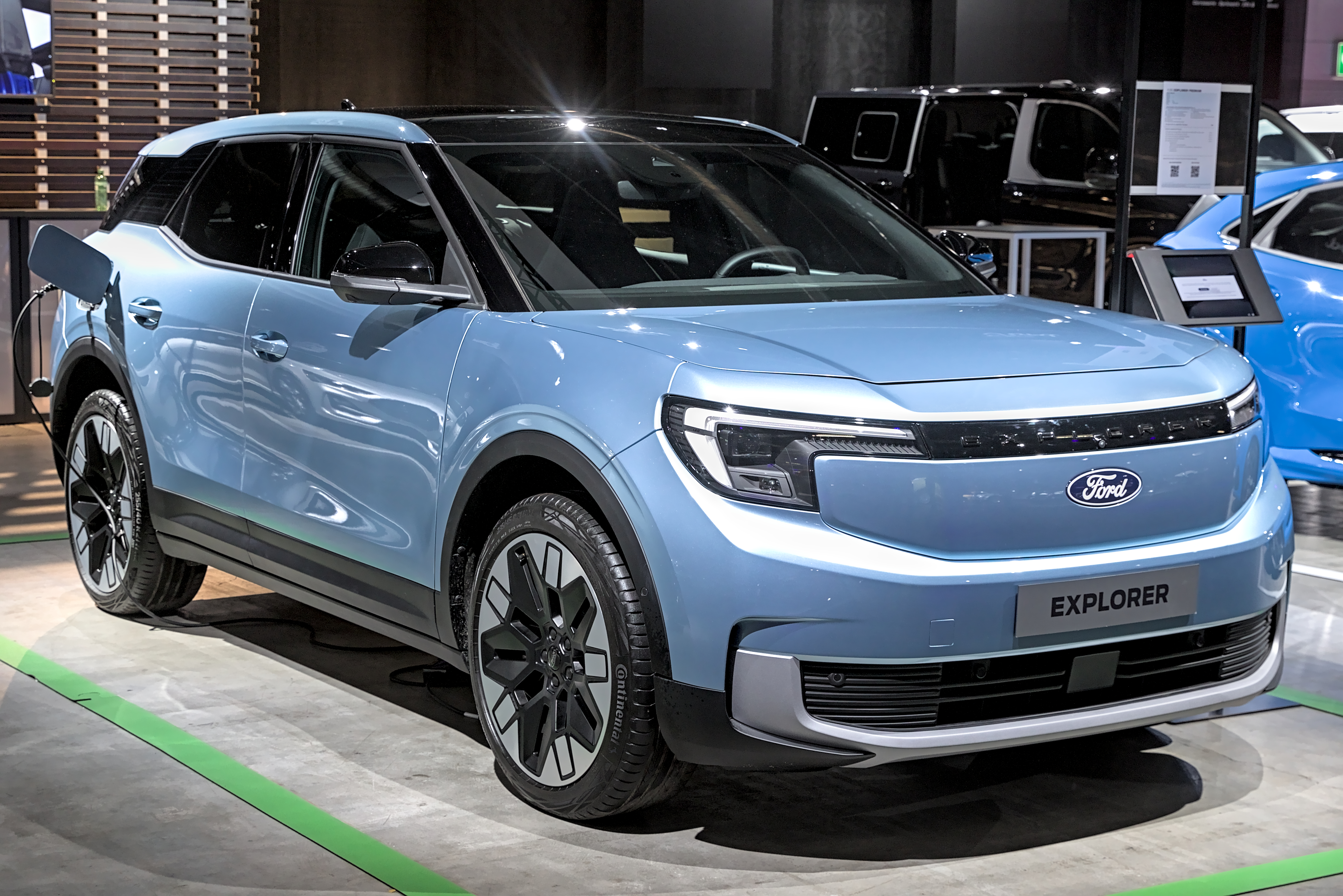
performance modification I did I was 20 and I put a remote mount turbo on my Ford Explorer.
That's a pretty advanced modification I must say. God knows how I worked it out I still don't
think I understand how that system the turbo system worked but it and I was chasing at the time I
remember chasing zero to 100 times and it was what my first ever YouTube video ended up being a zero
to 100 time on that car back in 2006. Yeah it's a weird story to tell because I genuinely had no
idea what I was doing bolting a turbo on that engine with that stock ECU and I remember adding a
Toyota Camry cold start injected to get some extra fuel in it when it was on boost
but that was the first modification I did and I remember driving that car for two or three years.
Never blew up weirdly. I think I pulled about three seconds off my zero to 100 time and of
course no access to dinos back then we were just... Yeah obviously a touch of a side quest here
given the main direction we're going to go with this conversation but let's dive into it because
I think these little stories are always interesting piecing something together that probably shouldn't
work. I've told this story a few times about a very early turbo conversion I did on a friend's
EK Civic which involved fitting a turbo, adding a Hobbs pressure switch and an auxiliary injector
in the intercooler pipe and retarding the base timing and I'd never even contemplate that today
but hey it did the job and until someone tried a 5th gear top speed 8000 RPM run the engine
ran a long and healthy life but yeah okay so for a start remote turbo why remote?
Honestly I'd read about it someone in America doing a similar thing with the V8 Ford Explorer
which we never got in Australia and I just thought well why can't I do that and it was around the
time when the eBay turbos were starting to exist in very very early days of eBay and I kind of
worked out that I could probably do this for under a thousand dollars. Let's see if it works.
That's what started it. Okay and so the cold start auxiliary injector and how are you controlling
that you mentioned stock ECU so how are you dealing with timing or you just send it in hope?
I just had I didn't even know what ignition time it was back then yeah it would the cold start
injector was run on a hob switch that was set up so soon as about one psi of pressure in the intake
it would turn the injector on it would only run about three and a half pounds of boost before the
factory ECU would say no more. Yeah so I remember getting it to consistently not go over three psi
and it would hold the power on and not be too bad but God knows what was going on that engine
don't know how it stayed together. Yeah I mean much like that Honda Civic that I just mentioned
and I had a little three-cylinder dihatsu charade that I'd heavily modified with definitely not
enough knowledge to get by with what I was doing and you look back once you actually know what's
going on inside an engine and sort of shake your head and think how on earth did that engine
live through it but yeah I think sometimes engines are a little bit more resilient than
you actually give them credit for. Yeah I should probably should add some background at the time
I was working in a car detailing and selling cars on the weekend I was around mechanics
all week so I wasn't completely flying blind but it was definitely a I think I can do this
let's try it, there was no fear of it not working or doing anything wrong, maybe that was a bad
thing but I've always had that mentality with car stuff. I think to a degree there's a lot of
satisfaction, a lot to be learned in having an idea, maybe doing the research to see how others
have approached it which honestly these days is obviously far far easier and then just getting
your hands dirty, getting stuck in and figuring out how it all works, you're going to learn more
by doing that yourself than you are from watching a YouTube video of someone else doing it or
reading an article of some cool car that's been built to break the internet so yeah I applaud
you for getting stuck in. Let's talk a little bit about your sort of education background,
is there sort of any formal qualifications for education that like sets you up for the car world
or it's not to talk about? No it's absolutely not, back then there weren't, I don't even know if
there are other courses now that exist for high level sort of automotive technical engineering
but yeah back then it was I very much had the process of I want X car whether it was a brand
new HSV or whatever the cool car was back then and I just wanted to make the money to do it and I
was in my younger days I could spend 18 hours a day at work in the car yard, happy playing with
things, driving vehicles, I still remember every car I ever drove when I was an early salesman was
the best car in the world so it was very easy to convince people that were in the passenger seat
that it was also a really good car, I was living my best life back then just around as many cars
as I could be around but yeah no formal education at all. So it sounds like at this point in your
life the work is really just a means to an end and that's just buying the the next cool car that
you have set your sights on. It was absolutely and I probably should have had on then around the
time I had the remote mounted Ford Explorer I also had a Commodore Cup car which I was doing track
days in, yeah it was just my tow car the Ford Explorer but it was the first one that I did the
weird thing to, the weird modification so I did need to, I was conscious with money having a race
car and a tow car was expensive and you needed to be sensible and well I think sensible would
probably be not having a race car if I'm honest. No sensible, work harder and just have the race
car but yeah I don't think you'll find uh get a race car at the top of any financial sort of
advice book but um here we are, here we are anyway. Yeah now it definitely led to there was no chance
of doing any because obviously education costs money or restricts what you can earn at the time
and the same with them being an apprentice that was it wouldn't have paid for the race car.
All right well maybe sort of uh connect the dots for us up to sort of modern times what's
your being your your journey your path along the way and I guess maybe fill us in with what
you'd consider to be your automotive skill set at this point in time. At the the peak of my
adolescence we're playing with cars that Turbo Ford Explorer the business started to get a little
bit more busy a little bit more serious and I was uh we were running the car yard with my father
that led into wrecking cars because we were paying a lot of money to recondition cars at the time
so we my brother actually joined on as well and we couldn't afford to pay in all age at the time
so we started a wrecking yard this was again around that 2006 the wrecking yard turned into an eBay
store and there weren't many businesses selling car parts online back then and that again a bit
of a theme throughout my life it just exploded over the next five or six years that turned into
15 or 16 star the business was turning over four or five million and my personal cars and desires
were sort of put aside and it was I was focusing on the business for a good seven or eight years
not interesting in regards to what we're talking about today but I learn a lot about mechanics
how things operate supplying parts understanding good quality parts what's needed for specific
components to do a specific task in a specific vehicle and it was just it was down to the
pure volume of stuff that we were selling and I think in that business we we did well over 500,000
sales in the eight years um so it was a lot of reach in Australia with Australian vehicles
yeah it's uh it's not a small operation if you're 16 staff and you know turning over that sort of
volume yeah it was um it's horrible it's so busy there's so many things going on and I say horrible
because it it did take away my time to play with my toys and build my cars that sort of stuff and
that's sort of led on to around 2016 we sold that business we had another two businesses running
alongside those as well one was a motorcycle suspension business so we're doing high-end
race suspension that also spread off and we had a national mx motocross team racing with all the
factory guys that was a good sort of learning curve on building race engines race suspension
running teams that sort of stuff not in the car world which I would have liked it to have been but
definitely a cheaper way to experience the highest level of that type of motorsport
and yeah when the car parts business got sold I actually started the youtube stuff okay yeah more
so to initially it was just to teach myself about being on camera which I still don't like doing but
900 videos later I still don't like the cameras but um that led me down a path where I could justify
putting time into doing my own stuff playing with the cars I wanted to play with and not feeling
like I was wasting time sure let's talk a little bit about that because I know we've probably got a
bunch of listeners that watch a lot of automotive youtubers and maybe there's a bunch of people out
there thinking that they're going to be the next Adam LZ or Matt Armstrong what's the reality
what's the reality of starting an automotive youtube channel I probably don't have the best
praise for it because the amount of time and energy I've put into mine over the last 10 years
but even if you're not the superstar that Matt Armstrong is or Adam LZ it teaches you discipline
that I didn't even get with the business it's really good at forcing you to learn and if you're
open and honest with your audience it's a great way of learning as well because
if you say something that's not right somebody will correct you.
Yes yes you're absolutely right the youtube comment section loves to point out any minor
error or major error that you've made. Oh absolutely. And I think I mean this really
goes for social media in general and I have found this over the last 20 odd years if you're going
to put yourself out there be that Instagram, TikTok or YouTube and you're going to claim
yourself as an expert in the field which we obviously do you need to grow a pretty thick
skin because the comment section can get pretty feral. Oh absolutely and look I should be honest
as well I think I've been blessed with my comment section over the years most of my followers are
really fair and very supportive and even if I say it's not been a great business idea to
to do YouTube for me it's probably been one of the best things I've done in regards to growing
my knowledge growing me as a person and even if I've got a relatively small channel the community
that the guys have in my comment section is incredible. I feel very blessed to have the
following that I do have and I do have no regrets. That's fair and maybe my comment needs a little
bit of elaboration. Likewise I would say that we have some great followers and it's a great
community involved with HPA. It's a vocal minority and it always is no matter who you are.
But of course that vocal minority are the comments that you tend to focus in on and those are the
ones that sort of frustrate you and keep you up at night but I learned many years ago to not let
that get under my skin so I think that's just fine. I also like what you say about it's a way of
learning and I think the whole high performance academy journey has been very similar. I was a
professional tuner for 15 plus years before transitioning to high performance academy
and thanks to a university degree I think I had a pretty good way of breaking down a complex
concept and explaining it which I guess is why we have seen success. However it's interesting
when you go to present either a YouTube video or a course module on a particular topic that you
already know inside and out and you don't have anything to think about and then when you actually
start trying to explain it, you realise all of the minor little holes in your knowledge and I think
what I like about teaching is you actually end up learning the topic better than you thought you
knew it. So it's been an interesting experience like that. In order to teach something you really
have to know that topic inside and out, upside down and backwards, otherwise it doesn't work.
I couldn't agree more with that. That definitely ranged true with my experience.
Sorry, following on as well the YouTube journey really got out of control around 2020 or 2019
when I bought a particular vehicle which is what I'd say most of my followers are hanging around
for the next video for with the beautiful BMW N54 engine and to this day I'm not sure why I really
bought that car but it's that engine in particular sparked something inside me with learning how to
build engines, understand turbo systems and it really pushed me to be where I am today. And again
the knowledge that I've gained because I was trying to make a YouTube video,
I never would have got that any other way. Well I could have but it would have taken a long time
if that makes sense. Sure. For the non-BMW phonetics out there, can you give us sort of a high level
view of that engine, what makes it so special? So I think the true reason that it become popular
is it was quite capable of making a lot of power in a fairly stock form. It was BMW's first direct
injected petrol turbo engine and in stock turbo form you can make 500bhp with spending very little
on the car. That's no joke. No, it's a significant engine really. So it's a cheap performance but
they definitely got a name for themselves for being very expensive to maintain. They are a
fairly complex engine and even when I got mine it was 10 or 12 years old and it's an old BMW. So
there's oil leaks, there's lots of little maintenance issues and it was really good for the channel
because it was just a content dream. Every day I'd wake up and there was a new thing that
needed to be fixed that I could make a video about. You could call that a blessing and a curse,
I guess. It absolutely was. It absolutely was. Yeah, but I really sort of fell in love with that
engine, that platform. We ended up with a few versions of them and I ended up managing to get
my hands on the world record holder at the time for the fastest one in the world down the quarter
mile which was like a 9.8 second quarter mile. It had a single turbo conversion and a power
glide and I'd never driven a fast power glide or turbo 400 car at the time. We'd had a couple of
sort of three to 400 horsepower committals with those sort of two transmissions on them but
a fairly tight converter. But it was my first experience of a semi-high power car and this
was making around 700 wheel horsepower and I couldn't believe how bad it was to drive with a power
glide. I mean by modern standards the power glide is definitely known for handling high horsepower
but it's a pretty agricultural piece of kirt, right? Yeah that's it and they are great for
getting cars down the quarter mile. Those loose converters work when you're making a lot of power
but yeah it was horrible on the street though. Yeah, that car was it was either full song or it
was just horrible to be in and that then led me down the path of transmission conversions
which is where I am today and again just pure ass that I fell into it. It was let's see what this
DCT conversion does in my main car and then we looked at doing an 8 speed conversion in one of the
other cars that I had. OK, right well that kind of brings us up to relatively close to modern day
and obviously the reason we wanted you on the podcast is to dive into this world, particularly
of the 8 HP which has kind of become the go to conversion, well A go to conversion there
but you just mentioned DCT as well and I think let's just start by maybe for those who don't
have too much transmission or gearbox knowledge, kind of breaking things down.
So I think when I was a younger guy and I was really getting interested in cars, we always
wanted to drive something that had a manual transmission and I think actually it's a bit
of a shame these days it's almost a dying art form being able to drive stick. I'm definitely
teaching my kids to drive a manual, they've got no option there. But then once you've sort of got
your driver's license and you're tootling around in some $400 clapped out Honda or whatever I was
driving, you sort of, your hopes and dreams are at one day I'm going to have a sequential dog box,
that was the holy grail. And I've been fortunate to have a couple of those in some of our race cars
and you quickly learn that well hey they're cool and there's nothing that feels quite as cool as
pulling on a sequential lever and doing a clutchless shift and even when you're stationary and you
put the clutch in and you pull in the first gear and you get that clunk as the dog engages,
the dog's engaged, that kind of, for a car guy that's pretty cool. But they come with some
significant downsides, we can maybe talk about those. Then later on DCT or dual clutch
transmissions came around, DSG, PDK, all the same sort of thing from different manufacturers
and those were kind of the go to that kind of gave you almost the best of both worlds between
a sequential dog box with lightning fast shifts and a conventional manual gearbox.
And then obviously slush boxes or autos were never really that popular until people started
messing around with these 8HPs. So can we kind of get a high level view of the different gearbox
technologies, explain how they work at a high level and pros and cons of each, can we get that
from you? I'll definitely give you my opinion on those and it's, I say my opinion because it's the
way that I think about them all because it's probably not the most accurate way to describe them,
but obviously the manuals which have been around since day dot, they are a set of gears that you
have synchro to transition between them and then there's a clutch that the driver is fully in
control of to allow the load to be reduced to make the gear change or change in the ratios easier.
The automatics which is what my BMWs, all the cars that we had on the channel, they started
with ZF6s, they're probably more, they're getting close to a ZF8 with how they function internally,
but I think of them as a separate gear set with clutches, I can't remember the ZF6 clutch cap,
I think it's four or five, no it's four and it will use those clutches to change the ratios
while using the converter in place of the human with the normal manual clutch.
So they can change gear relatively fast allowing converter slip and transitions of the ratios
that way. Let's just actually hold up on the auto-trans for a moment and as you're speaking
there, the classic meme that probably a lot of people have seen popped into my mind where it's
a picture of a cutaway of an automatic transmission and the input end, we've got engine horsepower,
hopes and dreams and then we've got some kind of magics happening in the middle and then out the
tail shaft we get crushing disappointment. And that's kind of always been the joke of an older
automatic transmission, there is going to be torque converter slip, they tend to be,
what's the best term, maybe a little power hungry, is that fair?
Yeah and my experience with the power glide that was in my car, it was, it blew my mind how much
noise the engine was making, how much fuel was going through this engine and it's just not moving
anywhere, under four and a half thousand rpm and they operated obviously with no electronics,
so they still had, actually I don't know much about the insides of a turbo 400 or power glide,
I've never pulled one apart. We're not building these things.
No good, they obviously they've got the gear sets and they can change their ratios but they
relied on a very slippy torque converter to make it a smooth ride for the driver obviously.
One downside with them was there was no control over that converter, it was set when the converter
is made and you can't adjust that, which is why the powerful cars need the slippy torque converter
all the time. That's probably the best way I can describe it, the torque converter has to
be slippy to allow the ratio changes to be smooth because it is just an on-off switch between each
ratio. I think the other thing with a built auto, where maybe particularly we've seen these a lot
behind, are relatively small capacity turbo charged engines on the drag strip.
And the difficulty here is to get the engine up to an rpm range where the turbo is able to
produce sufficient boost to actually get it off the line and get a decent 60 foot, you need to
have that thing probably spinning at 6,000, 7,000 rpm, so you need a very loose converter to allow
it to actually come up on boost and then the flip side of that is trying to drive that anywhere
except down the return road at the drag strip is not going to be great for fuel economy efficiency
or your mental health. Yes, all of the above is completely what I experienced with my power
glide, but they are brilliant and they're still brilliant transmissions, they're still some of
the fastest drag cars in the world use those transmissions. But yeah, it's just it's old
technology, it's been around since the 50s and yeah, we can definitely do better with these
newer modern transmissions. You touched on it before about the power losses through the
old automatics and even the ZF6s, mind you, they're not too bad with the lock up clutches and the way
that they do operate. But yeah, that was my experience growing up, real men didn't drive
automatics because they were slower and you just never got that experience through the vehicle
because of the power loss. You expected an automatic to be a slower car. This is street car
sub 500 horsepower sort of stuff as well. Yeah, things changed a little bit on the drag strip,
but that's a very niche area of motorsport. And what I mean by this is if you had the same
engine with the same power with a manual dog box that could shift quickly and you compared the
mile an hour and ET to a well built power glide for example, you'd often find that you might lose
a little bit of mile an hour and the auto chance because of the power loss, but you're probably
going to find that it'll be more controllable to the 60 foot. It'll be actually quicker to get to
the end of the strip. So your ET might come down, but your mile an hour might also drop a little
bit as well. Is that sort of a fair way of explaining it? Oh absolutely, I guess we probably
should mention as well because I'm sure people will correct us in the comments about the lock
up clutches that have come around for turbo 400s and they do exist which help with mile an hour
stuff. But the whole key to those transmissions operating at different vehicle speeds is that
loose converter and allowing the engine to be in the sweet spot regardless of what the
rear wheels are doing or the speed the rear wheels are doing, I should probably say.
Actually before we move on as well, I'll just add another little anecdote in here which came from
my drag racing days and for a number of years I was involved with the New Zealand based heat
treatments racing team. And Reese who was driving his GTR, so this is a Nissan R32 GTR
and at the time that was retired it held the world record as the fastest outright four wheel
drive car. I think it was, well clear it was the fastest GTR in the world as well. This is well
before R35s were ever on the scene so don't jump in the comments and say you know people are running
much quicker than that, yes I'm well aware of that. But where I was going with this is that car
was built around a air shifted five speed Liberty gearbox and it used a proper slider style drag
racing clutch. And to watch that car go down the drag strip which at the time it was around
circa 1500 wheel horsepower while I was tuning it and that car was an absolute handful. The only way
they could extract ETM while an hour out of it was to transport it over to Australia to Willow
Bank where you guys have some absolutely amazingly well prepped drag strips but even there the car
on every gear shift would head towards the left wall or the right wall and I don't know how Reese
hung on to this thing but it was just an absolute handful of a ride. So if we fast forward now to
the GTR market over in Australia that's just exploded and there's a bunch of cars in the
mixers making 2500 horsepower so no the 1000 horsepower plus but they've all gone to an
auto transmission and I think the advantages come from how much smoother the shifts are compared
to that Liberty and it doesn't upset the traction on the gear shifts and that was what was making
the heat treatments car so hard to drive. I mean we could have probably thrown another
1000 horsepower at it but what was the point, it would have just gone into the wall in second
gear instead of fifth. So that's some of the subtle aspects that come with that automatic
transmission that may be automatically obvious. Yeah look I've got to be honest, I was not
truly appreciative of how beneficial that is when you do get into the high power cars.
My personal cars I sort of peaked around 700 horsepower but there's been a few at the shop
that we've been involved with around 1000 or just over 1000 and you can't change those gear ratios
quickly. They will unsettle the tyres and yeah I think this is the drivability of the old school
autos and how much faster they made the cars is definitely why they've been so popular in drag
racing in particular but it's the thing that makes them fast down the strip is the thing that
makes them horrible on the street. Yeah sure. Alright okay so I think I think we've probably
got enough on the old school auto. I'd interrupted you when you were about to jump into DCT so maybe
let's jump back in there. So with the DCTs they sort of hit the OEM market 20 odd years ago now a
bit over 20 years ago and they approached the ratio change, what's the best way to word this,
so they have a traditional manual style gear set so they have synchros and they will change ratios
but they use two input shafts so they can essentially have two gears active at the same time
and then use two clutches to transition those ratios instead of transitioning the synchros
like you would in a normal manual where this was really beneficial it made the ratio change
very fast and fully computer controlled. I mean Volkswagen and Audi are brilliant at their DSGs
they're very very strong for the size of them and even BMW the DCTs that BMW were using 2007
and onwards those clutches would hold 7 800 horsepower which was incredible a stock factory
clutch would not hold that and the autos of the time would not hold that either yeah using the
hydraulic assisted clutches transitioning the ratios instantly made them a really exciting
gearbox to drive they also didn't have the mass of a torque converter so in a like a weekend
cruiser car you've got very responsive engines downshifts are brilliant and I still do to this
day think DCT will downshift better than automatic yeah they really sort of took off but they soon
hit the limits of their clutch packs because while they were a strong clutch pack compared
to a traditional manual OEM clutch they do not like being flipped and they will get hot
and the drag racing world and the high performance world sort of surpassed them
and that's where the eight speeds are starting to shine.
OK I just want to expand on a few of the points you've made there just for those who are really
on the edge of their knowledge and haven't quite put sort of connected the dots on what you've
been speaking about so with those dual clutch transmissions essentially as you've said you've
got two separate shafts each with a clutch so what they do is separate the gears into
odd and even so on one shaft we'll have 1, 3, 5 and maybe 7 and then 2, 4, 6 on the other shaft
so as you've mentioned you could have, you'll be in first gear taking off and the TCU is already
assuming that your next shift is going to be in second gear so second gear can be engaged
but the clutch deactivated so if you've got the clutch activated as well it's going to be a bad
day for a gearbox so then when you request the shift and these are now paddle shifted
gearboxes or you've got the little lever that you can sort of shift on as well, it's not a
conventional like a normal manual transmission but when you select second gear all it has to do
is disengage the clutch for the first gear and engage the clutch in the second gear so as you
mentioned sort of lightning fast shifts which probably now aren't actually that far removed
from the sort of shift speeds we would get with a sequential dog box so kind of the best of both
worlds in that respect.
You mentioned the clutch slip and the problem with these is the diameter of the clutches is much
smaller than a conventional manual with a big maybe a 7.5 inch, 9 inch clutch and you've got
multi plates and the individual clutch plates are very thin so as you mentioned almost any
amount of slip and you're just going to cook the clutches and that's the end of them.
It's made it really hard for the drag racing world, we've had Tony Paylow from T1 and the
state's on the podcast talking about his R35 GTR DCT challenges and yeah you can't
slip the clutch off the line so that makes it really difficult particularly with these bigger
turbos. Now I'd say another potential downside with the DCT boxes is they're physically bulky
and then by definition physically heavy correct?
They are, off the top of my head and please don't quote me to this, they're around 100 kilos for
the BMW 7 speed DCT, that's a transmission that I feel is pretty good around 800 horsepower
on a 6 cylinder turbo motor, I don't know how it'd go on an 800 horsepower LS but yeah
which to be fair it's about 40 kilos heavier than a power glide but in my experience and
the reason I did the DCT back then going from even a ZF6 to a DCT my car was faster with the DCT
transmission, it obviously had a few more well it's got one more ratio but the the gear transition
and the or the lesser amount of torque reduction so we better way to describe it that the car could
run with the DCT, made it faster.
Sure, now in terms of weight as well, I might not be quite on point here but looking at our
Toyota 86 endurance car which has a Hollinger paddle shifter, 6 speed dog box, I mean I think
that particular box is somewhere around about 40 kilograms so now you're talking a weight
difference of 60 and when you're building race cars, that's substantial for a road car, probably
not actually a big deal but it's dependent on the application.
If you're a fan of the podcast and you're interested in topics like engine tuning,
automotive wiring, performance engine building, 3D modelling in CAD or anything else in the
high performance industry, I have something that you might be interested in, introducing the
High Performance Academy VIP Package, this package of courses gives you lifetime access to all of
HPA's online training for one price. These courses cover everything from tuning and
reflashing, petrol and diesel engines through to motorsport wiring, engine building, fabrication,
design, car setup and plenty more. Right now you can get $500 off High Performance Academy's VIP
Package using the code podcast500 at checkout. But coming of VIP means you'll never pay for
another course again, you'll get instant access to all 40 plus courses we currently offer,
plus every new course we ever release in the future. Want to define maps or tune with WinOLS,
curious about canvass devices or how CAD can help make your dream build a reality.
These in-depth topics as well as many others each have their own dedicated course that are
what it is you want to learn. And as a VIP member, you're not just getting the courses,
you'll also join HPA's online community with lifetime access to our member forums and
member's webinar lessons. Again the code is podcast500 for that $500 discount,
just head over to hpacademy.com to check out the full VIP package and everything it contains.
Alright let's get back to the episode.
Let's move on and talk about the ADHP which is our main topic for today.
And why has this become such an important transmission in the aftermarket world?
So it was essentially an evolution of the ZF6 with another two ratios.
They managed to package that extra gear set into the same size.
So physically the top spec ZF6 is the same size as the top spec ZF8.
And the OEMs to my understanding they went and developed this as far as they could for emissions.
Obviously 2006, 2008 Euro stands were increasing and fuel efficiency was becoming much more important.
The less slip that the transmission experiences through the torque converter means it's going to use less fuel.
And I think that's really why they developed the HB to the level they did.
The flip side of that was they've created a transmission that runs with nearly no slip.
It gives you eight ratios and that means it's a fast transmission.
There's very little loss, very little drivetrain loss through the transmission.
So essentially if we compared the output from an ADHP to a dog box,
you're not going to see a dramatic difference like you would with an older automatic transmission.
No, not at all. On the dyno that we have at work, the mainline hub dyno we generally see.
So if it's 900 horsepower with a sequential, it'll be 88890 with the eight speed.
And it's close enough that that could just be air temperature differences play in a role.
Yeah, yeah.
And the thing that I always worked on with the YouTube videos was draggy times.
And yeah, the eight speed was four tenths of a second faster than the ZF6.
Wow. Yeah, that's no joke.
And that was on a 100 to 200. So on a quarter mile again, it's going to be a bigger difference again.
Yeah, the big thing that makes the eight speed so popular for the aftermarket world
and why I think they've sort of taken off so well is talking back about the clutch packs for the DCTs.
You have the two clutch packs. The eight speed has five and they're a very similar size to the DCT clutches.
So you've essentially got an extra three clutches to manage that torque.
And the way the eight speed works, it uses three of them per gear ratio.
So you have to have three clutches engaged.
So at any point in time, you've got a fairly large amount of clutch surface area.
So the torque handling capability is not as limited as a conventional DCT?
No, no, it's incredible. You can slip the hell out of an eight speed.
Especially with the converter as well for launching where you're really slipping the converter.
But in a lot of the drift cars we've set up, I remember in the early days being concerned about putting clutch pedals on them.
And the abuse I've seen them take is insane.
There was one drift car. It was about a 650 horsepower JZ.
The guy driving, it was his first time at an eight speed, getting used to the sequential shifter setup.
And he was in fifth and wanted to go to third and he went fifth to seventh and then six and a half thousand RPM and double clutch.
And I thought, I heard the JZ build up all this torque and I was expecting a loud bang from a towel shaft or the gearbox to explode.
And it just bogged down and spun the tyres in seventh and I was like oh shit, this thing, this has got some torque handling.
Alright a couple more questions before we sort of move on further.
You've mentioned the clutches, you've mentioned the extra gears, the lack of slip compared to a conventional automatic transmission.
As I understand it though, shift times as well can be dramatically faster on an 8HP, is that correct?
So there's a few different ways to think about this.
So a DCT to my knowledge currently has the fastest official clutch time between the two transmissions.
And I think they, I think I've seen data logs where they're shifting around 180 milliseconds.
I haven't seen an 8-speed shift that fast, but the 8-speed from the logic that I've been able to see from the ones I've played with,
they shift in a different way. The DCT, you really don't want to cross fade that clutch transition.
You want to turn one off and then turn the new one on, where with the 8-speed they're quite happy transitioning.
So you do, every time they do change, there is a little bit of clutch bind,
but that allows you to have say a 300 or 400 millisecond shift while maintaining a good amount of torque going to the back wheels.
So a properly set up 8-speed with a decent controller on your acceleration curve, you won't be able to see the shifts at all.
Yeah okay so if we come back to a conventional dog box or a DCT, typically we need some kind of torque reduction
to allow the shift to occur. In a dog engagement gearbox, the design of the dogs have a back cut.
So if we're in second gear and we're at full throttle, no amount of force from your arm is going to pull that gearbox
out of second gear. What you physically need is a torque reduction to allow the dogs to disengage
in the next gear to engage. Typically that might be done by an ignition cart, a fuel cart,
or a lift on the throttle, but something needs to reduce that engine torque.
So even though it might only be an 80 millisecond torque reduction, that's 80 milliseconds where you don't
have full engine torque, so what you're saying is, and the same goes with the DCT as I mentioned,
what you're saying is you don't really need that torque reduction, you can shift while maintaining
almost full torque?
Yeah, from my experience I like to keep it sensible, stay under 700 horsepower, you can definitely shift
and maintain full torque, allowing a little bit of a crossfade so you don't get the sharp RPM drop
that you'll get with a sequential or DCT, but that means that the amount of torque that's making it to the
rear wheels is higher over the period of the shift. I hope that translates to something that makes sense to everyone.
Yeah I think that makes sense and I guess that would also coincide with the aspect that I was mentioning
before where we're not really kind of upsetting the traction to the rear wheels during that shift.
100% but yeah, unlike using just the slip from the converter, it's a fairly tight way to do that.
It's a little bit of a contentious subject because a lot of people do like that sharp RPM drop,
they like the torque reduction sound, whether it's a shift cut or however it's being done with a specific ECU,
but with the eight speeds you don't need to shift them that way and if you're trying to chase fast times
there's nice data smooth transition.
Yeah I would say as well that the more I've learned and the more I've been involved with transmission tuning
and I'm talking here about conventional dog engagement gearboxes, the cool sort of pop out the exhaust
from an ignition cut, yeah it sounds great, it sort of makes the hairs on the back of your neck stand up
and in most instances it's not the best for your engine.
So I unfortunately have a Toyota 86 with that Hollinger gearbox in it and the shifts make absolutely no sound
because I am using fuel cut and ignition retard to try and soften everything on the valve train
and keep the engine alive, that's much more important than it sounding cool to me.
Yes, no comment, I like the sound.
Me too, me too.
Alright now, so far we've sort of talked about 8HP as if that is a single gearbox but this is a family of gearboxes?
Yeah definitely, they're on their third generation, well actually that's not true, the fourth generation has recently been released
the majority of my experience has been with the particular 8HP 70 variant.
I guess the best way that I should think about them to a novice, they've got the baby boxes and the big boxes
so the first generation was the 8HP 45 in the small range and the 8HP 70 in the larger boxes
and I say the larger boxes, there is also a 90 which is the box used in like a Dodge Demon
so the highest capacity of the V12 turbo BMWs, they use the 90 series
but there's not a huge difference in the hardware between the 70 and the 90.
So from the swap world I always try and go for a 70 because the donor transmission is much cheaper to start with
but the numbers relate to the factory rated torque handling, so the small one was rated to 450 Nm and the large one 700.
My experience with the small boxes is pretty limited, I started using a 70, I like the way the 70s feel
and I try and whenever we're speccing something with a customer, I'll try and recommend to use a box that's stronger than they need
and that does allow you to lean on the clutches a lot more if you're chasing records
or you're trying to have an ultimately fast car, you don't need to rely on engine torque reduction to get the shifts right
where the 45s, people that I've spoken to, the guys I've spoken to tuning them,
you've got to be much more careful with what the engine's doing, they don't take the abuse.
Sure, yeah okay, and Ness there was a significant price or weight advantage in the smaller box
I would say there's no brainer to go to the 70.
Yeah and we should also mention obviously the power of the chassis is definitely relevant,
if you've got a car that makes 400 horsepower and weighs 1200 kilos, 45 is going to be happy.
Yeah it's just the higher spec and it seems everything makes the 1000 horsepower these days in the streetcar world
and even the slower cars are still 600 or 700 horsepower and I do speak to people quite often
and they're trying to use a 45 or a 50 in that power range and it doesn't end well.
It is cheaper, it is a smaller box but it doesn't end well.
In terms of the vehicles we're going to source these out of, you've mentioned so far Dodge and BMW
is that sort of the main OEs that we're using the AHP and are there specific models in the BMW world
that you're looking at to source a donor box?
So the amount of manufacturers that use them is, I still find it quite surprising.
Obviously in the last 10 years there's been a lot of new Chinese manufacturers into the marketplace
but speaking to the more common brands, so Porsche, BMW, Jaguar, Land Rover, Dodge over in the States
they were all using AHPs and as many models as they could with the Dodge versus Jeep
and their whole family of vehicles as well.
But the thing that's been a challenge for the swap guys is you need to be able to adapt it to your engine.
So throughout the, as all the swaps have evolved there's more and more adapters popping up
and more adapters made to suit a larger range of transmissions if that makes sense.
But a lot of my experience and a lot of my knowledge is on the BMW ones.
I always try and use them because I know of the little caveats or the little weird knobs that might hang in the way
there'll be a problem in a tunnel and all the little weird stuff and they are all different.
All got the same clutches but the cases are all very different.
Yep, in terms of what, this might be just a constantly moving target
but in terms of what someone's going to expect to pay for one of these 700nm rated AHPs
can you have ballparkers in AUD?
In AUD in our market it's the $4,000 to $5,000 mark currently.
Certain swaps might be a little bit higher, some might be a bit lower
but if you have that as a ballpark figure you're pretty safe.
In Europe that number is much less, there are much more common transmission to get the ones that we want for the swaps
and in America I see numbers floating around that I get very jealous of
but again there's a lot more boxes in the wrecking yards and I think there's just a lot more used transmissions available
and the adapters are there now for the Dodge AHPs, the Jeep AHPs
even the Jeep EcoDiesel, they had an AHP70 in there.
The whole car is not worth a lot of money in America so you can get the gearboxes very cheap.
From what I see I think we have to pay the most for these transmissions in the world.
Lucky, lucky you. I haven't really been shopping around but New Zealand and Australia tend to share our economics
so I would imagine the same would go for us over here.
While you've been talking and about all of the different variations from different manufacturers,
am I right here in guessing that if you've got an engine or a chassis and engine that is supported by someone
that's doing an AHP swap, that your first port of call is probably not going to go to your local wrecker
and just buy the first AHP you find but rather source a conversion package which might be the gearbox itself
plus the most important part of this is going to be the adapter between the bell housing of the gearbox and your block.
Yeah 100% correct, it sucks.
So many people see a cheap eight speed, still almost a weekly occurrence.
I'll speak to someone that's managed to buy one from an LDV because it was $500
and unfortunately you can't use them in the swaps here because the adapters don't exist.
So my recommendation is obviously start with your engine, find what adapters are available
and then what transmissions those adapters will suit.
As there's been more controllers entering the market as well, depending on which way you want to go with control
that does also limit the compatible brains that you're going to use in these transmissions
because the OEM hardware does vary throughout the generations.
Yeah we'll get on to the control strategy soon because that's kind of as I see it make or break
but first of all we physically need to get the transmission actually fitted up behind our engine.
So it's not just going to be a case of adapting the automatic transmission, the AHP behind our engine,
it's also adapting the torque converter to the back of the crankshaft.
So typically in an automatic transmission equipped engine you don't have a flywheel on the end of your crankshaft,
you've got a flex plate and then the torque converter bolts up to that.
Am I safe to assume that the same goes with an AHP?
Yeah I do, I completely glossed over it.
So all of the adapter kits that we've ever been involved in, they also come with the adapters
to make sure that the original converter bolts up.
Yeah okay, I mean it makes sense, one is useless without the other essentially.
100% yes, but I do also still see people realising or not realising that the converters are different
and each engine has its own torque converter.
So even BMW might use three or four different torque converters in the same transmission.
Alright so that gets us bolted up behind the engine with our torque converter in place ready to do its job.
I'm kind of going out on a limb here and assuming that physically the AHP is going to be a bigger gearbox
if you're converting from a factory manual transmission, am I right?
So T56s or TR6060s are a very similar size.
Okay.
Yeah we always try and use a particular N57 variant of the AHP, it's quite a nice small bell housing.
So on that transition from engine block into the tunnel is normally pretty safe.
The thing that is always an issue, well the only thing that is an issue is the rear section of the box.
The AHP maintains its height quite a long way back where a lot of older transmissions will taper down to the output flange.
That's normally the biggest issue we see right at the back of the box but they fit in most 1990s on the tunnels.
Okay alright.
So if I'm looking at the rest of the physical conversion, there's going to be a transmission cross member to mount that into the chassis
and support it, obviously we need to make up a tail shaft.
I mean there's nothing different here than any engine conversion, that just goes with the territory.
One other sort of question that popped into my mind, normally when we're talking about a conventional automatic
transmission, the final drive, if we've got an OE vehicle that came out with an auto version
or auto option and a manual transmission option, typically in my experience the auto will always
have a much, much taller final drive than the manual variant.
Does this go for AHP and kind of the question I'm aiming at here is would we need to make an adjustment to the final drive
if we're taking out a manual and fitting an AHP?
So generally you can get away with not changing your diff ratio.
It's not ideal but you do have those eight ratios to play with.
A lot of the swaps that we do don't change the diff ratios and we just don't use first gear in the AHP.
They do have a double overdrive, so 7th and 8th are both overdrive.
I'm going to get the ratio wrong but it's around a 0.7 for 8th gear.
But yeah, most swaps don't need the diffs, assuming that under a 411, when you're on a 43 or higher,
you're getting to the point where you're not going to use 2nd gear as well.
It's sort of eroding some of the advantages of having 8 gears in the first place.
You're hitting the nail on the head.
Most of the factory performance AHPs have a diff ratio around 3, 3.08, which is a fairly common manual diff ratio.
But yeah, 9 times out of 10 you don't need changing to diff, which is great.
OK, yeah good to know.
I mean that's obviously an added expense and an added hassle factor if you do need to change your diff ratio.
So at this point we've physically got the gearbox mounted in the car.
There's obviously an adaption required to get the shifter in there.
I assume we can probably add paddles to the back of the steering wheel as another option for shifting gear as well?
Yeah, absolutely. So they are fully electronically controlled, all of the ADHP variants that we deal with.
There were some early versions that still had a cable selector, but they don't really get used in swaps.
So essentially all you're doing is telling the controller what the driver wants to do.
So you can do it with can key pads, basic switches, which is what these sequential style shifters are.
So you get that nearly sequential feel, nearly.
Or paddles, yeah, the way that you control the ADHP comes down to the controller
and how it's going to communicate with the driver I guess.
OK, which kind of brings me to what on face value I would say is probably the biggest challenge
of the whole conversion is actually controlling the transmission and making it interface
with the rest of your car electronics and most importantly your ECU.
And whether that's a factory ECU or more likely I'm guessing probably at this point
you're an aftermarket standalone ECU. So explain the level and when it comes to the control side of things.
So something, and I don't want to sound too warning about this, but the control of an ADHP is quite complex.
The way that they calculate clutch pressures to make them smooth, hold torque,
there's a lot of calculations going on. The controller that I started my HB journey with
is the Turbolamic. Currently to this day it's the only full standalone purpose built controller
for this application. And I say it in that way because the other methods that exist,
they manipulate data that's coming into the factory TCU.
So there's pros and cons to both. There's definitely more things to do when you're setting up a full standalone unit
like a full standalone aftermarket engine ECU. But the control strategies are insane
even with the aftermarket stuff and you've got to get stuff right to get the good result.
OK, in terms of I guess interface between, let's say you've gone Turbolamic which I guess
as I understand it is probably still one of the better options on the market
or more complete options as you've sort of alluded to. What do you need to do,
let's say we're running a Haltech Nexus. So it's running the engine quite happily,
you're making 700, 800 horsepower. What's the sort of required communication path between a Haltech
or you can use any other ECU you want and that Turbolamic controller for the TCU?
I guess to start at the core of what we're doing here, we're trying to make sure that the gearbox
knows how to change gear and in all of the 8 speed and DCT applications that I'm aware of
it's all torque model based. So the transmission needs to know what the engine's doing,
what RPM and what torque it's producing in order to apply the correct amount of pressure
and not just the amount of pressure but the speed that it applies the pressure to the clutches is a big thing.
So they all use torque and there's different ways to get torque values into all of the
aftermarket 8 HP and DCT control. With a Haltech in particular, we would use the internal torque model
in the Turbolamic and it will convert the RPM map data and throttle position data
into an internal torque map. The other controllers that exist, they do a similar calculation
but you haven't got quite the same amount of control over the way that it's done.
The CAN-TCU which is a really good setup for the CAN control, I call them CAN control
because they're taking data from the Haltech and converting it to something the factory BMW
transmission wants to see but they use a fuel model to calculate torque.
Yeah it all comes down to torque though and nearly every single setup is different based on
the engine ECU or controller.
I could see the potential to have that torque calculation or torque model significantly
skewed from what's actually happening. Have you got the ability with these controllers to
I guess, would you call it a fudge factor to make sure that the torque that the controller
is actually registering matches say what you're seeing on a dyno?
Yeah so I'll just touch on this as well. So I had no idea how important the torque was
for the first few conversions that I did. Coming from N54 land, the first three 8 speeds that I did
they were all on N54s and the base maps that we were using were all based on the N54s.
So the torque model that was in my base maps was perfect for that engine.
I see it mentioned on forums quite often, people will adjust their torque calculation
to get desired shift results and if you tell the controller that the engine's
making more torque it will shift faster and harder. My experience with doing that
it ends up causing more problems than you initially realized because all of the controllers
even the aftermarket standard line one they're trying to meet shift targets
they're trying to make it the perfect shift and you can make that they've all got modes
for super smooth or very aggressive so you can chirp the tyres and it's trying to work out
and calculate how to transition the gears to get the desired shift.
So if you tell it that it's making an extra 50 Nm it will reduce the pressure
to shift smoothly like the engine's actually making 100 Nm.
What catches me out still quite frequently, not so much with the TurboLamix
but with the OEM controllers is getting that balance of telling the torque
that the gearbox wants to shift properly before the adaptions manipulate everything.
And the problem I see if you try and make it match a dyno
that dyno might not be what the BMW is expecting because
your dyno dynamics is 50 Nm out from how BMW you calibrated that TCU
it's just not going to work properly. Or perfectly I should say.
Yeah that is a valid point. I did use the dyno just as one example
but you're absolutely spot on. I mean anyone who's been around dyno
knows that you put your car on five different dyno's and you get five different torque
and horsepower figures so useful to a point maybe only.
Yeah and I will say this, if I've got a dyno number
I will make sure that my peak numbers match and with all of these transmissions
the important area is the low load stuff. It's really easy to make any of them
shift aggressively and fast. So race justice is quite easy to calibrate and set up
but getting it smooth for all conditions when someone's stuck in traffic
and the engine might be making 20 or 30 or 40 Nm
a 20 Nm variance is a problem in that range.
So it doesn't need to be complicated, you don't need a dyno
but the way that I calibrate them all, whether it's a DCT or an 8 speed
with any controller is you have the transmission in the lowest softest
smoothest mode that's available and make sure all adaptions are zeroed out
and then you set the base torque numbers based on a perfect shift
so a nice soft smooth shift without excessive slip. So as long as you've got a controller
that shows you clutch slip you can just keep lowering your torque numbers until those
low load shifts are perfect and then generally extrapolate out
across to the peak torque range and that normally gets them 99%
of the way there. So you don't need the expensive equipment to calibrate them.
You just do it based on the vehicle. That's not sounding too scary at this stage.
In terms of the data that you just mentioned, the controller needs
am I right in assuming here that you're just taking in the case of the Haltech
the conventional CAN data stream that it uses
to transmit to a dash and that gives the control
that everything it needs in terms of RPM throttle position, manifold absolute pressure etc.
Yeah 100% that's it. The turbo-lamic torque model is the one
I've spent the most time playing with and the core of it is just
RPM versus manifold pressure. You might be able to actually touch on this a little bit.
I know OEMs calculate torque in a varying number of ways. A lot of them like
to rely on air mass in the cylinder and then converting that to a torque value
with 100 corrections around it as well. But
the turbo-lamic is an air model, an air based torque model I should say
and I think it works really well. I haven't had an engine that I haven't been able
to get it consistent across the entire power band and working well
but on the same note the fuel models work as well.
Yeah I think this is a difficult one in the aftermarket
standalone world. The OE controllers
for EC engines have been torque based for a long time
because there are a lot of advantages from doing that
and definitely around transmission control as well.
The problem I guess in the aftermarket standalone world is maybe there's not
so many advantages and as I've gone through this process with MoTeX
GPRP Pro on our Toyota 86 race car, it just adds
another layer of complexity to the configuration and tuning
process. Now having gone through that and now being familiar with it, I wouldn't say
you don't have to be a rocket scientist to do it. It's genuinely, it's not
an overly complicated task, it's just different.
And most people don't like change. So when you're used to turning a speed density
based aftermarket standalone ECU and you don't have to worry about torque
or any of these other tables, torque request tables, you do your thing
and that's what you do every day of the week, it's easy. So people kind of resist
moving to something more complicated. So I think we're going to see
aftermarket standalone stick to speed density primarily. I think there's probably going
to be a bit more background torque modelling going on
as these sort of 8HP conversions and DCT conversions.
Anything that requires accurate torque modelling becomes
more and more common I guess.
Yeah 100%, although my take on it is we don't need it.
Each ECU, they do calculate the torque
differently and your mo-tech torque is going to be different to an MTRON torque
and ultimately what we're doing with these swaps, we need the torque that the gearbox wants.
We need to know those numbers there. So even when you're
supplied a torque value into the TCU, sometimes you do need to change it anyway.
It's not that complicated, it's not, the actual
number is not that important, it's just getting the number that makes the transmission work.
I think you've probably already covered this but just for
complete transparency, I just want to dive into this.
I've had a little bit of involvement with, it was a
Volkswagen Mark V Golf Cup car which we
ran a DSG gearbox and we put a Cybex plug and play ECU on it.
And the way that communication works, so Cybex have done
all of the hard work and the CAN bus to make everything seamless.
So not a lot of work from me as a tuner but basically the communication
would go that when you request an upshift, the TCU would send a torque
reduction request through to the engine control unit.
And it would wait until the torque that's being produced
drops to that request limit before it would start the shift and once the shift's complete
then the torque would be allowed to increase again.
So as this backwards and forwards, so a two way communication was required
to make that DSG work.
Now you've sort of said that the 8HP can mostly at least up to 700 horsepower,
800 horsepower shift without a torque reduction.
At higher power levels is a torque reduction required and if so
do we need that two way communication?
So I think you can definitely make them a better experience to drive
with the two way communication. We have got a customer running
1000 wheel horsepower barrow with no torque reduction.
The ECU and the configuration that was on the engine just didn't allow it
and he just wanted to see how long it lasted and as far as I'm aware it hasn't broken yet.
So they will cop a hiding but you'll get to the point where you're pushing
through the clutches so it might be targeting a three or four hundred
millisecond shift but it's actually taken 800 milliseconds.
I haven't seen one blow through to the point where it slips for three
or four seconds but I kind of feel like you're at the point where you're
either excessively wearing the clutches or it might be faster with a little bit
of help to get those clutches to grab.
The flip side of that of course is then you need an ECU that also
can handle that two way communication and the torque reduction request
and that is going to be probably pretty limiting sort of something with custom firmware.
Yeah look most in fact I don't think many of the current offerings
so all of the current Haltec range, Link, Max ECU, I reference these three
that we hear about the most or MTRON obviously.
They will all support some sort of torque reduction request.
Where it does get a little bit tricky with the transmission swap worlds
is the way that the torque is calculated and transmitted to the controller.
If you're in an adaption area you need to make sure that you reference the torque reduction.
So if the engine makes 200 Nm in this condition without torque reduction
you apply the torque reduction but the TCU doesn't know about it.
That will cause it to think that the engine is making less power than it actually is
if that makes sense.
And then you can end up in a loop of confusion in the TCU
because it's not actually shifting at 200 Nm, it's shifting with 140 Nm.
So it definitely adds a lot of complexity.
If you want to be perfect about it, me personally, I won't use torque reduction
in the low area.
So I'll normally only use it over 300, 400 Nm.
Yeah okay.
You've used the term adaption a few times through this chat so far.
Can you just elaborate for those who've never heard that term or don't understand it,
what exactly is going on here?
So it scares me because I still don't understand them fully.
Especially the OEM ones.
With the 8 speed you've got to remember it's applying pressure to three clutches
at any time to get the gear ratio.
And when you go to the next one it transitions two of those.
And ultimately there's not a lot of sensors in that transmission.
It's only got an input speed, an output speed, and an oil temperature sensor.
So the TCU can't individually see how much pressure is at a clutch.
It relies on the way that the output shaft reacts to the pressure across all three clutches.
And the strength of these clutches I think a lot of people don't really understand.
So we're talking such a good example actually.
So I was setting up a new style of can controller.
And the guy that had done the programming hadn't set up a full transmission of an accurate newtmeter torque values.
He was new to 8 HPs and it set up 25 newtmeter jumps.
I was trying to get a car driving nice and 150 newtmeters being transmitted to the 8 HP.
And this is super low low driving as well.
The transmission would flip.
And if I changed it to whatever the transition was to get the 175 newtmeter value.
And I must have been playing in the 160 range.
So I'd either have it slipping.
I'd add 5 newtmeters, do exactly the same shift, and it would shift like a race car.
So the difference is really important at low-low.
And what the TCUs do, all of them do it.
They are continually monitoring how fast a shift time is.
It uses that across the shifts between...
Well, I know with the turbo-lamic it uses it between third and eighth gear shifts
to calculate individual clutch adaption values.
I call them adaption values.
So it will adapt the amount of pressure it applies to the clutch to get the desired shift target.
Yeah, okay, that makes sense.
And it all happens in the background.
And if you feed them bad torque values, it sort of breaks the adaption algorithm, I guess.
Because the control is trying to make adjustments on bad data, which is hard.
Yet another example of garbage in, garbage out.
Yeah, I guess it's like trying to run a closed-loop fuel on an engine ECU
where you've told it the wrong injector size.
Yeah, okay.
It's going to struggle.
Right, in terms of clutch pedals, you mentioned this earlier.
And for those who are fresh to this discussion, this sounds crazy,
why on earth would you have a clutch pedal on an automatic transmission?
And obviously the factory 8HP equipped vehicles do not come with a clutch pedal.
That would kind of defeat the purpose.
Talk us through this.
So there's something that turbo-lamic implemented.
And it exists for drifting, I've got to say.
That's where it really shines.
The amount of street cars that we put clutch pedals in,
that money never get used is quite impressive.
But yeah, because we have full control over these solenoids
and how they're driving pressure to the clutches,
you can fully override it and put the box in neutral.
But not just that, you can set it up so that it applies oil pressure to the clutches
when you release the clutch pedal in a way that makes it feel like a normal clutch.
It's surprising.
Everyone that we take on their first test drive,
if they start off with a clutch pedal,
they'll use the clutch pedal to change gear, which is quite funny.
So it works well enough to trick your brain into thinking you're driving a manual.
Initially.
I've heard from a couple of people where their experience is sitting there
stationary in first gear and they go to take off.
And if you drop that clutch pedal,
you physically have that sort of hard and throat moment
where you think the car's going to stall.
Yes, now they do look after you in that sense.
The clutches are great for drifting
and great if you want to do a little clutch kick on the street maybe,
if you would that way inclined.
Sounds like a non-essential.
I would not use that, but I don't do drifting either.
Our shop is very drift car orientated,
so we do do a lot of clutch pedal setups
and it works really well for drifting.
I'm interested, probably a subtle aspect of this
that's maybe not that important.
Just for me, driving manual transmissions,
the feel that you get from a clutch pedal in a conventional manual,
you've got a muscle memory of what you expect.
Is that kind of replicated?
Because I'm assuming here there's no need for a hydraulic master cylinder
in this system.
Correct, so there's a few different clutch emulators
or simulators on the market now.
The biggest hurdle that we find is getting it to feel like
an aggressive twin plate clutch.
Because you might have this drift car engine
that makes five or six hundred horsepower.
You don't want the clutch to feel like it's a home of the Excel.
So that's the hardest part, emulating a heavy clutch.
The way that we did it initially,
we used a sealed unit and a valve spring.
So there was a fairly, the air pressure would build up
and the spring resistance.
The pedal is close to a normal clutch,
but you don't quite get that spring resistance point
that you do feel with a pressure plate.
And the control side, you can actually program in
an initial bite, consistent bite throughout the pedal
or hit it with a heap of oil pressure.
You can completely tune the way the controller
applies pressure based on the speed
that you release the clutch pedal as well.
Which is important because we cocked it up
on the very first one we did and we turned two drive shafts
into two piece shafts immediately.
Oh, that's not fun.
Yeah, we didn't program enough of a delay.
So we programmed an instantaneous application of oil pressure
and it just munched through the drive shafts
which we're in a car that we've been drifting with a manual
for years, they can be very aggressive.
Yeah, okay.
With the clutch kick, the way that's sort of
opening up those clutches and then obviously
they're grabbing again, I mean, is it safe to assume
that there's not really a noticeable deterioration
and the life expectancy on where on those clutches?
No, we can't see anything.
One of the cars that we did late 2022,
just utter abuse, just gets started up,
burnouts, skids, and it's a drift car.
And yeah, we've changed oil on that a couple of times
and it just looks like a normal eight speed.
Okay.
The next question I've got is a bit of a selfish one
with a background in drag racing.
So automatic transmissions for drag racing,
generally a trans brake so you can engage first gear
and reverse while you're on the line
so you can get your turbo spooled up
and we've talked about the loose converter
to allow that to happen and then you let go of a button
and it's game on.
I'm guessing that trans brake's not really a thing
on the 8HP so I could assume if you had the clutch pedal,
you could launch the 8HP like a conventional manual.
Is there another alternative you'd suggest
for a pure drag racing application?
No, we just use trans brake.
Okay, so it does use a trans brake.
They do, yeah.
Interestingly enough, the factory Dodge Demon TCU
supports trans brake.
So Dodge Demon stock TCUs have trans brake.
So still in the exact same way, engaging first and reverse?
Yes, with a turbo limit you can actually do
a first, second or third and activate the brake
and yeah, it works just like a factory car,
sorry, not a factory car, like a traditional
turbo 400 or power glide wheel.
You've got that instantaneous release of the clutches
and it leaves the line.
So how about, we've talked about the loose converter
to allow it to sort of spool up
when you've got a big turbo small engine
and no low RPM torque.
How do you control what RPM you can leave
the line at with an 8HP?
So with a turbo lamac,
depending on the engine ECU that is connected to it,
we'll actually, you can program RPM set points
for the trans brake, which become like a two step
rev limiter I guess, but most people I feel
they will set that up on the engine ECU side.
So we'll just have a signal that gets sent to the engine
ECU to say trans brake is active and it will
activate a two step or however their
control strategy is on the engine side.
The turbo lamac has program functionality
for converter lock up after trans brake release.
So you can actually put it into a mode
that is different to normal driving.
So it'll actually slip the converter until 6th gear if you want.
I want to say slip the converter, not apply
converter clutch pressure, which is something
you really need to do on a high power car.
If you've got say 800 or 900 horsepower
and you're shifting at the 60 foot mark,
you need that converter slip or it's going to shock the tyres.
Yes, it sounds like a huge amount of control there.
Almost the perfect compromise
or combination of a drag racing
slider clutch with the ability to control
that slip and the automatic.
Yes, yeah the current 8HP drag record
is turbo lamac. I'm not going to mention the time
but it's the car that they work on because I can't remember the time
but it's the fastest 8 speed in the world
well into the sevens.
The control with the turbo lamac is great
because you can adjust the amount of converter clutch pressure
during a shift, you can make it run no pressure during a shift
and you can also adjust the actual clutch application
during a shift as well.
So you can really dial it into the limit of the tyres
and the surface.
It does become a bit
a layer of diminishing returns.
Obviously these turbo 400s work so well
just slipping the hell out of them until they're past the 8th mile.
But with an 8 speed if you get to the point
where the chassis can put the power down
you can lock it up and it becomes a direct
one rotation and one rotation out type of setup
and they will marlin out really well.
Yeah, OK.
Now if you're getting to the point of making
well in excess of
700 newton metres which let's be honest isn't going to be
terribly difficult if you've got a big enough engine
and big enough turbos
am I safe to assume
there are options for
aftermarket clutches etc
to make them stronger?
Yeah, absolutely.
People that are listening to this thinking about doing it
I'm fairly confident
with a 6 cylinder turbo engine around a thousand
on a stock 8 HP 70
with some sort of torque reduction
just to look after the clutches a little bit.
But we've done
quite a few builds for our lane cruiser packages
that we do in-house
and you've got quite a few different options
with ways to increase the
torque handling capacity from
braces that sit inside the stock baskets
different frictions with either more
surfacing area or different friction material
full billet baskets.
The world of 8 HP builds
has really gone nuts in the last 12 months
and yeah there's
transmissions out there that will hold
2000 newton metres with no torque reduction.
OK, sounds like
they've really overbuilt
these gearboxes based on the specifications
that they've
given for torque handling capability.
Yeah, yeah, the 70 series
of the 70 and 75 and the 76 now
they are incredible
what they'll do in stock form.
It's still surprising me when you get in a car
that makes a 1000 HP and you've got a stock gearbox
that costs 2 or 3 grand out of a
15 year old X5, it doesn't make
any sense.
No, that is insane.
Another aspect and I mean this is probably
about as far away from performance
consideration as possible but
as I get older and as I spend more time
sitting in a traffic jam
I actually start to appreciate
an automatic transmission and
drive where I just don't have to think
and it does everything for me.
And as I understand it, that's another
real benefit of the 8 HP.
You know, put it into an auto mode
and it drives
just like the best automatic transmission
you've ever experienced but then
you can have essentially
a motorsport grade
gearbox by shifting drive mode.
Yeah absolutely, but both
8 HPs and DCTs, that's their
party trick. They do, they can do
the best of both worlds for aggression and
smoothness. The smoothness side
is definitely more challenging
I think, sort of you end up going
down the path with more like an OEM wheel
trying to get all shift points and
the way the engine might react with blips
and all that sort of stuff, you can spend a lot of time
effecting it, but you can
really get these things to feel
like a brand new BMW or brand
new Dodge or whatever, whatever these vehicles
come in, whatever these gearboxes come in now.
I think what you're talking about
there really goes for just about every
aspect of the aftermarket tuning
world though. It's
relatively easy
despite what people may think to make an engine
make 1500, 2000 horsepower
at 8, 9000 RPM
with 60 psi, 80 psi
of boost pressure, but try and get
that same engine to cold start
in 40 degree heat
and maybe minus
20 with snow on the ground and then
drive smoothly in all of those
conditions as it warms up and idle
properly and start
when it's been heat soaked. Those
are the tricky parts of getting
an aftermarket setup to drive
like an OE car and that's
kind of a badge of honour I think when you
actually really nail it and someone would
just not know that the car is modified in the first place.
Yeah, that is
my goal. With anything aftermarket
I want anyone driving the car
to think it's factory, but then you can flex
some switches and have some fun in it.
Alright, so circling back to the
turbo-limit controller, I think
probably at this point you might have scared a few
people off with
maybe the complexities
of what needs to be done.
So breaking this down, do we need to
have a PhD
or work in the IT industry
in order to be able to set up
one of these turbo-limit controllers?
Do they come with
a base configuration that
with some minor changes is going to be
enough to at least get you up and running?
Do turbo-limit offer
support if you've got
problems, fill us in
and give us a bit more detail here.
It's definitely,
obviously we sell the turbo-limit sedates me
so I don't want to make it sound too
easy because you do need to put some thought into the
installation, but I think
if you've got basic understanding of
automotive electrical,
you're going to get the data into the TCU.
It takes an hour or two to set up the base tool
calculation and then you're driving
on the base maps. The base maps are really, really
good for the transmission side.
So all the work is done in the way that
X amount of Newton meters equals X amount
of pressure on certain clutches. That's all
the really hard stuff that I don't think
I could even do now.
Getting your first drive happening takes a couple
of hours and as long as you understand
how to get the data into it,
it works really well.
OK, that's sounding not
terribly scary.
Coming back, I guess you've sort of talked about this as well,
just making the car drive nice and smooth
at light load, low throttle,
road car speeds.
One of the questions I've got is
based on what the
transmission came out of, it will be pre-programmed
with automatic shift points
to suit, how would you put it,
maybe the torque delivery
of that engine. So
where I'm going with this is
I'm guessing you could get into a situation
where you've got the auto
drive mode trying to shift
way higher, maybe 3,500, 4,000 RPM
whereas the particular engine that you've actually now got it
attached to might be perfectly comfortable
at light throttle shifting at 2,500 RPM.
Is it easy enough to make changes
to that sort of shift schedule?
So with the turbo loan,
I think it's very easy.
You've got direct control over every shift point
if you want it to shift at whatever,
it will shift at that point that you set.
The OEM TCU stuff,
there's more options becoming available
for custom tunes that actually get put onto
a factory TCU.
But from the start of it, and I
you might have seen a DCT video that I did
back in 2023, that was
the biggest hurdle with the can emulation
that I come across, you would
manipulate the shift points in automatic modes
by faking the accelerator pedal position.
So the TCU
would think the pedal is in a different point if you
essentially, if you needed a higher shift point
you would tell it that the pedal is further down
or a higher percentage.
If you want a lower shift point, you pulled that percentage back
and it all happens in the background so you don't see it happening
but there's always been ways around it.
I like having direct control
in the transmission control itself
so it sees a true pedal position.
But yeah, you can
with all of the options that are out there, you can
get your auto points okay
now, these days.
Just coming back to that point
you made there about fudging
the pedal position.
I'm going out on a limb here, I assume you could
have achieved a more thorough
and arguably correct
result by reflashing the TCU directly
and changing the shift points
in the TCU and then leaving
the can gateway
providing the actual data
that would be another way about it
going about it?
Yeah, I definitely prefer to do it that way.
The one DCT car that we did back in 2023
that come back to us
a couple of times that had
launched some strange behaviors, a weird take up behaviors
and it sort of scared me off
so we haven't actually done a DCT for a customer
since 2023
and to be fair
that solution that went into that car was much better
than what was in it before which just didn't work at all
but it's been
a little bit of a goal of mine the last 12
12 months to learn how to make these DCTs work
understand the factory
TCU control strategies, how they
operate and coming from
the land of the turbo-lamic I find it much easier
when I can edit the file that's on the TCU itself
and provide accurate data
in regards to maintaining consistency
the factory stuff is so
clever. There's a reason that the transmissions
have access to so much data
in the original chassis from G-Sensor data
brake pressures and steering
angles, all these little things that affect how a shift
might need to happen
and when you've got it in a swap application
and it doesn't have access to that data
it just becomes a bit of an unknown on how it reacts
how it learns, how it adapts
Totally understandable
Even my car now
this week it learnt weird take up behavior
and I don't know why
where did this come from
but it's because of the data that I'm sending
isn't what it's expecting or what it should be
I have also seen
in the world of DCT
drag racing as well
particularly referencing back to the high power
cars I mentioned earlier
watching it, I think it was
TX2K quite a few years ago
and you'd see an R35
GTR or
a Huracan or RDR8
roll out and do the burnout
and then the car would just sit there
for a minute and a half
while the driver sort of has to do
a full control out delete and reset the whole system
because the car's just gone into
some fault mode with the transmission
so yeah there's a lot of
things that I think
maybe in the aftermarket we still don't
have a full comprehension of
the entirety of the TCU operation
and the TCU control
and that probably goes for DCT
as well as maybe even
delayed HP
100% and it's exciting
we're all learning as we go and there's improvements made
all the time
Exactly, things are going to continue to improve
just coming back to that point you made
about sort of investigating
the DCT world a little bit more thoroughly
that would beg the question
with everything we've just talked about
the 8HP
why would you?
So there was probably
at least 20 customers that
we dealt with that were pulling their DCT swaps out
which is always, it's a shame obviously
a lot of time money gets invested into
attempting a swap and they just can't
get the result they need and I wanted
to understand why
why are people having problems with DCTs
and then
it's just that inquisitiveness
I want to understand what's going on with these transmissions
how can I make it work
and ultimately it teaches me things about the 8 speed stuff
the 8 speeds are so much easier
because of the torque converter
so regardless of what the engine's doing
it can really slip the hell out of that converter
when it needs to to soften things out
as required
Yeah, it's brilliant
We've got one of our project cars
at HPA is an FD RX7
which has got a built
Bridgeport 13B
BorgWarner FR
84174 probably be good
for maybe 5
at a push, maybe 600 wheel horsepower
and it still runs the standard gearbox
which is going to
not handle that and for the last
couple of years I've been considering
should we look at maybe a DCT
conversion
and
it's been the control strategy that's sort of
put me off and I've
considered, I think it's max ECU
actually have a control strategy
or can output to talk to
I think it's maybe a BMW
TCU
and I haven't really heard
anyone who's done that and what the success
or failure's been so I'm not
that keen to be a sort of
a guinea pig and find out the hard way
that it's not quite as effective
as it should be but maybe
an 8HP 13B might be the way
so we've done a
8HP 13B
and we've done a couple actually
and they are great for drag racing
but I've got to say I think the DCT
is the right transmission to put behind a 13B
they're just, you don't have
the mass spinning on the crank so your downshifts
are a lot more snappy
it's a good point actually
but touching on the max ECU controls
they do DCT and 8HP now
my daily driver
the car that I drive to work every day is a max ECU
controlled DCT
it's forcing me to learn how to make it drive nice
and I'd say
they're easy to
get them working in a performance application
so even downshift blips when you're in manual mode
on a track that's all super easy
so don't be scared
don't be put off
there's quite a few people that have done it
it's the daily driver cars
or it's getting it to work
as well as it does when it's in the BMW chassis
that is a bit of a challenge
I must admit even with the stock 5 speed
in it
with a twin plate clutch
and a solid mounted engine
or semi rigid engine and gearbox
it's probably arguably not the nicest thing
to drive as it is and definitely
far removed from what a stock FD RX-7
would drive like
so maybe worrying about nothing
you'll be fine
I know a guy that can give you some pointers
Alright Andrew look
I think we'll start moving towards
wrapping this thing up and
as usual we've got the same three questions
we ask all of our guests
the first of those is what's next
in the future for you?
Look, they're learning about DCTs maybe
Yeah, look we've had
such a whirlwind with the 8 speed stuff
and we do sell a Toyota Lamex Max ECUs and K&T ECUs
so we're fairly in depth in
all sort of transmission swaps that are happening in Australia
but it's been out of control
I haven't had enough time to play with my own things
and do the
non-profitable learning like the DCT stuff
so I'm kind of hoping to do less
real work and more
YouTube videos, more learning
with the audience as well
that's where I'd like to get back
Bring it on! Yeah, sounding old
Second question
Is there any advice you'd give to a younger
version of yourself to help reach
where you are today in your career faster?
Yeah
Start tuning engines
I wish I did that 20 years ago
I was scared of it
and I still get a little bit nervous
but honestly
I wish I'd taken on engine tuning
earlier
and removed the
I was scared of it
You talked about it with your friends and if you play with X and Y
you blow it up
but I do wish I learned how to tune aftermarket engines
20 years ago
aftermarket engine ECUs
And you've obviously
learned that now, so what was
learning
and how have you gone about that
and what of the challenges you've found?
To be fair, a lot of me doing it now
is from your videos
I've learned a lot about the basics
and just putting it in my own cars
I did a Max ECU install on my Evo 6
because it was probably the most basic car
that I had in regards to the way the engine works
that's what I started on
I've done a Max ECU
in my single turbo E92 DCT car
Now that, I did get some help with Daniel
for the power tuning
because that one's a bit more serious
and I've just put a Cyvex on my V10 car as well
and it's
I just drive, drive to work, drive them in traffic
learn all the ways that the different
tables interact with each other
and get the conditions right
just messing around and fighting out
which is the way I've done everything
There's definitely nothing wrong with that
that's exactly how I learned
but that was mainly because back then
there was no option
there was no high performance academy
YouTube showing my age did not exist
you're basically limited to
forums and that was about it
so if you wanted to learn
you had to jump in
and just find out what
page up did and what page down did
I would say though
there is this
misconception because I hear it
in our live webinars all the time
how many engines do you have
to blow up before you learn how to tune
I mean I'd say 0
there is definitely
the two do not go hand in hand
you don't have to break eggs
figuratively speaking in this case
to make the omelette
if you understand what you're trying to achieve
and you've at least got some idea
of the air fuel ratio should be running
and you're listening for knock
and you stay away from that
there's absolutely no requirement
to break engines and really
I only have broken
engines where we've been trying to do
something that
probably shouldn't be doing
making 1400 horsepower from
a 2L 4G63
Mitsubishi never really expected that
so understandably it wasn't designed
with that intent but
get out there and do it, the other advice
I've always given is always
better to have a couple of toys of your own
and that's exactly where you are
by the sounds of it that you can play around
in your own time, you've got access
to it all day
all night, all weekend
and you can just go and learn
rather than trying to learn on a customer's car
it's possible but that's
potentially a dangerous way
of learning how to tune I believe
Yeah 100% and
the knowledge that I got from your videos
gave me the confidence and
sort of dismissed the myth
that you need to blow an engine up to learn how to tune
because you don't need to do that and I haven't done that
you don't need to be silly with how you
push the engines, aware of knock and
fuel ratios and you're fairly safe
most of the time, touch wood
until something hard of their fails
Exactly
Alright our last question for today
Andrew if people want to follow you and see
what you're up to, how are they best to do so
So my main or my only social media
presence is the YouTube channel
which is 0-60 tube
but if you're in Australia
and you've got a genuine question and want to buy some 8 speed
or DCT swap stuff, you can actually contact
me directly at 8speed.au
but yeah
if you've got a general question and you're doing
something with your own car and you're not in Australia
if you post a comment on one of my YouTube videos
I will see it. So all you guys
from the US or
Europe who are just wanting to
pick Andrew's brains on his work
time, don't be
doing that. Please don't do that
Yeah he's generous with his time
to a point but
trying to run a business here as well
we can all understand that.
Well as usual Andrew we'll put those links into
the show notes to make it easy for people to find
Look it's been really
interesting getting a bit more insight
into a gearbox that I
only really had
a brief understanding of
and you've got me to the point
where I'm quite excited about looking at what we can
put one of these into in the near future
and there's obviously some potential there as well
to add some auto tuning
worked examples to our automatic transmission tuning course
so yeah thanks for your time
we really appreciate it.
It was an absolute pleasure, thank you.
I hope you've enjoyed this episode of TuneDin
and don't forget by using the code
podcast500 at checkout, podcast listeners
can get a huge $500 off
our VIP package
which includes over 40 current courses
as well as a long list of courses to be
released in the future.
As a VIP you'll also get lifetime access
to our members only webinars
and our community forum.
Lastly, we'd love it if you could leave a review
or comment on your preferred podcast platform.
Your feedback really helps us
to reach a wider audience which in turn
allows us to continue bringing you
more high quality guests.
As a thank you, each week we'll randomly select
a review or comment from Spotify,
Apple Podcasts or YouTube
and send the winner a free
HPA t-shirt shipped anywhere
in the world.
It's also a great place to ask any questions
you might have too and if your review
or comment is chosen, I'll do my best
to answer them directly.
So this week a big shout out to Francisco Pinto
who said, I work as an engineer
in an engine manufacturer for motorsport
and this podcast helps a lot
with brainstorming new ideas.
I find myself listening to the same episode
two or three times, great work HPA.
It's great to hear that you're seeing
value in these interviews
and we'll keep them coming.
If you get in touch with your t-shirt size
and shipping details, we'll get a fresh t-shirt
straight out to you.
Alright that concludes our interview
and before we sign off, I just wanted to mention
for anyone who's been perhaps hiding
under a rock and hasn't heard of
High Performance Academy before,
we are an online training school
and we specialise in teaching a range
of performance automotive topics,
everything from engine tuning and engine
building through to wiring, car suspension
and wheel alignment, data analysis
and race driver education.
Now remember you've got that coupon code,
you can use podcast75
at the checkout to get $75
off the purchase of your first course.
You'll find our full course
list at hpacademy.com
forward slash courses.
Important to mention that when you purchase
a course from us, that course is yours
for life as well.
It never expires, you can rewatch the course
as many times as you like
whenever you like.
The purchase of a course will also give you
three months of access to our Gold membership.
That gives you access to our Private
Members Only forum, which is the perfect
place to get answers to your specific questions.
You'll also get access to our regular
weekly members webinars, which is where
we touch on a particular topic
in the performance automotive realm.
We dive into that topic for about an hour.
If you can watch live, you can ask questions
and get answers in real time.
If the time zones don't work for you,
that's fine too.
You're going to get access as a Gold member
to our previous webinar archive.
We've got close to 300 hours
of existing content in that archive.
It is an absolute gold mine.
So remember that coupon code
podcast75, check out our course list
at hpacademy.com
forward slash courses.
About this episode
Andrew Astley from 0-60 and an Australian 8HP swap specialist breaks down why the ZF 8HP has become the go-to aftermarket transmission. The chat compares traditional automatics, DCT/DSG, and dog boxes, then dives into 8HP hardware, clutch packs, torque handling, and real-world shift behavior. Key themes include why you shouldn’t buy random donor gearboxes, how adapter kits and torque-model control (TurboLamik, Haltech, CAN/ECU integration) make or break results, and how to calibrate for smooth low-load driving. They also cover clutch-pedal setups, trans-brake launching, and why DCT swaps can be harder to get right.
Having a silky-smooth automatic alongside a quick-shifting manual transmission capable of handling 1000HP in the same transmission seems impossible—but the ZF 8HP might just achieve it. Andrew Astley from 8speed joins us to explain why this transmission has become such a popular choice.
In this episode of Tuned In, Andrew shares his journey from growing up near Silverstone in the UK to becoming a leader in Australia’s aftermarket scene, specialising in 8HP conversions. He covers his early car projects, his transition from car detailing to running a wrecking yard, and the growth of his YouTube channel, Zero to 60.
We dive into modern transmission technology, comparing DCTs and the 8HP, and breaking down what makes them work—and where they fall short—in high-performance applications.
Andrew unpacks what it really takes to run an 8HP in a custom build, covering compatibility, installation challenges, control strategies, torque modelling, and even the use of clutch pedals or clutch emulators for applications such as drifting.
We also explore how the 8HP performs across drag, drift, circuit, and street use, along with the importance of proper tuning and getting the most out of the TurboLamik TCU.
At its core, Andrew’s mission is simple: to make high-performance modified cars drive like OEM. And with the 8HP, that goal is closer than ever—whether you’re building for the street or the track.
0:00 No Compromise? Why the 8HP Might Be the Ultimate Transmission 4:07 How did you become passionate about cars? 10:03 Do you have any car related formal qualifications? 12:02 What’s your skills set today? 14:48 Youtube Journey 18:59 What makes the M54 so good? 21:16 Pro’s and con’s of the different types of transmission 38:03 Why has the 8HP become so popular in the aftermarket world? 45:19 The 8HP is a family of gearboxes? 47:33 What vehicles do these transmissions come in? 50:00 How do we go about finding the right 8HP for your swap? 52:15 Does the 8HP fit in most cars? 54:56 What are our options for gearshifting? 55:41 How do we control these transmissions? 1:08:19 What do you mean by the term adaptation? 1:10:34 How do we set up a clutch pedal and how do the clutches work? 1:17:43 Can the 8HP be upgraded to handle more torque? 1:19:18 Can the 8HP be the best of both worlds? 1:21:24 How hard are the standalone controllers to set up? 1:27:17 Why would you look at a DCT if the 8HP is so good? 1:30:30 Final 3 questions