
158: No Compromise? Why the 8HP Might Be the Ultimate Transmission
About this episode
Andrew Astley from 0-60 and an Australian 8HP swap specialist breaks down why the ZF 8HP has become the go-to aftermarket transmission. The chat compares traditional automatics, DCT/DSG, and dog boxes, then dives into 8HP hardware, clutch packs, torque handling, and real-world shift behavior. Key themes include why you shouldn’t buy random donor gearboxes, how adapter kits and torque-model control (TurboLamik, Haltech, CAN/ECU integration) make or break results, and how to calibrate for smooth low-load driving. They also cover clutch-pedal setups, trans-brake launching, and why DCT swaps can be harder to get right.
Having a silky-smooth automatic alongside a quick-shifting manual transmission capable of handling 1000HP in the same transmission seems impossible—but the ZF 8HP might just achieve it. Andrew Astley from 8speed joins us to explain why this transmission has become such a popular choice.
👉 Use the code ‘PODCAST500’ to get $500 OFF HPA's VIP Package: https://hpcdmy.co/podvip
In this episode of Tuned In, Andrew shares his journey from growing up near Silverstone in the UK to becoming a leader in Australia’s aftermarket scene, specialising in 8HP conversions. He covers his early car projects, his transition from car detailing to running a wrecking yard, and the growth of his YouTube channel, Zero to 60.
We dive into modern transmission technology, comparing DCTs and the 8HP, and breaking down what makes them work—and where they fall short—in high-performance applications.
Andrew unpacks what it really takes to run an 8HP in a custom build, covering compatibility, installation challenges, control strategies, torque modelling, and even the use of clutch pedals or clutch emulators for applications such as drifting.
We also explore how the 8HP performs across drag, drift, circuit, and street use, along with the importance of proper tuning and getting the most out of the TurboLamik TCU.
At its core, Andrew’s mission is simple: to make high-performance modified cars drive like OEM. And with the 8HP, that goal is closer than ever—whether you’re building for the street or the track.
👉 Use the code ‘PODCAST500’ to get $500 OFF HPA's VIP Package: https://hpcdmy.co/podvip
Follow Andrew here:
Youtube: ZeroTo60Tube
WWW: 8speed.au
Timestamps:
0:00 No Compromise? Why the 8HP Might Be the Ultimate Transmission
4:07 How did you become passionate about cars?
10:03 Do you have any car related formal qualifications?
12:02 What’s your skills set today?
14:48 Youtube Journey
18:59 What makes the M54 so good?
21:16 Pro’s and con’s of the different types of transmission
38:03 Why has the 8HP become so popular in the aftermarket world?
45:19 The 8HP is a family of gearboxes?
47:33 What vehicles do these transmissions come in?
50:00 How do we go about finding the right 8HP for your swap?
52:15 Does the 8HP fit in most cars?
54:56 What are our options for gearshifting?
55:41 How do we control these transmissions?
1:08:19 What do you mean by the term adaptation?
1:10:34 How do we set up a clutch pedal and how do the clutches work?
1:17:43 Can the 8HP be upgraded to handle more torque?
1:19:18 Can the 8HP be the best of both worlds?
1:21:24 How hard are the standalone controllers to set up?
1:27:17 Why would you look at a DCT if the 8HP is so good?
1:30:30 Final 3 questions
High Performance Academy
"into our chat, for those who are new to the TuneIn podcast, High Performance Academy is an online training school. We specialize in teaching people how to build performance engines,"
High Performance Academy is a training website that teaches people how to build and tune performance cars. They offer courses you can watch online, and they cover things like engine tuning and wiring.
High Performance Academy (HPA) is an online training school focused on building and tuning performance cars. In this segment, they mention courses covering EFI tuning, wiring harness construction, and fabrication.
F1 teams
"there isn't it, you've got a lot of F1 teams kind of set up in that area. It is, it's the home of F1"
F1 is the top level of open-wheel racing. “F1 teams” are the racing companies that build and run the cars for that series.
“F1 teams” refers to Formula 1 racing organizations that operate cars and engineering groups at circuits. When a place is described as having many F1 teams nearby, it usually means a dense motorsport ecosystem with garages, transport, and technical support.
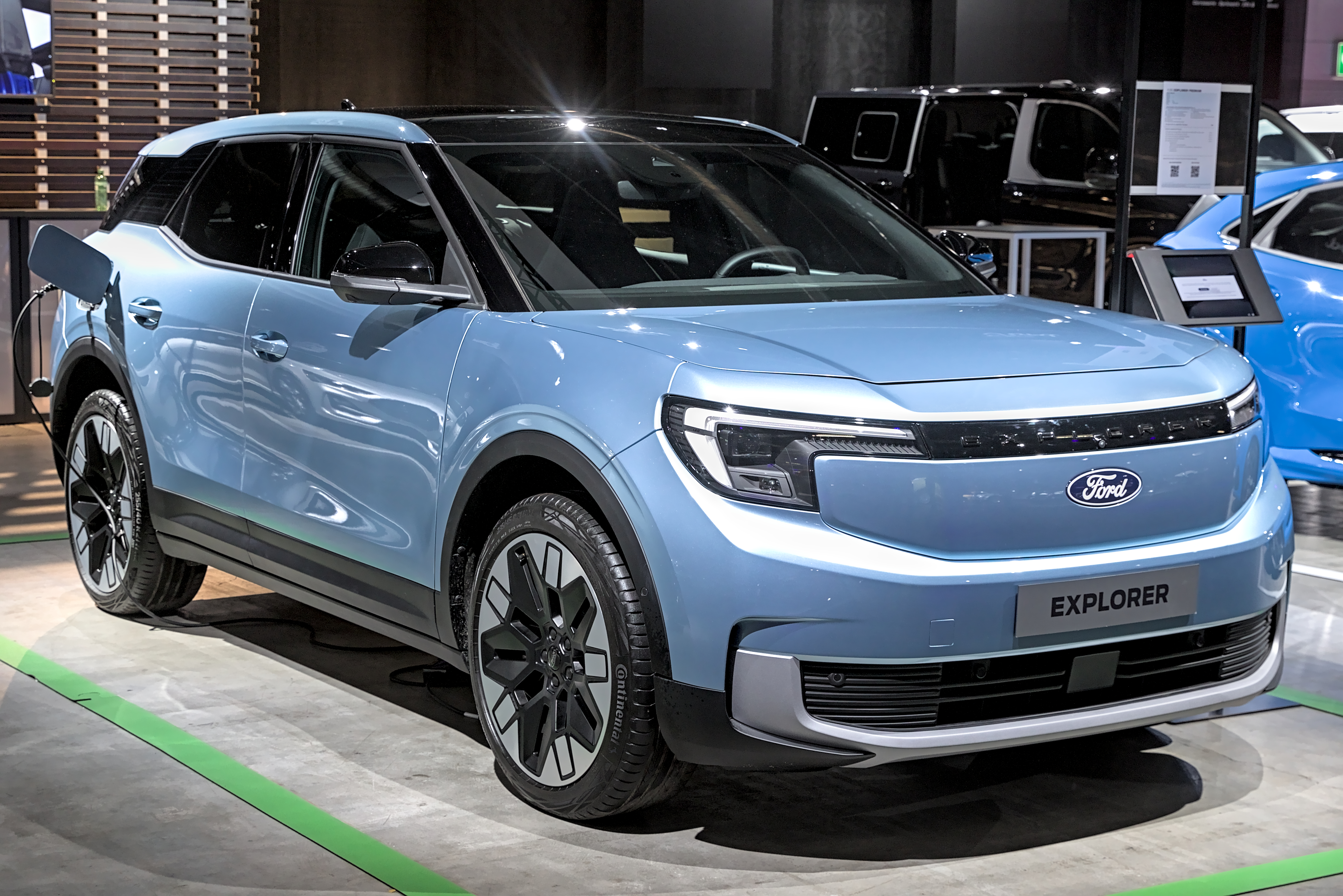
Ford Explorer
"I think the first performance modification I did I was 20 and I put a remote mount turbo on my Ford Explorer."
The Ford Explorer is an SUV model from Ford. Here, it’s the car the speaker modified when they were younger.
The Ford Explorer is a midsize SUV platform that’s often used as a base for DIY modifications. In this segment, it’s the vehicle where the speaker added a turbo-related setup and started tracking acceleration.
car detailing
"[561.6s] I was working in a car detailing and selling cars on the weekend I was around mechanics all week so I wasn't completely flying blind"
Car detailing is like giving a car a deep clean and a bit of restoration. People focus on both the inside and outside, and sometimes add protection so it stays looking good longer.
Car detailing is the process of thoroughly cleaning, restoring, and protecting a vehicle’s interior and exterior surfaces. It often includes washing, paint decontamination, polishing, and applying protective coatings or waxes.
tow car
"yeah it was just my tow car the Ford Explorer but it was the first one that I did the weird modification so I did need to"
A tow car is the vehicle you use to pull a trailer. Here, it’s the practical car that helps them get their race car to track days.
A “tow car” is the vehicle used to haul another car or equipment—commonly a trailer carrying a race car to events. In performance circles, having a reliable tow car matters because it reduces the risk of missing track days due to breakdowns and keeps costs under control.
wrecking yard
"so we started a wrecking yard this was again around that 2006 the wrecking yard turned into an eBay store"
A wrecking yard is where old or damaged cars are broken up and parts are sold. It’s basically a place to learn how cars are put together and find parts.
A wrecking yard (salvage yard) buys damaged vehicles and sells usable parts. For enthusiasts and mechanics, it’s an education in real-world component condition—what fails, what parts interchange, and how to source quality replacements.
automotive YouTube channel
"let's talk a little bit about that because I know we've probably got a bunch of listeners that watch a lot of automotive youtubers... what's the reality of starting an automotive youtube channel"
Making car videos isn’t just “becoming famous.” It takes a lot of time and practice, and viewers often correct mistakes, which helps you get better.
Starting an automotive YouTube channel is less about instant fame and more about consistent work: filming, editing, and staying accurate. The audience feedback loop (comments and corrections) can become a real learning tool over time.
DCT
"Then later on DCT or dual clutch transmissions came around, DSG, PDK, all the same sort of thing from different manufacturers"
DCT means a transmission with two clutches. It can switch gears quickly because it’s already preparing the next gear.
DCT stands for dual-clutch transmission. It uses two clutches to pre-select the next gear, which enables very fast, smooth shifts compared with a traditional automatic.
torque converter
"they relied on a very slippy torque converter to make it a smooth ride for the driver obviously. One downside with them was there was no control over that converter, it was set when the converter is made and you can't adjust that,"
A torque converter is the fluid part that connects the engine to the automatic transmission. It helps the car get moving smoothly, especially from a stop.
A torque converter is a fluid coupling between the engine and automatic transmission that multiplies torque at low speeds and allows smooth engagement. In older automatics, it’s also a major factor in how “on/off” the shifts feel.
lock up clutches
"You touched on it before about the power losses through the old automatics and even the ZF6s, mind you, they're not too bad with the lock up clutches and the way that they do operate."
Lock-up clutches are a feature that reduces the “slipping” in an automatic. When they engage, the car can transfer power more efficiently.
Lock-up clutches allow an automatic transmission to mechanically connect the engine to the transmission instead of relying on torque-converter slip. This reduces power losses and improves efficiency, especially at steady speeds.
ET
"you might lose a little bit of mile an hour and the auto chance because of the power loss, but you're probably going to find that it'll be more controllable to the 60 foot. It'll be actually quicker to get to the end of the strip. So your ET might come down"
ET is how long the car takes to go down the drag strip. Lower ET means the car is accelerating faster.
ET (elapsed time) is the time it takes a car to run from the start line to the finish line on a drag strip. It’s commonly used to compare how quickly a car accelerates, especially from the launch and through the early gears.
two clutches
"...two input shafts so they can essentially have two gears active at the same time and then use two clutches to transition those ratios instead of transitioning the synchros"
A DCT uses two clutches to swap between gears. That helps the car keep pulling more consistently instead of losing grip during the shift.
In a DCT, two clutches coordinate the engagement of the two pre-selected gear ratios. The clutches swap over during the shift, which reduces the time the drivetrain is unloaded and helps maintain traction.
DSG
"very fast and fully computer controlled. I mean Volkswagen and Audi are brilliant at their DSGs"
DSG is a type of automatic gearbox used by Volkswagen and Audi. It uses two clutches so it can switch gears fast, almost like a manual but smoother.
DSG stands for Direct-Shift Gearbox, Volkswagen’s dual-clutch transmission design. It uses two clutches to pre-select the next gear, so shifts can happen very quickly with minimal interruption to power.
clutch slip
"You mentioned the clutch slip and the problem with these is the diameter of the clutches is much smaller than a conventional manual with a big maybe a 7.5 inch, 9 inch clutch and you've got multi plates"
Clutch slip is when the clutch isn’t fully grabbing. If it slips too much, it gets hot and can burn out the clutch surfaces.
Clutch slip is when the clutch plates don’t fully lock together, so the engine and transmission aren’t perfectly coupled. In high-performance driving, excessive slip can overheat friction material and cause rapid wear or failure.
engine tuning
"If you're a fan of the podcast and you're interested in topics like engine tuning, automotive wiring, performance engine building, 3D modelling in CAD or anything else in the high performance industry, I have something that you might be interested in..."
Engine tuning means adjusting the car’s settings so it runs better. People do it to get more power, smoother response, or sometimes better fuel economy.
Engine tuning is the process of changing how an engine runs to improve performance, drivability, or efficiency. In modern cars this often involves calibrating fuel/air delivery, ignition timing, and boost targets via the engine control unit (ECU).
reflashing
"...courses cover everything from tuning and reflashing, petrol and diesel engines through to motorsport wiring, engine building, fabrication, design, car setup and plenty more."
Reflashing is when someone updates the car’s computer tune. It can make the engine respond differently and can unlock performance changes.
Reflashing is updating the vehicle’s ECU software with new calibration data. For performance builds, it’s commonly used to change fueling, ignition, boost, and transmission behavior to match the engine’s hardware and goals.
dyno
"On the dyno that we have at work, the mainline hub dyno we generally see."
A dyno is a machine that tests how much power a car makes. It can also show how much power is lost between the engine and the wheels.
A “dyno” is a test stand that measures power and torque by loading the drivetrain while the vehicle runs. Mainline hub dynos measure at the wheels/hubs, which can be useful for comparing drivetrain losses between transmissions.
quarter mile
"So on a quarter mile again, it's going to be a bigger difference again. Yeah, the big thing that makes the eight speed so popular for the aftermarket world…"
The quarter mile is a drag race over about 400 meters. They’re saying the 8-speed gearbox should show even more benefit over that longer acceleration distance.
The “quarter mile” is a drag-racing distance (about 402 meters) used to compare real-world acceleration performance. The speaker suggests the 8-speed advantage grows over longer runs because it can stay in the right ratios for more of the track.
clutch surface area
"So at any point in time, you've got a fairly large amount of clutch surface area. So the torque handling capability is not as limited as a conventional DCT?"
“Clutch surface area” refers to the total friction area of the engaged clutch plates. More surface area generally means the transmission can transmit more torque with less slip and less heat generation.
shift cut
"a lot of people do like that sharp RPM drop, [2669.3s] they like the torque reduction sound, whether it's a shift cut or however it's being done with a specific ECU,"
A shift cut is when the car briefly reduces power while changing gears. It helps the shift happen cleanly, but you may feel or hear the RPM dip.
A shift cut is when the ECU briefly reduces engine torque during a gear change. This protects the drivetrain and helps the transmission complete the shift quickly, but it can create an audible RPM drop.
8HP 70
"the majority of my experience has been with the particular 8HP 70 variant."
“8HP 70” is a specific version of ZF’s 8-speed automatic gearbox. The “70” generally means it’s built to handle more twisting force than the smaller versions, which matters when you’re making big power.
“8HP 70” refers to ZF’s 8-speed automatic transmission variant rated for higher torque than smaller 8HP versions. In this episode, it’s the speaker’s main experience and the preferred choice for swaps because it has more capacity for performance builds.
BMW
"but speaking to the more common brands, so Porsche, BMW, Jaguar, Land Rover, Dodge over in the States [2898.7s] they were all using AHPs and as many models as they could with the Dodge versus Jeep"
BMW is mentioned because the speaker knows these transmissions from BMW cars. That experience helps when figuring out what adapters or tweaks are needed for a swap.
BMW is highlighted because the speaker’s experience is “on the BMW ones,” implying BMW applications of the 8HP family are a major part of the swap knowledge base. BMW fitment details can influence adapter selection and compatibility.
Porsche
"but speaking to the more common brands, so Porsche, BMW, Jaguar, Land Rover, Dodge over in the States [2898.7s] they were all using AHPs and as many models as they could with the Dodge versus Jeep"
Porsche is one of the car brands that used this transmission. When a big brand uses a gearbox, it usually means more of them exist and parts are easier to find.
Porsche is mentioned as one of the brands that used ZF’s 8HP transmission family. That matters because it increases the supply of transmissions and related parts in the enthusiast market.
transmission swap
"So at this point we've physically got the gearbox mounted in the car. There's obviously an adaption required to get the shifter in there."
A transmission swap means putting a different gearbox into a car than it originally had. It’s not just bolting it in—you also have to make the electronics and shifting work correctly.
A transmission swap is the process of replacing a vehicle’s factory gearbox with a different transmission, often from another model or a modern unit. It typically requires mechanical fitment (mounts, driveshaft, linkage) plus electronic integration so the car’s controller can communicate with the new transmission.
ECU
"with the rest of your car electronics and most importantly your ECU. And whether that's a factory ECU or more likely I'm guessing probably at this point"
An ECU is the car’s engine computer. It decides how the engine runs, and it can also help other systems know how much power/torque the engine is making.
ECU stands for Engine Control Unit. It’s the computer that manages engine functions like fuel, ignition, and—when configured—how much torque the engine is producing so other modules can coordinate shifting and traction behavior.
TCUs
"And what the TCUs do, all of them do it. They are continually monitoring how fast a shift time is."
TCU means the transmission computer. It decides when to shift and how hard to apply the clutches so the gear change happens correctly.
TCU stands for Transmission Control Unit. It’s the transmission’s computer that manages clutch/gear changes by monitoring sensors and commanding hydraulic pressure and shift timing.
spool up
"we've talked about the loose converter to allow it to sort of spool up when you've got a big turbo small engine"
Spool up means the turbo is spinning fast enough to start making boost. If it spools up quickly, the car feels stronger sooner. Launch tuning often tries to line up spool-up with when you leave the line.
Spool up refers to how quickly a turbocharger reaches the speed needed to generate boost. Faster spool helps reduce turbo lag and makes the engine more responsive during launches. In drag-racing tuning, spool-up timing is often coordinated with converter behavior and launch RPM limits.
downshift blips
"...so even downshift blips when you're in manual mode"
A downshift blip is a quick little press of the gas while you’re shifting down. It helps the engine speed match the new gear so the car doesn’t jerk. They’re saying the system can do this to make driving smoother.
Downshift blips are quick throttle “blips” during a downshift to match engine speed to the lower gear. This reduces driveline shock and helps the car feel smoother and more responsive, especially in manual-mode or performance shifting. The speaker mentions blips in manual mode as part of making the car drive nicely.
8speed.au
"...you can actually contact me directly at 8speed.au but yeah if you've got a general question..."
“8speed.au” is Andrew’s website/contact for people in Australia who want help with eight-speed or dual-clutch transmission swap parts. It’s basically a way to reach him directly.
“8speed.au” appears to be Andrew’s contact site for customers in Australia looking for eight-speed or DCT-related swap parts/services. For listeners, it’s a direct pointer to the episode’s subject matter (transmission swaps).
motorsport
"So this week a big shout out to Francisco Pinto who said, I work as an engineer in an engine manufacturer for motorsport and this podcast helps a lot with brainstorming new ideas."
Motorsport just means racing. If someone works in motorsport engineering, they’re usually designing parts to handle extreme driving and competition conditions.
Motorsport refers to racing and competitive driving disciplines, from circuit racing to rally and endurance events. Engineering work for motorsport often focuses on performance, durability under high loads, and rules compliance.
Request an Explanation
Heard something you'd like explained? We'll add it to this episode.
Sign in to request explanations for terms you heard.
Want to learn more?
Browse our glossary for plain-English explanations of automotive terms, jargon, and concepts.
Help improve this episode
See something that's not quite right? Our annotations are AI-generated and can sometimes miss the mark. Click the flag icon on any annotation to suggest a correction.