
165: Pioneering the Mazda FD3S RX-7
About this episode
Peter Ferrell of Peter Ferrell Supercars joins the show to share his journey from Royal New Zealand Air Force engineer to factory IMSA racer and legendary Mazda RX-7 tuner. The discussion dives deep into the complexities of the FD3S RX-7 platform, detailing how PFS pioneered the first aftermarket tuning solutions for its notoriously difficult sequential twin-turbo system. Ferrell also demystifies the 13B rotary engine, explaining why these powerplants get a bad reputation and sharing the tuning secrets required to keep them reliable on and off the track.
We often hear about drivers who built successful racing careers, but Peter Farrell’s story goes far beyond the driver’s seat. While many enthusiasts know him for his work developing the legendary Mazda FD RX-7, his career stretches from rallying on a shoestring budget in New Zealand to developing some of the first performance upgrades for the FD and competing in factory-backed racing programs in the United States.
👉 Use the code ‘PODCAST500’ to get $500 OFF HPA's VIP Package: https://hpcdmy.co/podvip
After discovering rallying as a teenager, Peter combined his engineering background with an obsession for making cars faster. Whether it was pioneering turbocharged Ford Escorts, competing against legends like Possum Bourne, or moving to America with little more than ambition and mechanical skill, every chapter of his story was built on finding opportunities and making the most of them.
That determination eventually led Peter into professional endurance racing, where he drove for manufacturers including Mitsubishi, Peugeot, Saturn, and most famously Mazda. Along the way he helped develop the FD RX-7 into a race-winning platform, worked alongside Mazda's engineers in Japan, pioneered performance parts for the iconic rotary sports car, and experienced the golden era of factory-backed motorsport in America.
Beyond the racing, Peter shares invaluable insights into engine development, turbocharging, cooling, reliability, and why understanding the fundamentals matters just as much as having the latest technology. His stories highlight how ingenuity, persistence, and strong relationships opened doors that money alone never could.
This episode is packed with incredible stories from a fascinating motorsport career. From grassroots rallying and endurance racing to rotary development and factory engineering, Peter's journey offers lessons that every racer, tuner, and enthusiast can appreciate.
👉 Use the code ‘PODCAST500’ to get $500 OFF HPA's VIP Package: https://hpcdmy.co/podvip
Follow Peter here:
Youtube: pfsupercars1
Facebook: Peter Farrell
Timestamps:
0:00 Pioneering the Mazda FD3S RX-7
3:55 How did you first develop a passion for cars?
7:25 Competing in rally in New Zealand
17:39 Early turbo setups on 2.0 Pinto engines
28:58 Moving to America to go chase the rally dream
38:17 The switch to circuit racing and getting paid to race
1:00:18 Starting the relationship with Mazda
1:03:00 Building the FD RX7 to race in the IMSA Supercars
1:12:19 How to keep a Rotary reliable and fast?
1:17:40 Were you not allowed an aftermarket ECU?
1:20:05 Did you have problems with the factory gearbox?
1:32:51 Starting a performance parts business (PFS)
1:35:58 Peter Farrell Purple Box piggy back ECU
1:57:40 Final 3 questions

Mazda RX-7 FD
"He set me up in a conference room at a big table with all the heads of departments for the FDR-X7. So on my left was Kojima, who designed the suspension."
A famous Japanese sports car from the 1990s that uses a unique rotary engine instead of a normal piston engine. It is highly prized by car enthusiasts for its beautiful, curvy styling and incredibly sharp handling on twisty roads.
The third-generation Mazda RX-7, known by its chassis code FD, is a legendary Japanese sports car powered by a sequential twin-turbocharged 13B-REW rotary engine. Renowned for its lightweight, front-midship layout and near-perfect 50:50 weight distribution, it is widely considered one of the most beautiful and sharpest-handling cars of the 1990s.
Peter Ferrell
"Welcome to the HPA Tune In podcast, I'm Andrey your host, and in this episode we're joined by Peter Ferrell from Peter Ferrell Supercars."
A professional race car driver and car tuner from New Zealand who moved to America and became famous for building and racing fast Mazda RX-7 sports cars.
Peter Ferrell is a New Zealand-born racing driver and tuner who founded Peter Ferrell Supercars (PFS) in the United States. He became a prominent figure in the rotary tuning scene, developing pioneering aftermarket parts and tuning solutions for the FD-generation Mazda RX-7.
rotary engine
"Now Peter's got a very interesting background with a love of rotaries and a love of competition racing both on gravel and on tarmac."
An engine that doesn't have normal pistons going up and down. Instead, it has a triangular part that spins in a circle to create power, making it very smooth and compact but prone to wearing out faster.
A rotary engine, or Wankel engine, is an internal combustion engine that uses a triangular rotor spinning inside an oval chamber to generate power, rather than reciprocating pistons. Championed by Mazda, this design offers a high power-to-weight ratio and incredibly smooth high-RPM operation, though it suffers from poor thermal efficiency and high oil consumption.
sequential twin turbo system
"This is a platform that's quite difficult to provide an aftermarket standalone ECU for due to the complexities around the sequential twin turbo system."
A system with two turbochargers where one works at low speeds to help the car accelerate quickly, and the second one turns on at high speeds to give maximum power.
A turbocharging setup where a smaller primary turbocharger provides low-end boost, and a larger secondary turbocharger kicks in at higher RPMs to prevent lag. The FD RX-7's system is notoriously complex, relying on a complex network of vacuum lines and solenoids.
Apexi Power FC
"And PFS was actually the first company to bring a tuning solution to market even before the popular ApexE Power FC."
An aftermarket computer used to control a car's engine. It was very popular because it let tuners plug it in and easily adjust how much fuel and spark the engine got using a small handheld screen.
A highly popular Japanese aftermarket standalone engine control unit (ECU) widely used in the late 1990s and 2000s. It replaced the factory ECU and allowed tuners to adjust fuel and ignition maps, often using a handheld 'Hand Commander' controller.
piggyback ECU
"This was a piggyback tuning system, and it did have its limitations of course as you could imagine, but this unlocked the performance of the RX7."
A small add-on computer that plugs into a car's existing factory computer to trick it into making more power, rather than replacing the whole computer entirely.
An electronic tuning device that intercepts and modifies signals between the factory engine sensors and the stock ECU. Unlike a standalone ECU, it relies on the factory computer to perform basic engine management while altering specific outputs like fuel and boost.
Mazda 13B
"We also get into some of the intricacies of the 13B engine, or rotary engines in general, why they sometimes get a bad reputation and what needs to be done with the tuning in order to keep them reliable."
A famous, compact 1.3-liter engine made by Mazda that uses spinning rotors instead of pistons. It is loved for its high-revving power but requires careful maintenance.
Mazda's most widely produced rotary engine, featuring a twin-rotor design with a displacement of 1.3 liters. In the FD RX-7, it was designated as the 13B-REW and featured the world's first mass-produced sequential twin-turbocharger system.

Ford Escort RS2000 (Mk1)
"So that put the brakes on it for a little bit until 1979, 1979 I bought a Mark I Ford Escort RS2000 Rally car."
A classic, lightweight British Ford from the 1970s that became famous for winning off-road rally races.
The Mk1 Ford Escort RS2000 is a legendary rear-wheel-drive performance car powered by a 2.0-liter Ford Pinto engine. It became a dominant force in international rallying during the 1970s due to its lightweight chassis, exceptional balance, and easily tunable mechanicals.
Cosworth BDA
"Truthfully watching the Walmart, Mike Marshall and Hanoomickler in the Mark I Escort RS 1600 BDAs back in the early rallies in New Zealand..."
A famous high-performance race engine from the 1970s that was known for making an incredibly loud, high-pitched screaming sound at high speeds.
A famous series of racing engines developed by Cosworth, featuring a dual overhead cam (DOHC) 16-valve cylinder head on a Ford block. The 'Belt Drive, Series A' engine is legendary in rallying for its high-revving nature and distinctive screaming exhaust note.

Ford Orion
"So I quit aerospace and joined the Air Force in 1976 and I went on to survey years in New Zealand Air Force, worked on the C-130s and the P3 Orion's Iroquois helicopters and I really found my home with the P3s and the engines, the big T56 turboprops and you know I was qualified to do high power test runs on those engines and stuff and that sort of really excited me."
The Ford Orion is a simple, vintage four-door family sedan that was sold in Europe. It was basically a hatchback car with a traditional trunk added to the back.
The Ford Orion is a small family car produced by Ford Europe from 1983 to 1993, essentially serving as a sedan version of the popular Ford Escort hatchback. It was designed to offer a more traditional three-box shape with a larger trunk for buyers who preferred sedans over hatchbacks.

Ford Expedition
"... hitching a ride on a C 130 and it was a shopping expedition. Yeah, it was called indulgence travel if anybody..."
The Ford Expedition is a very large, three-row family vehicle made by Ford. It is built like a truck, which makes it good for carrying lots of people and towing heavy trailers.
The Ford Expedition is a full-size, three-row SUV built on a truck platform, designed for large families, heavy towing, and off-road capability. It represents the largest SUV in Ford's lineup, offering massive interior space and powerful turbocharged V6 engines.
Possum Bourne
"I actually won my first event, which was the Woodhill rally where I had the privilege of actually beating possum born."
A beloved and highly successful rally racer from New Zealand who won many championships driving Subaru rally cars.
One of New Zealand's most famous and successful rally drivers, best known for his long association with Subaru and winning the Australian Rally Championship seven times consecutively. He tragically died in a non-competitive car crash in 2003.
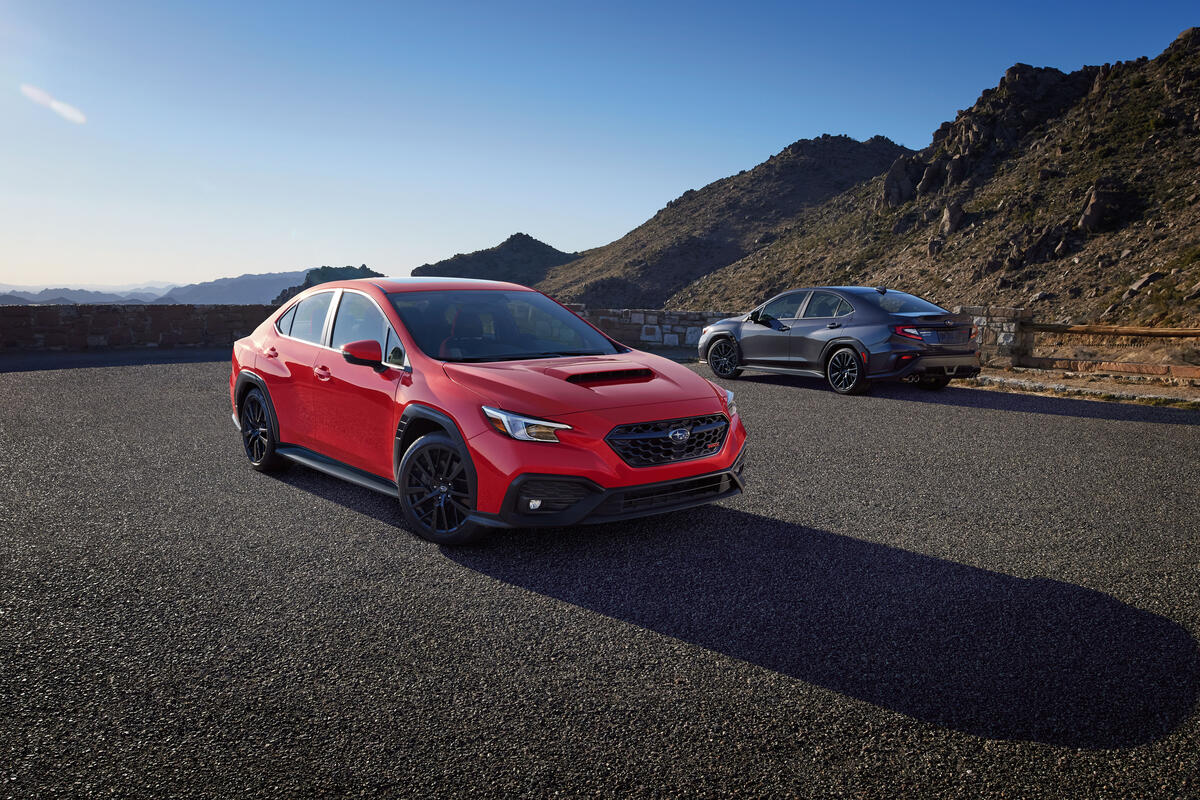
Subaru Wrx
"...onal folks might relate to us. He was driving the Subaru WRX at the same time as Colin McCray, etc. and compet..."
The Subaru WRX is a sporty, four-door sedan made by the Japanese company Subaru. It is famous for having a powerful engine and an all-wheel-drive system that helps it grip the road well in all kinds of weather.
The Subaru WRX is a turbocharged, all-wheel-drive performance car that gained legendary status in the 1990s through its success in the World Rally Championship with drivers like Colin McRae. It brought rally-bred technology to the road, offering everyday usability combined with sports car performance.
detonation
"And next thing I was into building fresh engine, which I did. And we had to just tune it by thrashing up and down the road basically."
When the fuel inside an engine explodes too early and violently instead of burning smoothly. This creates a metallic pinging sound and can easily break engine parts.
Also known as engine knock, this is the uncontrolled, premature ignition of the fuel-air mixture in the cylinder. It creates violent pressure spikes that can quickly destroy internal engine components, especially fragile rotary apex seals.
water-methanol injection
"A draw through side draft Weber 45 Weber and it used water injection to prevent detonation. Yes, the problem with a draw through setup of course is that you can't run an intercooler..."
A system that sprays a fine mist of water and alcohol into the engine's air intake. This cools down the engine internally, allowing it to run more boost safely without exploding.
A system that sprays a mixture of water and methanol into the engine's intake tract to cool the intake charge and increase the effective octane rating. This helps suppress engine detonation (knock), allowing for higher boost pressures and advanced ignition timing.
compression ratio
"And also we cut the compression ratio back to like 7 to 1. Yeah. So we used to machine the top off the TRW forged pistons and drop the compression way down..."
A measurement of how tightly the engine squeezes the air and fuel mixture inside its cylinders before igniting it. Squeezing it less (lower compression) helps prevent engine damage when using a turbocharger.
The ratio of the maximum volume of the combustion chamber (when the piston/rotor is at its lowest point) to the minimum volume (at its highest point). Lowering the compression ratio is a common practice in forced-induction engines to prevent detonation under high boost.

Mitsubishi Lancer
"...y cars in New Zealand was mine, Morrie Chandler's Lancer Turbo. He just got that."
The Mitsubishi Lancer Turbo is an older, sporty four-door sedan from the 1980s. It used a turbocharged engine to go much faster than a standard family car.
The Mitsubishi Lancer Turbo, specifically the EX 2000 Turbo of the early 1980s, was a rear-wheel-drive performance sedan that laid the groundwork for Mitsubishi's future rally dominance. It featured a turbocharged, fuel-injected engine that made it a formidable competitor in international rallying before the advent of all-wheel drive.
turbo lag
"Talk about turbo lag down in hindsight, had a lot of turbo lag. Yeah, I was a couple of things I want to dig into there. First of all, detonation."
The hesitation or delay you feel when you step on the gas pedal in a turbocharged car before the turbo spins up and the extra power suddenly kicks in.
The delay between pressing the accelerator pedal and the turbocharger spooling up to produce significant boost and power. It is caused by the time required for exhaust gas volume and velocity to build up enough to spin the turbine.

Peugeot 205 T16
"...r, a guy that a good friend of mine had a Peugeot 205 T16. And then, unfortunately, John was killed in a sm..."
The Peugeot 205 T16 is a rare, high-performance racing car built in the 1980s. Although it looks like a small hatchback, the engine is actually in the back seat, and it has four-wheel drive to go extremely fast on dirt roads.
The Peugeot 205 T16 is a legendary Group B rally homologation special, featuring a mid-mounted turbocharged engine and four-wheel drive wrapped in a body resembling the standard 205 hatchback. It dominated the World Rally Championship in 1985 and 1986, cementing its place in motorsport history.

Peugeot 205
"...n Woodner, a guy that a good friend of mine had a Peugeot 205 T16. And then, unfortunately, John was killed in ..."
The Peugeot 205 CTI is a small, sporty convertible hatchback made by a French company. It was designed to be fun to drive with the roof down.
The Peugeot 205 CTI is the convertible version of the iconic 205 GTI hot hatch, featuring styling by Pininfarina and a lively fuel-injected engine. While it lacked the structural rigidity of the hatchback, it offered open-top motoring combined with the GTI's spirited driving dynamics.

Born Bournes
"And he also co-drove for Possum in the Australian series. I remember seeing that name on Possum Bourne's car, yes. Yeah, yeah. In fact, his car, his name's on the 323 GTX that's down"
The Cupra Born is a modern, sporty electric hatchback. It runs entirely on battery power and is designed to be fun to drive while producing zero emissions.
The Cupra Born is an all-electric hot hatchback produced by the Spanish brand Cupra (a subsidiary of SEAT/Volkswagen Group). It shares its platform with the Volkswagen ID.3 but features sportier styling, a more driver-focused interior, and sharper suspension tuning.

Plymouth GTX
"...ah, yeah. In fact, his car, his name's on the 323 GTX that's down at the museum in Southland. I saw it ..."
The Plymouth GTX is a classic, powerful American muscle car from the late 1960s and early 1970s. It was designed to be both fast and comfortable, featuring a very large V8 engine.
The Plymouth GTX is a classic American muscle car produced from 1967 to 1971, marketed as a 'gentleman's muscle car' that combined high-end luxury trim with massive V8 power. It was standard with a 440 cubic-inch engine, with the legendary 426 Hemi available as an option.

Audi Quattro
"...-wheel drive car. John Buffum was running an Audi Quattro and they were brand new hot machines at the time...."
The Audi Quattro is a famous German sports car from the 1980s. It was the first major racing car to use all-wheel drive, which helped it win many races on slippery dirt roads.
The Audi Quattro is a legendary sports and rally car that revolutionized motorsport in the 1980s by introducing all-wheel drive to World Rally Championship racing. Its success proved that all-wheel drive was superior for performance cars, forever changing the automotive industry.

Datsun 510
"...e went. So what made it work is I bought a Datsun 510 coupe off John Woodner. And this is a car that wa..."
The Datsun 510 is a small, classic Japanese car from the late 1960s and early 1970s. It is loved by enthusiasts because it is lightweight, simple to work on, and fun to drive.
The Datsun 510 is a compact car produced from 1968 to 1973, famous for its affordable price, independent rear suspension, and highly tunable overhead-cam engine. Often called the 'poor man's BMW,' it achieved massive success in Trans-Am racing and remains a cult classic.

Datsun 510
"...erica we went. So what made it work is I bought a Datsun 510 coupe off John Woodner. And this is a car that wa..."
The Datsun Bluebird is a classic, small family sedan from Japan. It became very popular because it was affordable, reliable, and surprisingly fun to drive.
The Datsun Bluebird Sedan (specifically the 510 generation) is a classic compact sedan that helped establish Nissan's reputation for engineering excellence globally. Featuring advanced independent rear suspension and a robust overhead-cam engine, it offered European-style handling at an accessible price.

Mitsubishi Starion
"So I went and being a turbo guy, I went and managed to sell a rally car to a guy, collected the money, and I went out and bought a brand new Mitsubishi Starion ESI in 1985."
A sporty, wedge-shaped Japanese car from the 1980s with pop-up headlights and a turbo engine that sent power to the rear wheels.
The Mitsubishi Starion is a turbocharged, rear-wheel-drive sports coupe produced in the 1980s. It was a pioneer of Japanese electronic fuel injection and turbocharging, competing successfully in showroom stock endurance racing.

Dodge Charger
"...lown off down the back straight by a Dodge Shelby Charger that's meant to be 145 horsepower and that's gone..."
This is a sporty hatchback version of a Dodge car from the 1980s that was upgraded by a famous car designer named Carroll Shelby. It was designed to be affordable, lightweight, and fun to drive.
The Dodge Shelby Charger was a front-wheel-drive hatchback produced in the 1980s, modified by legendary tuner Carroll Shelby to extract more performance from its turbocharged four-cylinder engine. Despite its modest 145 horsepower rating, its lightweight chassis made it surprisingly quick on race tracks.

Dodge Ram
"...o play. Well, Steve went out and promoted up some Dodge Ram race trucks. There was a brand new series called ..."
The Dodge Ram is a large, powerful American pickup truck designed for hauling heavy loads and working on tough jobs.
The Dodge Ram is a line of full-size pickup trucks that gained massive popularity in the 1990s with its bold, 'big-rig' styling. It was also utilized in various truck racing series, showcasing its utility and rugged performance in motorsport.
bump drafting
"And that was probably a super competitive series. All the trucks were fairly equal and that's where I learned to do bump drafting."
A racing trick where a car behind gently hits the bumper of the car in front to push both of them faster down the straightaway.
A racing technique, common in stock car racing, where a trailing car physically bumps the rear bumper of the leading car to push both vehicles forward at a higher speed than they could achieve individually.

Honda CRX Si
"We were competing against the Honda factory teams back then with the Honda CRX SIs that had been dominating in the smaller categories and that I found myself with a competitive car."
A tiny, two-seat sporty hatchback made by Honda that is famous for being incredibly light, fun to drive, and great on gas.
The Honda CRX Si is a highly revered, lightweight front-wheel-drive hot hatch from the late 1980s and early 1990s. The Si trim featured a fuel-injected 1.6-liter engine and double-wishbone suspension, making it a dominant force in autocross and club racing.
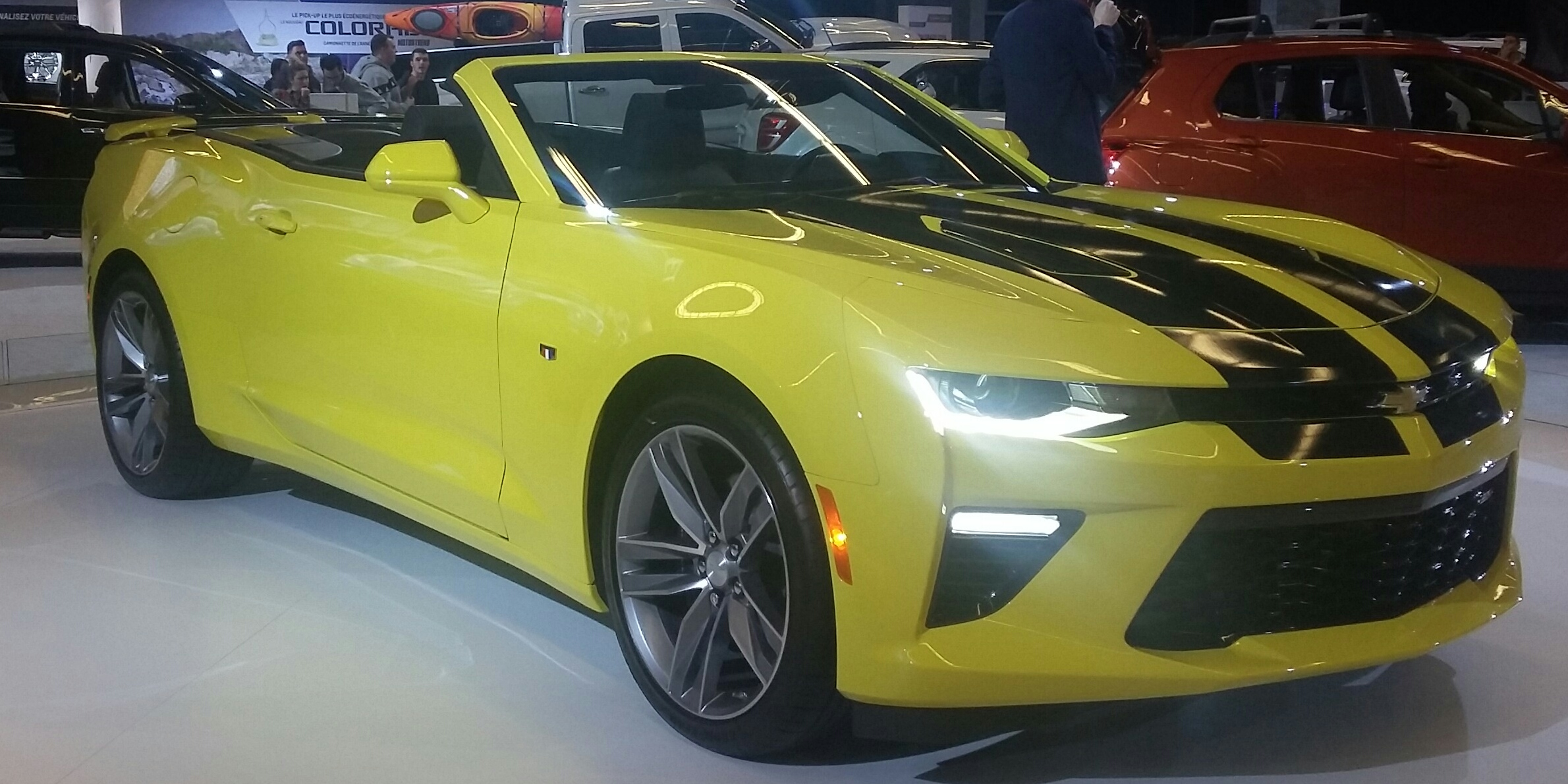
Chevrolet Camaro
"...is we're going down the back straight besides Z28 Camaro. Yeah, just don't get caught."
The Chevrolet Camaro is a classic American two-door sports car built by Chevrolet. The 'Z28' version is a special model designed to go faster and handle corners better than the standard version.
The Chevrolet Camaro Z28 is a high-performance variant of Chevy's iconic pony car, designed with upgraded suspension and a powerful V8 engine for track and street performance. It is discussed as a formidable straight-line competitor in road racing events.
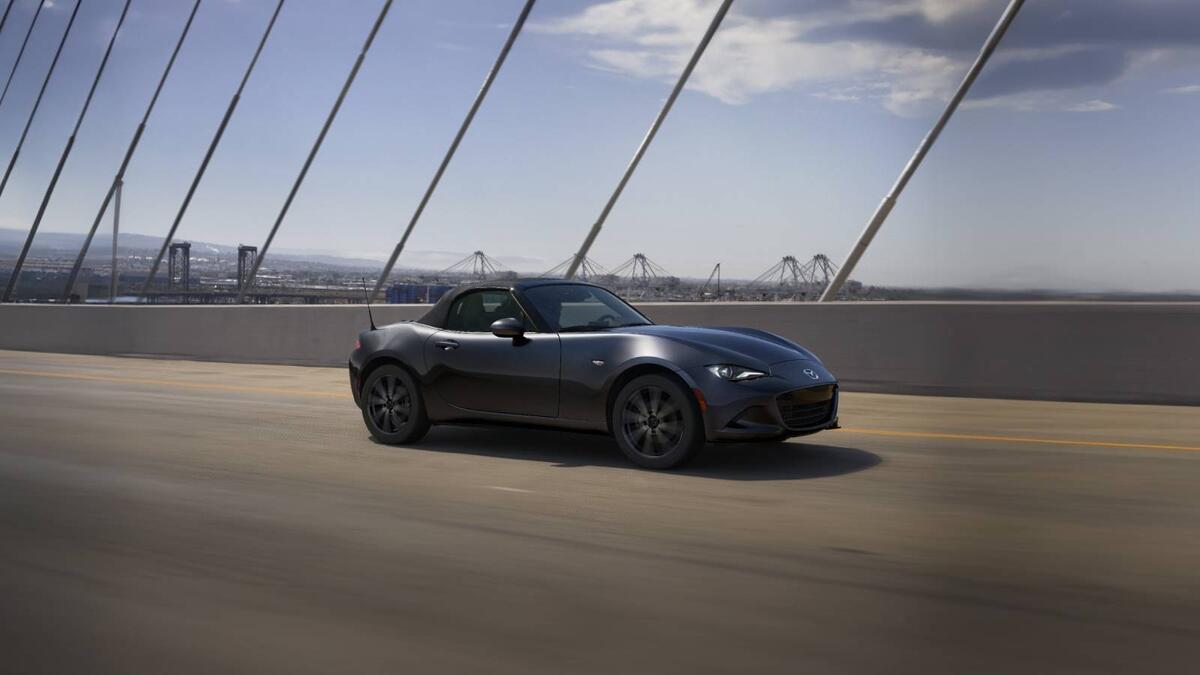
Mazda MX-5 / Miata
"...as time for the launch of well, I helped with the Miata, the MX five launch that was massive, but I didn'..."
The Mazda Miata is a small, two-door convertible sports car made by Mazda. It is famous for being very fun to drive, easy to park, and highly reliable.
The Mazda MX-5 Miata is a lightweight, two-seat roadster introduced in 1989 that revitalized the classic British sports car formula with Japanese reliability. It is celebrated globally for its near-perfect weight distribution, engaging manual transmission, and pure driving dynamics.

Chevrolet Corvette
"...hose, the Porsche Turbos and, you know, Chevrolet Corvette Lotus, factory Lotus team with the Lotus Esprit X..."
The Chevrolet Corvette is a famous American two-seat sports car. It is known for its sleek, low-to-the-ground design and powerful engine.
The Chevrolet Corvette is America's premier sports car, known for delivering high performance and V8 power at a fraction of the cost of European competitors. In the late 1980s and early 1990s, C4-generation Corvettes were highly competitive in showroom stock and endurance racing series.

Lotus Esprit
"...Corvette Lotus, factory Lotus team with the Lotus Esprit X180R, which was a specialty Lotus Esprit that wa..."
The Lotus Esprit is a low, wedge-shaped British sports car. The 'X180R' is a special, rare version built specifically for racing on tracks.
The Lotus Esprit X180R is a rare, race-homologated version of the iconic British mid-engine sports car, built to compete in the SCCA Escort World Challenge in the early 1990s. It featured a turbocharged four-cylinder engine, a stripped-out interior, and a full roll cage, making it a highly agile track weapon.
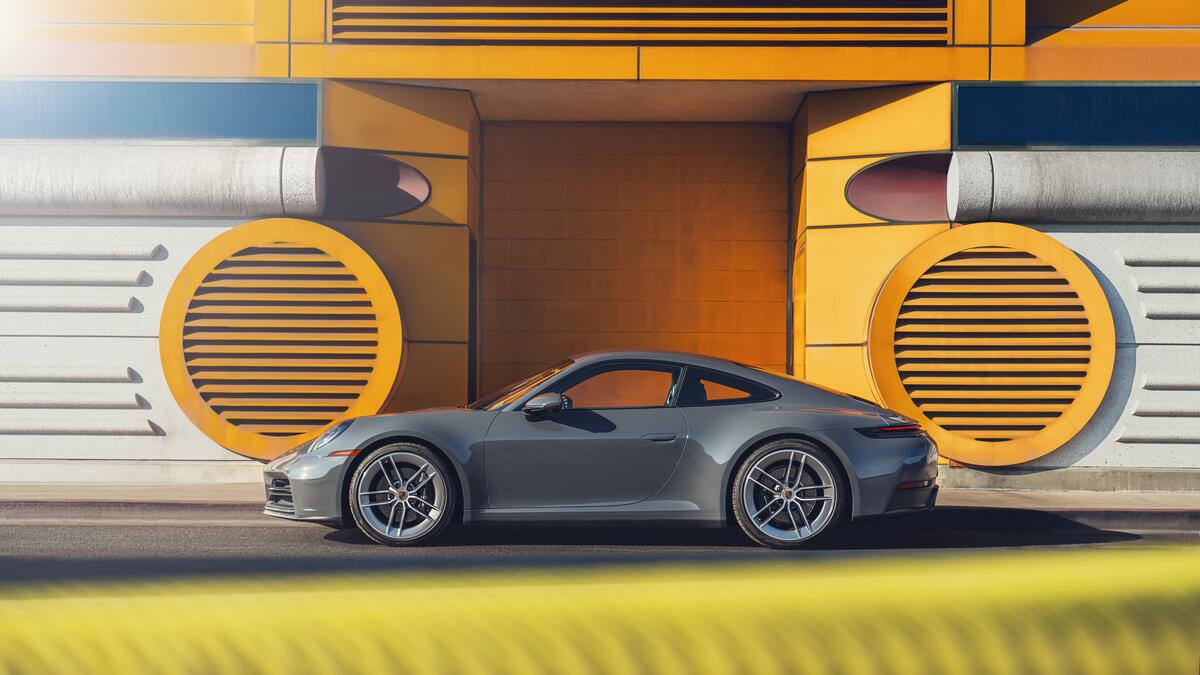
Porsche 911
"...e all had the same tire, of course, but the turbo 911 turbos were better because they had the weight ov..."
The Porsche 911 is a high-end German sports car with its engine located in the very back of the vehicle. The 'Turbo' version uses a special system to force more air into the engine, making it much faster.
The Porsche 911 Turbo is a legendary rear-engine sports car renowned for its explosive acceleration and distinctive wide-body styling. Having the heavy engine positioned over the rear wheels gave it exceptional traction out of corners, making it highly competitive in sports car racing.
Penske double adjustable dampers
"I had good suspension. I had Pinsky double adjustable suspension. That was when Pinsky were just getting into the shock absorber business."
Very expensive, high-tech racing shock absorbers that let mechanics adjust how the car reacts when hitting bumps and when settling back down, helping the tires grip the track better.
High-end racing shock absorbers developed by Penske Racing Shocks that allow independent adjustment of both compression (bump) and rebound damping. This level of adjustability is crucial for fine-tuning a race car's handling and tire contact patch.

Bmw 5
"...r, the BMW guys at the time did, there was a, the BMW 5 series had the European transaxles in them becaus..."
The BMW 5 Series is a comfortable, mid-sized four-door luxury car made by the German company BMW. It is designed to be both a comfortable family car and fun to drive on the highway.
The BMW 5 Series is a mid-size luxury executive sedan that has historically blended premium comfort with sporty driving dynamics. In racing and performance contexts, European-spec models often featured advanced drivetrain components like close-ratio gearboxes or specialized differentials.
power plant frame
"It was a power plant frame rigidly connected to the gearbox, rigidly connected to the front of the diff. All that torque is going through the nose of the diff casing."
A metal brace that connects the transmission directly to the rear axle gears. It keeps the drivetrain stiff and prevents it from twisting under hard acceleration.
A structural aluminum beam used by Mazda (most notably in the MX-5 Miata and FD RX-7) that rigidly connects the transmission to the rear differential. This eliminates drivetrain twist, improves throttle response, and reduces weight by eliminating the need for separate differential mounts.

Datsun 240Z
"...oh, I made my own engine management system for my 240Z. And I said, hang on, come back here."
The Datsun 240Z is a classic, two-door Japanese sports car from the early 1970s. It has a long hood, a short rear end, and is highly prized by collectors for its beautiful design.
The Datsun 240Z is a legendary sports car introduced in 1969 that revolutionized the global sports car market by offering sleek styling, a smooth inline-six engine, and daily reliability at an affordable price. It proved that Japanese manufacturers could build world-class sports cars.

Nissan Gtrs
"There was a few guys floating around that were running in the 11s. One guy had a GT-AR in the San Pauxa, there's a couple of GT-Rs, R32 GT-Rs, and a couple of Evo's."
The Nissan GT-R is a highly famous Japanese sports car. The 'R32' version from the early 1990s is loved for its incredible speed, high-tech grip, and racing success.
The Nissan GT-R (specifically the R32 generation, nicknamed 'Godzilla') is a legendary high-performance sports car featuring a twin-turbocharged inline-six engine and an advanced all-wheel-drive system. It dominated Group A touring car racing so thoroughly that it forced rule changes to remain competitive.

Nissan R32
"...T-AR in the San Pauxa, there's a couple of GT-Rs, R32 GT-Rs, and a couple of Evo's."
The Nissan Skyline is a family of Japanese cars that includes everything from regular sedans to incredibly fast, high-tech sports cars.
The Nissan Skyline is a long-running line of Japanese mid-size cars, most famous for its high-performance GT-R variants. While standard models were rear-wheel-drive sedans and coupes, the performance versions became global icons of automotive technology and tuning potential.

Eagle Talon
"...And I'd been following what was going on with the Talon Eclipses in the US and I ended up with a Mitsubis..."
The Eagle Talon is a sporty two-door car from the 1990s. It was built through a partnership between Chrysler and Mitsubishi, sharing almost all of its parts with the Mitsubishi Eclipse.
The Eagle Talon is a captive import sports coupe sold by Chrysler's Eagle brand, built alongside its sibling, the Mitsubishi Eclipse, under the Diamond-Star Motors (DSM) joint venture. The top-tier TSi model featured a potent turbocharged engine and all-wheel drive, making it highly sought after by drag racers.

Mitsubishi Eclipse
"...d been following what was going on with the Talon Eclipses in the US and I ended up with a Mitsubishi Evo 3 ..."
The Mitsubishi Eclipse is a sporty two-door car that was very popular in the 1990s. Some versions had all-wheel drive and a turbocharger, making them very fast and popular for customizing.
The Mitsubishi Eclipse is a sporty coupe that gained fame in the 1990s, particularly in its turbocharged, all-wheel-drive GSX trim. Developed in partnership with Chrysler (under the DSM umbrella), it became a cornerstone of the import tuning scene.

Mitsubishi Evo
"...he Talon Eclipses in the US and I ended up with a Mitsubishi Evo 3 and built that up. And I don't really know how ..."
The Mitsubishi Lancer Evolution is a high-performance version of a standard four-door family car. It has a powerful turbocharged engine and all-wheel drive, designed to go very fast on both paved roads and dirt tracks.
The Mitsubishi Lancer Evolution (specifically the Evo III) is a rally-bred, all-wheel-drive performance sedan powered by the legendary 4G63 turbocharged engine. Built to homologate Mitsubishi's World Rally Championship cars, it offered blistering acceleration and razor-sharp handling.

Nissan 300 ZX
"...e was friends with Doug and Doug was running that 300 ZX Twin Turbo in the Supercar series I mentioned ear..."
The Nissan 300ZX is a sporty, low-slung Japanese car from the 1990s. The 'Twin Turbo' version has a highly powerful engine that makes it very fast.
The Nissan 300ZX Twin Turbo (Z32 generation) was a flagship Japanese sports car of the 1990s, featuring advanced technology like four-wheel steering and a twin-turbocharged V6 engine. It was highly competitive in IMSA and showroom stock racing due to its high power and sophisticated chassis.

Jensen Interceptor
"...t that time. And he had a device called the crane interceptor and that which he, which was a piggyback computer..."
The Jensen Interceptor is a vintage luxury sports car from the 1970s. It was built in Britain but used a large, powerful American engine to make it fast and smooth to drive.
The Jensen Interceptor is a classic British grand tourer produced from 1966 to 1976, famous for combining elegant hand-built British styling with powerful American Chrysler V8 engines. It offered effortless high-speed cruising and a distinctive glass rear hatchback.

Ford Mustang
"...and was being sold through crane cams for the 5.0 Mustangs. I think I even remember that product."
The Ford Mustang is a famous American sports car. The '5.0' version refers to a model with a large, powerful V8 engine that makes a loud, classic rumble.
The Ford Mustang 5.0, particularly the 'Fox Body' generation of the 1980s and early 1990s, is a highly popular American pony car powered by a durable 5.0-liter V8 engine. It became a favorite of drag racers and tuners due to its lightweight chassis and massive aftermarket support.

Lucid Air
"my intake, the PFS intake was getting the air out of that intercooler duct. So it was cold air ..."
The Lucid Air is a high-end, fully electric luxury sedan. It is designed to travel very long distances on a single battery charge and has a very modern, spacious interior.
The Lucid Air is a luxury all-electric sedan known for its industry-leading driving range, ultra-fast charging capabilities, and minimalist interior design. It represents a high-tech, high-performance competitor in the premium EV market.

Mazda Rx8
"So I'm currently running a RX8 and the Mazda RX8 series. And we get, you know, 28, 30 cars on the grid at all the, you know, top tracks in New Zealand..."
A sporty four-door car from the 2000s that used a unique rotary engine and had small rear doors that opened backwards to make getting into the back seat easier.
The successor to the FD RX-7, featuring a naturally aspirated Renesis multi-side-port rotary engine and a unique quad-door layout with rear-hinged freestyle doors. It offered excellent 50:50 weight distribution and sharp handling but struggled with oil consumption and engine longevity.
Request an Explanation
Heard something you'd like explained? We'll add it to this episode.
Sign in to request explanations for terms you heard.
Want to learn more?
Browse our glossary for plain-English explanations of automotive terms, jargon, and concepts.
Help improve this episode
See something that's not quite right? Our annotations are AI-generated and can sometimes miss the mark. Click the flag icon on any annotation to suggest a correction.