
163: ZF 8HP: The Automatic Everyone Wants?
About this episode
ZF’s 8HP automatic gets framed as the swap gearbox people keep asking for: fast shifting like dog boxes, but with “the reliability and ease of drivability of an auto.” The discussion digs into why the TurboLamac controller makes swaps practical—torque modelling, bypassing the factory TCU, and CAN/ECU integration—plus how the 8HP’s efficiency and clutch-based behavior can reduce torque-converter downsides. Along the way, the hosts also debate tuning blame, early tuning limitations, and why shift smoothness matters for traction.
Automatic transmissions were once the last thing performance enthusiasts wanted in their builds—but that’s changing fast. Greg from Turbolamik is at the centre of that shift, helping bring ZF’s 8HP gearbox into everything from drift cars to drag builds, and showing just how capable modern automatics have become.
👉Use the code ‘PODCAST500’ to get $500 OFF HPA's VIP Package: https://hpcdmy.co/podvip
In this episode of Tuned In, we dive into Greg’s background, from growing up around grassroots motorsport in Poland to building a life in the US surrounded by rally and performance cars. His early experiences with Subaru’s and rally culture set the foundation for a career spent building cars, working with teams, and staying closely connected to the evolution of performance technology.
The focus then shifts to the ZF 8HP gearbox and why it’s quickly become such a popular swap. We break down its efficiency, strength, and fast shift speeds, along with how it compares to manuals, traditional automatics, and sequential gearboxes. Greg explains why these transmissions can handle serious power and how they’re being used across different motorsport disciplines.
We then dive into the Turbolamik standalone controller and what’s involved in making these swaps work. From CAN integration and torque modelling to adaptive shift strategies and advanced features like transbrake and launch control, the discussion highlights how full standalone control unlocks the true potential of the 8HP platform.
This episode is packed with insight into one of the fastest-growing trends in performance cars. Whether you’re building a drag car, drift car, or street machine, understanding the potential of modern transmissions like the 8HP could completely change how you approach your next project.
👉Use the code ‘PODCAST500’ to get $500 OFF HPA's VIP Package: https://hpcdmy.co/podvip
Follow Greg here:
Instagram: turbolamik.us
Facebook: turbolamik.us
Youtube: TurboLamikUS
WWW: turbolamik.us
Timestamps:
0:00 ZF 8HP: The Automatic Everyone Wants?
04:15 How did you become interested in cars?
10:07 Did you get involved in tuning?
13:51 Finding a gearbox to handle big power
15:52 What is it that makes the 8HP such a special gearbox?
22:29 What are the pros and cons of removing the torque converter?
27:15 Why is it now that everyone is doing the 8HP swap?
30:16 What are the Drag records with the 8HP?
31:39 Advantages over integrating into the factory TCU?
35:03 Is this a DIY installation for the Turbo Lamik?
37:31 How does the torque modeling work and shifting?
45:15 What ecu’s can you achieve torque reduction upshifts & throttle blips for downshifts?
47:55 What’s the difference between trans brake & launch control?
51:10 What’s the best vehicle to get an 8HP from & which model are we looking for?
56:10 Do we need torque reduction for full power upshifts?
57:20 How fast are the shifts compared to other gearboxes?
59:26 Is there further room for development with the 8HP?
1:06:10 Are other transmission companies trying to keep up with ZF?
1:09:30 Is the 8HP lighter than a DCT?
1:13:32 Final 3 questions
ZF 8HP gearbox
"Like, I'm already thinking about putting a ZF in. [27.8s] Welcome to the HPA TuneIn podcast, I'm Andre, your host and in this episode [32.5s] we're joined by Greg from TurboLamac USA. [41.8s] TurboLamac is arguably the go-to controller if you're considering an 8HP gearbox swap"
The ZF 8HP is a modern eight-speed automatic transmission made by ZF. People like it for swaps because it can shift fast for an automatic, but it’s still practical to drive.
The ZF 8HP is an eight-speed automatic transmission family made by ZF. It’s become popular for swaps because it can shift quickly for an automatic while still being relatively easy to live with day-to-day.
TurboLamac USA
"we're joined by Greg from TurboLamac USA. [35.5s] TurboLamac is arguably the go-to controller if you're considering an 8HP gearbox swap [41.8s] into your project vehicle and we wanted to find out why this is such a popular option,"
TurboLamac USA is mentioned as a company that provides the controller used to make an 8-speed automatic swap work. The controller helps the transmission shift correctly in your custom build.
TurboLamac USA is presented as the go-to controller supplier for an 8HP gearbox swap. In this context, they’re associated with the electronics needed to make the transmission behave correctly in a project car.
8HP gearbox swap
"TurboLamac is arguably the go-to controller if you're considering an 8HP gearbox swap [41.8s] into your project vehicle and we wanted to find out why this is such a popular option,"
An “8HP gearbox swap” is when you install a ZF 8HP transmission into a car that didn’t originally have it. The hard part is getting it to shift and work correctly with the car’s systems.
An “8HP gearbox swap” means replacing a car’s original transmission with a ZF 8HP. The key challenge is making the new transmission shift properly and integrate reliably with the rest of the car, which is why a specialized controller is often used.
controller
"TurboLamac is arguably the go-to controller if you're considering an 8HP gearbox swap [41.8s] into your project vehicle and we wanted to find out why this is such a popular option, [47.8s] why it's necessary in the first place, and also dive a little bit further into what the [52.8s] 8HP gearbox is"
Here, “controller” means the electronics that tell the transmission when and how to shift. Without it, the swapped gearbox may not work correctly or consistently.
In a transmission swap, a “controller” is the electronic unit that manages shift timing and other transmission behaviors. It’s what lets the swapped gearbox communicate with the engine and vehicle inputs so it can shift reliably.
aftermarket dog engagement gearbox
"In short, that 8HP gearbox is almost the perfect combination between the speed of shifting with [66.3s] a aftermarket dog engagement gearbox but with the reliability and ease of drivability of"
A dog engagement gearbox is a type of transmission that can shift very quickly using clutches. It’s usually more “race-like” and can be less smooth than an automatic for normal driving.
A dog engagement gearbox uses dog clutches for gear changes, which can be very fast and direct compared with traditional automatics. The tradeoff is that they’re often less smooth/easy to drive than an automatic, especially in everyday traffic.
horsepower
"On top of this, they also don't sap very much horsepower, so again, kind of almost the [88.9s] perfect option."
Horsepower is how much power the engine makes. They’re saying the transmission doesn’t steal much of that power, so more of it reaches the wheels.
Horsepower is a measure of engine power, and in this context the speaker is talking about drivetrain losses. The claim is that the 8HP doesn’t “sap” much horsepower, meaning it doesn’t waste as much power as some alternatives.
factory ECU
"and interestingly this controller is workable regardless whether you're using an [123.7s] aftermarket standalone ECU or interfacing with a factory ECU and only actually needs [129.2s] a few inputs in order to be able to do the job that it's designed to do."
The factory ECU is the original computer that came with the car to manage the engine. The TurboLamac controller can connect to it and still control the transmission properly.
A factory ECU is the original engine control unit installed by the vehicle manufacturer. The episode notes that the TurboLamac controller can interface with a factory ECU, using only a few input signals to coordinate shifting behavior.
aftermarket standalone ECU
"only actually needs [129.2s] a few inputs in order to be able to do the job that it's designed to do. [134.0s] We also talked about the torque modelling inside of the TurboLamac controller and this"
A standalone ECU is an aftermarket computer that controls the engine. The controller discussed here can be set up to work whether you’re using that aftermarket engine computer or the original factory one.
An aftermarket standalone ECU is a dedicated engine computer you install to replace or bypass the factory engine management. The TurboLamac controller can work with either this standalone ECU or the factory ECU, as long as it receives the required signals.
torque modelling
"We also talked about the torque modelling inside of the TurboLamac controller and this [139.2s] is really critical because the controller or the gearbox really needs to accurately [144.4s] know how much torque the engine is producing so that it can provide the correct shift"
Torque modelling is how the transmission controller figures out how much twisting force the engine is making. That estimate helps it shift at the right time and with the right clutch pressure.
Torque modelling is the controller’s method of estimating how much torque the engine is producing at any moment. This matters because the gearbox needs that estimate to set the correct shift pressures and choose an optimal shift strategy.
shift pressures
"know how much torque the engine is producing so that it can provide the correct shift [148.1s] pressures and hence the correct or optimal shift strategy. [153.0s] Before we jump into our chat, for those who are new to the TuneIn podcast, High Performance"
Shift pressures are the hydraulic pressures the automatic transmission applies to engage clutches and bands during a gear change. Getting the pressures right is essential for smooth, repeatable shifts and for protecting transmission components.
shift strategy
"pressures and hence the correct or optimal shift strategy. [153.0s] Before we jump into our chat, for those who are new to the TuneIn podcast, High Performance [157.0s] Academy is an online training school."
Shift strategy is how the transmission decides the timing and style of gear changes. If the controller knows the engine’s torque well, it can choose a better shift plan.
Shift strategy is the set of rules the transmission uses to decide when to shift and how to execute the shift (timing, pressure, and sometimes torque management coordination). The episode frames it as “optimal” when the controller accurately models engine torque.

BMW Series Bmw
"...st racing up the hill. I remember it was like a 5 series BMW. That was my first exposure to racing and we're t..."
head gaskets
"I beat the snout out of that car, you know, multiple head gaskets and clutches but I had it for years and I loved it."
The head gasket is a critical seal inside the engine. If it fails, the engine can overheat or mix fluids, and repairs can be costly.
A head gasket is the seal between the engine block and the cylinder head that keeps combustion gases and coolant/oil from mixing. When the host says they had “multiple head gaskets,” they’re describing a common type of expensive engine failure that can happen when the gasket fails under heat/pressure.
Subaru symmetrical all-wheel drive
"Whenever it was wet or gravel, that was the best car. I still think in a winter, you know, Subaru symmetrical all-wheel drive is probably one of the best-handling, you know, drivetrains, you know, low sort of gravity."
Subaru’s symmetrical all-wheel drive is their system for sending power to all four wheels in a balanced way. That balance can help the car feel more stable and grippy on slippery roads.
Subaru symmetrical all-wheel drive is Subaru’s AWD system layout where the drivetrain is balanced front-to-rear (and typically left-to-right) for consistent handling. The host argues it helps on wet or gravel and contributes to predictable grip and stability.
naturally aspirated
"Obviously that engine is legendary. But for handling, I think Subaru was pretty spot on."
Naturally aspirated means the engine doesn’t use a turbo or supercharger. It makes power by breathing air through the intake as the engine spins.
“Naturally aspirated” means the engine makes power without a turbocharger or supercharger; it relies on air pressure from the engine’s intake and engine speed. The host calls the engine “legendary,” which in this context points to the character and reputation of Subaru’s non-turbo rally-era engines.
drag racing
"But when I was getting into drag racing and stupidly at the time just showing my lack of knowledge of drag racing, I thought, well, four-wheel drive is obviously going to give"
Drag racing is racing in a straight line to see who accelerates fastest. It’s also hard on the drivetrain, so launch grip and transmission strength matter a lot.
Drag racing is a straight-line motorsport where cars accelerate over a short distance, usually focusing on launch traction and drivetrain strength. The speaker uses it to explain why assumptions about four-wheel drive giving an automatic advantage can be wrong.

Mitsubishi Lancer Evolution
"...e other. But we were sort of comparing Mitsubishi Lancer Evo III or GC8 Subaru STi and back then the five-spee..."
The Mitsubishi Lancer Evolution is a fast compact car made by Mitsubishi. It’s known for having all-wheel drive, which helps it grip the road. The podcast is comparing different Evo generations and transmission setups for performance.
The Mitsubishi Lancer Evolution (often called the Evo) is a performance compact car known for all-wheel-drive traction and strong tuning potential. The podcast compares an Evo III to a GC8 Subaru STi and mentions “five-spee…” (likely referring to transmission options), showing how builders evaluate drivetrain setups. It’s discussed because the Evo is a popular platform for performance builds and track-oriented setups.

GC8 Subaru STi
"But we were sort of comparing Mitsubishi Lancer Evo III or GC8 Subaru STi and back then the five-speed gearbox in the GC8, as everyone knows, is basically made of glass"
The GC8 Subaru STi is a classic Impreza STi generation. In this discussion, the key point is that its five-speed transmission is known for being weak compared to what people want to do with it.
The GC8 Subaru STi refers to the 1990s-generation Impreza STi (chassis code GC8), which is famous in enthusiast circles for its rally heritage and all-wheel-drive traction. Here, the host focuses on the GC8’s five-speed gearbox being prone to failure under hard use or higher power.
five-speed gearbox
"then the five-speed gearbox in the GC8, as everyone knows, is basically made of glass whereas I think I ran nine sixes and there was that point where the reliability of the"
A five-speed gearbox is the manual transmission with five gears. The speaker is saying that this specific transmission doesn’t handle abuse or big power increases very well.
A five-speed gearbox is a manual transmission with five forward gears. In this segment it’s specifically the GC8 Subaru STi’s five-speed unit, discussed as being “basically made of glass,” meaning it’s prone to damage when torque loads get too high.
air intake
"Back then, you buy a Subaru. There was no tuning. AEM I think just became a company so you could get like an air intake."
An air intake is a part that helps the engine breathe by changing the path of incoming air. The speaker is saying that back then, the main tuning options were things like intakes.
An air intake is an aftermarket ducting/airbox setup that changes how the engine gets air, often aiming to improve airflow and throttle response. In this segment, it’s mentioned as an early form of “tuning” that became available as companies like AEM offered intake products.
AEM
"Back then, you buy a Subaru. There was no tuning. AEM I think just became a company so you could get like an air intake."
AEM is a company that sells aftermarket performance parts for cars. In this segment, it’s mentioned as the sort of brand that started offering simple tuning upgrades like an air intake.
AEM is an aftermarket performance brand known for engine-management and intake/exhaust-related products. Here it’s referenced as the kind of company that made early tuning parts—like an air intake—available for Subarus.
Link ECU's
"All these guys are already tuning cars and Evo's and I think early days Link ECU's, [514.5s] maybe it was something before."
An ECU is the car’s computer for the engine. A “Link ECU” is an aftermarket engine computer that lets tuners change how the engine runs, instead of relying on the factory settings.
“Link ECU” refers to Link Engine Management standalone engine control units. A standalone ECU replaces (or fully controls) the factory engine computer so tuners can adjust fueling and ignition much more directly than with stock software.
stand-alones
"There were a limited number of people that were tuning stand-alones. [551.1s] You know, there's a lot of plug and play sort of chips for ECU's and you didn't really"
A standalone engine computer is an aftermarket ECU that takes over engine control. It can be tuned more flexibly, but it’s harder to get right than using the factory computer.
In tuning, “stand-alones” usually means standalone engine management systems (aftermarket ECUs). They’re popular with enthusiasts because they provide deeper control over engine parameters, but they also require more expertise to set up safely.
plug and play
"There were a limited number of people that were tuning stand-alones. [551.1s] You know, there's a lot of plug and play sort of chips for ECU's and you didn't really"
“Plug and play” means you install something with little wiring or setup. For tuning, it often makes it easier, but it may not give you the same level of control as a proper tune.
“Plug and play” refers to tuning hardware (often ECU chips or piggybacks) that’s designed to install with minimal setup. In practice, it can limit how precisely you can calibrate the engine compared to a full standalone ECU tune.
no knock sensors
"Yeah, even back then I remember they would get an email with the tune, you know, God [566.0s] knows from where, no knock sensors, no any real tuning."
Knock sensors are like an engine’s early-warning system for harmful pinging. Without them, the car can’t automatically pull timing to protect the engine if combustion gets too aggressive.
Knock sensors detect engine “knock” (abnormal combustion) and help the ECU adjust timing to prevent damage. If a setup lacks knock sensing, the ECU can’t reliably protect the engine from detonation, so tuning becomes riskier.
flash it
"They would just get a map, flash it and hope the engine lasts. [573.2s] And it didn't a lot of times, yeah."
To “flash” the ECU means to upload a new tune into the engine computer. If you do it without checking the results, you can accidentally make the engine run in a risky way.
“Flash it” refers to reprogramming the ECU by uploading new firmware/calibration data. It’s a common tuning workflow, but doing it without proper measurement and safeguards can lead to unsafe air-fuel or ignition settings.
dinos
"Well, the other problem back in that sort of era as well was access to dinos was difficult [582.7s] if not impossible."
“Dinos” means dynos, machines that test a car’s engine under load. Tuners use them to see what power you’re making and to help dial in the tune.
“Dinos” is shorthand for dynamometers—rolling-road or engine dyno testing equipment used to measure power and tune calibration. Limited dyno access makes it harder to validate changes safely and accurately.
wideband FU ratio meters
"And yeah, the other problem back in that sort of era as well was access to dinos was difficult [582.7s] if not impossible. [584.1s] And even things that we take for granted now like good quality wideband FU ratio meters,"
This tool tells you how much fuel the engine is getting compared to the air. “Wideband” means it’s more precise, which helps you tune safely instead of guessing.
A wideband air-fuel ratio meter measures the engine’s air-to-fuel mixture with much better resolution than older narrowband sensors. That lets tuners dial in fueling more accurately, which is critical for power and for avoiding overly lean/rich conditions.
tune
"Yeah. All right, so what direction did you go with this? [607.3s] It sort of sounds like you were interested in the driving aspects. [610.6s] You've sort of alluded to maybe getting involved with the tuning side of things. [614.1s] Bring us up to speed. [616.0s] Actually, no, I actually never got into tuning."
A “tune” is when someone updates the car’s computer settings. That can change how much fuel the engine uses and when it ignites, usually to make the car run better or support upgrades.
In car culture, a “tune” usually means changing the engine control unit (ECU) settings so the car delivers different fueling and ignition behavior. It’s often done to improve power, drivability, or to support modifications like a turbo or different fuel.
fuel pump
"[647.0s] You know, I understand how tuning works. [649.3s] I understand how car needs to be prepared for tuning from fresh fuel pump, you know, plugs, [655.0s] you know, the basics that a lot of car owners, you know, kind of omit."
The fuel pump is what sends gas from the tank to the engine. If it can’t deliver enough fuel (or the pressure isn’t right), the engine may not get the right air-fuel mix, which can be dangerous.
A fuel pump supplies pressurized fuel to the engine’s fuel system. For tuning, the pump must be able to deliver enough fuel at the required pressure and flow; otherwise the engine can run lean, causing misfires or damage.
plugs
"[649.3s] I understand how car needs to be prepared for tuning from fresh fuel pump, you know, plugs, [655.0s] you know, the basics that a lot of car owners, you know, kind of omit."
“Plugs” are the spark plugs that ignite the fuel in the engine. If they’re worn out or the wrong type, the engine can misfire and the tune may not work as intended.
“Plugs” refers to spark plugs on gasoline engines, which ignite the air-fuel mixture. When preparing for tuning, worn or incorrect plugs can cause poor combustion, misfires, and misleading tuning results.
common misconception
"[664.1s] And I always point out that tuner isn't always the guy who messes up your engine. [669.0s] There's a lot of common misconception that, you know, my engine blew up because of a tuner. [674.4s] You know, nine out of 10 times, it's, you know, you got bad fuel, you got lost fuel pressure. [678.5s] People don't understand that."
They’re saying people often blame the tuner when an engine breaks. But the point is that the real cause is frequently something else—like bad fuel or problems with how fuel is getting to the engine.
The host is addressing a common misconception in tuning circles: that a tuner is automatically responsible when an engine fails. The argument here is that many failures are caused by underlying issues like bad fuel or fuel delivery problems rather than the tune itself.
fuel pressure
"[664.1s] And I always point out that tuner isn't always the guy who messes up your engine. [669.0s] There's a lot of common misconception that, you know, my engine blew up because of a tuner. [674.4s] You know, nine out of 10 times, it's, you know, you got bad fuel, you got lost fuel pressure."
Fuel pressure is how strongly the fuel system pushes gas to the engine. If it’s too low, the engine may run short on fuel, which can lead to problems—especially after a tune.
Fuel pressure is the pressure at which fuel is delivered to the engine’s injectors. If fuel pressure is too low (or unstable), the engine may not get enough fuel for the tune’s fueling targets, increasing the risk of lean conditions and engine damage.
sequential dog box
"and the Holy Grail was always a sequential dog box. [850.3s] And you know, I would still say that driving around in a car fitted with a sequential dog box [856.2s] makes you feel pretty cool."
A sequential dog box is a motorsport-style gearbox that uses “dog” clutches and a sequential shift pattern (you move through gears in order). It’s built for fast, hard shifts and strong engagement, but it tends to be loud and less forgiving than street-focused gearboxes.
straight cut gears
"Real quick. [862.6s] Real quick. [863.8s] So yeah, the two problems with a motorsport styled dog box is they're noisy. [868.6s] Straight cut gears typically, they're very noisy, the clunks on the shifts."
Straight cut gears are gears with teeth cut parallel to the gear’s axis, unlike helical gears. They can be stronger and efficient for racing applications, but they’re typically much louder, which is why the host calls out the noise.
automatic gearbox conversions
"So then if we thought about automatic gearbox conversions into something that maybe originally had a manual gearbox and it would have been a hard no."
This means putting an automatic transmission into a car that was originally built with a manual. It’s not just “bolt it in”—the car’s parts and computer systems have to match the automatic setup.
This refers to swapping an automatic transmission into a car that originally came with a manual gearbox. It’s a common modification idea, but it can be complicated because the drivetrain layout, electronics, and mounting points often differ between manual and automatic setups.
slow shifts
"the heavy, big torque converter, slow shifts, not a lot to really kinda get excited if you're a car guy or a car girl."
“Slow shifts” means the transmission takes a noticeable moment to change gears. When it happens during acceleration, the car can feel less punchy and less in sync with your right foot.
“Slow shifts” describes delayed or sluggish gear changes in an automatic transmission. Enthusiasts often dislike it because it interrupts acceleration and can make the car feel less responsive than a manual or a fast dual-clutch setup.

8HP
"8HP though seems to have really changed or addressed at least a lot of those aspects. So what is it about the 8HP that makes it such a special gearbox?"
“8HP” is ZF’s eight-speed automatic transmission. The idea is that it shifts and works more efficiently than older automatics, so it can feel more responsive.
“8HP” refers to ZF’s eight-speed automatic transmission family. The key point is that it’s designed to improve shift response and efficiency compared with older, more torque-converter-heavy automatics—so it can feel more “car-guy” friendly in real driving.
ZF
"Well, first of all, ZF or ZF, however you wanna call it, obviously it's a very well known huge corporation that's been around for 100 years."
ZF is a big German company that makes car parts, especially transmission technology. Here, the point is that they’ve been doing it for a long time, so their designs tend to be well engineered.
ZF is a major German automotive supplier known for transmissions and other driveline components. In this segment, the host credits ZF’s long experience and engineering resources as part of why the 8HP automatic is considered advanced.
Euro emission standards
"So these gearboxes are more efficient in a road car application, whether you're in Europe with your Euro emission standards and in the States."
Euro emission standards are rules in Europe that limit how much pollution cars can produce. They can force manufacturers to make cars (including transmissions) more efficient and cleaner.
Euro emission standards are regulations in Europe that limit pollutants from vehicles, pushing automakers to design powertrains to burn cleaner and waste less energy. The host suggests these rules helped drive transmission efficiency improvements.
miles per gallon
"So these gearboxes are more efficient in a road car application, whether you're in Europe with your Euro emission standards and in the States. You know, this is where they save miles per gallon."
Miles per gallon (MPG) tells you how efficiently a car uses fuel. Higher MPG means you go farther on the same amount of gas.
Miles per gallon (MPG) is a fuel-economy measurement that indicates how far a vehicle can travel on one gallon of fuel. The host connects gearbox efficiency to MPG improvements, especially under emission-regulation-driven design goals.
drivetrain
"but a lot of that comes from the drivetrain. So you make a more efficient gearbox."
The drivetrain is everything that sends power from the engine to the wheels. In this discussion, it includes the transmission and how efficiently it moves power along.
The drivetrain is the set of components that deliver power from the engine to the wheels, including the transmission and final drive. The host’s point is that gearbox efficiency isn’t just about the engine—it’s also about how well the drivetrain transfers and manages that power.
billets
"With basic tools, we have customers, there's companies selling kits to make these gearboxes even stronger. There's billets, baskets, there's, you know, Dutson makes a kit."
“Billets” are upgraded metal parts made from a solid piece of material. In transmissions, billet parts are often used to make components stronger so they can survive more power.
“Billets” here refers to billet-machined upgrade parts (typically stronger, more precisely made components) used to reinforce transmission internals. The host frames these as part of the aftermarket that helps the 8HP handle higher torque.
stronger clutches and stronger plates
"There's plenty of companies that make stronger clutches and stronger plates. So even though it's a very sophisticated gearbox, it's very user friendly."
Inside an automatic, clutches and friction plates work together to transfer power when the transmission shifts. Upgrading them helps the transmission handle more force without slipping or burning.
The “plates” are friction surfaces that work with the clutches to transfer torque inside the automatic. Upgrading both clutches and plates is a common way to increase the transmission’s torque capacity and reduce the chance of slipping under load.
OEM application
"I think when they rate these gearboxes, they need to take an account that this is going to work in different parts of the world and that it's going to last you, you know, four or 500,000 miles. With that said, it's, you know, this is why we concentrated on 8 HP ZF. It's got a very good track record. In OEM application, it doesn't really go bad unless you, you know, unless you really try to burn clutches."
“OEM application” means how the car manufacturer intended the transmission to be used from the factory. The host is saying it tends to last in normal use unless you push it too hard.
“OEM application” means how the transmission is used in its factory-installed configuration (as opposed to modified builds). The host’s point is that the 8HP’s durability is best understood in normal factory-like conditions.
torque converter slip
"So you've been talking about efficiency and it sort of comes back to what I was saying earlier with the traditional automatic transmission. We get some torque converter slip and basically it's going to, between that and just literally spinning the gearbox the way it works internally,"
A torque converter uses fluid to transfer power, and sometimes the parts inside don’t rotate at exactly the same speed. That “slip” wastes some energy as heat, so the car can be less efficient.
Torque converter slip is the amount the transmission’s turbine speed lags behind the engine-side impeller speed inside a torque converter. More slip means more energy is lost as heat, which reduces efficiency compared with a manual or a fully locked converter.
flex plate
"So you've still got quite a large, heavy torque converter that's going to be bolted to the back of your crankshaft or your flex plate. And the gearbox itself, I am going to assume here is still going to be heavier physically than a comparable manual transmission?"
A flex plate is a metal plate attached to the engine that the automatic transmission’s torque converter mounts to. It’s part of how the engine and transmission connect on many automatics.
A flex plate is the thin, stamped metal plate that bolts to the engine’s crankshaft and provides a mounting surface for the torque converter. It flexes slightly as the engine rotates, helping accommodate vibration and connecting the engine to the automatic’s torque converter.
nine liters of fluid
"Yeah, correct. And it takes almost nine liters of fluid. Converter is heavy."
Automatic transmissions need a lot of fluid to work correctly. Mentioning “almost nine liters” is basically saying it holds a big amount of transmission fluid, which can influence weight and how the system is packaged.
Automatic transmissions use transmission fluid for lubrication and hydraulic control of clutches and the torque converter. Saying it takes “almost nine liters” highlights how much fluid capacity the ZF 8HP system needs, which affects weight and packaging.
eliminate torque converter
"So since we're talking in a converter side, there's actually an option that you can eliminate torque converter. Lots of our road racing customers develop the adapter that just sends the oil through."
Some racing setups can remove the torque converter and instead route oil directly so the transmission still has what it needs to function. The goal is usually to reduce wasted energy and improve efficiency.
Eliminating the torque converter means converting an automatic-transmission setup to run without the converter’s fluid coupling. In racing applications, this can reduce losses and improve efficiency by sending oil directly through an adapter so the transmission still gets lubrication/hydraulic supply.
clutch packs
"These gearboxes have internal clutches, several clutch packs. Some are used as brakes, some are used as clutches."
Inside an automatic transmission, a clutch pack is a set of friction plates that can grab or release to control how power flows. Think of it like multiple “clutch switches” working inside the gearbox. In this case, some packs can also act like brakes inside the transmission.
A clutch pack is a stack of friction discs and plates inside an automatic transmission that can engage different functions. In multi-clutch automatics, separate clutch packs can act like clutches for driving or like brakes to hold or redirect motion. The segment notes that these ZF gearboxes use multiple internal clutch packs for different roles.
multi-disc wet clutch pack
"It's a multi-disc wet clutch pack like a motorcycle. Yeah. We can do burnouts."
This is a clutch made from multiple friction plates, and it works while bathed in transmission fluid. The fluid helps keep it cool and can make it handle repeated hard use better. The host says this design is part of why the gearbox can do things like burnouts.
A multi-disc wet clutch pack uses multiple friction discs and runs in transmission fluid (“wet”) for cooling and smoother engagement. Compared with dry clutches, wet clutches can handle repeated slipping and heat better, which matters for aggressive driving. The host compares it to a motorcycle-style clutch pack and ties it to the ability to do burnouts.
burnouts
"We can do burnouts. That's how drifters, you know, drifters use it."
A burnout is when you spin the tires on purpose to heat them up and break traction. The host mentions it to show that this transmission setup can handle hard, aggressive driving. It’s a common thing drifters and performance drivers try to do.
A burnout is when a driver intentionally spins the driven wheels while the car is stationary or moving very slowly, usually to heat and stress the tires. In this segment, the host uses burnouts as an example of how the clutch-based launch strategy can support aggressive traction-losing driving. It’s presented as a capability that drifters and performance customers care about.

8HP70
"He's got a 2JZ BMW with an 8HP70 that he clutch kicked 56 gear on like a 275 tire and they're still happily taking that."
The ZF 8HP70 is a modern eight-speed automatic transmission. Here it’s being used in a drift car, and the point is that it can be made to launch and behave in a more “clutch-like” way for aggressive driving. The host is using it as proof it can handle that kind of abuse.
ZF’s 8HP70 is an eight-speed automatic transmission used in performance applications, known for its multi-clutch architecture. In this segment, it’s specifically discussed as being able to work with clutch-kick style launches (bypassing the usual torque-converter behavior) in a drift setup. The host’s example is meant to show the gearbox can survive hard use.
slip the converter
"But the downside is you have to drive it like a manual. You can no longer slip the converter."
In an automatic, “slip” means the engine and transmission aren’t perfectly matched in speed. That helps smooth things out, but it can also create heat.
“Slip” in a torque-converter context means the input (engine-side) and output (transmission-side) are rotating at different speeds. That controlled speed difference is part of how converters smooth engagement and manage torque transfer, but it also creates heat.
drive by wire clutch
"So you have to have a third pedal. It's a drive by wire clutch. Just think exactly like drive by wire throttle."
A drive-by-wire clutch means the clutch isn’t controlled by a direct mechanical connection. Instead, sensors and computers tell an actuator how much to engage the clutch.
A drive-by-wire clutch replaces a traditional mechanical linkage (like a cable or hydraulic actuation) with electronic control. The transmission/engine control unit commands clutch engagement based on sensors and driver inputs, typically for faster and more consistent control than purely mechanical systems.
Lucas
"Yeah, so that's Lucas. Lucas is the genius in Poland. We touched on the question how did this all become."
Lucas is the person the hosts credit with the idea and with explaining it to ZF engineers. They describe him as a key contributor behind the concept.
Lucas is identified as the “genius in Poland” who helped explain the concept to ZF engineers. The hosts frame him as having developed or advocated the approach that later got communicated to the manufacturer’s team.
solenoid
"So he started thinking they developed a very crude system to kind of bang the gears. And I mean, it's not that difficult to figure out which combination of solenoid gives you what gear. But then they found out that it needs a lot more finesse."
A solenoid is an electrically controlled valve. In an automatic transmission, it helps route fluid to make the transmission engage different gears. The better the control of the solenoids, the smoother and more reliable the shifting.
In an automatic transmission, a solenoid is an electronically controlled valve that opens and closes hydraulic fluid paths. By changing which solenoids are energized, the transmission can select different gear ratios. The episode is describing how the control strategy for these solenoids evolved to make the gearbox shift more reliably.
eight-hp swap scene
"And the last, you know, maybe four years, it just blew up. The whole eight-hp swap scene exploded."
An “8HP swap” refers to converting a car to use a ZF 8-speed automatic transmission (the “8HP” naming is common in enthusiast circles). The “swap scene” is the community and aftermarket ecosystem that develops wiring, control integration, and supporting hardware/software to make the transmission work in non-stock applications. The speaker says this community grew rapidly once the swap became more viable.
reflashing
"This package of courses covers everything from tuning and reflashing, petrol, and diesel engines, [1570.2s] through to motorsport wiring, engine building, fabrication, design, car setup, and plenty more."
Reflashing means changing the software in your car’s computer. Tuners do it to make the car run and shift differently than it did from the factory.
Reflashing is updating a car’s engine or transmission control software by rewriting the calibration stored in the vehicle’s electronic control unit (ECU). In tuning contexts, it’s used to change how the car responds to throttle, fuel, ignition, and sometimes shift behavior.
motorsport wiring
"This package of courses covers everything from tuning and reflashing, petrol, and diesel engines, [1570.2s] through to motorsport wiring, engine building, fabrication, design, car setup, and plenty more."
Motorsport wiring is the special wiring work done for race cars or serious builds. It’s about making sure sensors and engine electronics are connected correctly and reliably.
Motorsport wiring refers to specialized electrical wiring and integration work done for racing or high-performance builds. It often includes adding or reworking circuits for sensors, data logging, ECUs, and safety/kill systems so everything is reliable under track conditions.
WinOLS
"[1594.6s] Want to define maps or tune with WinOLS, curious about CANBUS devices, [1599.6s] or how CAD can help make your dream build a reality?"
WinOLS is a computer program tuners use to edit the car’s calibration data. It helps them change the settings that control how the engine behaves.
WinOLS is a widely used PC software tool for editing engine and transmission calibration files. Tuners use it to view and modify “maps” (lookup tables) that control things like fueling, ignition timing, and boost targets.
CANBUS devices
"[1594.6s] Want to define maps or tune with WinOLS, curious about CANBUS devices, [1599.6s] or how CAD can help make your dream build a reality?"
CAN bus is the car’s internal messaging system—different computers in the car use it to communicate. CAN bus devices are tools that connect to that system to read data or help with integration for tuning or swaps.
CAN bus (often written “CANBUS”) is the in-car communication network that lets modules like the ECU, transmission controller, and sensors talk to each other. “CANBUS devices” in tuning typically refers to tools or interfaces that read or influence that data stream for diagnostics, logging, or integration during swaps.
drive-by-wire throttle
"especially on the modern car where you have drive-by-wire throttle, we can do blips, cuts,"
Drive-by-wire means pressing the gas doesn’t move a cable mechanically. It sends electronic signals, and the computer controls the throttle.
Drive-by-wire throttle means the accelerator pedal isn’t directly connected to the throttle body by a cable. Instead, the pedal sends electronic signals to the engine/ECU, which commands the throttle electronically—enabling precise control features like coordinated blips and cut strategies.
blips
"especially on the modern car where you have drive-by-wire throttle, we can do blips, cuts,"
In this context, blips are quick, controlled increases in engine speed (often via throttle/ECU command) to help the drivetrain transition smoothly during shifting. They’re commonly used to reduce driveline shock and improve shift feel, especially when coordinating with an automatic transmission controller.
cuts
"we can do blips, cuts, we can very well integrate with pretty much all major ECUs."
A cut is a short moment where the engine’s pull is reduced. Tuners use it to help the transmission shift more cleanly and quickly.
Cuts refer to brief reductions or interruptions in engine torque—typically by commanding fuel and/or ignition changes—during a shift event. In performance tuning, torque cuts can help the transmission complete shifts faster and more consistently by reducing load on the gearbox.
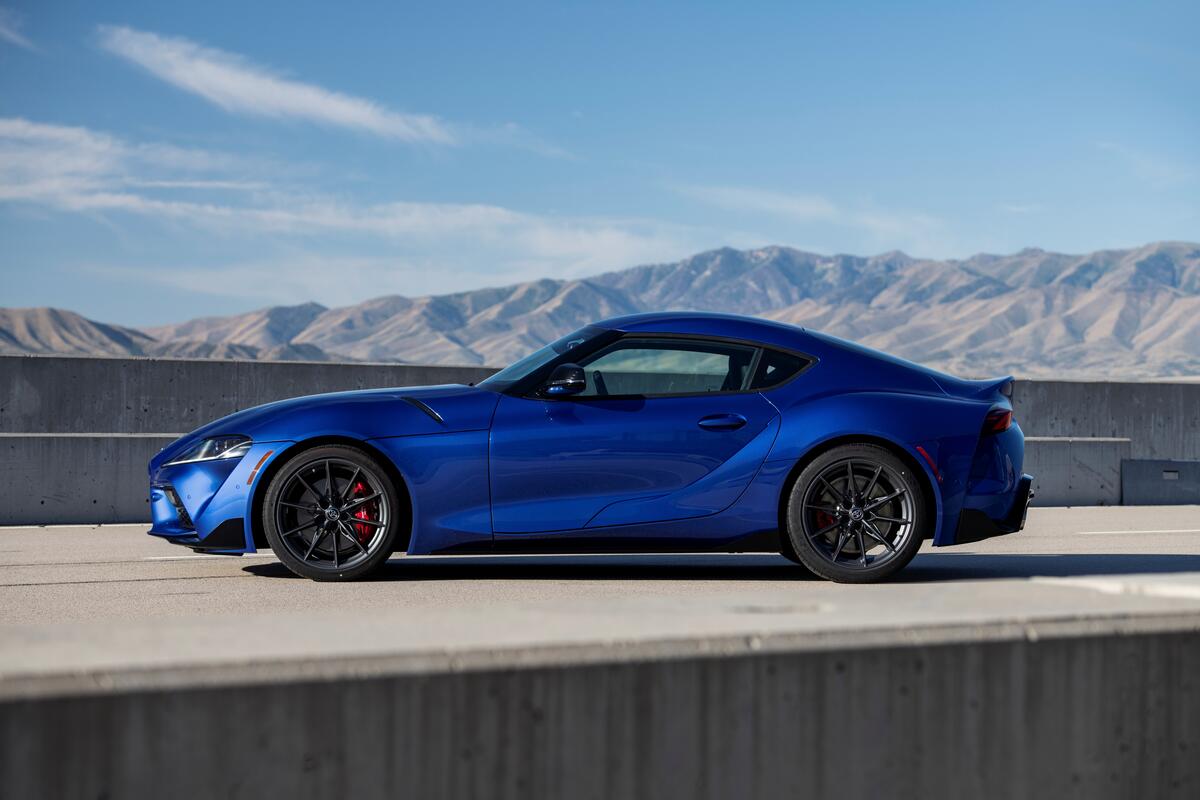
Mark V Supra
"in the drag world, in the States, we have probably 10 cars, like for example, Mark V Supra, B58, every single team that switches to our controller improves their times."
The Mark V Supra is the newer Toyota Supra. The host is saying their transmission controller helps it perform better and shift more consistently.
The Mark V Supra is the Toyota GR Supra generation known for its performance-focused turbocharged setup and strong aftermarket support. In this segment, it’s used as an example platform where a transmission controller improves drag/acceleration consistency.
can communication
"I don't care if it's a Mopar HP 70 or 90, or if it's a BMW gearbox, our controller is the same, we just change the can communication to talk to the car differently."
CAN communication is how different computer modules in a modern car exchange information. If you’re changing transmission control, you have to make sure the new controller sends and receives the right messages.
“CAN communication” refers to Controller Area Network, a common automotive data network that lets modules (like the transmission controller) exchange messages. When swapping or adapting transmission control, you often must change CAN messaging so the controller can “talk” to the car’s existing systems.
Haltech World Cup finals
"Did I tell you we do rally cars? But look up, this new record happened at the Haltech World Cup finals in fall of last year."
The Haltech World Cup finals is a racing event where teams compete using performance electronics. They mention it because a record was set there.
The “Haltech World Cup finals” is a motorsport event where teams compete using Haltech engine management and related electronics. In this segment it’s used as the setting for a new record, tying the transmission/controller discussion to real-world competition results.
transmission mount
"there are kind of off the shelf [1905.3s] conversion kits available to make that part easy. You know, make up a transmission mount [1911.2s] and then probably a tail shaft as well."
A transmission mount is what holds the gearbox in place under the car. When you swap parts, you may need a custom mount so the transmission lines up properly and doesn’t shake.
A transmission mount is the bracket/bushing system that physically supports the transmission and controls its position and movement. In swaps, you often need a custom mount so the gearbox sits correctly and doesn’t create misalignment or excessive vibration.
tail shaft
"make up a transmission mount [1911.2s] and then probably a tail shaft as well. So you've got the thing physically fitted,"
A tail shaft is part of the driveshaft that carries power from the transmission toward the rear differential or final drive. Swaps often need the right length so everything lines up.
A tail shaft is the driveshaft section that connects the transmission output to the rest of the drivetrain (often the differential). Swap kits may require a different tail shaft length or configuration to match the new vehicle’s layout.
Turbulamic
"So this is where Turbulamic comes in [1940.7s] fixing this now broken communication path so you can actually run the transmission. [1945.6s] So you've mentioned that you need to remove the factory TCU."
Turbulamic is mentioned as the company providing a solution for transmission swaps. The idea is to fix the electronics so the gearbox can still operate after you change engines or computers.
Turbulamic is referenced as the company that addresses broken communication between a factory transmission control setup and a swapped drivetrain. In this segment, they’re positioned as enabling the transmission to run correctly after the original control module is removed.
torque limiters
"So advantages is we're not worrying about torque limiters, you know, factory safeties. [1970.3s] The biggest one in my opinion, well a lot of people maybe not find that important,"
Torque limiters are built-in “don’t exceed this power” rules. They help keep the gearbox and drivetrain from being overloaded.
Torque limiters are safety/strategy features that cap how much engine torque the transmission is allowed to handle. They’re often implemented in factory logic to protect driveline components under certain conditions.
ZF intellectual property
"we're not infringing on ZF intellectual property. [1978.5s] We're as far as they're concerned, we're the only company that ZF as a company is called with"
The speaker is talking about ZF’s proprietary software. Their point is that they don’t change or copy ZF’s code, unlike some other approaches.
“ZF intellectual property” here refers to ZF’s proprietary software/logic used to control transmissions. The speaker argues their method avoids modifying or re-selling ZF’s software, framing it as a legal/ethical distinction versus competitors.
Ken Gateways
"Our competition is typically based on the Ken Gateways and a modified factory software. [1994.2s] So as far as ZF is concerned, that is a big no-no"
A gateway is a device that helps different car computers “talk” to each other. Here it’s described as a common approach competitors use when doing transmission/ECU swaps.
“Ken Gateways” appears to refer to CAN gateway devices used to translate or reroute messages between modules during swaps. The segment contrasts their approach with competitors that rely on gateways plus modified factory software.
Mechatronics unit
"The downside is you've got to pull the Mechatronics unit out of the gearbox, [2028.2s] which is super simple, couple torque screws and we physically open it"
The mechatronics unit is the transmission’s “brains and valves” in one package. It helps the car decide when to shift and physically directs fluid to make the gears change.
In an automatic transmission, the mechatronics unit is the integrated control-and-actuation module that manages hydraulic shifting. It typically combines an electronic control board with valves/solenoids that route transmission fluid to the right clutches and bands.
transbreak
"We can do proper transbreak, we have full control of the gearbox. [2065.3s] We're not relying on factory software anyhow."
A transbreak is a racing mode that keeps the car from moving while the engine revs up for launch. When you release it, the car can launch quickly and consistently.
A transbreak is a drag-racing feature that holds the transmission in a launch-ready state by locking it into a specific gear and preventing forward motion. When released, it allows a controlled, repeatable launch with the engine at the desired RPM.
adaptations
"We do some things in a similar fashion like adaptations, for example. [2073.8s] But other than that, we're 100% responsible for every function of the gearbox."
Adaptations are learned calibration values the transmission uses to compensate for wear and changing conditions. They help the controller match commanded clutch/valve behavior to what the transmission actually does over time.
CAN modules
"We talk to shifters, we talk to the CAN modules, we talk to the ECUs. [2082.5s] A lot more development on our end compared to a simple CAN gateway, like a piggyback."
CAN modules are parts of the car that communicate over a shared network. They let the transmission talk to other computers like the engine ECU.
CAN modules refer to devices on the vehicle’s CAN bus network. The CAN bus is how ECUs (engine, transmission, body electronics) exchange data, so a transmission controller can coordinate with the rest of the car.
CAN gateway
"A lot more development on our end compared to a simple CAN gateway, like a piggyback. [2087.6s] I call them piggyback because that's all they are."
A CAN gateway is a device that helps the car’s computers share information. In tuning, it can be used to tweak what one computer sends to another without taking over everything.
A CAN gateway is an interface that routes and sometimes translates messages between different CAN networks or ECUs. In tuning contexts, it’s often used to “intercept” or modify data without fully replacing the transmission’s control strategy.
piggyback
"I call them piggyback because that's all they are. [2089.2s] So from a sort of an end user perspective, is this a DIY installation"
Here, “piggyback” means a small add-on that works alongside the factory transmission computer. Instead of taking over completely, it usually just tweaks or intercepts certain signals.
In aftermarket transmission control, “piggyback” typically means an add-on controller that sits alongside the factory system rather than fully replacing it. It usually works by intercepting signals or adding limited control, which is why the speaker contrasts it with full standalone gearbox control.
oil pan
"You drop the oil pan, you drop the mechatronics, you open the low enclosure, [2111.3s] you sever the low wire connections, you put the board solder in."
The oil pan is the reservoir at the bottom of the transmission that holds transmission fluid. Accessing it is often required for internal work like removing the mechatronics unit or servicing valve/solenoid components.
potting it with the epoxy
"Then we have an option of either potting it with the epoxy [2130.8s] or we have the low covers that we put over the enclosure."
Potting means filling an electronics box with a special hard resin (epoxy). It helps protect the electronics from water and bumps so they don’t fail.
Potting is the process of filling an electronic module with epoxy so components are immobilized and protected. It helps guard against vibration, moisture, and short circuits in harsh automotive environments.
Motec
"Just purely because we talk to everything from Motec to Link to Haltec to, you know,"
Motec is a brand of aftermarket car computer used for tuning. People use it to control and adjust how the engine runs.
Motec refers to Motec engine management systems, which are aftermarket ECUs used for tuning and controlling powertrains. The speaker is saying their integration can work across different ECU brands, including Motec.
CAN data
"And even if there's an obscure ECU made in Lithuania, as long as we get a can data, [2215.0s] you know, typically it's can standard and we just add that to our support list."
CAN data is how different computers in the car communicate with each other. Instead of each module working alone, they send messages over a shared network.
CAN data refers to messages sent over the Controller Area Network (CAN), a common in-car communication bus. ECUs and other modules use it to share sensor readings and control requests, which is why aftermarket systems can “talk” to the car.
RPM
"We typically at very minimum need three things from the engine. [2223.4s] RPM, map sensor and TPS."
RPM tells you how fast the engine is spinning. The transmission control uses it to time shifts and match engine output to what the gearbox needs.
RPM is revolutions per minute, a measure of engine speed. In transmission control, RPM is a core input because it strongly affects how quickly the gearbox needs to respond and how torque should be managed during shifts.
map sensor
"We typically at very minimum need three things from the engine. [2223.4s] RPM, map sensor and TPS."
A MAP sensor measures how much air pressure is in the engine’s intake. That helps the car estimate how hard the engine is working so it can manage torque and shifting.
A MAP sensor (Manifold Absolute Pressure sensor) measures the pressure in the intake manifold. That pressure helps the ECU estimate engine load and airflow, which is then used to calculate torque and coordinate transmission behavior.
TPS
"We typically at very minimum need three things from the engine. [2223.4s] RPM, map sensor and TPS."
TPS means the throttle position sensor. It tells the car how much you’re asking for with the gas pedal, so the ECU can estimate torque and help the transmission shift smoothly.
TPS is the Throttle Position Sensor, which reports how far the accelerator pedal/throttle is opened. It’s used to infer driver demand and engine load, which then feeds torque calculation for smoother gearbox control.
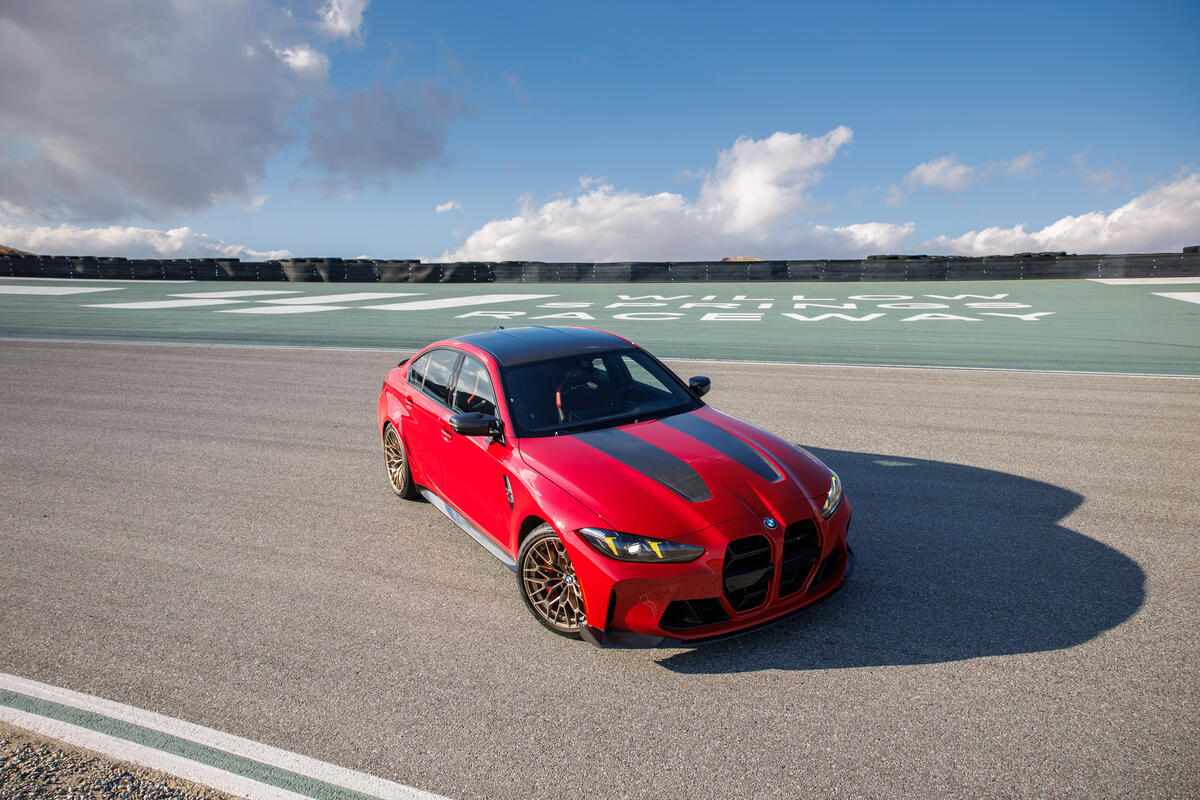
BMW M3
"If we're on a factory, you know, BMW M3 that's tuned on a factory DME that only [2286.8s] reports to certain number of torque and then the rest is just, you know,"
The BMW M3 is a performance BMW that many people tune. Here it’s mentioned as an example of a car where the factory engine computer (DME) only reports torque accurately up to certain limits.
The BMW M3 is BMW’s high-performance sports sedan/coupe line, known for being a popular platform for tuning and aftermarket ECU/gearbox integration. In this segment, it’s used as an example of a factory-tuned setup where the DME reports torque in a limited way.
DME
"None of the data coming from a DME is accurate because they're all cheating, [2307.8s] you know, to stop the ECU from protecting the engine."
DME is BMW’s engine computer. It controls things like fuel and timing, and it can also show numbers like torque—but those numbers may be influenced by the car’s safety/protection strategies.
DME (Digital Motor Electronics) is BMW’s engine control unit (ECU). It manages engine functions and also reports measured/estimated values like torque, but those reported numbers can be affected by how the ECU is programmed to protect the engine.
throttle position
"So you're on a Haltech or a Link and you said you need throttle position, [2328.9s] manifold absolute pressure and engine RPM."
Throttle position tells the computer how open the throttle is. More open throttle usually means more air and fuel, so it’s used to estimate how much torque the engine is making.
Throttle position is the sensor-reported opening angle of the throttle body/plate. It’s a key input for engine load calculations and for estimating torque, especially in standalone aftermarket ECU setups.
manifold absolute pressure
"So you're on a Haltech or a Link and you said you need throttle position, [2328.9s] manifold absolute pressure and engine RPM."
Manifold absolute pressure is a sensor reading of how much pressure the engine is pulling in through the intake. Higher pressure generally means the engine is under more load, which helps the ECU estimate torque.
Manifold absolute pressure (MAP) is the pressure inside the intake manifold measured relative to a vacuum reference. It’s used to estimate engine load and airflow, which directly affects torque calculations in both factory and standalone ECU systems.
internal torque model
"So what's the process of the internal torque model that you're making? [2358.3s] Yeah, we have torque tables that we can adjust and make sure that we're reading correctly."
An internal torque model is the tuning software’s way of guessing how much torque the engine is making. If that estimate is wrong, a torque limiter can behave poorly.
An internal torque model is the software’s method for estimating actual engine torque from sensor inputs and calibration data. It matters for systems like torque limiters because the controller needs a consistent torque estimate to avoid overloading the engine or drivetrain.
torque tables
"Yeah, we have torque tables that we can adjust and make sure that we're reading correctly. [2364.7s] But there's definitely ways of adjusting that whether we're, you know,"
Torque tables are calibration maps inside the ECU/software that define how much torque the system expects or targets at different operating conditions. Tuning them helps align the software’s torque model with what the engine is actually producing.
cam communication
"So we want to make sure there's no errors, cam communication is good, shifters connected, and then the torque settings need to be adjusted"
Cam communication is the car computer getting correct timing information from the camshaft sensors. If that signal is wrong or missing, the car can throw error codes and run poorly.
Cam communication refers to the data exchange between the engine’s camshaft position sensors/related control signals and the ECU. Ensuring it’s “good” means the ECU is receiving consistent timing information, which is necessary for correct engine control and for avoiding diagnostic fault codes.
torque settings
"and then the torque settings need to be adjusted to make sure that, depending what we're talking to, that we have the accurate readings because like you said, that's absolutely crucial."
Torque settings are the tune’s “target” for how much pulling force the car should make. If they’re wrong, the car can feel off and the readings the tuner relies on may not match reality.
Torque settings are calibration values that determine how much twisting force the powertrain is commanded to produce and how that request is translated into real output. In tuning, getting torque settings right is crucial because it affects drivability, shift behavior, and the accuracy of sensor/telemetry readings.
OEM reflashes
"You can look at the OEM reflashes we had back in the day versus a standalone. Obviously standalone is going to give you more power, but it's going to be more time consuming to set up."
An OEM reflash means rewriting the car’s factory computer software. It can be easier than using a separate aftermarket controller because you’re starting from the original setup.
An OEM reflash is when the factory ECU software is rewritten (re-flashed) with updated calibration. Compared with a standalone system, it can be less work because it builds on the existing control strategy, but it may have limitations depending on what the tuner wants to change.
clutch pressure
"Yeah, so basically we are always monitoring clutch pressure, shift times, whether there's any flares, and the software will adjust the clutch pressures..."
Clutch pressure is how hard the transmission squeezes its internal clutches using fluid pressure. Changing that pressure changes how quickly and smoothly the transmission shifts.
Clutch pressure is the hydraulic force applied to the transmission’s clutches to engage and hold different gear elements. The control system varies clutch pressure to control shift feel, timing, and smoothness.
flares
"Yeah, so basically we are always monitoring clutch pressure, shift times, whether there's any flares, and the software will adjust the clutch pressures..."
A flare is when the engine momentarily revs up during a shift before the transmission fully locks into the next gear. It can make shifts feel delayed or a bit jerky.
In automatic transmissions, “flare” refers to a brief rise in engine speed during a shift, usually caused by delayed or incomplete clutch engagement. It often feels like the car revs slightly before the gear fully catches.
shift quality
"But we always kind of monitor the shift and how it's happening in the shift quality. And that process never really stops..."
Shift quality is how “nice” the gear change feels—smooth, timely, and not jerky. The transmission keeps checking how the shift went and tweaks its settings to improve it.
Shift quality is a control concept that describes how well a transmission completes a shift—smoothness, timing consistency, and absence of harshness or flare. The software monitors shift behavior and adjusts adaptation to improve that quality.
oil temperature
"There's too many variables starting from your battery voltage to oil temperature,"
Oil temperature matters because the transmission fluid changes thickness when it’s cold versus hot. The transmission adjusts its shifting to account for that so it behaves consistently.
Oil temperature affects transmission fluid viscosity and hydraulic response, which changes how quickly clutches engage and how consistent shifts feel. Because of that, transmission control systems adapt and correct behavior across temperature ranges.
Request an Explanation
Heard something you'd like explained? We'll add it to this episode.
Sign in to request explanations for terms you heard.
Want to learn more?
Browse our glossary for plain-English explanations of automotive terms, jargon, and concepts.
Help improve this episode
See something that's not quite right? Our annotations are AI-generated and can sometimes miss the mark. Click the flag icon on any annotation to suggest a correction.
1 community members have helped improve this episode.